Tag Archives: Neilson

Chasewater Railway Museum – Bits and Pieces 54 from the ‘Mercian’ May 1970

Chasewater Railway Museum – Bits and Pieces 54 from the ‘Mercian’ May 1970


Rolling Stock Report

Chasewater Site

The following schedule of commitments refers only to the present stock on site; these will be greatly enhanced when certain other stock has been safely delivered from Hednesford.  We have a tight schedule to keep if we are going to provide a steam operated line this year and it is imperative that we get under way as soon as possible.


Asbestos

Boiler lagging and fittings have been removed and all applicable joints packed for a hydraulic test.  The initial inspection has been carried out by the boiler inspector who has okayed the boiler as fit, subject to some plugs being replaced and another test run before he issues the certificate.

The boiler barrel and underside of the tank are being red-leaded and painted.  Work is under the supervision of Mike Lewis who will need another two reliable assistants as soon as possible.  Work on lowering the tank, etc. will be done as soon as the boiler inspector has finished his tests.


Barclay – Colin McAndrew

This has been completely dismantled in preparation for repairs to the firebox stays by an outside contractor.  All the old tubes have also been withdrawn and will be replaced when the other repairs are done.  A lot of work will then be required to put the loco together ready for the boiler tests and final restoration including painting.  Mike Lewis is again supervising and needs two more assistants.


Neilson, Hudswell & Lance

Work on these three will have to be confined to oiling, greasing and generally touching up of paintwork, etc. until work has been satisfactorily done on the other two locos.  Volunteers are required for this.


Diesel No.1

This is at present out of commission with gear and clutch trouble.  Have we any reliable members who have knowledge of the workings of diesels and who could take this loco in hand?  Our regular fitters are already taxed to the limit with the other diesels.


Diesels Nos. 20/21

Minor repairs to the injectors and other routine work is well in hand on these two.  Both are due for a complete repaint and again volunteers conversant with the trade are asked to come forward.  Arthur Chatfield would be pleased to hear from you.


Petrol No.1

Cleaning down work is now well in hand.  This loco has to be ready for exhibition at Dorman’s Ltd., Stafford for week commencing June 22nd.  This leaves very little time for the two regulars seconded to the job.  More help is needed here; again, volunteers are required most urgently.


Other Rolling Stock

This has been lumped together because the variety of jobs required on most of the vehicles is almost identical.  Two of the coaches are sheeted over due to leaking roofs, anybody care to take on the job of re-felting them?  It will need at least two people.  There are also a considerable number of loose or cracked panels which need attention before they are painted in undercoat.  The running board on the Great Western brake needs repairing and re-bolting and of course a real good start on painting the interiors of the passenger stock would not be amiss.  There is enough work to allocate at least three people to each item of stock or a gang of five regulars tackling each item in order of urgency.  We cannot spare this number from the present compliment; we need more of you on site to help us do this vital work.

It may also be stated that there is a lot of work to be done to the Trackwork and again more help is needed.

No offer of assistance will be refused – this cannot be afforded.

A. Holden – General Manager, Chasewater Site.


Secretary’s Report from the ‘Mercian’ May 1970


It seems that my forecast for the movement of the smaller items of stock from Hednesford to Chasewater was way off the beam.  Let me hasten to add that several snags cropped up which had to be examined with regard to the transport.

Those of you who are familiar with the layout of the yard at Hednesford will know that there is an acute angle bend to be negotiated by any road vehicle which is delivering to or conveying from the yard any bulky items.  This unfortunately precludes all but the smallest type of low-loader, and the one that we had lined up for moving the four wheelers would not go round the corner.

We have, through the good offices of our President, made another approach to a different operator and we hope that he has a vehicle which can do the job.  If this fails then we shall have to dig out the point to the spur upon which the wagons are standing, this having sunk into the thick mud, so that we can shunt the wagons onto the main siding for removal by rail with the other stock.  The Coal Board have informed us that they will move the stock up to Cannock Wood Colliery yard either the first or second week of May and we now await clearance from British Rail that the stock is fit to run over the line to the Colliery which is their property.  Once the stock is at the Colliery yard it will be put under lock and key in the compound and the smaller items, such as the six-wheelers, E1, and, if necessary the four-wheelers will be shipped from there to Chasewater by road as there are better loading facilities at the Colliery yard to manoeuvre a big low-loader.

I sincerely hope that my forecast that most of the smaller stock will be at Chasewater by the time you either read this or receive the next edition will in fact be true for we shall require some of it for use at the Festival of Sport and also for the late Bank Holiday in August.

To impress upon you the need for better turnouts at working parties, you will find included in this issue (following) a run down on the various items of rolling stock and brief details of work which urgently needs to be either started and carried through, or which has already been started and which needs completing.

It is an impossible task for the present working parties to cope with the amount of work available, and I plead to all members with cars to try and get along to the site prepared to put in at least a couple of hours graft.  The weather seems to be picking up so we must pray for plenty of sunshine as we rely on this due to the present lack of covered space where we can operate if it rains.  May I count on your help over the next few Saturdays and Sundays???

May I, before closing this report, welcome on your behalf our newly co-opted Social Organiser, Gordon Loach.  Gordon has had many years experience in running carnivals, garden parties and other such fund raisers, and with the help of his good lady Mrs. Loach and, we hope, a ladies committee, he will be able to bring a bit of social life to the society which is lacking at the present.

Hon. Sec. A.A.Chatfield

Chasewater Railway Museum Bits & Pieces 44 Aug. 1968

Chasewater Railway Museum Bits & Pieces 44 Aug. 1968

Latest Arrivals at Chasewater

People living in the houses adjacent to the line have by now become used to seeing various types of low-loaders arriving with miscellaneous items of rolling stock, in fact on one memorable day two vehicles arrived at the same time.  One often wonders what the thoughts of these people are as more and more large relics appear at Chasewater.

Several items have arrived over the last two months.  The first and in many ways the most important was the Midland Railway crane from Hednesford.  Without this, our track laying project could not have been fulfilled and over the last eight weeks it has more than made up for its three years of inactivity at Hednesford.  Apart from being a valuable historic item, it is a most useful piece of equipment.

The Whitsuntide holiday saw the arrival of the South Eastern and Chatham Railway 6-wheel full brake from the Derwent Valley Light Railway at York.

Pic: http://www.bluebell-railway.co.uk

SECR Brake No.1601

This six-wheeled van, built in 1905, is unusual in that it has both a “birdcage” lookout on the roof and side duckets for the guard. In addition to accommodation for the guard, the rest of the space was used for luggage. On withdrawal it was transferred for service use as an ARP Cleansing Van, based at Bricklayers Arms Locomotive Depot in London.

With no further use for it after the war, in 1947 it was sold to the independent Derwent Valley Light Railway in Yorkshire. On its second withdrawal from service it was bought by the Southern Locomotive Preservation Co., who moved it, with the rest of their stock, to the Bluebell in late 1971 and early 1972.

The van’s eventual restoration will require, as its first stage, the complete reconstruction of its wooden/flitch-plated underframe.

It was at Chasewater for five years before being transferred to the Bluebell Railway.  It had to be left outside for the haulage company to make an early start, and in those few hours every window was smashed. ( I know there aren’t many but…..)

This was most eventful since it arrived a day early.  The usual entrance was locked and the haulage contractors came through the main entrance.  This involved a considerable amount of shunting on their part and eventually necessitated the complete removal of the main gates.  After becoming entangled with overhead power cables the vehicle was finally unloaded without a hitch!  The carriage is in the nature of a joint venture between the Society and our good friends the Southern Locomotive Preservation Company, the latter having purchased the coach while the RPS provided the bulk of the money needed for transportation.

The next arrival, on June 15th, was the Hawthorn Leslie 0-4-0ST ‘Asbestos’ from Turners Asbestos Cement, Trafford Park, Manchester.  In contrast to the previous item, this arrived about five hours late and completely disrupted work for the day.  However, the sight of this immaculately maintained locomotive more than made up for any inconvenience.Pic: DM Bathurst

This was followed one week later by our most distant acquisition, the Neilson 0-4-0ST from Glasgow, vandalised the day before collection, as posted elsewhere.

Before the next influx of new items, more track will have to be laid into the compound. As soon as this is done, the peace of the neighbourhood will once again be shattered by the noise of heavy haulage vehicles.

Frank Harvey

Chasewater Railway Museum Bits & Pieces 43.1 – Neilson on its way – most of it!

Chasewater Railway Museum Bits & Pieces 43.1 – Neilson on its way – most of it!

A not very satisfactory day

By G. Wildish

June 16th 1968, we were on our way to collect the Neilson locomotive – ‘we’ being Mary Grisdale and myself, Gerald Wildish.  The 4.00am train landed us in Glasgow shortly before 8.00am and after breakfast we arrived at Gartsherrie at 8.30.  Since our last visit, the works had been completely taken over by the scrap merchants, T.W.Ward, and this was the beginning of our trouble.

Reporting at the works – the manager said ‘Oh yes, the engine is there – go up and I will join you later.’  I went to the shed and was disgusted.  Some scrap thieves had removed all the brass clack and water valves.  The coupling and connecting rods had also been removed and cut up by oxy-acetylene equipment and were lying in pieces around the engine.  I returned to the manager and told him the story, ‘Oh yes, that happened yesterday, the police have been told’ – but why hadn’t he mentioned it to me earlier!

There was one locomotive with its motions still intact – No.3, and the manager agreed that we should tale these rods.  The next job was to remove them, they were stuck fast!  Mary traced some welders nearby with some cutting equipment and I gave them a back-hander to remove these for me – it took two and a half hours to get these pieces off satisfactorily. (It is highly probable that these men were the culprits from the day before).

Meanwhile the other problem was to remove the locomotive.  The line which we were to use for the removal – which it had been promised would be left for us – had been taken up!  At 9.00am the Wrekin Haulage people arrived and I took the driver on a tour of the lines and eventually we found one road-level stretch of line, but this was a mile and a quarter away.  The problem was to get the loco there.  The diesel loco of T.W.Ward was also in trouble and was unlikely to work.  However, I prevailed on two men to start and operate the diesel, but the brakes failed.  We agreed that I should operate the Neilson as a brake.  At 11 o’clock we succeeded in getting the Neilson to the low loader.  Two hours later we had got the coupling rods off the other Neilson and taken over to the low loader by a dumper truck.On her way!

Just before 4 o’clock the Neilson was loaded, but on arrival at the works entrance, the driver estimated that he could not get out!  Half-an-hour later, with the police controlling the traffic, the lorry nosed its way out and we set off for home.

Despite all our efforts, we are still two water and clack valves and injectors short.  New piping will be required to connect them with the loco and screws holding them to the boiler will have to be renewed as these have been mutilated by the acetylene equipment.  However, we have the loco – I pray that No.3’s rods fit.  Now that Millom Haematite Iron Ore Co. is to close down, we may be able to obtain spares from their Neilson, I sincerely hope so – I have written to them in anticipation.

Steaming at Chasewater

That is the end of Gerald Wildish’s article, but just to conclude – the Neilson locomotive took a while before it was used at Chasewater but was steamed successfully from 1975 till 1982.  After some years in storage and in the Heritage Centre it has now been moved into the workshop ready for renovation work, probably after the Hudswell Clarke S100 has been completed.In the Heritage Centre workshop

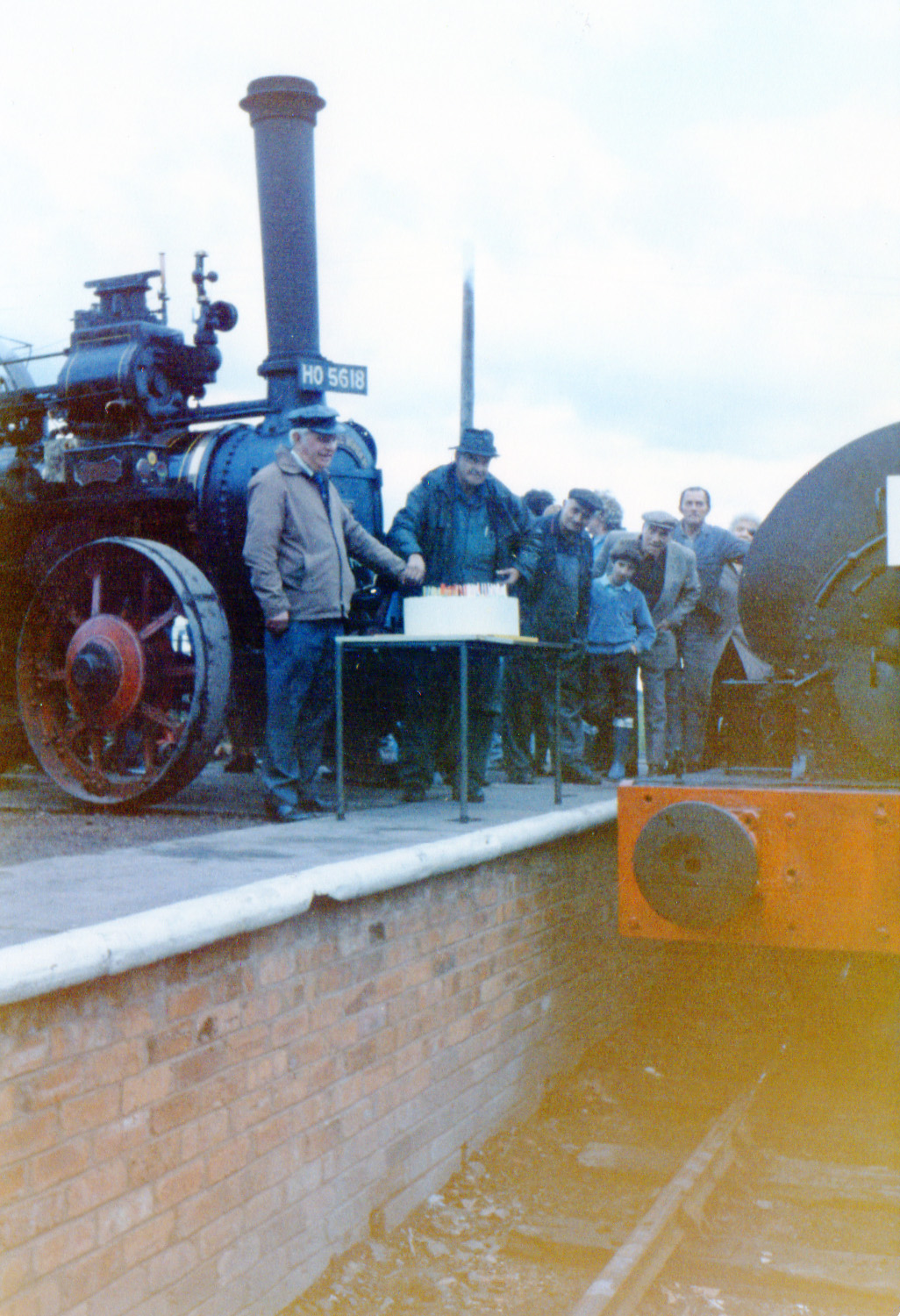
PS from Barry Bull – steamed September or October 1982 for her 100th birthday together with McLaren traction engine ‘Little Wonder’, also 100 years old, owned by the late John Mayes.Picture from http://www.steamscenes.org

Chasewater Railway Museum 1968 Vol.1 No.3 Bits & Pieces 42.3

Chasewater Railway Museum 1968 Vol.1 No.3 Bits & Pieces 42.3

Plus Stocklist – 1968

This is one of a number of articles included in this magazine – there will be another couple to follow later. I don’t know what happened to this loco, but in spite of it being purchased and delivered to Chasewater, it hasn’t steamed since!

Hudswell Clarke 0-6-0ST No.431 – By Frank Harvey

Working at Desborough – V F Hall


The previous issue of the Mercian featured several photographs of this, our latest locomotive, and it was felt that a short article about it would not be out of place.

It was built by Hudswell Clarke & Co., Leeds in 1895, works number 431 and spent most of its life in the hands of the Sheepbridge Coal & Iron Company in whose fleet she became No.15.  It was allocated the name ‘Sheepbridge No.25’, but this was never carried and with the removal of its official number and works plates ran its last years without any identification at all.

It has on two occasions been rebuilt, first in 1928 and secondly in 1944, by the Sheepbridge Company themselves.

The engine was first suggested as a suitable candidate for preservation some two years ago when it was one of several locomotives at work at Desborough Warren Quarry near Kettering.  One by one its companions were withdrawn leaving No.15 as the only workable source of motive power.  After closure of the quarry it assisted with the lifting of the track, until the early part of 1967 when it too was withdrawn and stored in the engine shed at Desborough in company with an Avonside 0-6-0T.

The RPS then stepped in and after pleasing, successful negotiations with Stewarts and Lloyds Ltd., the locomotive was purchased.  The firm kindly allowed us to steam the engine before purchase – and members will have read about this eventful weekend in the last issue of the magazine. (CRM Bits & Pieces No.41).

It proved to be in good working order and required little in the way of attention save for the fitting of two new injectors which have now been purchased, and the repairing of a cracked blower pipe.  Evidence of this can be seen clearly in the photographs!

Desborough, 1968

The locomotive was delivered to Chasewater in November and restoration is now well under way.  When completed it will be resplendent in apple green, lined black, edged white and a high standard is being achieved.Chasewater August 1969

Purchase and transport charges tended to deplete the Society’s funds somewhat, but all agree that it was money well spent and in common with all other RPS stock, no money is outstanding, a fact of which we are justifiably proud.

Although restoration is unlikely to be completed before 1969, we look forward to seeing No.15, the oldest working Hudswell Clarke, in steam at Chasewater later this year.In the Heritage Centre, 2010
Stocklist – 1968

With so many new additions, it was decided to publish a stocklist in the 1968 Mercian, Vol.1 No.3

I hope you can read it ok, it’s interesting to see what’s still here after 40-odd years, and what’s gone.

The original ‘Alfred Paget’ – Newspaper cutting from Sue & Diana Windsor

The original ‘Alfred Paget’

Newspaper cutting from Sue & Diana Windsor

The original ‘Alfred Paget’  0-4-2ST No.204/1861, acquired new by the Cannock Chase Colliery Company, scrapped by NCB at Chasetown circa 1952.  ‘Paget’ was the family name of the Marquis of Anglesey, one of the major land-owners in the district, and Chasewater Railway has kept the name – now on a Neilson engine.

‘Alfred Paget’ – the Neilson version.- 2937-1882 0-4-0ST, 


Chasewater Railway Museum – Another Neilson Worksplate

Chasewater Railway Museum 

Another Neilson Worksplate

DSCF2352

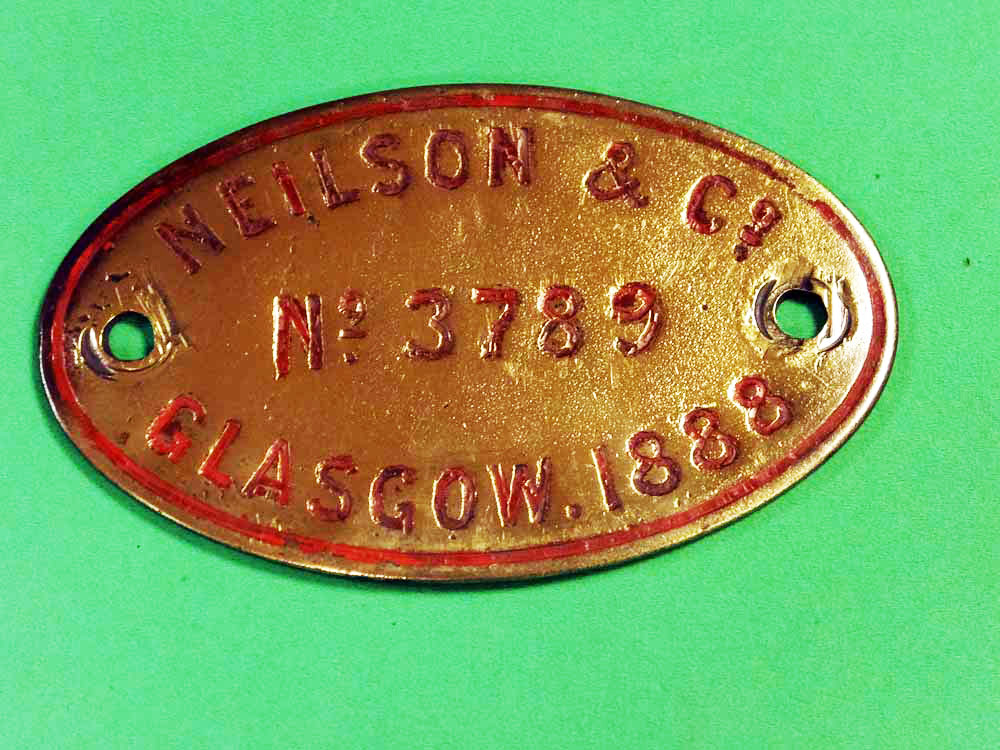
Our Curator has been out and about again, this time coming back with another very nice worksplate.

Neilson 3789-1888

A worksplate, NEILSON, 3789, 1888, from a standard gauge 0-4-0T which was new to the Gas Light & Coal Company (later the North Thames Gas Board) at Beckton Gas Works, their No 19. It remained there all its working life and was scrapped in 1962. Engraved brass, 9″x 5½”, the engraving picked out in red, the back stamped 19.

3789 1

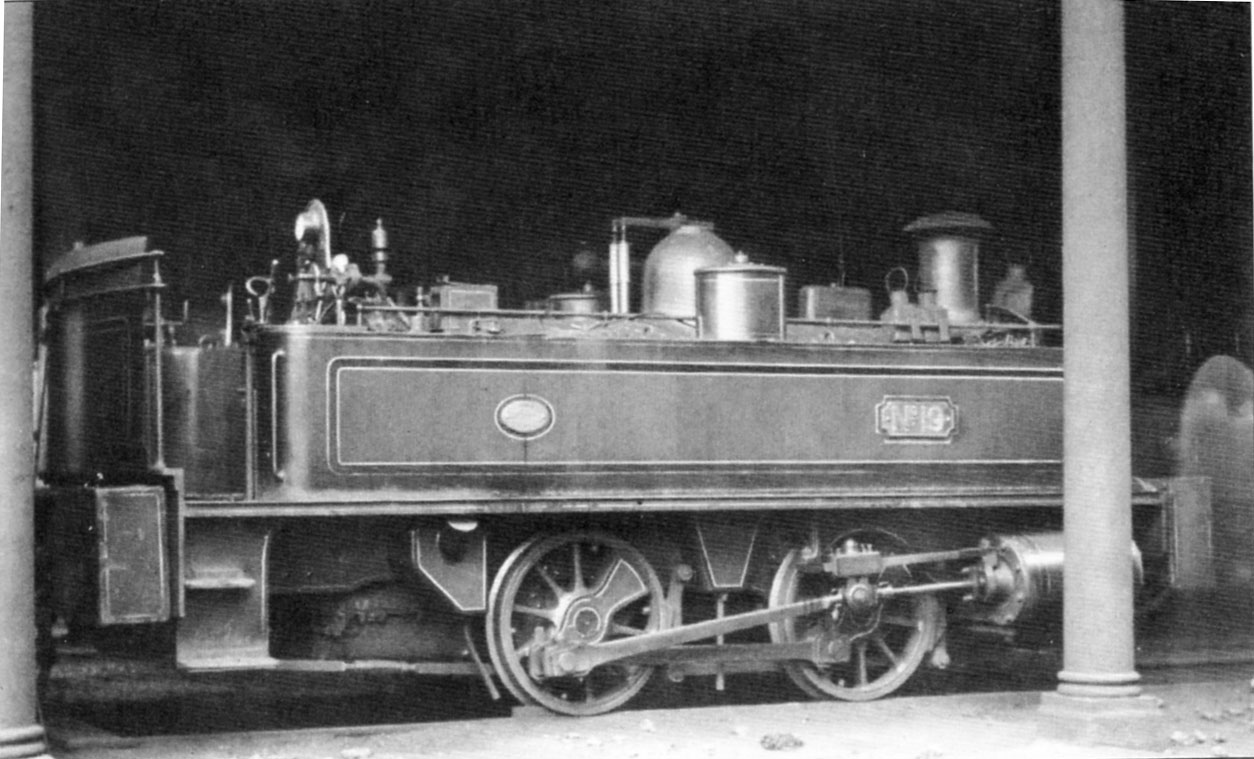
No.3789 was one of the heavier Neilson engines with extended tanks, it is seen here as No.19 inside the Beckton Roundhouse on 9 July, 1927. Photo: H.C.Casserley.

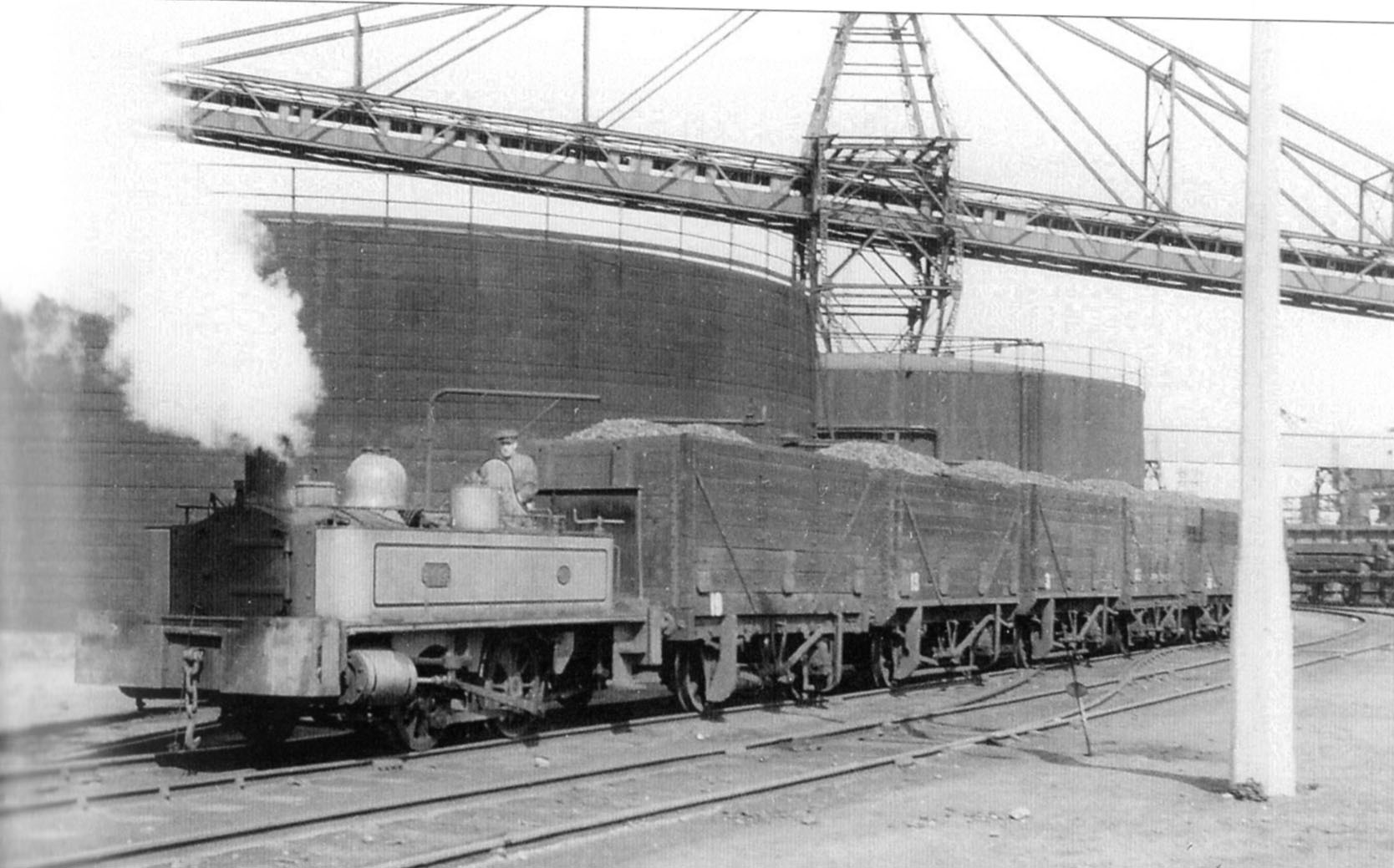
Beckton Gasworks was a major London gasworks built to manufacture coal gas and other products including coke from coal. It has been variously described as ‘the largest such plant in the world’ and ‘the largest gas works in Europe’. It operated from 1870 to 1969, with an associated by-products works that operated from 1879 to 1970. The works were located on East Ham Level, on the north bank of the Thames at Gallions Reach, to the west of Barking Creek.

3789 2

Neilson No.3789 was an 1888 arrival at Beckton and is seen here with a coke train on 22 April, 1959. Photo: Sydney A.Leleux.

Chasewater Railway Museum – Another photo on the Causeway

Chasewater Railway Museum

Another photo on the Causeway

7176.15

This time the Neilson – 2937/1882 carrying the ‘Alfred Paget ‘ nameplates –  heading a freight train  of wagons in various liveries (including rust!), with the Cannock Chase Colliery brake van – affectionally known as the ‘slum’  bringing up the rear.

CCCC Brake Van

This brake van has now fallen into major disrepair, with the chassis collapsing and breaking the sole bars.  The interior of the van still remains dry.  It has had a few coats of paint over the years, but, as the last known item of rolling stock which actually ran on the line in the mine-working years, it seems a shame that more cannot be done to restore it.

This was new to the Museum – in 2012

Chasewater Railway Museum

This was new to the Museum – in 2012

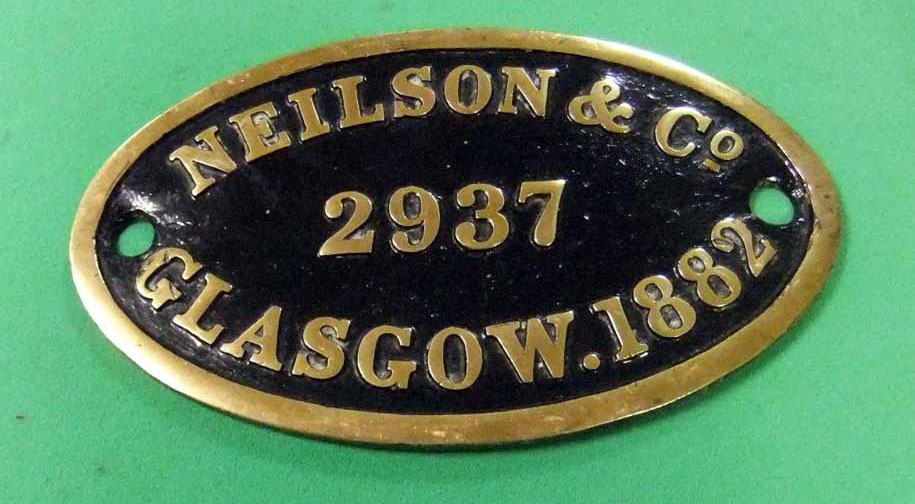
1735

A locomotive worksplate, Neilson, 2937, 1882, from a 0-4-0ST O/C new to William Baird & Co (Ltd from 1893) at Bedlay Colliery near Glenboig, their No 11, becoming part of the Scottish Iron & Steel Co Ltd in January 1939, Bairds & Scottish Steel Ltd six months later and the National Coal Board in January 1947. It returned to Bairds & Scottish Steel Ltd at Gartsherrie Ironworks, Coatbridge, in about 1950 and following withdrawal, was acquired in June 1968 by Railway Preservation Society, Hednesford, Staffordshire and later went to the Chasewater Light Railway. Cast brass 10″x 6¼”, the front of the plate has been repainted.

05272 Neilson No.11 0-4-0ST 2937-1882 Chasewater Alfred PagetThe Neilson loco pre-Chasewater days.

2 Centenarians at Chasewater Railway

On platform colour

2 Centenarians at Chasewater Railway

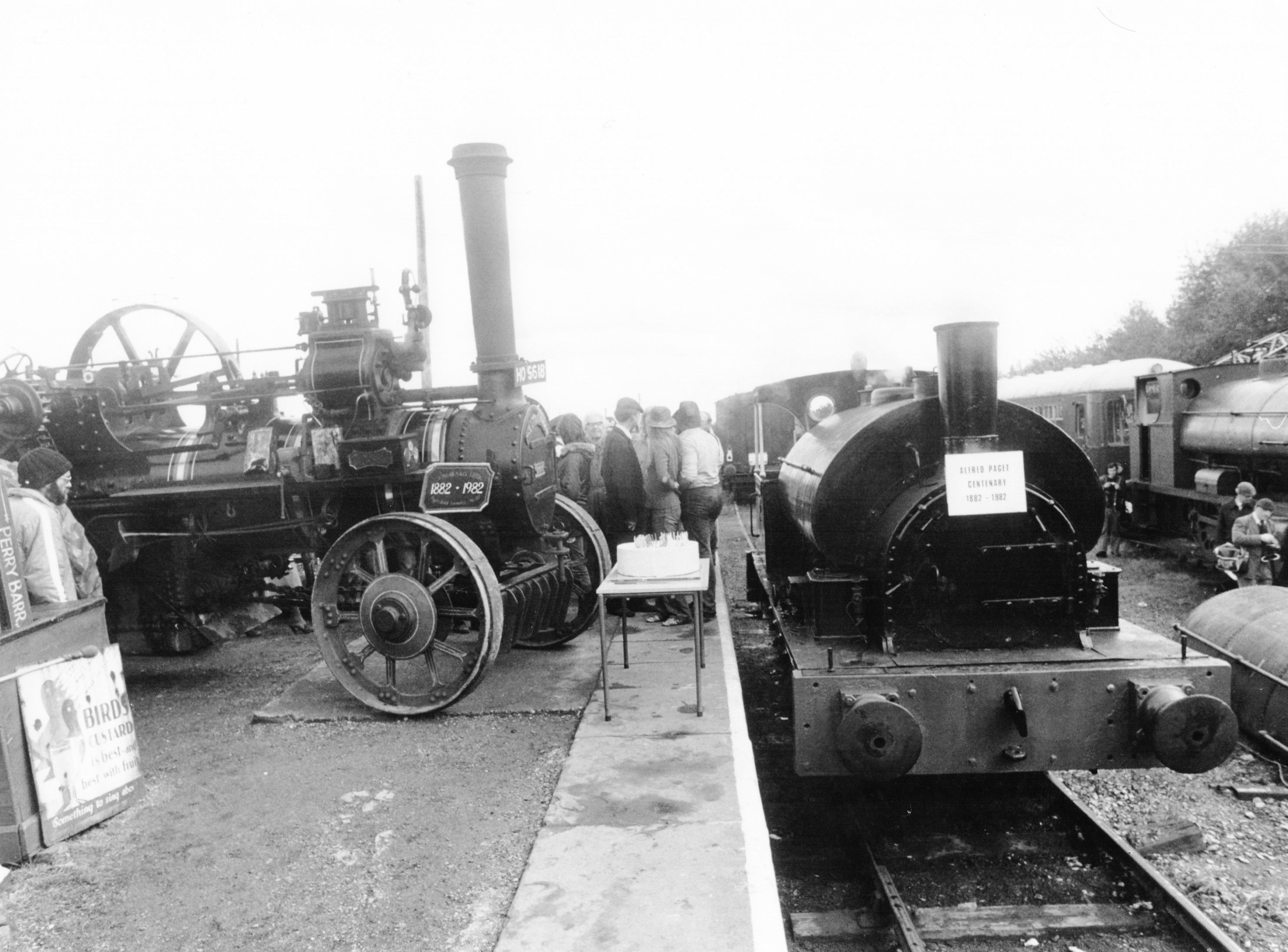
The Chasewater Railway Museum has  a significant amount of paperwork formerly belonging to David Ives, a founder member of the Railway Preservation Society and a long-time Board Member of the Chasewater Railway.  Our curator is working his way through this paperwork to put it in some sort of order, and is finding some interesting photographs in some of the boxes, including the ones shown here.B&W no people

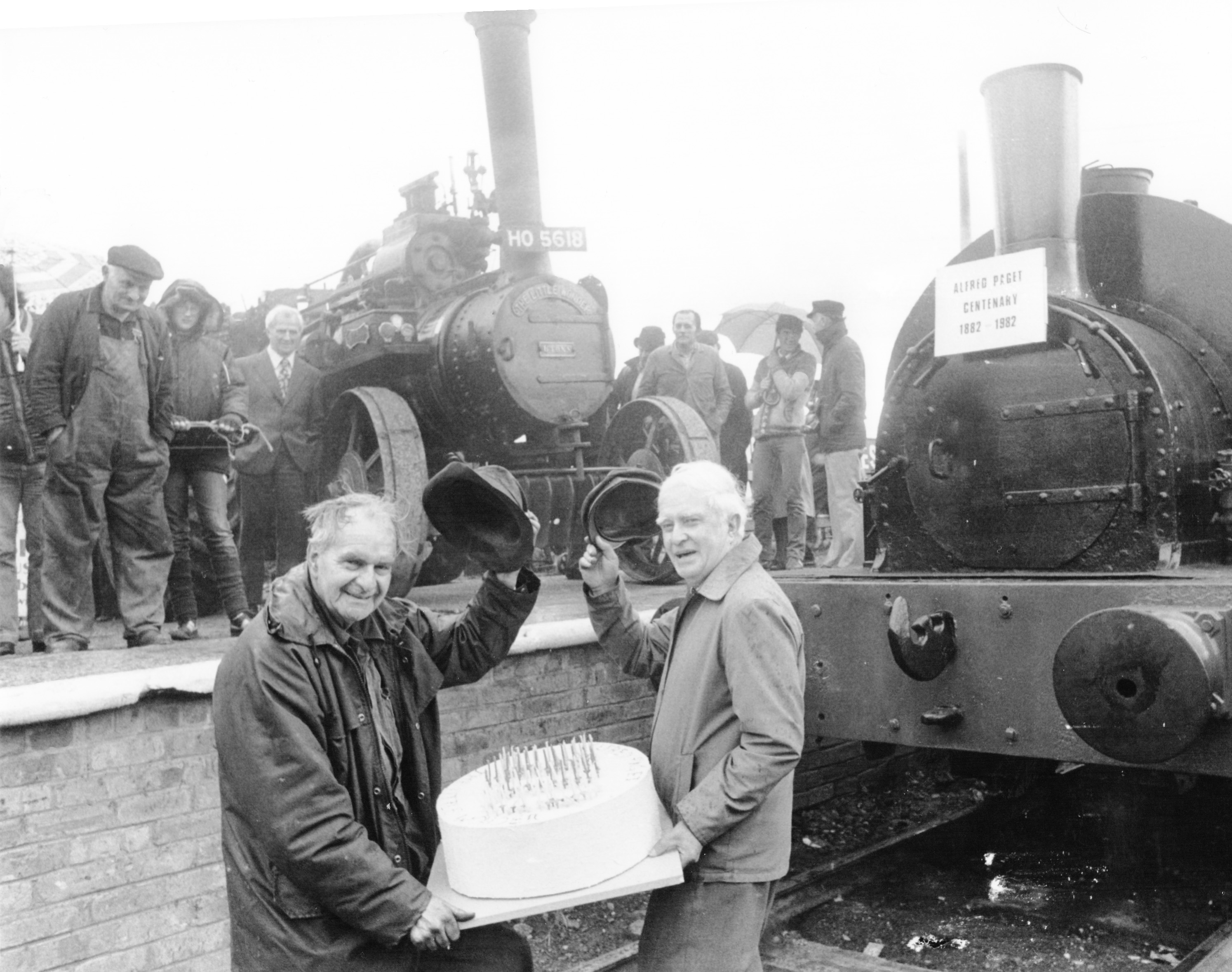
The centenarians involved are the traction engine ‘Little Wonder’ and the Neilson steam locomotive known as ‘Alfred Paget’  (2937/1882).

The gentlemen in the photo holding the cake are the late Johnny Mayes, at the time the owner of ‘Little Wonder’,  and the late David Ives of Chasewater Railway, on the right.

Hats off