Tag Archives: Walsall Wood

Chasewater Railway Museum – Marquis Nameplate

Chasewater Railway Museum

Marquis Nameplate

Marquis

After ‘McClean’, the second of the three locomotive nameplates to arrive is Marquis. The name originates from the first Marquis of Anglesey, a title awarded to the Earl of Uxbridge who fought along side Wellington at the Battle of Waterloo. Carried by the Lilleshall Company built 0-6-0 saddle tank new to the Cannock and Rugeley Collieries as their first loco in 1867, she, or is it he, lasted until cut up at the NCB Cannock Central Workshops during May 1964.

05001 No.1 Marquis 0-6-0ST Lilleshall 1867 newLilleshall locomotive 0-6-0ST No.116 of 1867  ‘Marquis’ Cannock & Rugeley Collieries’ No.1

Chasewater Railway Museum – McClean Nameplate

Chasewater Railway Museum

McClean Nameplate

1897

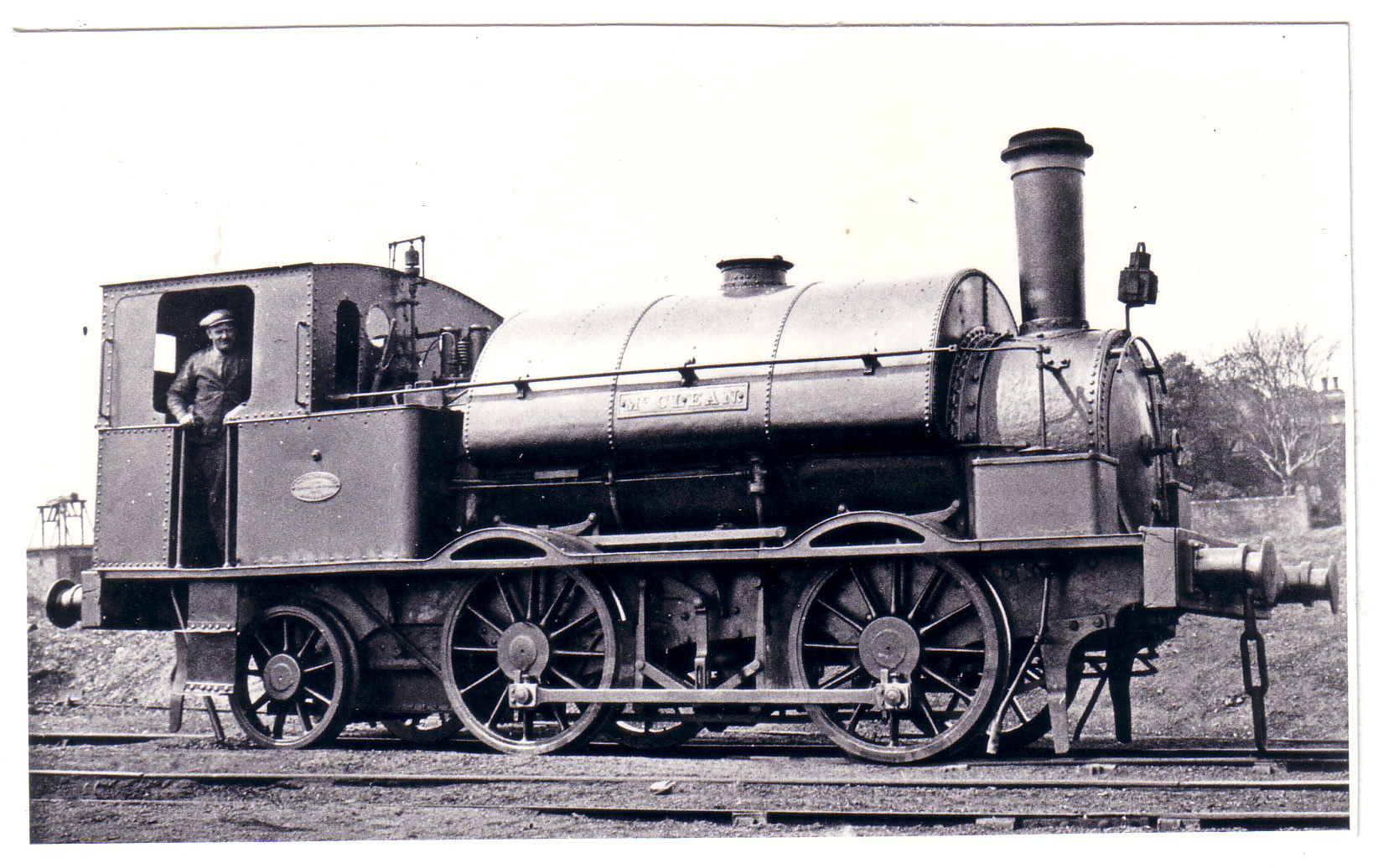
An opportunity presented itself in 2013 to acquire by way of private purchase half a dozen items of local colliery railway interest. Not since the 1960s and early 1970s, when in that period a good relationship existed between the Railway Preservation Society and local National Coal Board management and which resulted in several donations of interest has the chance to obtain in bulk such star items for the museum collection. First and arguably the finest piece from the Chasewater Railway point of view is the nameplate McClean from the 1856 built Beyer Peacock, the first of five similar locomotives delivered between 1856 and 1872. McClean lasted one hundred years before scrapping and in her later years was considered to be the oldest loco in the country still at work. The name McClean was bestowed in honour of John Robinson McClean who first came on the local scene as engineer in the construction of the South Staffordshire Railway before later, together with Richard Chawner leased land to mine coal forming the Cannock Chase Colliery.

05103 McClean 0-4-2ST Beyer Peacock 28-1856 Cannock Chase Colliery Co‘McClean’  Beyer Peacock 0-4-0ST  No.28 of 1856

Chasewater Railway Museum – Another Neilson Worksplate

Chasewater Railway Museum 

Another Neilson Worksplate
DSCF2352

Our Curator has been out and about again, this time coming back with another very nice worksplate.

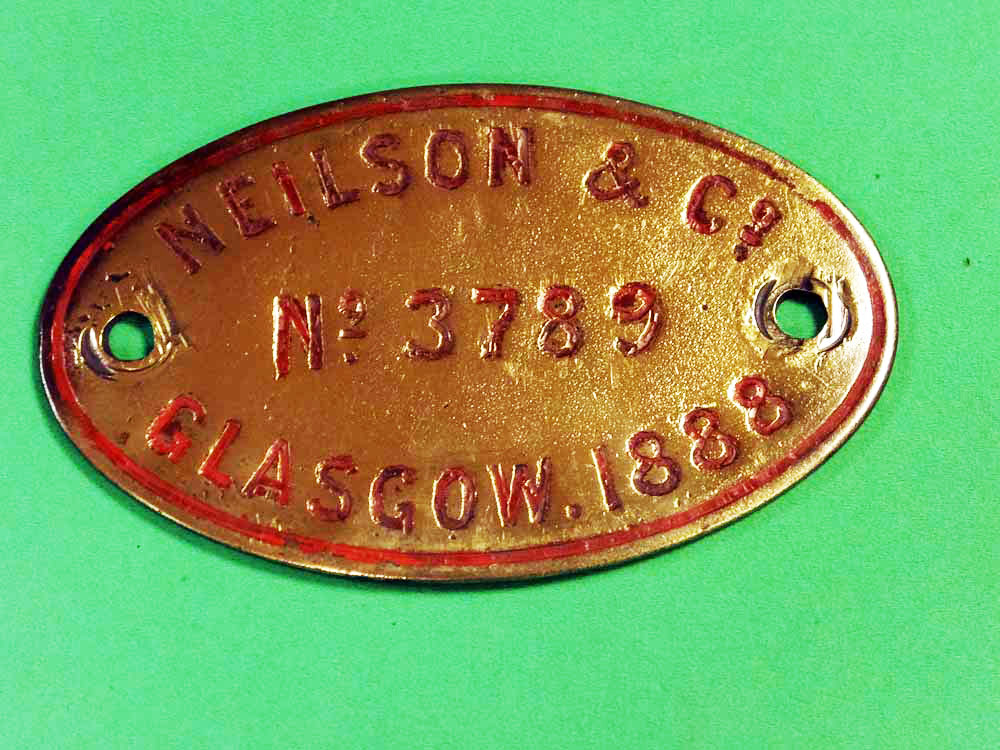
Neilson 3789-1888

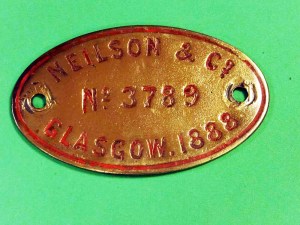
A worksplate, NEILSON, 3789, 1888, from a standard gauge 0-4-0T which was new to the Gas Light & Coal Company (later the North Thames Gas Board) at Beckton Gas Works, their No 19. It remained there all its working life and was scrapped in 1962. Engraved brass, 9″x 5½”, the engraving picked out in red, the back stamped 19.

3789 1

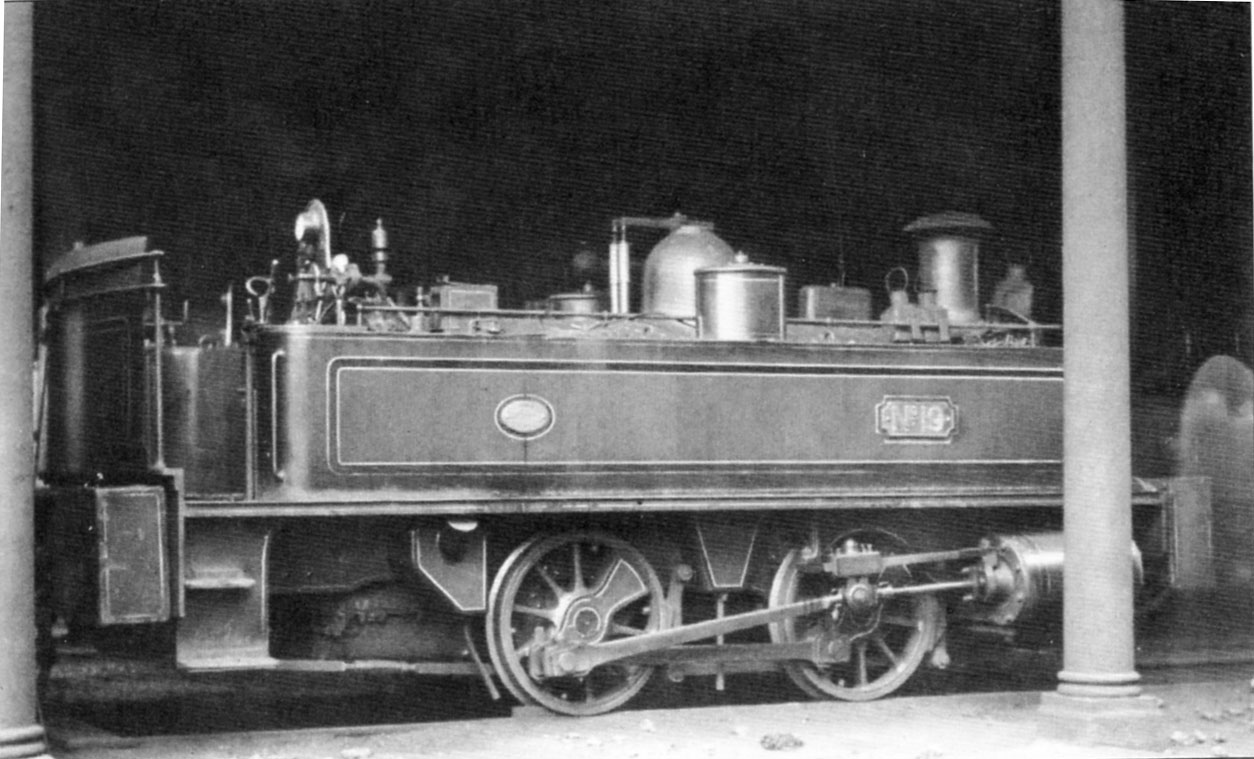
No.3789 was one of the heavier Neilson engines with extended tanks, it is seen here as No.19 inside the Beckton Roundhouse on 9 July, 1927. Photo: H.C.Casserley.

Beckton Gasworks was a major London gasworks built to manufacture coal gas and other products including coke from coal. It has been variously described as ‘the largest such plant in the world’ and ‘the largest gas works in Europe’. It operated from 1870 to 1969, with an associated by-products works that operated from 1879 to 1970. The works were located on East Ham Level, on the north bank of the Thames at Gallions Reach, to the west of Barking Creek.

3789 2

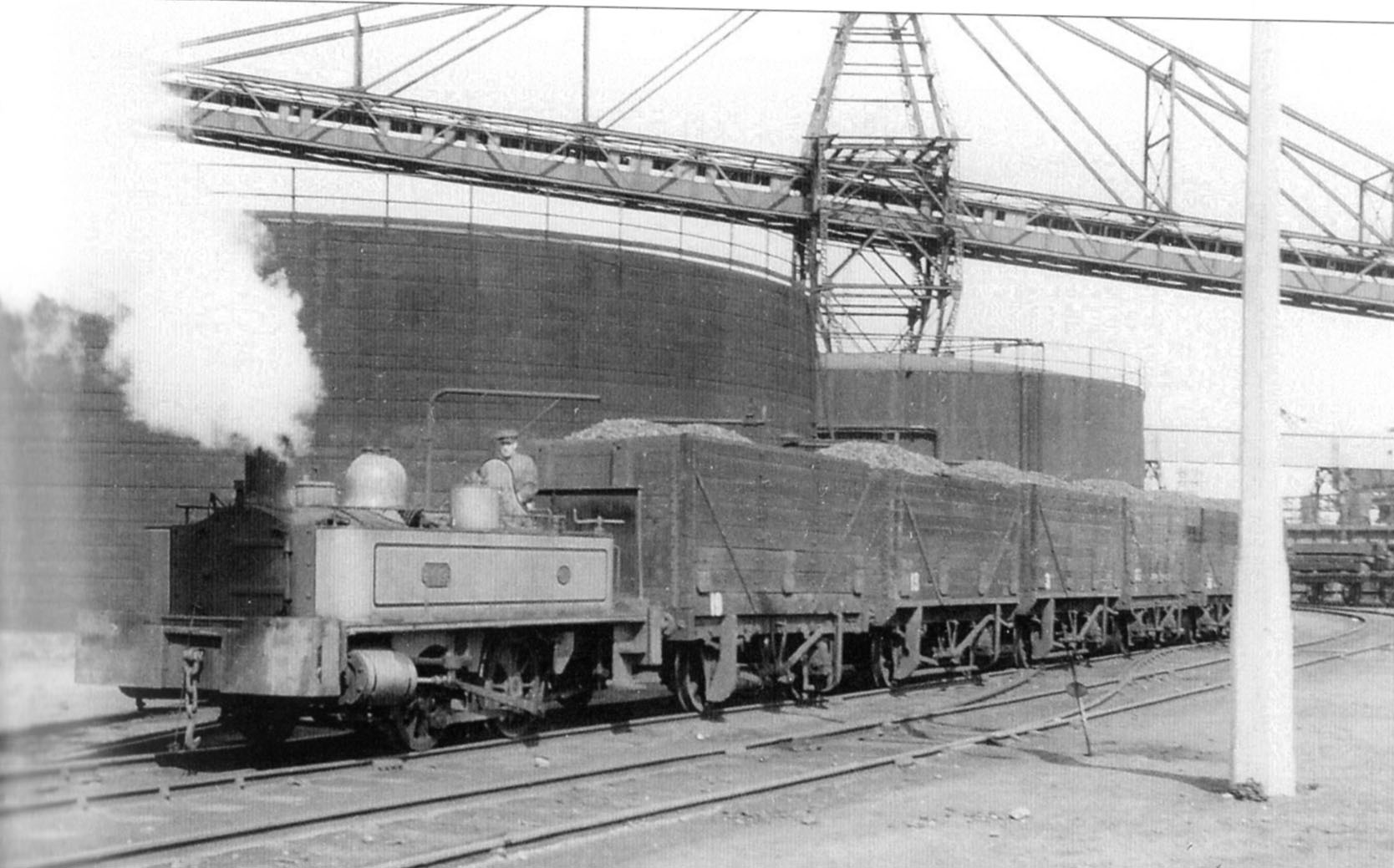
Neilson No.3789 was an 1888 arrival at Beckton and is seen here with a coke train on 22 April, 1959. Photo: Sydney A.Leleux.

Chasewater Railway Museum – 2 new mining checks

Chasewater Railway Museum 

2 new mining checks

DSCF2359

DSCF2355

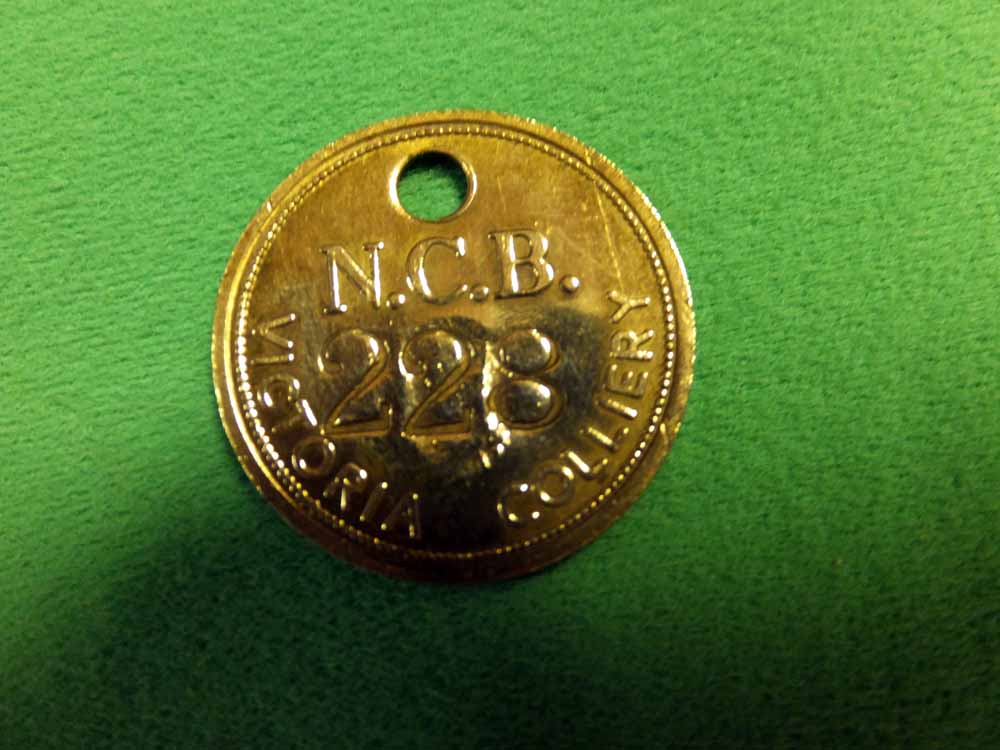
The top one is from the Victoria Colliery of the NCB, and the second, a time check from Chislet Colliery – of a more unusual shape.

Chasewater Railway Museum – a photo from the archives

Chasewater Railway Museum

A photo from the archives

7127

The Neilson loco 2937-1882 0-4-0ST, complete with ‘Alfred Paget’ nameplates, on a freight train at Chasewater Railway in early days.

Neilson plate & info

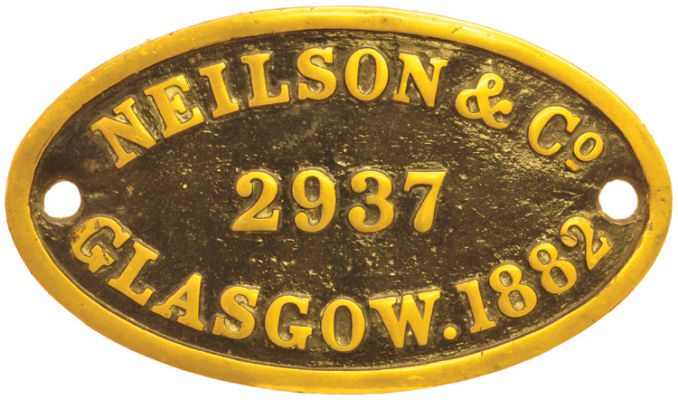
A locomotive worksplate, Neilson, No.2937 of 1882, from a 0-4-0ST O/C new to William Baird & Co (Ltd from 1893) at Bedlay Colliery near Glenboig, their No 11, becoming part of the Scottish Iron & Steel Co Ltd in January 1939, Bairds & Scottish Steel Ltd six months later and the National Coal Board in January 1947. It returned to Bairds & Scottish Steel Ltd at Gartsherrie Ironworks, Coatbridge, in about 1950 and following withdrawal, was acquired in June 1968 by Railway Preservation Society, Hednesford, Staffordshire and later went to the Chasewater Light Railway.
Cast brass 10 x 6″¼”, the front of the plate has been repainted.

Chasewater Railway Museum – Latest Addition – Railway Heritage Designated Signal Box Sign

Chasewater Railway Museum 

Latest Addition

Railway Heritage Designated Signal Box Sign

The Railway Heritage Committee has the function of designating records and artefacts (or classes of record and artefact) which are historically significant and should be permanently preserved.

Stafford 150 Yards

This enamelled sign came from Stafford No.5 signal box, and was given to the Museum by Network Rail – our thanks to the Company.

stafford5 tillyweb.bizPhoto:  tillyweb.biz

The sign can be seen set into the signal box.  On one end is a white patch with a red arrow, and on the other, a clear white patch to balance up the sign.

It may be of interest to Chasewater Railway members that the Station Hotel, Stafford, where the inaugural meeting of the Railway Preservation Society, fore-runner of Chasewater Railway, was held in 1959, was approximately 150 yards from the signal box!

Chasewater Railway Museum – Sectioned Model Steam Engine

Chasewater Railway Museum

Sectioned Model Steam Engine


Given to the Chasewater Railway Museum by Allan Preston of Cannock in 2009, and received with grateful thanks.

This model was purchased by the donor from the makers in Bury, Lancs in 1979.   It was produced along with 3 other models for Bangladesh Railways, but was not sent due to there being no Letter of Credit forthcoming.  The other 3 were probably scrapped.  It is loosely based on a Royal Scot Class locomotive.

Chasewater Railway Museum – Derrick Humpheson, Craftsman

Chasewater Railway Museum

Derrick Humpheson, Craftsman

14

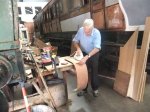
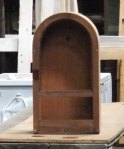
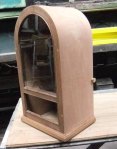
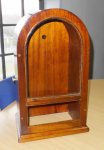
As can be seen from this series of photographs, Derrick is a very good man to have on your side if you need something restoring from rotten to as good as new.
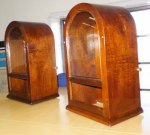
These 2 Tyer’s Electric Train Tablet Cases were in an awful state when Derrick started work on them, but when he had finished they looked brand new.
They will be put to work in signal boxes on Chasewater Railway
Tyer’s Instruments

14

An instrument was placed at each end of the single-track section that they were to control. They were connected together electrically in such a way that operation of one would depend on operations carried out using the other.
There were various incarnations of instruments developed by Tyer & Co.


Trolley CropIn 1981, Derrick was in charge of the restoration of our Pump Trolley while at the West Bromwich College of Commerce &Technology.

DerrickThere have been times, however, when perhaps Derrick wanted more involvement with the running of the Railway! Maybe getting ideas above his station!!

Chasewater Railway Museum – More from Granville

Chasewater Railway Museum

More from Granville

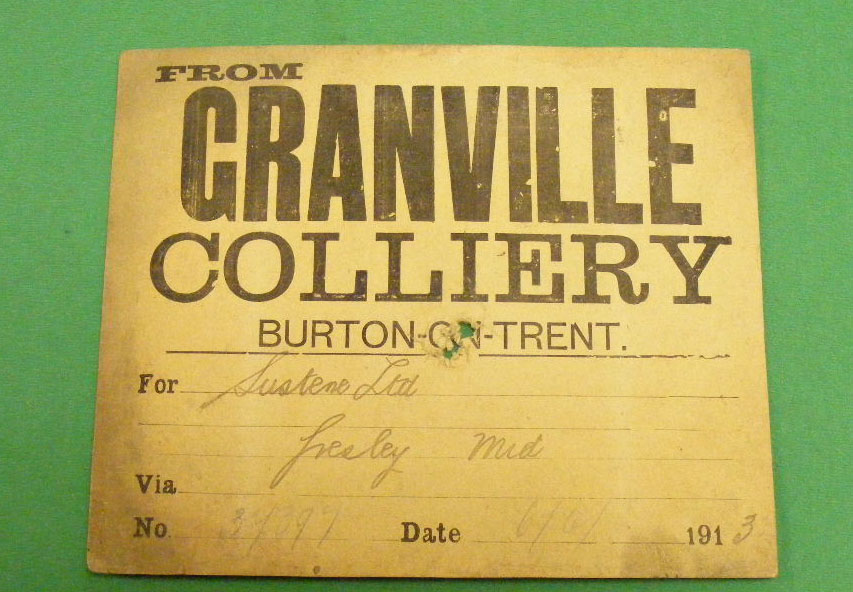
The first one is a wagon label from the Burton-on-Trent Glanville Colliery, dated 1913.  It has been in our collection for some years now and has always been discoloured – and obviously kept on a spike in an office somewhere!

1435

The other one is a colliery token from Granville Colliery  in Shropshire.  Granville Pit closed in 1979, bringing to an end more than 700 years of coal mining in the area which became Telford New Town in the 1960s.  This was purchased by the Museum in 2012.

Granvill Salop 545

Chasewater Railway Museum – A Small Addition

Chasewater Railway Museum 

A Small Addition

10789

A small addition to the Museum collection of coal miners’ pit checks is a pre-nationalisation of the coal industry example from the Granville Colliery Ltd.

The unusual thing about this particular item is, along with the Company name, it shows the location of Burton-on-Trent, whereas the real site of the Colliery was a few miles away at Swadlincote.

The first shaft was sunk in 1823/4 with number 2 shaft sunk in 1887. The earliest locomotives were six 0-4-0 saddle tanks of Hudswell Clark manufacture from the period 1890-1914.

On Nationalisation 1/1/1947, Granville became part of the NCB East Midlands Division No.7 Area and by then only two of the original locomotives remained. For short periods and at different times these two were supplemented/replaced by four Manning Wardle 0-4-0 saddle tanks, a Peckett 0-4-0 saddle tank, and finally a Ruston Hornsby 0-4-0 diesel of 165 horsepower.

Rail traffic ceased in January, 1962 and workings were merged with Rawdon Colliery. Final closure came in August, 1968.