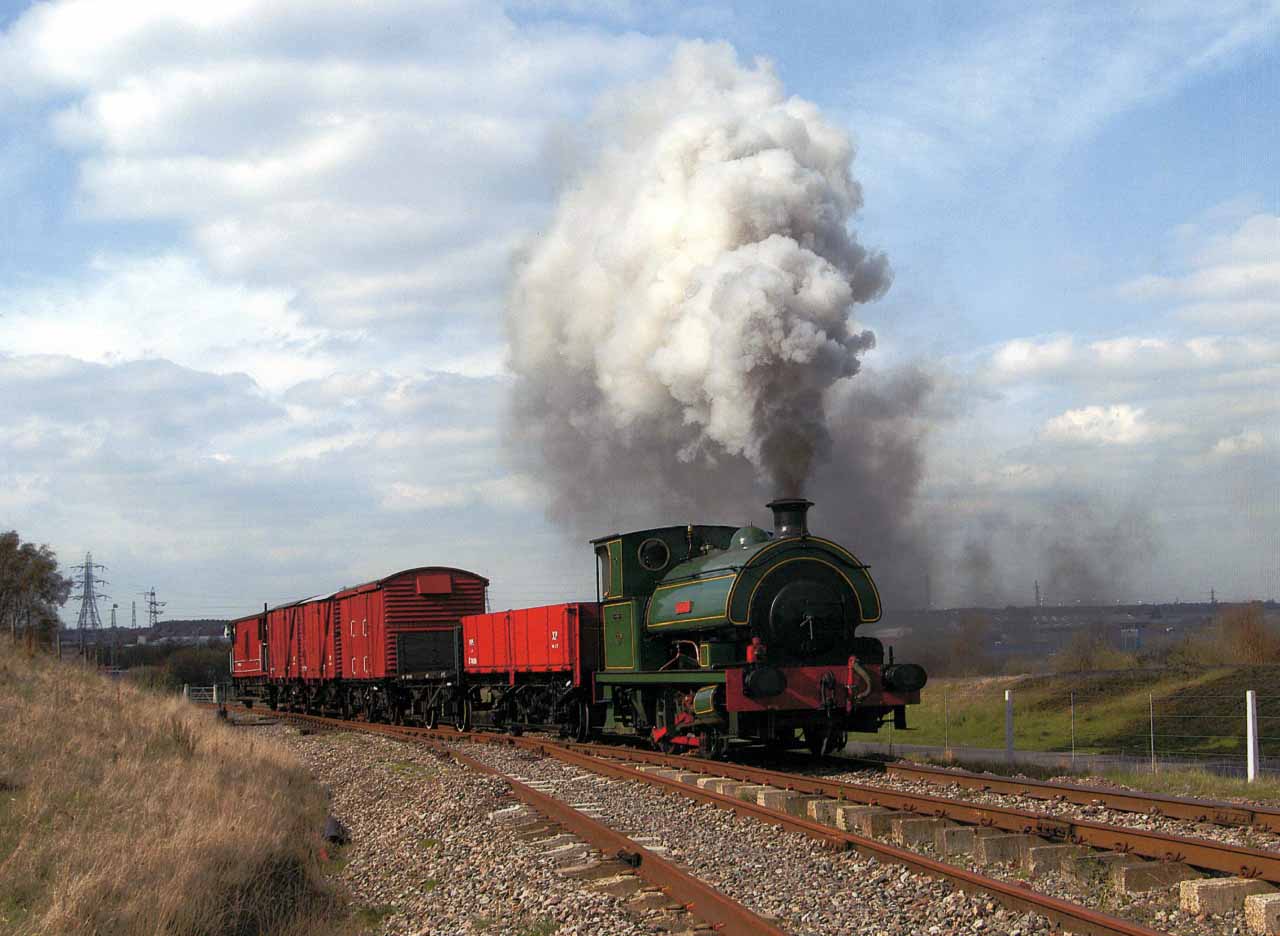
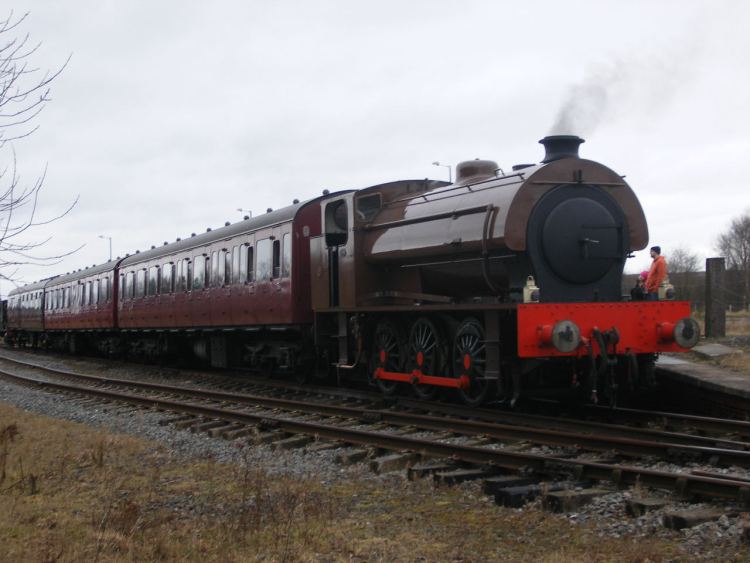
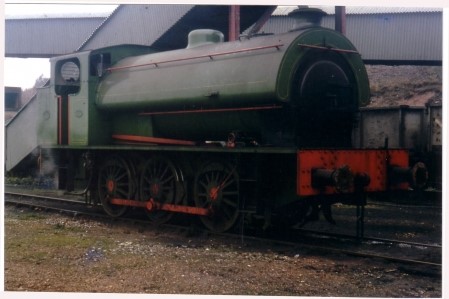
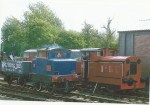
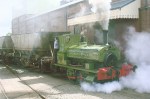
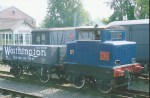
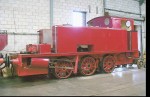
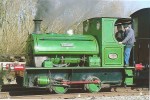
3 photos of Hawthorn Leslie loco ‘Asbestos’ (Not forgetting ‘Sentinel’)
A few photographs sent to us by Robin Stewart-Smith, taken at a Gala in 2004. (Hard to believe that it’s 12 years ago).
The first two are of ‘Asbestos’ pulling into Chasetown Church Street, and the third was taken at Brownhills West, ‘Asbestos’ and Sentinel’. Both locos on freight duties.
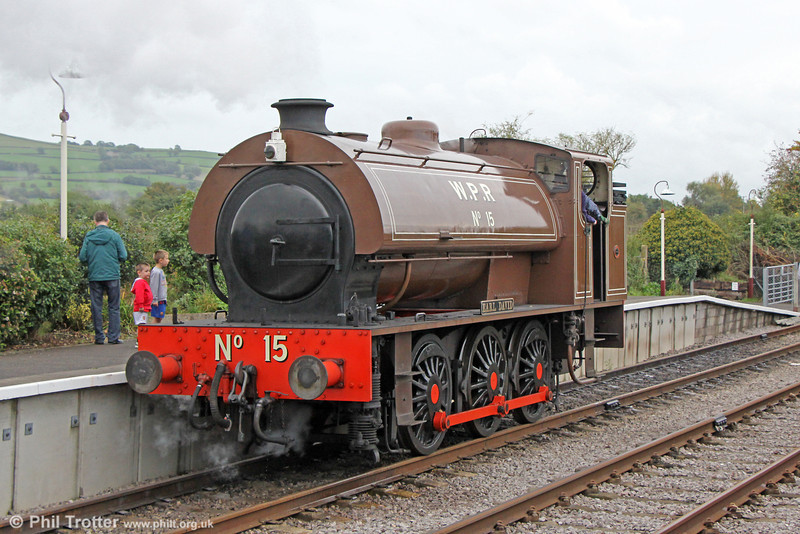
Hunslet Austerity, a powerful 0-6-0 saddle tank built to a wartime austerity design that latterly saw service as No. 15 on the industrial Wemyss Private Railway in Fife, Scotland
No. 15 is a Hunslet-designed Austerity 0-6-0ST, one of 13 subcontracted to Andrew Barclay. One of only three of the Andrew Barclay-built examples to survive.
This loco came to Chasewater for the February Gala 2008. The Wemyss Private Railway was a network of lines, sometimes known as the Wemyss Estate Railway. The lines were a group of mineral and other railways in Fife, Scotland, mainly on the land of the Wemyss family. They were built to connect coal pits to harbours and the railway network, for the use of tenants of the Estate. The Wemyss and Buckhaven Railway was built at the expense of the Wemyss Estate and carried passengers; it was later sold to the North British Railway.
When numerous collieries needed a railway connection the Wemyss Estate built a connecting line to Methil Harbour and improved the harbour itself. The local network became known as The Wemyss Private Railway and the Estate’s interest was transferred to the Wemyss Coal Company. These terms have been used interchangeably by authors.
The collieries were nationalised in 1947 and the sidings connections at the pits followed; the main line railways of Great Britain were nationalised in 1948, but the central section, now known as the Wemyss Private Railway remained in private hands. However the mineral activity in East Fife declined and in 1970 the Wemyss Private Railway closed down.
When the loco visited Chasewater Railway, sadly she wasn’t lined out, but in this photo by Phil Trotter, she can be seen in all her glory!
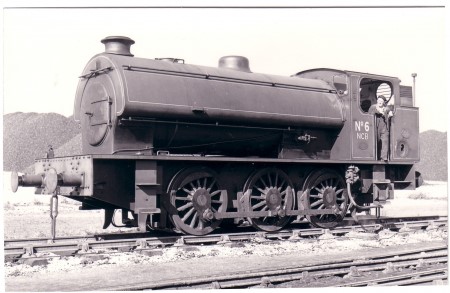
Two locomotive worksplates comprising of a cast iron Robert Stephenson and Hawthorns Ltd, 7292 of 1953 and Hunslet 3789 of 1953 have come to Chasewater Railway Museum, along with the three nameplates.
The Hunslet was delivered to Chasetown numbered 3 and was a replacement for the aged fleet of Victorian locos, she later saw service at Cannock Wood and Granville where she met her end after a life of just 16 years.
Two locomotive worksplates comprising of a cast iron Robert Stephenson and Hawthorns Ltd, 7292 of 1953 and Hunslet 3789 of 1953 have come to Chasewater Railway Museum, along with the three nameplates already described.
Both locomotives were of the Austerity type, the RSH coming to Littleton Colliery from its previous owner the War Department, in May 1947, originally WD 71483 she became number 6 at Littleton being cut up there in Oct. 1970.
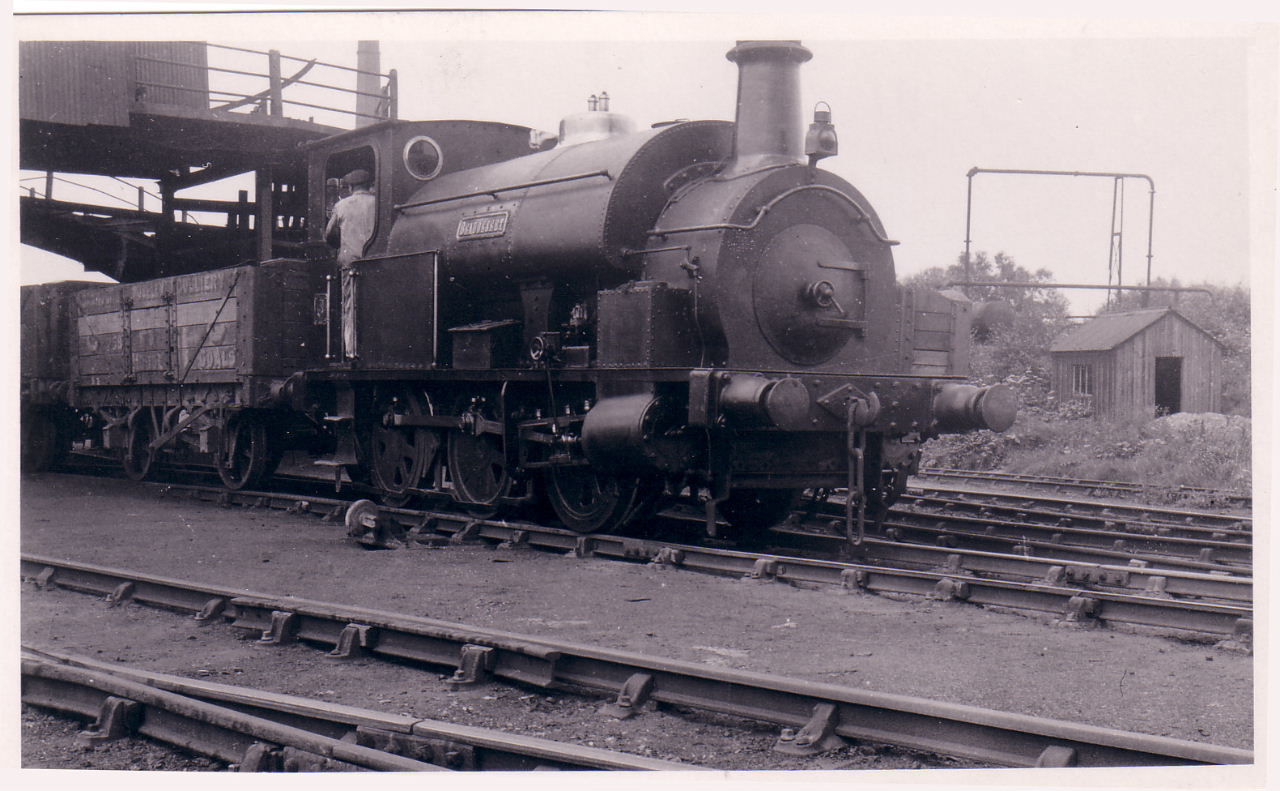
The third nameplate, following those of ‘McClean’ and ‘Marquis’, is that of Beaudesert from the little 0-6-0 saddle tank built by Fox Walker, works number 266 of 1875 supplied new to Cannock and Rugeley Collieries as their number 5. Beaudesert was the ancestral home of the Paget family who became Earls of Uxbridge before being given the title and Estate Marquis of Anglesey. Finally cut up in 1964 the other nameplate of the loco survives and is on display in Kidderminster Railway Museum.
‘Beaudesert’ 0-6-0ST Built by Fox Walker No. 266 – 1875
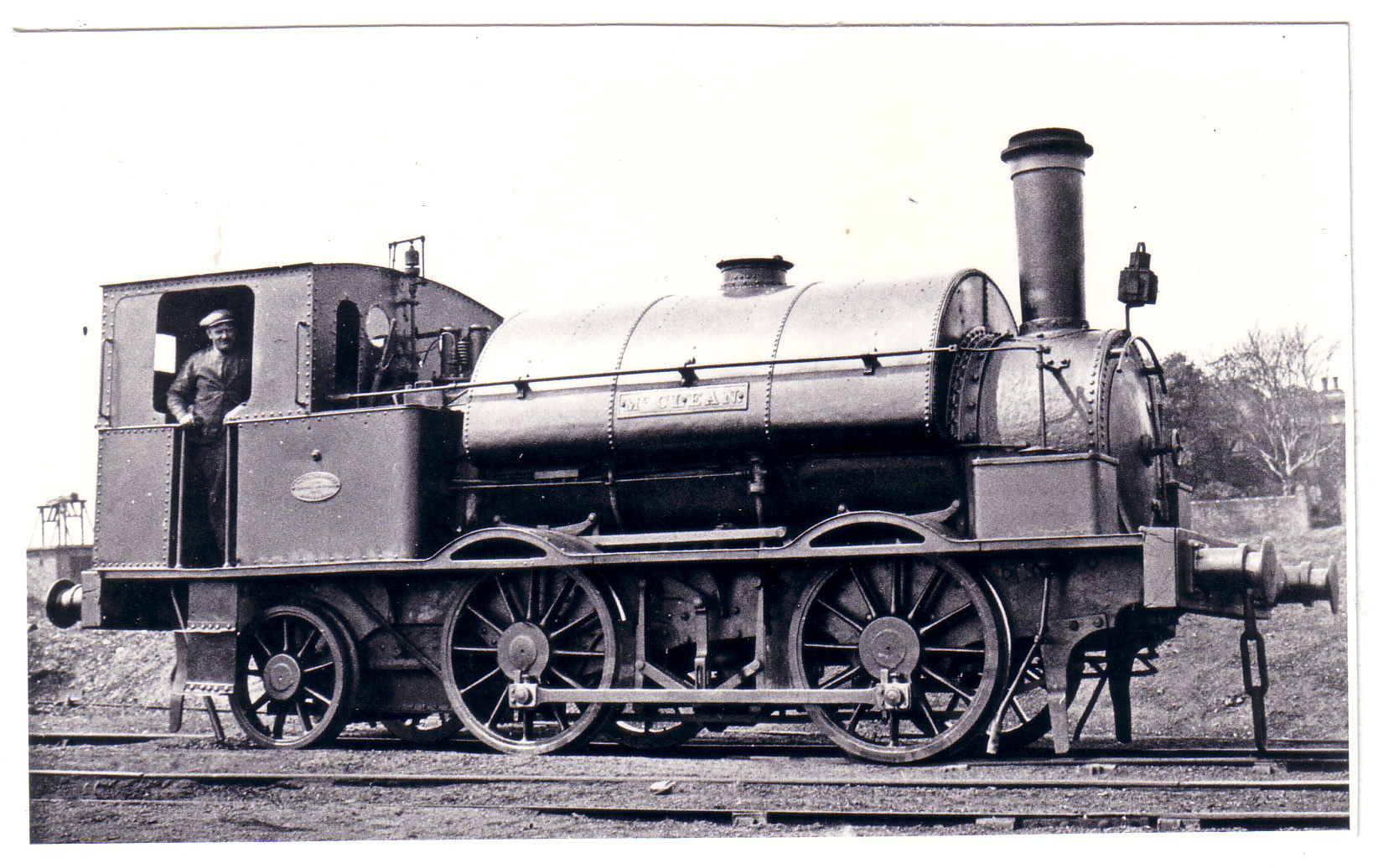
An opportunity presented itself in 2013 to acquire by way of private purchase half a dozen items of local colliery railway interest. Not since the 1960s and early 1970s, when in that period a good relationship existed between the Railway Preservation Society and local National Coal Board management and which resulted in several donations of interest has the chance to obtain in bulk such star items for the museum collection. First and arguably the finest piece from the Chasewater Railway point of view is the nameplate McClean from the 1856 built Beyer Peacock, the first of five similar locomotives delivered between 1856 and 1872. McClean lasted one hundred years before scrapping and in her later years was considered to be the oldest loco in the country still at work. The name McClean was bestowed in honour of John Robinson McClean who first came on the local scene as engineer in the construction of the South Staffordshire Railway before later, together with Richard Chawner leased land to mine coal forming the Cannock Chase Colliery.







 Chasewater Railway Museum