Chasewater Railway Museum – Ha’penny Billy’s Bridge Token

Chasewater Railway Museum

Ha’penny Billy’s Bridge Token

Another fairly recent acquisition – a different kind of token!
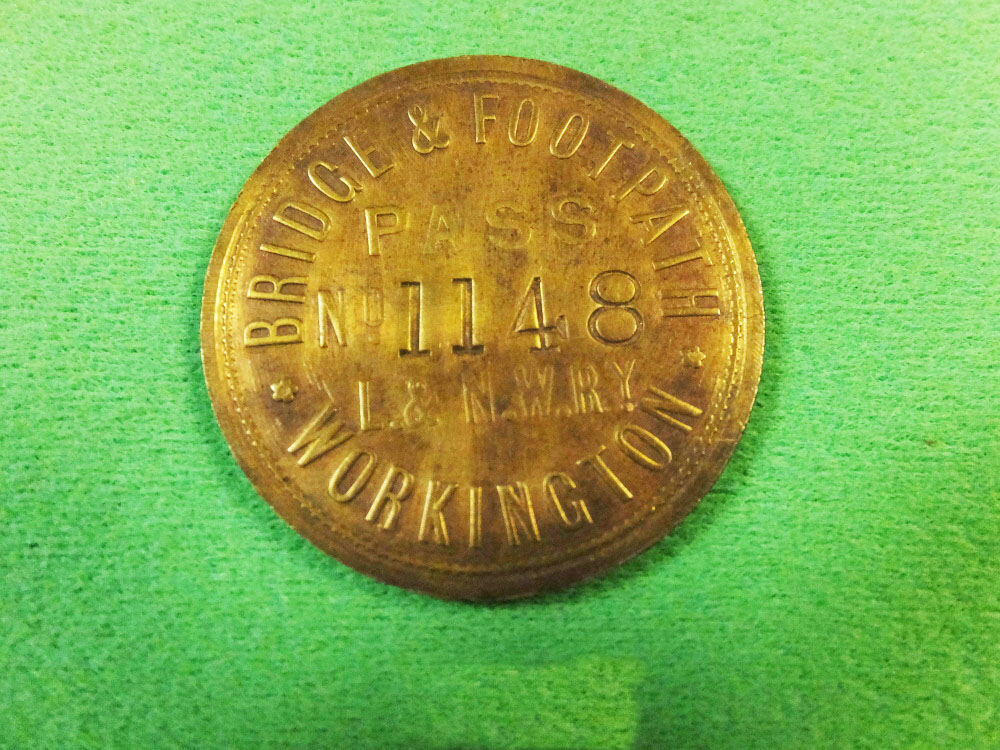
 

10798 No Number

The bridge and footpath were known locally as Ha’penny Billy’s bridge as a halfpenny was charged for any member of the public using the footpath.

The bridge was over the River Derwent and the footpath ran beside the Merchants’ Quay, over the bridge and alongside the railway to ‘Oldside’, comprising of a few cottages built near the old works originally belonging to the Steel Works.

The tolls were collected by a disabled man but did not amount to much so the footpath was closed. This would appear to have been done in March 1928. The tokens were apparently issued to Company servants.

From BR Magazine (LM Region) 12/56

Ha’penny Billy’s bridge 3Tuesday evening’s 6M22 Hunterston – Sellafield flask train rumbles across the newly repainted Ha’penny Billy’s bridge over the River Derwent behind a rather scruffy pair of Class 20s, Nos.20302 & 20304.
Richie B

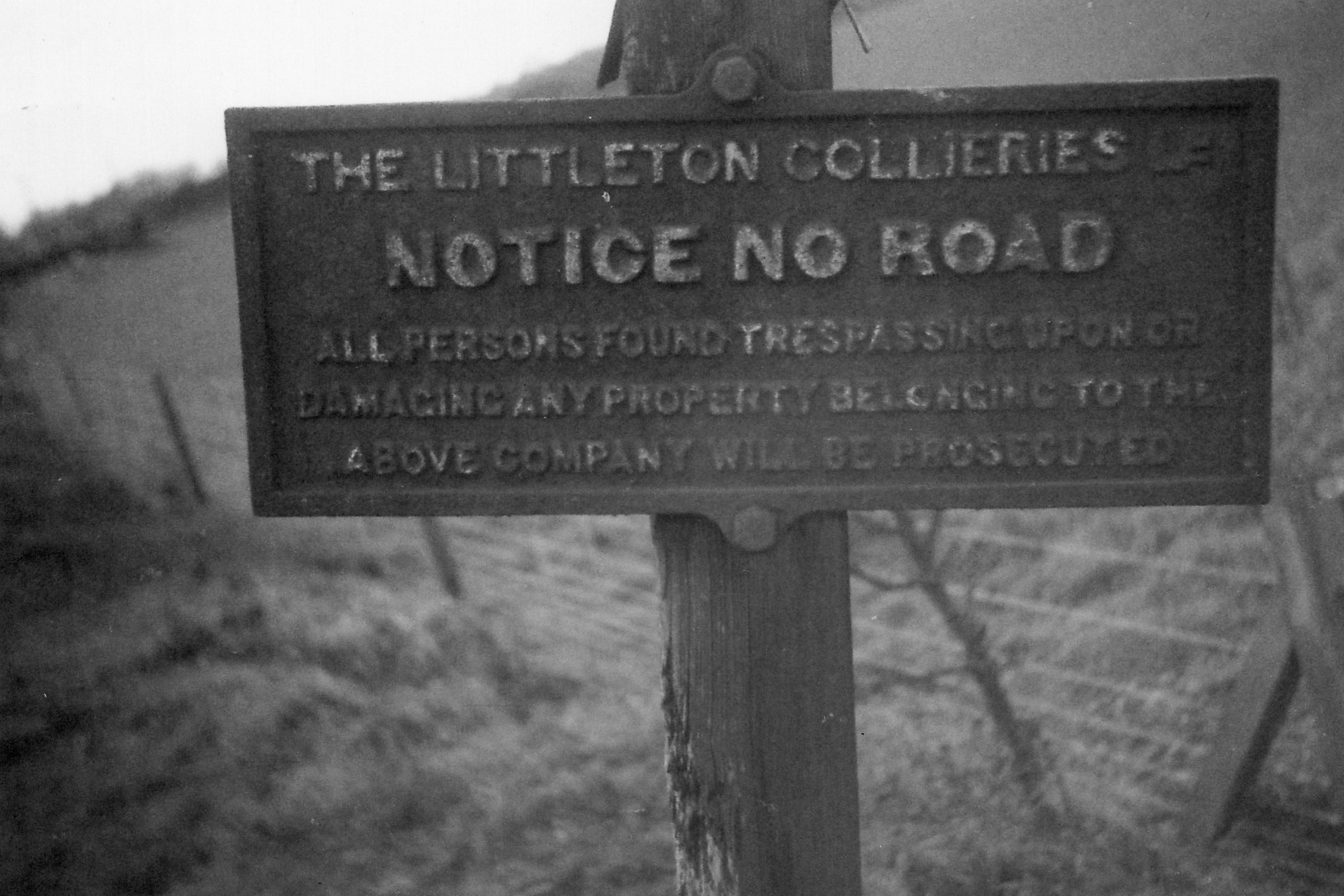
Chasewater Railway Museum – Littleton Colliery warning notice

Chasewater Railway Museum 

Littleton Colliery warning notice

An opportunity presented itself recently to acquire by way of private purchase half a dozen items of local colliery railway interest. Not since the 1960s and early 1970s, when in that period a good relationship existed between the Railway Preservation Society and local National Coal Board management and which resulted in several donations of interest has the chance to obtain in bulk such star items for the museum collection. Finally a possibly unique cast iron sign headed The Littleton Collieries Ltd.  The last of the six items, the 3 nameplates and 2 worksplates have been posted recently.

1902

In the Museum

Littleton Sign 2

The notice before the paint-brush got close!

Littleton Sign 1

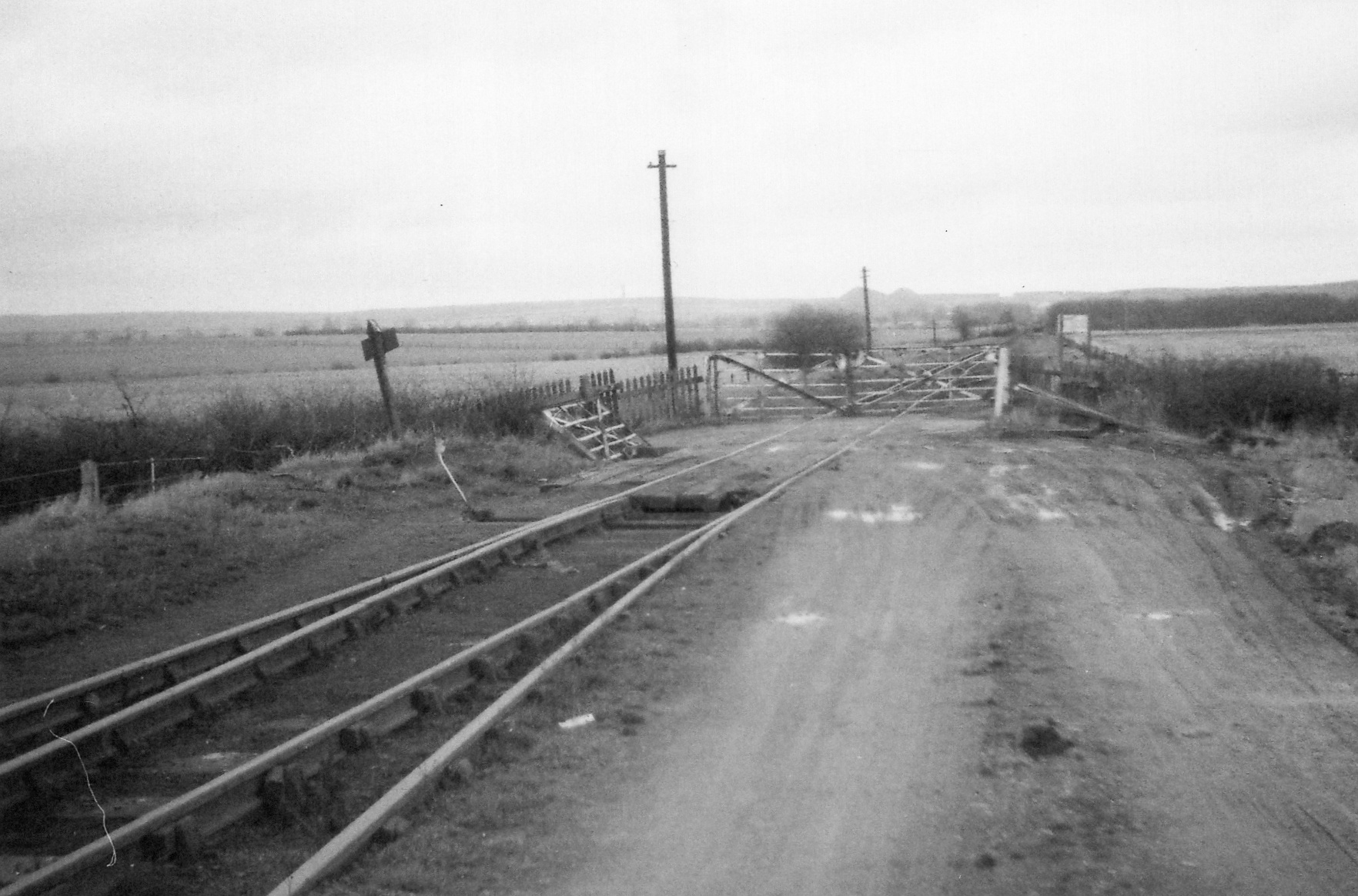
The notice in situ – left of centre.  We think located near to the Penkridge end of the Littleton Colliery to Penkridge line.

Chasewater Railway Museum – Hunslet Worksplate

Chasewater Railway Museum 

Hunslet Worksplate

3789-1953

Two locomotive worksplates comprising of a cast iron Robert Stephenson and Hawthorns Ltd, 7292 of 1953 and Hunslet 3789 of 1953 have come to Chasewater Railway Museum, along with the three nameplates.

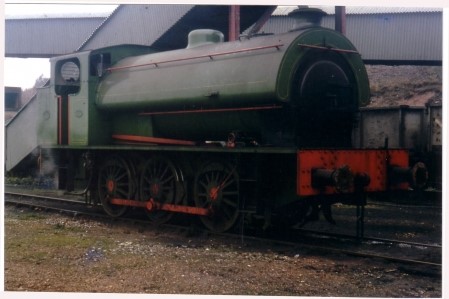
The Hunslet was delivered to Chasetown numbered 3 and was a replacement for the aged fleet of Victorian locos, she later saw service at Cannock Wood and Granville where she met her end after a life of just 16 years.

H 3789-1953

Chasewater Railway Museum – RSH Worksplate

Chasewater Railway Museum

RSH Worksplate

7292-1953

Two locomotive worksplates comprising of a cast iron Robert Stephenson and Hawthorns Ltd, 7292 of 1953 and Hunslet 3789 of 1953 have come to Chasewater Railway Museum, along with the three nameplates already described.

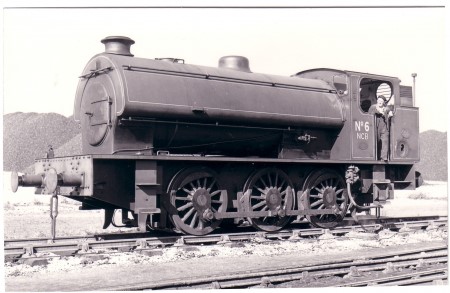
Both locomotives were of the Austerity type, the RSH coming to Littleton Colliery from its previous owner the War Department, in May 1947, originally WD 71483 she became number 6 at Littleton being cut up there in Oct. 1970.

RSH 7292-1953

Museum Christmas Raffle 2015 Results

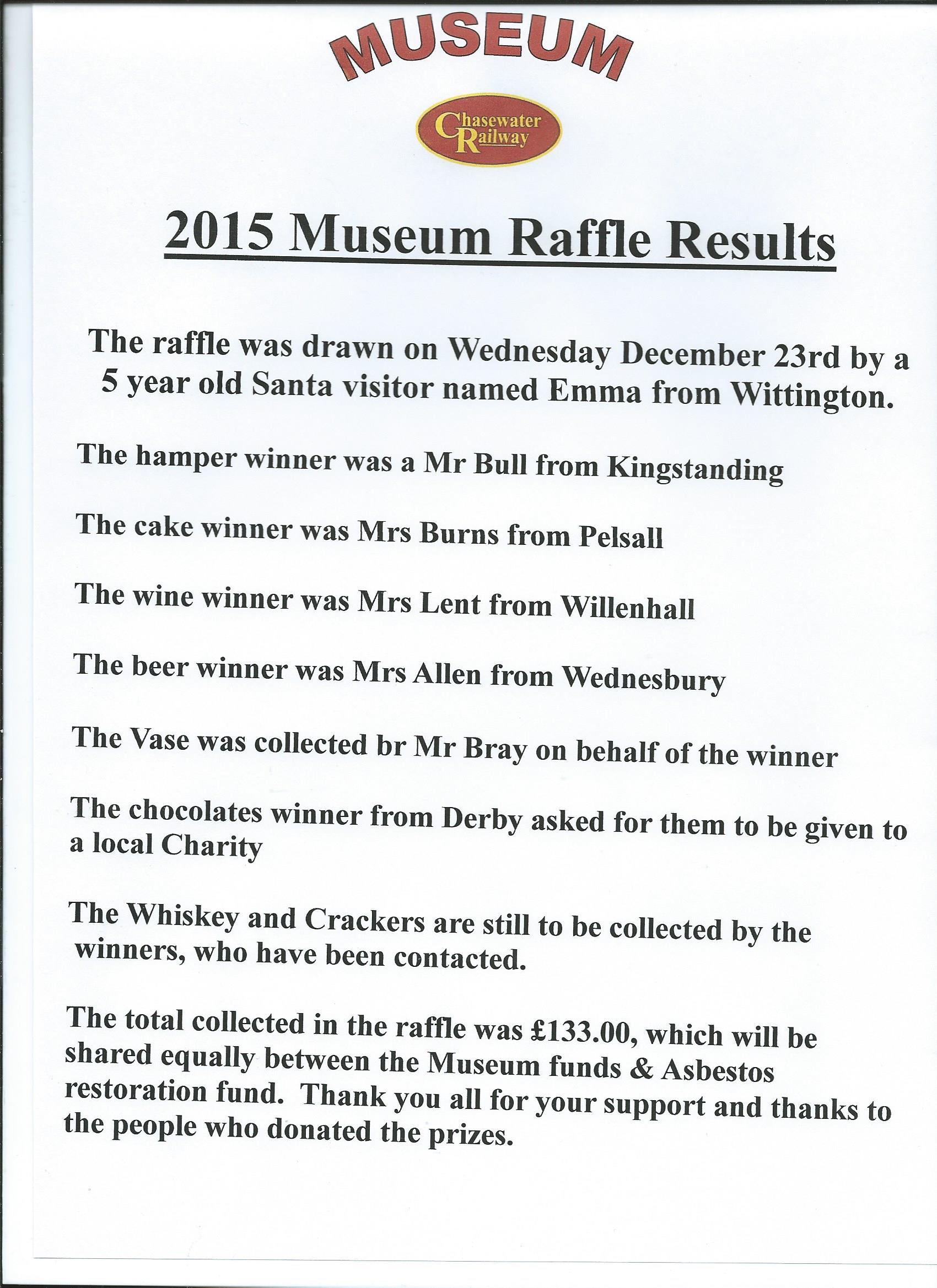
This is the list of winners in the 2015 Chasewater Railway Museum Christmas Raffle

result of raffle jpeg

Chasewater Railway Museum – Beaudesert Nameplate

Chasewater Railway Museum 

Beaudesert Nameplate

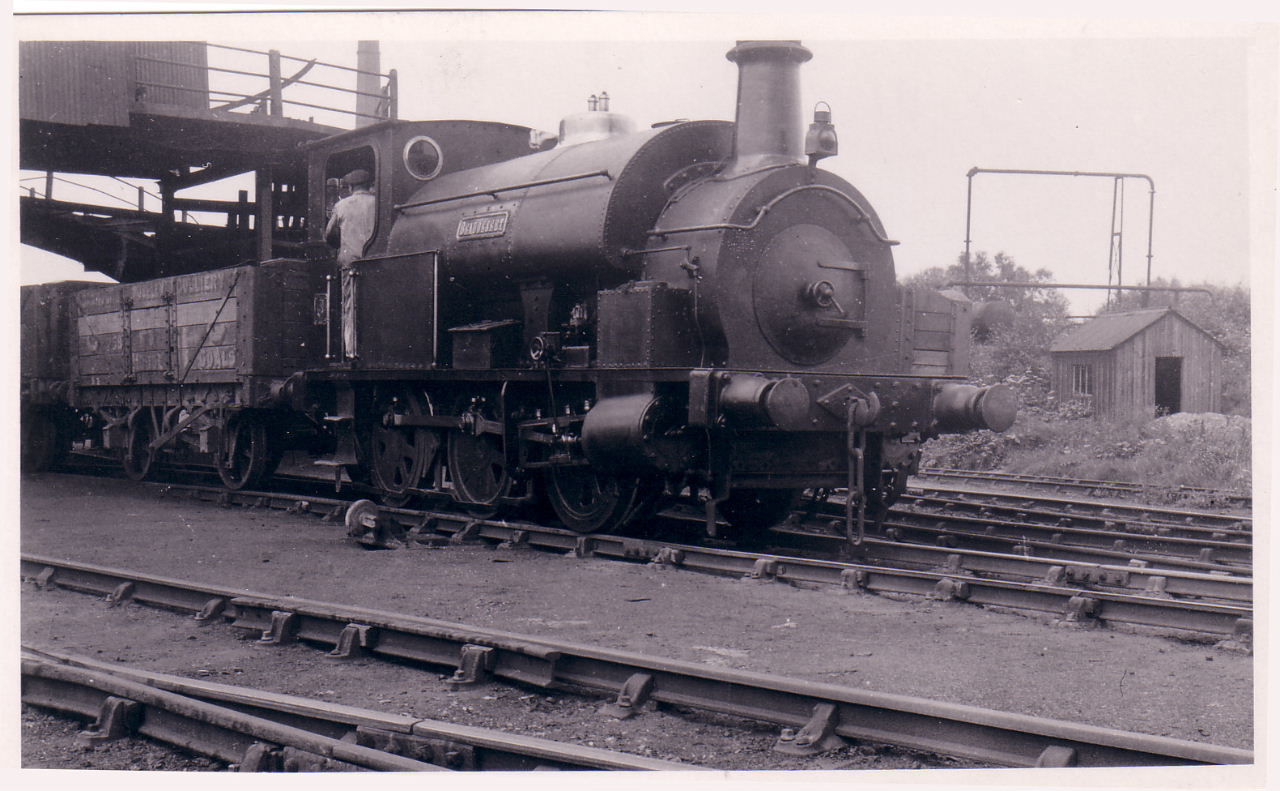
Beaudesert

The third nameplate, following those of ‘McClean’ and ‘Marquis’,  is that of Beaudesert from the little 0-6-0 saddle tank built by Fox Walker, works number 266 of 1875 supplied new to Cannock and Rugeley Collieries as their number 5. Beaudesert was the ancestral home of the Paget family who became Earls of Uxbridge before being given the title and Estate Marquis of Anglesey. Finally cut up in 1964 the other nameplate of the loco survives and is on display in Kidderminster Railway Museum.

05029 No.5 Beaudesert 0-6-0ST Fox Walker 266-1875 C & R‘Beaudesert’  0-6-0ST  Built by Fox Walker  No. 266 – 1875

No.5 at Cannock & Rugeley Colliery


Chasewater Railway Museum – Marquis Nameplate

Chasewater Railway Museum

Marquis Nameplate

Marquis

After ‘McClean’, the second of the three locomotive nameplates to arrive is Marquis. The name originates from the first Marquis of Anglesey, a title awarded to the Earl of Uxbridge who fought along side Wellington at the Battle of Waterloo. Carried by the Lilleshall Company built 0-6-0 saddle tank new to the Cannock and Rugeley Collieries as their first loco in 1867, she, or is it he, lasted until cut up at the NCB Cannock Central Workshops during May 1964.

05001 No.1 Marquis 0-6-0ST Lilleshall 1867 newLilleshall locomotive 0-6-0ST No.116 of 1867  ‘Marquis’ Cannock & Rugeley Collieries’ No.1

Chasewater Railway Museum – McClean Nameplate

Chasewater Railway Museum

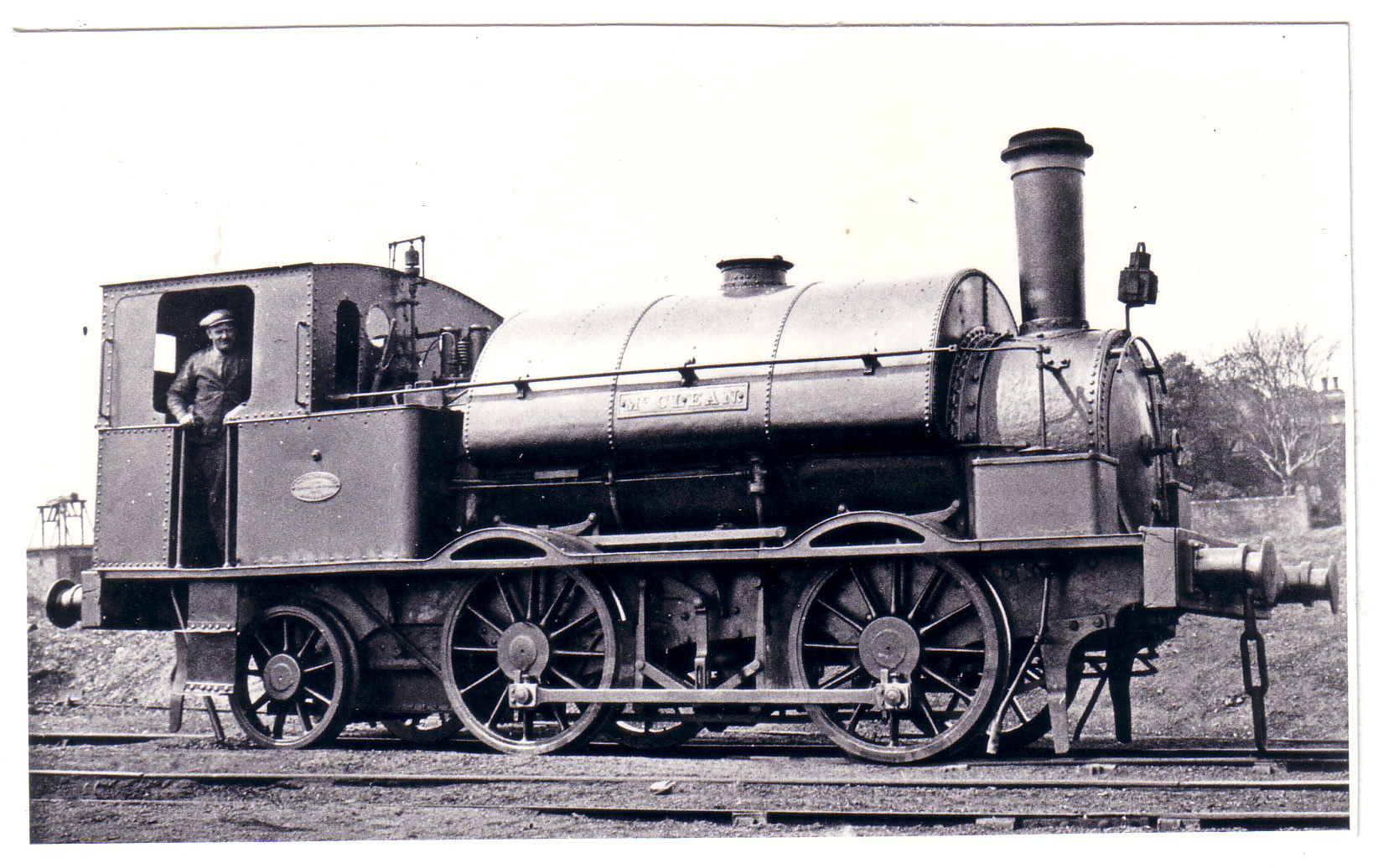
McClean Nameplate

1897

An opportunity presented itself in 2013 to acquire by way of private purchase half a dozen items of local colliery railway interest. Not since the 1960s and early 1970s, when in that period a good relationship existed between the Railway Preservation Society and local National Coal Board management and which resulted in several donations of interest has the chance to obtain in bulk such star items for the museum collection. First and arguably the finest piece from the Chasewater Railway point of view is the nameplate McClean from the 1856 built Beyer Peacock, the first of five similar locomotives delivered between 1856 and 1872. McClean lasted one hundred years before scrapping and in her later years was considered to be the oldest loco in the country still at work. The name McClean was bestowed in honour of John Robinson McClean who first came on the local scene as engineer in the construction of the South Staffordshire Railway before later, together with Richard Chawner leased land to mine coal forming the Cannock Chase Colliery.

05103 McClean 0-4-2ST Beyer Peacock 28-1856 Cannock Chase Colliery Co‘McClean’  Beyer Peacock 0-4-0ST  No.28 of 1856

Chasewater Railway Museum – Pensnett Railway Items

Chasewater Railway Museum

Pensnett Railway Items


Pensnett Railway Pay Check No.163 (1903)

Paycheck from the railway which once served the coal and iron industry, notably Round Oak Steel Works, Brierley Hill.  Known also as the Earl of Dudley railway as most of the eventual 40 miles of track was situated in the Dudley Estate, and at one time linked Old Hill, Cradley, Dudley, Himley, Wall Heath, Dawley Brook and Ashwood.  By the 1960s the only portions in use were the line to Baggeridge Colliery and the tracks around Round Oak Steel Works linking scrap bays, ancillary factories and works stores.

Built entirely for the movement of coal, etc. the only times a passenger service operated was on odd occasions when the Earl of Dudley took invited guests on a ‘jolly’ and on the few days per year of the annual Himley Fete and this only during the period 1928 to 1937.

Destination ticket for an empty coal wagon.

Card with instructions for repairs to coal wagon.

Chasewater Railway Museum – A Kellingley Pay Check

Chasewater Railway Museum

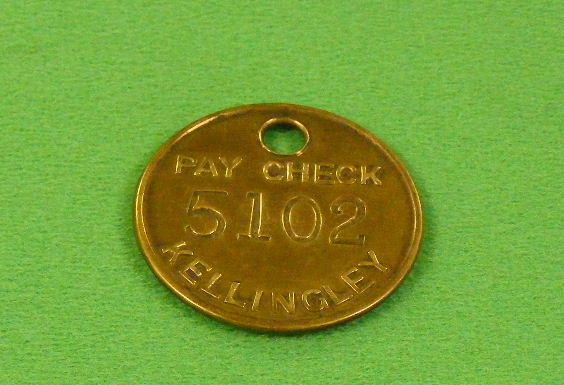
A Kellingley Pay Check

1481

Kellingley Colliery

Kellingley Colliery was the last deep coal mine in Britain. It is situated at Beal in North Yorkshire, about 1.5 miles east of Knottingley in West Yorkshire, on the A645 and 3.6 miles east of Ferrybridge power station.

Miners at a North Yorkshire colliery have finished their final shifts as the closure of the pit brings an end to centuries of deep coal mining in Britain.

Owner UK Coal said it would oversee the rundown of the Kellingley mine before the site was redeveloped.

Unions said it was a “very sad day” for the country as well as the industry.
Had it not been for the coal industry, there would have been very few canals or railways built, for example, Chasewater Railway would not have been built, as it runs over the trackbed put down for the Cannock Chase Colliery Company and used by other collieries in the locality.