Tag Archives: National Coal Board (NCB)

Chasewater Railway Museum – Hunslet Worksplate

Chasewater Railway Museum 

Hunslet Worksplate

3789-1953

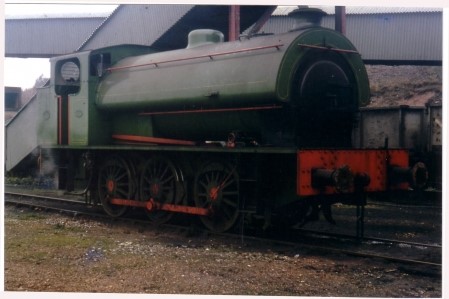
Two locomotive worksplates comprising of a cast iron Robert Stephenson and Hawthorns Ltd, 7292 of 1953 and Hunslet 3789 of 1953 have come to Chasewater Railway Museum, along with the three nameplates.

The Hunslet was delivered to Chasetown numbered 3 and was a replacement for the aged fleet of Victorian locos, she later saw service at Cannock Wood and Granville where she met her end after a life of just 16 years.

H 3789-1953

Chasewater Railway Museum – RSH Worksplate

Chasewater Railway Museum

RSH Worksplate

7292-1953

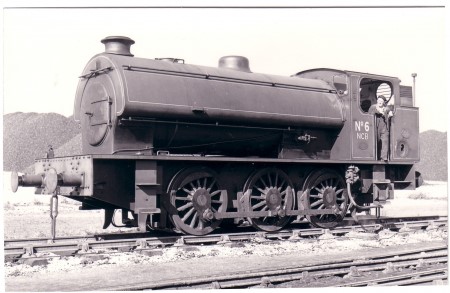
Two locomotive worksplates comprising of a cast iron Robert Stephenson and Hawthorns Ltd, 7292 of 1953 and Hunslet 3789 of 1953 have come to Chasewater Railway Museum, along with the three nameplates already described.

Both locomotives were of the Austerity type, the RSH coming to Littleton Colliery from its previous owner the War Department, in May 1947, originally WD 71483 she became number 6 at Littleton being cut up there in Oct. 1970.

RSH 7292-1953

Chasewater Railway Museum – 2 new mining checks

Chasewater Railway Museum 

2 new mining checks

DSCF2359

DSCF2355

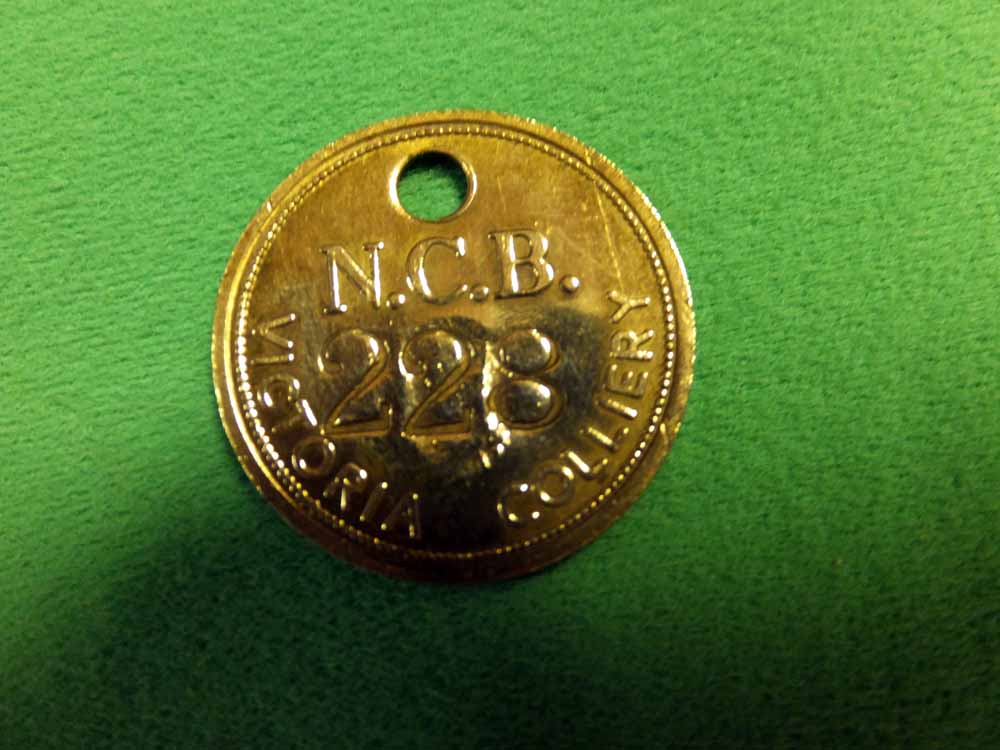
The top one is from the Victoria Colliery of the NCB, and the second, a time check from Chislet Colliery – of a more unusual shape.

Chasewater Railway Museum – More from Granville

Chasewater Railway Museum

More from Granville

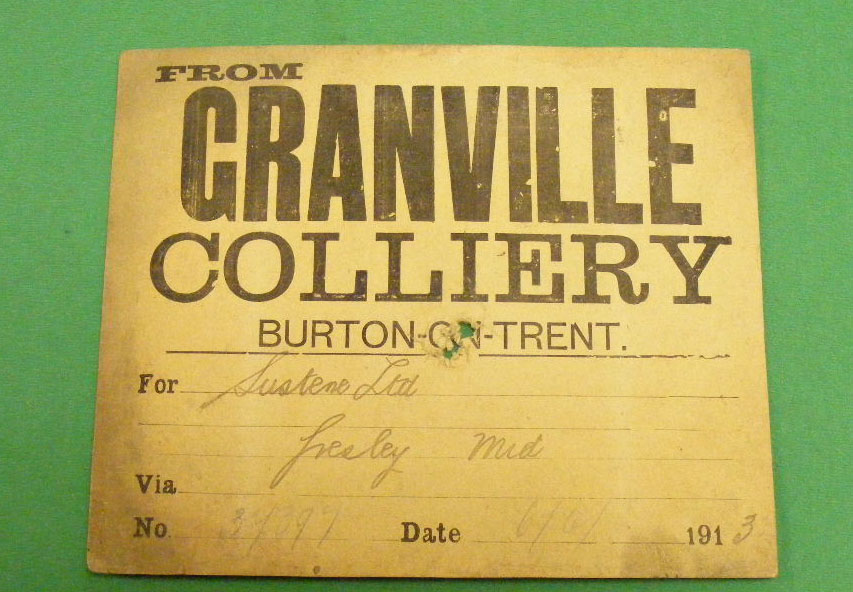
The first one is a wagon label from the Burton-on-Trent Glanville Colliery, dated 1913.  It has been in our collection for some years now and has always been discoloured – and obviously kept on a spike in an office somewhere!

1435

The other one is a colliery token from Granville Colliery  in Shropshire.  Granville Pit closed in 1979, bringing to an end more than 700 years of coal mining in the area which became Telford New Town in the 1960s.  This was purchased by the Museum in 2012.

Granvill Salop 545

Chasewater Railway Museum – A Small Addition

Chasewater Railway Museum 

A Small Addition

10789

A small addition to the Museum collection of coal miners’ pit checks is a pre-nationalisation of the coal industry example from the Granville Colliery Ltd.

The unusual thing about this particular item is, along with the Company name, it shows the location of Burton-on-Trent, whereas the real site of the Colliery was a few miles away at Swadlincote.

The first shaft was sunk in 1823/4 with number 2 shaft sunk in 1887. The earliest locomotives were six 0-4-0 saddle tanks of Hudswell Clark manufacture from the period 1890-1914.

On Nationalisation 1/1/1947, Granville became part of the NCB East Midlands Division No.7 Area and by then only two of the original locomotives remained. For short periods and at different times these two were supplemented/replaced by four Manning Wardle 0-4-0 saddle tanks, a Peckett 0-4-0 saddle tank, and finally a Ruston Hornsby 0-4-0 diesel of 165 horsepower.

Rail traffic ceased in January, 1962 and workings were merged with Rawdon Colliery. Final closure came in August, 1968.

Chasewater Railway Museum – Mining History Books

Chasewater Railway Museum

Mining History Books

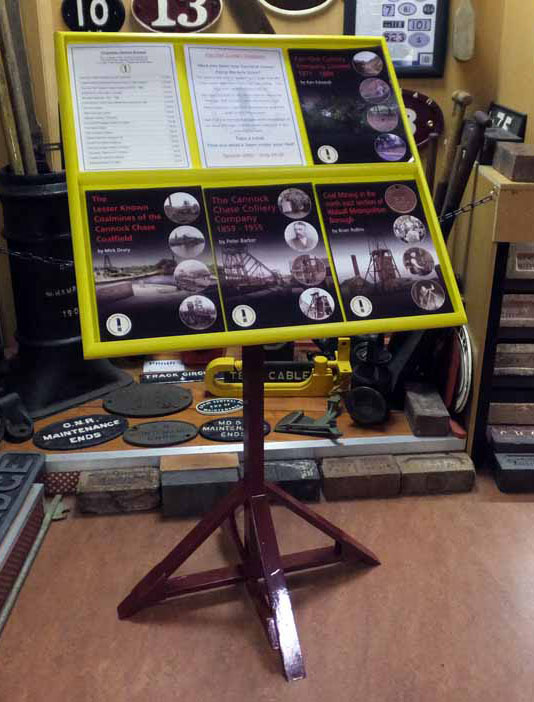
Stand cropped

Originally posted on oakparkrunners railway & other snippets.:

Did you or any one in your family work at one of the many Coal mines in the Cannock and Rugeley Coalfield. If so why not purchase one of the Mining History Books published by the Cannock Chase Mining Historical Society.

These informative books, with numerous photographs, of which there are 18 books in total, have been written  about mining, by the miners who worked at them. Each Book covers one or more of the local Collieries, and are available from Chasewater Railway Museum. please contact me if you need any further information. These books are about our Mining Heritage.

Chasewater Railway Museum – Museum Archive – An addition to our coal mining memorabilia

Chasewater Railway Museum

Museum Archive

Additions to our coal mining memorabilia
As you are no doubt aware, without the coal industry there would be no Chasewater Railway, as the original line was built for transporting coal, although passenger services were introduced from Brownhills to Aldridge via Walsall Wood. We are always glad to receive artefacts from the mining industry to display in the Museum.
Baths Invitation

1914.2
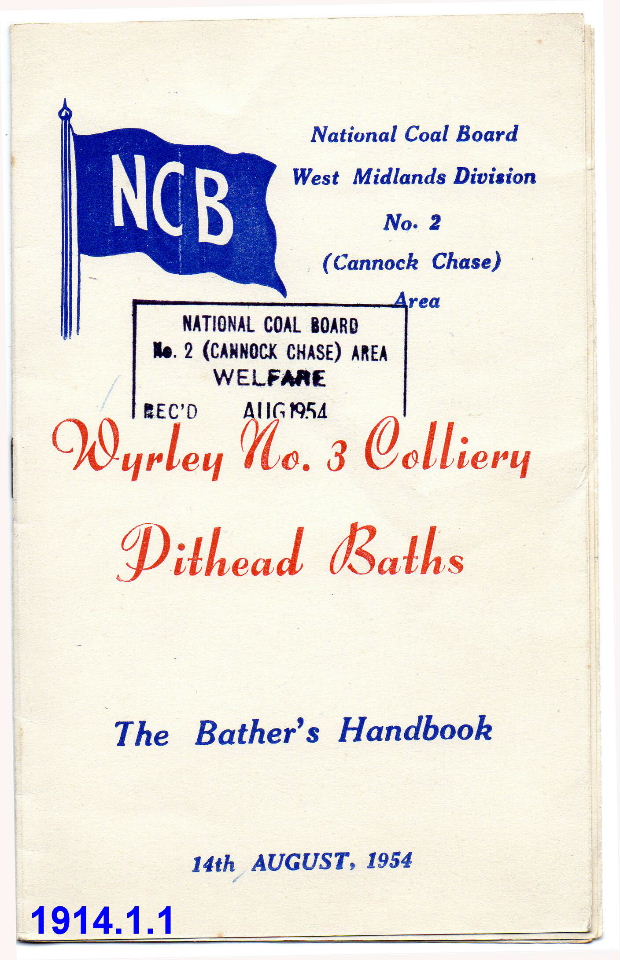
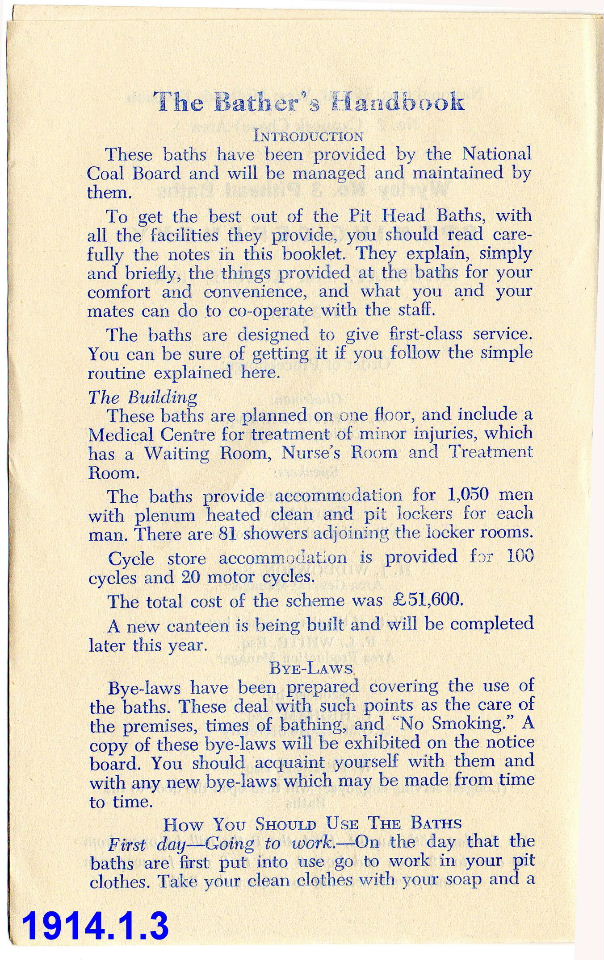
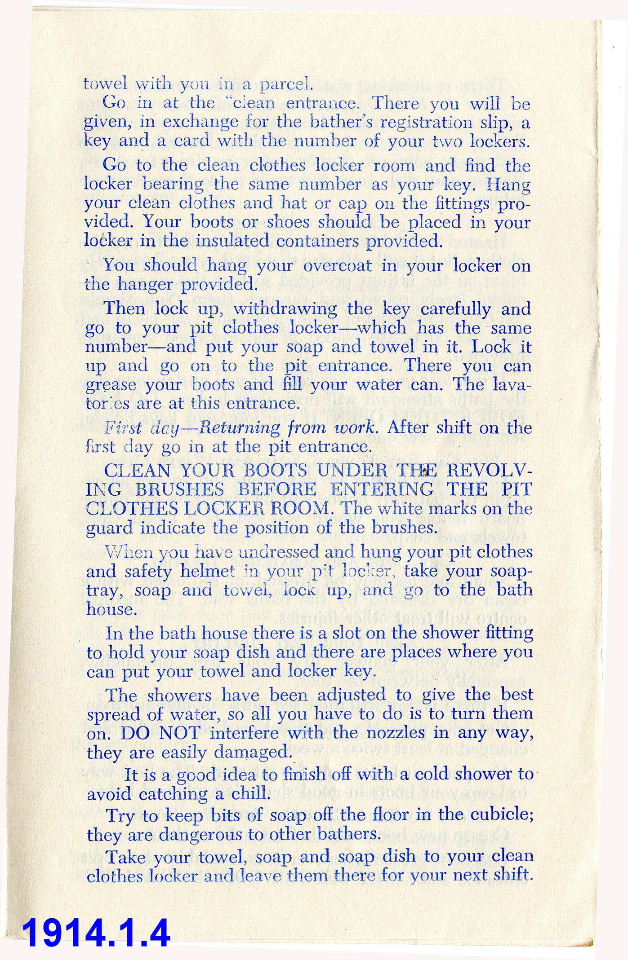
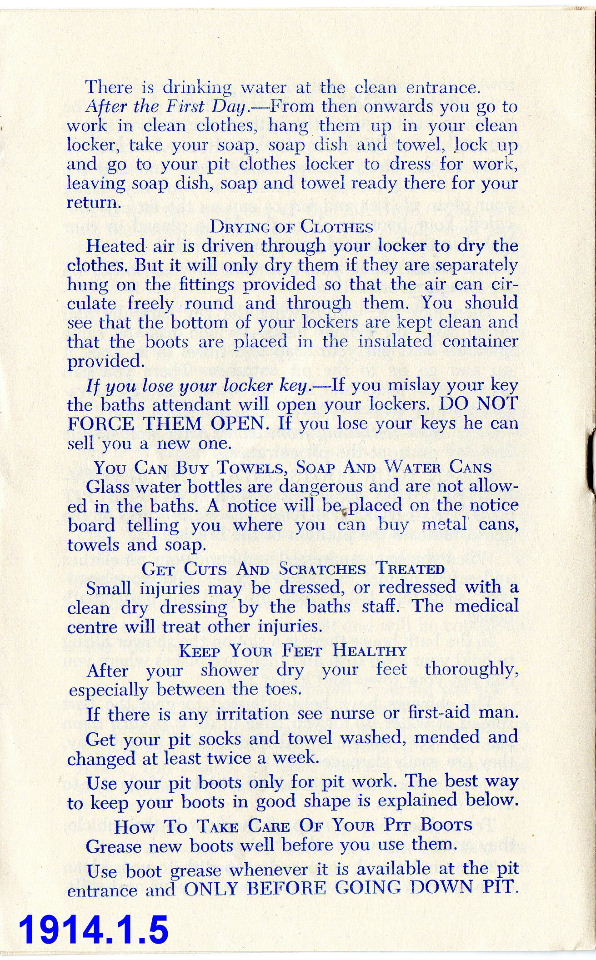
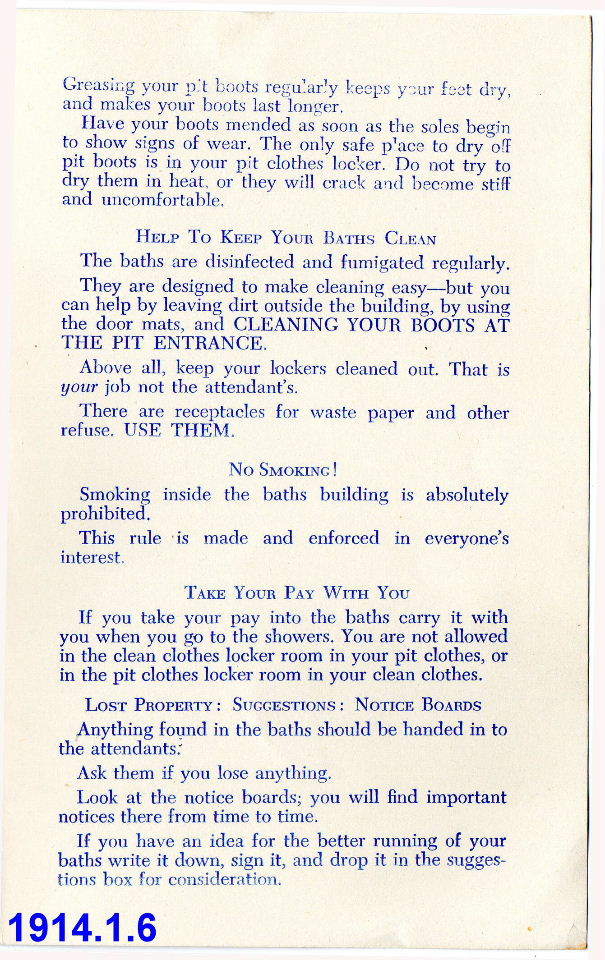
The latest of such items to come our way are an invitation to the opening of the Pithead Baths at Wyrley No. 3 Colliery, Great Wyrley, on August 14th, 1954, and The Bather’s Handbook.
These items came to the Museum from a former employee of the Colliery, his first job after National Service with the RAF.

1914.1.1

1914.1.2

1914.1.3

1914.1.4

1914.1.5

1914.1.6

Bather’s Handbook and invitation to opening of pithead baths formerly belonged to Mr. Frank Tisdale.

Chasewater Railway Museum – Cannock Wood Nameplate

Chasewater Railway Museum 

Cannock Wood Nameplate

21

One of the early, local, nameplates in the collection.  Part of the history of the loco follows.

No.9 Cannock Wood (The third and best-known ‘Cannock Wood’) 0-6-0T Built by the London, Brighton & South Coast Railway at Brighton in 1877 (LBSCR 110).  Bought from the Southern Railway (SR 110) in 1927.   Still working at Rawnsley in 1957, continued to work for the NCB into the mid 1960s then preserved by the Railway Preservation Society, originally at Hednesford and later at Chasewater.  Subsequently sold to members of the East Somerset Railway at Cranmore.  Was steamed there, but is now homed on the Isle of Wight for further renovation work.

05053 No.9 Cannock Wood 0-6-0T LBSC Rly 1877 C & R

This was new to the Museum – in 2012

Chasewater Railway Museum

This was new to the Museum – in 2012

1735

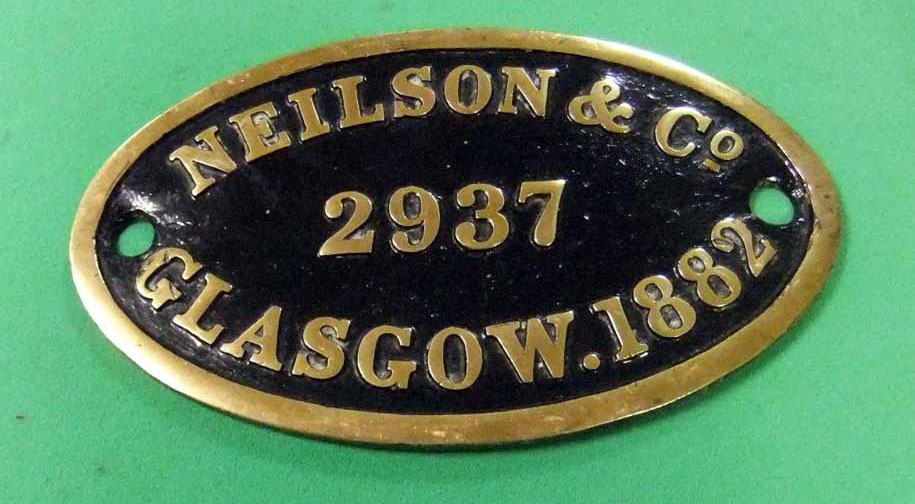
A locomotive worksplate, Neilson, 2937, 1882, from a 0-4-0ST O/C new to William Baird & Co (Ltd from 1893) at Bedlay Colliery near Glenboig, their No 11, becoming part of the Scottish Iron & Steel Co Ltd in January 1939, Bairds & Scottish Steel Ltd six months later and the National Coal Board in January 1947. It returned to Bairds & Scottish Steel Ltd at Gartsherrie Ironworks, Coatbridge, in about 1950 and following withdrawal, was acquired in June 1968 by Railway Preservation Society, Hednesford, Staffordshire and later went to the Chasewater Light Railway. Cast brass 10″x 6¼”, the front of the plate has been repainted.

05272 Neilson No.11 0-4-0ST 2937-1882 Chasewater Alfred PagetThe Neilson loco pre-Chasewater days.

Chasewater Railway Museum – our latest book

Chasewater Railway Museum – our latest book

DSCF9021

This book of photographs, by J.B.Bucknall, includes many pictures of local interest, and it was thought it would be a good addition to our collection.

One photo is of particular interest to Chasewater Railway members as it shows a coal train leaving West Cannock  5s pit, heading for the Hednesford Yard, and in front of the engine can be seen the first headquarters of the Railway Preservation Society (West Midlands Division), where the Society stayed rent-free for 10 years Courtesy of Charles Ives, Penkridge Engineering) before moving to Chasewater, and changing its name to the Chasewater Light Railway Society and later to the Chasewater Light Railway and Museum Company.

Coal train leaving W Cannock RPS

The building (between the 2 telegraph poles), which is still standing, consisted of brick pillars and a roof, but now the spaces between the pillars have been bricked up.