Tag Archives: Chasetown

142 – Chasewater Railway Museum Bits and Pieces

We are sorry but due to other commitments, the Museum will not be open this Sunday, 16-4-2023.

142 – Chasewater Railway Museum Bits & Pieces – From Chasewater News December 1991 – Part 1

Editorial – Nigel Canning

On September 3rd this year our hard work finally paid off when Major Olver inspected the railway and gave us permission to run on the extension past Willow Vale.  Next year when our newly delivered concrete platform has been built, we could even be running trains to a timetable.  A lot of hard work still remains to be done, but by the end of 1992 we could well be running to the causeway.  It is now entirely up to us, the more effort we put in, the further we will be able to run trains, so if YOU can help: PLEASE HELP EXTEND THE LINE IN 1992!!

Locomotive News – Including extensive news about Asbestos

Asbestos leaves Brownhills West propelling the Gloucester trailer.

No.4 Asbestos – Many members will have been wondering what has happened to Asbestos and why it has not yet been returned to traffic.  When the loco last worked (in 1989) it was suffering from a number of ailments, none of which were particularly bad, but all added to make the loco a rather cantankerous old lady.  When the boiler became due for inspection it was decided to rectify as many of the faults as possible.

One major worry was the state of the foundation ring rivets at the base of the firebox.  A few of these were found to be leaking and needed replacing.  Some of the quotes for the repair were alarming.  One company quoted £1,500, if we took the boiler to their factory on Leicester.  Fortunately we found a boilersmith who was prepared to travel to Chasewater and do the repairs ‘in situ’.  This saved a great deal of work lifting the boiler out of the frames.  The bottom three rows of tubes were also removed as these were older than the rest and in need of replacement.

With the repairs complete, the boiler was cleaned to allow the inspector to use his ultra-sonic tester to measure the thickness of the boiler plate.  One unpleasant surprise was the state of the inner firebox around the fusible plug.  The plate was corroded and was only 7mm. thick, very close to the minimum allowed.  Nevertheless the inspector pronounced the boiler OK with the proviso that we keep a close eye on the thickness of the plate around the fusible plug.

The next problem was replacing the two dozen boiler tubes.  Fortunately the tubes in Asbestos are the same diameter as a Hunslet ‘Austerity’ 0-6-0, and we happened to know of just such a loco which was undergoing a mayor re-build.  The tubes were only a couple of years old, and once cut down to length would be just the job.

Then, suddenly, the CLR finances took one of its periodical downturns and there was no money to spend, even on second-hand tubes.  The time was not entirely wasted, as the loco was blanked off ready for its hydraulic test, and the cab fittings were overhauled to make them steam-tight.  Even so, many weeks were lost.

The boiler tubes arrived at the end of June, and were then cut to length, cleaned, annealed and expanded into place.  The regulator will also receive attention and, hopefully, the loco will pass its hydraulic examination.

The long term future of the loco is somewhat doubtful.  The firebox will need further repairs, and although it may be possible to weld a circular boss in the firebox crown relatively cheaply, the loco is still likely to need a full set of tubes costing around £1,500.  Will the money be available to pay for the repairs?  We shall have to wait and see! – P.Aldridge

No.5 Sentinel – This loco has continued to work all of the passenger trains, and whilst running on the free coal found in the ex Lea Hall mineral wagons is very economical indeed.  With the opening of the new track extension, bunker capacity is again becoming critical and may have to be further improved,Ken Judkins poses for the camera with his 200hp Sentinel during a demonstration at Cargo Fleet Steelworks in Middlesborough in the 1950s.  The loco on the right is an earlier Sentinel rebuild of a conventional loco.

No.2 Lion – This loco is still awaiting a new set of washout plugs so that it can be hydraulically tested.

S100 – Work has started on moving the boiler from the site now required by the C & W Dept down to the loco shed yard.  Now that the hornguide grinding machine has been perfected, work will start on the actual grinding process.

DL7 – This loco has stood with one of its cylinder heads missing for a number of weeks.  Apart from a valve being stuck open, the valve seats are in an extremely bad condition, requiring re-machining and grinding in.

Fowler – This loco has again carried out all the shunting and works train duties without problem.

No.21 Diesel – Work has started on the restoration of this little loco with the cleaning and painting of the bodywork and frames.

 No.21 in the Heritage Centre at Chasewater,  2011

Smith Rodley Crane – The crane has remained out of use and requires adjustment of its clutches before it can be used on its next big job – the building of Willow Vale platform.

139 – 137 Chasewater Railway Museum Bits and Pieces

139 – Chasewater Railway Museum Bits & Pieces

From Chasewater News Autumn 1991 – Part 2

How it was, how it is and the 1st Burntwood Scouts

 Initially we started the track attack around Jan/Feb 1990, but an accumulation of other, more pressing jobs needed our attention.  As a result, it was decided to leave the planned track extension until a later date, which was more or less twelve months later.

How it was.

After laying 50 odd concrete sleepers between two of us, just Pete and I, we came to the conclusion that the rails were out of true, that is, they were not in uniform lengths.

We concluded that it would take more than two of us to correct this problem so we decided to leave it until later in the year, and, as stated earlier, other jobs required more urgent attention.

Meanwhile, it had been decided that the various departments of our railway required better leadership, and as a result, Les Emery became our Permanent Way foreman.

Firstly, I suppose he felt like any other p-way ganger would, that trundling down 1,000 or so yards of track to nowhere specific causes enthusiasm to wane a little.  Secondly, he seems the kind of bloke who has the uncanny knack of proving the need for his actions, and if a job should crop up, would rather do it first than answer for it later.  Now the p-way gang get even the most tedious jobs done, whether it is weedkilling, tightening fishplate bolts, or even cutting back the grass banks or trees.  Using a shovel and sweat (unless some kind soul out there has got an old JCB to lend us?) quite a lot has already been achieved.How it is.

Things are coming on nicely thank you.  Since starting the ‘track attack’ in February, Les came up with a brilliant idea for moving 60 foot lengths of rail with only about three blokes, by the use of three small rollers onto which the rail can be jacked and then pushed along.

Our gallant leader believes that we could be at the bottom of the causeway bank by the end of October, others reckon spring 1993, and that id laying the track, ballasting and having it passed by the Railway Inspectorate.

Ur long term ambition is to relay the track as far as Anglesey Wharf, which is close to the bad canal bridge in Wharf Lane.  Mind you, that’s a long way off yet, but the way things are going, could be in the next ten years or so.

Our main concern will shortly be the causeway bank which has got to be braced and backfilled as the water has eroded the banks on either side.  The ‘spiky bridge’ also needs repair; I wonder if it will still be called the ‘spiky bridge’ once it is repaired?  We are fortunate to have no underbridges on this railway, just the two overbridges.

It is hoped to use the existing platform built years ago by the Manpower Services Scheme on the other side of the causeway.  This would be the end of our extended run until further rail and sleepers could be obtained.

Our track attacks take place once a month, with minor maintenance jobs done in between.  With our line getting ever longer, weedkilling by watering can is tending to become an all day job.  A big tank with a spray pipe at one end could be a solution to the problem.After the toe rags smashed the Willow Vale bridge handrails off completely, Dave, Keith and Paul fabricated new handrails using old bullhead rail so that should, I pray, be that job done.

I should mention the great help we had from the Burntwood Scouts during the May track attack – it was much appreciated – cheers.

Arthur Edwards

The 1st Burntwood Scouts and the May Track Bash

1st Burntwood scouts were one of the largest scout groups in the Lichfield District.  They had just under 200 members ranging from 7 year old Beavers through to 20 year old young men and women in the Venture section.

Whilst many of the activities have changed over the years, to meet the challenges of today’s society, one activity which is still central to scouting is that of helping others.  This can take many forms, but one in particular is that of becoming involved in the local environment.

When Dave Whittle mentioned that the Chasewater Light Railway hold regular sessions to clear and extend the running line, the Jupiter Troop of scouts thought that this would not only be a worthwhile environmental project to become involved in, but might also be good fun.

As it turned out the boys who came along all thoroughly enjoyed themselves, put a bit of work in as well, and went home both tired and wanting to return.  Now that we have made the contact, we will be bringing parties of scouts along to help out in any way that we can.

1st Burntwood Scouts.The scouts pose with the CLR track gang in front of the works train at the end of the May ‘track bash’.

137 – Chasewater Railway Museum Bits & Pieces

From Chasewater News April 1991 – Part 5

More Sid Browne Memories – Pete Aldridge

Flat Tyres

Whilst industriously playing cards one morning in the1960s at Bescot, Sid was summoned to the foreman’s office.

‘Sid’ said the foreman, ‘There’s a special test train waiting at Wolverhampton.  They haven’t got a guard, so I’m sending you along.’Gateway to the high level railway station

This building is described thus on a blue plaque erected by the Wolverhampton Civic Society:
“The Queen’s Building. Gateway to the High Level Railway station. Erected 1849. Edward Banks, Architect.”
It is located a short walk away from the mainline station. The bus station is located beside it.   © Copyright Ruth Sharville and licensed for reuse under this Creative Commons Licence.

Sure enough a taxi arrived and took Sid to Wolverhampton High Level.  The special train consisted of four brand new electric locomotives, two at each end of a test coach.  It all looked very impressive.  Alas, no-one had a key to open the doors on the coach, so Sid, a petite sixteen and a half stone, had to force his way in through the corridor connection.  The key was hanging up in a corner of the coach.

Eventually everyone got on board.  The driver of the electric loco was told ‘You’ve got a clear path through to Stafford.  Go as fast as you can from here and don’t stop no matter what we do with the brakes until we get to Stafford.

‘Hello!’ thought Sid ‘This should be fun.’

The train started off and rapidly picked up speed.  ‘Just a minute! called one of the inspectors, ‘The handbrake’s still on the coach!’

‘So take it off then’ chimed another inspector.

‘Could be tricky,’ said Sid ‘It’s external; there’s no way of getting at it from in here.’

The inspector applied the vacuum brake, but to no avail, the driver was carrying out hid instructions to the letter.

What a sight it must have been, four gleaming electric locos, pantographs sparking and flashing, with the tyres of the test vehicle flashing and sparking as well.  As it turned out, the driver did not get the clear run he had been promised, and the train stopped near Penkridge.  The inspectors hurriedly released the handbrake and climbed back onto the train.  The signals changed and the driver set off once more.

‘THUMP THUMP THUMP’ went the coach wheels, which had huge flats on their tyres.  The train accelerated up to Ninety miles an hour.  ‘THUBITY THUBITY THUBITY’ the coach shook and vibrated.   Things fell of shelves and out of cupboards.  This was unbearable.

At long last the train arrived at Stafford.  ‘Everything OK?’ asked the driver as he climbed down from his electric.  The test crew, plus Sid, were ashen faced and feeling far from well.

‘No, not really,’ replied the inspector, and was promptly sick!The first ‘Peak’ Diesel leaving Stafford on an Up express View NW, towards Crewe etc. on the WCML. By 1960 many WCML expresses had been handed over to Diesel haulage: here No. D1 ‘Scafell Pike’, the first BR/Sulzer ‘Peak’ 2,300hp Type 4 1-Co-Co-1 (later Class 44 No. 44.001), pulls the 08.30 Carlisle – Euston out of Stafford station.  © Copyright Ben Brooksbank and licensed for reuse under this Creative Commons Licence.

136 and 138 – Chasewater Railway Museum Bits and Pieces

138ChasewaterRailwayMuseum Bits & Pieces

From Chasewater News Autumn 1991 – Part 1

Editorial – Nigel Canning

This summer has seen a number of achievements on our railway.  The station and its facilities have been improved, the track is gradually being extended towards the causeway and the existing running line maintained to the best of our ability.  One big problem, however, still hangs over the line – the proposed motorway.  The latest news is that it will be a toll road, and for various reasons may not now be completed until 1997.  If we had a tiny percentage of the money already spent just planning and re-planning the motorway we could probably complete our railway and finance it for the next fifty years!

Locomotive News

No.4 Asbestos – Work on this loco has continued with the fitting of twenty four boiler tubes to replace those leaking when the loco was taken out of service.  The steam manifold in the cab has now been re-machined and a new main shut off valve fitted.  It is now likely that the hydraulic test will be carried out in the next couple of months.

No.5 Sentinel – This loco has worked all the passenger trains so far this year without major incident.  The recent closure of Lea Hall Colliery brought about a brief change of fuel on the railway, and 9632 seemed to be much happier running on the replacement Littleton coal, however with the arrival of our two new mineral wagons and their unexpected contents the loco is again running on Lea Hall coal.                          One consequence of a Sentinel powered railway is that the water column has fallen into disuse and has not even been filled this year as the loco will run all day on its 500 gallon thankful with perhaps a little topping up from the hosepipe.

No.2 Lion – Four new mud doors have been made and fitted to the firebox, but the loco still awaits a set of washout plugs before it can be hydraulically tested.  Already two sets have been specially made and found to be wrong to the dimensions specified.  A third set is now being made!

S100 – Work is still progressing on the building of a machine to re-grind the hornguides of this loco.

DL7 – Upon attempting to start the engine after its having stood out of use for a few weeks yet another valve jammed, bending its pushrod.  This time the damage appears more serious, requiring the removal of one of the cylinder heads to allow a repair to be effected.  As a consequence the loco has been out of service throughout the summer.

Fowler – This loco has remained in regular use for shunting and for works train duties without problem, although it seems to have developed a loud hiss from the exhaust outlet, the reason for which has yet to be established.

Smith Rodley Crane – The crane has remained out of use lately although some work has been carried out in preparation for the fitting of safety guards over the exposed gearing in the cab.

Permanent Way News

As usual a lot of hard work has been put in on track maintenance and relaying.  Work on the extension has been restricted to the monthly ‘track bashes’, but even so we are now getting very close to the houses at Norton.  The May ‘track bash’ was boosted by help from the 1st Burntwood Scouts, although since then the holiday season has reduced numbers quite dramatically (to four on the August ‘bash’.Flier included with the magazine!

On other weekends effort has been concentrated on the existing running line.  Various sections have been re-packed and aligned, as a result of which the ride is much smoother than it has been.

The whole of the running line as far as Willow Vale has been weed killed by hand using watering cans, a mammoth task by any standards, and now looks very tidy indeed.  In July a large area of weeds was dug out from the end of the line by a party of pupils from Brownhills Comprehensive School, making a great improvement.  Even the bridge handrails have been renewed, this time using toe-rag proof bullhead rail and point rodding.

The concrete platform for Willow Vale was scheduled to arrive in July, but due to the SVR’s crane driver being ill, has been delayed for a while.  Hopefully we can still get it delivered to Chasewater before the start of the dark evenings.

Carriage & Wagon News

It looks as if work will shortly begin on building a small carriage shed to allow restoration of wooden stack to continue in bad weather.  It is intended that this ’temporary building’ will be erected against the buffer stops on No.1 road using steelwork and sheeting which has been in storage in the loco shed yard since last year.  Work will commence with the painting of the metalwork and clearing of the proposed site.

Midland four-wheel Passenger Brake – A number of wooden panels have been removed for repair and to give access to the framework beneath.  Because of this, the vehicle has remained partially sheeted over.

Manchester, Sheffield & Lincoln six-wheel coach – This vehicle has also received attention to its wooden panelling.

Great Eastern six-wheel Passenger Brake – This is yet another vehicle which has had body panels repaired, and this time painted in blue temporarily in order to keep out the weather.

Maryport & Carlisle six-wheel coach – This vehicle has been completely sheeted over and no further restoration has been carried out.

Wickham 2-Car DMU E56171 & E50416 – These two vehicles are still separated as the trailer is still; running as part of the passenger train.  With the new station buffet now open for business, and the Derby centre car soon to take over on the passenger train, they will shortly be re-united so that their restoration to a working DMU can begin.

Gloucester Trailer E56301 – This vehicle has remained in service on the passenger train without problem, although the bodywork is now somewhat tatty to say the least.

Derby Centre car W59444 – This vehicle has not yet entered service but will do so shortly as soon as the Guard/Driver buzzer system has been modified.  Up until now a separate wiring harness has been added to each coach for this purpose, but to simplify things, a special jumper cable has now been made so that coaches can connect via their own cabling, and to the loco via the new jumper lead.   Once the Wickham is taken out of service, a new bar will be needed, possibly the ‘Derby Bar’.

Wagons – Details of the two new steel-bodied mineral wagons are given in a later post.  The two GWR brake vans have remained in use as mess and tool vans on the works train.  No work has been carried out on any other vehicle.

General News From The Line

Bric-a-Brac Stall – This now well established feature of Brownhills West Station continues to make a large contribution to the upkeep of our railway, typically £50 or £60 over a Bank Holiday weekend.  Many thanks to Jan Forrest for the donation of books for the stall.

Station Buffet – The new station buffet is now open for business and requires only minor work such as the fitting of steel roller shutters over the windows to complete the structure.  Named the ’Shunters’ Cabin’, this establishment is also making money and is a fantastic improvement over the previous arrangement.  Mains water and electricity, and a staff toilet, are among the facilities not previously available in the old Wickham buffet.

Portaloos – The ‘Ladies’ and ‘Gents’ have also opened for business.  This feature of the station will no doubt be appreciated by the public, and stands as a tribute to Walsall Council’s total disinterest in facilities at Chasewater.  The building has been painted in maroon and cream with strategically positioned flower beds to hide the wheels.

136 – Chasewater Railway Museum Bits & Pieces From Chasewater News April 1991 – Part 4 More Sid Browne Memories – Pete Aldridge

136 Chasewater Railway Museum Bits and Pieces

From Chasewater News April 1991 – Part 4

More Sid Browne Memories – Pete Aldridge

One Upmanship

During the 1960s many long cherished traditions on the railways were swept away.  The scrapping of steam and the closure of many branch lines are well known, but in fact almost every aspect of railway life was changed.  For many decades the railwaymen had worked to their own hierarchy, whereby the most senior guards got the best pay, and generally easier jobs.  Then the tide of change began to sweep in.

As a goods senior guard at Bescot, Sid was among the more senior of the staff and had become used to the ‘plum jobs’.  One of these was the Bescot to Sheffield goods train as this involved maximum pay for minimum effort.  One morning, however, a new policy was introduced.

The foreman introduced a slightly scruffy looking young man to Sid.

‘This is Norman’ he said, ‘He’ll be taking over some of the Sheffields, so can you show him the road and make sure he’s OK?’

Sid was far from pleased.  The youth was a new recruit and had what we would call today an attitude problem.  Sid was determined to show him just who was the boss.  Once all their duties were done, Sid and Norman climbed into the brake van.  The driver of the Sheffield bound train also knew what was at stake, and intended that this new youth should be put in his place.

To Norman’s surprise, Sid lay stretched out on the bench in the brake van and apparently dozed off.  Norman did not know that in this position Sid had a good view of the train through the ducket in the side of the van.  Through half closed eyes Sid watched the loco until its cylinder drain cocks opened prior to the train moving off.  Sid yawned and appeared to wake up.  ‘It’s about time we were off’ he said nonchalantly.  ‘How do you know?’ began the youth, but before any explanation was given the van jolted forwards.  They were off.  ‘It’s a sort of sixth sense you get’ said Sid mysteriously.  Sid pretended to doze off once more while all the time looking carefully through the ducket.

After a few minutes Sid stirred again.  ‘I reckon the peg’ll be against us at Brownhills’ he said.

‘Why do you say that?’ said Norman.

‘Just a feeling’ explained Sid, not, of course, admitting that he could see the approaching signals.  Sure enough, the train slowed and Sid laconically pulled the hand brake on.

At every junction, station or landmark along the way Sid would mystify his unwanted pupil, pretending to be asleep until his mysterious sixth sense popped up/

‘Smell that?’ said Sid ‘That’s the hops at Marston’s Brewery.  It’s a totally different smell to the hops at Bass brewery.  If you’re going to work this line at night you’ll have to tell the difference or you’ll not know what part of Burton you’re in.’

Young Norman’s self-confidence was beginning to crack.  Did you really have to be a beer expert to become a railway guard?

Just outside Sheffield Sid drove his point home.

‘Ah!’ he said ‘Roast mutton’.  Poor Norman was mystified.

‘What day is it?’ asked Sid.

‘Err… Thursday’ replied Norman.

‘Then we must be at Millhouse, you see the Victoria pub serves roast mutton on Mondays and Thursdays.  The pub’s right next to the railway, so you can’t miss the smell.   The trouble is, the Railway Hotel at Heeley also serves mutton, but on Tuesdays, Wednesdays and Saturdays, so you need to remember what day of the week it is and who serves what on what day of the week, otherwise if it is foggy, you might not know where you are.  Is that all quite clear?’

Norman just did not know what to think.  Not only did you need to be psychic and a beer expert, you had to be familiar with all the pub menus on either side of the railway and a walking almanac.

Needles to say, Norman soon left the railway and the ‘Sheffields’ remained in the hands of the senior men a while longer.

(Actually, those railwaymen who knew Sid would probably say that he DID know the pub menus on the line from Bescot to Sheffield!)

 Experience at Chasewater proves the answer to this question to be a resounding ‘YES!’

Please note: While these stories are as they were told to Sid’s grandson, and have not been knowingly embellished, the author cannot be held responsible for any inaccuracy!  If they are not true, they ought to be!

134 and 135 – Chasewater Railway Museum Bits and Pieces

134Chasewater Railway Museum Bits & Pieces

From Chasewater News April 1991 Part 2

The “Derby Works” Centre Car

After several months of anticipation, former BR Class 116 DMU centre car No.59444 finally made it to Chasewater on 22nd January 1991.  This coach, purchased by Mr. Les Emery, started its journey on the previous Sunday when it was shunted from the BR maintenance depot to the Birmingham Railway Museum.  On Monday 21st it was loaded on to the low-loader and set out for Brownhills West.  Unfortunately, a mix up with the police escort for this abnormal load led to it being left overnight at the transport café known as the ‘Greasy Spoon’, just off the M6 at Gailey.

The following morning, however, the journey continued and by 11.30 the huge lorry was in position for unloading.  All that we had to do was to propel the flat wagon up to the unloading ramp, couple up, and pull the coach down the ramp.

At this point, the lorry with Mr. Newbold’s new saddle tank arrived causing a few minute’s delay as the tank had to be unloaded onto the flat wagon we were about to use.

After about twenty minutes, the flat wagon, complete with its £6,000 worth of saddle tank was cautiously propelled up to the coach.  Remembering the entertaining few hours we had recently spent unloading the two recently acquired brake vans, all those present were rather anxious, as I am sure readers will understand.  We need not have worried, as the coach came down the ramp and onto our tracks without any problem.  By the time we has shunted the coach into ‘Elseley’s Siding’ and coupled it to a brake van, the haulage company were already off down to London to take a coach from Stuart’s Lane to the steam railway at Swanage.

Once safely coupled to the brake van, (remember that there are no handbrakes on a 116 centre car), we indulged in a brief trip down the line to Willow Vale and took the opportunity to take a few photographs.  With a 20 ton ‘Toad’ one end and the Fowler diesel on the other, the latest CLR acquisition was certainly a heart warming sight.

It is anticipated that this coach, which requires almost no interior work, will enter service early this year, but will be repainted in a suitable colour scheme in the summer.  The coach will carry theCLR number 104, and its old BR number of 59444 to keep the gricing fraternity happy.

Although many steam railways have whole rakes of coaches delivered at a time, we can feel suitably pleased with our coach, the first of its type in preservation.  Many thanks and congratulations are due to its proud owner, Mr. Emery.

135 Chasewater Railway Museum Bits & Pieces From Chasewater News – April 1991 Part 3 A new Tank for Lion – Ian Newbold

135 Chasewater Railway Museum Bits & Pieces

From Chasewater News -April 1991 Part 3

A New Tank for Lion – Ian Newbold

When I bought this loco, I was aware that its saddle tank had seen better days, but I was naively optimistic despite over a decade of playing with other people’s locos. I should have known better! As the loco’s rebuild progressed, in the normal far from smooth manner, I started to investigate the tank more closely. Now some of the older hands at Chasewater were probably having a quiet snigger at this stage, and after a few days of shovelling debris out of the tank and hitting it with a hammer I realised I had quite a problem. This problem is known by a number of names, in Italian it is Fiat, in Japanese it is Datsun, in plain English – rust, and it has an iceberg-like quality – you only initially see the tip of the problem. At this point, I went away and started asking for advice. In reality, patching the tank was unlikely to solve the problem for more than a very short while, also, how do you weld to a lace petticoat-like structure? I think it would be a case of ‘chasing the dragon’. Anyway, I tried to keep all the options open in my mind, including a lorry-load of glass fibre and car body filler. If Flying Scotsman’s second tender could have six tons of concrete in the bottom to stop it leaking, I’m sure I could find a solution to Lion’s tank. Enquiries gave a guide commercial price of around £3,500 to £4,500 for a replacement saddle tank which to be honest was a little outside my price bracket, and as I didn’t want to upset the bank manager, it was find a cheaper option time. A feasibility study into the loading effects of side tanks proved that they were a contender which, while still pricey, were a fair bit cheaper than a saddle. Rubberised and other coatings for the inside of the original tank also came in for investigation. Whilst all this was going on, a chance question from an acquaintance at work started the ball rolling in a different direction. For the benefit of those who are unaware, I have the dubious fortune of working in the newspaper industry – not one of the world’s most stable jobs these days, and noted for its internal politics. Anyway, I was asked how the loco was coming on and I remarked ‘Fairly well except for the tank’. Later the same week a ‘piece’ appeared in the Birmingham Post about a chap who wanted a new saddle tank for his loco. The next day a gentleman named Peter Johnston, Director of the Coventry fabricating and plant installing firm of A.G.Brierly Ltd. contacted me at work, and after a phone chat he asked me if I could send a sketch with dimensions, and if he could handle the size he would do his best to help, provided I could wait until his workload was slack. That sketch was in the post to him later the same day. In the intervening time, I attempted to prise a copy of the loco’s drawings out of the NRM at York, however it seems that if you have a hairbrained scheme such as trying to re-create a mainline loco you can have the drawings, but to repair an existing industrial you have got no chance. Personally I think someone has got their priorities a bit wrong, why bother to keep these drawings if they cannot be used for what they were intended? Why not just have a nice bonfire? Anyway, about eighteen months later, last November, I received a phone call from Peter Johnston asking if the tank was ready to be taken away. It was, and about a week and a half later it was in Coventry. It was a few weeks later that my work roster allowed me to go and have a look at how things were progressing. What I saw came as a surprise, for I had been expecting the rotten section of the old tank to be renewed. What I was witnessing was the creation of a brand new faithful copy of the original made without drawings using modern construction techniques. A.G.Brierly Ltd. even went to the trouble of fitting false rivets to keep the appearance the same. My own feelings at the time were difficult to sum up simply, but elated gives a fair impression of them. Peter Johnston, it transpired, had been a coppersmith at Swindon Works and was undertaking this as a one-off project. Basically it was his donation to railway preservation. Also, having talked to him and to those associated with him, he is a very genuine person, a true gentleman. The new tank made its appearance at Chasewater the same day that the new coach arrived. I had attempted to ensure it arrived the day after, but a foul up over police escorts meant the coach arrived a day late – the best laid plans of mice and men and all that…. Needless to say that it proved to be a fairly exciting sort of day! As a public thank you, I managed to get the ‘Birmingham Post’ to do a follow-up ‘piece’ with a photograph of the new tank being fitted. I will admit to being a little apprehensive as the tank was lowered into position, as the fit between the front of the cab and a lip around the smokebox is rather snug. I needn’t have worried, to quote a friend of mine who watched the proceedings ‘it fitted like a glove’, an example of true craftsmanship. The gift of this new tank has helped ensure a reasonable future for ‘Lion’ as a working loco and I personally will always be indebted to Peter Johnston. I would also like to say thank you to all those at Chasewater who helped – especially Peter Aldridge for painting the inside of the tank – I believe his appearance afterwards was a sight to behold.

The Chasewater News magazine cover on No. 133 shows Lion with the new tank.

Chasewater Railway Museum – Nice New Acquisition

Chasewater Railway Museum 

Nice New Acquisition

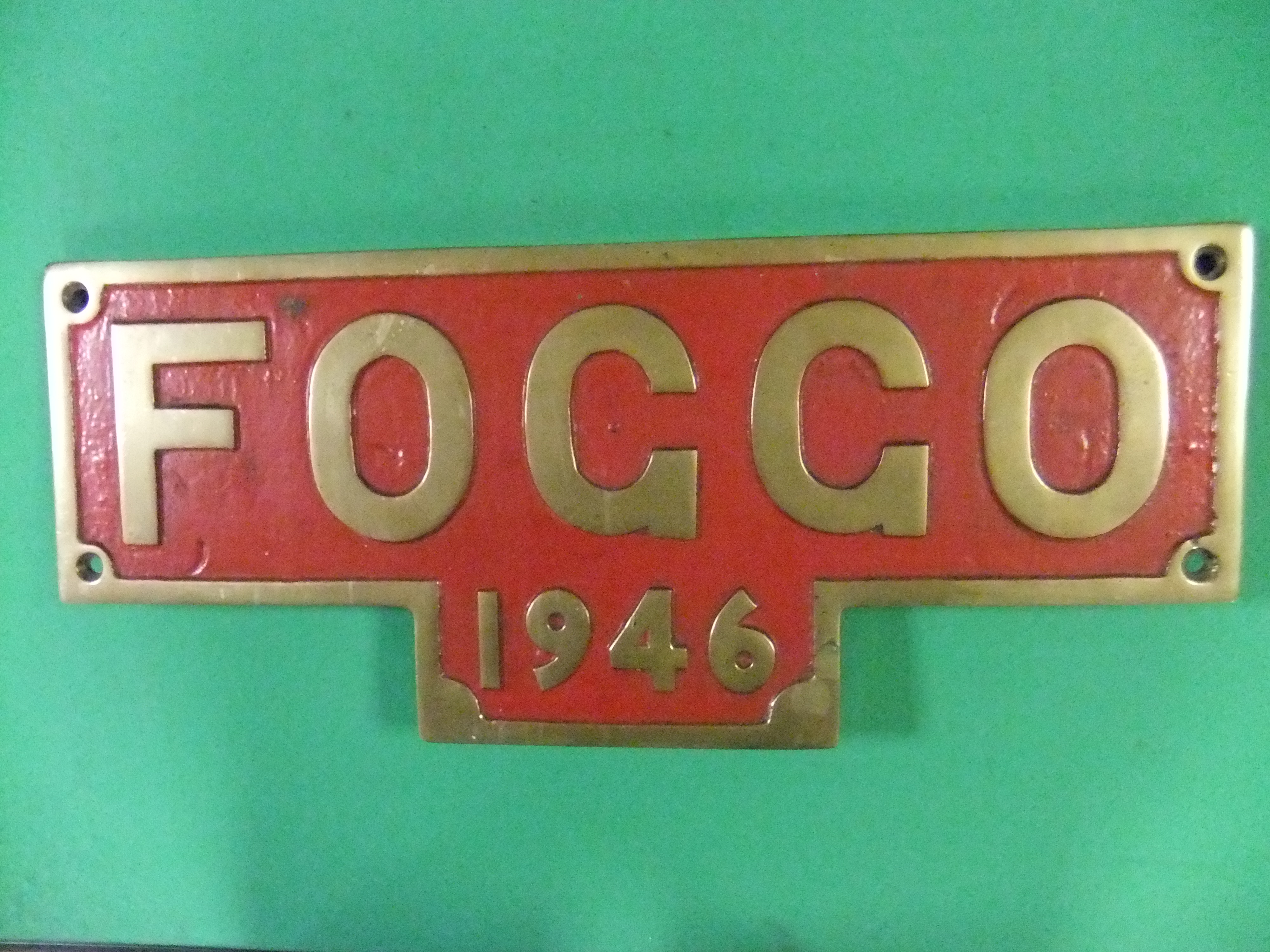
This latest acquisition is a very welcome addition to the Museum’s collection of local Cannock Chase items.

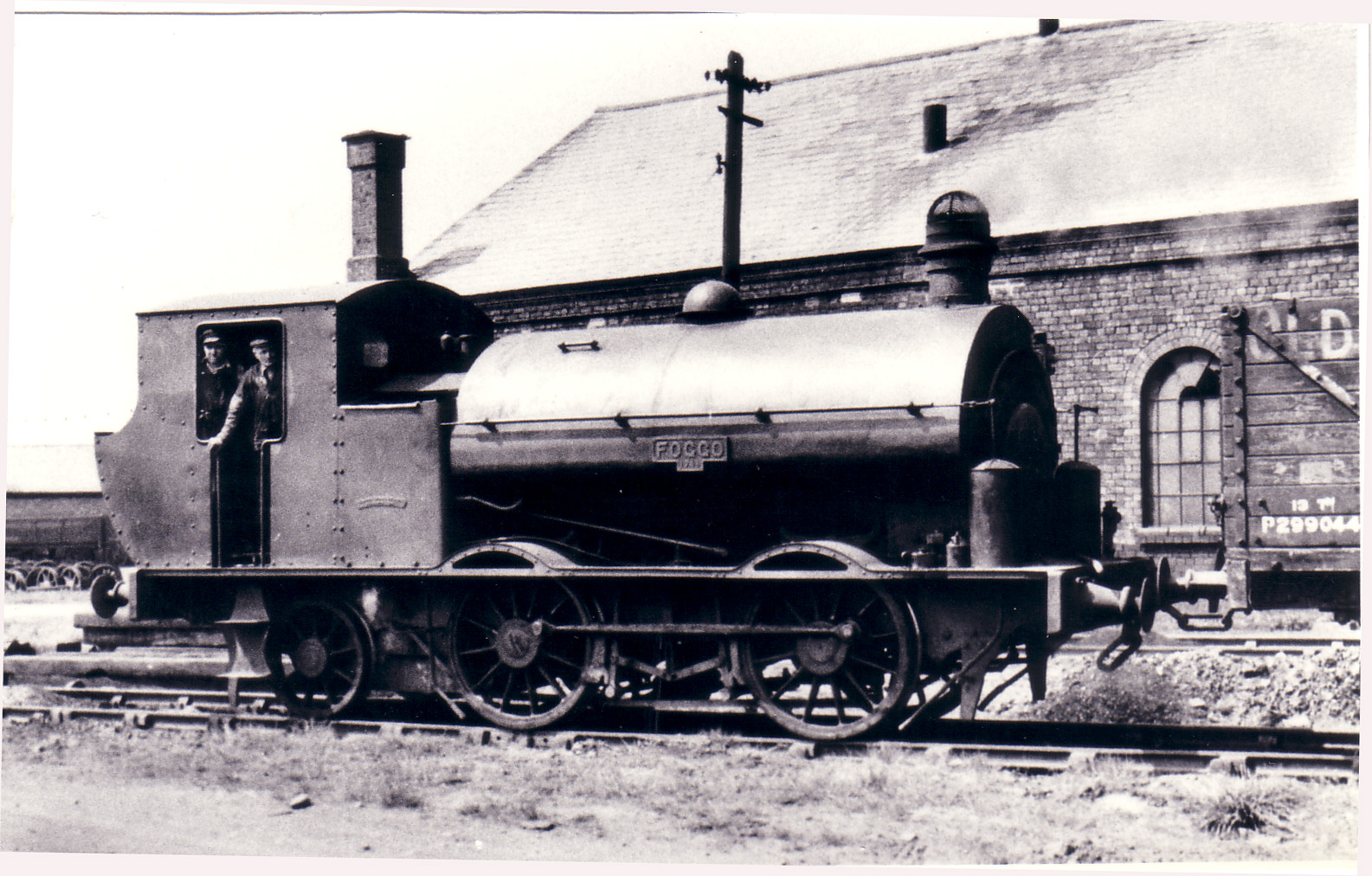
Nameplate:  Foggo, 1946, from a standard gauge 0-4-2ST built at the Chasetown workshops of the Cannock Chase Colliery Co.Ltd. in 1946, using parts supplied by Beyer Peacock, together with spare parts accumulated over the years from similar locomotives already at work at the colliery.  The name derives from Mr. Foggo, the General Manager of the company at the time and the nameplate incorporates the year of build.  It became National Coal Board property on 1st January, 1947.  Transferred to Coppice Colliery in early 1954 and to Brereton Colliery later the year.  Scrapped by W.H.Arnott Young in January 1961.  Cast Brass, 21½”x 8¾”, the front repainted.


Chasewater Railway Museum – Tokens

Chasewater Railway Museum

Tokens

The Museum has been given a number of tokens from local outlets.


Tokens were issued by merchants in payment for goods with the agreement that they would be redeemed in goods to an equivalent value at the merchants’ own outlets. The transaction is therefore one of barter, with the tokens playing a role of convenience, allowing the seller to receive his goods at a rate and time convenient to himself and the merchant, to tie the holder of the token coin to his shop.

Generally, they have a merchant’s name or initials, sometimes a town and state, and a value legend (such as “3p” or other denomination) somewhere on the token. Types of merchants that issued tokens included general stores, grocers, department stores, dairies, meat markets, drug stores, saloons, bars, taverns, barbers, coal mines, and many other businesses.

Who would have believed it?? – A very unusual occurence

Who would have believed it??

A very unusual occurrence

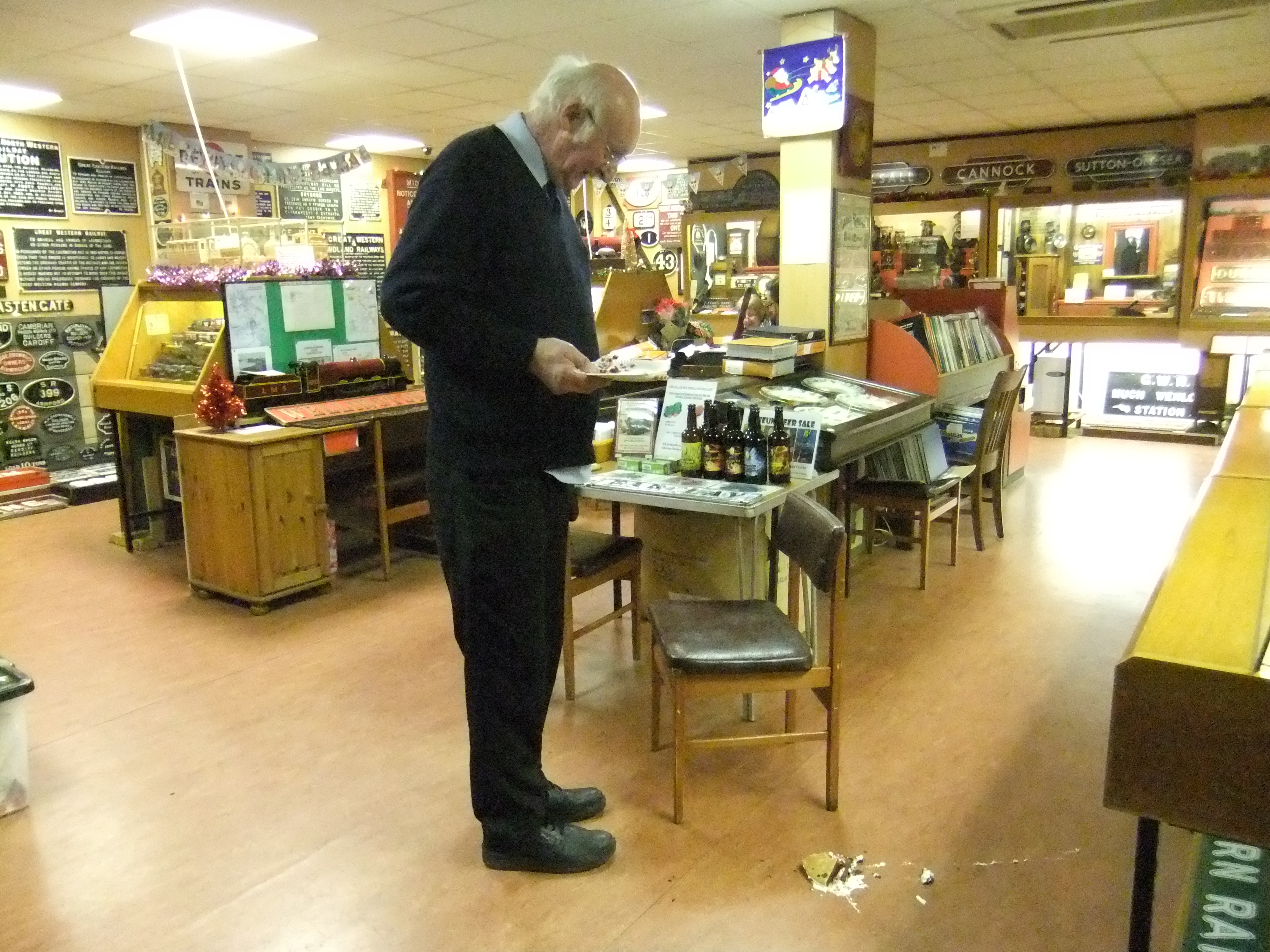
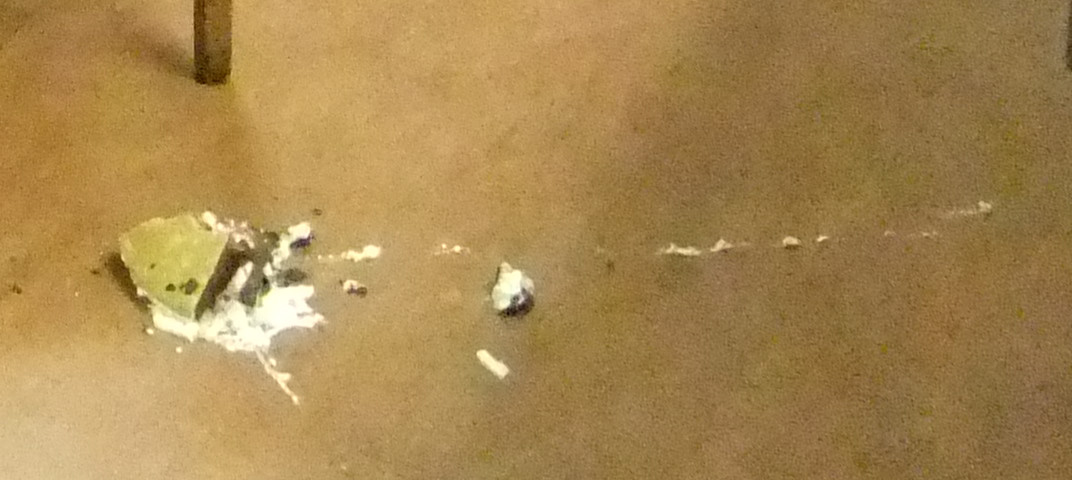
A sight very rarely seen in railway circles – Barry Bull dropping a slice of cake.  A very tasty piece of gateau by the look of it – the look on Barry’s face says it all!!

DSCF9341

Cake cropped

Good splat, eh??

We all know how clean Barry keeps the floor in the museum but we believe that he resisted the temptation to carry on with his snack – although it was replaced on the plate!!

DSCF9342

Barry not only wiped the floor, but even polished it with his knees!!