Tag Archives: Great Wyrley

Chasewater Railway Museum – two new badges

Chasewater Railway Museum 

Two new badges

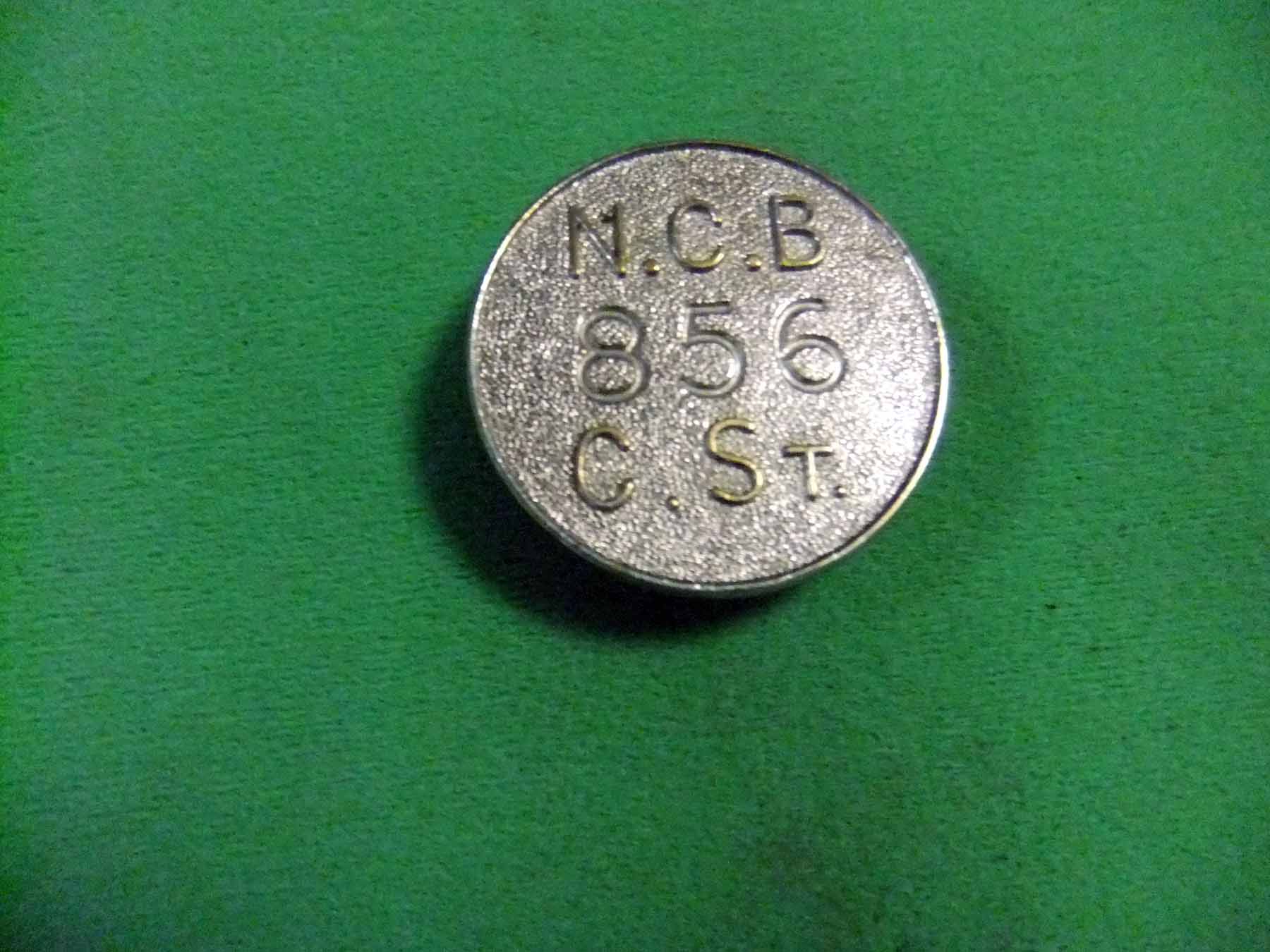
DSCF5077

These two examples of lapel badges added to the collection were used for free travel by miners in South Wales, restricted for use between stations in the Pontypool area and various halts provided at such collieries as Hafodyrynys, situated between Pontypool Clarence Street and Crumlin (High Level).

These badges are numbered, one NCB 856 C.St, and the pther NCB 49 P.Rd and are round, 1⅜” diameter.

C. St = Clarence Street, P.Rd = Pontypool Road.

They were made by H.W.Miller Ltd., Branston Street, Birmingham 19.

DSCF5079

If anyone should have any further information about this sort of lapel badge, please let us know.


Railway Heraldry

Coats of Arms

The early railway companies went to great lengths to give themselves status and authority.  This was partly to reassure investors and the travelling public alike since both were initially sceptical of railways and railway travel.  Th achieve the desired effect, companies often used heraldic devices on their coats of arms and seals, even though few were officially entitled to use them.

The company armorial device appears on small items such as badges and buttons, headed notepaper and publications through to ornate ironwork supporting platform canopies and stonework at major stations.  But to the collector one of the favoured items is a genuine railway company armorial transfer, usually attractively mounted on a wooden plaque or backing.

Transfers were introduced in the 1850s by Tearne and Sons Ltd of Birmingham, offering the emerging railway companies an easy method of branding their rolling stock.  Soon locomotives and carriages were suitably embellished with the grand coat of arms belonging to the parent company.

The railway companies took liberties when it came to the heraldic devices they chose to use.  For example the London & North Western Railway (LNER) made free use of the national symbol Britannia.

Although railway companies had consulted the College of Arms about the design of their coats of arms, it was not until 1898 that arms were officially granted.  This was awarded to the Great Central Railway, formerly the Manchester, Sheffield and Lincolnshire.

After the Great Central’s achievement only four other transport companies were awarded armorial devices – the London & North Eastern Railway (LNER), the Southern Railway (SR), the British Transport Commission and the Ulster Transport Authority.

British Railways’ full armorial bearings included a crest (beneath a ‘Forward’ scroll) of a demi-lion on its hind legs clutching a wheel between its paws, while two further lions held the shield.  The three wheels at the top  railways, a portcullis and chains stood for ports and harbours, and straight and wavy lines represented road, rail and waterways.  Below this was  a further scroll ‘Velociter securiter‘: swift and sure.

The crest, replacing an earlier ‘lion and wheel’ device (also known as ‘ferret and dartboard’) was adapted by BR for use as a transfer on carriages and locomotives.  This design  survived until the introduction of the BR twin arrows emblem.  Chrome finished BR crests used on some 1960s electrics are popular.

Save

Chasewater Railway Museum – An interesting new item

Chasewater Railway Museum 

An interesting new item

DSCF5073

A Manufacturer’s Plate – 27″x 14″

E.C.&J.Keay Ltd Girder

This photograph appeared in the Great Western Railway Magazine Volume XXIX No 3 (March 1917) with the following caption; ‘One of four girders made by E C & J Keay for GWR bridge over Sandy Lane near Bordesley. Length – 104 feet 9 inches, Height – 8 feet 8 inches, Width – 2 feet 9 inches to 3 feet 4 inches, Weight – 63.5 tons.’

After they had established their James Bridge Works in Darlaston in 1887, E C & J Keay Ltd specialised in the manufacture of structural steelwork for buildings and bridges. They supplied steelwork for many major projects including 6,000 tons of steelwork for the reconstruction of Snow Hill station (see gwrbsh1896). Text books from the period suggest that a 100 foot span was about the economic limit for plate girder bridge design, with a trussed girder design recommended for longer spans. E C & J Keay’s large site at Darlaston allowed sections of girder bridges to be machine riveted together under factory conditions and this pre-assembly produced more consistent construction at lower cost. In 1888, E C & J Keay also built an iron works at their site for the production of bearings and cast ironwork. The works had access to a private railway siding allowing connection from the Grand Junction Railway (later LNWR) near Walsall.

warwickshirerailways.com

The history of The Stafford Knot

The are many stories about the origins of the Stafford Knot

The Stafford Knot (not the Staffordshire Knot!) is the symbol for the county of Staffordshire.

It appears everywhere from road signs and army berets to local pottery and football club crests.

The origin of the three-looped knot has long been shrouded in mystery and intrigue.

Some people say it is a bloody means of multiple execution while others insist it represents the joining of three geographical areas.

Death by Stafford Knot

One of the most popular stories of the knot originated following the sentencing of three criminals to death by hanging in Stafford.

However, when the executioner arrived to commit the grisly task, he came across a problem.

He only had one piece of rope. He could not just hang one of the criminals.

It would be unfair to the other two to give precedence to only one of the condemned.

He therefore tied his single rope into three loops and dispatched of all three criminals at the same time.

Stafford Knot

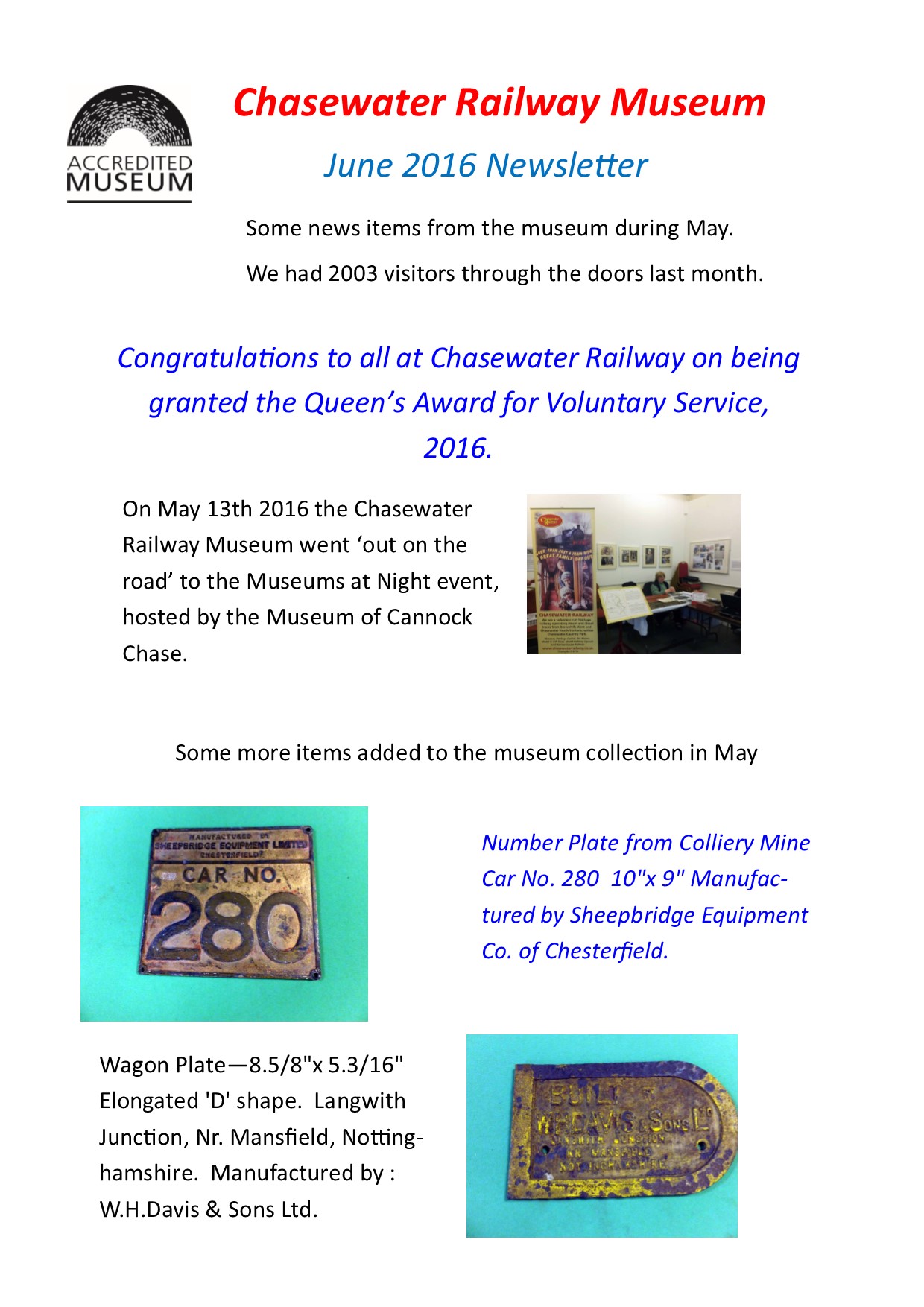
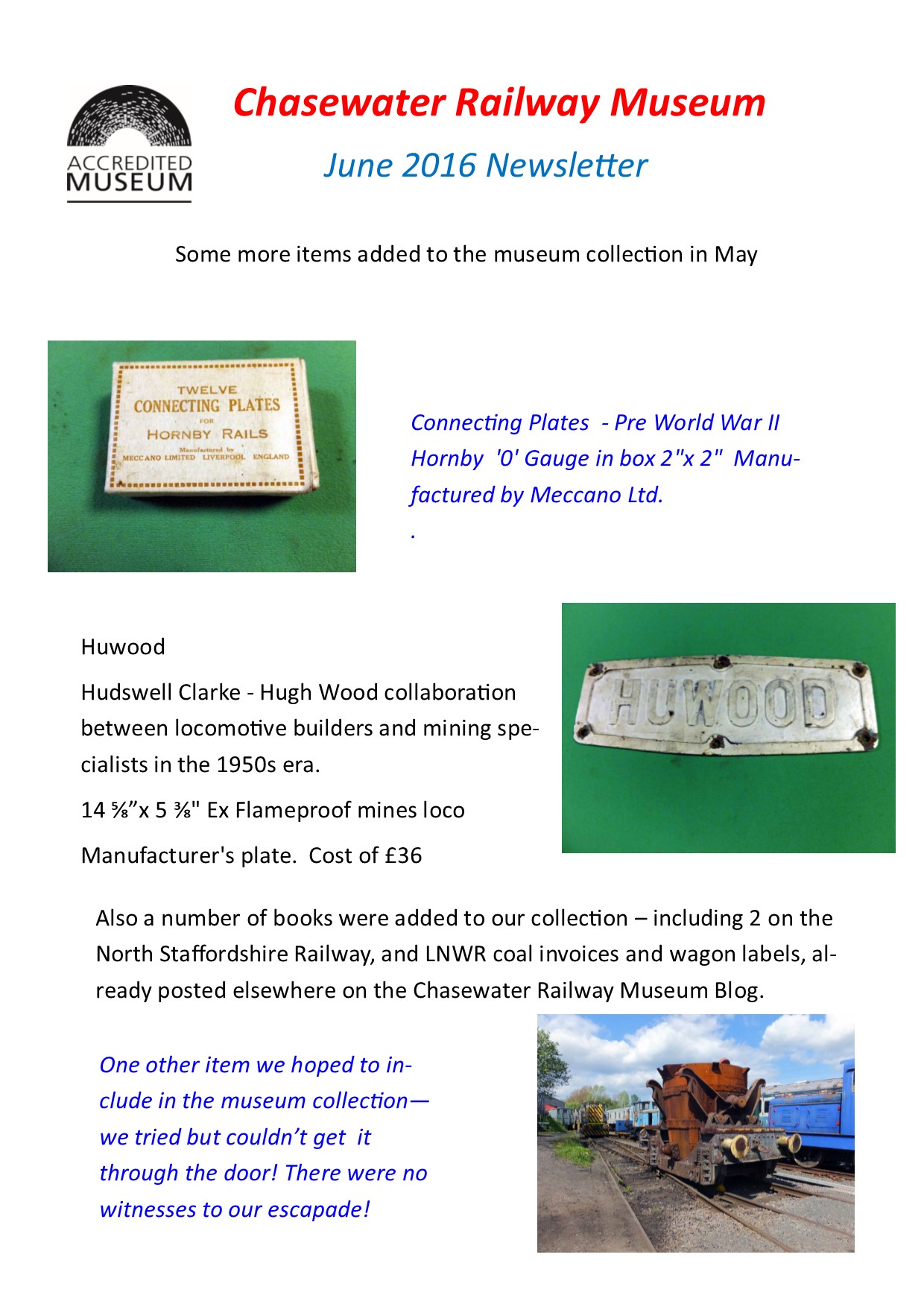
Chasewater Railway Museum – June Newsletter

June for blog

June page 2


Save

Chasewater Railway Museum – Meccano Loans

Chasewater Railway Museum 

Meccano Loans

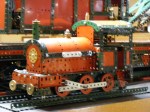
This particular exhibit was with us a few years ago and has now re-appeared on the Memories of Burntwood Facebook Group page.

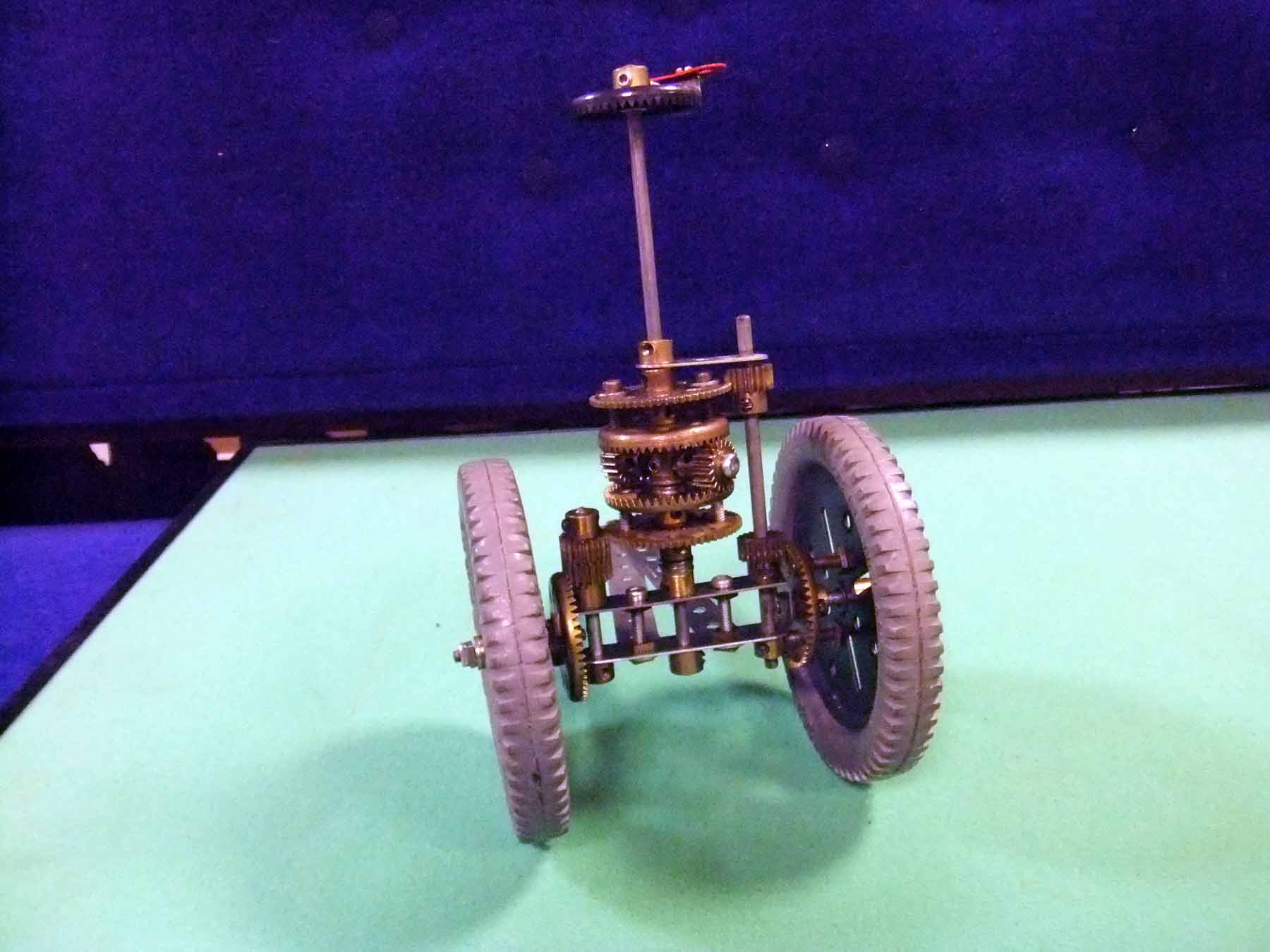
DSCF5069

DSCF5065

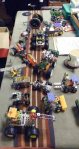
Eugene Damon – Peter Styche, Hi Ya – yes you are correct it is a Chinese South Seeking Chariot. They used to use them about 2000 years ago to keep their bearings when crossing the deserts, When it is on the move it can turn left or right up or down or do a full circle but the pointer will stay on the target that was selected This model in the photo was made in 2010 by a member of Chasewater Light Railway, Do any of you know how it works?  If not, why not pay a visit to the museum at the railway were it will be on display for a short while and the staff will give you a little demo on how it works, as it would take a little too long and to complex about the gearing to explain on here.

More Meccano in the Museum

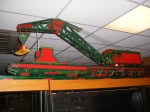
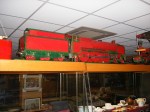
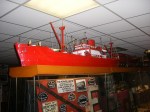
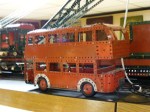
The top three have been with us for a while – everything works on the crane, the wheels go round on the locomotive, but sadly the ship won’t float!!


Chasewater Railway Museum – A newly published book – Royal Arsenal Railways

Chasewater Railway Museum

A newly published book

Royal Arsenal Railways

Main cover photo from the Chasewater Railway Museum collection.

Royal Arsenal Book

The Royal Arsenal Railways

The Rise and Fall of a Military Railway Network

 By

Mark Smithers

The main cover illustration of the recently published book from ‘Pen and Sword’ on the Royal Arsenal Railways depicts the 1917-built Peckett 0-4-0ST locomotive works number 1491, named ‘Vanguard’.  At first thought this might seem an odd choice to show, but it must, of course, be realised that photographs at this important military establishment during its period of operation are not easy to source.
The reason, however, for going back to the original thought of it being an odd choice is that ‘Vanguard’ with its crew stands in front of coaches of the Brereton ‘Paddy Train’ having been disposed of a mere three years after arrival at the Royal Arsenal, Woolwich.  Following its sale to Brereton Collieries, ‘Vanguard’ soldiered on and indeed hauled the final train of coal from the pit on 1st July 1960.  Moving via Cannock Wood Colliery to Hamstead Colliery, ‘Vanguard’ finally went to the scrapyard during November 1962.

Page 145 in the book shows the same photograph as on the cover, credited to the Chasewater Railway Museum, the caption suggests that the view is towards the end of the life of ‘Vanguard’, however, it is more likely that the photo dates from the 1930s.

The Author, Mark Smithers, has produced a fine work, well-illustrated, on the railways of an establishment that contributed a great deal during both World Wars until finally run down and closed in 1967.

‘Pen and Sword’ website:  http://www.pen-and-sword.co.uk

Barry Bull

Chasewater Railway Museum – Tokens

Chasewater Railway Museum

Tokens

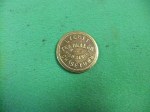
The Museum has been given a number of tokens from local outlets.


Tokens were issued by merchants in payment for goods with the agreement that they would be redeemed in goods to an equivalent value at the merchants’ own outlets. The transaction is therefore one of barter, with the tokens playing a role of convenience, allowing the seller to receive his goods at a rate and time convenient to himself and the merchant, to tie the holder of the token coin to his shop.

Generally, they have a merchant’s name or initials, sometimes a town and state, and a value legend (such as “3p” or other denomination) somewhere on the token. Types of merchants that issued tokens included general stores, grocers, department stores, dairies, meat markets, drug stores, saloons, bars, taverns, barbers, coal mines, and many other businesses.

Chasewater Railway Museum – LNWR Coal Invoices from Hednesford

Chasewater Railway Museum –

LNWR Coal Invoices from Hednesford

Rails around Walsall - John Boyton -5

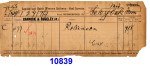
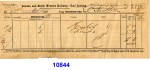
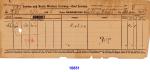
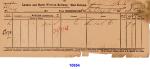
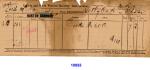
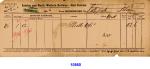
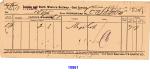
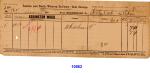
The Museum Curator, Barry Bull, has got together a number of London & North Western Railway Coal Invoices, all wagons starting their journey from Hednesford.  These invoices are all dated from the late nineteenth century, and a variety of local pits sent their coal via Hednesford, a major distribution centre in those days, and for many more years, well into the 1950s.

Chasewater Railway Museum – ‘New to us’ local wagon labels.

Chasewater Railway Museum 

‘New to us’ local wagon labels.

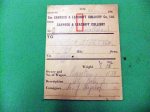
This first label is, in our opinion, the star of this collection.  It dates from 1876 and covers a wagon of coal from Cannock Chase Colliery to Lyons Hall in Herefordshire.  Addressed to Mr. Saxty, the Station Master at the time and with the old spelling of double ‘g’ in waggon.  My thanks to Chris H.E.Smith of the Lyonshall.net website. (Well worth a visit)

Wagon Label Cannock Chase Coll to Lyons Hall 1876

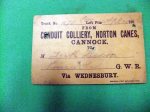
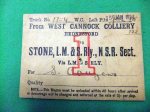
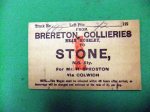
The other Cannock Chase Colliery label is the later style from the early 1900s. There are others from Brereton Collieries, Cannock & Leacroft Colliery, Coppice Colliery, Conduit Colliery, Littleton Colliery and West Cannock Colliery.

Chasewater Railway Museum – Photos from 2006

Chasewater Railway Museum 

Photos from 2006

A few more photographs, taken by Robin Stewart-Smith, on the 28-4-2006, of a  J94 Austerity locomotive No.68009 on works train.

6842Our

Our thanks to Robin for sending us these excellent photographs, taken at Chasewater Railway, on the causeway and at Chasewater Heaths Station.