Category Archives: Museum Exhibits

Chasewater Railway Museum – A Kellingley Pay Check

Chasewater Railway Museum

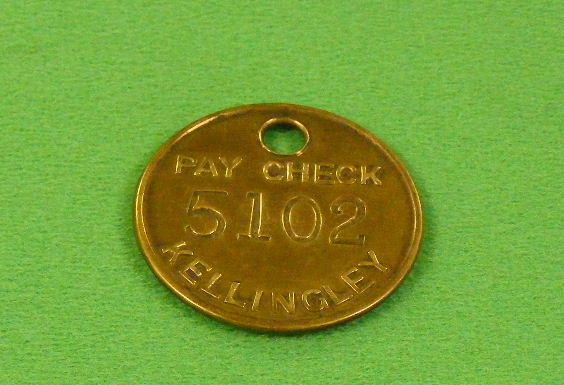
A Kellingley Pay Check

1481

Kellingley Colliery

Kellingley Colliery was the last deep coal mine in Britain. It is situated at Beal in North Yorkshire, about 1.5 miles east of Knottingley in West Yorkshire, on the A645 and 3.6 miles east of Ferrybridge power station.

Miners at a North Yorkshire colliery have finished their final shifts as the closure of the pit brings an end to centuries of deep coal mining in Britain.

Owner UK Coal said it would oversee the rundown of the Kellingley mine before the site was redeveloped.

Unions said it was a “very sad day” for the country as well as the industry.
Had it not been for the coal industry, there would have been very few canals or railways built, for example, Chasewater Railway would not have been built, as it runs over the trackbed put down for the Cannock Chase Colliery Company and used by other collieries in the locality.

Chasewater Railway Museum – Another Neilson Worksplate

Chasewater Railway Museum 

Another Neilson Worksplate

DSCF2352

Our Curator has been out and about again, this time coming back with another very nice worksplate.

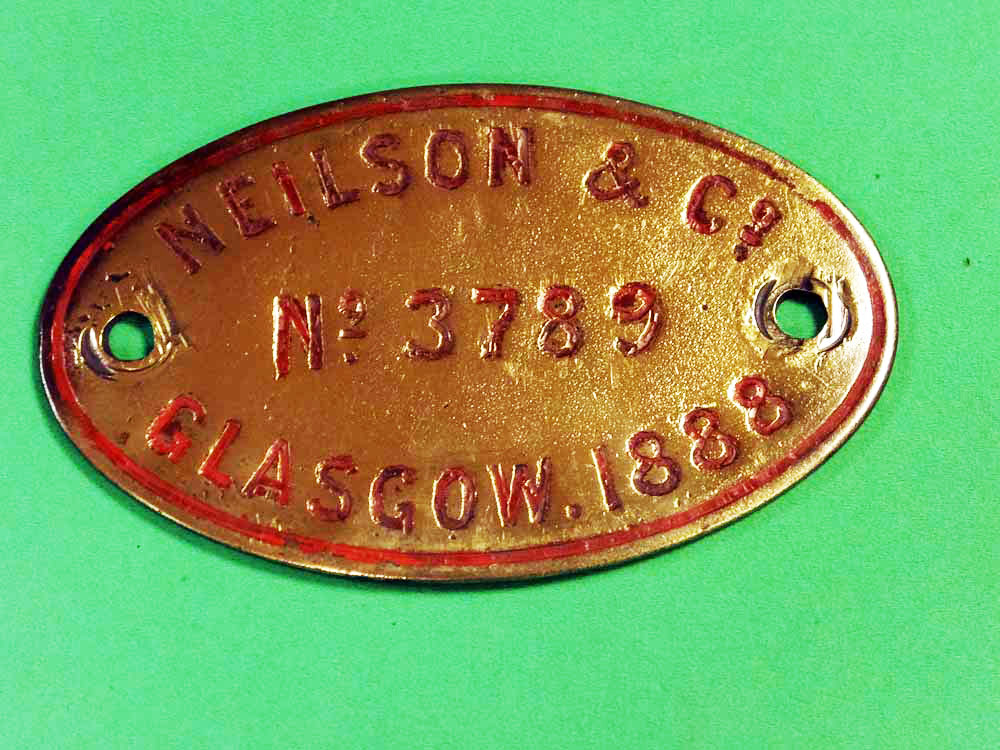
Neilson 3789-1888

A worksplate, NEILSON, 3789, 1888, from a standard gauge 0-4-0T which was new to the Gas Light & Coal Company (later the North Thames Gas Board) at Beckton Gas Works, their No 19. It remained there all its working life and was scrapped in 1962. Engraved brass, 9″x 5½”, the engraving picked out in red, the back stamped 19.

3789 1

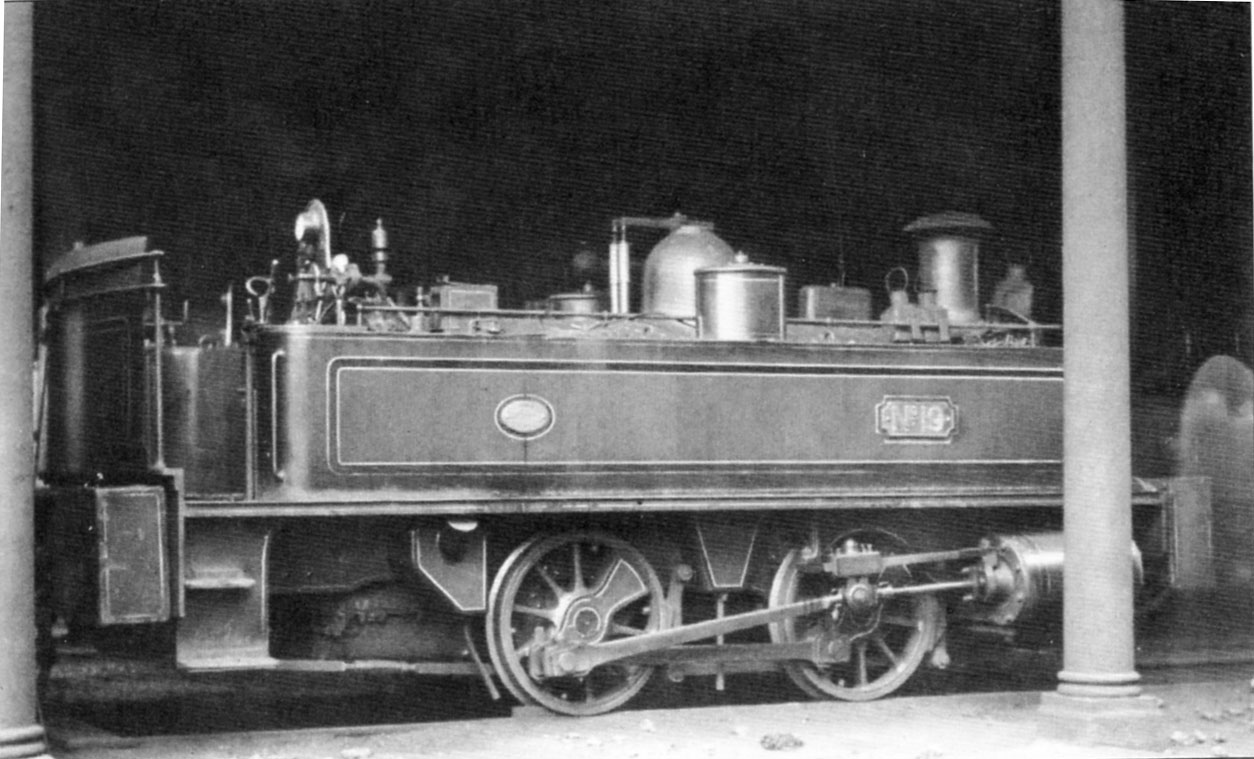
No.3789 was one of the heavier Neilson engines with extended tanks, it is seen here as No.19 inside the Beckton Roundhouse on 9 July, 1927. Photo: H.C.Casserley.

Beckton Gasworks was a major London gasworks built to manufacture coal gas and other products including coke from coal. It has been variously described as ‘the largest such plant in the world’ and ‘the largest gas works in Europe’. It operated from 1870 to 1969, with an associated by-products works that operated from 1879 to 1970. The works were located on East Ham Level, on the north bank of the Thames at Gallions Reach, to the west of Barking Creek.

3789 2

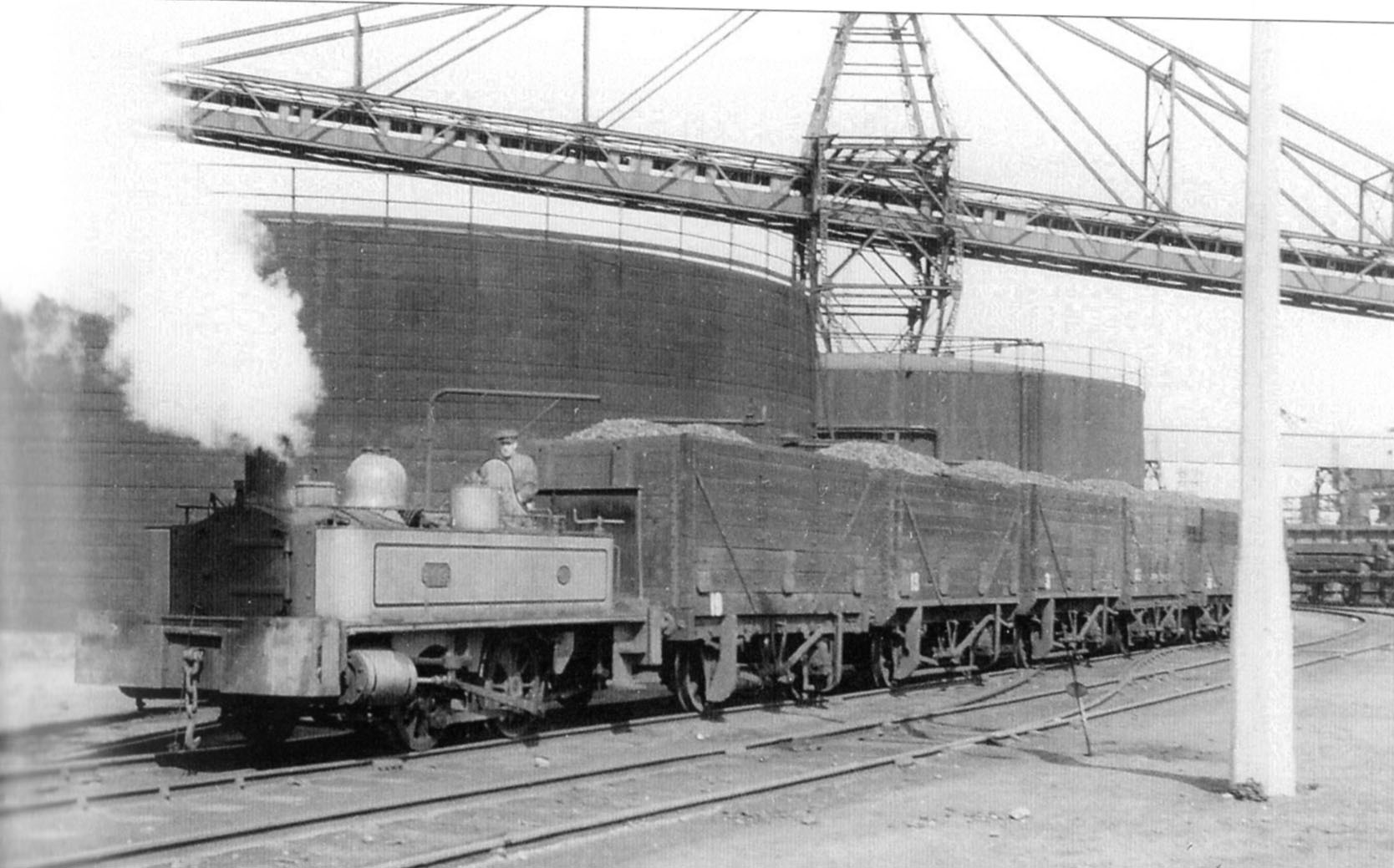
Neilson No.3789 was an 1888 arrival at Beckton and is seen here with a coke train on 22 April, 1959. Photo: Sydney A.Leleux.

Chasewater Railway Museum – 2 new mining checks

Chasewater Railway Museum 

2 new mining checks

DSCF2359

DSCF2355

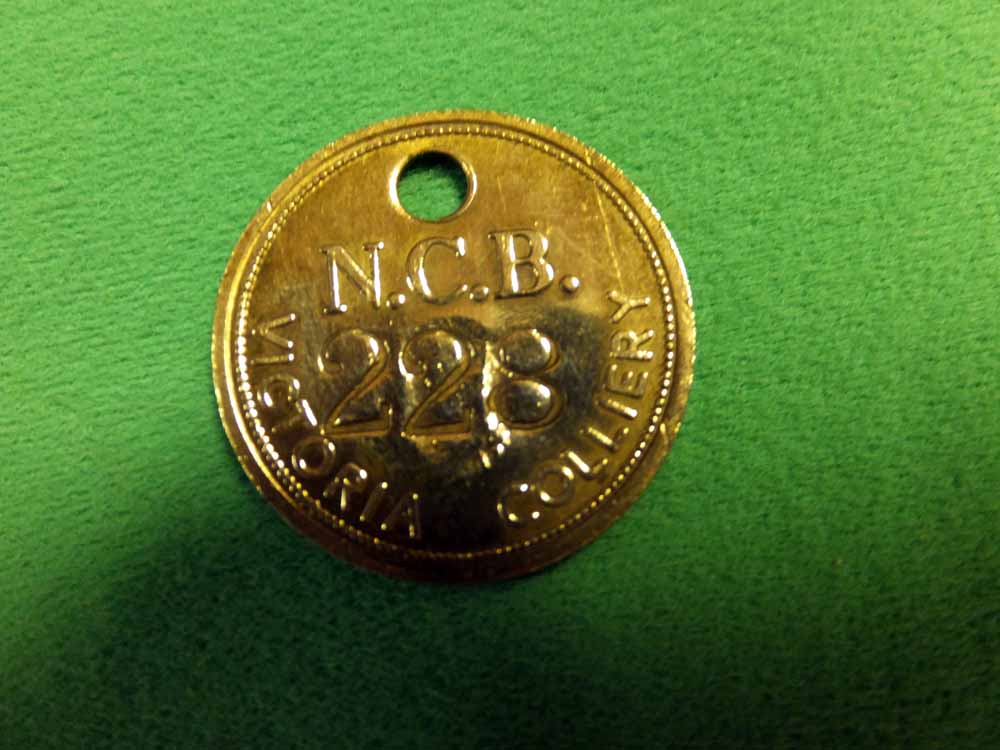
The top one is from the Victoria Colliery of the NCB, and the second, a time check from Chislet Colliery – of a more unusual shape.

Chasewater Railway Museum – a photo from the archives

Chasewater Railway Museum

A photo from the archives

7127

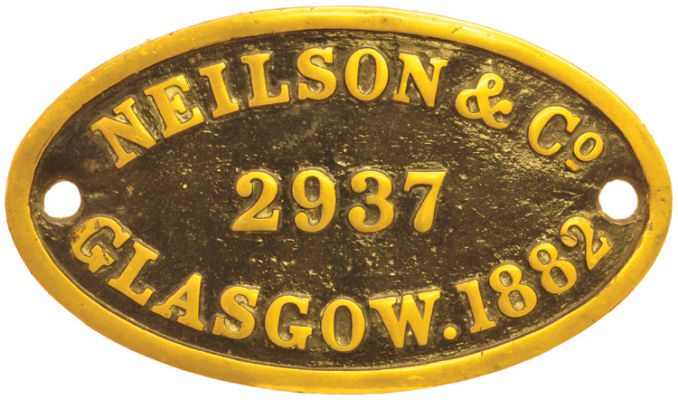
The Neilson loco 2937-1882 0-4-0ST, complete with ‘Alfred Paget’ nameplates, on a freight train at Chasewater Railway in early days.

Neilson plate & info

A locomotive worksplate, Neilson, No.2937 of 1882, from a 0-4-0ST O/C new to William Baird & Co (Ltd from 1893) at Bedlay Colliery near Glenboig, their No 11, becoming part of the Scottish Iron & Steel Co Ltd in January 1939, Bairds & Scottish Steel Ltd six months later and the National Coal Board in January 1947. It returned to Bairds & Scottish Steel Ltd at Gartsherrie Ironworks, Coatbridge, in about 1950 and following withdrawal, was acquired in June 1968 by Railway Preservation Society, Hednesford, Staffordshire and later went to the Chasewater Light Railway.
Cast brass 10 x 6″¼”, the front of the plate has been repainted.

Chasewater Railway Museum – Latest Addition – Railway Heritage Designated Signal Box Sign

Chasewater Railway Museum 

Latest Addition

Railway Heritage Designated Signal Box Sign

The Railway Heritage Committee has the function of designating records and artefacts (or classes of record and artefact) which are historically significant and should be permanently preserved.

Stafford 150 Yards

This enamelled sign came from Stafford No.5 signal box, and was given to the Museum by Network Rail – our thanks to the Company.

stafford5 tillyweb.bizPhoto:  tillyweb.biz

The sign can be seen set into the signal box.  On one end is a white patch with a red arrow, and on the other, a clear white patch to balance up the sign.

It may be of interest to Chasewater Railway members that the Station Hotel, Stafford, where the inaugural meeting of the Railway Preservation Society, fore-runner of Chasewater Railway, was held in 1959, was approximately 150 yards from the signal box!

Chasewater Railway Museum – Sectioned Model Steam Engine

Chasewater Railway Museum

Sectioned Model Steam Engine


Given to the Chasewater Railway Museum by Allan Preston of Cannock in 2009, and received with grateful thanks.

This model was purchased by the donor from the makers in Bury, Lancs in 1979.   It was produced along with 3 other models for Bangladesh Railways, but was not sent due to there being no Letter of Credit forthcoming.  The other 3 were probably scrapped.  It is loosely based on a Royal Scot Class locomotive.

Chasewater Railway Museum – More from Granville

Chasewater Railway Museum

More from Granville

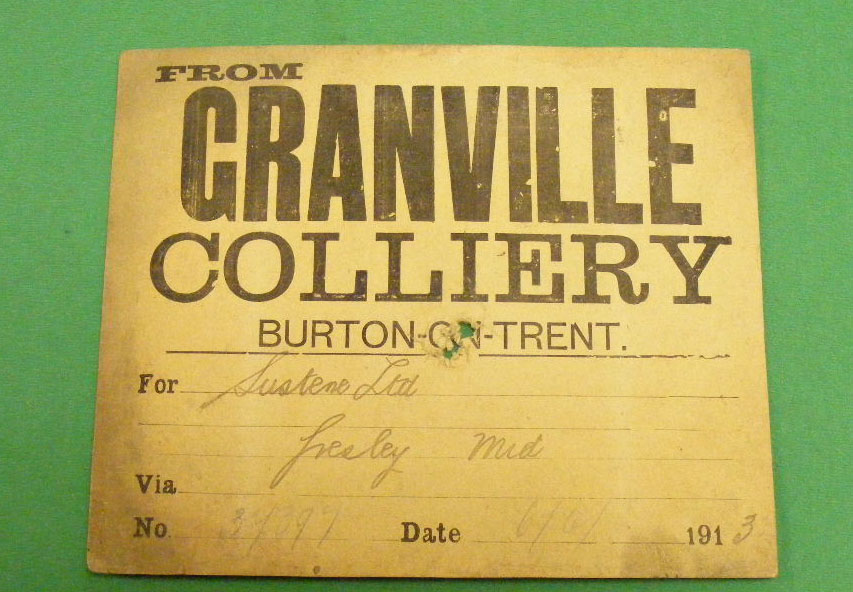
The first one is a wagon label from the Burton-on-Trent Glanville Colliery, dated 1913.  It has been in our collection for some years now and has always been discoloured – and obviously kept on a spike in an office somewhere!

1435

The other one is a colliery token from Granville Colliery  in Shropshire.  Granville Pit closed in 1979, bringing to an end more than 700 years of coal mining in the area which became Telford New Town in the 1960s.  This was purchased by the Museum in 2012.

Granvill Salop 545

Chasewater Railway Museum – A Small Addition

Chasewater Railway Museum 

A Small Addition

10789

A small addition to the Museum collection of coal miners’ pit checks is a pre-nationalisation of the coal industry example from the Granville Colliery Ltd.

The unusual thing about this particular item is, along with the Company name, it shows the location of Burton-on-Trent, whereas the real site of the Colliery was a few miles away at Swadlincote.

The first shaft was sunk in 1823/4 with number 2 shaft sunk in 1887. The earliest locomotives were six 0-4-0 saddle tanks of Hudswell Clark manufacture from the period 1890-1914.

On Nationalisation 1/1/1947, Granville became part of the NCB East Midlands Division No.7 Area and by then only two of the original locomotives remained. For short periods and at different times these two were supplemented/replaced by four Manning Wardle 0-4-0 saddle tanks, a Peckett 0-4-0 saddle tank, and finally a Ruston Hornsby 0-4-0 diesel of 165 horsepower.

Rail traffic ceased in January, 1962 and workings were merged with Rawdon Colliery. Final closure came in August, 1968.

Chasewater Railway Museum – One from the collection

Chasewater Railway Museum 

One from the collection
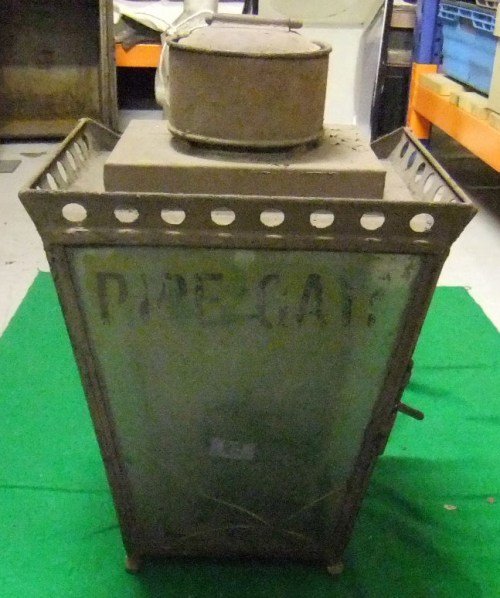
59Wall mounted station lamp from Pipe Gate Station.

Pipe Gate was a railway station on the North Staffordshire Railway’s Stoke to Market Drayton Line.

Construction
Construction was started on the Newcastle-under-Lyme to Silverdale Junction line on 29 July 1864, and the first train ran on 1 February 1870.
The station served the hamlet of Pipe Gate, which is part of the parish of Woore, Staffordshire. It was hence named Pipe Gate (for Woore). Trains from the station ran from Stoke on Trent, to junction with the Great Western Railway at Market Drayton. On grouping in 1923 it was absorbed into the London Midland and Scottish Railway.
Passenger services
The early years of the 20th century were the busiest, there being thirteen trains daily from Stoke to Silverdale and five to Market Drayton. Railmotor services began in 1905, intended to compete with trams and were somewhat successful in this respect, although they only lasted until 1926. The station also serviced Woore Racecourse which opened at Pipe Gate in 1885.

The section between Silverdale and Pipe Gate was reduced to single track in October 1934. Dwindling passenger numbers after World War II meant that there were only two trains daily from Stoke to Market Drayton, and all passenger services ceased on 7 May 1956.
Freight traffic
Express Dairies had a creamery with private siding access to the station, allowing its preferred transport partner the GWR to provide milk trains to the facility, for onward scheduling to London. In 1962 a new “chord” line was opened at Madeley to provide a connection to the West Coast Main Line. This was used as a diversionary route when the Harecastle diversion line was being constructed and continued in use for freight workings once the latter was completed. After the closure of the creamery, the route between Market Drayton and Madeley Chord closed under the Beeching Axe in 1966.
Today
A large amount of rail still exists to the eastern edge of the former and now demolished station, running back towards Silverdale.

Old_railway_line_to_Pipe_Gate_-_geograph.org.uk_-_547352Old railway line still in place near Pipe Gate station, September 2007
The copyright on this image is owned by charles c and is licensed for reuse under the Creative Commons Attribution-ShareAlike 2.0 license.

 

Chasewater Railway Museum – The Eric Tonks Collection

Chasewater Railway Museum

The Eric Tonks Collection

Belonging to the Industrial Railway Society

This was first posted in June, 2009.  Since then, the Industrial Railway Society has renewed the loan on 2 occasions.

The collection has been on display in one of the museum cases for some time, so if anyone would like to see it, pop into the museum, open every Sunday and Bank Holiday and now also on most Saturdays when the Railway is running trains.

DSCF9010


Ironstone cropped

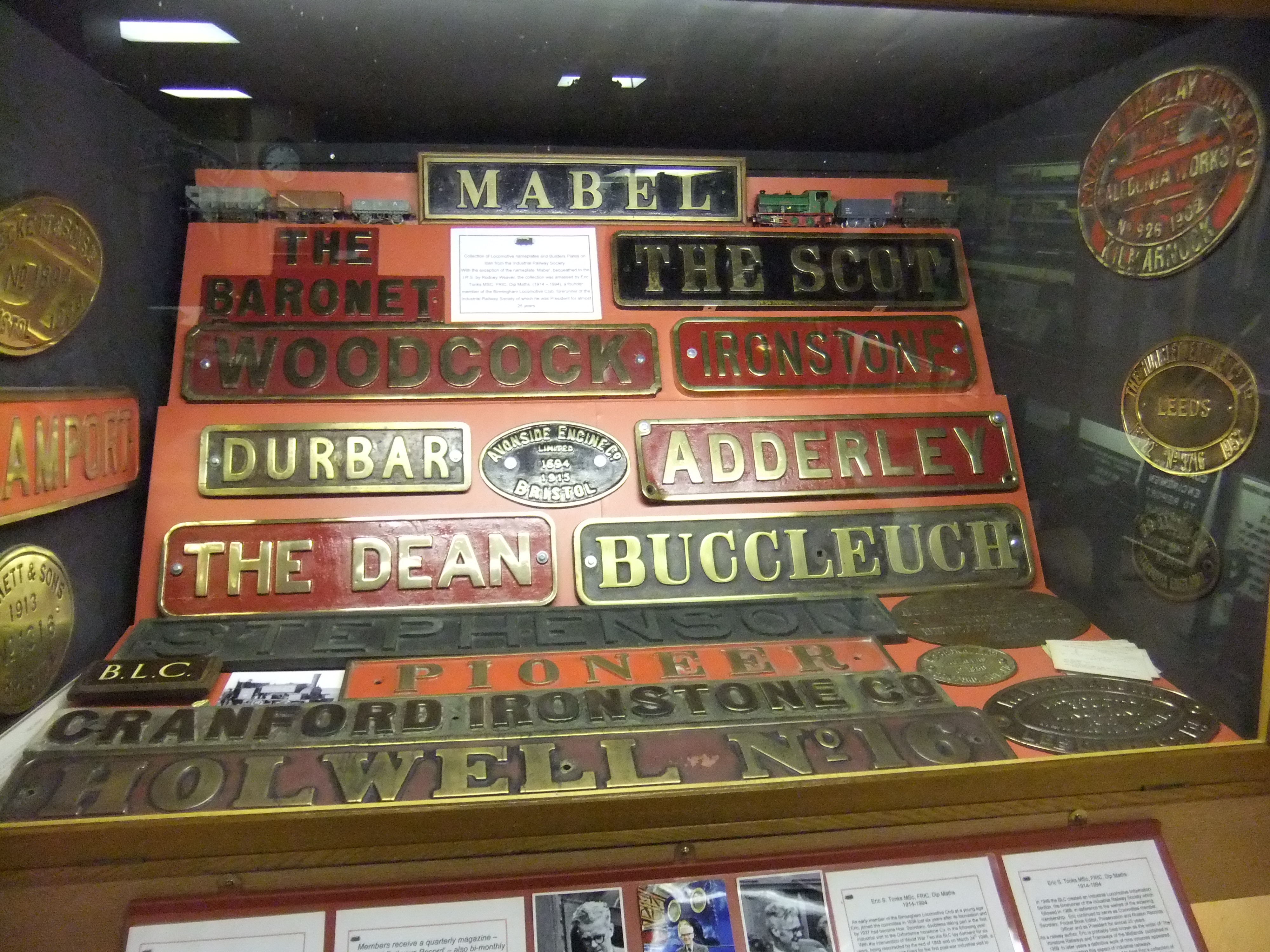
Chasewater Railway Museum is delighted to announce that the Industrial Railway Society has loaned the Eric Tonks Collection of nameplates and worksplates to the Museum for at least the next two years.

The collection comprises examples of plates from both standard and narrow gauge locomotiveswhich worked in collieries and ironstone quarries, principally in the East Midlands.

A small number of these items will be on show this coming weekend, Asbestos’ Birthday, and more in another couple of weeks at the 50th Anniversary Celebrations.  We hope to have the entire collection on display in the Autumn.

2 worksplates cropped