Category Archives: Museum Exhibits

Chasewater Railway Museum – a small addition

Chasewater Railway Museum 

  A small addition

DSCF9031 smaller

A small addition to the Chasewater Railway Museum collection is a nickel button of slightly unusual origin being of both military and railway interest.

The 2nd Cheshire Royal Engineers (Railway) Volunteer Corps was formed in 1887 of employeesof the locomotive department of the London and North Western Railway and who became involved in active service during the Boer War up until 1901.  The Corps was disbanded in 1912.

The button bears the script initials VR with Volunteer Engineers in a garter surround with a crown above.

Chasewater Railway Museum – Cannock Wood Paddy Train Starting Board

Chasewater Railway Museum –

Cannock Wood Paddy Train Starting Board

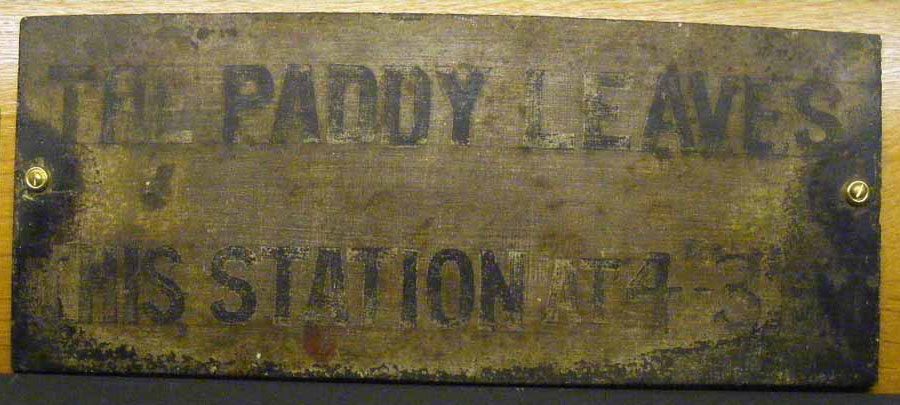
It’s a bit faded but well worth keeping – another item in the Chasewater Railway Museum.  From the platform at Cannock Wood.

Paddy train leavingIt says ‘The Paddy Leaves This Station at 4.30’

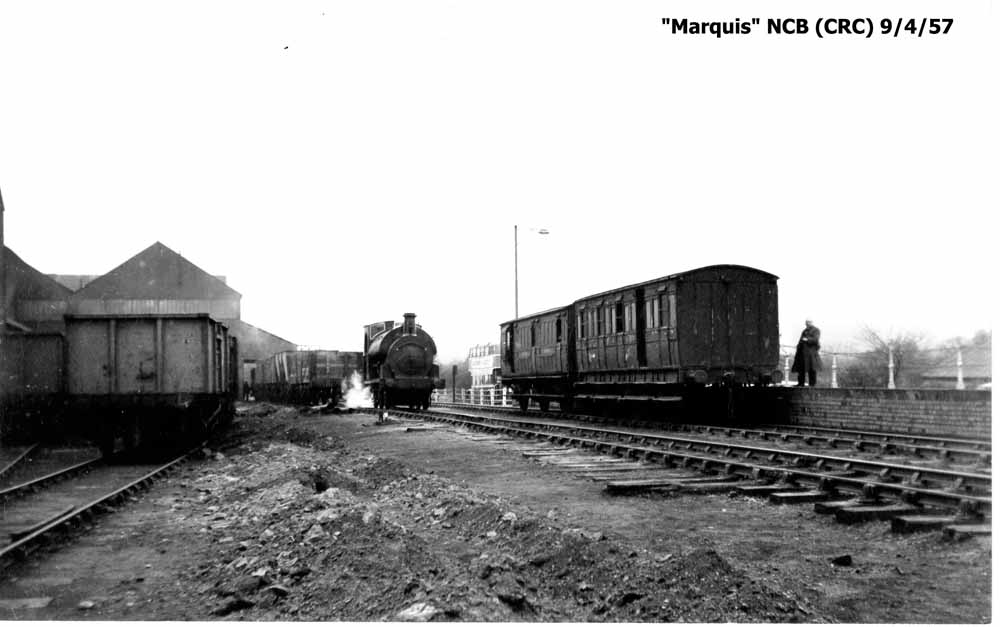
NCB 9The platform it departed  from.

Rails around Walsall - John Boyton -2

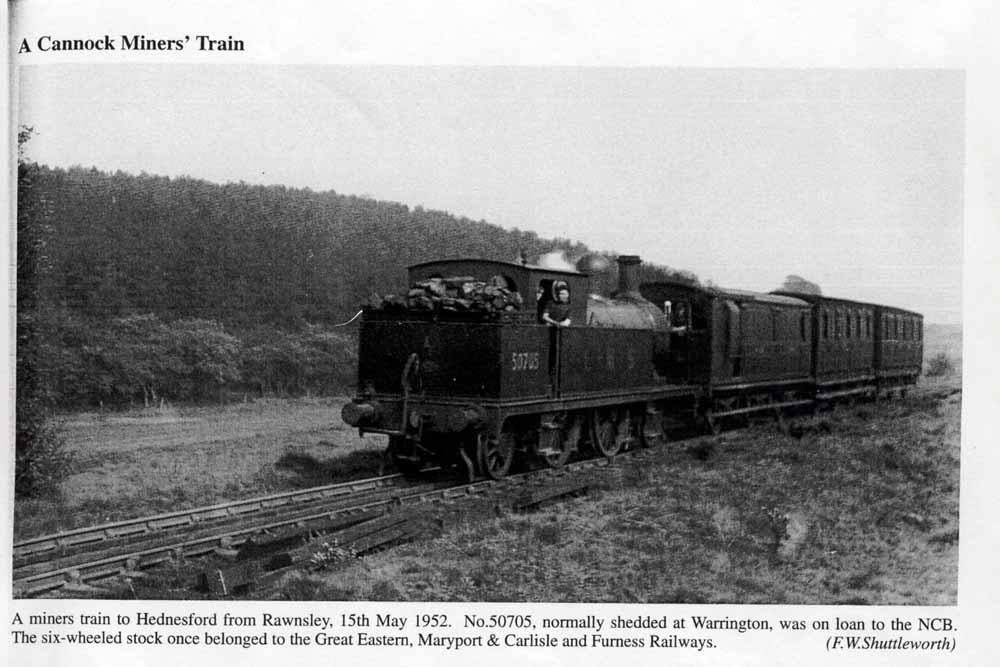
The original 3-coach Paddy – later it changed to 1 large coach.

Rails around Walsall - John Boyton -3

Getting off at the corner of Rugeley Road and Rawnsley Road, Bates’ Bridge is to the left of the photo.

Chasewater Railway Museum – Cannock Wood Nameplate

Chasewater Railway Museum 

Cannock Wood Nameplate

21

One of the early, local, nameplates in the collection.  Part of the history of the loco follows.

No.9 Cannock Wood (The third and best-known ‘Cannock Wood’) 0-6-0T Built by the London, Brighton & South Coast Railway at Brighton in 1877 (LBSCR 110).  Bought from the Southern Railway (SR 110) in 1927.   Still working at Rawnsley in 1957, continued to work for the NCB into the mid 1960s then preserved by the Railway Preservation Society, originally at Hednesford and later at Chasewater.  Subsequently sold to members of the East Somerset Railway at Cranmore.  Was steamed there, but is now homed on the Isle of Wight for further renovation work.

05053 No.9 Cannock Wood 0-6-0T LBSC Rly 1877 C & R

This was new to the Museum – in 2012

Chasewater Railway Museum

This was new to the Museum – in 2012

1735

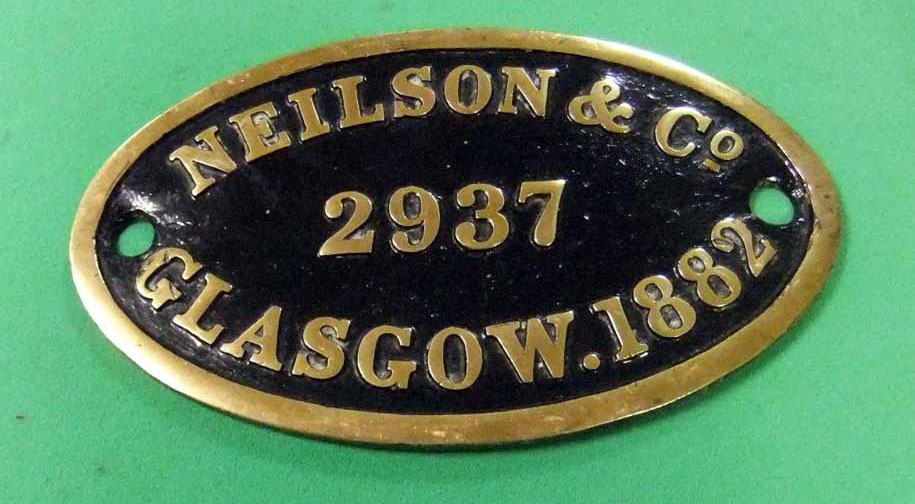
A locomotive worksplate, Neilson, 2937, 1882, from a 0-4-0ST O/C new to William Baird & Co (Ltd from 1893) at Bedlay Colliery near Glenboig, their No 11, becoming part of the Scottish Iron & Steel Co Ltd in January 1939, Bairds & Scottish Steel Ltd six months later and the National Coal Board in January 1947. It returned to Bairds & Scottish Steel Ltd at Gartsherrie Ironworks, Coatbridge, in about 1950 and following withdrawal, was acquired in June 1968 by Railway Preservation Society, Hednesford, Staffordshire and later went to the Chasewater Light Railway. Cast brass 10″x 6¼”, the front of the plate has been repainted.

05272 Neilson No.11 0-4-0ST 2937-1882 Chasewater Alfred PagetThe Neilson loco pre-Chasewater days.

Chasewater Railway Museum – a few old signs

Chasewater Railway Museum

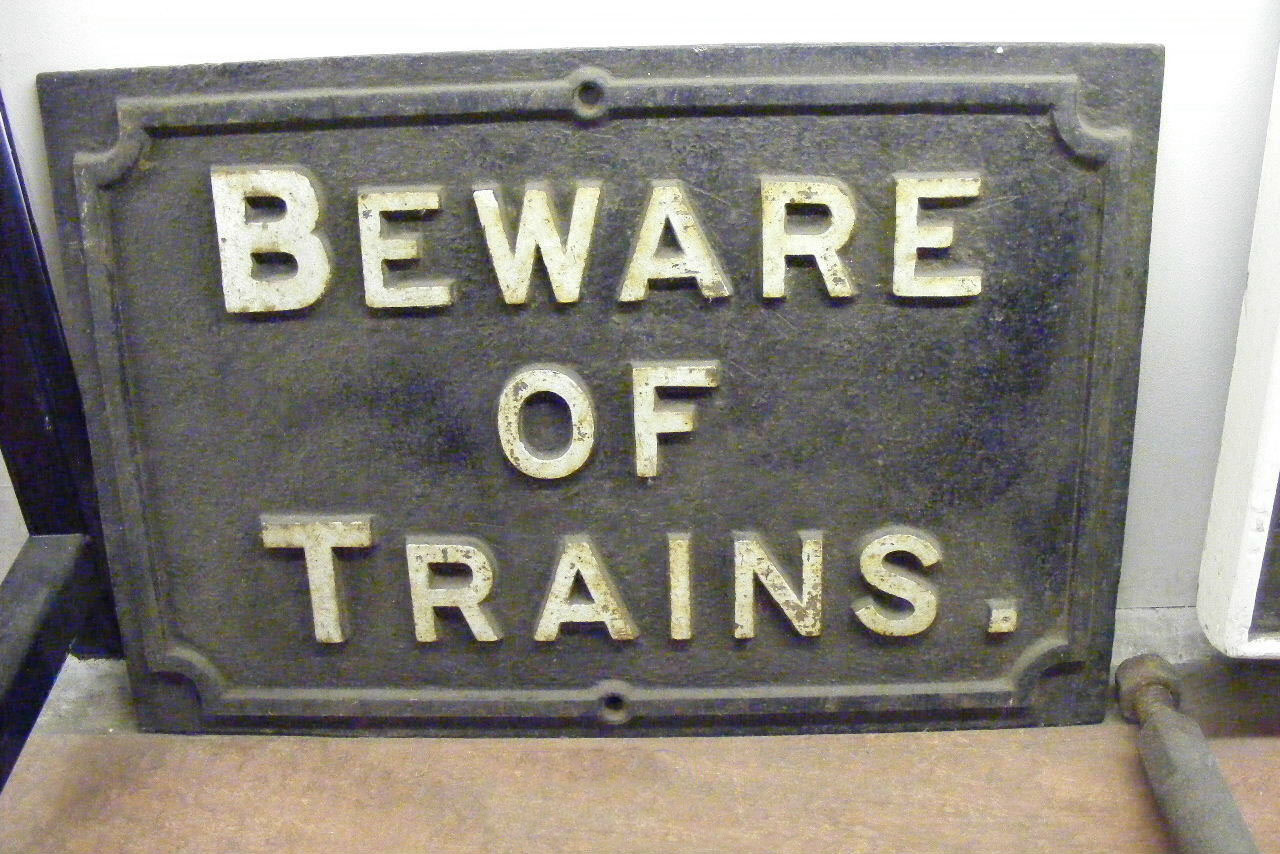
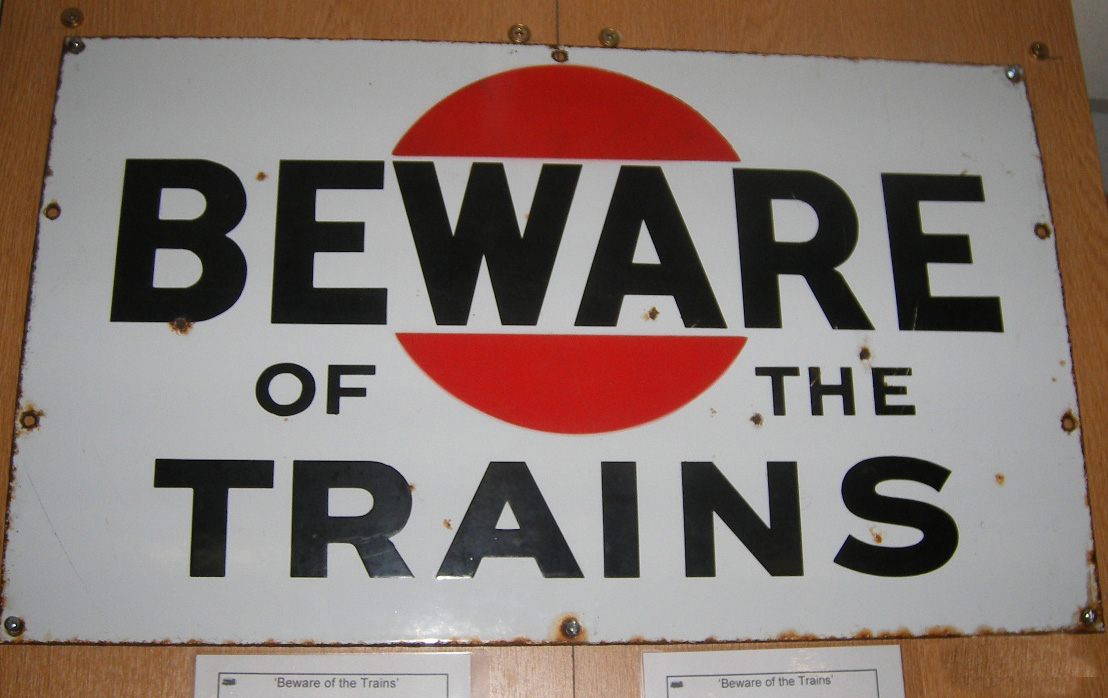
A few warning signs from our collectioN

564

The first one is made from wood with cast iron lettering.  We do not know which railway it came from.

560

Next is an LNWR cast iron notice


561

Now a London & South Western Railway Notice – cast iron.

562

A Midland Railway cast iron sign

652

Ex NCB line between Cannock Wood and Chase Terrace. Location: Ironstone Road, up from the ‘Rag’, seen in the photo below.

To the Rag

Two photos of a sign, before restoration and nearing completion.

1748

DSCF9064

This was found in the mid 1960s in the Wyrley Branch of the Wyrley & Essington Canal which is now under Vernon Way, in the New Invention, Essington area. The railway crossing of the A4124 Lichfield Road from Holly Bank Colliery to the canal basin at Short heath was about 150 yards away on the other side of the M6. It seems logical to assume that this was where the sign was originally placed.


629

Finally, one of the Railway’s own signs, from the early days at Chasewater.


Some fire-related items from the Museum collection from various railways

Some fire-related items from the Museum collection from various railways

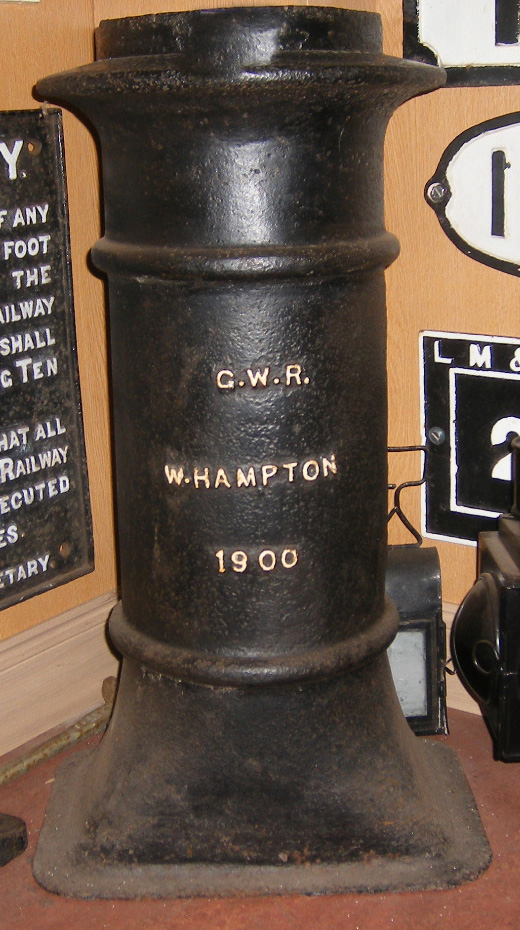
Starting with a chimney from the furnace in the tin-smith’s shop at Stafford Road , Wolverhampton.  GWR dated 1900.

691 GWR Chimney no number

Three fireplace fenders from various offices:

572 Cam FenderCambrian Railway

1686 Fender GE

This one is from the Great Eastern Railway

574 GNR

The third fender is from the station fireplace at Stowe by Chartley, Great Northern Railway

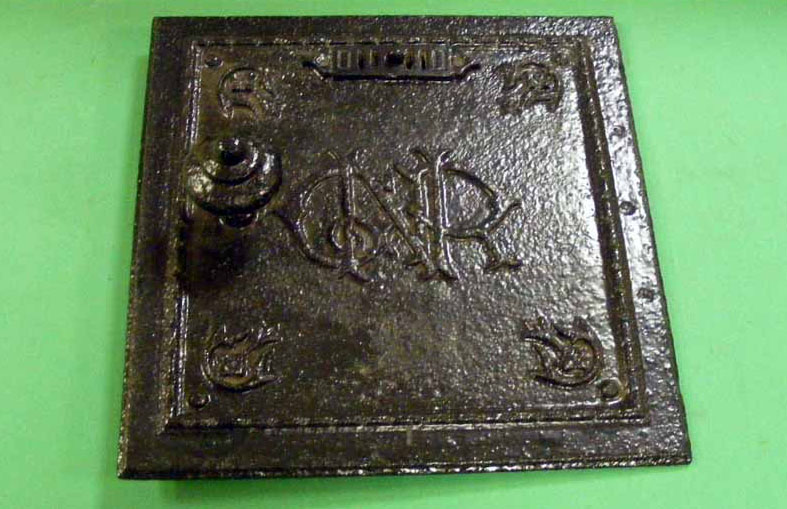
Another item from Stowe by Chartley on the Great Northern Railway is this stove door.

1682 Stove door

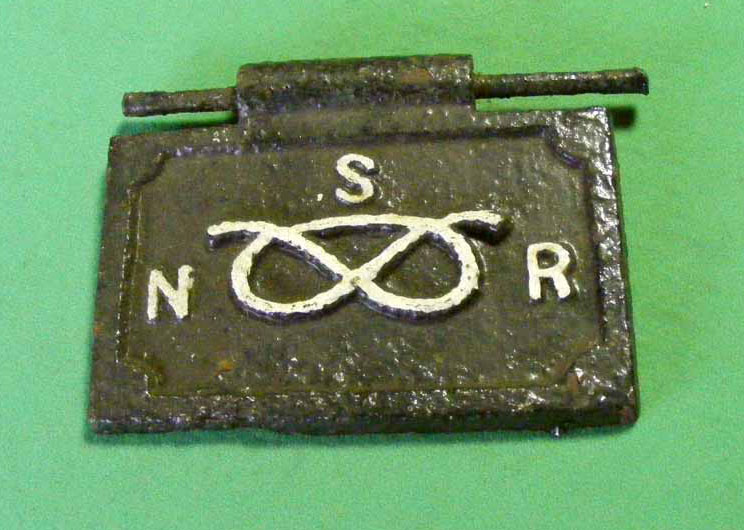
Another stove door – from the North Staffs Railway

1857 NSR Stove door

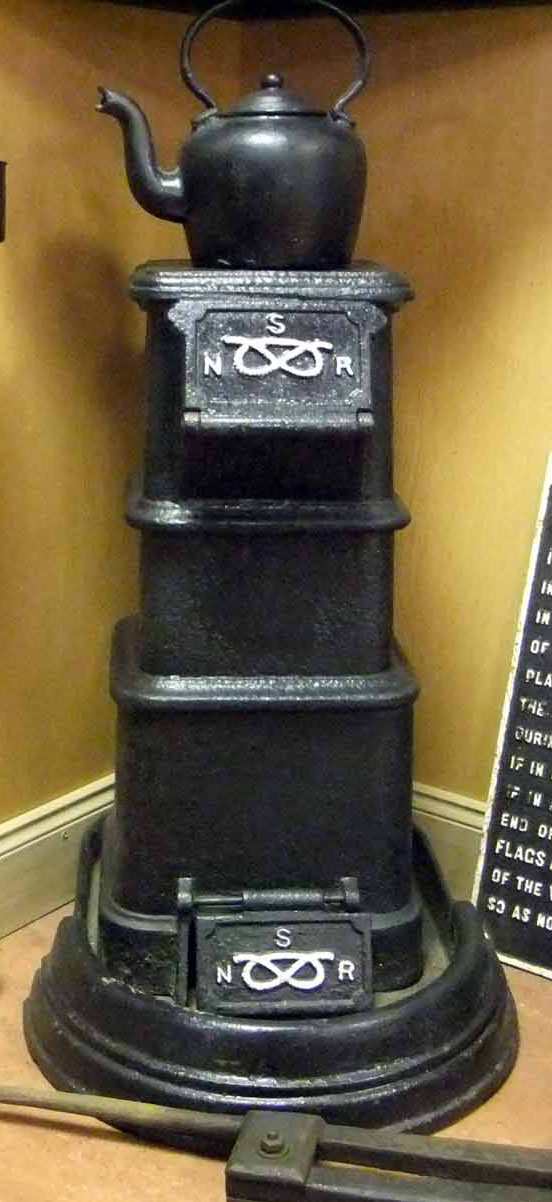
And finally, This North Staffs Railway stove – complete with kettle (very heavy!!)

NSR Stove Crop

Chasewater Railway Museum’s Latest Acquisitions

Chasewater Railway Museum’s Latest Acquisitions

Not quite the size of the item on the previous post but we like them anyway!

10763 crop

The first one is an NUR badge, 0.75″ round from about 1940.  It is made from tin with plastic covering.

10762 crop

This one is a Great Central Railway badge, 1″ diameter, for Railway Service during  World War 1

Chasewater Railway Museum – Local loan item now on display

Chasewater Railway Museum

Local Loan item now on display

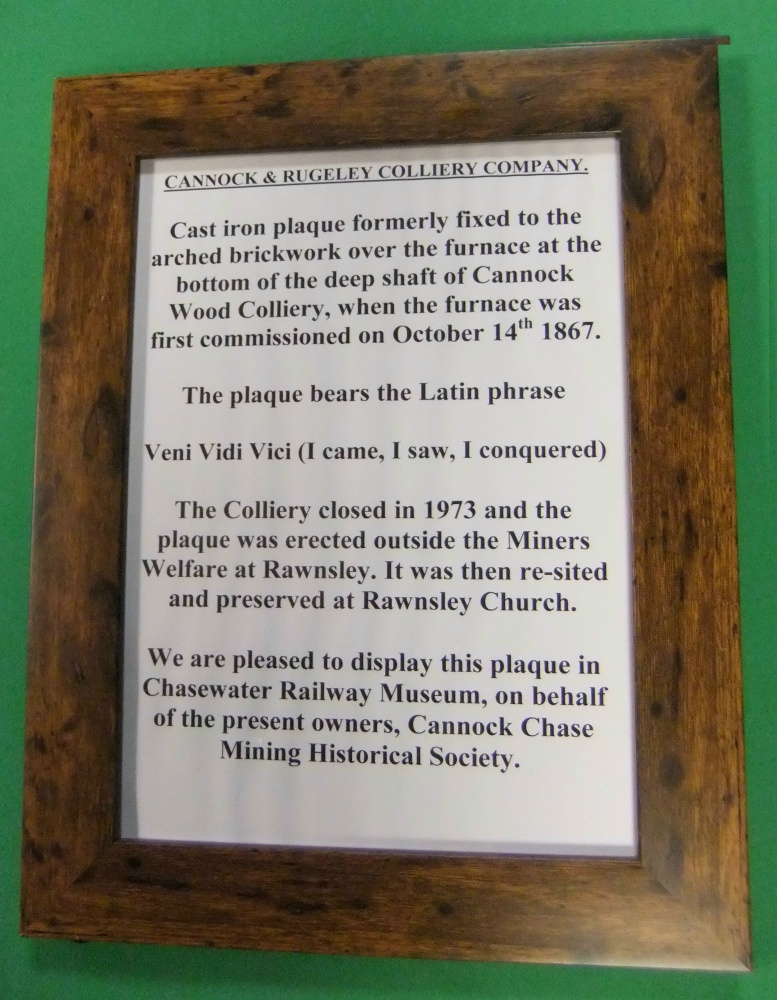
V.V.V.

VVV Info

Our thanks to Alan Dean and the Committee of the Cannock Chase Mining Historical Society for allowing the Chasewater Railway Museum to display this plaque.

Chasewater Railway is known as the Colliery Line – if there had been no coal mines there would be no railway!

Also thanks to the Chasewater Railway members who helped to put the plaque in position – it’s not the lightest of objects!

Chasewater Railway Museum – our latest book

Chasewater Railway Museum – our latest book

DSCF9021

This book of photographs, by J.B.Bucknall, includes many pictures of local interest, and it was thought it would be a good addition to our collection.

One photo is of particular interest to Chasewater Railway members as it shows a coal train leaving West Cannock  5s pit, heading for the Hednesford Yard, and in front of the engine can be seen the first headquarters of the Railway Preservation Society (West Midlands Division), where the Society stayed rent-free for 10 years Courtesy of Charles Ives, Penkridge Engineering) before moving to Chasewater, and changing its name to the Chasewater Light Railway Society and later to the Chasewater Light Railway and Museum Company.
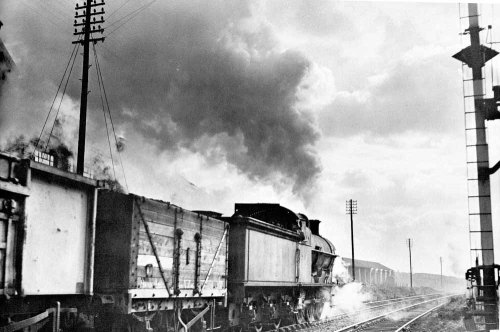
Coal train leaving W Cannock RPS

The building (between the 2 telegraph poles), which is still standing, consisted of brick pillars and a roof, but now the spaces between the pillars have been bricked up.

Chasewater Railway Museum- more new stuff

Chasewater Railway Museum- more new stuff

Three more items for the collection, one in the Commercial Equipment case and the other two, Hornby models.

DSCF9009

This first one is an unusually shaped inkwell, brown earthenware marked GER (Great Eastern Railway)

DSCF9014

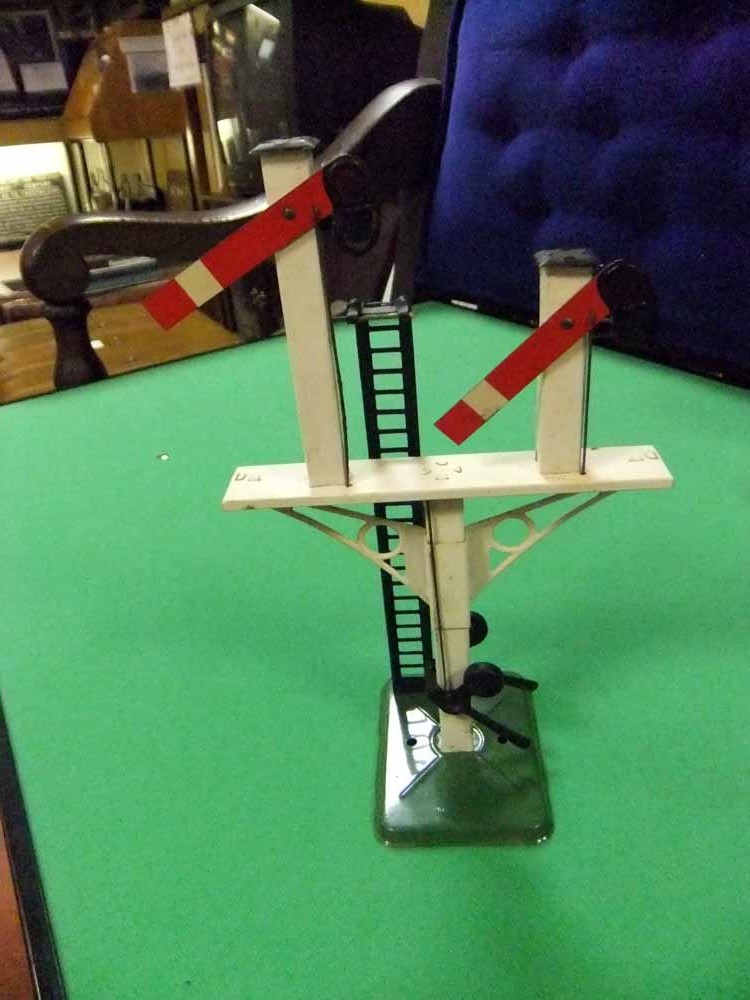
Secondly, a Hornby ‘0’ gauge Junction Signal.

DSCF9016

Finally, a Hornby ‘0’ gauge Water Crane.  ( In my youthful (!) innocence I have always thought of them as water towers, but people who know about such things tell me that they are water cranes).