Please note – the Museum will not be open this Sunday – 23-6-2024
‘Asbestos’ Hawthorn Leslie 0-4-0ST 2780-1909 Passing the engine shed, before alterations!
Picture donated by David Bathurst
192 – Chasewater Railway Museum Bits & Pieces
From Chasewater News – Summer 1996 – Part 3
P Way News – Arthur Edwards
Since the last article was published the P Way gang has had a number of new members join us and the extra manpower has enabled us to carry on a number of tasks at a greater speed than originally planned. This has enabled us to fence in an area next to the lower compound entrance gates, so we now have a fenced in area for the storage of rail and other heavy items of P Way material.
Also the fence from the foot-crossing between the two compounds to the bottom compound has been realigned to allow the relaying of the sidings alongside the shed road. Work is also in progress to design the layout of a head shunt behind the current shed therefore allowing access to the shed from both ends.
Further down the line a number of fence posts have been replaced where they were broken down by trespassers onto the running line and along with bits of hedge growing up alongside is starting to make things much harder for the local idiots. The only bit of bad news about this fencing is that we can no longer use barbed wire where the public footpaths or public areas come up to our fence. I have mixed feelings about this as I know one or two of the members would like to use razor wire backed up with land mines!!
With the first decent spell of dry weather the perennial job of weed killing was carried out, and not before time as the track was starting to disappear beneath the undergrowth again. It has been proposed that a further application of the poisonous stuff be applied sometime later in the summer – weather permitting.
The P Way gang meet every Sunday at Brownhills West Station from 10.00am onward. Come and join us!!
Neilson Saddle Tank No.11 – Paget’s Progress – by Paul Whittaker
Neilson 2937/1882
Alfred Paget at Chasewater – June 1978
On the 13th January 1996, a freezing cold morning of -5ºC, I started the hard slog of removing the boiler tubes from No.11. After many a bruised finger and some colourful language, not to mention seven weekends at it, the final tube fell free from the boiler tube plate at 4.00pm on Saturday 6th April.
After long deliberation and much discussion I and several co-workers concluded that the next move would be to remove the water tank, thus allowing access to the boiler for closer inspection. As the cost of a crane was as yet out of our reach, we proceeded to jack up the tank until such time as it would be possible to slide it safely down two lengths of rail to its resting place on the platform in the engine shed compound.
The next job was to remove the boiler cladding and insulation, a dirty job but it had to be done. Meanwhile amongst the organised chaos that is generated when stripping a steam locomotive down, we removed the dome plate. This was in order to provide access to the interior of the boiler for a very slim young man, otherwise known as Christian Hatton to get inside and remove the remaining collapsed tubes, and around 3cwt of rust. While all this was going on, the washout and fusible plugs were removed from the firebox. The steam cleaner proved to be invaluable in removing the rust and crud from the water jacket around the firebox. As a result of all this, the boiler is now ready for the boiler inspector to cast a cursory eye over it a prelude to a proper test inspection.
As work progressed on No.11 that magic word ‘money’ reared its ugly head again, and after some serious consideration my very good friend and colleague David Borthwick and I decided to start a fund to raise the necessary cash to renovate Alfred Paget, and entitled the fund ‘Neilson Steam Aid’, to which my good wife Janet will administer and collect donations. In addition to this, Dave has put together a Stock Book, which documents basic information on most of Chasewater Railway’s rolling stock and locomotives. This booklet is on sale in the station buffet at 75p per copy.
On a more personal note, I would like to say that I am overwhelmed by the help and support, to say the least, and of the amount of technical information that I’ve received from fellow members at Chasewater, without which I would have been like a beached whale. And so I would like to take this opportunity to sincerely thank all of those involved with the on-going renovation of Neilson Saddle Tank No.2937, otherwise known as ‘Alfred Paget No.11.
Alfred Paget last steamed in 1982, and is still a way off yet – in 2012.
From Chasewater News Bromford Special 1994 – Part 2
A Weekend at Bromford Tube Works – Nigel Canning
When it was announced that the tube works was to be closed, the Freight Charter Group (who organised the Littleton Colliery steam weekend) made arrangements for steam to run once more at Bromford. As a Hawthorn Leslie similar to Asbestos had once worked there, the CLR was approached to provide the loco. This is a brief account of what happened.
Shortly after Christmas the Loco Dept. was asked if Asbestos could be made available fro traffic a couple of weeks before Easter as there was a possibility that it may be needed to run in Birmingham for a special event. Although the loco had been stripped for its annual boiler inspection and various repairs, this was agreed in principle as it would need to be steam tested prior to Easter anyway. As the weeks went by and the work progressed, the special event, which was to be at Bromford Tube Works, became a definite commitment but for various reasons would have to be earlier than planned.
The boiler inspector came and did a visual examination, and then in record time by Chasewater standards returned for the steam test. This was an achievement in itself, as with frozen points and snow drifts across the line, the engine had to be lit up in the shed with only the smokebox and chimney eventually venturing outside.
In addition to the boiler work, the loco was cleaned and repainted (not the sort of work ideally carried out in February) with the result that it looked better than it had for a long time, and still does for that matter. The 20 ton GW brake van which was also required at Bromford was cleaned out and repainted, and even had its roof re-felted for the occasion.
On Thursday March 3rd the brake van was first to be taken by low-loader to Bromford, followed later in the day by Asbestos. Due to problems with the ill-equipped low-loader and a somewhat over-cautious steelworks management, Asbestos was eventually unloaded in the dark. Following this, an attempt to fill the saddle tank with water from their ‘fire main’ had to be aborted when it was noticed, even in the dark, that the water appeared milky. A reassurance from the steelworks engineer that this was ‘only a bit of soluble oil’ resulted in the tank having to be drained, and as the promised indoor accommodation for the loco never materialised, the drain plug was removed on the spot ready for another attempt in the morning.
Next day we arrived back at Bromford for a trundle round to familiarise ourselves with the line before the main event on Saturday and Sunday. The steelworks people had been busily pumping water from a well overnight and had filled their large water tower ready for use in the loco. After raising steam and filling the tank we were given just one loaded bogie bolster to take for a run with the brake van. At first sight the trackwork appeared highly dubious with the sort of tight curves that would look more at home on a Tri-ang train set, but after a bit of running it became apparent that most of it was in excellent condition with the rail joints beautifully aligned allowing quite brisk running as long as the couplings were left well slack.
This view shows just how tight the curve between the two bridges was, requiring quite a bit of power just to crawl round! Pic – Ian Buswell
The line itself ran from a works yard down a bit of a gradient, round a tight curve, passed under Bromford Lane Bridge, and into a fan of five exchange sidings next to the site of the former BR (Midland) Bromford Bridge Station. The whole of the exchange sidings, and even some of the not unsubstantial works buildings were overshadowed by the elevated section of the M6 Motorway running overhead. Perhaps only thirty years ago a surreptitious excursion through the trap point onto BR metals followed by a left turn at Castle Bromwich, and right at Aldridge, would have taken us back to Chasewater without the need for a low-loader, but on this occasion we were required to stop about halfway along the sidings where we could watch the main line trains running to and from Birmingham New Street.
On the Saturday and Sunday we performed for the photographers who had apparently paid around £18 each for the privilege. Having raised steam for a 9am start on both days, it was well after ten by the time the security men had let people in and we were required to move.
Rather than spend time shunting wagons around as we would have preferred, we were restricted by the steelworks management to running backwards and forwards over a set route with initially just the one wagon, and it was only after very careful negotiations that this was increased to two on Sunday. These arrangements seemed to suit the photographers quite well as they wanted to photograph a series of ‘stage managed set piece’ movements.
Asbestos stands on the curve just short of the Bromford Lane bridge awaiting the signal to accelerate through for the photographers waiting on the other side – Ian Boswell
A typical example of this was to stop on the works side of the Bromford Lane Bridge, then when the photographers had positioned themselves on the other side, we would accelerate through and coast to a stand half way along the exchange sidings. After a brief delay we would then reverse through the bridge ready for a repeat performance. The number of repeat performances, and delay in between, depended apparently on the amount of sunshine (or short term prospects of it) and whether there had been enough smoke and steam from the loco.
In order to make the loco work harder and produce the spectacular results required, we ended up running with the brakes pinned down on the wagons, and wound hard on in the brake van, whilst accelerating briskly past the cameras. In the end this treatment took its toll on the loco resulting in a number of tubes leaking in the firebox by mid-afternoon on Sunday. In view of this, that afternoon’s running was cut short by around an hour, and the hoped for night photography was abandoned. No-one seemed too upset by this failure of the loco, and a number of national magazines have published photos showing that we achieved the desired effect.
On the Sunday another hard day was spent getting Asbestos and the brake van on and off the low-loader. On this occasion we managed to get the job done a little bit quicker, finishing at Chasewater at around 6pm.
As a result of its Bromford trip, Asbestos is now facing the ‘other way round’ with its cab at the Brownhills West end as it had been decided to take advantage of the low-loader journeys to achieve a turn round. This has put the driver on the platform side of the train, and the loco now faces up the causeway bank.
Financially the session at Bromford seems to have been well worth while, and in addition a lot of free publicity was obtained, but the condition of the boiler tubes still remains a problem and is likely to be until they are completely renewed. Whether any similar outings are attempted in the near future remains to be seen, but any loco used will need to be in more reliable condition if similar feats of performance are to be attempted.
Thanks to Nigel Canning for his kind permission to use his photographs.
As it’s the end of a decade, a complete rundown of locos is given.
‘Invicta’ AB 2220/1946The loco was kept in reserve at the start of the season and was not steamed until June 10th and then chose to run hot! As there was only two weeks to go before Transport Scene there was much gloom and despondency around as well as a fair amount of bickering.
The offending bearing was the rear driver’s side axle box and this was duly removed following sterling work by those stout fellows Messrs. Hames and Luker. Inspection of said bearing revealed the cause of the trouble. It was a well known fact that during her latter years at Chatham, ‘Invicta’ had been fitted with a brand new rear axle and someone had obviously forgotten to cut oil grooves in the bearing brass, leaving only two small holes to lubricate the axle – not very good – especially as one had got blocked leading to overheating so bad as to actually melt the bearing surface.
Swift alterations to the bearing saw the loco back in service within four hours and the loco has performed without trouble ever since.
‘Invicta’ is undoubtedly the loco to be used at the start of the 1980 season, following the annual boiler test.
‘Alfred Paget’ N 2937/1882The ancient Neilson has performed without trouble all season and is now awaiting its hydraulic test, after Christmas, which will entail the removal of the saddle tank and boiler lagging and cladding. As its firebox has overcome its leakage problems it would seem probable that the boiler test will be passed without too much trouble. The opportunity will be taken for a thorough repaint and perhaps even new boiler cladding sheets will be provided to replace the current motley collection. There is every confidence of the loco working next season – the loco’s 98th year in fact.
‘Asbestos’ HL 2780/1909This loco has been the centre of great activity this year with up to seven people working on it at one time – unheard of before!.
The loco is completely dismantled and a thorough mechanical and cosmetic job is being done to ensure trouble-free running when it resumes earning its keep.
The boiler was lifted out of the frames in June and was finally despatched to Park Holland Ltd. of Hanley on August 12th. It now seems as though the firebox repairs will be of the welding and riveting kind rather than uplifting of the foundation ring, following a further examination by our tame boiler inspector. The boiler is said to be ready around Christmas time which will ensure plenty of work in the New Year.
Following the removal of the boiler the motion was completely taken down, followed by jacking the frames clear of the wheels to enable the wheels to be rolled out. Removal of the wheels has enabled a thorough paint job to be done on the frames, at present five coats have been applied with at least one more to follow. To enable all members to feel part of the restoration team a couple of carriage and wagon tappers were roped in for a paint session (only undercoats of course!) though with the onset of stormy weather they have been despatched back to their rightful place fending off the bitter easterly winds off the workshop area.
Removal of the wheels will enable tyre turning to take place, probably at Bridgnorth. The valves and motion have had attention with reassembly following, as far as the lack of wheels will allow anyway! Whilst Brian has been busy machining the regulator valve to allow greater use of the steam produced. All concerned with the restoration of the loco are confident of seeing it in steam next year.
‘The Colonel’ P 1341/1914The hydraulic test was passed in July, followed by refitting of the boiler cladding and lagging since when not much has been done save for the two Bobs (and others) finishing off the new coal bunker which looks rather fine. Providing the tank can be repaired the loco should see service next year.
‘Peckett’ 917/1902No work has been done on this loco apart from routine preservative maintenance, but the situation should change once ‘Asbestos’ is back in traffic, as it is the next loco due for ‘works’ treatment.
Hudswell Clarke 431/1895Following a relatively ‘light job’ on Peckett 917 the ‘old Hudswell’ should get the full treatment though this is probably a good 18 months away at the moment. (32 years and counting!)
Andrew Barclay 1223/1911
This loco is in a presentable state at the moment but needs heavy boiler and firebox repairs before it can steam again – pity as the mechanics are in first-class condition.
’S100’ HC 1822/1949
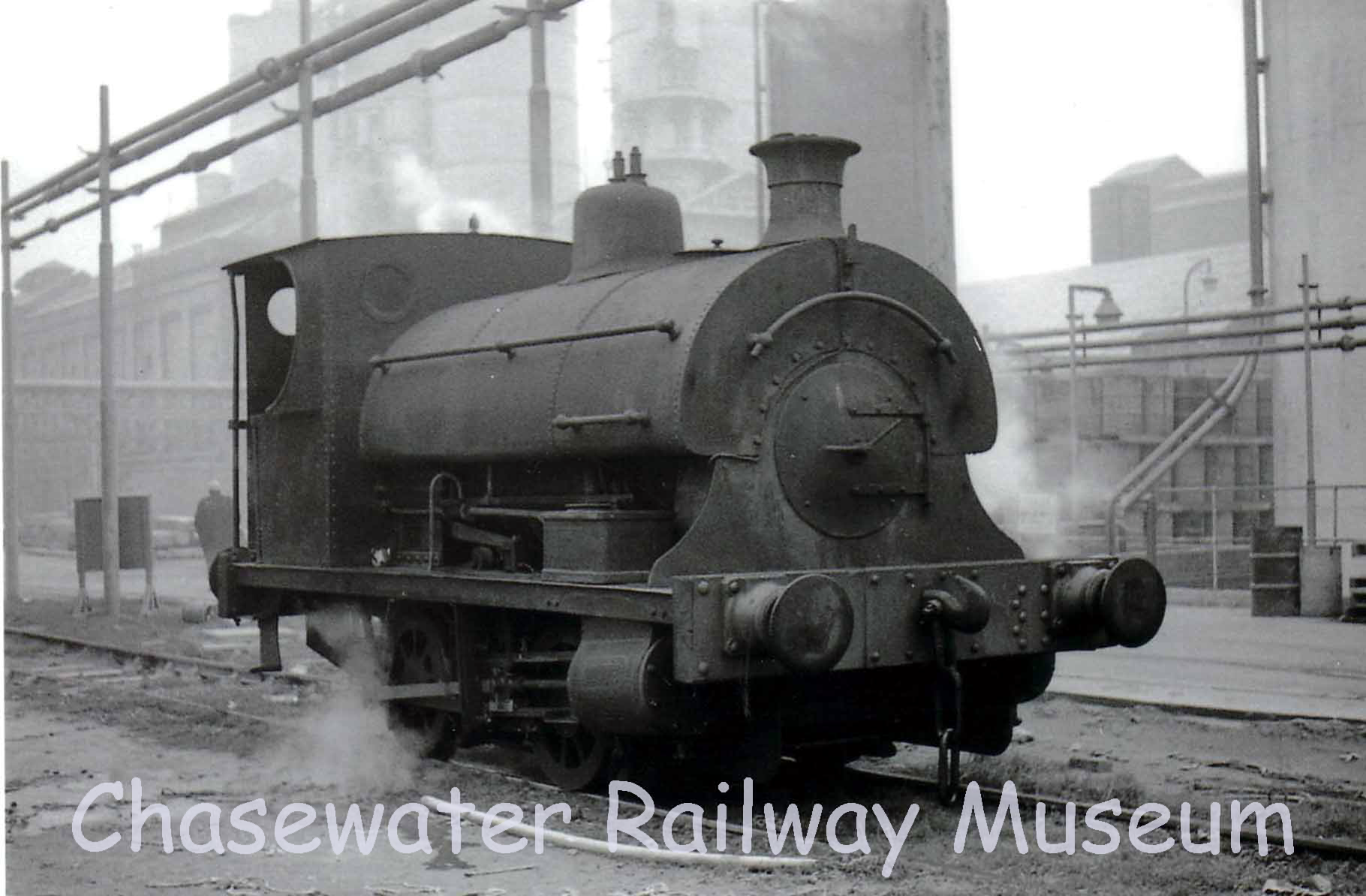
The loco migrated into the compound and the boiler received a coat of paint, since when nothing, – where are you, Tony?
DL7 (RH 458641/1961)Once the loco was cajoled into action after removal to Chasewater it has proved to be a fine acquisition and it is to be hoped that the CLR Co. will have sufficient funds to buy it off the STEPS scheme.
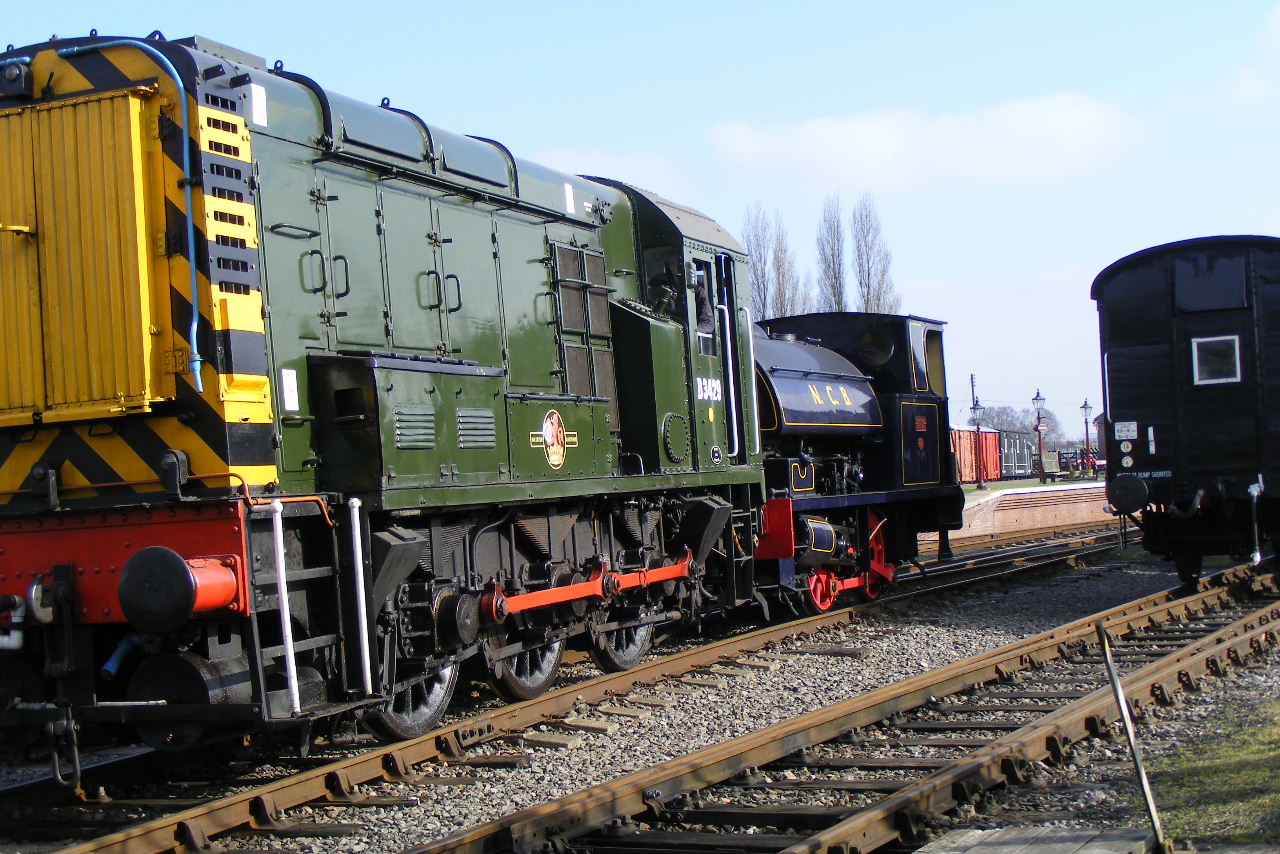
Apart from working 5 days a week it has proved its worth on shunting duties on steam days, as well as hauling a couple of passenger trains on Gricers’ Day. Once its future is secure the NCB green will disappear under a coat of CLR livery of some colour or another.
Others
Of the two Bass-Worthington diesels, No.21 sees occasional use whilst No.20 is rumoured to be going off on loan to the Bass Museum, Burton-on-Trent, which will be a useful advert for the Railway and give us a bit of room.(It went and is still there, 2011)
The two No.1s are performing sterling work as a stop block on ‘Three Road’ whilst various people mutter darkly about getting them going again.
Whilst on the subject of infernal combustion it must be mentioned that Bob Curtis has offered to paint No.21 as the Society is 21 years old next year. Well done that man.
Carriage & Wagon Department
He DMU trailer coach has performed well as usual but the paintwork is now in need of some touching up, especially around the windows – so hopefully this will be done before it gets worse as, having seen similar coaches on a North Yorkshire Moorland Railway, it wouldn’t be advisable to wait too long.
Messrs. Pearson and Curtis have been busy painting the ex LNWR TPO and nailing panels back onto the Maryport and Carlisle coach. We are hoping they will move onto the LNWR full brake after finishing the TPO as the paint is fast peeling off.
John Elsley is busy rebuilding the fire-damaged brake end of the ex MSL six-wheeler and it is looking better with every panel. The only other item to receive attention has been the Great Western brake van which should get repainted during the New Year, following some welding to the platework which is rather thin in places.
In recent years the final steam day of the year, on the second Sunday in October, has taken a different form from the normal twice-monthly summer season steaming. Amongst popular attractions with photographers has been the freight train run pasts at intervals during the day and this will again feature.The success of the first steam spares and tools sale held at Chasewater last February has prompted the organisation of another similar event to coincide with this ‘Gricers’ Day’. The idea of the sale is to provide an avenue for preservationists to get together, discuss mutual problems and conduct exchanges or sales of parts and tools surplus to their own requirements, but perhaps much sought after by other preserved lines.
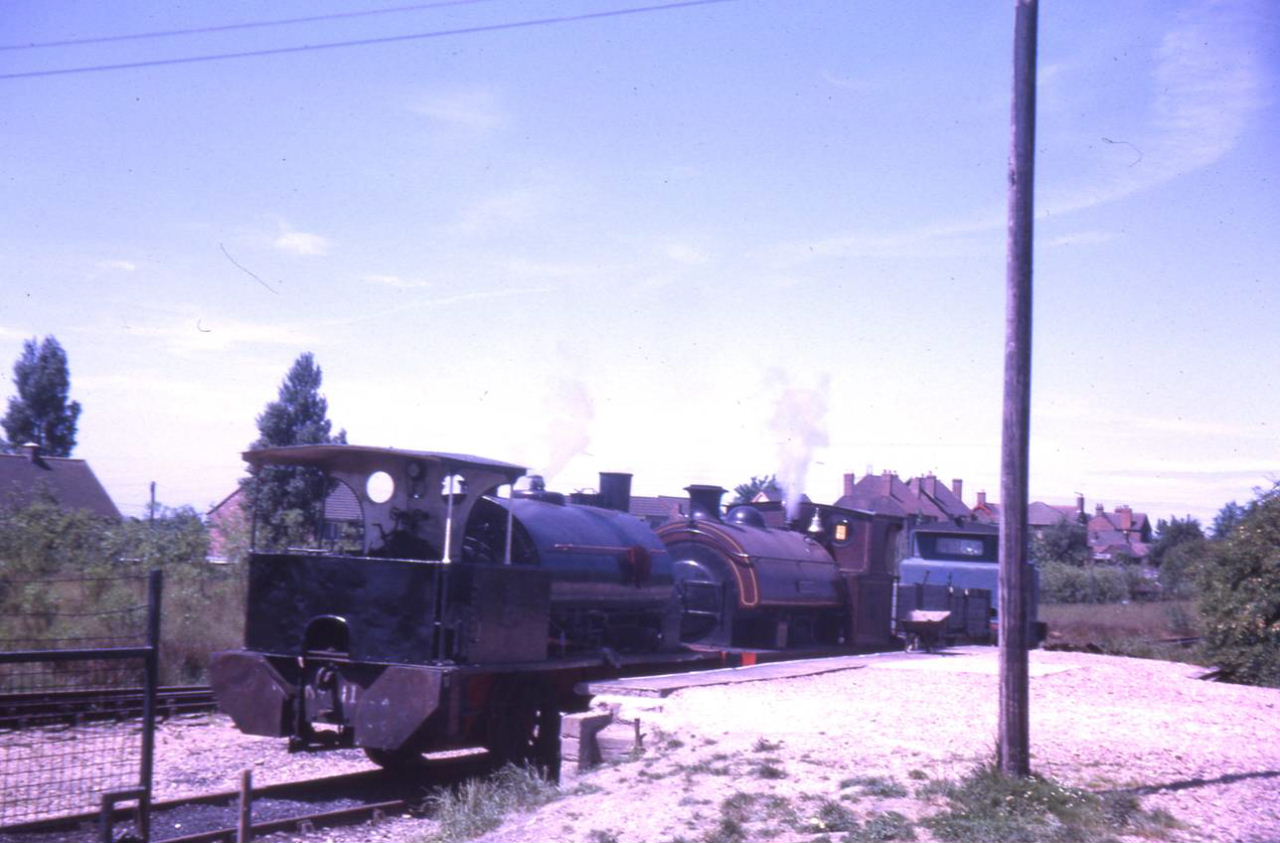
Alfred Paget with Asbestos and one of the Kent Construction diesels – 1976
At least two locos will operate during the day – ‘Alfred Paget’ built by Neilson & Co., Glasgow (works no. 2937 of 1882), the oldest loco regularly at work in the Midlands, and ‘Invicta’ built by Andrew Barclay, Sons & Co. Ltd., Kilmarnock – 2220/1946. It is likely that one of the two Kent Construction diesel locomotives will also see use during the day, as well as the 5-ton capacity Smiths of Rodley diesel crane (formerly steam powered).The ex Cambrian Railways Merryweather fire pump will also be steamed and a 1929 ex West Bromwich Corporation single decker bus has been booked to attend.
Apart from the Chasewater Light Railway Society sales stand which enjoys a good reputation locally for reasonably priced Railwayana, we would ask you to support the other stalls attending today; at the time of writing these are expected to be Mercian Model Rail, selling both new and second-hand model railway items and who also enjoy a reputation for fair prices, Walsall Railway Museum and Winchcombe Railway Museum who specialise in relics, the Princess Elizabeth Society who are in urgent need of funds for re-staying their famous LMS Pacific, and finally the Worcester Loco Society who carry a reasonable range of books.
We hope that everyone attending has an enjoyable and interesting day out, perhaps even an amusing one – how about a real ale tombola for instance?
For those wishing to partake of liquid refreshment, opening hours are 12.00 – 14.00 hours, the nearest hostelry being the Pear Tree Cottage Inn (Ansells) on the Hednesford Road where excellent cheese flans, etc., can be obtained, or the White Horse almost adjacent to the A5 road heading south which serves an excellent pint of Banks’.
Review of the Year
The year has been both happy and sad for the small but faithful band of followers of the Chasewater Light Railway, January was a disastrous month as vandals broke into the compound and set fire to our former Easingwold Railway MSLR coach, completely burning out the brake end and destroying materials contained therein, as well as partially damaging the exterior of the LNWR brake third which thoroughly deserves the nickname ‘the football special’. Our grateful thanks go to the Transport Trust who have granted the Society £275, being approximately half the cost of materials needed for renovation, although this cannot take into account the number of man hours needed to restore the vehicle.
Following the fire, thought was given to moving one or two of the wooden bodied coaches elsewhere for safekeeping, but as the obvious answer lay in providing covered accommodation at Chasewater this matter was pursued with renewed vigour and two buildings have since been acquired. Both are of agricultural type – one has been dismantled and removed to Chasewater; the other, larger, building has still to be dismantled.
New arrivals during the year included S100, a Hudswell Clarke 0-6-0T No.1822/1949, privately owned and previously preserved on the Yorkshire Dales Railway, Embsay. The loco is presently being dismantled to enable firebox repairs, de-tubing and wheel turning to take place. The whole project will probably take another three years to complete (still counting!).
5263 P 0-4-0ST 917-1902 Albright -Wilson Peckett
Through the kindness of the Directors of Albright and Wilson Ltd., Peckett 0-4-0ST, 917/1902 arrived on loan together with coal, 27 spare boiler tubes and various tools.
The day following the arrival of the Peckett saw the arrival of the Smith’s of Rodley 5-ton diesel crane, a purchase from the Mersey Docks and Harbour Board, Victoria Dock, Birkenhead. The crane’s first job on arrival was the lifting of the two tanks off S100.
To enable the purchase of the BR owned 600 yards of double track immediately beyond our present operating limit to be effected, the former LBSCR E1 loco was sold to the Lord Fisher Loco Group, Cranmore (see previous post). The monies from the sale of the loco together with that put aside from donations, etc., has given the railway a financial security never enjoyed previously, although this will be greatly depleted when the £5,400 purchase price of the track is paid.
Current projects include the erection after repair of the former Manchester Ship Canal water tank, and the preparation of the oil-fired Peckett (The Colonel) for a major boiler examination. The Hawthorn Leslie ‘Asbestos’ is being de-tubed and the boiler sent away to Park Holland for the raising of the foundation ring about four inches to overcome the problem of badly wasted corners at the bottom of the firebox. A complete retube with tubes purchased earlier this year will follow.
It is hoped that the Chasewater Light Railway Company will be able to take advantage of the Government Special Temporary Employment Scheme whereby lads of nineteen plus, out of work for a period of at least six months can be employed and paid their wages by the Government.
1979 promises to be a year to look forward to and it is to be hoped that some of you visiting us today will return again next year.
From RPS Newsletters Nos.3 & 4, July – October 1973
One short newsletter and one a bit longer so I thought I’d put them in the same post.
From No.3
Due to the grand summer weather our train running operations have proved very successful, this of course has also been enhanced by having the DMU trailer unit now in regular service, our train crews have carried out the job of keeping the wheels rolling most efficiently. Members wishing to participate in train duties should report to Steve Allsopp for instruction.
Neilson 0-4-0 Locomotive
This locomotive has now passed its boiler test successfully and is now in the process of being re-assembled. I understand that the main bearings are being re-metalled. The whole project is in the capable hands of our General Manager, Derek Luker, with Keith Sergeant acting as chief assistant. We are heavily indebted to these two members for sticking to the job.
MSLR CarriageMSL at Easingwold – R.Cromblehome
Restoration of this vehicle still continues, also a long slog by John Elsley. John would appreciate a little more help with this vehicle. Anyone who is reasonably skilled in woodwork should report to John Elsley.
The platform building had been slowed down due to the train operations, and the Railway held a very successful Railway Exhibition at the Forum Theatre in Cannock. Very many thanks to all the people who set up the stands, acted as stewards, and in particular, to Rob Duffill and his team of ladies who manned the refreshment bar.
From No.4
The running season had been a good one, helped by an excellent summer. Restoration work and maintenance will now continue throughout the coming autumn and winter months, weather permitting. Priorities, I understand, will include trackwork, embankment restoration and completion of the platform.
Restoration work on the Neilson continues – should be in steam next year.
Hawthorn Leslie 0-4-0ST Asbestos
This loco has finished for the season, and now enjoys a well-earned rest. Boiler fittings have now been removed and the boiler washed out. The fitting flanges are to be reseated prior to the forthcoming boiler tests. This work again is in the hands of Derek Luker, our hard-working General Manager.
MS & LR Carriage
Excellent progress is still being maintained by John Elsley, Nigel Hadlow and Albert Haywood, cracked panes have been replaced with new ¼” plate glass (at a prohibitive price), painting still continues, the teak centres can actually now be seen on the Mansell wheels. John tells me he hopes to restore the compartments to the original as far as possible. This vehicle is proving well worthy of preservation and is a credit to John and his team.
Maryport & Carlisle Railway carriage
Work has now started on the panelling of this vehicle, under the capable hands of Andrew Louch. It is indeed gratifying to us all that our historic ‘Maryport’ is at last receiving restoration attention. After being in service for a full season last year, the vehicle is undergoing a refit and later a repaint. More about this at a later date.
Worthington Diesel No.20
This vehicle has now received attention from Brian Piddock and is again in working order, after lying idle for many months, it is a very good job done and I’m sure we are all grateful to Brian.
Chasewater Terminus Platform
Work still continues on this very vital asset. Lawrence Hodgkinson is in charge of this project, the Council have helped with a good graded red ash approach to the platform, and provided car parking facilities. I’m sure the Society is most grateful for this help.
Derailment of No.21 Diesel
A derailment occurred this month (Sept) during the hours of darkness, the above diesel came off the road when towing the DMU into the compound around 8.00pm. Two slabs were loosened on the platform and the driver, Lawrence Hodgkinson, somewhat shaken. A team of stalwarts (6) worked until 11.30pm by the light of Tilley Lamps to re-rail the locomotive, this was finally achieved and both loco and carriage shunted safely into the compound.
A.G.M.
The AGM was well attended this year, it was followed by the Chasewater Light Railway Co. Ltd. AGM. A special train took members a trip down the entire length of the line, this consisted of the L & Y No.1 Petrol Loco and the GWR 16 ton brake. Slides were later shown in the DMU carriage, this depicted work done over the season on and around the site.
Compiled by Dave Ives and Printed and published by Lawrence Hodgkinson.
Chasewater Railway Museum Bits & Pieces 44 Aug. 1968
Latest Arrivals at Chasewater
People living in the houses adjacent to the line have by now become used to seeing various types of low-loaders arriving with miscellaneous items of rolling stock, in fact on one memorable day two vehicles arrived at the same time. One often wonders what the thoughts of these people are as more and more large relics appear at Chasewater.
Several items have arrived over the last two months. The first and in many ways the most important was the Midland Railway crane from Hednesford. Without this, our track laying project could not have been fulfilled and over the last eight weeks it has more than made up for its three years of inactivity at Hednesford. Apart from being a valuable historic item, it is a most useful piece of equipment.
The Whitsuntide holiday saw the arrival of the South Eastern and Chatham Railway 6-wheel full brake from the Derwent Valley Light Railway at York.
This six-wheeled van, built in 1905, is unusual in that it has both a “birdcage” lookout on the roof and side duckets for the guard. In addition to accommodation for the guard, the rest of the space was used for luggage. On withdrawal it was transferred for service use as an ARP Cleansing Van, based at Bricklayers Arms Locomotive Depot in London.
With no further use for it after the war, in 1947 it was sold to the independent DerwentValley Light Railway in Yorkshire. On its second withdrawal from service it was bought by the Southern Locomotive Preservation Co., who moved it, with the rest of their stock, to the Bluebell in late 1971 and early 1972.
The van’s eventual restoration will require, as its first stage, the complete reconstruction of its wooden/flitch-plated underframe.
It was at Chasewater for five years before being transferred to the Bluebell Railway. It had to be left outside for the haulage company to make an early start, and in those few hours every window was smashed. ( I know there aren’t many but…..)
This was most eventful since it arrived a day early. The usual entrance was locked and the haulage contractors came through the main entrance. This involved a considerable amount of shunting on their part and eventually necessitated the complete removal of the main gates. After becoming entangled with overhead power cables the vehicle was finally unloaded without a hitch! The carriage is in the nature of a joint venture between the Society and our good friends the Southern Locomotive Preservation Company, the latter having purchased the coach while the RPS provided the bulk of the money needed for transportation.
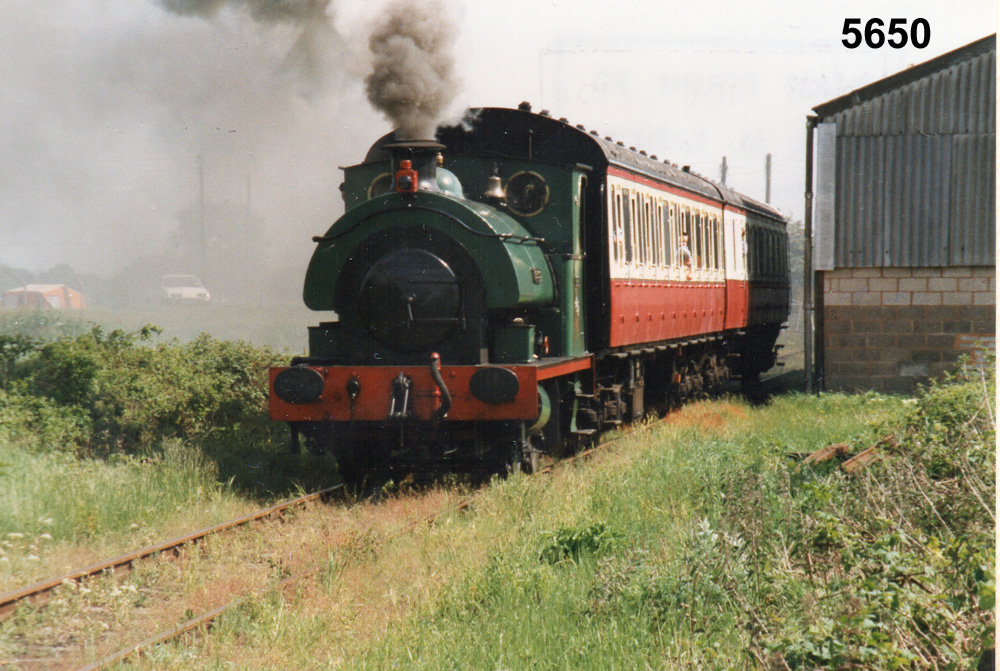
The next arrival, on June 15th, was the Hawthorn Leslie 0-4-0ST ‘Asbestos’ from Turners Asbestos Cement, Trafford Park, Manchester. In contrast to the previous item, this arrived about five hours late and completely disrupted work for the day. However, the sight of this immaculately maintained locomotive more than made up for any inconvenience.Pic: DM Bathurst
This was followed one week later by our most distant acquisition, the Neilson 0-4-0ST from Glasgow, vandalised the day before collection, as posted elsewhere.
Before the next influx of new items, more track will have to be laid into the compound. As soon as this is done, the peace of the neighbourhood will once again be shattered by the noise of heavy haulage vehicles.
Chasewater Railway Museum 1968 Vol.1 No.3 Bits & Pieces 42.3
Plus Stocklist – 1968
This is one of a number of articles included in this magazine – there will be another couple to follow later. I don’t know what happened to this loco, but in spite of it being purchased and delivered to Chasewater, it hasn’t steamed since!
Hudswell Clarke 0-6-0ST No.431 – By Frank Harvey
Working at Desborough – V F Hall
The previous issue of the Mercian featured several photographs of this, our latest locomotive, and it was felt that a short article about it would not be out of place.
It was built by Hudswell Clarke & Co., Leeds in 1895, works number 431 and spent most of its life in the hands of the Sheepbridge Coal & Iron Company in whose fleet she became No.15. It was allocated the name ‘Sheepbridge No.25’, but this was never carried and with the removal of its official number and works plates ran its last years without any identification at all.
It has on two occasions been rebuilt, first in 1928 and secondly in 1944, by the Sheepbridge Company themselves.
The engine was first suggested as a suitable candidate for preservation some two years ago when it was one of several locomotives at work at Desborough Warren Quarry near Kettering. One by one its companions were withdrawn leaving No.15 as the only workable source of motive power. After closure of the quarry it assisted with the lifting of the track, until the early part of 1967 when it too was withdrawn and stored in the engine shed at Desborough in company with an Avonside 0-6-0T.
The RPS then stepped in and after pleasing, successful negotiations with Stewarts and Lloyds Ltd., the locomotive was purchased. The firm kindly allowed us to steam the engine before purchase – and members will have read about this eventful weekend in the last issue of the magazine. (CRM Bits & Pieces No.41).
It proved to be in good working order and required little in the way of attention save for the fitting of two new injectors which have now been purchased, and the repairing of a cracked blower pipe. Evidence of this can be seen clearly in the photographs!
Desborough, 1968
The locomotive was delivered to Chasewater in November and restoration is now well under way. When completed it will be resplendent in apple green, lined black, edged white and a high standard is being achieved.Chasewater August 1969
Purchase and transport charges tended to deplete the Society’s funds somewhat, but all agree that it was money well spent and in common with all other RPS stock, no money is outstanding, a fact of which we are justifiably proud.
Although restoration is unlikely to be completed before 1969, we look forward to seeing No.15, the oldest working Hudswell Clarke, in steam at Chasewater later this year.In the Heritage Centre, 2010
Stocklist – 1968
With so many new additions, it was decided to publish a stocklist in the 1968 Mercian, Vol.1 No.3
I hope you can read it ok, it’s interesting to see what’s still here after 40-odd years, and what’s gone.
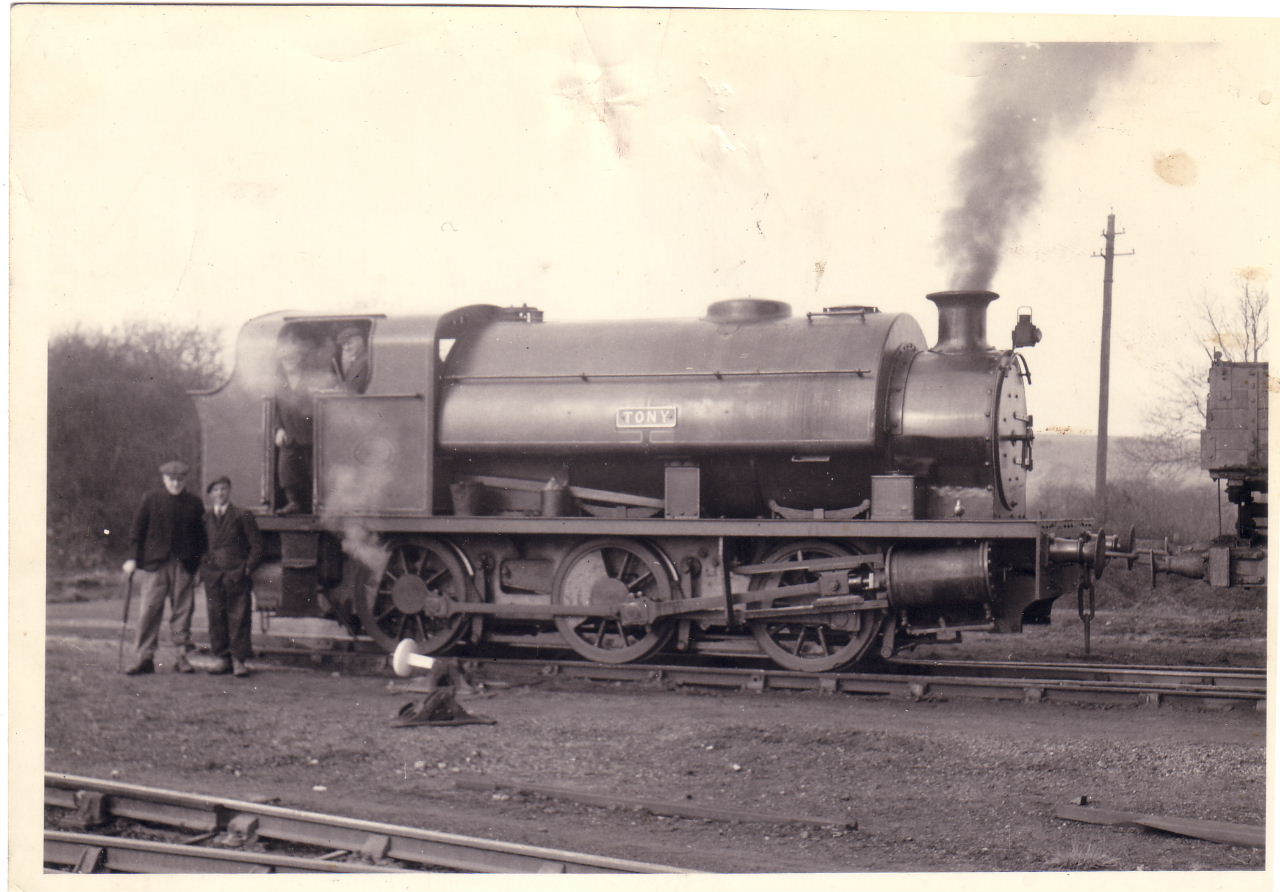
Works No. 3460, ex works 31-3-1921.
Delivered new to U.A.Ritson & Sons, Preston Colliery, South Shields, Northumberland.
Standard gauge (4’ 8½”) 0-6-0 saddle tank with 2 outside cylinders, 16” diameter x 24” stroke. 3’ 8” wheels.
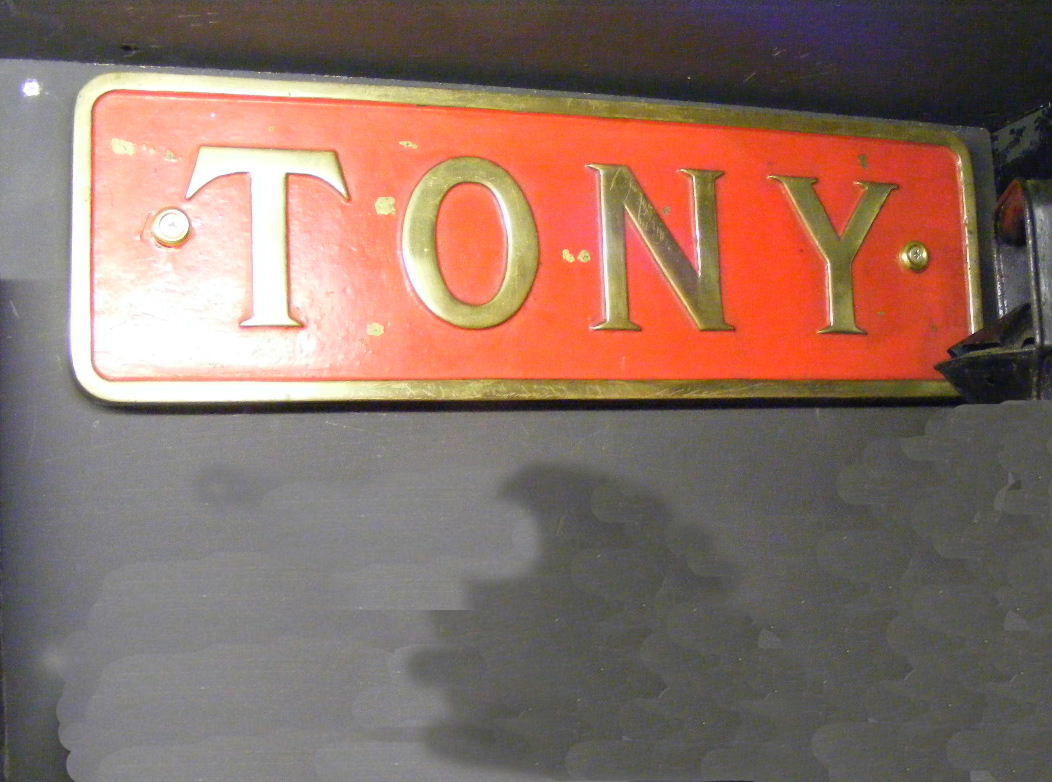
Sold 1927, via dealers Geo. Cohen, to T.A.Hawkins & Sons, Old Coppice Colliery, where it was named ‘Tony’
Sometime circa 1955-58 transferred by NCB to Chasetown and left there for Walsall Wood Colliery in February, 1959.
Scrapped May 1965.
The locomotive at Hawkins Colliery.
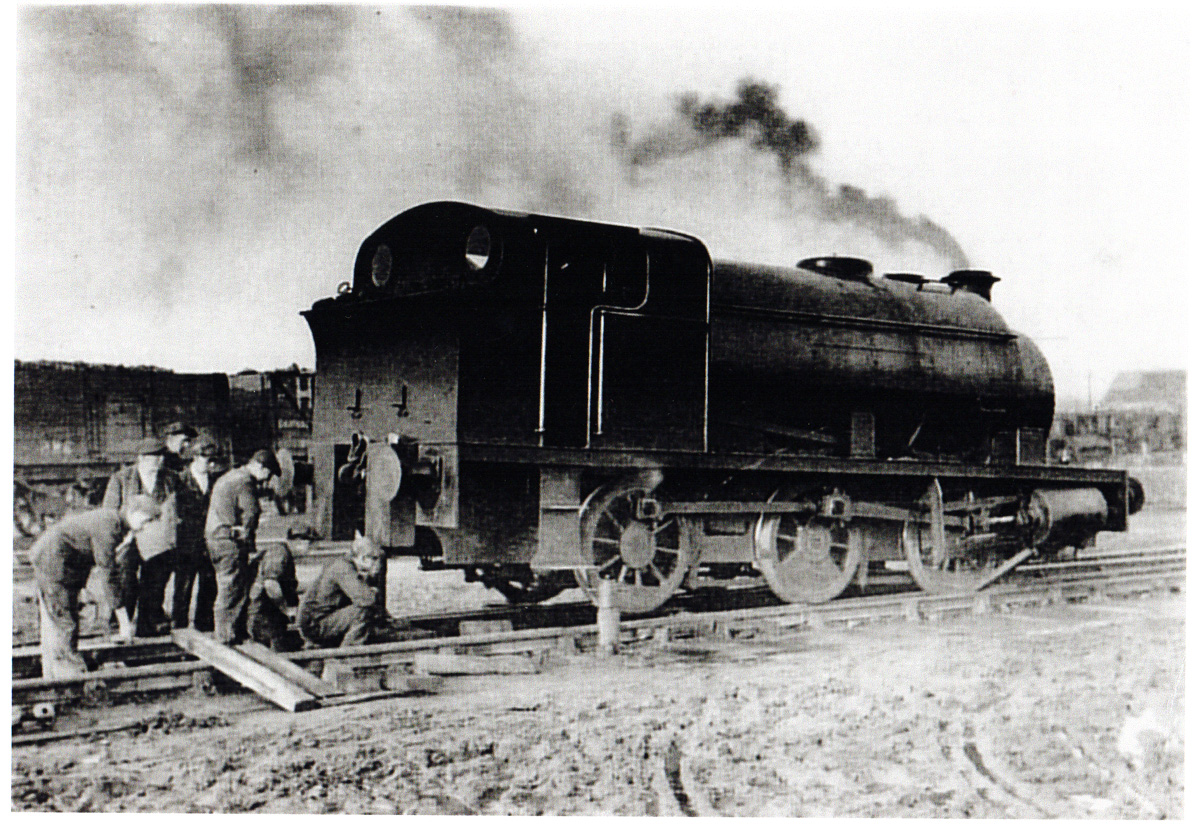
Whoops! ‘Tony’ – de-railed at Hawkins in the 1940s.









 In the Heritage Centre, 2010

 Chasewater Railway Museum