Tag Archives: Cannock Wood

160 Chasewater Railway Museum Bits and Pieces

160 – Chasewater Railway Museum Bits & Pieces From Chasewater News Summer 1993 –Part 3 The value of a hole in the ground David Bathurst
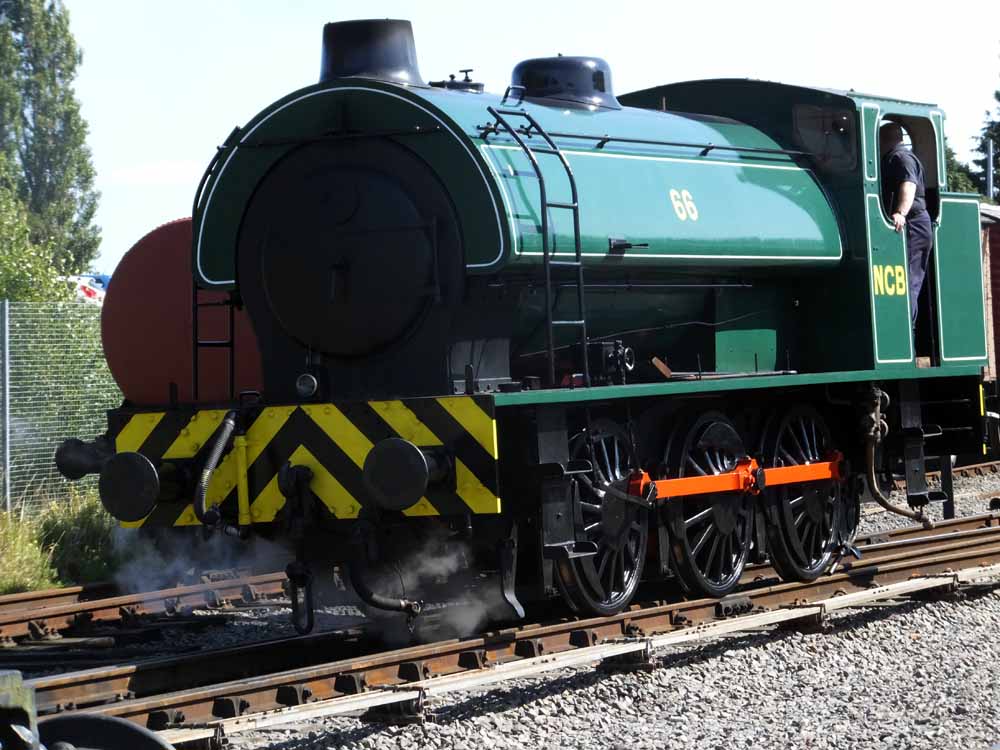
This pic is for the benefit of those who didn’t get to see the chimney in the previous post!

160 – Chasewater Railway Museum Bits & Pieces

From Chasewater News Summer 1993 –Part 3

The value of a hole in the ground 

David Bathurst

In an edition of ‘Chasewater News’ last year (Bits & Pieces No. 152) I outlined the possible use of derelict land grant (DLG) to enable the railway to achieve one of its most important projects – the restoration of the causeway.  The possibility had arisen for a number of reasons, including the fact that the Staffs County Council was preparing a derelict land scheme to reclaim the Norton Bog area of Chasewater, directly adjacent to the causeway.

The Staffs CC scheme was, however, delayed owing to the need to consult British Coal in respect of the coal stocks which might be recovered from Norton Bog.  If the Staffs CC scheme were to proceed, it was suggested that the causeway restoration could form a later stage of that scheme.  The mechanism to achieve this proposal was itself very complicated, with the causeway mainly falling within Walsall Council’s boundary.

Since the date of my earlier article, many events have taken place, including the decision of the Boundary Commission to transfer much of Chasewater into Lichfield District Council (and thereby under the planning jurisdiction of Staffs CC) from 1st April 1994.  This transfer also includes land ownerships, much to the dismay of Walsall Council.  The proposed transfer has direct implications for the railway, namely the short-term difficulties of having to take account of an additional local authority and the longer-term benefits of having to deal with fewer local authorities!!

Against this backdrop of DLG and the involvement of the various local authorities, members who visit the railway regularly will have some difficulty in reconciling the information which I have so far provided, with the events ‘on the ground’.  Indeed by the time this article appears in print, there is a prospect that most – if natal – of the causeway restoration will have been completed.  Not only has a very substantial access roadway been laid from Hednesford Road (rear of the station area ‘top’ compound), but similarly substantial works will have been completed to prepare the causeway to receive substantial inert fill materials.

‘But how is this possible?’ is the question likely to be asked by many members – especially those members who will have appreciated the massive scale of the restoration project.  It is a valid question, particularly in light of the knowledge gained by the CLR Board regarding just how much fill material (perhaps 10,000 tons) and manual resources are necessary to undertake the work.

One of the earliest lessons which I learned upon joining my current employers was the value of owning a hole in the ground.  As time passes and demands on space increase, coupled with the ever-present vigilance of the environmental lobbyists, local authorities and private organisations are finding it increasingly difficult to dispose of unwanted materials.  Although it is of no concern to the railway, everyone must be aware of the problem of dealing with household waste.  Exactly the same problem arises in respect of disposing of hard waste which is generated through the day-to-day operations of a large local authority.  Most of this material has to be sent to licensed tips – sometimes a great distance away – at a significant cost both in terms of transport and tipping fees.  If you own a hole in the ground, and you can secure the necessary planning and/or other permissions to fill it, then you have a most valuable asset.

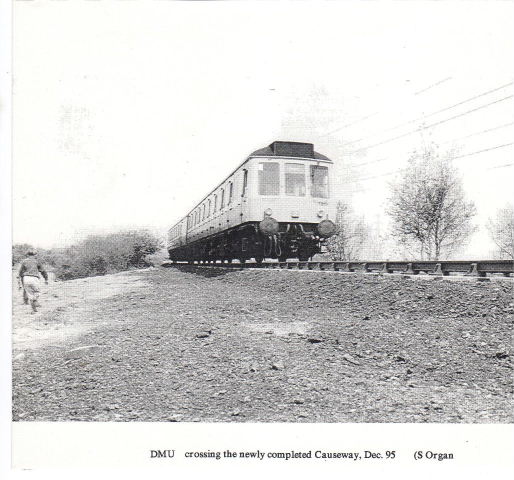
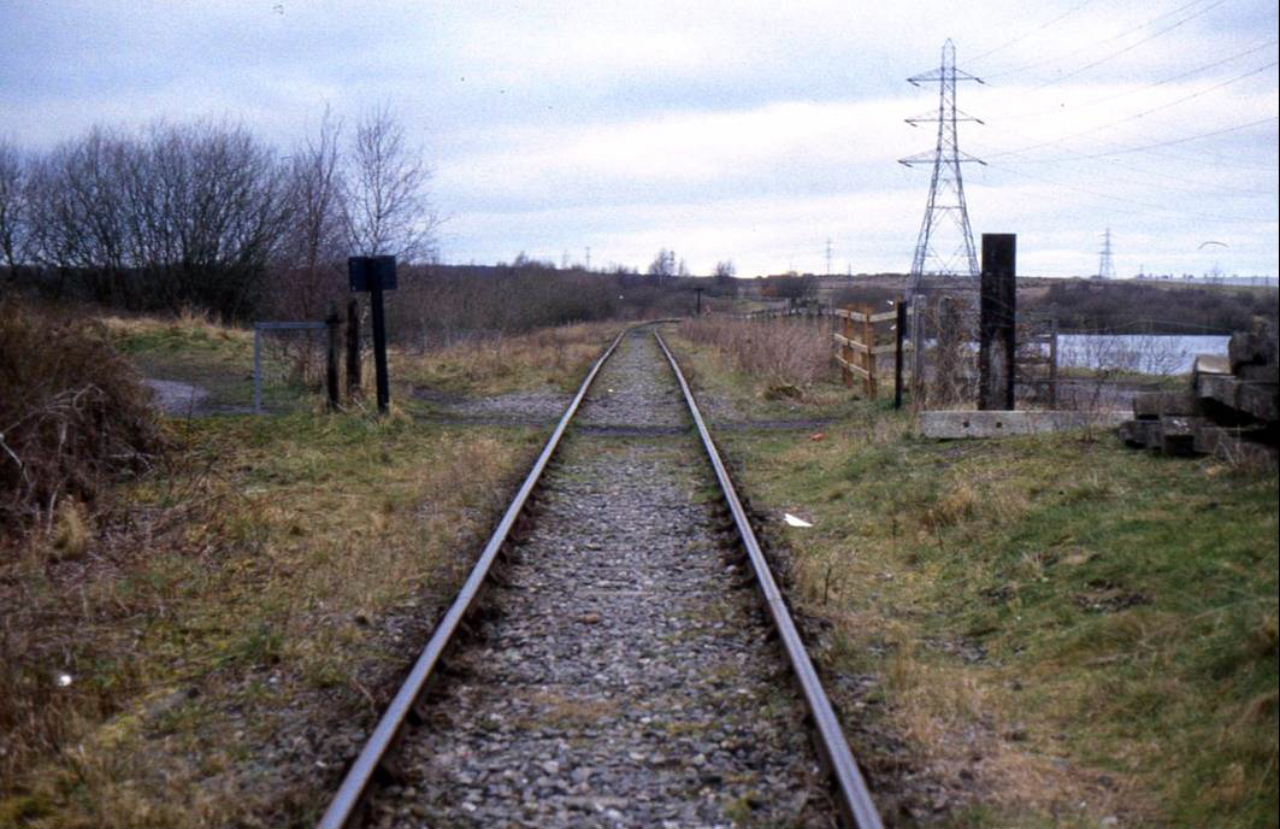
I think that few of us involved with the railway fully appreciated that the causeway might be regarded as a ‘hole in the ground; in reverse!  But that is precisely what it is.Causeway December 1992

Even before the previous article appeared in print, representations were being made to the railway to the effect that Walsall Council’s Highways Direct Labour Organisation (DLO) would be prepared to undertake a restoration project, using the causeway as a suitable location for filling with appropriate inert (and environmentally acceptable) materials.  It would be, and continues to be, a finely balanced financial equation.  It was to be based entirely on commercial considerations.  It was not to be regarded as a favour to the railway.  It was to be based on the financial benefit to be obtained by the DLO, but with the railway enjoying a similar benefit, albeit not in directly financial terms.

The proposal can be summarised thus: a proportion of the savings made by the DLO by not incurring tipping charges in the private sector could be allocated to the works necessary to transport materials and employ heavy plant to spread, profile and consolidate the causeway to specifications laid down by the railway.  In addition to its routine programme of road maintenance, the DLO is for ever tendering for major highway projects, including bridge and similar schemes, all of which result in materials having to be disposed of.

I have no wish to expend too much time and space in describing all of the individual aspects of the project which have had to be addressed before work could start.  I can say, however, that many hours of discussions and consultations have been necessary, and dozens of phone calls made, to ensure (so far as is possible) the support and co-operation of the various agencies involved.  The detailed discussions have necessarily been limited to a mere handful of railway personnel, so as to concentrate lines of communication.

These discussions have included such details as how to deal with the rare (or rarish) plant life growing on the causeway.  It has been necessary to remember that the railway’s activities include certain designated areas, including a SSSI and a SINC (abbreviations well known to those of you with wild life interests), which have required close liaison with Walsall Council’s Planning and Leisure Services Departments.  I must place on record the tremendous help, support and co-operation of the Officers who have been involved in this particular aspect, including the Countryside Officer who gave the CLR Chairman (the author of this article at the time) a crash course in rare plant recognition!!Causeway South 1992

There have been a number of false starts to the project.  Initially, it was intended to import the materials from the bridge reconstruction scheme at the High Bridges on the Pelsall to Brownhills road.  I suppose that it was inevitable that something would go wrong, and so it did.  The weather immediately after Christmas reduced Chasewater Park to a bog, making it completely impossible to even consider moving any form of heavy vehicle into or through the park.  Each time the weather seemed to improve, it immediately deteriorated again, resulting in a further deferral of the start date.  I hardly need to remind certain members of the dangers associated with driving vehicles in close proximity of the Chasewater reservoir without taking the precaution of wearing a life-jacket and having flares (as opposed to railway detonators) immediately to hand.  (While working with the dumper truck it got a bit too close and slipped into the water!! Bits & Pieces No. 151)Causeway December 1992

However, an upturn in the weather enabled everyone concerned to agree to an early May start date, and work on laying the access road commenced in earnest on the first Tuesday in May.  Regrettably, the attentions of the local riff-raff were directed to the contractor’s JCB, which attempted to emulate the dumper truck in trying to carry out work within the Chasewater Reservoir itself.  Despite this set-back, the work has continued according to plan.

In terms of a time scale, the DLO have not sought to offer (and nor has the railway demanded) a precise indication of a completion date for the restoration project.  This reflects the fluctuating availability of suitable fill material – which has had to meet exacting criteria laid down by both the railway and the local authority.  Nevertheless, it is in the financial interests of the DLO to undertake the work speedily and effectively, so as to avoid the costs of employing contractors’ plant and equipment, whilst at the same time maximising the capacity possibilities provided by the scheme.

The end product will be a causeway capable of accommodating a railway line; but it will not necessarily be a finished product.  It will still be necessary for the railway to provide for the small bridge at the eastern end of the causeway to be widened to facilitate the provision of a trackside footpath.  Indeed, although there is no formal right of access across the causeway, the railway cannot ignore the real world situation in which the causeway is seen by the public as a convenient route between the two sides of Chasewater Park.  The restoration scheme includes a private footpath alongside the running line, but at a slightly lower level.

In addition, discussions are taking place with the group responsible for the Forest of Mercia, in relation to a scheme of planting suitable species along the causeway, so as to enhance the environmental attractiveness of what might otherwise be a somewhat stark construction.

I apologise for the length of this article, but only in one sense.  The causeway restoration project is of momentous significance to the future of the railway.  It is a focal point in the minds of many of the railway’s working members.  Not only is it important in itself, but it also opens up the real prospect of further expansion into Chasetown.  Already, preliminary discussions have taken place with Staffs CC – who are currently designing their Norton Bog Reclamation Scheme now that British Coal have withdrawn their coal recovery proposals – regarding the clearance of the track-bed adjacent to the Norton Bog site.  Further, Staffs CC Highways Department have been asked to provide details of their design work on the Burntwood by-pass, to enable the railway to assess the implications on the railway’s long-term expansion proposals.

This is a very exciting time for the railway, with so many different projects taking place or being prepared.  The causeway restoration will make it necessary to bring forward thought (and expenditure) on the procurement of sleepers and rail.  It will give an added impetus and an exciting incentive to the working members and the railway’s many supporters.

And it is a fact that the scheme has come about because of the one thing that most of us had not contemplated – our own special version of a “hole in the ground”.

Causeway South January 2005

Chasewater Railway Museum – The Causeway

Posted onNovember 9, 2015by John D | Leave a comment

Chasewater Railway Museum

The Causeway
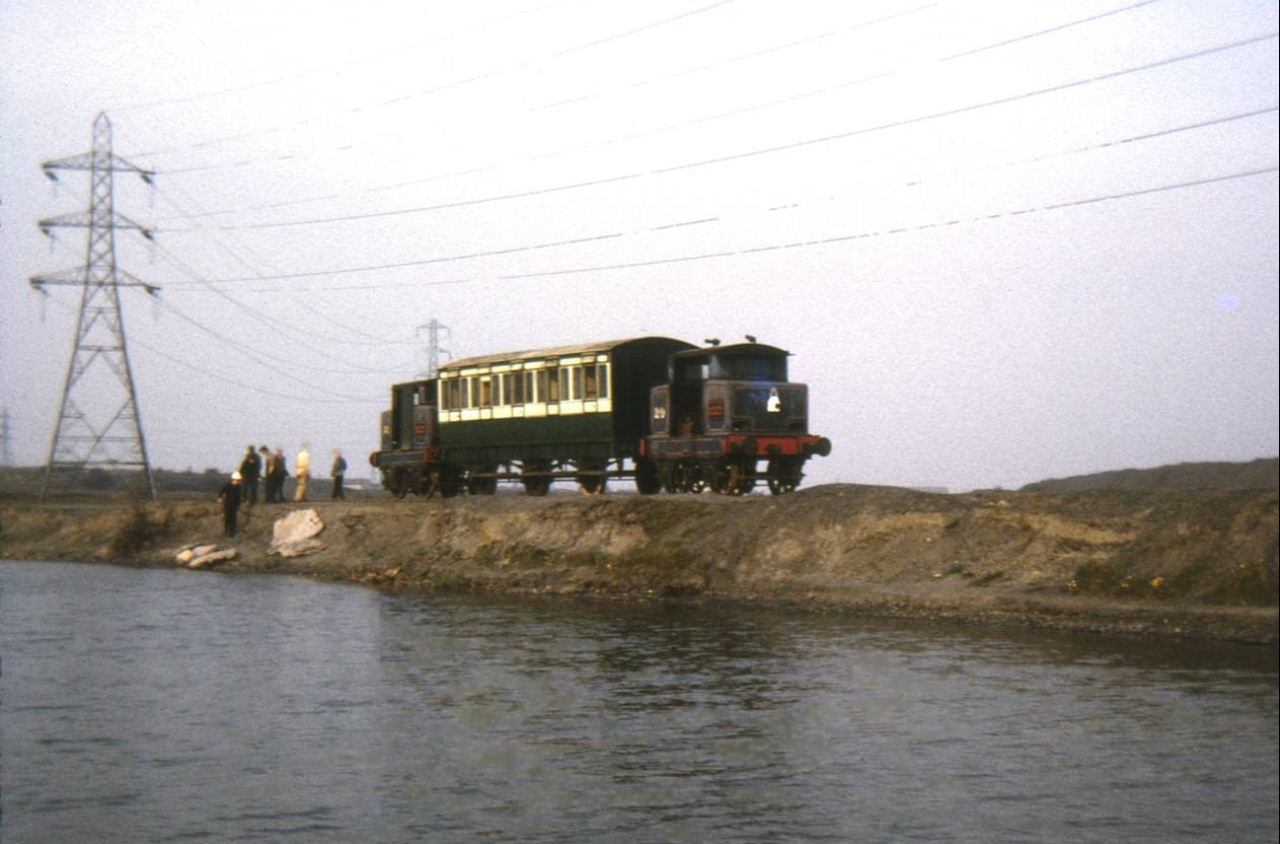
Causeway April 1971

Worthington locos Nos.20 & 21 on the causeway with the Maryport & Carlisle coach in April, 1971
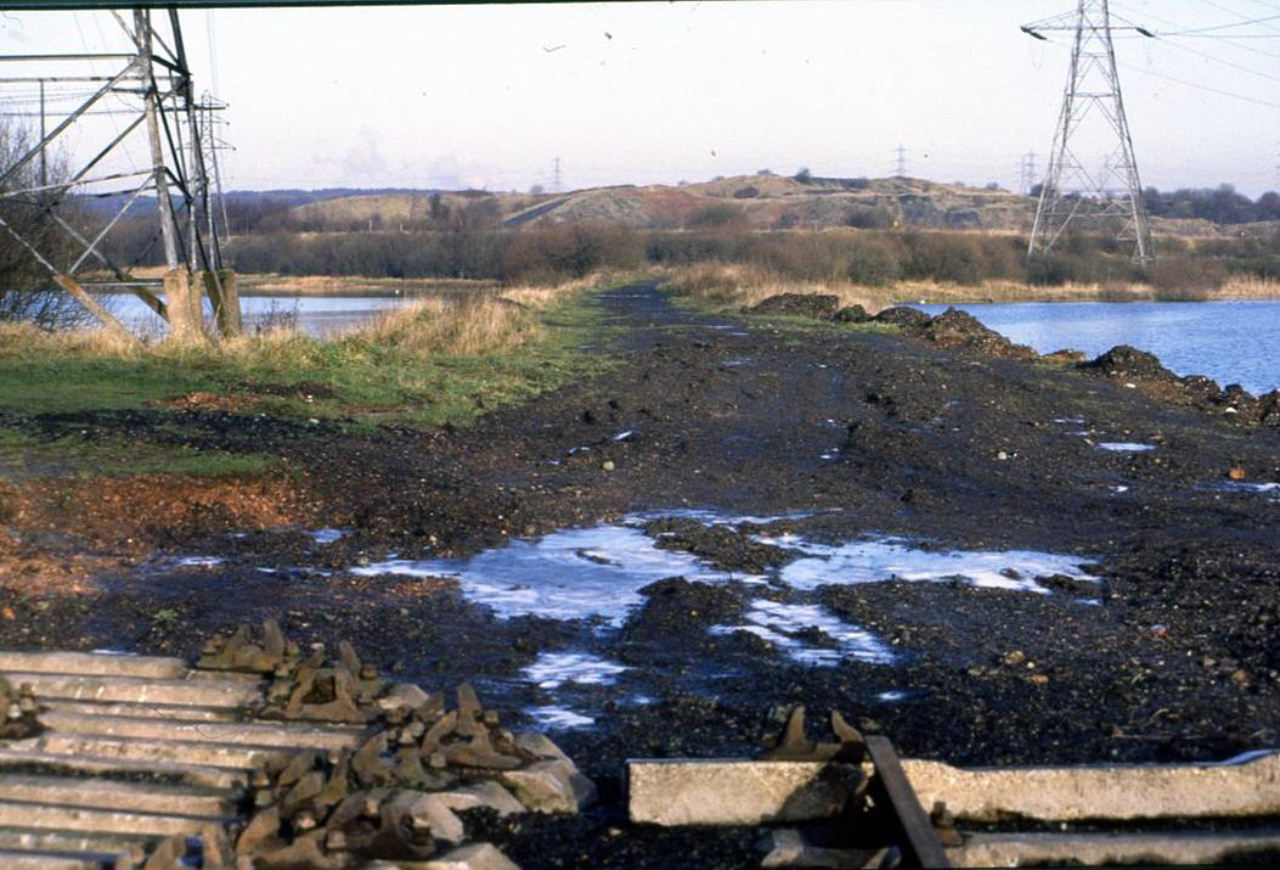
Causeway 1992

Taken in 1992

DMU on causeway001
Causeway 2005

Taken in 2005

2011_03250028

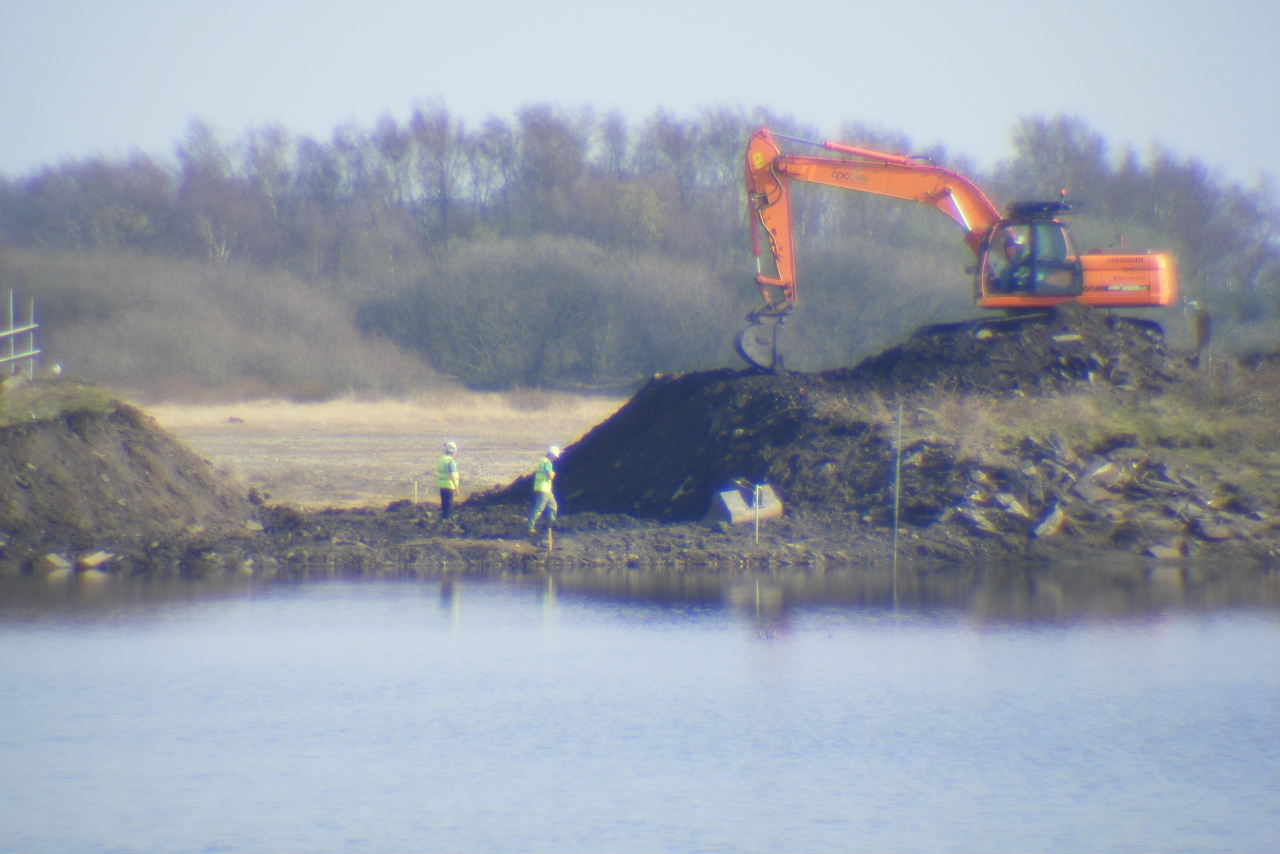
2011 – A hole in the Causeway!

2011_05280007

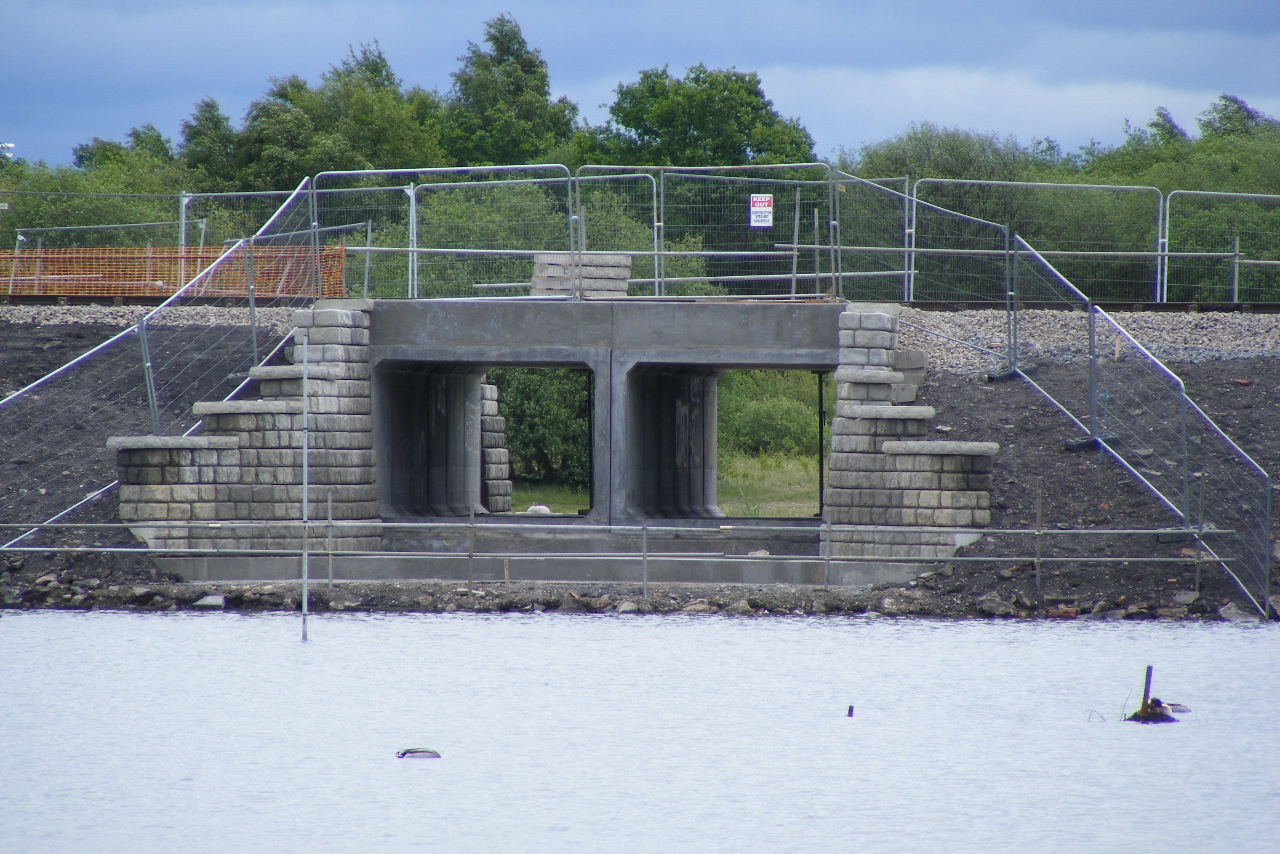
Later in 2011

2011_05280016

May 2011 – First train over re-opened causeway.
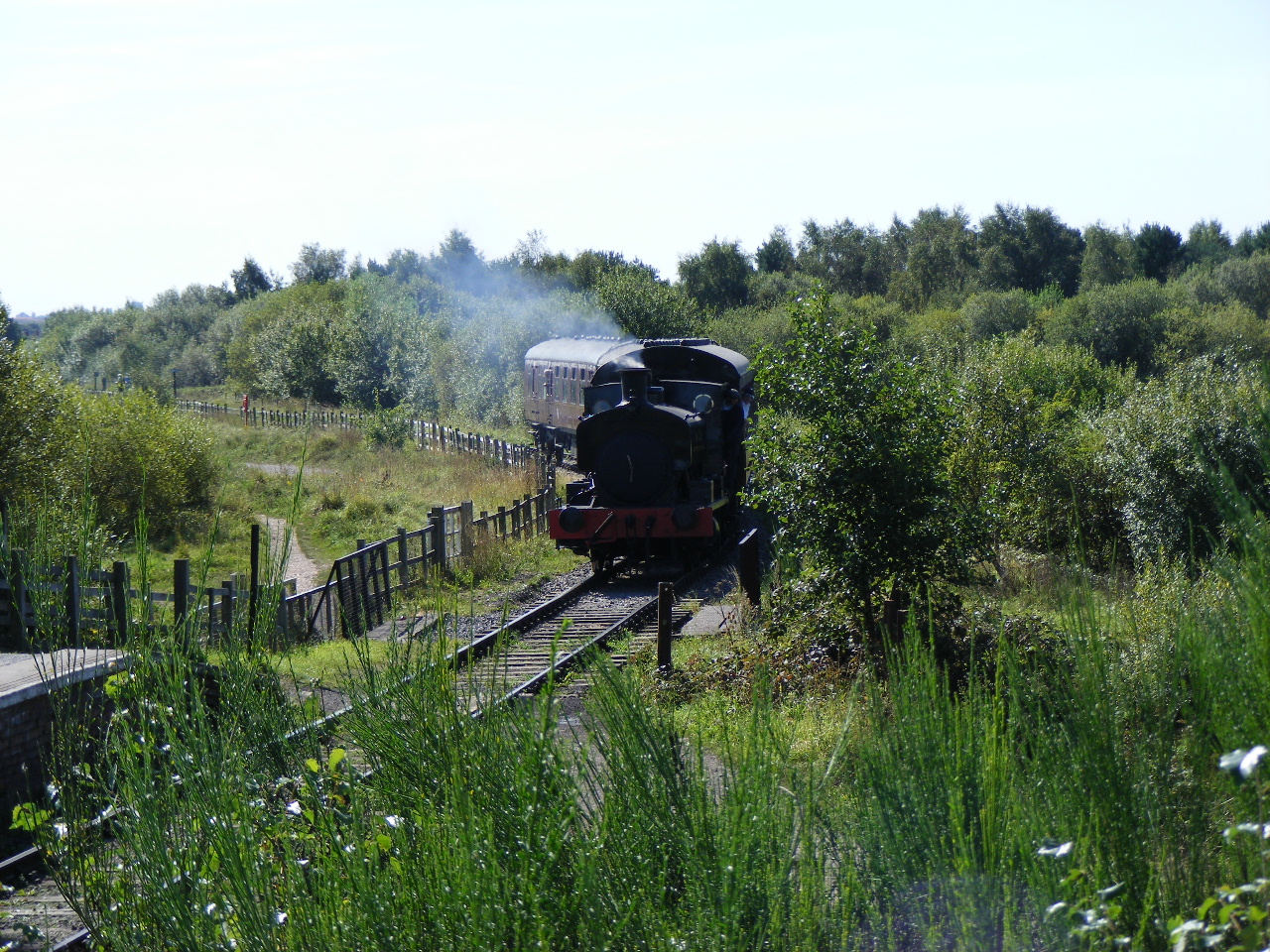
2009_09120020

Just to show steam locos use it too !!

Visiting loco ‘Wimblebury’ over the causeway.

Chasewater Railway Museum Bits and Pieces No.82

Chasewater Railway Museum Bits & Pieces 82 – March 1978

The Railway Preservation Society Newsletter

Chasewater News 23 – Part 1

Editorial

The operating season is now a mere fortnight away as I write this Newsletter and despite a fair response to the appeals in the last Newsletter, the purchase of the line is still as precarious as ever.  To date we have raised £1,200, less than 25% of the total amount of £5,400 required.  It is quite clear that some drastic action will be required during the next six months in order to effect the purchase of the line, the favourite course of action amongst the ‘hard-core’ at Chasewater being the sale of the E1 locomotive ‘Cannock Wood’ for reasons already expanded upon in these pages and elsewhere.  Suffice to say it is time for those who care to stand up and be counted (many members already have) or accept the consequences.

(No, we haven’t!)

News from the line

Much activity during the winter has been centred upon putting in a new siding leading up to the platelayers’ cabin.  Access to this siding is controlled by a two lever ground frame which marks the start of interlocking on the railway.

It is intended to extend the siding up to the crossing at a later date and outline planning permission is available for construction of a building over the siding.

The present end of the siding has a railbuilt buffer stop – another first at Chasewater.

Work is now concentrated upon improvements to the two points leading into the compound and the installation of their associated control gear which will, in due course, be controlled by the platform lever frame after the running line has been slewed to clear the extension to the platform.

The extension to the platform will be built once the worst of the frosts are over.

The platform fence has been painted black, Midland style, and a box-van body is being acquired to be used as a waiting room and to provide some much needed shelter.

The bookstall now sports a new roof, by courtesy of Adrian Pearson, and it is actually waterproof!  The brothers Grimm have been noticed performing strange exercises which, apart from resulting in the bookstall being repainted in Midland Railway colours, are reputed to be in readiness for the ‘forthcoming influx’ (of visitors I presume!).

The rear compartment of the DMU coach has undergone refurbishing, which has included repainting the roof, seat frames and heating ducts, re-covering the seat backs and a thorough clean.  The rest of the coach is to receive similar treatment next winter.

(I don’t know if it’s just my reading of this section, but it gives me the impression of being much more optimistic than past articles.)

Locomotives.

Invicta – this is currently being prepared for the new season, its yearly boiler test not being due until July, when it is hoped to give it a final top coat of paint.

Alfred Paget & Invicta – Gricers’ Day 9-10-1977

Alfred Paget – currently being prepared for its annual boiler test and it should be back in service by May.

Asbestos – The hydraulic test will take place within the next few weeks, when a final decision will be taken as to whether the necessary firebox repairs can be afforded.  Hopefully the money will be forthcoming as ‘Alfred Paget’ is due for its six yearly hydraulic test next year.

Work involved entails lifting the saddle tank, stripping of boiler cladding and lagging to expose the boiler, repairs to the saddle tank and overhaul and refitting of all boiler and cab fittings. Mechanically the loco is sound. The loc is to be renamed ‘Colonel’ using the nameplate off the now scrapped Hudswell Clarke loco, latterly at Granville Colliery, as a pattern.

Lion – Following a change of ownership, plans are being made to give this loco its six yearly major boiler test during the summer, with a view to steaming it at the tail end of the season.

05406 The Colonel 0-6-0ST HC 1073-1914  at Granville 12-6-1964

The name is doubly appropriate as ‘Lion’ started its working life at Woolwich Arsenal, whilst the name ‘Colonel’ conjures up visions of Colonel Holman F. Stephens the godfather of light railways, and who would probably be highly delighted at the current set up at Chasewater.

Long standing members will recall that the loco was originally purchased minus safety valves.  Happily the recent sale of loco spares held at Chasewater was of particular value, as a pair of Ross pop safety valves were obtained suitable for the loco.

It is considerably less than pleasing to report that on the afternoon of Monday 23rd January someone broke into the compound and deliberately set fire to the brake end of the Manchester, Sheffield & Lincoln coach.  There can be no doubt that this was a deliberate malicious action and if it wasn’t for a sharp-eyed resident of Hednesford Road then every wooden bodied vehicle in the compound would have been razed to the ground.

The damage is estimated to coast at least £1,000 to repair.  Allied to this fire, has been the theft of several items from the museum coach on three separate occasions.  It is interesting to note that all three break-ins occurred during the school holidays.  Two vacuum gauges, lettered MSL, were not recovered from the wreckage of the coach, though it is of small comfort that they were, in fact, BR gauges with false lettering.

The nature of the break-ins suggest that the person(s) responsible were familiar with the way things are run at Chasewater and the nature of the stolen items suggests that they knew what they were after and knew where to get it from.

The Police have been informed, but as it was the 270th crime reported in Brownhills in the first five weeks of the year, it is unlikely that they will have any success.

Changing the subject, it is indeed pleasing to report the acquisition of two more locomotives for use at Chasewater.

More about these next time!

Chasewater Railway Museum – Bits and Pieces No. 73

Chasewater Railway Museum Bits & Pieces 73 – Dec 1976

The Railway Preservation Society Newsletter

Chasewater News – Part 2

Outline Planning Permission has been granted for an engine shed between the platform and the crossing.  Anyone knowing the whereabouts of a suitable building which could be obtained cheaply or be donated is urged to contact the Hon. Sec.  Also needed are sources of cheap, good condition crossing timbers and sleepers, the latter preferably concrete.

Whilst on the subject of wants it is interesting to note that a small group of members have been trying to purchase another locomotive for the line, but have been outbid on three successive occasions.  The locos in question were the Bagnall 0-4-0ST at Northampton Power Station, the Hudswell Clarke 0-4-0ST at Carlisle Power Station and most recently, a Robert Stephenson & Hawthorn 0-4-0ST at Leicester Power Station.  With the current prices being paid for locos it may be that we need more cash.  Any offers of help should be directed to the Hon. Editor.  We have several more locos in the pipeline, all of which are in, or near to, working order.  We really want an 0-6-0ST or Tank, but these are few and far between and so a four-coupled is more likely.

Littleton Colliery. A successful open day was held here on November 20th, many RPS members being in attendance.  The Austerity No.7 performed in its usual vociferous style.  Thanks are due to Messrs. Matthews and Worgan of the National Coal Board.

Austerity No.7 at Littleton

Winter Work Programme. This is largely centered on the long awaited completion of the platform and installation of a lever frame.  Associated trackwork. Manly involving packing, is already in hand.  Other projects are the dismantling of ‘Asbestos’, general maintenance and tidying up and when the weather improves, a start on re-panelling the TPO.  Once again more help is needed and no offers refused, don’t be shy, we don’t bite!

The loco shed siding is also due for laying before Easter, involving construction of another point.

Museum Exhibits. Despite the break-in several interesting items have been added, notably a Cannock Chase colliery bridge plate – many thanks to Mr. Clift of Chase Terrace for this unique item.

Cannock Wood with Asbestos at Chasewater

E1 Locomotive – ‘Cannock Wood’

The E1 locomotive came into the possession of the Railway Preservation Society in 1964.  Had it not been for the RPS the locomotive would probably have been scrapped at that time.

From that time until the present, it has received a couple of coates of paint and a tidy up sufficient for a Boiler Inspector to shake his head in dismay at the firebox.

Its future depends on you! As some of you will recall, the AGM of 1975 gave the Committee permission to sell the E1 as a last resort to raise cash for the purchase of the British Railways section of track and land.

The Walsall Metropolitan Council, it would appear, will be unlikely to supply the cash for the purchase of land and track, although this has not been confirmed.

Two verbal offers have been received for the E1 and a written offer is being obtained by the Committee from the interested parties.  The locomotive is likely to bring in £3,500 which is probably about a third of the cost of the land and track.

Notice of Meeting

A meeting will be held at Chasewater at 2.30pm on the 22-1-1977.

The meeting will be for the purpose of bringing interested parties together with a view to the following:

1.    To set up a restoration fund to purchase the E1 from the RPS at current price.  The fund should be a separate body from the RPS.

2.    After purchasing the Locomotive, raise the cash to restore it.

3.    Operate the Locomotive at Chasewater.

It should be noted that only a few months are available to raise the first £3,500.  If we have the ability to do that, we have the ability to restore and operate it.

If we are not able to raise the purchase price, the Locomotive will be better off elsewhere, where it can be restored and operated.

Remember

London, Brighton and South Coast Railway.

Built 1877  Brighton Works.

No.110.

Name: ‘Burgundy’

100th engine built at Brighton Works under Stroudley.

Sold 1926 to Cannock & Rugeley Collieries Ltd.

Name: ‘Cannock Wood’

No.9

Sold 1964 to the Railway Preservation Society.

1877 – 1977 Centenary

No other locomotive of this type survives.

Happy 100th birthday ‘Cannock Wood’

A.W.Haywood – Chairman RPS

The following is from the East Somerset Railway website:

Withdrawn for a second time in 1963, the engine was sold to the Railway Preservation Society and stored at Hednesford until 1970, when it was moved to the Chasewater railway. There it remained until sold to three members of the East Somerset Railway, finally arriving at Cranmore in September 1978.

A general overhaul was commenced in 1986 and it returned to active service in 1993, painted in green livery and numbered 110. It pulled it first train in service on Sunday 24th October of that year. In 1996, No. 110 could be found transporting visitors to the Festival of the Sea on Bristol’s Harbour Railway. Unfortunately, firebox problems resulted in No. 110 being prematurely withdrawn from traffic in 1997.

During 2000, work commenced on stripping the locomotive down to assess the extent of the firebox problems, after which the locomotive will be rebuilt. Current progress on this project can be found on the <a href=”http://www.railwayweb.com/clf”>Cranmore Loco Fund website</a>.

In 2012, B110 was sold to the Isle of Wight Steam Railway, in return for LMS Ivatt Class 2 no. 46447 moving to the ESR. The railway plans to restore the engine and run it as No. W2 Yarmouth, which was an identity previously worn by one of the Isle of Wight-based E1s.

Merry Christmas

Merry Christmas Everyone And a Happy New Year


From all the Chasewater Railway Museum Staff, thank you for your support over the past year – hopefully we shall see you again next year.

Photographs by kind permission of Godfrey Hucker

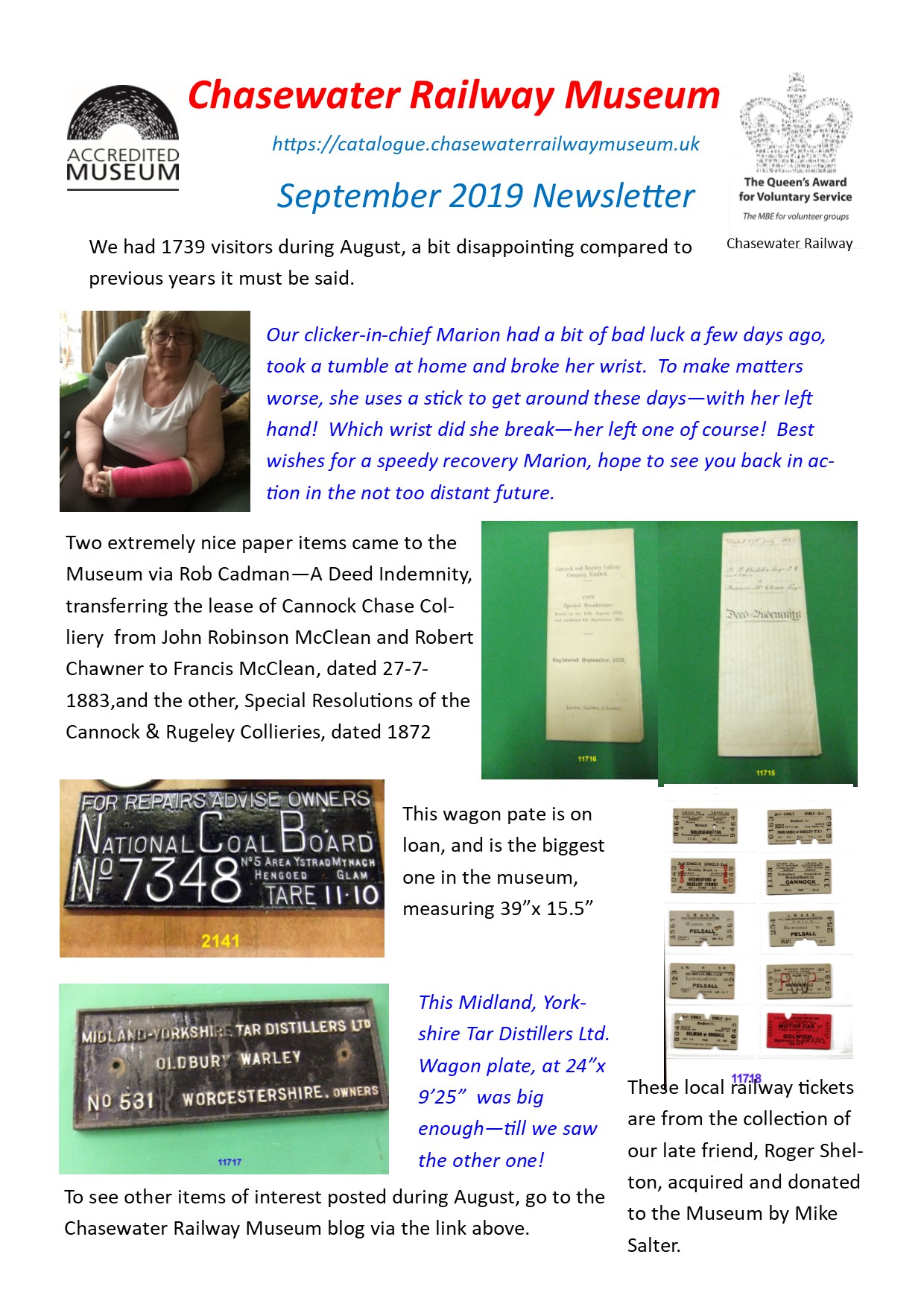
Chasewater Railway Museum – September Newsletter

Chasewater Railway Museum 

September Newsletter

Chasewater Railway Museum Home Page

Chasewater Railway Museum – More from the Archives, Nov 1964 Bits & Pieces 23

Chasewater Railway Museum – More from the Archives, Nov 1964 Bits & Pieces 23

Posted in August 2019 – still a lot of catching up to do!

From The ‘Mercian’ November 1964, 3.2

Due to the Editor Mr. David Bullock having other heavy commitments he resigned with Mr. M. D. Willis taking over.

The first annual Dinner and Social Evening was announced, to be held at the Eaton Lodge Hotel (demolished about 2006), tickets 12/6d each (62½p) on Monday 30th November 1964.

The Secretary thanked Mr. Bullock for his work over the past few years, wished Mr. Willis well and put out the usual appeal for members to help with the restoration work.

Treasurer’s Report

It is now some considerable time since my last report appeared in these pages and the financial situation has been through many changes.

At the present moment, I am pleased to be able to report that we have the healthiest bank balance there has been to date.  This does not mean, however, that we can afford to relax since much of our money is already committed to paying for such items as the lease for the Chasewater branch, outstanding loans and the E1 0-6-0tank locomotive.  Incidentally, over £200 is still needed to save this engine from the scrapyard.  The deadline is January, so the matter is URGENT.

A few weeks ago we held our AGM at which it was unanimously agreed that the subscription rates be increased from 21/-  (£1.05) to 25/-  (£1.25) for ordinary members and from 5/-  (25p) to 10/-  (50p) for student members.  I would like to state now, that this was done with some reluctance but with every good cause as many members are aware.

F.J.Harvey.  Hon. Treasurer.

General News

We are not responsible

One may have read in the Railway press that the ‘Railway Preservation Society’ is to attempt to purchase a 30 mile stretch of line between Uttoxeter and Buxton.  This is entirely due to a mis-use of the Society’s name.

The Society which appears to be responsible for this irresponsible scheme is the Derbyshire Railway Society, who used our name, and this month, November, has changed it to the ‘National Railway Preservation Society’.  We deplore such use of our Society’s name, or any name which might be remotely confused with ours.

Has this Society yet looked at current branch line prices?  A line of this size would cost at least £100,000.  How could such a line be purchased, and if by some miracle it was, how could any Society afford to maintain it, yet alone run their own trains over it?

Railway enthusiasm in this country does not justify such a hair-raising scheme, as that Society will find out – to their cost!!!

First in a Line?

On June 6th, British Railways held an auction at Stoke-on-Trent.   What was for sale?  The mourning remnants of stations in North Staffs. And South Cheshire, which were closed under Dr. Richard Beeching’s economisation programme.

A rare sight the auction room was!  Scores of platform seats of all types, lined up in two rows to seat their likely buyers.  Station nameboards of all shapes and sizes positioned around the room, intermingled with various types of Railway notices.

The bidding was unexpectedly fierce, two cast iron notices, which the present Hon. Ed. Attempted to purchase for 2/6d  (12½p) almost reached £5, and four well-rotted ‘GENTLEMEN’ notices reached the ludicrous price of 50 shillings  (£2.50).

As always the RPS was in the bidding!  The West Midlands District bought two North Staffordshire Railway Clocks averaging about £9.00 each, and a Midland Railway Lamp Standard, among various other things.  They were joined by Mr. Ken Vincent, Secretary of Dowty RPS and Mr. R. W. F. Smallman, of Yieldingtree Railway Museum Trust fame; their purchases including an NSR platform seat and a GWR short grandfather clock.

British Railways made over £1000 from the so-called ‘rubbish’, the bulk of which would normally provide heat for a cold workman on an icy winter’s day.

Another auction of this type is to be held at Derby on November 7th, and it looks very much as though fantastic prices will be reached yet again.

Recent Additions

The latest relics to arrive at Hednesford are as follows:-

  1. Two private owner wagons of the Cannock & Rugeley Collieries Company.      Bought from the NCB @ £5 each.
  2. A London & North Western Railway Brake/Third, the Guard’s compartment of which has been converted to a fully operational cinema.  It was purchased from the NCB for £10, but needs a lot of attention.
  3. A Midland Railway Crane.  £8.

Midland Railway Royal Saloon

This unique example of Midland Railway Regal coachbuilding has been purchased by the RPS (West Midlands District) from British Railways at a cost of £300.  This was only possible with a loan of £240 from a generous member.

The loan is being paid back at the rate of £10 per month to this fine member, who wished to remain anonymous.  His name was released at the AGM but to save further embarrassment, we will not mention it in these columns, but let it be ‘broadcast’ by word of mouth.Furnishings inside the Midland Royal Saloon

Chasewater Railway Museum – Arthur Deakin’s Photo Collection

Chasewater Railway Museum 

Arthur Deakin’s Photo Collection

These photos came to the Chasewater Railway Museum by way of the GCR Auctions.  They were taken between c1960 – 1980.

Album 12 2020  All Arthur Deakin’s Photographs XL Files

Click on a pic to see a larger version and on the side arrows to move along.  The description in on the larger pic.

Chasewater Railway Museum – August Newsletter

Chasewater Railway Museum 

August Newsletter

Chasewater Railway Museum – More Early Stuff

Chasewater Railway Museum 

More Early Stuff

From the RPS Newsletter Oct 1960 Vol 2 No.1

From the General Secretary’s Page

Following a proposal from the Middleton RPS that they would form part of the national organisation envisaged by the RPS, a plan was drawn up outlining an organisation of autonomous groups, each covering a heavily populated area and taking over all responsibility for voluntary preservation in their area.  The national level of the organisation would transact such matters as were more effectively handled on a country-wide basis and would provide a common pool of information for all groups to draw on.  This was expected to be the most important subject at the AGM on October 22nd 1960.

The District Report

West Midlands

The next item to be moved into Hednesford depot will be a LNWR travelling post office van built in 1909.  This carriage keeps most of its original fittings, though the ‘pick-up and drop’ apparatus has been removed at some time and a plain panel used to cover the resulting gap.  This is not only a fine relic in itself, but will give covered space for display of historic relics.  The British Transport Commission preserves a replica of the original TPO on the London and Birmingham Railway which was built by LMS.  Now we have preserved an example of the type used during the early years of the 20th century.

D. Ives Collection

Requirements of the post office were standard for all types of TPO and the appearance of these vehicles only varied with the roof contour and panelling details of the companies who operated them.  A very high proportion of pre-grouping types have remained in service until recently when British Railways put in hand the building of complete new trains.  An interesting survival was reported a few years ago in the model railway press.  This was a six-wheeler TPO of the GNWR stripped and used as a tool van on a break-down train.

Late Extra


Progress on Great Eastern Coach


West Midland District

Ray Hallworth

Despite rather thin attendance at working parties, progress of restoration work on the recently acquired Great Eastern coach has been very satisfactory.  It is hoped that the interior will eventually form the first railway museum in the West Midland District.  A temporary exhibition will be staged there for our annual meeting on October 22nd.

Inside walls have been scraped and have received a generous coat of priming paint.  Most of the woodwork has been repaired.  The small brake compartment at the end of the coach has been converted into a tool store.

Improvements are slowly but surely being made to the exterior, one side and end facing the main Hednesford – Cannock line having been completely stripped of paint.  Over half of this has been primed.  Quite o lot of the panelling had to be replaced, particularly at one of the corners where to our dismay, we found that not only had the panels gone rotten, but also the framework.  Fortunately this has now been repaired and new panels fitted.

Work has not yet begun on restoring the Maryport & Carlisle coach, and it may have to be next spring before a start is made.  Continual appeals are still being made for more members to come and lend a hand, especially the more local people.  Working parties are held every Saturday from 3.00pm to 6.00pm and on Sundays from 2.30pm to 6.00pm.

Visit to Oakamoor Station


Twenty-four members and friends of the WMD visited Oakamoor Station on the ex-North Staffordshire line in the Churnet Valley on June 18th.Rail37.com  Churnet Valley Railway Oakamoor Station

The Stationmaster, Mr. Lister, took members on a conducted tour of the station buildings and adjacent copper works sidings.  Much interest was shown in an ex-NSR battery electric locomotive, a relic of prime importance, being built at Stoke works in 1916.  Still in excellent working condition and used for shunting work in the siding, Mr. Lister demonstrated the vehicle by giving members a short trip up and down.Rail37.com Oakamoor Station –  same view as previous.

Returning to the station, members were shown several items of interest including an old print of Oakamoor station in North Stafford days, and two lovely old NS office chairs with the Staffordshire Knot carved on each back-rest.  Each member of the party was presented with a sealing wax impression of the NS Railway Oakamoor seal.

Above: The delightful crossing keeper’s house at Oakamoor, just south of Oakamoor Tunnel, which can be seen in the background. This building looks as if it is another of Pugin’s designs, but we have been unable to confirm this. Oakamoor station was situated a short distance behind the photographer and was the next stop north of Alton. 10 November 2007. (Bob Prigg)

Finally members went by train to Alton Towers, a local beauty spot – not without noticing the magnificent NSR stove at Alton station.

Above: This is Alton station in Staffordshire, which was renamed Alton Towers in 1954 – only to close ten years later. (Surely the line might still be busy with a modern theme park en route?) The station was designed by Augustus Pugin (1812-1852), an English architect of the Gothic revival who is better known for his church designs and his work on the interior of the Houses of Parliament. However, Pugin did accept some more modest commissions, including this one for the North Staffordshire Railway, and the railway cottages at Windermere, Cumbria. Alton station is now owned by The Landmark Trust and can be rented for self-catering holidays. The trackbed is used as a railway path linking Oakamoor to the north and Denstone to the south. 10 November 2007. (Bob Prigg)

More from the early days

More from the early days

From RPS Newsletter July 1960 Vol  2 No. 1

From the General Secretary’s Page

More Activity Wanted

You will read in the West Midland notes the present state of our first scheme to be launched.  From the enthusiasm of one member, David Ives, and a group of his friends and acquaintances has grown the reality of rolling stock being restored on a length of line which has been offered as temporary accommodation.  There is no reason why similar successes could not be recorded from most areas of dense population.  We have enough members in the South-East, North-West and North-East to make a start.

Well done the West Midland District – later to become Chasewater Railway.


West Midland District


Stafford – Uttoxeter Line.  Great Northern Railway

Date: 23 April 1957Description: The Stephenson Locomotive Society (Midland Area) ran the last train on the Uttoxeter to Stafford line on 1957. The locomotive is seen here arriving at Stowe-by-Chartley Station with 200 railway enthusiasts on board.

The line was opened in December 1867 by the Stafford-Uttoxeter Railway Company. Nineteen years later the company folded and the line was sold to the Great Northern Company.

Passenger traffic was withdrawn in 1939, but the line was kept open for milk traffic. The high cost of maintenance proved too expensive and the line closed in 1951, having never shown a profit. It was broken up in 1959.

Staffordshire Past Track – Pic & Info

This was one of the lines under consideration as a running line for the WMD.

Date: 1920 – 1930 (c.)

Description: Stafford Common Railway Station was built in 1867, to serve the Stafford-Uttoxeter line.

The station closed to passengers in 1939, but continued to carry freight. It closed completely in the 1970s.


Staffordshire Past Track – Pic & Info

16 members of the West Midland District walked along the Great Northern Railway disused branch line from Chartley to Stafford on Sunday, 27th March.  Members assembled at Stafford Station and were taken by car to Chartley.  Our President, Mr. C. E. Ives, although not being able to take part in the walk, very kindly took members to the starting point.  A considerable number of photographs were taken en route for record purposes, as demolition of this line had already begun.  Very keen interest was shown in station buildings at Chartley, Ingestre and Weston and Salt.  Hopton cutting was duly noted as a great work of civil engineering, a tribute to the railway navvies of the 1860s.  The walk finished at Stafford Common Station (part of which is still worked by BR) where a welcome cup of tea brewed by Mr. A. Holden was much appreciated by all.  A special note must be made concerning one of our very enthusiastic members, Vice President Mr. J. Strong of Hereford, who stayed overnight in Stafford in order to take part.

Stowe and Chartley Station looking neglected. Note the two lines merging in the distance and the crossover in the foreground. Photo Hixon Local History Society.

.Unlike The building on the left was not demolished and was still there in 1990 and 1991 when we walked there. It now has been completely restored and has been moved to the Amerton Railway nearby.
Jan en Fons

Aug 7, 2008 9:52 PM

Depot

The West Midland District Depot has been kindly offered to us by our President Mr. C. E. Ives as temporary accommodation until a branch line has been acquired.  It is situated at Penkridge Engineering Co., Chase Works, Rugeley Road, Hednesford, Staffs.  This can be reached from Cannock along the Rugeley Road and from Rugeley along the Hednesford Road and is adjacent to Messrs. Bestmore Drop Forgings Ltd.

The depot consists of approx. 150 yards of siding with access to BR and NCB sidings.  Good covered space covers approx 50 yards of the track.  Members have already been advised of times of working parties, etc. and will continue to get these each month through the summer.  Negotiations are going ahead for the acquisition of two six-wheeled coaches, a full 3rd Maryport & Carlisle Railway and a full brake Great Eastern Railway.  It is hoped to have these under our covered space by the time this Newsletter reaches you.

More hands wanted at Hednesford


On June 3rd the Honorary Yardmaster, Albert Holden, gave a talk on the practical side of track maintenance to a group of members.  He expressed disappointment at the turnout of members and pointed out that work was being carried out by a small proportion of members.  If they did not get the support of more members they could become discouraged and work cease altogether.

It is the declared intention of the WMD to lease or purchase a line and run its own services.  But this needs a reservoir of skilled members and a strong organisation.  This depot gives us a chance to introduce all members to the technical side of maintenance of rolling stock and permanent way.  If full use is made of it, we shall have a reliable band of voluntary workers who can restore a line to serviceable condition in the shortest possible time.

The future of railway preservation in the West Midlands is in your hands.  Let’s all pull together and show the rest of the RPS how to run a branch line!

Stop Press

The first two coaches were moved in Hednesford depot at 9.45 am on Wednesday, 22nd June 1960.  How about coming along and helping with their restoration?