Tag Archives: Aldridge

199 – Chasewater Railway Museum Bits and Pieces

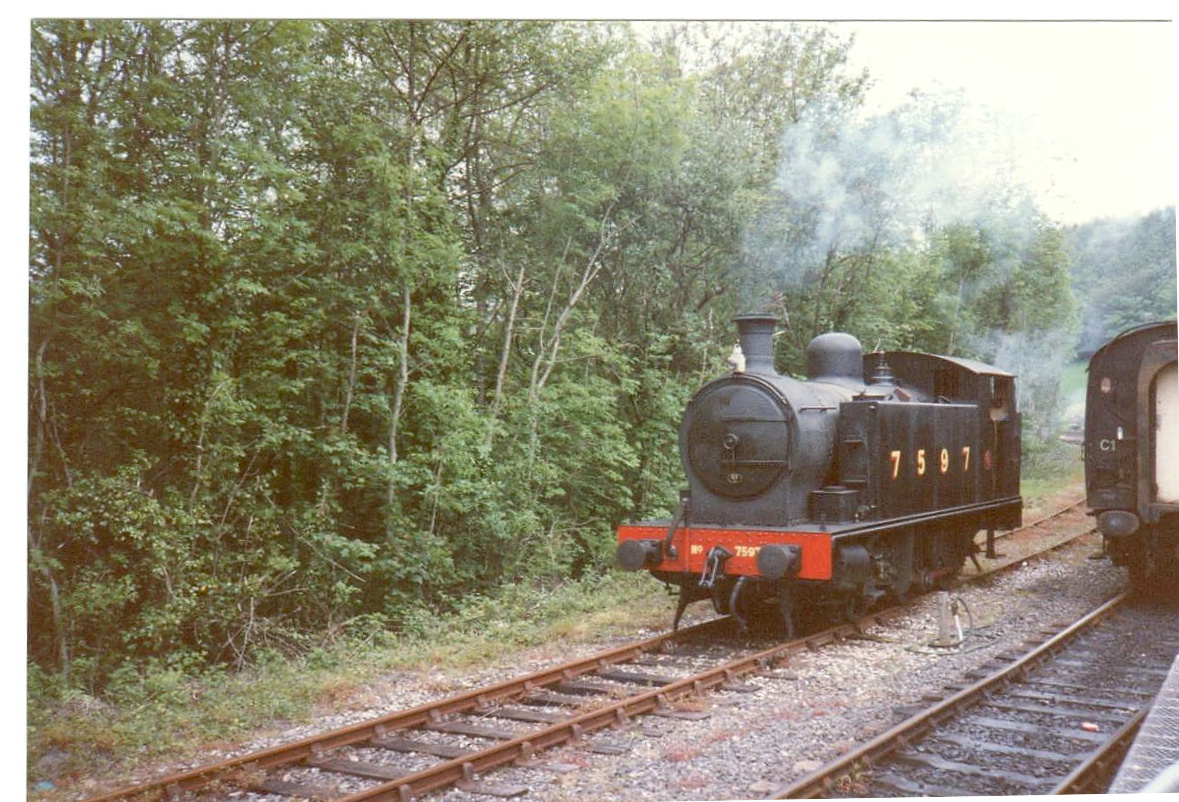
A picture from Neil Clarkes collection, Robert Stephenson and Hawthorn 0-6-0ST 7597 ‘Zebedee’, built in 1949.

199 – Chasewater Railway Museum Bits & Pieces

From Chasewater News – Winter 1996 – Part 4

 Blast from the Past – Continued

Chris Chivers

For the winter edition of the Chasewater News I have included this article and map, gleaned by our Chairman David Bathurst, from the ’Railway Magazine’ of November/December 1944 as there is a reference to the closure of our line to passenger traffic in the 1930s and for the general interest in the way the area’s network of services has been steadily eroded over the years.

Forgotten Train Services in the Birmingham District

G.A.Knott

Turning to the lines of the late Midland Railway, there is first the Halesowen Joint branch (GWR & MR) from Halesowen Junction (on the Midland main line to Bristol) to Halesowen, about 5 miles away, where it joined the GWR branch from Old Hill.  This line is very heavily graded.  The service was operated from Kings Norton, two stations up the line towards Birmingham, to Halesowen, and all the trains called at Northfield, on the main line, and at Rubery and Hunnington, the two stations on the branch proper.  Trains left Kings Norton for Halesowen on weekdays at 9.00am, 12.31, 2.40, 6.04, and 7.28pm, and Halesowen at 7.52, 10.17am, 1.25, 3.55 and 6.40pm.  There were no Sunday trains.  The journey time for the distance of about 8¼ miles was 28 minutes.  Practically the same service was working in November, 1913, but by 1917 there was only one train each way, and this route must be included in the casualty list of the late stages of the First World War.

Looking beneath Longbridge Lane bridge towards Northfield station with the up slow on the left on 12 March 1962. The remain lines are, from the left, the up fast, the down fast and the down slow. This is the current site of Longbridge station which is partof the Cross City Line. – warwickshirerailways.com

The next line is of great interest, as it once formed part of the trunk line to London.  It is the Whitacre to Hampton line of the one-time Birmingham & Derby Junction Railway, later absorbed by the Midland Railway.  In 1839 it formed the only route from the Midlands to London, and the through service consisted of two trains, one in the morning and the other at mid-day, to Hampton, and three trains in the reverse direction, in the morning, at mid-day, and in the evening.  All these trains connected at Hampton with trains of the London and Birmingham Railway.  There was one intermediate station at Coleshill, afterwards Maxstoke Goods Station, on this section of the line, but none at Whitacre itself; the next stations were at Kingsbury and Tamworth.

Looking towards Whitacre station with the original B&DJR line to Derby curving off to the left and the line to Nuneaton to the right circa 1964. The configuration of the station can be seen with the trains to Derby and Nuneaton stopping at the platform on the left and trains from both stopping on the left-hand island platform. The Hampton branch train originally terminated at the right-hand island platform which is out of sight in this view.  warwickshirerailways.com

The days of glory of the Whitacre-Hampton section (called the Stonebridge branch) were short lived.  They had begun on August 12, 1839, when the opening of the Birmingham & Derby Junction Railway from Hampton to Derby had made possible the 139-mile route between Euston and Derby.  They were diminished in July, 1840, when the Midland Counties Railway was completed to Rugby and afforded a rival route between the North Midlands and London.  They finished on February 10, 1842, when the 10 mile direct line from Whitacre to Birmingham (Lawley Street) was opened on that date.  By 1899 this service was reduced to one train a day, leaving Whitacre at 8.25am and returning from Hampton at 9.15am.  The journey time was 15 minutes for the 6½ miles.  This train made connections with LNWR trains to and from the Coventry direction.  The line, which was single, never paid adequately, but it had a very long period of gradual decay.  One train each way was still being worked in November, 1916, but this was abandoned in the beginning of 1917, and the branch given over to wagon storage.

Also now gone is the last passenger route of the Midland Railway into Wolverhampton via Walsall.  On weekdays in 1899, a service of ten trains was maintained each way, with two extra trains on Saturdays: the trains called at all or most intermediate stations.  This was reduced in 1929 to a weekday service of four trains from Wolverhampton to Walsall, and three in the opposite direction.  The Sunday service, which in 1899 had consisted of four trains each way, had been withdrawn by 1929.  By 1931 the traffic was almost completely diverted to the old LNWR Pleck route, and the old Midland line between Walsall and Wolverhampton, via Short heath, had its passenger service withdrawn on January 5th 1931.

Short Heath Station c 1930 facing Walsall D. Wilson

Another withdrawal of the same period was the Midland branch service to Brownhills.  This branch left the MR at Aldridge, 2½ miles from Walsall.  It was 4 miles in length, with one intermediate station, Walsall Wood.  There were three trains a day each way (five on Saturdays), except Sundays, in 1899.  All trains called at Walsall Wood.  The service was down to two weekday trains in 1929, and was cancelled on March 31, 1930.

Special train crossing the Chester Road, Brownhills, entering the site of the old MR Brownhills Station

Also gone from the Midland timetables is the passenger service from Birmingham to Kings Norton, via Camp Hill and Lifford.  This has been closed only since 1940, along with its six intermediate stations.

Lastly comes the GWR.  As this company has fewer lines in the area, it has naturally fewer closed ones.  There is the Oldbury branch from Langley Green Station, on the Birmingham-Stourbridge Junction line, to Oldbury.  This is only about 1 mile long, there was no intermediate station, and the journey, which was made16 times daily in each direction in 1899, lasted 5 minutes.  There was no Sunday service.  A rail motor was introduced about 1905, and in July, 1908, there were actually some 27 runs each way daily on the branch.  By 1913 the total had grown to 30, but by 1915 the whole service was withdrawn.

Old Hill station, the start of the line.  Actually, the line from Old Hill to Halesowen was built by GWR before the Halesowen Railway was created.
Note the station name board which still recorded the Halesowen branch public passenger service, which was withdrawn on 5 December 1927.  D.J.Norton

Discontinued also on the GWR, from September 26, 1927, was the service from Old Hill, 8 miles from Birmingham on the Stourbridge line to Halesowen, where end-on junction was made with the Joint GWR & MR branch.  This was another push-and-pull service, and in 1899 trains ran over the 1½ – 2 miles branch 15 times daily from Old Hill to Halesowen, and 14 times in the reverse direction.  The journey time was 5 minutes, and connections were made at Halesowen with Midland railway trains, and at Old hill with GWR trains to Dudley, Birmingham and Stourbridge.

These last two posts do not pretend to be more than a note of various interesting old services in the Birmingham area, and is certainly not exhaustive.
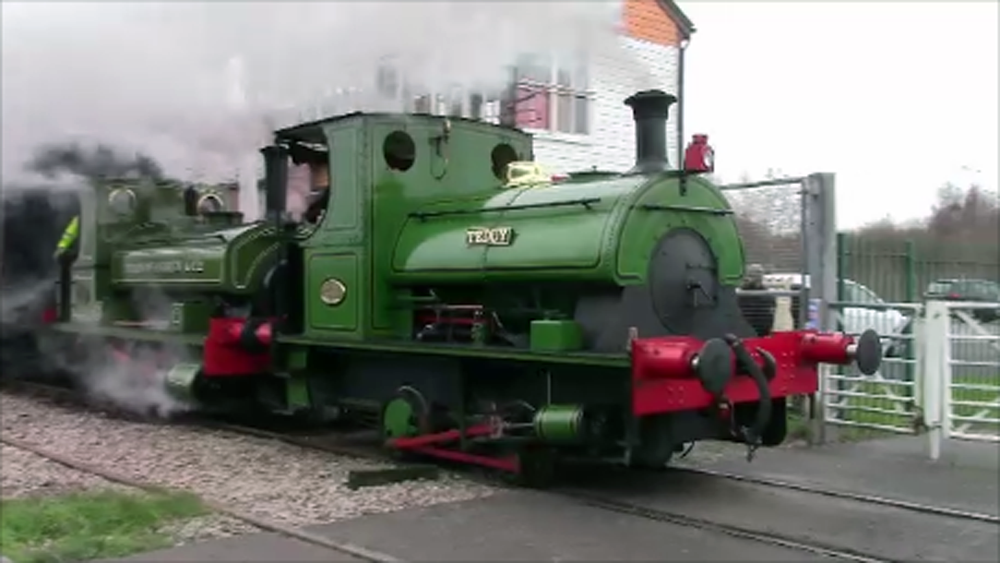
Barclay ‘Coln McAndrew’ and Peckett ‘Teddy’ double headed out of Brownhills West at Chasewater Railway
160 Chasewater Railway Museum Bits and Pieces

160 – Chasewater Railway Museum Bits & Pieces From Chasewater News Summer 1993 –Part 3 The value of a hole in the ground David Bathurst

This pic is for the benefit of those who didn’t get to see the chimney in the previous post!

160 – Chasewater Railway Museum Bits & Pieces

From Chasewater News Summer 1993 –Part 3

The value of a hole in the ground 

David Bathurst

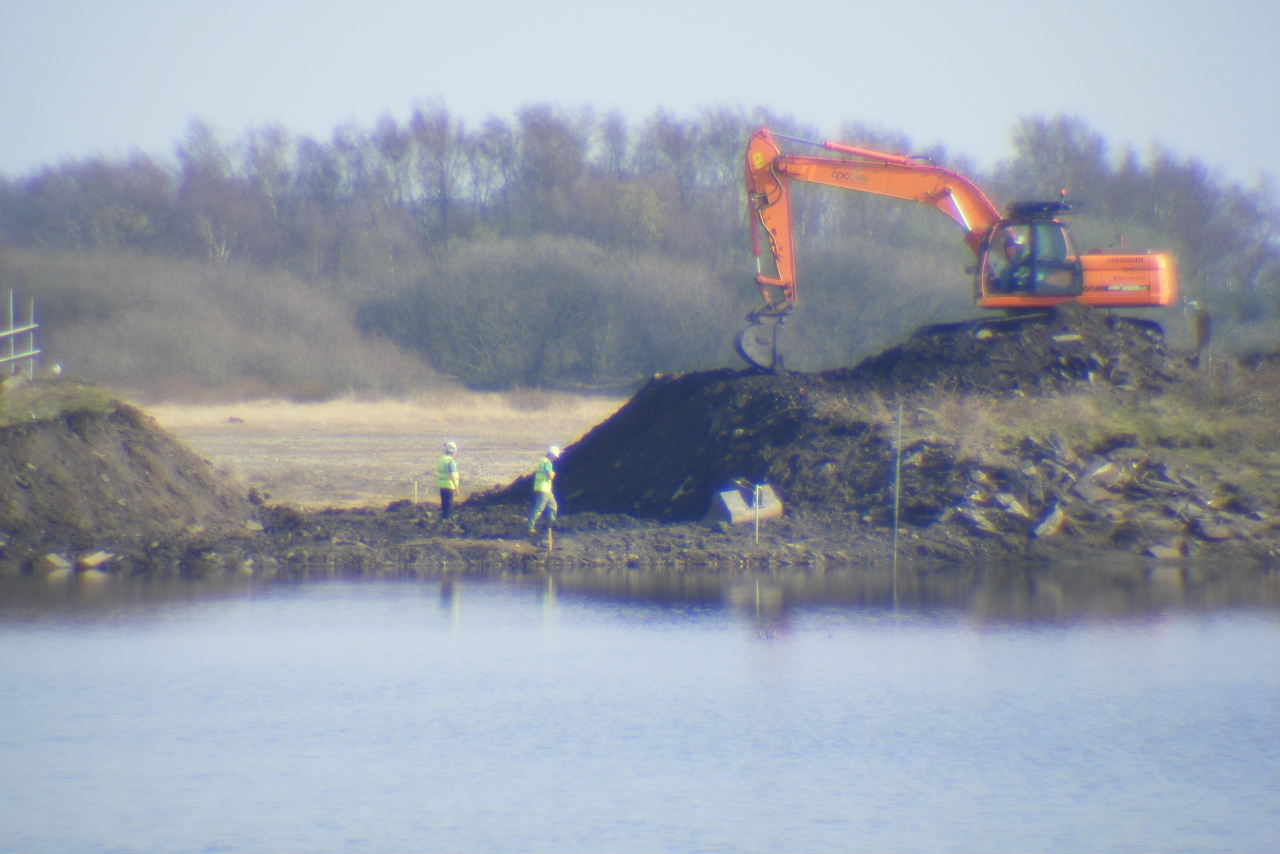
In an edition of ‘Chasewater News’ last year (Bits & Pieces No. 152) I outlined the possible use of derelict land grant (DLG) to enable the railway to achieve one of its most important projects – the restoration of the causeway.  The possibility had arisen for a number of reasons, including the fact that the Staffs County Council was preparing a derelict land scheme to reclaim the Norton Bog area of Chasewater, directly adjacent to the causeway.

The Staffs CC scheme was, however, delayed owing to the need to consult British Coal in respect of the coal stocks which might be recovered from Norton Bog.  If the Staffs CC scheme were to proceed, it was suggested that the causeway restoration could form a later stage of that scheme.  The mechanism to achieve this proposal was itself very complicated, with the causeway mainly falling within Walsall Council’s boundary.

Since the date of my earlier article, many events have taken place, including the decision of the Boundary Commission to transfer much of Chasewater into Lichfield District Council (and thereby under the planning jurisdiction of Staffs CC) from 1st April 1994.  This transfer also includes land ownerships, much to the dismay of Walsall Council.  The proposed transfer has direct implications for the railway, namely the short-term difficulties of having to take account of an additional local authority and the longer-term benefits of having to deal with fewer local authorities!!

Against this backdrop of DLG and the involvement of the various local authorities, members who visit the railway regularly will have some difficulty in reconciling the information which I have so far provided, with the events ‘on the ground’.  Indeed by the time this article appears in print, there is a prospect that most – if natal – of the causeway restoration will have been completed.  Not only has a very substantial access roadway been laid from Hednesford Road (rear of the station area ‘top’ compound), but similarly substantial works will have been completed to prepare the causeway to receive substantial inert fill materials.

‘But how is this possible?’ is the question likely to be asked by many members – especially those members who will have appreciated the massive scale of the restoration project.  It is a valid question, particularly in light of the knowledge gained by the CLR Board regarding just how much fill material (perhaps 10,000 tons) and manual resources are necessary to undertake the work.

One of the earliest lessons which I learned upon joining my current employers was the value of owning a hole in the ground.  As time passes and demands on space increase, coupled with the ever-present vigilance of the environmental lobbyists, local authorities and private organisations are finding it increasingly difficult to dispose of unwanted materials.  Although it is of no concern to the railway, everyone must be aware of the problem of dealing with household waste.  Exactly the same problem arises in respect of disposing of hard waste which is generated through the day-to-day operations of a large local authority.  Most of this material has to be sent to licensed tips – sometimes a great distance away – at a significant cost both in terms of transport and tipping fees.  If you own a hole in the ground, and you can secure the necessary planning and/or other permissions to fill it, then you have a most valuable asset.

I think that few of us involved with the railway fully appreciated that the causeway might be regarded as a ‘hole in the ground; in reverse!  But that is precisely what it is.Causeway December 1992

Even before the previous article appeared in print, representations were being made to the railway to the effect that Walsall Council’s Highways Direct Labour Organisation (DLO) would be prepared to undertake a restoration project, using the causeway as a suitable location for filling with appropriate inert (and environmentally acceptable) materials.  It would be, and continues to be, a finely balanced financial equation.  It was to be based entirely on commercial considerations.  It was not to be regarded as a favour to the railway.  It was to be based on the financial benefit to be obtained by the DLO, but with the railway enjoying a similar benefit, albeit not in directly financial terms.

The proposal can be summarised thus: a proportion of the savings made by the DLO by not incurring tipping charges in the private sector could be allocated to the works necessary to transport materials and employ heavy plant to spread, profile and consolidate the causeway to specifications laid down by the railway.  In addition to its routine programme of road maintenance, the DLO is for ever tendering for major highway projects, including bridge and similar schemes, all of which result in materials having to be disposed of.

I have no wish to expend too much time and space in describing all of the individual aspects of the project which have had to be addressed before work could start.  I can say, however, that many hours of discussions and consultations have been necessary, and dozens of phone calls made, to ensure (so far as is possible) the support and co-operation of the various agencies involved.  The detailed discussions have necessarily been limited to a mere handful of railway personnel, so as to concentrate lines of communication.

These discussions have included such details as how to deal with the rare (or rarish) plant life growing on the causeway.  It has been necessary to remember that the railway’s activities include certain designated areas, including a SSSI and a SINC (abbreviations well known to those of you with wild life interests), which have required close liaison with Walsall Council’s Planning and Leisure Services Departments.  I must place on record the tremendous help, support and co-operation of the Officers who have been involved in this particular aspect, including the Countryside Officer who gave the CLR Chairman (the author of this article at the time) a crash course in rare plant recognition!!Causeway South 1992

There have been a number of false starts to the project.  Initially, it was intended to import the materials from the bridge reconstruction scheme at the High Bridges on the Pelsall to Brownhills road.  I suppose that it was inevitable that something would go wrong, and so it did.  The weather immediately after Christmas reduced Chasewater Park to a bog, making it completely impossible to even consider moving any form of heavy vehicle into or through the park.  Each time the weather seemed to improve, it immediately deteriorated again, resulting in a further deferral of the start date.  I hardly need to remind certain members of the dangers associated with driving vehicles in close proximity of the Chasewater reservoir without taking the precaution of wearing a life-jacket and having flares (as opposed to railway detonators) immediately to hand.  (While working with the dumper truck it got a bit too close and slipped into the water!! Bits & Pieces No. 151)Causeway December 1992

However, an upturn in the weather enabled everyone concerned to agree to an early May start date, and work on laying the access road commenced in earnest on the first Tuesday in May.  Regrettably, the attentions of the local riff-raff were directed to the contractor’s JCB, which attempted to emulate the dumper truck in trying to carry out work within the Chasewater Reservoir itself.  Despite this set-back, the work has continued according to plan.

In terms of a time scale, the DLO have not sought to offer (and nor has the railway demanded) a precise indication of a completion date for the restoration project.  This reflects the fluctuating availability of suitable fill material – which has had to meet exacting criteria laid down by both the railway and the local authority.  Nevertheless, it is in the financial interests of the DLO to undertake the work speedily and effectively, so as to avoid the costs of employing contractors’ plant and equipment, whilst at the same time maximising the capacity possibilities provided by the scheme.

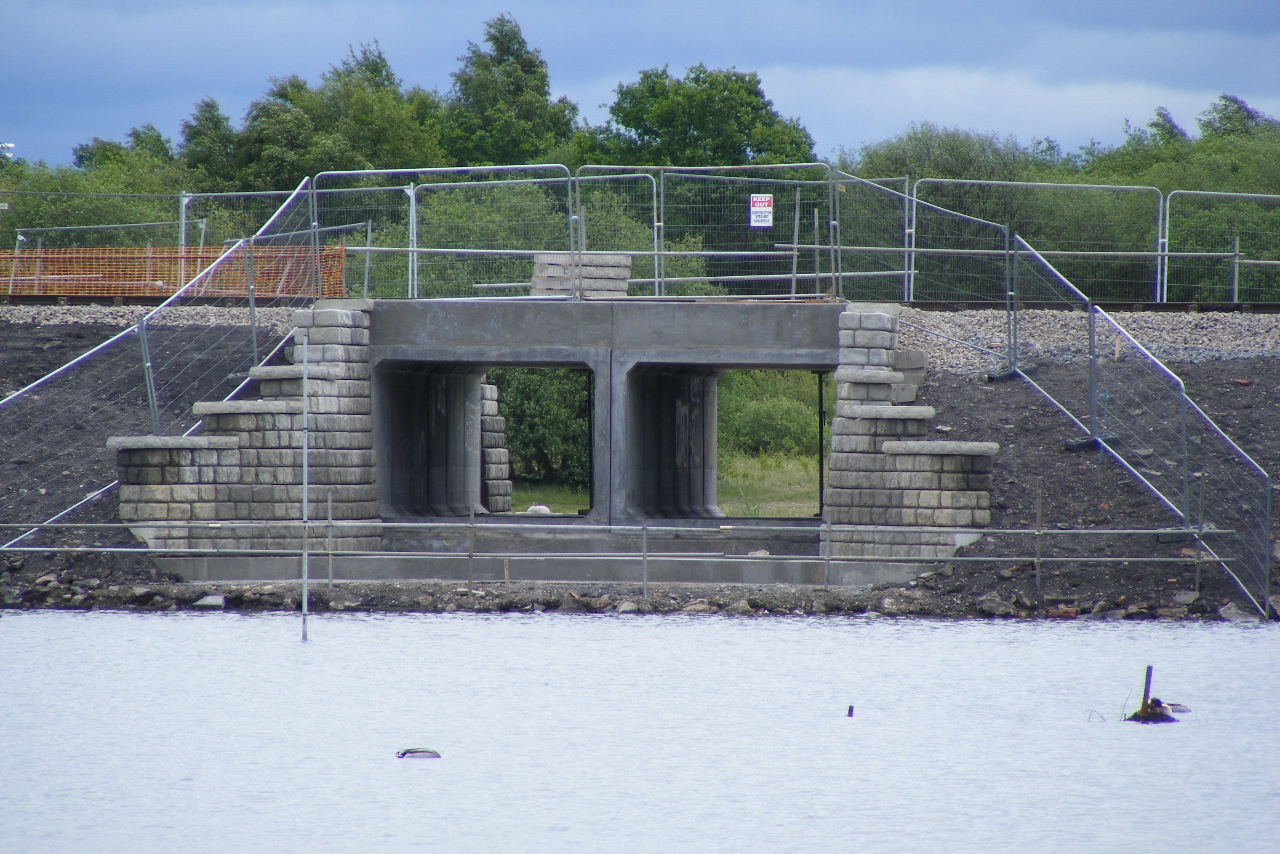
The end product will be a causeway capable of accommodating a railway line; but it will not necessarily be a finished product.  It will still be necessary for the railway to provide for the small bridge at the eastern end of the causeway to be widened to facilitate the provision of a trackside footpath.  Indeed, although there is no formal right of access across the causeway, the railway cannot ignore the real world situation in which the causeway is seen by the public as a convenient route between the two sides of Chasewater Park.  The restoration scheme includes a private footpath alongside the running line, but at a slightly lower level.

In addition, discussions are taking place with the group responsible for the Forest of Mercia, in relation to a scheme of planting suitable species along the causeway, so as to enhance the environmental attractiveness of what might otherwise be a somewhat stark construction.

I apologise for the length of this article, but only in one sense.  The causeway restoration project is of momentous significance to the future of the railway.  It is a focal point in the minds of many of the railway’s working members.  Not only is it important in itself, but it also opens up the real prospect of further expansion into Chasetown.  Already, preliminary discussions have taken place with Staffs CC – who are currently designing their Norton Bog Reclamation Scheme now that British Coal have withdrawn their coal recovery proposals – regarding the clearance of the track-bed adjacent to the Norton Bog site.  Further, Staffs CC Highways Department have been asked to provide details of their design work on the Burntwood by-pass, to enable the railway to assess the implications on the railway’s long-term expansion proposals.

This is a very exciting time for the railway, with so many different projects taking place or being prepared.  The causeway restoration will make it necessary to bring forward thought (and expenditure) on the procurement of sleepers and rail.  It will give an added impetus and an exciting incentive to the working members and the railway’s many supporters.

And it is a fact that the scheme has come about because of the one thing that most of us had not contemplated – our own special version of a “hole in the ground”.

Causeway South January 2005

Chasewater Railway Museum – The Causeway

Posted onNovember 9, 2015by John D | Leave a comment

Chasewater Railway Museum

The Causeway

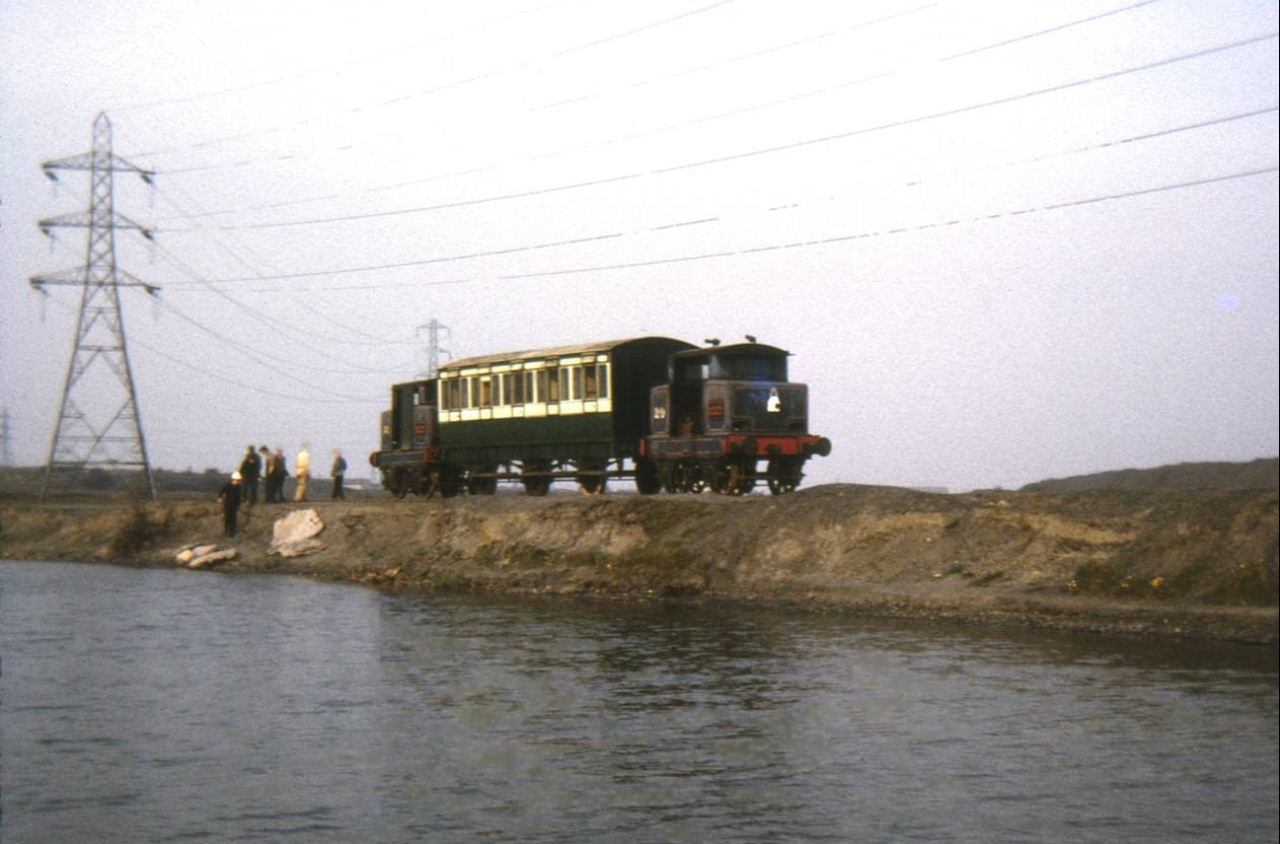
Causeway April 1971

Worthington locos Nos.20 & 21 on the causeway with the Maryport & Carlisle coach in April, 1971

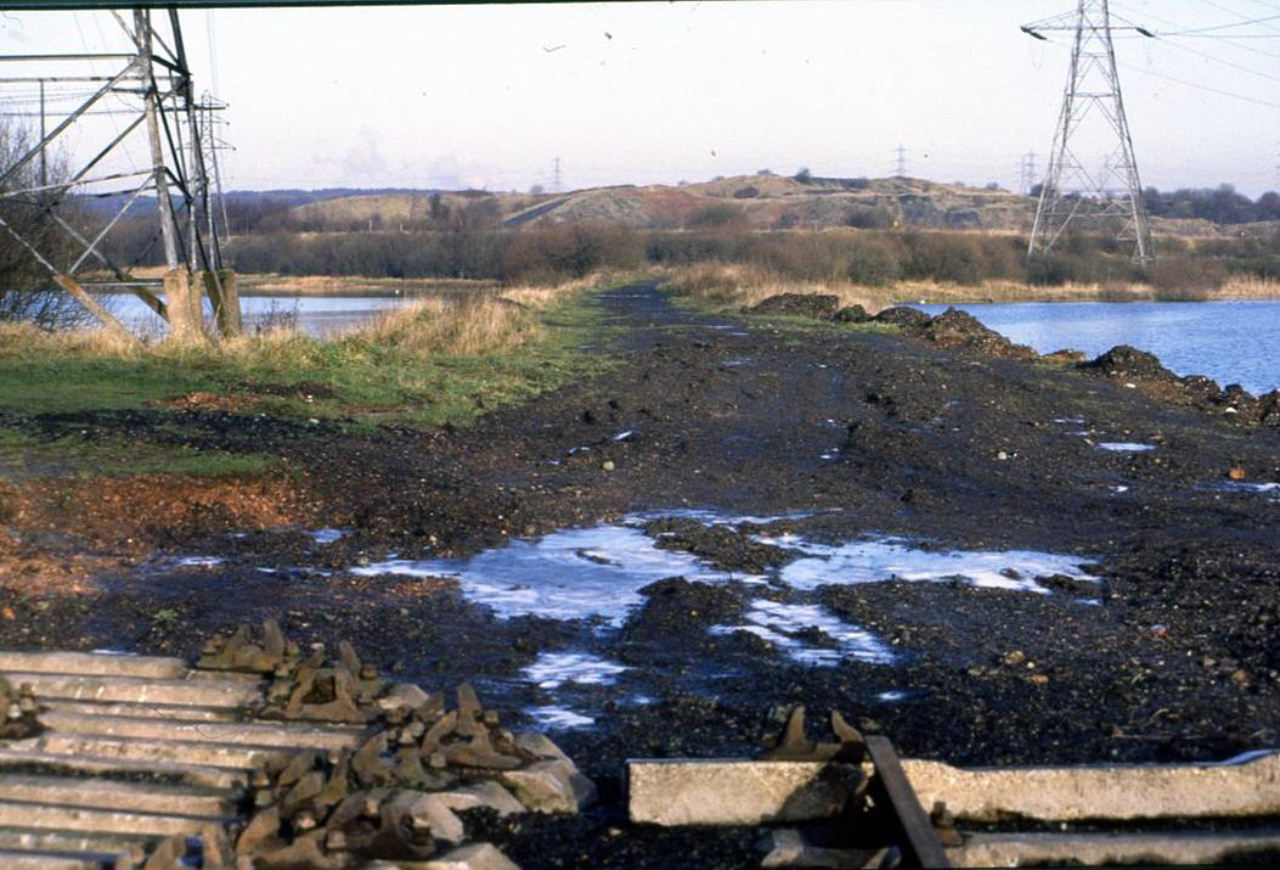
Causeway 1992

Taken in 1992

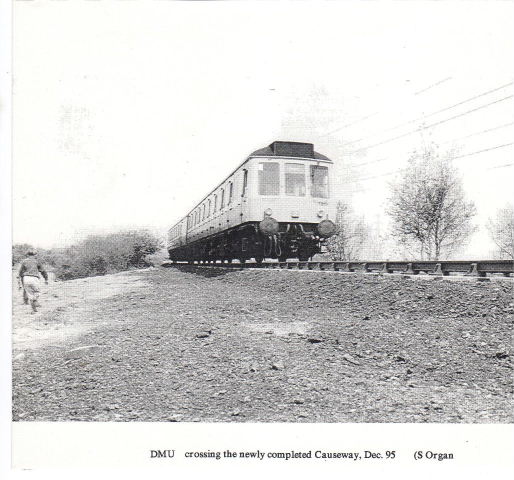
DMU on causeway001
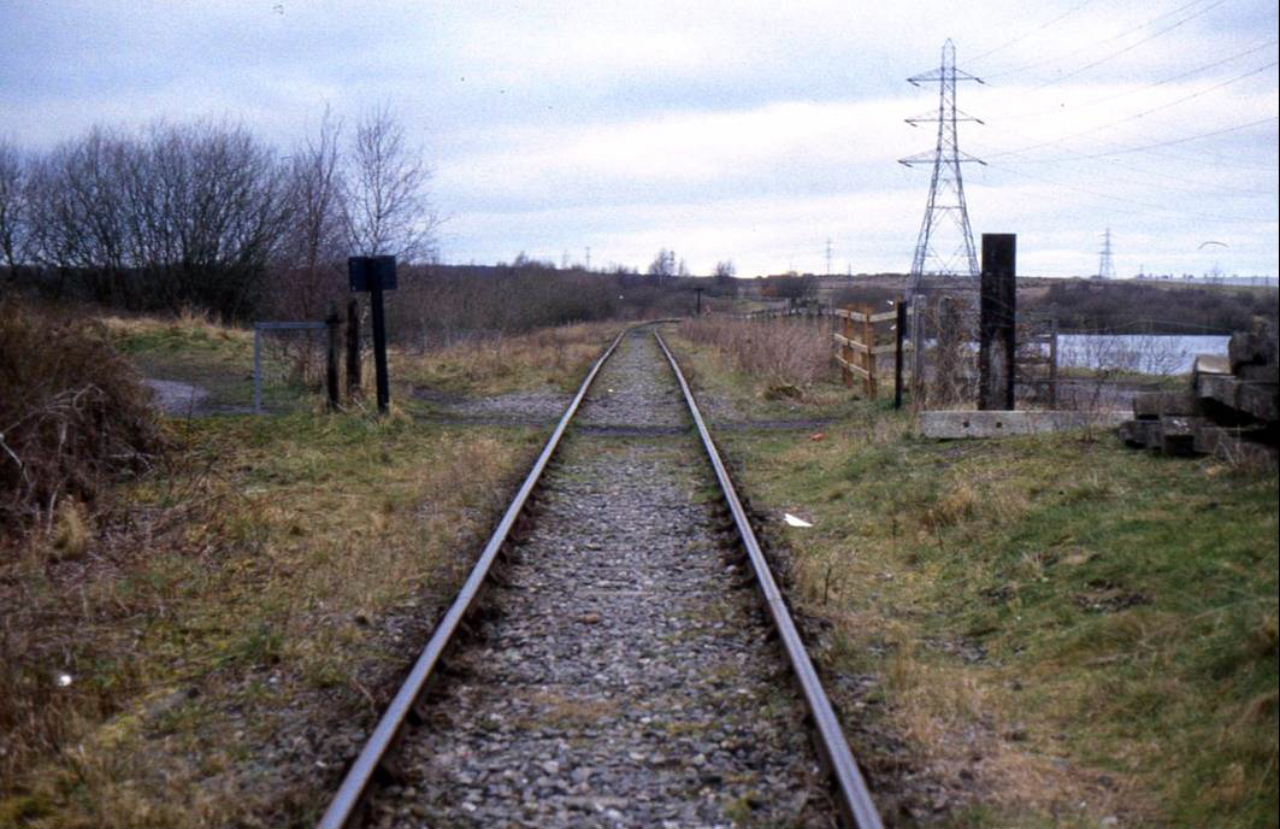
Causeway 2005

Taken in 2005

2011_03250028

2011 – A hole in the Causeway!

2011_05280007

Later in 2011

2011_05280016

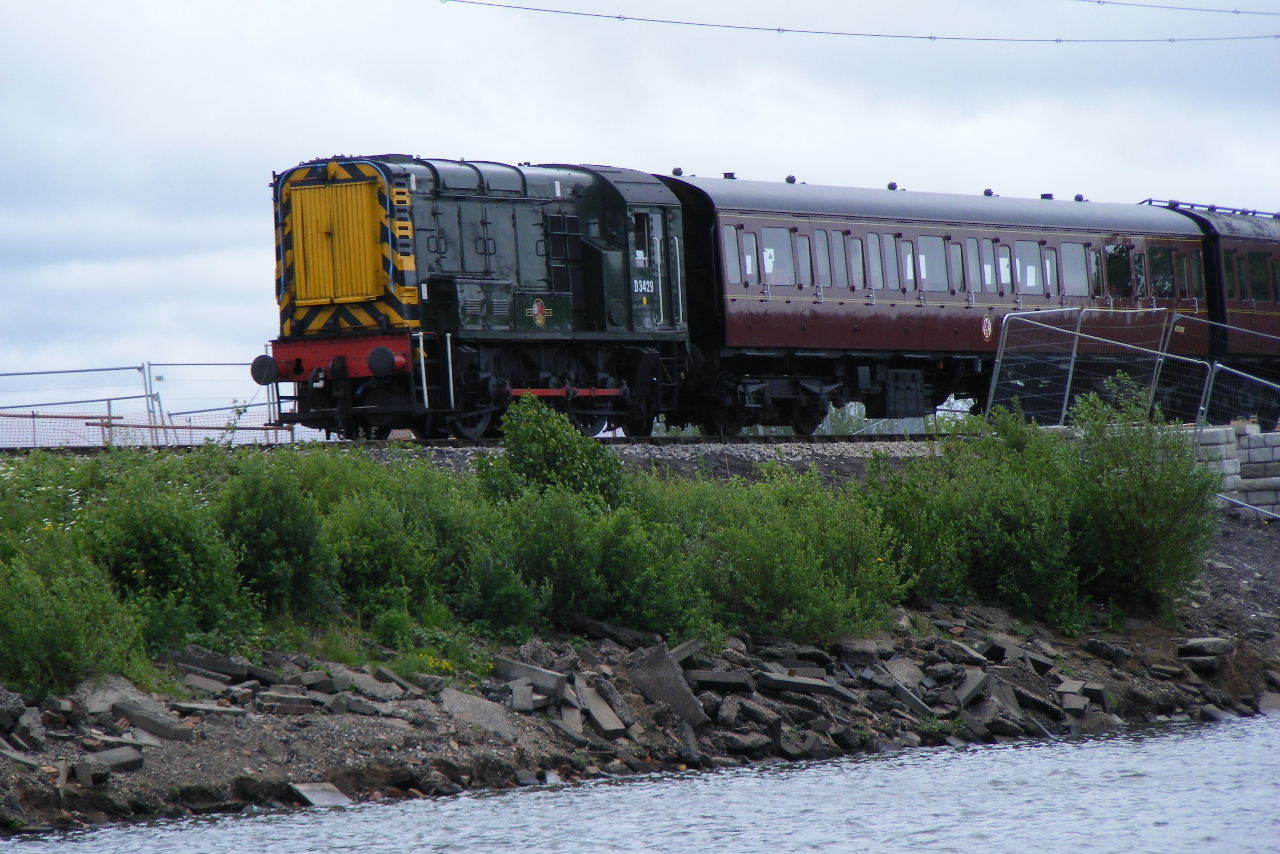
May 2011 – First train over re-opened causeway.

2009_09120020

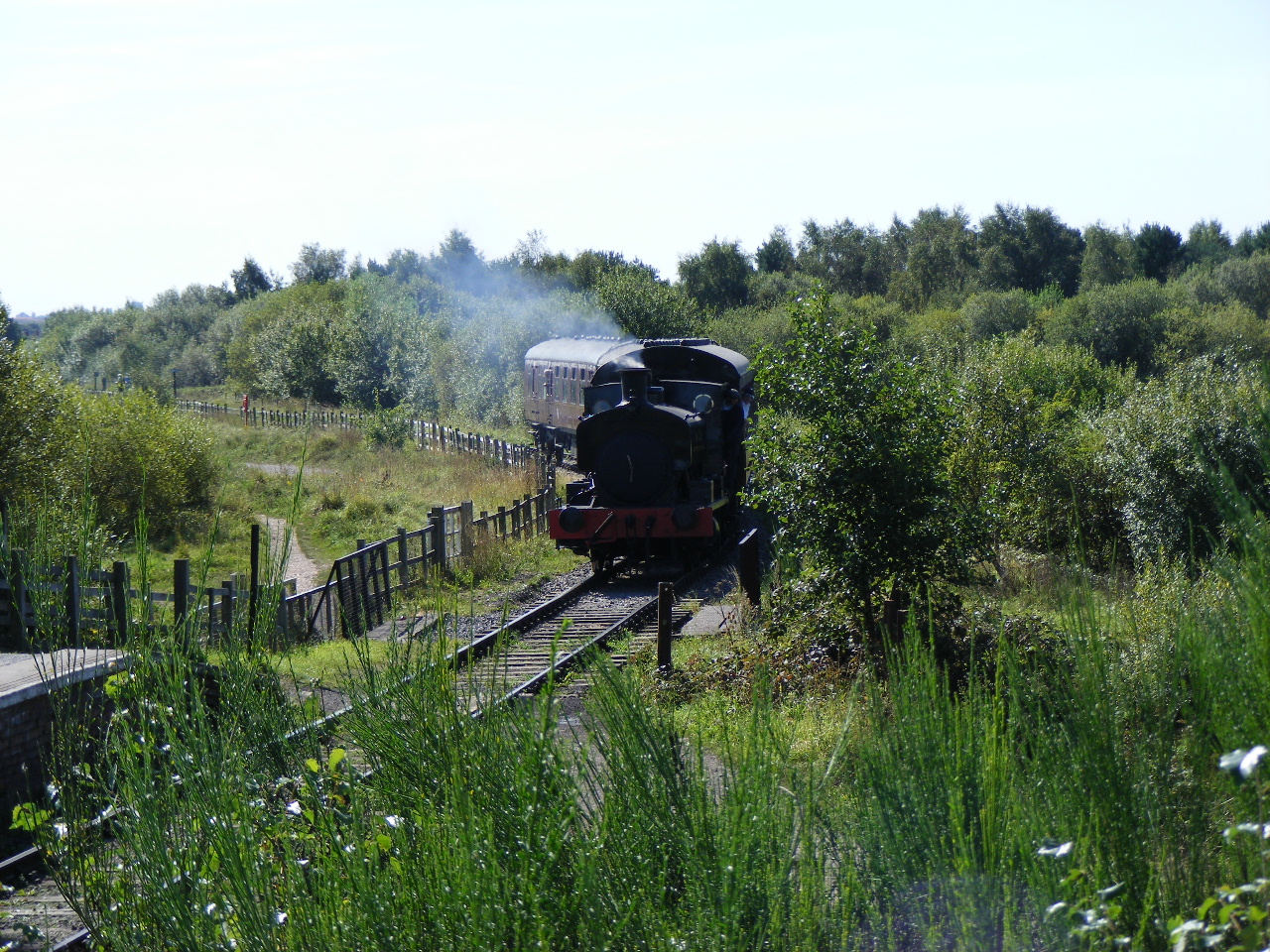
Just to show steam locos use it too !!

Visiting loco ‘Wimblebury’ over the causeway.

125Chasewater Railway Museum Bits & Pieces

125Chasewater Railway Museum Bits & Pieces

From Chasewater News April 1990

Midland Railway – Brownhills Branch – B. Bull

Copy of what may have been a locally commercially available postcard depicting a MR Johnson design 3F 0-6-0 of the type introduced in 1885 and rebuilt by Fowler from 1916 with Belpaire boiler.

Looking back through various back numbers of ‘Mercian’, ‘Chasewater News’ and ‘Railway Focus’ it becomes apparent that little has been published to inform members of the history of this branch, part of which trackbed provides us with the base for our own Chasewater Light Railway operations.  An even more glaring omission is that we have not made available for publication the few interesting photographs in the museum collection.

 On July 1st, 1879 the Midland Railway had opened a line from Castle Bromwich to Walsall with intermediate stations at Penns, Sutton Coldfield, Sutton Park, Streetly and Aldridge.  Whilst this line was being constructed, a branch from Aldridge to Walsall Wood was authorised on July 13th, 1876, with further extension to the western shores of Norton Pool being authorised on August 6th, 1880 to give an end-on connection with the Cannock Chase & Wolverhampton Railway, just south of the causeway.

The contractors for this 3¾ mile branch were H.Lovatt & Co.Ltd.  I am unable, however, to discover any details of the contractor’s locomotives which would undoubtedly been used on this project.

On April 1st, 1882 the branch opened as far as Brownhills West for goods only, with the connection to the CC & WR being opened on November 1st, 1882.

Just north of the A5 road there was a short lived spur to the Coppice Colliery, Wilkin, owned by J.Owen Ltd.  (Later the Coppice Colliery Company.  This spur closed when the colliery was shut in 1894.

Passenger services commenced to the newly opened stations at Walsall Wood and Brownhills Midland on July 1st, 1884, but colliery traffic continued to be the mainstay of the branch.

Brownhills Midland was over half a mile out of town just north of the A452 Chester Road, whereas the LNWR station on the South Staffs Walsall line was handily situated at the end of High Street so it was no surprise when the LMS withdrew the passenger service on March 31st, 1930, Brownhills Midland being demolished soon afterwards.One amazing survivor is a wooden ‘finger’ which used to point the way to the platforms.  This piece owes its continued existence to the gentleman who fortuitously purchased from the site a pile of wood to build himself a garden shed, the finger surviving long enough to find its way by means of a donation to the RPS collection.  However, I digress slightly, goods traffic continued on the branch until the closure of former Cannock Chase Colliery pits by the National Coal Board in the late 1950s, the line being lifted between Aldridge and Brownhills West in 1960, with the CC & WR remnants left around the northern shores, mainly going by 1963.  Last day of passenger services at Brownhills Midland.  A Johnson 3F, No.3277, with two coaches of compartment stock including a clerestory probably dating from the period 1897 to 1916.  The porter seems to be holding up a closure notice or something similar perhaps.

What was left owed its continued existence to the NCB Area Workshops which was then just rail connected to the former LNWR Norton Branch via a circuitous route through the closed Conduit Colliery yard reached by a spur just south of the causeway.  A small amount of the original Midland Railway metals had been left as a headshunt, this being part of the former exchange sidings with the CC & WR and it was some nine years after the Railway Preservation Society came to Chasewater before British Railways ‘rediscovered’ the sidings left for NCB use in 1960 when the rest of the branch had been lifted.  By then of course the Society had extended their track into the park so the still BR owned piece fell in the middle of the Chasewater Light Railway.  How this problem was surmounted will be the subject of a future article, as it is a story in itself.Standard MR platform lamps on hexagonal posts are in evidence, but the sawn paled fence seen in the postcard view has been replaced with the sawn diagonal variety by the time these photos were taken.

The photographs

These form part of the Museum’s collection of local photographs, some of which will be made available to the Editor to feature in future issues of Chasewater News.  With 1990 being some 60 years since Brownhills Midland closed its doors to passengers, it is especially pleasing to be able to provide photos of the last day of services, March 31st, 1930.

Chasewater Railway Museum – March 2020 Newsletter

Chasewater Railway Museum

March 2020 Newsletter

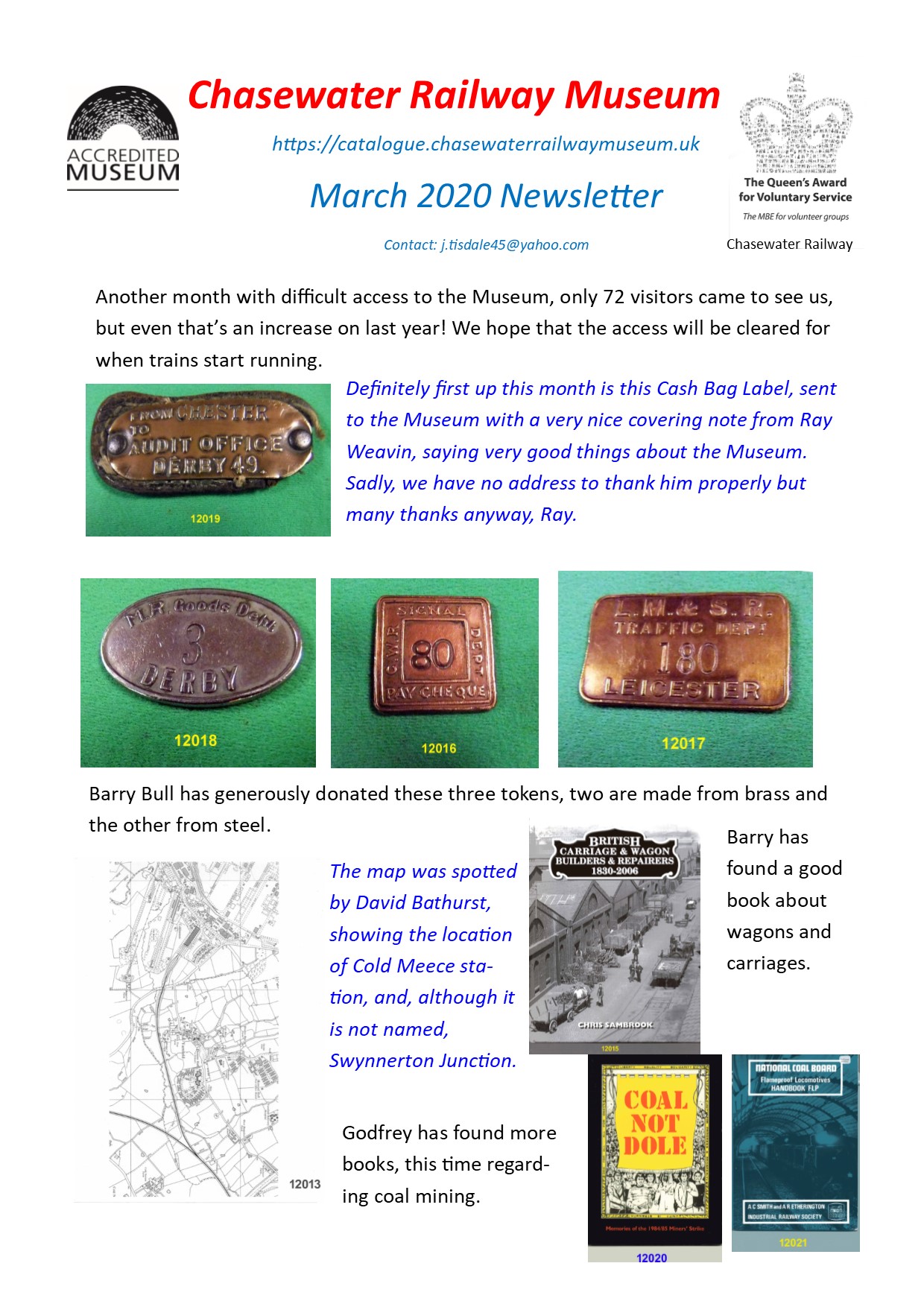
Welcome to the Museum’s March Newsletter, the fiftieth edition, trying to keep you informed as to what’s happening in the Museum.

Chasewater Railway Museum – List of Chasewater Railway Events – 2020

Chasewater Railway Museum –

List of Chasewater Railway Events – 2020

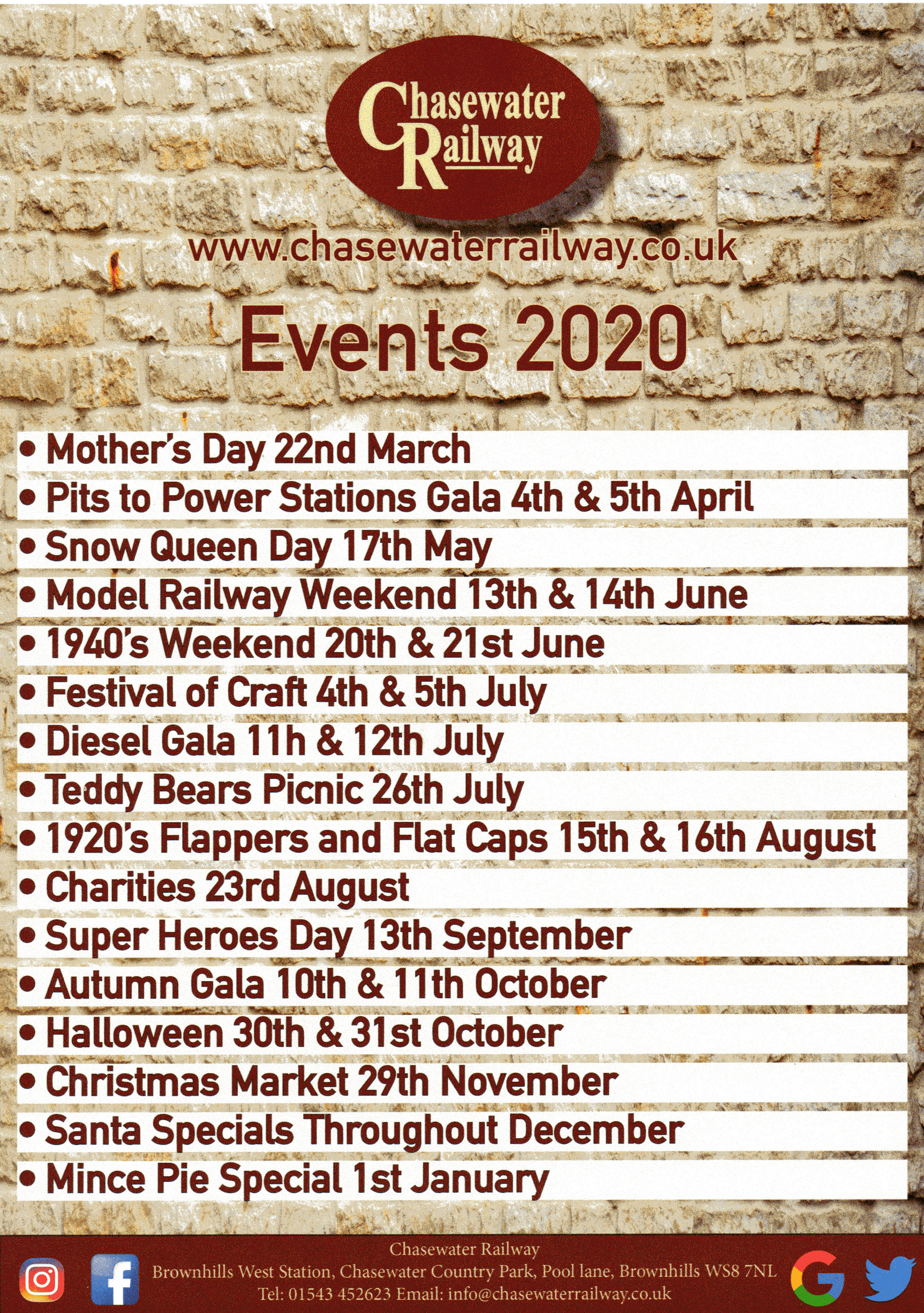
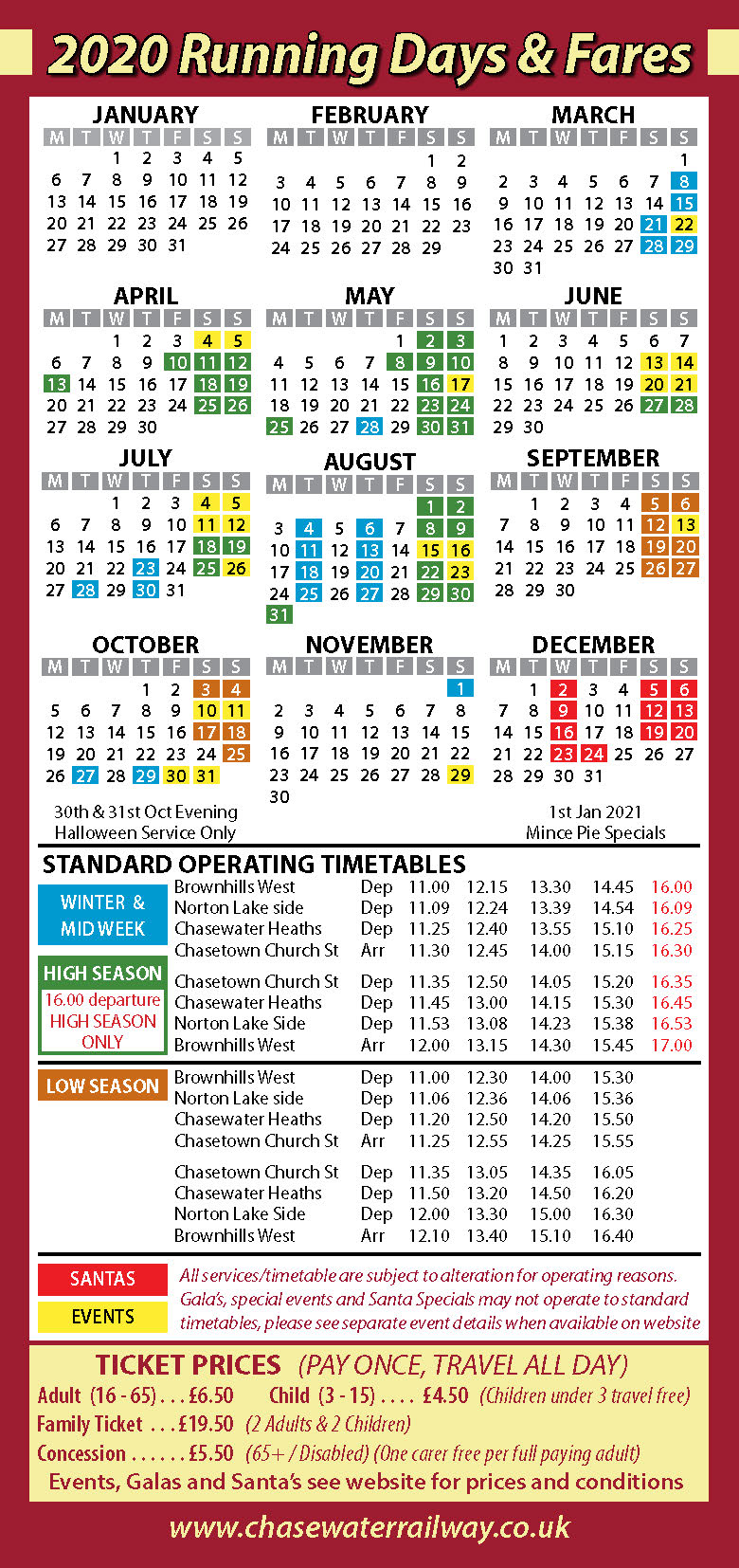
A real diary filler for you – all the events happening at Chasewater Railway during 2020.

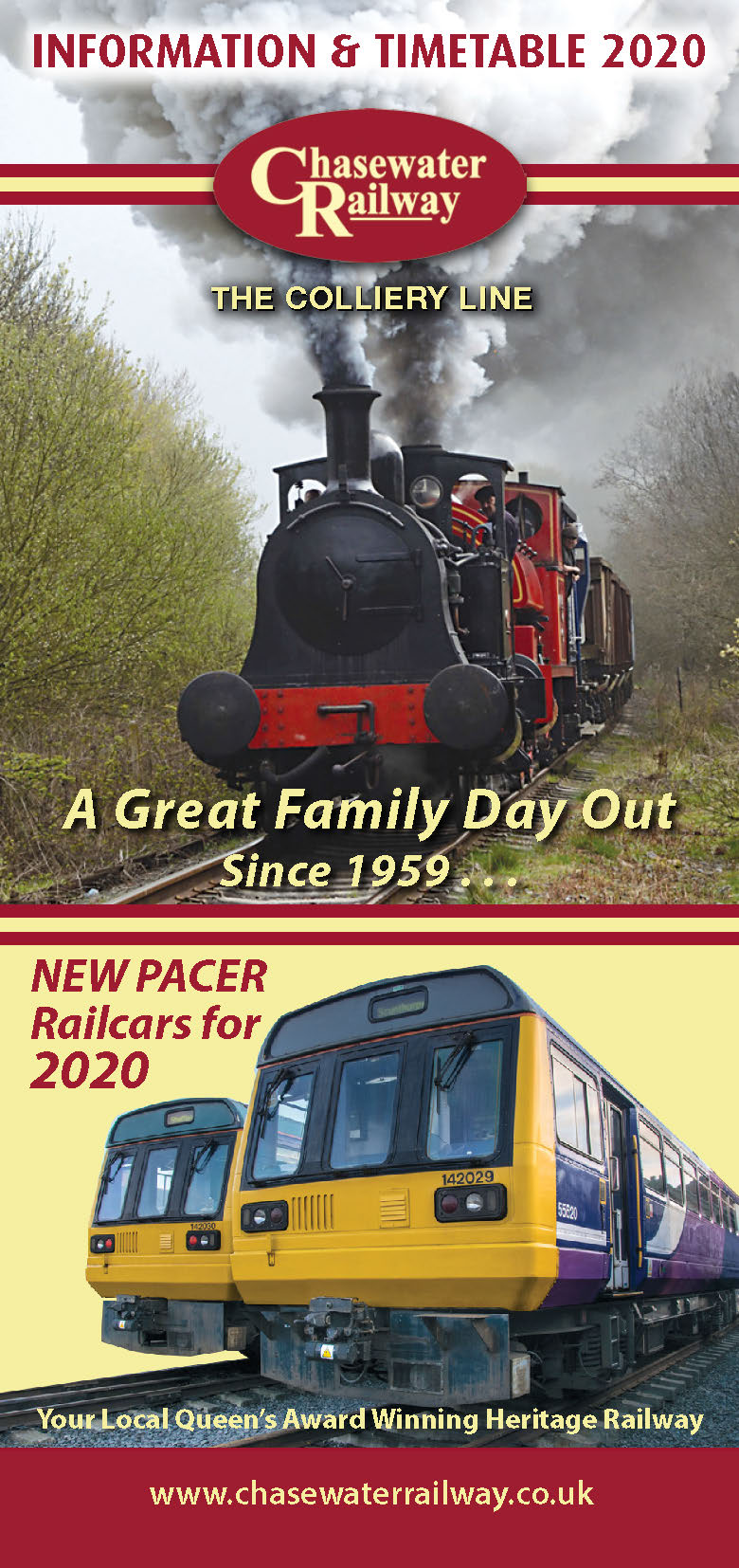
Chasewater Railway’s 2020 leaflet, including the timetable.

Chasewater Railway’s 2020 leaflet

including the timetable.


CR-2020-leaflet

Click link to open

Railway Memorabilia Display

OLYMPUS DIGITAL CAMERA

Aldridge Library situated in Rookery Lane Aldridge, is currently displaying an exhibition of Railway Memorabilia courtesy of Chasewater Railway Museum. The display is housed in two glass cabinets.
To compliment the cabinet display is a screen presentation of the aspects of Chasewater Railway.

The display which was organised by Susan Satterthwaite (a volunteer at Chasewater Railway) will run until the end of May. The Library is open from Tuesdays until Saturdays, (closed Mondays & Sundays).

The artifacts displayed are just a selection of the many on display in the free to enter,  Chasewater Railway Museum, which is situated at Brownhills West Station, and is open on train running days.
Why not visit and relive the past.

Chasewater Railway Volunteers’ Day

Chasewater Railway

Volunteers’ Day, Saturday 30th March 2019

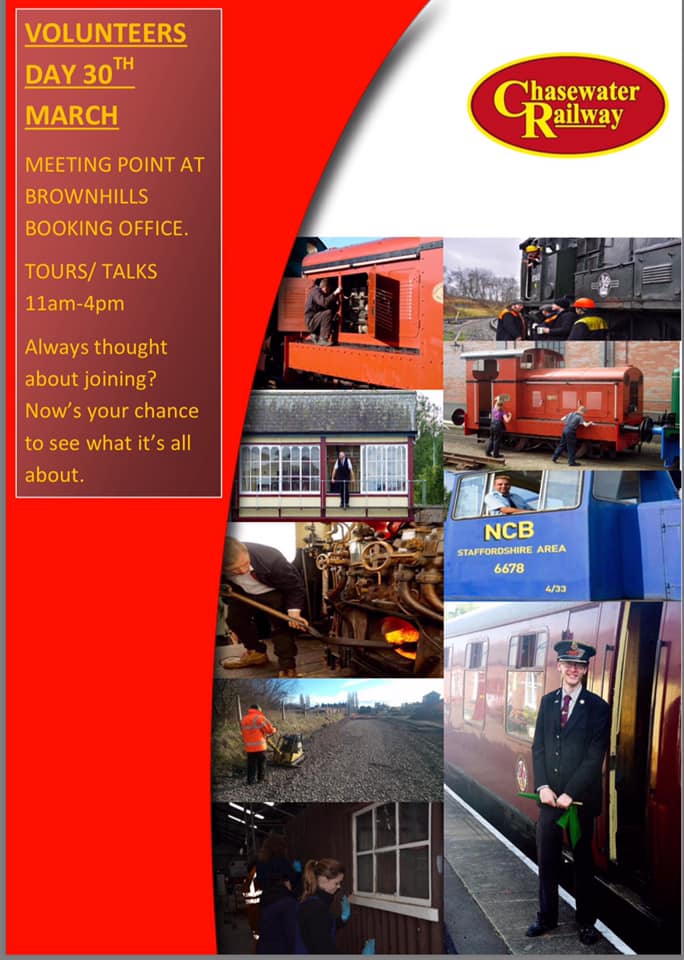
For those who would like to help but are not as young as they used to be there is always the Museum, we need more volunteers too – just move occasionally and we won’t stick a label on you!


Chasewater Railway Museum – Armistice Day, 100th Anniversary

Chasewater Railway Museum 

  Remembrance Sunday

100th Anniversary of Armistice Day

The Chasewater Railway Museum is proud to have two Books of Remembrance and two Rolls of Honour to commemorate some of the Railwaymen who lost their lives in the Service of their Country.

The Books  of Remembrance are from the London & North Western Railway, and the Midland Railway.

The Rolls of Honour are from the Barry Railway and the North Staffordshire Railway.

DSCF9060

DSCF9062

1732.2

DSCF9067

DSCF9064

We salute all men and women who lost their lives in the Service of their Country.

Made In Staffordshire Gala – May 26th/27th/28th

Made In Staffordshire Gala

May 26th/27th/28th


Kerr Stuart & Co. 0-4-0 “Willy” the Well-tank (RMWeb)

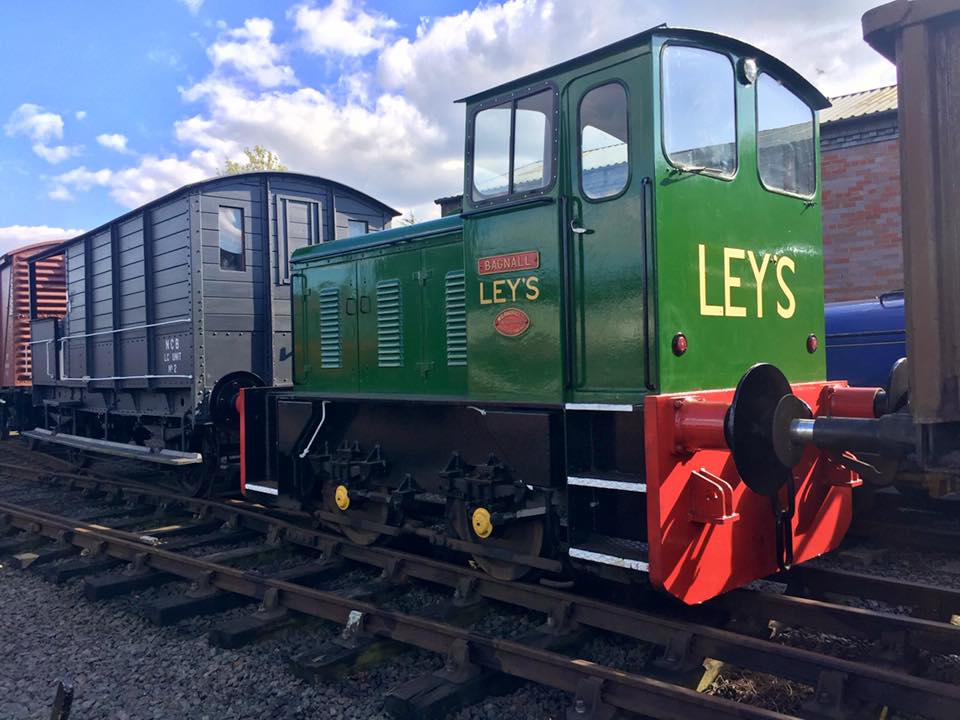
Bagnall 0-4-0DH built Stafford 1961, number 3207 “Leys” (Foxfield)


Events News: Made In Staffordshire Gala – May 26th/27th/28th

Made in Staffordshire Gala

Our Chasewater Railway Made in Staffordshire gala May 26th/27th/28th. 10am-5pm each day.
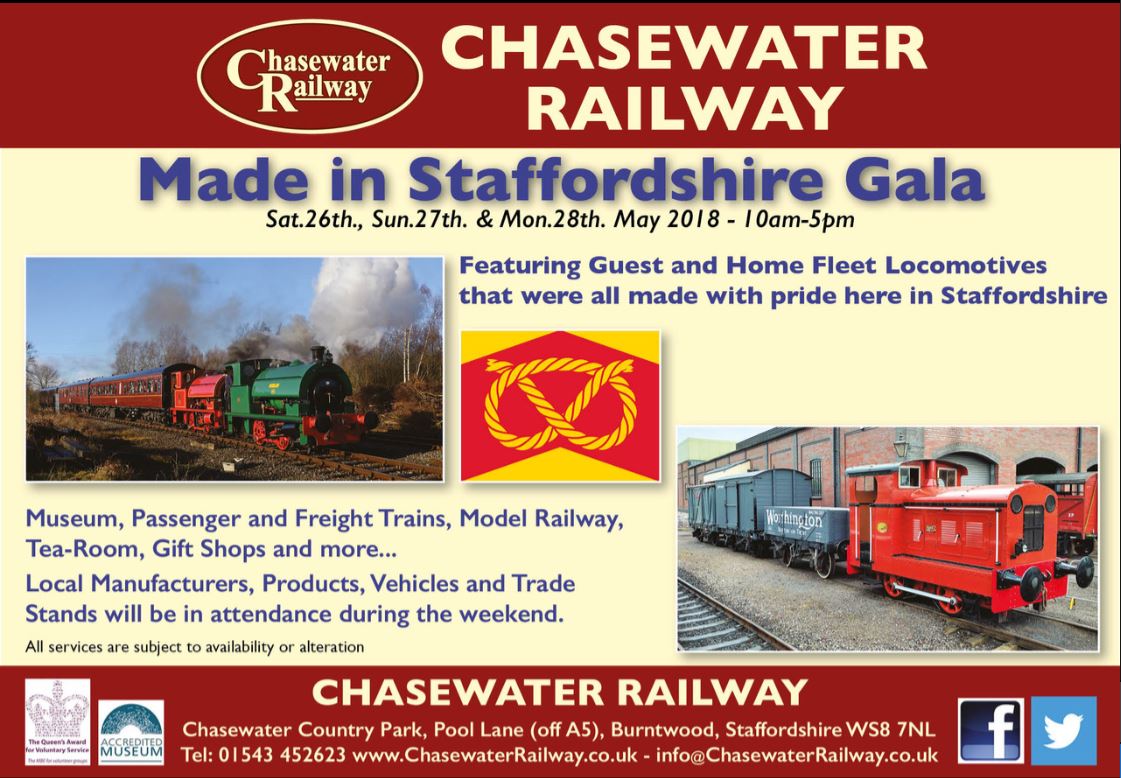
Details of our locos appearing during the gala.over the upcoming Bank Holiday weekend “Made in Staffordshire”
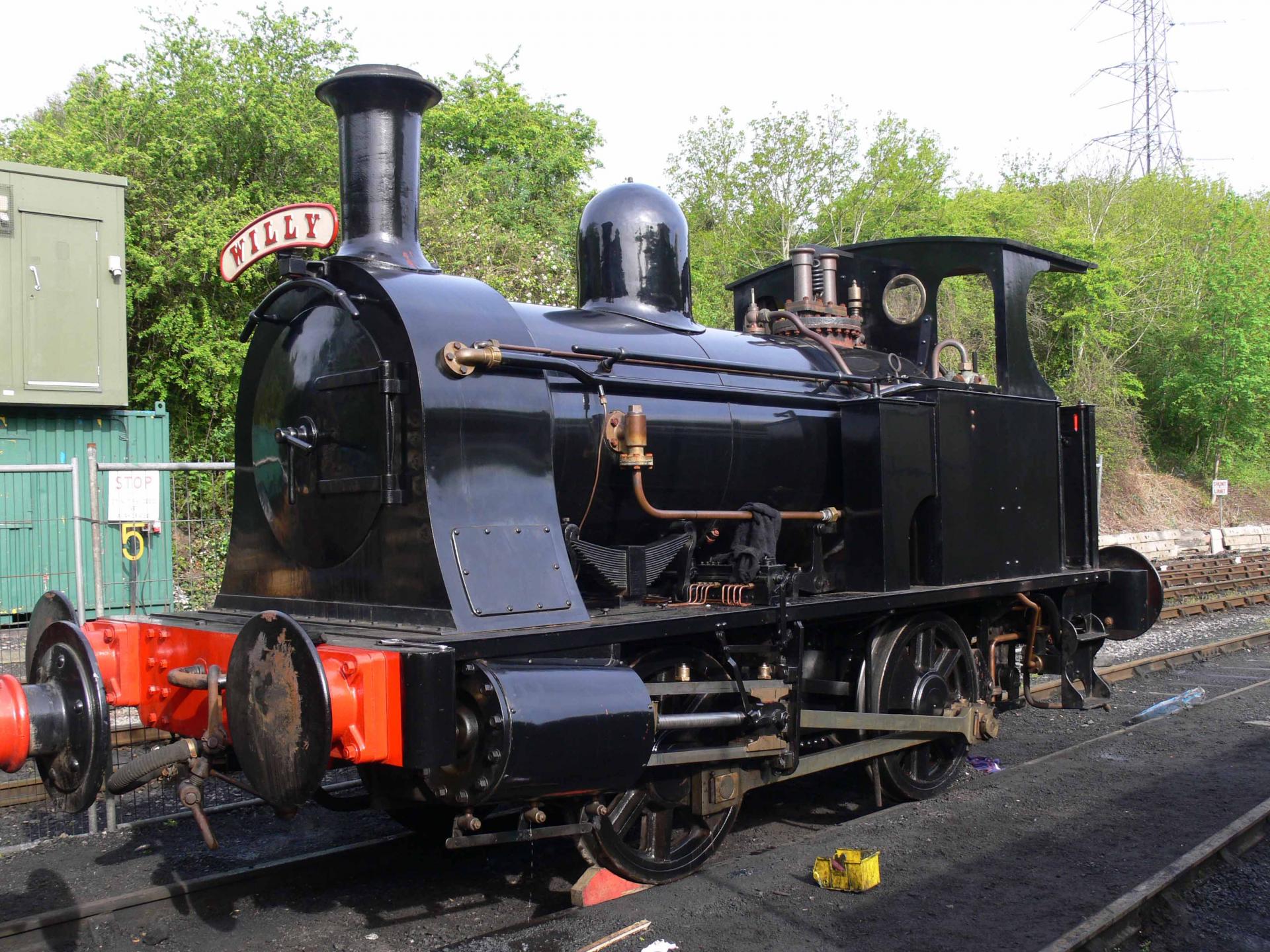
Steam loco guest is Kerr Stuart & Co. 0-4-0 “Willy” the Well-tank visiting us in its centennial year having been built in Staffordshire in 1918 and Diesel guest is last but one built Bagnall 0-4-0DH built Stafford 1961, number 3207 “Leys”. Thanks to the respective owners for allowing them to visit us.

Home fleet locos representing Staffordshire are Bagnall “Dunlop No.6” and Bagnall “Kent No.2” plus Diesel E E Baguley “Bass no.5” with Bagnall “Myfanwy” availble to view nearing the completion of her restoration.

Museum, Heritage Centre, Tea Room, Model Railway, Gift shops, Bric-A-Brac and more.

Rover Ticket prices for this event are £8.95 Adult, £7.95 Concession, £4.50 Child 3-15yrs and Non-working members with valid card, 0-2yrs free. A fantastic value family ticket is £24.95 for 2 adults and up to 2 children. No passes or vouchers valid during the gala and for everyone’s safety strictly no track/shed/signal box access without permission.

For weather & travel updates why not tune into our friends at Cannock Chase Radio FM on 89.6 & 94 FM.

There are many exhibits in the Museum made and/or used in Staffordshire – pop in and see us!

Hope to see you there.

More info:   http://www.chasewaterrailway.co.uk/