Tag Archives: Wolverhampton

Chasewater Railway Museum – More from Granville

Chasewater Railway Museum

More from Granville

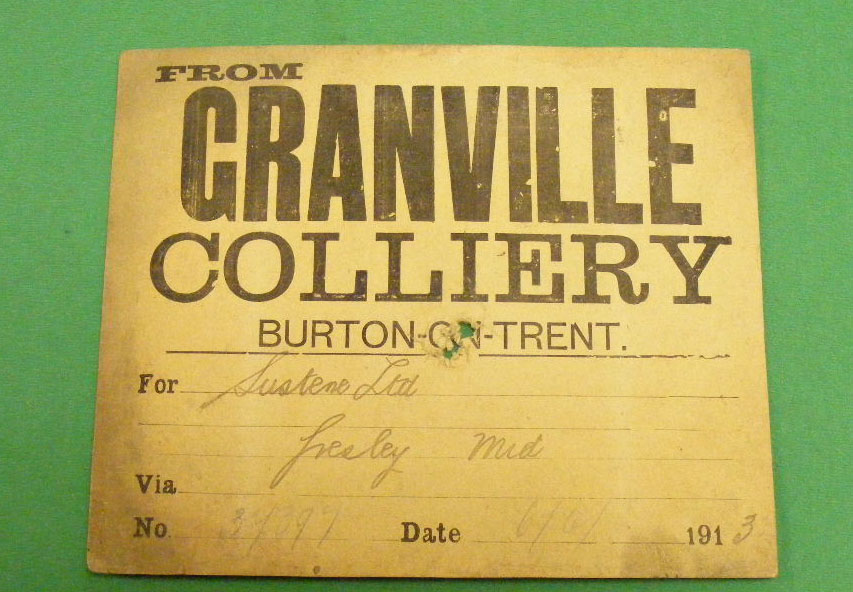
The first one is a wagon label from the Burton-on-Trent Glanville Colliery, dated 1913.  It has been in our collection for some years now and has always been discoloured – and obviously kept on a spike in an office somewhere!

1435

The other one is a colliery token from Granville Colliery  in Shropshire.  Granville Pit closed in 1979, bringing to an end more than 700 years of coal mining in the area which became Telford New Town in the 1960s.  This was purchased by the Museum in 2012.

Granvill Salop 545

Chasewater Railway Museum – A Small Addition

Chasewater Railway Museum 

A Small Addition

10789

A small addition to the Museum collection of coal miners’ pit checks is a pre-nationalisation of the coal industry example from the Granville Colliery Ltd.

The unusual thing about this particular item is, along with the Company name, it shows the location of Burton-on-Trent, whereas the real site of the Colliery was a few miles away at Swadlincote.

The first shaft was sunk in 1823/4 with number 2 shaft sunk in 1887. The earliest locomotives were six 0-4-0 saddle tanks of Hudswell Clark manufacture from the period 1890-1914.

On Nationalisation 1/1/1947, Granville became part of the NCB East Midlands Division No.7 Area and by then only two of the original locomotives remained. For short periods and at different times these two were supplemented/replaced by four Manning Wardle 0-4-0 saddle tanks, a Peckett 0-4-0 saddle tank, and finally a Ruston Hornsby 0-4-0 diesel of 165 horsepower.

Rail traffic ceased in January, 1962 and workings were merged with Rawdon Colliery. Final closure came in August, 1968.

Chasewater Railway Museum – Mining History Books

Chasewater Railway Museum

Mining History Books

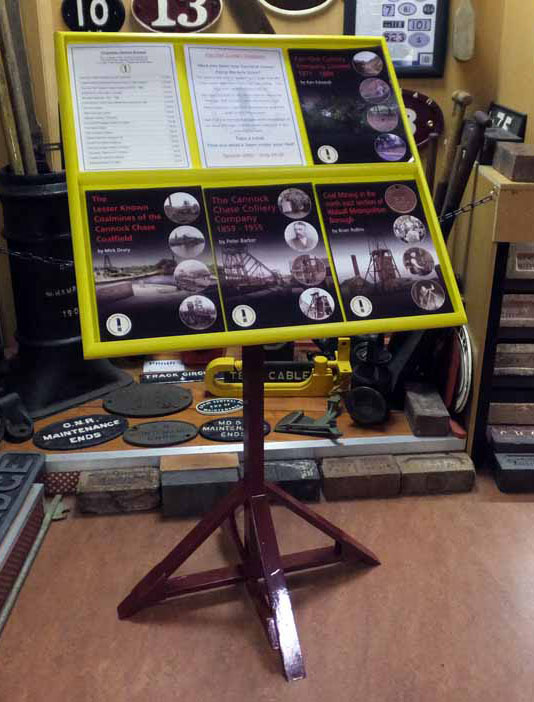
Stand cropped

Originally posted on oakparkrunners railway & other snippets.:

Did you or any one in your family work at one of the many Coal mines in the Cannock and Rugeley Coalfield. If so why not purchase one of the Mining History Books published by the Cannock Chase Mining Historical Society.

These informative books, with numerous photographs, of which there are 18 books in total, have been written  about mining, by the miners who worked at them. Each Book covers one or more of the local Collieries, and are available from Chasewater Railway Museum. please contact me if you need any further information. These books are about our Mining Heritage.

Chasewater Railway Museum – Hednesford Railways 1

Chasewater Railway Museum

Hednesford Railways 1

From December 2009

The view in 2009, looking towards Rugeley from Hednesford Station bridge.  (See below for latest signal box picture.)As it was in the late 1950s, a very busy railway location, with pits sending coal into the sidings from all directions.

Looking forward and to the left, the line leads to West Cannock Colliery No.5 and to the right, to Cannock & Rugeley Collieries at Cannock Wood and the Valley Pit.

From the rear, coal comes in from West Cannock Collierys Nos. 1, 3 and 4 – situated in the  Pye Green Valley.

The picture shows the site of West Cannock No.1 and No.4 Plants circa 1920s, it looks north east towards the top end of Green Heath Road.  No.4 Plant is just above the top of the chimney and steam can be seen coming from its winder stack.  The brickworks is the furthest building centre/right at the base of the mound.  A fourth shaft to the north of the brickworks has been covered by the mound.  The picture shows the enormity of the West Cannock Company’s operation in the middle of Pye Green Valley.

From here, the railway ran down to Hednesford Station via a bridge under the road by the ‘Bridge’ public house.  It then went through the left-hand arch (looking towards Rugeley) and into the sidings.With the closure of West Cannock Collieries 1-4, lines to the left found little usage.  The old station building, imposingly symetrical on the overbridge, castle-like dominated the access to the platforms.  One of  Bescot’s 0-8-0s, 49373, sorted out the empties to transfer to the collieries.

On the other side of the bridge, the sidings opened out into the marshalling yard.William Stanier designed 2-cylinder 2-6-4T no.2579, built by the North British Locomotive Company in Glasgow in 1936 and withdrawn in June 1962, runs in with a Rugeley Trent Valley to Walsall local passenger.  The station was demolished after the passenger service was withdrawn in January 1965 and the sidings were removed following the closure of almost all local collieries in the 1970s.  The signal box (formerly No.1), seen behind the water tower remains in operation. No.2 signal box closed on January 14th 1973 and No.3 from 18th December 1977.  Passenger services were reinstated from Walsall to Hednesford in 1989, using newly built platforms.  The service was later extended to Rugeley and Stafford, although, by 2009, it terminated at Rugeley Trent Valley.This is a cold view of West Cannock No.5, which continued producing coal until 1982.  The locomotive in the photo is Bagnall 0-6-0ST  ‘Topham’ 2193/1922.
DSCF9028

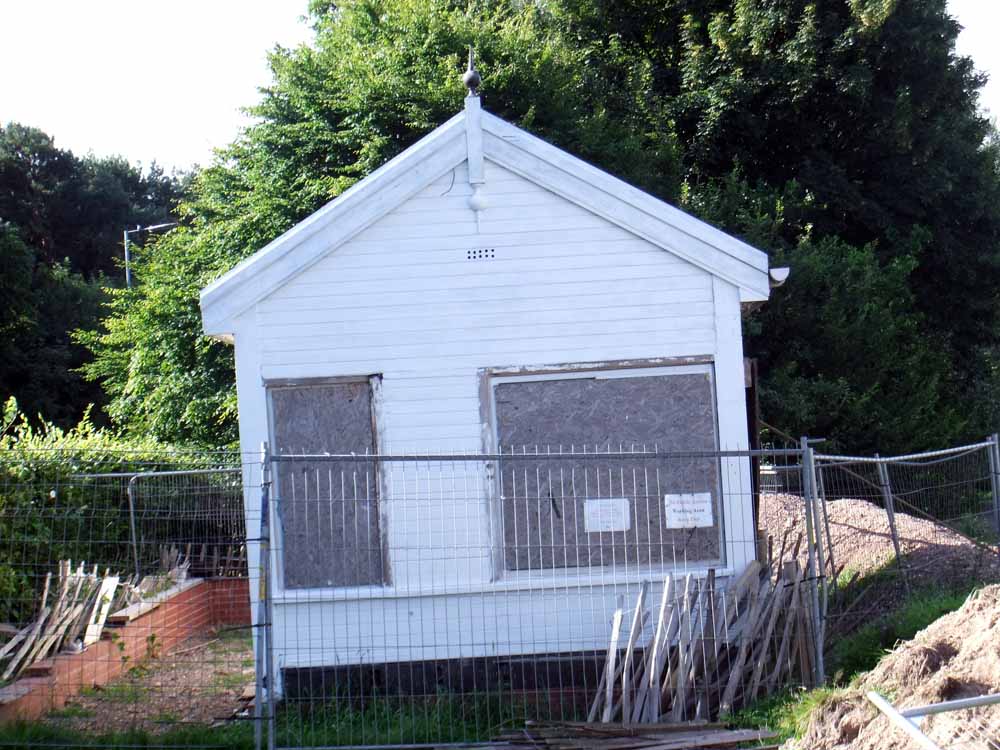
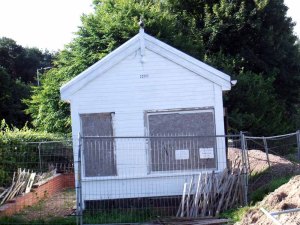
Hednesford No.1 Signal Box in the park. It’s had a touch of paint and is now awaiting further developments (Dec. 2015)

Chasewater Railway Museum – Once upon a time…

Chasewater Railway Museum

Once upon a time…

Four photos of the Chasewater Railway Museum, when it was housed in an old carriage.

5459 - Museum 4

5457 - Museum 2

5458 - Museum 3

5456 - Museum 1

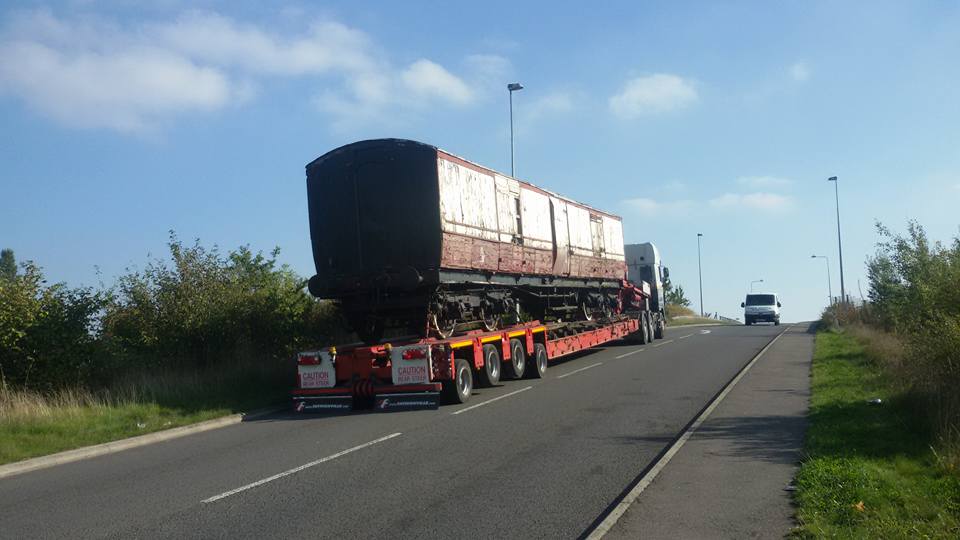
Plus a picture of the LNWR full brake 50′ carriage leaving Chasewater Railway.

LNWR 50' Brake leaving

Goodbye to long term resident the LNWR full brake carriage. It is going to a restoration base in the South Midlands to be rebuilt. Now under the care if the London North Western Railway Society we wish them all the best with the restoration. 

Mark Sealey.

Chasewater Railway Museum – A few more pics of a Chasewater Transport Event

Chasewater Railway Museum 

A few more pics of a Chasewater Transport Event

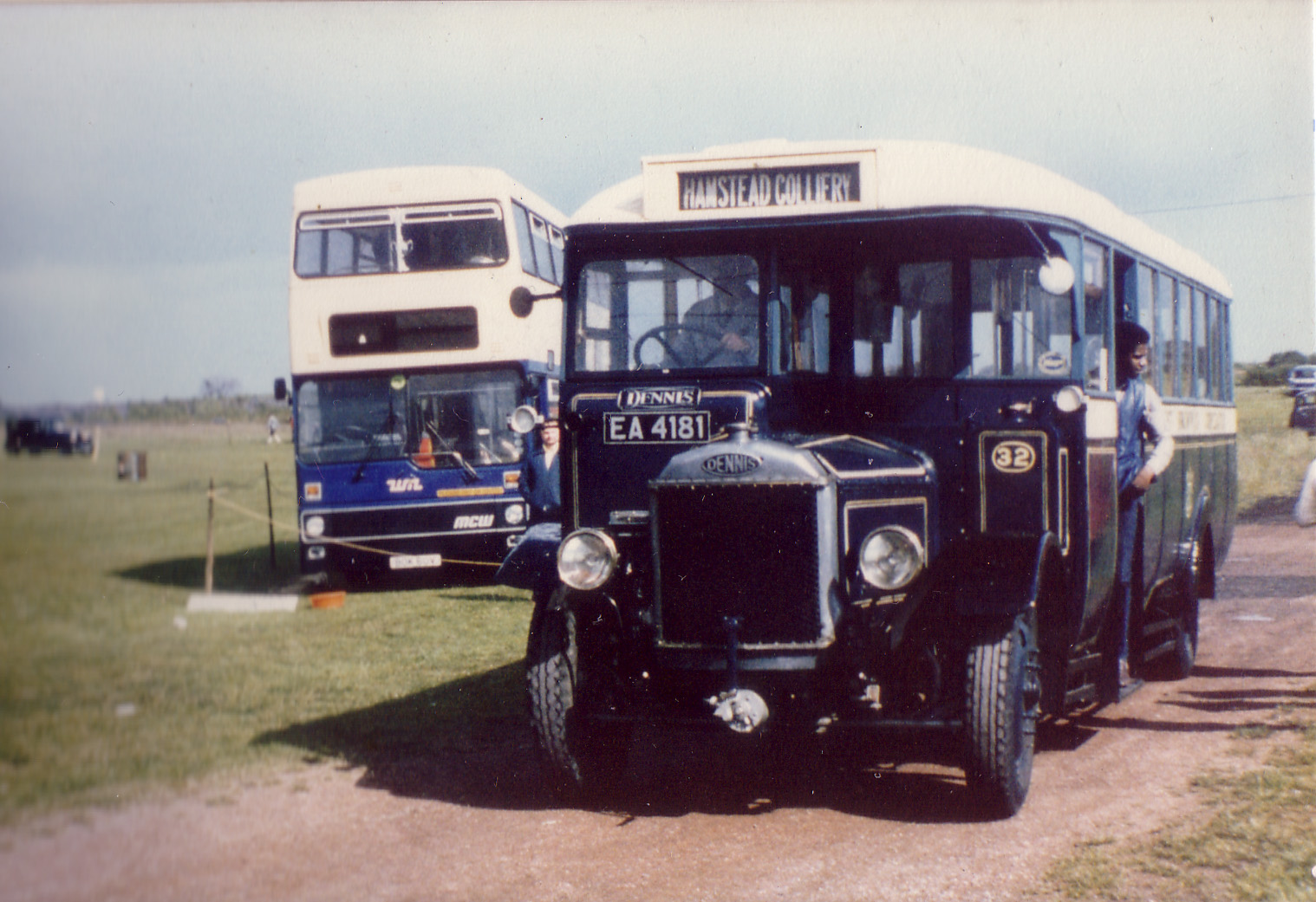
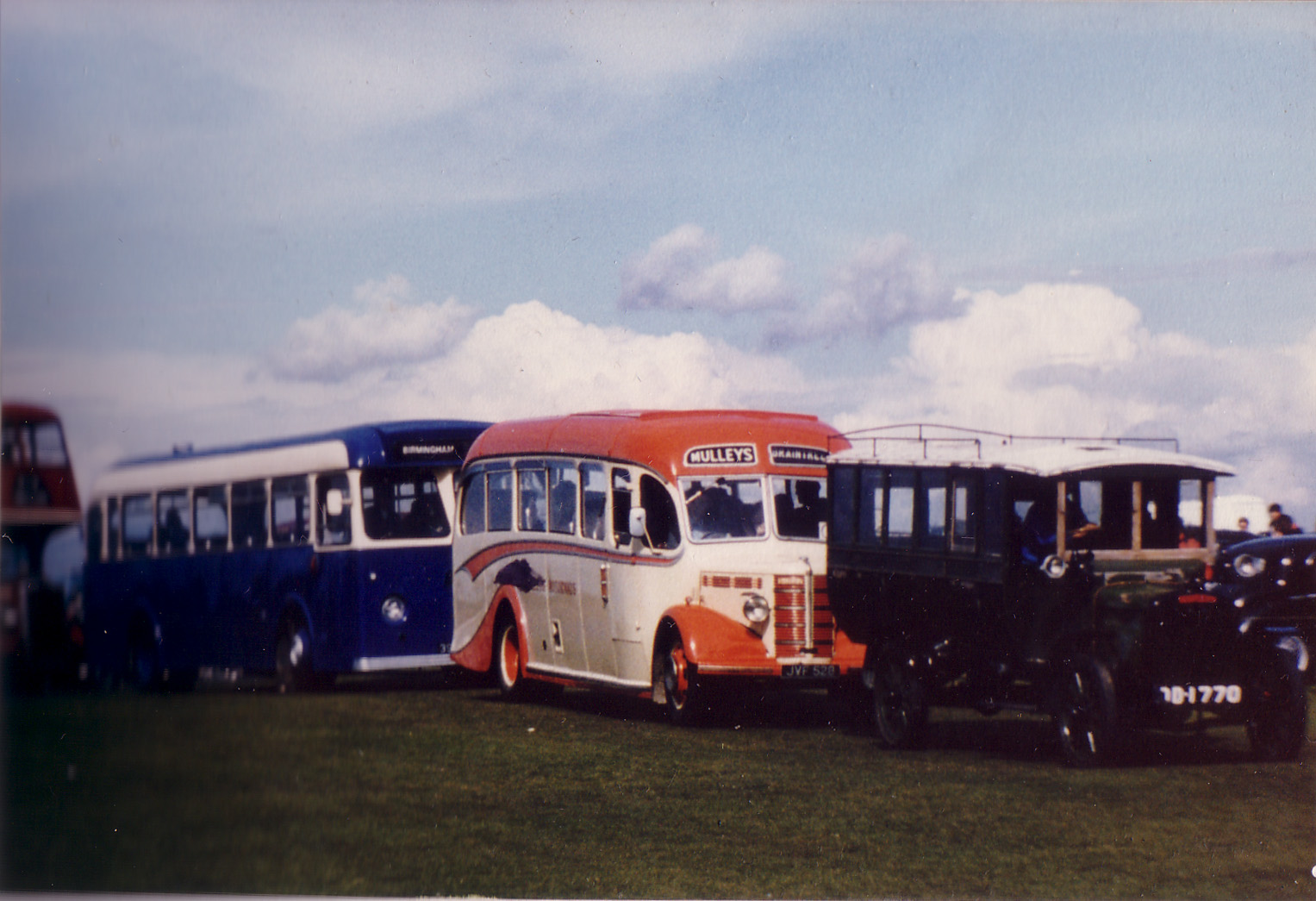
This time, old buses and coaches, taken probably in the 1970s.

5473 - Motor Coach

5474 - Ribble Bus

5475 - Motor Coaches

Chasewater Railway Museum -3 photos of years back at Chasewater

Chasewater Railway Museum

3 photos of Years back at Chasewater

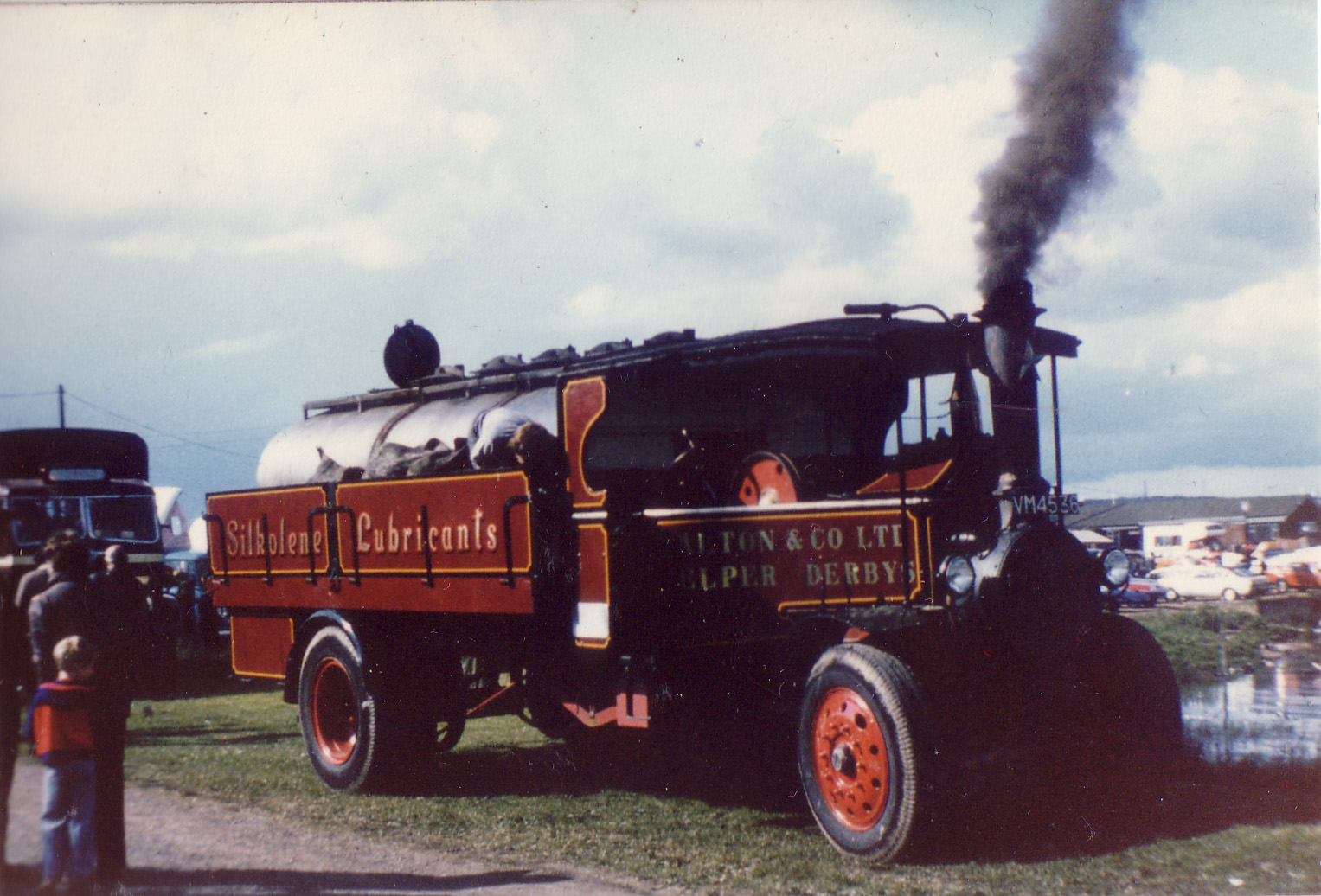
Remember when there used to be Transport Shows at Chasewater – these are a few of the exhibits. ( Well before my time with the Raiway!)

5470 - Steam Lorry - 1

5471 - Steam Lorry - 2


5472 - Steam Boat

Chasewater Railway Museum – A Miscellaneous item or two

Chasewater Railway Museum

A Miscellaneous item or two

This first item was found in a grounded carriage at Whatstandwell, Derbyshire.  A frosted pane of glass from carriage toilet window. Midland Railway griffin logo on frosted pane of glass, sadly broken.

219 Mid window

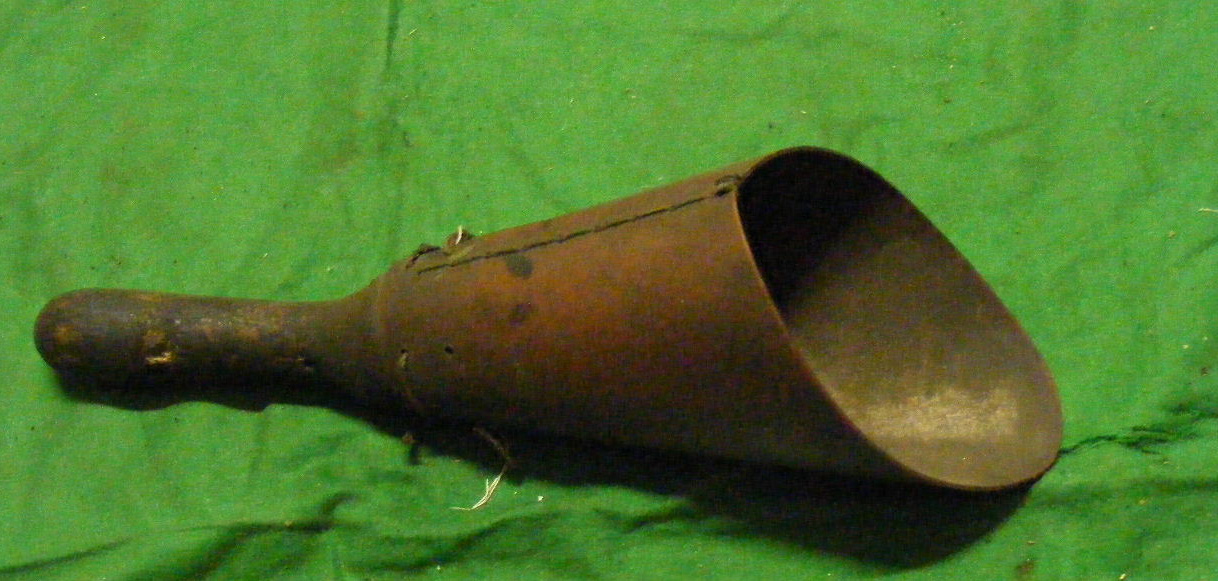
Another unusual item by today’s standards, a BR No. 8 fire extinguisher.  It comes in three parts, a bucket containing special powder with removable lid and scoop to put powder on fire.

198.1

198.2

198.3

It’s amazing what bits and pieces have been collected over the years!!


Chasewater Railway Museum – Spare wheels??

Chasewater Railway Museum 

Spare wheels??

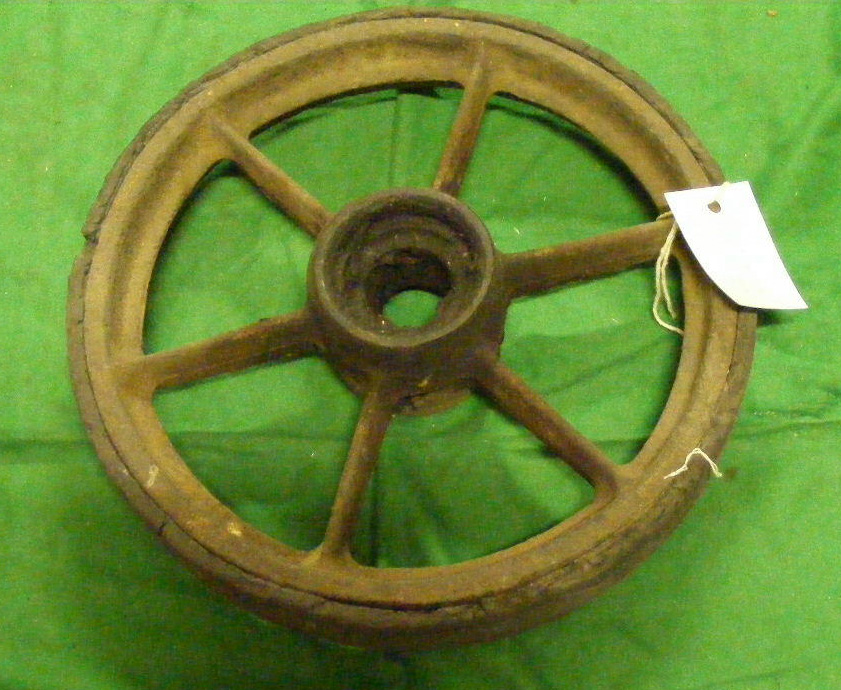
In the ‘Station Tools’ department we have some items which, on first glance, have very little to do with railways, but, rest assured, these spares came from railway station goods departments!

171

The first one is a common 4-spoke whell-barrow wheel, wood with a steel rim.  Very nice joints though!

169

The second one goes up to a 6-spoke wheel-barrow wheel, again wood with a steel rim.

172

The third wheel is not from a wheel-barrow but from a 4-wheeled platform trolley, made from cast iron with rubber tyre.

170

The final one is a very classy GWR wheel-barrow spare from Wolverhampton, made from cast iron.

Chasewater Railway Museum – One from the collection

Chasewater Railway Museum 

One from the collection

59Wall mounted station lamp from Pipe Gate Station.

Pipe Gate was a railway station on the North Staffordshire Railway’s Stoke to Market Drayton Line.

Construction
Construction was started on the Newcastle-under-Lyme to Silverdale Junction line on 29 July 1864, and the first train ran on 1 February 1870.
The station served the hamlet of Pipe Gate, which is part of the parish of Woore, Staffordshire. It was hence named Pipe Gate (for Woore). Trains from the station ran from Stoke on Trent, to junction with the Great Western Railway at Market Drayton. On grouping in 1923 it was absorbed into the London Midland and Scottish Railway.
Passenger services
The early years of the 20th century were the busiest, there being thirteen trains daily from Stoke to Silverdale and five to Market Drayton. Railmotor services began in 1905, intended to compete with trams and were somewhat successful in this respect, although they only lasted until 1926. The station also serviced Woore Racecourse which opened at Pipe Gate in 1885.

The section between Silverdale and Pipe Gate was reduced to single track in October 1934. Dwindling passenger numbers after World War II meant that there were only two trains daily from Stoke to Market Drayton, and all passenger services ceased on 7 May 1956.
Freight traffic
Express Dairies had a creamery with private siding access to the station, allowing its preferred transport partner the GWR to provide milk trains to the facility, for onward scheduling to London. In 1962 a new “chord” line was opened at Madeley to provide a connection to the West Coast Main Line. This was used as a diversionary route when the Harecastle diversion line was being constructed and continued in use for freight workings once the latter was completed. After the closure of the creamery, the route between Market Drayton and Madeley Chord closed under the Beeching Axe in 1966.
Today
A large amount of rail still exists to the eastern edge of the former and now demolished station, running back towards Silverdale.

Old_railway_line_to_Pipe_Gate_-_geograph.org.uk_-_547352Old railway line still in place near Pipe Gate station, September 2007
The copyright on this image is owned by charles c and is licensed for reuse under the Creative Commons Attribution-ShareAlike 2.0 license.