Tag Archives: Steam Trains

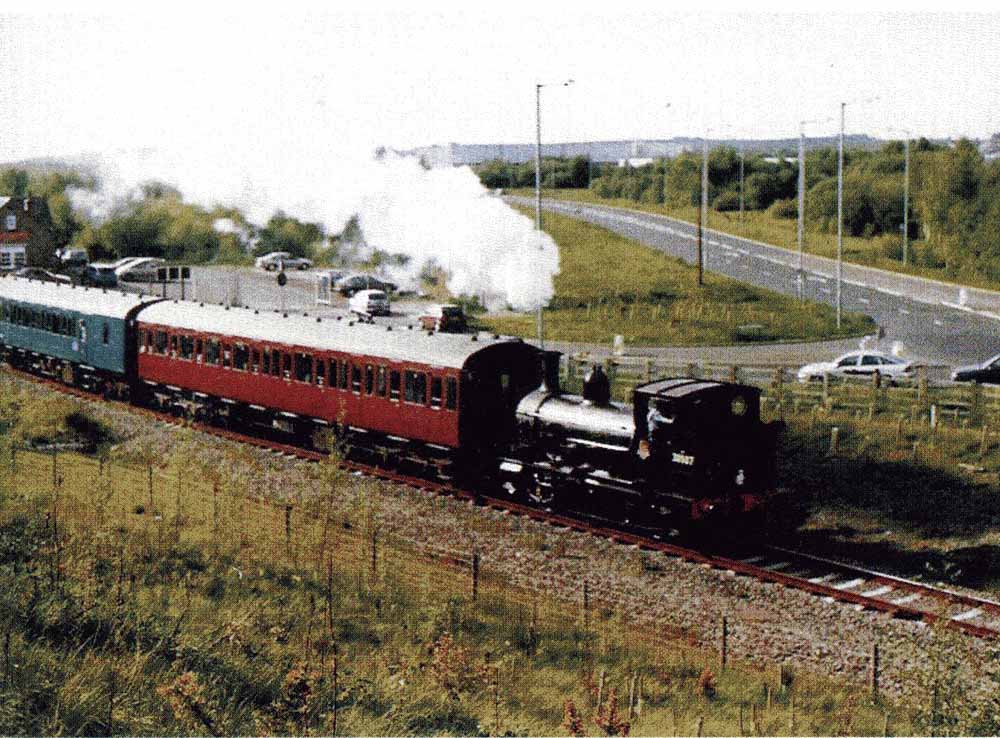
Chasewater Railway Museum – Photos of a visiting loco, 2004 – Beattie Well Tank 30587

Chasewater Railway Museum

Photos of a visiting loco,2004

Beattie Well Tank 30587
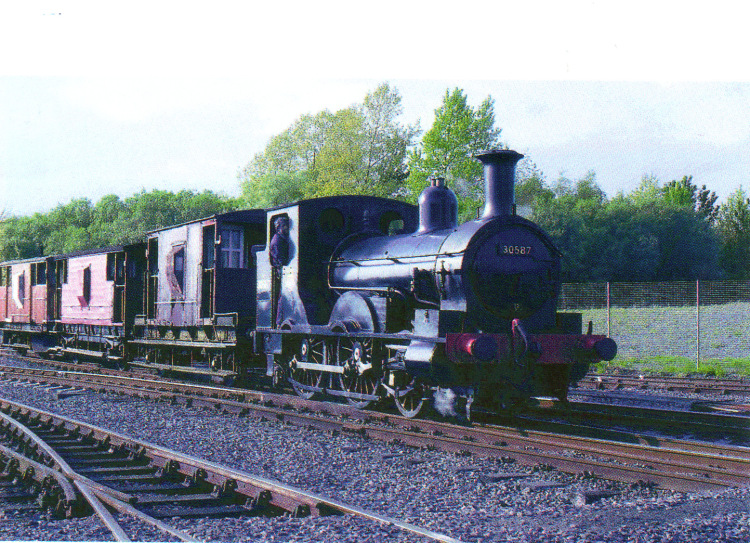
Photo - M.Denholm

Photo – M.Denholm

Looking through some more old photos, I came across some taken of locomotives visiting Chasewater Railway, so I thought that I would post a few over the next few weeks, starting with the Beattie Well Tank 30587.

Chasewater Railway was proud to feature this locomotive at our Spring Gala, 2004.

Built between 1872 1nd 1876, this loco was one of a class of 85 produced to a design by James Hamilton Beattie, the mechanical engineer of the London and South Western Railway from 1st July 1850, who was succeeded in the same position from 23rd November 1871 by his son William George Beattie.

Based on the three locomotives of the ‘Nile’ class built in 1859, but with many improvements, they were designed in consultation with Charles Beyer, of Beyer Peacock Co. and manufactured at their works at Gorton, Manchester – becoming known as Standard Well Tank engines.

The National Railway Museum selected 30587 for preservation after being finally withdrawn from service in December 1962, after 88 years of service. The engine was ultimately transferred, on loan, to the Dart Valley Railway at Buckfastleigh numbered 3298 on 22nd April 1978 and remained there as a static exhibit until 2nd December 2001 when it was taken to the Flour Mill Workshops in the Forest of Dean for restoration to full working order, before returning’home’ to Bodmin numbered 30587 on 12th November 2002.
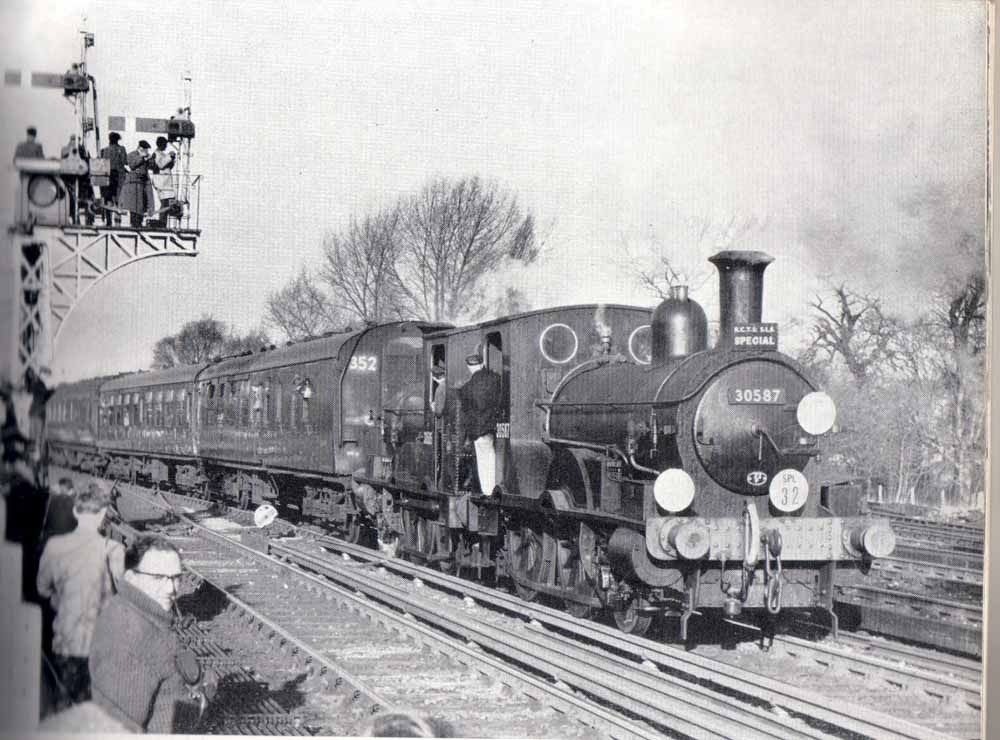
30585-30587Two of the then three remaining Beattie 2-4-0 Well-tank engines, used on the Wenford Bridge line until 1962, on an RCTS railtour shunting at Hampton Court station in December 1962. The engines were 30585 and 30587 – G.D.King.

30587 CWH At the causeway Bridge, Lakeside Chasewater Beattie Well Tank pic-back-cover pic-beattie-well-tank-1

Chasewater Railway Museum – Pensnett Railway Items

Chasewater Railway Museum

Pensnett Railway Items


Pensnett Railway Pay Check No.163 (1903)

Paycheck from the railway which once served the coal and iron industry, notably Round Oak Steel Works, Brierley Hill.  Known also as the Earl of Dudley railway as most of the eventual 40 miles of track was situated in the Dudley Estate, and at one time linked Old Hill, Cradley, Dudley, Himley, Wall Heath, Dawley Brook and Ashwood.  By the 1960s the only portions in use were the line to Baggeridge Colliery and the tracks around Round Oak Steel Works linking scrap bays, ancillary factories and works stores.

Built entirely for the movement of coal, etc. the only times a passenger service operated was on odd occasions when the Earl of Dudley took invited guests on a ‘jolly’ and on the few days per year of the annual Himley Fete and this only during the period 1928 to 1937.

Destination ticket for an empty coal wagon.

Card with instructions for repairs to coal wagon.

Chasewater Railway Museum – Hednesford Railways 1

Chasewater Railway Museum

Hednesford Railways 1

From December 2009

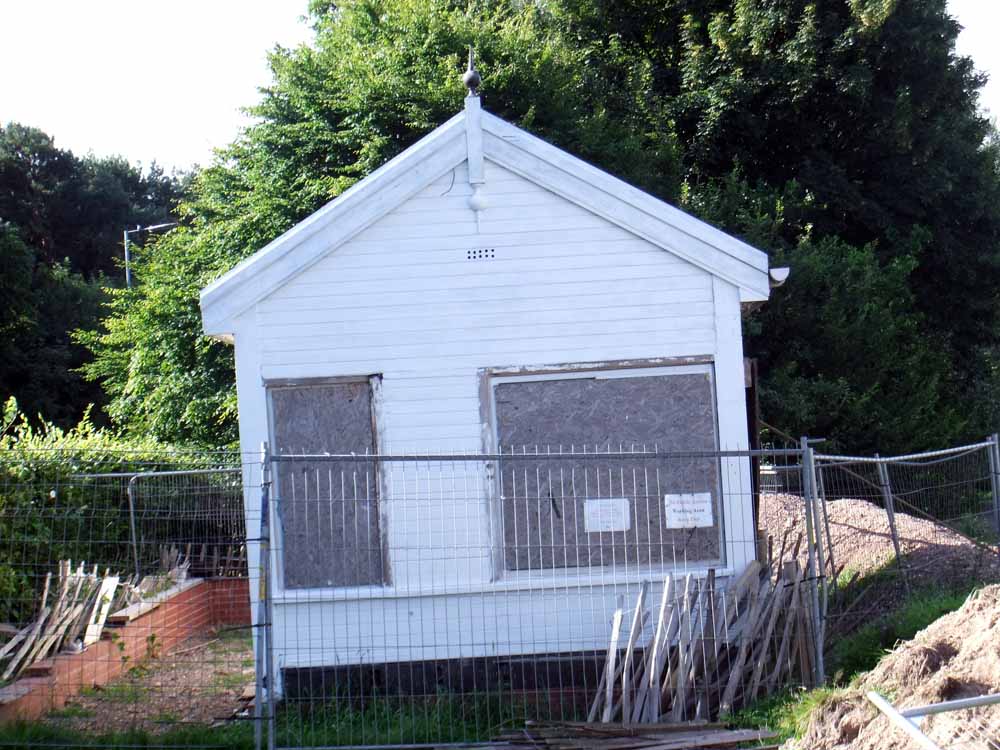
The view in 2009, looking towards Rugeley from Hednesford Station bridge.  (See below for latest signal box picture.)As it was in the late 1950s, a very busy railway location, with pits sending coal into the sidings from all directions.

Looking forward and to the left, the line leads to West Cannock Colliery No.5 and to the right, to Cannock & Rugeley Collieries at Cannock Wood and the Valley Pit.

From the rear, coal comes in from West Cannock Collierys Nos. 1, 3 and 4 – situated in the  Pye Green Valley.

The picture shows the site of West Cannock No.1 and No.4 Plants circa 1920s, it looks north east towards the top end of Green Heath Road.  No.4 Plant is just above the top of the chimney and steam can be seen coming from its winder stack.  The brickworks is the furthest building centre/right at the base of the mound.  A fourth shaft to the north of the brickworks has been covered by the mound.  The picture shows the enormity of the West Cannock Company’s operation in the middle of Pye Green Valley.

From here, the railway ran down to Hednesford Station via a bridge under the road by the ‘Bridge’ public house.  It then went through the left-hand arch (looking towards Rugeley) and into the sidings.With the closure of West Cannock Collieries 1-4, lines to the left found little usage.  The old station building, imposingly symetrical on the overbridge, castle-like dominated the access to the platforms.  One of  Bescot’s 0-8-0s, 49373, sorted out the empties to transfer to the collieries.

On the other side of the bridge, the sidings opened out into the marshalling yard.William Stanier designed 2-cylinder 2-6-4T no.2579, built by the North British Locomotive Company in Glasgow in 1936 and withdrawn in June 1962, runs in with a Rugeley Trent Valley to Walsall local passenger.  The station was demolished after the passenger service was withdrawn in January 1965 and the sidings were removed following the closure of almost all local collieries in the 1970s.  The signal box (formerly No.1), seen behind the water tower remains in operation. No.2 signal box closed on January 14th 1973 and No.3 from 18th December 1977.  Passenger services were reinstated from Walsall to Hednesford in 1989, using newly built platforms.  The service was later extended to Rugeley and Stafford, although, by 2009, it terminated at Rugeley Trent Valley.This is a cold view of West Cannock No.5, which continued producing coal until 1982.  The locomotive in the photo is Bagnall 0-6-0ST  ‘Topham’ 2193/1922.

DSCF9028

Hednesford No.1 Signal Box in the park. It’s had a touch of paint and is now awaiting further developments (Dec. 2015)

Chasewater Railway Museum – One from the collection

Chasewater Railway Museum 

One from the collection

59Wall mounted station lamp from Pipe Gate Station.

Pipe Gate was a railway station on the North Staffordshire Railway’s Stoke to Market Drayton Line.

Construction
Construction was started on the Newcastle-under-Lyme to Silverdale Junction line on 29 July 1864, and the first train ran on 1 February 1870.
The station served the hamlet of Pipe Gate, which is part of the parish of Woore, Staffordshire. It was hence named Pipe Gate (for Woore). Trains from the station ran from Stoke on Trent, to junction with the Great Western Railway at Market Drayton. On grouping in 1923 it was absorbed into the London Midland and Scottish Railway.
Passenger services
The early years of the 20th century were the busiest, there being thirteen trains daily from Stoke to Silverdale and five to Market Drayton. Railmotor services began in 1905, intended to compete with trams and were somewhat successful in this respect, although they only lasted until 1926. The station also serviced Woore Racecourse which opened at Pipe Gate in 1885.

The section between Silverdale and Pipe Gate was reduced to single track in October 1934. Dwindling passenger numbers after World War II meant that there were only two trains daily from Stoke to Market Drayton, and all passenger services ceased on 7 May 1956.
Freight traffic
Express Dairies had a creamery with private siding access to the station, allowing its preferred transport partner the GWR to provide milk trains to the facility, for onward scheduling to London. In 1962 a new “chord” line was opened at Madeley to provide a connection to the West Coast Main Line. This was used as a diversionary route when the Harecastle diversion line was being constructed and continued in use for freight workings once the latter was completed. After the closure of the creamery, the route between Market Drayton and Madeley Chord closed under the Beeching Axe in 1966.
Today
A large amount of rail still exists to the eastern edge of the former and now demolished station, running back towards Silverdale.

Old_railway_line_to_Pipe_Gate_-_geograph.org.uk_-_547352Old railway line still in place near Pipe Gate station, September 2007
The copyright on this image is owned by charles c and is licensed for reuse under the Creative Commons Attribution-ShareAlike 2.0 license.


Chasewater Railway Museum – 3 from our photo collection

Chasewater Railway Museum

3 from our photo collection

Chasewater Heaths

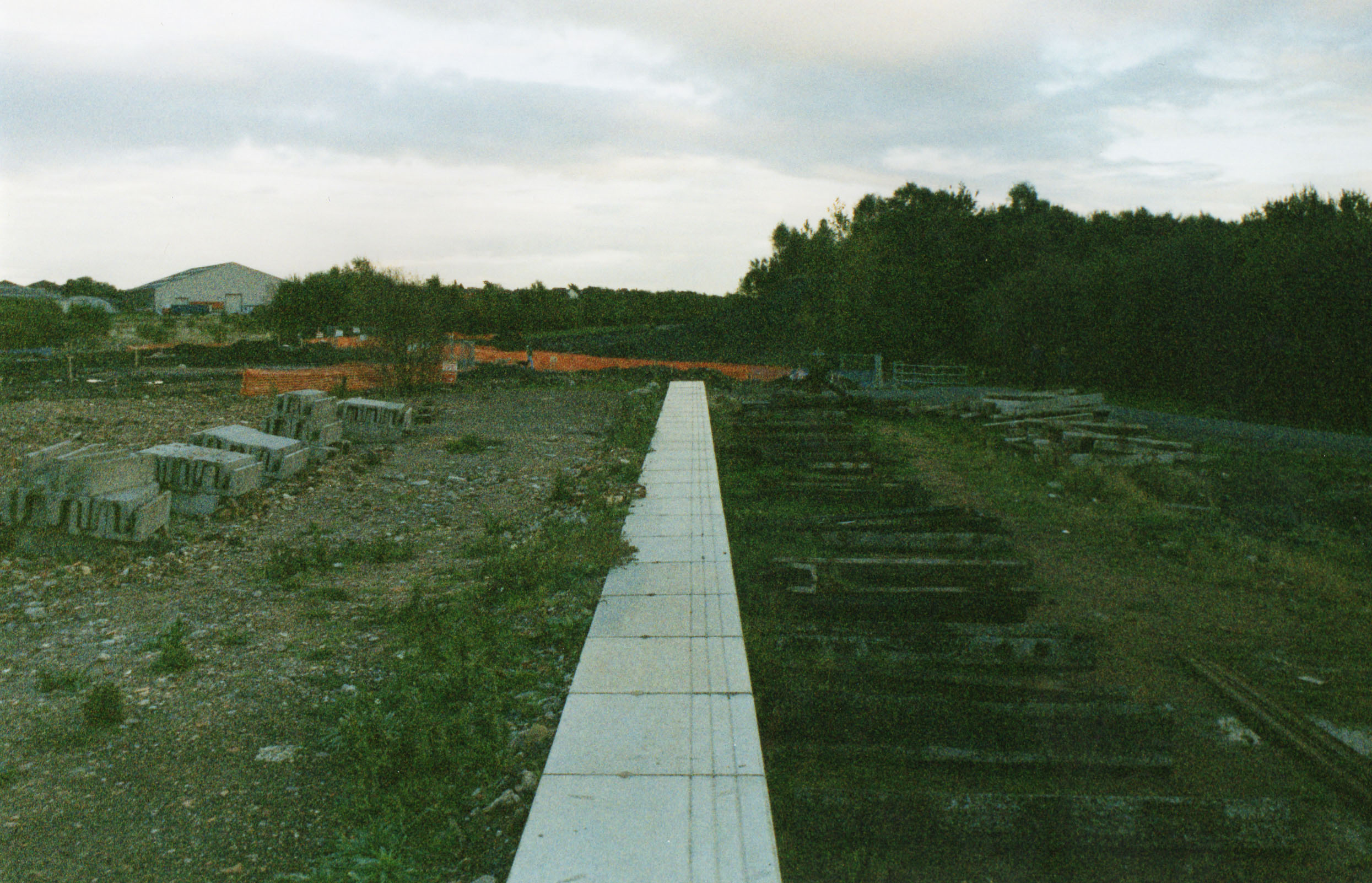
The first two photos were obviously taken in the early stages of development of the site of the station and of the by-pass.

In this first photo, on the left hand side, you can see the platform edge – on the right is the Burntwood ring-road taking shape. Taken around 2000.

5883 crop

The second photo, taken from the platform edge, is pointing towards Chasetown, Church Street and the Rugby Club.

5892 crop

Chasewater Heaths in operation, with Hudswell Clark- Port Talbot 0-6-0ST No. 26 (GWR 813) – taking a freight train through towards Brownhills West. Taken in 2009.

813 Taking a freight train through Chasewater Heaths

Chasewater Railway Museum – the first loco

Chasewater Railway Museum 

The first loco 

from our photograph collection

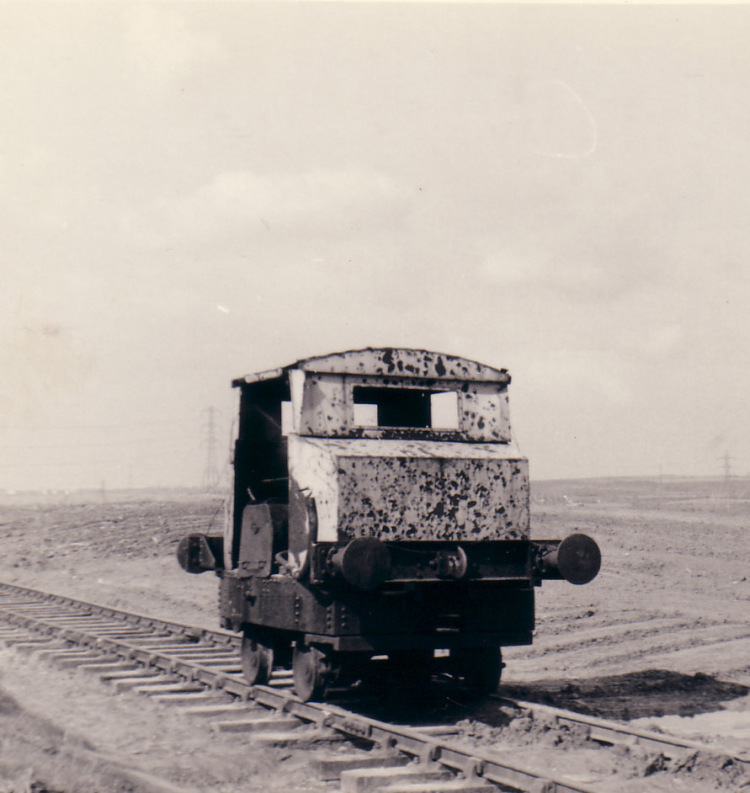
pittsteel-no-1-planetPittsteel No.1 – Another photo from Laurence Hodgkinson’s collection

It wasn’t until late 1967 that motive power arrived in the shape of Pittsteel Hibberd No.1.  Development at Chasewater was slow and laborious and it wasn’t until 1970 that all stock at Hednesford had been transferred to Chasewater and the Hednesford depot closed.

Chasewater Railway Museum – Another photo on the Causeway

Chasewater Railway Museum

Another photo on the Causeway

7176.15

This time the Neilson – 2937/1882 carrying the ‘Alfred Paget ‘ nameplates –  heading a freight train  of wagons in various liveries (including rust!), with the Cannock Chase Colliery brake van – affectionally known as the ‘slum’  bringing up the rear.

CCCC Brake Van

This brake van has now fallen into major disrepair, with the chassis collapsing and breaking the sole bars.  The interior of the van still remains dry.  It has had a few coats of paint over the years, but, as the last known item of rolling stock which actually ran on the line in the mine-working years, it seems a shame that more cannot be done to restore it.

Chasewater Railway Museum – A locally built loco.

Chasewater Railway Museum

A locally built loco.

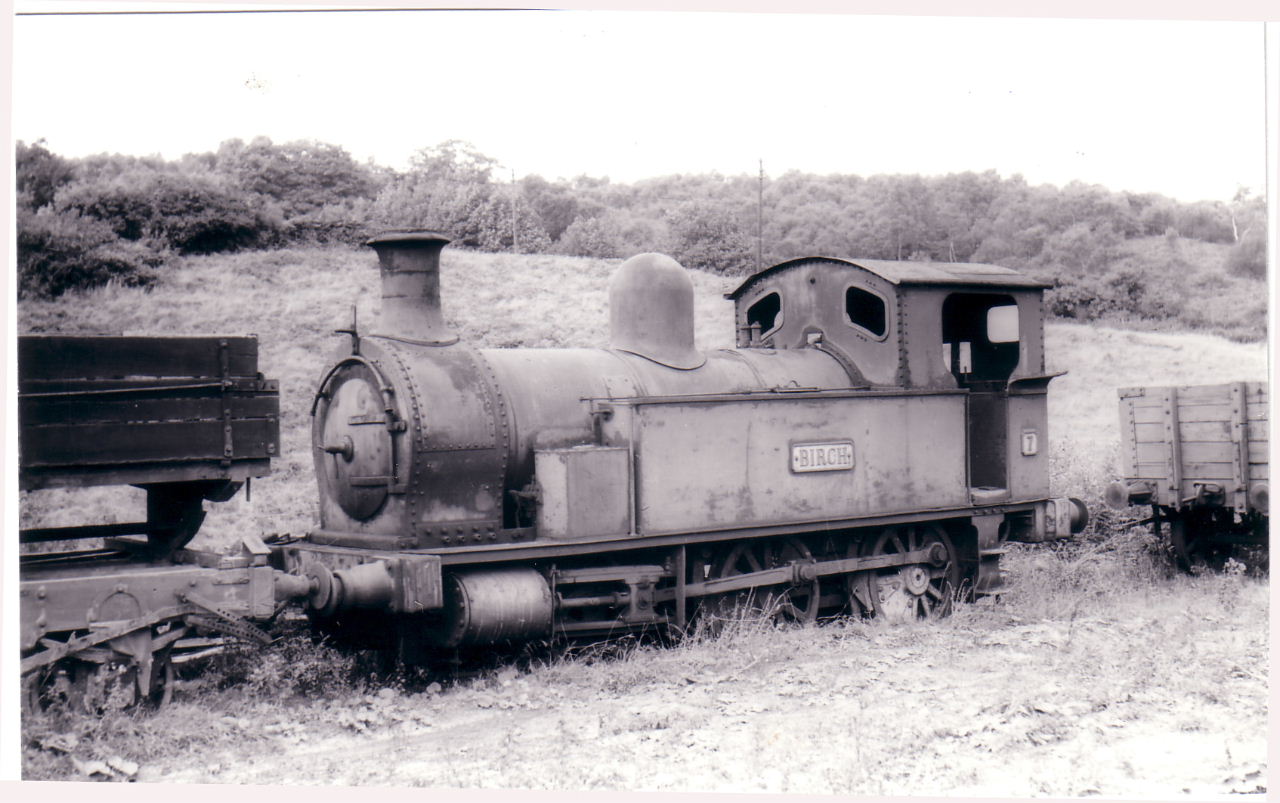
A photograph from our collection of one of the locomotives which worked in the area and was actually built here!

05040 No.7 Birch 2-4-0T Bt Rawnsley 1888 C & R

No.7 Birch 2-4-0T Built at Rawnsley in 1888 but not put to work till 1890. Worked at Brereton 1949/50. Scrapped at Brereton circa 1956.

This next picture shows the loco well past its best – very sad.

05044 No.7 Birch 2-4-0T Bt Rawnsley 1888 C & R  Past its best

Chasewater Railway Museum – A photo from abroad.

Chasewater Railway Museum

A photo from abroad.

In 2012 the museum received a photograph with a note from Tony Potter in Canada.  These are reproduced below:

5792 - McClean no number for blog

Note no number

Many thanks to Tony Potter.

The Cannock Chase Colliery Co. bought 5 engines from the Beyer Peacock Company between 1856 and 1872. These were all saddle tanks with an 0-4-2 wheel arrangement favoured by the CCCC.

McClean
The first loco was named ‘McClean’ after the founder of the company and was number 28 of 1856, acquired new. Worked at the Coppice Colliery in 1949 and finally scrapped by the NCB at Chasetown in 1956 – 100 years old.

The others were : Chawner’,  McClean’s partner, ‘Alfred Paget’ (Paget was the family name of the Marquis of Anglesey.  This was not the Neilson at Chasewater Railway, but the name was saved), ‘Brown’ – named after the Manager and Chief Engineer around the late 1860s, and ‘Anglesey’

Chasewater Railway Museum – Master Cutler Headboard

Chasewater Railway Museum

Master Cutler Headboard


1591 crop

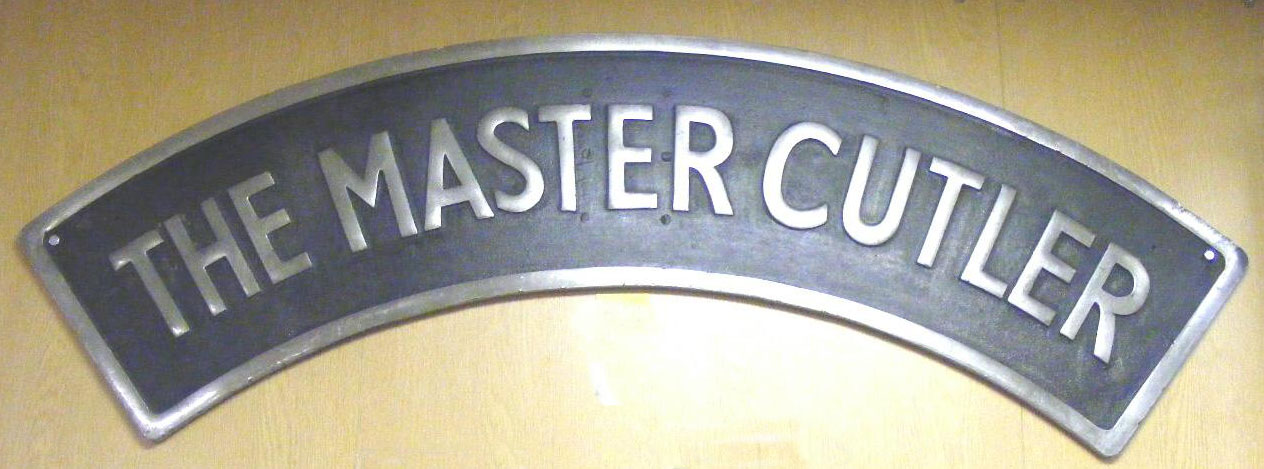
This is one of the Museum’s prize possessions.

One of the LNER stainless steel ‘Master Cutler’ headboards. It was donated to the Railway Preservation Society after the organisation undertook probably the first hire of the Flying Scotsman by a preservation group.

This comprised a return Sheffield Victoria – Marylebone excursion on 15th June 1963. This venture resulted in a loss of £100 – a large sum in those days!

flying-scotsmanThis photograph shows the Flying Scotsman uncoupled from the train on arrival at Marylebone Station, London.