Tag Archives: Chasewater Railway

172/173- Chasewater Railway Museum Bits and Pieces

172 – Chasewater Railway Museum Bits & Pieces

From Chasewater News Autumn 1994 – Part 1

Permanent Way News

The second and final batch of track has now arrived from Four Ashes and is being put to good use by the Permanent Way Gang.  The works train has had to spend every Sunday ‘out of section’ at the end of the causeway just to make enough room for passenger trains, as with the amount of rolling stock now on site there is insufficient siding space at Brownhills West.  The track gang have put this situation to good use, and at the present rate of progress track will be in front of the platform at Norton Lakeside well before the end of this year.

In order to quantify the progress already made, and to assist with the planning of the future extension of the line, David Bathurst has produced the chart below showing distances between various points on the railway.

All distances were measured by pushing a pedometer along the head of the rail, and sleeper ends were marked with yellow paint at 100 metre intervals.  The ‘Zero Point’ was chosen as the gate post at the end of the loco shed yard, as after the motorway is built it is likely to be the closest surviving landmark to Brownhills West station.  When the time comes, new measurements can be made into the replacement station from the same spot.

The chart shows that we are currently running passenger trains over a distance of about a mile to the present running line limit almost half-way across the causeway.  When we ultimately reach Anglesey Wharf the total distance (estimated over the final section) will be around 2¾ miles, assuming that nothing is lost or added by the repositioning of Brownhills West Station (nice dream, but that’s all!).

173 – Chasewater Railway Museum Bits & Pieces

From Chasewater News Autumn 1994 – Part 2

Locomotive News

No.4 Asbestos – This engine has run exceptionally well considering the dubious start to the season.  Since then a total of twenty-two boiler tubes have been renewed and seem to have cured the problem of leakage at the firebox end.  Another 124 new tubes have now been acquired and are stacked in the shed ready to complete the re-tubing at the end of the running season.  Slight weepage of a few stays and part of the foundation ring will also have to be corrected.

The latest batch of Russian coal, although somewhat smoky, is giving excellent results without the problem of clinkering inherent in the last lot.  This is just as well, as with trains running every Sunday in this summer’s hot weather the last thing anyone wants to do is rake the fire through after every other trip.

Asbestos with a three-coach test train stands on the causeway ready to return to Brownhills West

No.5 Sentinel – Progress on this loco remains slow, although the boiler is now ready for its hydraulic test.  All of the boiler fittings have been refurbished and will be hydrauliced along with the boiler.  The injector has been moved to the fireman’s side of the cab and that and the Weir pump are being re-piped in such a way  that they can be drained easily in winter to prevent frost damage.

S100 – Work has continued with the manufacture of new mountings for the brake hangers to replace the original items which were somewhat bodged and worn out.

Fowler diesel hydraulic No.422015 – Replacement injectors have been acquired and fitted to the engine of this loco with the result that its performance has been transformed.  A few other minor problems have occurred, but it has remained in regular use for shunting and works trains.

Ruston diesel electric DL7 – One of the starting air valves of this loco has had to be renewed due to a damaged seat in the original.  A fuel leak from one of the injector pipes has also been rectified.  The loco is serviceable but has remained out of use mainly due to passenger trains being steam hauled throughout July and August.

Fowler diesel mechanical No.410013 – Following arrival from Redditch this loco has had its engine de-seized, the injectors have received attention and the engine has been run.  Faults have been found with the injection pump and governor and these have now been removed for attention.  Following completion of the air system overhaul the loco should be able to enter traffic.The new Fowler stands in the platform shortly after its arrival from Redditch

L&Y No1 (Motorail No.1947) – All of the axleboxes and springs have now been stripped and rebuilt and a new bearing is being made to replace one which was stolen recently.  Once the sandboxes and inside of the body castings have been stripped and primed the loco will be ready for craning from its present position in front of the museum coach so that final erection can begin.

No.21 diesel – This loco is making steady progress, the engine is now complete but still awaiting cylinder head gaskets.  It is hoped that it may be running for the Diesel Gala which is a new event to be held for the first time in September.

Lion – Following its removal to Foxfield last Autumn this loco entered service at Easter, running initially double-headed with ‘Harwarden’ The vacuum brake hoses were apparently awkward to couple as ours at Chasewater are the opposite side to ‘normal’ to suit our DMU stock.

Smith Rodley crane – This again remained out of use awaiting a potential purchaser.  So far a couple of enquiries have been received but no offers have been forthcoming.

From the Board Room

The Board has been actively involved in a number of new initiatives, while various on-going matters have been subjected to scrutiny and, where necessary, review.  The following will be of general interest to the membership.

1.    Personal circumstances have brought about the resignation from the Board of Les Emery.  However, Les has indicated a willingness to continue with his other roles on the railway.

2.    The Board has agreed to the co-option of Company Secretary Andy Clegg to the Board.

3.    The trading name of the company has been changed to the “Chasewater Railway”.  Previous official and unofficial trading (‘Chasewater Steam Railway’, ‘Chasewater Light Railway’, etc.) are no longer considered suitable and are felt to give a misleading impression of the nature of our current and future operations.

4.    In an attempt to encourage family travel during this period of continual financial restraint, the price of the Family Rover has been reduced, until further notice, from £5.80 to £4.95.

5.    During the course of the nest few months, the Board is to produce a new business plan for the purpose of clearly defining objectives and priorities, and how they might be best achieved within the resources (including financial and manpower) expected to become available.  Associated with this proposal is the revival of the concept of departmental heads, holding pre-determined budgets, to give focus to the completion of the many and varied tasks necessary for the railway to both exist and develop.

6.    The Board has responded to a plea from Rallies Organiser Dave Whittle by delegating various aspects and responsibilities to specified individuals.  Thanks largely to the efforts of Dave, the Chasewater Rallies are rapidly gaining in reputation, with Paul Richards taking up much of the strain as Administrative Officer.

7.    On other fronts:

·        Negotiations are proceeding with HM Railway Inspectorate in relation to the extension into, and construction of, Norton Lakeside Station.

·        The railway was represented at a meeting of Chasewater user groups hosted by Lichfield DC, and arranged on a largely social basis for the various groups to meet the Members and relevant Officers of the District Council.

·        Lichfield District Council has generously offered grant aid to the railway in the sum of £1,000 by way of a contribution towards forthcoming expenditure.  This generous act by the District Council signals a solid measure of support for the railway by its new ‘landlord’.

·        Accommodation at Brownhills West has become a problem in consequence of stock acquisition, (4 DMU coaches plus one tanker wagon).  However, this should be relieved by the imminent removal of one (at least) of the Wickhams, and the Board is still anxious to dispose of the crane (preferably to a good home on another railway) as a matter of priority.

·        The transfer of records from Adrian Hall should enable Paul Richards to take up his responsibilities as Membership Officer with early effect.

·        The Board has agreed strategy towards bidding for the trackwork at Bromford Sidings, and has noted that the remaining trackwork at Four Ashes is due to transfer to Chasewater in August.

David Bathurst – Chairman.
Image

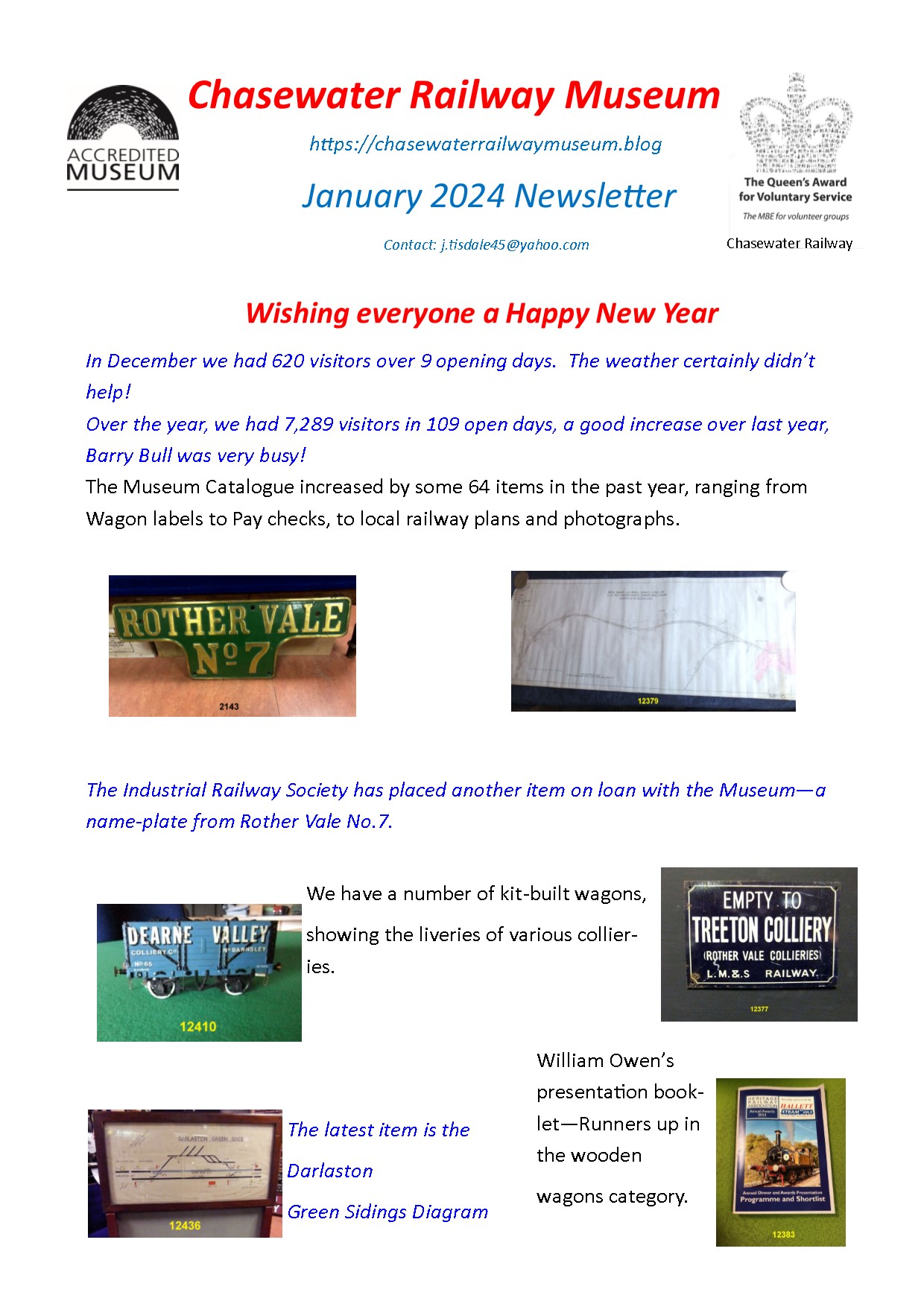
Chasewater Railway Museum January 2024 Newsletter

160 Chasewater Railway Museum Bits and Pieces

160 – Chasewater Railway Museum Bits & Pieces From Chasewater News Summer 1993 –Part 3 The value of a hole in the ground David Bathurst

This pic is for the benefit of those who didn’t get to see the chimney in the previous post!

160 – Chasewater Railway Museum Bits & Pieces

From Chasewater News Summer 1993 –Part 3

The value of a hole in the ground 

David Bathurst

In an edition of ‘Chasewater News’ last year (Bits & Pieces No. 152) I outlined the possible use of derelict land grant (DLG) to enable the railway to achieve one of its most important projects – the restoration of the causeway.  The possibility had arisen for a number of reasons, including the fact that the Staffs County Council was preparing a derelict land scheme to reclaim the Norton Bog area of Chasewater, directly adjacent to the causeway.

The Staffs CC scheme was, however, delayed owing to the need to consult British Coal in respect of the coal stocks which might be recovered from Norton Bog.  If the Staffs CC scheme were to proceed, it was suggested that the causeway restoration could form a later stage of that scheme.  The mechanism to achieve this proposal was itself very complicated, with the causeway mainly falling within Walsall Council’s boundary.

Since the date of my earlier article, many events have taken place, including the decision of the Boundary Commission to transfer much of Chasewater into Lichfield District Council (and thereby under the planning jurisdiction of Staffs CC) from 1st April 1994.  This transfer also includes land ownerships, much to the dismay of Walsall Council.  The proposed transfer has direct implications for the railway, namely the short-term difficulties of having to take account of an additional local authority and the longer-term benefits of having to deal with fewer local authorities!!

Against this backdrop of DLG and the involvement of the various local authorities, members who visit the railway regularly will have some difficulty in reconciling the information which I have so far provided, with the events ‘on the ground’.  Indeed by the time this article appears in print, there is a prospect that most – if natal – of the causeway restoration will have been completed.  Not only has a very substantial access roadway been laid from Hednesford Road (rear of the station area ‘top’ compound), but similarly substantial works will have been completed to prepare the causeway to receive substantial inert fill materials.

‘But how is this possible?’ is the question likely to be asked by many members – especially those members who will have appreciated the massive scale of the restoration project.  It is a valid question, particularly in light of the knowledge gained by the CLR Board regarding just how much fill material (perhaps 10,000 tons) and manual resources are necessary to undertake the work.

One of the earliest lessons which I learned upon joining my current employers was the value of owning a hole in the ground.  As time passes and demands on space increase, coupled with the ever-present vigilance of the environmental lobbyists, local authorities and private organisations are finding it increasingly difficult to dispose of unwanted materials.  Although it is of no concern to the railway, everyone must be aware of the problem of dealing with household waste.  Exactly the same problem arises in respect of disposing of hard waste which is generated through the day-to-day operations of a large local authority.  Most of this material has to be sent to licensed tips – sometimes a great distance away – at a significant cost both in terms of transport and tipping fees.  If you own a hole in the ground, and you can secure the necessary planning and/or other permissions to fill it, then you have a most valuable asset.

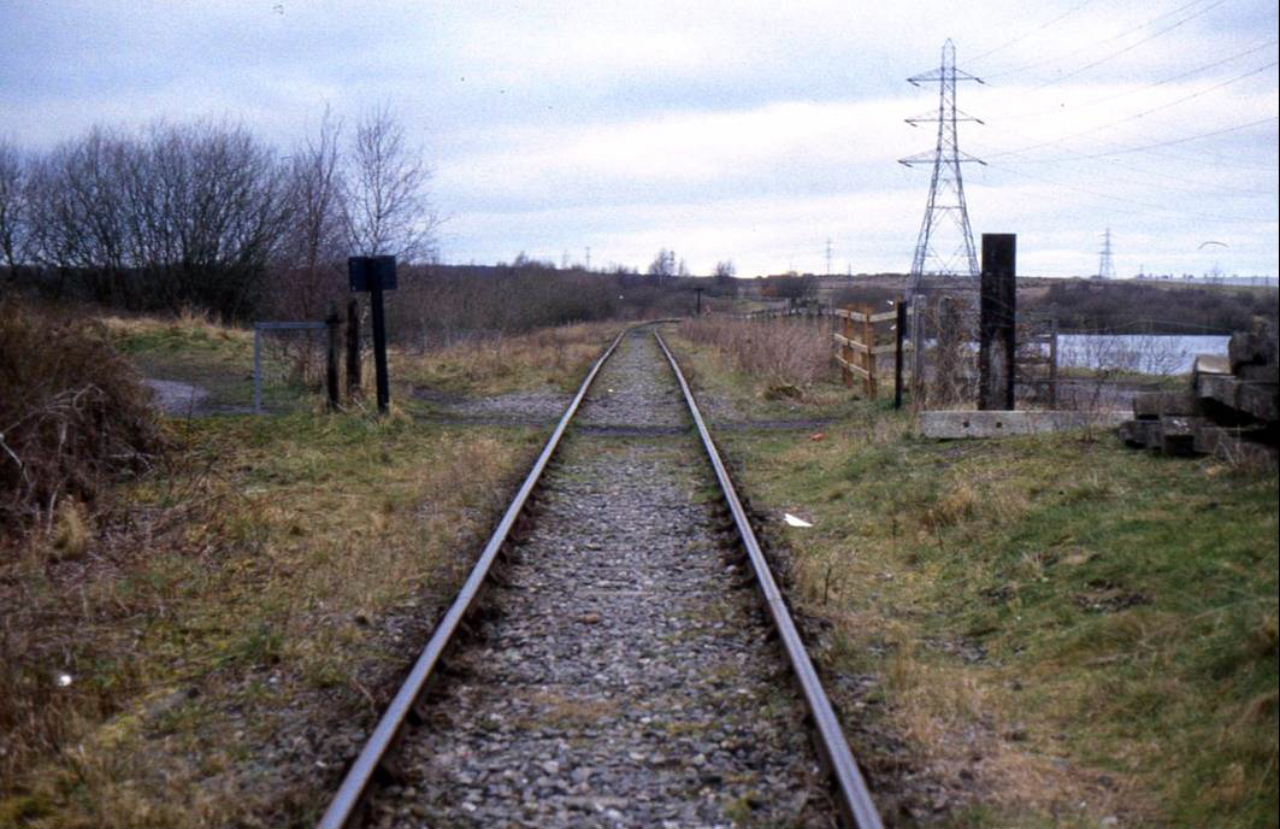
I think that few of us involved with the railway fully appreciated that the causeway might be regarded as a ‘hole in the ground; in reverse!  But that is precisely what it is.Causeway December 1992

Even before the previous article appeared in print, representations were being made to the railway to the effect that Walsall Council’s Highways Direct Labour Organisation (DLO) would be prepared to undertake a restoration project, using the causeway as a suitable location for filling with appropriate inert (and environmentally acceptable) materials.  It would be, and continues to be, a finely balanced financial equation.  It was to be based entirely on commercial considerations.  It was not to be regarded as a favour to the railway.  It was to be based on the financial benefit to be obtained by the DLO, but with the railway enjoying a similar benefit, albeit not in directly financial terms.

The proposal can be summarised thus: a proportion of the savings made by the DLO by not incurring tipping charges in the private sector could be allocated to the works necessary to transport materials and employ heavy plant to spread, profile and consolidate the causeway to specifications laid down by the railway.  In addition to its routine programme of road maintenance, the DLO is for ever tendering for major highway projects, including bridge and similar schemes, all of which result in materials having to be disposed of.

I have no wish to expend too much time and space in describing all of the individual aspects of the project which have had to be addressed before work could start.  I can say, however, that many hours of discussions and consultations have been necessary, and dozens of phone calls made, to ensure (so far as is possible) the support and co-operation of the various agencies involved.  The detailed discussions have necessarily been limited to a mere handful of railway personnel, so as to concentrate lines of communication.

These discussions have included such details as how to deal with the rare (or rarish) plant life growing on the causeway.  It has been necessary to remember that the railway’s activities include certain designated areas, including a SSSI and a SINC (abbreviations well known to those of you with wild life interests), which have required close liaison with Walsall Council’s Planning and Leisure Services Departments.  I must place on record the tremendous help, support and co-operation of the Officers who have been involved in this particular aspect, including the Countryside Officer who gave the CLR Chairman (the author of this article at the time) a crash course in rare plant recognition!!Causeway South 1992

There have been a number of false starts to the project.  Initially, it was intended to import the materials from the bridge reconstruction scheme at the High Bridges on the Pelsall to Brownhills road.  I suppose that it was inevitable that something would go wrong, and so it did.  The weather immediately after Christmas reduced Chasewater Park to a bog, making it completely impossible to even consider moving any form of heavy vehicle into or through the park.  Each time the weather seemed to improve, it immediately deteriorated again, resulting in a further deferral of the start date.  I hardly need to remind certain members of the dangers associated with driving vehicles in close proximity of the Chasewater reservoir without taking the precaution of wearing a life-jacket and having flares (as opposed to railway detonators) immediately to hand.  (While working with the dumper truck it got a bit too close and slipped into the water!! Bits & Pieces No. 151)Causeway December 1992

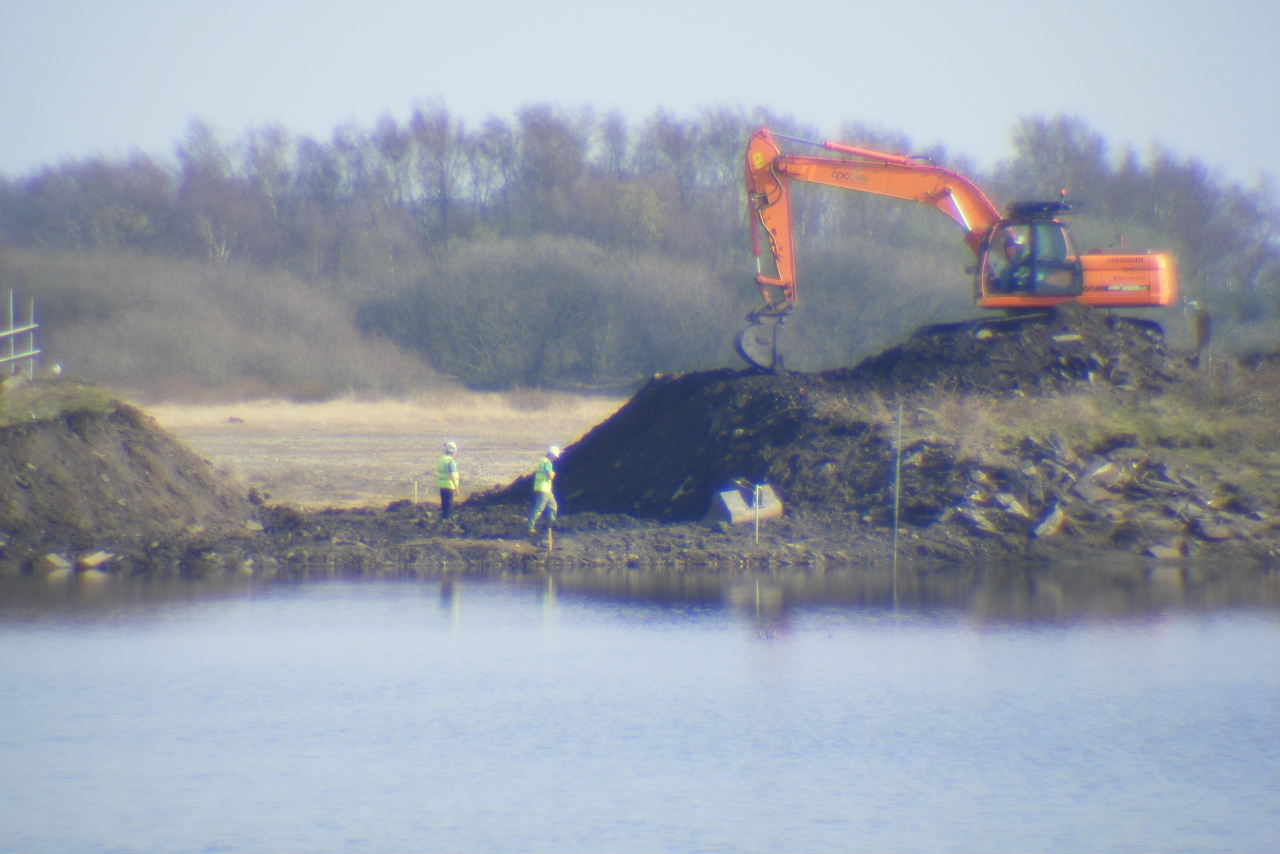
However, an upturn in the weather enabled everyone concerned to agree to an early May start date, and work on laying the access road commenced in earnest on the first Tuesday in May.  Regrettably, the attentions of the local riff-raff were directed to the contractor’s JCB, which attempted to emulate the dumper truck in trying to carry out work within the Chasewater Reservoir itself.  Despite this set-back, the work has continued according to plan.

In terms of a time scale, the DLO have not sought to offer (and nor has the railway demanded) a precise indication of a completion date for the restoration project.  This reflects the fluctuating availability of suitable fill material – which has had to meet exacting criteria laid down by both the railway and the local authority.  Nevertheless, it is in the financial interests of the DLO to undertake the work speedily and effectively, so as to avoid the costs of employing contractors’ plant and equipment, whilst at the same time maximising the capacity possibilities provided by the scheme.

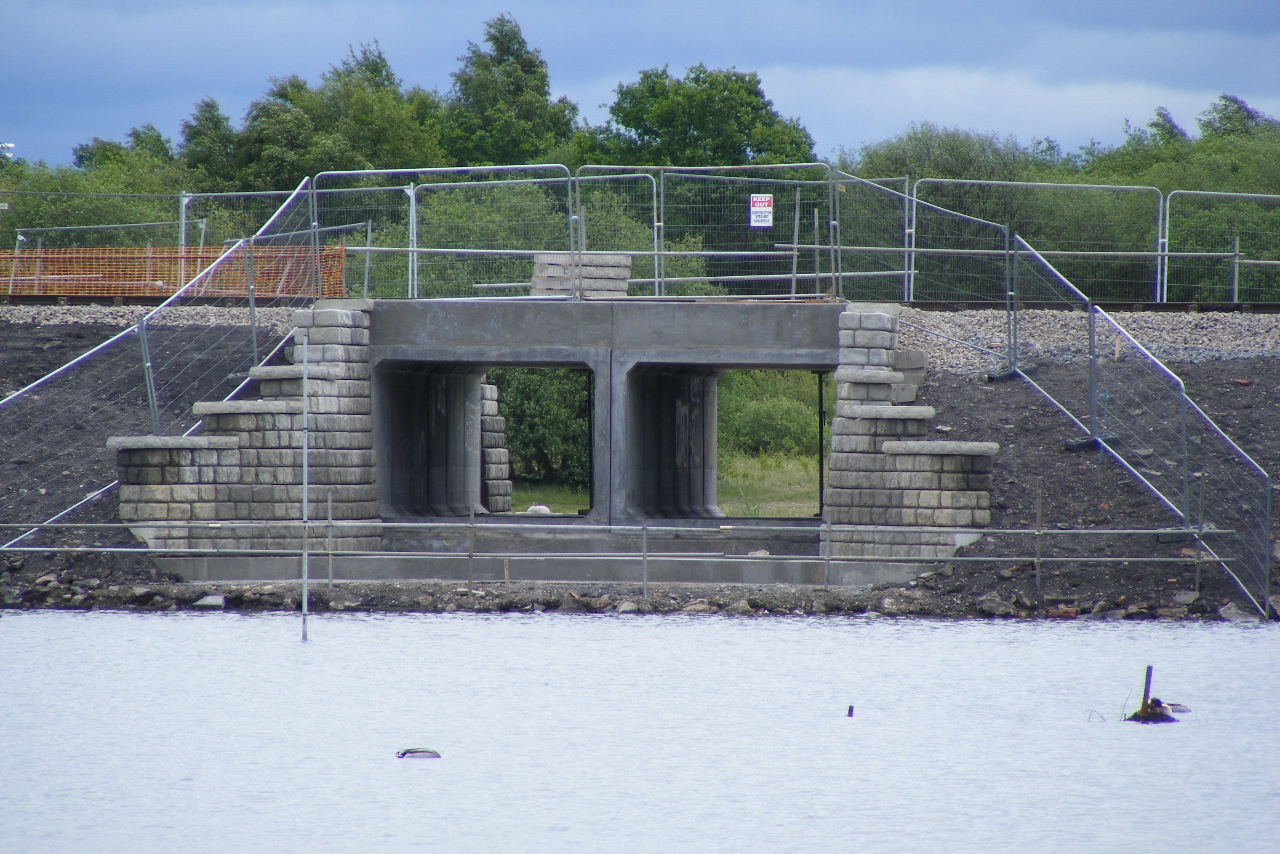
The end product will be a causeway capable of accommodating a railway line; but it will not necessarily be a finished product.  It will still be necessary for the railway to provide for the small bridge at the eastern end of the causeway to be widened to facilitate the provision of a trackside footpath.  Indeed, although there is no formal right of access across the causeway, the railway cannot ignore the real world situation in which the causeway is seen by the public as a convenient route between the two sides of Chasewater Park.  The restoration scheme includes a private footpath alongside the running line, but at a slightly lower level.

In addition, discussions are taking place with the group responsible for the Forest of Mercia, in relation to a scheme of planting suitable species along the causeway, so as to enhance the environmental attractiveness of what might otherwise be a somewhat stark construction.

I apologise for the length of this article, but only in one sense.  The causeway restoration project is of momentous significance to the future of the railway.  It is a focal point in the minds of many of the railway’s working members.  Not only is it important in itself, but it also opens up the real prospect of further expansion into Chasetown.  Already, preliminary discussions have taken place with Staffs CC – who are currently designing their Norton Bog Reclamation Scheme now that British Coal have withdrawn their coal recovery proposals – regarding the clearance of the track-bed adjacent to the Norton Bog site.  Further, Staffs CC Highways Department have been asked to provide details of their design work on the Burntwood by-pass, to enable the railway to assess the implications on the railway’s long-term expansion proposals.

This is a very exciting time for the railway, with so many different projects taking place or being prepared.  The causeway restoration will make it necessary to bring forward thought (and expenditure) on the procurement of sleepers and rail.  It will give an added impetus and an exciting incentive to the working members and the railway’s many supporters.

And it is a fact that the scheme has come about because of the one thing that most of us had not contemplated – our own special version of a “hole in the ground”.

Causeway South January 2005

Chasewater Railway Museum – The Causeway

Posted onNovember 9, 2015by John D | Leave a comment

Chasewater Railway Museum

The Causeway

Causeway April 1971

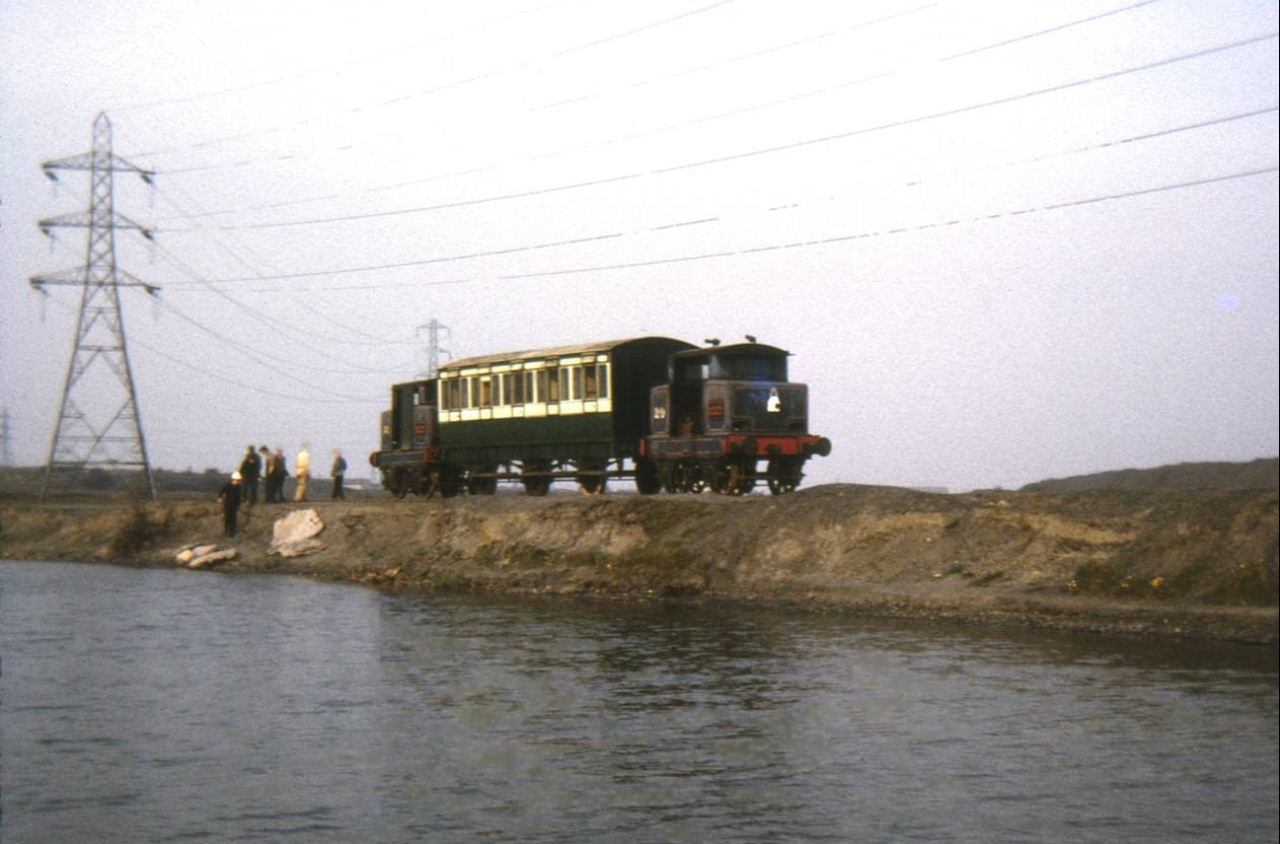
Worthington locos Nos.20 & 21 on the causeway with the Maryport & Carlisle coach in April, 1971

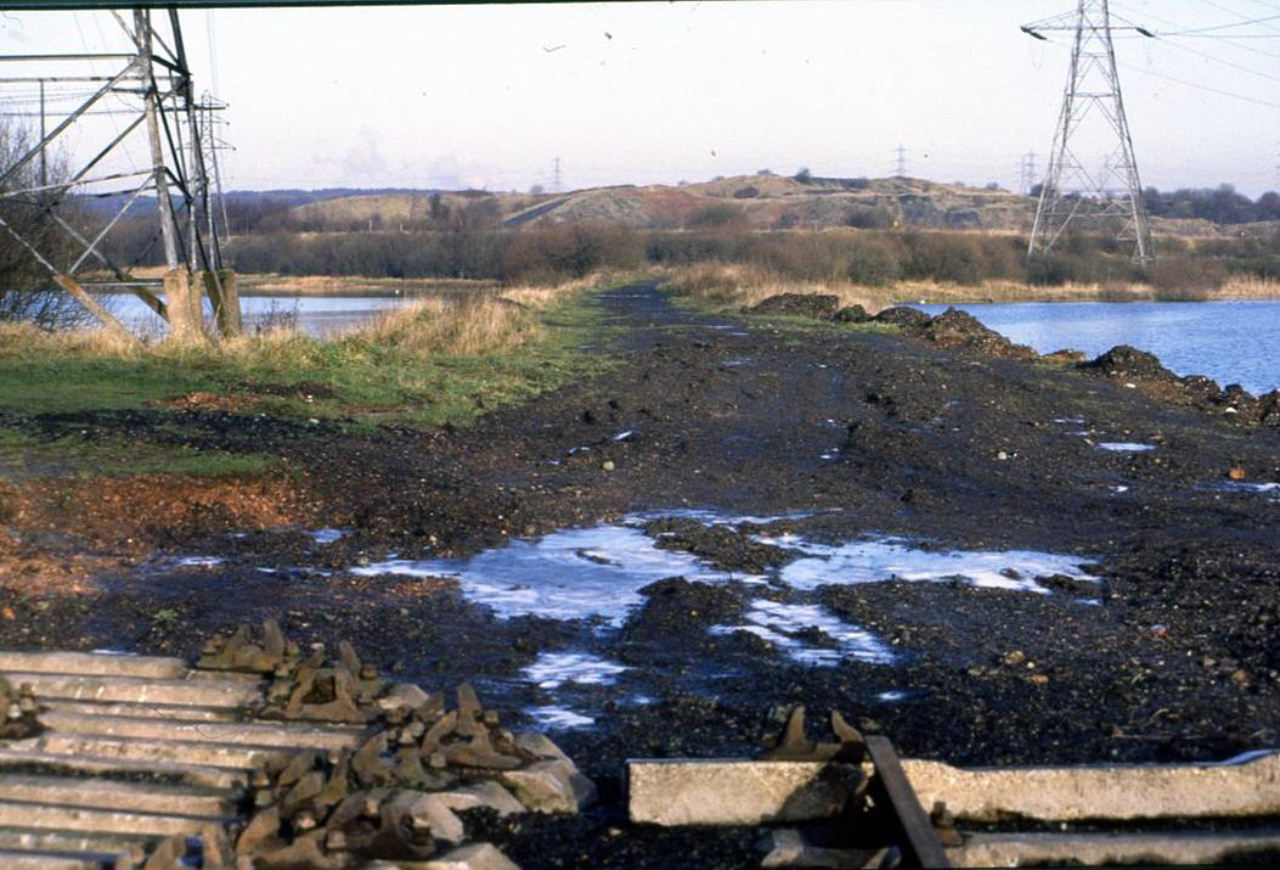
Causeway 1992

Taken in 1992

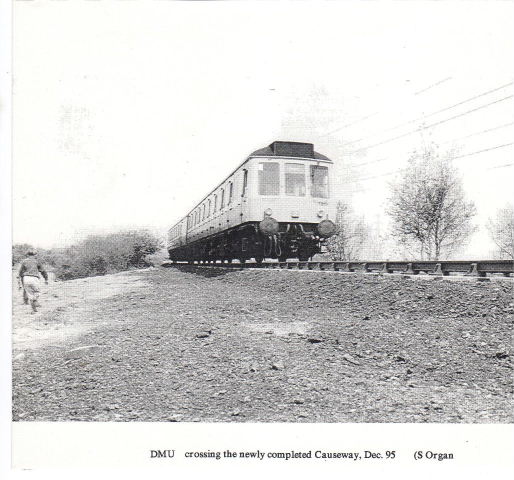
DMU on causeway001
Causeway 2005

Taken in 2005

2011_03250028

2011 – A hole in the Causeway!

2011_05280007

Later in 2011

2011_05280016

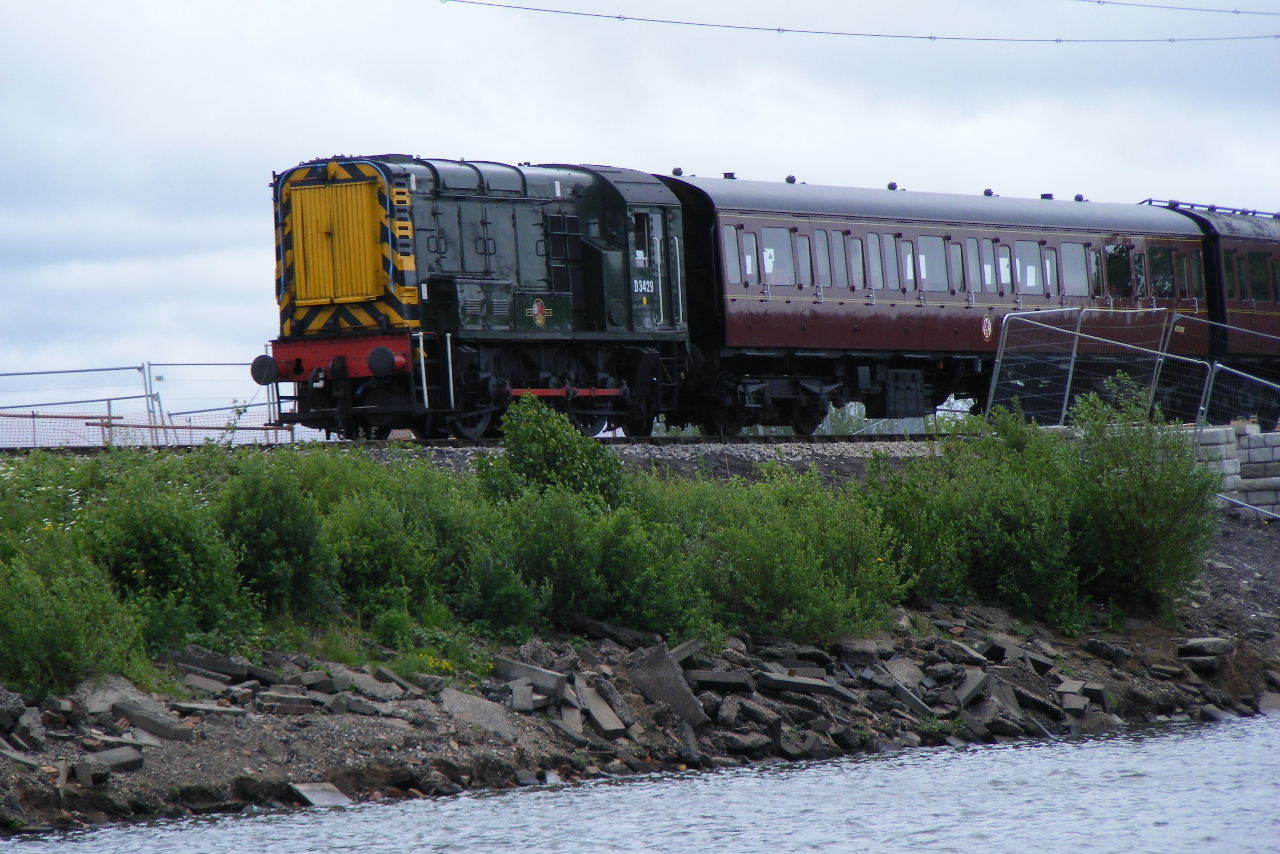
May 2011 – First train over re-opened causeway.

2009_09120020

Just to show steam locos use it too !!

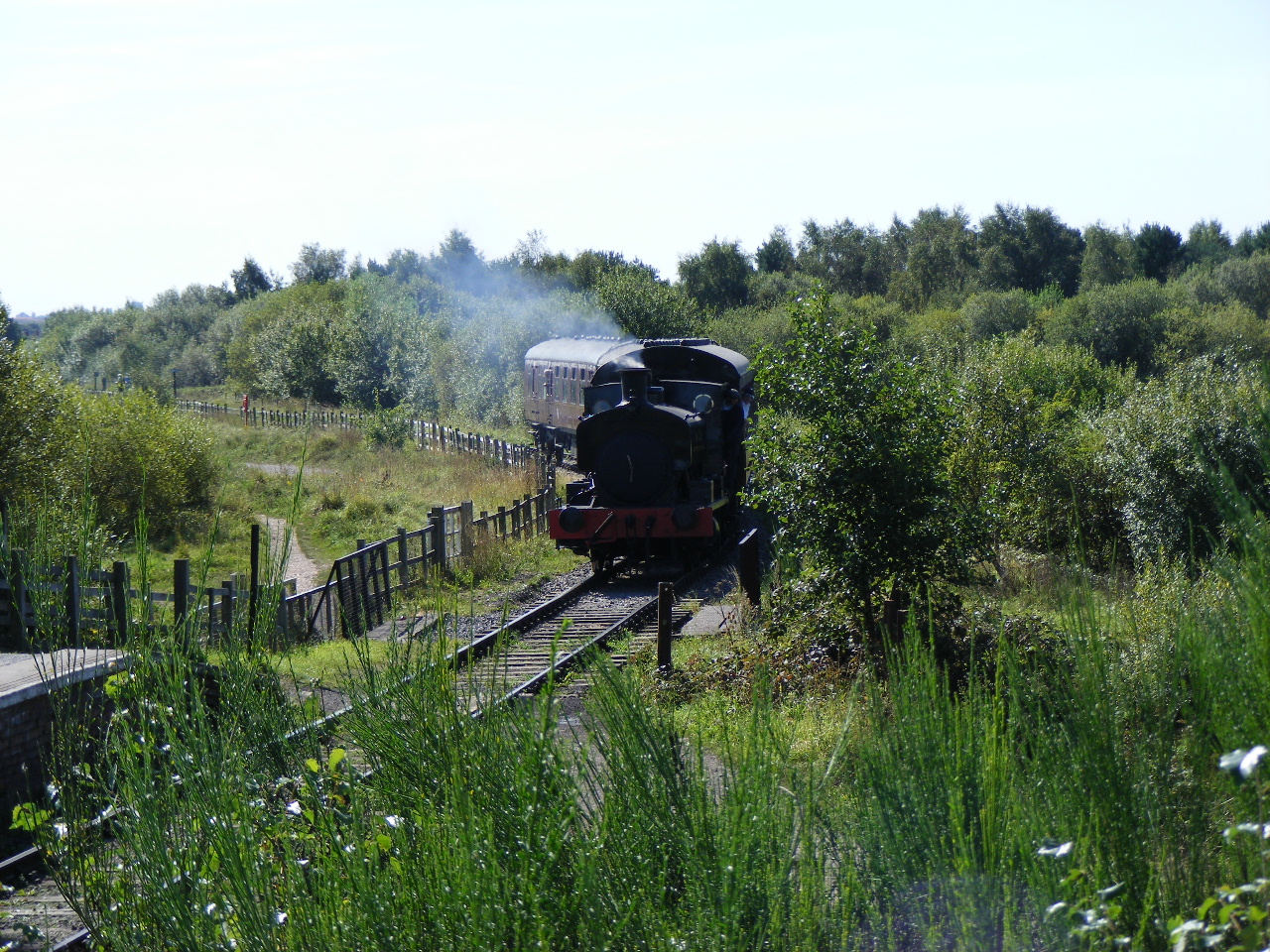
Visiting loco ‘Wimblebury’ over the causeway.

Chasewater Railway News – July 2023

We are sorry to report that another of our old friends has passed away.

Alan Bacon, also known in the Museum as ‘Meccano Joe’ was a good friend to the Museum and the Railway over a number of years.

He put on a marvellous display of models in the Heritage Centre to keep the children entertained while waiting to see Santa.

He Kindly donated the models you can see on the display cases to the Museum some years ago.

Also known as Eugene Damon.


Thanks for everything, Joe.  RIP

Image

Chasewater Railway Museum – January 2023 Newsletter

107 Chasewater Railway Museum Bits & Pieces – Autumn 1985 – 3

107 Chasewater Railway Museum Bits & Pieces – Autumn 1985 – 3

Restoration of the Sentinel – One man’s battle against adversity

The Sentinel at Walsall Gas Works the day it was delivered brand new in 1958 – photo Mike Wood.

In 1981, as part of the exchange deal for the Royal Saloon, the railway acquired ‘in working order’ a 100h.p. Sentinel shunting loco.  This was duly steamed and trundled up and down with three or four wagons whilst waiting for the promised boiler certificates.  These eventually arrived but consisted of a boiler maintenance card, a Hydraulic certificate for somebody’s crane and a steam test certificate for 9632 which was later rejected by our Boiler Inspector as ‘not worth the paper it was written on’ because no hydraulic or visual examination had been carried out.

The only solution to the problem was to drop the firebox and start again from scratch.  It was this action which revealed a long list of both major and minor faults which all required rectification.  Luckily the boiler shell and firebox were in good condition but the superheater had holes in it and the spark arrestor box and chimneys were rotten enough to require replacement.  Eventually, following inspection, the boiler was re-assembled and passed its 413psi hydraulic test. Since then the rest of the loco has been gradually rebuilt, and as during last winter we had serious problems with thefts and vandalism, the opportunity was taken to fit lockable sliding yobo-proof screens to the cab along with wire reinforced glass and bars over the windows.

The Sentinel shuffling past the loco shed at Chasewater during a test steaming shortly after arrival from Butterley, after which it was dismantled for overhaul – photo Sid Mills.

During 1984 the loco was test steamed twice revealing more minor problems.  The steam brake would not release properly because the valve body had been machined badly out of true; the engine blow through drain valve would not work because its pipe was blocked with twelve inches of solidified sludge; even the injector water valve could not be operated properly from the cab.  However, following each steaming of the loco, more faults are corrected or improvements made.

Two faults which need to be checked at the next steaming are the boiler feed pump which so far has refused to work, and the engine oil pump which has to be primed with oil before it will pump pressure.  Hopefully the recently installed stainless steel balls in the non-return valve matrix may have cured the oil pump problem.

At the present time the loco is being re-assembled after its second visual boiler inspection and painted BR black for the Open Day in October.  Hopefully, three years after it arrived it can at last be seen running in public.

The Chasewater Fat Controller – Nigel Canning.At the time of writing – May 2011 the Sentinel is coming to the end of its latest overhaul.

Chasewater Railway Industrial Gala, 2010

A few video clips of the Chasewater Railway Gala, 2010.

Chasewater Railway Video Clips – 2009-2010

Five video clips taken over 10 years ago.

Chasewater Railway Video Clips

Not strictly Museum items but it’s nice to look back sometimes.

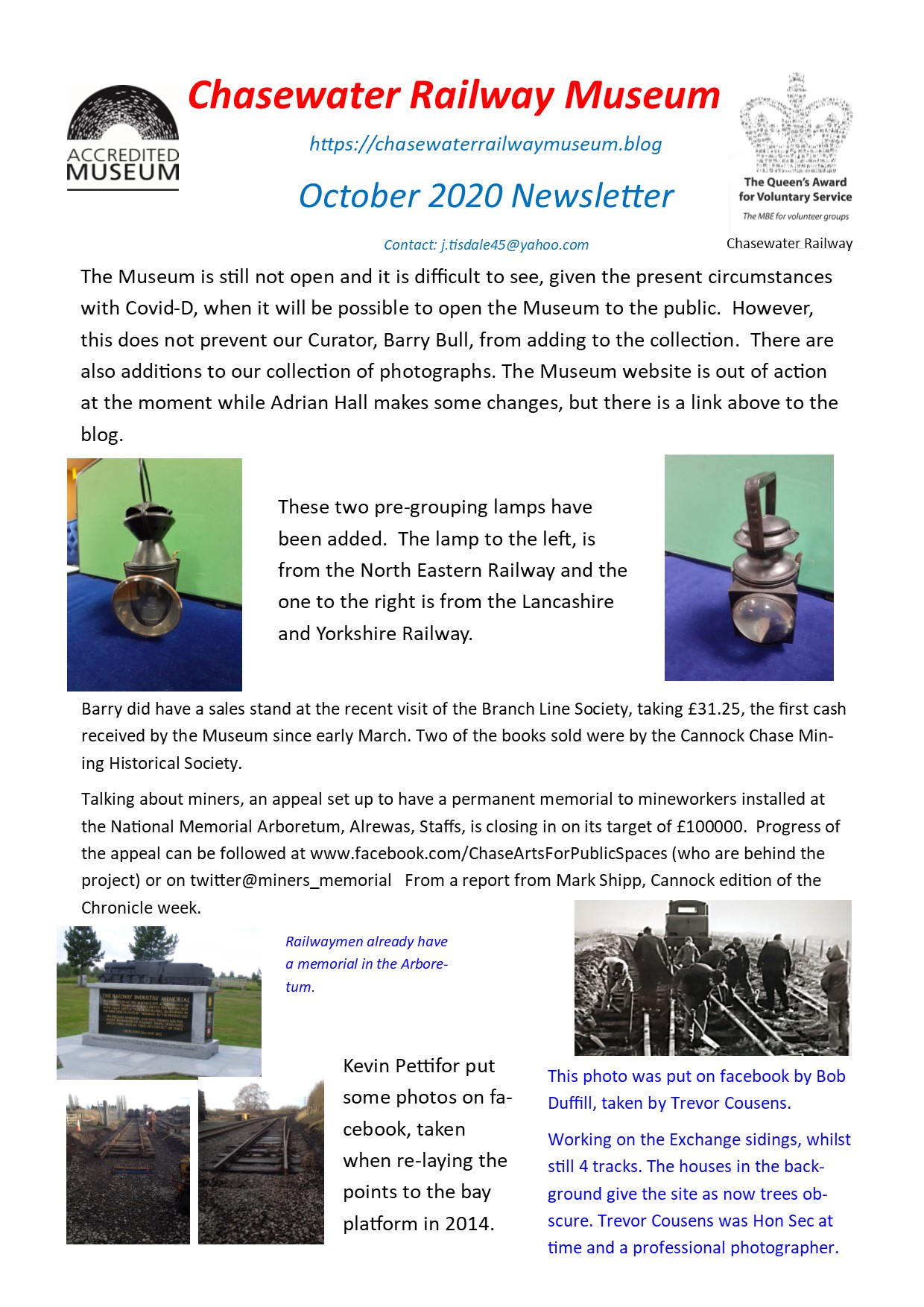
Chasewater Railway Museum – October 2020 Newsletter

Chasewater Railway Museum

October 2020 Newsletter