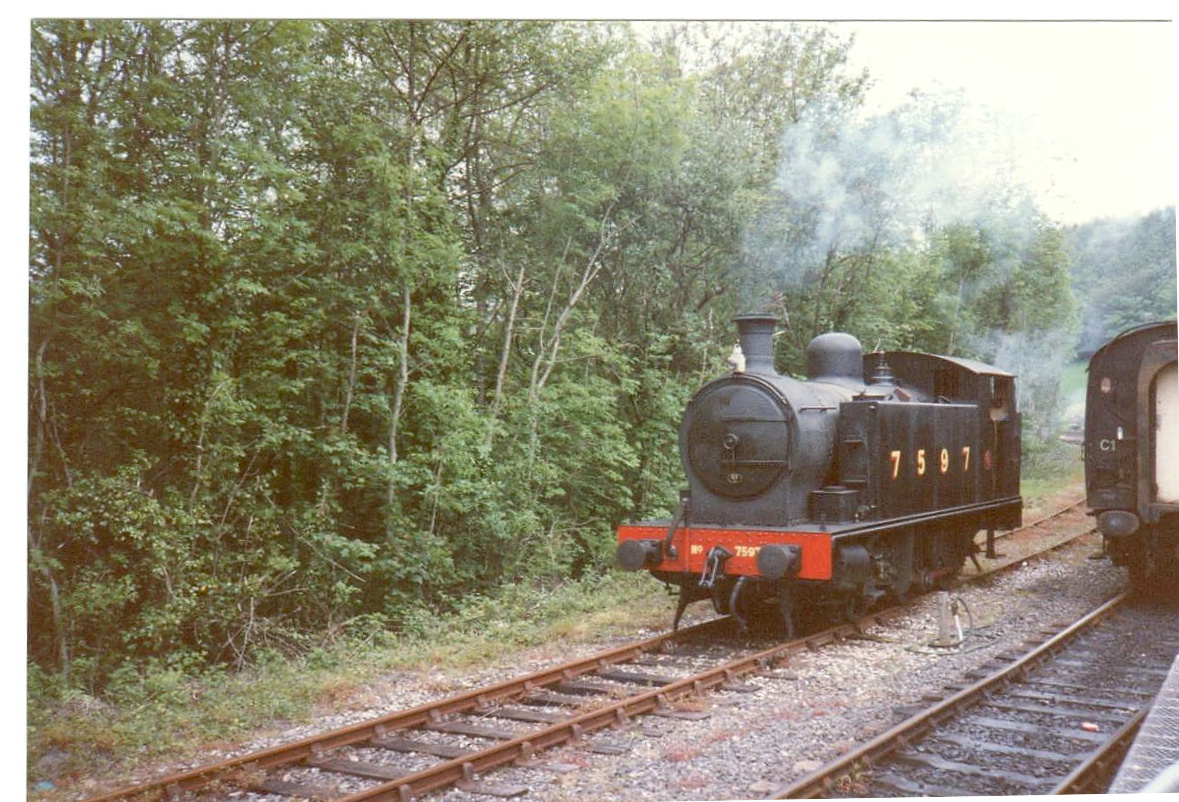
A picture from Neil Clarkes collection, Robert Stephenson and Hawthorn 0-6-0ST 7597 ‘Zebedee’, built in 1949.
199 – Chasewater Railway Museum Bits & Pieces
From Chasewater News – Winter 1996 – Part 4
Blast from the Past – Continued
Chris Chivers
For the winter edition of the Chasewater News I have included this article and map, gleaned by our Chairman David Bathurst, from the ’Railway Magazine’ of November/December 1944 as there is a reference to the closure of our line to passenger traffic in the 1930s and for the general interest in the way the area’s network of services has been steadily eroded over the years.
Forgotten Train Services in the Birmingham District
G.A.Knott
Turning to the lines of the late Midland Railway, there is first the Halesowen Joint branch (GWR & MR) from Halesowen Junction (on the Midland main line to Bristol) to Halesowen, about 5 miles away, where it joined the GWR branch from Old Hill. This line is very heavily graded. The service was operated from Kings Norton, two stations up the line towards Birmingham, to Halesowen, and all the trains called at Northfield, on the main line, and at Rubery and Hunnington, the two stations on the branch proper. Trains left Kings Norton for Halesowen on weekdays at 9.00am, 12.31, 2.40, 6.04, and 7.28pm, and Halesowen at 7.52, 10.17am, 1.25, 3.55 and 6.40pm. There were no Sunday trains. The journey time for the distance of about 8¼ miles was 28 minutes. Practically the same service was working in November, 1913, but by 1917 there was only one train each way, and this route must be included in the casualty list of the late stages of the First World War.
Looking beneath Longbridge Lane bridge towards Northfield station with the up slow on the left on 12 March 1962. The remain lines are, from the left, the up fast, the down fast and the down slow. This is the current site of Longbridge station which is partof the Cross City Line. – warwickshirerailways.com
The next line is of great interest, as it once formed part of the trunk line to London. It is the Whitacre to Hampton line of the one-time Birmingham & Derby Junction Railway, later absorbed by the Midland Railway. In 1839 it formed the only route from the Midlands to London, and the through service consisted of two trains, one in the morning and the other at mid-day, to Hampton, and three trains in the reverse direction, in the morning, at mid-day, and in the evening. All these trains connected at Hampton with trains of the London and Birmingham Railway. There was one intermediate station at Coleshill, afterwards Maxstoke Goods Station, on this section of the line, but none at Whitacre itself; the next stations were at Kingsbury and Tamworth.
Looking towards Whitacre station with the original B&DJR line to Derby curving off to the left and the line to Nuneaton to the right circa 1964. The configuration of the station can be seen with the trains to Derby and Nuneaton stopping at the platform on the left and trains from both stopping on the left-hand island platform. The Hampton branch train originally terminated at the right-hand island platform which is out of sight in this view. warwickshirerailways.com
The days of glory of the Whitacre-Hampton section (called the Stonebridge branch) were short lived. They had begun on August 12, 1839, when the opening of the Birmingham & Derby Junction Railway from Hampton to Derby had made possible the 139-mile route between Euston and Derby. They were diminished in July, 1840, when the Midland Counties Railway was completed to Rugby and afforded a rival route between the North Midlands and London. They finished on February 10, 1842, when the 10 mile direct line from Whitacre to Birmingham (Lawley Street) was opened on that date. By 1899 this service was reduced to one train a day, leaving Whitacre at 8.25am and returning from Hampton at 9.15am. The journey time was 15 minutes for the 6½ miles. This train made connections with LNWR trains to and from the Coventry direction. The line, which was single, never paid adequately, but it had a very long period of gradual decay. One train each way was still being worked in November, 1916, but this was abandoned in the beginning of 1917, and the branch given over to wagon storage.
Also now gone is the last passenger route of the Midland Railway into Wolverhampton via Walsall. On weekdays in 1899, a service of ten trains was maintained each way, with two extra trains on Saturdays: the trains called at all or most intermediate stations. This was reduced in 1929 to a weekday service of four trains from Wolverhampton to Walsall, and three in the opposite direction. The Sunday service, which in 1899 had consisted of four trains each way, had been withdrawn by 1929. By 1931 the traffic was almost completely diverted to the old LNWR Pleck route, and the old Midland line between Walsall and Wolverhampton, via Short heath, had its passenger service withdrawn on January 5th 1931.
Short Heath Station c 1930 facing Walsall D. Wilson
Another withdrawal of the same period was the Midland branch service to Brownhills. This branch left the MR at Aldridge, 2½ miles from Walsall. It was 4 miles in length, with one intermediate station, Walsall Wood. There were three trains a day each way (five on Saturdays), except Sundays, in 1899. All trains called at Walsall Wood. The service was down to two weekday trains in 1929, and was cancelled on March 31, 1930.
Special train crossing the Chester Road, Brownhills, entering the site of the old MR Brownhills Station
Also gone from the Midland timetables is the passenger service from Birmingham to Kings Norton, via Camp Hill and Lifford. This has been closed only since 1940, along with its six intermediate stations.
Lastly comes the GWR. As this company has fewer lines in the area, it has naturally fewer closed ones. There is the Oldbury branch from Langley Green Station, on the Birmingham-Stourbridge Junction line, to Oldbury. This is only about 1 mile long, there was no intermediate station, and the journey, which was made16 times daily in each direction in 1899, lasted 5 minutes. There was no Sunday service. A rail motor was introduced about 1905, and in July, 1908, there were actually some 27 runs each way daily on the branch. By 1913 the total had grown to 30, but by 1915 the whole service was withdrawn.
Old Hill station, the start of the line. Actually, the line from Old Hill to Halesowen was built by GWR before the Halesowen Railway was created. Note the station name board which still recorded the Halesowen branch public passenger service, which was withdrawn on 5 December 1927. D.J.Norton
Discontinued also on the GWR, from September 26, 1927, was the service from Old Hill, 8 miles from Birmingham on the Stourbridge line to Halesowen, where end-on junction was made with the Joint GWR & MR branch. This was another push-and-pull service, and in 1899 trains ran over the 1½ – 2 miles branch 15 times daily from Old Hill to Halesowen, and 14 times in the reverse direction. The journey time was 5 minutes, and connections were made at Halesowen with Midland railway trains, and at Old hill with GWR trains to Dudley, Birmingham and Stourbridge.
These last two posts do not pretend to be more than a note of various interesting old services in the Birmingham area, and is certainly not exhaustive.
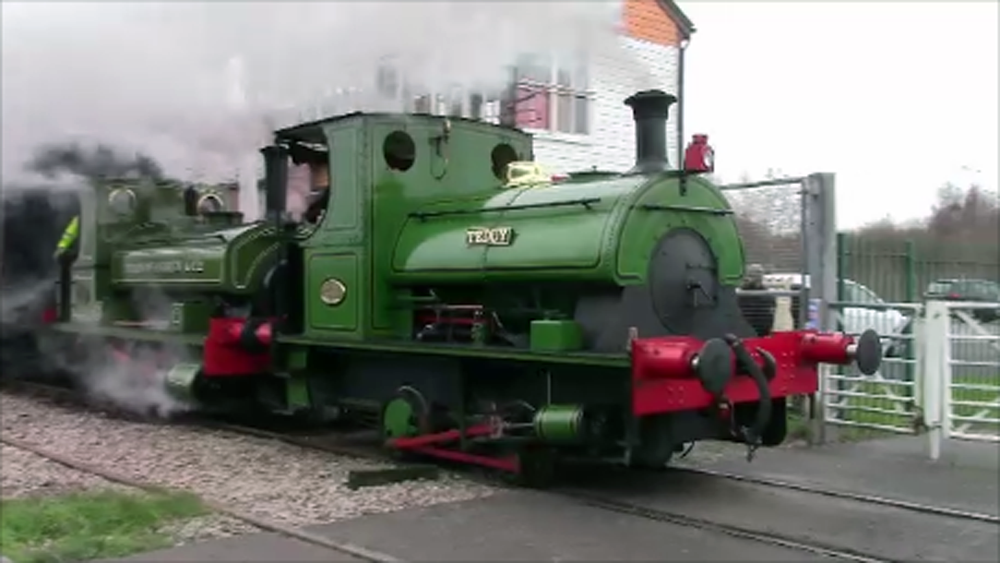
Barclay ‘Coln McAndrew’ and Peckett ‘Teddy’ double headed out of Brownhills West at Chasewater Railway
Please note – the Museum will not be open this Sunday – 23-6-2024
‘Asbestos’ Hawthorn Leslie 0-4-0ST 2780-1909 Passing the engine shed, before alterations!
Picture donated by David Bathurst
192 – Chasewater Railway Museum Bits & Pieces
From Chasewater News – Summer 1996 – Part 3
P Way News – Arthur Edwards
Since the last article was published the P Way gang has had a number of new members join us and the extra manpower has enabled us to carry on a number of tasks at a greater speed than originally planned. This has enabled us to fence in an area next to the lower compound entrance gates, so we now have a fenced in area for the storage of rail and other heavy items of P Way material.
Also the fence from the foot-crossing between the two compounds to the bottom compound has been realigned to allow the relaying of the sidings alongside the shed road. Work is also in progress to design the layout of a head shunt behind the current shed therefore allowing access to the shed from both ends.
Further down the line a number of fence posts have been replaced where they were broken down by trespassers onto the running line and along with bits of hedge growing up alongside is starting to make things much harder for the local idiots. The only bit of bad news about this fencing is that we can no longer use barbed wire where the public footpaths or public areas come up to our fence. I have mixed feelings about this as I know one or two of the members would like to use razor wire backed up with land mines!!
With the first decent spell of dry weather the perennial job of weed killing was carried out, and not before time as the track was starting to disappear beneath the undergrowth again. It has been proposed that a further application of the poisonous stuff be applied sometime later in the summer – weather permitting.
The P Way gang meet every Sunday at Brownhills West Station from 10.00am onward. Come and join us!!
Neilson Saddle Tank No.11 – Paget’s Progress – by Paul Whittaker
Neilson 2937/1882
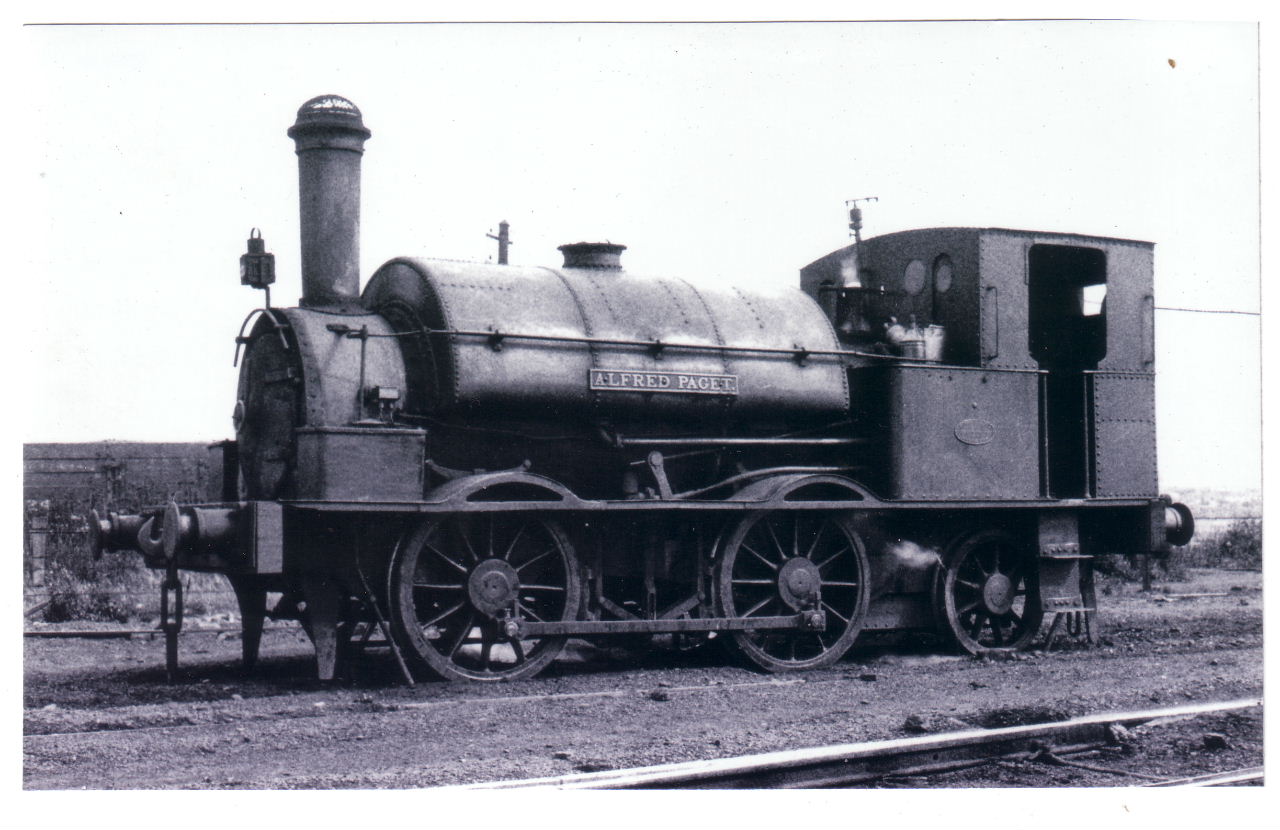
Alfred Paget at Chasewater – June 1978
On the 13th January 1996, a freezing cold morning of -5ºC, I started the hard slog of removing the boiler tubes from No.11. After many a bruised finger and some colourful language, not to mention seven weekends at it, the final tube fell free from the boiler tube plate at 4.00pm on Saturday 6th April.
After long deliberation and much discussion I and several co-workers concluded that the next move would be to remove the water tank, thus allowing access to the boiler for closer inspection. As the cost of a crane was as yet out of our reach, we proceeded to jack up the tank until such time as it would be possible to slide it safely down two lengths of rail to its resting place on the platform in the engine shed compound.
The next job was to remove the boiler cladding and insulation, a dirty job but it had to be done. Meanwhile amongst the organised chaos that is generated when stripping a steam locomotive down, we removed the dome plate. This was in order to provide access to the interior of the boiler for a very slim young man, otherwise known as Christian Hatton to get inside and remove the remaining collapsed tubes, and around 3cwt of rust. While all this was going on, the washout and fusible plugs were removed from the firebox. The steam cleaner proved to be invaluable in removing the rust and crud from the water jacket around the firebox. As a result of all this, the boiler is now ready for the boiler inspector to cast a cursory eye over it a prelude to a proper test inspection.
As work progressed on No.11 that magic word ‘money’ reared its ugly head again, and after some serious consideration my very good friend and colleague David Borthwick and I decided to start a fund to raise the necessary cash to renovate Alfred Paget, and entitled the fund ‘Neilson Steam Aid’, to which my good wife Janet will administer and collect donations. In addition to this, Dave has put together a Stock Book, which documents basic information on most of Chasewater Railway’s rolling stock and locomotives. This booklet is on sale in the station buffet at 75p per copy.
On a more personal note, I would like to say that I am overwhelmed by the help and support, to say the least, and of the amount of technical information that I’ve received from fellow members at Chasewater, without which I would have been like a beached whale. And so I would like to take this opportunity to sincerely thank all of those involved with the on-going renovation of Neilson Saddle Tank No.2937, otherwise known as ‘Alfred Paget No.11.
Alfred Paget last steamed in 1982, and is still a way off yet – in 2012.
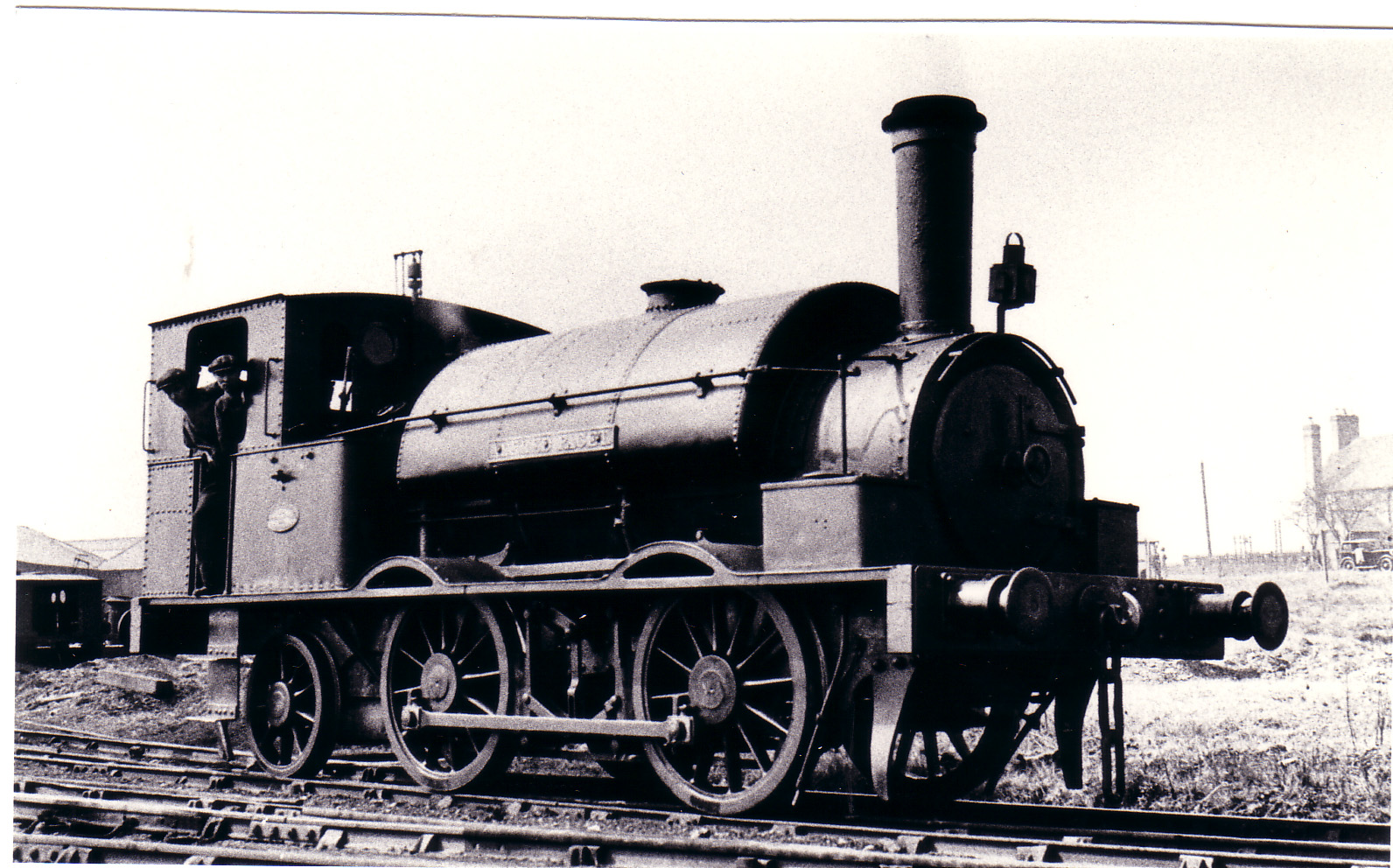
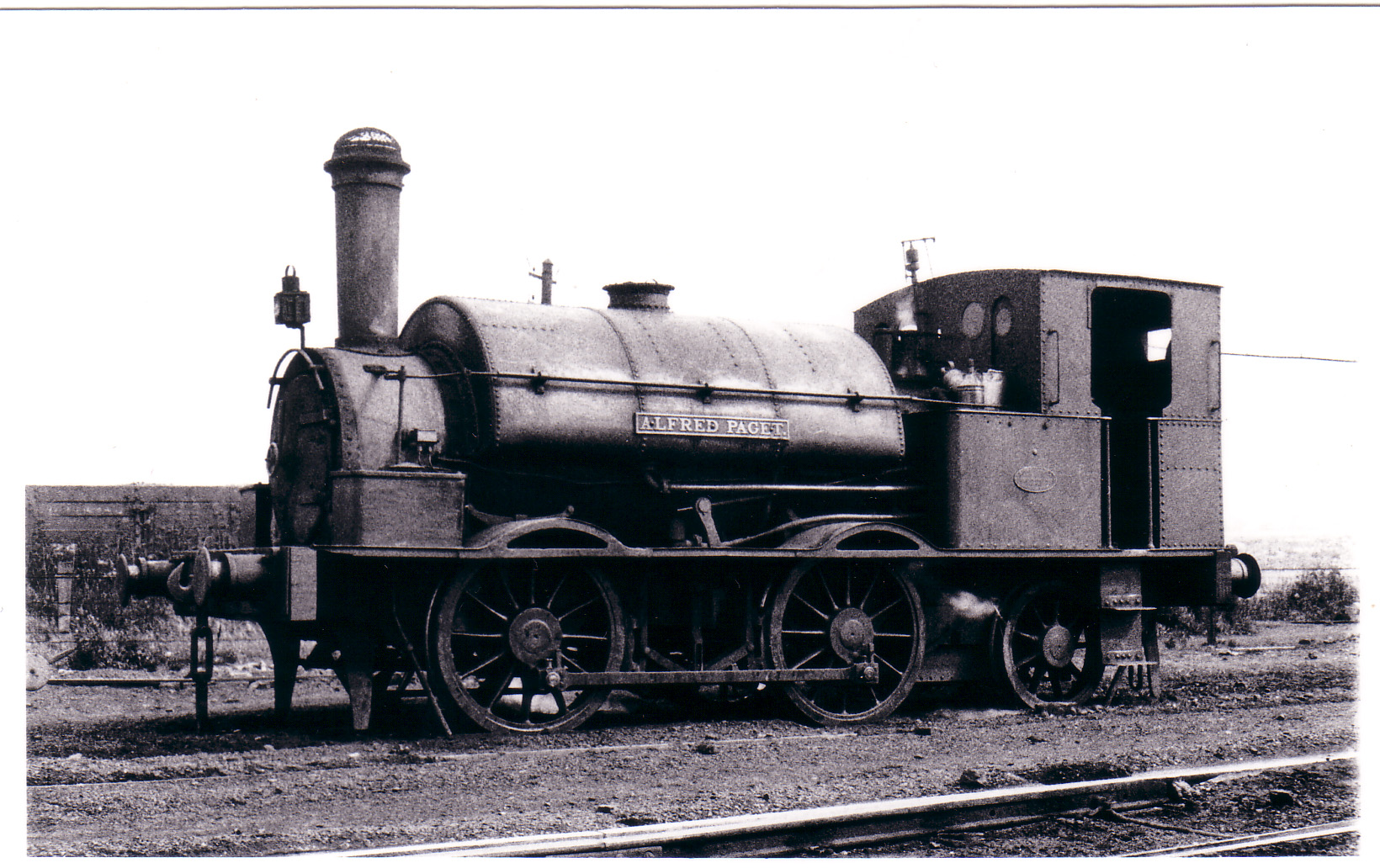
‘Alfred Paget’ 0-4-2ST Beyer Peacock 244-1861 Cannock Chase Colliery Company
187 – Chasewater Railway Museum Bits & Pieces
From Chasewater News Autumn & Winter 1995 – Part 4
Did you ever wonder where the track came from?
Here a couple of examples….
British Oxygen Company, Wolverhampton – Rob Duffill
Anyone who travels from Birmingham to Wolverhampton by train should look out to the left shortly before Wolverhampton station. There is still in use for steel traffic, the old canal interchange sidings and included is the canal/rail interchange building which is still standing. Until fairly recently also coming out of the site were several other sidings which have been lifted by BR. I noticed, while I had a brief view from a slowly passing train, that the line continued past the fence into the undergrowth and the British Oxygen Works at Wolverhampton. I mentioned it to David Bathurst who agreed to contact their Works manager to inquire if it was available. Fortunately David was able to get me an appointment to view the site. I duly turned up a few days later and was courteously received by the Works manager himself.
The track had been out of use for three to four years but had only been relayed in the 1970s to cope with heavy wagons and BR diesels. The track still in situ was from their boundary with BR into the works, a total of approximately 160 yards and a set of points, all in excellent condition. Unfortunately there was also approximately 300 yards of double siding set in concrete which it would be virtually impossible to remove. After describing Chasewater and our long term aims and also our lack of cash, I very nearly fell through the floor when I was told ‘you can have it if you want it’. It was as simple as that!
We’ve tried various approaches to acquire more track over the years and the simple direct approach seems to work best. If you ask for what you want you can only be told ‘no’, or you get it!
Hopefully we can lift and transport it in the autumn, after the running season, sorry lads more work for you to dismantle it, transport it and rebuild it again at Chasewater. I was also given a tour of their site, which was very interesting, for example, they used to supply many large Black Country factories using their own trunk pipe lines which went quite a distance from their production site. With the closure of so many factories the system was slowly cut back and finally taken out of use, hence the lack of rail traffic.
The Railway has more friends out there than it often thinks, we ought to ask for help more often with practical problems. Dorman’s springs to mind as an example of help.
Many thanks to British Oxygen and I hope that the reinstatement of the track will prove a boost to our running line.
Chasewater and Four Ashes – David Bathurst
It is probably unnecessary to describe in much detail the connection between the Railway and Four Ashes, Staffordshire. Suffice it to say that through the good offices of our colleague, Jim Bates, the Railway inherited the redundant track from Synthetic Chemicals – who offered a wonderful measure of co-operation in relation to its removal.
What is less certain, however, is whether many Chasewater members even knew of the existence of this modest industrial railway network before the track donation was made.
I rather suspect that even fewer members actually visited the network, but I am able to record, with some satisfaction, that I participated in a visit organised by the Branch Line Society on 17th February, 1981.
At that time, the site was owned by Croda Chemicals, who provided every facility to the BLS to travel (as is customary) over every last available inch of line, utilizing the famous fireless 0-4-0. I cannot recall in detail the precise arrangements of the visit, but I have managed to locate a series of slides which I took on the occasion. Unfortunately, some of them will not reproduce satisfactorily for The Chasewater News, but I hope that the Hon Editor (What’s with the Honorary, David?????) (I wondered about that too!!! cws) will be able to make something of the remainder.
What is evident from the slides is that the track was certainly maintained in good condition, and really it was quite a neat little layout. Others will be able to provide details of the Fireless locomotive whose small cab was hard pressed to accommodate the size (both in numbers and in girth) of the BLS party.
Once again the Editor has done his best with the print-from-slides; I shall be offering them to Jim Bates as a reminder of times gone by.
‘Alfred Paget’ 0-4-2ST Beyer Peacock 244-1861 Cannock Chase Colliery Company
Featured loco – No.6 Adjutant. 0-6-0ST Manning Wardle 1913-1917 Cannock and Rugeley.
From Chasewater News Spring 1995 – Part 2
Carriage & Wagon Department – Tony Wheeler
GWR 20 ton Toad 35251
This vehicle has been stripped and repainted into GWR Grey and lettered Moat Lane. This is not its true location but a suitable representation. It is currently in use with the P-Way team.
Ballast Plough Van S62861
The Maunsel brake van has had its roof re-felted to waterproof the inside of this vehicle. It requires further work in replacing some of the external woodwork which is gradually deteriorating. The vehicle is in regular service with the P-Way train.
21t Mineral Wagon B316711
A temporary floor has been placed inside this vehicle after a cleanout of the remaining coal and slack left inside. The larger deposits left provided some fuel for the stove inside the p-way brake van over the past winter.
16T Mineral Wagon B274600
This wagon has proved useful over the winter months ferrying bricks to the site of the new platform at Norton Lakeside and alongside the 21 tonner has seen some very heavy use lately.
8T 4-plank open wagon (Conduit Colliery)
This wagon is currently awaiting a more permanent resting place, so that the springs can be removed and replacements can be obtained and fitted. It currently has one set of spring ‘on loan’ from the Midland Crane!
GWR 16T Toad 35831
This brake van still resides in one road awaiting some repairs, which consist of a replacement spring buckle, running boards and hangers and also brake block replacements. Some minor attention is needed to the bodywork.
MS&L 1470
Work has resumed on the restoration of this coach after the winter lay-off. A temporary platform has been erected round it so that the exterior work can carry on safely. Alwyn and myself have carried on with rebuilding the interior of the brake end which was damaged some time ago. The coach has had covering sheets removed from the roof and work has started on cleaning and repainting the roof vents. New guttering has been fabricated and fitted to the side of the coach facing the lake; this is to replace the old burnt out pieces over the guard’s compartment.
MR Brake 68
Some panelling timber has been obtained to replace missing panels on the Midland Brake van. The location of this vehicle at the end of two road means that the open end is exposed to the weather and some roof timbers will need to be obtained in the near future.
Permanent Way – Arthur Edwards
It seems a long time ago since I last wrote an article about anything that is happening on the Permanent Way of the railway.
Firstly, as I’m sure you know, if not I’m sure you soon will, that the Railway Inspector was due to visit us on Friday May 12th 1995, and in between this and his last visit quite a lot has happened. New ‘No Trespass’ and whistle boards have been fabricated and put up, as the original ones being made of cheaper material and with the amount of vandalism that is rife around Chasewater, they did not last as long in position as they took to make. New gates have been made for each of the crossing points and they have been put into place.
Secondly, our illustrious General Manager, Mr. Steve Organ, acquired a hopper wagon (dogfish) with which to re-lay ash ballast all along the line for the next monumental task, which was the use of a tamping machine on hire from Tarmac. The tamper and its two-man crew started work on the line from the new platform, across the causeway and back to Brownhills West. In conjunction with this work fishplates have had to be greased and tightened (again!), along with some sleepers which had to be re-spaced.
Thirdly, and most importantly since the Inspector’s last visit we have laid up to nearly a third of a mile of track into Norton Lakeside platform, which has been refurbished and extended to cope with a three coach train, and should hopefully be open to the public after the Inspector’s visit. During the last few weeks our General Manager has been going round like a headless chicken trying to get the scheme finished in time for the Inspector’s visit, and I must admit it’s coming along pretty well, even though Steve himself will admit it was touch and go with the unkindly weather which has put all of us who helped on this project, quite a few weeks behind schedule, and Steve began to think that maybe it was a bit overbearing on all of us. So there have been harsh words spoken at heated moments of which we all apologised to each other afterwards. Although we are not in the major league of steam centres, contrary to popular belief we are holding our own, even if our members have dwindles slightly. You must realise that this is our hobby and not our profession, and therefore we have to earn a living at our ‘proper’ jobs, and three of our current working members’ jobs incorporate working on refrigeration, so, being summer, their jobs call for their expertise. And that’s basically it, except to say thanks to everyone for their exhaustive efforts, Tom especially.
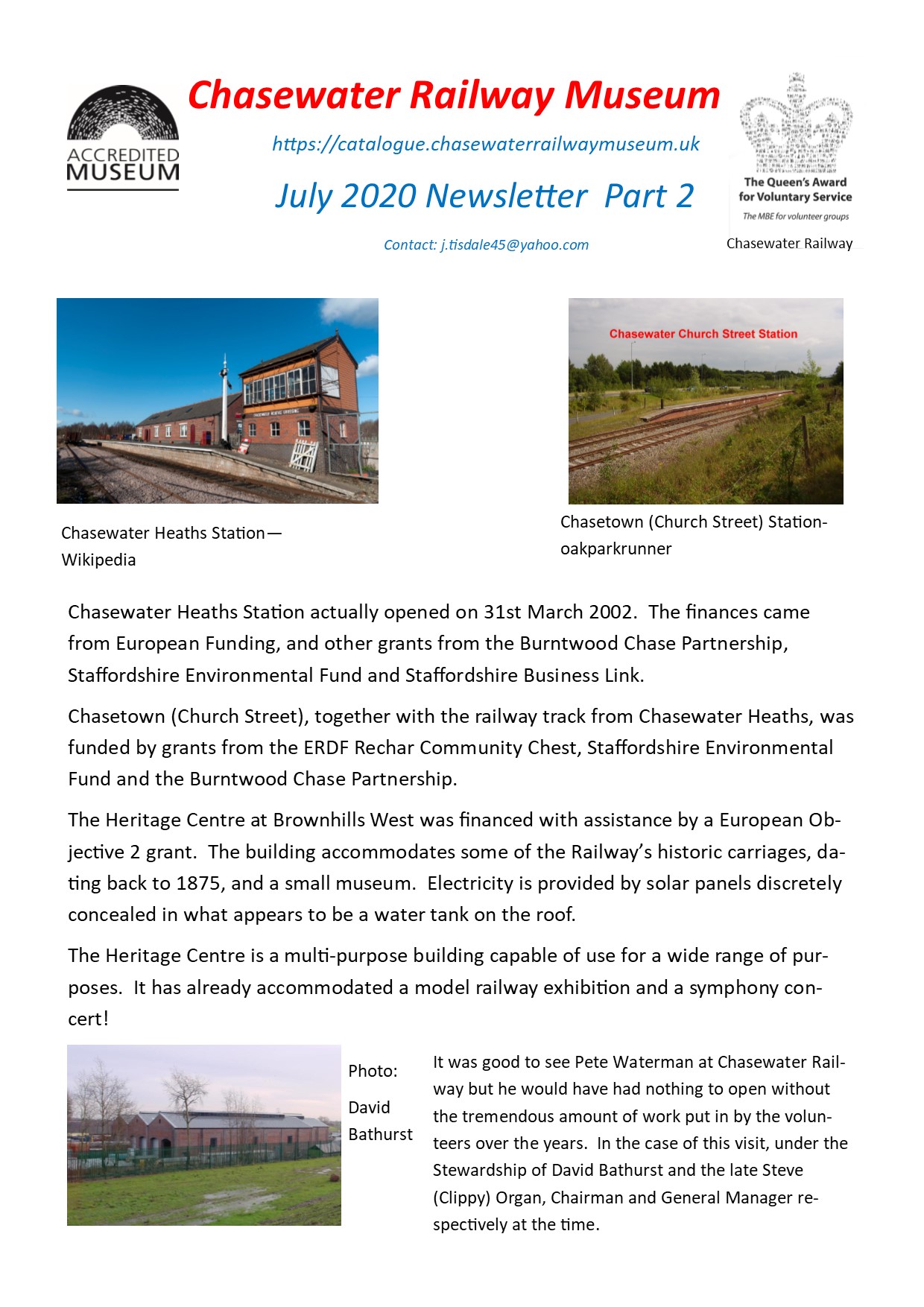
From Chasewater Heaths to Church Street, the original trackbed – still a bit of P-Way work to do!
The featured loco today is ‘Rawnsley’, at Hednesford Canal Basin, a Lilleshall loco of 1872. Number 4 at Cannock and Rugeley Colliery. Thanks to David Bathurst, Nigel Canning, Bob Duffill, Arthur Edwards and Keith Day for their contributions to these, and other, Chasewater Railway Magazines.
176 – Chasewater Railway Museum Bits & Pieces
From Chasewater News Christmas 1994 – Part 2
A Christmas Message from the Chairman
It is difficult to believe that we are about to enter the Christmas period yet again. The year has passed so quickly that it seems to have passed us by. Yet for the railway, such a short period has witnessed so many exciting developments.
Anyone visiting the railway for the first time would wonder what it’s all about and why we are all so enthusiastic. But for regular visitors and, more importantly, the intrepid band of volunteers who devote so much time to the welfare of the railway, the year has been full to overflowing.
This is not the time to review, in detail, the year’s events; the annual report is more appropriate for that. However, the extension to the line merits comment, because of its importance to the public’s perception of our operations and, perhaps more vitally, our credibility as a passenger-carrying railway.
We had hoped to have laid the track into Norton Lakeside Station and to have completed the construction of the station during 1994. That we did not achieve this ambition is of little importance; my colleagues will be familiar with my entreaty that “it is not a race”. We cannot afford to compromise on quality by cutting corners in the interests of speed. It is essential that the extension across the causeway, the station itself and the remainder of our line all meet the standards necessary to satisfy the Railway Inspectorate. We have much work to do to consolidate our current line before we invite HMRI to return to Chasewater.
Having said all that, Easter 1995 now seems a realistic target for the opening of Norton Lakeside Station. Pencil the Easter Weekend into your new diaries, and “watch this space” for further information.
1995 will also see an increase in momentum for the carriage shed fund. If the spirit of Christmas moves you to make a donation to this worthy cause, then please do not hesitate to see Chris Chivers or myself.
May I remind you of the ‘Santa Specials’ on 11th and 18th of December when we can all find an excuse (if we need one) to open up the seasonal festivities. Whether or not you are able to join us on one of these dates, may I take the opportunity to wish you all a very happy Christmas and a very prosperous New Year.
David Bathurst – Chairman
A view looking across the causeway back towards Brownhills West, just over a mile away. On the left can be seen the platform face for the new Norton Lakeside Station with the first length of track in place. A lot still remains to be done, but this could be a very popular place for photographers next year!
Synthetic Chemicals – Final Phase – by Arthur Edwards
It doesn’t seem like it, but this is the final part of the saga of retrieving the track from Synthetic Chemicals. After a call from our ‘Fat Controller’, Steve Organ, on Friday 15th October to establish whether I was available for the Saturday morning, about a dozen people gathered at Synthetic Chemicals to collect what track was left there.
Anyway, Mick had called for me at 8.30am and we had been there about an hour when Steve asked Mick and I to return to Chasewater to get the JCB ready for when the lorry arrived with said track. At about lunchtime the lorry duly arrived and Mick and I did our stuff unloading it. An hour or so later ‘Curly’ the driver went off to get another load. While he was away, Mick and I straightened up the rails and sleepers. I had to go at 5.30pm but I believe the rest of the crew stayed until about 8.00pm to complete the job.
After that Saturday all there was left at Synthetic Chemicals was a buffer-stop, some smallish lengths of rail and a few sleepers. After some hectic phone calls, Steve managed to get about six people on Saturday 22nd to go back and retrieve the last few remnants of track.
On the Sunday, with the help of the CS people, we actually laid the track through Norton Lakeside Station. Once agreement has been reached with the Railway Inspectorate, it is our intention to just keep laying track down until we run out of either sleepers or rail, or until we reach our next objective which is Chasetown. It is thought that we now have enough track to get us to the end of our lease, but hopefully we will have topped up our stocks before we get that far.
Whilst we continue to work on the track, the CS people have begun re-pointing the platform at Norton Lakeside Station, and preparing the top for the edging slabs.
The arrival of a loaned ‘dogfish’ hopper wagon will hopefully make the job of ballasting a lot easier, and there are even rumours of a rented track-tamping machine being used in the near future!
Kenneth Judkins – by Dave Ives
It is my sad duty to inform you that Ken Judkins (Ken the Steam to his close friends), passed away on September 27th 1994 at Anson House Rest Home. Ken was 91 last January, being born in Little Haywood in 1903. Ken lived a very colourful and busy life in various parts of the country. He moved to Stafford for the final few years of his life from Wimbourne Minster, Dorset, stating that he wanted his bones to rest in his native county, which has indeed now happened. His remains lie buried in Colwich Churchyard. He was Christened in Colwich Church and served as a chorister for a number of years.
Members will be aware of Ken’s long association with steam traction having started with Ralph Gee & Son, Wolseley Bridge, then on to Staffs County Council, Foden’s, Thomas Hill (Rotherham) Ltd. and Sentinel.
Ken was the author of two books “My Life in Steam” and “More of My Life in Steam”. The books are worth a read and give a fascinating story of the tough and skilful job of steam driving in the 1920s and 30s. Ken also served six years in the army RAOC in the war and was wounded in the lung whilst being evacuated from Dunkirk.
I suppose one can sum up by saying that this is the end of an era and that Ken is sorely missed by numerous friends, especially on the rally fields where he gave a lot of advice to scores of steam traction owners.
Alas! We shall no longer see him propping up the bar, staying overnight in one of our coach compartments, puffing his pipe on Brownhills West Station seat or in his brown slop coat and Foden hat on the footplate of the Sentinel.
More about Ken – Nigel Canning
“Ken the Steam” as he was known to his friends, spent the majority of his working life and the whole of his retirement closely involved with steam traction on both the road and railways. His experiences and expertise were sufficient to fill a book – or two, to be precise – both now sadly long since out of print.
Ken was never happier than when he was showing off just what steam power was capable of, and in his last two jobs, at Foden, and then at Thomas Hill (Sentinel) as Chief Demonstrator and Test Driver, that is exactly what he was paid for, selling those Companies’ products and fending off the advance of the motor lorry and diesel loco.
In his retirement Ken continued to take an interest in steam by helping the preservation movement where his enthusiasm backed up by a lifetime of experience was of invaluable assistance to many an amateur locoman or fitter.
At Chasewater his advice was of particular assistance in the operation of the Sentinel. On one occasion when one of the poppet valves on the engine was playing up, Ken was all set to ride down the line and back to observe the valve events and pinpoint the problem. It took a lot of doing to convince him that it was not the done thing to run a passenger train with an engineman in his late eighties hanging on the side of the loco, but we eventually succeeded, and as a result of his advice the valves were alter re-set to operate correctly.
Ken once admitted that he didn’t really like Sentinels as they were dirty things, but that just reflected his real love, the Foden, and his exploits with those machines are well-documented and will be remembered for a long time.
177 – Chasewater Railway Museum Bits & Pieces
From Chasewater News Christmas 1994 – Part 3
Carriage & Wagon News
New Acquisition: ‘Dogfish’ DB992841 – This useful hopper wagon has recently arrived at Chasewater on loan for 12 months from Andy Goodman of Allely’s Transport. Following minor attention to the chute actuating gearboxes the wagon has entered service as part of the PW works train to transport ash up to the new station and beyond.
Pressed Steel Co. DMBS W51372 – This car has remained in service coupled to W59444 to form the loco hauled train. It was recently given an ‘A’ exam, and following the recent acquisition of some more spares one or two minor repairs may shortly be carried out.
Derby Works centre Car W59444 – The electrical system of this coach has recently been overhauled, including servicing of the batteries, cleaning and resetting of contactors and renewal of some of the invertors for the strip lights.
Derby Works Centre Car M59603 – This coach has remained stored out of use.
2-Car DMU: DMBS W51370 & DMS W 51412 – This train has remained in service, being run on non-steam Sundays until recently when declining passenger numbers made it uneconomical to continue.Summer congestion at Tysewater!
Manchester, Sheffield & Lincoln six-wheel coach – A great deal of progress has been made recently on this vehicle. All of the doors now close properly, and all of the glass has been fitted in the windows and doors so that the interior can be kept dry. The partially burnt panelling around the guard’s doors has been removed, and new locking bolts for the double doors made and fitted. Various rotten mouldings are being renewed, and the exterior of the bodywork has been given a preliminary coat of paint to help protect it. A certain amount of work has also been done on painting the interior.
LNWR (Paddy) Coach – Work has started on this coach by a carpenter working on the Community Service Scheme. So far some of the doors have been re-fitted, and repairs have been carried out on the roof to try and waterproof it.
Battery charging – The station battery charger has now been rebuilt and connected into a network of underground cabling enabling a number of vehicles to be connected to it simultaneously.
Stop Press
The Board has agreed to purchase around 600 concrete sleepers, enough to relay track to the rear of the Burntwood Industrial Estate. Delivery will commence in the New Year.
The Annual October Transport Rally – Arthur Edwards
This year’s rally seemed to surpass all of the rallies that we’ve had over the last five or so years. There were more vehicles than previously, but all cordoned off in such a way that it seemed that we could have had at least half as many again.
I finished work at 2.45pm on the Friday afternoon to be at Chasewater by 3.00pm to help Dave Whittle, Rally Organiser, to put up the fencing. This involved finding the fencing stakes before I could start. Eventually it was time to make my way home, and I told Dave I would be there at 9.30am on Saturday.
I duly arrived at Brownhills West Station at the said time, collected the stakes and started to knock them in to cordon off all the stationary engines and their owners’ living quarters, caravans, mobile homes, etc.
Steam trains didn’t run until Sunday as one of Asbestos’ springs had to be re-fitted following its repair, but our illustrious General Manager (Steve Organ) decided to use his DMU set.
Sunday dawned with high skies and not a threat of rain. A few of us had to take the permanent way works train down to the far end of the running line to work on the extension. This had to be done as even after the departure of the Wickhams we were still a bit cramped in the available siding space. I digress slightly, anyway all went according to plan, and next year they are planning an even bigger event.
All credit on this occasion must go to Dave Whittle for the red-hot phone calls, and to his associate Paul Richards, with their mind-boggling train of events. All the best for next year’s rally. Thanks chaps, very much appreciated.
Commercial Manager’s Update – Rob Duffill
The season, apart from the two Santa dates which are in the future at the time of writing, is now over until Easter. However, we do continue to tick over during the winter months and any income we can generate from whatever source during this period is essential to keep the wheels turning.
In addition to the core aspects of running the buffet and shop, we have been to several exhibitions. These have been at the bonded warehouse in Stourbridge organised by Trev Cousins who was Secretary of our group in the 60s. Also the Warley Model Show at the NEC and the Societies and Hobbies Fair at Walsall Town Hall.
The NEC exhibition is in its second year and is over two days and very interesting. As usual John and I set up on the Friday and all went very smoothly as the Warley Show is very well organised. The hall was better laid out this year and the public avoided the jams of last year. We were opposite an ‘0’ gauge layout of the Taff Vale and a colliery with lots of industrials. Also, Trev Cousins has produced in ‘0’ and ’00’ a model of Hanbury from our own area. This 0-6-0ST Peckett was of very neat outline. Trev and Pete Stamper, both members from the 60s, would be pleased to sell you one. Our stand was fairly busy with its blend of both toys and relics and we exceeded last year’s takings.
The Hobbies and Societies Fair at Walsall was successful, not from the actual sales, but from the publicity point of view. A lot of interest in the Santa Specials was generated. Quite a few people looked at the old photos we had taken and said they were ex-miners who remembered them. We also displayed a Pelsall Millenium plate at both exhibitions. The Brownhills paper also took photos and promised free publicity, and several potentially useful contacts were made. This event was definitely worth John and Margaret’s (with Chris) time, and our fairly low entrance fee.
Well done to all who helped during 1994, the trick being to extract money from the public in as pleasant way as possible, and to try and make the most of it all and enjoy yourself. We look forward to next year’s opportunities to increase income with the line open over the causeway.
Bass Brewers Community Awards
Bass’s Grand to Chasewater
Chasewater Railway has received a Bass Brewers Community Award of £500 towards the £20,000 required to build the proposed carriage & wagon shed which we intend to build when funds are sufficient, and the North Orbital Road route has been finalised. The fund now stands at about £2,000, the majority having been raised by members through donations and profits from events and rallies.
For those who are not aware, this is the third year in succession that the railway has been a recipient of a Bass Brewers Community Award. In 1882 we received £300 towards the transport costs of removing redundant trackwork out of Hams Hall power station. 1993 saw a £250 award towards the purchase of rail, and £500 this year to the Carriage and Wagon fund.The presentation of the cheque at the end of the platform of Brownhills West Station platform, surrounded by what appears to be total darkness!
The presentation of the cheque took place on 27th September at 7.00pm at Brownhills West, and was presented to Alwyne Marsden and Tony Wheeler of the Carriage and Wagon Dept. (Looking at the official Bass picture, and the expression on Tony’s face, it would be easy to believe that it was Tony’s money he’s giving away rather than receiving it from Bass!).
The Award is now becoming an annual event with an open invitation to all working members and volunteers, to which over forty came, with husbands, wives and children. After the presentation of the cheque and pictures taken rather quicker than normal due to failing light, there was a trip down the line in the newly acquired DMUs by Railway members, Janice Clark, Regional Communications Manager for Bass and her photographer. This not only showed how previous awards had been wisely spent, but also showed how much progress had been made enabling us to go to the extreme end of the line where no DMU had gone before, over Spikey Bridge. (Since then the line has been laid through the platform at Norton Lakeside and on 30-10-1994, the first works train travelled through it).
On arrival at Brownhills West Station a buffet and liquid refreshment had been arranged, and was consumed by those present. With the evening turning into a social event, members could find time to talk and joke with each other in a more relaxed atmosphere, which is not often the case when running trains or events, or generally going about the various tasks on the railway.
Many thanks to those who came on the evening of the 27th, to Janice Clark, who I feel enjoyed the evening as much as we did, but also to Bass for their contribution to our railway.
The Museum grapevine has been working well recently. Anthony Coulls of the National Railway Museum called Mark Sealey about a worksplate off a Cannock Chase Colliery locomotive, Alfred Paget on EBay. Mark passed the message on to Barry Bull, who signed up to EBay and eventually won the plate.
Following advice from Rob Cadman we came to the conclusion that the size of the Beyer Peacock worksplate on EBay and purporting to be off Alfred Paget didn’t quite measure up. A fraction smaller than details in the Buckle and Love worksplate book gave the game away that likely a copy of the original with if correct the usual shrinkage to be expected. We are grateful to Rob Cadman for his research and pointing this out. However with this in mind I enlisted Rob to help with a low bid, and can report success at £104 . It is certainly possible maybe even probable that the plate was copied from an original in the NCB Chasetown workshops in the 1950s at the time when the seller’s father was employed there.
Rob has collected the worksplate from Roy Fairbanks who lives at Shire Oak. His father Freddie Fairbanks was a loco fitter at Cannock Chase and as the pits closed he went to the Chasetown workshops. He died in 1984 and son has had it since, seems he expected it to realise £30 or so. Now Rob has it he’s coming round to the idea that it may be original. He’s now swayed to thinking it is.
It has now been decided that the Beyer Peacock 1861 worksplate is indeed an original off CCC Co loco Alfred Paget. A good few days all round.
Footnote
The original ‘Alfred Paget’, an 0-4-2ST No.204/1861, was acquired new, scrapped by NCB at Chasetown circa 1952. ‘Paget’ was the family name of the Marquis of Anglesey, one of the major land-owners in the district, and Chasewater Railway has kept the name – now on a Neilson engine.
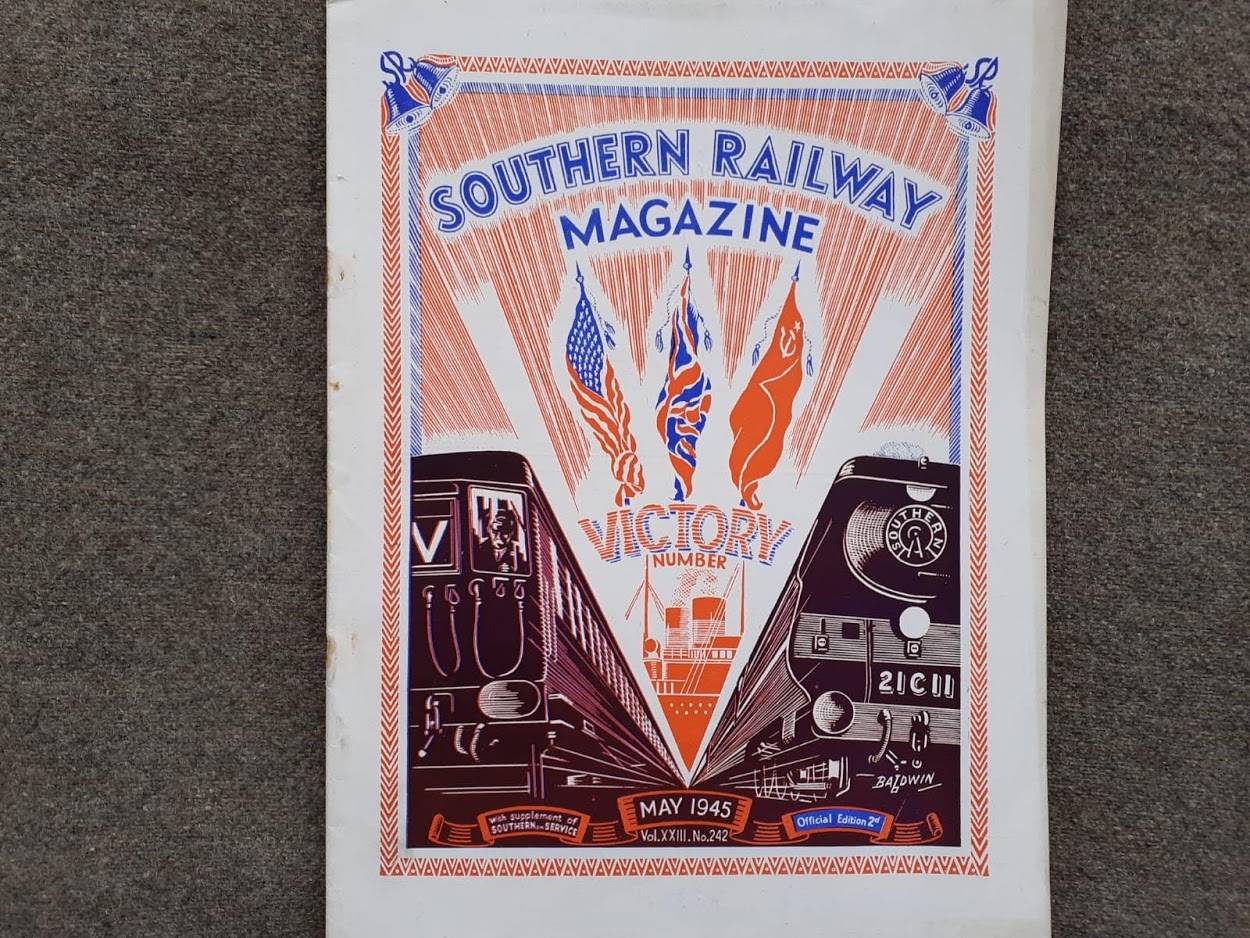
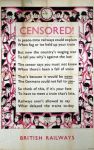
A few pictures showing something of the railways involvement during
wartime.
This Southern Railway magazine is from Barry Bull’s personal collection
UNITED KINGDOM – MARCH 09: Poster produced for Great Western Railways (GWR), London Midland & Scottish Railways (LMS), London & North Eastern Railways (LNER) and Southern Railway (SR) to advise passengers on travelling during the blackouts which were common during World War II. Artwork by M. (Photo by SSPL/Getty Images)













 Chasewater Railway Museum