
Poppies on Bredon Hill
Poppies on Bredon Hill near Lalu Farm.
Creative Commons Licence [Some Rights Reserved] © Copyright Philip Halling and licensed for reuse under this Creative Commons Licence.


Poppies on Bredon Hill
Poppies on Bredon Hill near Lalu Farm.
Posted in Newsletters
Tagged Brownhills, Burntwood, Chasewater Railway Museum, Models, Norton Canes, Pit Check, Staffordshire, Steam Trains, Wagon plate

Update on No.21 – Arthur Edwards
A long while ago I applied copious layers of red oxide to the outside of this loco in an attempt to preserve it, but once in the shed, Chris and Beth helped me to sand it down, fill it, sand it down again, apply gallons of primer and sand it down again! When Dave ‘Doc’ Baker arrived on the scene, Steve Organ approached me to ask if it would be ok for Dave to do the top coat as he was at one time employed as a signwriter. We all agreed, and now the result looks quite smart. Following the recent fitting of the Dorman engine into the frames, Chris has had a problem with lack of compression preventing it from starting. New cylinder liners are now being sought to match the new pistons we already have in stock as a solution to this problem.

News of the E1 – Barry Bull
The E1 has returned to steam at Cranmore where it featured in their three day Gala event on October 1st, 2nd and 3rd. Despite original plans to restore the loco in BR black livery as No.32110 (livery and number which of course it never carried) the loco has actually been turned out in Southern Railway olive green livery. Crews report that the loco is still a bit tight but runs well and will ‘run on a fag end’, which I presume means that she is economical. Perhaps a visit to Cranmore is called for, bearing in mind that another well-known ex-Cannock coalfield loco, Manning Wardle ‘Littleton No.5’ can be found a few miles away at Bitton.
Commercial News – Bob Duffill
For the first time in many years, the CLR took a stand at an outside event, the Warley Model Railway Exhibition on October 9th and 10th at the NEC. This clashed with our end of season rally and opening of the extension, and also my birthday on the Sunday. After 25 years of waiting to see proper passenger trains on the causeway, I missed it in order to raise funds.
Items for the stand had been collected from Chasewater the previous weekend and put in awkward places around the house for me to trip over. On the Friday afternoon John and I went to the NEC to set up the stand will a well-loaded Riley off down the M6.
Our first impression was that the hall was huge and well laid out, in fact we were able to drive the car up to the stand inside the hall to unload. There then followed attempts to disguise the various household furniture into a reasonable-looking display for our goods, some relics and Tony’s models. Compared with some stands, ours looked very homely. Whilst in the hall we had a severe electrical storm, heavy rain and a strong wind that blew over causing the large doors to be closed and the organisers to pray for better weather, and us for the event planned for Chasewater on Sunday.
On Saturday the hall was packed with bodies, and what had seemed like large aisles the night before were full. The day went on with steady sales of paperwork and odds and ends, and a steady stream of enquiries and much leaflet giving-out, the idea being to be there as much for publicity as to raise money. The new leaflet on Chasewater seemed to go down well.

Sunday dawned and John and I were there again but the day was not so busy. We were able to supply the Tal-y-Llyn Railway with some early GWR Tywyn paperwork for their archives which they appreciated with a donation. All in all attending the exhibition was a good exercise, raising some money and flew the flag.
Went the day well – Paul Whittaker
Excitement and fascination are the only words to describe the looks I saw on the children’s’ faces as they queued up to see Santa. Although some might say that the rosy red glow in their cheeks could only be attributed to the biting north wind that blows in across the lake.
I personally would like to think that a mixture of both contributed to the atmosphere that was created by the hard work and unceasing enthusiasm of the staff at Chasewater, without which this event would not be possible. Included was a vivid interpretation of Santa by our own Steve Organ, supporting cast being supplied by Geoff and relief Santa by Andy; not forgetting the mammoth task of decorating and preparing Mr. Claus’s Grotto, courtesy of Margaret and John. With all this plus a train ride provided by Les Emery, promptly followed by sherry and mince pies for the parents.
It only remains for me to say that the CLR is obviously going from strength to strength with its presentation of this seasonal event. Congratulations to everyone concerned.

Posted in Bits and Pieces
Tagged 1993, Brownhills, Burntwood, Chasewater Railway Museum, E1, Hednesford, No 21 diesel, Norton Canes
From A New Year’s Message from the Chairman
Without doubt, 1993 was a most interesting year for everyone associated with the CLR.

Obviously, the work on the ‘extension’ represents the most tangible of our successes in 1993, culminating in the decision of the Railway Inspector, Mr. Colin Law, to pass this further stretch of line in time for the Transport Rally in October. Immediately, our running line increased by over 50% in length, enabling us to market the CLR as a real railway with a real product on offer. With eminent guests from Lichfield District Council and Burntwood Town Council in attendance, after a very short, informal, ‘Opening Ceremony’, the Lichfield DC Vice Chairman Councillor Mrs. E.J.Bayliss waved off the 12 noon departure. This, as with most trains that day, was virtually full, with passengers having some little difficulty in finding seats of their choice.Photo: DMB
Councillor Mrs. Bayliss subsequently wrote a most charming letter to me, and I think it is appropriate to reproduce her letter in full –
“13th October 1993
Dear Mr. Bathurst,
Thank you very much for a lovely day at the Chasewater Light Railway and Museum Company’s Annual Transport and Machinery Rally and for the privilege of officially opening the new stretch of railway line. My husband and I found the Rally in Chasewater Park most enjoyable and interesting and we wish you well for the future.
The District Council looks forward to working with you further in the future when the whole of Chasewater comes within the boundaries of this Authority.
Yours Sincerely,
Cllr Mrs.E.J.Bayliss
Vice Chairman of Council.”

I hardly need to comment on how important it is for the CLR to enter into a good dialogue with both the elected members and officers of Lichfield DC, whose respect for the CLR will, for certain, be influenced by the professionalism with which we maintain our operations.
From the Editorial
The latest news is that ‘Asbestos’ is to spend the first weekend in March running on the internal railway system at Bromford Tube Works in Birmingham. The ‘Open Day’ comes just before the closure of the works and will involve running demonstration trains with the 20 ton GW Toad.
If you would like to put forward your views on a name for the new causeway station please complete and return the form later in the magazine.
Locomotive News

No.4 Asbestos – This loco ran passenger trains to the top of the causeway bank for the first time in October, and again in December for the Santa Specials. On both occasions the saddle tank was replenished at around mid-afternoon by a preserved fire engine, courtesy of Trevor Sharples of the Fire Service Preservation Society. This alleviated the need for us to fill the station water tower in potentially frosty weather, as the longer run to the causeway means that it is no longer feasible to rely on the station hose-pipe between runs. Following recent problems with firebars warping, a pattern has been made and a couple of samples cast from it. These were fitted for the Christmas running, and as they seem to have stood up to the last of our Columbian coal quite well, a further batch of replacements will be cast and fitted ready for Easter. The loco has now been partially stripped ready for a wash-out, cleaning and an intermediate boiler inspection. Work has also commenced on a number of minor repairs to cure amongst other things, a very tight regulator, a leaking steam manifold joint in the cab, and leaking injector water valves. If all goes well the loco should be ready to run again at Easter.

No.5 Sentinel – Some progress is now being made with the repair of this loco. A complete set of 96 new ¾” whitworth studs have been specially made to order in a special heat-resistant steel and fitted to the boiler. The two halves of the boiler shell are now being re-assembled ready for hydraulic testing, hopefully in February. The superheater coil will also be tested at the same time. Other work being carried out is the refurbishment of all steam fittings and the boiler water feed pump. All the fireman’s controls are being moved to the left-hand side of the cab to make life easier, as the loco was originally designed for one-man operation with all controls on the driver’s side.
New Peckett – Following the departure of ‘Lion’, another Peckett has arrived to take its place. The loco, purchased recently by Mike Wood, appears to have been supplied in kit form, complete with smokebox tubeplate, rods, fittings and various machined and un-machined castings as loose items. The loco is believed to be No.1903 ‘Little Lady’. No doubt we will be able to persuade Mike to write an article giving full details in due course.
Fowler diesel – This loco has remained in service without any mechanical problems, being used mainly for the regular Sunday works trains.
Ruston DL7 – Whilst nominally operational, this loco has remained out of use in favour of the Fowler.
L&Y No.1 petrol loco – Dorman Diesels of Stafford have very kindly had specially made for us a new set of camshaft drive gears to fit the petrol engine which is currently dismantled in the shed awaiting re-assembly. Work on the loco itself has continued with the refurbishment of its springs and axle boxes.

Carriage & Wagon News
Great Eastern six-wheel passenger brake – Work has continued on this coach during the winter, mainly on the interior for obvious reasons. There can now be little doubt that this will be the first of our vintage coaches to be fully restored, it is well on the way already.
CRC 4-plank wagon – Rebuilding of the new wooden planking of the body is now well advanced, and various items of steelwork are being prepared ready for fitting.
GW Fruit ‘D’ – Following a great deal of hard work to sand down and prepare the wooden body, this van has been painted in chocolate and even has the GWR emblems hand-painted on making it a very smart looking vehicle indeed. The only obvious outstanding work needed now is the re-covering of the roof to make it water-tight. Assuming that the vacuum works satisfactorily when new bags are fitted, it would be nice to see it added to the occasional passenger train just for show.
20 ton GW Toad – This vehicle has remained in regular use on Saturday and Sunday works trains throughout the winter. It is rumoured that it may go to Bromford Tube Works with ‘Asbestos’ in early March as part of a CLR arranged ‘closing down spectacular’ on that Company’s railway system.
Wickham DMU E56171 & E50416 – These two vehicles are now definitely destined for Llangollen at a time yet to be agreed, and dependant on our obtaining suitable asbestos-free replacements. Meanwhile, the trailer ran again on the Santa Specials in December but is looking exceedingly tatty, especially when coupled to the centre car. The power car has remained out of use.
Derby centre car W59444 – This coach is the only one of our four original DMUs destined to stay at Chasewater, and is therefore likely to be in constant use for the foreseeable future. It ran in December when, after quite a bit of preparation, even the heaters worked.

Replacement DMU stock – There is still nothing definite to report, although ‘The Management’ are still working on the acquisition of replacements, and are submitting tenders for suitable vehicles as and when opportunities arise.
General Manager’s Report and Boardroom Notes – Steve Organ
At the last meeting, the Board decided that certain changes should be made to reflect more accurately the roles required to be played by certain Board members. As a result, I have relinquished the role of Chairman after seven years in office, and have been appointed General Manager. David Bathurst has consented to act as Chairman. The changes reflect the fact that I have perhaps more time than other Board members to supervise works being carried out during the week, and my new role gives me the opportunity to act as a liaising officer for the various projects being worked on at the railway. I think that the Board also wants me to have the task of seeing to fruition the various projects that I have initiated during my tenancy as Chairman!
I first wish to thank Tony Sale for the work that he carried out as General Manager for more years than I care to remember, and to say how grateful I am that he has offered to administer the engineering records and locomotive examinations, as well as overseeing the Loco Department.

When Adrian Hall and I arranged the present company and administration in 1986, and engineered the amalgamation of the old Society and Company into the present Charitable Trust, the membership made it quite clear that the most desirable change to the old ‘set-up’ was to transform the Company into a real railway, running trains all the way along our leased trackbed to Burntwood, and perhaps towards Anglesey Basin and beyond. In the first magazine produced by the new Company, I wrote a long piece entitled ‘The Lost Causeway’, about the perilous state of the old causeway that once carried the railway across the northern part of Chasewater, then severely eroded by wave action. It was quite clear that if we were ever to fulfil our ambitions, the causeway would need a huge scheme of works tore-establish the old link. Mindful of that, it was decided that we would seek ways of carrying out those works, whilst in the meantime rebuilding the permanent way to the causeway from Brownhills West. David Bathurst has described in previous magazines some of the ways we have attempted to bridge the causeway gap. That scheme is at last well under way, with well over 30,000 tons of infill having already been delivered and landscaped, with completion envisaged around December 1993. In the meantime, tracklaying gangs have achieved a great milestone marked by a visit by HM inspector of Railways in September, during the course of which visit we were given authority, subject to completion of certain works, to operate passenger trains to the start of the causeway on and from our Autumn Vintage and General Rally on October 10th.A recent view of the causeway showing the scale of the earthworks, and the track in place. The pylon on the left has been demolished since this photo was taken greatly improving the scene.

The most difficult of the outstanding works are to re-pack the whole of the relaid section as a certain amount of settlement has occurred, an inevitable result of the complete rebuilding of that section of line, so any Saturday or Sunday that you have time to spare, come on down. We will find plenty for you to do. This doubling of the railway’s operational line with passenger traffic to the start of the causeway for the first time ever can only happen if our efforts continue apace.

August Bank Holiday weekend saw an historic event, when the first four lengths of concrete-sleepered track were placed on the new causeway. Using a sleeper refurbishment technique developed by Dave Borthwick and Keith Day, which received very favourable comment from the Railway Inspector, a very hard worked team really showed their pace. No further tracklaying is likely to take place before early December, as the rest of the causeway is nowhere near complete. It is also necessary to stockpile huge quantities of ash ballast and topsoil ready for the final shaping of the causeway once the arrival and compacting of fill materials is complete, and the only place available to stockpile is on the completed areas of the causeway itself.
The station on the northern side of the causeway is under construction, and by the time you read this, the platform should be complete except for coping stones and the northern ramp.

Our aim is to open to a Civic Reception on Good Friday, 1st April, 1994. Come and help!!!Norton Lakeside 1992
Motorway Update
Revised plans for our new relocated station at Brownhills West, with associated works yard, are under preparation by Ove Arup and Partners after consultation between Midland Expressway and the Railway’s negotiators (i.e. David Bathurst and Steve Organ). MEL’s Consultation Manager, John Burton, has told me today (21st September) that ‘a scheme’ will be ready by mid-October. I hope that he is right, because new sidings are urgently needed, and we must plan them to tie up with the motorway’s scheme.
The railway is an exciting place just now. Dreams have become plans and are now hardening into reality. All members of our group have a part to play – come and help make it so!!
Chasewater Railway (Brownhills West), Walsall, WS8 7NL
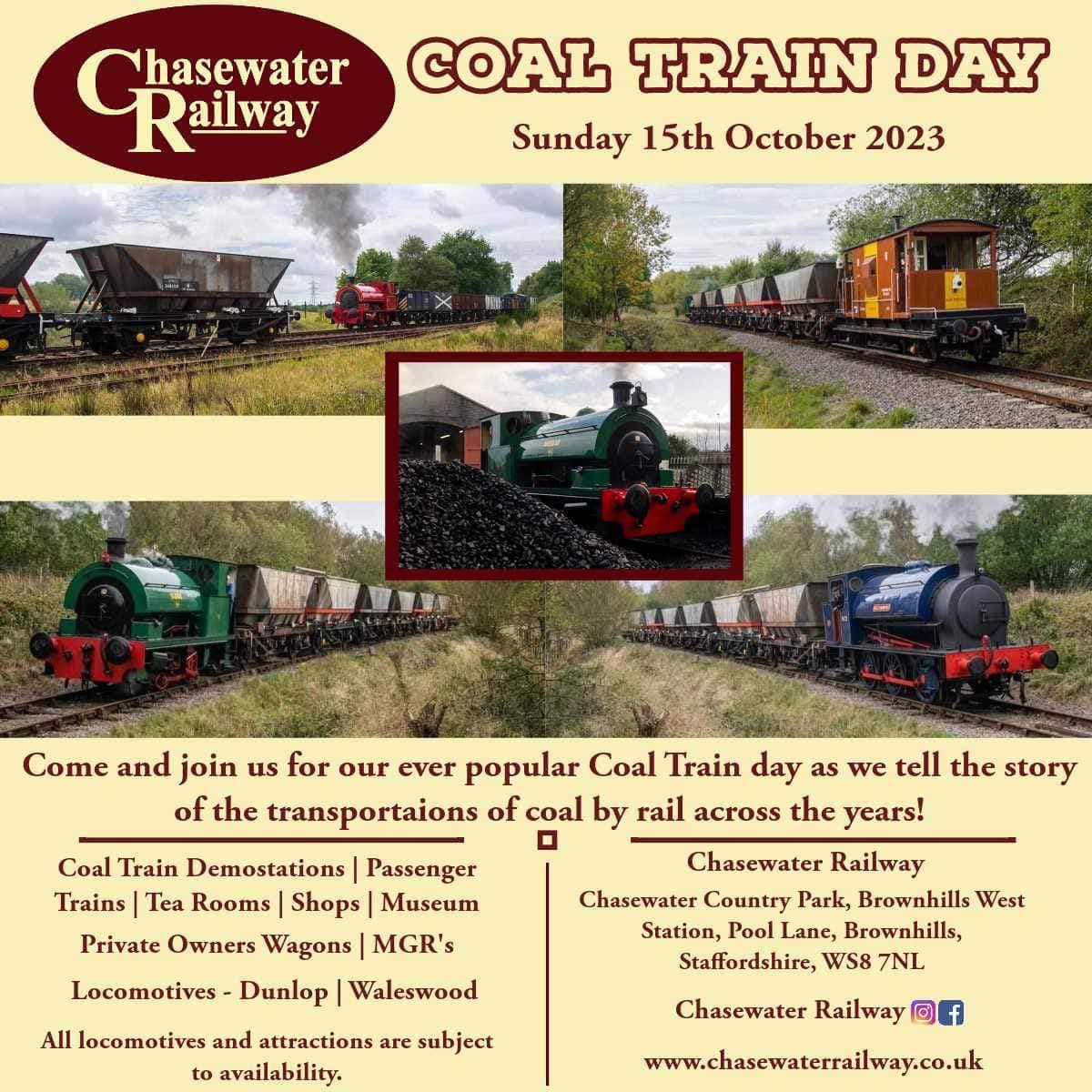
Sat 28th October 2023 – Sun 29th October 2023

Board our Terrifying Train at Brownhills West Station for a spooky trip to the Haunted Heaths, beware the Ghostly Ghouls.
If you make it back pay a visit to our Scare Centre if you dare!!!
There will be Spooky Stories in our Blood Curdling Brake Van and the Night time Narrow Gauge in operation.

More of “The Colliery Line” – Dave Borthwick
GER after external restoration in 1992
Some time ago Steve Organ, in conversation with us over a cup of tea in the Great Eastern tea room, intimated that a lot of railways were giving themselves pretty names, titles like ‘The Poppy Line’, or ‘The Watercress Line’. What could we call ours? Cynics shouted names like ‘Toe Rag Valley’, or ‘Rotten (Sleeper) Row’, ‘Fisherman’s Barrier Railway’, or even the ‘Beacon Walk Railway’ on the basis of the pedestrians and dogs who walk down the middle of the track daily.
Sometime later while talking to Adrian he told me of the local scene a hundred years ago, and that if you looked in the direction of the lake you would see a number of pits littering the hillsides. Not knowing the area, I was surprised to learn of the rich history. How many more visitors must come to us and just see spoil heaps, a little railway and a small lake, and not know the reason why we exist?

The map shows the extensive railway system and the local pits around Chasewater
During my time off work with my leg in plaster, I took the opportunity (with thanks to Rob Duffill and Tony Wheeler, who supplied the photographs and local history books) to build a low-cost exhibition showing the colliery history of the area incorporating the industrial railway scene. This is housed temporarily in the Southern brake van. Up to yet it seems to have been a success, the crowning glory being the installation of a pot-bellied wood burning stove designed and built by Paul Whittaker from a defective gas cylinder. The stove was first put to use to dry out the soaking timbers to prevent damp on the exhibits, but with a safety fire-guard, and ‘Do not touch – HOT’ signs this item has pleasantly provided visitors with a warm refuge away from the Chase breeze and seats on which to sit peacefully.
Recently a visitor’s book has been installed, in which the public can write their name and address and any comments about the railway in general against a box number. At the end of the season the numbers will be put into a hat and the visitor whose number is picked will win a small prize. This idea may encourage feedback from our passengers for future changes.
Recently our visitors have written:
· ‘Excellent’ and he especially likes the smell of the stove as it brings back memories of the good old days.
· ‘Very interesting’
· ‘Mega good’
· Whilst one gentleman has commented he ‘has seen better’
Personally I think that the last person is a railway enthusiast, and we should try to cater for his needs. The rest of the comments I think can be judged as being from:
· Visitors to the Park who stumble across us and are pleasantly surprised.
· Mums and Dads who are happy to show junior how life used to be when we owned the world.
· If they write a nice comment they stand a better chance of winning a bottle of wine.
A rough census of visitors revealed the following:
· 15% came from Birmingham
· 15% came from Lichfield
· 30% came from Walsall
· 30% are locals
· 10% are others
In conjunction with this annex to our main museum, Dave Whittle has publicised us in the railway press on a ‘Colliery Line’ theme and has successfully collected, delivered and exhibited two coal tubs complete with track and a colliery winding wheel for which Paul Whittaker is now building a support frame.
This truly has become ‘The Colliery Line’.
PS – Over £10 has been collected from donation boxes in the brake van over a single Bank Holiday!
Bass Community Awards – Keith Day
For the second year in succession the Chasewater Railway has won a Bass Community Award. The presentation took place at 7.00pm on Wednesday 7th July when Bass representatives Janice Clark and Leslie Barrett arrived carrying a rather oversized cheque for £250. The gift is to be used to purchase sleepers for use on the causeway.
Our two guests, and around thirty of our working members, family and friends were transported down to the end of the line in the GW brake van, where a photo session was called for, with no damage to the camera, although no pictures have yet been received.
After returning to Brownhills West, a small buffet and drinks had been arranged and was enthusiastically consumed. A jolly good time was had by all. Thanks Bass!
But not all had gone to plan – five minutes before Janice and Leslie arrived it had been discovered that the Fowler diesel would not start. The problem was diagnosed as either flat batteries or a faulty starter motor and it looked as though the night was set to become a disaster.

Les, grasping the nettle, announced “We’ll have to use the Ruston”. Ruston DL7 – A. Dean
Now DL7 has been out of service for quite some time, although in recent weeks Ken, Chris and Andy have spent a lot of time working on it and, although the engine had been run up, the loco had not moved very far under its own power.
It was decided to run the train with the Fowler hooked on just in case.
DL7 performed impeccably, and at the railhead they also managed to start the Fowler. What initially appeared to be a disaster turned out to be somewhat of an historical event – double-headed diesels to the causeway. Well done Andy & Co. and yet again, thanks Les! (Emery)

Posted in Uncategorized
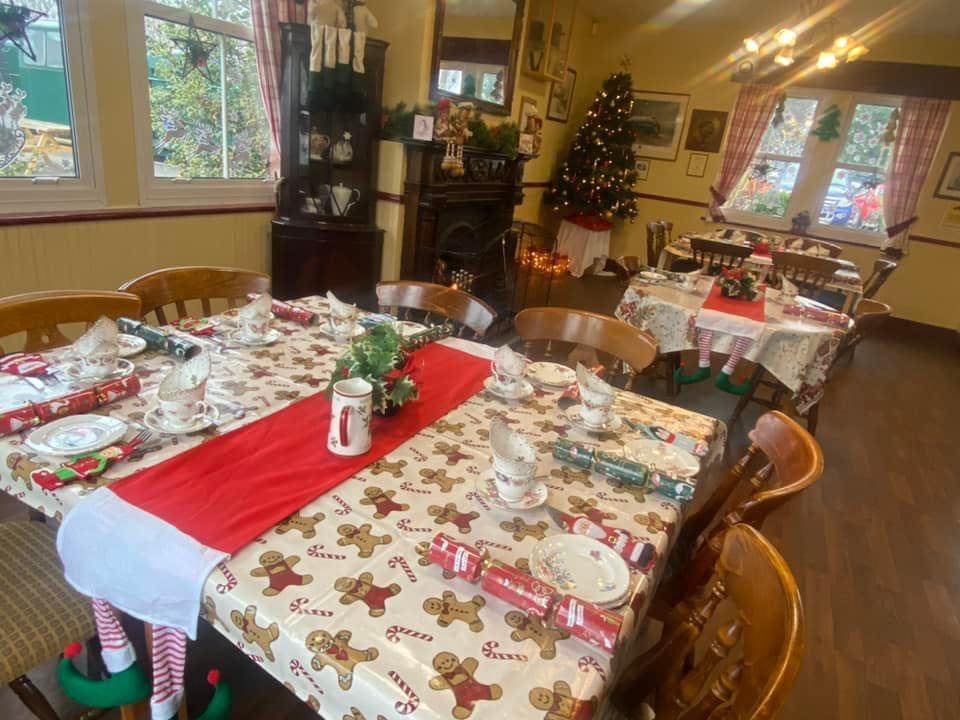
Tagged Brownhills, Burntwood, Chasewater Railway Museum, DL7, Festive Teas, GER, Heath Hayes, Hednesford, Norton Canes, Road and Rail, Ruston, Staffordshire
Editorial
As you will read elsewhere in this magazine, we are now running trains to the top of the causeway bank. Next year the run will be even longer, into the new station. This is a great achievement, but we should not forget that the more track we have, the more it will require in money and manpower to maintain it. As we still seem to be struggling a bit in both these respects, let us hope that our latest extension will at last encourage more members to come and help with the work, and a lot more passengers to buy tickets to pay for it!
Locomotive News

No.4 Asbestos – This loco has continued to run our passenger services single-handed and has held up very well despite the hectic summer steaming schedule. A backlog of repairs is now building up which will have to be dealt with over the winter. The motion is knocking very badly and if sufficient funds are available it is intended to cast new bearing brasses. Other faults include the injector water valves leaking badly, which will have to be re-machined, and a number of warped firebars which will have to be renewed.Asbestos & L & Y No.1
No.5 Sentinel – Little progress has been made on this loco over the summer due to the need to keep the trains running and Asbestos operational. All of the old studs have, however, been removed, and the boiler water spaces shot-blasted and painted ready for re-assembly. The latest target for completion of the work is Easter next year.
No.2 Lion – The sad news about this loco is that its owner has decided to take it to Foxfield, and its transport has been arranged for Saturday October 9th. Other than that, progress has continued with the completion of the vacuum, brake system, a re-paint and the fitting of a turbo generator for cab lighting. We wish the loco well at its new home, and will no doubt keep in touch with it.
S100 – The re-machined hornguides of the centre driving axle have now been fitted, and the work is now being repeated for the rear axle.
Fowler Diesel – Following the fitting of a replacement set of batteries, the loco is back to normal, starting almost instantaneously. It has again done the majority of the shunting and works train jobs.
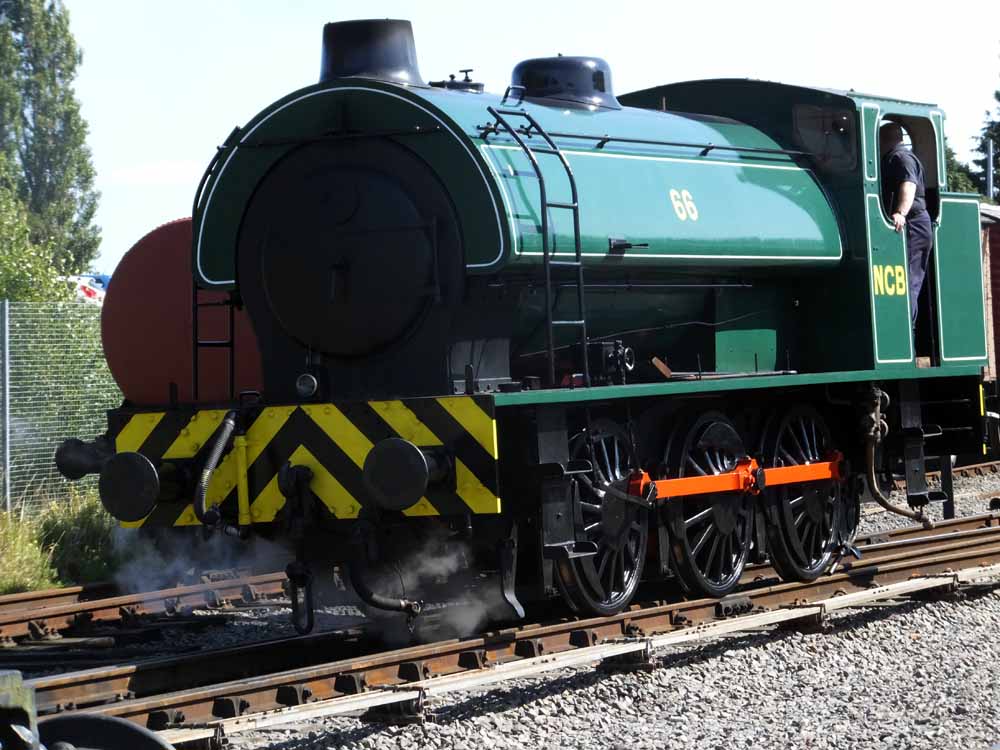
No.21 Diesel – This loco still awaits its long lost engine, whilst work has been carried out on sanding and painting the body.

L&Y No.1 – A surprise move this summer has been the commencement of restoration on this very rare ‘petrol pudding’. In the space of only a few hectic weekends the vehicle has been stripped of upper bodywork, engine, gearbox and axle boxes. The engine itself has been un-seized, stripped and cleaned, and Dorman Engines contacted to help with replacements for the badly worn camshaft drive gears. If the re-assembly of the loco proceeds at the same pace as the dismantling it should be runnable next year.
Smith Rodley Crane – This vehicle has again remained out of use.
Carriage & Wagon News
Great Eastern six-wheel passenger brake No.44 – Work has continued on the restoration of this vehicle with the chipping, priming and painting of the solebars and running gear. Even the wheels now have white-wall tyres! The bodywork is also improving with a coat of Great Eastern blue gloss.
CRC 4-plank wagon – This wagon now has one side and both ends rebuilt and awaits a shunt round the yard so that access can be gained to the other side.
20 ton Great Western Toad No.35251 – The bodywork of this vehicle has been undercoated and is awaiting a top coat.
Great Western Fruit ‘D’ No.2336 – Work has started on stripping paint and undercoating one side, but due to its being kept in the loco shed compound of late where no mains power is available, work on this van has been suspended.
21 ton mineral wagon No.B316711 – This wagon has now had its load of scrap metal removed but still needs the remaining coal dust and slack cleaning out before any restoration can begin.

16 ton Great Western Toad No.35831 – This vehicle is awaiting a space in the yard where work on the springs and running boards can be carried out.
Covered Carriage Truck S770 – This is a new arrival at Chasewater and belongs to one of our members. It appears to be in excellent condition, requiring only a repaint to cover up the ‘condemned’ symbols painted on the sides by BR. Even the vacuum brake worked first time as proved during a shunting session coupled to Asbestos.
LNWR West Coast Joint Stock 50’ Brake No.20 – The first section of this vehicle to be renovated internally has remained in use as our museum throughout the year. Following this success, work has started on clearing and renovating the other end to initially become Santa’s Grotto at Christmas and then the second half of the museum for next year.
Little or no work has been carried out on the other items of vintage rolling stock, mainly due to the lack of manpower. This is a great shame as there are now a number of half-stripped vehicles stood around under tarpaulins, and winter is approaching.
Wickham DMU E56171 & E50416 – Again, the trailer car ‘Wickham Bar’ has been used as part of our steam hauled passenger train, and in view of its impending departure from Chasewater, little or no work has been carried out on it. The power car has remained out of use for the same reason, with the engines run up occasionally. No date has yet been fixed for the departure of these two vehicles to Llangollen.

Derby Centre Car W59444 – This coach has run all this year coupled to the Wickham trailer to form our passenger train. During the summer the repaint has been completed and it now looks superb in its early BR carmine and cream livery. As a result of this it is rumoured that our Wickham and Gloucester replacements, whatever they may prove to be, will be painted in the same livery, and hopefully to the same excellent standard.
Gloucester trailer E56301 – Having remained at Chasewater throughout the summer, this vehicle finally left for Preston on Monday 4th October. It was tidied up at short notice recently so that it could be used for a special train in August for a visit to Chasewater by the Forestry Commission and local Councillors in connection with the work being carried out to restore the causeway.
Replacement Coaching Stock – The search for replacements for the Gloucester and Wickhams is still on, but as yet nothing suitable has been found at the right price. On one occasion, vehicles from BR which had appeared ideal were found at the last minute to have doubtful ‘asbestos free’ certification and so were not pursued further. Confidence is, however, high that replacements will be found.

In an edition of ‘Chasewater News’ last year (Bits & Pieces No. 152) I outlined the possible use of derelict land grant (DLG) to enable the railway to achieve one of its most important projects – the restoration of the causeway. The possibility had arisen for a number of reasons, including the fact that the Staffs County Council was preparing a derelict land scheme to reclaim the Norton Bog area of Chasewater, directly adjacent to the causeway.
The Staffs CC scheme was, however, delayed owing to the need to consult British Coal in respect of the coal stocks which might be recovered from Norton Bog. If the Staffs CC scheme were to proceed, it was suggested that the causeway restoration could form a later stage of that scheme. The mechanism to achieve this proposal was itself very complicated, with the causeway mainly falling within Walsall Council’s boundary.
Since the date of my earlier article, many events have taken place, including the decision of the Boundary Commission to transfer much of Chasewater into Lichfield District Council (and thereby under the planning jurisdiction of Staffs CC) from 1st April 1994. This transfer also includes land ownerships, much to the dismay of Walsall Council. The proposed transfer has direct implications for the railway, namely the short-term difficulties of having to take account of an additional local authority and the longer-term benefits of having to deal with fewer local authorities!!
Against this backdrop of DLG and the involvement of the various local authorities, members who visit the railway regularly will have some difficulty in reconciling the information which I have so far provided, with the events ‘on the ground’. Indeed by the time this article appears in print, there is a prospect that most – if natal – of the causeway restoration will have been completed. Not only has a very substantial access roadway been laid from Hednesford Road (rear of the station area ‘top’ compound), but similarly substantial works will have been completed to prepare the causeway to receive substantial inert fill materials.
‘But how is this possible?’ is the question likely to be asked by many members – especially those members who will have appreciated the massive scale of the restoration project. It is a valid question, particularly in light of the knowledge gained by the CLR Board regarding just how much fill material (perhaps 10,000 tons) and manual resources are necessary to undertake the work.
One of the earliest lessons which I learned upon joining my current employers was the value of owning a hole in the ground. As time passes and demands on space increase, coupled with the ever-present vigilance of the environmental lobbyists, local authorities and private organisations are finding it increasingly difficult to dispose of unwanted materials. Although it is of no concern to the railway, everyone must be aware of the problem of dealing with household waste. Exactly the same problem arises in respect of disposing of hard waste which is generated through the day-to-day operations of a large local authority. Most of this material has to be sent to licensed tips – sometimes a great distance away – at a significant cost both in terms of transport and tipping fees. If you own a hole in the ground, and you can secure the necessary planning and/or other permissions to fill it, then you have a most valuable asset.

I think that few of us involved with the railway fully appreciated that the causeway might be regarded as a ‘hole in the ground; in reverse! But that is precisely what it is.Causeway December 1992
Even before the previous article appeared in print, representations were being made to the railway to the effect that Walsall Council’s Highways Direct Labour Organisation (DLO) would be prepared to undertake a restoration project, using the causeway as a suitable location for filling with appropriate inert (and environmentally acceptable) materials. It would be, and continues to be, a finely balanced financial equation. It was to be based entirely on commercial considerations. It was not to be regarded as a favour to the railway. It was to be based on the financial benefit to be obtained by the DLO, but with the railway enjoying a similar benefit, albeit not in directly financial terms.
The proposal can be summarised thus: a proportion of the savings made by the DLO by not incurring tipping charges in the private sector could be allocated to the works necessary to transport materials and employ heavy plant to spread, profile and consolidate the causeway to specifications laid down by the railway. In addition to its routine programme of road maintenance, the DLO is for ever tendering for major highway projects, including bridge and similar schemes, all of which result in materials having to be disposed of.
I have no wish to expend too much time and space in describing all of the individual aspects of the project which have had to be addressed before work could start. I can say, however, that many hours of discussions and consultations have been necessary, and dozens of phone calls made, to ensure (so far as is possible) the support and co-operation of the various agencies involved. The detailed discussions have necessarily been limited to a mere handful of railway personnel, so as to concentrate lines of communication.

These discussions have included such details as how to deal with the rare (or rarish) plant life growing on the causeway. It has been necessary to remember that the railway’s activities include certain designated areas, including a SSSI and a SINC (abbreviations well known to those of you with wild life interests), which have required close liaison with Walsall Council’s Planning and Leisure Services Departments. I must place on record the tremendous help, support and co-operation of the Officers who have been involved in this particular aspect, including the Countryside Officer who gave the CLR Chairman (the author of this article at the time) a crash course in rare plant recognition!!Causeway South 1992

There have been a number of false starts to the project. Initially, it was intended to import the materials from the bridge reconstruction scheme at the High Bridges on the Pelsall to Brownhills road. I suppose that it was inevitable that something would go wrong, and so it did. The weather immediately after Christmas reduced Chasewater Park to a bog, making it completely impossible to even consider moving any form of heavy vehicle into or through the park. Each time the weather seemed to improve, it immediately deteriorated again, resulting in a further deferral of the start date. I hardly need to remind certain members of the dangers associated with driving vehicles in close proximity of the Chasewater reservoir without taking the precaution of wearing a life-jacket and having flares (as opposed to railway detonators) immediately to hand. (While working with the dumper truck it got a bit too close and slipped into the water!! Bits & Pieces No. 151)Causeway December 1992
However, an upturn in the weather enabled everyone concerned to agree to an early May start date, and work on laying the access road commenced in earnest on the first Tuesday in May. Regrettably, the attentions of the local riff-raff were directed to the contractor’s JCB, which attempted to emulate the dumper truck in trying to carry out work within the Chasewater Reservoir itself. Despite this set-back, the work has continued according to plan.
In terms of a time scale, the DLO have not sought to offer (and nor has the railway demanded) a precise indication of a completion date for the restoration project. This reflects the fluctuating availability of suitable fill material – which has had to meet exacting criteria laid down by both the railway and the local authority. Nevertheless, it is in the financial interests of the DLO to undertake the work speedily and effectively, so as to avoid the costs of employing contractors’ plant and equipment, whilst at the same time maximising the capacity possibilities provided by the scheme.
The end product will be a causeway capable of accommodating a railway line; but it will not necessarily be a finished product. It will still be necessary for the railway to provide for the small bridge at the eastern end of the causeway to be widened to facilitate the provision of a trackside footpath. Indeed, although there is no formal right of access across the causeway, the railway cannot ignore the real world situation in which the causeway is seen by the public as a convenient route between the two sides of Chasewater Park. The restoration scheme includes a private footpath alongside the running line, but at a slightly lower level.
In addition, discussions are taking place with the group responsible for the Forest of Mercia, in relation to a scheme of planting suitable species along the causeway, so as to enhance the environmental attractiveness of what might otherwise be a somewhat stark construction.
I apologise for the length of this article, but only in one sense. The causeway restoration project is of momentous significance to the future of the railway. It is a focal point in the minds of many of the railway’s working members. Not only is it important in itself, but it also opens up the real prospect of further expansion into Chasetown. Already, preliminary discussions have taken place with Staffs CC – who are currently designing their Norton Bog Reclamation Scheme now that British Coal have withdrawn their coal recovery proposals – regarding the clearance of the track-bed adjacent to the Norton Bog site. Further, Staffs CC Highways Department have been asked to provide details of their design work on the Burntwood by-pass, to enable the railway to assess the implications on the railway’s long-term expansion proposals.
This is a very exciting time for the railway, with so many different projects taking place or being prepared. The causeway restoration will make it necessary to bring forward thought (and expenditure) on the procurement of sleepers and rail. It will give an added impetus and an exciting incentive to the working members and the railway’s many supporters.

And it is a fact that the scheme has come about because of the one thing that most of us had not contemplated – our own special version of a “hole in the ground”.
Causeway South January 2005
Posted onNovember 9, 2015by John D | Leave a comment
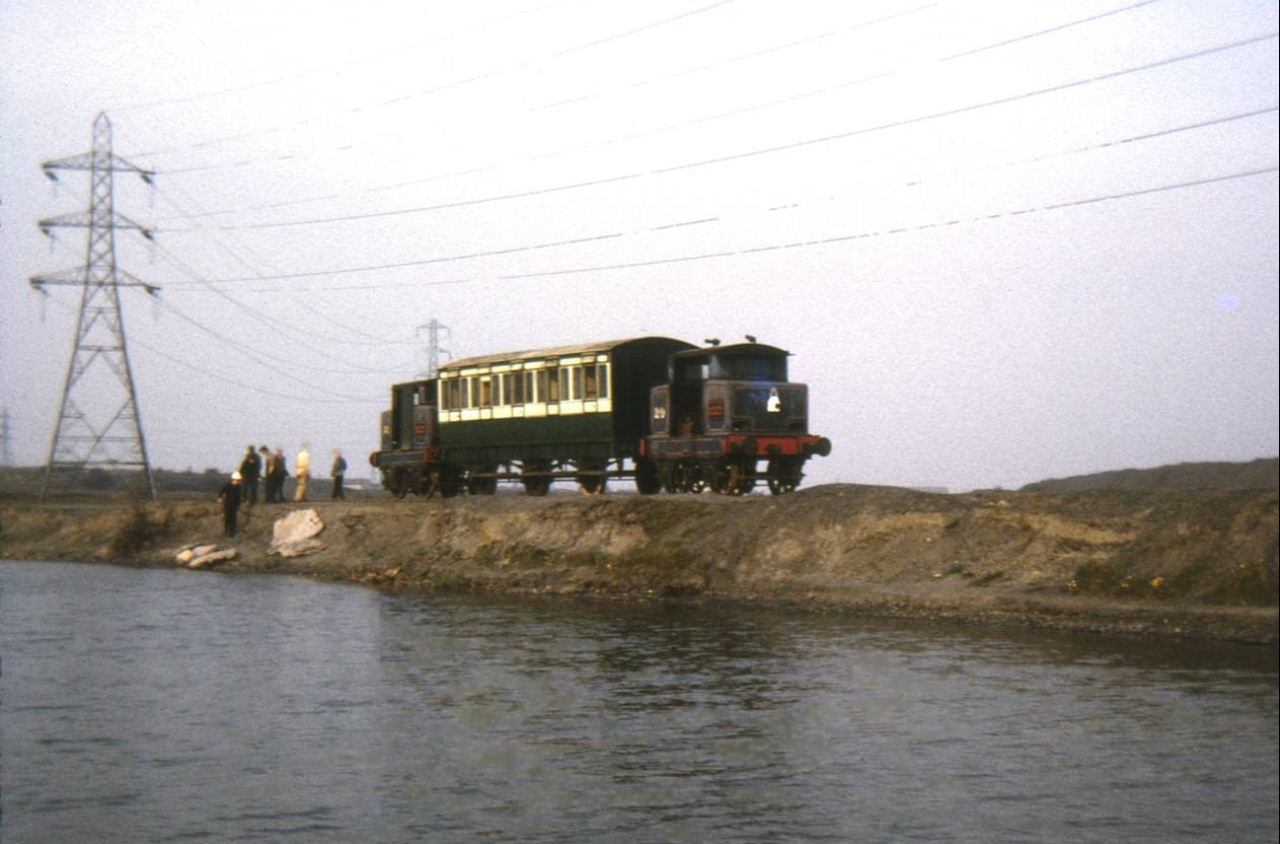
Worthington locos Nos.20 & 21 on the causeway with the Maryport & Carlisle coach in April, 1971
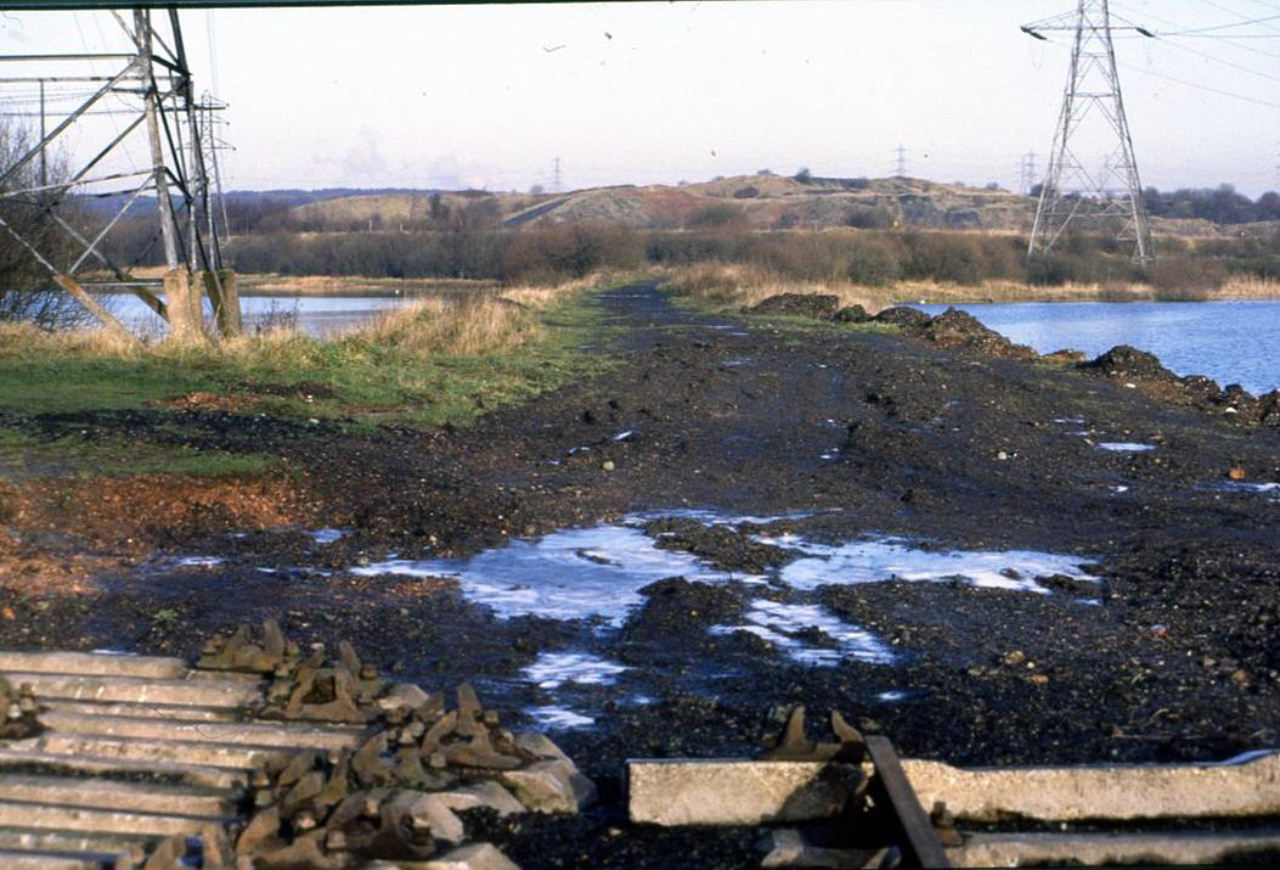
Taken in 1992
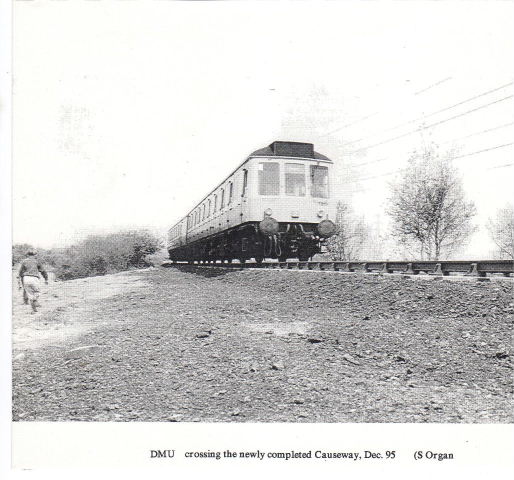
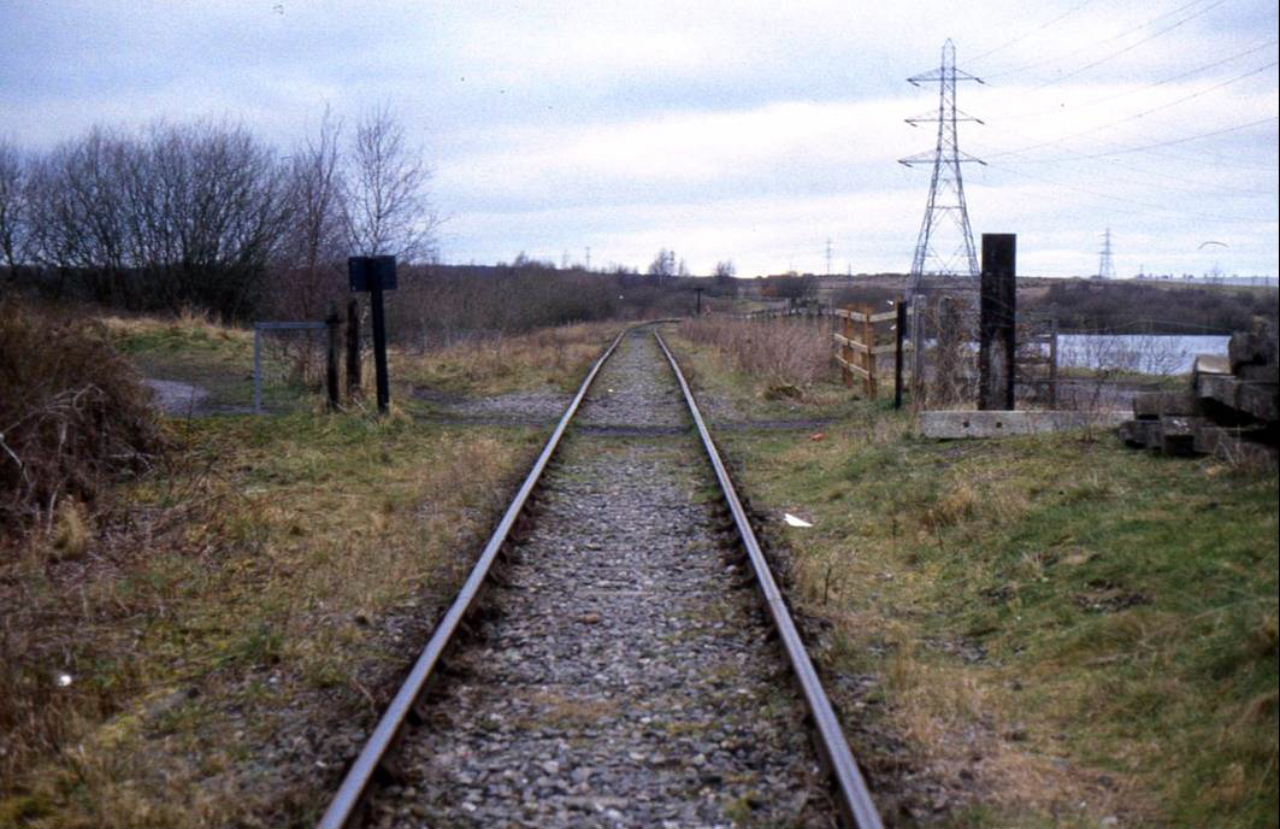
Taken in 2005
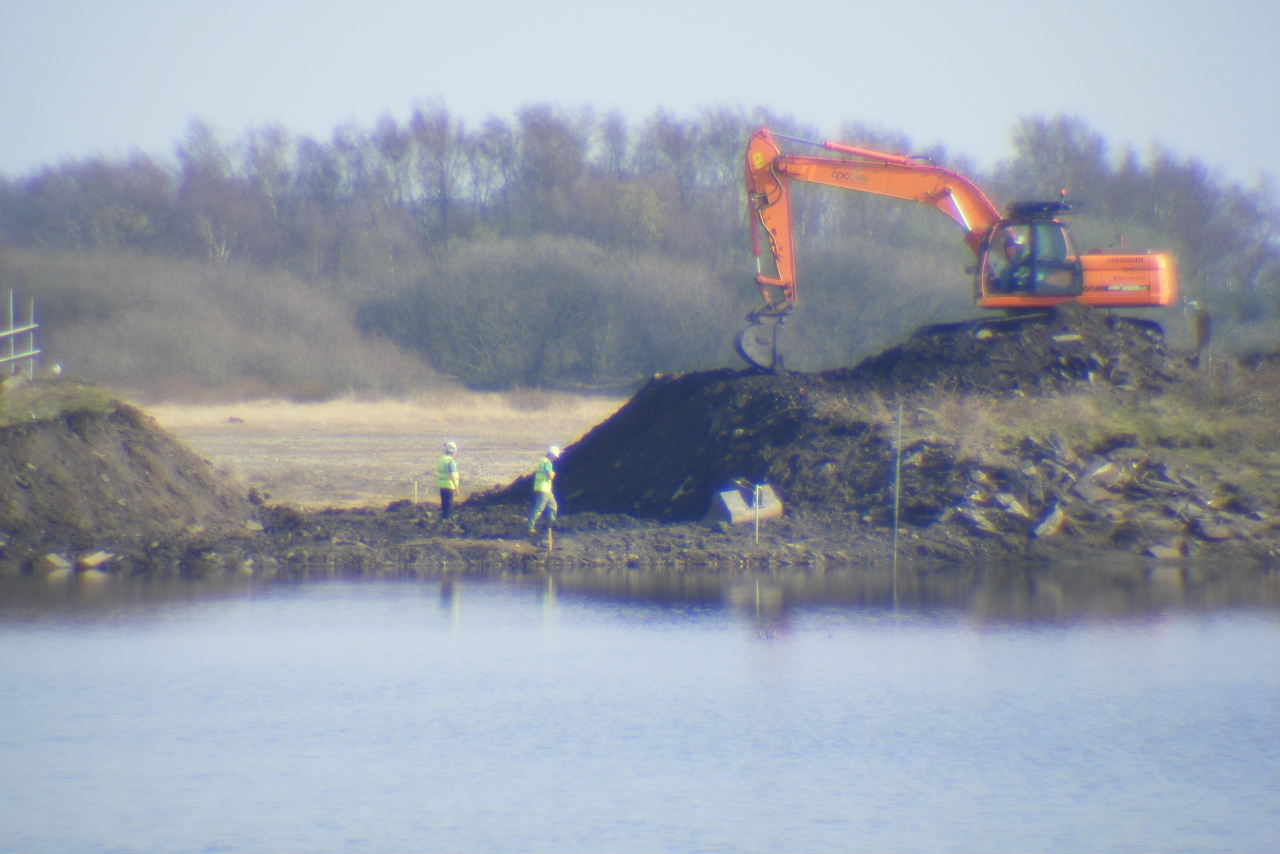
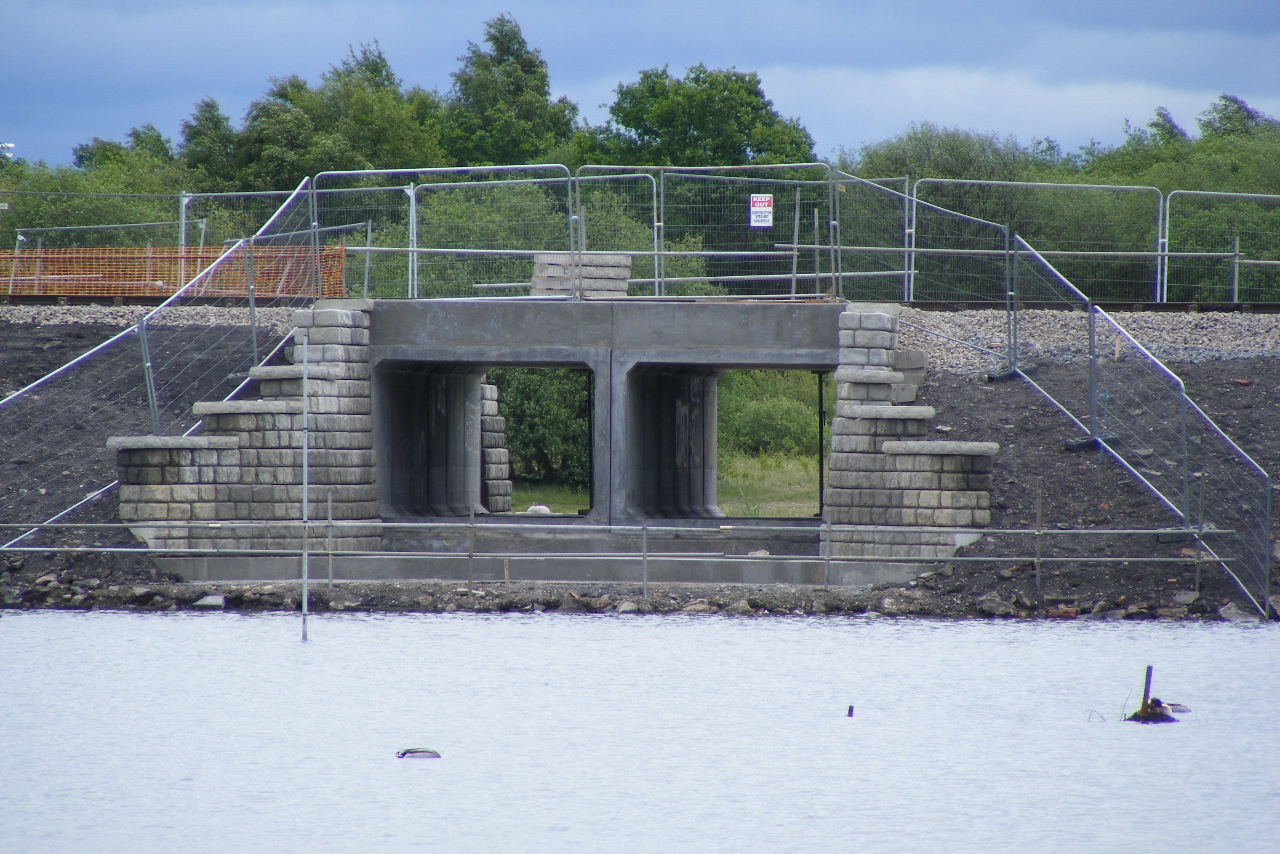
2011 – A hole in the Causeway!
Later in 2011
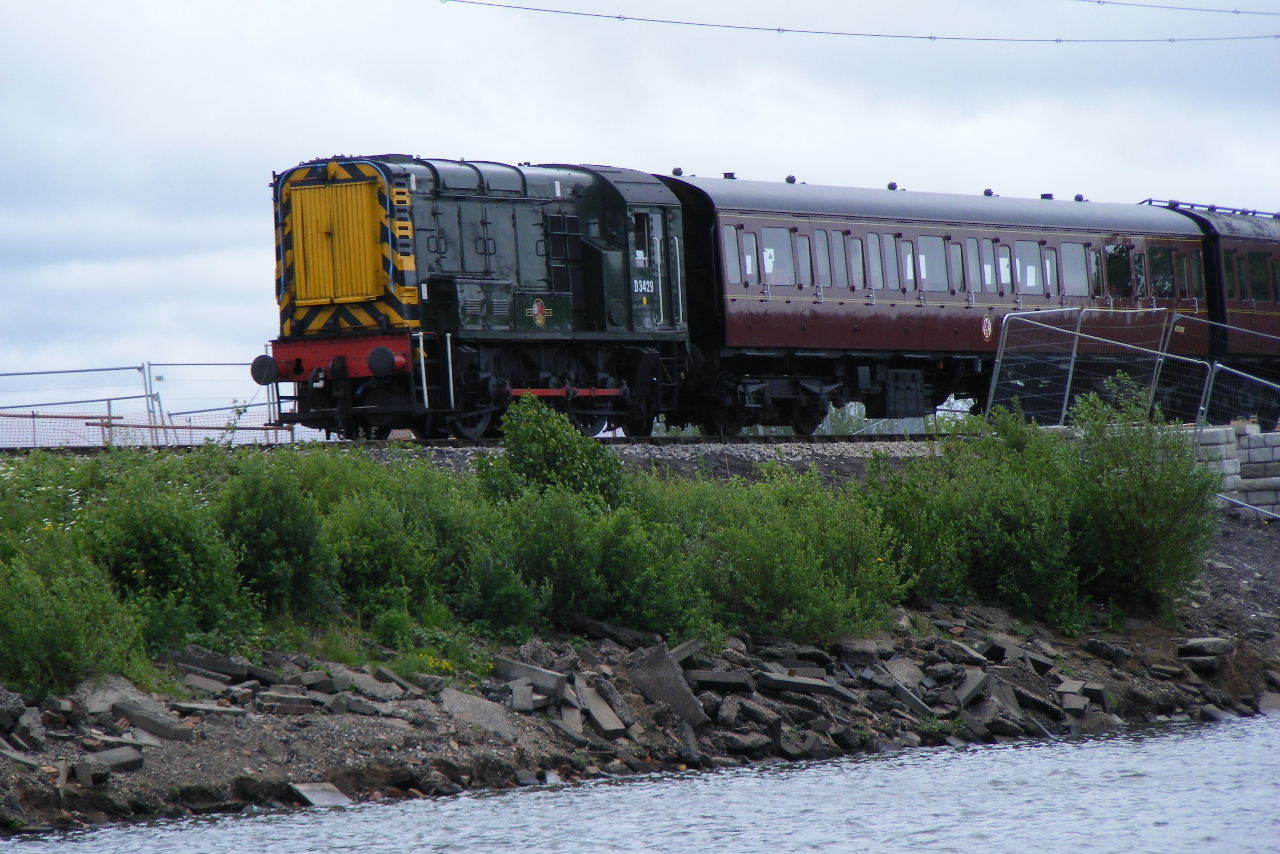
May 2011 – First train over re-opened causeway.
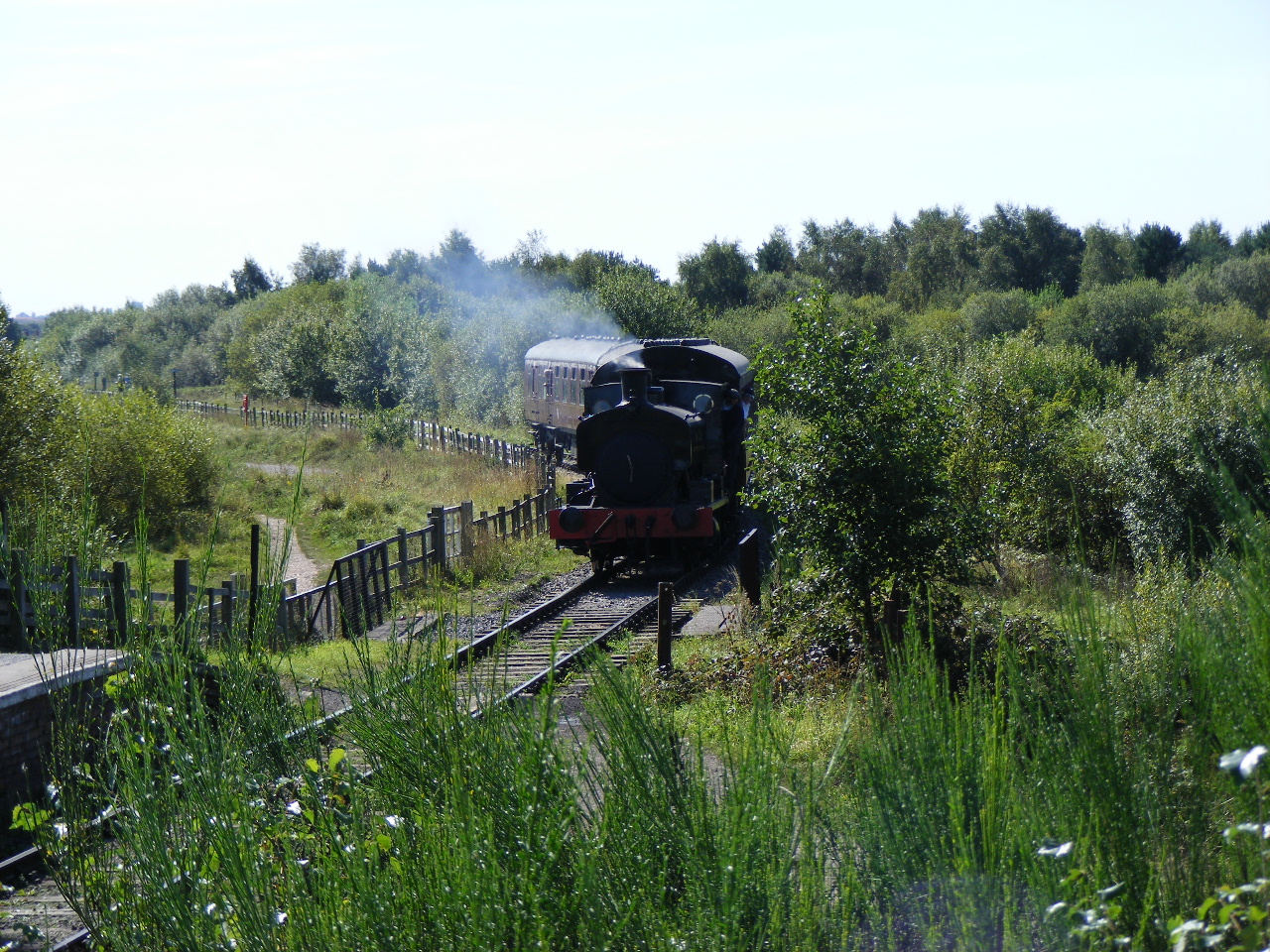
Just to show steam locos use it too !!
Visiting loco ‘Wimblebury’ over the causeway.
Posted in Uncategorized
Tagged Aldridge, Bloxwich, Brownhills, Burntwood, Cannock, Cannock Wood, Chasewater Causeway, Chasewater Railway, Chasewater Railway Causeway, Chasewater Railway Museum, Cheslyn Hay, Great Wyrley, Hazel Slade, Heath Hayes, Hednesford, Hunslet Wimblebury, Lichfield, Norton Canes, Peckett 2000, Pelsall, Staffordshire, Walsall, Walsall Wood, Wolverhampton.
 Chasewater Railway Museum