Tag Archives: Great Wyrley

Chasewater Railway Publications No.2 – Winter 1965

Chasewater Railway Publications

No.2 – Winter 1965

First posted in 2010

Another couple of bits and pieces from the Railway Forum – Winter 1965.  The first is a display of name and number plates, loaned by one of the members, and laid out in the Royal Saloon – which left Hednesford  in  1970 for the British Railways carriage works at Derby for restoration and then on to the Midland Railway Centre at Butterley.

Midlands RPS Open Day display

An interesting display of locomotive nameplates and numbers was arranged in the Royal Saloon for inspection by visitors at the Midlands R.P.S. Open Day.

New locomotives preserved in Midlands

Members of the Midlands area, R.P.S. expect to take delivery of another locomotive later this year which has been acquired through the generosity of one of their members, Dr. P.G. Plummer, who has offered to purchase it for them.

The locomotive is a Hudswell-Clarke 0-6-0ST built for the Sheepbridge Coal and Iron Company in 1895 (Works No. 431).  It was transferred to its present location, Desborough Warren Quarry, Northamptonshire, in March 1951 and was due for withdrawal in July.  It is believed to be the oldest Hudswell-Clarke locomotive still in working order and once carried the number 15.  Now it has no number or name, although known as “Sheepbridge No.25”.

Painted in apple green it should be a valuable addition to stock already acquired, and will be of considerable use at the Chasewater branch line which has been leased by this group.

Two other locomotives have also been donated by the Whitecross Co. of Warrington.  They are Peckett 0-4-0STs of 1900 and 1904 vintage.  They were withdrawn from service by the Company in 1961, being replaced by two Fowler diesel locomotives.  They carried names up to withdrawal, the older being “Baden Powell” and the younger “Lancet” the nameplates of the latter being transferred to the Diesel No.1, and those of the former being acquired by local enthusiasts.  Only “Lancet” will be able to run again.  It is hoped to exhibit “Baden Powell” statically.

The second is about new locomotives coming to Chasewater.  Sadly the Hudswell Clarke, although we still have the loco, has never steamed here. The two Pecketts fared even worse.  The ‘Lance’ (not Lancet) 1038/1906 was scrapped in March 1972, and another Peckett – 1823/1931 was also scrapped at the same time.  The Loco ‘Baden Powell’ was in too bad a condition to be moved.  The other loco was an 0-4-0F a fireless Andrew Barclay locomotive 1562/1917 – scrapped in March 1973.
The articles were writtten in 1965, the photos taken in 1969
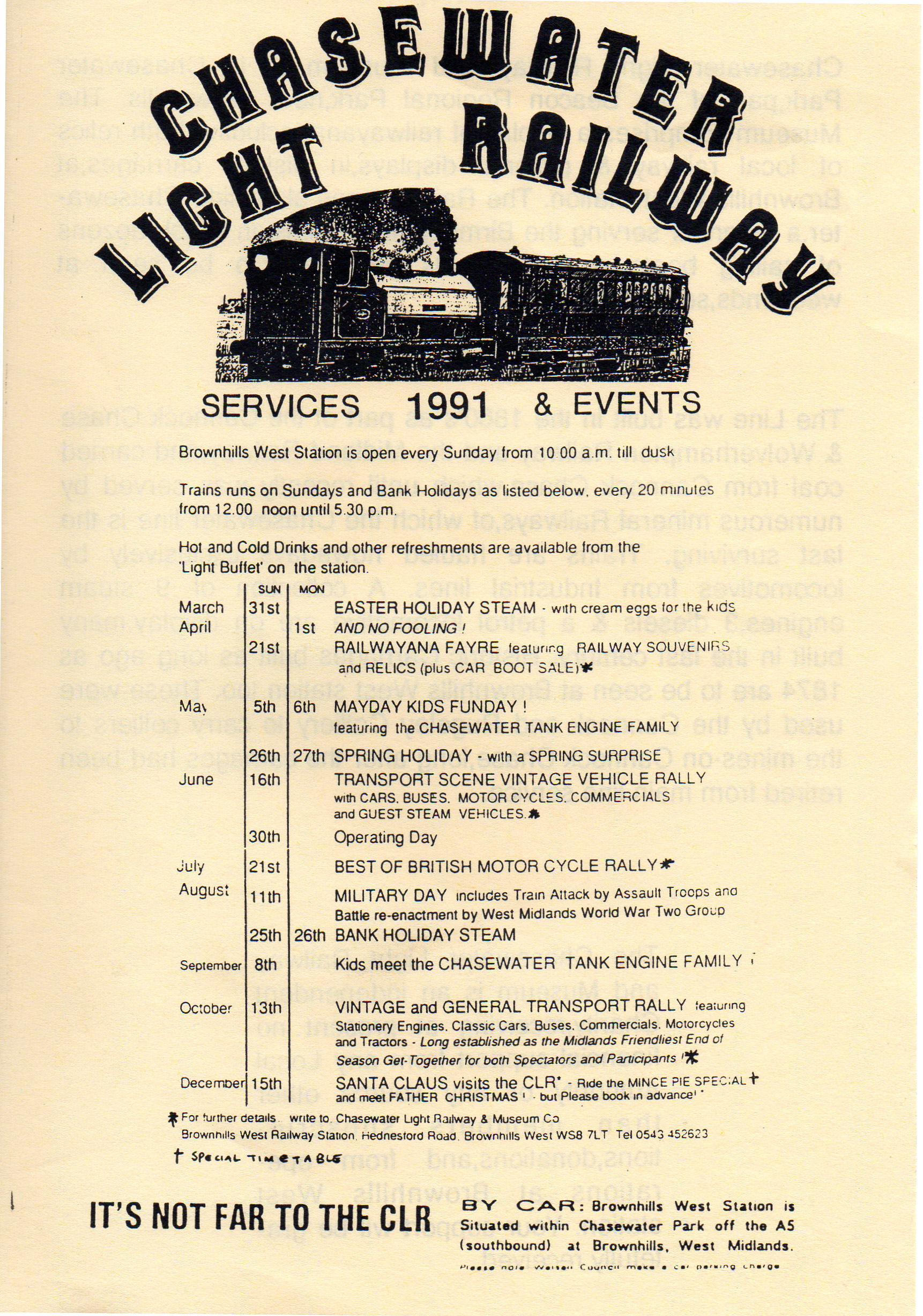
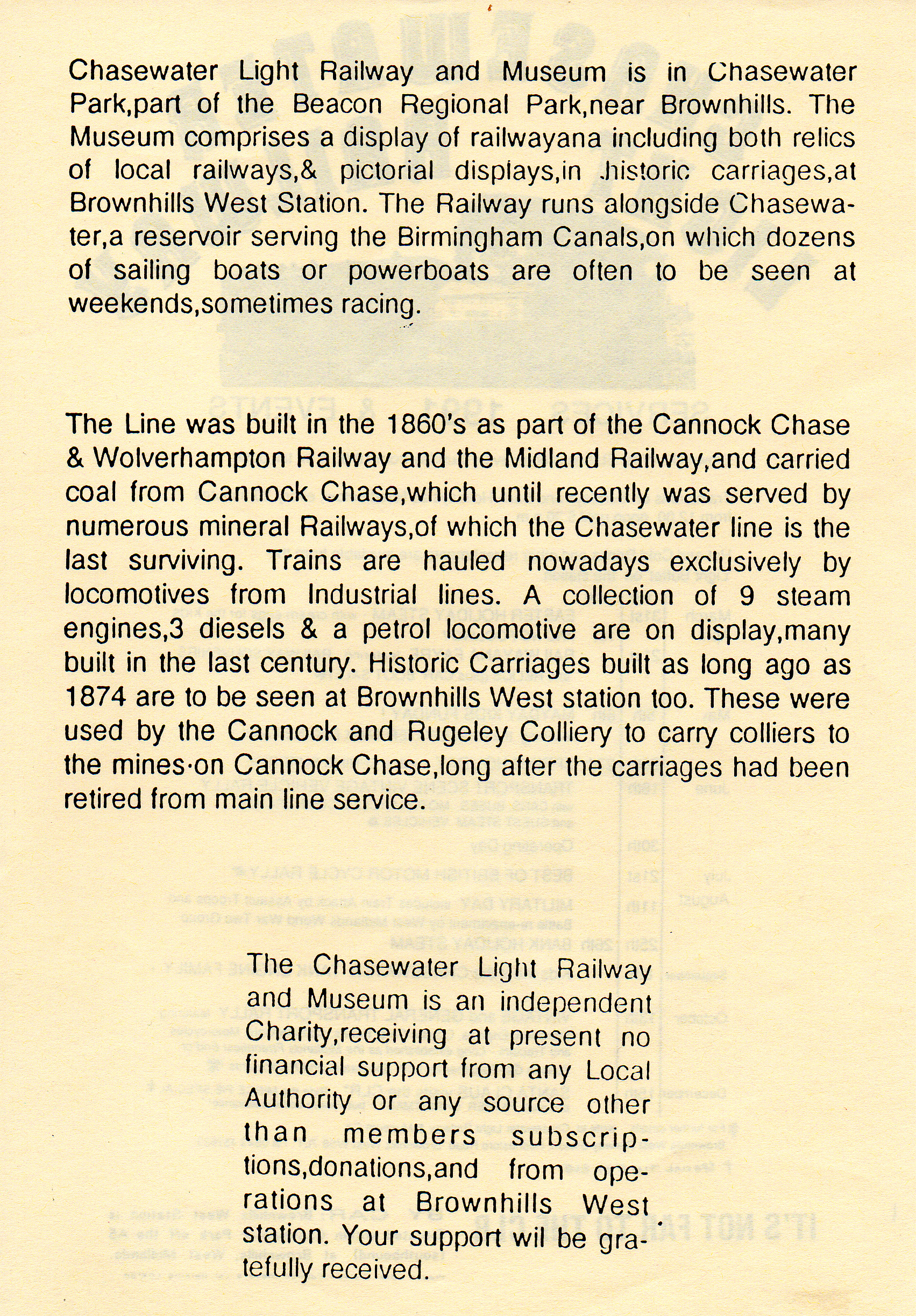
Chasewater Railway Museum – A 1991 Flyer for the Railway

Chasewater Railway Museum

A 1991 Flyer for the Railway

This double-sided flyer recently came to light in the museum.  It is now 25 years old and I found it to be interesting – I hope you do as well.

The running line in those days ran from the old Brownhills West Station (now in the middle of the M6 Toll) to the Willow Vale Bridge.  Push-pull obviously.

Front

Back

It will now be tucked away in our Chasewater Light Railway archives.

Chasewater Railway Publications – No.1- 1965

Chasewater Railway Publications – No.1 – 1965

This post was taken from the magazine of the Railway Preservation Societies – the ‘Railway Forum’ Winter 1965.

This picture was taken from the cover of the magazine.

Mr. W. Ives of Hixon, near Stafford, purchased this signal box from British Railways intending it to be preserved by the Midland R.P.S.  Unfortunately contractors taking up the metals of the old Stafford and Uttoxeter Line also demolished the signal box.  Now Mr. Ives (pictured) is wondering where he can get another.  (Photo:  Express & Star, Wolverhampton.)

I’m not sure where this photo was taken, but assuming it’s on ‘our’ line it might be between Norton East Road and Brownhills Road, judging by the position of the houses.  Any other suggestions will be gratefully received!

This, and the other track photos in this post were obviously taken before Chasewater trains were running.

The Chasewater Branch – by F.J.Harvey and L.E.Hodgkinson

Chasewater was constructed by the Wyrley & Essington Canal Company by building a low dam.  A reservoir 1¼ miles in length was thus formed for the purpose of feeding the nearby canals.

At one time Chasewater was encircled by railways; the earliest of these was the Cannock Chase & Wolverhampton Railway incorporated by an Act of Parliament on July 29th 1864.   A connecting link was constructed from the London & North Western Railway Cannock Chase mineral extension which was incorporated in 1862.

In 1884 a branch was built by the Midland Railway from Aldridge.  This was for mineral traffic, although passengers were conveyed as far as Brownhills.  The passenger service was withdrawn on March 29th 1930.  The direct link with the LNWR was broken in favour of a more circuitous connection via the Conduit Colliery Company’s yard.

With the closure of the Cannock Chase collieries, the Midland Railway branch from Walsall Wood to Brownhills was lifted in 1960, followed by the CC & WR track in 1963, leaving the remainder of the lines as they are today.  These were retained in order to connect the National Coal Board area workshops with the main line.

In recent years the possibilities of Chasewater as a pleasure resort were realised by Brownhills Urban District Council; an amusement park was constructed and facilities were provided for more specialised interests such as go-carts, speedboats, hydroplanes and yachts.

With the increase in visitors each year it was felt by the Midlands area of the Railway Preservation Society that the line would be suitable for development as a working railway museum and a lease of about two miles of track was taken out.  Much work has to be done to bring the line up to passenger carrying standards and it will probably be several years before a regular passenger service can be maintained.  This largely depends on the number of volunteers that are prepared to help with the track restoration.

The immediate aim of the Society is to construct a building to house the larger items of rolling stock where they can be fully restored and displayed to the public.  This building will form the permanent headquarters of the Chasewater Railway.

The Society would appreciate any help, practical or otherwise, from people interested in this project.  With sufficient support a limited service could be in operation by next summer.

We know where this one was taken – you can see the entrance to the farm gate.  The houses at the top were demolished to make way for the M6 Toll.

Save

Save

Chasewater Railway Museum – August Newsletter

Chasewater Railway Museum 

August Newsletter

August Newsletter

Chasewater Railway Museum – In the Stores

Chasewater Railway Museum – In the Stores

First posted in Chasewaterstuff’s Blog, 2011

 I thought I might publish a few pictures of some of the station furniture which the museum has tucked away, as do many other museums, in store.This item is a roll-fronted ticket rack from about 1938.This is a wooden chair with a Staffordshire Knot carved in the back, formerly of the North Staffs Railway.Finally for this time, another wooden chair, with a cut-out letter ‘M’ in the back, from the Midland Railway.

While it is good that the museum has these and more items in store, it would be nice to think that sometime in the future (probably distant) the museum could be extended and these items could be restored to their former glory and put on show.

Chasewater Railway Museum – A New Boundary Marker

Chasewater Railway Museum

A New Local Boundary Marker

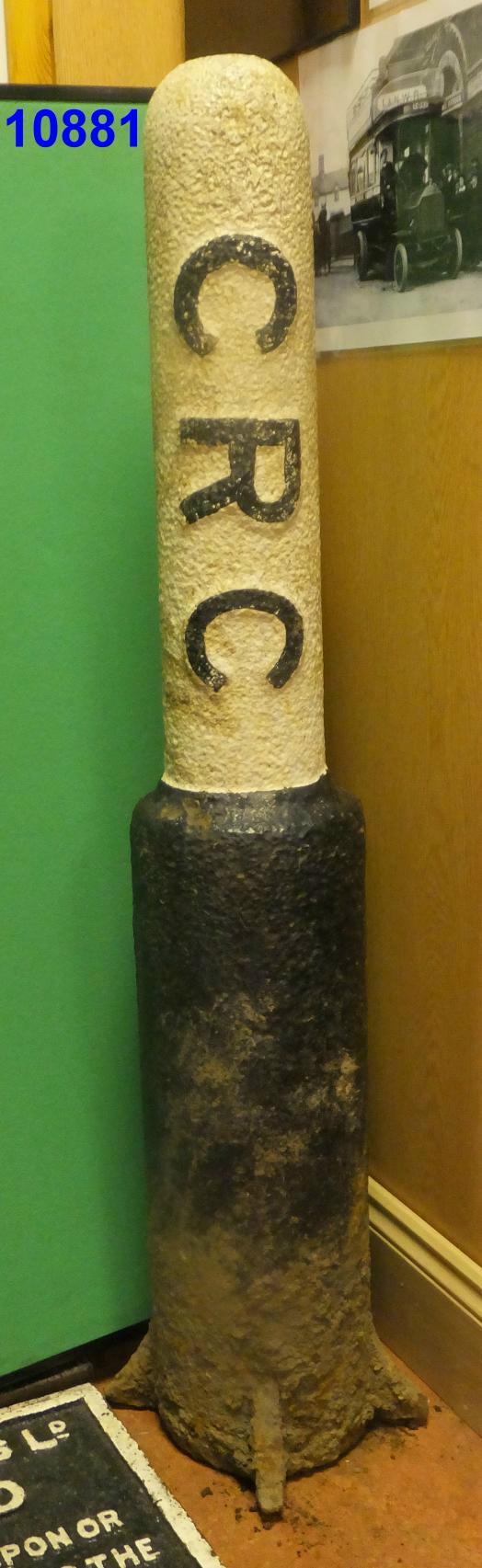
10881

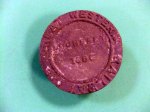
A recent purchase for the collection – a Cannock & Rugeley Colliery Boundary Marker.

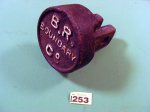
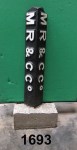
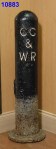
Other boundary markers in the collection are shown below.


Boundary Markers

 In their heyday, the railways were the biggest landowners in Britain after the Church, and it was inevitable that boundary disputes sometimes arose.  It was to resolve this problem that many railways designed boundary posts or markers.

The oldest tend to be in stone, while those from about 1870 onwards are in cast iron – some companies using lengths of surplus rail, suitably inscribed.

The Great Western Railway (GWR) markers were made of Brunel-designed bridge rails cut into lengths, with an angle iron T-piece on the bottom, and a cast iron top, moulded round the rail.  Between 1880 and 1920, the year of manufacture was included on the cast top.  The Midland Railway (MR) used pieces of ordinary bull-head rail whose tops were stamped into an oval shape, with the raised letters ‘MR’.

These two types are by far the most common available to collectors, though the cast iron posts of the London & North Western Railway (LNWR) and Great Northern Railway (GNR) are also frequently seen.

It appears that several railways never had any boundary posts, and no examples are known from the Great Eastern, London, Brighton & South Coast, South Eastern & Chatham, or from any of the five main Scottish lines.

On the other hand, two of the small South Wales companies had boundary posts which often come up for sale – the Barry and Rhondda & Swansea Bay railways.  The GWR, MR, GNR and LNWR all made boundary posts for their joint lines, and some of these are both exotic and extremely rare.

For example, the GWR produced posts for an area of land at Reading which abutted with the South Eastern& Chatham.  This was the only meeting point of the two companies, and just two markers are known to exist, both dated 1915.

Boundary markers are usually placed in the fence line at the side of the railway, or in adjacent land by bridges, viaducts or crossings.

Chasewater Railway Museum – Some very local Midland Railway mineral invoices

Chasewater Railway Museum

Some Midland Railway mineral invoices

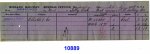
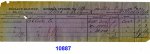
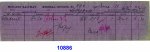
Some of these passed through the site of the Chasewater Railway’s Brownhills West Station, and others started at Walsall Wood.

(Click to enlarge)

The Midland Railway Walsall Wood Extension Railway

In 1880 the Midland Railway gained permission to build their long-awaited foothold into the Cannock Chase coalfield.  The Walsall Wood Extension Railway would enable them to link their line from Aldridge with the Cannock Chase & Wolverhampton Railway near Chasewater.

The line opened in 1882 to bring coal out of the pits, but two years later, was also opened to passenger traffic as far as the Brownhills Midland Railway Station, between the Chester Road and the A5.  The passenger service was not a great success and was closed in 1930.

The Midland Railway continued as a mineral only line until September 1960 when, following the demise of the coalfield, it was closed.

The Brownhills West Station and the first half-mile or so of the track of the Chasewater Railway is on the former Midland Railway line.


Chasewater Railway Museum – Matchstick Models

Chasewater Railway Museum 

Matchstick Models

No.9 & Directors' Coach

No.9 & Directors’ Coach

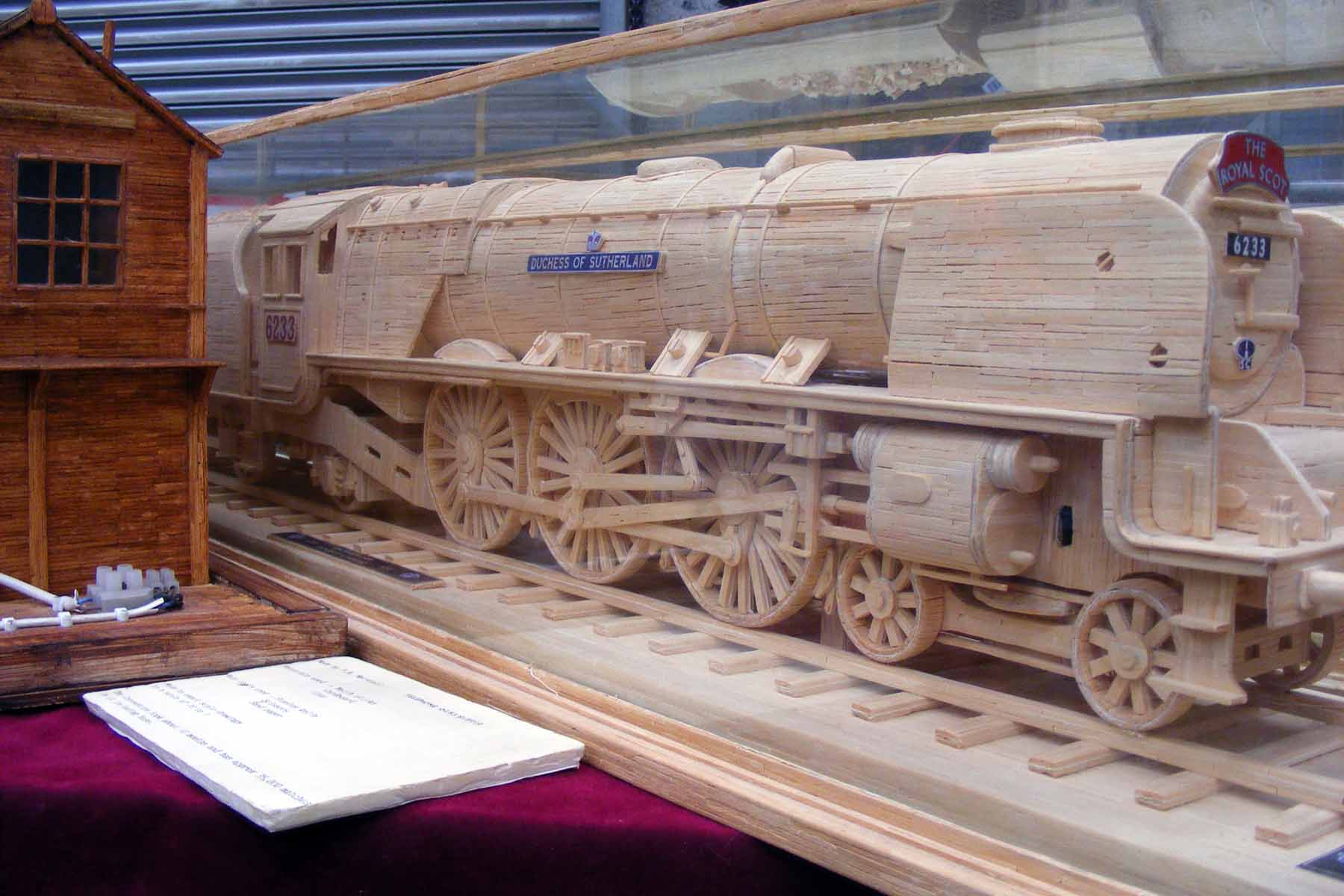
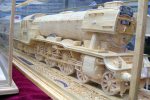
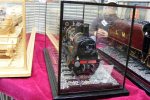
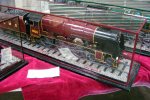
Some of our ever-popular exhibits are the matchstick models built and loaned by Peter Marshall.  The model above is of the Bass No.9 loco with the Directors’ Coach, the real version is in the National Brewery Centre, Burton-upon-Trent.

In addition to the models loaned to our museum, the owner has other models which we may also loan at some future date.  To give some indication of the work involved, below is a photo of the model of the ‘Duchess of Sutherland’ which is 48 inches long and contains 35,000 matches!

DSCF8094

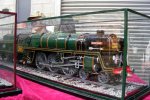
The last three photos are of Peter’s later models, when he started using cardboard instead of matchsticks!  They are amazing!

The models in the museum are the Bass loco and coach, the Jinty and the coal wagon.  As a matter of interest, the frames of the cases are also made from matchsticks.

Save

Save

Chasewater Railway Museum – Train staff from Walsall Wood


Train Staff from Walsall Wood

2009_08300002This is the staff which was used on the single track from Walsall Wood Colliery to Norton Junction on the LNWR at Pelsall.  Until the staff was given to the Museum, I must confess that I didn’t know that there was such a line.Walsall Wood to NortonThere it is – just below the word ‘Clayhanger’

The staff was donated to the Museum by Mr. Trevor Astbury and his son Tom.

For anyone who knew Brownhills some 50-odd years ago, there was a seed shop in the High Street called Cockram’s.  Mr. and Mrs. Cockram worked in the shop with an assistant by the name of Sid Pritchard.  (Anyone who does remember the shop must surely remember the warm, sweet smell of the seed in the sacks, and if you were a child, the feeling of running your hands through the seed – that shop will never be forgotten by anyone whoever paid a visit.)

Back to Sid – he had a brother who worked at Walsall Wood Colliery and when it closed, somehow or other, he kept the staff.  Sid was later given the staff, and later still, passed it on to his next door neighbour.  This was Trevor.  Trevor’s brother lives in Hednesford and is a good friend of mine, and he knows that I am a volunteer in the museum.  Ron, my friend, mentioned this to his brother and eventually he donated the staff to the Chasewater Railway Museum.  It is one of the few remaining items of railway equipment used on the local mineral lines.

The staff is marked on all four sides.  ‘Walsall Wood Colliery’  ‘Canal Bridge’ ‘Train Staff’ and ‘Norton Junction’.

Save

Save

Save

Save