Chasewater Railway Museum
December Newsletter
The latest news from the museum – not as many visitors as normal months due to the perparations for Santa’s visit, when the Heritage Centre is closed.


The latest news from the museum – not as many visitors as normal months due to the perparations for Santa’s visit, when the Heritage Centre is closed.
Posted in Events, Museum Exhibits, News
Tagged Aldridge, Bloxwich, Brownhills, Burntwood, Cannock, Cannock Wood, Chasewater Railway, Chasewater Railway Museum, Cheslyn Hay, Great Wyrley, Hazel Slade, Hednesford, Lichfield, Norton Canes, Old Railway Lines, Pelsall, Staffordshire, Steam Trains, Walsall, Walsall Wood
Click on the link below to see the full list
Click on a picture to see a larger version.


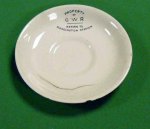

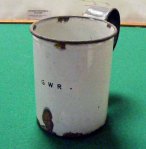
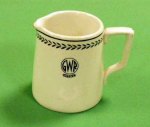

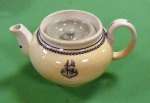
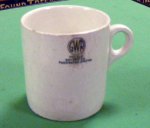
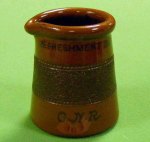

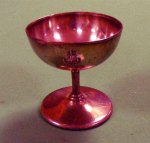
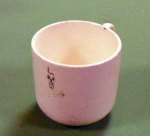
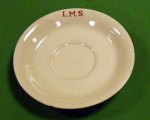
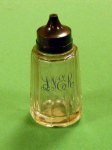
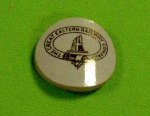
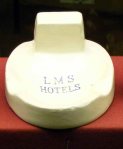
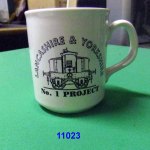
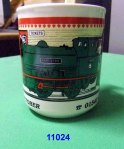
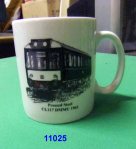
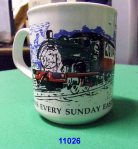


This post is taken from the earliest newsletter found so far amongst the ‘Duplicate Magazine ‘ file.
I reproduced the first part just to show that our aims haven’t really changed in the last 50 years.
Taken from the Railway Preservation Society Newsletter, Feb 1961
What is our eventual aim?
It is obvious that we want to run a railway. But what sort of railway is this to be? What picture do we want to give to the general public? We could push together a train, grab a piece of line and say this is a preserved railway. But will it mean anything to the general public?
Each district will, inevitably, form its own collection of smaller relics which eventually we hope to show to the public in exchange for money. As a railway enthusiast, a mass of cast iron plates, old faded photographs, tattered maps, dog-eared tickets and general bric-a-brac fascinates me and I can spend hours contemplating such a collection, but I would strongly suspect this would leave the general public with a feeling of mental indigestion and a fixed idea that railway enthusiasts are really mad.
Any preserved railway depends on the general public for the main part of its traffic. We must study their interests and make sure that we attract them back and their friends to which they have passed a recommendation. It must not be an overcrowded museum, but a ‘vintage railway’ — a living example of how the railways were run, laid out so the general public can see it tick. The steam engine is to us a balanced collection of boiler, firebox, cylinders, pistons, crossheads, etc. But to the ordinary man-in-the-street it is largely a mystery. Our exhibits must be self-explanatory. We must try to explain why the railways grew into such a complex system of competitive lines with so many odd connections.
I am not suggesting that we forget the railway enthusiast. I am asking that we consider the picture we are presenting to the general public. These points are not immediately applicable, but we should give consideration to them and encourage the artists and architects amongst us to sketch out their ideas on this basis.
Arrival at Hednesford of our T.P.O

This picture was taken from what is now the footpath round the back of Hednesford Park. The building which the carriage is going into still exists but the walls and frontage have been bricked up.
January 11th (1960) was a red letter day for members of the West Midlands District when a 27 ton 1909 Royal Mail coach, purchased by us for £200, rolled into our Hednesford depot.
Sold by British Railways the 50 foot bogey coach, complete with letter pigeon holes and half-penny stamp post-box – as good as new – it has joined our other two museum passenger coaches, an 1895 Great Eastern Railway brake vehicle and an 1875 Maryport & Carlisle Railway coach.
The mail coach travelled up from Verney, near Wolverton in Buckinghamshire, and celebrated its historic run by charging up the batteries to give full lighting inside. It was shunted into the depot sidings by an NCB tank engine.
Unlike the other two vehicles, the T.P.O. is too high to be placed under cover in our vehicle shed, but members are planning to lower the track to enable it to enter.
Final Passenger Train on the Churnet Valley Line
Frank Harvey

Twenty R.P.S. members were among the passengers to travel on the last train from Macclesfield to Uttoxeter by the Churnet Valley line of the ex-North Staffordshire Railway on November 5th (1960).
Some of our members had departed from Macclesfield early in the afternoon in order to break the journey at Oakamoor and again make the acquaintance of the station master, Mr. Lister.
Macclesfield was reached early enough for members to have a look round the town before returning to catch the last train. Several relics were noted at Macclesfield (Hibel Road) station, including a NSR/LNWR boundary post.
Bellringers
The train left on time at 8.35pm behind Stanier 2-6-4T No. 42670. The coaches were quite full, two of the enthusiastic passengers ringing handbells loudly for most of the journey.
A few people had gathered at nearly every station to watch the train depart, and at 9.48pm the train arrived at its final destination, Uttoxeter. It marked the last moments of a regular passenger service on the Churnet Valley line for 110 years.
The present Churnet Valley Railway is a volunteer-run organisation. The operating company, the Churnet Valley Railway (1992) plc, is supported by the North Staffordshire Railway Co (1978) Ltd., a Charitable Trust.
Activities recorded on film
BBC television news cameras have filmed activities at our Hednesford depot on two occasions in recent weeks. Both items were shown on ‘Midland News’ and have done much to foster interest in the Society.
On the occasion of the first visit, members were shown at work on the restoration of the Great Eastern Railway coach. Several of our relics, housed in the coach, were also shown.
The cameras were again at the depot on January 11th 1960 to record the arrival of the T.P.O. Several newspaper representatives also visited us for this event, a very full report of the work, profusely illustrated with photographs, appearing in the ‘Cannock Courier’
The Coalport Branch Line
Notes by D. Noel Draycott
This was one of three lines under consideration when looking for a permanent home for the railway.

On Sunday, October 23rd 1960, a small party consisting of David Ives, James Slater, T. Jones, Frank Harvey and myself visited the Coalport to Hadley line in North Shropshire. Built by the London & North Western Railway, it runs from the very attractive Vale of Severn across high land and through an early centre of the iron and steel industry to a junction on the Wellington to Stafford line.
The branch had a terminus at Coalport Station which stands on a long shelf, part cut out and part built up on the steep bank of the Severn. The station buildings comprise a booking office, general and ladies waiting rooms, backing on to the station master’s house. The signal box was demolished and a ground frame installed shortly before services were withdrawn in 1952. The goods shed has also been demolished, but the three short sidings remain in the yard.
Further along the shelf past the station, there is a carriage shed sufficient for four bogie carriages, and an engine shed for two locomotives. These buildings are in fair condition, and the engine shed contains a large workshop space as well as a pit. All these buildings back on to the hillside, and on the opposite side there is a pleasant stretch of wooded land before it falls steeply away to the river which forms the boundary of the railway property.
The line rises steeply from Coalport Station with attractive views across and up the Severn Valley before it turns away to cross pleasant rolling countryside to the small town of Madeley. Here the station building is used as an office by an engineering firm, but the yard of some half dozen sidings is practically disused.
The line then continues to Dawley and Stirchley Station where a total of some 15 wagons of coal showed that an active coal merchant used the yard. As dusk was falling, the tour of inspection finished at this point. All the members of the party were impressed by the potentialities of the line for day trippers.
Before we left the area, we were fortunate to meet a resident interested in the line who presented the R.P.S. with smaller relics. These included an LMS inkwell, labels and official books. We were very pleased to receive these on behalf of the W.M.D.’s collection of local relics.
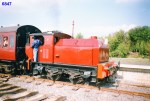
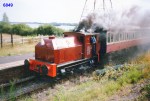
These photos of Chasewater Railway were found by Godfrey amongst a collection given to the museum. They show Sentinel, hopefully back in steam next year, DL7 and an old DMU, all towards the Chasewater Heaths end of the line.



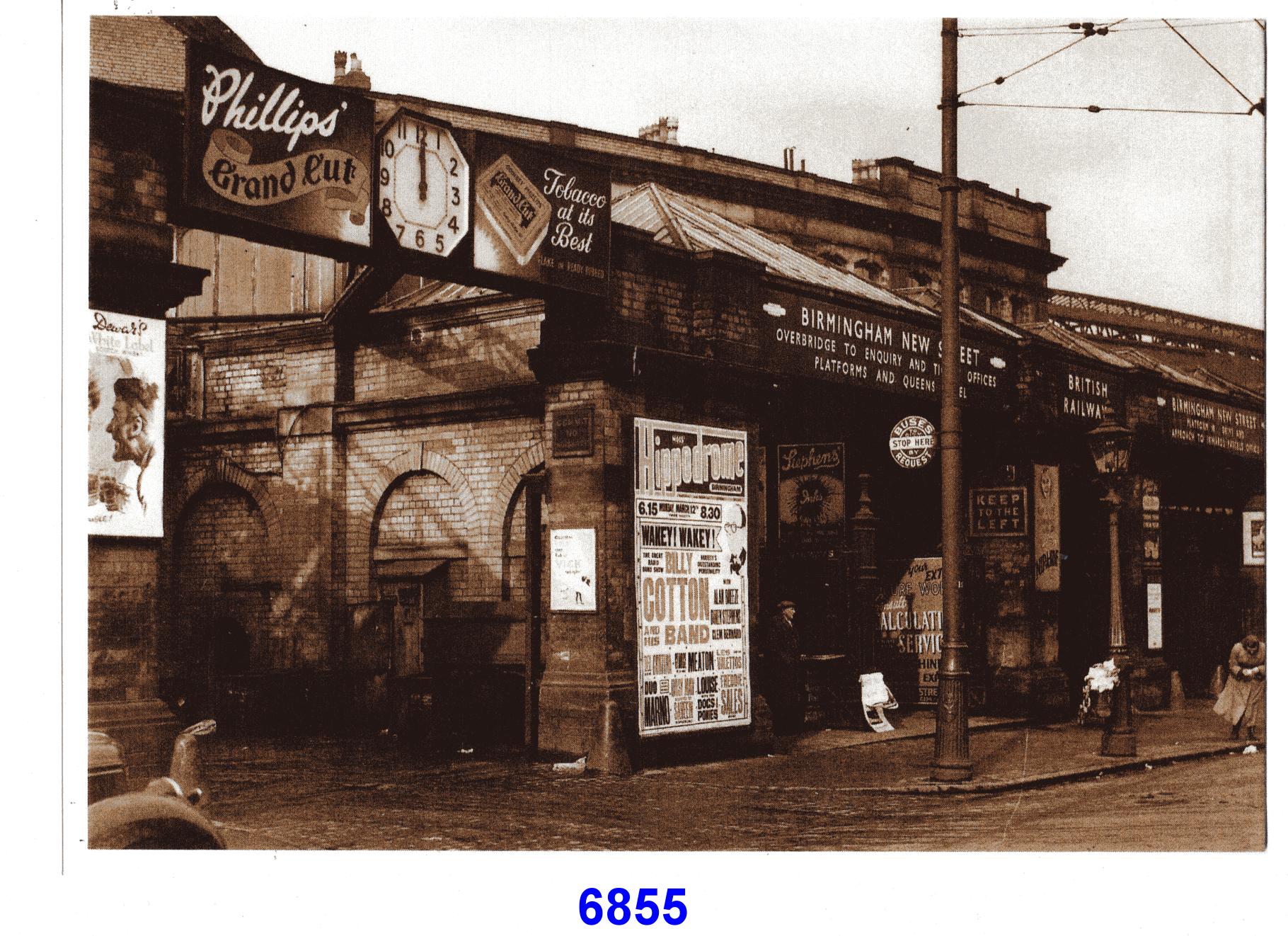
What is interesting , for people of a certain age, is the poster for the Hippodrome Theatre – top of the bill – Billy Cotton and his Band – used to be regulars on the BBC Light Programme on the wireless!
Our thanks to Graham for the phot0.
Posted in Photograph Collection
Tagged Billy Cotton Band, Birmingham New Street Station, Brownhills, Burntwood, Cannock, Cannock Wood, Chasewater Railway Museum, Cheslyn Hay, DL7, DMU, Great Wyrley, Heath Hayes, Hednesford, Lichfield, Norton Canes, Old Railway Lines, Pelsall, Sentinel, Staffordshire, Steam Trains, Walsall Wood
Archive material donated by John Hawkins
We have received a few photographs which we have not seen before.

Cannock Station

Brownhills LMS (LNWR) Station, High Street. 1967

Walsall Wood Station, just one platform left.

The Midland Railway line from Walsall Wood heading towards Chasewater. The track had been lifted on the left, where it headed for the canal. The bridge had been removed. The line on the right went into Walsall Wood Colliery (The Coppy Pit).

This photograph is most interesting. I think your original thoughts were that it was taken north of the Walsall Wood Colliery photo. If so, where? It is true that the landscape is similar to that found in that location but if the photo was taken looking north as the telegraph poles and the sun’s lighting would seems to suggest then where would the overbridge from which the photo is taken be located? There are also a couple of other issues – the slag heap on the left and the electricity cable crossing the photo from left to right in the mid-distance.
I think that the house is actually called “Bridge Cottage, 1900”. The date is a guess, but I believe the cottage was built around 1888 – 1902, i.e.:- after the railway. The bushes/scrub on the right hides Long Lane. The slag heap is that of Leacroft Colliery and the electricity cable is clearly shown on post-war maps running between Churchbridge Sub-station and Drakelow Power Station. The photographer was standing on Chapel Street Bridge in Norton Canes, looking north towards Littleworth Junction. Again a 1966-67 date is not unrealistic as the line remained in-situ at that time. The lane on the left is not a canal, the Wyrley and Essington Canal Extension branch being almost immediately to the left of the photographer. As usual, I will stand to be corrected but the above seems to firmly locate the photo to this site. The electricity cable is by far the biggest clue. – Ian Pell

This photo is definitely of Norton Crossing, Norton Canes. We are looking south towards Conduit Junction at the Hednesford – Walsall road. In later years the crossing was manned by Bernard Hurmson and his wife Bettie. Clearly, the photograph was taken after closure. The signal arm on the down line is for the original end of the branch at Norton Green, as per the attached signalling diagram from the John Swift Collection of signal box diagrams of the 1950’s. Ian Pell
Comment from Colin Noble: Bernard Hurmson was my stepfather, and as you refer, was the sole signalman at the Signalbox on Walsall Rd, Norton Canes, up to the closure of the line. His wife, Bessie, not Betty, was actually one of the Village Post Ladies, not working for the Railway!


As can be seen form the photo of Bessie at the crossing, the gates are the same in construction as per your photograph, and the box is the same, hence the conclusion that your photograph is of Norton Crossing, probably on around 1966-67? Ian Pell

The above photograph, taken in 1974 shows the crossing keeper’s cottage and Ryder’s Hayes Level Crossing with the traditional crossing gates in place. The following year these were replaced by rural barrier gates and the crossing keeper was removed and the buildings demolished. The view is looking south towards Railswood and Pelsall Station. From 1856-58 a station existed to the immediate south of the keeper’s building. Ryders Hayes signal box which was situated behind the photographer on the up side was an early LN&W box. It pre-dated Norton Junction No.1 box, but was retained even after the Norton Junction box was replaced by Norton Junction No.1 box in 1889. It closed as late as the 1950’s. Initially, it controlled Bloomer’s Sidings which were in place to serve the Pelsall Coal and Iron Company’s branch (1865) even before the Norton Branch (1858) and sidings (begun in 1889). Ian Pell

This 1884 maps clearly shows the two boxes – Ryders Hays Crossing box and Norton Junction box. The later is in its original location on the down side of the line. It also illustrates the lack of sidings to the north of the junction on the Norton Branch. The sidings shown were often called “Bloomer’s sidings”, a reference to the owner of the PC & I Company and were constructed, together with a further line (extended loop) onto the branch in 1875 (mt6/147/17). In 1875 the sidings consisted of 4 sidings on the down side and 1 siding on the up side. At this time (18th Nov 1875) the junction was upgraded and additions points and signalling were added. The beginning of Norton Junction sidings as we knew them started in earnest in 1889 when the new Norton Junction No.1 box was also added. The sidings were initially controlled by Ryders Haye’s box, with Norton Junction box controlling the junction with the Norton branch and the two down sidings which extended parallel to the down line towards Brownhills. Prior to the 1889 works , the Walsall Wood Colliery branch had been added, together with an additional up siding in October 1882 and the footbridge north of Ryder’s Hayes box had been approved for construction in December 1884.
By April 1884, the WTT indicated that Target No.74 shunted the Walsall Wood and the PC&I sidings, and that Target No. 78 “cleared out” all traffic from the above mentioned sidings. On weekdays there were 2 regular and 3 conditional freight workings on the Norton Branch, working to and from Norton Junction, These were:- 1 Norton Junction to Harrison’s Sdg. 1 Norton Junction to Conduit Colliery No. 80 – Norton Junction to Conduit Colliery as required.
Ryder’s Hayes signal box, which had a Tumbler frame, closed on 1st September 1954 when Norton Junction No.1 took control of the sidings and crossing (mt29/100/26).
Ian Pell
Our thanks to Peter Stamper for the first six photos, and to Ian Pell for the others and for his always worth-while comments.
Posted in Photograph Collection
Tagged Aldridge, Bloxwich, Brownhills, Burntwood, Cannock, Cannock Wood, Chasewater, Chasewater Railway Museum, Cheslyn Hay, Great Wyrley, Hazel Slade, Heath Hayes, Hednesford, Midland Railway Objects, Norton Canes, Norton Conduit Junction, Old Railway Lines, Pelsall, Photographs, Staffordshire, Walsall Wood, Wolverhampton
Two very nice carriage keys have come into the museum in the last couple of days. 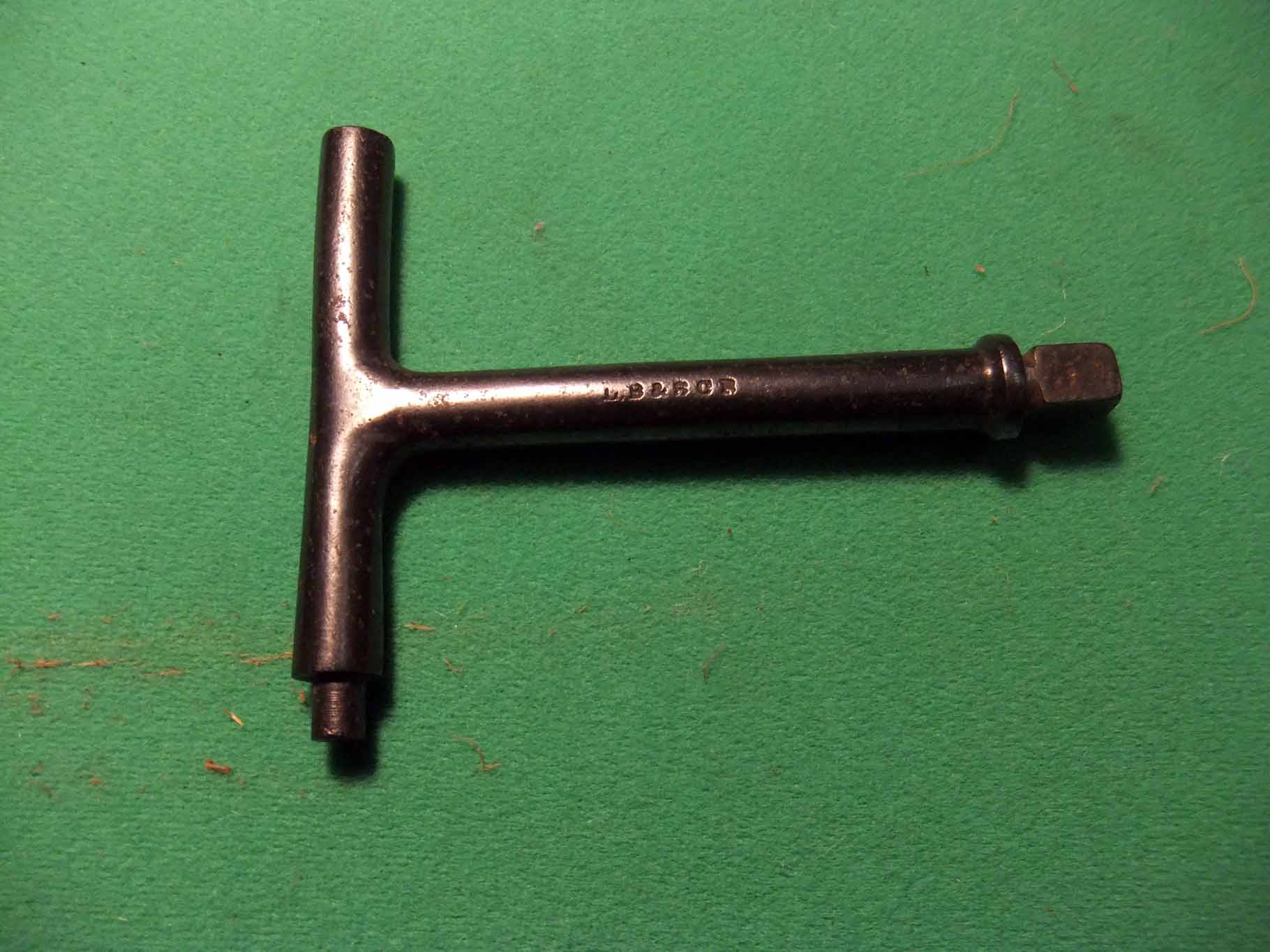
The first one is stamped ‘LB&SCR’ – from the London, Brighton & South Coast Railway.

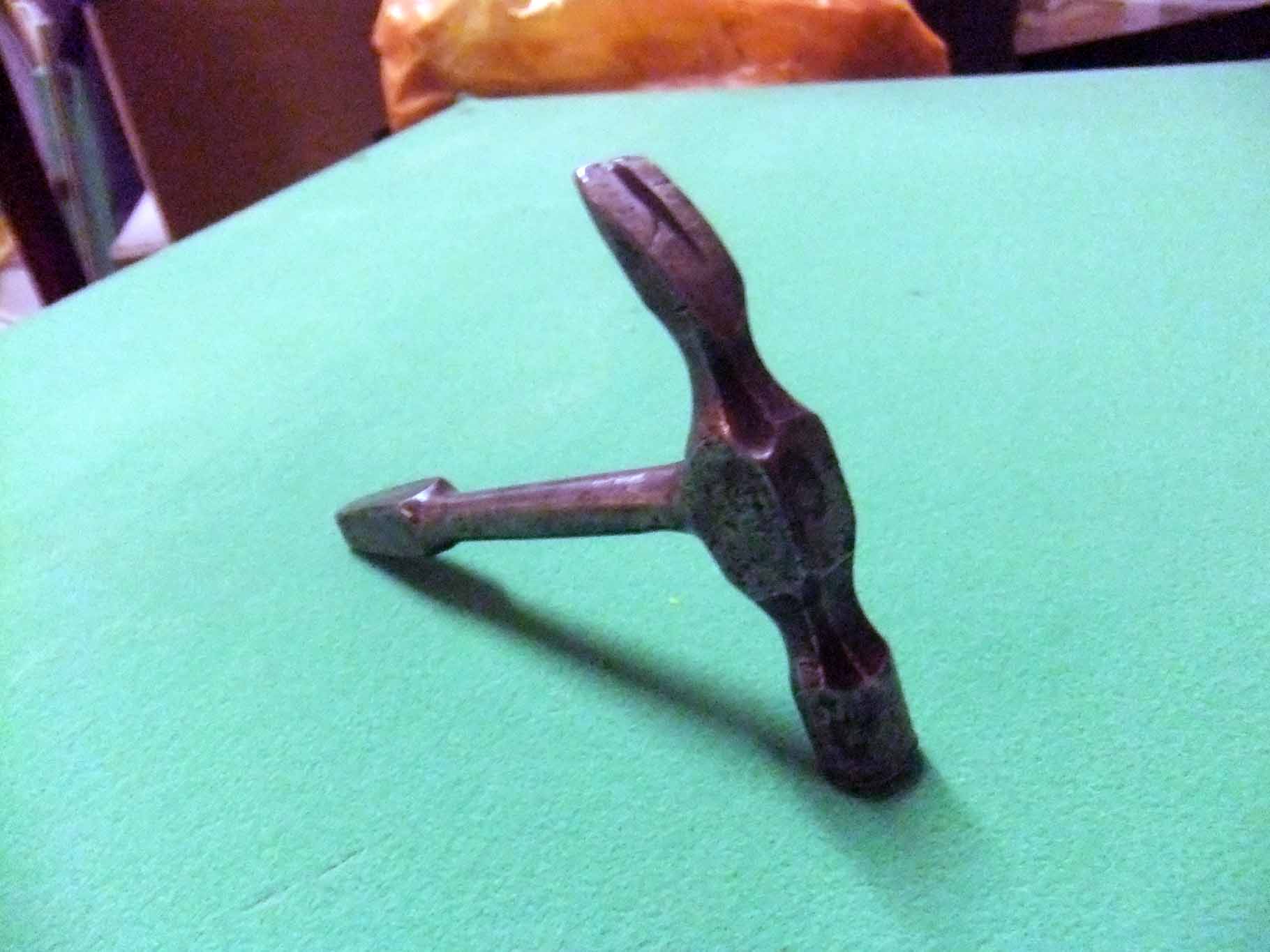
The second one ‘L&NE’ from the London & North Eastern Railway, the handle is in the shape of a claw-hammer. I’ve not seen one like this before!
They can be seen in the museum, in display cabinet C17.
Posted in Museum Exhibits
Tagged Aldridge, Bloxwich, Brownhills, Burntwood, Cannock, Cannock Wood, Carriage Key, Chasewater Railway Museum, Cheslyn Hay, Great Wyrley, Hazel Slade, Heath Hayes, Hednesford, L&NE, LBSCR, Lichfield, London & North Eastern Railway, London Brighton & South Coast Railway, Museum Collection, Norton Canes, Pelsall, Walsall, Walsall Wood
The months certainly seem to fly by – it will soon be time to write the Christmas newsletter – Liam will tell you how many days to go, if Godfrey doesn’t beat him to it!!

The ‘already described’ items include a couple of fliers, and photographs and three Hornby models.
Also we had a bottle from Lockett & Sons of Cannock, complete with marble in the neck.

We still get so many visitors who, when they are finally in the museum, say ‘I didn’t know this was here’ so Godfrey decided to print a poster to put up in the stattion to tell visitors where we are hiding!!


A most important addition to the Museum’s archives is this programme of the evening’s event, held in the Heritage Centre on Friday evening, 23-9-2016
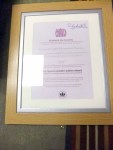

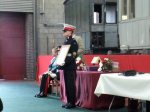
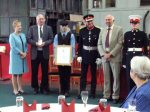
The award was presented to the Railway by Her Majesty’s Lord-Llieutenent for Staffordshire, Mr. Ian Dudson CBE Cst.
After the presentation there followed a train ride to Chasewater Heaths for the presentation of a replica crystal and scroll to the staff from the station.
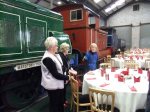
On return to Brownhills West, an excellent buffet was on offer, which was enjoyed by everyone. Congratulations to the catering staff.
Following a tour of the buildings, including the Museum, the Lord-Lieutenant departed.
At the conclusion of the evening, Mark Sealey, Chairman of the Railway, presented all working volunteers with a commemorative QAVS badge.






 Chasewater Railway Museum