Tag Archives: Burntwood

Chasewater Railway Museum – A photo from inside the museum

Chasewater Railway Museum

A photo taken inside the museum

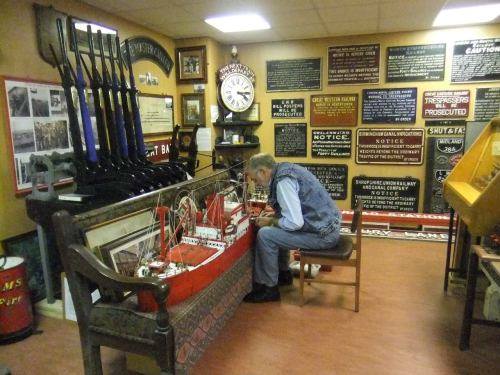
I have been sent this photograph of one of our ‘helpers’ inside the museum, working on one of the Meccano models.  It shows a view around part of the museum, including, among other items, some bridge plates and the lever frame from Hemyock.

joe-in-museum

This photo was taken before the bench was recovered – it is now covered in an attractive blue material.

Sad to relate, after all our man’s work, it still wouldn’t float!!!

Chasewater Railway Museum – 2 new photographs

Chasewater Railway Museum

2 new photographs

Brereton Sidinngs Signal Box

Brereton Sidinngs Signal Box

The first photo is another photo of Brereton Sidings signal box.

Edward Dorricott paid £2.50 for the photo and gave it straight to Barry Bull.

Edward Dorricott is the author of te recently published book on Duttons Signal Works, Worcester, in which Chasewater Railway Museum gets more than one mention.

boat

This second photo has a couple of question marks hanging over it, which I hope we may get answers to.

‘Captain Midnight’ is a former naval officer named Glover, but we are not sure of his rank – possibly Lieutenant Commander or Commander.

Thank you Pete Styche for the following information:  GLOVER Gerald (Lt. Commander R. N. Rtd.) Passed away 12th October 2014 aged 76 years.

He was an occasional benefactor of the Railway, whenever he paid a visit there was always a donation in the box and maybe some good magazines donated.

The next question is who is his friend?

And finally, where was the photo taken?

Save

An old Chasewater Railway Photograph From the Industrial Railway Society’s September 2016 Magazine

An old Chasewater Railway Photograph

From the Industrial Railway Society’s September 2016 Magazine


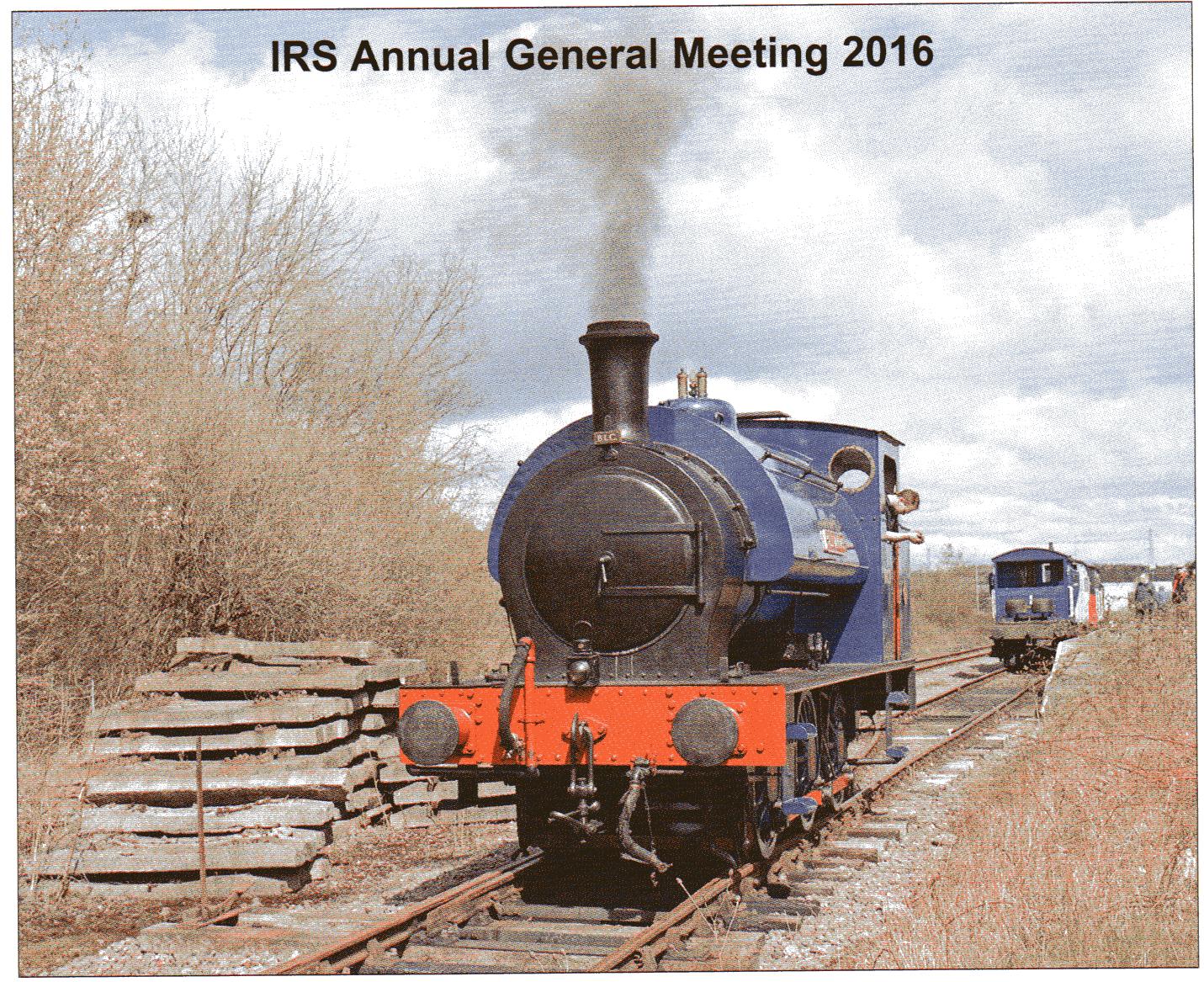
The IRS’s AGM took place on Saturday 16th April 2016 at Chasewater Railway.

It was enjoyed by IRS members and the members of the Railway who were involved in running special trains for the Society.

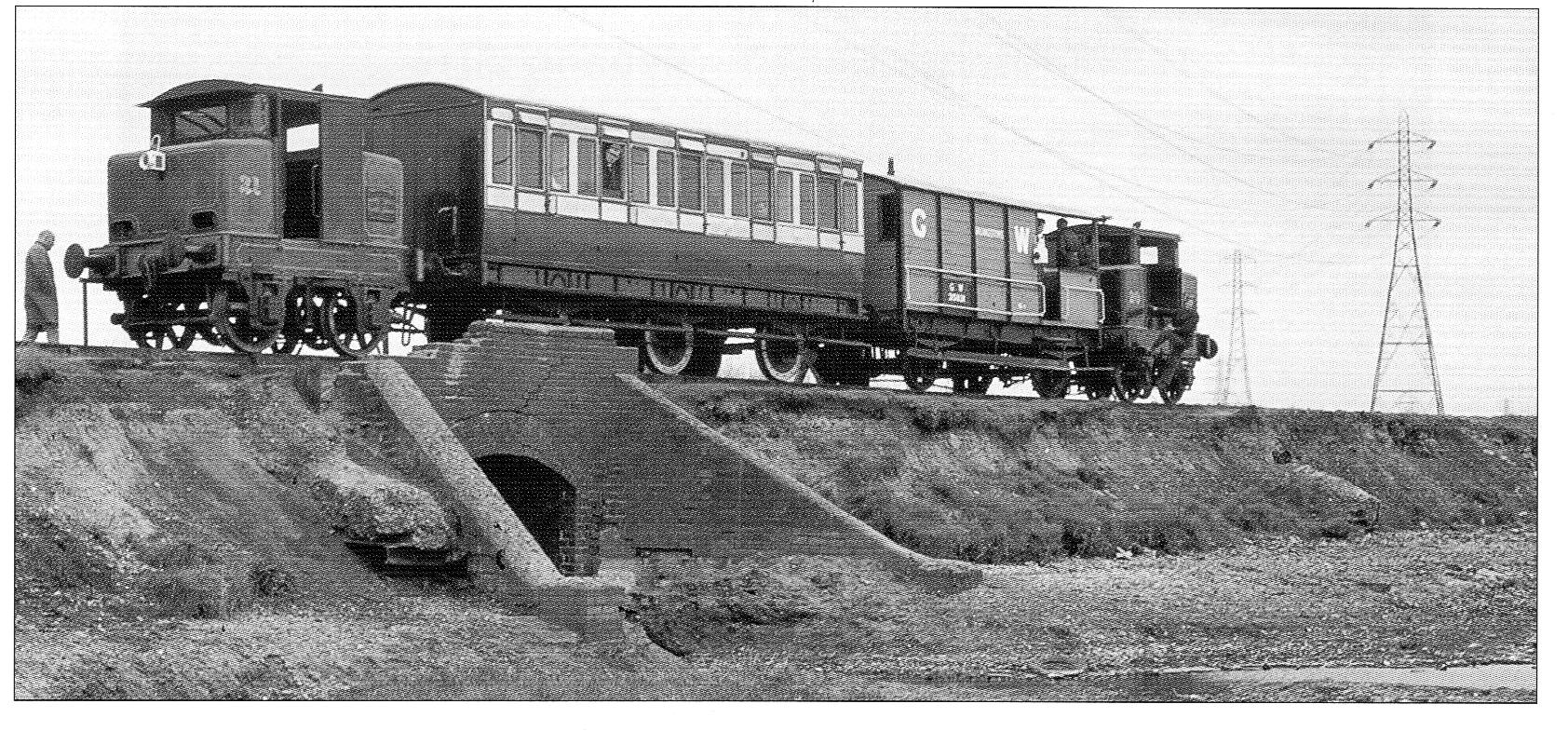
20&21This photograph was taken by Cliff Shepherd at the IRS AGM weekend in April 1972.

On the Sunday, visits were made to Chasewater and members travelled in the Maryport and Carlisle carriage of 1875 vintage and the Great Western Brake Van, which now, in 2016, is restored to its former glory.

The locomotives involved topping and tailing were two former Worthington Brewery Planet locomotives, nos. 20 and 21, on what was then a very basic railway.

Holly Bank IRS

Holly Bank No.3 (Hunslet 3783-1953) runs around after the first of the IRS trains at Chasetown Church Street Station on 16-4-2016.

Chasewater Railway Museum – Another Flyer comes to light

Chasewater Railway Museum –

Another Flyer comes to light

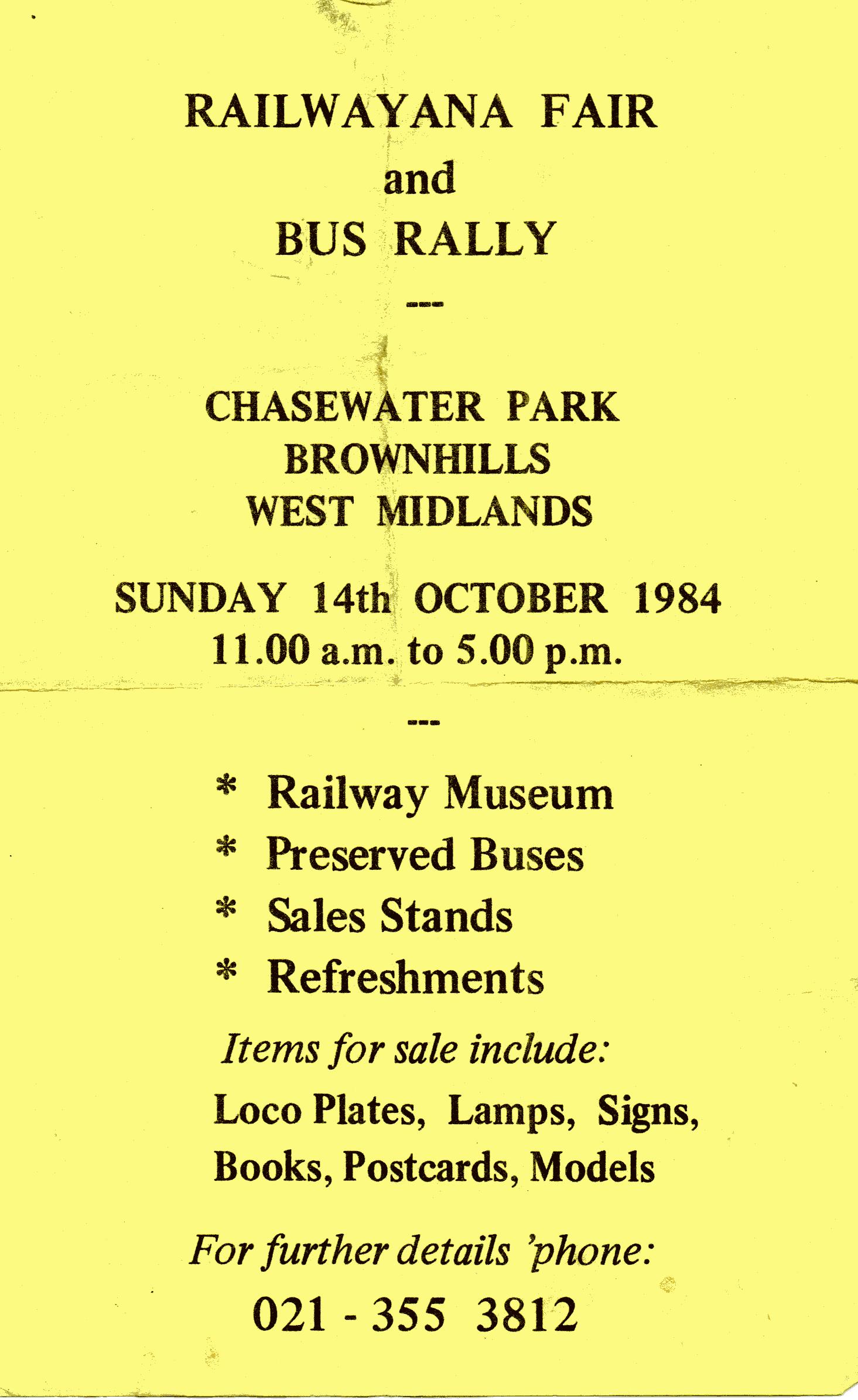
This time it’s a Railwayana Fair and Bus Rally, held at the time, in the early eighties, when Chasewater railway was not running trains.

A few enthusiasts kept going at Chasewater trying to raise funds for the time when the railway re-started operations.

Flier Railwayana 1984

Save

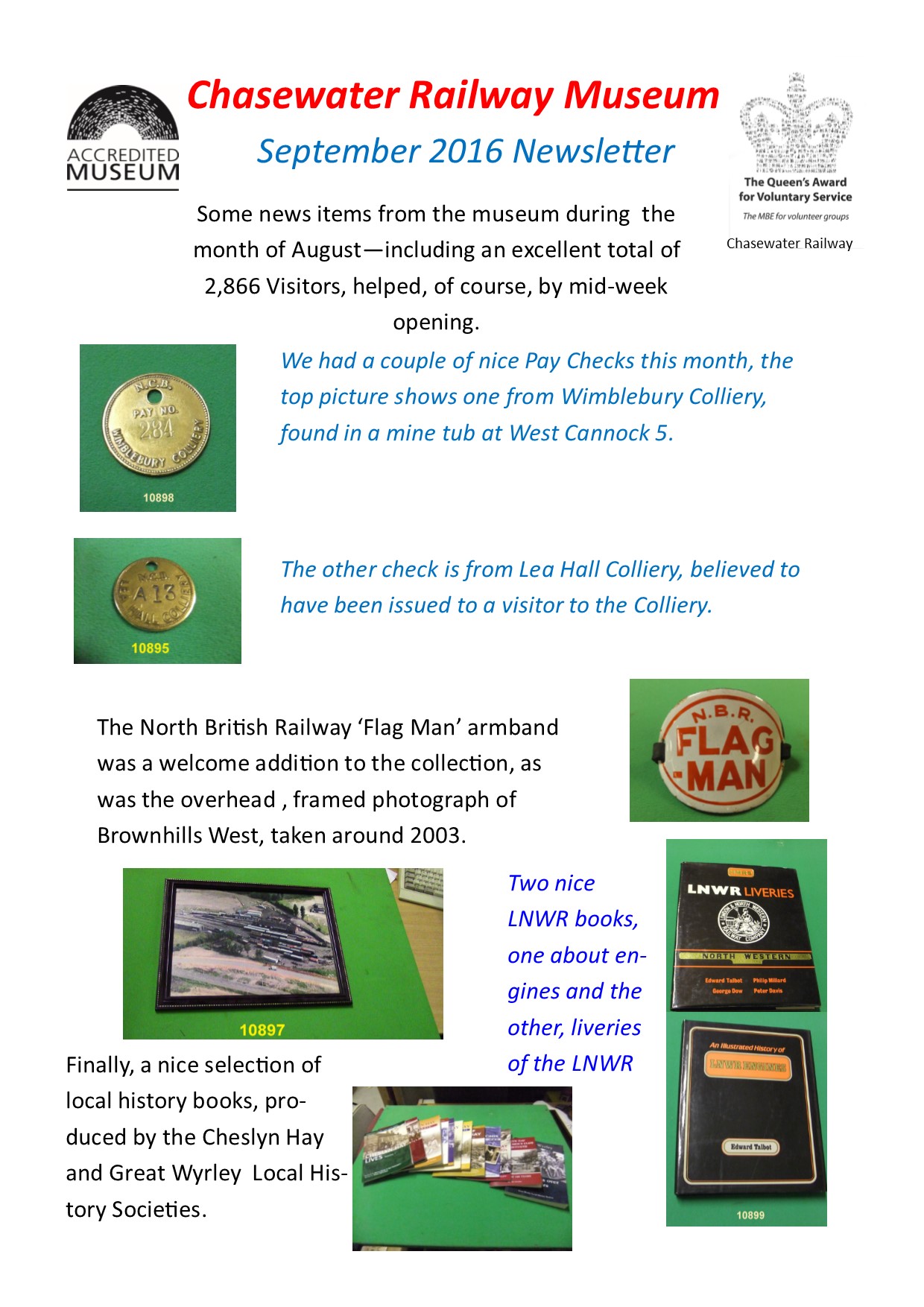
Chasewater Railway Museum – September Newsletter

Chasewater Railway Museum 

September Newsletter

September Newsletter

Save

Save

Save

Chasewater Railway Museum – An Addition to our collection of Armbands

Chasewater Railway Museum

An Addition to our collection of Armbands

Armbands in case.jpg 

The later years of the 19th century saw increasing standardization on the railways, not least in the armbands worn by three types of railway worker – pilotmen, flagmen and lookout men.  The one worn by pilotmen was issued by the signal department and was made of red cloth with white stitched letters, and was secured by leather or elastic straps.

The armbands for flagmen and lookout men were made of enamelled steel plate, cut into an oval and shaped to fit the arm.  A pair of slots was cut into the plate, through which a pair of leather straps, with buckles, was attached.  Issued by the permanent way department, these enamel armbands were finished in white with red lettering.

A pilotman was a signal department employee whose job was to ride on the locomotive acting as a kind of human staff or token if the signalling on a single line failed, or if there was an accident or obstruction which closed one of the lines of a double track.  No train could proceed without him in such an emergency, so that the possibility of a head-on collision was avoided.

The lookout man was quite simply that.  His job was to keep a sharp lookout when a permanent way gang was working on the track, and to give a warning for it to stand clear as soon as he saw an approaching train.

The flagman was another permanent way ganger, who used green, yellow or red flags to communicate with signalmen or other permanent way staff who were out of audible range.All three posts were – and still are – crucial to the safety of both passengers and railway employees, and armbands were issued to emphasize this fact and to avoid misunderstandings.  A modern variety, coloured pale blue with white letters, was used on British Rail.

London, Midland & Scottish Railway Armband.

317

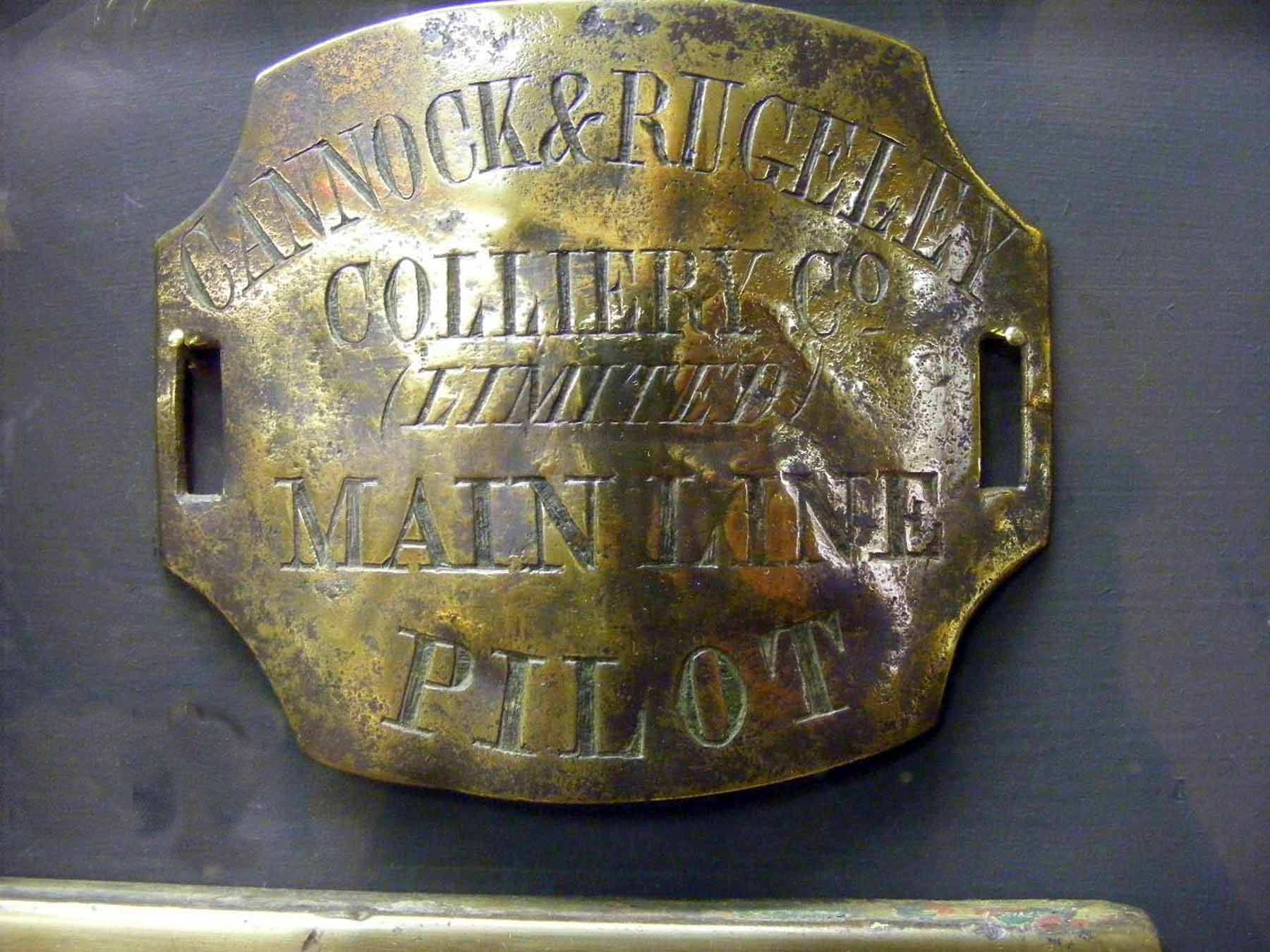
This armband is still my favourite.  A brass Cannock & Rugeley Colliery Main Line Pilot Armband, dug up in a field by a farmer while ploughing some years ago – considerably battered and bent over double!

Save

Save

Save

Very Early Days at Chasewater – With thanks to Trevor Cousens and Ian Pell

Very Early Days at Chasewater –

With thanks to Trevor Cousens and Ian Pell

Photo by Laurence Hodgkinson

Photo by Laurence Hodgkinson

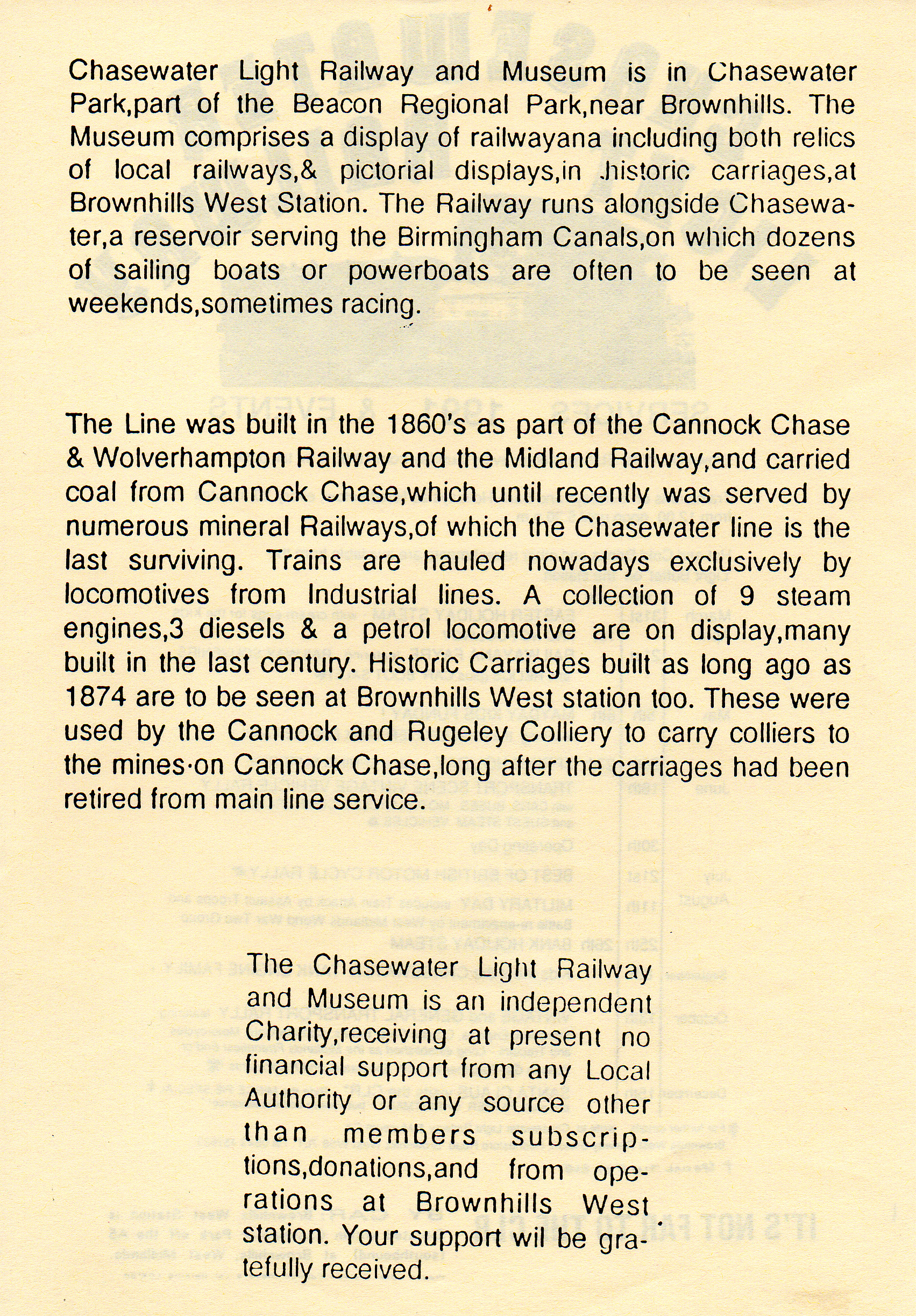
Chasewater Railway Museum – A 1991 Flyer for the Railway

Chasewater Railway Museum

A 1991 Flyer for the Railway

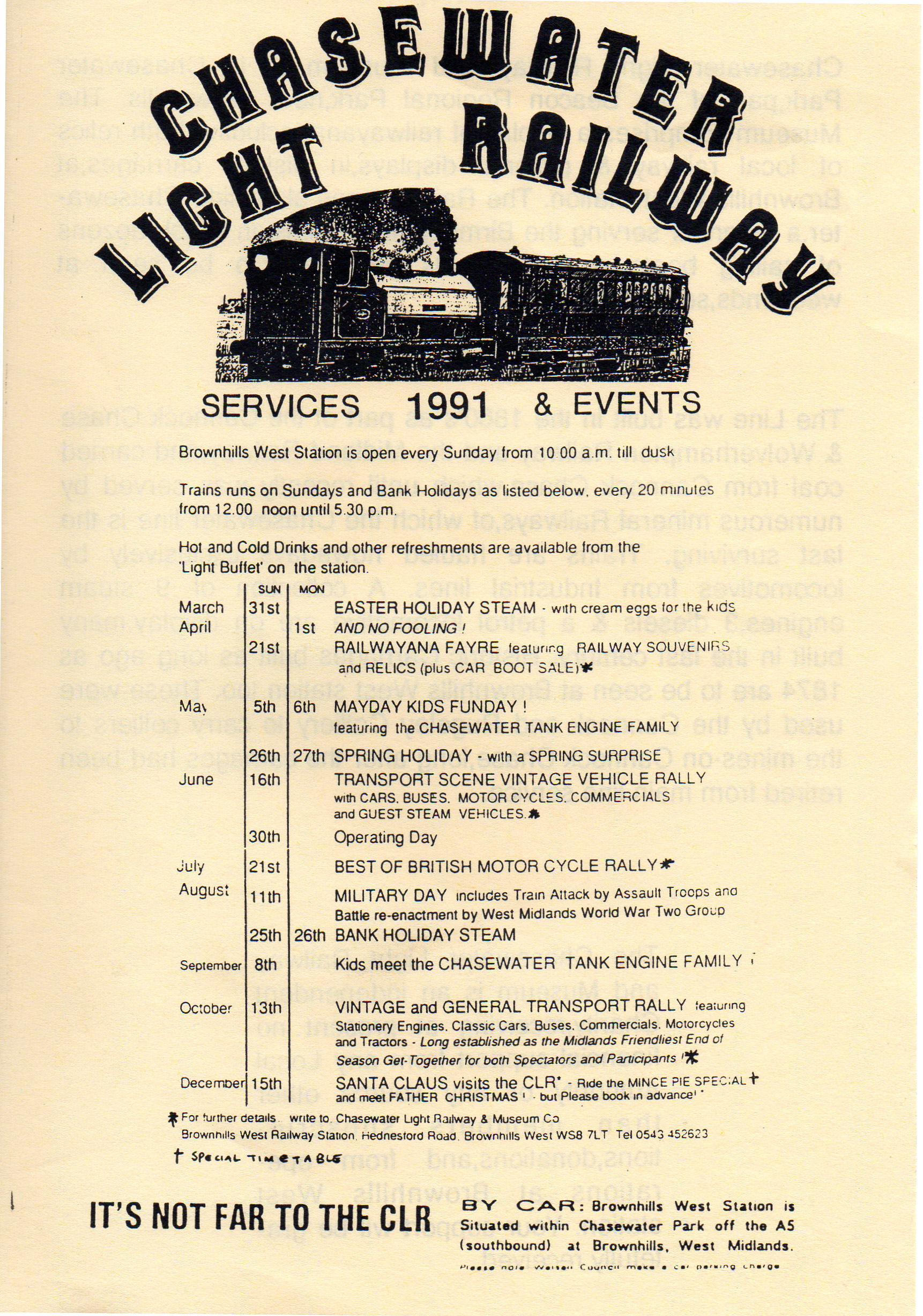
This double-sided flyer recently came to light in the museum.  It is now 25 years old and I found it to be interesting – I hope you do as well.

The running line in those days ran from the old Brownhills West Station (now in the middle of the M6 Toll) to the Willow Vale Bridge.  Push-pull obviously.

Front

Back

It will now be tucked away in our Chasewater Light Railway archives.

Chasewater Railway Publications – No.1- 1965

Chasewater Railway Publications – No.1 – 1965

This post was taken from the magazine of the Railway Preservation Societies – the ‘Railway Forum’ Winter 1965.

This picture was taken from the cover of the magazine.

Mr. W. Ives of Hixon, near Stafford, purchased this signal box from British Railways intending it to be preserved by the Midland R.P.S.  Unfortunately contractors taking up the metals of the old Stafford and Uttoxeter Line also demolished the signal box.  Now Mr. Ives (pictured) is wondering where he can get another.  (Photo:  Express & Star, Wolverhampton.)

I’m not sure where this photo was taken, but assuming it’s on ‘our’ line it might be between Norton East Road and Brownhills Road, judging by the position of the houses.  Any other suggestions will be gratefully received!

This, and the other track photos in this post were obviously taken before Chasewater trains were running.

The Chasewater Branch – by F.J.Harvey and L.E.Hodgkinson

Chasewater was constructed by the Wyrley & Essington Canal Company by building a low dam.  A reservoir 1¼ miles in length was thus formed for the purpose of feeding the nearby canals.

At one time Chasewater was encircled by railways; the earliest of these was the Cannock Chase & Wolverhampton Railway incorporated by an Act of Parliament on July 29th 1864.   A connecting link was constructed from the London & North Western Railway Cannock Chase mineral extension which was incorporated in 1862.

In 1884 a branch was built by the Midland Railway from Aldridge.  This was for mineral traffic, although passengers were conveyed as far as Brownhills.  The passenger service was withdrawn on March 29th 1930.  The direct link with the LNWR was broken in favour of a more circuitous connection via the Conduit Colliery Company’s yard.

With the closure of the Cannock Chase collieries, the Midland Railway branch from Walsall Wood to Brownhills was lifted in 1960, followed by the CC & WR track in 1963, leaving the remainder of the lines as they are today.  These were retained in order to connect the National Coal Board area workshops with the main line.

In recent years the possibilities of Chasewater as a pleasure resort were realised by Brownhills Urban District Council; an amusement park was constructed and facilities were provided for more specialised interests such as go-carts, speedboats, hydroplanes and yachts.

With the increase in visitors each year it was felt by the Midlands area of the Railway Preservation Society that the line would be suitable for development as a working railway museum and a lease of about two miles of track was taken out.  Much work has to be done to bring the line up to passenger carrying standards and it will probably be several years before a regular passenger service can be maintained.  This largely depends on the number of volunteers that are prepared to help with the track restoration.

The immediate aim of the Society is to construct a building to house the larger items of rolling stock where they can be fully restored and displayed to the public.  This building will form the permanent headquarters of the Chasewater Railway.

The Society would appreciate any help, practical or otherwise, from people interested in this project.  With sufficient support a limited service could be in operation by next summer.

We know where this one was taken – you can see the entrance to the farm gate.  The houses at the top were demolished to make way for the M6 Toll.

Save

Save

Chasewater Railway Museum – August Newsletter

Chasewater Railway Museum 

August Newsletter

August Newsletter