Tag Archives: Wolverhampton

In Memory of Roger Shenton.

The latest addition to be installed on the platform at Brownhills West Station is a bench in memory of Roger Shenton.
Roger Shenton's bench.
Roger worked as a volunteer at Chasewater until his sudden death in December 2012. This bench stands as a tribute to the many hours he gave to the Railway over the years.
Roger Shenton's plaque
Rest in peace Roger and Thank you.

The Latest Addition to the Chasewater Railway Museum Loan Items

The Latest Addition to the

Chasewater Railway Museum Loan Items

Today, March 6th 2014, The Chasewater Railway Museum received a visit from members of the Industrial Railway Society.  The principal reason for this visit was for the IRS to receive, on loan, a nameplate from the locomotive ‘Rothervale No.0’ from Mr. Bernard Mettam, and in turn, and with Mr. Mettam’s approval, place it on loan with the Chasewater Railway Museum.

 Rothervale No.0 Nameplate

 DSCF9297

The above pic was taken on arrival, the one below was taken on 16-6-2015, after a little(!) attention from Pete Stamper.DSCF0792

‘Many industrial locomotives are names or numbered for identification purposes, or sentimental reasons.  For various reasons very few were given the number ’0’.  Perhaps the most famous in this category was locomotive ‘Rothervale No.0’ whose nameplate is displayed here.  The locomotive was cut up in October 1959, but fortunately both nameplates were rescued by Mr. Bernard Mottram.

The locomotive, an 0-6-0 inside cylindered saddle tank, was built in 1879 by Beyer Peacock (works number 1830) in Manchester and became No.1 on the East & West Junction Railway, which later (1909) became part of the Stratford-upon-Avon and Midland Junction Railway.  In April 1890 the loco was sold to the Rothervale Collieries Ltd. and carried its new name ‘Rothervale No.1’ on a pair of cast brass nameplates attached, one on each side, to the saddle tank.  The loco was employed at Treeton Colliery located in the River Rother Valley just to the east of Sheffield.

Further locos were acquired by the colliery and named in a similar manner, i.e. ‘Rothervale No.’ followed by a single digit up to ‘9’, in the order of arrival.  In 1929 a new outside cylinder 0-6-0 saddle tank adorned with the cast nameplates ‘Rothervale No.1’ was delivered from the Yorkshire Engine Co.  It is possible that a mistake was made and it should have been ‘No.10’, (following No.9).  Confusion could now arise because there were two ‘No.1s’ at Treeton.  One of them had to be renumbered and there was space for a single digit only on the nameplate.  The decision was taken to renumber the Beyer Peacock to ‘No.0’, possibly because it was an earlier build than the Yorkshire.  The ‘1’ was chiselled or ground off the nameplate and replaced by a brass ‘0’ digit screwed on in the space created.  Brass ‘0’digits, slightly smaller then those on the nameplate were also attached to cab side sheets.

DSCF9294

The photograph was taken on 12th March 1955 at Treeton Colliery by Mr. Bernard Mettam, to whom the Chasewater Railway Museum is indebted, by way of the Industrial Railway Society, for the loan of this most unusual nameplate.

Thanks are due to Mr. Adrian Booth for some of the above information.’

DSCF9304

After the presentation of the nameplate by Bernard Mettam to Ian Bendall of the IRS, ( with the Railway’s Mr Bull waiting patiently!) the group adjourned to the Sidings Tea Room to enjoy one of Craig Wilkinson’s excellent Carvery Lunches.

The Industrial Railway Society also  extended the existing loan agreement for the Eric Tonks Collection for a further two years.

The Chasewater Railway Museum is most grateful and proud to house all of these items.

IRS Coll

Poster – ‘Your Friends on the LMS’

Poster – ‘Your Friends on the LMS

At present on display in the Buffet.

DSCF9071 

This is a copy of a poster by Septimus E.Scott (1946), from an original held in the collection of the National Railway Museum, York.

Typical of the post World War II poster, this one depicts the many vital roles played by the staff on the London Midland & Scottish Railway (LMS), from the guards to the chef, to the signal man, ticket collector and porter – all but two of these roles were undertaken by men.  After the Second World War many more of the women who had joined the railways during hostilities remained working for them.  This had not been the case after the First World War when those that had helped to keep the railways going were made to leave to make way for men returning from the front.

A New Book and Hednesford No.1 Signal Box

A new book and Hednesford No.1 Signal Box

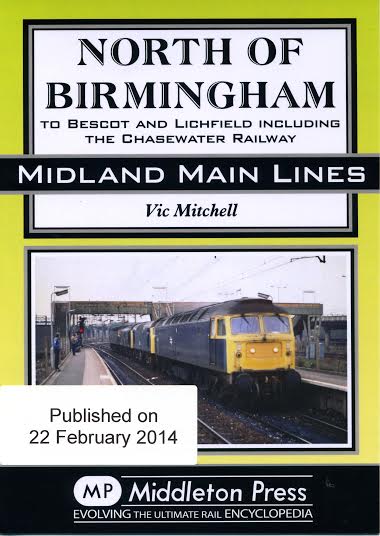
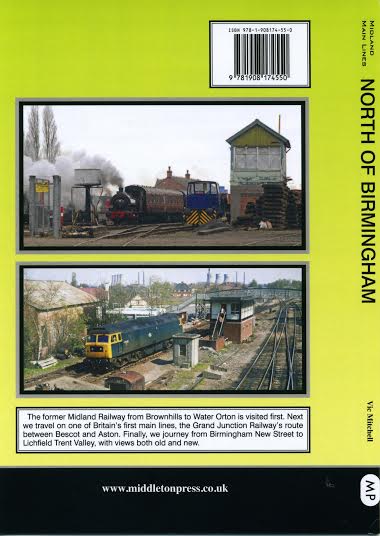
New Book North Of BirminghamNew Book - Chasewater PicThis book, featuring Chasewater Railway, will be on sale in the Chasewater Railway shop.  These details were sent by a good friend of the Chasewater Railway Museum, Ian Pell, who had some involvement with the book.

Hednesford No.1 Signal Box

Crop 2

Already over the line

DSCF9066

In Hednesford Park waiting for the crane to catch up!

DSCF9005

In situ – shame it had to be boarded up – for now…

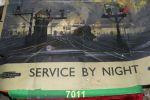
A Selection of Railway Posters from the Collection

A Selection of Railway Posters from the Collection

Mostly holiday destinations but also others of interest.

Some are in better condition than others and some will join those already on display.

Click on any picture for a larger version.


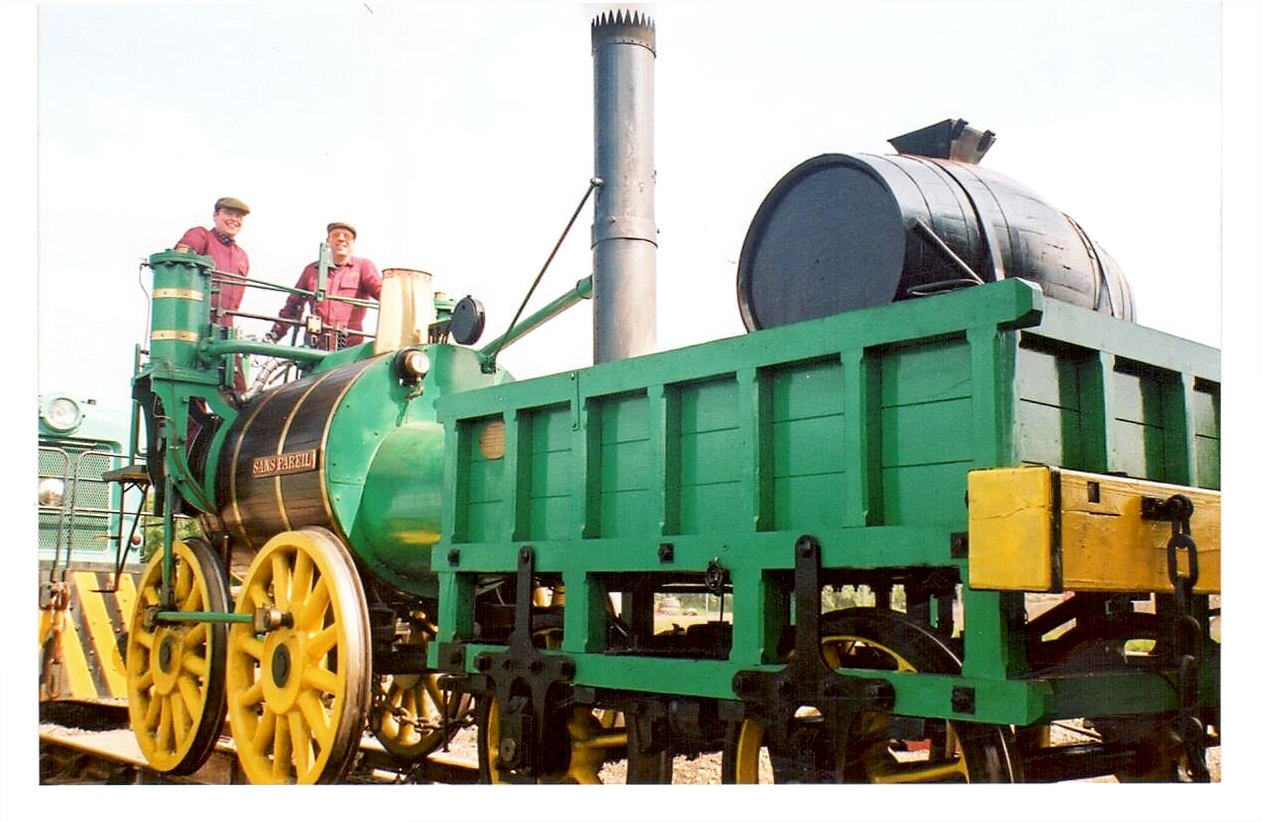
Photos from the Archives – These are from David Ives’ Collection – Sans Pareil

Photos from the Archives

These are from David Ives’ Collection

Sans PareilOutside the shed

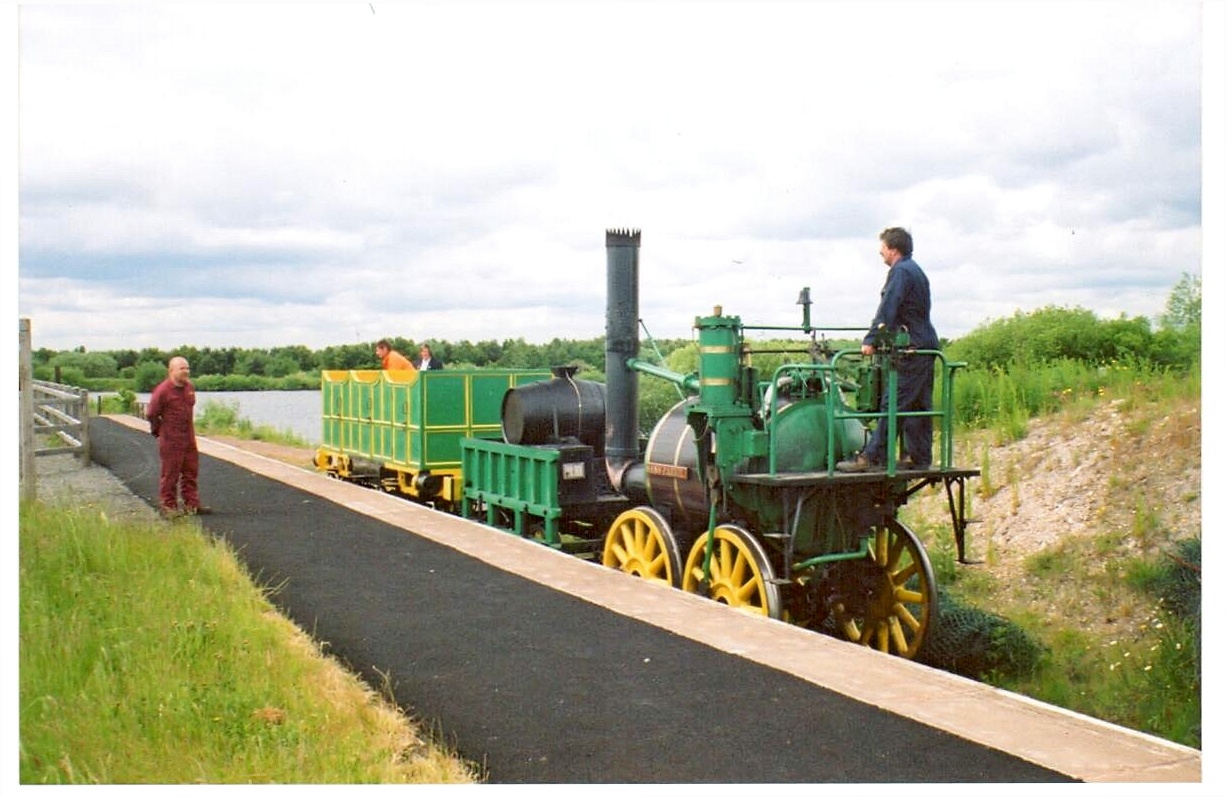
Sans Pareil is a replica of Timothy Hackworth’s 1829 locomotive which competed against Stephenson’s ‘Rocket’ at the famous Rainhill Trials.

This locomotive came to Chasewater in 2001 and 2002 and proved to be very popular with railway enthusiasts and the general public alike.

Passenger train services ran between Brownhills West and Chasewater Heaths, alternating between Sans Pareil and Sentinel.Engine ShedOutside the loco shedLoading up at Brownhills WestLoading up at Brownhills WestChasewater HeathsChasewater Heaths

LakesideAt Lakeside

Museum Exhibits – Sectioned model steam loco

Museum Exhibits

This item was given to the Chasewater Railway Museum by a gentleman from Cannock, Staffs in 2009 and is on display in the museum.

849 Sectioned Model in museum

This model was purchased by the donor from the makers in Bury, Lancs in 1979.   It was produced along with 3 other models for Bangladesh Railways, but was not sent due to there being no Letter of Credit forthcoming.  The other 3 were probably scrapped.  It is loosely based on a Royal Scot Class locomotive.

Chasewater Railway Museum Exhibits – Wooden Models

Chasewater Railway Museum Exhibits

Wooden Models

2009_11290030

One of our most popular display cases is this one – containing a collection of wooden railway models hand-made by the late Mr. Eric Dee of Pelsall. (1931 – 2003).

Younger visitors like to see the models and the grown-ups appreciate the work and skill that has gone into making them.

Mr. Dee was a saddle maker by profession and made these toys for his grandchildren to play with.

He was a fine craftsman and amongst other interests made a fine collection of miniature saddles.

The collection has been kindly donated to the Chasewater Railway Museum by his daughter, Mrs. Jackie Bedward.1505

Just one of the models close-up

Chasewater Railway Museum Exhibits – Wagon registration plates

Chasewater Railway Museum Exhibits

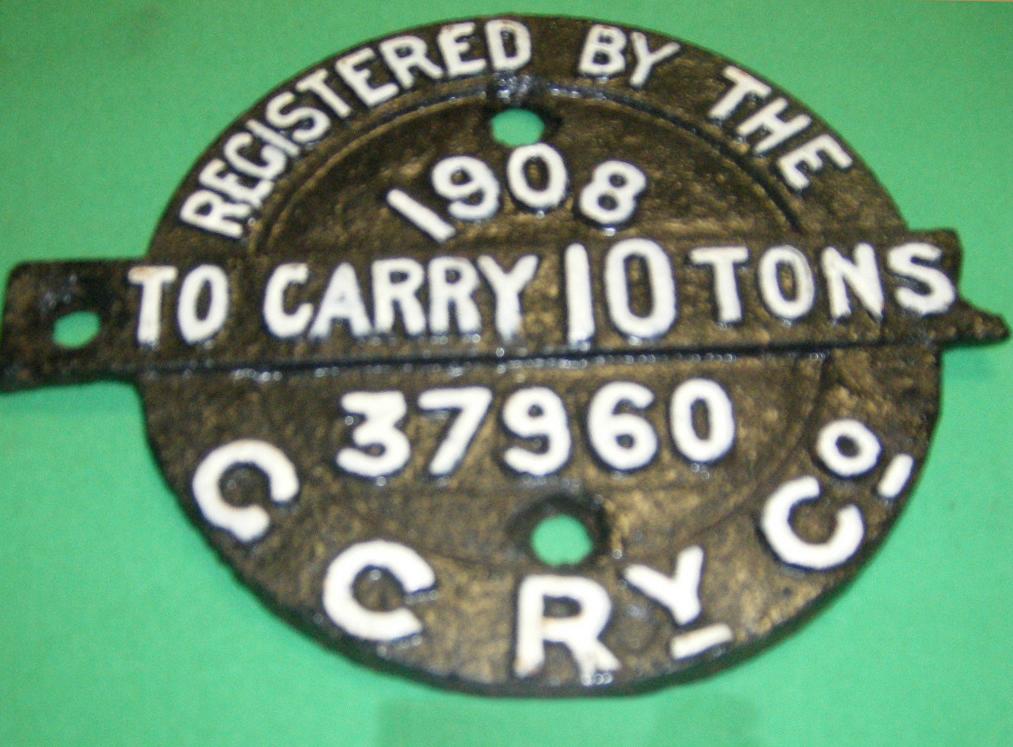
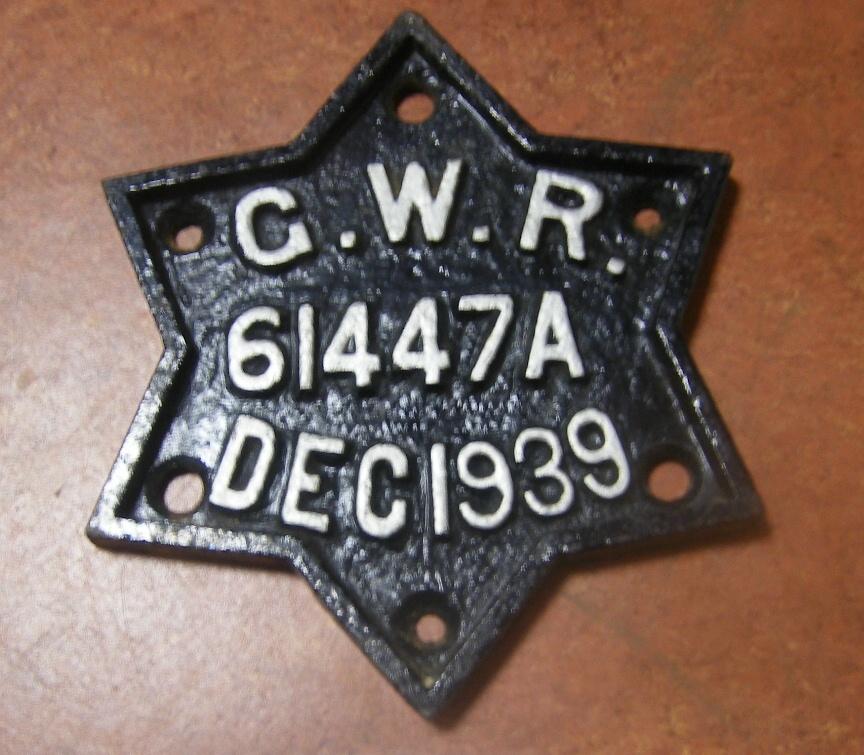
Wagon registration plates515  e

Railways came into being first and foremost not to carry passengers, but to convey freight, especially mineral traffic, like coal.  In the early days, when few lines were interconnected, the variety of goods wagons did not matter, but as railways expanded and through trains became common, it was essential to have wagons whose buffers, brakes, couplings and so on all matched up.

Risk of derailment

The main line railways adopted these fairly quickly, but the private owners, especially collieries and coal merchants, were reluctant to comply, and damage and derailments became common due to their wagons either lacking proper buffers and brakes or being poorly maintained.

In 1880, however, it became a legal requirement for all privately owned wagons to be registered by the railway company to whose sidings their owners were connected, and only those that reached the Clearing House standard were allowed to run on main lines.

Vital Statistics

Each wagon so passed had two plates, one on either side of the main frame, advising its date of manufacture, its registration number, and its carrying capacity.  In 1907, the RCH designed a new, star-shaped plate for tank wagons.653  e

Many of the ordinary registration plates come with their lugs broken off, but these can easily be repaired using fibreglass filler.   The normal colour seems to have been black with white letters, and red with white letters for tank wagons.

However, some privately owned wagons were painted in quite garish colours, and it seems likely that their plates were similarly treated.  Nearly all plates were made of cast iron, but examples in brass or lead alloy are occasionally seen.2062  e

Museum Bench refurbishment

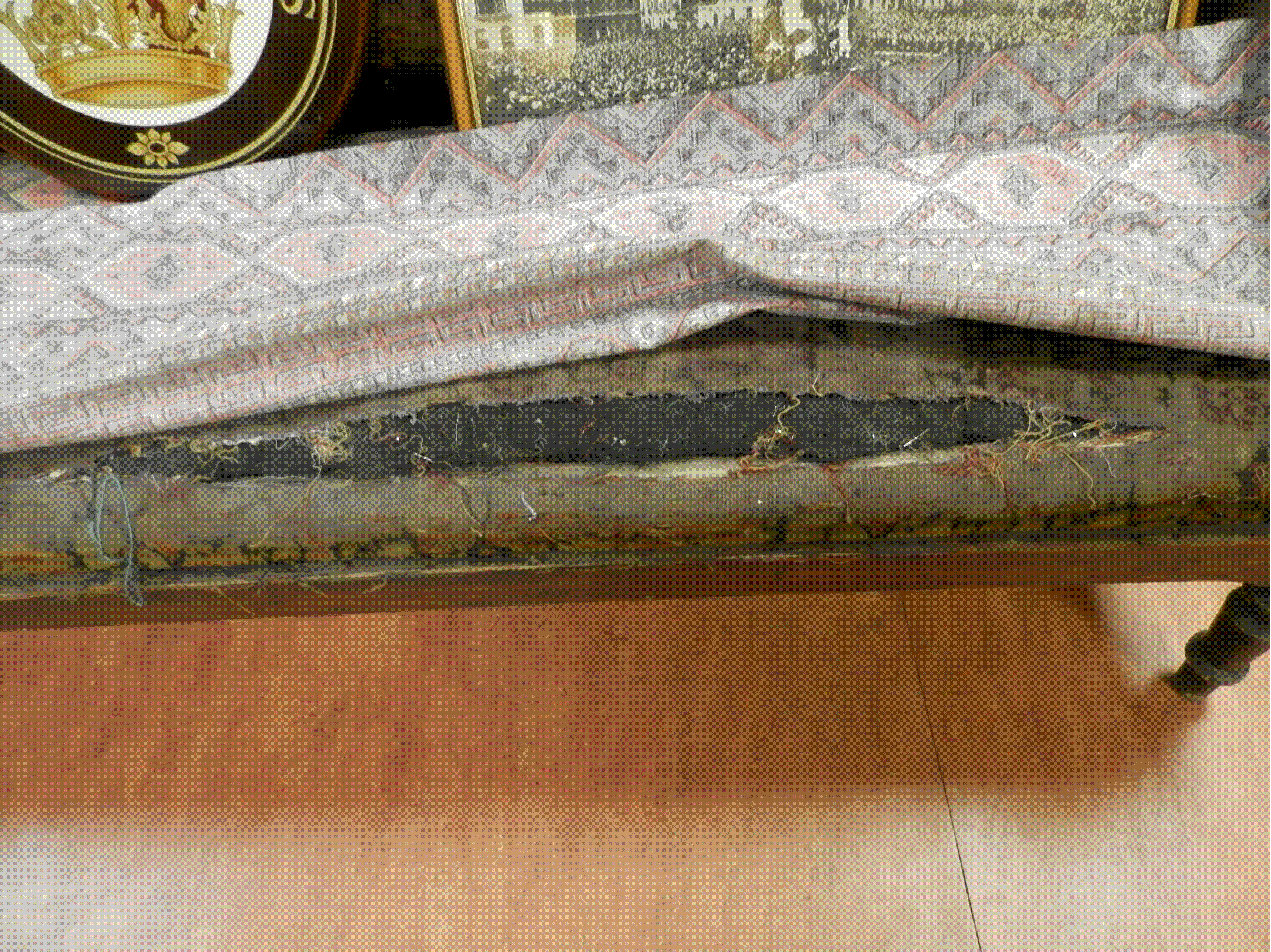
One of the Museum exhibits is an old Railway Station waiting room bench.

DSCF9330

Having seen heavy use over the many years of its life, the fabric covering, was badly worn, exposing the horsehair filling.

Picture1

Using the money generated from the ” bench fund” table situated outside the museum room, the bench has been recovered and re sprung.

Bench Recovered

Photo’s by Chasewater Stuff & Oakparkrunner.

An excellent job was carried out by Steve Wade, a local Upholsterer, who has a workshop at the rear of 59 High Street Walsall Wood WS9 9LR.

Steve can be contacted on 07903337000, or at Stephen.wade@sky.com, and he will be pleased to quote for any upholstery work. Details and photo’s of Steve’s work can be found on his website http://www.stevewade.biz/