
160 – Chasewater Railway Museum Bits & Pieces From Chasewater News Summer 1993 –Part 3 The value of a hole in the ground David Bathurst
160 – Chasewater Railway Museum Bits & Pieces
From Chasewater News Summer 1993 –Part 3
The value of a hole in the ground
David Bathurst

In an edition of ‘Chasewater News’ last year (Bits & Pieces No. 152) I outlined the possible use of derelict land grant (DLG) to enable the railway to achieve one of its most important projects – the restoration of the causeway. The possibility had arisen for a number of reasons, including the fact that the Staffs County Council was preparing a derelict land scheme to reclaim the Norton Bog area of Chasewater, directly adjacent to the causeway.
The Staffs CC scheme was, however, delayed owing to the need to consult British Coal in respect of the coal stocks which might be recovered from Norton Bog. If the Staffs CC scheme were to proceed, it was suggested that the causeway restoration could form a later stage of that scheme. The mechanism to achieve this proposal was itself very complicated, with the causeway mainly falling within Walsall Council’s boundary.
Since the date of my earlier article, many events have taken place, including the decision of the Boundary Commission to transfer much of Chasewater into Lichfield District Council (and thereby under the planning jurisdiction of Staffs CC) from 1st April 1994. This transfer also includes land ownerships, much to the dismay of Walsall Council. The proposed transfer has direct implications for the railway, namely the short-term difficulties of having to take account of an additional local authority and the longer-term benefits of having to deal with fewer local authorities!!
Against this backdrop of DLG and the involvement of the various local authorities, members who visit the railway regularly will have some difficulty in reconciling the information which I have so far provided, with the events ‘on the ground’. Indeed by the time this article appears in print, there is a prospect that most – if natal – of the causeway restoration will have been completed. Not only has a very substantial access roadway been laid from Hednesford Road (rear of the station area ‘top’ compound), but similarly substantial works will have been completed to prepare the causeway to receive substantial inert fill materials.
‘But how is this possible?’ is the question likely to be asked by many members – especially those members who will have appreciated the massive scale of the restoration project. It is a valid question, particularly in light of the knowledge gained by the CLR Board regarding just how much fill material (perhaps 10,000 tons) and manual resources are necessary to undertake the work.
One of the earliest lessons which I learned upon joining my current employers was the value of owning a hole in the ground. As time passes and demands on space increase, coupled with the ever-present vigilance of the environmental lobbyists, local authorities and private organisations are finding it increasingly difficult to dispose of unwanted materials. Although it is of no concern to the railway, everyone must be aware of the problem of dealing with household waste. Exactly the same problem arises in respect of disposing of hard waste which is generated through the day-to-day operations of a large local authority. Most of this material has to be sent to licensed tips – sometimes a great distance away – at a significant cost both in terms of transport and tipping fees. If you own a hole in the ground, and you can secure the necessary planning and/or other permissions to fill it, then you have a most valuable asset.

I think that few of us involved with the railway fully appreciated that the causeway might be regarded as a ‘hole in the ground; in reverse! But that is precisely what it is.Causeway December 1992
Even before the previous article appeared in print, representations were being made to the railway to the effect that Walsall Council’s Highways Direct Labour Organisation (DLO) would be prepared to undertake a restoration project, using the causeway as a suitable location for filling with appropriate inert (and environmentally acceptable) materials. It would be, and continues to be, a finely balanced financial equation. It was to be based entirely on commercial considerations. It was not to be regarded as a favour to the railway. It was to be based on the financial benefit to be obtained by the DLO, but with the railway enjoying a similar benefit, albeit not in directly financial terms.
The proposal can be summarised thus: a proportion of the savings made by the DLO by not incurring tipping charges in the private sector could be allocated to the works necessary to transport materials and employ heavy plant to spread, profile and consolidate the causeway to specifications laid down by the railway. In addition to its routine programme of road maintenance, the DLO is for ever tendering for major highway projects, including bridge and similar schemes, all of which result in materials having to be disposed of.
I have no wish to expend too much time and space in describing all of the individual aspects of the project which have had to be addressed before work could start. I can say, however, that many hours of discussions and consultations have been necessary, and dozens of phone calls made, to ensure (so far as is possible) the support and co-operation of the various agencies involved. The detailed discussions have necessarily been limited to a mere handful of railway personnel, so as to concentrate lines of communication.

These discussions have included such details as how to deal with the rare (or rarish) plant life growing on the causeway. It has been necessary to remember that the railway’s activities include certain designated areas, including a SSSI and a SINC (abbreviations well known to those of you with wild life interests), which have required close liaison with Walsall Council’s Planning and Leisure Services Departments. I must place on record the tremendous help, support and co-operation of the Officers who have been involved in this particular aspect, including the Countryside Officer who gave the CLR Chairman (the author of this article at the time) a crash course in rare plant recognition!!Causeway South 1992

There have been a number of false starts to the project. Initially, it was intended to import the materials from the bridge reconstruction scheme at the High Bridges on the Pelsall to Brownhills road. I suppose that it was inevitable that something would go wrong, and so it did. The weather immediately after Christmas reduced Chasewater Park to a bog, making it completely impossible to even consider moving any form of heavy vehicle into or through the park. Each time the weather seemed to improve, it immediately deteriorated again, resulting in a further deferral of the start date. I hardly need to remind certain members of the dangers associated with driving vehicles in close proximity of the Chasewater reservoir without taking the precaution of wearing a life-jacket and having flares (as opposed to railway detonators) immediately to hand. (While working with the dumper truck it got a bit too close and slipped into the water!! Bits & Pieces No. 151)Causeway December 1992
However, an upturn in the weather enabled everyone concerned to agree to an early May start date, and work on laying the access road commenced in earnest on the first Tuesday in May. Regrettably, the attentions of the local riff-raff were directed to the contractor’s JCB, which attempted to emulate the dumper truck in trying to carry out work within the Chasewater Reservoir itself. Despite this set-back, the work has continued according to plan.
In terms of a time scale, the DLO have not sought to offer (and nor has the railway demanded) a precise indication of a completion date for the restoration project. This reflects the fluctuating availability of suitable fill material – which has had to meet exacting criteria laid down by both the railway and the local authority. Nevertheless, it is in the financial interests of the DLO to undertake the work speedily and effectively, so as to avoid the costs of employing contractors’ plant and equipment, whilst at the same time maximising the capacity possibilities provided by the scheme.
The end product will be a causeway capable of accommodating a railway line; but it will not necessarily be a finished product. It will still be necessary for the railway to provide for the small bridge at the eastern end of the causeway to be widened to facilitate the provision of a trackside footpath. Indeed, although there is no formal right of access across the causeway, the railway cannot ignore the real world situation in which the causeway is seen by the public as a convenient route between the two sides of Chasewater Park. The restoration scheme includes a private footpath alongside the running line, but at a slightly lower level.
In addition, discussions are taking place with the group responsible for the Forest of Mercia, in relation to a scheme of planting suitable species along the causeway, so as to enhance the environmental attractiveness of what might otherwise be a somewhat stark construction.
I apologise for the length of this article, but only in one sense. The causeway restoration project is of momentous significance to the future of the railway. It is a focal point in the minds of many of the railway’s working members. Not only is it important in itself, but it also opens up the real prospect of further expansion into Chasetown. Already, preliminary discussions have taken place with Staffs CC – who are currently designing their Norton Bog Reclamation Scheme now that British Coal have withdrawn their coal recovery proposals – regarding the clearance of the track-bed adjacent to the Norton Bog site. Further, Staffs CC Highways Department have been asked to provide details of their design work on the Burntwood by-pass, to enable the railway to assess the implications on the railway’s long-term expansion proposals.
This is a very exciting time for the railway, with so many different projects taking place or being prepared. The causeway restoration will make it necessary to bring forward thought (and expenditure) on the procurement of sleepers and rail. It will give an added impetus and an exciting incentive to the working members and the railway’s many supporters.

And it is a fact that the scheme has come about because of the one thing that most of us had not contemplated – our own special version of a “hole in the ground”.
Causeway South January 2005
Chasewater Railway Museum – The Causeway
Posted onNovember 9, 2015by John D | Leave a comment
Chasewater Railway Museum
The Causeway
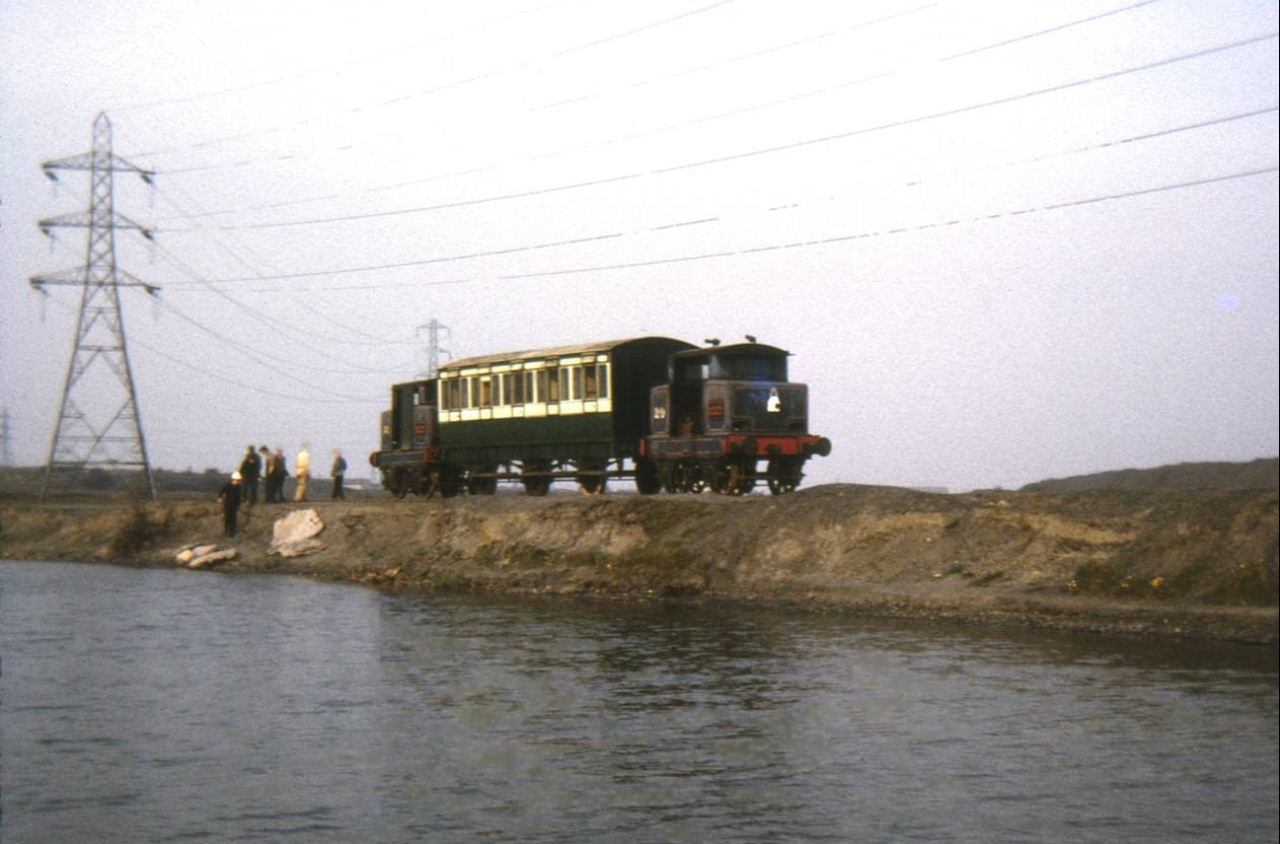
Worthington locos Nos.20 & 21 on the causeway with the Maryport & Carlisle coach in April, 1971
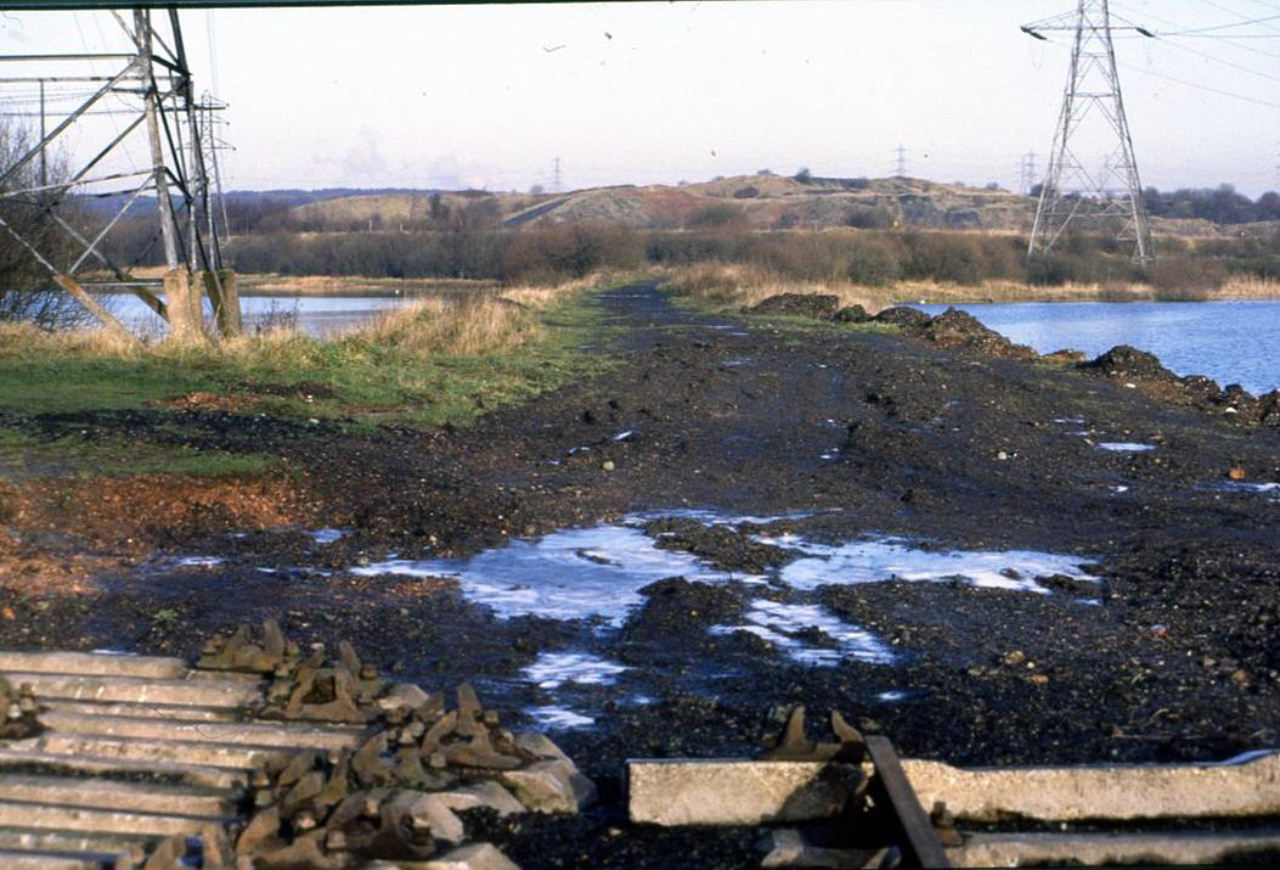
Taken in 1992
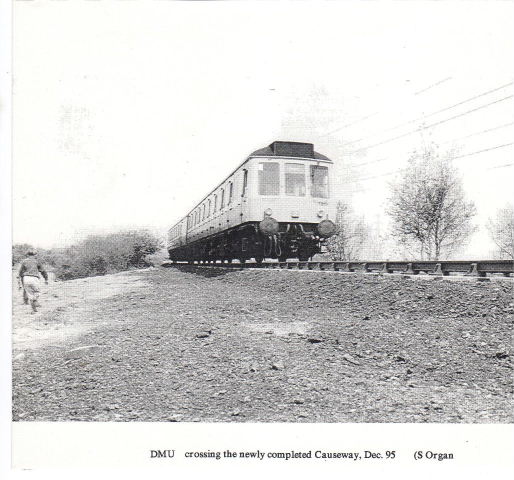
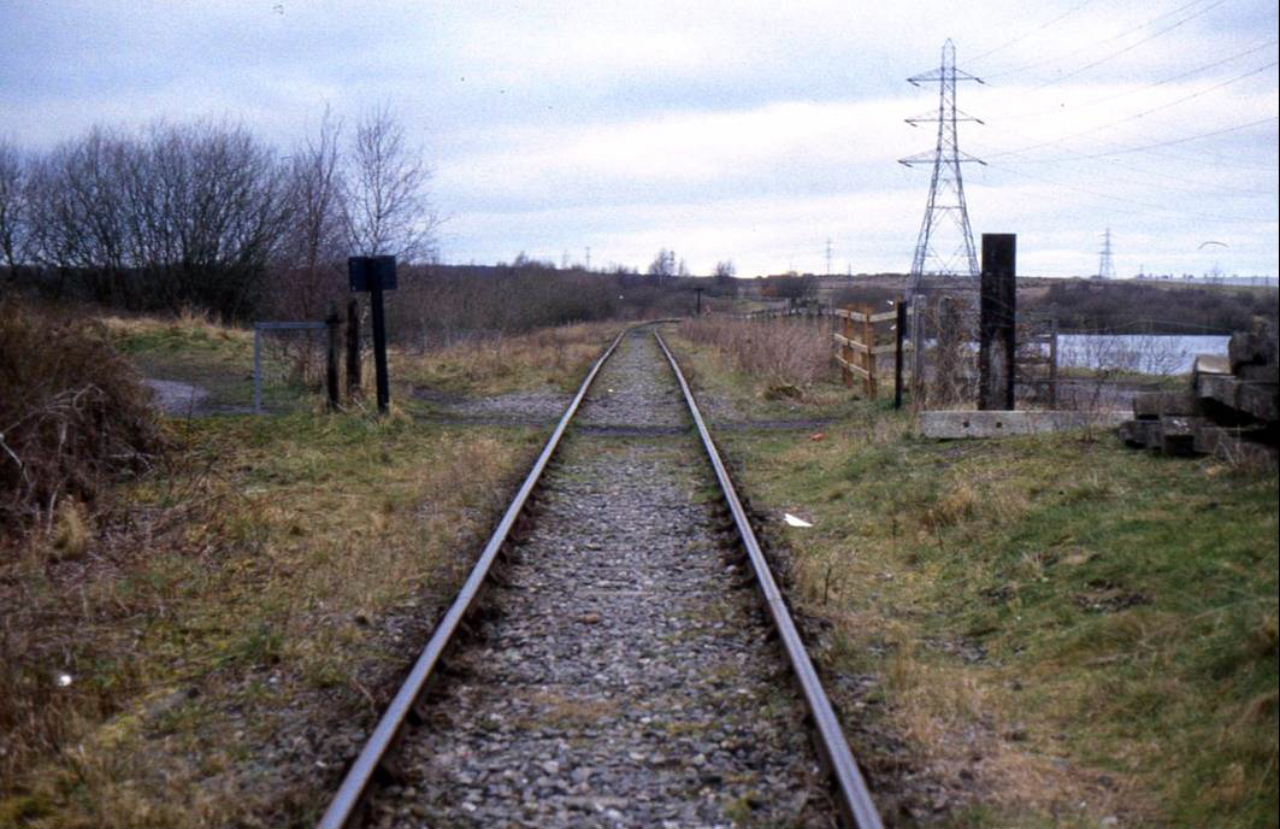
Taken in 2005
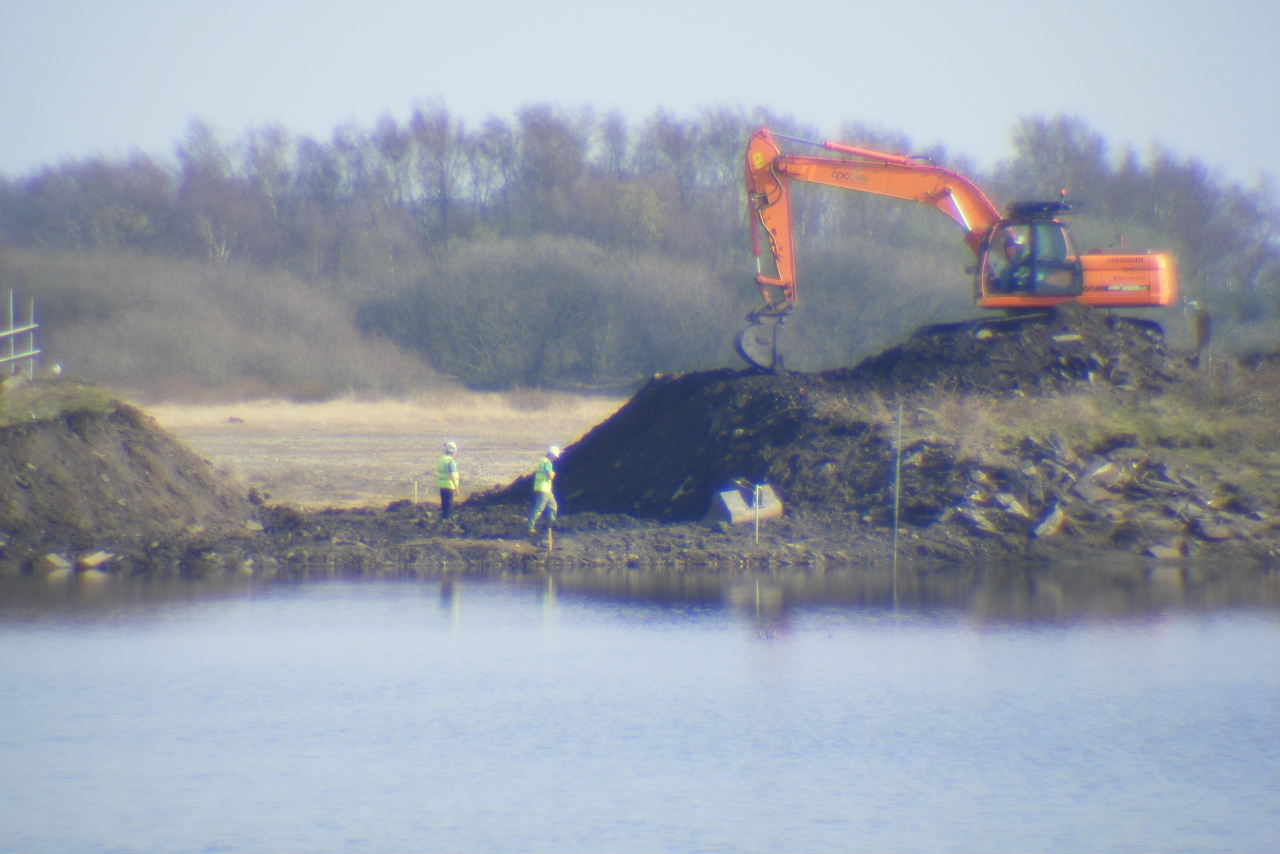
2011 – A hole in the Causeway!
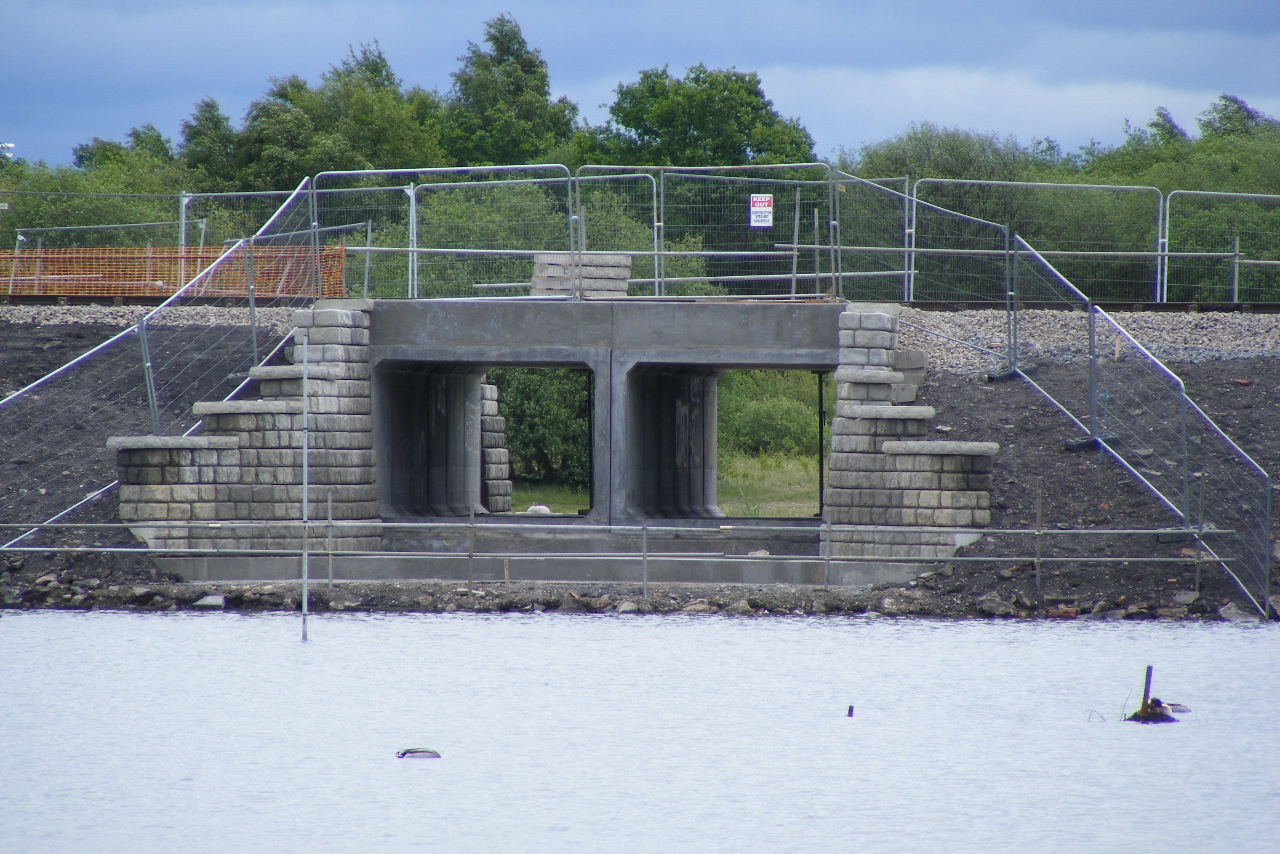
Later in 2011
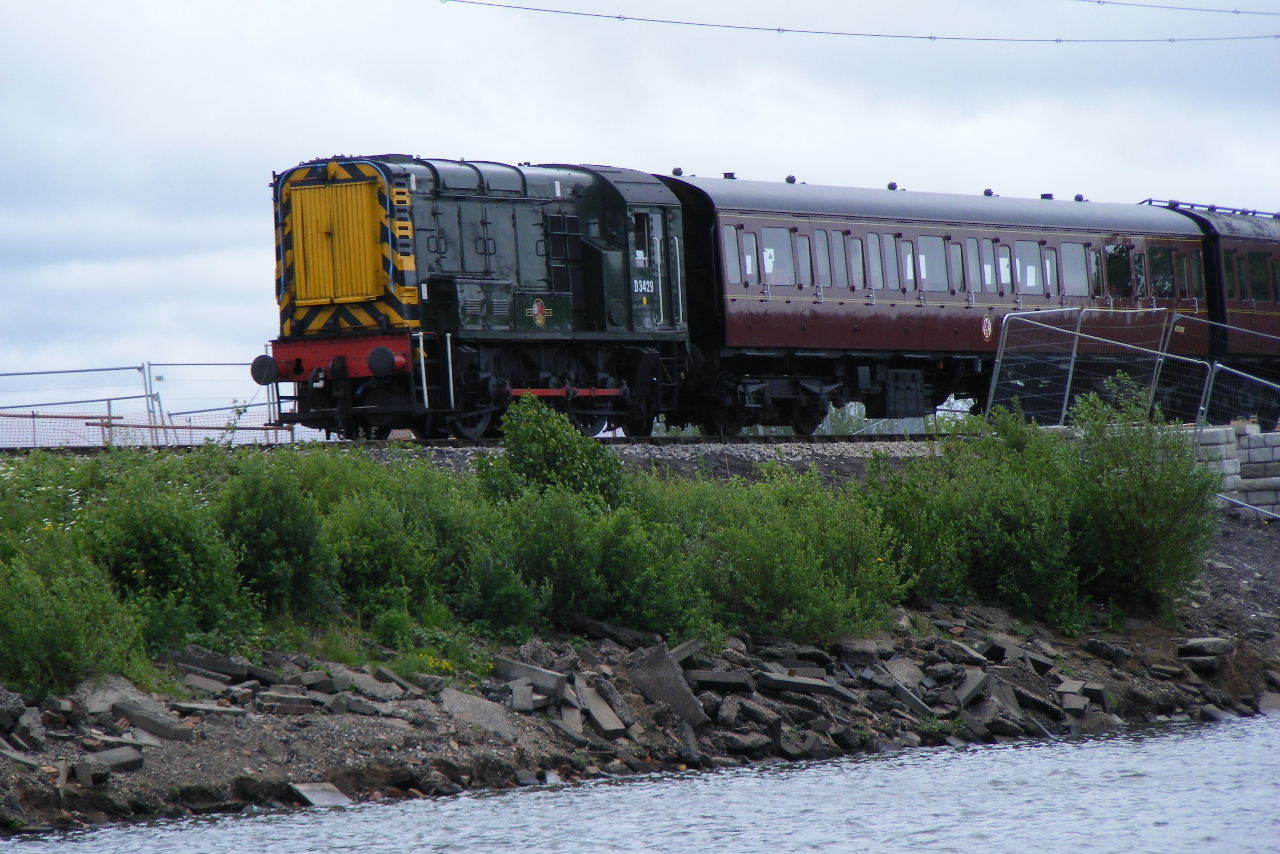
May 2011 – First train over re-opened causeway.
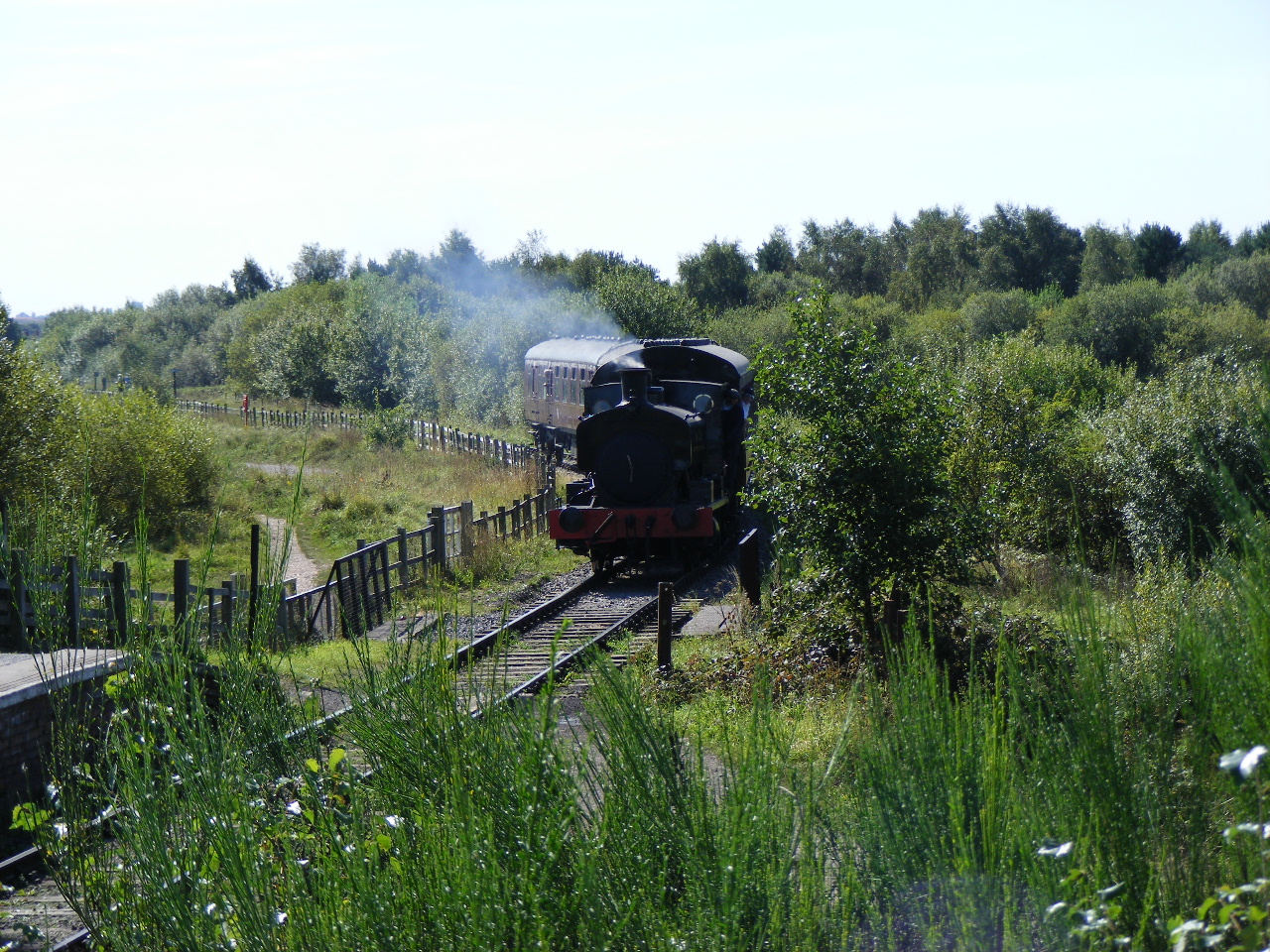
Just to show steam locos use it too !!
Visiting loco ‘Wimblebury’ over the causeway.






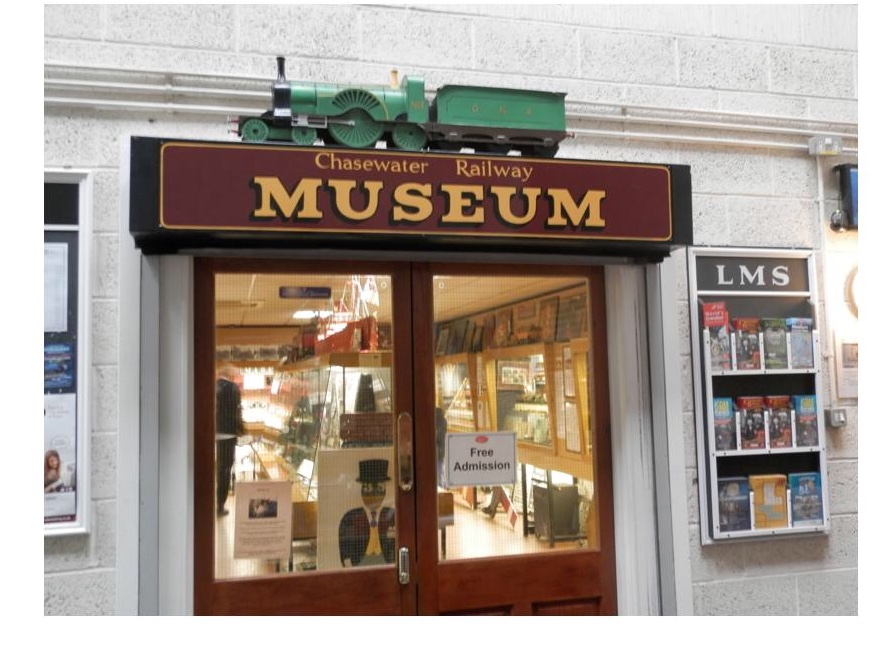



 Chasewater Railway Museum