Chasewater Railway Museum
New Website
Please have a look at our new website – it’s all there!!
catalogue.chasewaterrailwaymuseum.uk

catalogue.chasewaterrailwaymuseum.uk
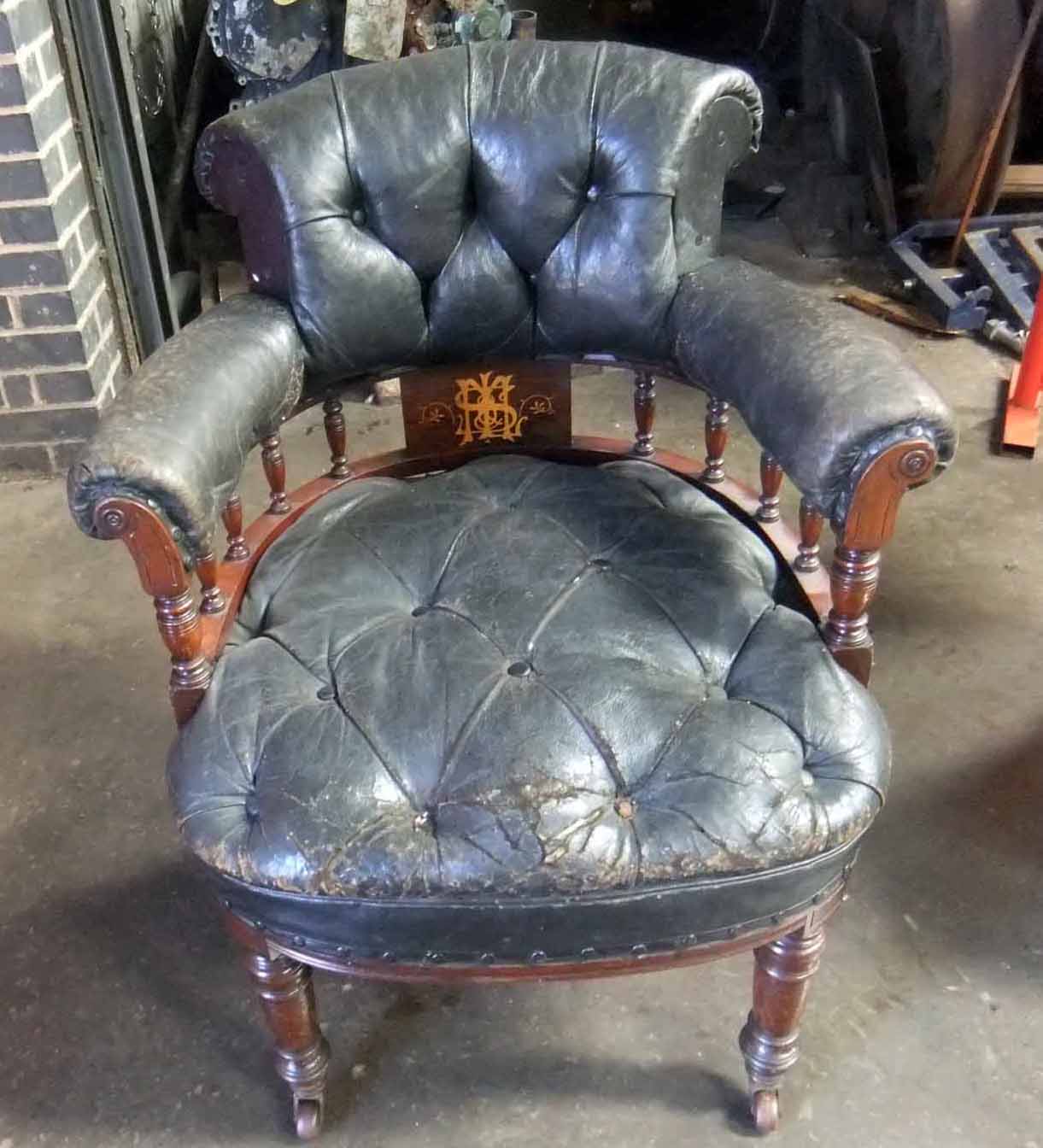
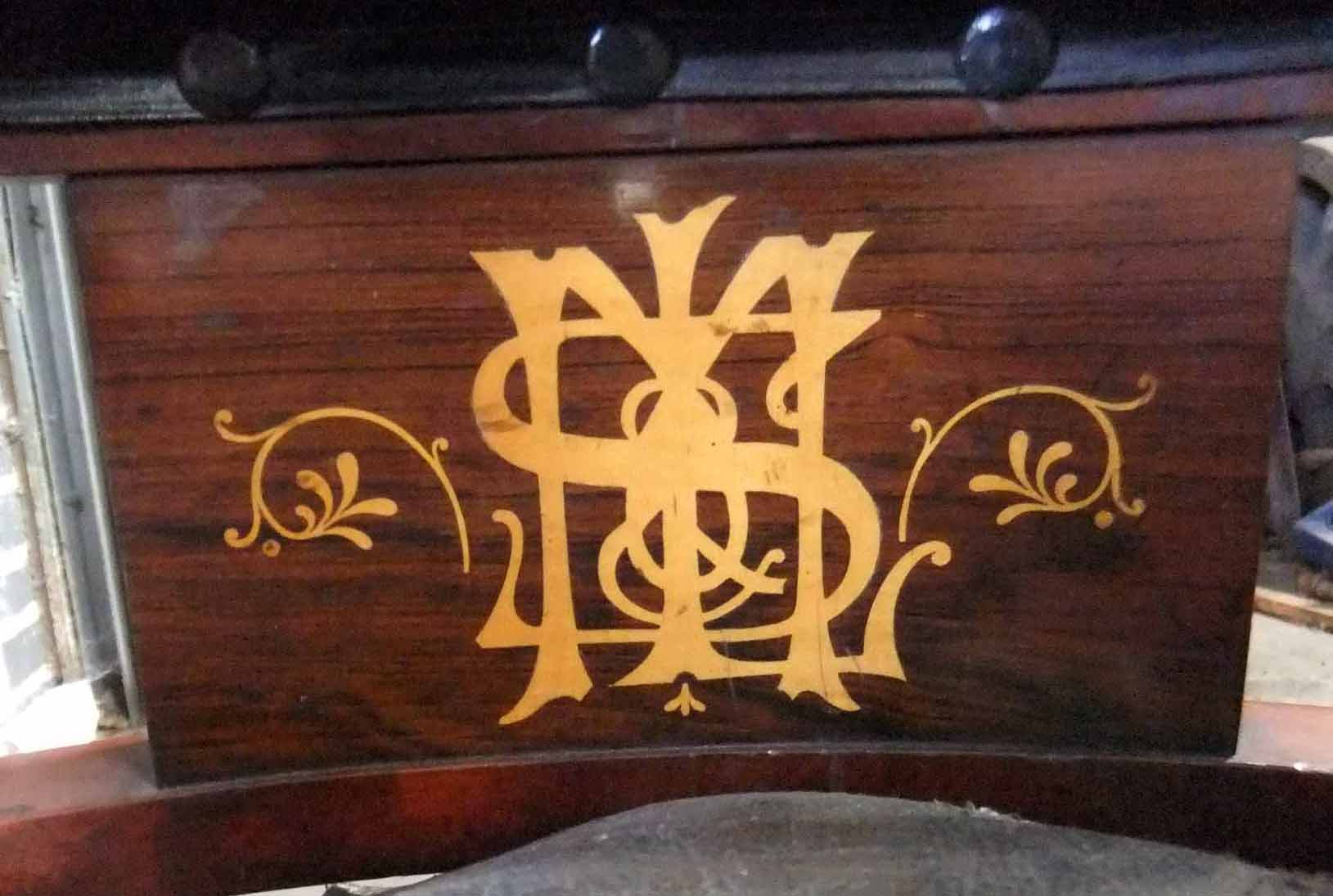
The new arrivals are two armchairs from a Directors’ Saloon on the Manchester, Sheffield and Lincolnshire Railway. They cannot be called new acquisitions as they were first acquired by the RPS and were at Hednesford for a time. The chairs were sold off when it is believed that the coach was damaged in an accident in the 1960s. Through Iain Smith, railway signalman and former secretary of the Scottish Railway Preservation Society, the RPS acquired the chairs which, after their Hednesford visit, were stored for safekeeping by member Mike Lewis.
They were delivered to Chasewater Railway Museum by Laurence Hodgkinson in May 2019, and, although needing some restoration work, have been kept in very good condition by Mike Lewis.
Our thanks go to Mike and Laurence for their efforts on our behalf.

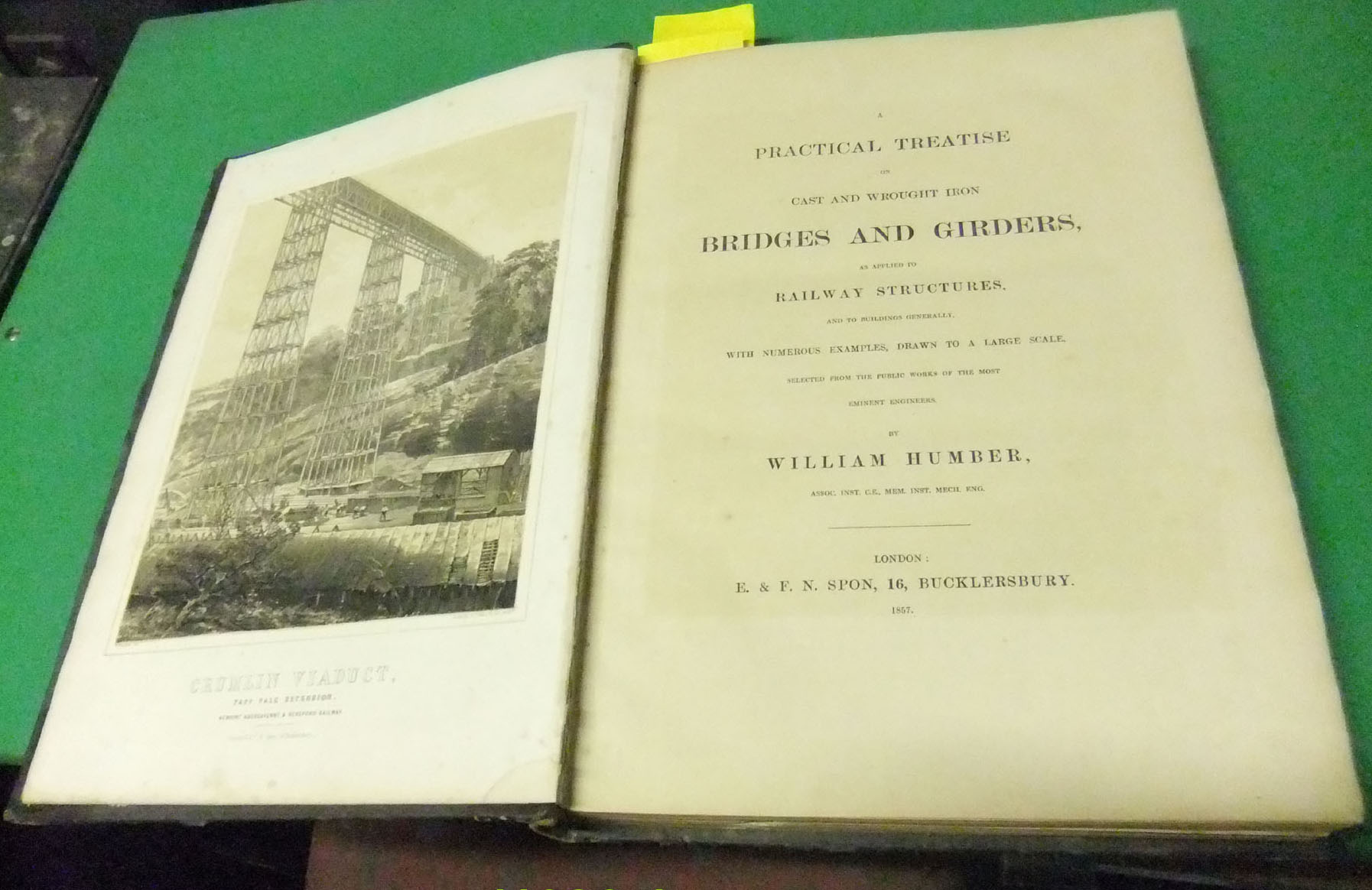

No.1:
South Staffordshire Railway
Aqueduct Cannock Chase
Messrs. McClean and Stileman, C.E. ( Consulting Engineers – John Robinson McClean and Francis Cloughton Stileman) John Robinson McClean was involved with the South Staffordshire Railway and the Cannock Chase Colliery Company, and is of particular interest to Chasewater Railway and the Museum.
In 1849 he took into partnership Mr. F. C. Stileman, with whom he engaged in the construction of the South Staffordshire Railway, the Birmingham Wolverhampton and Dudley Railway, the Staffordshire and Worcestershire Canal reservoirs, and the South Staffordshire Water Works supplying water from Lichfield to a very extensive district.
Constructed by Messrs. Lloyds, Forsters & Co.
This Aqueduct was erected to carry the Walsall and Birmingham Canal over the Bloxwich Branch of the South Staffordshire Railway. The work had to be completed before proceeding with the railway cutting to prevent interruption with the canal traffic, and also the supply to a water wheel, situated some distance below the ground of operations, in which the canal company was interested. Considerable difficulty was experienced in carrying out the work, because of the unfavourable nature of the soil, which was loose, sandy and, to some extent, marshy; increased by the continual sinking of the banks, caused by the coal and iron pits, which undermine the whole district.
The aqueduct is carried at right angles across the railway in two spans, each 14 feet wide, by 15 feet 4 inches from the level of the rails to the bottom of the girders. The trough 20 feet 4 inches wide by 5 feet 6 inches deep.

No.2:
South Staffordshire Railway
Cannock Branch
Messrs. J.McClean and Stileman C.E.
This bridge was erected for the purpose of carrying the Cannock Branch of the South Staffordshire Railway over the Wednesfield Branch of the Birmingham Canal. The peculiarity of this case consists in a better distribution of the metal in the top flange of the girders by which means the liability of that member to buckle when subjected to severe strains is in a great measure obviated.
The railway crosses the canal at a very acute angle, and to obviate as much as possible the effects of unequal deflection, each line of rail is supported by independent platforms so as to form two distinct bridges. The longitudinal or main girders are 63 feet 4 inches long, having a bearing of 6 feet at each end on the abutment, so that the span is only 51 feet 4 inches.
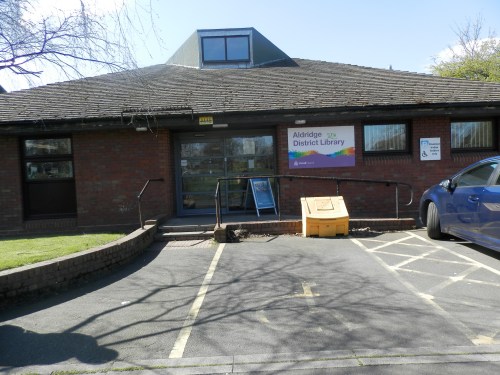
Aldridge Library situated in Rookery Lane Aldridge, is currently displaying an exhibition of Railway Memorabilia courtesy of Chasewater Railway Museum. The display is housed in two glass cabinets.


To compliment the cabinet display is a screen presentation of the aspects of Chasewater Railway.


The display which was organised by Susan Satterthwaite (a volunteer at Chasewater Railway) will run until the end of May. The Library is open from Tuesdays until Saturdays, (closed Mondays & Sundays).
The artifacts displayed are just a selection of the many on display in the free to enter, Chasewater Railway Museum, which is situated at Brownhills West Station, and is open on train running days.
Why not visit and relive the past.
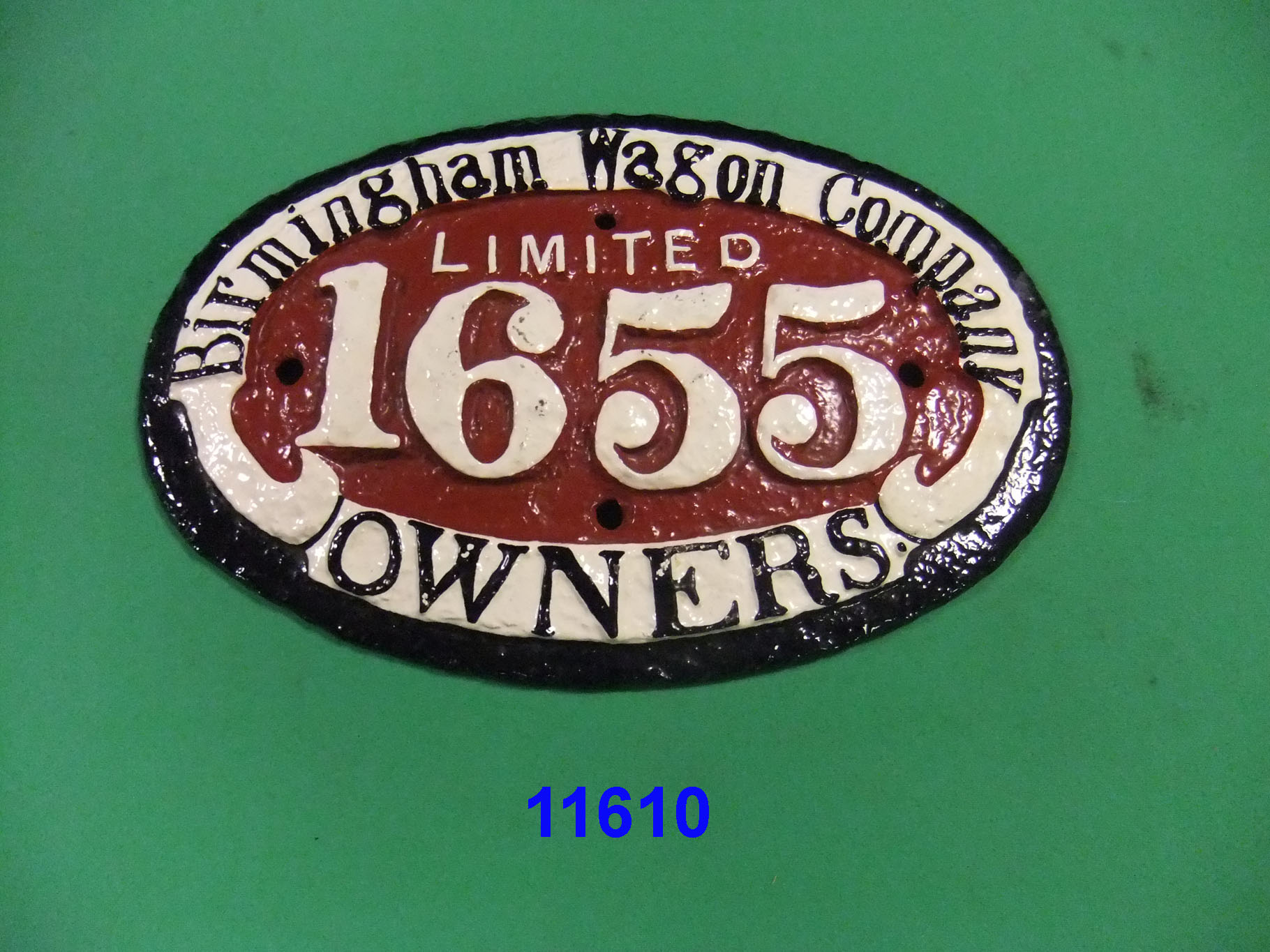
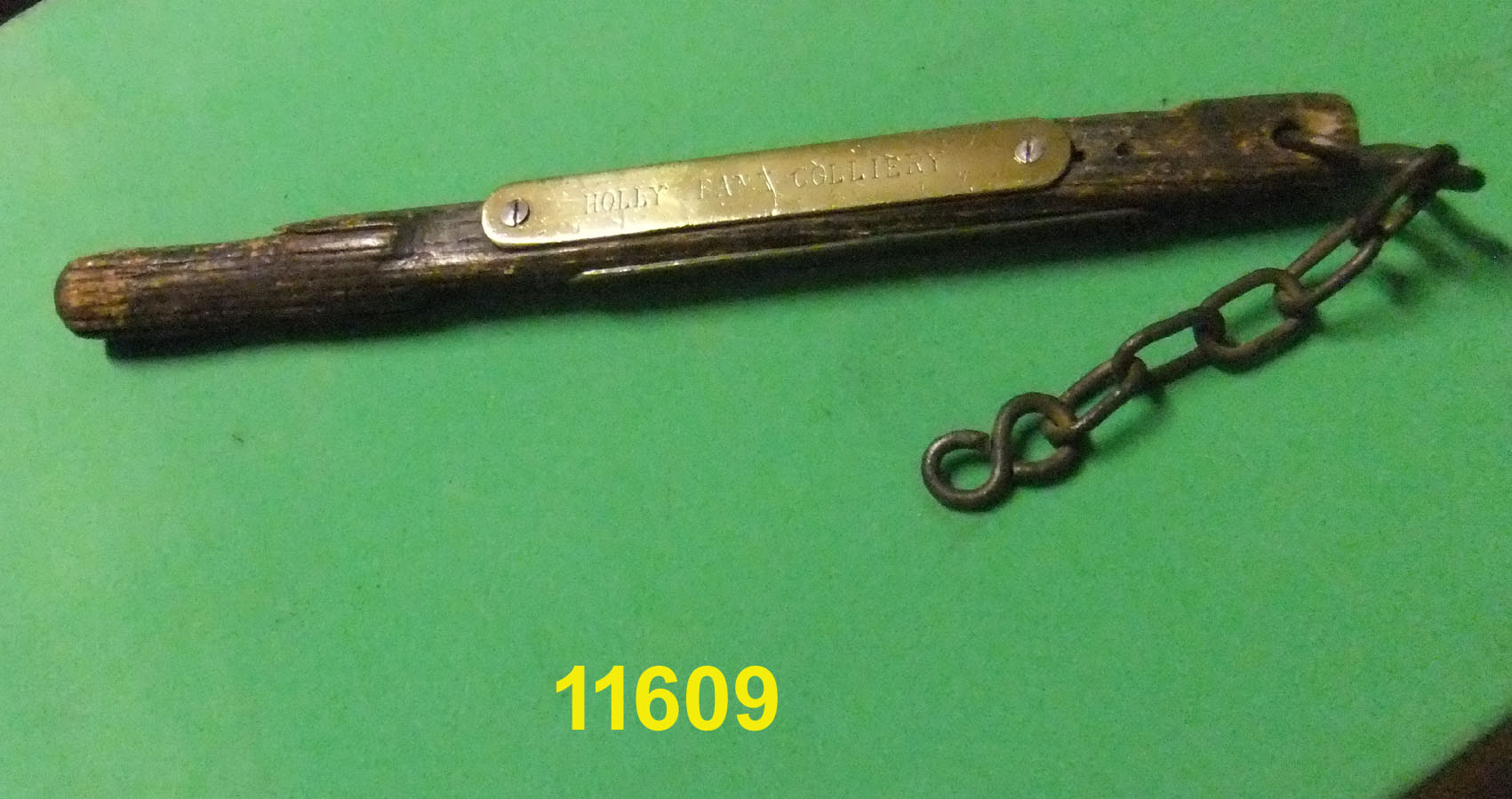
A wooden staff with chain attached and three quite worn brass plates:
Holly Bank Colliery
Lewis Tileries
And Essington Wood
Essington Wood was the signal box controlling the Holly Bank Branch. This information came from Frank Allen’s book :
“The Cannock Line – Fourteen Miles of History”
The staff was donated by Barry Bull.


It’s been a while coming with a great deal of maintenance going on but on this Sunday, March 10th, a diesel service is scheduled and the Museum will be open.


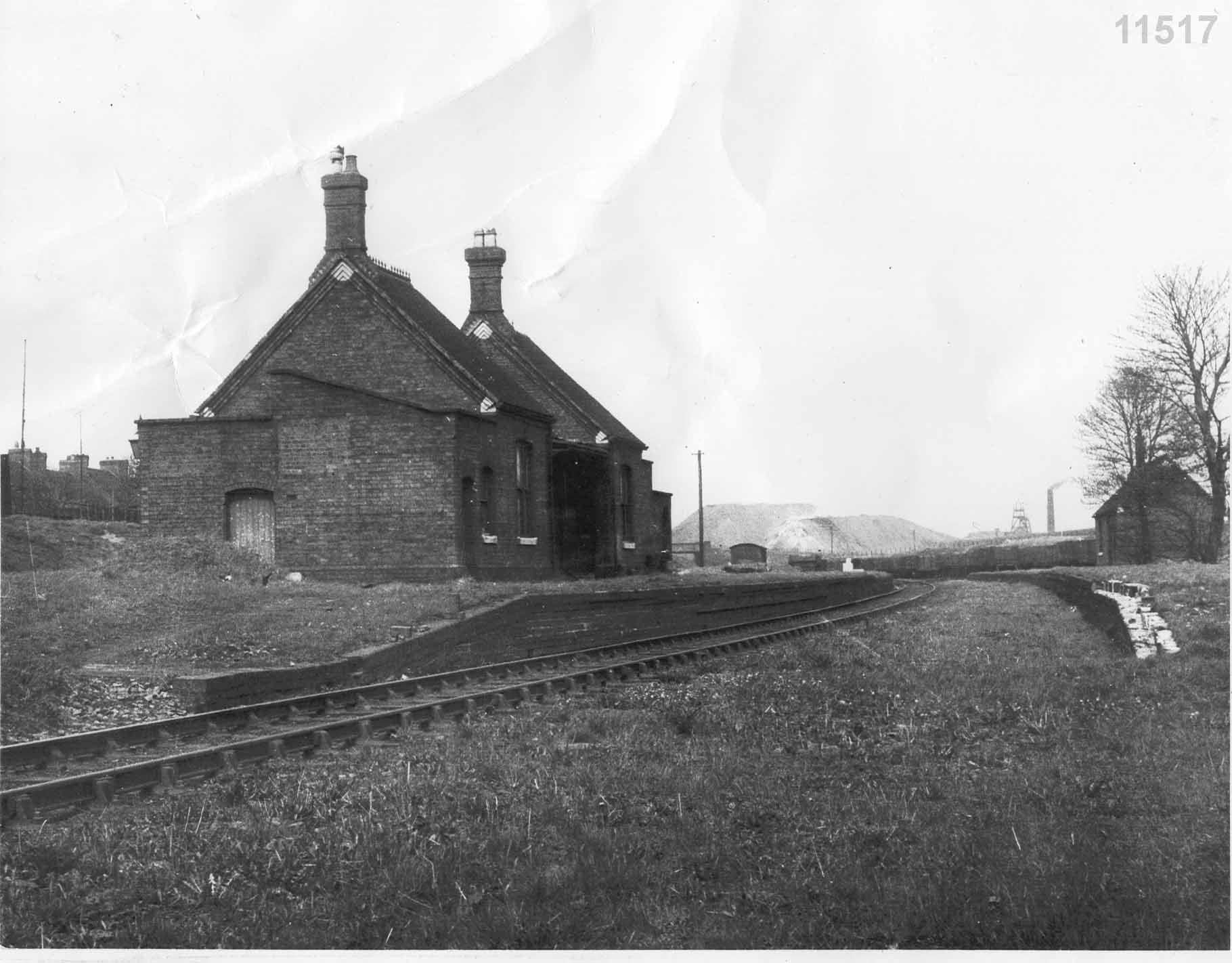
Tha latest photograph that we have come across of Walsall Wood Station.
Not sure of the date but it was before 1964 as the Walsall Wood Colliery was still working, as can be seen by the smoking chimney in the background. This closed in that year.
The line contiued through Clayhanger to Brownhills West and into the Cannock Chase Coalfield – via, these days, Chasewater Railway.
A signal lever collar from the Glasgow and South Western Railway, cast iron with a brass label, reading ‘Train Waiting’ (Sorry, not very clear in photo.)

The Glasgow & South Western Railway was a self-contained system in south-western Scotland with a total of around 325 miles of track. Its terminus was at Glasgow St. Enoch and from here in connection with the Midland railway expresses ran to London St Pancras via Carlisle, in competition with the West Coast Main Line. The G&SWR also served the important towns of Paisley, Ayr, Kilmarnock, and Dumfries. The locomotive works was at Kilmarnock but was allowed to become very run down and locomotive production ceased after the First World War. Boat trains connected with the company’s steamers at Greenock, Portpatrick and Stranraer. The G&SWR achieved surprisingly high speeds on its passenger expresses, and was remarkably innovative in its locomotive design.
The 1923 Grouping was a horrendous blow to the G&SWR, who found themselves in a subsidiary role to their arch-rival the Caledonian Railway. The MR and the G&SWR had tried to merge several times in the nineteenth century but had been told by the Government that this would be too much of a monopoly.(spellerweb.net)
A hardware example of Railwayana from a company not well represented in the Museum.


These three items are all that we have, apart from the signal collar.
 Chasewater Railway Museum