Tag Archives: Railway

197 Chasewater Railway Museum Bits and Pieces

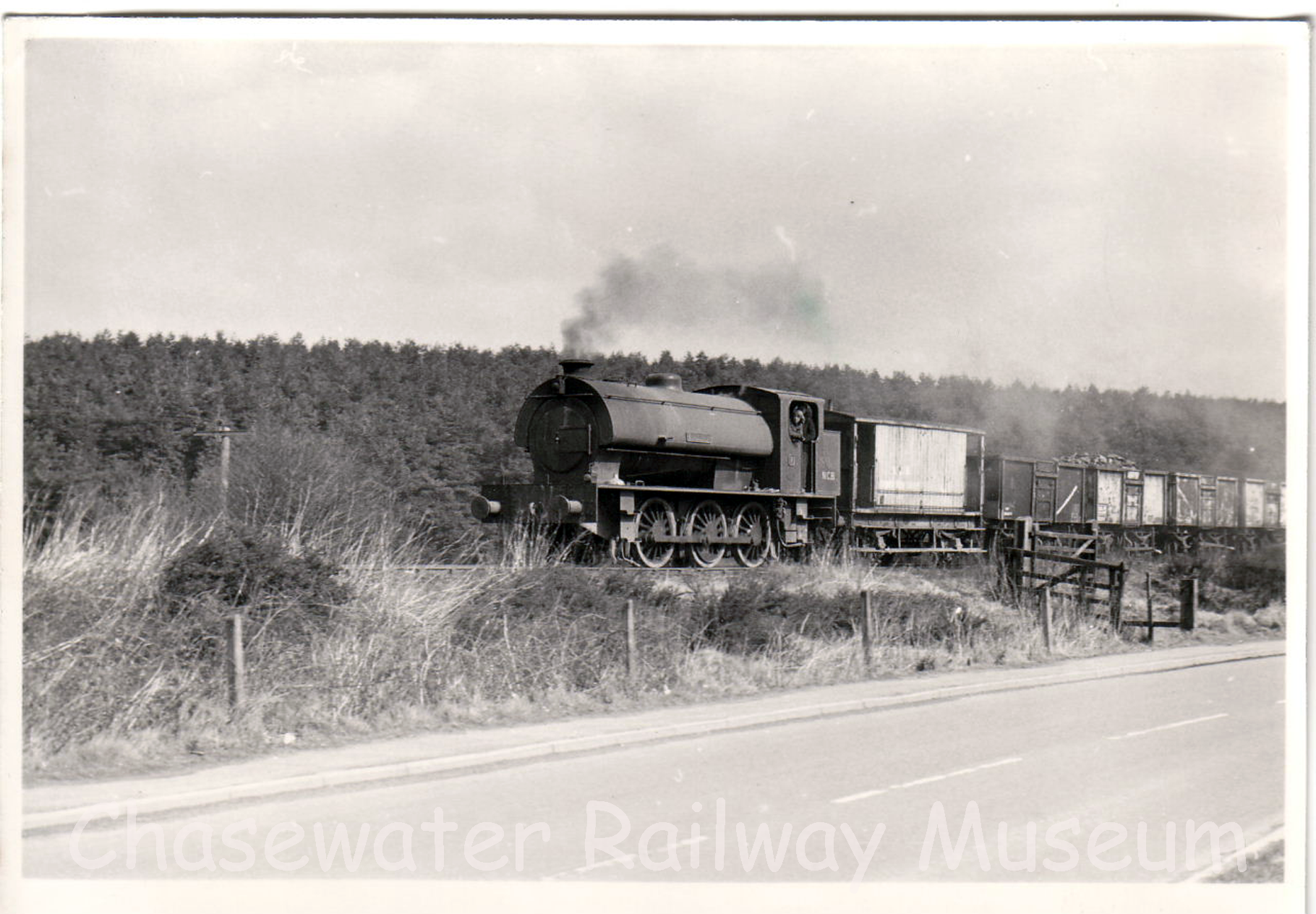
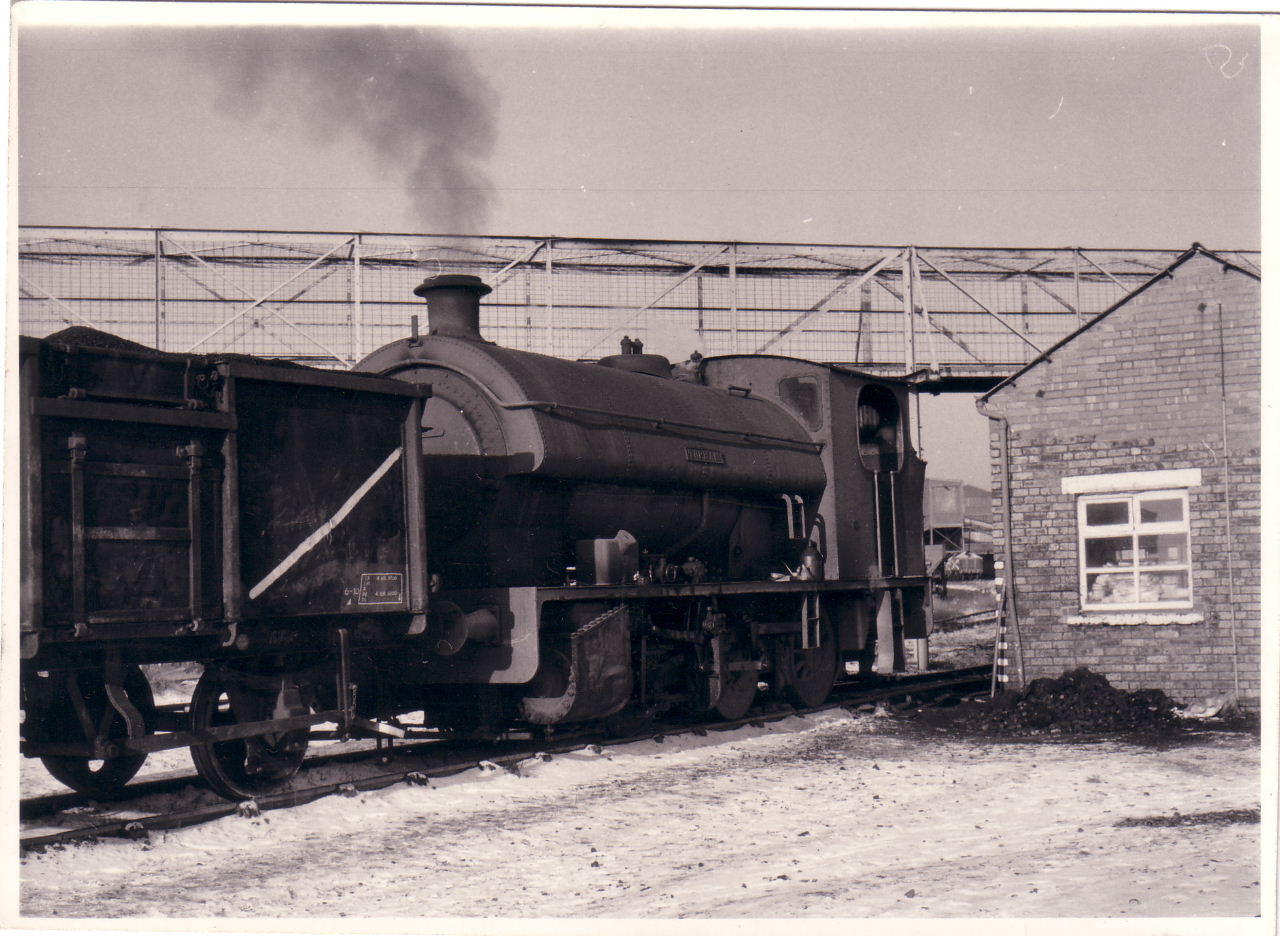
Loco ‘Topham’ 0-6-0ST Bagnall 2293-1922. Taken 18-12-1969

The photographs shown on this blog have been in the Museum since 1986. We regret that we cannot recall the names of the photographers. If you recognise any of them, please send us the details.

197 – Chasewater Railway Museum Bits & Pieces

From Chasewater News – Winter 1996 – Part 2

From the Board Room

David Bathurst – Chairman

Despite the fact that the festive season is getting ever nearer and the 1996 operating season has drawn to a close, there is no holiday period for the Board. Indeed, the Board has already agreed the pattern of train operations for 1997 to enable publicity leaflets, posters, etc. to be prepared.  Moreover, it has been agreed that the 1996 fare structure be retained, as the current ticket prices seem to have been pitched at just (perhaps exactly) the right levels and have been accepted by the travelling public.  It is pleasing indeed to watch prospective passengers, particularly those with family groups, buying tickets without feeling the need to complain about fares, how different from the days when many (maybe a majority) took one look at the fares and left the station without more ado.

With the help of our Publicity Officer, we aim to raise public awareness in 1997.  Indeed every member – whether a working member or otherwise – is a potential publicity officer in his/her own right.  We need to preach the Railway’s gospel, or at least ensure that its leaflets and publicity materials enjoy maximum exposure!

The Board has recently considered a variety of matters concerning the Railway, and some of these are outlined briefly below.

The ex LNWR ‘Paddy’

Following discussions with relevant members, the Board has formally acknowledged that the proper (or even partial) restoration of this vehicle is beyond the current or anticipated resources of the Railway, both in financial and manpower terms.  In its present condition, the vehicle is dangerous and a liability to the Railway.  Accordingly, the Board has agreed to try to find a more suitable home for the vehicle, which is to be advertised in the railway press for disposal.  Any such disposal would be on the basis of a commitment to restoration by the recipient.  Obviously, the Board would prefer to see it go to an organisation enjoying the necessary resources and expertise to bring it back into use.

Rallies

The board is examining in considerable detail the income/expenditure profit/loss profile of the rallies held in recent years.  There is much work associated with the organisation of our rallies, a lot of it out of view of the membership or the public.  The burden now being felt by a small minority of key members (who already have their own responsibilities for operation of the Railway) is becoming unacceptable.  For these members, the rallies are no longer an enjoyable challenge.  They have become more of a nightmare.  I am not prepared to allow this situation to continue.  I am not prepared to see our members and colleagues reaching a state of despair, which has happened on a number of occasions during 1996.  With Lichfield DC seeking for the first time to impose charges for hire of Chasewater Park for rallies in 1997, the Board is taking the opportunity of looking afresh at the Railway’s policies and options regarding future rallies.  The Rallies Organiser has been so successful in generating participant interest in our rallies that we have become vulnerable through a shortage of members prepared to make a direct contribution to rally organisation.  We have become a victim of, and hostage to, our own success.  If the Board’s aspirations come to fruition, we will have vastly increased public support for the rallies, but without the hassle experienced over recent times.  Our aim is to return to a situation where our rallies are enjoyed by the public, by the participants, and – more particularly – by our own members.

Invalid Toilet

The Railway’s Policy Statement includes a commitment to the provision for the disabled and our stations, buffet and trains are all accessible to people with mobility difficulties.  The one remaining omission is the provision of a disabled toilet and the Board has noted with pleasure that this will be available in good time for the Santa Specials in December.  The opportunity is being taken to ‘repair’ some defects in the plumbing system, hopefully with an improvement for the olfactory senses.

New Shop / Bric-a-Brac

The Board has given its support for a scheme whereby the recently adapted portacabin immediately next to the buffet at Brownhills West will become the new, enlarged, shop.  Shop sales, and children’s toys in particular, have increased markedly during 1996 thanks to the introduction of an enhanced commercial policy.  Consideration is being given to the use of other accommodation as a bric-a-brac shop.

Traction Inspector

The Board has formally endorsed the appointment of David Walker as the Railway’s Traction Inspector, although this is without prejudice to the Railway maintaining a relationship with other competent persons who have been prepared to assist in the past.  A driver and two firemen have already received their ‘ticket’ and further assessments are to be made in 1997.

Lichfield District Council

A lengthy letter has been received from Lichfield District Council in relation to the many matters which have been the subject of representations from the Railway since the Council became our landlords in 1993.  The Board’s preliminary impression is that the Council has failed to recognise or appreciate our concerns and that response is wholly unsatisfactory.  The Railway’s views will be communicated to the Council at an early date.

Christmas: Santa Specials

We are hoping for our most successful Christmas programme ever, providing the icing on the cake to complete a highly encouraging year.  Santa Specials will run on Sundays 15th and 22nd December, providing an opportunity for our ‘absentee members’ to visit the Railway and to judge for themselves what changes have taken place since their last visit.

P Way News

Arthur Edwards

In the autumn/winter plans for the P Way gang over the 1996/97 period is the laying of the sidings by the bottom compound.  This is expected to take up most of the winter months.  Some work has already commenced on laying out the first two roads with the first set of points going in after the Santa Specials.  The time scale for laying in the point work is expected to be around three months so that they should be up and running for the start of the next running season.  As the 1997 season will be starting early – the last week in March – and going through to the end of October, the P Way gang has a shorter period to get more things accomplished, therefore as our membership grows hopefully more volunteers will boost the numbers in the gang.  During this period it is also planned to lay 4 x 60ft lengths of rail on the extension so that the sleepers which are already in place can be keyed up and not tossed into the lake.  If the number of bodies available gets to a sufficient number, the causeway bank can be relaid with 60 ft lengths so if any able bodied volunteers are out there you can always find us on either a Saturday or Sunday, so don’t feel shy.

The weedkilling planned for the end of summer has had to be postponed due to the weather conditions not being suitable for it.  As the weedkiller has been purchased we should be able to spread it at the beginning or middle of March prior to the commencement of the new season.  This should be followed by a second application approximately half way through the running season so as to keep on top of the perennial problem of weed encroachment onto the track.  There are signs that some of the hedging planted several years ago is starting to take hold so that it should provide a permanent barrier along some of the more exposed fence line.  Further plantings should gradually fill out any gaps so making trespass onto the line more difficult.  I’d like to thank all the volunteers who have helped us during 1996 and look forward to seeing you in 1997.

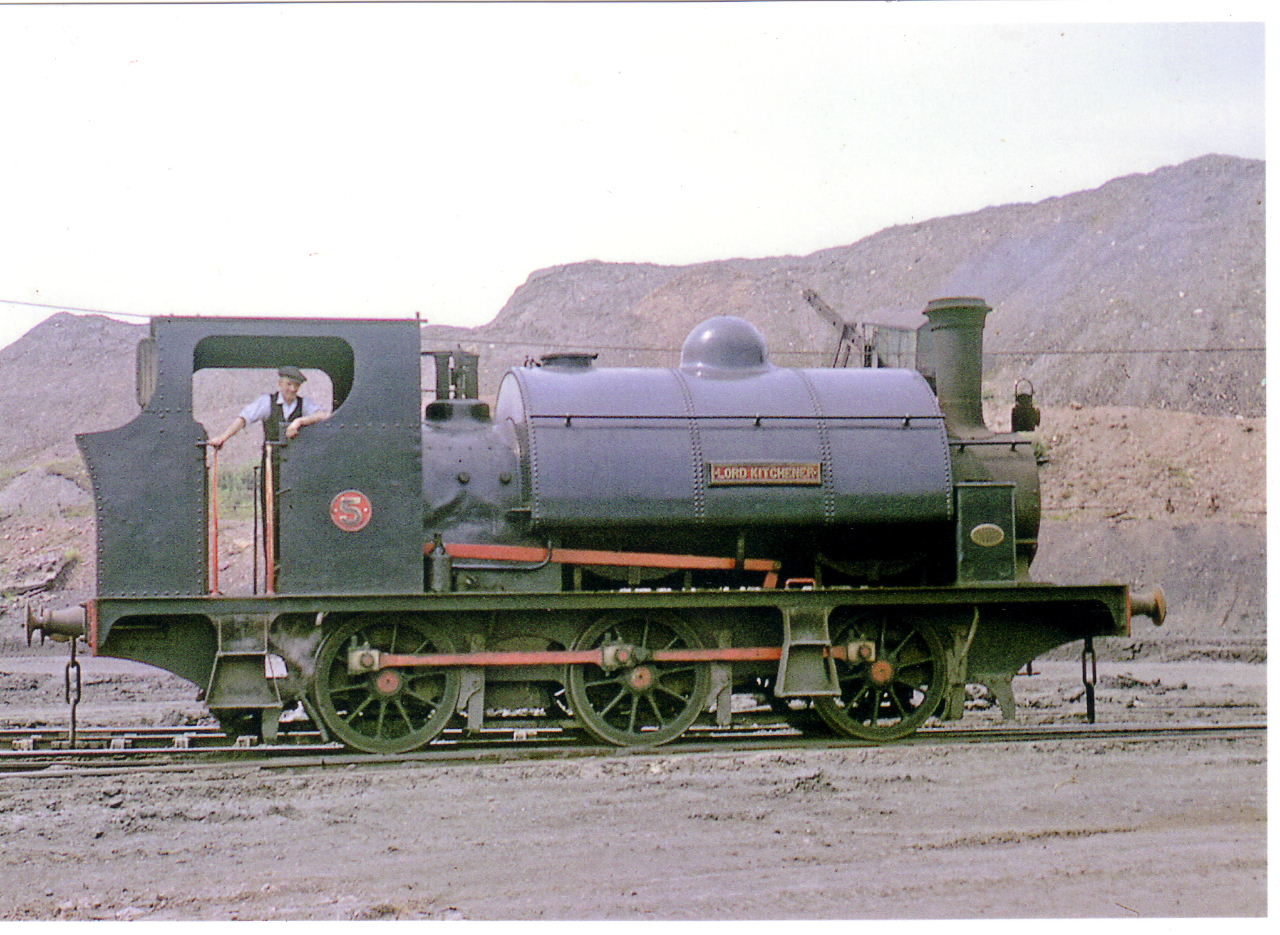
‘Lord Kitchener’ No5 0-6-0 ST Kitson 5158-1815 Photographer unknown

172/173- Chasewater Railway Museum Bits and Pieces

172 – Chasewater Railway Museum Bits & Pieces

From Chasewater News Autumn 1994 – Part 1

Permanent Way News

The second and final batch of track has now arrived from Four Ashes and is being put to good use by the Permanent Way Gang.  The works train has had to spend every Sunday ‘out of section’ at the end of the causeway just to make enough room for passenger trains, as with the amount of rolling stock now on site there is insufficient siding space at Brownhills West.  The track gang have put this situation to good use, and at the present rate of progress track will be in front of the platform at Norton Lakeside well before the end of this year.

In order to quantify the progress already made, and to assist with the planning of the future extension of the line, David Bathurst has produced the chart below showing distances between various points on the railway.

All distances were measured by pushing a pedometer along the head of the rail, and sleeper ends were marked with yellow paint at 100 metre intervals.  The ‘Zero Point’ was chosen as the gate post at the end of the loco shed yard, as after the motorway is built it is likely to be the closest surviving landmark to Brownhills West station.  When the time comes, new measurements can be made into the replacement station from the same spot.

The chart shows that we are currently running passenger trains over a distance of about a mile to the present running line limit almost half-way across the causeway.  When we ultimately reach Anglesey Wharf the total distance (estimated over the final section) will be around 2¾ miles, assuming that nothing is lost or added by the repositioning of Brownhills West Station (nice dream, but that’s all!).

173 – Chasewater Railway Museum Bits & Pieces

From Chasewater News Autumn 1994 – Part 2

Locomotive News

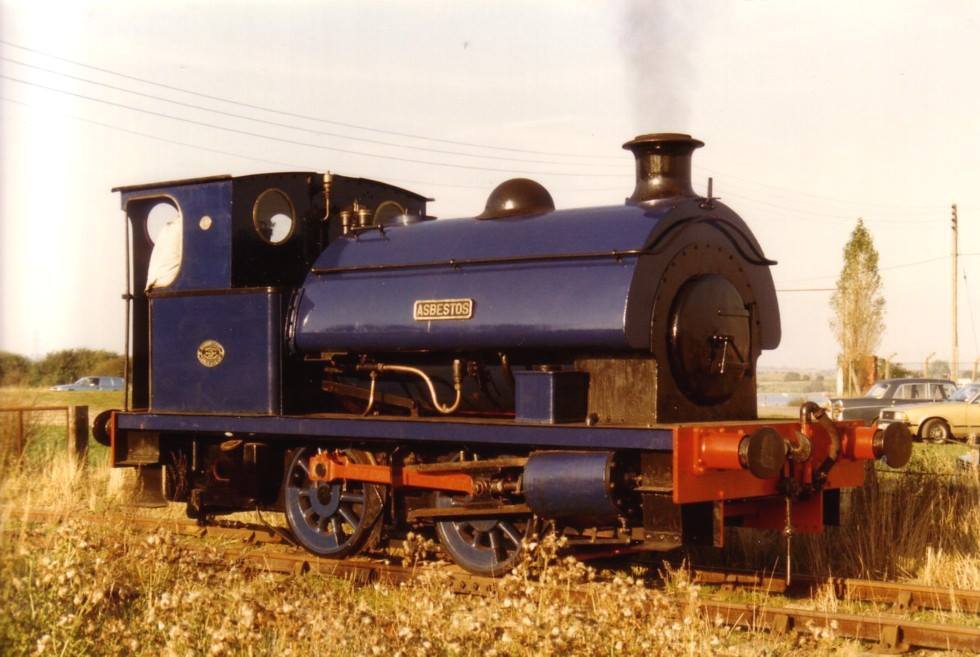
No.4 Asbestos – This engine has run exceptionally well considering the dubious start to the season.  Since then a total of twenty-two boiler tubes have been renewed and seem to have cured the problem of leakage at the firebox end.  Another 124 new tubes have now been acquired and are stacked in the shed ready to complete the re-tubing at the end of the running season.  Slight weepage of a few stays and part of the foundation ring will also have to be corrected.

The latest batch of Russian coal, although somewhat smoky, is giving excellent results without the problem of clinkering inherent in the last lot.  This is just as well, as with trains running every Sunday in this summer’s hot weather the last thing anyone wants to do is rake the fire through after every other trip.

Asbestos with a three-coach test train stands on the causeway ready to return to Brownhills West

No.5 Sentinel – Progress on this loco remains slow, although the boiler is now ready for its hydraulic test.  All of the boiler fittings have been refurbished and will be hydrauliced along with the boiler.  The injector has been moved to the fireman’s side of the cab and that and the Weir pump are being re-piped in such a way  that they can be drained easily in winter to prevent frost damage.

S100 – Work has continued with the manufacture of new mountings for the brake hangers to replace the original items which were somewhat bodged and worn out.

Fowler diesel hydraulic No.422015 – Replacement injectors have been acquired and fitted to the engine of this loco with the result that its performance has been transformed.  A few other minor problems have occurred, but it has remained in regular use for shunting and works trains.

Ruston diesel electric DL7 – One of the starting air valves of this loco has had to be renewed due to a damaged seat in the original.  A fuel leak from one of the injector pipes has also been rectified.  The loco is serviceable but has remained out of use mainly due to passenger trains being steam hauled throughout July and August.

Fowler diesel mechanical No.410013 – Following arrival from Redditch this loco has had its engine de-seized, the injectors have received attention and the engine has been run.  Faults have been found with the injection pump and governor and these have now been removed for attention.  Following completion of the air system overhaul the loco should be able to enter traffic.The new Fowler stands in the platform shortly after its arrival from Redditch

L&Y No1 (Motorail No.1947) – All of the axleboxes and springs have now been stripped and rebuilt and a new bearing is being made to replace one which was stolen recently.  Once the sandboxes and inside of the body castings have been stripped and primed the loco will be ready for craning from its present position in front of the museum coach so that final erection can begin.

No.21 diesel – This loco is making steady progress, the engine is now complete but still awaiting cylinder head gaskets.  It is hoped that it may be running for the Diesel Gala which is a new event to be held for the first time in September.

Lion – Following its removal to Foxfield last Autumn this loco entered service at Easter, running initially double-headed with ‘Harwarden’ The vacuum brake hoses were apparently awkward to couple as ours at Chasewater are the opposite side to ‘normal’ to suit our DMU stock.

Smith Rodley crane – This again remained out of use awaiting a potential purchaser.  So far a couple of enquiries have been received but no offers have been forthcoming.

From the Board Room

The Board has been actively involved in a number of new initiatives, while various on-going matters have been subjected to scrutiny and, where necessary, review.  The following will be of general interest to the membership.

1.    Personal circumstances have brought about the resignation from the Board of Les Emery.  However, Les has indicated a willingness to continue with his other roles on the railway.

2.    The Board has agreed to the co-option of Company Secretary Andy Clegg to the Board.

3.    The trading name of the company has been changed to the “Chasewater Railway”.  Previous official and unofficial trading (‘Chasewater Steam Railway’, ‘Chasewater Light Railway’, etc.) are no longer considered suitable and are felt to give a misleading impression of the nature of our current and future operations.

4.    In an attempt to encourage family travel during this period of continual financial restraint, the price of the Family Rover has been reduced, until further notice, from £5.80 to £4.95.

5.    During the course of the nest few months, the Board is to produce a new business plan for the purpose of clearly defining objectives and priorities, and how they might be best achieved within the resources (including financial and manpower) expected to become available.  Associated with this proposal is the revival of the concept of departmental heads, holding pre-determined budgets, to give focus to the completion of the many and varied tasks necessary for the railway to both exist and develop.

6.    The Board has responded to a plea from Rallies Organiser Dave Whittle by delegating various aspects and responsibilities to specified individuals.  Thanks largely to the efforts of Dave, the Chasewater Rallies are rapidly gaining in reputation, with Paul Richards taking up much of the strain as Administrative Officer.

7.    On other fronts:

·        Negotiations are proceeding with HM Railway Inspectorate in relation to the extension into, and construction of, Norton Lakeside Station.

·        The railway was represented at a meeting of Chasewater user groups hosted by Lichfield DC, and arranged on a largely social basis for the various groups to meet the Members and relevant Officers of the District Council.

·        Lichfield District Council has generously offered grant aid to the railway in the sum of £1,000 by way of a contribution towards forthcoming expenditure.  This generous act by the District Council signals a solid measure of support for the railway by its new ‘landlord’.

·        Accommodation at Brownhills West has become a problem in consequence of stock acquisition, (4 DMU coaches plus one tanker wagon).  However, this should be relieved by the imminent removal of one (at least) of the Wickhams, and the Board is still anxious to dispose of the crane (preferably to a good home on another railway) as a matter of priority.

·        The transfer of records from Adrian Hall should enable Paul Richards to take up his responsibilities as Membership Officer with early effect.

·        The Board has agreed strategy towards bidding for the trackwork at Bromford Sidings, and has noted that the remaining trackwork at Four Ashes is due to transfer to Chasewater in August.

David Bathurst – Chairman.

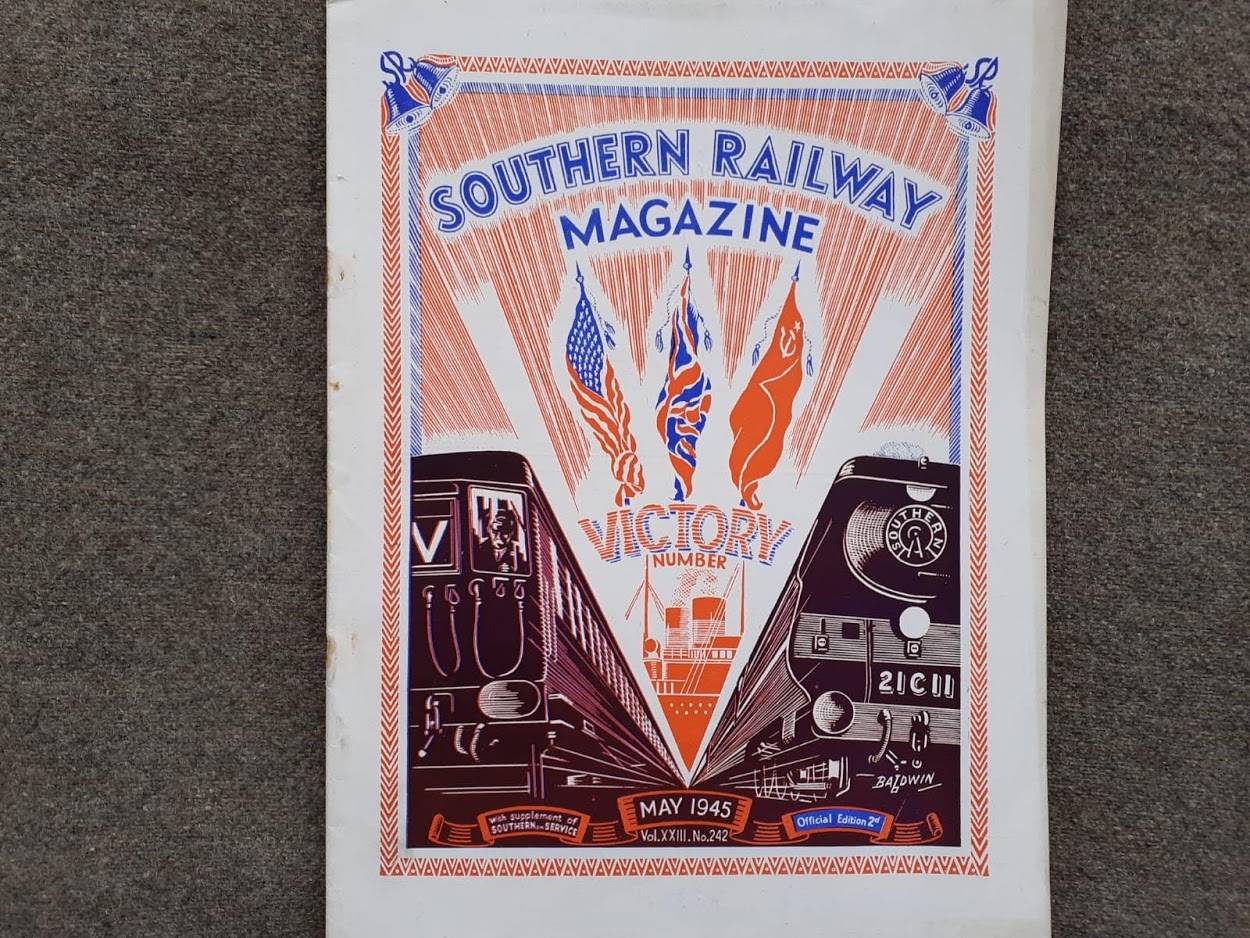
Chasewater Railway Museum – VE Day 75 Years

Chasewater Railway Museum

VE Day 75 Years

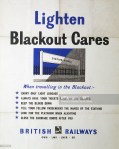
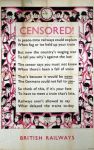
A few pictures showing something of the railways involvement during

wartime.

This Southern Railway magazine is from Barry Bull’s personal collection

Chasewater Railway Museum Bits and Pieces 52

Chasewater Railway Museum

Bits and Pieces 52

Thirty Years Plus Ten

Travelling Post Office

Much as I enjoyed reading about Chasewater Railway in thirty years time, it never stood a realistic chance of happening.

After the cessation of coal traffic in the 1960s the line over the causeway was abandoned and the causeway itself fell into disrepair.  The track was lifted and passenger traffic suspended for a number of years. The main part of the 30-years-on idea had also gone missing in the intervening years – the line from the proposed Norton Junction to Norton Crossing.  The track which ran below the dam for the Swag pool was lifted and presumably sold for scrap.   The idea of a railway with a main line and a short branch disappeared.

It was not until 1985 that regular steamings began again, but in the intervening three steam-less years, membership had dropped by some 50 per cent. The Society deemed it necessary to prune its stock as it was realised that without an injection of cash, the whole affair might fold. The L&NWR Travelling Post Office went to Tyseley, a small “Planet” diesel went to Brian Roberts’ Tollerton Farm Railway, while individual members purchased two steam locos and one diesel loco in order that they could remain safely at Chasewater.

IN 1993 a successful scheme to restore the causeway was started.  About 120,000 tons of fill material were imported to the site.  This work was completed in 1994 and Lakeside Station was reopened in December. From 1985 till the reopening of Lakeside trains only ran push-pull from the old station to the Willow Vale Bridge.

Since 1995 a great deal of work has been done, firstly to extend the line to Chasewater Heaths and Chasetown.  Next came the new Brownhills West station and yard, to replace the old station and compound, now buried beneath the M6 Toll.  The engine shed was refurbished and another station opened at Chasewater Heaths – finally, so far, the Heritage Centre was built to hold the heritage stock and Museum.

The 30-years-on idea was not to be, it would have been fun in my opinion, and at that time, as stated in Post No.50, the rolling stock was owned by the railway – no steaming fees to be paid.  Of the stock mentioned in Post 51, the E1 left, never having steamed at Chasewater.  The Hudswell Clarke also has never steamed here – but it is still with us, although not owned by the railway. The Peckett went too, although we now have another one.  The Royal Saloon and Travelling Post office have also gone.

The Royal Saloon

Chasewater Railway Museum Bits & Pieces Nos. 49 & 50 Late 1969

Chasewater Railway Museum Bits & Pieces No 49

From the Mercian of September 1969

Secretary’s Report – A.A.Chatfield Acting Hon. Secretary

Vandalism at Hednesford

It is my sorry duty to inform all members that as a result of a break-in by some unknown gang of juvenile delinquents the interior of the Royal Saloon – our most priceless vehicle – looks as if it has been under the axe of some demolition contractors.  Irreplaceable panelling has been deliberately smashed in, interior door panels including glass mirrors stove in completely and a wanton trail of damage to the tune of at least £150 done to the interior. (A great deal of money some 40 years ago!).

The police have been to the depot but without some positive information they are unable to do very much at this stage.  The depot at Hednesford is vulnerable seven days a week and until the stock is moved to Chasewater en bloc where it will be afforded more protection then we are going to suffer even more vandalism which will not only delay the restoration process, but increase our expenditure and, what is more important, lose us our most valued working members to whom these sorts of acts are extremely disheartening.

Then followed an appeal for £800 to move the bogie vehicles at least from Hednesford to Chasewater.

The acting Hon. Treasurer, Laurence Hodgkinson, repeated the appeal and stated that, if the work at Chasewater continued at its present rate, the compound would be ready for the stock from Hednesford by the Autumn.

Amongst the new members joining the Society – B.J.Bull Esq.

Chasewater Railway Museum Bits & Pieces No 50

The next three posts are sort of connected.

The first sets out the thinking behind the Railway Preservation Society,

The second takes a look into a possible future for the railway.

The third tries to give the reason why  the second didn’t happen!


From the Editorial of the November/December 1969 Mercian

Food for Thought

It has often been said that the first ten years of marriage are the most difficult and if this is any yardstick then our first ten years have been one continuous struggle.  Members may ask the question ‘Why?’ when they can see all around us other schemes, which are as little as two years old, flourishing with membership in the thousands.  Here we are in our eleventh year and what have we got to show for it?  May I try to explain a very subtle difference between our Society and other schemes which flourish around us and leave us completely in the shade?

We are a preservation Society first and foremost, we are not interested in ‘playing trains’ on some unwanted British Railways branch which can be snapped up for anything from £200 to £400,000 in order to be re-opened as a tourist attraction with weekend traffic to satisfy the ‘locals’.  Our first aim is to preserve, what we do with the items after that depends a great deal upon what they are.  Our range is therefore very extensive, running from a button to a carriage or locomotive, and to this end our record at the moment is pretty formidable.

We do not rely, as do many of our competitors, on other people loaning us locos or rolling stock with which to operate, we have paid for all our relics the hard way – THEY ARE OURS.

You might then ask ‘but if we are a preservation group only, why are we hoping to run trains at Chasewater?’  This can be answered quite simply.  We are restoring, within the confines laid down by the Local Authority, a stretch of track which formed part of the old Midland Railway branch line from Brownhills, and by restoring I mean every sleeper, chair, nut, bolt and rail completely from scratch, in other words, preserving something which is part of the local railway history.

Obviously it would be a complete waste of time if after doing this we let the track become derelict again, and so primarily for the benefit of our members and also for the enjoyment of the visiting public, we hope that we shall be able to put some of our assets to workup and down the short stretch of line which has been relaid.

We have started from scratch, from the ballast upwards, that is where our difference lies from the other preservation groups around us who are enjoying more success.

It seems that every enthusiast will interest himself in a scheme if he can be an engine driver, but when it comes down to relaying track, restoring locos and carriages or doing the other thousand and one back-breaking menial jobs that have to be done he just does not want to know.

Who is going to be the loser in the long run?  I do not think it will be our Society because we have so much in preservation experience from the bottom to the top to offer and yet still have a long way to go.

‘We have never had it as good’ if I may alter a well known saying. (For those who remember Harold MacMillan – Prime Minister 1957/1963).

Other schemes may fade away when the novelty wears off or when setbacks arise but we have had more than our fair share of setbacks over the past ten years and we have learned to take them on the chin and what is more, to come back fighting again as full of spirit as ever.

Pockets may be very deep when it comes to paying out hard cash and this may be very good for the enthusiast’s conscience, but when you ask yourself honestly – ‘am I really preserving?’ – is the answer always YES. I often wonder.  After ten years as a Society may we all hope that the next decade will see the realisation of the efforts which have been put into the Society by a list too long to mention.

Chasewater Railway Museum Bits & Pieces 48 Mercian July 1969, plus a few photos from 2009

5448 Wimblebury No.7 0-6-0ST H 3839-1956 June 1969 Hunslet

Chasewater Railway Museum Bits & Pieces 48 Mercian July 1969, plus a few photos from 2009

From the Mercian of July 1969

Following a disagreement the Committee published a special message announcing the resignation of the Hon. Secretary, Hon. Treasurer and Vice-Chairman.

The acting Hon. Sec. A.A.Chatfield put together a report at short notice, stating that the usual progress is being slowly maintained, but more hands were still needed.

Mike Lewis had been packing the track near the compound and helped to alleviate the flooding problem.  Steve Allsopp and Brian Hames have completed the overhaul of No.21 and have given her a spanking new coat of paint.

Derek Luker has been working on the steam locos with his small band of helpers and ‘Asbestos’ is now ready for a hydraulic test.  New tubes are on order for the other locos and it is hoped to deal with them as soon as labour becomes available.

A limited amount of maintenance has been started inside the Royal Saloon thanks to Richard Middle and Arthur Chatfield, again a couple more members here would help out, particularly while the weather holds good.

Two of the younger members whose names escape me at present have been putting a coat of protective paint on the E1, again a much needed job well done.

From time to time we get requests from various bodies and individuals to help in storing rolling stock and in particular steam locomotives.

I feel that in the interests of all concerned it would be a sensible idea to say that while we have every sympathy and will try to advise such bodies and individuals, we cannot offer any hope of storage space either at Chasewater or Hednesford.  Our present commitments with our own existing stock preclude us from offering help.  I would ask all who read this to realise the difficult position that we are in with regard to this matter, for it is better to put you in the picture than to disappoint you later.

Make no mistake about it however, for as soon as we are able I am sure that we shall assist all we can.

Chasewater Railway Museum Bits & Pieces 47, Mercian April 1969

Chasewater Railway Museum Bits & Pieces 47, Mercian April 1969

Manchester, Sheffield & Lincolnshire coach pre-Chasewater


This post was taken from various reports in the Mercian of April 1969

This Mercian seems to cover March/April and May/June 1969.

There as a new Editor for the magazine and the poor man in charge appears to have similar problems to any other magazine – a lack of articles!


Secretary’s Report – T.G.Cousens

After slow progress during the winter months at Chasewater, in which time only the arrival of the Manchester, Sheffield & Lincoln Railway coach broke the monotony of packing the track with red ash, progress is again in evidence.MSL Coach at Easingwold

The appointment of Mr.A.Holden to General Manager has seen marked changes in only a few short weeks, the most noticeable being the complete levelling of the compound and laying of track foundation into it.  Behind the scenes however, small departments have been formed to work on various aspects of the line with people responsible for each of the allocated tasks.

However, working parties are small so progress will be slow – do we have to wait until the line is operating to see 90% of the membership?!  Why not come down one Sunday afternoon and do a bit of shovelling, things will then begin to come to life.

A successful Open Day was held in conjunction with Messrs. Courtaulds Ltd., Coventry and organised by Gerald Wildish with the Company.  Many visitors arrived to photograph the two Pecketts, one, ‘Rocket’ was seen at work on the Foleshill Railway.  Many items were sold from the RPS stand which resulted in a fair profit to us.

The exhibition team was also at work at Huyton, Liverpool, at the preservation exhibition, the Open Day at Chasewater during the Easter week-end and the Stafford Railway Circle exhibition.

Well done to the members who attended these stands, especially the Huyton one.

The Barclay ‘Colin McAndrew’ was in steam on Easter Sunday and Monday under the able direction of Mike Lewis and Derek Luker.  She unfortunately blew a tube on the Sunday but after a quick trip by Rob Duffill (our hero!!) to Hixon for a spare, the locomotive crew replaced the defective tube and raised steam for a second time the same day!  No stock was hauled because of work required on the track – members please note.  Until this work is done Open Days will be severely restricted, so may we see more of you assisting at Chasewater.Colin McAndrew at Greening Wireworks, Warrington.

From the Public Relations Officer’s Page – G. Wildish


The first mention was of the next Open Days, June 28th and 29th 1969, with the expectation of large numbers of visitors and asking for members to come along and help.

There was a request for more photographs for the cover of the magazine, which unfortunately do not reproduce very well.  The Foleshill Railway Open Day had to be cut short and apologies were given to anyone affected.

A number of publications were mentioned – ‘Preserved locomotives of the World’ and ’Narrow Gauge Steam 1969’ for which a second impression is being prepared, later to be followed by ‘Narrow Gauge Steam 1970’

A publication for continental travellers – ‘German Steam’ has been prepared by an RPS member, so the Society is getting half of the profits, with thanks.

The final two publications were – ‘Railway Modeller’ which contained an article by Gerald Wildish and ‘Railway Enthusiasts Guide 1969/70’ which contained some information about the RPS.

There was an appeal for funds to move a locomotive of the Taff Vale Railway, and another appeal for volunteers to join a ‘paint in’ at Chasewater to give the rolling stock a much needed coat of paint.

Chasewater Railway Museum Jan 1969 Bits & Pieces 46

From the ‘Mercian’ of January 1969

From the Secretary’s Report  – Trevor G. Cousens

On 21 September 1968, the Society held its 9th Annual General Meeting at the Pear Tree Inn, Brownhills.  The attendance was very poor considering the attraction of a steam trip down the line afterwards.

After the meeting, sandwiches were supplied by Pete Parker, proprietor of the Pear Tree, and then members crossed the road where in brilliant evening sunshine stood the Andrew Barclay 0-4-0ST, (Colin McAndrew) immaculate in green and red, with polished brass and copper-work.

Members were invited on to the train comprising the Midland (or Coal Board) brake van, the Midland brake coach and the Great Western brake.  The train departed with Mr. Civil driving and Mr. Luker firing, the team, who with Mike Lewis had so painstakingly restored the locomotive.  She was opened up to pull the train up the 1 in 50 bank to the causeway causing the steam pressure to drop rather drastically to 40 lbs per square inch, but this is probably the longest run the loco has ever made without running over the same tracks twice, and its small boiler and firebox being designed more for a 3’ 6” gauge loco, this is not surprising.

Over the causeway, we ran on to the shore again until we were held up by some rather enthusiastic ditching by Bob Wormington, which caused the loco cylinders to come into contact with the spoil.  We ran on until we reached the end of the line, where a stop was made to raise steam for the return journey.  The loco was once again admired by the members, its rather peculiar mechanical pump a feature of interest on the running plate.

The return journey was made almost without incident, a point switched the wrong way round caused a minor sensation, but we returned safely to the Compound, where some rather complicated shunting was carried out before putting the engine to bed.  In fact, it was 9.00pm and dark when Laurence Hodgkinson finally put the diesel in with the rest of the stock which had been parked in the loop out of the way.

So ended the third RPS steaming at Chasewater, giving some encouragement to those who had worked so painstakingly to make this event possible.  But, it made one think about the amount of work still to be done, principally on track, but also on locos and stock before these steamings become a regular feature.

In the Treasurer’s Report by Frank Harvey, it was noted that, among others, Mr. R. Duffill  joined the Society!

Chasewater Railway Museum Bits & Pieces 45 More Aug 1968 Mercian

Chasewater Railway Museum

Photo: Robin Stewart-Smith.

More from the August 1968 ‘Mercian’

Turner’s Asbestos Cement Co. Ltd ‘Asbestos’

Hawthorn Leslie 2780 of 1909

By Gerald Wildish

Many of you will by now have seen our splendid new locomotive.  Two years ago exactly to the day that she left Trafford Park, I first found ‘Asbestos’ – 15th June 1966.  She was not working on that particular occasion and had been specially hauled out of the shed for me and put in a photographic position.  She appeared in excellent condition.  On the occasion of my visit I learnt that she was likely to finish working that September, and I duly put in a bid for the RPS.  I was informed that the Society’s interest had been noted.

A little over a year later a letter arrived from Turner’s asking me if I would care to bid for the engine – I made an offer of £50, and shortly afterwards received a telephone call informing me that a scrap merchant had offered £100 – we could have her if we could reach that figure.  By this time we were in October and I was already engaged in trying to raise funds for the Neilson.  My reply said that if they could hold the locomotive until after our Christmas raffle, we would do our best, but I did not hold out a great deal of hope.  Considering all things, the raffle was a success, but we did not raise the sums necessary to allow us to move in two directions and I informed the Company that we would have to let her go.

My surprise could not have been greater, when Mr. Francis, the manager of the buying department, rang me to say that we could have ‘Asbestos’ free of charge.  Without doubt this was one of the happiest days of my life.  I made arrangements to go to Trafford Park to arrange the handover and had an excellent morning.  The handover was arranged for a date three weeks later when the presentation plaque could be fixed to the locomotive.

I could not have been dealing with nicer people throughout the negotiations, right from the time of my first visit to the works.  Our thanks must go to Mr. A.H.Wailes, the Works Director, Mr. T.Noble, the Purchasing Director, Mr. T.N.Chadwick, the Works Manager, who also arranged for the locomotive to be ‘done up’ for us during the week before the handover, to Mr. W.D.Francis, the Purchasing Manager, who dealt with most of the negotiations and Mr. S.McCormick.

Little is known of the history of ‘Asbestos’.  She was built by Hawthorn Leslie in 1909, for the Washington Chemical Co. in County Durham, where she became No.2, along with two other Hawthorn Leslies and a Fox Walker engine.  A further Hawthorn Leslie was added in 1918, and presumably replaced the Fox Walker.  In 1920, the Company became part of the Turner and Newall group.

In 1933, two of the locomotives were transferred to the Turner’s Asbestos Cement Company works at Trafford Park, becoming ‘Turnall’ and ‘Asbestos’.  Turnall was scrapped in 1965, leaving ‘Asbestos’ with two diesel locomotives (Planets).  ‘Asbestos’ was placed in store as the reserve engine in 1966 and presented to the RPS on 25th May of this year(1968);  she was transferred to Chasewater on 15th June, and started work in revenue service eight days later.

Photo: Oct 1985 – Tony J.Griffin

Photo – Russ Hillier

Chasewater Railway Museum Bits & Pieces 44 Aug. 1968

Chasewater Railway Museum Bits & Pieces 44 Aug. 1968

Latest Arrivals at Chasewater

People living in the houses adjacent to the line have by now become used to seeing various types of low-loaders arriving with miscellaneous items of rolling stock, in fact on one memorable day two vehicles arrived at the same time.  One often wonders what the thoughts of these people are as more and more large relics appear at Chasewater.

Several items have arrived over the last two months.  The first and in many ways the most important was the Midland Railway crane from Hednesford.  Without this, our track laying project could not have been fulfilled and over the last eight weeks it has more than made up for its three years of inactivity at Hednesford.  Apart from being a valuable historic item, it is a most useful piece of equipment.

The Whitsuntide holiday saw the arrival of the South Eastern and Chatham Railway 6-wheel full brake from the Derwent Valley Light Railway at York.

Pic: http://www.bluebell-railway.co.uk

SECR Brake No.1601

This six-wheeled van, built in 1905, is unusual in that it has both a “birdcage” lookout on the roof and side duckets for the guard. In addition to accommodation for the guard, the rest of the space was used for luggage. On withdrawal it was transferred for service use as an ARP Cleansing Van, based at Bricklayers Arms Locomotive Depot in London.

With no further use for it after the war, in 1947 it was sold to the independent Derwent Valley Light Railway in Yorkshire. On its second withdrawal from service it was bought by the Southern Locomotive Preservation Co., who moved it, with the rest of their stock, to the Bluebell in late 1971 and early 1972.

The van’s eventual restoration will require, as its first stage, the complete reconstruction of its wooden/flitch-plated underframe.

It was at Chasewater for five years before being transferred to the Bluebell Railway.  It had to be left outside for the haulage company to make an early start, and in those few hours every window was smashed. ( I know there aren’t many but…..)

This was most eventful since it arrived a day early.  The usual entrance was locked and the haulage contractors came through the main entrance.  This involved a considerable amount of shunting on their part and eventually necessitated the complete removal of the main gates.  After becoming entangled with overhead power cables the vehicle was finally unloaded without a hitch!  The carriage is in the nature of a joint venture between the Society and our good friends the Southern Locomotive Preservation Company, the latter having purchased the coach while the RPS provided the bulk of the money needed for transportation.

The next arrival, on June 15th, was the Hawthorn Leslie 0-4-0ST ‘Asbestos’ from Turners Asbestos Cement, Trafford Park, Manchester.  In contrast to the previous item, this arrived about five hours late and completely disrupted work for the day.  However, the sight of this immaculately maintained locomotive more than made up for any inconvenience.Pic: DM Bathurst

This was followed one week later by our most distant acquisition, the Neilson 0-4-0ST from Glasgow, vandalised the day before collection, as posted elsewhere.

Before the next influx of new items, more track will have to be laid into the compound. As soon as this is done, the peace of the neighbourhood will once again be shattered by the noise of heavy haulage vehicles.

Frank Harvey