Chasewater Railway Museum
April 2020 Newsletter
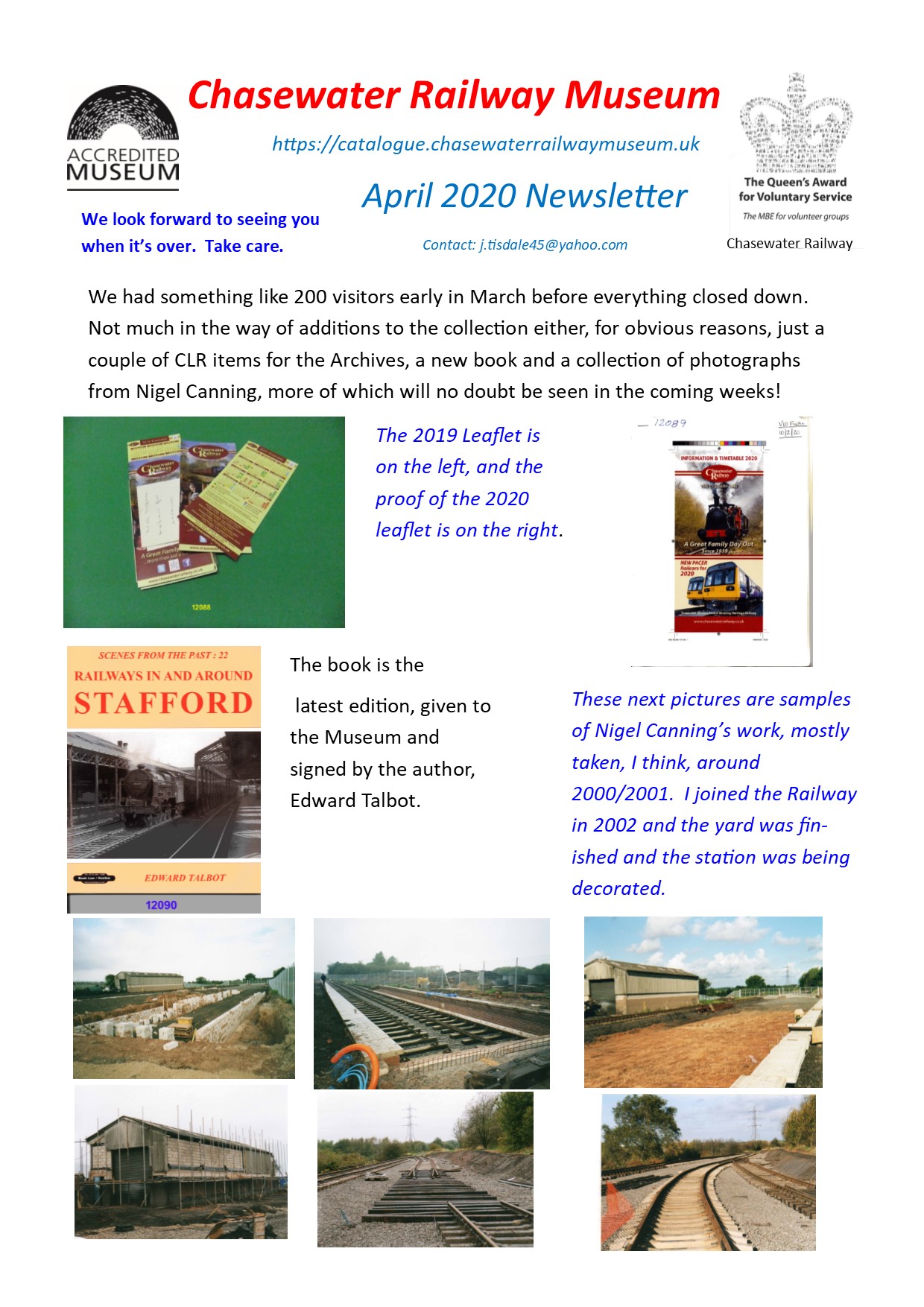

Taken from the Mercian Vol.1 No.3 an article by Gerald Wildish about our Neilson Locomotive. (Now, in 2020, in private ownership.) Shown here carrying the ‘Alfred Paget’ Nameplate
Neilson & Son Ltd., No.2937 of 1882
Bairds & Scottish Steel Ltd.’s No.11
Delving back through the records of Bairds & Scottish Steel Ltd., one comes across several interesting details about the locomotive which we hope will be at Chasewater before the summer is out. Some of this information which has come into my hands is included in this article.
No.11 was the fifth locomotive built by Neilson’s for Bairds, two of which were six-coupled. She was the second 14-inch four-coupled built for Bairds. (The first, No.13 – built in 1876 passed to the NCB in 1948 and will eventually find a home at Falkirk). Supplied new to Bairds in 1882, she cost £1,275. Engines built to this design cost Bairds between £925 and £1,300, the cheapest being the last, the second, No.3 delivered in 1889.
My own personal records of No.11 go back no further than 1889, but in May 1900 a new firebox and tubes were fitted. The next major repairs were in 1911 when a further new firebox and tubes were fitted. A minor overhaul took place when a new right-hand coal bunker was supplied and the tank replaced.
After 1916 the records became scant until 1934 when greater detail is once again recorded. In January 1936 another semi-major overhaul took place: new plates were provided for the boiler and a new brake assembly was fitted. A year later the firebox was patched and all mountings ‘done-up’. In July 1938 she was stopped again for general repairs and in November was fitted with a new firebox, repairs continuing until March, 1939.
In 1941, 4 new tyres were fitted, new brasses being added at the same time during a heavy general repair. She returned to the works in June 1943 when the boiler and firebox were condemned, but was back at work with new boiler and firebox, a patched tank and new brake cylinder block and shaft in less than six weeks. It shows what work can be carried out quickly during war time. (Due to the pressure of keeping engines at work, No.1 – the ex GERJ 15 class was sent to Cowlairs for overhaul.) A further new firebox was fitted in August, 1945 during another heavy overhaul.
New tyres were fitted in the general overhaul of 1947, but the next interesting occurrence came in the heavy overhaul of 1949, after fitting new tubes, a further new firebox was fitted and the boiler removed for hydraulic testing. However, when being removed for testing, the rope broke damaging the boiler, which had then to be lifted into the shed and rebuilt on the frames for testing again. Eventually the boiler was hydraulically tested to 200 lbs. and steam to 135lbs.
Fireboxes seemed to wear out very quickly on the Neilsons for the 1950 firebox fractured in 1954 and was presumably replaced although the records do not state this. General repairs followed in 1958 and 1963, when the boiler was announced to be satisfactory and in June 1967, just before the works closed.
When the works closed in July, apart from being the second oldest working locomotive in the British Isles, No.11 was the last to be repaired at the Gartsherrie Works. She is in excellent mechanical order and when inspected by the engineers in February of this year (1968), it was pronounced that she would be the best of the RPS stock in this direction. She lacks paint – I have no record of her being painted after 1950 – and remains in the post-war black. She was never repainted dark blue as were many of her contemporaries at Gartsherrie. We hope, funds permitting, to move her to Chasewater at the end of May or early June. We have enough money to complete the purchase but we are still short of removal funds by several pounds.
Summary of dimensions:
Weight: 28 tons, Boiler Pressure: 120lbs. per sq.in.
Overall Length: 23ft 7ins. Tractive Effort: 8885lbs. Height: 10ft 10ins. Line drawing of the Neilson also by Gerald Wildish
Posted in Bits and Pieces, Chasewater Railway Museum, Chasewater Railway Museum Bits and Pieces
Tagged Bairds & Scottish Steel Ltd.’s No.11, Brownhills, Burntwood, Chasewater Railway, Chasewater Railway Museum, Neilson & Son Ltd., No.2937 of 1882, Norton Canes, Old Railway Lines, Steam Locomotives, Steam Trains
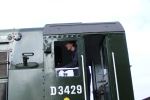
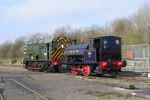
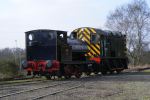
Welcome to the Museum’s March Newsletter, the fiftieth edition, trying to keep you informed as to what’s happening in the Museum.
Posted in Chasewater Railway, Chasewater Railway Museum, Events
Tagged Aldridge, Bloxwich, Brownhills, Burntwood, Cannock, Chasewater Railway, Chasewater Railway Leaflet 2020, Chasewater Railway Museum, Heath Hayes, Hednesford, Lichfield, Norton Canes, Old Railway Lines, Staffordshire, Steam Locomotives, Steam Trains
From the Secretary’s Report.
Members will be pleased to hear that we have moved the Barclay saddletank to the Hixon yard of our friend Jake Bacon. (I’ve not read anything about this loco in the magazines until now. It’s now known as Colin McAndrew! There’s a photo of it at Hixon.) 
Barclay Loco Colin McAndrew at Hixon – Rob Duffill’s Collection.
Renovation work is in progress until such time as she can be moved to the safety of the Chasewater building. It is hoped that the two Pecketts will join her in the very near future, and I would like to express thanks to all those who have responded to the call for cash to cover the removal expenses.
Progress at Chasewater has been maintained steadily by the faithful few and the line is now in up to the site of the building. The other track here has been left for the time being to enable the contractors to work in the confines of the trackbed. A start has been made at the causeway end of the line in re0laying a length taken out by the demolition people and then work will centre on track tidying, moving a considerable amount of shale and spoil to strengthen the embankment near the small overbridge and other remedial works. We shall still need plenty of help so please come.
From the Treasurer’s Report
Finance is reasonable at the moment but Chasewater is a big drain on resources and we must try to stem the flow as much as possible without jeopardising the project. (Given the state of Chasewater water level at the moment, the wording seems very prophetic!)
Late Round Up – Hon. Editor
I must apologise most profusely for the lateness of this edition due to personal circumstances beyond my control. The next edition will reach you on time, and will contain news of the AGM. I hope you will bear with me this time as I do like to have the mag. out on time. (Considering the fact that this was the fourth magazine of the year members nowadays would certainly bear with him!)
After the Christmas celebrations come on down to Chasewater Railway for the Mince Pie Specials!!

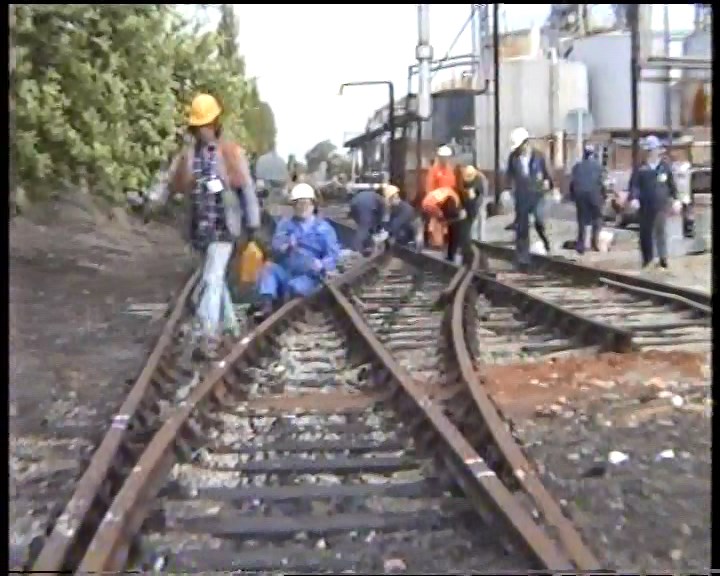
More than a third of a mile of track, including 3 points and 2 buffer stops, have been donated to the West Midlands based Chasewater Railway.
The gift has been donated by Synthetic Chemicals of Four Ashes Works, Staffs.
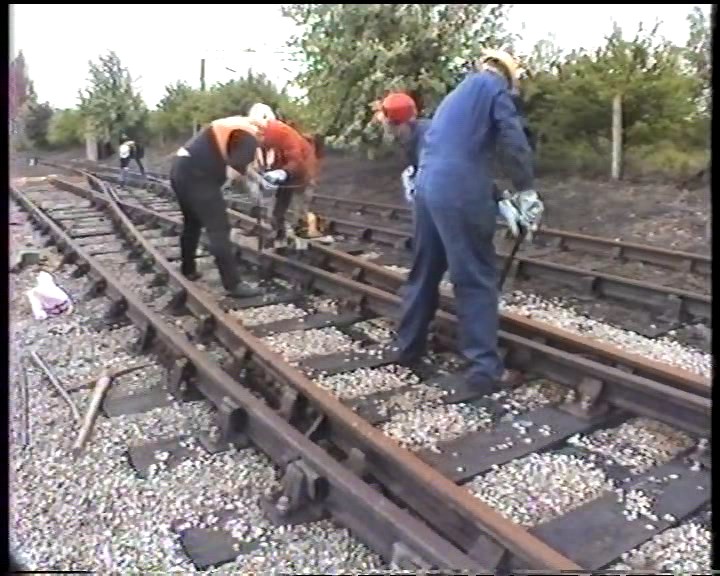
The track was dismantled by Chasewater members over two weekends with the cost of lifting, together with labour, borne by Synthetic Chemicals, while transport was supplied by Chasewater.
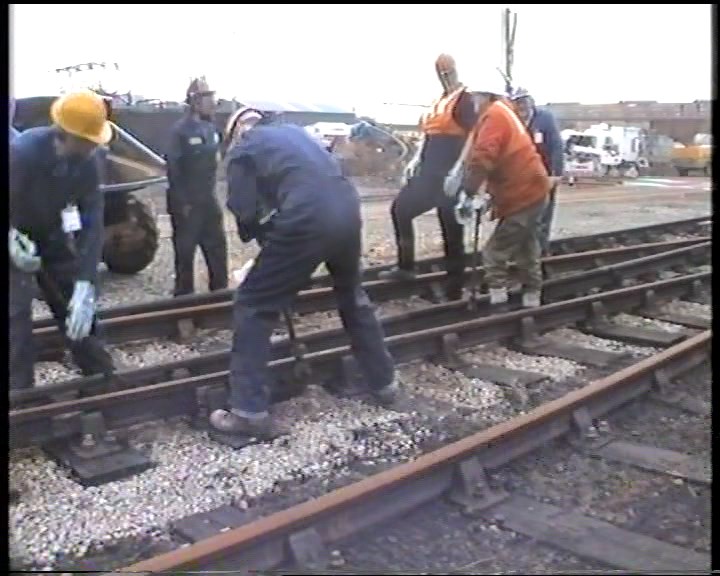
This is the largest donation of its kind that Chasewater has received and is mostly due to the efforts of Jim Bates, and employee of Synthetic Chemicals and a long-standing member of the standard gauge metals railway. He found that the sidings were to be dismantled, approached his works manager on behalf of Chasewater and together with officials from the railway, obtained the track.
The majority of the track, which had been refurbished in 1989 but never used, was moved in 60ft panels on May 21, although not officially handed over till May 27.
The panels were transported to the causeway and lifted off by a crane supplied free of charge after a request from the Railway’s general manager Steve Organ, by Midland Safe Loads Ltd, Brownhills.
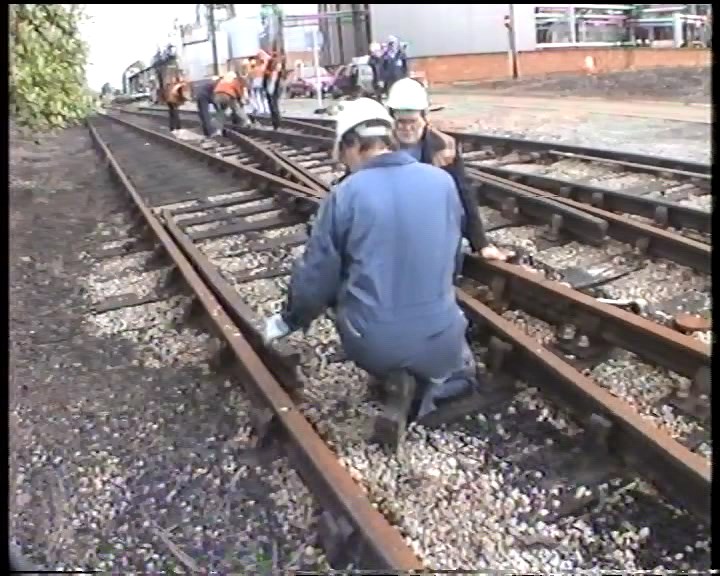
Although not all the track is on site at present from Four Ashes, the amount delivered, with the track from Redditch Railway Society, is enough to lay the line through to Norton Lakeside.
David Bathurst, Chairman of Chasewater Railway, said “We are overwhelmed by the quality and the length of track donated to the railway and also the cost of lifting it, for which we are very grateful. We also know that this is not the first time that Synthetic Chemicals have made such a donation to a railway. They presented their 0-4-0F Barclay built in 1944. to the Telford Steam Trust in 1992, but I would also like to thank Jim Bates for the effort he has put in…….Jim fixed it for us.”

 Chasewater Railway Museum