Tag Archives: Bloxwich

Chasewater Railway Museum Exhibits – Wagon registration plates

Chasewater Railway Museum Exhibits

Wagon registration plates515  e

Railways came into being first and foremost not to carry passengers, but to convey freight, especially mineral traffic, like coal.  In the early days, when few lines were interconnected, the variety of goods wagons did not matter, but as railways expanded and through trains became common, it was essential to have wagons whose buffers, brakes, couplings and so on all matched up.

Risk of derailment

The main line railways adopted these fairly quickly, but the private owners, especially collieries and coal merchants, were reluctant to comply, and damage and derailments became common due to their wagons either lacking proper buffers and brakes or being poorly maintained.

In 1880, however, it became a legal requirement for all privately owned wagons to be registered by the railway company to whose sidings their owners were connected, and only those that reached the Clearing House standard were allowed to run on main lines.

Vital Statistics

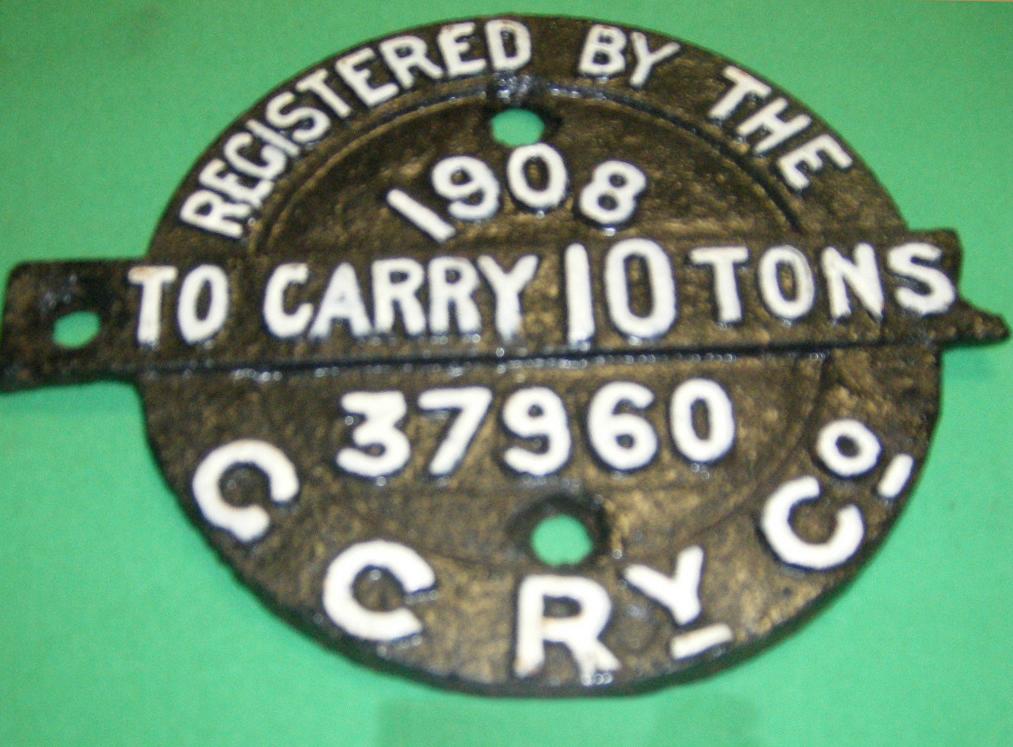
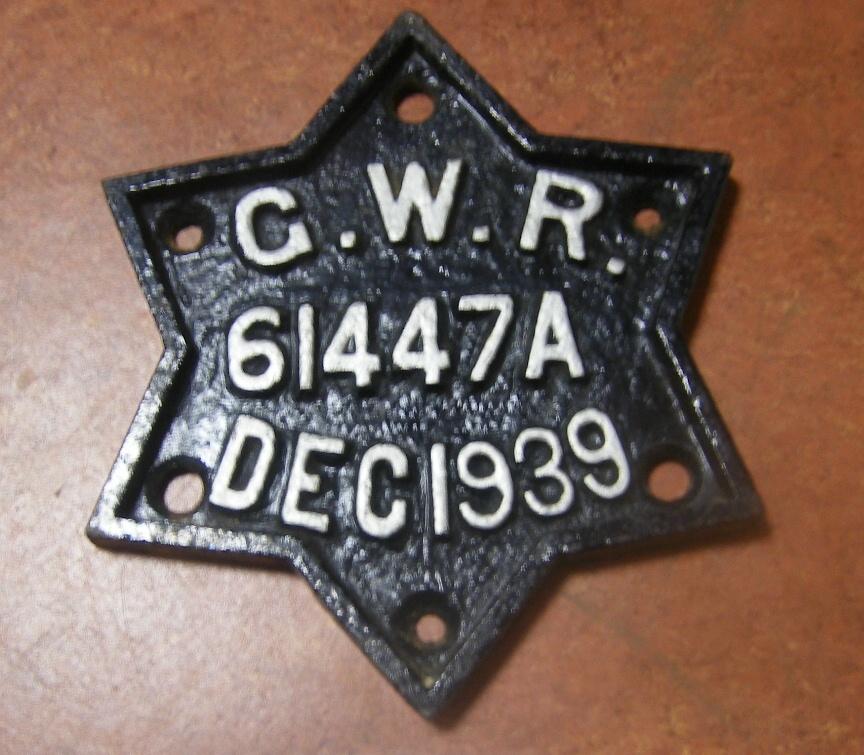
Each wagon so passed had two plates, one on either side of the main frame, advising its date of manufacture, its registration number, and its carrying capacity.  In 1907, the RCH designed a new, star-shaped plate for tank wagons.653  e

Many of the ordinary registration plates come with their lugs broken off, but these can easily be repaired using fibreglass filler.   The normal colour seems to have been black with white letters, and red with white letters for tank wagons.

However, some privately owned wagons were painted in quite garish colours, and it seems likely that their plates were similarly treated.  Nearly all plates were made of cast iron, but examples in brass or lead alloy are occasionally seen.2062  e

Museum Bench refurbishment

One of the Museum exhibits is an old Railway Station waiting room bench.

DSCF9330

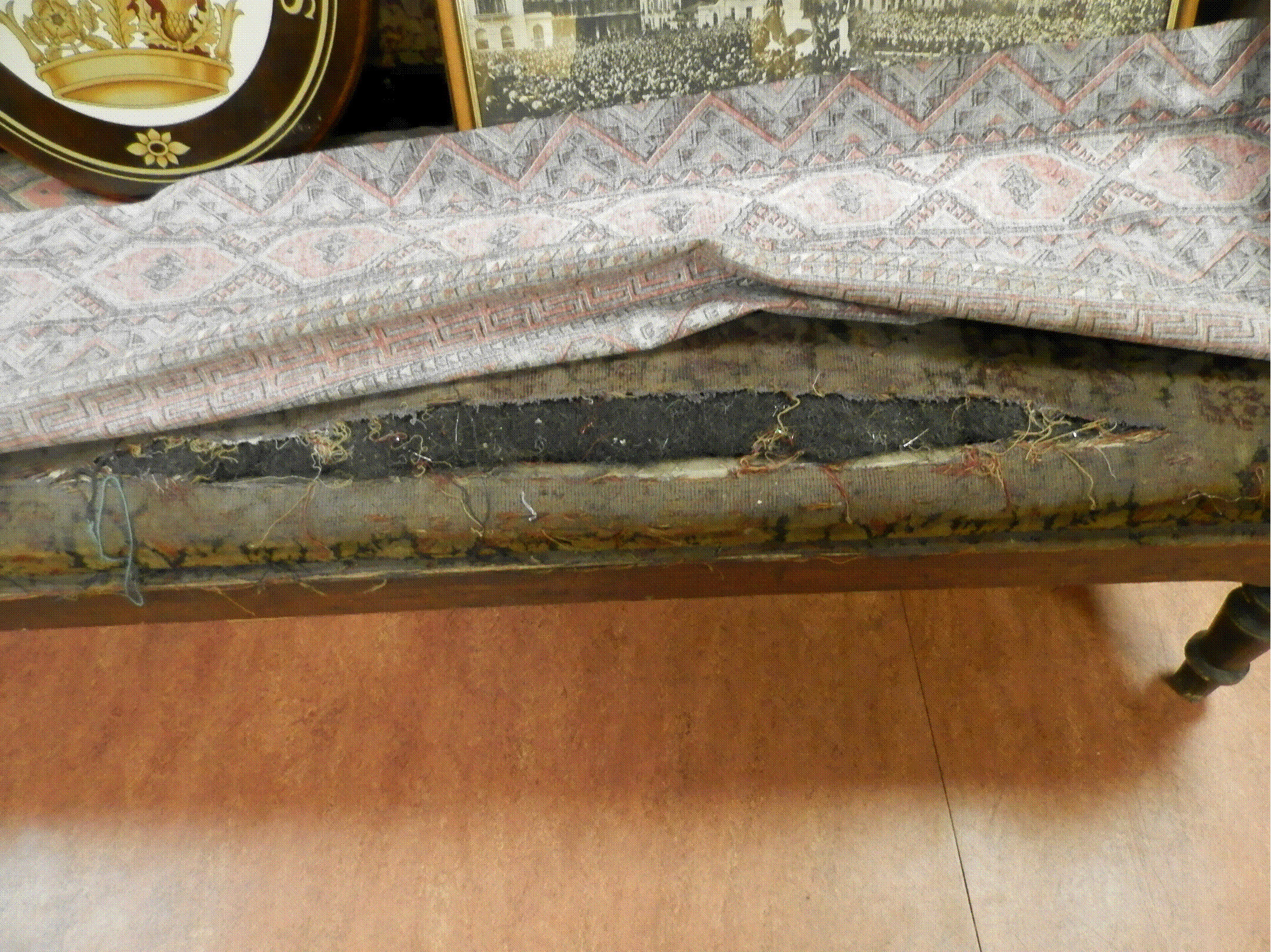
Having seen heavy use over the many years of its life, the fabric covering, was badly worn, exposing the horsehair filling.

Picture1

Using the money generated from the ” bench fund” table situated outside the museum room, the bench has been recovered and re sprung.

Bench Recovered

Photo’s by Chasewater Stuff & Oakparkrunner.

An excellent job was carried out by Steve Wade, a local Upholsterer, who has a workshop at the rear of 59 High Street Walsall Wood WS9 9LR.

Steve can be contacted on 07903337000, or at Stephen.wade@sky.com, and he will be pleased to quote for any upholstery work. Details and photo’s of Steve’s work can be found on his website http://www.stevewade.biz/

Museum Item first published December 2010 – GWR New Year Greeting Message 1928

This greeting was first published on the ‘chasewaterstuff’ blog in December 2010 and, as it is the New Year season, it seems a good time to repeat it.

This piece of memorabilia from Barry Bull is a greetings message from the General Manager of the Great Western Railway 1921-1929, Sir Felix John Clewett Pole, to all members of staff for the year 1928.

The first two inside pages.Third page.Final page.

Chasewater Railway Museum Exhibits – Station Name Signs (Running-In Boards)

Museum Exhibits

Station Name Signs – Running-In Boards633 copy

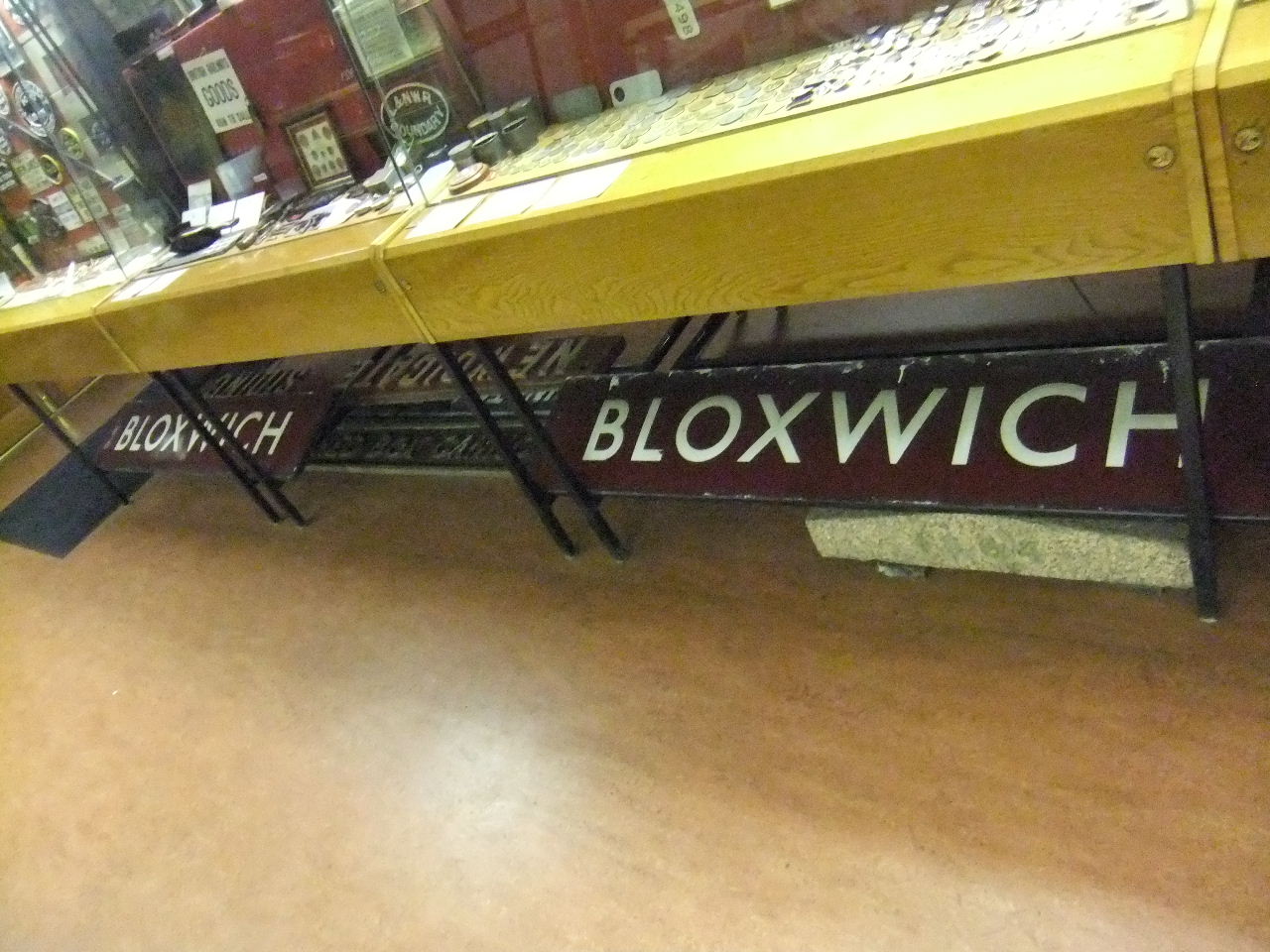
We have a couple of very local ones!

Stations have displayed signs showing their name since railways began – the very earliest being hand-painted, often in extravagant lettering and colours.  However, since the required a sign-writer to paint them each time the colours faded – and colours tended to fade fairly often – they were gradually replaced by vitreous enamel signs, usually with a blue background and white letters, held in a wooden frame.

Some railways continued to use the enamel signs throughout their existence, while others opted for wooden boards to which cast iron or lead alloy letters were screwed.  The advantage of boards was that they could be easily lettered up by a relatively unskilled painter.  They were also easier to see at night.

Known officially as running-in boards, they were located at the ends of platforms.  At junctions, they usually included information about connecting lines.

Once a train had come to a halt, a porter was supposed to shout out the station name.  Even so, there were still passengers who missed their stop.  It was to ease this problem that enamel name tablets were placed inside the glasses of platform lamps, and small nameboards, or target signs, were suspended from walls, fences, or lamp posts along the platform.

The target signs were often enamel – especially on the Southern Railway (SR).  The London Midland & Scottish (LMS), by contrast, used a cast-aluminium alloy design finished in reflective yellow paint with black letters.  With nationalisation, British Railways introduced the familiar totem sign in regional colours, and produced them in very large numbers.950

From the Archives – Another Handbill

From the Archives

Another Handbill

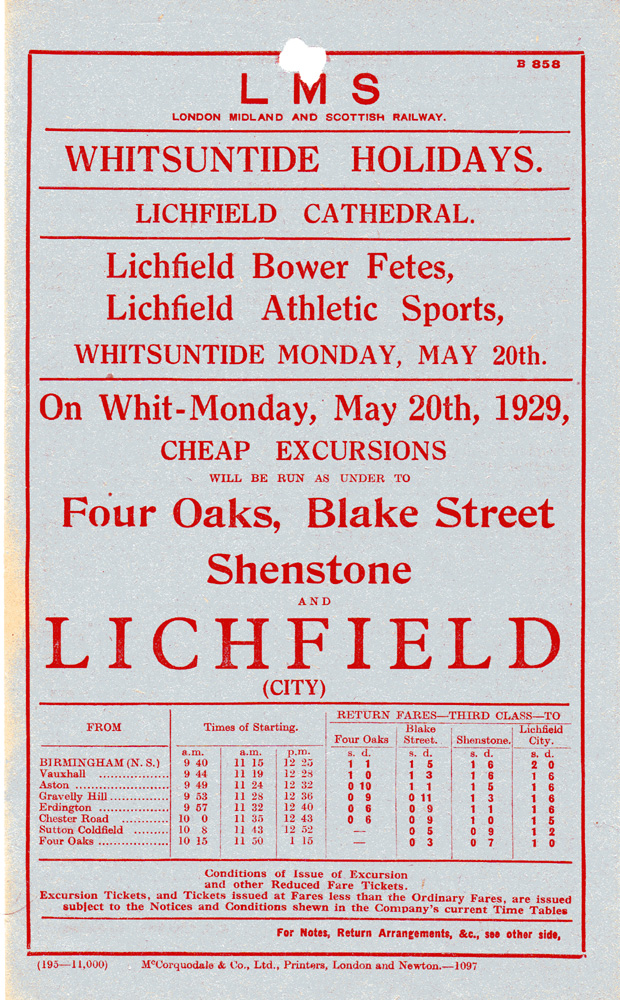
This time a Whitsuntide Holiday Excursion from New Street to Lichfield City for 2/-  (10p) return.  This was the May Bank Holiday before it was moved to the first Monday of the month.

An LMS trip in 1929 to the well-known Lichfield Bower.8076

One for the Archives

One for the Archives

An old newsletter has just turned up in some old paperwork we are going through, and as it was first published at this time of year, I thought it might be interesting to show the state of play 26 years ago.8109.18109.28109.38109.4

Acquisitions – A couple of signal box nameboards

Acquisitions

A couple of local signal box nameboards have arrived at the Museum recently.DSCF9100DSCF9123DSCF9122

New Museum Aquisition, August 27th 2013.

The Museum of Cannock Chase, which is based at the old Valley Colliery in Hednesford, is redesigning the coal mining display. This means that a life sized fibreglass model of a pit pony will be surplus to requirements.

val and pony

An article was posted on their web site asking if any one could find the pony a new home. Chasewater Museum’s registrar John, spotted this, and promptly put in an offer for it. John’s bid was successful, beating many more offers from other interested parties, and Chasewater Museum is now the proud owner of this splendid animal.

Our thanks go to Nick Bullock for the collection from Hednesford and delivery to its new home at Chasewater.

DSCF9028

The pony soon made itself at home in the Heritage Centre at Brownhills West.

DSCF9034

All photo’s courtesy of John chasewaterstuff.

This post was taken from various reports in the Mercian of April 1969

This post was taken from various reports in the Mercian of April 1969

MSL at Easingwold

 MSL Carriage at Easingwold

This Mercian seems to cover March/April and May/June 1969.

There as a new Editor for the magazine and the poor man in charge appears to have similar problems to any other magazine – a lack of articles!


Secretary’s Report – T.G.Cousens

After slow progress during the winter months at Chasewater, in which time only the arrival of the Manchester, Sheffield & Lincoln Railway coach broke the monotony of packing the track with red ash, progress is again in evidence.

The appointment of Mr.A.Holden to General Manager has seen marked changes in only a few short weeks, the most noticeable being the complete levelling of the compound and laying of track foundation into it.  Behind the scenes however, small departments have been formed to work on various aspects of the line with people responsible for each of the allocated tasks.

However, working parties are small so progress will be slow – do we have to wait until the line is operating to see 90% of the membership?!  Why not come down one Sunday afternoon and do a bit of shovelling, things will then begin to come to life.

A successful Open Day was held in conjunction with Messrs. Courtaulds Ltd., Coventry and organised by Gerald Wildish with the Company.  Many visitors arrived to photograph the two Pecketts, one, ‘Rocket’ was seen at work on the Foleshill Railway.  Many items were sold from the RPS stand which resulted in a fair profit to us.

The exhibition team was also at work at Huyton, Liverpool, at the preservation exhibition, the Open Day at Chasewater during the Easter week-end and the Stafford Railway Circle exhibition.

Well done to the members who attended these stands, especially the Huyton one.

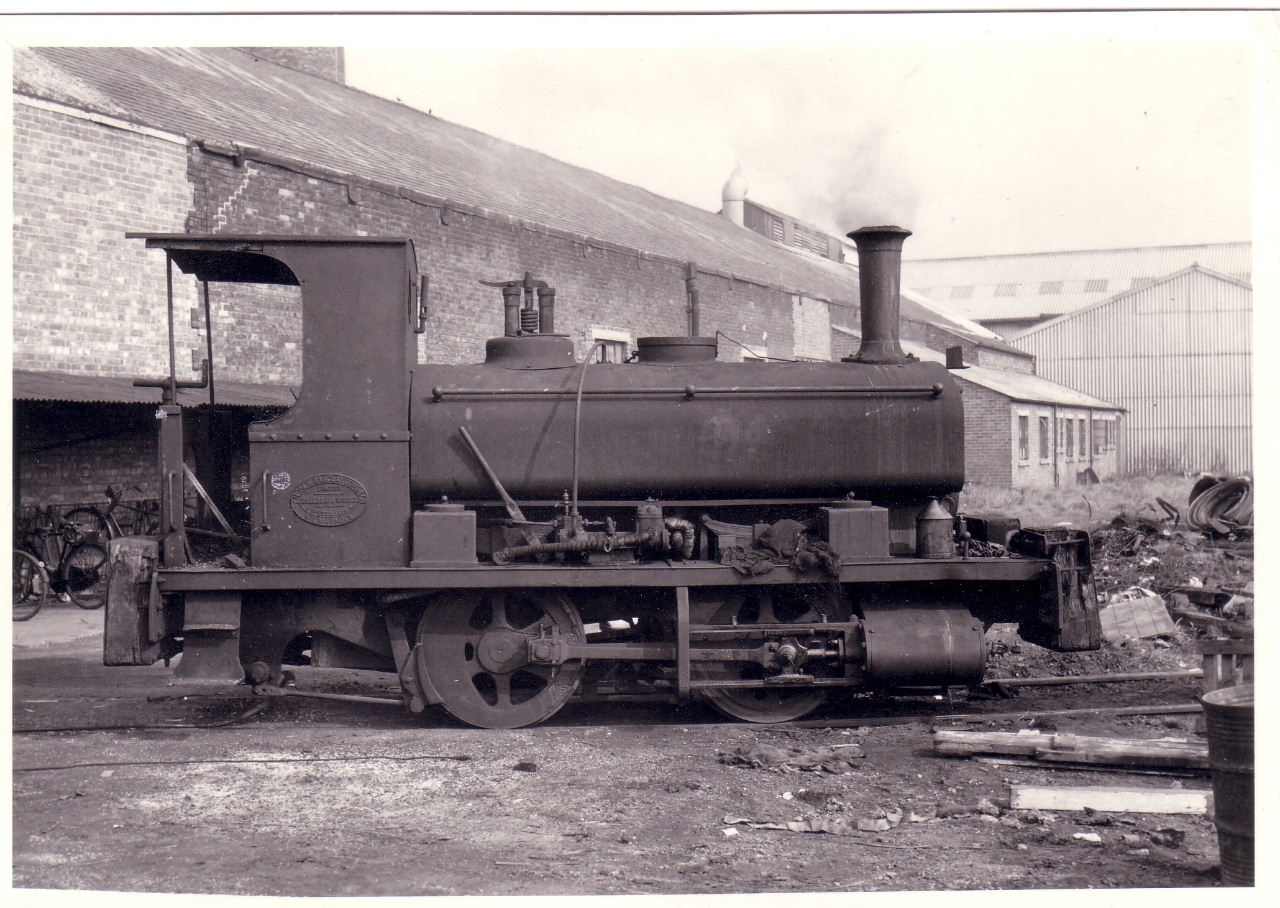
The Barclay ‘Colin McAndrew’ was in steam on Easter Sunday and Monday under the able direction of Mike Lewis and Derek Luker.  She unfortunately blew a tube on the Sunday but after a quick trip by Rob Duffill (our hero!!) to Hixon for a spare, the locomotive crew replaced the defective tube and raised steam for a second time the same day!  No stock was hauled because of work required on the track – members please note.  Until this work is done Open Days will be severely restricted, so may we see more of you assisting at Chasewater.
A B1223-1911Greening Wireworks WarringtonA Barclay 1223-1911 Greening Wireworks Warrington

From the Public Relations Officer’s Page – G. Wildish


The first mention was of the next Open Days, June 28th and 29th 1969, with the expectation of large numbers of visitors and asking for members to come along and help.

There was a request for more photographs for the cover of the magazine, which unfortunately do not reproduce very well.  The Foleshill Railway Open Day had to be cut short and apologies were given to anyone affected.

A number of publications were mentioned – ‘Preserved locomotives of the World’ and ’Narrow Gauge Steam 1969’ for which a second impression is being prepared, later to be followed by ‘Narrow Gauge Steam 1970’

A publication for continental travellers – ‘German Steam’ has been prepared by an RPS member, so the Society is getting half of the profits, with thanks.

The final two publications were – ‘Railway Modeller’ which contained an article by Gerald Wildish and ‘Railway Enthusiasts Guide 1969/70’ which contained some information about the RPS.

There was an appeal for funds to move a locomotive of the Taff Vale Railway, and another appeal for volunteers to join a ‘paint in’ at Chasewater to give the rolling stock a much needed coat of paint.