Tag Archives: Aldridge

Museum Exhibits – Sectioned model steam loco

Museum Exhibits

This item was given to the Chasewater Railway Museum by a gentleman from Cannock, Staffs in 2009 and is on display in the museum.

849 Sectioned Model in museum

This model was purchased by the donor from the makers in Bury, Lancs in 1979.   It was produced along with 3 other models for Bangladesh Railways, but was not sent due to there being no Letter of Credit forthcoming.  The other 3 were probably scrapped.  It is loosely based on a Royal Scot Class locomotive.

From the Archive – Another couple of handbills

From the Archive

Another couple of handbills

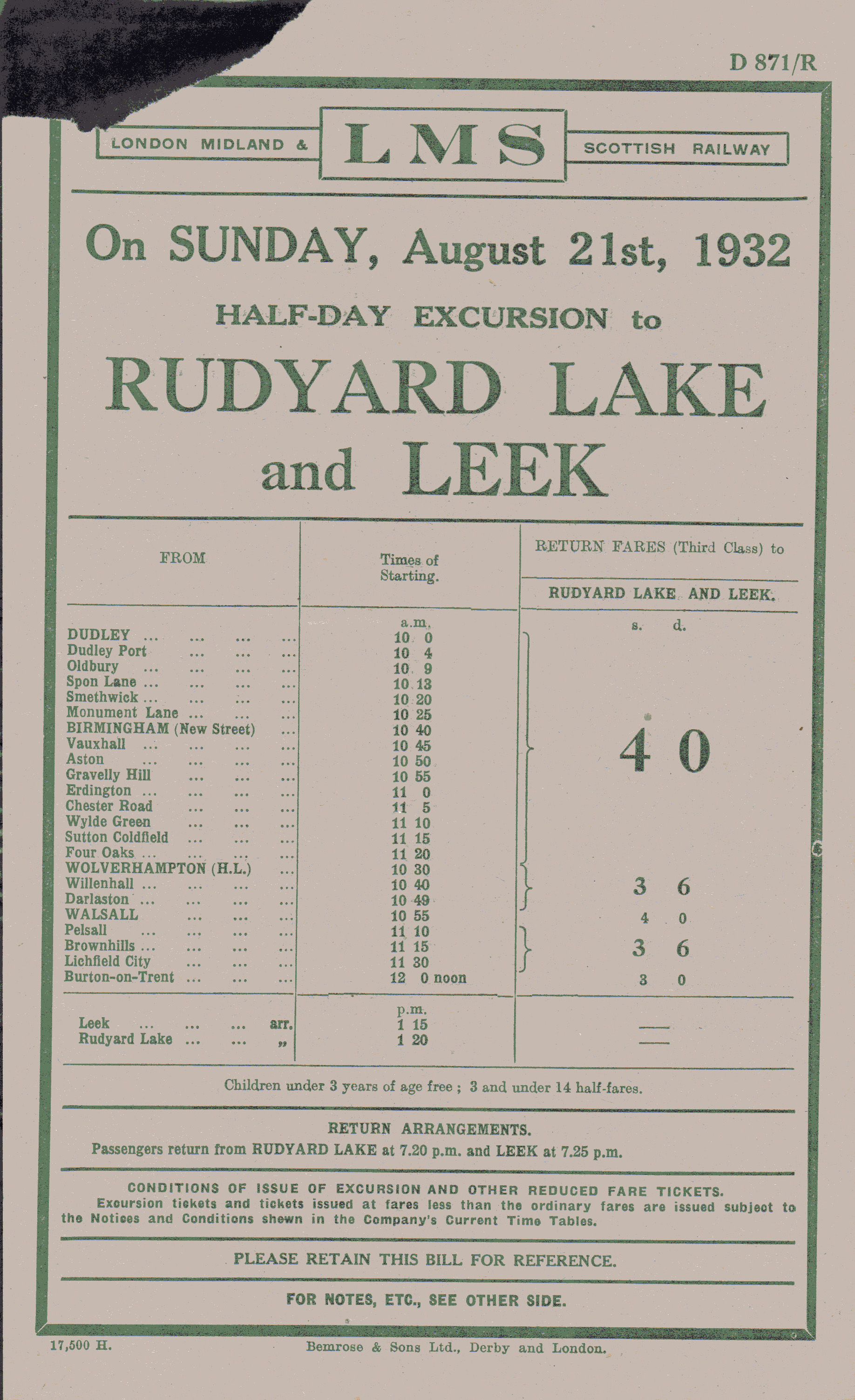
All sorts of destinations from Brownhills High Street!

8492

8507

To Scarborough for £1-5-6  (£1.27½)  return

and Rudyard Lake for 3/6  (17½p)  return


Chasewater Railway Museum Exhibits – Wooden Models

Chasewater Railway Museum Exhibits

Wooden Models

2009_11290030

One of our most popular display cases is this one – containing a collection of wooden railway models hand-made by the late Mr. Eric Dee of Pelsall. (1931 – 2003).

Younger visitors like to see the models and the grown-ups appreciate the work and skill that has gone into making them.

Mr. Dee was a saddle maker by profession and made these toys for his grandchildren to play with.

He was a fine craftsman and amongst other interests made a fine collection of miniature saddles.

The collection has been kindly donated to the Chasewater Railway Museum by his daughter, Mrs. Jackie Bedward.1505

Just one of the models close-up

Chasewater Railway Museum Exhibits – Wagon registration plates

Chasewater Railway Museum Exhibits

Wagon registration plates515  e

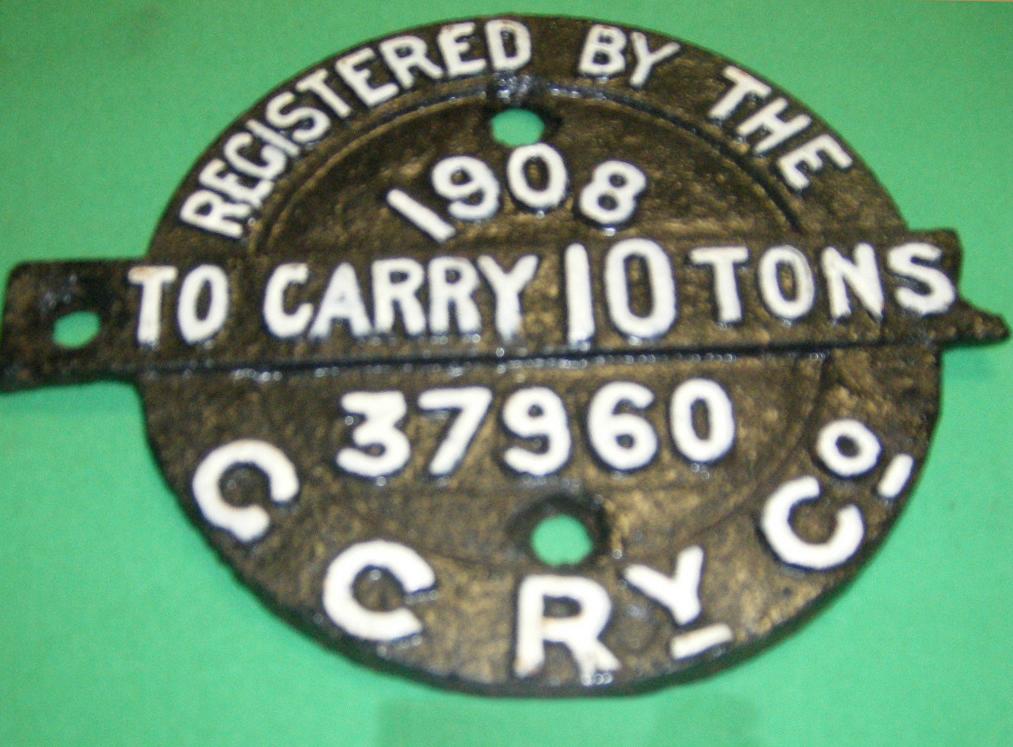
Railways came into being first and foremost not to carry passengers, but to convey freight, especially mineral traffic, like coal.  In the early days, when few lines were interconnected, the variety of goods wagons did not matter, but as railways expanded and through trains became common, it was essential to have wagons whose buffers, brakes, couplings and so on all matched up.

Risk of derailment

The main line railways adopted these fairly quickly, but the private owners, especially collieries and coal merchants, were reluctant to comply, and damage and derailments became common due to their wagons either lacking proper buffers and brakes or being poorly maintained.

In 1880, however, it became a legal requirement for all privately owned wagons to be registered by the railway company to whose sidings their owners were connected, and only those that reached the Clearing House standard were allowed to run on main lines.

Vital Statistics

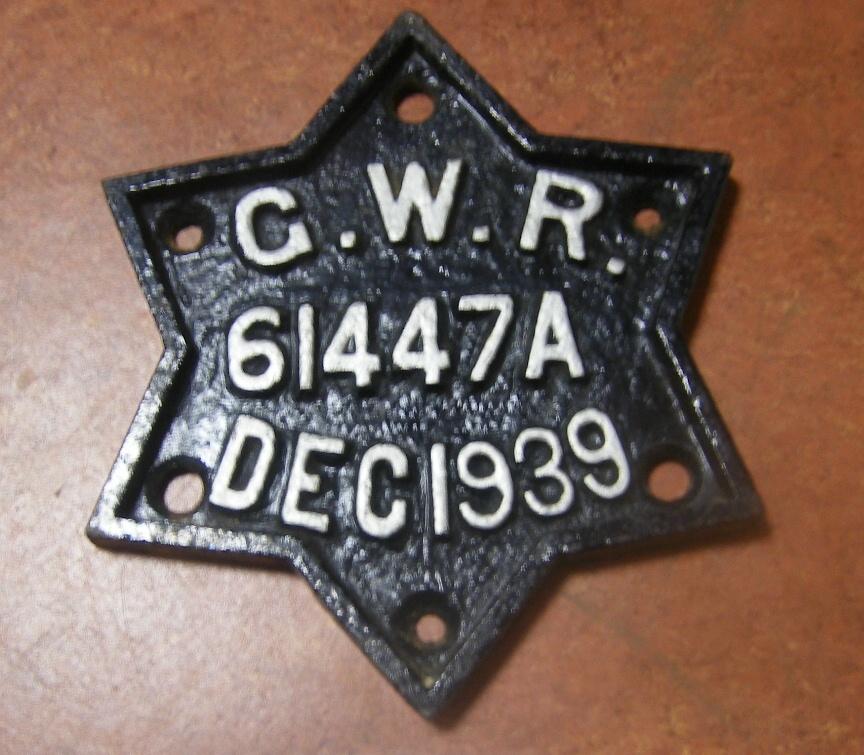
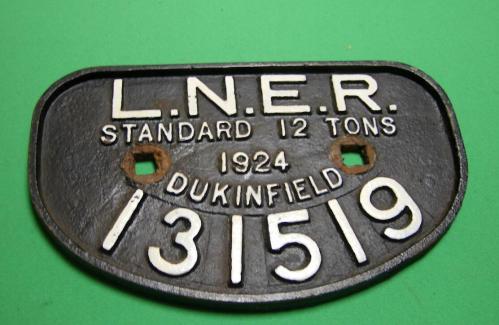
Each wagon so passed had two plates, one on either side of the main frame, advising its date of manufacture, its registration number, and its carrying capacity.  In 1907, the RCH designed a new, star-shaped plate for tank wagons.653  e

Many of the ordinary registration plates come with their lugs broken off, but these can easily be repaired using fibreglass filler.   The normal colour seems to have been black with white letters, and red with white letters for tank wagons.

However, some privately owned wagons were painted in quite garish colours, and it seems likely that their plates were similarly treated.  Nearly all plates were made of cast iron, but examples in brass or lead alloy are occasionally seen.2062  e
Museum Bench refurbishment

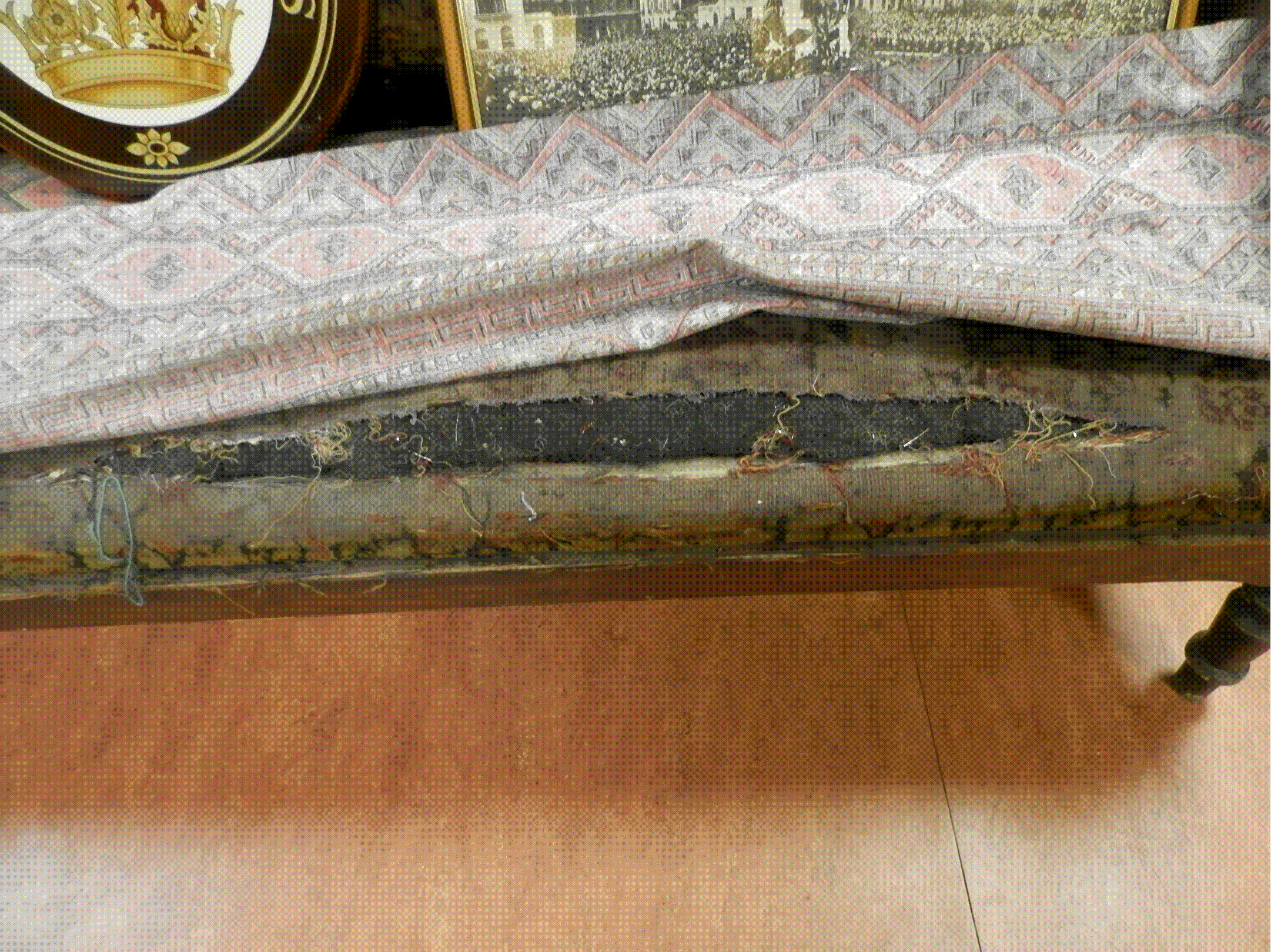
One of the Museum exhibits is an old Railway Station waiting room bench.

DSCF9330

Having seen heavy use over the many years of its life, the fabric covering, was badly worn, exposing the horsehair filling.

Picture1

Using the money generated from the ” bench fund” table situated outside the museum room, the bench has been recovered and re sprung.

Bench Recovered

Photo’s by Chasewater Stuff & Oakparkrunner.

An excellent job was carried out by Steve Wade, a local Upholsterer, who has a workshop at the rear of 59 High Street Walsall Wood WS9 9LR.

Steve can be contacted on 07903337000, or at Stephen.wade@sky.com, and he will be pleased to quote for any upholstery work. Details and photo’s of Steve’s work can be found on his website http://www.stevewade.biz/

Museum Item first published December 2010 – GWR New Year Greeting Message 1928

This greeting was first published on the ‘chasewaterstuff’ blog in December 2010 and, as it is the New Year season, it seems a good time to repeat it.

This piece of memorabilia from Barry Bull is a greetings message from the General Manager of the Great Western Railway 1921-1929, Sir Felix John Clewett Pole, to all members of staff for the year 1928.

The first two inside pages.Third page.Final page.

Chasewater Railway Museum Exhibits – Station Name Signs (Running-In Boards)

Museum Exhibits

Station Name Signs – Running-In Boards633 copy

We have a couple of very local ones!

Stations have displayed signs showing their name since railways began – the very earliest being hand-painted, often in extravagant lettering and colours.  However, since the required a sign-writer to paint them each time the colours faded – and colours tended to fade fairly often – they were gradually replaced by vitreous enamel signs, usually with a blue background and white letters, held in a wooden frame.

Some railways continued to use the enamel signs throughout their existence, while others opted for wooden boards to which cast iron or lead alloy letters were screwed.  The advantage of boards was that they could be easily lettered up by a relatively unskilled painter.  They were also easier to see at night.

Known officially as running-in boards, they were located at the ends of platforms.  At junctions, they usually included information about connecting lines.

Once a train had come to a halt, a porter was supposed to shout out the station name.  Even so, there were still passengers who missed their stop.  It was to ease this problem that enamel name tablets were placed inside the glasses of platform lamps, and small nameboards, or target signs, were suspended from walls, fences, or lamp posts along the platform.

The target signs were often enamel – especially on the Southern Railway (SR).  The London Midland & Scottish (LMS), by contrast, used a cast-aluminium alloy design finished in reflective yellow paint with black letters.  With nationalisation, British Railways introduced the familiar totem sign in regional colours, and produced them in very large numbers.950

From the Archives – Another Handbill

From the Archives

Another Handbill

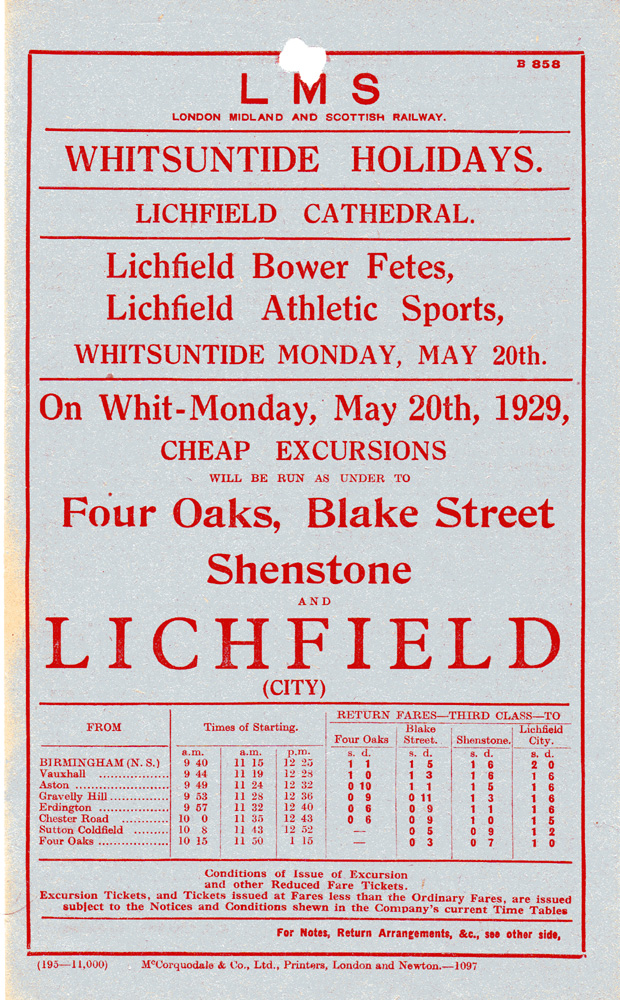
This time a Whitsuntide Holiday Excursion from New Street to Lichfield City for 2/-  (10p) return.  This was the May Bank Holiday before it was moved to the first Monday of the month.

An LMS trip in 1929 to the well-known Lichfield Bower.8076

One for the Archives

One for the Archives

An old newsletter has just turned up in some old paperwork we are going through, and as it was first published at this time of year, I thought it might be interesting to show the state of play 26 years ago.8109.18109.28109.38109.4

From the Archives – Handbills

From the Archives

Handbills

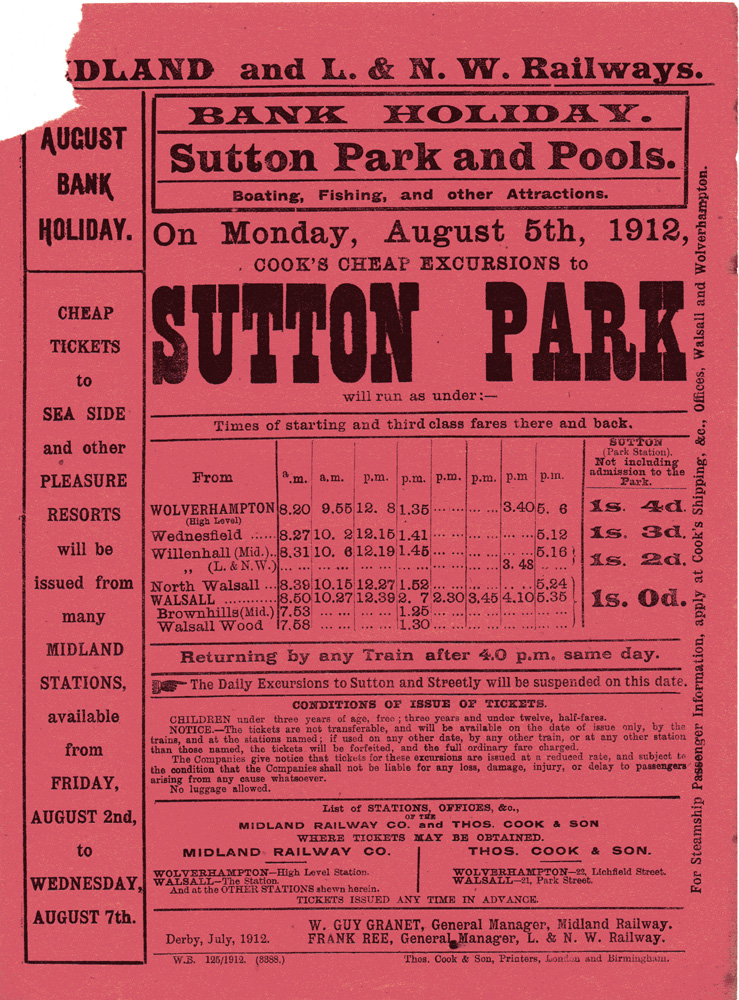
 The latest addition to be entered on the museum database is a collection of handbills, a number of them from local stations.8451 To Sutton Park

The one pictured here is obviously of interest to Chasewater Railway members, being a return trip to Sutton Park, leaving from, amongst other places, Brownhills (Midland) station and Walsall Wood.  This was the Midland line which extended into the Cannock Chase coalfield, passing through our present Brownhills West station.  How about the price? – 5p return to Sutton Park in today’s money!05291 Midland Station, Brownhills

The Brownhills (Midland) station was situated between the A452 Chester Road and the A5.  We have others of local interest which I shall post here in the future, but I haven’t as yet come across any more from Brownhills – but I shall keep on looking!!