Chasewater Bits & Pieces
Also included in other reports 1968 Vol.1 No.3. 42.2
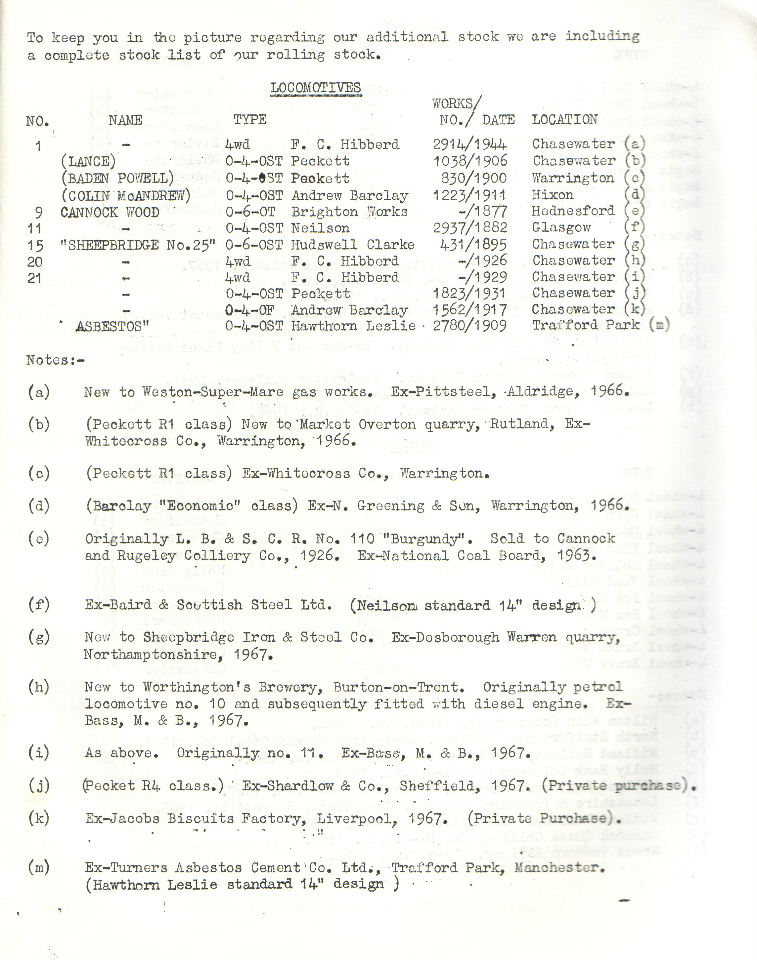
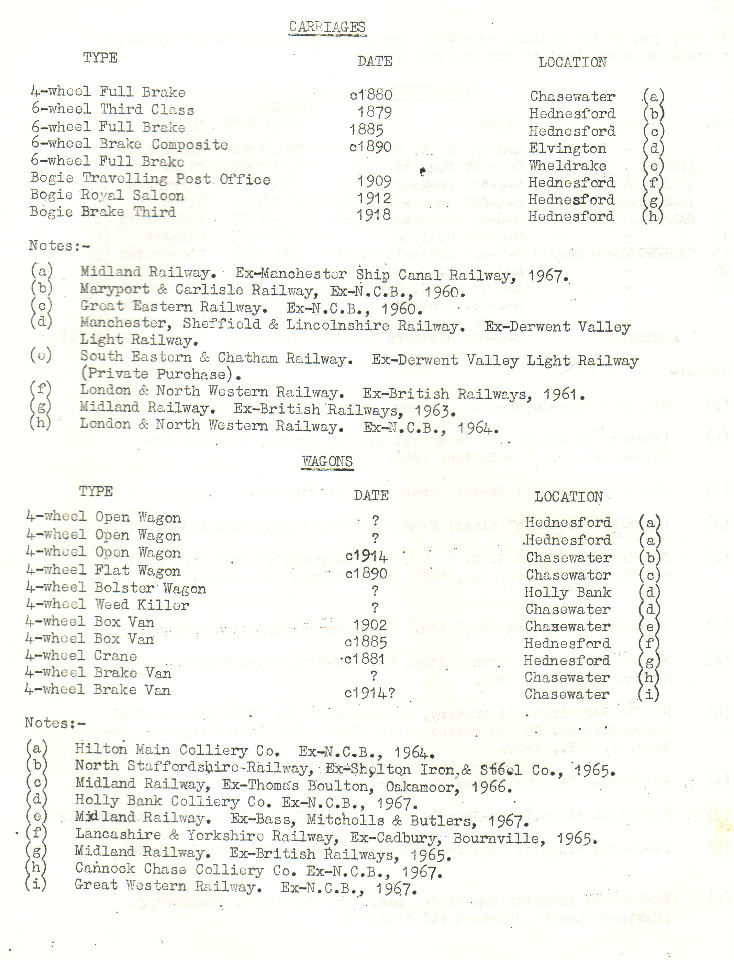
The complete Stocklist
 Peckett – 1823/1931
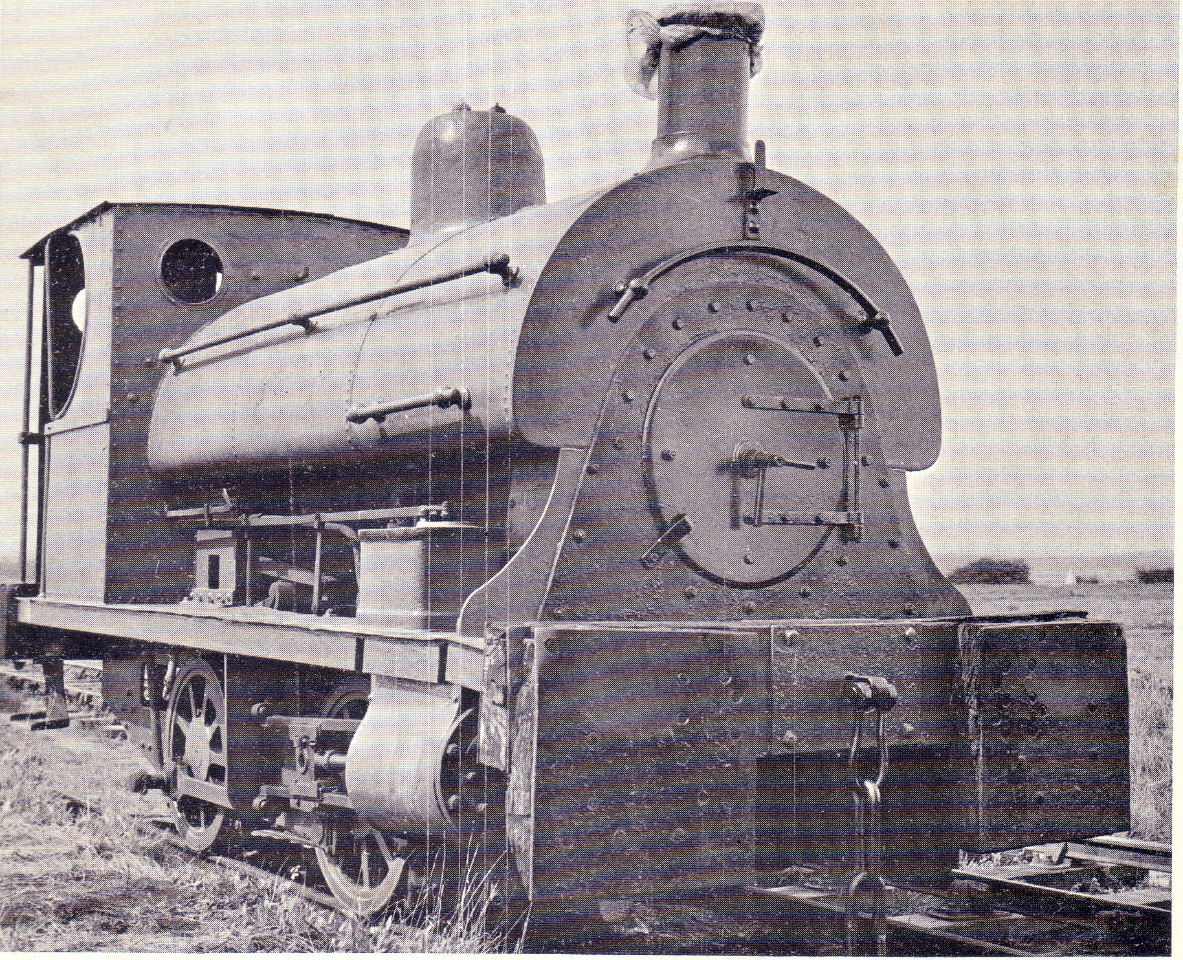 Peckett – Lance No. 1038/19096

Peckett – 1823/1931
Peckett – Lance No. 1038/19096
On to the next magazine of 1968 – Vol.1 No.3
The picture is of the Midland Railway horsedrawn van at the Hednesford depot.
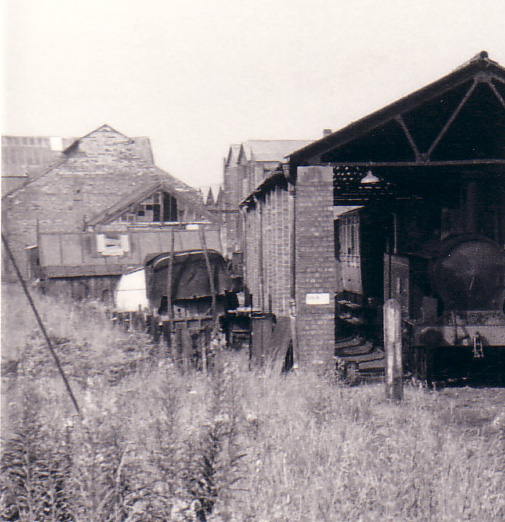
Robert Ives visited the museum last Sunday, May 12th.
From the Hon. Secretary’s Report
The work on the Andrew Barclay loco (Colin McAndrew) at Hixon is almost finished.
Trevor Cousens and Allen Civil visited Stewarts and Lloyds at Bromford Bridge to buy loco spares to replace parts on the Hudswell Clarke and the Barclay locomotives.
Early in March 1968 some track was stolen from Chasewater. It has since been replaced and measures are in hand to prevent any further occurrence. A security compound will be constructed in the very near future to house the stock there.
Restoration Work at Hednesford.
Slow progress has been made on the MR Royal Saloon, the clerestory roof has had pitch applied. The damp has caused the roof inside to crack up. We understand that work is now in hand to the two side panels which need attention. The outside is now being given a coat of undercoat.
The LNWR TPO needs a good coat of red oxide, some of the woodwork needs replacing. The roof has had some attention and is more waterproof.
The TPO needs a good sort out inside, with new relics arriving all the time, we are getting very short of room in this vehicle. A great number of relics have to be stored because there is not enough space to display them.
The Maryport & Carlisle 3rd Class carriage is almost completed, the wheels need finishing with a white rim. The underframes require another two coats of paint. One door has been made complete by Frank Harvey and another door by Laurence Hodgkinson – this needs to be hung.
It is hoped to move the Midland Railway crane to Chasewater in the near future, where it will be used for track laying purposes.
The Midland Railway horse drawn delivery van requires another coat of paint and the roof needs re-canvassing. Two of the wheels need repairing. (I knew that we had this van, but I’ve never seen it and have no idea where it came from – there has been nothing in the magazines so far. It is now on loan at Shugborough)
Robert A. Ives.

In cabinet C1 is one of our local items – an armband from the Cannock & Rugeley Colliery Ltd., worn by the main line pilot.
This armband was found by a local farmer some years ago, considerably battered and doubled over. It was not too far from the site where the Staffordshire Hoard was found – but sadly only made from brass!
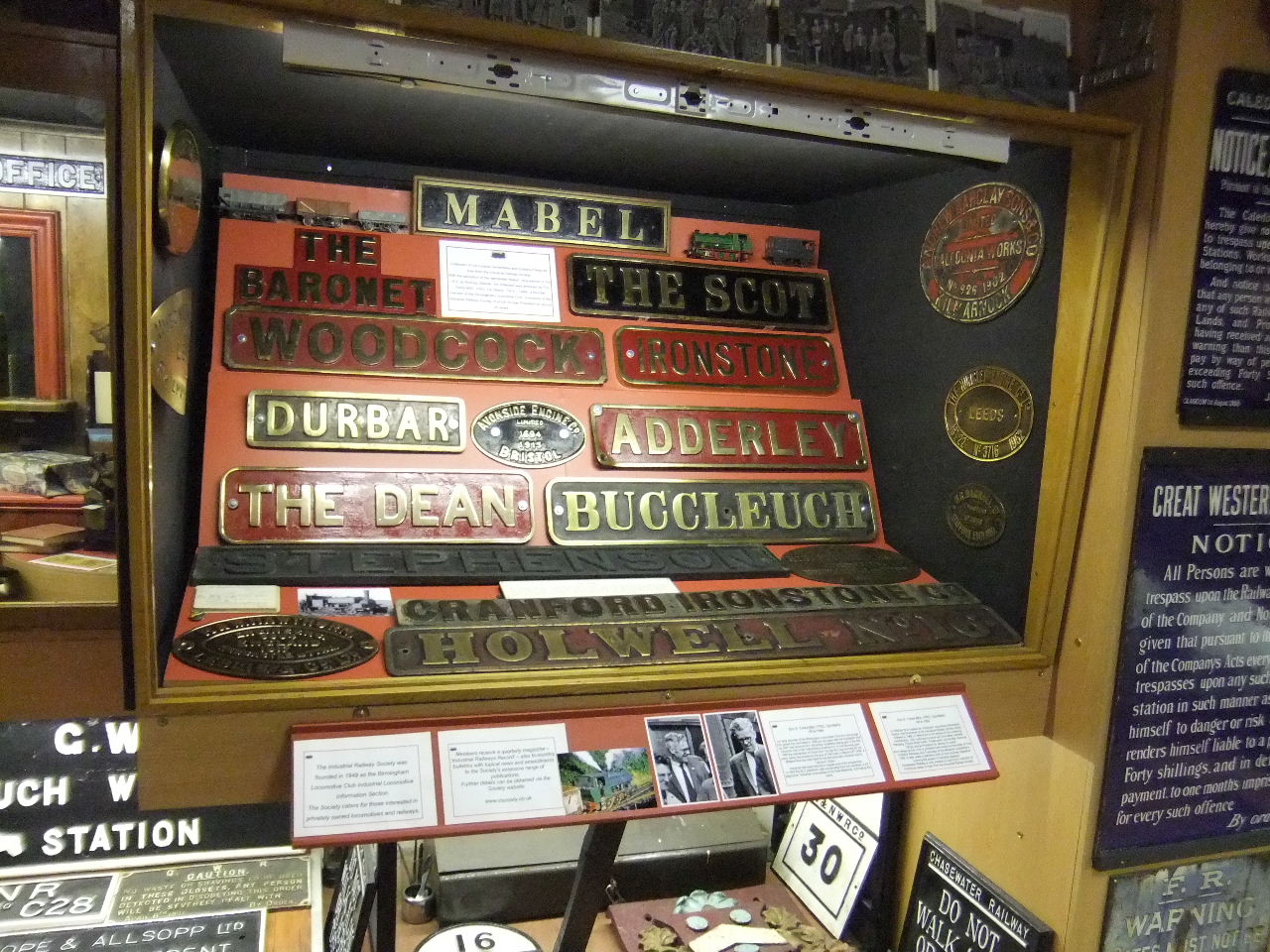
Cabinet C4 contains a collection of locomotive nameplates and builders plates on loan from the Industrial Railway Society.
With the exception of the nameplate ‘Mabel’, bequeathed to the I.R.S. by Rodney Weaver, the collection was amassed by Eric Tonks MSC, FRIC, Dip Maths, (1914 – 1994), a founder member of the Birmingham Locomotive Club, forerunner of the Industrial Railway Society of which he was President for almost 25 years.
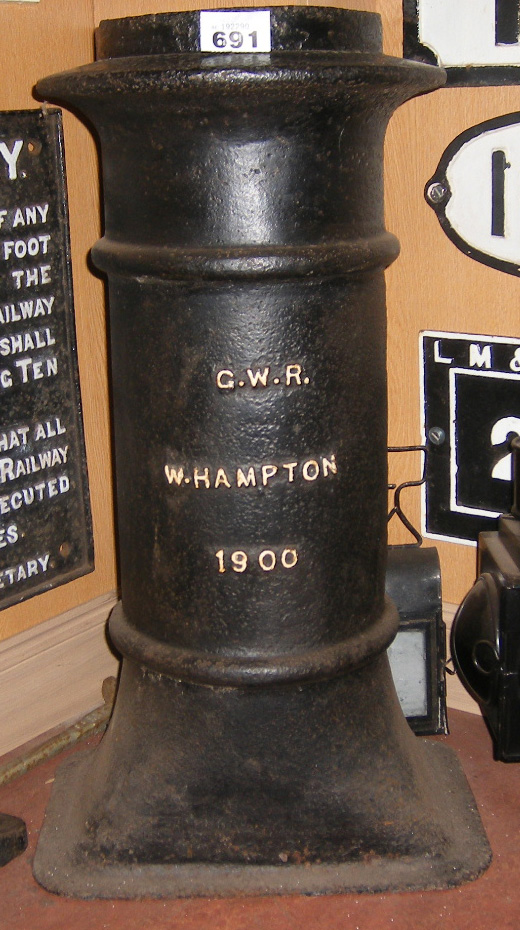
By the pillar in the far left corner as you enter the museum, is the chimney off the furnace in the tin-smith’s shop at the GWR Stafford Road Works, Wolverhampton.

On the wall next to the previously mentioned pillar is a Midland Railway warning notice – a ‘Stop’ sign from Derby No. 4 loco shed, dated October 1921.

In cabinet 18 is a carriage door ventilation panel, with an advertisement for luncheon and tea boxes, another GWR item.
By R. A. Reed
In 1849, a line from North Rode, near Macclesfield, to Uttoxeter was opened by the North Staffordshire Railway Company. This was known as the Churnet Valley line and was over 27 miles long. The section from North Rode to Leek was closed a few years ago and some of the track is now lifted.
On Saturday, January 2nd 1965, the remainder of the line from Leek to Uttoxeter was closed to passenger traffic. The day was cold but bright and sunny, and, accompanied by the Hon. Editor and friend, we set off from Stoke to Uttoxeter. As we booked our tickets, from Stoke to Leek via Uttoxeter, 9/- (45p) single, the ticket clerk jovially remarked that it would be ‘cheaper by bus from Hanley – 1/10d (9p) single!’ Probably, these tickets were the first to be issued by this very devious route.
When we arrived at Uttoxeter, we had over an hour to wait, so we went to the waiting room where we found two seats of the North Staffordshire Railway, engraved with NSR and the Staffordshire Knot. These were in excellent condition and one would be suitable for preservation. Uttoxeter Pic: Wikipedia
It was not long before the train arrived; three non-corridor coaches headed by Standard Class 4, No.75035 of Stoke shed. The driver was J. Dickson and the fireman was S. Tabinor. This was the last passenger train from Uttoxeter to Leek. We occupied the first compartment nearest the engine and waited until the booked departure time at 11.18am, but this was changed to 11.30am at the last minute. By now the train was filling up, most of the passengers being railway enthusiasts equipped with cameras and tape recorders.
As 11.30 approached the last photographs were taken, and carriage doors closed. The Guard waved his flag and we were off, amidst shrieking whistles from the engine, detonators on the track and thunderflashes thrown by an enthusiast. Rocester Station Pic & Info: Genuki, Staffs Pasttrack
shannieslittleworld.co.uk
Description: Rocester Train Station 1905. This station was completed in the early 1850s. The North Staffordshire Railway Company’s Churnet Valley line ran through this station taking passengers to Leek and Macclesfield. Another service took passengers to Ashbourne and Buxton. The Ashbourne line closed to passengers in 1954, and regular passenger trains on the Churnet Valley line in 1960.
This picture shows signs on the platform for the Porter’s Room, Gentleman’s First Class Waiting Room, and a Ladies Waiting Room. There are also milk churns on the platform, awaiting collection .
All along the line people were waving as we passed, and the driver acknowledged this by long blasts on the whistle. Soon we were speeding along and fast approaching the first stop, Rocester. Here the train was well photographed and after a few minutes we set off again but only as far as the crossover, where we reversed onto the other track and back into the station. A pilotman then boarded the locomotive and after much waving of green flags by hand-signalmen we finally set off, running on the ‘wrong’ line from here. Site of Denstone Station: Linda Bailey
We had a fast run to Denstone, the next stop, and again there were many spectators, and as we left the station, more firecrackers were thrown. The section of the line from here to Alton is particularly beautiful and it is surprising that the line would not pay in the summer months. Alton Station: Humphrey Bolton
The next station was Alton, where we crossed back to the down line. It was extremely tidy and well-kept and typical of NSR design. The run from Alton to Oakamoor is continuous up-grade and the sound of the engine was music to the ears. When we arrived at Oakamoor the platforms were quite crowded and many photographs were taken. Just as we left, the last train from Leek to Uttoxeter passed, headed by a Stanier Class 4 (2-6-4T), and then we plunged into a short tunnel. Oakamoor Station: Rail37.com
Then on to Froghall, which is in an industrial area, but the factories between Leek and Oakamoor will not lose their rail connection. This section of the line is to be kept open for freight and worked on the ’one engine in steam’ principle. Kingsley & Froghall Station: John Proctor
 Consall Station: Black Widow Productions
After leaving Froghall, we were soon in the beautiful country surrounding Consall. This village has no public road to it and ‘outsiders’ cannot get in by car, therefore the railway was the only link (unless one prefers a long walk). Cheddleton Station: John Webber
We quickly arrived at Cheddleton, where most of the passengers left the train to take photographs, and the train waited until they were sure that everyone had finished and boarded the train. Leek Brook Station, Churnet Valley Platform: Wikipedia
The journey was almost over, and as we emerged from a short tunnel we could see Leek in the distance. When we drew into the station, the engine rapidly uncoupled and ran round the train to haul the stock from the station. As we left, the station was locked up – the last train had gone.
What a Comeback! Churnet Valley Railway – 2010 version. Pic: Black Widow Productions
The first passenger services outside the confines of Cheddleton yard began on August 24th 1996, this being a “push and pull” operation of a little over a mile between Cheddleton and Leek Brook Junction, the latter being the junction with the mothballed Railtrack line between Stoke on Trent and Caldon Quarry. Trains were initially operated by hired-in “Jinty” tank loco 47383, this and resident 4F 44422 being the mainstays of the service for the first season’s operations. Although only a short run, this operation proved to be an ideal training ground for the railway’s staff, and got everyone used to operating outside the goods yard.
Saturday 11th July 1998 saw the first southward extension of the railway, when the section between Cheddleton and Consall was reopened for passenger traffic. This brought the railway’s operational length to approximately 3 1/4 miles. The next extension, to Kingsley and Froghall, opened to traffic on 11th August 2001, giving an operational length of approximately 5 1/2 miles. Pic: Black Widow Productions
West Midlands District

Coal Tank Numbered 1054 arriving at the Hednesford Depot, 14th April 1961
Our covered space at the Hednesford depot now houses the London North-Western Webb coal tank, together with the London North-Western TPO van, Maryport & Carlisle and Great Eastern coaches, which are in various stages of restoration.. A considerable amount of really hard work has been carried out during the last three weekends.
Collection of small relics continues to grow, thanks in no small measure being due to two of our junior members, Brian Kinder and Maurice Harper, of Walsall. Donations to the TPO fund were received from some 18 members.
 National Brewery Centre – locomotive
Bass No. 9. An 0-4-0 saddle tank industrial locomotive built in 1901 for the vast internal railway system of Bass, Ratcliffe & Gretton. Now preserved with the directors’ coach at the National Brewery Centre – formerly the Bass Museum and latterly the Coors Visitor Centre. © Copyright Chris Allen and licensed for reuse under this Creative Commons Licence.
The West Midlands District also toured the railway system of the Bass, Ratcliff and Gretton Company at Burton-on-Trent. The trip was organised as a joint effort by Stafford Railway Circle, and the party travelled in a four-wheeled directors’ saloon of 1889 vintage. Acquired from the Midland Railway, the vehicle was built by the Railway Carriage & Iron Co. Ltd. at Manchester.
 A match-stick version of the Directors’ Saloon is on display in the Museum
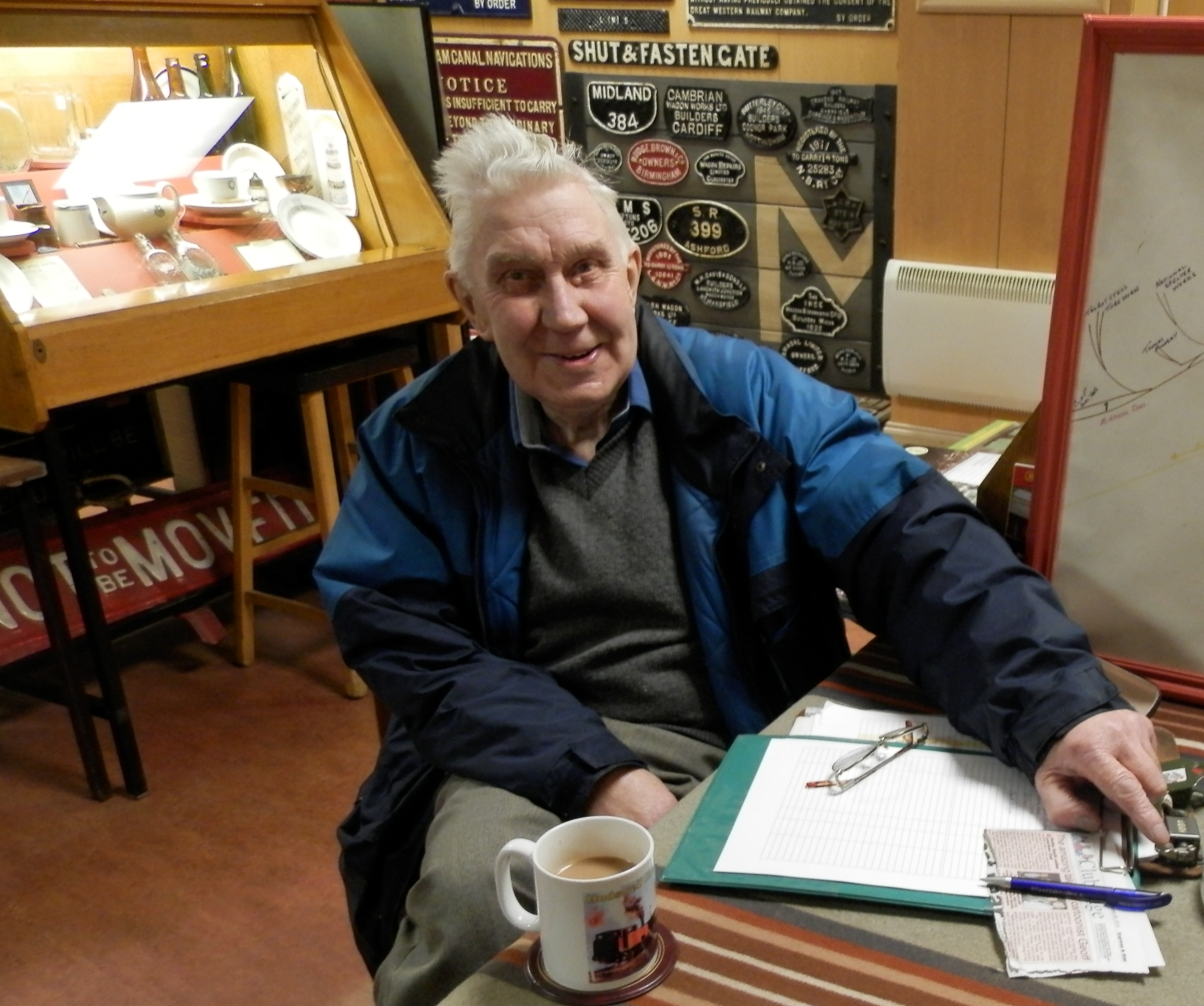
On Sunday January 27th 2013, following 9 continuous freezing days of snow and ice, 70 people braved the weather to visit the Museum. Although the snow had disappeared, strong winds, sleet, and rain prevailed with a temperature of only 4 degrees. With chief clicker Mick at home, recovering from his short stay in hospital, Albert Jones filled the gap to record the visitor numbers.
On a better note the heavy snow and rain of late, ensured that Chasewater is now full.
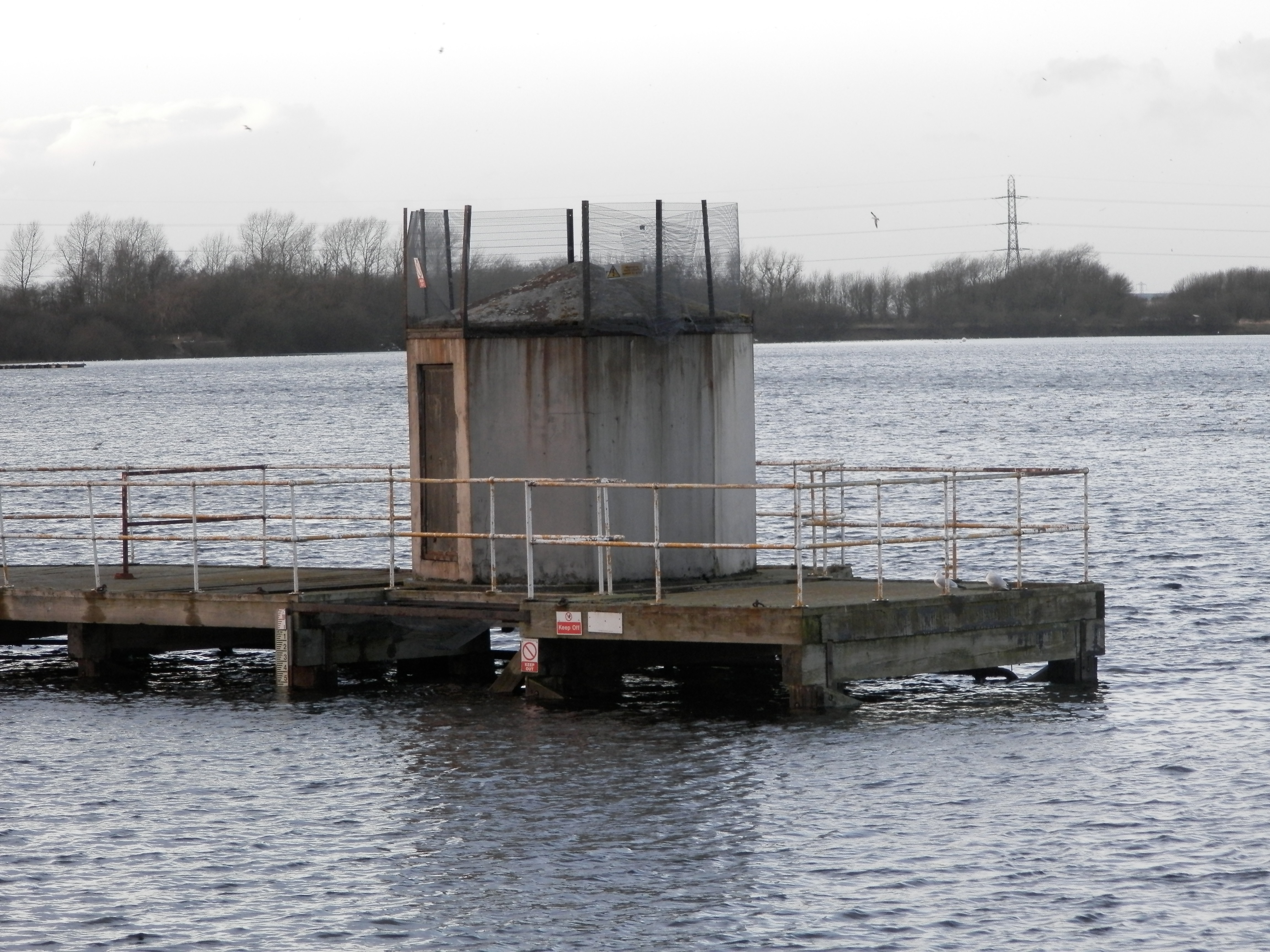
The excess water is flowing freely, through the culverts, into the 9 foot overflow pool.

 Chasewater Railway Museum

