Tag Archives: Steam Trains

198 – Chasewater Railway Museum bits and Pieces

195 – Chasewater Railway Museum Bits & Pieces

From Chasewater News – Autumn 1996 – Part 3
Railcars on the Chase

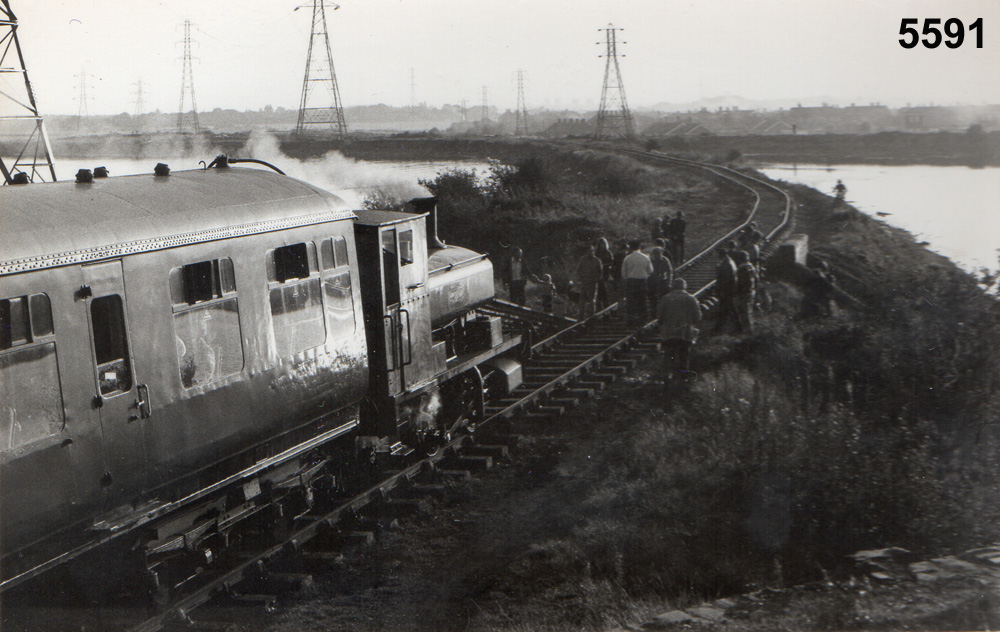
27 Years of DMU Preservation

Steve Organ

The first ‘Modernisation Plan’ Diesel Multiple Unit vehicle to go into preservation was Gloucester Carriage & Wagon 1957 built Driving Trailer Composite (DTC) No.SC56301, which came to Chasewater from the Scottish region of British Railways at Easter 1969.  The vehicle was one of a fleet formed into two car sets which worked in Scotland and in East Anglia, as well as in the West Midlands.  The purchase was by the Railway Preservation Society (West Midlands District), as we then were, who had taken a lease on the line and trackbed at Chasewater which had formerly carried coal traffic.

The Park was being developed at the time by the local authorities keen to reclaim the spoil heaped, ruined landscape that had recently ceased production.  A preserved railway was welcomed, and so much traffic was being carried in very old and fragile stock we had inherited from the Colliery at Rawnsley, that a more modern vehicle was needed to take the load, relieving the historic stock.  The Gloucester, which seated 12 passengers in first class, and 54 in second was 57 feet 6 inches long and weighed only 25 tons.

Immediately on arrival at Chasewater, still in its recently acquired Rail Blue livery, with small yellow warning panel and 2-digit route indicator below the cab front window, the car was adapted with the buzzer circuit carried through the lighting circuit jumper and through to the locomotive which had a buzzer fitted to enable the vehicle to be used for push-pull working, with the Guard (or Coach Driver) signalling from the coach cab to the Loco Driver to stop, start, etc. by buzzer code.  Permission was received from the Railway Inspectorate to operate in this fashion despite there being no through vacuum brake, thanks to the simple communication system, the excellent look-out position for the Guard, his access to a handbrake and the line’s ‘U’ shaped gradient profile at both ends!

The DMU was a great success, and we no longer worried about the underframe of the train snapping!  The windows, large and almost continuous around the vehicle, together with the light green flecked Formica finish, and seating in vertically striped red and grey (second class) and blue and gold (first class), made for a very welcoming appearance, and the Chasewater system of working push-pull with DMU cars in conjunction with a steam or diesel locomotive was established.

The paytrain concept was adopted by BR in the sixties, and at Chasewater we often steamed on an unscheduled Sunday if the weather was fine (we only advertised trains every fortnight at this time), and used an ex Birmingham Corporation Transport Ultimatic ticket machine when the guard had to collect fares because no staff had been rostered for the station.  Often in the summer of 1974 with trains running over the then 300 yards of track and with only five minutes to collect up to 90 fares, I felt as though my thumb was dropping off by the end of the day operating that machine.

1974 saw the Gloucester painted into maroon, with a light grey roof.  A gold and white bodyside line was added below the windows in 1976.  1979 saw the front route indicator panel plated over, and a further coat of maroon paint applied.

In 1979, the Board identified two needs which could be satisfied with the purchase of a further two vehicles, firstly to use one as a ‘Railway environment’ buffet, and the other for use as a bar car, to be attached to the passenger train on busy or festival days.  A two-car Wickham-built set, recently used as a General Manager’s Inspection Saloon was identified and purchased for £1500 plus VAT and transported by rail from Leeds to Wolverhampton steel terminal, then by road to Chasewater.

The Wickham two-car set had been converted into an inspection saloon car for the General Manager, British Railways Eastern Division, in the mid-sixties.

The diving motor brake second (DMBS) was No.E50416, 57 feet long and weighed 27 tons 6 cwt.  Stripped of its original interior, a kitchen had been fitted in place of the original Guard’s compartment, and the Guard’s vestibule end windows had been plated over.  A corridor ran from the gangway around the kitchen.  The engines (two 150 HP BUT Leylands), transmission and general mechanical condition were fairly good.

The driving trailer composite, No.E56171, was 57 feet long and weighed 20 tons 10 cwt.  Again, this vehicle was internally stripped for its inspection role, and was altered thus:  one of the two toilets was removed and replaced with shelves: two huge seats, each 3’ 6” wide were installed next to the toilet, adjacent to a vacuum stand pipe, emergency brake handle and vacuum gauge.  A single compartment installed and folding steps complete with vacuum pipe release trips (to prevent the train from moving whilst the steps were down) installed below the passenger doors.  Both vehicles had had the passenger doorways nearest the front of the vehicles removed and plated over.

Both vehicles had aluminium bodies over angle-iron frames and were in good condition, however the gutters leaked and the gutter strip was eventually replaced – steel gutters fitted against aluminium bodysides need only water to start electrolytic transmission, resulting in bodyside holes against the gutter.  (This was a problem we would encounter again later with the 1994 acquisitions).  The doors were however a problem, with only a short production run, softwood frames with an aluminium skin were fitted, rather than the more normal single cast alloy that are on so many DMUs, so warping and rot were a constant problem.

At the time of the Wickhams’ arrival, the Company was suffering certain problems.  The Society, which was the group founder, had formed a company in the early seventies for the purpose of administering the public services provided by the group, a YOPS (Youth Opportunities Programme) scheme was in progress, and the two parts of the group failed to see eye to eye, the result being ultimately that the volunteer-led Society failed to co-operate with the ‘employees’ of the Company.  The track fell into rack and ruin and Society morale dissolved, members feeling squeezed out by the ‘Company’.  Of course, in reality the two needed to co-exist.

The planned use of E56171 as a second train vehicle was not proceeded with, although a rudimentary bar, built in the Officers’ compartment, did see several static days of service in 1981, and after a few excursions with E50516, as a DMU was laid up.  E56171 was however opened as a static buffet in 1981, parked against a sleeper-built platform.

1982 saw the Railway close down.  The condition of the track was awful and volunteers had disappeared, also a huge debt had been run up by the YOPS scheme.  The platform at Brownhills West was declared unsafe and demolished under the Company’s auspices, only to be found to be almost indestructible (but too late, the track had been removed and the ground excavated).  The group’s only income for the next three years was from the static buffet car E50416 and very little of significance occurred on site.

1985 saw a new start for the Railway.  A new Company was designed, and only a week after incorporation was registered as a Charity.  The aim was to incorporate the assets and accumulated debts of the old Company and Society, safeguarding the vintage stock and line, and to address the debt, so that things could start moving away from the moribund state.  With the track re-laid in concrete sleepers and a few of the old volunteers in harness, trains operated again for the first time in three years in October 1985.

The Gloucester car was repainted – yes – maroon again! And the now very worn maquette was replaced by yours truly in his first stab at upholstery.  A straw and green cloth was used in the Second class and a deep purple in the First.  Care was taken to retain and renovate all the other original fittings, wall covers, etc.

For the 1986 season both Wickham cars were repainted into – you guessed it – maroon to match the Gloucester.  The buffet car remained static, but the now derelict E56171 was re-worked, starting with the replacement of19 windows which had been smashed during its three years of abandonment.  A new large bar was built, and original pattern ‘curly back’ seats arranged around tables.  An open lounge area was created using seats from BR Mk ll carriages and the Officers’ compartment was fitted with First class seating from a Mk l carriage.  Whitsun 1986 saw the car in service with the Gloucester on the now 400 yard shunt.

One special problem had arisen during the carriage repairs; a mechanical and structural survey had shown them all to be very contaminated with blue asbestos in the body side and roofs.  A solution to the inevitable eventual stripping cost, at that time estimated at around £15,000, meant that something would have to be done!

From ‘Letters to the Editor’ Winter 1996 Chasewater News

While browsing through the next magazine to see if there was a part two to Steve Organ’s article (there is!) I came across this letter from our Museum Curator, Barry Bull.  I decided to include it here to save any long-standing members commenting on any errors.

Dear Sir,

Having just received and read the Autumn 1996 Chasewater News I would like to add a little background detail and correct a few inaccuracies in Steve Organ’s article ‘Railcars on the Chase – 27 Years of DMU Preservation’.

I’m afraid that Steve has exaggerated by some 4 years here as the Gloucester trailer E56301 did not arrive at Chasewater until May 1973.  As the E prefix indicates it came from the Eastern Region and not, as Steve suggested, from Scotland.  The vehicle was on open tender from BR and lay at March, Cambridgeshire.  We had been looking for a suitable vehicle to relieve the use of the Maryport and Carlisle six wheeler and the 16 ton GWR Brake van on passenger services, and needed something suitable for push-pull use, the Gloucester, as Steve mentioned was just right.  Our bid of £330 with our proviso that this included removal at BR’s cost to our nominated place for transfer to road transport (Long Street, Walsall) was accepted.

However, before the Gloucester trailer arrived at Chasewater, we could have disposed of it!  The North Yorkshire Moors Railway had acquired off the same BR tender list two Gloucester power cars and just one trailer.  As you can imagine they were probably a trifle peeved at having lost a trailer and we were duly contacted with a request to forego our new acquisition.  Our response was to give the NYMR a short time to provide and transport to Chasewater at their cost a similar suitable vehicle with an amount of cash to be paid to us for our ‘inconvenience’.  We received no response and the Gloucester duly arrived at Chasewater with its road journey from Walsall featured on the local independent TV News, thanks to Paul Mason who apparently drank in the same pub as Bob Warman.  At least one RPS member who knocked a day off work to help in the operation was spotted on TV and got into a bit of bother at work the day after.

It wasn’t until 1977 that the Gloucester was repainted maroon, with the work being done by outside contractors, just in time for the Queen’s Silver Jubilee celebration when we ran in conjunction with a local Brownhills West street party and we squeezed in 108 passengers on one run.  It was around that time when Adrian Pearson took the photograph of the Neilson together with the Gloucester which John James had 5.000 postcards printed at a cost of just 2.8 pence each.  John stood the cost of these cards himself as the Society couldn’t afford the bill.  I wonder how many are still left to sell?  (Enough. Ed.)  (All gone now, given to young visitors as a memento and much appreciated.  CWS).

The Wickhams were inspected as lying at Stourton, Leeds and I must admit to being keen on them as soon as I saw them there.  The purchase price I seem to recall was £1,000 for the power car and £750 for the trailer – plus I suppose VAT.  The deal was concluded by Derek Cartwright then working on the YOPS programme at Chasewater.

Finally may I congratulate you on the quality of the Chasewater News these days including the photographic reproductions.

Barry Bull

                                                      In through the farm gate                                                                                (Transport photos from Laurence Hodgkinson’s Collection)
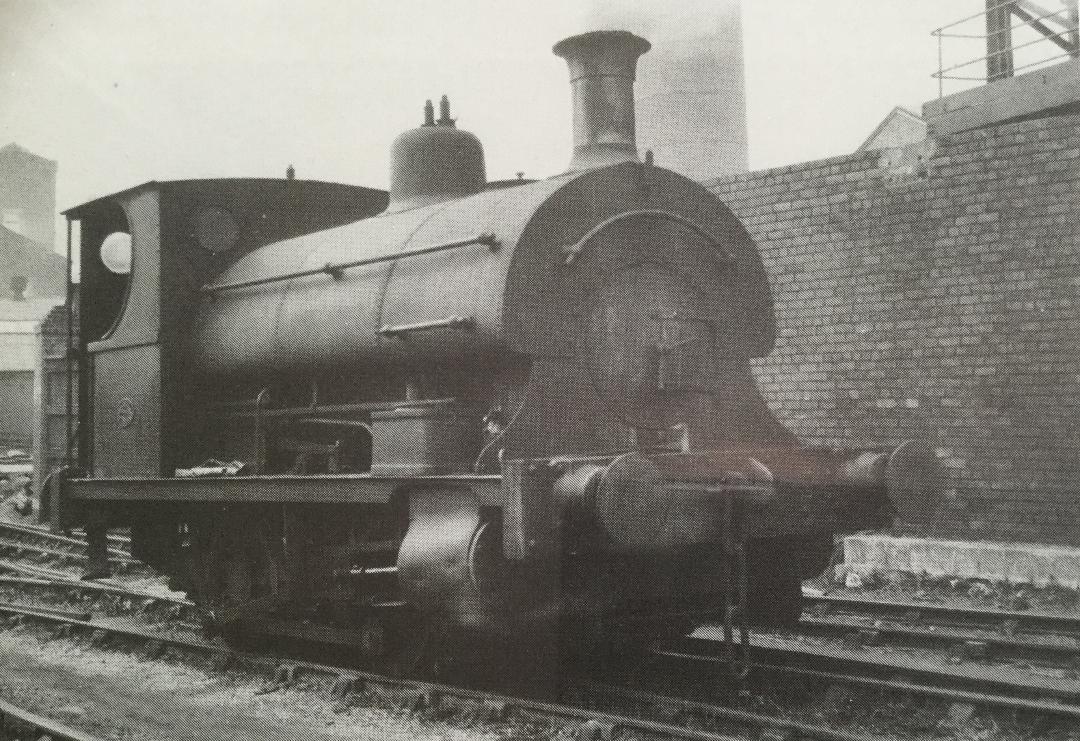
Still at Chasewater,

Peckett 917-1902 came from Albright and Wilson, photographer unknown.
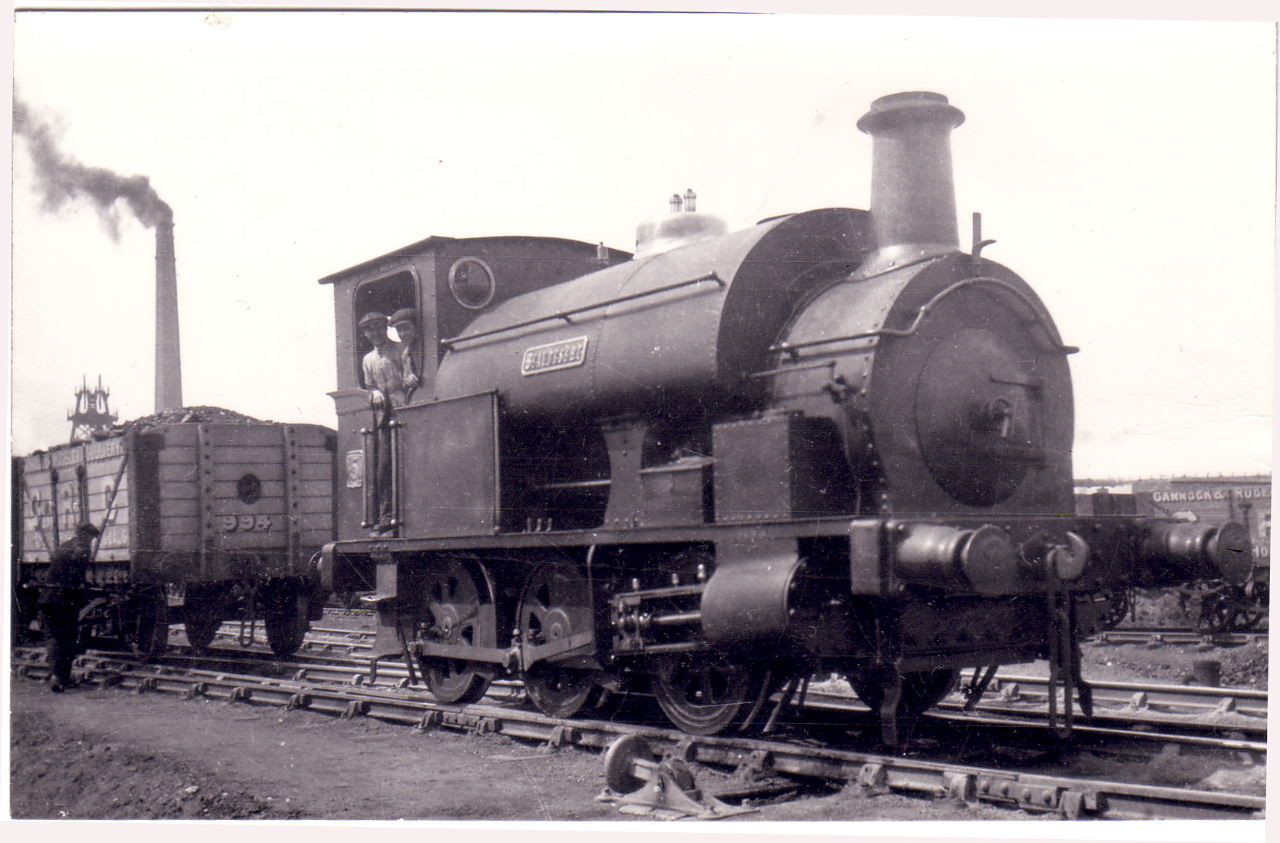
195 – Chasewater Railway Museum Bits and Pieces

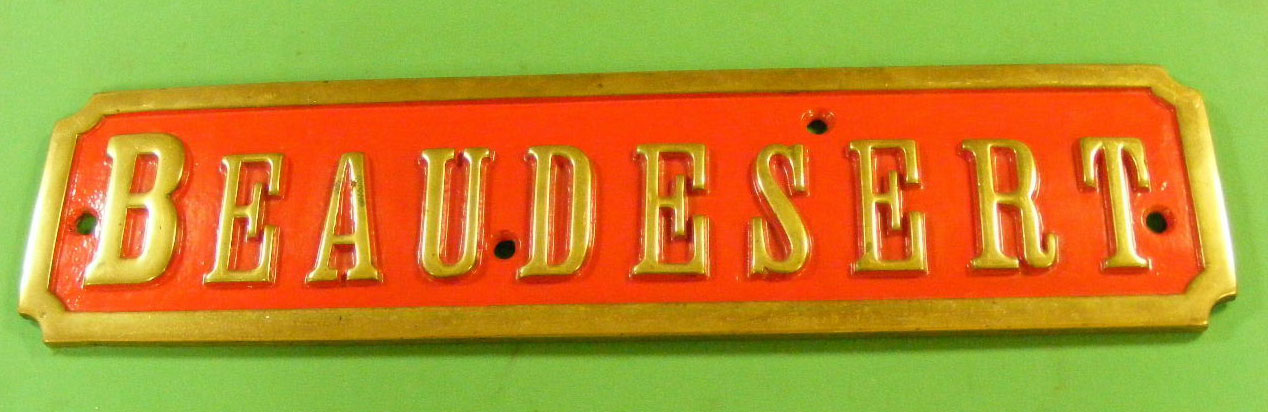
An opportunity presented itself recently to acquire by way of private purchase half a dozen items of local colliery railway interest. Not since the 1960s and early 1970s, when in that period a good relationship existed between the Railway Preservation Society and local National Coal Board management and which resulted in several donations of interest has the chance to obtain in bulk such star items for the museum collection. The third nameplate is that of Beaudesert from the little 0-6-0 saddle tank built by Fox Walker, works number 266 of 1875 supplied new to Cannock and Rugeley Collieries as their number 5. Beaudesert was the ancestral home of the Paget family who became Earls of Uxbridge before being given the title and Estate Marquis of Anglesey. Finally cut up in 1964 the other nameplate of the loco survives and is on display in Kidderminster Railway Museum.

Not much about steam locos in this article but an important part of Chasewater Railway’s history nontheless.. Written in the main by the General Manager at the time, Steve Organ with errors and omissions added by Barry Bull.

195 – Chasewater Railway Museum Bits & Pieces

From Chasewater News – Autumn 1996 – Part 3

***

Railcars on the Chase

27 Years of DMU Preservation

Steve Organ

The first ‘Modernisation Plan’ Diesel Multiple Unit vehicle to go into preservation was Gloucester Carriage & Wagon 1957 built Driving Trailer Composite (DTC) No.SC56301, which came to Chasewater from the Scottish region of British Railways at Easter 1969.  The vehicle was one of a fleet formed into two car sets which worked in Scotland and in East Anglia, as well as in the West Midlands.  The purchase was by the Railway Preservation Society (West Midlands District), as we then were, who had taken a lease on the line and trackbed at Chasewater which had formerly carried coal traffic.

The Park was being developed at the time by the local authorities keen to reclaim the spoil heaped, ruined landscape that had recently ceased production.  A preserved railway was welcomed, and so much traffic was being carried in very old and fragile stock we had inherited from the Colliery at Rawnsley, that a more modern vehicle was needed to take the load, relieving the historic stock.  The Gloucester, which seated 12 passengers in first class, and 54 in second was 57 feet 6 inches long and weighed only 25 tons.

Immediately on arrival at Chasewater, still in its recently acquired Rail Blue livery, with small yellow warning panel and 2-digit route indicator below the cab front window, the car was adapted with the buzzer circuit carried through the lighting circuit jumper and through to the locomotive which had a buzzer fitted to enable the vehicle to be used for push-pull working, with the Guard (or Coach Driver) signalling from the coach cab to the Loco Driver to stop, start, etc. by buzzer code.  Permission was received from the Railway Inspectorate to operate in this fashion despite there being no through vacuum brake, thanks to the simple communication system, the excellent look-out position for the Guard, his access to a handbrake and the line’s ‘U’ shaped gradient profile at both ends!

The DMU was a great success, and we no longer worried about the underframe of the train snapping!  The windows, large and almost continuous around the vehicle, together with the light green flecked Formica finish, and seating in vertically striped red and grey (second class) and blue and gold (first class), made for a very welcoming appearance, and the Chasewater system of working push-pull with DMU cars in conjunction with a steam or diesel locomotive was established.

The paytrain concept was adopted by BR in the sixties, and at Chasewater we often steamed on an unscheduled Sunday if the weather was fine (we only advertised trains every fortnight at this time), and used an ex Birmingham Corporation Transport Ultimatic ticket machine when the guard had to collect fares because no staff had been rostered for the station.  Often in the summer of 1974 with trains running over the then 300 yards of track and with only five minutes to collect up to 90 fares, I felt as though my thumb was dropping off by the end of the day operating that machine.

1974 saw the Gloucester painted into maroon, with a light grey roof.  A gold and white bodyside line was added below the windows in 1976.  1979 saw the front route indicator panel plated over, and a further coat of maroon paint applied.

In 1979, the Board identified two needs which could be satisfied with the purchase of a further two vehicles, firstly to use one as a ‘Railway environment’ buffet, and the other for use as a bar car, to be attached to the passenger train on busy or festival days.  A two-car Wickham-built set, recently used as a General Manager’s Inspection Saloon was identified and purchased for £1500 plus VAT and transported by rail from Leeds to Wolverhampton steel terminal, then by road to Chasewater.

The Wickham two-car set had been converted into an inspection saloon car for the General Manager, British Railways Eastern Division, in the mid-sixties.

The diving motor brake second (DMBS) was No.E50416, 57 feet long and weighed 27 tons 6 cwt.  Stripped of its original interior, a kitchen had been fitted in place of the original Guard’s compartment, and the Guard’s vestibule end windows had been plated over.  A corridor ran from the gangway around the kitchen.  The engines (two 150 HP BUT Leylands), transmission and general mechanical condition were fairly good.

The driving trailer composite, No.E56171, was 57 feet long and weighed 20 tons 10 cwt.  Again, this vehicle was internally stripped for its inspection role, and was altered thus:  one of the two toilets was removed and replaced with shelves: two huge seats, each 3’ 6” wide were installed next to the toilet, adjacent to a vacuum stand pipe, emergency brake handle and vacuum gauge.  A single compartment installed and folding steps complete with vacuum pipe release trips (to prevent the train from moving whilst the steps were down) installed below the passenger doors.  Both vehicles had had the passenger doorways nearest the front of the vehicles removed and plated over.

Both vehicles had aluminium bodies over angle-iron frames and were in good condition, however the gutters leaked and the gutter strip was eventually replaced – steel gutters fitted against aluminium bodysides need only water to start electrolytic transmission, resulting in bodyside holes against the gutter.  (This was a problem we would encounter again later with the 1994 acquisitions).  The doors were however a problem, with only a short production run, softwood frames with an aluminium skin were fitted, rather than the more normal single cast alloy that are on so many DMUs, so warping and rot were a constant problem.

At the time of the Wickhams’ arrival, the Company was suffering certain problems.  The Society, which was the group founder, had formed a company in the early seventies for the purpose of administering the public services provided by the group, a YOPS (Youth Opportunities Programme) scheme was in progress, and the two parts of the group failed to see eye to eye, the result being ultimately that the volunteer-led Society failed to co-operate with the ‘employees’ of the Company.  The track fell into rack and ruin and Society morale dissolved, members feeling squeezed out by the ‘Company’.  Of course, in reality the two needed to co-exist.

The planned use of E56171 as a second train vehicle was not proceeded with, although a rudimentary bar, built in the Officers’ compartment, did see several static days of service in 1981, and after a few excursions with E50516, as a DMU was laid up.  E56171 was however opened as a static buffet in 1981, parked against a sleeper-built platform.

1982 saw the Railway close down.  The condition of the track was awful and volunteers had disappeared, also a huge debt had been run up by the YOPS scheme.  The platform at Brownhills West was declared unsafe and demolished under the Company’s auspices, only to be found to be almost indestructible (but too late, the track had been removed and the ground excavated).  The group’s only income for the next three years was from the static buffet car E50416 and very little of significance occurred on site.

1985 saw a new start for the Railway.  A new Company was designed, and only a week after incorporation was registered as a Charity.  The aim was to incorporate the assets and accumulated debts of the old Company and Society, safeguarding the vintage stock and line, and to address the debt, so that things could start moving away from the moribund state.  With the track re-laid in concrete sleepers and a few of the old volunteers in harness, trains operated again for the first time in three years in October 1985.

The Gloucester car was repainted – yes – maroon again! And the now very worn maquette was replaced by yours truly in his first stab at upholstery.  A straw and green cloth was used in the Second class and a deep purple in the First.  Care was taken to retain and renovate all the other original fittings, wall covers, etc.

For the 1986 season both Wickham cars were repainted into – you guessed it – maroon to match the Gloucester.  The buffet car remained static, but the now derelict E56171 was re-worked, starting with the replacement of19 windows which had been smashed during its three years of abandonment.  A new large bar was built, and original pattern ‘curly back’ seats arranged around tables.  An open lounge area was created using seats from BR Mk ll carriages and the Officers’ compartment was fitted with First class seating from a Mk l carriage.  Whitsun Spring Bank Holiday) 1986 saw the car in service with the Gloucester on the now 400 yard shunt.

One special problem had arisen during the carriage repairs; a mechanical and structural survey had shown them all to be very contaminated with blue asbestos in the body side and roofs.  A solution to the inevitable eventual stripping cost, at that time estimated at around £15,000, meant that something would have to be done!

From ‘Letters to the Editor’ Winter 1996 Chasewater News

While browsing through the next magazine to see if there was a part two to Steve Organ’s article (there is!) I came across this letter from our Museum Curator, Barry Bull.  I decided to include it here to save any long-standing members commenting on any errors.

Dear Sir,

Having just received and read the Autumn 1996 Chasewater News I would like to add a little background detail and correct a few inaccuracies in Steve Organ’s article ‘Railcars on the Chase – 27 Years of DMU Preservation’.

I’m afraid that Steve has exaggerated by some 4 years here as the Gloucester trailer E56301 did not arrive at Chasewater until May 1973.  As the E prefix indicates it came from the Eastern Region and not, as Steve suggested, from Scotland.  The vehicle was on open tender from BR and lay at March, Cambridgeshire.  We had been looking for a suitable vehicle to relieve the use of the Maryport and Carlisle six wheeler and the 16 ton GWR Brake van on passenger services, and needed something suitable for push-pull use, the Gloucester, as Steve mentioned was just right.  Our bid of £330 with our proviso that this included removal at BR’s cost to our nominated place for transfer to road transport (Long Street, Walsall) was accepted.

However, before the Gloucester trailer arrived at Chasewater, we could have disposed of it!  The North Yorkshire Moors Railway had acquired off the same BR tender list two Gloucester power cars and just one trailer.  As you can imagine they were probably a trifle peeved at having lost a trailer and we were duly contacted with a request to forego our new acquisition.  Our response was to give the NYMR a short time to provide and transport to Chasewater at their cost a similar suitable vehicle with an amount of cash to be paid to us for our ‘inconvenience’.  We received no response and the Gloucester duly arrived at Chasewater with its road journey from Walsall featured on the local independent TV News, thanks to Paul Mason who apparently drank in the same pub as Bob Warman.  At least one RPS member who knocked a day off work to help in the operation was spotted on TV and got into a bit of bother at work the day after.

It wasn’t until 1977 that the Gloucester was repainted maroon, with the work being done by outside contractors, just in time for the Queen’s Silver Jubilee celebration when we ran in conjunction with a local Brownhills West street party and we squeezed in 108 passengers on one run.  It was around that time when Adrian Pearson took the photograph of the Neilson together with the Gloucester which John James had 5.000 postcards printed at a cost of just 2.8 pence each.  John stood the cost of these cards himself as the Society couldn’t afford the bill.  I wonder how many are still left to sell?  (Enough. Ed.)  (All gone now, given to young visitors as a memento and much appreciated.  CWS).

The Wickhams were inspected as lying at Stourton, Leeds and I must admit to being keen on them as soon as I saw them there.  The purchase price I seem to recall was £1,000 for the power car and £750 for the trailer – plus I suppose VAT.  The deal was concluded by Derek Cartwright then working on the YOPS programme at Chasewater.

Finally may I congratulate you on the quality of the Chasewater News these days including the photographic reproductions.

Barry Bull

                                                      In through the farm gate                                                                                (Transport photos from Laurence Hodgkinson’s Collection)

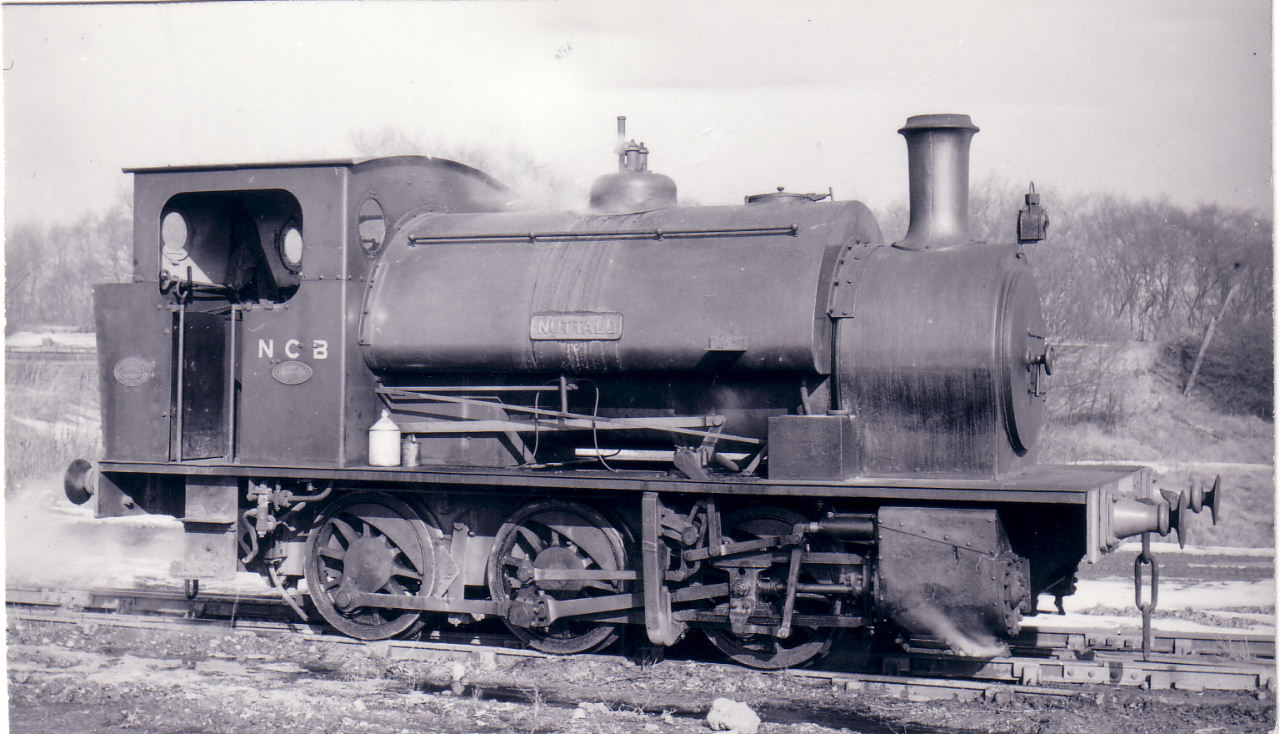
‘Nuttall’ 0-6-0 ST, HE, 1683-1931. Cannock Wood 2-3-1963

194 -Chasewater Railway Museum Bits and Pieces

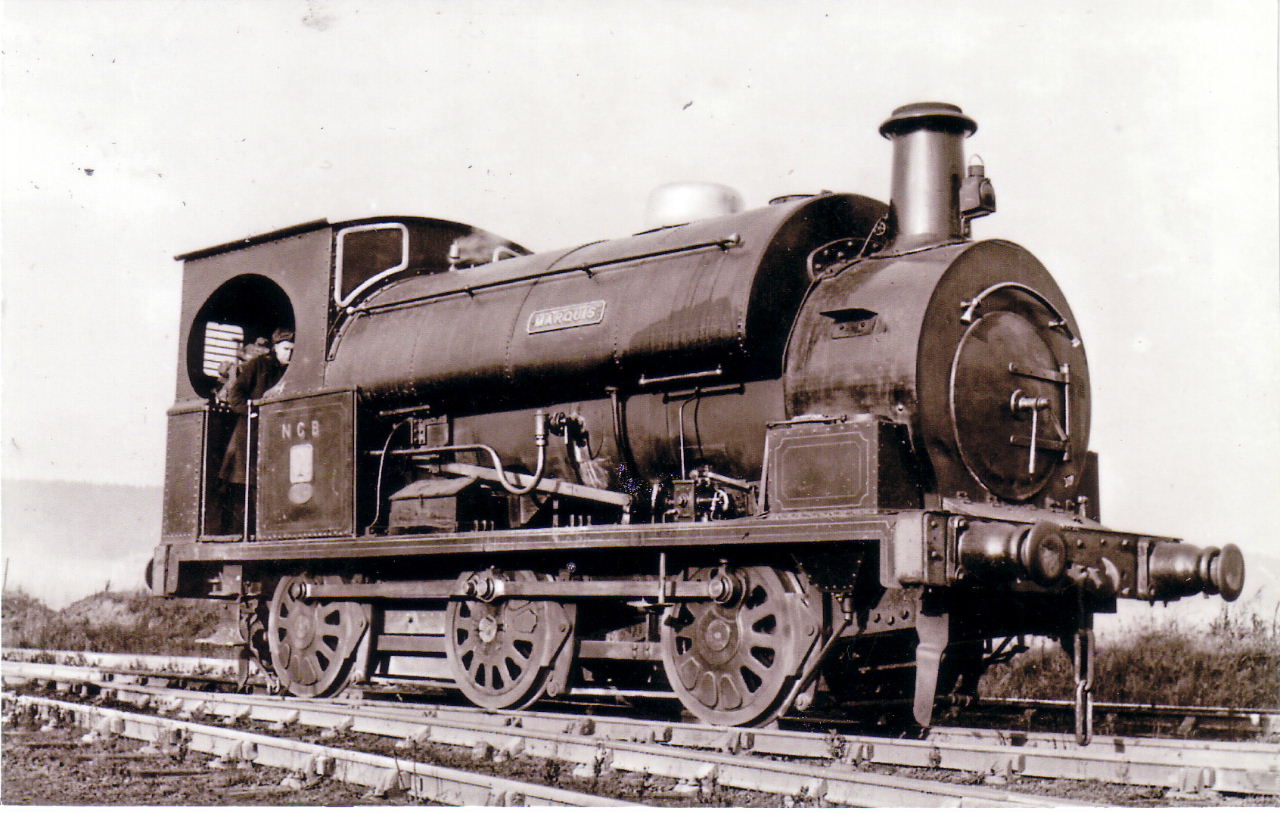
‘Marquis’ No.1 0-6-0 ST Built by the Lilleshall Company in 1867 Cannock and Rugeley Collieries.

194 – Chasewater Railway Museum Bits & Pieces

From Chasewater News – Autumn 1996 – Part 2

From the Board Room

David Bathurst – Chairman

More Health & Safety Matters

Issues concerning health and safety in its wider context continue to give rise for anxiety for the Board.  In my article in the previous edition of ‘Chasewater News’, I devoted much attention to the work undertaken on the Railway’s Risk Assessment.  The production of such an assessment is in itself a form of self-audit, but its importance lies equally in its acceptance by the working members and their commitment to follow the procedures prescribed for each aspect of the Railway’s activities.

It is important that our working members know, rather than assume they know, the approved procedures.  The majority are, of course, straightforward common sense.  The underlying theme is to ensure, as far as is possible, that the Company operates its trains (and all ancillary activities) safely for the public visiting the Railway, our passengers and – especially – our working members.  In pursuance of these objectives, relevant extracts from the approved Risk Assessment are shortly to be distributed to working members.  Our practices and procedures need to be kept under review; the Risk Assessment is not merely a document to be kept under wraps in the office.

The Risk Assessment also requires the Company to improve its record-keeping, particularly in relation to those areas governed by legislation or regulation.  Responsibility for maintenance of such records will rest with the Company Secretary, although he will have the power to delegate such responsibility where appropriate.  In the first instance, the opportunity has been taken to produce a fully updated and comprehensive list of working members.

1996 Rule Book

By the time this edition if ‘Chasewater News’ is published, all regular working members will have received their personal copy of the much-awaited 1996 Rule Book.  The Company’s Rules and Regulations complement and form part of the Risk Assessment (and vice versa) and considerable emphasis is being placed on the need for working members to know and understand them.

Crew Training

For far too long, the Railway has had to rely on the availability of just two steam locomotive drivers, whose dedication to duty has exceeded all reasonableness.  Under the umbrella of the approved training programme, action is being taken to increase the number of ‘qualified’ footplate personnel so as to spread the load somewhat.  Not only have a significant number of members been ‘authorised’ by the Company as footplate and train crew, but also arrangements are now in hand for examination of footplate personnel by external qualified assessors.

The Rail Regulator

It may come as a complete surprise to learn that the extension into Norton Lakeside Station and the station itself currently have to meet (in theory at least) the requirements of the Railways Act 1993.  The Act comprises no less than 154 sections and 14 schedules!!  This is a consequence of the station having opened subsequent to the 1st April 1994.  However, the Company has made a formal application to the Office of the Rail Regulator for exemption from the provisions of the 1883 Act and a response (hopefully favourable) is now awaited.

Policy Statement 1996

The Board has approved a document which effectively represents the Company’s non-financial business plan for 1996 and onwards.  Members may find it to be of interest and it is accordingly intended to publish the entire document in a forthcoming edition of ’Chasewater News’.

Running and Restoration Agreements.

Again by the time this edition of ‘Chasewater news’ is published, the first formal Running Agreement will have been entered into between the Company and a private owner of an item of rolling stock.  Much work has been undertaken ‘behind the scenes’ in finalising both Running and Restoration Agreements, which are based on the document kindly provided by PeakRail.  These will be mandatory in relation to all items new to the Railway, but it is also intended for them to be offered to existing private owners of stock at Chasewater so as to establish a clear understanding between the parties.

Lichfield District Council

It is some little time since I set out in ‘Chasewater News’ a note of the wide range of issues outstanding between the Railway and Lichfield District Council (LDC).  I explained then that certain issues could not be resolved until a decision is forthcoming on the BNRR (M6 Toll).

What I could not have anticipated was that the non-BNRR issues have moved no further forward since the date of the previous article.  Despite letters to and meetings with the LDC, some very important (to the Railway) matters appear to be languishing in the Council’s offices.  These include (as examples only) our application to extend beyond the current lease and the prospect of resurrecting the LRO application.

Such is the Board’s concern over this wall of silence, that Steve Organ, Les Emery and myself held a private meeting in June with the LDC’s Chairman of Development to describe the Railway’s ‘disappointment ‘ at the Council’s apparent disinterest in our future – or at least disinterest in responding to letters regarding our future.  The meeting was followed by an exchange of correspondence.  It remains to be seen how the Council will react but it has to be said that an increasing number of Chasewater Railway members are beginning to wonder whether the Council and the Railway are following the same agenda.

Traffic Levels

So far, these ‘From the Boardroom’ notes have dealt with some rather dry and dusty matters.  To redress the balance somewhat, it is pleasing to say the least to report a significant improvement in all aspects of our core business so far this year. The number of passengers has increased steadily.  In consequence, revenue from fares is up, the buffet is attracting far more customers, and shop sales have increased accordingly.  There are some (although they would not wish to be identified publicly) who have actually detected a slight smile on the face of the Financial Controller.

It is difficult to identify, let alone understand the reasons for fluctuations in traffic.  Comparisons between relevant dates year-on-year can lead to much head scratching.  We must be doing something right, however, if the figures to date are anything to go by.  Of course, our income compared with the first division preserved railways is insignificant, but improved revenue will at least enable us to discharge our ever-reducing external debts and modest bank overdraft.

P Way News – Arthur Edwards

Since the last news letter maintenance has continued at a steady pace on the current running line.  Fencing is a perennial problem especially around Norton Lakeside Station with a number of sections being continuously cut down by the general public so that they do not have to use the designated route across the trackbed.  They feel it is easier to use the railway bridge instead of the footbridge alongside, and further means will have to be implemented to discourage them from this practice.  It might be possible to utilise some of the metal fence panels which are behind the buffet to strengthen the platform fence.

The first batch of weedkilling went well, but it will require another go at it later this year to really get on top of the problem.  A different mix is to be tried out in an attempt to kill back the blackberry runners which keep on invading the cleared trackbed, also the problem of bracken on the embankments to Willow Vale bridge has to be addressed.  It could be possible to instigate a regular policy of firing off the banks in order to allow grass to grow through and so reduce the risk of fire hazard.

Some work has commenced on the extension to Three Ways Junction (the end of our current lease) to get it ready for the expected ‘track bash’ over the winter.  This work has included trimming back some of the overgrowing hedgerow and generally tidying up the site.  Some elements of the track fittings have arrived from the aborted site in Wolverhampton and we are now awaiting the sleepers and track from an alternative site in Wales.

Brownhills West Notes – Kim Wilkes

Station Buffet

Regular visitors to the Railway cannot fail to notice that the dining area of the buffet was transformed over last winter.  The new curtains, menus and flowers on the tables add to the effect.  This year’s success in the buffet has only been marred by some break-ins, but work done on the shutters, etc. should help.  A rota of catering assistants to cook and serve the excellent food would ease the load of the current ladies who staff the buffet at present.  Also required are more home-made cakes which have proved popular this year.

Can you help?

Gardens

Again, regular visitors to the Chasewater Railway cannot fail to notice that the flower beds and planted areas are looking much tidier, thanks to the hard work of one of our newer members, Joyce.

Museum and Shop

Due to a large amount of vandalism and theft over a period of time, the museum has remained closed to the public.  Repair work to the LNWR 50ft brake (museum coach) is under way courtesy of Gary Kay, and as work progresses it is hoped that the small relics collection can be displayed to the public in the not-too-distant future.  The shop is still housed in the booking office at the present time, but as the steel roller shutters have now been installed on the new block it is hoped that what was going to be the general office can now be converted into a new shop area over the winter period, so allowing more space for a wider selection of items to be sold.

Barclay Loco ‘Invicta’ at Lakeside. Picture donated by David Bathurst, 2012

193 – Chasewater Railway Museum Bits and Pieces

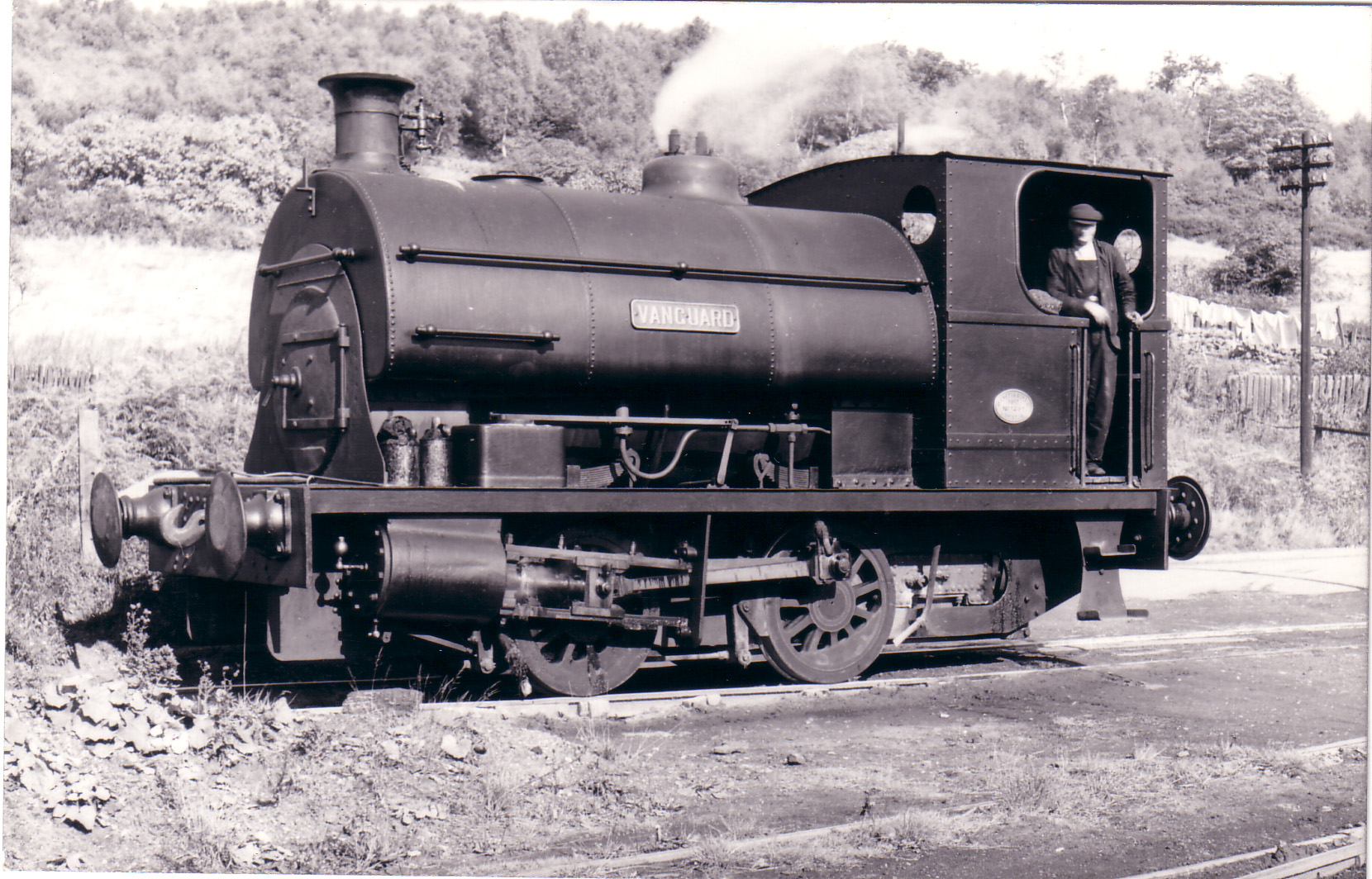
‘Vanguard’ 0-4-0ST Peckett 1491-1917 Brereton

193 – Chasewater Railway Museum Bits & Pieces

From Chasewater News – Autumn 1996 – Part 1

Editorial

As the running season gradually winds down, the working members can look forward to another winter of further extension work and getting on top of the ongoing maintenance.  As the number of working members has increased, the overall appearance of the railway has improved.

A large new sign on the A5 entrance to the park means that a large number of the general public have visited the railway for the first time, with the usual comment ;I only live up the road but I never knew you existed’.  This in conjunction with a board at the entrance to the park advertising our excellent buffet service as well as train rides seems to have brought more people up to the top end of the park instead of them staying by the swings and slides.  The overall reaction from the first time general public visiting us is very favourable, which can only reflect on the working members generally.

The vacant position of Publicity Officer has been filled by Kim Wilkins and she has made a start on getting the running dates published in the railway press.  This is probably one of the most unglamorous jobs on the railway with a lot of effort going in for what can seem like very little reward.  I would like to thank the previous holder of this post, Keith Day, for all the effort that he put into the job when he was doing it.

On the subject of members, as of the date of this magazine, we currently have the largest number of members in the Railway’s history with nearly 150 magazines going to different households, and this translates to approximately 250 current members.

Thursday 12th October saw the running of a special service train to Norton Lakeside Station for the planting of a Silver Birch tree in memory of Geoff Young, whose funeral took place the previous Friday at Sutton Coldfield Crematorium.  A good proportion of working members attended as well as members of Geoff’s family for an oration and prayers.  Geoff’s wife Brenda scattered Geoff’s ashes across the causeway.  I’m sure that I speak for all the members of the Chasewater Railway in giving Brenda our deepest condolences at her loss.

Chris Chivers.

Loco Shed News

With the running season nearly over, the mainstay of the steam services have been carried out by No.4 Asbestos.  The coal from Hatfield Colliery has proved to be a good British alternative to the Russian coal purchased in the past.  The small size of the coal which was brought in as it was primarily to be used in the boiler of the Sentinel, and any further purchases will be made in a size to accommodate both the larger grates of Asbestos and any further restored locomotives.

 The loco shed has also had installed an oil fired heater and ducting and this should provide a warmer environment during the winter months.

Steam Locomotives

No.4 Asbestos – With the coal problem sorted out, Asbestos has performed well during the season.  Several new firebars have been purchased to replace a number of banana-shaped ones and several of the tubes have been replaced over the season.  One of the springs has been mended and the pressure gauge has been re-calibrated and certified.

No.5 Sentinel – The repairs to the Sentinel have been progressing at a steady pace with the damaged area cleaned out and the front casting being inspected to find out the easiest way to mend the front casting of the locomotive.  The front drive sprockets have been straightened out and the broken links of the drive chain have been de-greased.  The rest of the drive chain has also been cleaned up in readiness to be re-assembled.

No.11 Alfred Paget – Work is continuing at a steady pace on the restoration of this locomotive and the fund raising efforts of the group are doing well.  The boiler has now received a coat of primer to prevent any further rusting.  The badly rusted base of the front boiler that sits on the steam chest has been cut away and a new piece of metal has been curved and welded into place.  Various fitting studs on the firebox have been removed and the facings have been cleaned up and given a liberal coating of grease.

S100 – Work is still progressing at the usual rate, slow but steady, and Tony Sale is gradually putting more and more bits back onto the frames.  It is still hoped to have S100 back on its wheels in the no too distant future.

Diesel Locomotives

Fowler diesel hydraulic No.422015 – The Fowler has had a number of outings this year on passenger workings.  It continues to receive minor attention during the season and has held up well.  Sooner or later the Fowler will need a major overhaul to cure the problem of ‘clag’ that is chucked out while running.

Fowler diesel mechanical No.410013 – A final coat of paint has been applied to the locomotive and the front cover panels have been replaced.  The engine still needs some attention as well as the drive shaft.  There is still no final date on when this loco can be returned to traffic.

L & Y No.1 – Work is still continuing on finishing the rebuild of the engine with further parts being obtained from our friends at Dormans.  As soon as the body can be removed from the bay platform road then it can be shot-blasted and painted.  The buffers have been removed to the shed where they have been stripped down and the springs cleaned and oiled.  As they have been rebuilt they have been painted, waiting to be re-united with the chassis.  Most of the brake gear has also been removed from the body to be cleaned and re-assembled.

No.21 – The first attempts to run the engine have met with mixed results.  The problem seems to be with the timing chain set in the wrong position.  This is being rectified but it could mean a new head gasket being required for part of the engine.

DMU Set – Cars 51412 and 51370 have now been reunited.  They are currently having the roof painted light grey and the body is being painted green, the handles white and small yellow warning panels fro the front and rear driver’s cabs.  The rotten portions of the bodies are being replaced as well as the route indicator being converted to four digit route indicator, before work starts on the interiors.  Car 51412 is also receiving attention to the motors and control circuits.

Ruston Hornsby DM48 – The latest addition to the Chasewater diesel fleet has now had the body stripped down to allow access to the engine.  A start has been made on locating a new cylinder head and various other parts.

192 – Chasewater Railway Museum Bits and Pieces

Please note – the Museum will not be open this Sunday – 23-6-2024

‘Asbestos’ Hawthorn Leslie 0-4-0ST 2780-1909 Passing the engine shed, before alterations!

Picture donated by David Bathurst

192 – Chasewater Railway Museum Bits & Pieces

From Chasewater News – Summer 1996 – Part 3

P Way News – Arthur Edwards

Since the last article was published the P Way gang has had a number of new members join us and the extra manpower has enabled us to carry on a number of tasks at a greater speed than originally planned.  This has enabled us to fence in an area next to the lower compound entrance gates, so we now have a fenced in area for the storage of rail and other heavy items of P Way material.

Also the fence from the foot-crossing between the two compounds to the bottom compound has been realigned to allow the relaying of the sidings alongside the shed road.  Work is also in progress to design the layout of a head shunt behind the current shed therefore allowing access to the shed from both ends.

Further down the line a number of fence posts have been replaced where they were broken down by trespassers onto the running line and along with bits of hedge growing up alongside is starting to make things much harder for the local idiots.  The only bit of bad news about this fencing is that we can no longer use barbed wire where the public footpaths or public areas come up to our fence.  I have mixed feelings about this as I know one or two of the members would like to use razor wire backed up with land mines!!

With the first decent spell of dry weather the perennial job of weed killing was carried out, and not before time as the track was starting to disappear beneath the undergrowth again.  It has been proposed that a further application of the poisonous stuff be applied sometime later in the summer – weather permitting.

The P Way gang meet every Sunday at Brownhills West Station from 10.00am onward.  Come and join us!!

Neilson Saddle Tank No.11 – Paget’s Progress – by Paul Whittaker

Neilson 2937/1882

Alfred Paget at Chasewater – June 1978

On the 13th January 1996, a freezing cold morning of -5ºC, I started the hard slog of removing the boiler tubes from No.11.  After many a bruised finger and some colourful language, not to mention seven weekends at it, the final tube fell free from the boiler tube plate at 4.00pm on Saturday 6th April.

After long deliberation and much discussion I and several co-workers concluded that the next move would be to remove the water tank, thus allowing access to the boiler for closer inspection.  As the cost of a crane was as yet out of our reach, we proceeded to jack up the tank until such time as it would be possible to slide it safely down two lengths of rail to its resting place on the platform in the engine shed compound.

The next job was to remove the boiler cladding and insulation, a dirty job but it had to be done.  Meanwhile amongst the organised chaos that is generated when stripping a steam locomotive down, we removed the dome plate.  This was in order to provide access to the interior of the boiler for a very slim young man, otherwise known as Christian Hatton to get inside and remove the remaining collapsed tubes, and around 3cwt of rust.  While all this was going on, the washout and fusible plugs were removed from the firebox.  The steam cleaner proved to be invaluable in removing the rust and crud from the water jacket around the firebox.  As a result of all this, the boiler is now ready for the boiler inspector to cast a cursory eye over it a prelude to a proper test inspection.

As work progressed on No.11 that magic word ‘money’ reared its ugly head again, and after some serious consideration my very good friend and colleague David Borthwick and I decided to start a fund to raise the necessary cash to renovate Alfred Paget, and entitled the fund ‘Neilson Steam Aid’, to which my good wife Janet will administer and collect donations.  In addition to this, Dave has put together a Stock Book, which documents basic information on most of Chasewater Railway’s rolling stock and locomotives.  This booklet is on sale in the station buffet at 75p per copy.

On a more personal note, I would like to say that I am overwhelmed by the help and support, to say the least, and of the amount of technical information that I’ve received from fellow members at Chasewater, without which I would have been like a beached whale.  And so I would like to take this opportunity to sincerely thank all of those involved with the on-going renovation of Neilson Saddle Tank No.2937, otherwise known as ‘Alfred Paget No.11.

Alfred Paget last steamed in 1982, and is still a way off yet – in 2012.

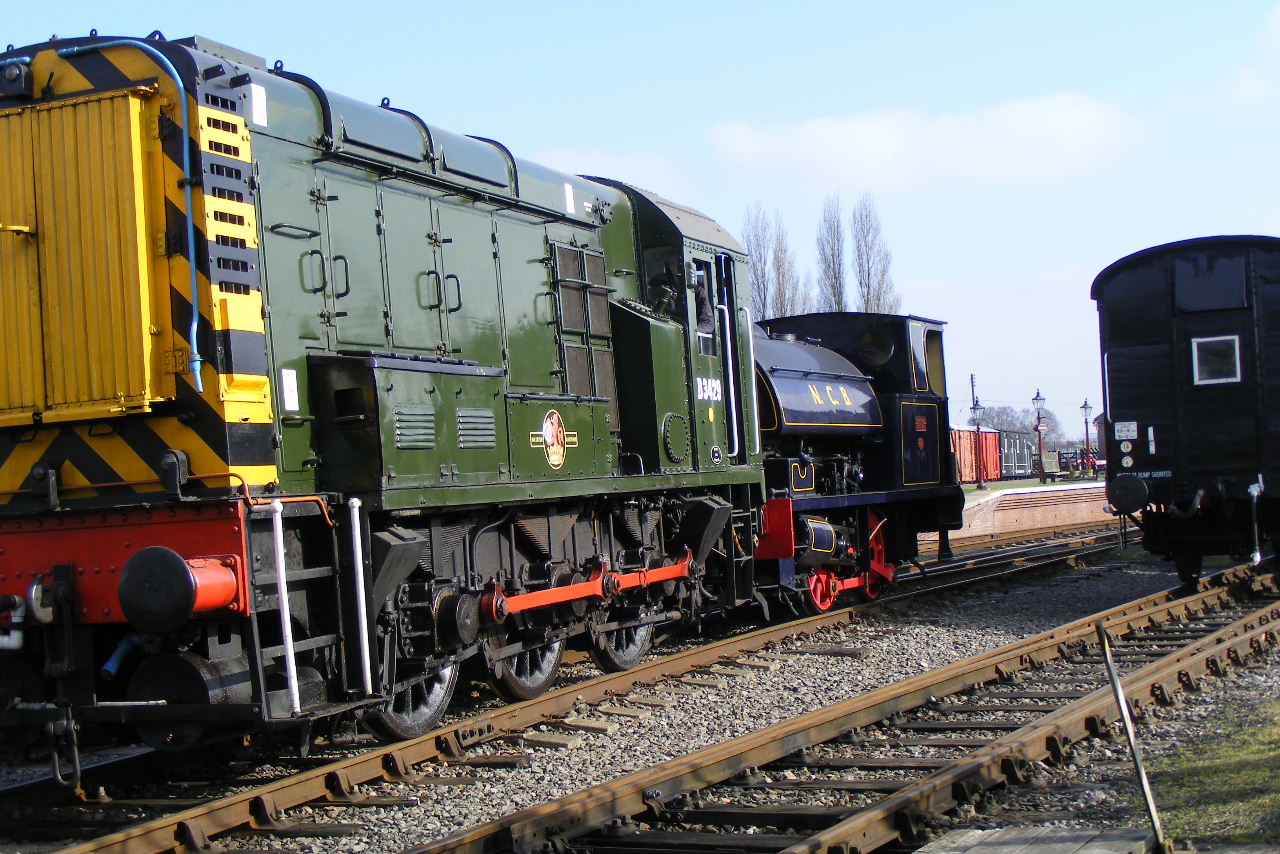
Class 08 and Bagnall ‘Linda’ 2-3-2011

179 – Chasewater Railway Museum Bits and Pieces

Featured loco – No.6 Adjutant. 0-6-0ST Manning Wardle 1913-1917 Cannock and Rugeley.

 From Chasewater News Spring 1995 – Part 2

Carriage & Wagon Department – Tony Wheeler

 GWR 20 ton Toad 35251

This vehicle has been stripped and repainted into GWR Grey and lettered Moat Lane.  This is not its true location but a suitable representation.  It is currently in use with the P-Way team.

Ballast Plough Van S62861

The Maunsel brake van has had its roof re-felted to waterproof the inside of this vehicle.  It requires further work in replacing some of the external woodwork which is gradually deteriorating. The vehicle is in regular service with the P-Way train.

21t Mineral Wagon B316711

A temporary floor has been placed inside this vehicle after a cleanout of the remaining coal and slack left inside.  The larger deposits left provided some fuel for the stove inside the p-way brake van over the past winter.

16T Mineral Wagon B274600

This wagon has proved useful over the winter months ferrying bricks to the site of the new platform at Norton Lakeside and alongside the 21 tonner has seen some very heavy use lately.

8T 4-plank open wagon (Conduit Colliery)

This wagon is currently awaiting a more permanent resting place, so that the springs can be removed and replacements can be obtained and fitted.  It currently has one set of spring ‘on loan’ from the Midland Crane!

GWR 16T Toad 35831

This brake van still resides in one road awaiting some repairs, which consist of a replacement spring buckle, running boards and hangers and also brake block replacements.  Some minor attention is needed to the bodywork.

MS&L 1470

Work has resumed on the restoration of this coach after the winter lay-off.  A temporary platform has been erected round it so that the exterior work can carry on safely.  Alwyn and myself have carried on with rebuilding the interior of the brake end which was damaged some time ago.  The coach has had covering sheets removed from the roof and work has started on cleaning and repainting the roof vents.  New guttering has been fabricated and fitted to the side of the coach facing the lake; this is to replace the old burnt out pieces over the guard’s compartment.

MR Brake 68

Some panelling timber has been obtained to replace missing panels on the Midland Brake van.  The location of this vehicle at the end of two road means that the open end is exposed to the weather and some roof timbers will need to be obtained in the near future.

Permanent Way – Arthur Edwards

It seems a long time ago since I last wrote an article about anything that is happening on the Permanent Way of the railway.

Firstly, as I’m sure you know, if not I’m sure you soon will, that the Railway Inspector was due to visit us on Friday May 12th 1995, and in between this and his last visit quite a lot has happened.  New ‘No Trespass’ and whistle boards have been fabricated and put up, as the original ones being made of cheaper material and with the amount of vandalism that is rife around Chasewater, they did not last as long in position as they took to make.  New gates have been made for each of the crossing points and they have been put into place.

Secondly, our illustrious General Manager, Mr. Steve Organ, acquired a hopper wagon (dogfish) with which to re-lay ash ballast all along the line for the next monumental task, which was the use of a tamping machine on hire from Tarmac.  The tamper and its two-man crew started work on the line from the new platform, across the causeway and back to Brownhills West.  In conjunction with this work fishplates have had to be greased and tightened (again!), along with some sleepers which had to be re-spaced.

Thirdly, and most importantly since the Inspector’s last visit we have laid up to nearly a third of a mile of track into Norton Lakeside platform, which has been refurbished and extended to cope with a three coach train, and should hopefully be open to the public after the Inspector’s visit.  During the last few weeks our General Manager has been going round like a headless chicken trying to get the scheme finished in time for the Inspector’s visit, and I must admit it’s coming along pretty well, even though Steve himself will admit it was touch and go with the unkindly weather which has put all of us who helped on this project, quite a few weeks behind schedule, and Steve began to think that maybe it was a bit overbearing on all of us.  So there have been harsh words spoken at heated moments of which we all apologised to each other afterwards.  Although we are not in the major league of steam centres, contrary to popular belief we are holding our own, even if our members have dwindles slightly.  You must realise that this is our hobby and not our profession, and therefore we have to earn a living at our ‘proper’ jobs, and three of our current working members’ jobs incorporate working on refrigeration, so, being summer, their jobs call for their expertise.  And that’s basically it, except to say thanks to everyone for their exhaustive efforts, Tom especially.

From Chasewater Heaths to Church Street, the original trackbed – still a bit of P-Way work to do!

Chasewater Railway Museum March 2024 Newsletter

Featured Loco Pic – ‘Tony’ – 0-6-0ST Hawthorn Leslie 3460-1921 at Hawkins.

More new additions to the collection in February and some new loan items too.

176/177 – Chasewater Railway Museum Bits and Pieces

The featured loco today is ‘Rawnsley’, at Hednesford Canal Basin, a Lilleshall loco of 1872. Number 4 at Cannock and Rugeley Colliery.
Thanks to David Bathurst, Nigel Canning, Bob Duffill, Arthur Edwards and Keith Day for their contributions to these, and other, Chasewater Railway Magazines.

176 – Chasewater Railway Museum Bits & Pieces

From Chasewater News Christmas 1994 – Part 2

A Christmas Message from the Chairman

It is difficult to believe that we are about to enter the Christmas period yet again. The year has passed so quickly that it seems to have passed us by.  Yet for the railway, such a short period has witnessed so many exciting developments.

Anyone visiting the railway for the first time would wonder what it’s all about and why we are all so enthusiastic.  But for regular visitors and, more importantly, the intrepid band of volunteers who devote so much time to the welfare of the railway, the year has been full to overflowing.

This is not the time to review, in detail, the year’s events; the annual report is more appropriate for that.  However, the extension to the line merits comment, because of its importance to the public’s perception of our operations and, perhaps more vitally, our credibility as a passenger-carrying railway.

We had hoped to have laid the track into Norton Lakeside Station and to have completed the construction of the station during 1994.  That we did not achieve this ambition is of little importance; my colleagues will be familiar with my entreaty that “it is not a race”.  We cannot afford to compromise on quality by cutting corners in the interests of speed.  It is essential that the extension across the causeway, the station itself and the remainder of our line all meet the standards necessary to satisfy the Railway Inspectorate.  We have much work to do to consolidate our current line before we invite HMRI to return to Chasewater.

Having said all that, Easter 1995 now seems a realistic target for the opening of Norton Lakeside Station.  Pencil the Easter Weekend into your new diaries, and “watch this space” for further information.

1995 will also see an increase in momentum for the carriage shed fund.  If the spirit of Christmas moves you to make a donation to this worthy cause, then please do not hesitate to see Chris Chivers or myself.

May I remind you of the ‘Santa Specials’ on 11th and 18th of December when we can all find an excuse (if we need one) to open up the seasonal festivities.  Whether or not you are able to join us on one of these dates, may I take the opportunity to wish you all a very happy Christmas and a very prosperous New Year.

David Bathurst – Chairman

A view looking across the causeway back towards Brownhills West, just over a mile away.  On the left can be seen the platform face for the new Norton Lakeside Station with the first length of track in place.  A lot still remains to be done, but this could be a very popular place for photographers next year!

Synthetic Chemicals – Final Phase – by Arthur Edwards

It doesn’t seem like it, but this is the final part of the saga of retrieving the track from Synthetic Chemicals.  After a call from our ‘Fat Controller’, Steve Organ, on Friday 15th October to establish whether I was available for the Saturday morning, about a dozen people gathered at Synthetic Chemicals to collect what track was left there.

Anyway, Mick had called for me at 8.30am and we had been there about an hour when Steve asked Mick and I to return to Chasewater to get the JCB ready for when the lorry arrived with said track.  At about lunchtime the lorry duly arrived and Mick and I did our stuff unloading it.  An hour or so later ‘Curly’ the driver went off to get another load.  While he was away, Mick and I straightened up the rails and sleepers.  I had to go at 5.30pm but I believe the rest of the crew stayed until about 8.00pm to complete the job.

After that Saturday all there was left at Synthetic Chemicals was a buffer-stop, some smallish lengths of rail and a few sleepers.  After some hectic phone calls, Steve managed to get about six people on Saturday 22nd to go back and retrieve the last few remnants of track.

On the Sunday, with the help of the CS people, we actually laid the track through Norton Lakeside Station.  Once agreement has been reached with the Railway Inspectorate, it is our intention to just keep laying track down until we run out of either sleepers or rail, or until we reach our next objective which is Chasetown.  It is thought that we now have enough track to get us to the end of our lease, but hopefully we will have topped up our stocks before we get that far.

Whilst we continue to work on the track, the CS people have begun re-pointing the platform at Norton Lakeside Station, and preparing the top for the edging slabs.

  The arrival of a loaned ‘dogfish’ hopper wagon will hopefully make the job of ballasting a lot easier, and there are even rumours of a rented track-tamping machine being used in the near future!

Kenneth Judkins – by Dave Ives

It is my sad duty to inform you that Ken Judkins (Ken the Steam to his close friends), passed away on September 27th 1994 at Anson House Rest Home.  Ken was 91 last January, being born in Little Haywood in 1903.  Ken lived a very colourful and busy life in various parts of the country.  He moved to Stafford for the final few years of his life from Wimbourne Minster, Dorset, stating that he wanted his bones to rest in his native county, which has indeed now happened.  His remains lie buried in Colwich Churchyard.  He was Christened in Colwich Church and served as a chorister for a number of years.

Members will be aware of Ken’s long association with steam traction having started with Ralph Gee & Son, Wolseley Bridge, then on to Staffs County Council, Foden’s, Thomas Hill (Rotherham) Ltd. and Sentinel.

Ken was the author of two books “My Life in Steam” and “More of My Life in Steam”.  The books are worth a read and give a fascinating story of the tough and skilful job of steam driving in the 1920s and 30s.  Ken also served six years in the army RAOC in the war and was wounded in the lung whilst being evacuated from Dunkirk.

I suppose one can sum up by saying that this is the end of an era and that Ken is sorely missed by numerous friends, especially on the rally fields where he gave a lot of advice to scores of steam traction owners.

Alas! We shall no longer see him propping up the bar, staying overnight in one of our coach compartments, puffing his pipe on Brownhills West Station seat or in his brown slop coat and Foden hat on the footplate of the Sentinel.

More about Ken – Nigel Canning

“Ken the Steam” as he was known to his friends, spent the majority of his working life and the whole of his retirement closely involved with steam traction on both the road and railways.  His experiences and expertise were sufficient to fill a book – or two, to be precise – both now sadly long since out of print.

Ken was never happier than when he was showing off just what steam power was capable of, and in his last two jobs, at Foden, and then at Thomas Hill (Sentinel) as Chief Demonstrator and Test Driver, that is exactly what he was paid for, selling those Companies’ products and fending off the advance of the motor lorry and diesel loco.

In his retirement Ken continued to take an interest in steam by helping the preservation movement where his enthusiasm backed up by a lifetime of experience was of invaluable assistance to many an amateur locoman or fitter.

At Chasewater his advice was of particular assistance in the operation of the Sentinel.  On one occasion when one of the poppet valves on the engine was playing up, Ken was all set to ride down the line and back to observe the valve events and pinpoint the problem.  It took a lot of doing to convince him that it was not the done thing to run a passenger train with an engineman in his late eighties hanging on the side of the loco, but we eventually succeeded, and as a result of his advice the valves were alter re-set to operate correctly.

Ken once admitted that he didn’t really like Sentinels as they were dirty things, but that just reflected his real love, the Foden, and his exploits with those machines are well-documented and will be remembered for a long time.

177 – Chasewater Railway Museum Bits & Pieces

From Chasewater News Christmas 1994 – Part 3

Carriage & Wagon News

New Acquisition: ‘Dogfish’ DB992841 – This useful hopper wagon has recently arrived at Chasewater on loan for 12 months from Andy Goodman of Allely’s Transport.  Following minor attention to the chute actuating gearboxes the wagon has entered service as part of the PW works train to transport ash up to the new station and beyond.

Pressed Steel Co. DMBS W51372 – This car has remained in service coupled to W59444 to form the loco hauled train.  It was recently given an ‘A’ exam, and following the recent acquisition of some more spares one or two minor repairs may shortly be carried out.
Derby Works centre Car W59444 – The electrical system of this coach has recently been overhauled, including servicing of the batteries, cleaning and resetting of contactors and renewal of some of the invertors for the strip lights.

Derby Works Centre Car M59603 – This coach has remained stored out of use.

2-Car DMU: DMBS W51370 & DMS W 51412 – This train has remained in service, being run on non-steam Sundays until recently when declining passenger numbers made it uneconomical to continue.Summer congestion at Tysewater!

Manchester, Sheffield & Lincoln six-wheel coach – A great deal of progress has been made recently on this vehicle.  All of the doors now close properly, and all of the glass has been fitted in the windows and doors so that the interior can be kept dry.  The partially burnt panelling around the guard’s doors has been removed, and new locking bolts for the double doors made and fitted.  Various rotten mouldings are being renewed, and the exterior of the bodywork has been given a preliminary coat of paint to help protect it.  A certain amount of work has also been done on painting the interior.

LNWR (Paddy) Coach – Work has started on this coach by a carpenter working on the Community Service Scheme.  So far some of the doors have been re-fitted, and repairs have been carried out on the roof to try and waterproof it.

Battery charging – The station battery charger has now been rebuilt and connected into a network of underground cabling enabling a number of vehicles to be connected to it simultaneously.

Stop Press

The Board has agreed to purchase around 600 concrete sleepers, enough to relay track to the rear of the Burntwood Industrial Estate.  Delivery will commence in the New Year.

The Annual October Transport Rally – Arthur Edwards

This year’s rally seemed to surpass all of the rallies that we’ve had over the last five or so years.  There were more vehicles than previously, but all cordoned off in such a way that it seemed that we could have had at least half as many again.

I finished work at 2.45pm on the Friday afternoon to be at Chasewater by 3.00pm to help Dave Whittle, Rally Organiser, to put up the fencing.  This involved finding the fencing stakes before I could start.  Eventually it was time to make my way home, and I told Dave I would be there at 9.30am on Saturday.

I duly arrived at Brownhills West Station at the said time, collected the stakes and started to knock them in to cordon off all the stationary engines and their owners’ living quarters, caravans, mobile homes, etc.

Steam trains didn’t run until Sunday as one of Asbestos’ springs had to be re-fitted following its repair, but our illustrious General Manager (Steve Organ) decided to use his DMU set.

Sunday dawned with high skies and not a threat of rain.  A few of us had to take the permanent way works train down to the far end of the running line to work on the extension.  This had to be done as even after the departure of the Wickhams we were still a bit cramped in the available siding space.  I digress slightly, anyway all went according to plan, and next year they are planning an even bigger event.

All credit on this occasion must go to Dave Whittle for the red-hot phone calls, and to his associate Paul Richards, with their mind-boggling train of events.  All the best for next year’s rally.  Thanks chaps, very much appreciated.

Commercial Manager’s Update – Rob Duffill

The season, apart from the two Santa dates which are in the future at the time of writing, is now over until Easter.  However, we do continue to tick over during the winter months and any income we can generate from whatever source during this period is essential to keep the wheels turning.

In addition to the core aspects of running the buffet and shop, we have been to several exhibitions.  These have been at the bonded warehouse in Stourbridge organised by Trev Cousins who was Secretary of our group in the 60s.  Also the Warley Model Show at the NEC and the Societies and Hobbies Fair at Walsall Town Hall.

The NEC exhibition is in its second year and is over two days and very interesting.  As usual John and I set up on the Friday and all went very smoothly as the Warley Show is very well organised.  The hall was better laid out this year and the public avoided the jams of last year.  We were opposite an ‘0’ gauge layout of the Taff Vale and a colliery with lots of industrials.  Also, Trev Cousins has produced in ‘0’ and ’00’ a model of Hanbury from our own area.  This 0-6-0ST Peckett was of very neat outline.  Trev and Pete Stamper, both members from the 60s, would be pleased to sell you one.  Our stand was fairly busy with its blend of both toys and relics and we exceeded last year’s takings.

The Hobbies and Societies Fair at Walsall was successful, not from the actual sales, but from the publicity point of view.  A lot of interest in the Santa Specials was generated.  Quite a few people looked at the old photos we had taken and said they were ex-miners who remembered them.  We also displayed a Pelsall Millenium plate at both exhibitions.  The Brownhills paper also took photos and promised free publicity, and several potentially useful contacts were made.  This event was definitely worth John and Margaret’s (with Chris) time, and our fairly low entrance fee.

Well done to all who helped during 1994, the trick being to extract money from the public in as pleasant way as possible, and to try and make the most of it all and enjoy yourself.  We look forward to next year’s opportunities to increase income with the line open over the causeway.

Bass Brewers Community Awards

Bass’s Grand to Chasewater

Chasewater Railway has received a Bass Brewers Community Award of £500 towards the £20,000 required to build the proposed carriage & wagon shed which we intend to build when funds are sufficient, and the North Orbital Road route has been finalised.  The fund now stands at about £2,000, the majority having been raised by members through donations and profits from events and rallies.

For those who are not aware, this is the third year in succession that the railway has been a recipient of a Bass Brewers Community Award.  In 1882 we received £300 towards the transport costs of removing redundant trackwork out of Hams Hall power station.  1993 saw a £250 award towards the purchase of rail, and £500 this year to the Carriage and Wagon fund.The presentation of the cheque at the end of the platform of Brownhills West Station platform, surrounded by what appears to be total darkness!

The presentation of the cheque took place on 27th September at 7.00pm at Brownhills West, and was presented to Alwyne Marsden and Tony Wheeler of the Carriage and Wagon Dept.   (Looking at the official Bass picture, and the expression on Tony’s face, it would be easy to believe that it was Tony’s money he’s giving away rather than receiving it from Bass!).

The Award is now becoming an annual event with an open invitation to all working members and volunteers, to which over forty came, with husbands, wives and children.  After the presentation of the cheque and pictures taken rather quicker than normal due to failing light, there was a trip down the line in the newly acquired DMUs by Railway members, Janice Clark, Regional Communications Manager for Bass and her photographer.  This not only showed how previous awards had been wisely spent,  but also showed how much progress had been made enabling us to go to the extreme end of the line where no DMU had gone before, over Spikey Bridge.  (Since then the line has been laid through the platform at Norton Lakeside and on 30-10-1994, the first works train travelled through it).

On arrival at Brownhills West Station a buffet and liquid refreshment had been arranged, and was consumed by those present.  With the evening turning into a social event, members could find time to talk and joke with each other in a more relaxed atmosphere, which is not often the case when running trains or events, or generally going about the various tasks on the railway.

Many thanks to those who came on the evening of the 27th, to Janice Clark, who I feel enjoyed the evening as much as we did, but also to Bass for their contribution to our railway.

Thanks Bass – and Cheers.  Keith Day.

Image

Chasewater Railway Museum February 2024 Newsletter

171 – Chasewater Railway Museum Bits and Pieces

171 – Chasewater Railway Museum Bits & Pieces

Permanent Way News

Words on Synthetic Chemicals – Arthur Edwards

This story started back in October, 1993 when a Mr. James Bates of Synthetic Chemicals paid us a visit with the news that his company was doing away with its railway network, which connected with the BR Wolverhampton to Stafford line at four Ashes.  Jim told us that a number of items, some chairs and a point lever had been disconnected and were surplus.

The following weekend Paul Whittaker, Dave Borthwick, Tony Wheeler and Keith Day drove over to Synthetic Chemicals to collect the items which were brought back and stored at Chasewater.  Jim said that the company would have to consider all the pros and cons on how to deal with the demise of the rest of its railway network.

In the spring of this year we learned that Synthetic Chemicals had generously donated the rest of their track to the CLR, and on May 7th a gang of our P.Way staff went back to Four Ashes to make a start on the dismantling.  All of the fishplates were unbolted, some of the pointwork was split up and all of the keys were removed and brought back to Chasewater.

The second week was spent doing more or less the same again, at the end of which Chris Chivers informed me that the track was all ready for lifting in 60ft panels.

The next week, after mid-week phone calls, we managed to get a crew for the lift at SC.  Meanwhile back at Chasewater Ian Buswell was hard at work with the JCB levelling the site ready for the pointwork and 30ft track panels which will be used eventually for our new sidings and shed.Nothing to do with the post – just looks nice! Beattie Well Tank in Brownhils West

Over at Synthetic Chemicals three of Cotton’s artic lorries were waiting for their loads.  At around 10.30am the first lorry was ready, and Steve asked me to return to Chasewater with it to oversee the unloading.  Curly brought his lorry up, and Harold set up his crane to lift the top panel, Curly then moved his lorry further forward, and Harold dropped the panel in more or less the right place.  This process was repeated until the lorry was unloaded and the next one arrived.

At around 1.00pm on the Saturday the rain started, and did it come down?!  By about 4.30pm I was absolutely soaked.  Funnily I had brought my wet suit but it was in Steve’s car and I didn’t have time to put it on anyway.  I thought it was about time to be heading back to the station where my Better Half was waiting to get away.

Ian told me on the following day he finally got away at about 8.3pm.

The new track panels stretch from the end of our current running line right across the causeway and through the platform of the new station, and there are still another two or three loads to come.

Thanks must go to Cotton’s Transport and Safe Load Indicators who provided the lorries and cranes.

Since the arrival of the panels work has started on fishplating them all together and jacking and packing to achieve the correct level and alignment.  This method of tracklaying is obviously much quicker than our traditional way and it is likely that we will have a train in front of the new platform very shortly.

The Causeway Station NameWorks train into Norton Lakeside

At the meeting on 25th March, the Board gave due consideration to the names proposed by members for the causeway station, previously referred to by the unflattering (but geographically correct) name of ‘Norton Bog’.

Members will recall that the Board had agreed to a form of competition, so that those who submitted the name eventually adopted by the Board will receive family tickets for the day of the first official public service into the new station.

The following names were suggested by members and other interested parties:

Chasewater Lakeside, Chasewater North Shore, Lakeside, North Shore Halt, Norton Biddulphs, Norton Bog, Norton Causeway, Norton Cranebrook, Norton East, Norton Lakeside, Norton Marsh, Norton Marshes, Norton Parkside.

Nominations for ‘Norton Lakeside’ were submitted by Mr.J.P.Merriman, and Mr.Chris Hatton, both of whom will be official guests on the due date.  The three Board members who submitted the name are disqualified from the competition!!

By way of thanking the other members who took the trouble to submit suggestions, the Board has also agreed to offer a small token of appreciation.

David Bathurst – ChairmanPassenger train leaving Norton Lakeside