
The Museum will not be open this coming Sunday, 23rd June 2024
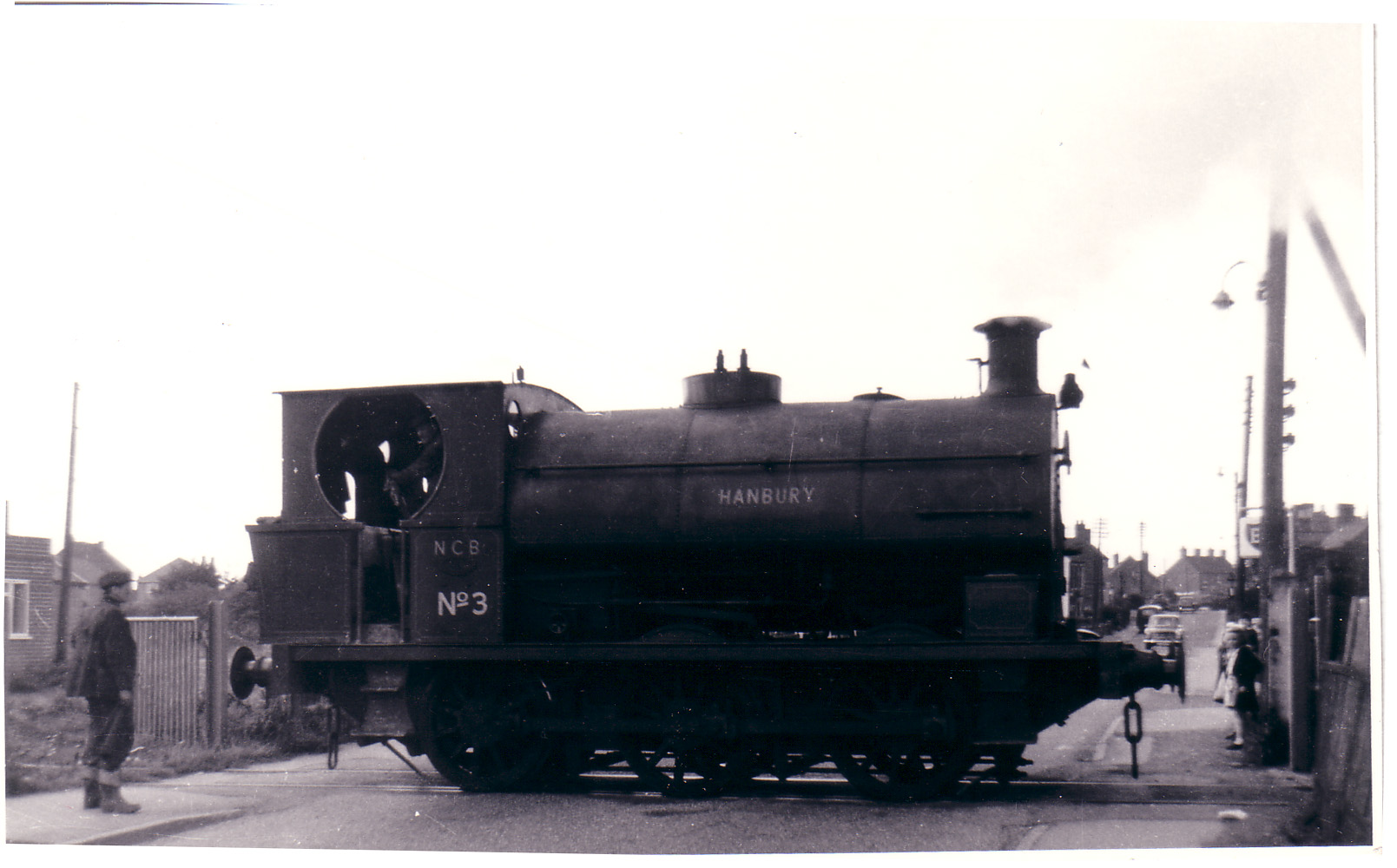
‘Hanbury’ No.3 Peckett 0-6-0 ST 567-1894 Crossing Brownhills Road, Norton Canes.
191 – Chasewater Railway Museum Bits & Pieces
From Chasewater News – Summer 1996 – Part 2

From the Board Room
David Bathurst – Chairman
Health and Safety Matters
Those of our members who are associated with other preserved railways cannot fail to have noted from their magazines the increasing importance of health and safety. This sudden interest in safety awareness is neither coincidental nor accidental, it is a direct consequence of legislation.
Along with our sister organisations, we have had to prepare and submit a Risk Assessment for approval by the Health and Safety Executive. To operate as a passenger-carrying railway without having obtained the necessary acceptance of our Risk Assessment is unlawful and would expose the ‘management’ to prosecution.
Our Risk Assessment, underpinned by the proposed revised Rule Book, is now in the hands of HMRI for consideration and, hopefully, approval. In the interim, the Company is in possession of a temporary exemption which permits us to operate lawfully pending a decision by the Health and Safety Executive.
This situation has arisen in consequence of the Railway (Safety Case) Regulations 1994 (SI 1994 No.237) which applies to all passenger-carrying operators, including operators of heritage railways. Despite the ‘universal’ nature of the regulations, it has been generally recognised that the safety implications (and risks) associated with a preserved railway such as ours, operating with a 20 mph speed limit, are significantly different to a railway running trains at 125 mph. Yet in many respects the considerations are the same – it is only a matter of differing magnitude and scale. For example, the need for operator protection when using electrical equipment is as important to a Chasewater Railway volunteer as it is to a RailTrack employee, the risk to the individual at the time is the same if something were to go wrong.

Most of us have a degree of cynicism regarding the ever-increasing effects of legislation on our day-to-day operations. The ARPS and other supportive bodies have fought hard (and are continuing to fight) on our behalf to ensure that preserved railways are protected against some of the more onerous obligations being placed – quite properly – on our bigger brothers. For this we are most grateful. But at the same time we need to recognise the simple fact that running trains – in its widest definition – is potentially dangerous. We need to ensure to the utmost best of our ability that risks to both the public and our members are minimised and that our practices and policies are driven by safety considerations.
To some degree it’s a matter of good sense and adopting practices which will ensure our safety – whether during the lifting of sleepers, working on the footplate, or preparing sandwiches in the refreshment room.
The preparation of the Risk Assessment involved a number of ‘key players’ with Andy Mould taking the lead. As the process developed, the point of the exercise came more clearly into focus. The document includes a commitment to introduce changes in certain areas of activity, including accountability and the maintenance of proper records. Sometimes it proves very valuable to examine carefully what we do, why, and how ‘dangerous’ it is and how we might make changes to reduce potential risks to volunteers and the travelling public.
During the forthcoming months, it will be necessary to introduce the changes required to honour the commitments contained in the Risk Assessment. Most will be self-obvious improvements in our working practices and procedures. Those members or groups of members affected by such changes will be informed directly and as widely as possible so that there can be no areas of doubt or uncertainty.
Stop Press
The following is the text of a letter dated 13th May 1996 from the Health and Safety Executive:
“RAILWAYS (SAFETY CASE) REGULATIONS, 1994
Further to your conversation…. On 24 April, I am pleased to inform you that the Health and Safety Executive has now completed its evaluation of your application for exemption from the above regulations, and has found it satisfactory. Accordingly, I enclose a certificate exempting the Chasewater Railway from regulations 3, 4 & 5 of the Railways (Safety Case) Regulations, 1994.
The assessor also asked me to commend you on the responsible approach towards the running of (the) railway which is demonstrated in your application.”

How we look to others
In the past, our Railway has been criticised for its ‘appearance’. We have been seen as just a little short of a scrapyard. Not that we are on our own! Such is the very nature of railway preservation, with locomotives and rolling stock at various stages of dereliction (with little or no prospect of restoration ‘within the foreseeable future’) and a whole array of items and equipment which might, perhaps one day, fins some form of use.
1996 has been declared a year of good old-fashioned consolidation, presenting the opportunity of finishing unfinished jobs without the distraction of some major enterprise. Looking over the site, particularly at Brownhills West, the scale of improvements is immediately apparent compared with say, 12 months ago. A concerted effort to tidy the whole place up is producing dividends at last. The amount of rubbish and scrap disposed of has been impressive, to say the least.
We still have a long way to go, however. Some (perhaps even ‘most’) of our working members still seem unable to adopt the culture of tidiness. My message is worth repeating: please do not simply leave YOUR rubbish for someone else to clear up. And if you see rubbish, litter and the like – particularly in the station areas – please take the trouble to pick it up and drop it in a bin. Empty drinks cans littered around the site leave an appalling impression. Take pride in your railway.

The 1996 Annual General Meeting
The 1996 AGM agenda was completed in just 6 minutes. As a formal business meeting it began at the appointed time; those who arrived late missed it! I am delighted to welcome Arthur Edwards to the Board as a Company Director. His support has always been much appreciated and I am confident that Arthur will have much to offer to the future management of the Railway.
For those present at (or arrived later) the AGM, perhaps the more interesting part was the traditional open forum which followed and resulted in discussions on the usual wide range of subjects. The thorny problem of vandalism generated quite a lot of feeling.
Social Evenings
My personal commitments cry out for the introduction of an 8-day week (but with a 3-day weekend of course). Thus, I cannot attend every event, much as though I would wish to. But how pleasing it was to join so many working members and friends at the April Social Evening, with some interesting slides and a pleasant drink or two on offer. The Railway can only be strengthened by such events, especially as the older members in particular have a massive fund of knowledge, information and anecdotes to share with our colleagues.
“Chasewater News”
Building on the excellent work of his predecessor, our current Editor is producing a magazine which is going from strength to strength. Of course, access to modern technology is the key to the appearance and layout of the magazine – despite the curious effects which from time-to-time result owing to the use of an American spell checker!
Appearance and layout are two aspects only. The Editor can only produce an interesting magazine if he has the materials to include. On his behalf, can I make a plea to members to provide articles – especially articles about the Railway itself – for inclusion in the magazine. Don’t worry if you think that your grammar or spelling is poor, it doesn’t matter. Chris will ensure that your material is corrected before publication (well, that’s the theory at least!). Similarly, if you have any photographs (whether ancient or modern) which might be of interest, then please let Chris Chivers know.

On the Volunteer Front
The Annual Report presented to the 1996 AGM included a reference to the need for working members to respect one another’s work. For a variety of reasons, some valid but many unsustainable, the closing months of 1995 produced a Chasewater version of ‘A Winter of Discontent’. Perhaps it really did have something to do with the weather. With the onset of spring, the spirit of co-operation and harmony between working members has improved beyond belief. Doom and gloom have been replaced by confidence and optimism. With so many positive things in hand or on the horizon, it is vital that this spirit is maintained and developed. When all said and done, we’re supposed to be enjoying ourselves! Additional working members are always welcome – and they need to feel welcome. All Departments are always on the lookout for additional resources, whether manpower or material-wise. If you feel able to assist in any way, please let someone on the Railway know next time you visit Chasewater.

The last three photographs are of ‘our’ railway trackbed on the other side of the M6 Toll road, the final one, with Ellie, was taken in the area of the old Brownhills Midland station.


 Chasewater Railway Museum