Tag Archives: Cannock

189 – Chasewater Railway Museum Bits and Pieces

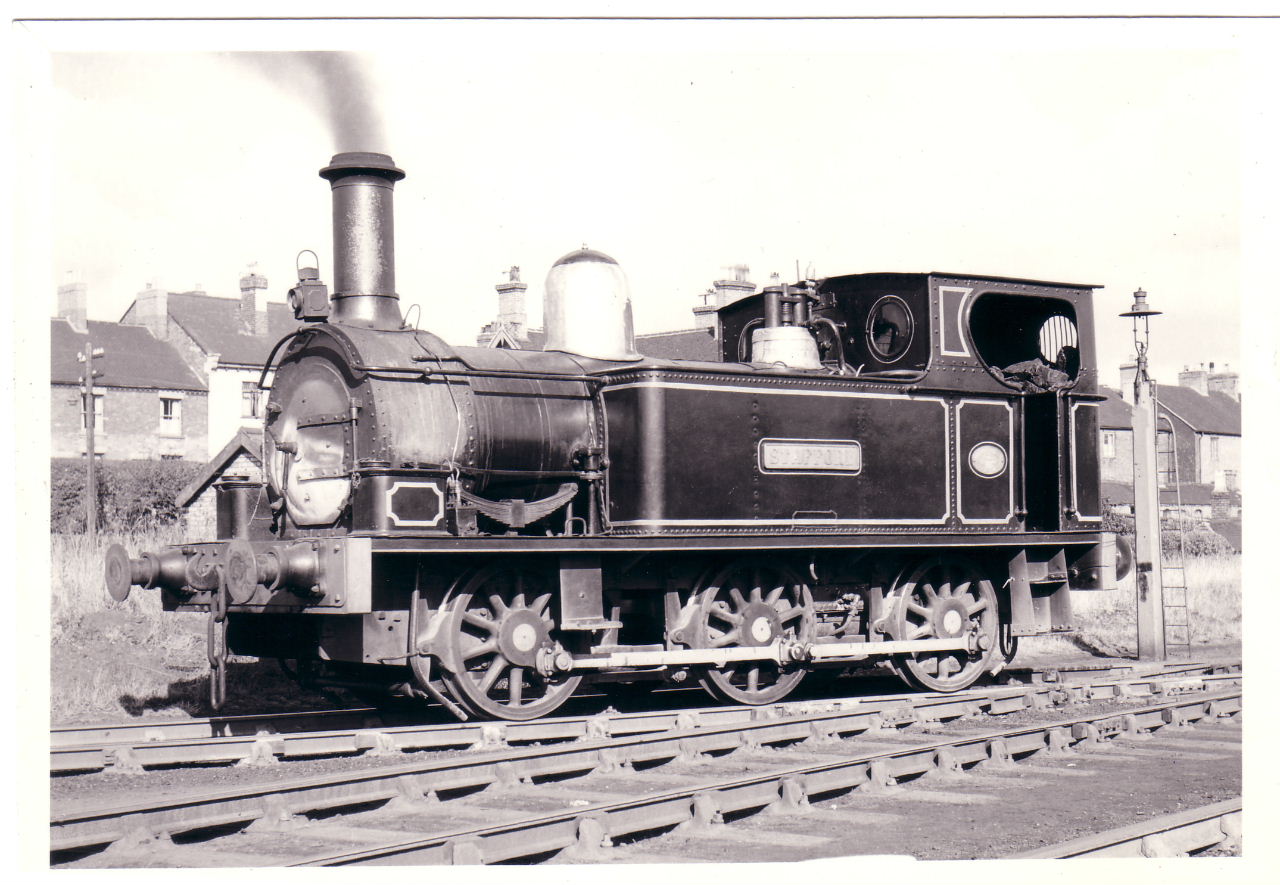
‘Stafford’ 0-6-0 ST Hudswell Clark 319-1889 Bought from T.W.Wood, Dealer, in 1915. Still at West Cannock Colliery, Hednesford 1957, since scrapped.

NB The Museum is not open to the public on June 23rd 2024

189 – Chasewater Railway Museum Bits & Pieces

 From Chasewater News – Spring 1996 – Part 2

From the Board Room – David Bathurst – Chairman

Norton Lakeside Station Opening

After a couple of false dawns, the Railway has at last achieved its most significant ambition.  We now have two ‘proper’ stations.

We can now advertise our operations on an entirely different basis, way beyond that of a mere leisure railway.  Furthermore, in taxation terms, we are now recognised as a passenger railway.  Our passengers can now be offered the additional option of convenience travel to the NorthShore, where vehicle cannot (or at least should not) interrupt their peaceful enjoyment of the area.

It was heart-stirring to see so many friends and guests at Brownhills West for the official opening ceremony on Saturday 16th December 1995.  What was equally gratifying was the sight of ‘Asbestos’ at the front of the train, after a period of remedial works.  Well done indeed to the volunteers who ensured that this locomotive was ready in time.  The ‘Norton Collier’ headboard, manufactured specially for the occasion, added to the significance of the day.

With the train virtually full, departure was just after the advertised time of 11.00am, with Nigel Canning and Les Emery specially rostered together on the footplate for the event.

A leisurely rate down the line afforded some of our less regular supporters and guests the first view of the substantial works which have been necessary to reinstate the Causeway.  Entrance into  Norton Lakeside Station was accompanied by the sound of exploding detonators.  The modest facilities of the new station belie both the cost and effort which has gone into providing this three coach platform.  Despite the intensely cold and windy conditions (to which our members have become accustomed over many months), the Chairman of Lichfield District Council, Councillor John Walker, carried out a short opening ceremony before the photographers were let loose.  To enable the photographers travelling on the train to capture the occasion, the train made a second ceremonial entrance across the Causeway into the new station.  Some of the resulting pictures duly found their way into the local press.

Following the return journey, the Railway’s working members and official guests, including a number of Lichfield DC Members, enjoyed a buffet lunch, during which further formalities were completed.  The return journey saw Councillor John Walker at the controls of ‘Asbestos’, although this fact was kept from his Council colleagues who may have preferred to find other transport back home!

Councillor Walker clearly enjoyed the day, and his letter to me after the event is reproduced for the information of members.  To ensure that members do not start wondering whether they have failed to notice a new electrification scheme, it should be mentioned that Councillor Walker’s previous footplate experience involved a diesel-electric, rather than an outright electric locomotive!

To mark the occasion, the Railway commissioned special brass tickets which are capable of adaptation as key fobs.  Previous editions of ‘Chasewater News’ have included articles on the causeway and construction of Norton Lakeside Station, and this article does not set out to repeat the story.  Nor would it be appropriate to single out any individual members in respect of work undertaken either on the construction work or the official opening arrangements.

The events of 16th December 1995 are a testimony to all the Railway’s working members, whether they be regular or occasional visitors.  The achievements celebrated on that important day demonstrate just what can be done by our membership and serve as an incentive for the further expansion of the Railway.

To everyone concerned: Congratulations and Well Done.

Councillor Walker’s Letter

Dear CLR members,

Can I convey my congratulations to all Chasewater Railway members for the excellent morning of 16th December 1995 on the occasion of the official opening of the new station at Norton Lakeside.  Despite the bitterly cold weather Sandra and I enjoyed it tremendously and it was a particular highlight for me to undertake the return journey on the footplate.  It brought back memories for me when in 1982 I drove an electric express train from Derby to Sheffield but you can’t beat steam, can you?

Here’s hoping that your organisation will go from strength to strength and that we as a Council will have co-operation now and in the future.  Please convey my best wishes to all those at Chasewater and here’s wishing you all the best in 1996.

Yours sincerely,

Cllr. John Walker

Chairman of Council

Lichfield District Council

Lichfield District Council Plan

Members will recall from a previous edition of ‘Chasewater News’ that the Railway has objected to the Lichfield District Local Plan, insofar as – unlike the Walsall MBC Unitary Development Plan – it makes no reference to the Railway in context of ChasewaterPark.

The Railway was represented by the General Manager and myself (Steve Organ and David Bathurst) at the Public Local Enquiry on Thursday 25th January 1996, during which we sought to justify our objection during a session lasting some two and a quarter hours.  The District Plan is fundamentally concerned with land use issues and we shall see, in due course, whether the Inspector is persuaded that the extent of our operations within ChasewaterPark is sufficient to merit an individual reference in the approved District Plan.

The Lichfield DC representative confirmed that he recognised that the Railway ‘had a place’ on the North Shore (thereby dispelling doubts previously expressed regarding our track relaying to the extent of our lease) and that the Council fully accepted that the Railway enjoys planning permission for its operations on the North Shore.  The Council’s argument, based on their view of planning law, was that the Railway’s future development should be controlled by planning advice, and that a separate reference to the Railway in the District Plan is accordingly unnecessary.  We do not agree; we are seeking a far more positive commitment from the Council, hence our objection.

Working Members’ Meeting

A further working members’ meeting was held at the Pear Tree public house on Wednesday 10th January 1996, with an encouraging number of working members present.  Again, members had the opportunity of raising any matters of interest.  Perhaps the item which attracted most discussion was concerned with locomotive restoration, particularly as ‘Asbestos’ loses its boiler certificate during 1996.

In addition to formal meetings, there was a general view that more social events should be held locally, including slide-shows, talks, etc.

Some of our members have a massive bank of photographic and other materials which might be shared with other members ‘over a pint’.

Great British Passenger Timetable

Members who have access to the Great Britain (All Lines) Passenger Timetable will be aware of the section on Private Railways.  Although this section includes information on the ‘First Division’ private railways it appears to me that the publishers might be sympathetic to include Chasewater Railway, particularly in view of the opening of Norton Lakeside Station.

I am delighted to be able to report that following appropriate negotiations, Railtrack have agreed to include a short entry in the June 1996 Timetable – and thereafter in future editions.  I don’t know how many purchasers actually read and absorb the section on Private Railways, but two things are certain; our status as a passenger railway has been acknowledged by Railtrack, and our existence will come to the notice of an extremely large and diverse number of readers.

P Way News – Arthur Edwards

The start of the New Year has seen some of the regular winter jobs being taken in hand.  With several of the Sundays in January being a total washout due to the terrible weather, trying to dig ground frozen solid in winds with a wind-chill factor of minus (i.e. brass monkey weather) is no fun at all.  The shed compound has been receiving some attention in the form of a tidy up, with special attention being paid to clearing the overgrowing vegetation from the fence behind the platform.  The cab of 917 was moved farther back and all the rubbish, old rotten timber and some split sleepers were burnt.  During the tidy up several parts from S100 came to light under the ferns and debris, and also as part of the clearance all loose scrap has been gathered together and a reliable scrap merchant has been asked to collect it.  One of the activities which Tom and myself also got round to doing was to tidy up the loose sleepers lying around, which is not an easy job at this time of year.  Wet sleepers are at least double the weight of dry ones.

The double-decker bus which has been on site for a while has now been taken to pastures new, so giving us more ground space so that we can ready the site for the future installation of new sidings.  The provision of extra space for stock is now becoming as increasing problem as the activities of the Railway continue to grow.

The usual battle with the fence cutters will be joined in earnest within the next few weeks in the run up to the start of the running season.  Parts of the hedge planted last year by the Forest of Mercia group are starting to grow, and with a bit of time should start acting as a deterrent to the local idiots who think it is a good idea to chop down fences.

The P. Way gang meet every Sunday at Brownhills West Station from 10.ooam onward.  Come and join us!!

188 – Chasewater Railway Museum Bits and Pieces

Bagnall Loco Dunlop No.6 0-4-0ST 2648-1941

on the first train to arrive at Chasewater Heaths 27-5-2024

188 – Chasewater Railway Museum Bits & Pieces

 From Chasewater News – Spring 1996 – Part 1

Editorial – Chris Chivers

On December 16th 1995 a long-awaited dream of the Railway became a reality; the official opening of Norton Lakeside Station took place.  The Chasewater Railway can at long last run from Station A to Station B.  With the possibility of further track donations the Railway will be able to run over the entire length of the land which it currently leases.  Hopefully, further parts of the original track bed can be obtained and the line extended first to Church Street and then to Anglesey Wharf.  Great strides have been made over the past number of years to upgrade the Railway, and we have now moved into the middle rankings of railway societies in this country.  We are no longer an occasional weekend steaming preservation society but we can now offer a regular Sunday service during the running season to passengers who wish to travel to the north shore of Chasewater.

1996 I’m sure will be a year of consolidation for the Railway, and in this, my tenth year as a member of the CLR, I have seen a lot of progress along with the occasional cock-up at Chasewater.  When I first came to the Society the feeling amongst the membership at the time was one of ‘the Railway is run as our hobby and for our amusement only’. (Going through the magazines from day 1 I never got that impression – a great deal of work has been done over the years by a group of not too many people – a large debt of gratitude is owed to all of them!)  This has changed over the years to a more business-like attitude, so fuelling the growth of the Railway.  It will be interesting to see what happens in the next ten years.

Loco Shed News

 Work is continuing at a steady rate on all the locomotive restoration projects, with some work being done to stop any further deterioration on several of the Company’s engines.  Unfortunately the 16th December did not see a double-headed steam train on Chasewater metals, but it could happen in the near future.

Steam Locomotives

No.4 Asbestos – Asbestos returned to traffic in time for the Santa Specials after the refitting of part of the main steam pipe.  The amount of maintenance carried out on the locomotive will now be cut back to a minimum as Asbestos’ boiler ticket is due to expire this year and a major overhaul will be required.  All being well there should be sufficient funds to have the boiler sent away if need be, so reducing the overall time needed to be spent in the works.

No.5 Sentinel – The Sentinel has now been steam tested and should be returned to traffic within the next few weeks.  After the initial steam test several minor adjustments were required to the steam brake, along with the tightening of a number of glands.  All the minor adjustments should be done to Nigel’s satisfaction within the next few weeks.

No.11 Alfred Paget – No.11 has been moved from the top compound to the shed road where its boiler tubes are being removed.  The operation is taking some brute force to move them due to the number of years that they have been in place.  This is due to the length of time that Alfred Paget has been standing idle allowing the tubes to ‘flake up’ and rust in solid.  Once the tubes have been removed a thorough inspection of the boiler can take place, with the long term view to bring another Company vehicle back into traffic.  Most of the initial work is being carried out by Paul Whittaker who would be grateful for any additional assistance.

917 – Dave Borthwick has started to carry out some remedial work on the rolling chassis of 017 including repainting, so as to stop the weather taking its toll of the metal work.  Another job for the near future will be to remove the tubes from 917’s boiler so allowing the boiler inspector to have a look at both 917 and Alfred Paget at the same time.  Also it has been suggested that 917 could be called ‘Brightson’ (yuk!) as it originally came from Albright and Wilson at Oldbury.

Hudswell Clarke (431) – The fund (?) set up for this locomotive has now reached a reasonably modest amount and there is now some talk of making a start on the restoration of the only other 0-6-0 locomotive at Chasewater.  After its coat of paint last year there has been very little further deterioration to the metalwork on this engine.S100 on arrival

14-11-2010

S100 – Work continues at a steady pace on restoring S100, and the work on the valve chest has now just about been completed.  Within the past few weeks the connecting rods through the frames for the eccentrics have been connected and the holding taper wedges have been put into place.  Tony Sale is now starting to sort out the axle boxes with a view to re-wheeling the frames during the summer.

Going through these magazines covering many years, and typing this in 2012 it can get rather depressing.  This particular magazine was first published in 1996 and in the 16 years since none of the last four locos have steamed.  No.11 Alfred Paget steamed here many years ago.  Neither the Peckett No.917, the Hudswell Clarke No.431 nor the Hudswell Clarke S100 have ever steamed at Chasewater Railway.

Diesel Locomotives

Fowler diesel mechanical No.410013 – The ‘baby’ Fowler has started to receive a coat of paint and one side now looks quite respectable.  Work is continuing on the locomotive but due to the weather it is in fits and starts.

Fowler diesel hydraulic No.422015 – The three injector pipes which were broken before Christmas 1995 have now been replaced, and with a few other minor jobs being completed the ‘Black Fowler’ is now back in operation.

L&Y No.1 – Most of No.1’s engine is now back together with the second cylinder head back in place.  Some work has been done on the clutch as well as the brake mechanism and sand boxes being removed from the chassis.  As soon as the main body of the locomotive has been lifted out of the bay siding work can continue on finishing the restoration of No.1.

No.21 – as with No.1 most of the engine has now been put back together and attention has been turned to the cooling system.  Jonathan Clegg is investigating the possibility of uncovering a new radiator core similar to the original, or if not possible, the use of a new radiator supplied by Nigel Canning, which would take some modification to fit in No.21’s chassis.

DMU Set – The two coaches which comprise the DMU set have been receiving attention to the mechanicals.  Routine maintenance has been carried out where possible due to the atrocious weather, and both coaches should receive an internal clean out before the start of the running season.

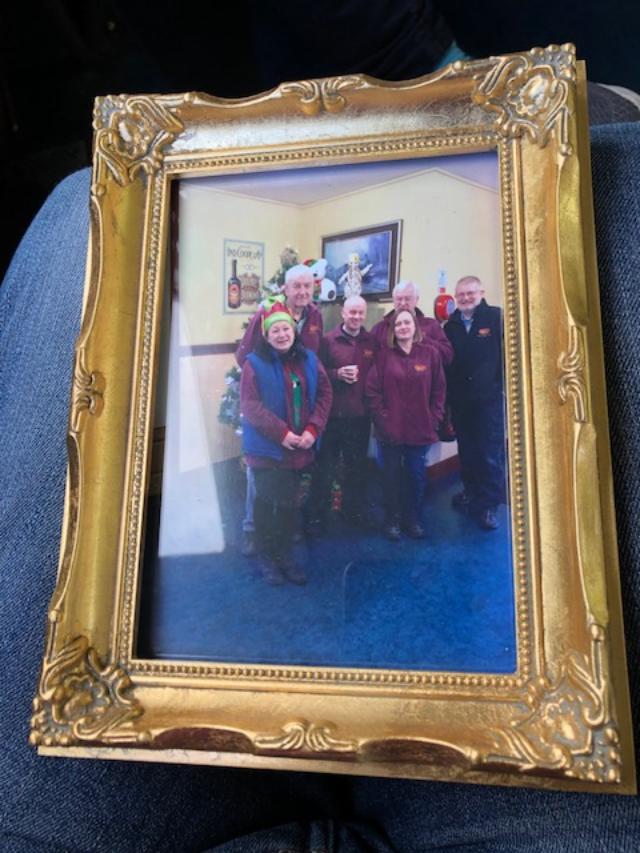
This is a picture of the staff at Chasewater Heaths Station 2010, give or take a few!
We’ve only managed to name of couple of them – Nick Fletcher and Mike Hurley. Can you help with any more names please? Su Westley found the pic in the CWH station and would like to know. Nice frame!!

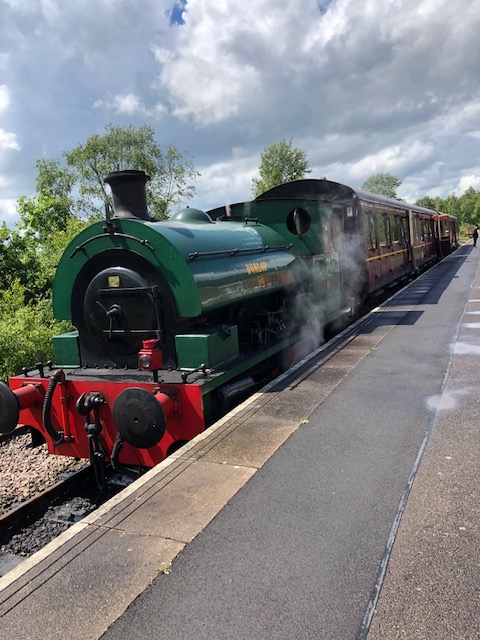
Running round at Chasewater Church Street, 15-5-2010 as ‘Linda’

186- Chasewater Railway Museum Bits and Pieces

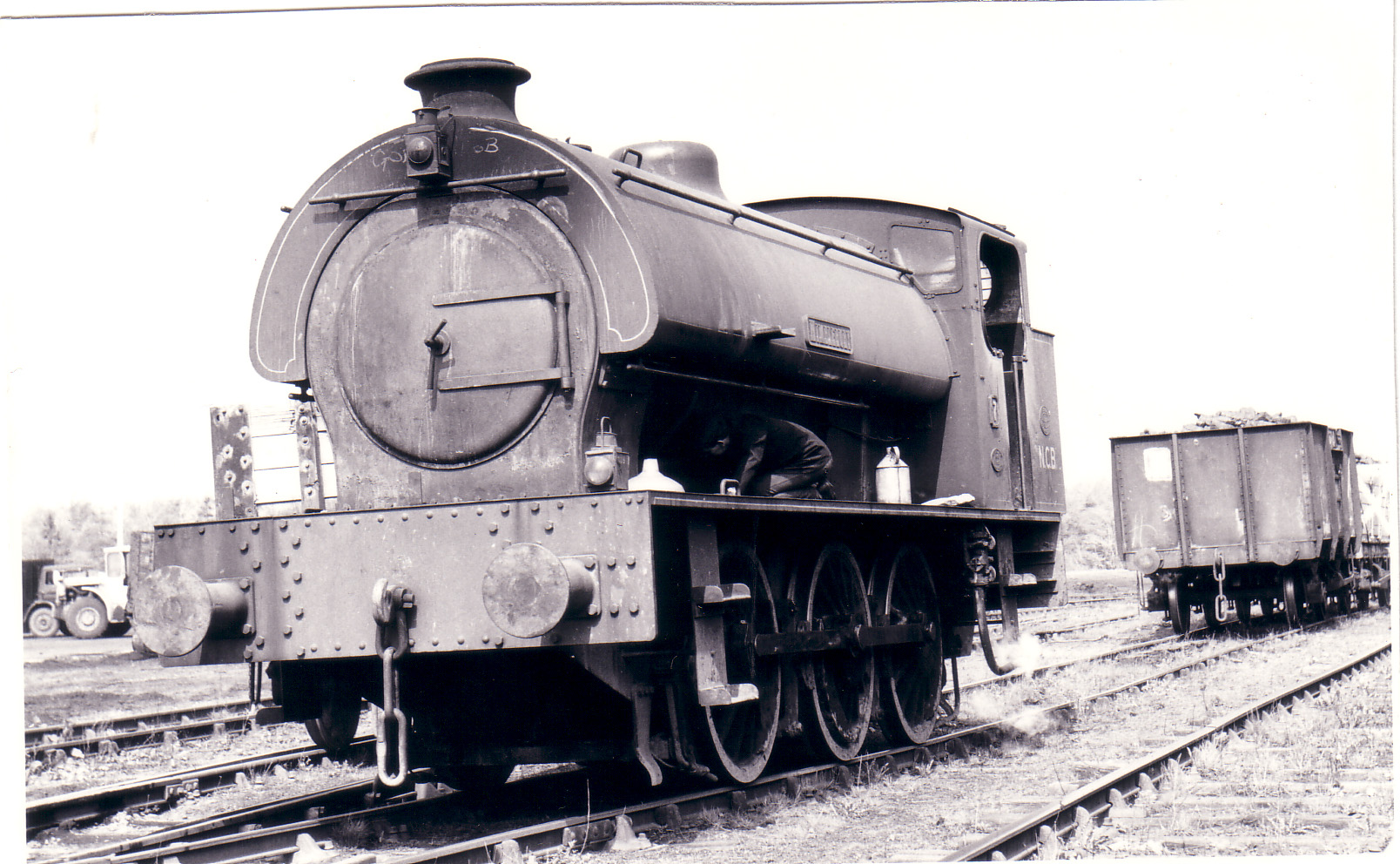
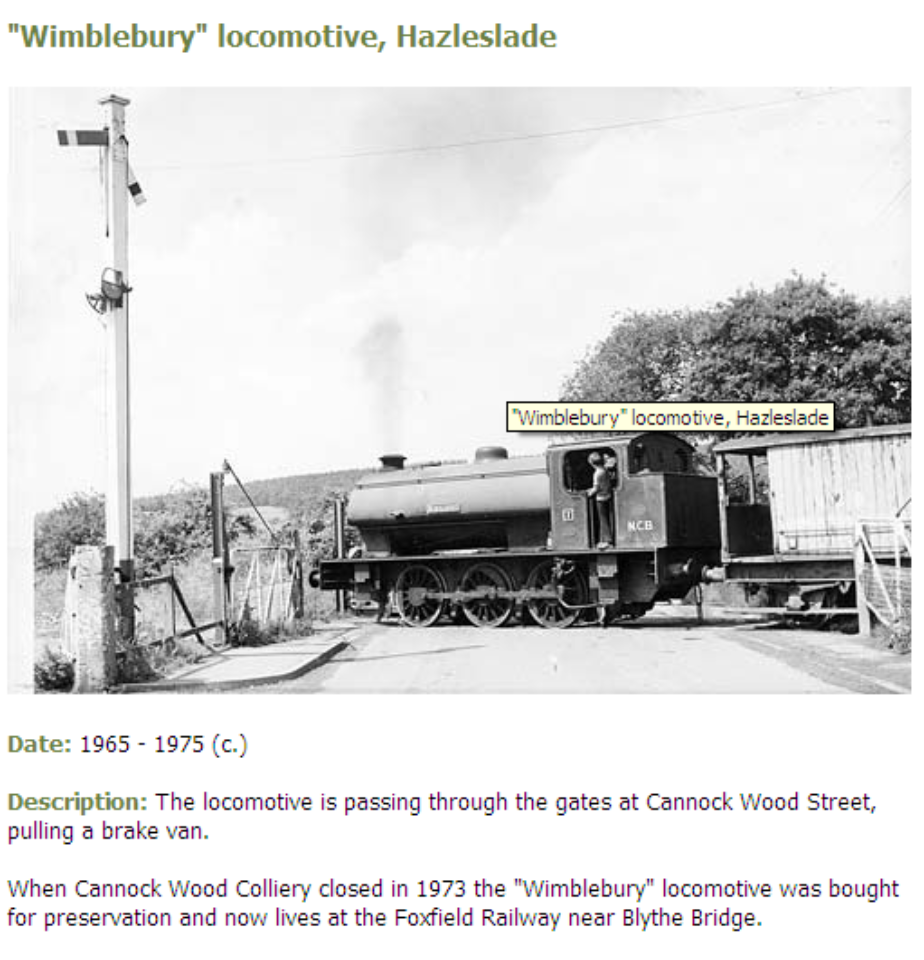
No.7 Wimblebury 0-6-0ST Hunslet 3839-1956 Cannock and Rugeley Collieries

186 – Chasewater Railway Museum Bits & Pieces

From Chasewater News Autumn & Winter 1995 – Part 3

 Loco Shed News

With the overhaul of the Sentinel nearing completion and the repairs to Asbestos well in hand, it is possible that the opening of Norton Lakeside Station on the 16th December could be another first with the special train being double-headed, which as far as I know has never been done at Chasewater before.  The work that has been done in the engine shed over the past few months has been incredible, and many thanks to Nigel Canning, Les Emery, Tony Sale and all the other willing hands that have helped.

Steam Locomotives

No.4 Asbestos – The casting for the main steam pipe was delivered during the second week in November.  After heat treating to reduce the stress on the casting it was machined courtesy of Tony Sale and the first trial fitting was on the 19th November.  A few minor adjustments were required but this has now been rectified and the casting fitted.  This should keep Asbestos running over the Christmas period and into the start of the new season.

No.5 Sentinel – The Sentinel has just about completed its long overhaul and is due for its test steaming at the end of November/beginning of December.  Hopefully this should be accomplished without any problems, and all credit to Nigel Canning for the first class job that he has done on his locomotive.  With the work completed on the Sentinel this should give us two steam locomotives in traffic.

S100 – Work continues on putting S100 back together again.  Two of the valve springs have had to be remade after a gap was found between the valve and the cylinder on one side.  One of the brake hangers has been dismantled, then cleaned and primed.  The work continues towards the completion of the chassis ready to receive its wheels.

Diesel Locomotives

Fowler diesel mechanical No.410013 – Further cosmetic work is being done to this locomotive to protect it from the winter weather and work will recommence on this locomotive after several other projects are finished.  The diesel still remains nominally serviceable.

Fowler diesel hydraulic No.422015 – The ‘Black Fowler’ remains temporarily out of service due to the breaking of three of its injector pipes whilst on works train duties.  The repairs to the pipes should be completed shortly and it should be back in service for Christmas and the start of the New Year.

L&Y No.1 – No.1 is well on the way to being put back together.  Work is proceeding on the engine with one of the two cylinder blocks now fully finished, and work is rapidly continuing on the second.  All being well the engine should be finished shortly after Christmas.  The next job on the agenda is to crane out the chassis and wheels, clean and paint them.  If all goes well No.1 could be running again by the end of 1996.  (See post No.183).

No.21 – The engine of No.21 is going back together at a slow but steady rate.  The second cylinder block has been replaced and the manifolds are being put back on.  Most of the basic repairs to the engine are now complete.  The next items on the agenda are the cooling system and the electrical systems.  This locomotive could also be finished by the end of 1996 with a bit of luck.

P.Way News

Blood, Sweat and Tears – Arthur Edwards

Most of the past several months have been taken up, in between the service trains running, with getting the track ready for the Inspector’s visit in September and again in October.  The ‘Blood, Sweat and Tears’ of the new extension has lived up to its name.

Blood – Because during the completion of the Causeway many a finger has been caught whilst either rolling in rail or keying up the track, so drawing blood.

Sweat – Of which a lot has flowed during the summer months, as it was one of the hottest few weeks on record, and for those who have done it, P.Way is hot and heavy work.  (Is it not, Tom?)

Tears – When things have gone wrong, and believe me they have, such as when Lakeside Station was nearing completion and we ran out of bricks to finish the platform, due to vandals knocking off the laid bricks and throwing them in the lake.  Then after the Inspector had been it was found that the rail was too close to the platform edge so that the clearances had to be altered by one or two inches, taking a dozen blokes to do it over a weekend.  (My back still remembers it.  Ed.)

In the end I received a phone call at about 5.20pm on the 25th October with the news that the extension had been passed for passenger traffic and we could now run into Norton Lakeside Station, which was very good news indeed.  I have only one request – could the P.Way lads get their breath back before we get any more track in to extend the running line, please!!

My thanks to Nigel Canning for the photos

185 – Chasewater Railway Museum Bits and Pieces

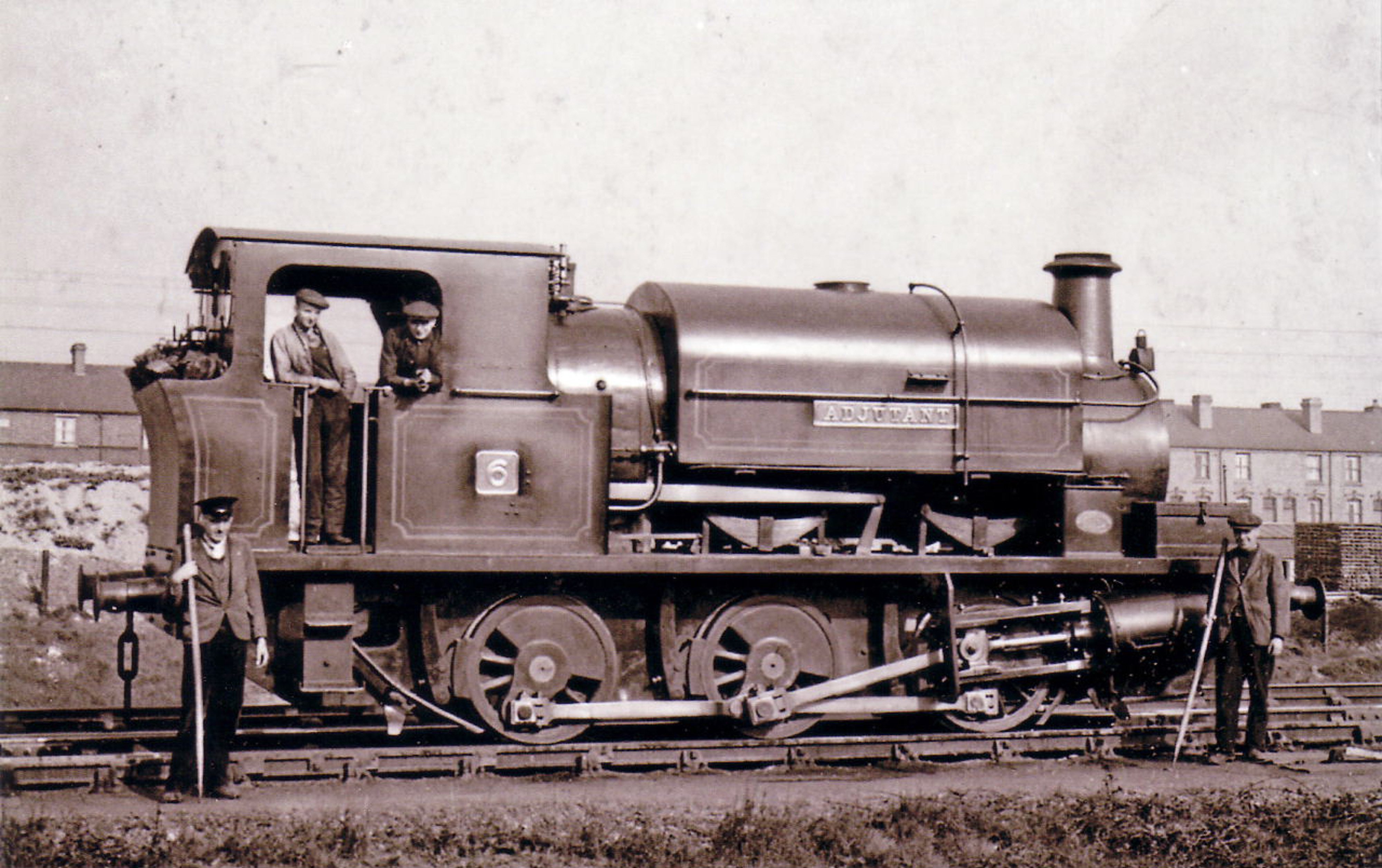
‘Adjutant’ 0-6-0ST Manning Wardle 1913-1917, Cannock & Rugeley Colliery

185 – Chasewater Railway Museum Bits & Pieces

 From Chasewater News Autumn & Winter 1995 – Part 2

Working Members’ Meeting – David Bathurst

27th September 1995

 At the 1995 AGM, members expressed a wish to hold occasional meetings with board members to discuss a wide range of topics associated with the running and management of the Railway.  The second such meeting was held on 27th September 1995 when an encouraging number of members attended at Brownhills West Station.

For the benefit of working members who were unable to attend, the following is a brief summary of the principle matters which were discussed.

HMRI Visit

The HMRI had visited the Railway on Friday 22nd September 1995 and the outcome of the inspection was announced.  (See post No.184) The Railway Inspector’s request for the platform surface at Norton Lakeside to be improved has already been attended to.

Timetable for 1996

Once Norton Lakeside Station is open to public traffic, anew timetable will be introduced.  Services will depart at 45 minute intervals with a short lay-over at Norton Lakeside.

Condition of Steam Locomotives

It was noted that the 10 year boiler certificates for #Asbestos’ will expire in July 1996.  The Board will be discussing, at an early meeting, the implications in the light of the current requirements of the Boiler Inspector.

Maintenance of Operational Rolling Stock.

Reference was made to the lack of resources to carry out the full and proper maintenance of the operational rolling stock although it was accepted that there is a need to strike a balance, taking account of the standards which are achievable having regard to resources available.

Platform adjacent to the Locomotive Shed

Some, albeit minimal, works have been carried out on the platform. Subject to appropriate supervision, there was no objection to more substantial works being carried out by a CS team.

Contents of Locomotive Shed

It was felt that a number of privately owned locomotive parts could be removed from the locomotive shed into storage elsewhere.

Heads of Departments, Etc.

The Board was in the process of inviting individual working members to accept responsibilities in particular fields, but wished to ensure that the working members were involved in the process. During lengthy discussions, a number of suggestions were made as to the filling of various posts and which will now be considered at the first available meeting of the Board.

In relation to the appointment of a press and publicity officer, it was suggested that contact be made with a local college with regard to the involvement of a student undertaking a media-related project.

What are we trying to achieve?

At a recent meeting of the Board, the question was raised as to the Railway’s sense of direction and raison d’être.  Although we promote ourselves as ‘The Colliery Line’ we do little to substantiate the claim in this respect.  Do we wish to become a miniature Severn valley Railway?  How much use should be made of diesel locomotives and DMUs?  Is there merit in expanding the use of brake vans for passenger traffic?  What image do we wish to project?

It was agreed to include this matter for the agenda for the next working members’ meeting for a full and open discussion.

First Aid

It was agreed that more members should be encouraged to undergo training in basic first aid.  One of the appendices to the proposed rule book is to include the names of persons with first aid qualifications.  It was also accepted that there should be a St. John’s Ambulance Brigade presence at rallies.

Fire Extinguishers

Concern was expressed regarding the condition of the fire extinguishers at Brownhills West and it was confirmed that new charges were awaiting delivery.  The matter was of sufficient gravity that it was accepted without dissent that any member found misusing fire extinguishers would have their membership of the Railway withdrawn and might be subject to prosecution.

Further Working Members’ Meetings

The members expressed the wish for a further meeting to be held on a similar basis later in the year or early in the New Year.  This meeting will be held at the Pear Tree Public House on Wednesday January 10th 1996 at 7.30pm.

Engine Shed 1992

HMRI Inspection – David Bathurst

Results

Results of the first inspection (22-9-1995) in post No.184.

The following subsequent inspection by HM Inspecting Officer of Railways, Mr. Colin Law, was carried out on 25th October 1995.

The outstanding matters which needed to be attended to following the earlier inspection were all completed in good time except that some vandalism on the evening prior to the inspection meant that an amount of last-minute fence re-wiring had to be done.  Our grateful thanks go to the members who helped out in repairing the damage.

The outcome of the inspection was that Norton Lakeside Station meets the necessary standards and is accordingly approved for passenger use with immediate effect.  The only matter which concerns Mr.Law was in relation to the structural integrity of Great Crane Brook Bridge, where the track had to be slewed off-centre to gain the necessary track clearance into the station.  There is no problem in the use of the DMUs, but the short wheel-base and axle loading of our locomotives, both steam and diesel means that they cannot be used on public passenger services until the integrity if the bridge structure has been established.

So, we are now in a position to operate a ‘proper’ passenger service between two ‘proper’ stations, thereby fulfilling the ambitions of members who have been associated with the Railway much longer than me.  The importance of this achievement cannot be understated and will form the subject of an article in a later ‘Chasewater News’.

The official opening will take place on Saturday 16th December 1995 and all members will receive (or perhaps have already received) a separate notification of the event.  For the public, the first passenger trains will operate in the form of Santa Specials, on Sundays 17th and 24th December 1995.

Below – Colin McAndrew leaving Brownhills West.

Below – Holly Bank leaving Brownhills West, Easter 2015.

183 – Chasewater Railway Museum Bits & Pieces

From Chasewater News Summer 1995 – Part 3

This image has an empty alt attribute; its file name is 05111-alfred-paget-0-4-2st-beyer-peacock-204-1861-ccccc.jpg

Alfred Paget 0-4-2ST Beyer Peacock 462-1864 Cannock Chase Colliery Co.

183 – Chasewater Railway Museum Bits & Pieces

From Chasewater News Summer 1995 – Part 3

P. Way News – Arthur Edwards

Here we are again, writing to let you know how the track is coming along.  Well Tom and I have been shovelling out the four-foot, which to Joe Public, is the distance between the inside of each rail in preparation for weedkilling which is now overdue.  This operation cannot take place until all the excess ballast in the four-foot has been removed to the track shoulders.

When this operation is completed we can start to look forward to planning the work on the new sidings.  The pointwork involved will mean the prefabrication of the new turnouts alongside the existing running line, so that when they are completed they can be put into place with the JCB over one weekend after the end of the season, so causing the minimum of disruption to the running line.  When this is completed the rest of the sidings can be put into place so relieving the overcrowding in the top compound.

But this is in the future.  The weekend of the 30th July will be given over to upgrading the track in the new station area; this will include levelling out the one or two odd rough spots due to ballast compaction, and shouldering the track ends to generally tidy up the area.

The next 8 weeks over August and the beginning of September should see the new station up and running, as there is only some brickwork to finish off and the last few fence posts to be put in place.  The overall deadline is to be finished before the October Rally, but this will depend on members coming along to help out, there are plenty of tasks from mixing the mortar for the bricklayers to helping backfill the platform.

The sooner we can get these tasks finished then the more important job of extending the line towards Church Street can go ahead.  I feel that this is well within our capability as long as we have the numbers of long term dedicated volunteers.  The overall extension to the running line can only continue as long as we have the manpower to help lay it, and then maintain it.  The overall standard of track has greatly improved over the past few years but it is a constant battle not to slip back, and as we use the line for more running days the overall wear and tear is getting heavier.  So if you can spend a few hours for one or two weekends a month I will be more than happy to see you.

L & Y No.1 – A Brief History – A.Mould

Lancs & Yorks No.1 – May 14th 1920 in full livery

Many of us are asked questions regarding the history of our stock stored on site.  Hopefully this article will start the ball rolling as a starter for a series of short articles on various items, and so improve our own knowledge about them.

Just after the First World War the Lancashire and Yorkshire Railway were finding that the capstan and horse shunting were laborious and time consuming so creating inefficiencies in labour and increasing expense, so attempts were made to find a more efficient replacement.  Two battery electric locomotives were constructed for shunting at the L & Y’s power stations which provided power to the Bury routes around Manchester.  In 1919 they had been provided with an 8 ton Simplex shunter for demonstration purposes, which they later bought and numbered No.1 in their internal combustion list.  The Simplex locomotive was a development of the first oil-engined locomotive built by Mr.Priestman in 1894.  Simplex used a transverse mounted engine and gearbox.  In 1920 a further two locomotives were ordered from the Motor Rail & Tramcar Co. Ltd. (Simplex) of Bedford England.  The locomotive itself was based on well proven and reliable technology, being based on Motor Rail’s war time design, which had given sterling service in the front line trenches in France and Belgium where a steam locomotive would have been an instant target.

The propulsion for No.1 was provided by a W.H.Dorman 4J.o. petrol engine of 6.4 litres with magneto ignition which was capable of developing 40 hp at 1000 rpm and was originally designed for use as a road vehicle engine for lorries and other large commercials.  The automotive arrangement of the engine where the main bearings were mounted on the upper half of the crankcase was scrapped and the locomotive engine was built up from a sturdy cast iron lower crankcase.  This followed marine engine practice.  The lower crankcase held a considerable amount of lubricating oil, much more than a sump.  The position of the cooling system water pump and the magneto were changed for ease of maintenance.

Railway Forum 1976

At the Dorman works in Stafford this form of 2 and 4J.O. engine produced for Motor Rail was always known as ‘Trench Engines’ due to their service in the First World War.  The Dixon-Abbot gearboxes used in the 8 ton shunters were built by David Brown.  The gearbox was driven through an inverted cone clutch from the engine, and with two forward and reverse positions it was then connected through heavy roller chains to both axles.  A tractive effort of around 3,500 lbs. in low gear, at up to 3 mph and 1,250 lbs. in high gear giving a top speed of around 10 mph.  The clutch, which was part of the flywheel assembly, was lined up with Ferodo friction material, and this could cause great difficulty biting violently when engaged and changing gear, should the engine and gearbox ever become out of line, so potential drivers – you have been warned! (as Financial Controller I have been informed that it does 1 mile to 5 gallons, therefore if he is prepared to buy the petrol, he can run it! – Chris Chivers, Editor.)

As delivered it was believed that the locomotive was a bright red, but after acceptance it was soon repainted in Lancashire & Yorkshire lined black.  The first shed it was allocated to was Sandhills, later renamed Bank Hall, and it quietly resided there with Nos. 2 & 3 going about its duties of shunting wagons in and out of warehouses, etc. until 1922.  It was repainted into the livery of the LMS sometime in the 1930s after the LMS had inherited the three Simplex from the London & North Western Railway’s division B, as the LNWR had merged with the L & Y earlier in 1922 during the grouping of the independent companies into the ‘Big Four’.  The LMS transferred it to Scotland on the old Glasgow & South Western Railway, but for what purpose we don’t know, but it returned to its home ground because in 1932 it was offered for sale from Horwich works as well as Nos. 2 & 3 and all three were bought by George Cohens, a Leeds scrap man and locomotive dealer who refurbished them at his Stanningley Depot and then sold them on.  No.1 went to Ryland Brothers at Warrington who were wire makers and continued in their service until its retirement, whereupon it went into preservation and came to Chasewater.

L & Y No.1  – In  Rylands Livery,  Railway  Forum 1976

Upon arriving at Chasewater, no.1 was repainted into Ryland Brothers colours and was exhibited at Dormans 100th Anniversary at their Stafford works.

It is now 21 years since No.1 last ran in anger at around 5 gallons to the mile!!! In petrol consumption.  Restoration is well under way and a pair of split spoked wheels have been obtained to replace the solid wheels that are presently on the locomotive.  Shortly. Maybe even by the time you read this magazine, it will be craned out from its position on the bay platform ready for further attention to its frames and bodywork.  How long you say – well let’s take the job slowly and deliberately with care.  I’m looking at 2 – 3 years, maybe sooner with assistance.

Sadly, most of  L & Y No.1 was stolen before it was fully restored – I believe that the original engine and one set of wheels are still at Chasewater.

182 Chasewater Railway Museum Bits and Pieces

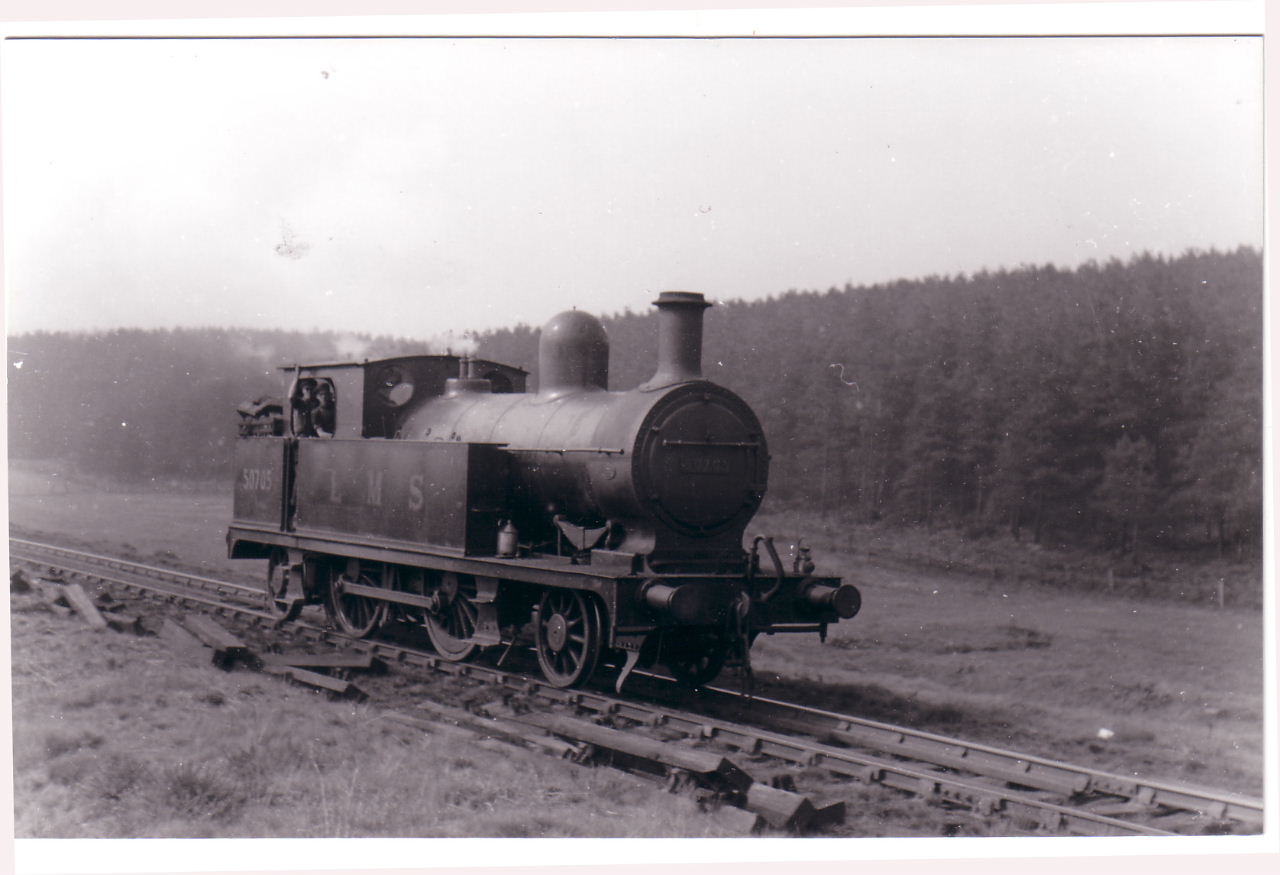
50705 2P on loan from NCB 15-5-1952

182 – Chasewater Railway Museum Bits & Pieces

From Chasewater News Summer 1995 – Part 2

Loco Shed News

The loco shed has had its first visit by one of the DMU cars for maintenance at the end of July.  It was proved that, against all odds, the shed doors were large enough to accommodate the loading gauge of the vehicle.  When S100’s chassis is back on its wheels and the shed cleared, a DMU car can be comfortably accommodated for routine maintenance on the underside of the vehicle.  With the basic compressor installed, courtesy of Oscott Air, the addition of a main air line is now proceeding.

A few air tools have been acquired but more are needed, if you have any spare or know someone who has could you please let us know, or possibly drop them into the locomotive shed any Sunday after 10.00am.  One area also due to receive some attention in the shed compound is the platform.  Over the years a small amount of movement in the fill behind the platform facing has begun to shift slightly causing a minor bulge in the platform facia, as a remedial solution to this problem the top slabs and the first course of bricks are due to be removed along with the top levels of fill.  This will finally give us a chance to clear the last of the bits and pieces from the platform and recover any useful items and clear out for scrap any metal that has no relevance to any other department on the railway.

Steam Locomotives

No.4 Asbestos – This locomotive which has given so much service over the years is now starting to feel its age, and shortly major boiler works will be required to keep it in traffic.  The latest failure was due to the lower half of the regulator casting rotting through after 86 years.  Two attempts to cast a replacement at the Ironbridge Gorge Museum’s foundry at its Blists Hill site, for a miniscule cost, have failed due to collapsing cores.  The railway would like to thank the staff for their best effort to help in this matter.  We must now consider that this casting will now have to be sent to a commercial foundry for its manufacture.

No.5 Sentinel – Work on this loco is rapidly progressing towards completion.  With its boiler passing its hydraulic pressure test and many of the fittings being put back into position, another few week’s work should see the Sentinel out of the loco shed for its first steam test.  The few pieces that need to be finished off include a new section of steam pipe from the regulator to the engine and some new packing glands.

Sentinel December 1989

S100 – The long steady progress of S100 is still continuing.  The cab roof and side tanks have now bee moved into the bottom compound and a further search of the area between one and two roads has been carried out for any miscellaneous pieces from this locomotive.  The only major pieces to still be taken down to the shed compound are the two sand boxes still lying in between one and two roads.  The valve gear is still receiving some attention as well as work continuing on the remaining locomotives springing.

Diesel Locomotives

DL7 – This locomotive remains serviceable although a number of problems have occurred with the air starting valves sticking.  They have now been dealt with, but with the general state of wear and tear on the engine it is only used for emergency stand-by.  The axle boxes and brake gear has also seen attention over the past several weeks.

Fowler diesel mechanical No.410013 – The small Fowler continues to be nominally serviceable as another emergency stand-by.  The amount of work on this locomotive has been limited due to the loco department’s staff being engaged on other loco department work.

Fowler diesel hydraulic No.422015 – This locomotive continues to be the backbone of the railway’s shunting and works trains.  Apart from some routine maintenance work the locomotive has proved to be reliable since the repair of the torque-converter transfer pump.

No.21 – This historic locomotive is steadily progressing toward completion with the sump being replaced on the crank case with a new sump gasket.  The clutch components have been located elsewhere on site and are now being refurbished.  The second cylinder head has been finished off and is now ready for re-fitting to the rest of the engine.

L&Y No.1 – Work continues on this locomotive with the Dorman’s 4JO engine rapidly being rebuilt.  One of the cylinder blocks has been replaced and the timing case assembly being completed.  Further work on the engine includes replacement of a valve guide and attention to the valve gear.  A new water pump is due shortly from Perkins Engines (Dormans) and the refurbishment of the radiator by Serck Marston is virtually complete.  Other work has included the removal of brake gear and sand boxes for repair and refurbishment.  It is hoped by the time of going to press with the magazine that the body and wheel sets currently on the spur siding at Brownhills West Station will have been craned out and a correct set of split spoke wheels obtained for use on the locomotive will be brought together in the shed compound.

DMUs – The DMUs have continued to provide a reliable running service, although they have been dogged by a continuous stream of small system failures, which leads to one or more engines having to be isolated.  We have yet to suffer a total failure in service, and so far none of the minor failures have been beyond out capacity to fix.

178 – Chasewater Railway Museum Bits and Pieces

Featured Locomotive: No.7 Birch. Built at Rawnsley in1888 but not put to work till 1890. Worked at Brereton 1949/50. Scrapped at Brereton circa 1956.

178 – Chasewater Railway Museum Bits & Pieces

From Chasewater News Spring 1995 – Part 1

From the Editorial – Chris Chivers

This is the first issue of the Chasewater News for over five years without Nigel Canning at the helm.  Nigel has decided to retire from the post of Newsletter Editor, a task which has at times been a thankless one but a job which has been vital to the railway and its members.  From myself and the other members of the Board I would like to give Nigel our heartfelt thanks for the effort, patience and perseverance in trying to produce a newsletter that has increased in space and scope during his editorship.  Many, many thanks Nigel.

Since the last newsletter, work on the railway has increased apace, Norton Lakeside Station has been lengthened and backfilled to accommodate a three coach train and the 55 coping slabs that came from British Rail’s Taunton Concrete Works are believed to be the last order that was processed there before the works were closed down.  Fencing on the causeway is well in hand, trespass notices have gone up at each of the foot-crossings over the line between Brownhills West station and the new station with the accompanying whistle boards scheduled to be put in place shortly… The bridge between Chasewater and Jeffrey’s Pool has received new steelworks on the parapets and plans are being made to use the extra bricks in lengthening Brownhills West platform later in the year.  At Brownhills West the new amenities block is being refurbished with a donation of materials from Lichfield District Council for the cladding of the temporary accommodation.  This will give us at long last some decent sized toilets as well as facilities fro the disabled.  Also a new facia for the booking office and shop has been constructed off-site by the Community Service lads and should be put in place shortly.  The problem of extra storage space for stock alongside Elsley’s siding is being looked at, with it being earmarked as a summer job for the Community Service people.

The problem of lack of working members is again rearing its ugly head.  In 1986 there were a handful of working members and this has grown steadily so that in 1994 there were 20 – 30 volunteers working on site.  As the railway has grown, the demands on their time by the railway have increased.  In 1986 it was all hands to man the station on a steaming day, in 1994 not only were we fully manned for steaming days but there were staff working in other departments as well.  The railway is growing and growing fast, with 60 running days this season and the strain on our existing volunteers is growing.  If you can spare some time or would like to become a regular working member come along any Sunday from about 9.30am, you would be more than welcome.

Loco Shed News

The loco shed has at long last got a fixed compressor which means that the engineering staff have got ‘wind’ to help with some of the jobs that consumed many valuable man-hours.  The compressor was a donation from Oscott Air as they decided the faults on it were not worth repairing.  On further inspection it was found that the only things needed were the small piston and con rod.  The old ones having worn the circular hole for the piston and con rod for the gudgeon pin to an oval shape, so causing a rather loud knocking noise.  It is hoped that jobs such as taking out old boiler tubes can be accomplished much more easily than having to do it by hand.  With the tidying up of the engine shed the ‘diesel dismantlers department’ have installed a new bench allowing them to lay out and reassemble various bits of engines.

 Steam Locomotives

 No.4 Asbestos – Once again Asbestos has opened the season for passenger services but whether it will see the season out is doubtful.  During the winter the crown of the firebox was built up with weld and a new fusible plug mounting was made and put into place.  Several of the rivets at the base of the firebox have received attention, as well as the foundation ring.  The new tubes purchased last year are in store and await the major overhaul that Asbestos needs.

 David & Goliath – Asbestos & 60056

No.5 Sentinel – The Sentinel failed its hydraulic test at the first attempt with a blown tube.  The boiler was lowered into the pit, the 14 outer tubes removed, new tubes purchased, replaced and the boiler hoisted back into position, all within 21 days.  The boiler fittings have been replaced and the second hydraulic test was successful.  Some of the pipework has had to be renewed because of the re-positioning of the Weir pump and it is hoped the Sentinel will be back in service later in the season.

S100 – The centre wheels for S100 that have for ages been in between one and two roads have at last been moved and are now in the shed against S100’s frames.  The tanks at the top end of Brownhills West site are also scheduled to be moved to the shed compound in the near future.  Several parts of the brake gear have been placed alongside S100’s frames and have received attention to free the pins and to clean the rust off them.  New horn keeps for two of the axle boxes have been fabricated and attention has been given to re-assembling the valve gear.  It is expected that S100 could be back on its wheels within the next 12 months.

Hudswell Clarke – The Hudswell Clarke has received a cosmetic coat of paint to smarten it up and to prevent any further corrosion to the bodywork.

No.3 Colin McAndrew – The boiler is awaiting a decision after its departure for the SVR’s boiler shop at Bridgnorth and the outcome of the inspection there.

917 – A short section of track has been laid in the shed compound in preparation for receiving the chassis that is currently on three road.  This is to enable some basic work to be done in cleaning and preparing the chassis for the long work of restoration back to working order.

917 at Albright & Wilson, Oldbury

 Diesel Locomotives

 Fowler diesel mechanical No.410013 – Work has continued on restoring the loco to full order.  The cab roof has been needle-gunned and has received a coat of primer (causing a complaint from one of our neighbours over the noise).  The air receivers have been removed for inspection and some of the pipework is scheduled to be renewed.  The loco is nominally serviceable.

Fowler diesel hydraulic No.422015 – The Fowler has been the backbone of the works trains and now needs some attention.  The problems with the engine due to diesel dilution of the lubricating oil have now been rectified.  The pump for the torque converter has now been repaired and this in turn has cured the low oil pressure that has been a problem for some time.

DL7 – This loco has been returned to traffic with the faults from last year rectified.  The broken cab windows have been replaced and some minor attention is needed to the instrument panel.

L & Y No.1 – Progress on rebuilding the engine maintains a steady pace.  The old cast iron spark plug holders have been drilled out of one of the two cylinder heads with the second head awaiting its turn.  New holders have been fabricated and are waiting to be fitted to the refurbished cylinder heads.  The timing gears have been remade and hardened courtesy of Dorman Diesels of Stafford.  A number of components for the 4JO engine have been loaned to Dormans to help them rebuild a similar engine from the Festiniog Railway’s Simplex ‘Mary Anne’.  It is possible that the engine from No.1 could be loaned to Festiniog upon completion of rebuilding for running in ‘Mary Anne’ while No.1’s chassis and bodywork is finished.

No.20 – The loco on loan to Bass Brewery Museum is receiving some attention, with the eventual aim of getting No.20 back into running order.

No.21 – Work still continues on getting No.21 finished.  A new radiator has been acquired and upon completion of a new sump gasket the sump should be fitted back to the engine.  With only one head to be put back onto the main cylinder block No.21’s engine is nearly complete.

DMUs – Both of these have received A and B examinations.  The brake blocks on one of the out-of-service units need replacing, and they will require some more maintenance work.

176/177 – Chasewater Railway Museum Bits and Pieces

The featured loco today is ‘Rawnsley’, at Hednesford Canal Basin, a Lilleshall loco of 1872. Number 4 at Cannock and Rugeley Colliery.
Thanks to David Bathurst, Nigel Canning, Bob Duffill, Arthur Edwards and Keith Day for their contributions to these, and other, Chasewater Railway Magazines.

176 – Chasewater Railway Museum Bits & Pieces

From Chasewater News Christmas 1994 – Part 2

A Christmas Message from the Chairman

It is difficult to believe that we are about to enter the Christmas period yet again. The year has passed so quickly that it seems to have passed us by.  Yet for the railway, such a short period has witnessed so many exciting developments.

Anyone visiting the railway for the first time would wonder what it’s all about and why we are all so enthusiastic.  But for regular visitors and, more importantly, the intrepid band of volunteers who devote so much time to the welfare of the railway, the year has been full to overflowing.

This is not the time to review, in detail, the year’s events; the annual report is more appropriate for that.  However, the extension to the line merits comment, because of its importance to the public’s perception of our operations and, perhaps more vitally, our credibility as a passenger-carrying railway.

We had hoped to have laid the track into Norton Lakeside Station and to have completed the construction of the station during 1994.  That we did not achieve this ambition is of little importance; my colleagues will be familiar with my entreaty that “it is not a race”.  We cannot afford to compromise on quality by cutting corners in the interests of speed.  It is essential that the extension across the causeway, the station itself and the remainder of our line all meet the standards necessary to satisfy the Railway Inspectorate.  We have much work to do to consolidate our current line before we invite HMRI to return to Chasewater.

Having said all that, Easter 1995 now seems a realistic target for the opening of Norton Lakeside Station.  Pencil the Easter Weekend into your new diaries, and “watch this space” for further information.

1995 will also see an increase in momentum for the carriage shed fund.  If the spirit of Christmas moves you to make a donation to this worthy cause, then please do not hesitate to see Chris Chivers or myself.

May I remind you of the ‘Santa Specials’ on 11th and 18th of December when we can all find an excuse (if we need one) to open up the seasonal festivities.  Whether or not you are able to join us on one of these dates, may I take the opportunity to wish you all a very happy Christmas and a very prosperous New Year.

David Bathurst – Chairman

A view looking across the causeway back towards Brownhills West, just over a mile away.  On the left can be seen the platform face for the new Norton Lakeside Station with the first length of track in place.  A lot still remains to be done, but this could be a very popular place for photographers next year!

Synthetic Chemicals – Final Phase – by Arthur Edwards

It doesn’t seem like it, but this is the final part of the saga of retrieving the track from Synthetic Chemicals.  After a call from our ‘Fat Controller’, Steve Organ, on Friday 15th October to establish whether I was available for the Saturday morning, about a dozen people gathered at Synthetic Chemicals to collect what track was left there.

Anyway, Mick had called for me at 8.30am and we had been there about an hour when Steve asked Mick and I to return to Chasewater to get the JCB ready for when the lorry arrived with said track.  At about lunchtime the lorry duly arrived and Mick and I did our stuff unloading it.  An hour or so later ‘Curly’ the driver went off to get another load.  While he was away, Mick and I straightened up the rails and sleepers.  I had to go at 5.30pm but I believe the rest of the crew stayed until about 8.00pm to complete the job.

After that Saturday all there was left at Synthetic Chemicals was a buffer-stop, some smallish lengths of rail and a few sleepers.  After some hectic phone calls, Steve managed to get about six people on Saturday 22nd to go back and retrieve the last few remnants of track.

On the Sunday, with the help of the CS people, we actually laid the track through Norton Lakeside Station.  Once agreement has been reached with the Railway Inspectorate, it is our intention to just keep laying track down until we run out of either sleepers or rail, or until we reach our next objective which is Chasetown.  It is thought that we now have enough track to get us to the end of our lease, but hopefully we will have topped up our stocks before we get that far.

Whilst we continue to work on the track, the CS people have begun re-pointing the platform at Norton Lakeside Station, and preparing the top for the edging slabs.

  The arrival of a loaned ‘dogfish’ hopper wagon will hopefully make the job of ballasting a lot easier, and there are even rumours of a rented track-tamping machine being used in the near future!

Kenneth Judkins – by Dave Ives

It is my sad duty to inform you that Ken Judkins (Ken the Steam to his close friends), passed away on September 27th 1994 at Anson House Rest Home.  Ken was 91 last January, being born in Little Haywood in 1903.  Ken lived a very colourful and busy life in various parts of the country.  He moved to Stafford for the final few years of his life from Wimbourne Minster, Dorset, stating that he wanted his bones to rest in his native county, which has indeed now happened.  His remains lie buried in Colwich Churchyard.  He was Christened in Colwich Church and served as a chorister for a number of years.

Members will be aware of Ken’s long association with steam traction having started with Ralph Gee & Son, Wolseley Bridge, then on to Staffs County Council, Foden’s, Thomas Hill (Rotherham) Ltd. and Sentinel.

Ken was the author of two books “My Life in Steam” and “More of My Life in Steam”.  The books are worth a read and give a fascinating story of the tough and skilful job of steam driving in the 1920s and 30s.  Ken also served six years in the army RAOC in the war and was wounded in the lung whilst being evacuated from Dunkirk.

I suppose one can sum up by saying that this is the end of an era and that Ken is sorely missed by numerous friends, especially on the rally fields where he gave a lot of advice to scores of steam traction owners.

Alas! We shall no longer see him propping up the bar, staying overnight in one of our coach compartments, puffing his pipe on Brownhills West Station seat or in his brown slop coat and Foden hat on the footplate of the Sentinel.

More about Ken – Nigel Canning

“Ken the Steam” as he was known to his friends, spent the majority of his working life and the whole of his retirement closely involved with steam traction on both the road and railways.  His experiences and expertise were sufficient to fill a book – or two, to be precise – both now sadly long since out of print.

Ken was never happier than when he was showing off just what steam power was capable of, and in his last two jobs, at Foden, and then at Thomas Hill (Sentinel) as Chief Demonstrator and Test Driver, that is exactly what he was paid for, selling those Companies’ products and fending off the advance of the motor lorry and diesel loco.

In his retirement Ken continued to take an interest in steam by helping the preservation movement where his enthusiasm backed up by a lifetime of experience was of invaluable assistance to many an amateur locoman or fitter.

At Chasewater his advice was of particular assistance in the operation of the Sentinel.  On one occasion when one of the poppet valves on the engine was playing up, Ken was all set to ride down the line and back to observe the valve events and pinpoint the problem.  It took a lot of doing to convince him that it was not the done thing to run a passenger train with an engineman in his late eighties hanging on the side of the loco, but we eventually succeeded, and as a result of his advice the valves were alter re-set to operate correctly.

Ken once admitted that he didn’t really like Sentinels as they were dirty things, but that just reflected his real love, the Foden, and his exploits with those machines are well-documented and will be remembered for a long time.

177 – Chasewater Railway Museum Bits & Pieces

From Chasewater News Christmas 1994 – Part 3

Carriage & Wagon News

New Acquisition: ‘Dogfish’ DB992841 – This useful hopper wagon has recently arrived at Chasewater on loan for 12 months from Andy Goodman of Allely’s Transport.  Following minor attention to the chute actuating gearboxes the wagon has entered service as part of the PW works train to transport ash up to the new station and beyond.

Pressed Steel Co. DMBS W51372 – This car has remained in service coupled to W59444 to form the loco hauled train.  It was recently given an ‘A’ exam, and following the recent acquisition of some more spares one or two minor repairs may shortly be carried out.

Derby Works centre Car W59444 – The electrical system of this coach has recently been overhauled, including servicing of the batteries, cleaning and resetting of contactors and renewal of some of the invertors for the strip lights.

Derby Works Centre Car M59603 – This coach has remained stored out of use.

2-Car DMU: DMBS W51370 & DMS W 51412 – This train has remained in service, being run on non-steam Sundays until recently when declining passenger numbers made it uneconomical to continue.Summer congestion at Tysewater!

Manchester, Sheffield & Lincoln six-wheel coach – A great deal of progress has been made recently on this vehicle.  All of the doors now close properly, and all of the glass has been fitted in the windows and doors so that the interior can be kept dry.  The partially burnt panelling around the guard’s doors has been removed, and new locking bolts for the double doors made and fitted.  Various rotten mouldings are being renewed, and the exterior of the bodywork has been given a preliminary coat of paint to help protect it.  A certain amount of work has also been done on painting the interior.

LNWR (Paddy) Coach – Work has started on this coach by a carpenter working on the Community Service Scheme.  So far some of the doors have been re-fitted, and repairs have been carried out on the roof to try and waterproof it.

Battery charging – The station battery charger has now been rebuilt and connected into a network of underground cabling enabling a number of vehicles to be connected to it simultaneously.

Stop Press

The Board has agreed to purchase around 600 concrete sleepers, enough to relay track to the rear of the Burntwood Industrial Estate.  Delivery will commence in the New Year.

The Annual October Transport Rally – Arthur Edwards

This year’s rally seemed to surpass all of the rallies that we’ve had over the last five or so years.  There were more vehicles than previously, but all cordoned off in such a way that it seemed that we could have had at least half as many again.

I finished work at 2.45pm on the Friday afternoon to be at Chasewater by 3.00pm to help Dave Whittle, Rally Organiser, to put up the fencing.  This involved finding the fencing stakes before I could start.  Eventually it was time to make my way home, and I told Dave I would be there at 9.30am on Saturday.

I duly arrived at Brownhills West Station at the said time, collected the stakes and started to knock them in to cordon off all the stationary engines and their owners’ living quarters, caravans, mobile homes, etc.

Steam trains didn’t run until Sunday as one of Asbestos’ springs had to be re-fitted following its repair, but our illustrious General Manager (Steve Organ) decided to use his DMU set.

Sunday dawned with high skies and not a threat of rain.  A few of us had to take the permanent way works train down to the far end of the running line to work on the extension.  This had to be done as even after the departure of the Wickhams we were still a bit cramped in the available siding space.  I digress slightly, anyway all went according to plan, and next year they are planning an even bigger event.

All credit on this occasion must go to Dave Whittle for the red-hot phone calls, and to his associate Paul Richards, with their mind-boggling train of events.  All the best for next year’s rally.  Thanks chaps, very much appreciated.

Commercial Manager’s Update – Rob Duffill

The season, apart from the two Santa dates which are in the future at the time of writing, is now over until Easter.  However, we do continue to tick over during the winter months and any income we can generate from whatever source during this period is essential to keep the wheels turning.

In addition to the core aspects of running the buffet and shop, we have been to several exhibitions.  These have been at the bonded warehouse in Stourbridge organised by Trev Cousins who was Secretary of our group in the 60s.  Also the Warley Model Show at the NEC and the Societies and Hobbies Fair at Walsall Town Hall.

The NEC exhibition is in its second year and is over two days and very interesting.  As usual John and I set up on the Friday and all went very smoothly as the Warley Show is very well organised.  The hall was better laid out this year and the public avoided the jams of last year.  We were opposite an ‘0’ gauge layout of the Taff Vale and a colliery with lots of industrials.  Also, Trev Cousins has produced in ‘0’ and ’00’ a model of Hanbury from our own area.  This 0-6-0ST Peckett was of very neat outline.  Trev and Pete Stamper, both members from the 60s, would be pleased to sell you one.  Our stand was fairly busy with its blend of both toys and relics and we exceeded last year’s takings.

The Hobbies and Societies Fair at Walsall was successful, not from the actual sales, but from the publicity point of view.  A lot of interest in the Santa Specials was generated.  Quite a few people looked at the old photos we had taken and said they were ex-miners who remembered them.  We also displayed a Pelsall Millenium plate at both exhibitions.  The Brownhills paper also took photos and promised free publicity, and several potentially useful contacts were made.  This event was definitely worth John and Margaret’s (with Chris) time, and our fairly low entrance fee.

Well done to all who helped during 1994, the trick being to extract money from the public in as pleasant way as possible, and to try and make the most of it all and enjoy yourself.  We look forward to next year’s opportunities to increase income with the line open over the causeway.

Bass Brewers Community Awards

Bass’s Grand to Chasewater

Chasewater Railway has received a Bass Brewers Community Award of £500 towards the £20,000 required to build the proposed carriage & wagon shed which we intend to build when funds are sufficient, and the North Orbital Road route has been finalised.  The fund now stands at about £2,000, the majority having been raised by members through donations and profits from events and rallies.

For those who are not aware, this is the third year in succession that the railway has been a recipient of a Bass Brewers Community Award.  In 1882 we received £300 towards the transport costs of removing redundant trackwork out of Hams Hall power station.  1993 saw a £250 award towards the purchase of rail, and £500 this year to the Carriage and Wagon fund.The presentation of the cheque at the end of the platform of Brownhills West Station platform, surrounded by what appears to be total darkness!

The presentation of the cheque took place on 27th September at 7.00pm at Brownhills West, and was presented to Alwyne Marsden and Tony Wheeler of the Carriage and Wagon Dept.   (Looking at the official Bass picture, and the expression on Tony’s face, it would be easy to believe that it was Tony’s money he’s giving away rather than receiving it from Bass!).

The Award is now becoming an annual event with an open invitation to all working members and volunteers, to which over forty came, with husbands, wives and children.  After the presentation of the cheque and pictures taken rather quicker than normal due to failing light, there was a trip down the line in the newly acquired DMUs by Railway members, Janice Clark, Regional Communications Manager for Bass and her photographer.  This not only showed how previous awards had been wisely spent,  but also showed how much progress had been made enabling us to go to the extreme end of the line where no DMU had gone before, over Spikey Bridge.  (Since then the line has been laid through the platform at Norton Lakeside and on 30-10-1994, the first works train travelled through it).

On arrival at Brownhills West Station a buffet and liquid refreshment had been arranged, and was consumed by those present.  With the evening turning into a social event, members could find time to talk and joke with each other in a more relaxed atmosphere, which is not often the case when running trains or events, or generally going about the various tasks on the railway.

Many thanks to those who came on the evening of the 27th, to Janice Clark, who I feel enjoyed the evening as much as we did, but also to Bass for their contribution to our railway.

Thanks Bass – and Cheers.  Keith Day.

175 – Chasewater Railway Museum Bits and Pieces

175 – Chasewater Railway Museum Bits & Pieces

From Chasewater News Christmas 1994 – Part 1

Editorial

I am afraid I must again start by apologising for the lateness of the last magazine.  This was due to problems with its distribution rather than printing, but meant that the advertisements for the vehicle rally and the Warley Show were wasted.  In view of this, the only advertisements printed in future, such as those in this issue, will be checked to ensure that they are so far out of date that they are of no use to anyone!  There is, however, a rumour that a company called Regional Railways is still capable of operating to a few of the stations advertised, although I believe the fares have risen somewhat!

We at Chasewater are now on the verge of being able to run trains between two stations at last, but as the Christmas shopping facilities at Norton Lakeside are in fact somewhat limited, this year the Santa Specials will terminate short of the new station.

I would like to thank all the people who have helped with the magazine this year by writing articles, lending photos or with its production or distribution, and finally wish everyone a very

HAPPY CHRISTMAS AND PROSPEROUS NEW YEAR.

Locomotive News

Asbestos propels a train back towards Brownhills West on the day of the October 1993 Rally.

No.4 Asbestos – This engine has again managed to keep us in the steam railway business by carrying on single-handed without too many problems.  On the day of the October rally the regulator caused a few headaches when it became even more stiff to operate than usual, inducing the occasional bout of slipping.  Since then the gland has been stripped, cleaned and re-packed, and the dome cover has been removed to allow adjustment of the valve itself.  Hopefully some improvement will be apparent at Christmas, if not we have a second chance before Easter.

No further problems have been experienced with leaking tubes, although it is still planned to renew the complete set after Christmas.  One or two minor leaks have been re-caulked in the firebox, and again these will be checked during the Christmas steaming.

One or two minor repairs and improvements have been carried out, including the fitting of steam brake exhaust pipe in the smokebox so hopefully the fire will no longer blow-back when the brake is applied or released.

No.5 Sentinel – It has been decided to fit this loco with a new set of washout plugs as by the time the boiler has been tapped out to clean up the taper threads, the original plugs will be too small to fit.  In the meantime work has continued with the repair of a pin hole in the main exhaust steam pipe which runs along the left of the loco from the engine to the blast nozzles in the chimney.  The leak was first noticed during the last few steamings when emulsified oil started blowing down the frames.

The semi-circular slide valve which controls the rather complicated operation of the Weir pump has been repaired by the building up of its ports with weld and re-grinding back to shape.  This should hopefully improve the operation of the pump by making it more controllable and less noisy.

Other work has included cleaning of the cab interior ready for painting, painting of the boiler barrel and re-fitting of some of the pipework.

S100 – Work is still progressing on the frames of this loco.  The brake hangars are in place, and a new underkeep is being machined to replace a missing original.

No.3 Colin McAndrew – In a surprise move recently the boiler of this loco was sent away to Bridgnorth for the SVR boiler department to quote for repairs.

Fowler diesel hydraulic No.422015 – This loco has again been the mainstay of the diesel fleet, being used on works trains and for shunting.  It has recently been suffering from low engine oil pressure thought to be caused by fuel dilution, and in addition the axle boxes have started running hot.

Ruston diesel electric DL7 – This loco is still serviceable, although the cab windows were smashed in a recent attack.  This has not helped the loco’s usual winter problem of damp getting into the main generator and traction motor, as the rain can now drive in through the broken glass to soak the floor boards.  Hopefully, after a bit of work it will be available as standby for the ‘Santa Specials’.

The Fowler diesel machanical No. 4100013 sandwiched between DMUs at Brownhills West

Fowler diesel mechanical No.4100013 – Following yet further work to its engine, this loco has been run to the causeway and back under its own power.  Its use is limited at the moment, as due to its starter motor needing re-winding, it has to be started by another loco.  Quite a bit of work still needs to be done, including refurbishment of the air system, however, it has been used on the works train, but the lack of starter motor meant that it had to be left idling all day.

L & Y No.1 (Motorail No.1947) – A replacement bearing brass for this loco has been purchased to enable it to be stood back on its wheels.

No.21 diesel – The engine of this loco is still dismantled although the pistons have had new rings fitted and have been re-fitted to the engine.  The injectors have been cleaned and re-set ready for when the cylinder heads are re-fitted.  The sump has also been cleaned ready for re-fitting.

174 – Chasewater Railway Museum Bits and Pieces

Some passenger stock and other rolling stock.

174 – Chasewater Railway Museum Bits & Pieces

From Chasewater News Autumn 1994 – Part 3

Carriage & Wagon News

New Acquisitions – All four of the new DMU cars mentioned in the last magazine have now arrived at Chasewater and are in various stages of repair or modification.  This now makes a total of five asbestos-free coaches available for service.  The spares for these cars are to a large extent interchangeable, and a large stock has actually been collected together over the last twelve months and stored at Chasewater.W51372

Pressed Steel Co. DMBS W51372 – Since its arrival just before Whitsun, this unit has remained coupled to W59444 to form the steam-hauled train.  A bar, removed from the Wickham, has been installed in the Guard’s compartment, and a ramp is now available to allow access for disabled passengers through the double doors.  Repainting in carmine and cream livery to match W59444 is almost complete, giving us a very smart two coach train.  The history of this car is quite interesting.  It was built in 1960 without asbestos in its construction for Paddington suburban services and was later transferred to Tyseley for use on the Cross-City line.  In 1993 it was again transferred to TML and was the first DMU used to convey contractors through the Channel Tunnel during construction and has been through to France.W59603

Derby Works centre car M59603 – This car has remained out of use since its arrival at Chasewater.  It is intended to repaint it in carmine and cream livery to match our other loco hauled stock.  This centre car was built in 1959 and used on the St. Pancras to Bedford service.  Later it was transferred to Tyseley to strengthen their 3-car 116 and 117 sets from 3-car up to 4-car.

Derby Works centre car W59444 – This car has remained in service, running since Whitsun coupled to W51372 on steam-hauled trains.  The repaint into carmine and cream livery has recently received the finishing touches of lining and numbers.W51370

Pressed Steel Co. DMBS W51370 & DMS W51412 – This class 117 DMU has been purchased by Steve Organ for use at Chasewater.  Built in 1960 without asbestos in their construction, these two cars worked out of Paddington until they were transferred to work over the Cornish branch lines.  They eventually ended their working lives at Tyseley.  Both cars were in excellent condition on their arrival at Chasewater due to work carried out on them by our members whilst still at Tyseley.  They have already been put to use this summer on a number of mid-week school specials, and it is also intended to run the on non-steam Sundays and Saturdays.  Eventually the cars will be repainted in early BR green livery.

Wickhams E56171 & E50416 – Since their sale, these two cars have remained at Chasewater awaiting their removal to Llangollen.  In August contractors, paid for by the new owners, stripped both of these cars of their asbestos.  The interior of these vehicles was completely gutted right through to the steel framework and aluminium skin, which appeared to be in excellent condition.  Finally, on Monday 12th September the first car was removed by low-loader to its new home, followed the next day by the other half of the two-car set.  This has now relieved our immediate problem of lack of siding space for our own rolling stock, but more importantly, means the end of the liability of having asbestos insulated stock on our site.

Tank Wagon – Steve Organ has also purchased a tank wagon from Redditch Railway Society.  This vehicle, which is relatively modern, was built in 1963 by Chas, Roberts.  It is 15ft. wheelbase, with roller bearings and is vacuum brake fitted.  It was originally donated by Shell Oil UK and renovated by Wagon Repairs Ltd in 1981.  Whilst still in service the wagon had received a general repair in 1979.

4-Plank coal wagon – Tony Wheeler has now finished the re-paint of this wagon into the livery of the ‘Conduit Colliery’.  The only outstanding work is the renewal of one of the springs which looks to be highly dubious.The 4-plank wagon in the livery of one of our local pits, ‘Conduit Colliery’

Manchester, Sheffield & Lincoln 6-wheel coach – Work has begun on sanding down and painting the body panels of this coach.

Other Vintage Stock – Very little work appears to have been carried out on any other vehicles this summer.

Works Train – The 20-ton Great Western Toad and the Southern brake van have run together for most of the summer to form the basis of the works train.  The 21-ton steel mineral wagon which had been full of scrap has been emptied and the door hinges un-seized.  Since then it has been used to carry ash ballast to the causeway for track laying.  The flat (ex hopper) wagon has also assisted in this.  Obviously as the railway gets longer we are becoming more reliant on a works train to carry materials and provide shelter.  The middle of nowhere beyond Norton Lakeside is no place to be in the middle of winter with only a platelayer’s trolley.

Shed Fund – This fund is increasing steadily.  Meanwhile a rough track-bed has been cleared to give access to the proposed site on the side of the existing loco shed yard so that track can be laid for temporary storage of stock.

The Redditch Railway Society – Keith Day

The Society, formed 1981, whose original aims were to operate trains over the Redditch to Barnt Green Branch have given up its base and equipment at Dixon’s Sidings site, Enfield Industrial Estate, Redditch, together with plans of running trains.

It was decided by the Society that since the refurbishment and electrification of the branch, the Society’s original aims could never be brought to fruition.  On the land leased since 1983 by the Society from Redditch Council are remains of the old Redditch loco shed, which comprises of the shed wall footings and part of the inspection pit.  Apart from the track and various railway relics, the Society owned an 0-4-0DM Fowler No.410013/1948, plant N0.1301 donated to them from Garringtons of Bromsgrove.  The Society is to carry on as a film and social society.

Some 300ft. of trackwork and the diesel loco have been donated to us at Chasewater by the Society.  Lifting and dismantling of the track took place over several weekends by members of both societies.  Removal was only possible by mobile crane from access gained with consent of the cement works next door to the sidings.  Track was loaded onto lorries on Saturday 23rd April, and moved to Chasewater the same day.  The track is to be used on the causeway extension.

The Fowler, under the custodianship of Andy Mould and Chris Hatton, is to be returned to working order in Garrington’s livery in the near future, with work on its engine taking priority as it has been out of use for the last two years.

Redditch Railway Society’s tanker wagon has been purchased by Steve Organ, and was recently removed to Chasewater.

It is hoped that some members of the Redditch Railway Society will follow the loco and track to Chasewater, where a warm welcome will be given.