Please note – the Museum will not be open this Sunday – 23-6-2024
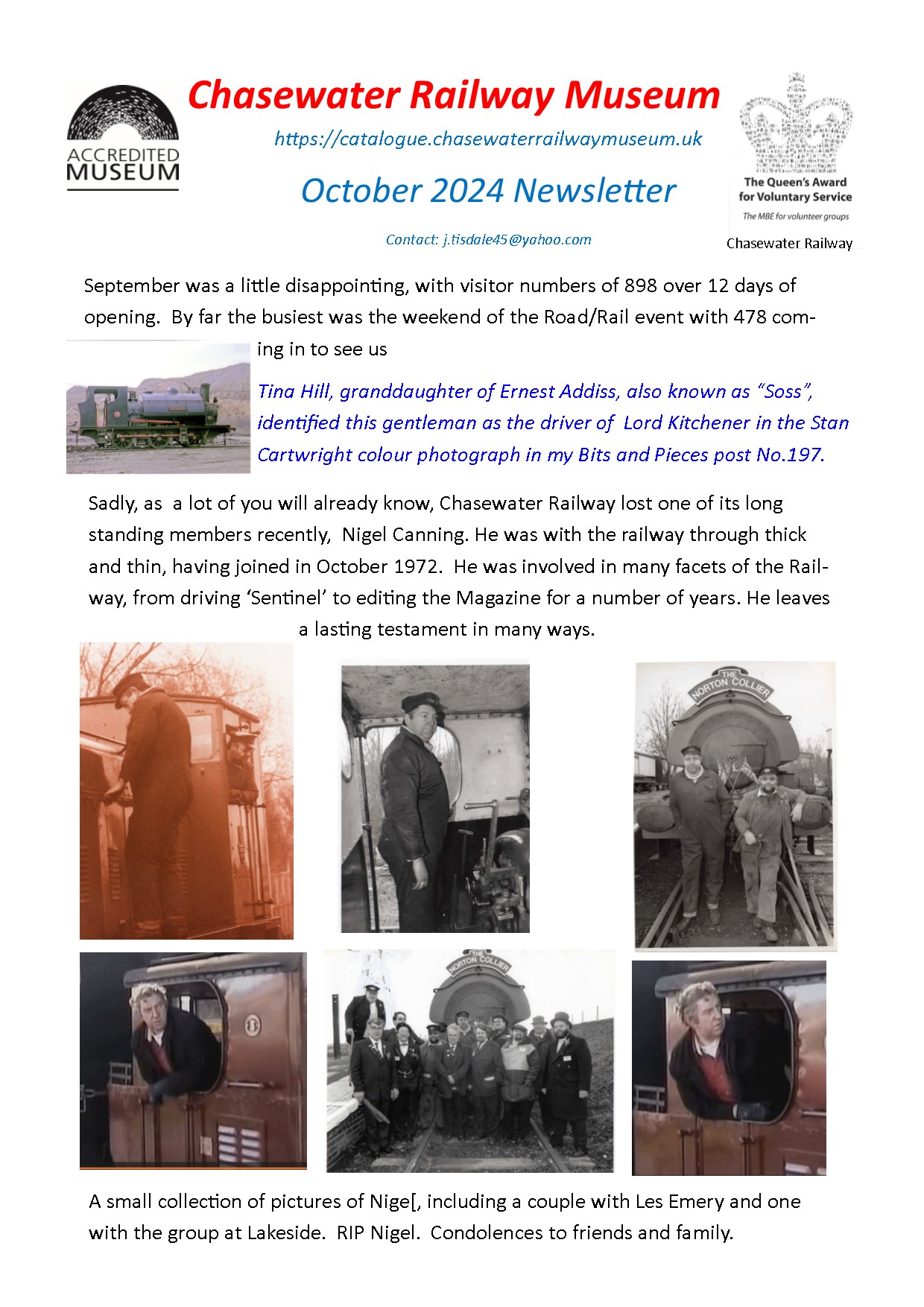
‘Asbestos’ Hawthorn Leslie 0-4-0ST 2780-1909 Passing the engine shed, before alterations!
Picture donated by David Bathurst
192 – Chasewater Railway Museum Bits & Pieces
From Chasewater News – Summer 1996 – Part 3
P Way News – Arthur Edwards
Since the last article was published the P Way gang has had a number of new members join us and the extra manpower has enabled us to carry on a number of tasks at a greater speed than originally planned. This has enabled us to fence in an area next to the lower compound entrance gates, so we now have a fenced in area for the storage of rail and other heavy items of P Way material.
Also the fence from the foot-crossing between the two compounds to the bottom compound has been realigned to allow the relaying of the sidings alongside the shed road. Work is also in progress to design the layout of a head shunt behind the current shed therefore allowing access to the shed from both ends.
Further down the line a number of fence posts have been replaced where they were broken down by trespassers onto the running line and along with bits of hedge growing up alongside is starting to make things much harder for the local idiots. The only bit of bad news about this fencing is that we can no longer use barbed wire where the public footpaths or public areas come up to our fence. I have mixed feelings about this as I know one or two of the members would like to use razor wire backed up with land mines!!
With the first decent spell of dry weather the perennial job of weed killing was carried out, and not before time as the track was starting to disappear beneath the undergrowth again. It has been proposed that a further application of the poisonous stuff be applied sometime later in the summer – weather permitting.
The P Way gang meet every Sunday at Brownhills West Station from 10.00am onward. Come and join us!!
Neilson Saddle Tank No.11 – Paget’s Progress – by Paul Whittaker
Neilson 2937/1882
Alfred Paget at Chasewater – June 1978
On the 13th January 1996, a freezing cold morning of -5ºC, I started the hard slog of removing the boiler tubes from No.11. After many a bruised finger and some colourful language, not to mention seven weekends at it, the final tube fell free from the boiler tube plate at 4.00pm on Saturday 6th April.
After long deliberation and much discussion I and several co-workers concluded that the next move would be to remove the water tank, thus allowing access to the boiler for closer inspection. As the cost of a crane was as yet out of our reach, we proceeded to jack up the tank until such time as it would be possible to slide it safely down two lengths of rail to its resting place on the platform in the engine shed compound.
The next job was to remove the boiler cladding and insulation, a dirty job but it had to be done. Meanwhile amongst the organised chaos that is generated when stripping a steam locomotive down, we removed the dome plate. This was in order to provide access to the interior of the boiler for a very slim young man, otherwise known as Christian Hatton to get inside and remove the remaining collapsed tubes, and around 3cwt of rust. While all this was going on, the washout and fusible plugs were removed from the firebox. The steam cleaner proved to be invaluable in removing the rust and crud from the water jacket around the firebox. As a result of all this, the boiler is now ready for the boiler inspector to cast a cursory eye over it a prelude to a proper test inspection.
As work progressed on No.11 that magic word ‘money’ reared its ugly head again, and after some serious consideration my very good friend and colleague David Borthwick and I decided to start a fund to raise the necessary cash to renovate Alfred Paget, and entitled the fund ‘Neilson Steam Aid’, to which my good wife Janet will administer and collect donations. In addition to this, Dave has put together a Stock Book, which documents basic information on most of Chasewater Railway’s rolling stock and locomotives. This booklet is on sale in the station buffet at 75p per copy.
On a more personal note, I would like to say that I am overwhelmed by the help and support, to say the least, and of the amount of technical information that I’ve received from fellow members at Chasewater, without which I would have been like a beached whale. And so I would like to take this opportunity to sincerely thank all of those involved with the on-going renovation of Neilson Saddle Tank No.2937, otherwise known as ‘Alfred Paget No.11.
Alfred Paget last steamed in 1982, and is still a way off yet – in 2012.
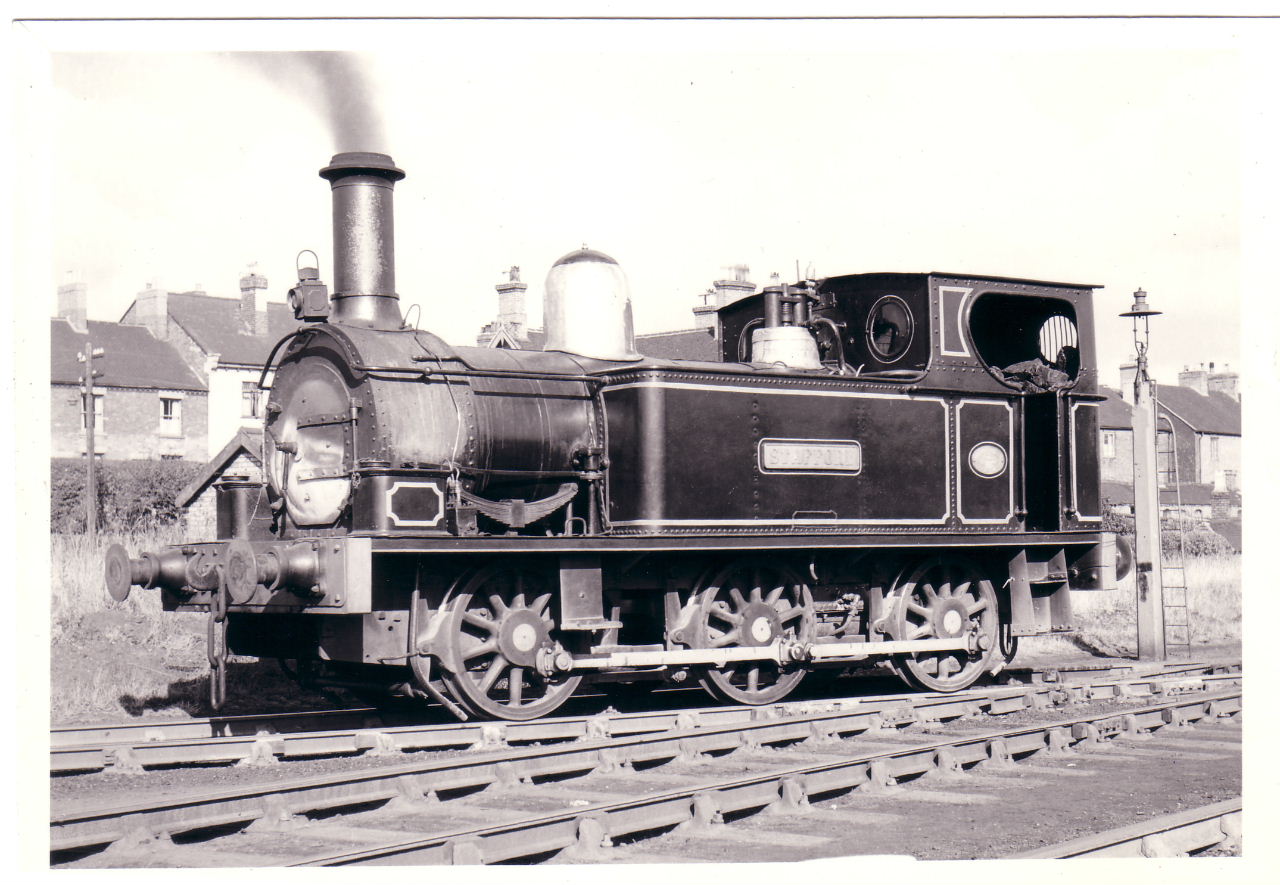
‘Stafford’ 0-6-0 ST Hudswell Clark 319-1889 Bought from T.W.Wood, Dealer, in 1915. Still at West Cannock Colliery, Hednesford 1957, since scrapped.
NB The Museum is not open to the public on June 23rd 2024
189 – Chasewater Railway Museum Bits & Pieces
From Chasewater News – Spring 1996 – Part 2
From the Board Room – David Bathurst – Chairman
Norton Lakeside Station Opening
After a couple of false dawns, the Railway has at last achieved its most significant ambition. We now have two ‘proper’ stations.
We can now advertise our operations on an entirely different basis, way beyond that of a mere leisure railway. Furthermore, in taxation terms, we are now recognised as a passenger railway. Our passengers can now be offered the additional option of convenience travel to the NorthShore, where vehicle cannot (or at least should not) interrupt their peaceful enjoyment of the area.
It was heart-stirring to see so many friends and guests at Brownhills West for the official opening ceremony on Saturday 16th December 1995. What was equally gratifying was the sight of ‘Asbestos’ at the front of the train, after a period of remedial works. Well done indeed to the volunteers who ensured that this locomotive was ready in time. The ‘Norton Collier’ headboard, manufactured specially for the occasion, added to the significance of the day.
With the train virtually full, departure was just after the advertised time of 11.00am, with Nigel Canning and Les Emery specially rostered together on the footplate for the event.
A leisurely rate down the line afforded some of our less regular supporters and guests the first view of the substantial works which have been necessary to reinstate the Causeway. Entrance into Norton Lakeside Station was accompanied by the sound of exploding detonators. The modest facilities of the new station belie both the cost and effort which has gone into providing this three coach platform. Despite the intensely cold and windy conditions (to which our members have become accustomed over many months), the Chairman of Lichfield District Council, Councillor John Walker, carried out a short opening ceremony before the photographers were let loose. To enable the photographers travelling on the train to capture the occasion, the train made a second ceremonial entrance across the Causeway into the new station. Some of the resulting pictures duly found their way into the local press.
Following the return journey, the Railway’s working members and official guests, including a number of Lichfield DC Members, enjoyed a buffet lunch, during which further formalities were completed. The return journey saw Councillor John Walker at the controls of ‘Asbestos’, although this fact was kept from his Council colleagues who may have preferred to find other transport back home!
Councillor Walker clearly enjoyed the day, and his letter to me after the event is reproduced for the information of members. To ensure that members do not start wondering whether they have failed to notice a new electrification scheme, it should be mentioned that Councillor Walker’s previous footplate experience involved a diesel-electric, rather than an outright electric locomotive!
To mark the occasion, the Railway commissioned special brass tickets which are capable of adaptation as key fobs. Previous editions of ‘Chasewater News’ have included articles on the causeway and construction of Norton Lakeside Station, and this article does not set out to repeat the story. Nor would it be appropriate to single out any individual members in respect of work undertaken either on the construction work or the official opening arrangements.
The events of 16th December 1995 are a testimony to all the Railway’s working members, whether they be regular or occasional visitors. The achievements celebrated on that important day demonstrate just what can be done by our membership and serve as an incentive for the further expansion of the Railway.
To everyone concerned: Congratulations and Well Done.
Councillor Walker’s Letter
Dear CLR members,
Can I convey my congratulations to all Chasewater Railway members for the excellent morning of 16th December 1995 on the occasion of the official opening of the new station at Norton Lakeside. Despite the bitterly cold weather Sandra and I enjoyed it tremendously and it was a particular highlight for me to undertake the return journey on the footplate. It brought back memories for me when in 1982 I drove an electric express train from Derby to Sheffield but you can’t beat steam, can you?
Here’s hoping that your organisation will go from strength to strength and that we as a Council will have co-operation now and in the future. Please convey my best wishes to all those at Chasewater and here’s wishing you all the best in 1996.
Yours sincerely,
Cllr. John Walker
Chairman of Council
Lichfield District Council
Lichfield District Council Plan
Members will recall from a previous edition of ‘Chasewater News’ that the Railway has objected to the Lichfield District Local Plan, insofar as – unlike the Walsall MBC Unitary Development Plan – it makes no reference to the Railway in context of ChasewaterPark.
The Railway was represented by the General Manager and myself (Steve Organ and David Bathurst) at the Public Local Enquiry on Thursday 25th January 1996, during which we sought to justify our objection during a session lasting some two and a quarter hours. The District Plan is fundamentally concerned with land use issues and we shall see, in due course, whether the Inspector is persuaded that the extent of our operations within ChasewaterPark is sufficient to merit an individual reference in the approved District Plan.
The Lichfield DC representative confirmed that he recognised that the Railway ‘had a place’ on the North Shore (thereby dispelling doubts previously expressed regarding our track relaying to the extent of our lease) and that the Council fully accepted that the Railway enjoys planning permission for its operations on the North Shore. The Council’s argument, based on their view of planning law, was that the Railway’s future development should be controlled by planning advice, and that a separate reference to the Railway in the District Plan is accordingly unnecessary. We do not agree; we are seeking a far more positive commitment from the Council, hence our objection.
Working Members’ Meeting
A further working members’ meeting was held at the Pear Tree public house on Wednesday 10th January 1996, with an encouraging number of working members present. Again, members had the opportunity of raising any matters of interest. Perhaps the item which attracted most discussion was concerned with locomotive restoration, particularly as ‘Asbestos’ loses its boiler certificate during 1996.
In addition to formal meetings, there was a general view that more social events should be held locally, including slide-shows, talks, etc.
Some of our members have a massive bank of photographic and other materials which might be shared with other members ‘over a pint’.
Great British Passenger Timetable
Members who have access to the Great Britain (All Lines) Passenger Timetable will be aware of the section on Private Railways. Although this section includes information on the ‘First Division’ private railways it appears to me that the publishers might be sympathetic to include Chasewater Railway, particularly in view of the opening of Norton Lakeside Station.
I am delighted to be able to report that following appropriate negotiations, Railtrack have agreed to include a short entry in the June 1996 Timetable – and thereafter in future editions. I don’t know how many purchasers actually read and absorb the section on Private Railways, but two things are certain; our status as a passenger railway has been acknowledged by Railtrack, and our existence will come to the notice of an extremely large and diverse number of readers.
P Way News – Arthur Edwards
The start of the New Year has seen some of the regular winter jobs being taken in hand. With several of the Sundays in January being a total washout due to the terrible weather, trying to dig ground frozen solid in winds with a wind-chill factor of minus (i.e. brass monkey weather) is no fun at all. The shed compound has been receiving some attention in the form of a tidy up, with special attention being paid to clearing the overgrowing vegetation from the fence behind the platform. The cab of 917 was moved farther back and all the rubbish, old rotten timber and some split sleepers were burnt. During the tidy up several parts from S100 came to light under the ferns and debris, and also as part of the clearance all loose scrap has been gathered together and a reliable scrap merchant has been asked to collect it. One of the activities which Tom and myself also got round to doing was to tidy up the loose sleepers lying around, which is not an easy job at this time of year. Wet sleepers are at least double the weight of dry ones.
The double-decker bus which has been on site for a while has now been taken to pastures new, so giving us more ground space so that we can ready the site for the future installation of new sidings. The provision of extra space for stock is now becoming as increasing problem as the activities of the Railway continue to grow.
The usual battle with the fence cutters will be joined in earnest within the next few weeks in the run up to the start of the running season. Parts of the hedge planted last year by the Forest of Mercia group are starting to grow, and with a bit of time should start acting as a deterrent to the local idiots who think it is a good idea to chop down fences.
The P. Way gang meet every Sunday at Brownhills West Station from 10.ooam onward. Come and join us!!
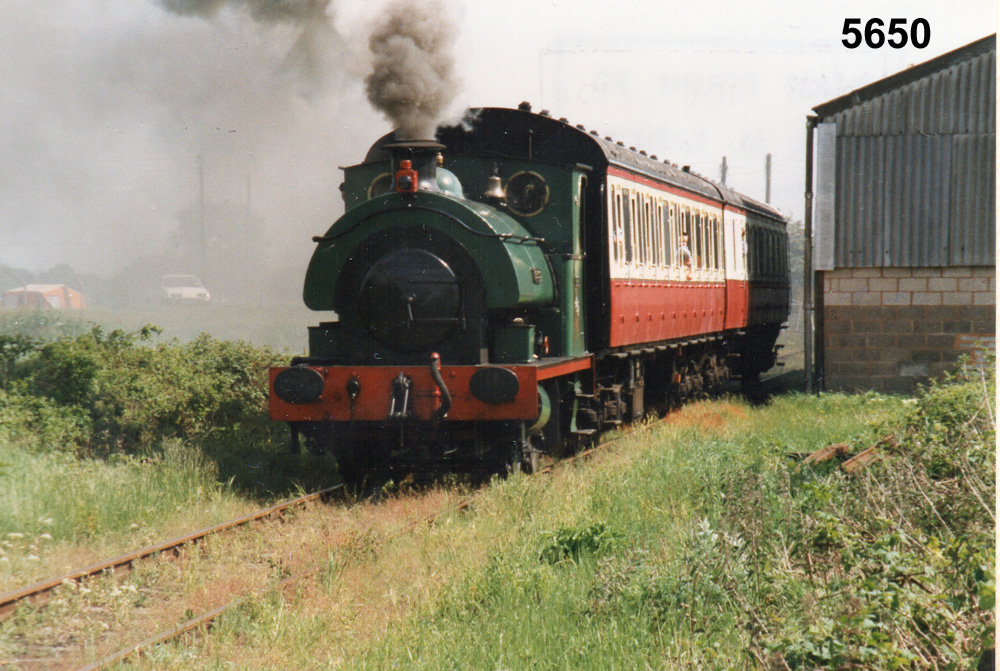
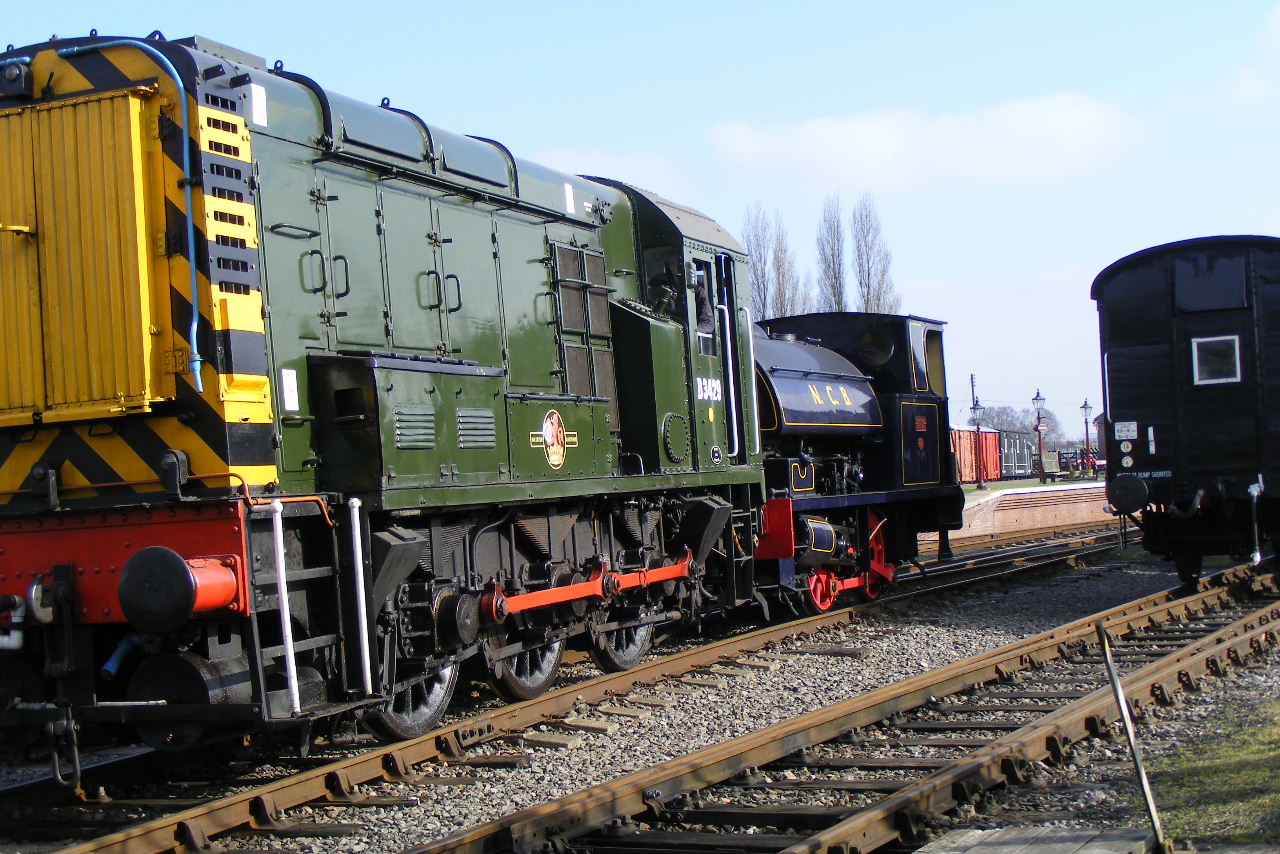
The first steam train of the 2024 season arriving at Chasewater Heaths Station, I had a round trip too.
The Museum was open for 12 days during March, welcoming 779 visitors, the best March figure since 2019, helped, of course, by the Easter break.
Finally, for this post, a collection of photos from Ken Bull
Kitson loco at the bottom of the garden
No. 44512 – crew taking a break!
Ex South Devon Railway B/G 2-4-0T Prince as converted to a standard gauge engine No.1316 in 1893 and put to stationery use in 1896. Leslie Good Collection.
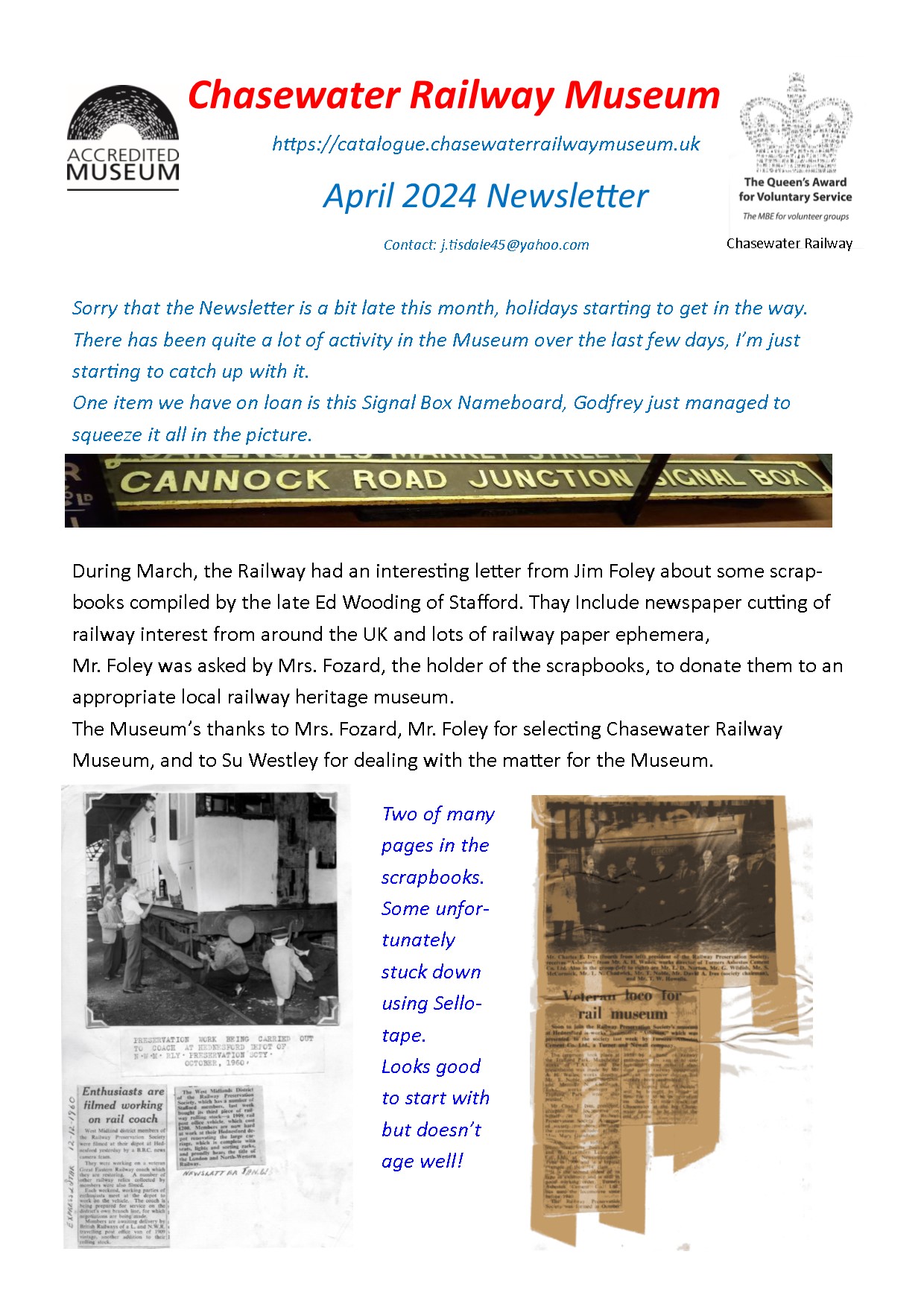
Home Counties Railway Society Special, St. Pancras to Derby. 35003 ‘Royal Mail’ Sunday 1st March 1964. Cattle Market Sidings, Leicester. Horace A Gamble
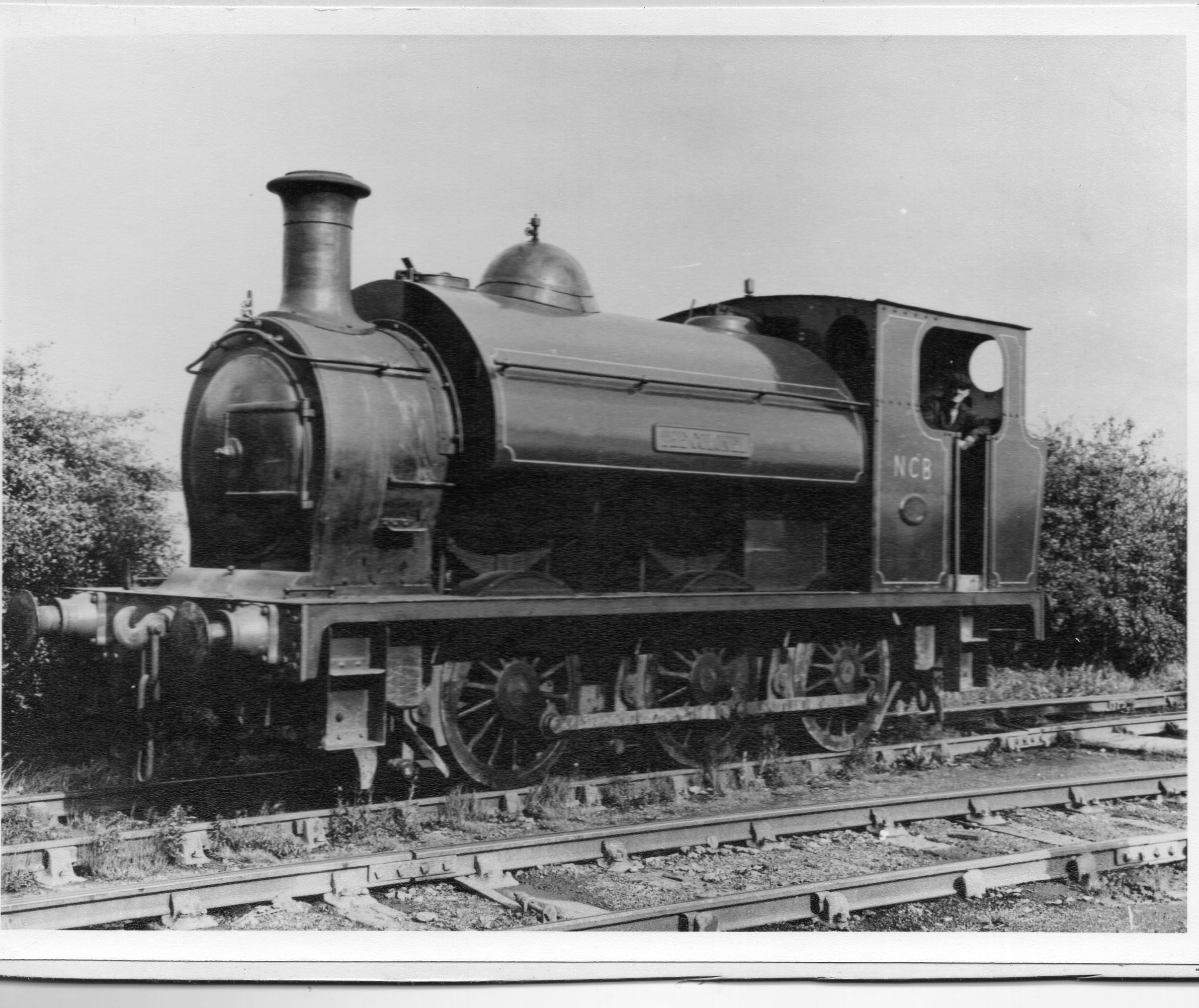
‘The Colonel’ at Fair Lady Sidings, Heath Hayes. Circa 1962
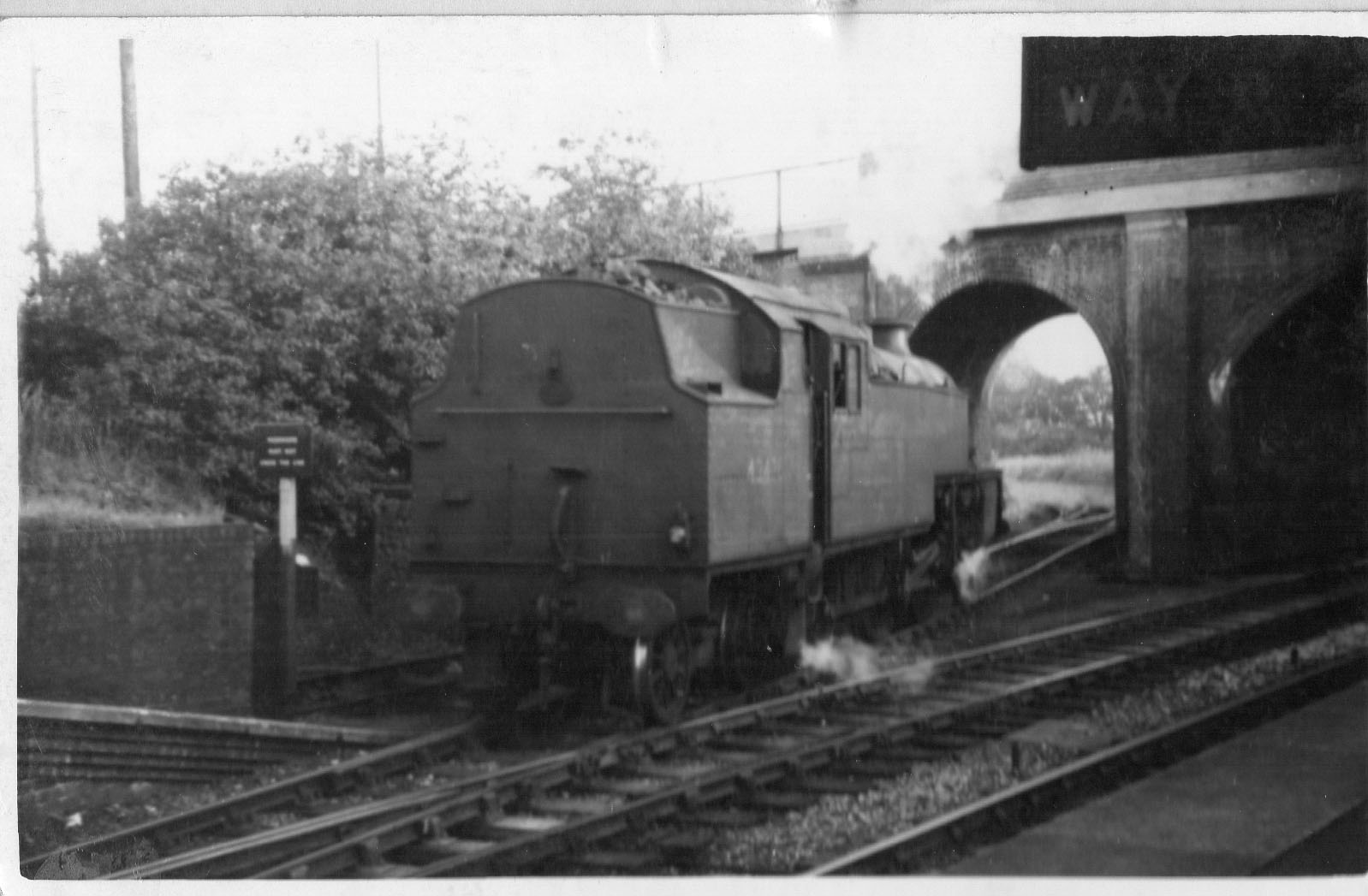
42470 2-6-4 T at Brownhills Station. (The line swinging left through the bridge went down to the canal basins, to the right, to the carriage sidings.)
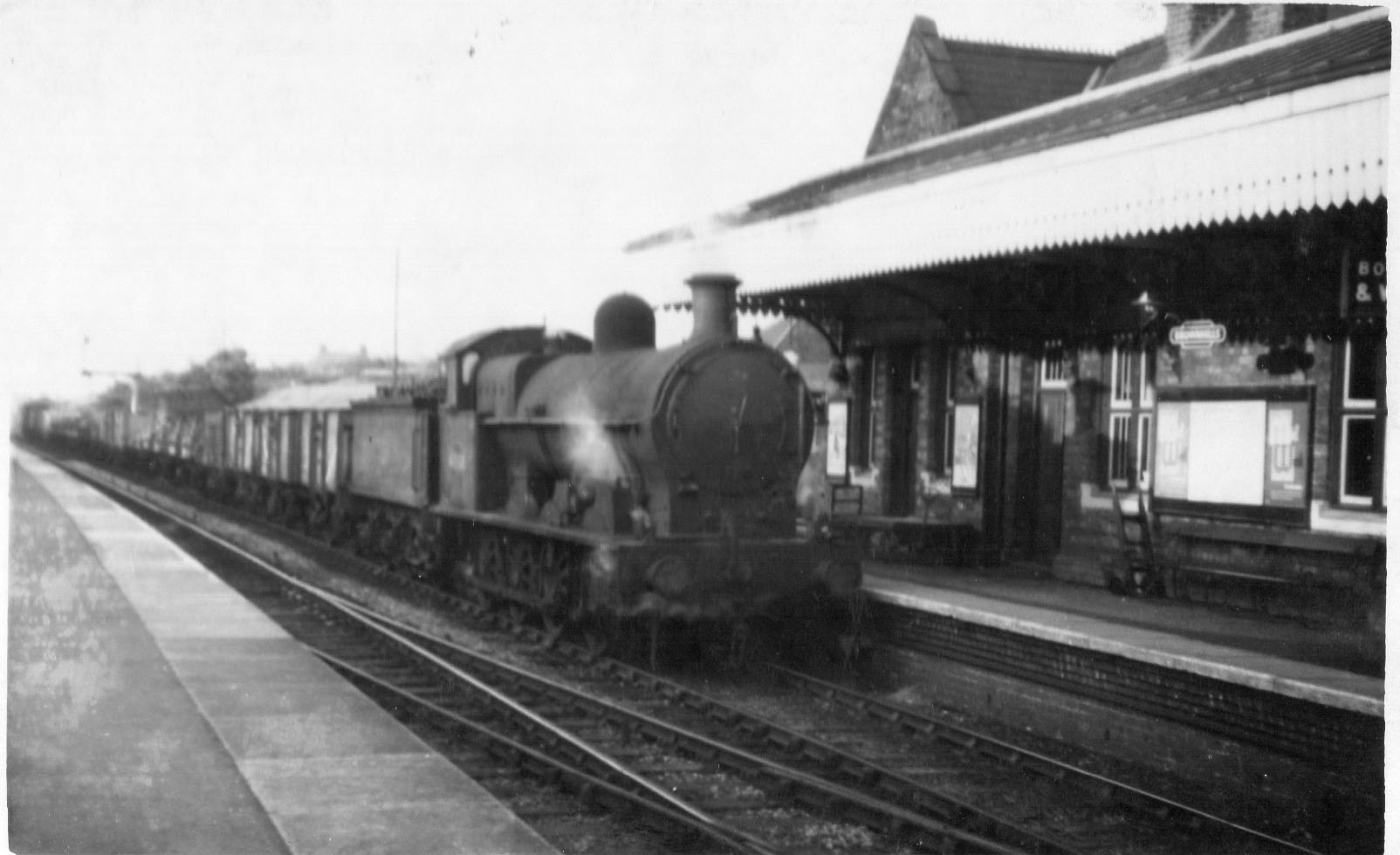
49308 G-2 0-8-0 3A Bescot at Brownhills Station on freight
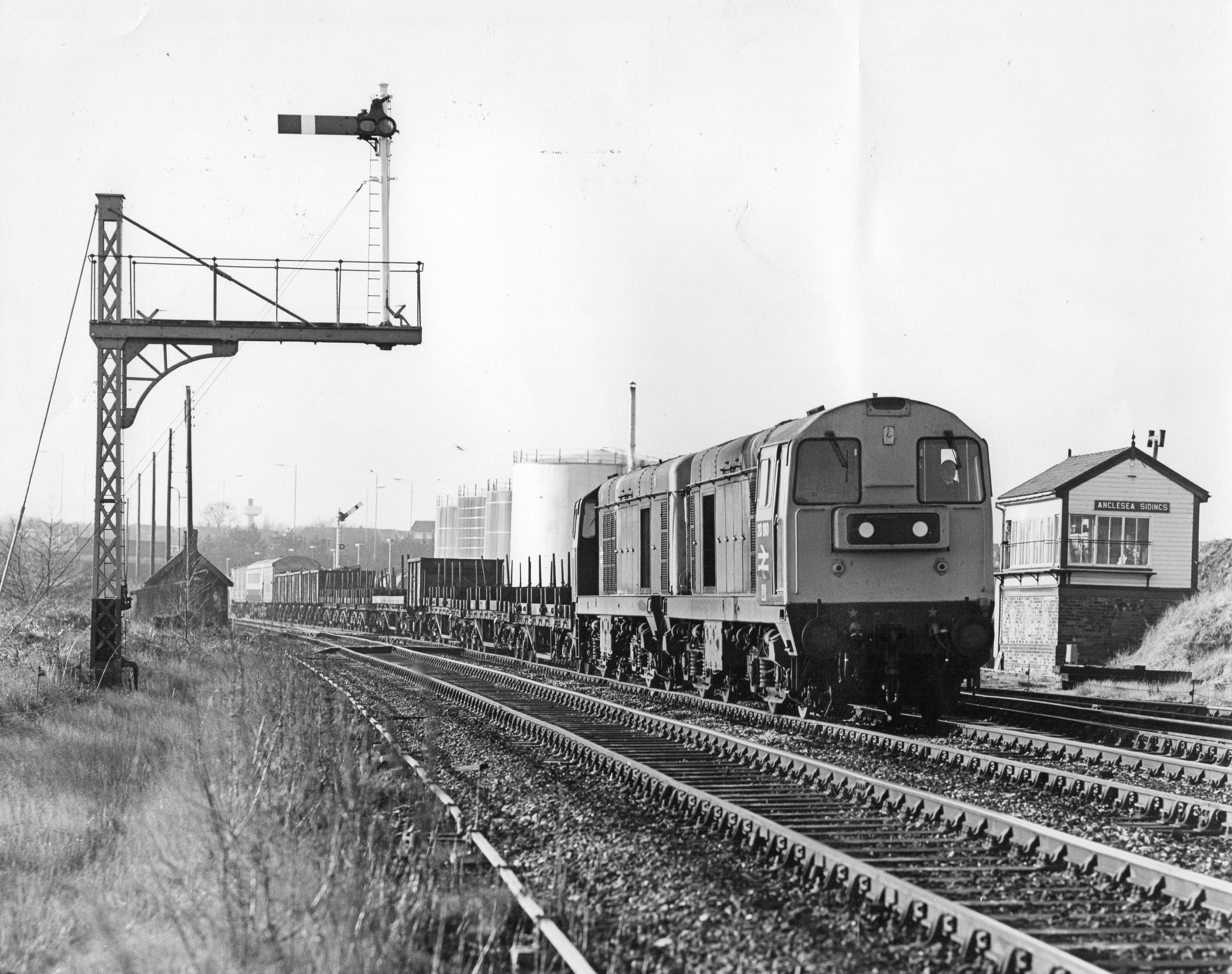
Two Class 20s – 20190 and 20188 pass Anglesea Sidings signal box on the Walsall to Wychnor Junc. Freight only line with a Bescot/Toton freight 4-12-88.
From Chasewater News Bromford Special 1994 – Part 2
A Weekend at Bromford Tube Works – Nigel Canning
When it was announced that the tube works was to be closed, the Freight Charter Group (who organised the Littleton Colliery steam weekend) made arrangements for steam to run once more at Bromford. As a Hawthorn Leslie similar to Asbestos had once worked there, the CLR was approached to provide the loco. This is a brief account of what happened.
Shortly after Christmas the Loco Dept. was asked if Asbestos could be made available fro traffic a couple of weeks before Easter as there was a possibility that it may be needed to run in Birmingham for a special event. Although the loco had been stripped for its annual boiler inspection and various repairs, this was agreed in principle as it would need to be steam tested prior to Easter anyway. As the weeks went by and the work progressed, the special event, which was to be at Bromford Tube Works, became a definite commitment but for various reasons would have to be earlier than planned.
The boiler inspector came and did a visual examination, and then in record time by Chasewater standards returned for the steam test. This was an achievement in itself, as with frozen points and snow drifts across the line, the engine had to be lit up in the shed with only the smokebox and chimney eventually venturing outside.
In addition to the boiler work, the loco was cleaned and repainted (not the sort of work ideally carried out in February) with the result that it looked better than it had for a long time, and still does for that matter. The 20 ton GW brake van which was also required at Bromford was cleaned out and repainted, and even had its roof re-felted for the occasion.
On Thursday March 3rd the brake van was first to be taken by low-loader to Bromford, followed later in the day by Asbestos. Due to problems with the ill-equipped low-loader and a somewhat over-cautious steelworks management, Asbestos was eventually unloaded in the dark. Following this, an attempt to fill the saddle tank with water from their ‘fire main’ had to be aborted when it was noticed, even in the dark, that the water appeared milky. A reassurance from the steelworks engineer that this was ‘only a bit of soluble oil’ resulted in the tank having to be drained, and as the promised indoor accommodation for the loco never materialised, the drain plug was removed on the spot ready for another attempt in the morning.
Next day we arrived back at Bromford for a trundle round to familiarise ourselves with the line before the main event on Saturday and Sunday. The steelworks people had been busily pumping water from a well overnight and had filled their large water tower ready for use in the loco. After raising steam and filling the tank we were given just one loaded bogie bolster to take for a run with the brake van. At first sight the trackwork appeared highly dubious with the sort of tight curves that would look more at home on a Tri-ang train set, but after a bit of running it became apparent that most of it was in excellent condition with the rail joints beautifully aligned allowing quite brisk running as long as the couplings were left well slack.
This view shows just how tight the curve between the two bridges was, requiring quite a bit of power just to crawl round! Pic – Ian Buswell
The line itself ran from a works yard down a bit of a gradient, round a tight curve, passed under Bromford Lane Bridge, and into a fan of five exchange sidings next to the site of the former BR (Midland) Bromford Bridge Station. The whole of the exchange sidings, and even some of the not unsubstantial works buildings were overshadowed by the elevated section of the M6 Motorway running overhead. Perhaps only thirty years ago a surreptitious excursion through the trap point onto BR metals followed by a left turn at Castle Bromwich, and right at Aldridge, would have taken us back to Chasewater without the need for a low-loader, but on this occasion we were required to stop about halfway along the sidings where we could watch the main line trains running to and from Birmingham New Street.
On the Saturday and Sunday we performed for the photographers who had apparently paid around £18 each for the privilege. Having raised steam for a 9am start on both days, it was well after ten by the time the security men had let people in and we were required to move.
Rather than spend time shunting wagons around as we would have preferred, we were restricted by the steelworks management to running backwards and forwards over a set route with initially just the one wagon, and it was only after very careful negotiations that this was increased to two on Sunday. These arrangements seemed to suit the photographers quite well as they wanted to photograph a series of ‘stage managed set piece’ movements.
Asbestos stands on the curve just short of the Bromford Lane bridge awaiting the signal to accelerate through for the photographers waiting on the other side – Ian Boswell
A typical example of this was to stop on the works side of the Bromford Lane Bridge, then when the photographers had positioned themselves on the other side, we would accelerate through and coast to a stand half way along the exchange sidings. After a brief delay we would then reverse through the bridge ready for a repeat performance. The number of repeat performances, and delay in between, depended apparently on the amount of sunshine (or short term prospects of it) and whether there had been enough smoke and steam from the loco.
In order to make the loco work harder and produce the spectacular results required, we ended up running with the brakes pinned down on the wagons, and wound hard on in the brake van, whilst accelerating briskly past the cameras. In the end this treatment took its toll on the loco resulting in a number of tubes leaking in the firebox by mid-afternoon on Sunday. In view of this, that afternoon’s running was cut short by around an hour, and the hoped for night photography was abandoned. No-one seemed too upset by this failure of the loco, and a number of national magazines have published photos showing that we achieved the desired effect.
On the Sunday another hard day was spent getting Asbestos and the brake van on and off the low-loader. On this occasion we managed to get the job done a little bit quicker, finishing at Chasewater at around 6pm.
As a result of its Bromford trip, Asbestos is now facing the ‘other way round’ with its cab at the Brownhills West end as it had been decided to take advantage of the low-loader journeys to achieve a turn round. This has put the driver on the platform side of the train, and the loco now faces up the causeway bank.
Financially the session at Bromford seems to have been well worth while, and in addition a lot of free publicity was obtained, but the condition of the boiler tubes still remains a problem and is likely to be until they are completely renewed. Whether any similar outings are attempted in the near future remains to be seen, but any loco used will need to be in more reliable condition if similar feats of performance are to be attempted.
Thanks to Nigel Canning for his kind permission to use his photographs.
We are sorry but due to other commitments, the Museum will not be open this Sunday, 16-4-2023.
142 – Chasewater Railway Museum Bits & Pieces – From Chasewater News December 1991 – Part 1
Editorial – Nigel Canning
On September 3rd this year our hard work finally paid off when Major Olver inspected the railway and gave us permission to run on the extension past Willow Vale. Next year when our newly delivered concrete platform has been built, we could even be running trains to a timetable. A lot of hard work still remains to be done, but by the end of 1992 we could well be running to the causeway. It is now entirely up to us, the more effort we put in, the further we will be able to run trains, so if YOU can help: PLEASE HELP EXTEND THE LINE IN 1992!!
Locomotive News – Including extensive news about Asbestos
Asbestos leaves Brownhills West propelling the Gloucester trailer.
No.4 Asbestos – Many members will have been wondering what has happened to Asbestos and why it has not yet been returned to traffic. When the loco last worked (in 1989) it was suffering from a number of ailments, none of which were particularly bad, but all added to make the loco a rather cantankerous old lady. When the boiler became due for inspection it was decided to rectify as many of the faults as possible.
One major worry was the state of the foundation ring rivets at the base of the firebox. A few of these were found to be leaking and needed replacing. Some of the quotes for the repair were alarming. One company quoted £1,500, if we took the boiler to their factory on Leicester. Fortunately we found a boilersmith who was prepared to travel to Chasewater and do the repairs ‘in situ’. This saved a great deal of work lifting the boiler out of the frames. The bottom three rows of tubes were also removed as these were older than the rest and in need of replacement.
With the repairs complete, the boiler was cleaned to allow the inspector to use his ultra-sonic tester to measure the thickness of the boiler plate. One unpleasant surprise was the state of the inner firebox around the fusible plug. The plate was corroded and was only 7mm. thick, very close to the minimum allowed. Nevertheless the inspector pronounced the boiler OK with the proviso that we keep a close eye on the thickness of the plate around the fusible plug.
The next problem was replacing the two dozen boiler tubes. Fortunately the tubes in Asbestos are the same diameter as a Hunslet ‘Austerity’ 0-6-0, and we happened to know of just such a loco which was undergoing a mayor re-build. The tubes were only a couple of years old, and once cut down to length would be just the job.
Then, suddenly, the CLR finances took one of its periodical downturns and there was no money to spend, even on second-hand tubes. The time was not entirely wasted, as the loco was blanked off ready for its hydraulic test, and the cab fittings were overhauled to make them steam-tight. Even so, many weeks were lost.
The boiler tubes arrived at the end of June, and were then cut to length, cleaned, annealed and expanded into place. The regulator will also receive attention and, hopefully, the loco will pass its hydraulic examination.
The long term future of the loco is somewhat doubtful. The firebox will need further repairs, and although it may be possible to weld a circular boss in the firebox crown relatively cheaply, the loco is still likely to need a full set of tubes costing around £1,500. Will the money be available to pay for the repairs? We shall have to wait and see! – P.Aldridge
No.5 Sentinel – This loco has continued to work all of the passenger trains, and whilst running on the free coal found in the ex Lea Hall mineral wagons is very economical indeed. With the opening of the new track extension, bunker capacity is again becoming critical and may have to be further improved,Ken Judkins poses for the camera with his 200hp Sentinel during a demonstration at Cargo Fleet Steelworks in Middlesborough in the 1950s. The loco on the right is an earlier Sentinel rebuild of a conventional loco.
No.2 Lion – This loco is still awaiting a new set of washout plugs so that it can be hydraulically tested.
S100 – Work has started on moving the boiler from the site now required by the C & W Dept down to the loco shed yard. Now that the hornguide grinding machine has been perfected, work will start on the actual grinding process.
DL7 – This loco has stood with one of its cylinder heads missing for a number of weeks. Apart from a valve being stuck open, the valve seats are in an extremely bad condition, requiring re-machining and grinding in.
Fowler – This loco has again carried out all the shunting and works train duties without problem.
No.21 Diesel – Work has started on the restoration of this little loco with the cleaning and painting of the bodywork and frames.
No.21 in the Heritage Centre at Chasewater, 2011
Smith Rodley Crane – The crane has remained out of use and requires adjustment of its clutches before it can be used on its next big job – the building of Willow Vale platform.
This looks like being the year that the Railway Inspector finally pays us another visit, as he has written saying he will inspect our railway ‘in the summer’. If what he sees meets with his approval we may have a longer length of line to run on, if it does not we might not have a line at all. It is now up to all of us to do our best to ensure that he sees an improvement in the existing railway, and that the extension to Willow Vale and beyond meets his requirements.
Later this year ‘Lion’ should enter service, and hopefully after that, ‘Asbestos’, which means that by Gricers Day we could have three engines in steam together for the first time in nine years, and even the new platform fro them to run trains into. Let us just hope the Railway Inspector is impressed during his visit!
Locomotive News
No.4 Asbestos – Work on this loco has continued through the winter months and in March it passed its visual/ultrasonic boiler inspection. Examination, however, has revealed that part of the firebox crown is nearing its limit on plate thickness and it is only a matter of time before serious repairs will be necessary. The boiler will now be prepared for its hydraulic test.
No.5 Sentinel – This loco also passed its boiler examination in March and again looks like being the only serviceable steam loco for at least the first half of the season. Repair work over the winter has included re-machining of the steam brake valve, fitting of a new cast fire grate and work on the paintwork in preparation for the ‘gasworks red’ livery to be applied as soon as weather permits.
No.2 Lion – A brand new saddle tank was delivered to Chasewater and temporarily fitted to the loco in January to check its dimensions; it was virtually perfect! Other work has included the installation of sliding cab shutters and the boiler has been washed out. The boiler now awaits the fitting of new washout plugs before the hydraulic test can be carried out.
S100 – Work has continued on this loco with the redesign of the hornguide grinding machine. Another of the four main leaf springs has been stripped, cleaned and re-assembled.
DL7 – This loco was taken out of service for a couple of weeks recently while the injectors were removed, overhauled and refitted.
Fowler – This loco has remained in service without problem over the winter hauling works trains to the extension pastWillow Vale.
Smith Rodley Crane – This vehicle has seen only minimal use lately although work has continued on its repair and restoration.
Permanent Way News
The majority of work carried out by this department recently has been concentrated on the extension of track pastWillowVale. Whilst the number of volunteers has fallen slightly, those brave enough to carryon through the worst of the winter have at least had a comfortable works train. The favourite formation for this appears for some reason to be: the Fowler diesel, the DMU centre car and the two GWR brake vans with, of course, the stove kept well stoked.
The concrete platform for Willow Vale Halt has yet to be collected from theSevernvalley Railway as it is planned to carry out this job when the evenings become lighter allowing longer hours to be worked if necessary.
One extra job urgently requiring attention is the repair of the bridge handrails, which having recently been repaired and increased in height, have now been totally destroyed by the local toe rags.
Carriage & Wagon News
Midland four-wheel passenger brake – This vehicle has remained sheeted over during the winter, but work will continue as soon as the weather improves.
Manchester, Sheffield & Lincoln six-wheel coach – Some progress has been made on this vehicle, but again the damp weather has limited the type of work that can be carried out.
Great Eastern six-wheel passenger brake – All of the doors have been removed from this vehicle for repair ‘off-site’, and the bodywork has been prepared and painted in yellow primer.
Wickham 2 car DMU E56171 & E50416 – The trailer car of this set has remained coupled to theGloucesterover the winter, and work has been carried out on refurbishment of the bar. A start has bee made on repairing, rubbing down and priming the bodywork of the power car ready for a repaint. Work has also been carried out inside, removing seats and tables to make room for re-decoration. Since the last issue of Chasewater News a preservation group dedicated to restoring the Wickham as a working DMU has been formed. This organisation is currently drawing up its proposed constitution which is expected to be similar to that of the Hudswell Group in that the DMU will remain at Chasewater.
Gloucestertrailer E56301 – Little work has been carried out on this vehicle over the winter and there are rumours that another society may be interested in purchasing it for preservation elsewhere. In the meantime it will be used on trains at Chasewater coupled to either the Wickham trailer or the new centre car.
Derby centre car W59444 – This coach arrived at Chasewater in January, having travelled from Tyseley diesel depot by low loader. Before it enters passenger service, it is planned to fit a bar as a replacement for the one in the Wickham trailer. Livery will probably remain BR blue and grey for the time being, although early BR carmine and cream has been rumoured as the intended replacement. One problem has become apparent in that being a centre car, it has no handbrake so it has to be marshalled between another braked vehicle and the loco or the buffer stops.
General News From The Line
It now seems that the large portacabin which had been intended for use as a station buffet will not now be coming to Chasewater. In view of this, work has started on renovating and converting the two smaller units which arrived in December to form a smaller buffet and separate kitchen. As this work is likely to take quite a while, catering on a limited scale will take place on the train and possibly in the Wickham power car once more. The portaloo is now in its final position next to the south end of the platform where it will be much appreciated by the loco dept. Work on its refurbishment is progressing well and a race is now on to see whether the buffet or portaloo opens for business first.
Human Resources
An interesting meeting of working members was held in March to discuss ideas to improve work output on the railway by providing more organisation and planning so that priorities can be agreed in advance and last minute panics avoided. To achieve this, four departmental ‘foremen’, listed below, were appointed, whose job it is to liaise with each other to agree priorities and to suggest suitable jobs for anyone arriving at the railway and wishing to help out.
Permanent Way Les Emery
Carriage & Wagon Dave Whittle
Loco Dept Tony Sale
Station & Site Steve Organ
If you don’t already have a project of your own and wish to help out, please contact any of the above people, or ask at the booking office where to find them.
This year has seen a continued increase in volunteers and therefore in the amount of work carried out on the railway. For the first time in a long while a number of major jobs have been carried out simultaneously, such as trackwork, carriage and wagon repairs and loco maintenance, even when trains are running.
A lot still remains to be done, and with a visit from the Railway Inspectorate now promised within the next couple of months, it is even more important that this level of activity continues.
Following the Railway Inspector’s visit we should know exactly what work is required to extend the line, or indeed to continue running the existing section, and will be able to plan accordingly. After all, it would still be nice to run trains into a platform at Willow vale Halt later this year. (Nigel Canning – Editor))
Locomotive News
No.4 Asbestos – Having been at a virtual standstill for a number of months, work has now re-commenced in earnest on the firebox repairs and preparation for the major boiler examination of this loco. A number of new tubes are to be purchased and will be fitted to replace those leaking when the loco was taken out of service. Hopefully the loco will re-enter service before No.5’s boiler certificate expires in October.Sentinel pausing at Willow Vale – Nigel Canning
No.5 Sentinel – This loco has so far handled all of this year’s trains. Recently adjustments have been made to the camshaft driven valve gear with, eventually, improved running as a result. Various minor steam leaks still remain to be attended to.
No.2 Lion – The new boiler tubes for this loco have now been fitted and work is progressing towards its first hydraulic examination.
S100 – Work is still progressing with the machining of the hornguides of this loco.
No.11 Alfred Paget – This loco received a very nice paint job and superficial restoration for the Bescot Open Day and has been placed on display at Brownhills West station.
No.7 – Ruston – This loco is still in good running order.
No.9 Fowler – Investigation into the starting problems of this loco which had been thought to be due to a damaged starter ring, revealed that in fact a multi-plate clutch built into the starter motor had become fouled with oil and was slipping under load. This clutch was cleaned and re-tensioned giving perfect first time starting on this loco.
Carriage & Wagon News
Work has recently started on two of our historic coaches, the Midland four-wheel passenger brake, and the Manchester, Sheffield and Lincoln Railway six-wheeler. Both have been in need of extensive renovation for some time, but now look set to receive it.
The Gloucester and Wickham trailer cars are still running coupled together to form the passenger train whilst the Wickham power car remains in use as the station buffet.
Permanent Way News
Brownhills West Loop – Nigel Canning
The new points at Brownhills West are now virtually complete along with their associated trap point set and lever frame. This means that we now have a complete run round loop for the first time in our railway’s history.
Weedkilling of the running line took place, rather belatedly, during May. Bad weather and financial restrictions having prevented this vital job being done earlier in the year. In addition, a number of worn sleepers have been renewed, and on particularly bad joint repaired. It is intended to grease the remaining fish plates on the line and re-pack any dipped joints in the next month or so.
The dramatic increase in members in recent months means that work continues even on event days when trains are running. In the near future the large steel gate at the shed yard entrance is to be moved down to the level crossing to complete the pair of gates there. A replacement for the shed yard has recently been donated in the form of a pair of wooden gates which when in position, will give slightly wider access for the large vehicles such as the coal merchant’s lorry.
Looking back, this year has been quite successful for the Railway with relatively few problems to contend with and a number of major advances made. Train operation, although hectic for the staff involved, ran smoothly and every special event seemed to go well to the extent that our period of ‘survival’ of the last few years has begun to progress into a time of modest expansion.
As 1989 draws to a close and we all wait for Santa’s Special to arrive at Brownhills West, we can begin to plan next year’s work on the line. It is all very easy to draw up a long list of jobs, but short of ‘asking Anneka’, they wouldn’t get done.
Realistically, in addition to all the regular maintenance work, we could have a platform built at Willowvale Halt ready for Easter, carry on to complete the run round loop at Brownhills West and relay enough track past Willowvale to run a goods train up and down on Gricers Day. That would be an excellent season’s work, but it is only possible if people put the effort in. Locomotive News
Asbestos – Having worked the majority of this year’s trains, this loco is now due to be taken out of service for its six-yearly major boiler inspection. The work will involve the removal of the saddle tank and boiler lagging as well as all fittings. It is likely that a certain amount of repair work will be necessary around the firebox foundation ring and also renewal of a number of boiler tubes.
Sentinel – This engine finally re-entered service on Sunday 6th August when it took over from Asbestos to work he last two trains of the day. The recent introduction of two-coach trains meant that this little loco has to work really hard against the gradient on the return run to Brownhills West with the regulator wound wide open for most of the distance. The result of this is that coal consumption appears to have increased slightly over last year’s running, so that the bunker needs topping up towards the end of the day. To cure the problem it is planned to fit coal rails to the bunker to increase capacity to around 8cwt.
Lion – The good news is that the Boiler Inspector has done his preliminary examination and has given the go ahead for the loco to be re-tubed and prepared for its hydraulic test. Painting of both the frames and boiler shell has continued, along with work on new fittings and pipework needed before the engine can be steamed.
S100 – The frames of this loco are currently being jacked up in the back of the loco shed so that the wheels can be removed to allow machining of the horn guides.
DL7 – this remains our only working diesel and has continued to run well, although on the morning of the Bonfire Night steaming its contactors had to be quickly cleaned as the traction motor suddenly refused to ‘switch in’.
Fowler – At last the necessary information for the renewal of the blowing cylinder head gasket has been found and the repair work was carried out on Sunday 12th November. With train operations gradually expanding it is becoming more important that at least one of the two diesels be vacuum brake fitted so that it can be used to work passenger trains if required at short notice or on quiet non-steam days. Hopefully the work will be carried out shortly.
Other Locos – No work has been carried out on any other locos.
Carriage & Wagon News
The Gloucester & Wickham trailers have remained coupled together since June to form the operational passenger stock. The bodywork of the Gloucester is now looking positively tatty and will require repairs and a repaint before next season’s running. Again no work has been carried out on any rolling stock other than the three DMUs. Permanent Way News
A few dedicated men are still pushing on with the trackwork and as a result the old turnout which marked the start of the Norton loop has been completely removed and the line is gradually increasing in length towards the causeway. Progress on this work quite honestly is very slow, but when only three or four people on average seem to be prepared to help, and even the shorter rails which have to be moved weigh about a third of a ton, this is to be expected. Just to give the P. Way gang a break from trackwork and to provide variety in their work, the local toe-rags managed to cut every strand of wire between every fence post from the level crossing right down to the bridge. This had to be patched up again before trains could run on Gricers Day when everyone was already pushed to near the limit. Operating
August bank Holiday Monday marked the end of the two months of weekly running allowing a very welcome break for all the operating staff. Gricers Day saw both Asbestos and the Sentinel in steam, with the last two trains of the day being double-headed. Rumours that this was brought about by one case too many of a certain lager in the buffet car causing the gross train weight to exceed the maximum allowable Sentinel loading were untrue, but merely an example of the Midland Railway Company’s small engine policy in action! The Sentinel will now work the remaining trains of this year to allow Asbestos to be stripped for boiler examination.
This magazine sees another change of Editor as I (Nigel Canning) volunteered to take some of the load off Steve Organ. We both spend a lot of time at Chasewater so we have up to date material for the magazine, but perhaps the problem is recognising it. A number of members and visitors who had not been to Chasewater for a while have expressed amazement at the recent improvements and are obviously delighted, whilst those of us who work there every week tend to have on our minds want we haven’t done yet rather than what we have. As you read the various sections of this magazine you will see the usual excuse for jobs not being completed, ‘lack of manpower’, however, if you look back through previous magazines the problem has subtly changed, hopefully for the better.
It used to be: ‘Insufficient manpower to rebuild the railway to allow train operation’.
Then: ‘Insufficient manpower to run trains more often’.
Now: ‘Insufficient manpower to open the bar every week’.
Next perhaps: ‘Insufficient manpower to sell tickets at Willowvale Halt’.
All of this shows that we must be making progress and makes me wonder what we will have insufficient manpower for in, say, ten years time???
Locomotive News
Asbestos – This engine has worked all of this year’s trains so far with only various minor leaks having needed attention. The recent introduction of two coach trains has proved to be no problem at all for it, with only apparent minimal increase in coal consumption.
Sentinel – Getting this loco through the various stages of a major (five yearly) boiler examination has proved to be a long drawn out business, however it is now ready for its steam test and should be back in traffic by the time you read this magazine. In addition to the statutory inspection work, an extra water level gauge has been fitted to the boiler, also a new, larger ashpan ready for working the new Norton Expresses.
Lion – Much enthusiastic work has continued on this engine, mainly getting the boiler ready for its initial major examination. In addition to this, various new boiler fittings have been procured and machined, further vacuum brake pipework added and more paint applied to the frames. Hopefully the loco will enter service during 1990.
S100 – Work has concentrated on splitting, cleaning and re-assembling the springs of this loco, a job involving a lot of heat and brute force.
DL7 – This loco has again run well, performing all the shunting and works train movements. The only minor failure was that of a bearing in the small battery charging dynamo which was repaired fairly easily. Following a bout of vandalism by local tow-rags the loco has been repainted in ‘Rail Blue’ complete with yellow and black striped ends to cover the graffiti.
Fowler – This has remained ‘standby diesel’ due to a blowing cylinder head gasket. Attempts at finding the necessary details required for the repair, type of head gasket, torques and torquing sequence, etc. gave been somewhat protracted due to the engine manufacturer’s inability to provide the information even when the block number was quoted. This loco is also in the process of being repainted, but in Longmoor Military style of blue with the motion and other details picked out in red.
Other Locos – Little or no work has been carried out on any other loco since the last magazine.Carriage & Wagon News
The big news is that the Wickham trailer entered service on Saturday 17th June coupled to the Gloucester to form the first regular two-coach train. The following day there was another first when the bar was opened and refreshments were served on the moving train. Although a certain amount of finishing off work is still required to the interior, the coach has run every week since its inaugural day and has been a great success. A finishing touch currently underway is a pub sign ‘The Wickham Bar’ being painted on the large unglazed body panel at the gangway end of the vehicle. A precedent for this was the Southern Region ‘Tavern Cars’ which ran for a while in the fifties in ‘ blood & Custard’ livery with brickwork and a pub sign painted at one end. Other than the three DMUs, no work has been carried out on rolling stock due to lack of manpower.Permanent Way News
One problem with running trains every Sunday is that it doesn’t leave enough people to do much in the was of trackwork. However, the track we are currently running on is in reasonable condition and, by our standards, is remarkably free of weeds. In view of the above situation, all efforts will be concentrated later in the year, starting around September, on a number of projects. These will be; packing rough bits of the existing line, repairing the fencing again, completing the run round loop at Brownhills West, building a platform at Willowvale and then extending the line towards the causeway. Any volunteers for this work will receive a warm welcome and a choice of shovels!
Operating
So far this year operating the railway has been even more hectic than usual for a number of reasons. A lot more trains have been scheduled, running every Sunday in July and August, which is another ‘first’ for the railway. In addition to this, steam trains were run on Monday July 3rd, two school specials, and the first ever Birthday Party Special, all of which were very successful and will hopefully be repeated regularly. The recent addition of two-coach trains in itself has been no problem, but when the bar is in use at least one extra person is needed to staff it. For the obvious security reasons the day’s work involves loading every item of stock onto the train and unloading every remaining item at the end of the day. As a result, so far this year the bar has been open only on special days when staff have been available. A similar problem has of course existed for a long time with the Wickham buffet car with all stock having to be transported to and from safe storage. As usual any volunteers will receive a warm welcome and a choice of whatever the apparatus for this work might be!









 Chasewater Railway Museum