Category Archives: Museum Exhibits

Museum Bench refurbishment

One of the Museum exhibits is an old Railway Station waiting room bench.

DSCF9330

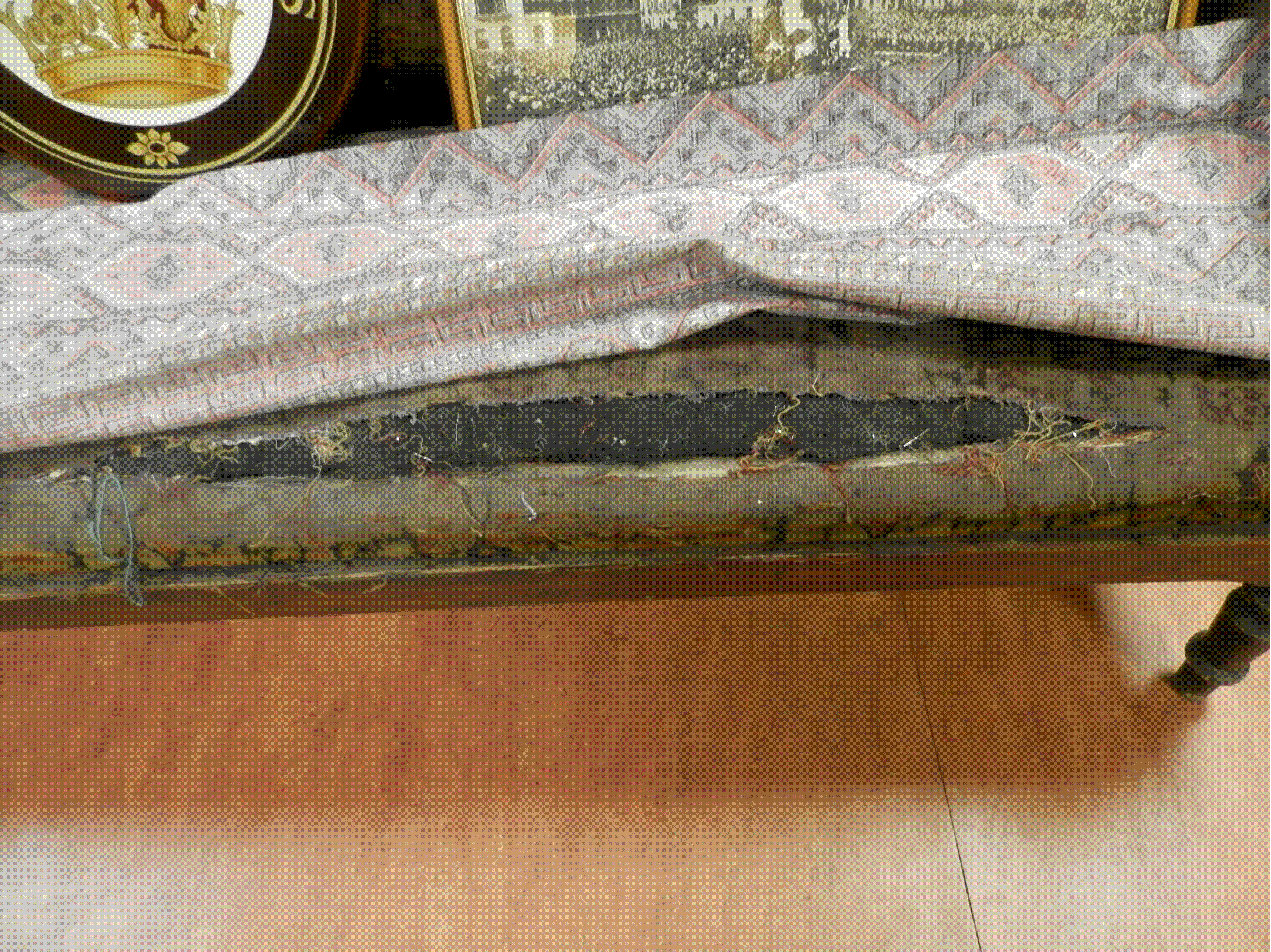
Having seen heavy use over the many years of its life, the fabric covering, was badly worn, exposing the horsehair filling.

Picture1

Using the money generated from the ” bench fund” table situated outside the museum room, the bench has been recovered and re sprung.

Bench Recovered

Photo’s by Chasewater Stuff & Oakparkrunner.

An excellent job was carried out by Steve Wade, a local Upholsterer, who has a workshop at the rear of 59 High Street Walsall Wood WS9 9LR.

Steve can be contacted on 07903337000, or at Stephen.wade@sky.com, and he will be pleased to quote for any upholstery work. Details and photo’s of Steve’s work can be found on his website http://www.stevewade.biz/

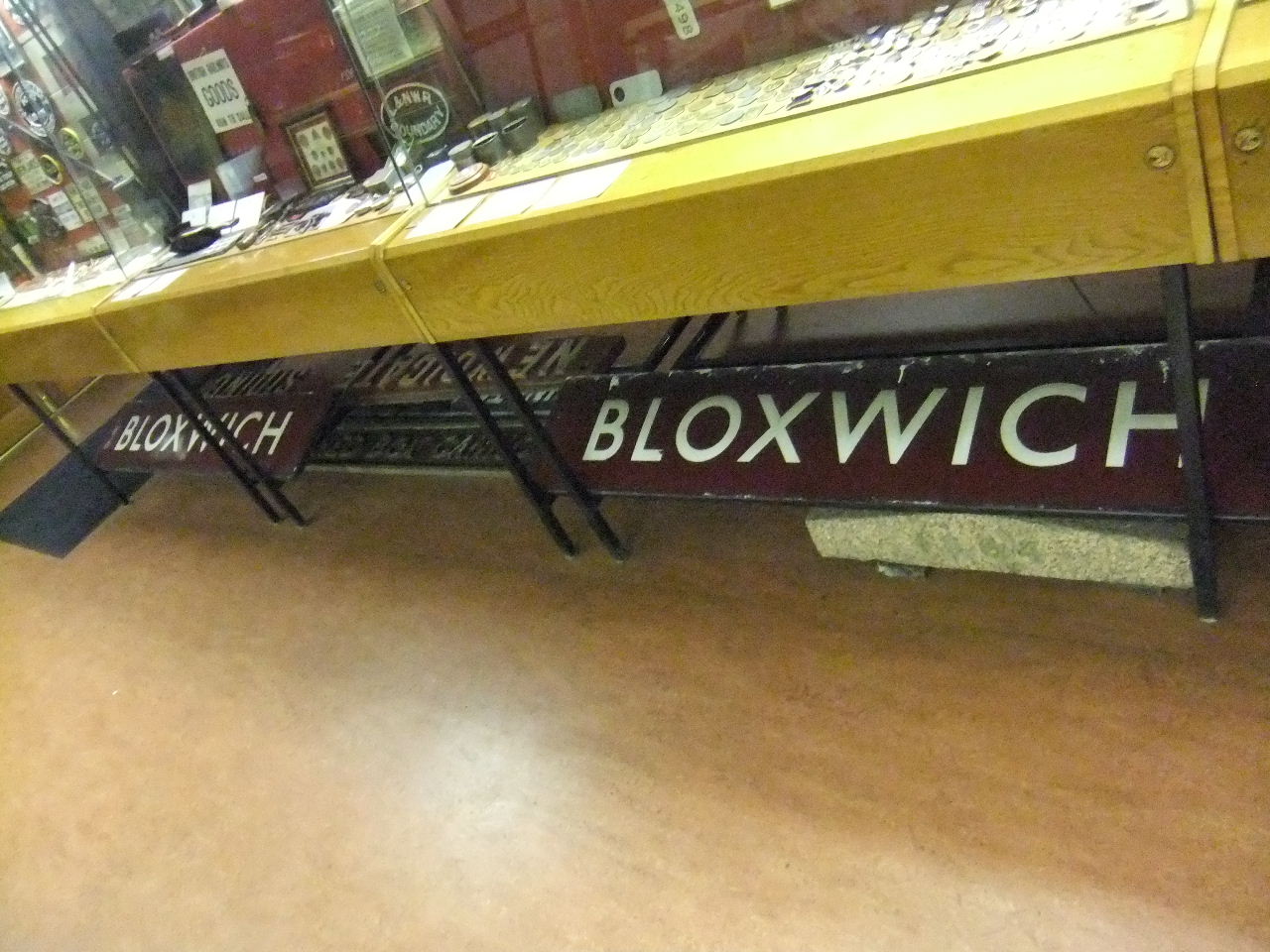
Chasewater Railway Museum Exhibits – Station Name Signs (Running-In Boards)

Museum Exhibits

Station Name Signs – Running-In Boards633 copy

We have a couple of very local ones!

Stations have displayed signs showing their name since railways began – the very earliest being hand-painted, often in extravagant lettering and colours.  However, since the required a sign-writer to paint them each time the colours faded – and colours tended to fade fairly often – they were gradually replaced by vitreous enamel signs, usually with a blue background and white letters, held in a wooden frame.

Some railways continued to use the enamel signs throughout their existence, while others opted for wooden boards to which cast iron or lead alloy letters were screwed.  The advantage of boards was that they could be easily lettered up by a relatively unskilled painter.  They were also easier to see at night.

Known officially as running-in boards, they were located at the ends of platforms.  At junctions, they usually included information about connecting lines.

Once a train had come to a halt, a porter was supposed to shout out the station name.  Even so, there were still passengers who missed their stop.  It was to ease this problem that enamel name tablets were placed inside the glasses of platform lamps, and small nameboards, or target signs, were suspended from walls, fences, or lamp posts along the platform.

The target signs were often enamel – especially on the Southern Railway (SR).  The London Midland & Scottish (LMS), by contrast, used a cast-aluminium alloy design finished in reflective yellow paint with black letters.  With nationalisation, British Railways introduced the familiar totem sign in regional colours, and produced them in very large numbers.950

Chasewater Railway Museum Exhibits – Boundary Markers

Chasewater Railway Museum Exhibits

This is the first in a series of posts about exhibits in the Chasewater Railway Museum – all photographs used in this series will be of items belonging to the Chasewater Railway Museum.

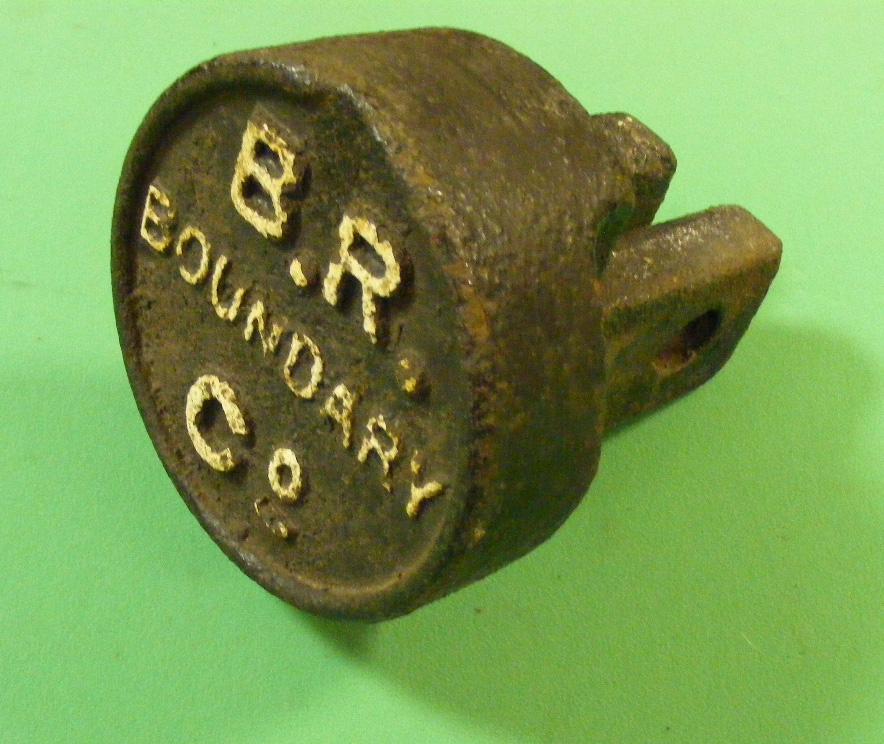
Boundary Markers

L & Y Boundary MarkerThis is a stone Boundary Marker from the Lancashire & Yorkshire Railway

In their heyday, the railways were the biggest landowners in Britain after the Church, and it was inevitable that boundary disputes sometimes arose.  It was to resolve this problem that many railways designed boundary posts or markers.

The oldest tend to be in stone, while those from about 1870 onwards are in cast iron – some companies using lengths of surplus rail, suitably inscribed.

The Great Western Railway (GWR) markers were made of Brunel-designed bridge rails cut into lengths, with an angle iron T-piece on the bottom, and a cast iron top, moulded round the rail.  Between 1880 and 1920, the year of manufacture was included on the cast top.  The Midland Railway (MR) used pieces of ordinary bull-head rail whose tops were stamped into an oval shape, with the raised letters ‘MR’.

These two types are by far the most common available to collectors, though the cast iron posts of the London & North Western Railway (LNWR) and Great Northern Railway (GNR) are also frequently seen.

It appears that several railways never had any boundary posts, and no examples are known from the Great Eastern, London, Brighton & South Coast, South Eastern & Chatham, or from any of the five main Scottish lines.Barry Railway

Barry Railway Company

On the other hand, two of the small South Wales companies had boundary posts which often come up for sale – the Barry and Rhondda & Swansea Bay railways.  The GWR, MR, GNR and LNWR all made boundary posts for their joint lines, and some of these are both exotic and extremely rare.

For example, the GWR produced posts for an area of land at Reading which abutted with the South Eastern& Chatham.  This was the only meeting point of the two companies, and just two markers are known to exist, both dated 1915.

Boundary markers are usually placed in the fence line at the side of the railway, or in adjacent land by bridges, viaducts or crossings.

Monmouthshire Railway & Canal Company

Monmouthshire Railway & Canal Company
Acquisitions – A couple of signal box nameboards

Acquisitions

A couple of local signal box nameboards have arrived at the Museum recently.DSCF9100DSCF9123DSCF9122

New Museum Aquisition, August 27th 2013.

The Museum of Cannock Chase, which is based at the old Valley Colliery in Hednesford, is redesigning the coal mining display. This means that a life sized fibreglass model of a pit pony will be surplus to requirements.

val and pony

An article was posted on their web site asking if any one could find the pony a new home. Chasewater Museum’s registrar John, spotted this, and promptly put in an offer for it. John’s bid was successful, beating many more offers from other interested parties, and Chasewater Museum is now the proud owner of this splendid animal.

Our thanks go to Nick Bullock for the collection from Hednesford and delivery to its new home at Chasewater.

DSCF9028

The pony soon made itself at home in the Heritage Centre at Brownhills West.

DSCF9034

All photo’s courtesy of John chasewaterstuff.

Fowler Works Plate Donation.

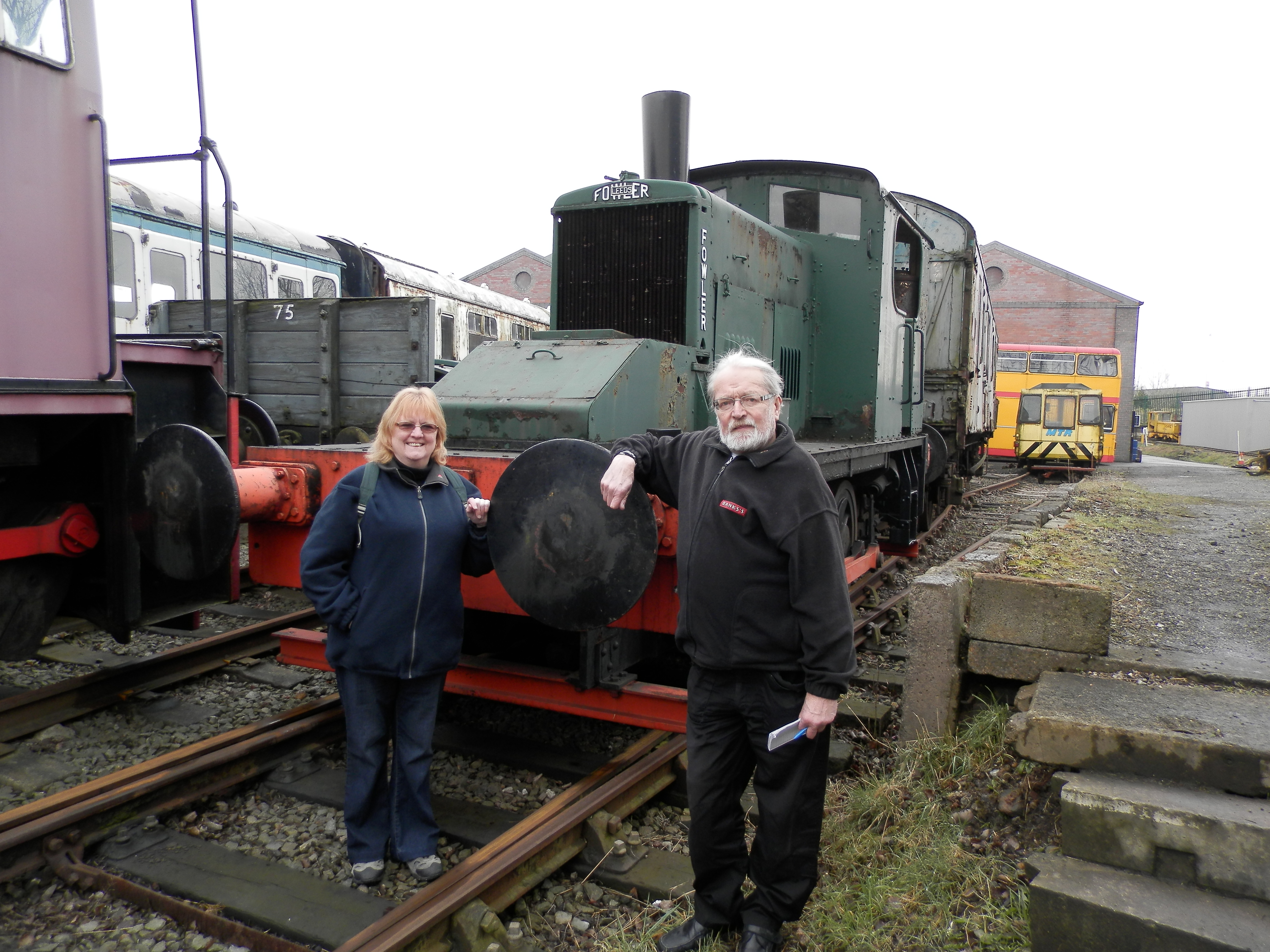
On Sunday March 17th, Mr and Mrs Fitton visited the Museum to Donate the original works plate for the Fowler locomotive resident at Chasewater.

OLYMPUS DIGITAL CAMERA

The locomotive, works No 4100013, was supplied new by Fowler’s from Leeds to Garringtons of Bromsgrove in 1948, where it worked shunting wagons from the factory, down to the goods yard at Bromsgrove Station. In March 1981 it moved to the Redditch Railway Society for preservation. The Society lost the use of the land in 1994, and the loco found a new home at Chasewater on April 23rd 1994.  Redditch Railway Society was disbanded in June 1996. Mr and Mrs Fitton were re-united with the Locomotive on Sunday before they left Chasewater.

OLYMPUS DIGITAL CAMERA