From the Archive
Another couple of handbills
All sorts of destinations from Brownhills High Street!



Ribblehead Viaduct
Most early railway bridges were modest structures, many being simple arches made from brick or local stone. In some cases metal was used, but the only material available in any quantity was cast iron – which had severe limitations.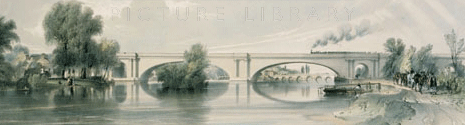 Maidenhead Bridge
The early engineers were cautious and usually allowed large margins for safety, making bridges stronger than they needed to be. Many of these are still in use, carrying heavier loads at much higher speeds than planned. Many people thought that the stone arches of Brunel’s viaduct across the Thames at Maidenhead were too shallow, and cracks soon appeared in them. Later, the contractor admitted that the supports had been removed too soon, and, after the bridge had been repaired, Brunel ordered the scaffolding to be left in position, but no longer supporting the bridge. During a storm, it was the scaffolding that blew down. The bridge still stands today, taking far heavier loads at speeds even its designer did not consider.
Some early bridges did need to be replaced quickly or strengthened, and a few even collapsed. The best known example is the Tay Bridge, which was destroyed in a storm because the designer did not allow enough strength for the effect of gales, which was made worse by poor construction and maintenance.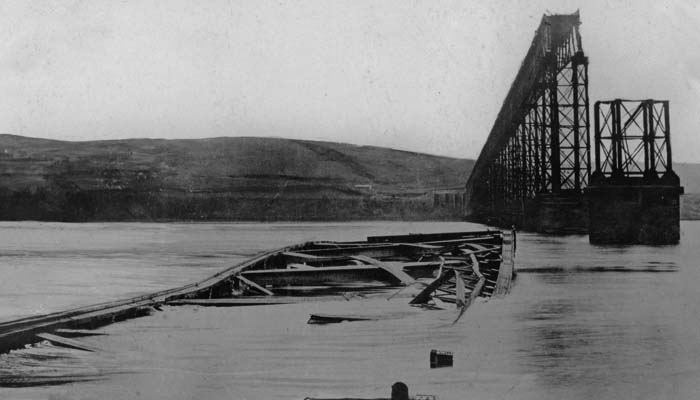 Tay Bridge
Wood was also used in bridge construction, even for viaducts, and Brunel built outstanding examples in Devon and Cornwall. The piers were built of stone, but wooden timbers fanned out to support the track. Wood has a limited life as a building material, but Brunel’s structures were designed so that individual timbers could be restored and renewed. In the last part of the nineteenth century, steel was often used for bridge construction, the Forth Bridge being a famous example. Forth Bridge
With the invention of concrete, new construction methods were introduced. The first concrete viaducts used separate blocks made to size, but later the whole bridge structure was cast on site. A notable example is the Glenfinnan viaduct on the line from Fort William to Mallaig. Glenfinnan Viaduct
de:Benutzer:Nicolas17 Licensing: This file is licensed under the Creative Commons Attribution-Share Alike 2.5 Generic license.
Reinforced concrete was followed by prestressing, a technique also used for making sleepers. Nowadays designs in concrete are particularly advanced. One viaduct had a continuous span cast at one side of a gap and then pushed over the top of piers to form the bridge.
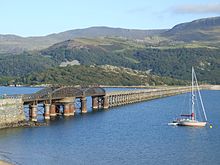
Many bridges crossing waterways had to be built high enough so that tall ships could pass underneath. Another solution is the swing bridge, where one span pivots about its centre point to provide an opening.
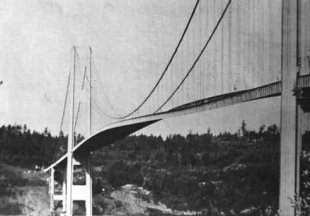
Foot bridge – almost every type of bridge has been used with success on the railways, except for suspension bridges. As early as 1830, the Stockton & Darlington built one across the Tees on the line to Middlesbrough. But it did not inspire confidence, and one driver was so distrustful of it that he set the locomotive’s controls so that the train took itself across while he crossed on foot!
Another handbill, this time a national advertisement – stretching the Midlands a little!

This time a Whitsuntide Holiday Excursion from New Street to Lichfield City for 2/- (10p) return. This was the May Bank Holiday before it was moved to the first Monday of the month.
An LMS trip in 1929 to the well-known Lichfield Bower.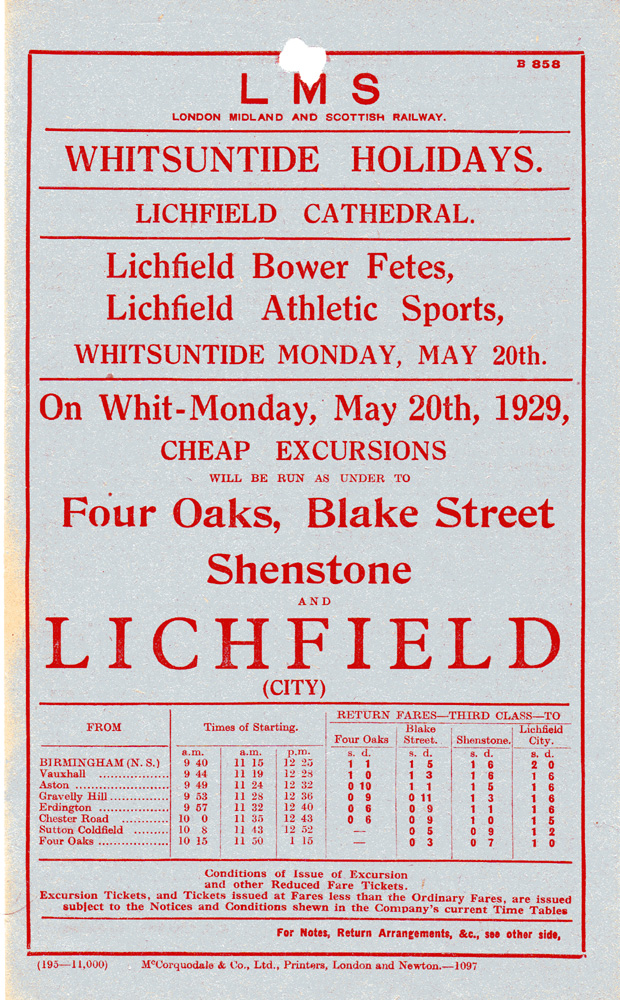
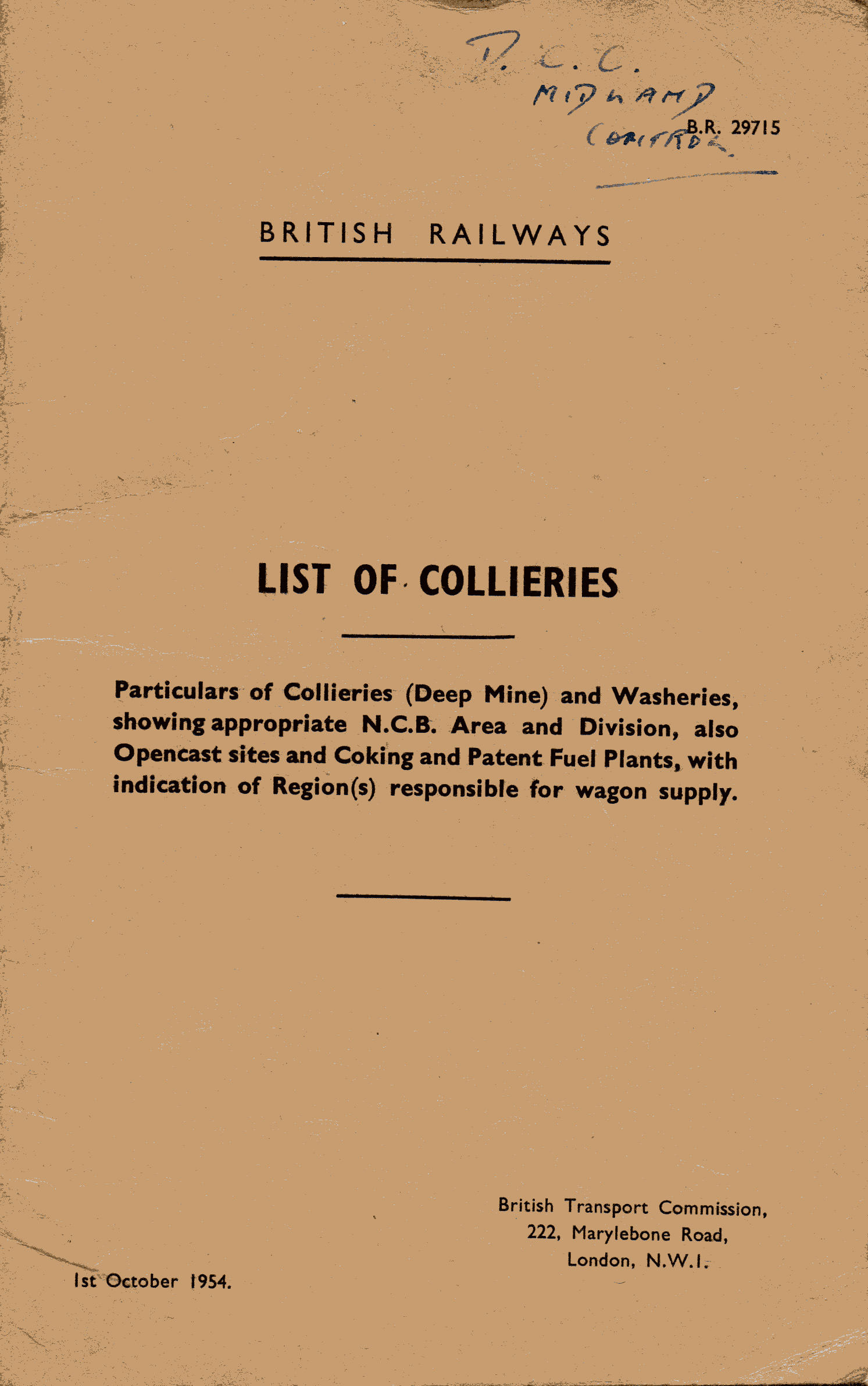
This British Railways list of collieries contains particulars of all the collieries in 1954 and the Railway Regions responsible for wagon supply.
The photos show the cover and page relating to the Chasewater Region
The other items contain information about the Bescot Marshalling Yard and a sketch of the yard, dated 1968.


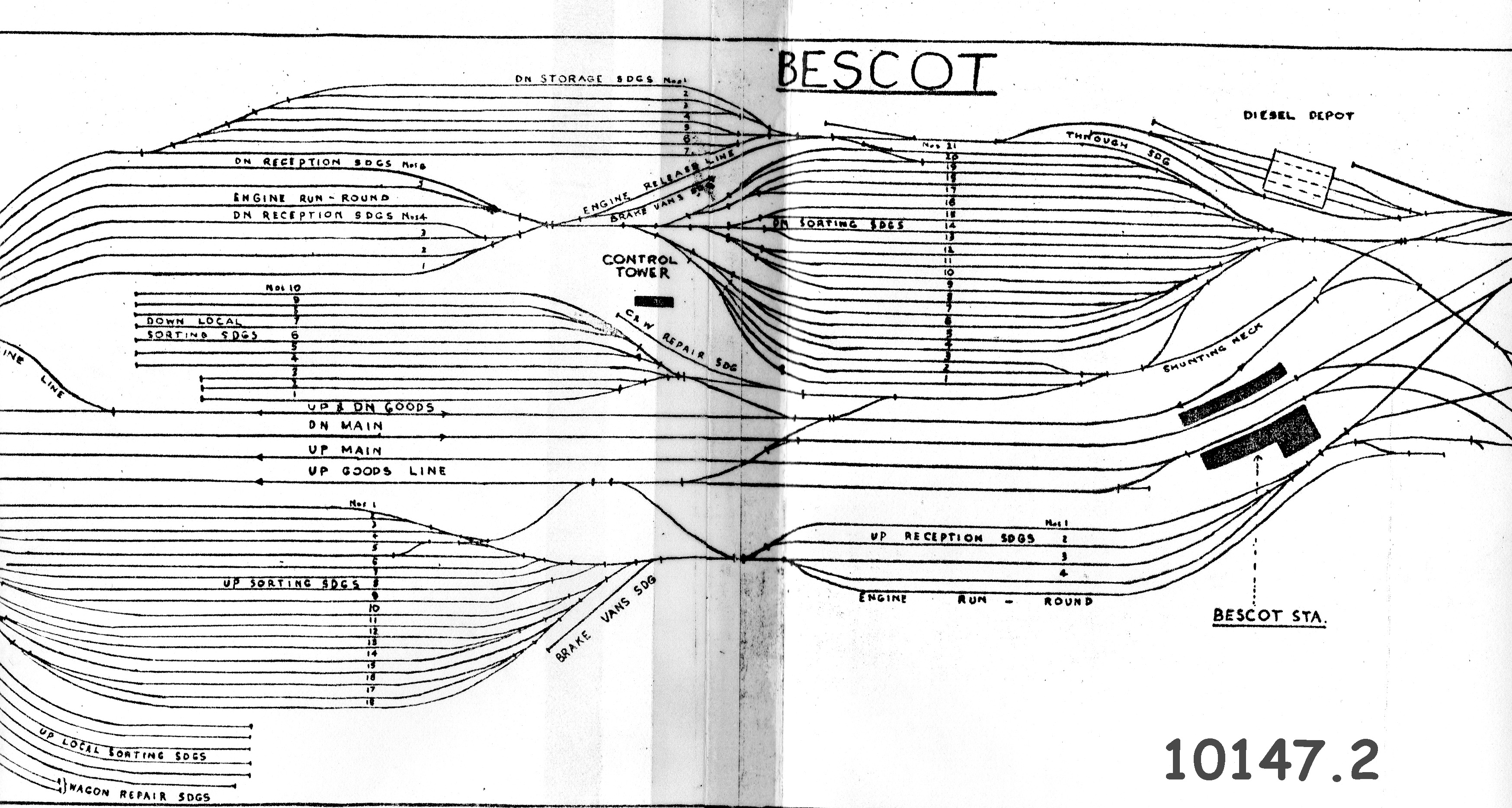
These items were passed on to the Chasewater Railway Museum by Tom Moore
An old newsletter has just turned up in some old paperwork we are going through, and as it was first published at this time of year, I thought it might be interesting to show the state of play 26 years ago.


The latest addition to be entered on the museum database is a collection of handbills, a number of them from local stations.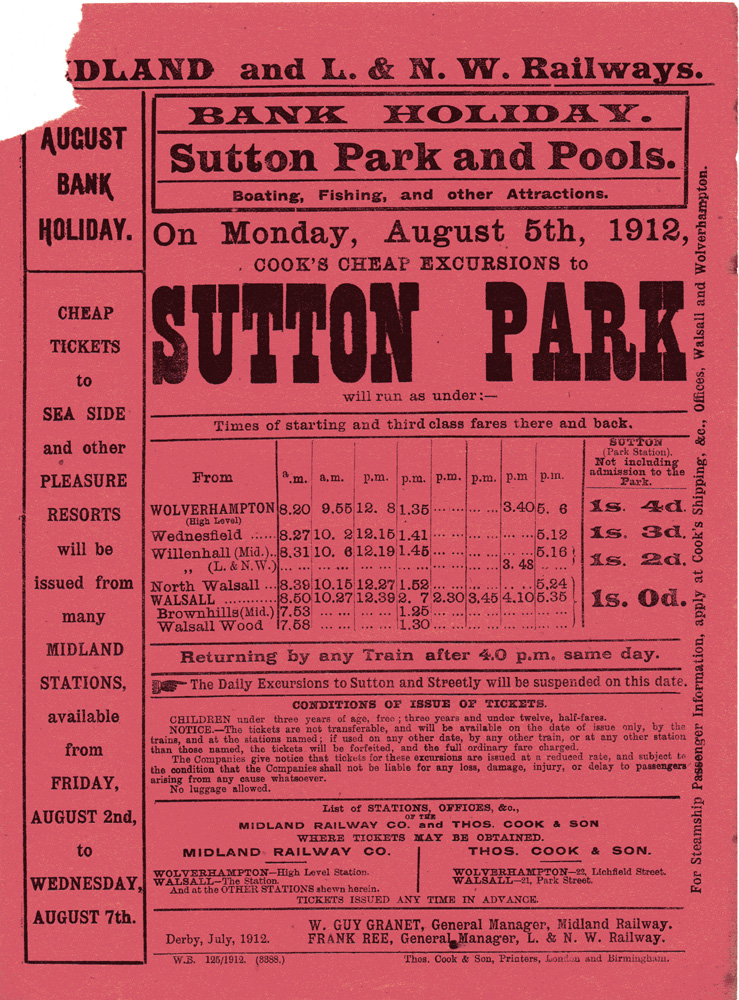
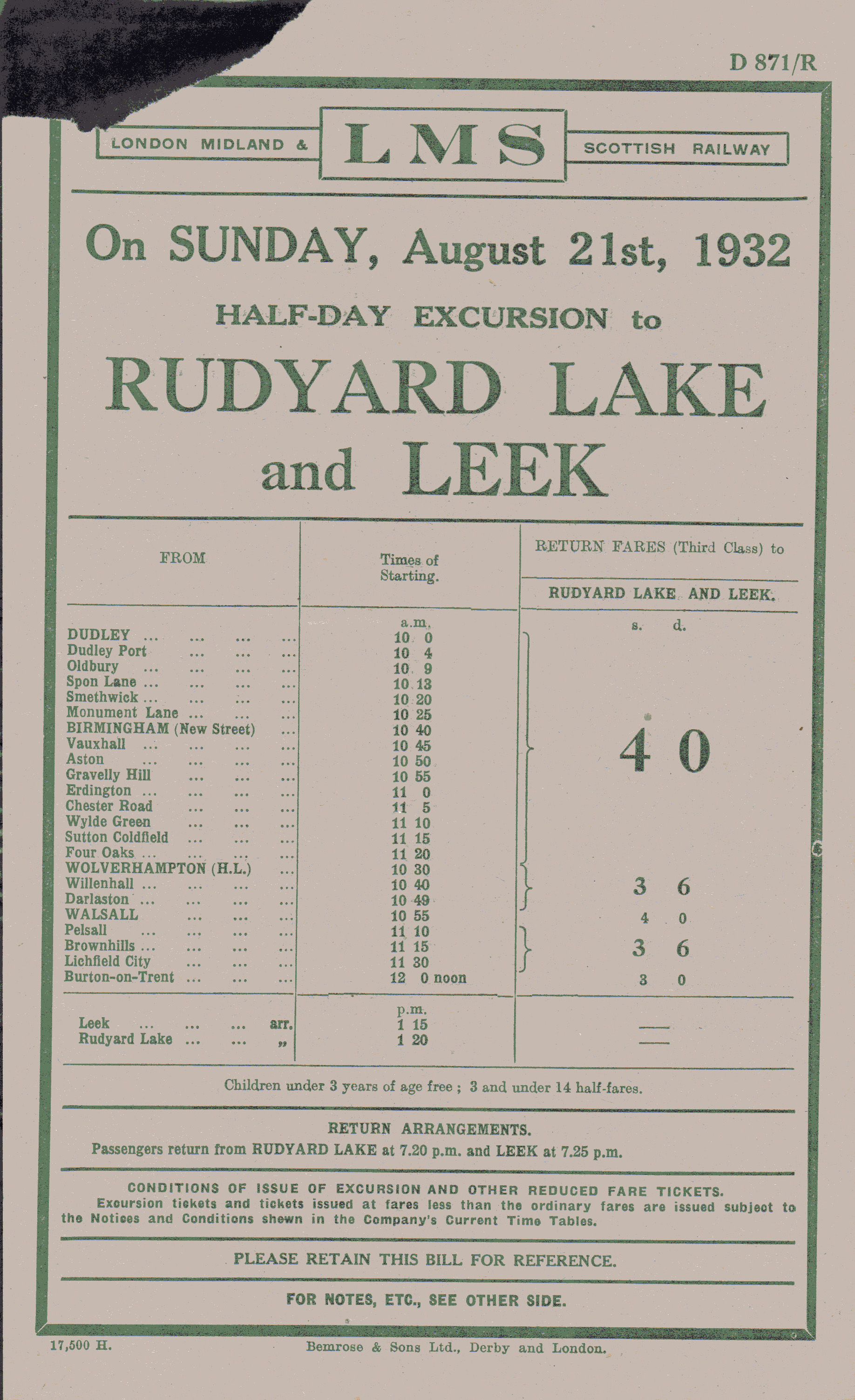
The one pictured here is obviously of interest to Chasewater Railway members, being a return trip to Sutton Park, leaving from, amongst other places, Brownhills (Midland) station and Walsall Wood. This was the Midland line which extended into the Cannock Chase coalfield, passing through our present Brownhills West station. How about the price? – 5p return to Sutton Park in today’s money!
The Brownhills (Midland) station was situated between the A452 Chester Road and the A5. We have others of local interest which I shall post here in the future, but I haven’t as yet come across any more from Brownhills – but I shall keep on looking!!

Among a few photos of Brereton Colliery was this one of loco ‘Vanguard’
(0-4-0ST Peckett 1491/1917 Acquired from Royal Arsenal, Woolwich 1920. Still at Brereton Coll. 1957, since scrapped.)
sitting by the Brereton Sidings signal box. This was taken by Don Dutton in 1960, after the closure of the pit. Don was the driver, ‘Perce’ Vernon (shunter), George Wilshaw (shunter) and George Blackburn (Boilersmith).
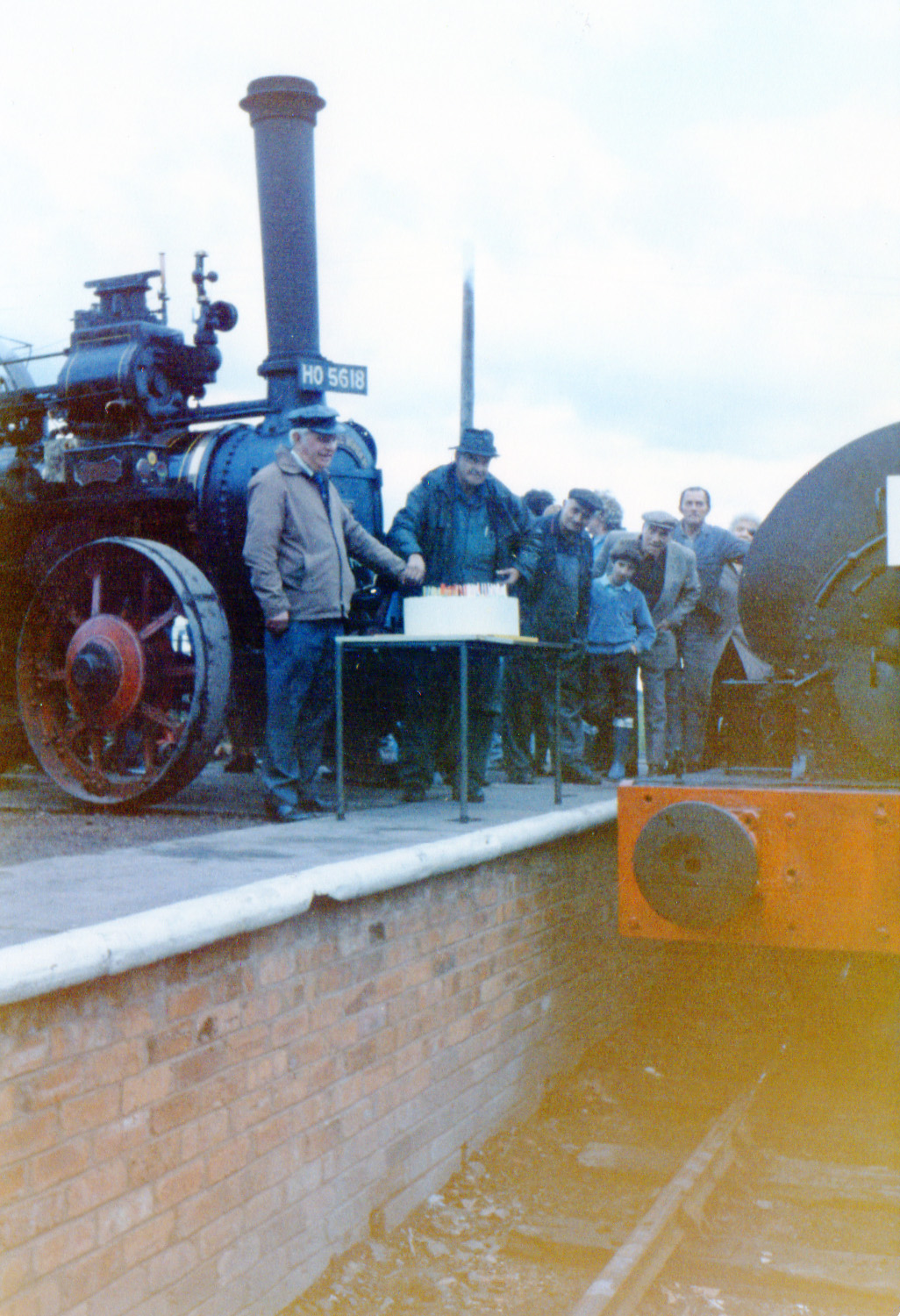
The Chasewater Railway Museum has a significant amount of paperwork formerly belonging to David Ives, a founder member of the Railway Preservation Society and a long-time Board Member of the Chasewater Railway. Our curator is working his way through this paperwork to put it in some sort of order, and is finding some interesting photographs in some of the boxes, including the ones shown here.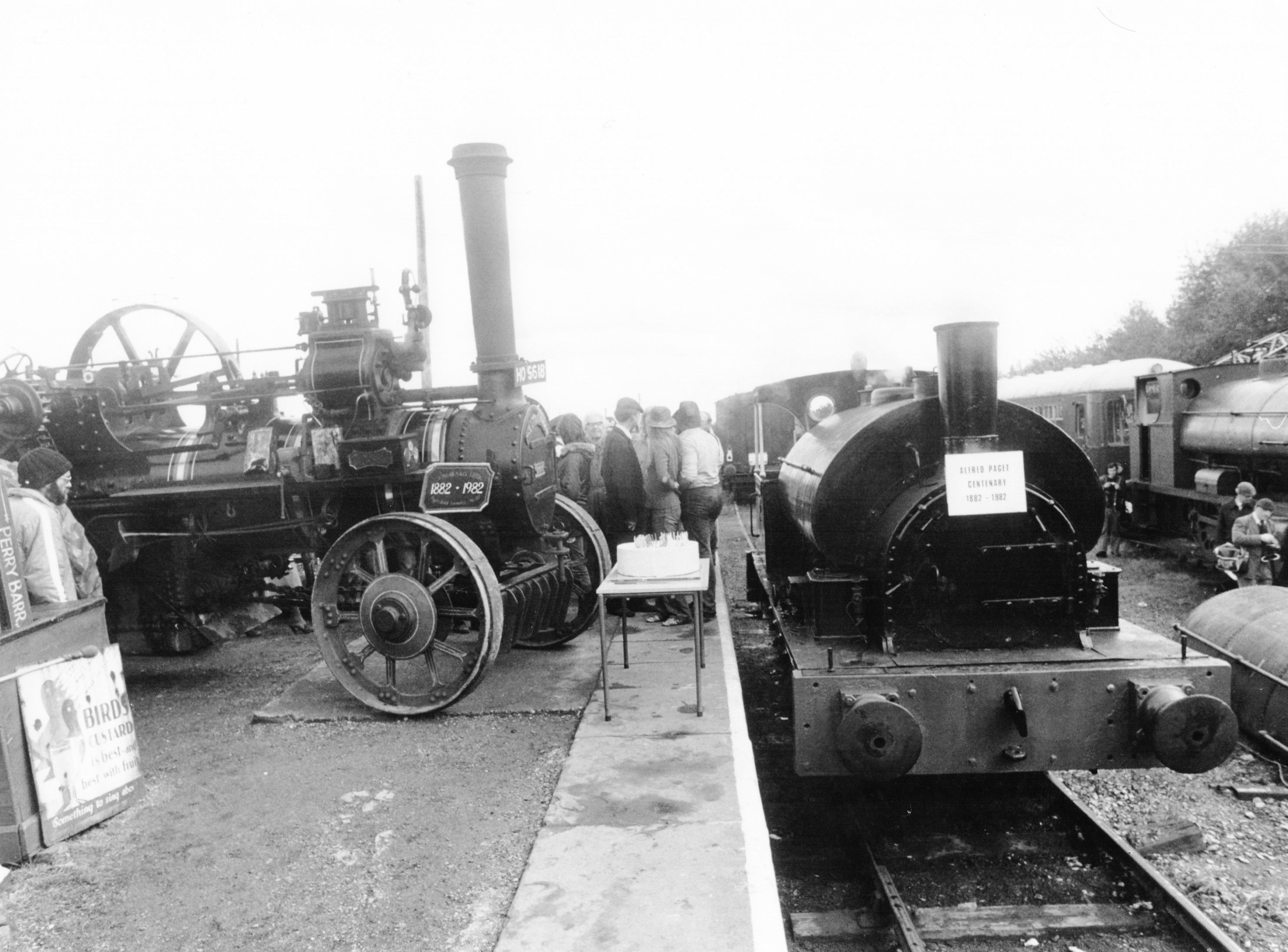
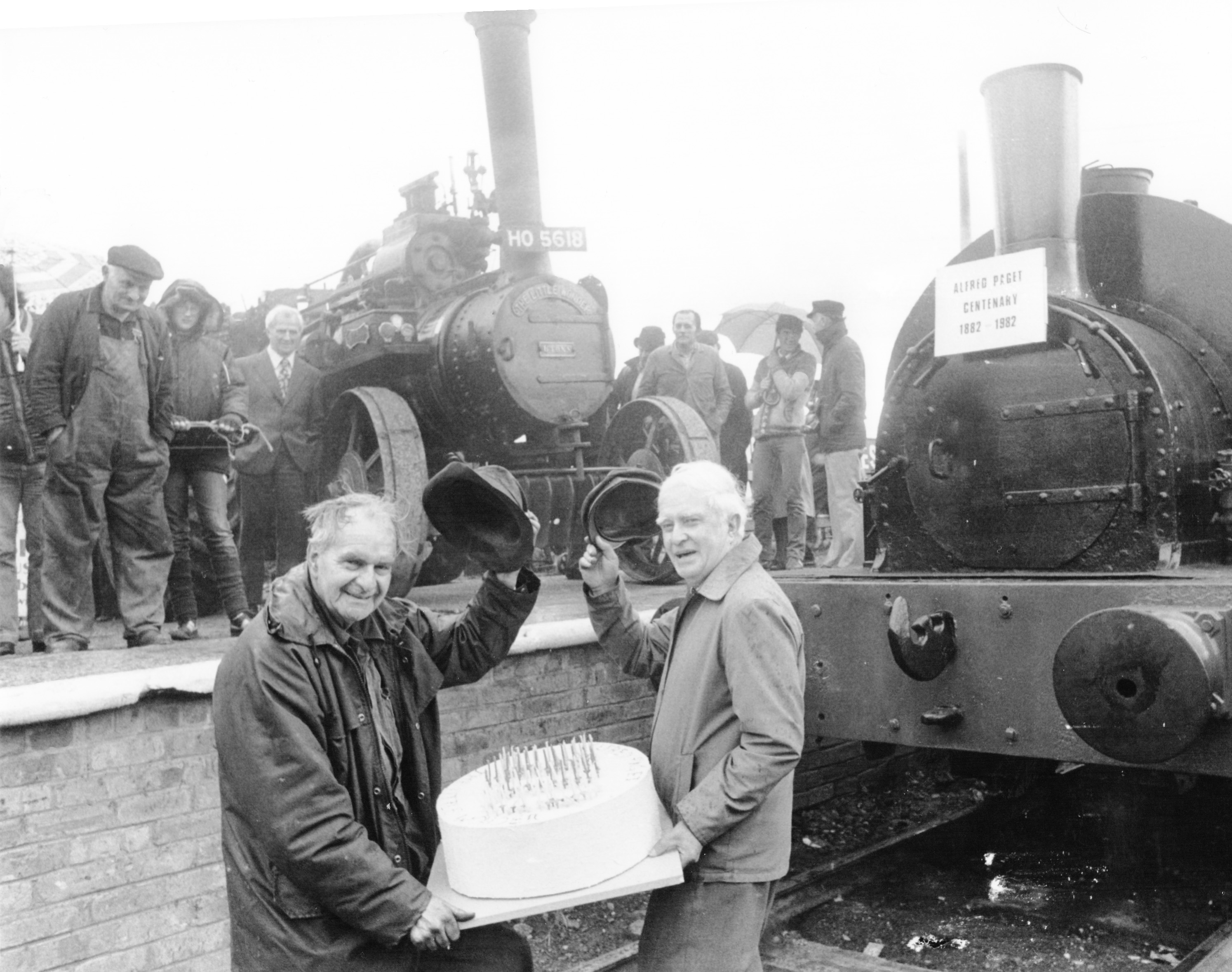
The centenarians involved are the traction engine ‘Little Wonder’ and the Neilson steam locomotive known as ‘Alfred Paget’ (2937/1882).
The gentlemen in the photo holding the cake are the late Johnny Mayes, at the time the owner of ‘Little Wonder’, and the late David Ives of Chasewater Railway, on the right.


 Chasewater Railway Museum