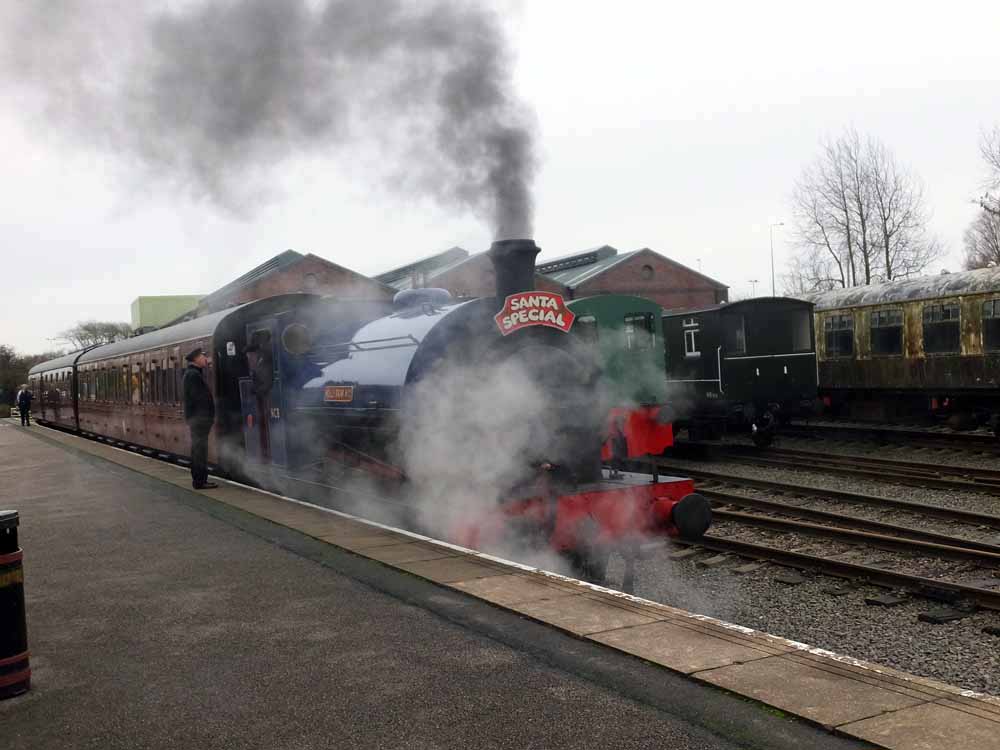
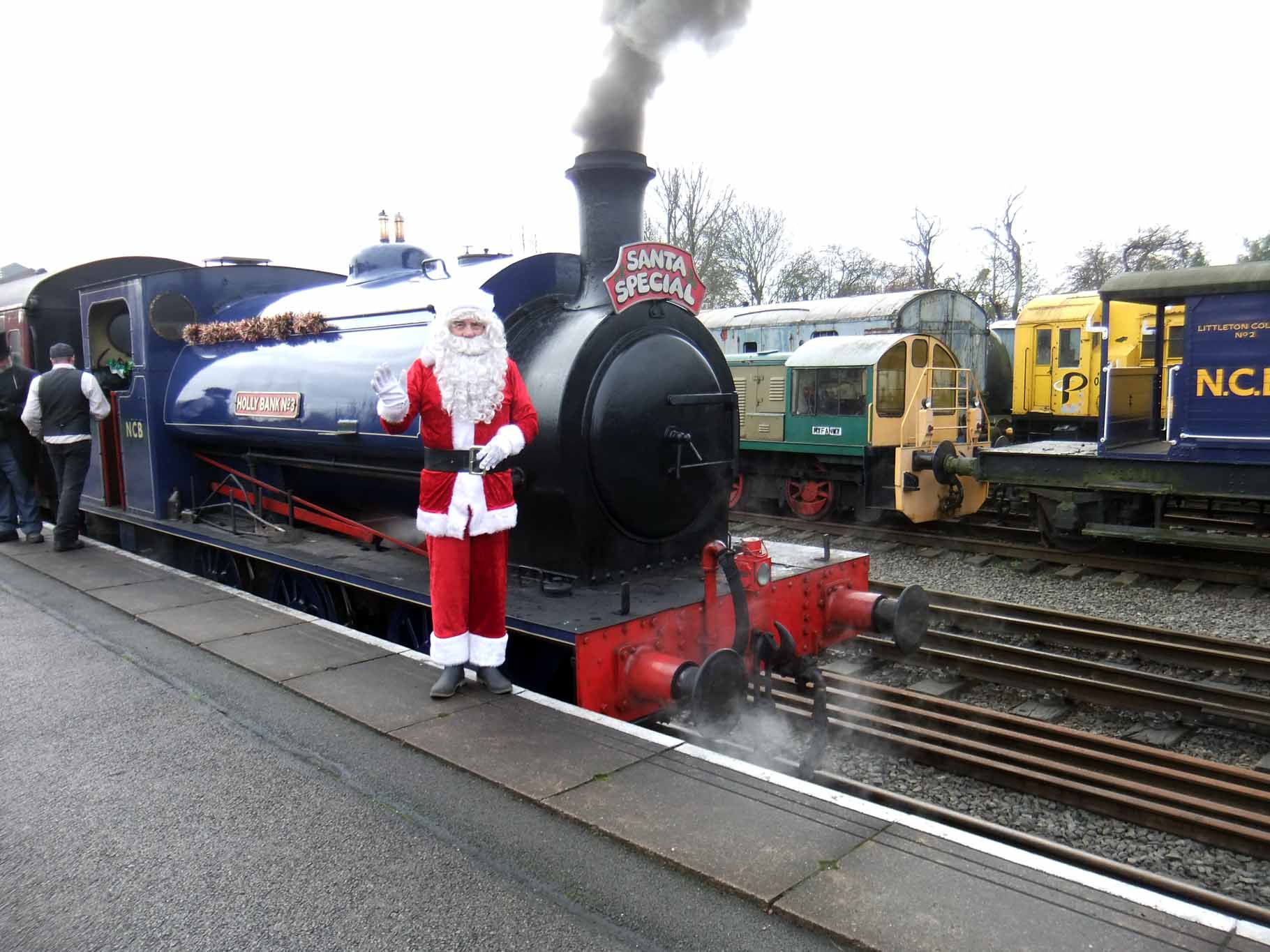
On Wednesday December 11th 2024, 48 children and 7 teachers from Littleton School enjoyed their trip on the Santa Special at Chasewater Railway. Part of their visit included a guided tour of the Museum, which houses memorabilia from Littleton Colliery, which is the site on which their school is built. The photograph was taken with permission from the school.
The photographer was Godfrey Hucker, one of the Railway Museum’s knowledgeable guides.
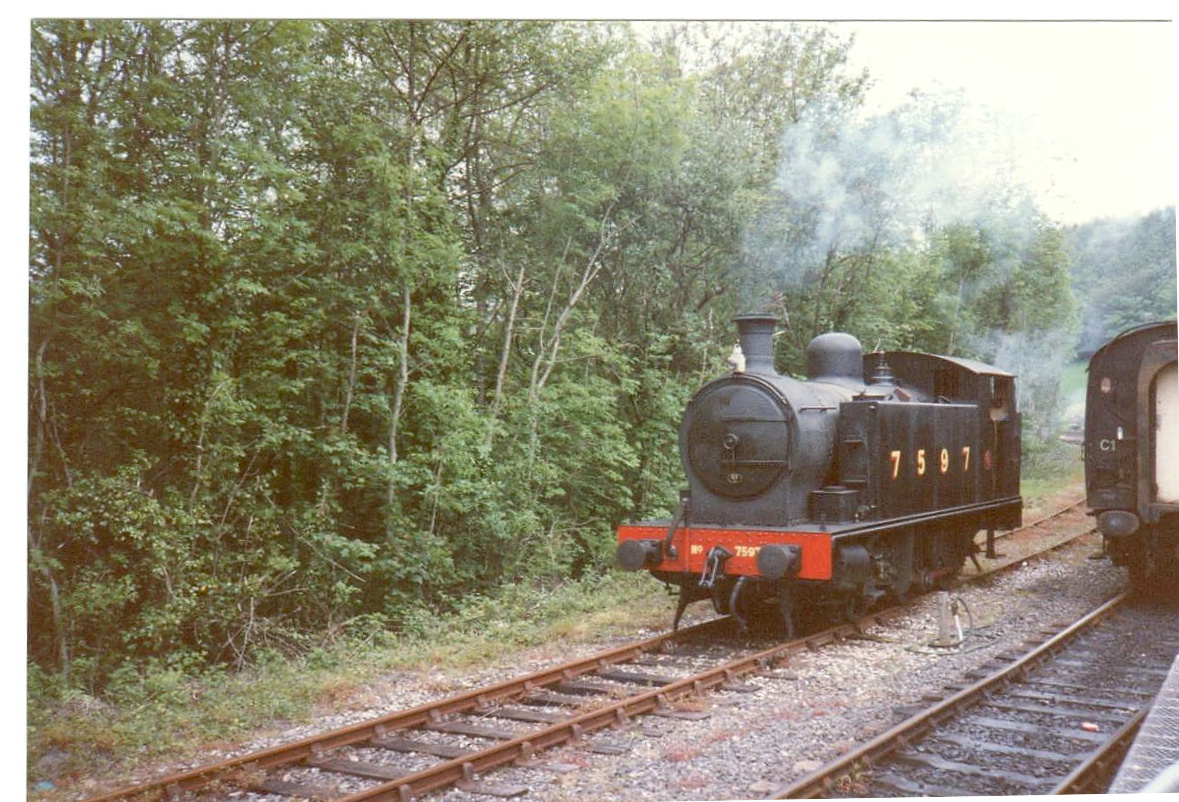
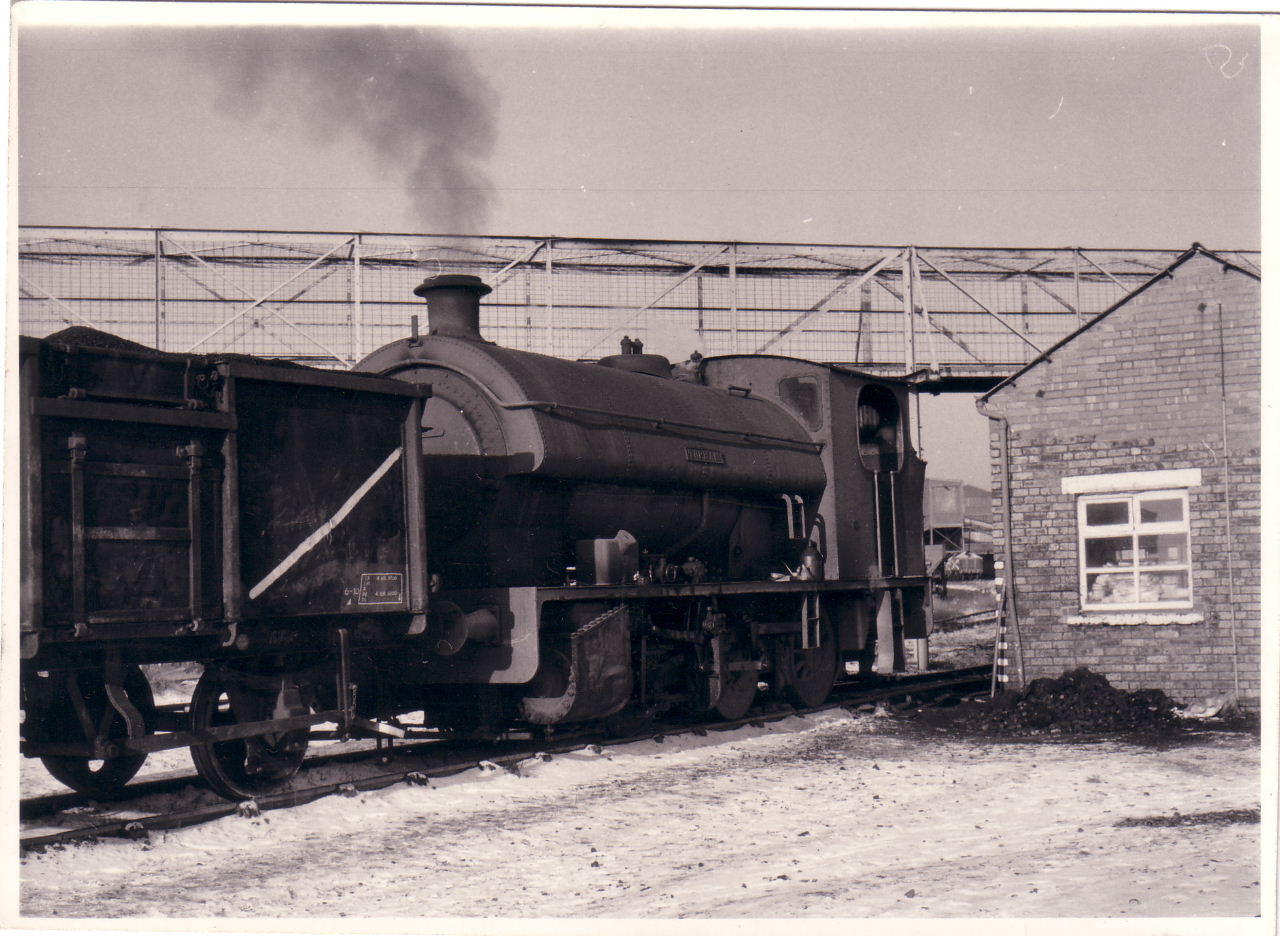
A picture from Neil Clarkes collection, Robert Stephenson and Hawthorn 0-6-0ST 7597 ‘Zebedee’, built in 1949.
199 – Chasewater Railway Museum Bits & Pieces
From Chasewater News – Winter 1996 – Part 4
Blast from the Past – Continued
Chris Chivers
For the winter edition of the Chasewater News I have included this article and map, gleaned by our Chairman David Bathurst, from the ’Railway Magazine’ of November/December 1944 as there is a reference to the closure of our line to passenger traffic in the 1930s and for the general interest in the way the area’s network of services has been steadily eroded over the years.
Forgotten Train Services in the Birmingham District
G.A.Knott
Turning to the lines of the late Midland Railway, there is first the Halesowen Joint branch (GWR & MR) from Halesowen Junction (on the Midland main line to Bristol) to Halesowen, about 5 miles away, where it joined the GWR branch from Old Hill. This line is very heavily graded. The service was operated from Kings Norton, two stations up the line towards Birmingham, to Halesowen, and all the trains called at Northfield, on the main line, and at Rubery and Hunnington, the two stations on the branch proper. Trains left Kings Norton for Halesowen on weekdays at 9.00am, 12.31, 2.40, 6.04, and 7.28pm, and Halesowen at 7.52, 10.17am, 1.25, 3.55 and 6.40pm. There were no Sunday trains. The journey time for the distance of about 8¼ miles was 28 minutes. Practically the same service was working in November, 1913, but by 1917 there was only one train each way, and this route must be included in the casualty list of the late stages of the First World War.
Looking beneath Longbridge Lane bridge towards Northfield station with the up slow on the left on 12 March 1962. The remain lines are, from the left, the up fast, the down fast and the down slow. This is the current site of Longbridge station which is partof the Cross City Line. – warwickshirerailways.com
The next line is of great interest, as it once formed part of the trunk line to London. It is the Whitacre to Hampton line of the one-time Birmingham & Derby Junction Railway, later absorbed by the Midland Railway. In 1839 it formed the only route from the Midlands to London, and the through service consisted of two trains, one in the morning and the other at mid-day, to Hampton, and three trains in the reverse direction, in the morning, at mid-day, and in the evening. All these trains connected at Hampton with trains of the London and Birmingham Railway. There was one intermediate station at Coleshill, afterwards Maxstoke Goods Station, on this section of the line, but none at Whitacre itself; the next stations were at Kingsbury and Tamworth.
Looking towards Whitacre station with the original B&DJR line to Derby curving off to the left and the line to Nuneaton to the right circa 1964. The configuration of the station can be seen with the trains to Derby and Nuneaton stopping at the platform on the left and trains from both stopping on the left-hand island platform. The Hampton branch train originally terminated at the right-hand island platform which is out of sight in this view. warwickshirerailways.com
The days of glory of the Whitacre-Hampton section (called the Stonebridge branch) were short lived. They had begun on August 12, 1839, when the opening of the Birmingham & Derby Junction Railway from Hampton to Derby had made possible the 139-mile route between Euston and Derby. They were diminished in July, 1840, when the Midland Counties Railway was completed to Rugby and afforded a rival route between the North Midlands and London. They finished on February 10, 1842, when the 10 mile direct line from Whitacre to Birmingham (Lawley Street) was opened on that date. By 1899 this service was reduced to one train a day, leaving Whitacre at 8.25am and returning from Hampton at 9.15am. The journey time was 15 minutes for the 6½ miles. This train made connections with LNWR trains to and from the Coventry direction. The line, which was single, never paid adequately, but it had a very long period of gradual decay. One train each way was still being worked in November, 1916, but this was abandoned in the beginning of 1917, and the branch given over to wagon storage.
Also now gone is the last passenger route of the Midland Railway into Wolverhampton via Walsall. On weekdays in 1899, a service of ten trains was maintained each way, with two extra trains on Saturdays: the trains called at all or most intermediate stations. This was reduced in 1929 to a weekday service of four trains from Wolverhampton to Walsall, and three in the opposite direction. The Sunday service, which in 1899 had consisted of four trains each way, had been withdrawn by 1929. By 1931 the traffic was almost completely diverted to the old LNWR Pleck route, and the old Midland line between Walsall and Wolverhampton, via Short heath, had its passenger service withdrawn on January 5th 1931.
Short Heath Station c 1930 facing Walsall D. Wilson
Another withdrawal of the same period was the Midland branch service to Brownhills. This branch left the MR at Aldridge, 2½ miles from Walsall. It was 4 miles in length, with one intermediate station, Walsall Wood. There were three trains a day each way (five on Saturdays), except Sundays, in 1899. All trains called at Walsall Wood. The service was down to two weekday trains in 1929, and was cancelled on March 31, 1930.
Special train crossing the Chester Road, Brownhills, entering the site of the old MR Brownhills Station
Also gone from the Midland timetables is the passenger service from Birmingham to Kings Norton, via Camp Hill and Lifford. This has been closed only since 1940, along with its six intermediate stations.
Lastly comes the GWR. As this company has fewer lines in the area, it has naturally fewer closed ones. There is the Oldbury branch from Langley Green Station, on the Birmingham-Stourbridge Junction line, to Oldbury. This is only about 1 mile long, there was no intermediate station, and the journey, which was made16 times daily in each direction in 1899, lasted 5 minutes. There was no Sunday service. A rail motor was introduced about 1905, and in July, 1908, there were actually some 27 runs each way daily on the branch. By 1913 the total had grown to 30, but by 1915 the whole service was withdrawn.
Old Hill station, the start of the line. Actually, the line from Old Hill to Halesowen was built by GWR before the Halesowen Railway was created. Note the station name board which still recorded the Halesowen branch public passenger service, which was withdrawn on 5 December 1927. D.J.Norton
Discontinued also on the GWR, from September 26, 1927, was the service from Old Hill, 8 miles from Birmingham on the Stourbridge line to Halesowen, where end-on junction was made with the Joint GWR & MR branch. This was another push-and-pull service, and in 1899 trains ran over the 1½ – 2 miles branch 15 times daily from Old Hill to Halesowen, and 14 times in the reverse direction. The journey time was 5 minutes, and connections were made at Halesowen with Midland railway trains, and at Old hill with GWR trains to Dudley, Birmingham and Stourbridge.
These last two posts do not pretend to be more than a note of various interesting old services in the Birmingham area, and is certainly not exhaustive.
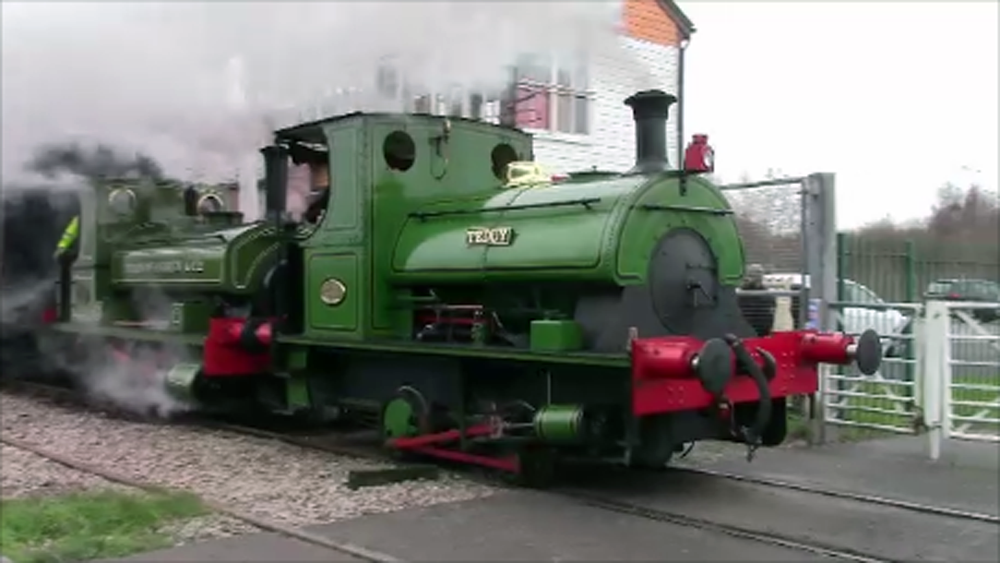
Barclay ‘Coln McAndrew’ and Peckett ‘Teddy’ double headed out of Brownhills West at Chasewater Railway
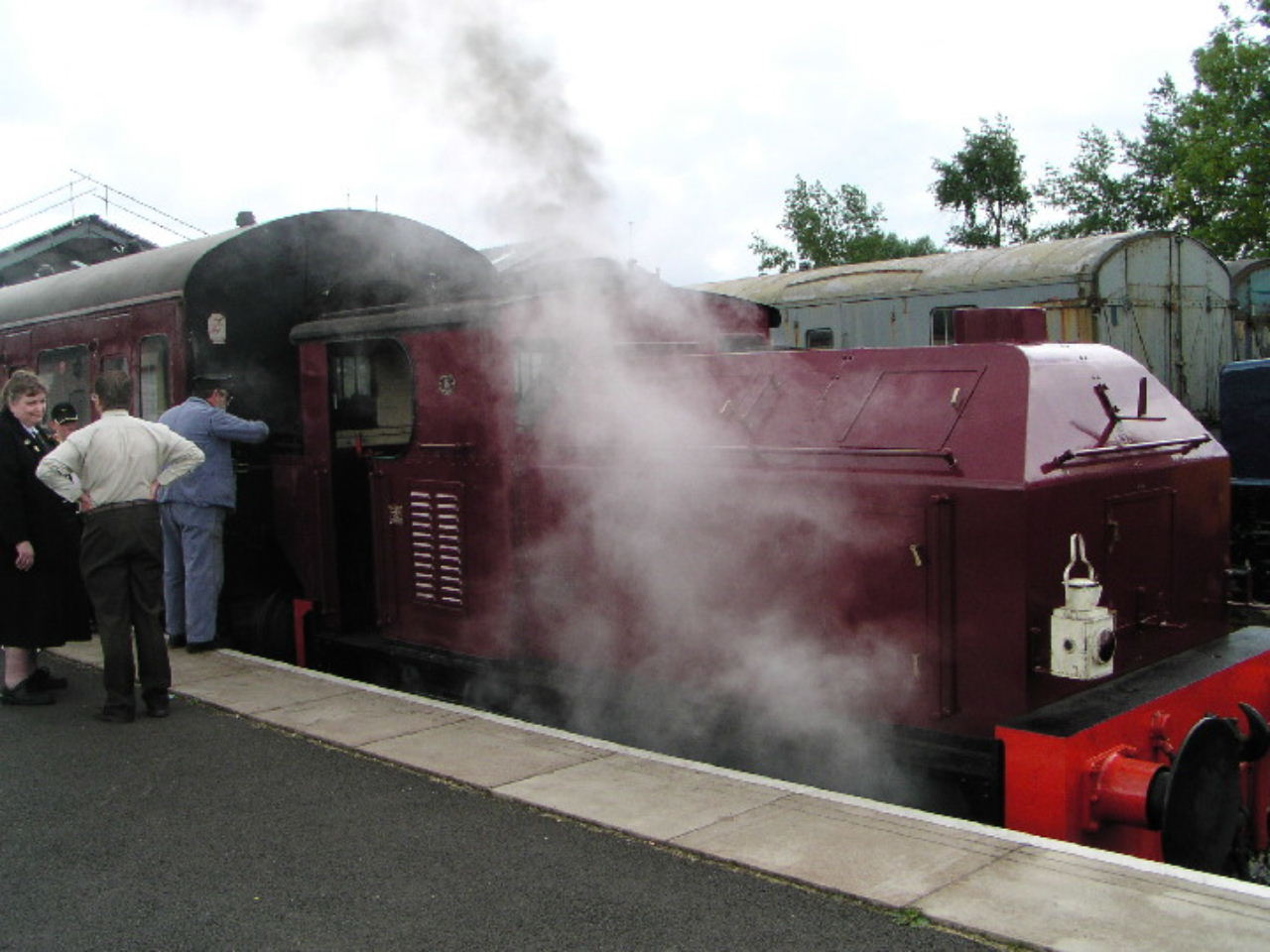
The first ‘Modernisation Plan’ Diesel Multiple Unit vehicle to go into preservation was Gloucester Carriage & Wagon 1957 built Driving Trailer Composite (DTC) No.SC56301, which came to Chasewater from the Scottish region of British Railways at Easter 1969. The vehicle was one of a fleet formed into two car sets which worked in Scotland and in East Anglia, as well as in the West Midlands. The purchase was by the Railway Preservation Society (West Midlands District), as we then were, who had taken a lease on the line and trackbed at Chasewater which had formerly carried coal traffic.
The Park was being developed at the time by the local authorities keen to reclaim the spoil heaped, ruined landscape that had recently ceased production. A preserved railway was welcomed, and so much traffic was being carried in very old and fragile stock we had inherited from the Colliery at Rawnsley, that a more modern vehicle was needed to take the load, relieving the historic stock. The Gloucester, which seated 12 passengers in first class, and 54 in second was 57 feet 6 inches long and weighed only 25 tons.
Immediately on arrival at Chasewater, still in its recently acquired Rail Blue livery, with small yellow warning panel and 2-digit route indicator below the cab front window, the car was adapted with the buzzer circuit carried through the lighting circuit jumper and through to the locomotive which had a buzzer fitted to enable the vehicle to be used for push-pull working, with the Guard (or Coach Driver) signalling from the coach cab to the Loco Driver to stop, start, etc. by buzzer code. Permission was received from the Railway Inspectorate to operate in this fashion despite there being no through vacuum brake, thanks to the simple communication system, the excellent look-out position for the Guard, his access to a handbrake and the line’s ‘U’ shaped gradient profile at both ends!
The DMU was a great success, and we no longer worried about the underframe of the train snapping! The windows, large and almost continuous around the vehicle, together with the light green flecked Formica finish, and seating in vertically striped red and grey (second class) and blue and gold (first class), made for a very welcoming appearance, and the Chasewater system of working push-pull with DMU cars in conjunction with a steam or diesel locomotive was established.
The paytrain concept was adopted by BR in the sixties, and at Chasewater we often steamed on an unscheduled Sunday if the weather was fine (we only advertised trains every fortnight at this time), and used an ex Birmingham Corporation Transport Ultimatic ticket machine when the guard had to collect fares because no staff had been rostered for the station. Often in the summer of 1974 with trains running over the then 300 yards of track and with only five minutes to collect up to 90 fares, I felt as though my thumb was dropping off by the end of the day operating that machine.
1974 saw the Gloucester painted into maroon, with a light grey roof. A gold and white bodyside line was added below the windows in 1976. 1979 saw the front route indicator panel plated over, and a further coat of maroon paint applied.
In 1979, the Board identified two needs which could be satisfied with the purchase of a further two vehicles, firstly to use one as a ‘Railway environment’ buffet, and the other for use as a bar car, to be attached to the passenger train on busy or festival days. A two-car Wickham-built set, recently used as a General Manager’s Inspection Saloon was identified and purchased for £1500 plus VAT and transported by rail from Leeds to Wolverhampton steel terminal, then by road to Chasewater.
The Wickham two-car set had been converted into an inspection saloon car for the General Manager, British Railways Eastern Division, in the mid-sixties.
The diving motor brake second (DMBS) was No.E50416, 57 feet long and weighed 27 tons 6 cwt. Stripped of its original interior, a kitchen had been fitted in place of the original Guard’s compartment, and the Guard’s vestibule end windows had been plated over. A corridor ran from the gangway around the kitchen. The engines (two 150 HP BUT Leylands), transmission and general mechanical condition were fairly good.
The driving trailer composite, No.E56171, was 57 feet long and weighed 20 tons 10 cwt. Again, this vehicle was internally stripped for its inspection role, and was altered thus: one of the two toilets was removed and replaced with shelves: two huge seats, each 3’ 6” wide were installed next to the toilet, adjacent to a vacuum stand pipe, emergency brake handle and vacuum gauge. A single compartment installed and folding steps complete with vacuum pipe release trips (to prevent the train from moving whilst the steps were down) installed below the passenger doors. Both vehicles had had the passenger doorways nearest the front of the vehicles removed and plated over.
Both vehicles had aluminium bodies over angle-iron frames and were in good condition, however the gutters leaked and the gutter strip was eventually replaced – steel gutters fitted against aluminium bodysides need only water to start electrolytic transmission, resulting in bodyside holes against the gutter. (This was a problem we would encounter again later with the 1994 acquisitions). The doors were however a problem, with only a short production run, softwood frames with an aluminium skin were fitted, rather than the more normal single cast alloy that are on so many DMUs, so warping and rot were a constant problem.
At the time of the Wickhams’ arrival, the Company was suffering certain problems. The Society, which was the group founder, had formed a company in the early seventies for the purpose of administering the public services provided by the group, a YOPS (Youth Opportunities Programme) scheme was in progress, and the two parts of the group failed to see eye to eye, the result being ultimately that the volunteer-led Society failed to co-operate with the ‘employees’ of the Company. The track fell into rack and ruin and Society morale dissolved, members feeling squeezed out by the ‘Company’. Of course, in reality the two needed to co-exist.
The planned use of E56171 as a second train vehicle was not proceeded with, although a rudimentary bar, built in the Officers’ compartment, did see several static days of service in 1981, and after a few excursions with E50516, as a DMU was laid up. E56171 was however opened as a static buffet in 1981, parked against a sleeper-built platform.
1982 saw the Railway close down. The condition of the track was awful and volunteers had disappeared, also a huge debt had been run up by the YOPS scheme. The platform at Brownhills West was declared unsafe and demolished under the Company’s auspices, only to be found to be almost indestructible (but too late, the track had been removed and the ground excavated). The group’s only income for the next three years was from the static buffet car E50416 and very little of significance occurred on site.
1985 saw a new start for the Railway. A new Company was designed, and only a week after incorporation was registered as a Charity. The aim was to incorporate the assets and accumulated debts of the old Company and Society, safeguarding the vintage stock and line, and to address the debt, so that things could start moving away from the moribund state. With the track re-laid in concrete sleepers and a few of the old volunteers in harness, trains operated again for the first time in three years in October 1985.
The Gloucester car was repainted – yes – maroon again! And the now very worn maquette was replaced by yours truly in his first stab at upholstery. A straw and green cloth was used in the Second class and a deep purple in the First. Care was taken to retain and renovate all the other original fittings, wall covers, etc.
For the 1986 season both Wickham cars were repainted into – you guessed it – maroon to match the Gloucester. The buffet car remained static, but the now derelict E56171 was re-worked, starting with the replacement of19 windows which had been smashed during its three years of abandonment. A new large bar was built, and original pattern ‘curly back’ seats arranged around tables. An open lounge area was created using seats from BR Mk ll carriages and the Officers’ compartment was fitted with First class seating from a Mk l carriage. Whitsun 1986 saw the car in service with the Gloucester on the now 400 yard shunt.
One special problem had arisen during the carriage repairs; a mechanical and structural survey had shown them all to be very contaminated with blue asbestos in the body side and roofs. A solution to the inevitable eventual stripping cost, at that time estimated at around £15,000, meant that something would have to be done!
From ‘Letters to the Editor’ Winter 1996 Chasewater News
While browsing through the next magazine to see if there was a part two to Steve Organ’s article (there is!) I came across this letter from our Museum Curator, Barry Bull. I decided to include it here to save any long-standing members commenting on any errors.
Dear Sir,
Having just received and read the Autumn 1996 Chasewater News I would like to add a little background detail and correct a few inaccuracies in Steve Organ’s article ‘Railcars on the Chase – 27 Years of DMU Preservation’.
I’m afraid that Steve has exaggerated by some 4 years here as the Gloucester trailer E56301 did not arrive at Chasewater until May 1973. As the E prefix indicates it came from the Eastern Region and not, as Steve suggested, from Scotland. The vehicle was on open tender from BR and lay at March, Cambridgeshire. We had been looking for a suitable vehicle to relieve the use of the Maryport and Carlisle six wheeler and the 16 ton GWR Brake van on passenger services, and needed something suitable for push-pull use, the Gloucester, as Steve mentioned was just right. Our bid of £330 with our proviso that this included removal at BR’s cost to our nominated place for transfer to road transport (Long Street, Walsall) was accepted.
However, before the Gloucester trailer arrived at Chasewater, we could have disposed of it! The North Yorkshire Moors Railway had acquired off the same BR tender list two Gloucester power cars and just one trailer. As you can imagine they were probably a trifle peeved at having lost a trailer and we were duly contacted with a request to forego our new acquisition. Our response was to give the NYMR a short time to provide and transport to Chasewater at their cost a similar suitable vehicle with an amount of cash to be paid to us for our ‘inconvenience’. We received no response and the Gloucester duly arrived at Chasewater with its road journey from Walsall featured on the local independent TV News, thanks to Paul Mason who apparently drank in the same pub as Bob Warman. At least one RPS member who knocked a day off work to help in the operation was spotted on TV and got into a bit of bother at work the day after.
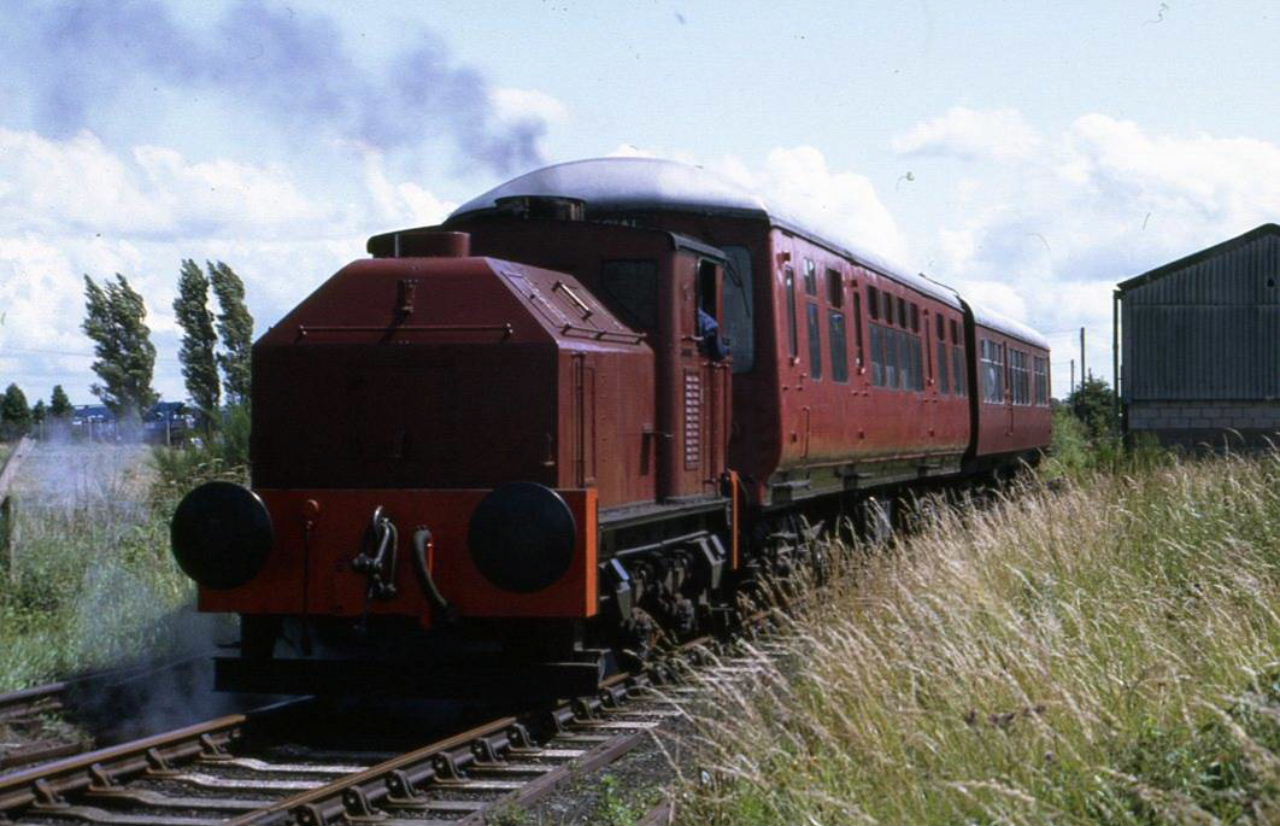
It wasn’t until 1977 that the Gloucester was repainted maroon, with the work being done by outside contractors, just in time for the Queen’s Silver Jubilee celebration when we ran in conjunction with a local Brownhills West street party and we squeezed in 108 passengers on one run. It was around that time when Adrian Pearson took the photograph of the Neilson together with the Gloucester which John James had 5.000 postcards printed at a cost of just 2.8 pence each. John stood the cost of these cards himself as the Society couldn’t afford the bill. I wonder how many are still left to sell? (Enough. Ed.) (All gone now, given to young visitors as a memento and much appreciated. CWS).
The Wickhams were inspected as lying at Stourton, Leeds and I must admit to being keen on them as soon as I saw them there. The purchase price I seem to recall was £1,000 for the power car and £750 for the trailer – plus I suppose VAT. The deal was concluded by Derek Cartwright then working on the YOPS programme at Chasewater.
Finally may I congratulate you on the quality of the Chasewater News these days including the photographic reproductions.
Barry Bull
In through the farm gate (Transport photos from Laurence Hodgkinson’s Collection)
Still at Chasewater,
Peckett 917-1902 came from Albright and Wilson, photographer unknown.
Loco ‘Topham’ 0-6-0ST Bagnall 2293-1922. Taken 18-12-1969
The photographs shown on this blog have been in the Museum since 1986. We regret that we cannot recall the names of the photographers. If you recognise any of them, please send us the details.
197 – Chasewater Railway Museum Bits & Pieces
From Chasewater News – Winter 1996 – Part 2
From the Board Room
David Bathurst – Chairman
Despite the fact that the festive season is getting ever nearer and the 1996 operating season has drawn to a close, there is no holiday period for the Board. Indeed, the Board has already agreed the pattern of train operations for 1997 to enable publicity leaflets, posters, etc. to be prepared. Moreover, it has been agreed that the 1996 fare structure be retained, as the current ticket prices seem to have been pitched at just (perhaps exactly) the right levels and have been accepted by the travelling public. It is pleasing indeed to watch prospective passengers, particularly those with family groups, buying tickets without feeling the need to complain about fares, how different from the days when many (maybe a majority) took one look at the fares and left the station without more ado.
With the help of our Publicity Officer, we aim to raise public awareness in 1997. Indeed every member – whether a working member or otherwise – is a potential publicity officer in his/her own right. We need to preach the Railway’s gospel, or at least ensure that its leaflets and publicity materials enjoy maximum exposure!
The Board has recently considered a variety of matters concerning the Railway, and some of these are outlined briefly below.
The ex LNWR ‘Paddy’
Following discussions with relevant members, the Board has formally acknowledged that the proper (or even partial) restoration of this vehicle is beyond the current or anticipated resources of the Railway, both in financial and manpower terms. In its present condition, the vehicle is dangerous and a liability to the Railway. Accordingly, the Board has agreed to try to find a more suitable home for the vehicle, which is to be advertised in the railway press for disposal. Any such disposal would be on the basis of a commitment to restoration by the recipient. Obviously, the Board would prefer to see it go to an organisation enjoying the necessary resources and expertise to bring it back into use.
Rallies
The board is examining in considerable detail the income/expenditure profit/loss profile of the rallies held in recent years. There is much work associated with the organisation of our rallies, a lot of it out of view of the membership or the public. The burden now being felt by a small minority of key members (who already have their own responsibilities for operation of the Railway) is becoming unacceptable. For these members, the rallies are no longer an enjoyable challenge. They have become more of a nightmare. I am not prepared to allow this situation to continue. I am not prepared to see our members and colleagues reaching a state of despair, which has happened on a number of occasions during 1996. With Lichfield DC seeking for the first time to impose charges for hire of Chasewater Park for rallies in 1997, the Board is taking the opportunity of looking afresh at the Railway’s policies and options regarding future rallies. The Rallies Organiser has been so successful in generating participant interest in our rallies that we have become vulnerable through a shortage of members prepared to make a direct contribution to rally organisation. We have become a victim of, and hostage to, our own success. If the Board’s aspirations come to fruition, we will have vastly increased public support for the rallies, but without the hassle experienced over recent times. Our aim is to return to a situation where our rallies are enjoyed by the public, by the participants, and – more particularly – by our own members.
Invalid Toilet
The Railway’s Policy Statement includes a commitment to the provision for the disabled and our stations, buffet and trains are all accessible to people with mobility difficulties. The one remaining omission is the provision of a disabled toilet and the Board has noted with pleasure that this will be available in good time for the Santa Specials in December. The opportunity is being taken to ‘repair’ some defects in the plumbing system, hopefully with an improvement for the olfactory senses.
New Shop / Bric-a-Brac
The Board has given its support for a scheme whereby the recently adapted portacabin immediately next to the buffet at Brownhills West will become the new, enlarged, shop. Shop sales, and children’s toys in particular, have increased markedly during 1996 thanks to the introduction of an enhanced commercial policy. Consideration is being given to the use of other accommodation as a bric-a-brac shop.
Traction Inspector
The Board has formally endorsed the appointment of David Walker as the Railway’s Traction Inspector, although this is without prejudice to the Railway maintaining a relationship with other competent persons who have been prepared to assist in the past. A driver and two firemen have already received their ‘ticket’ and further assessments are to be made in 1997.
Lichfield District Council
A lengthy letter has been received from Lichfield District Council in relation to the many matters which have been the subject of representations from the Railway since the Council became our landlords in 1993. The Board’s preliminary impression is that the Council has failed to recognise or appreciate our concerns and that response is wholly unsatisfactory. The Railway’s views will be communicated to the Council at an early date.
Christmas: Santa Specials
We are hoping for our most successful Christmas programme ever, providing the icing on the cake to complete a highly encouraging year. Santa Specials will run on Sundays 15th and 22nd December, providing an opportunity for our ‘absentee members’ to visit the Railway and to judge for themselves what changes have taken place since their last visit.
P Way News
Arthur Edwards
In the autumn/winter plans for the P Way gang over the 1996/97 period is the laying of the sidings by the bottom compound. This is expected to take up most of the winter months. Some work has already commenced on laying out the first two roads with the first set of points going in after the Santa Specials. The time scale for laying in the point work is expected to be around three months so that they should be up and running for the start of the next running season. As the 1997 season will be starting early – the last week in March – and going through to the end of October, the P Way gang has a shorter period to get more things accomplished, therefore as our membership grows hopefully more volunteers will boost the numbers in the gang. During this period it is also planned to lay 4 x 60ft lengths of rail on the extension so that the sleepers which are already in place can be keyed up and not tossed into the lake. If the number of bodies available gets to a sufficient number, the causeway bank can be relaid with 60 ft lengths so if any able bodied volunteers are out there you can always find us on either a Saturday or Sunday, so don’t feel shy.
The weedkilling planned for the end of summer has had to be postponed due to the weather conditions not being suitable for it. As the weedkiller has been purchased we should be able to spread it at the beginning or middle of March prior to the commencement of the new season. This should be followed by a second application approximately half way through the running season so as to keep on top of the perennial problem of weed encroachment onto the track. There are signs that some of the hedging planted several years ago is starting to take hold so that it should provide a permanent barrier along some of the more exposed fence line. Further plantings should gradually fill out any gaps so making trespass onto the line more difficult. I’d like to thank all the volunteers who have helped us during 1996 and look forward to seeing you in 1997.
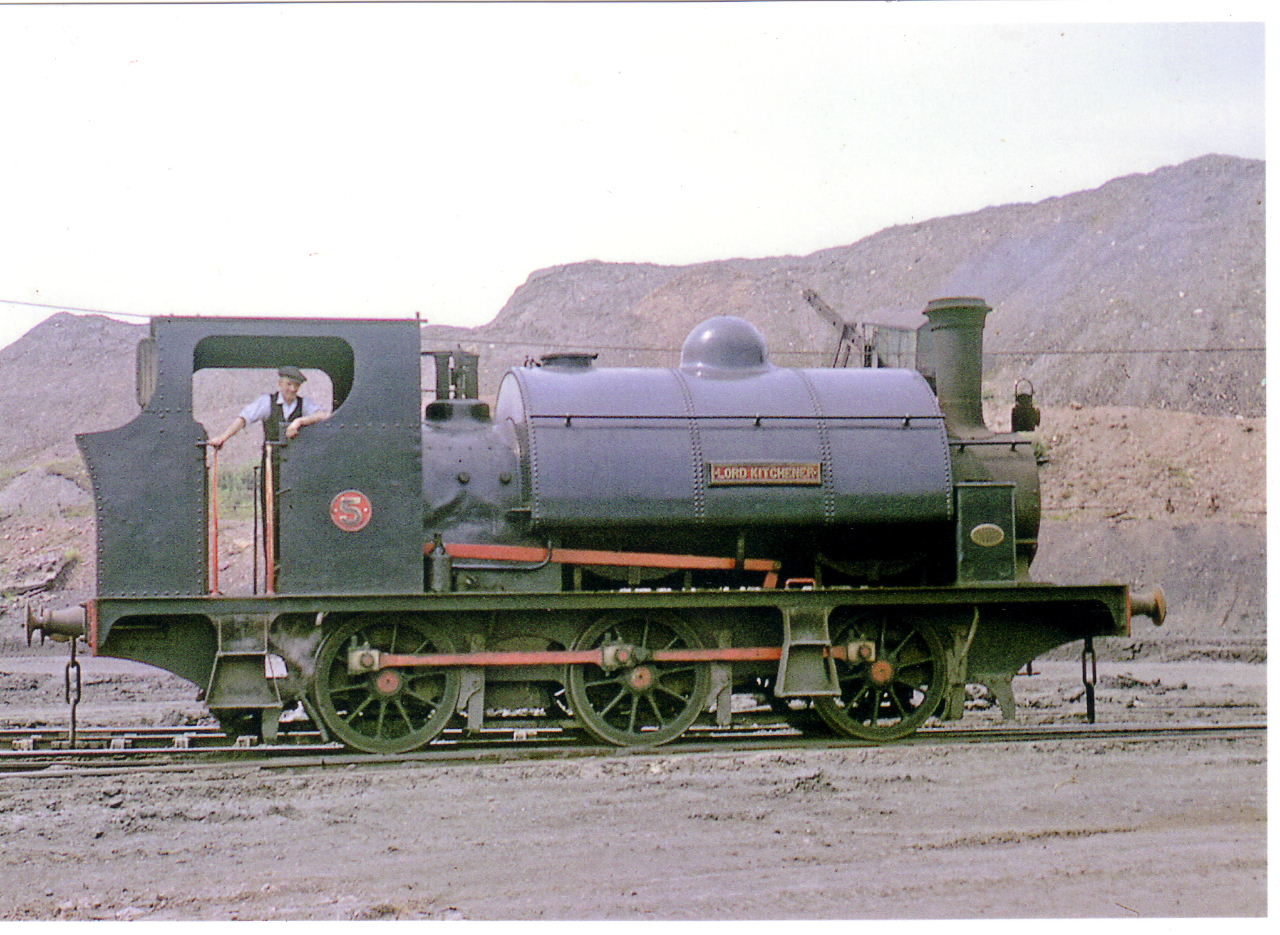
‘Lord Kitchener’ No5 0-6-0 ST Kitson 5158-1815 Photographer unknown
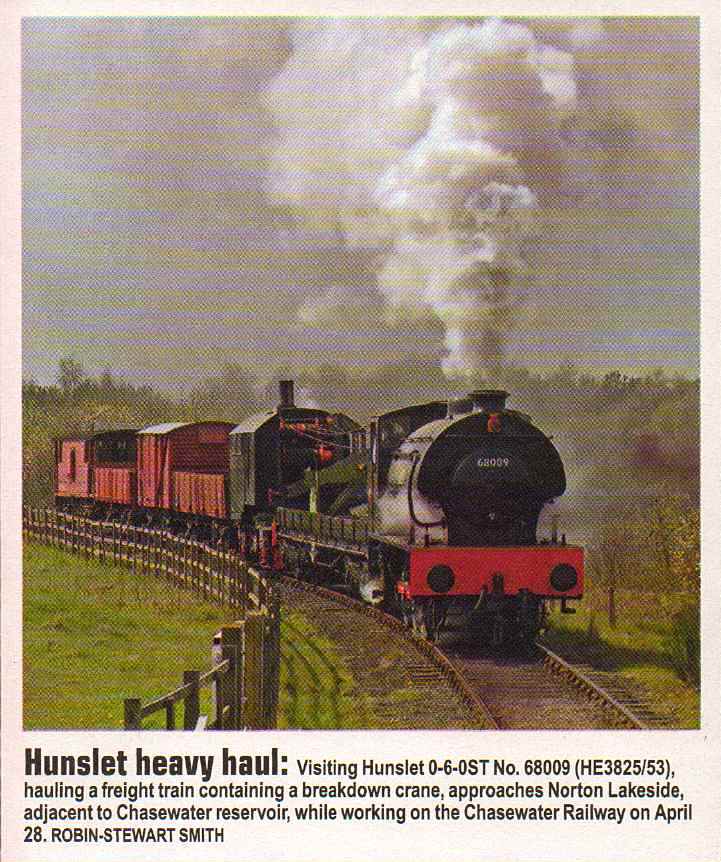
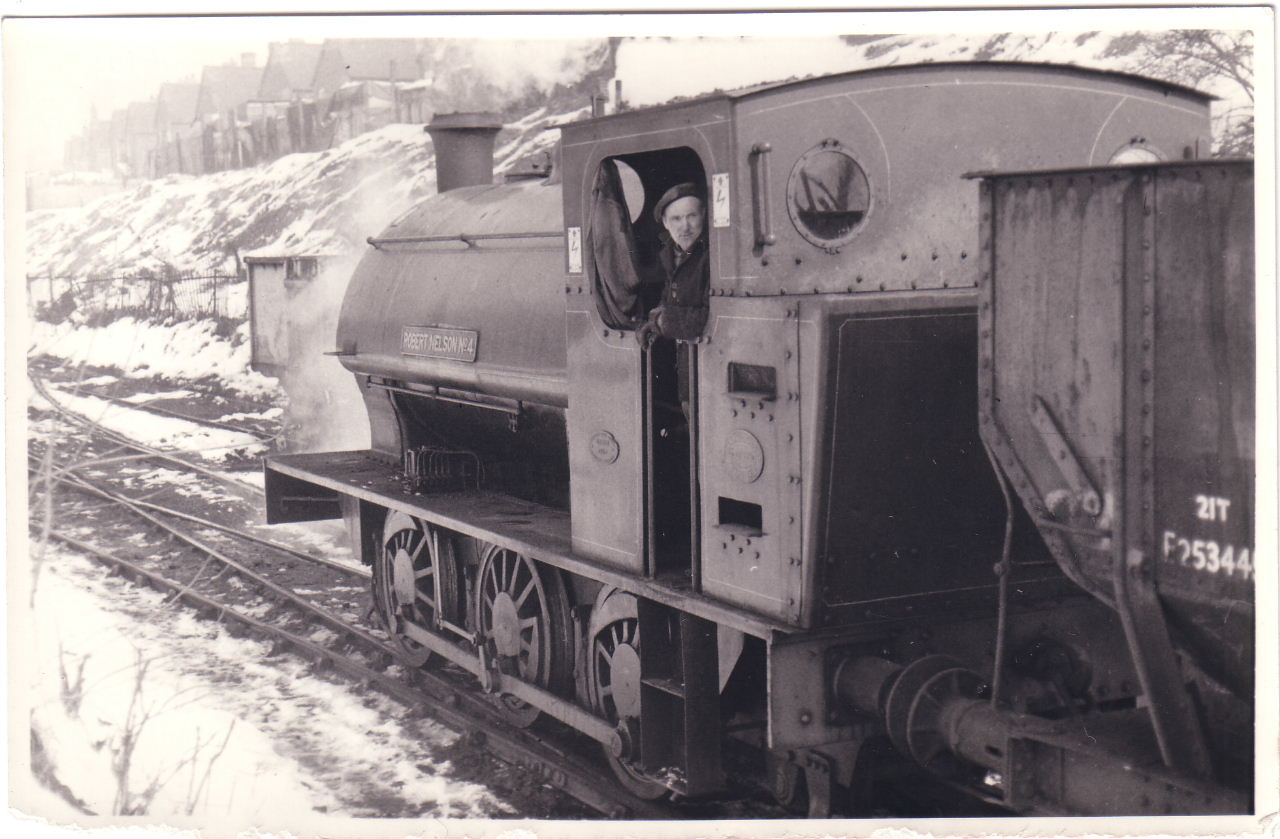
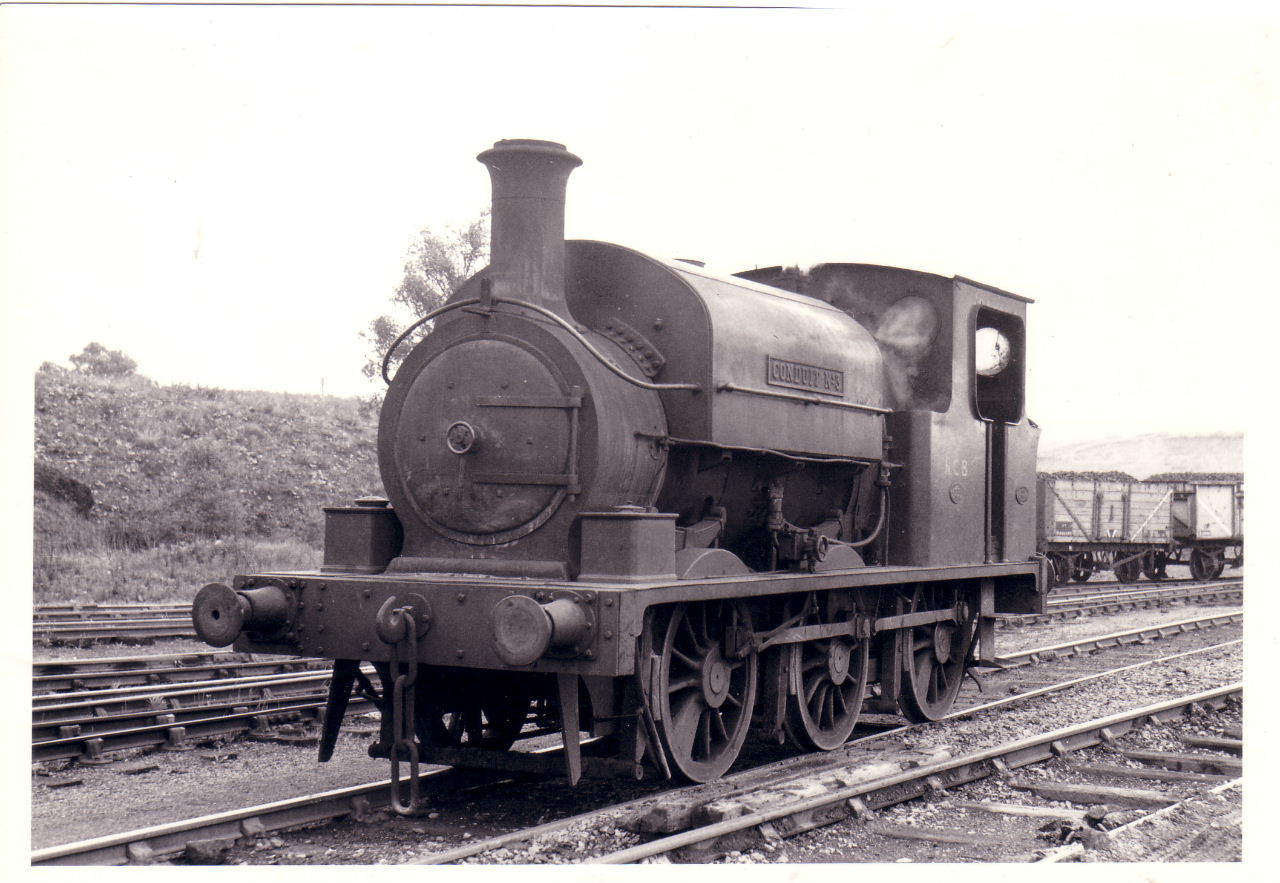
Robert Nelson No.4 Hunslet 0-6-0ST 1800-1936 Littleton Colliery.
196 – Chasewater Railway Museum Bits & Pieces
From Chasewater News – Winter 1996 – Part 1
From the Editorial
In putting the Winter edition of the Chasewater News together I am wondering where to start this Editorial. As this is the anniversary of my first full year as Editor of our members’ mag I have seen the number of articles which have been submitted grow along with the distribution of the Chasewater News. To the members who have contributed articles not yet published I would like to say a big thank you for your efforts, and that I still have them ready to put into the magazine. To all the members who have old memories of the Railway in its formative years and who have thought about putting pen to paper, please do so. Part of the Editor’s role is to take submitted articles in whatever form that they arrive in and see that they are in a presentable form for publication, and as you have probably seen in the odd edition that even with a spell-checker I have still dropped the odd clanger or two when it comes to spelling.
Not sure of the outside two but the fella in the centre looks vaguely familiar!!
On membership matters we now have a total of 305 members with a newsletter distribution of over 150 copies to individual households. This must be the highest number that we have had for many a year. I would like to welcome all new members who have joined since the last newsletter and hope that you will enjoy being a member of the Railway. I am looking forward to our newsletter reaching the 250 distribution mark. As the readership increases I can start to look at the possibility of things such as colour front covers and possibly some colour prints inside the magazine instead of the current black on white format. This of course is only possible as the quantity published grows and the scales of quantity come into effect.
The past years have seen a major turn around in the fortunes of the Chasewater Railway, from languishing in the doldrums for a number of years in the late 70s and early 80s we now have a railway which gives pleasure to hundreds of visitors every years. Many comments have been passed by the visiting public on ‘how friendly the people are at Chasewater’, and ‘how it reminds tem of railway preservation in the old days’. This I feel is due to the positive efforts of all the working members and also the membership at large who have helped to push the message that the Railway is alive and well and growing!
In looking forward to 1997 we have put in place possibly our most ambitious programme of steaming days yet. With more work being carried out on the restoration of the locomotives, both steam and diesel, the Railway can look forward to being able to run different locomotives throughout the running season, and let Asbestos have a well earned rest for maintenance and repairs. Chris Chivers.
Loco Shed News
With the completion of the shed heating it is hoped that life will be much easier for the locomotive volunteers, and there are mutterings from Andy Mould that the forge will finally be put back into working order. Personally I think he’s just looking for somewhere to cook his bacon and keep his tea hot! Also during the recent shunt round, the North Eastern brake is now residing in the shed road and has been dubiously named the ‘917 and Neilson support coach’ and during the recent bad weather it has seen rather more bodies using it for a mobile rest-room than usual!
Steam Locomotives
No.4 Asbestos – Still the mainstay of the Railway for steam haulage and at the moment only requires the usual maintenance necessary for any steam locomotive. She is expected to be in traffic during the Santa Specials.
No.5 Sentinel – With the arrival of the replacement links the repairs to the chain are well under way, and it is hoped to have Sentinel steam tested before Christmas.
No.11 Alfred Paget – The restoration of this engine continues at a pace. The ¾” steel plate for the repairs to the front steam chest and boiler saddle has been acquired and cut to the required profile. The broken pieces of the steam chest have been removed and sections have been cut away ready for the welding in of the new sections. The boiler has been fully painted in primer and all the protruding studs on the firebox have either been removed awaiting replacements, or have been given a thick coat of grease as a rust preventative measure. The locomotive is due to be moved into the shed before Christmas so that work can continue under cover over the winter months. Further fund raising is being actively pursued by Janet Whittaker as the members on site can testify; ‘I’ve even been ‘mugged’ myself by the lady in question!
S100 – The work continues at a steady pace with new pins for the brake hanger assemblies being manufactured on-site. The wheels should be back under the frames in their correct order before Christmas so that space can be made for the Neilson.
Diesel Locomotives
L&Y No.1 – Nearly all the new bearings for the gear box have now been acquired and the magneto and carburettor are nearing completion ready to be mounted on the engine. The main body has been partially stripped down to be needle gunned and primed n red oxide. The brake assembly and sand boxes have been moved to the shed to receive attention during the winter. Once the engine is completed it is the intention to mount it in No.21 for a period of test running.
No.21 – An attempt to start the engine running on No.21 was made during the autumn without success. There are still some problems with the cylinder heads and it seems that two new head gaskets will have to be found, as well as having the heads trimmed. It is a possibility that the 4J0 engine nearing completion at Dormans will be brought to Chasewater for testing in No.21; this has still to be confirmed.
DMU Set – The DMU set has been partially painted in BR green and this is expected to be completed as soon as the weather improves. The Company’s power car received a donation of £380 from the will of the late Geoff Young, with many thanks to his widow Brenda.
Carriage & Wagon Notes
Tony Wheeler
It has been some time since I have done anything from the carriage and wagon front for the Chasewater News, so here is a brief report on the ongoing restoration projects in hand at the present time.
Manchester, Sheffield & Lincoln Coach – The restoration of this coach is still ongoing. Work is now being done on the underside of the frames with cleaning and painting taking place. A broken panel on the guard’s door and two broken drop windows and frames have been replaced. These were caused by vandals at various times during the autumn. Due to the relatively minor damage caused we have still been able to concentrate on the braking gear and continued applying several coats of paint to the body as and when the weather has permitted.
Midland Brake Van – Work has re-started on this vehicle with the replacement of the missing roof boards. This was followed up by the roof being re-covered to keep out the worst of the weather. The missing end panels were replaced, along with some of the side panels being cleaned and undercoated. The membership had a whip-round and £66 was raised towards the cost of the roofing for this vehicle, with the balance of the expenditure, £39.75, being made up by the Company. The cost was as follows: Roof felt – £73.32, Screws – £6.96, Paint – £19.47. With many thanks to all who donated.
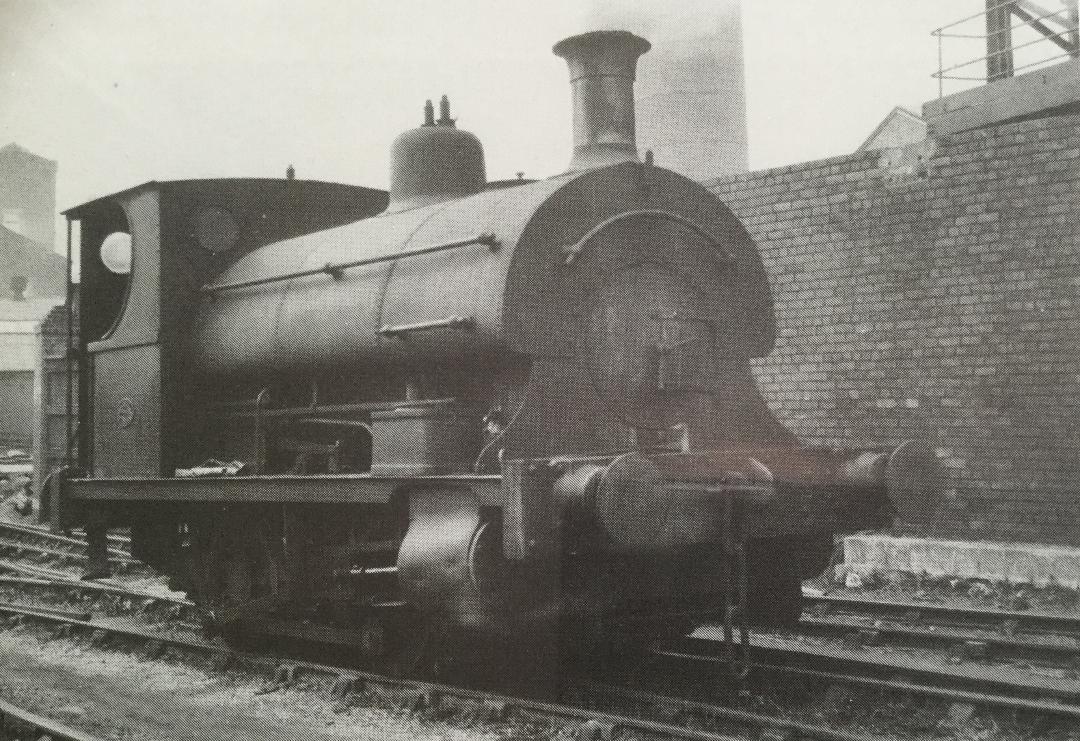
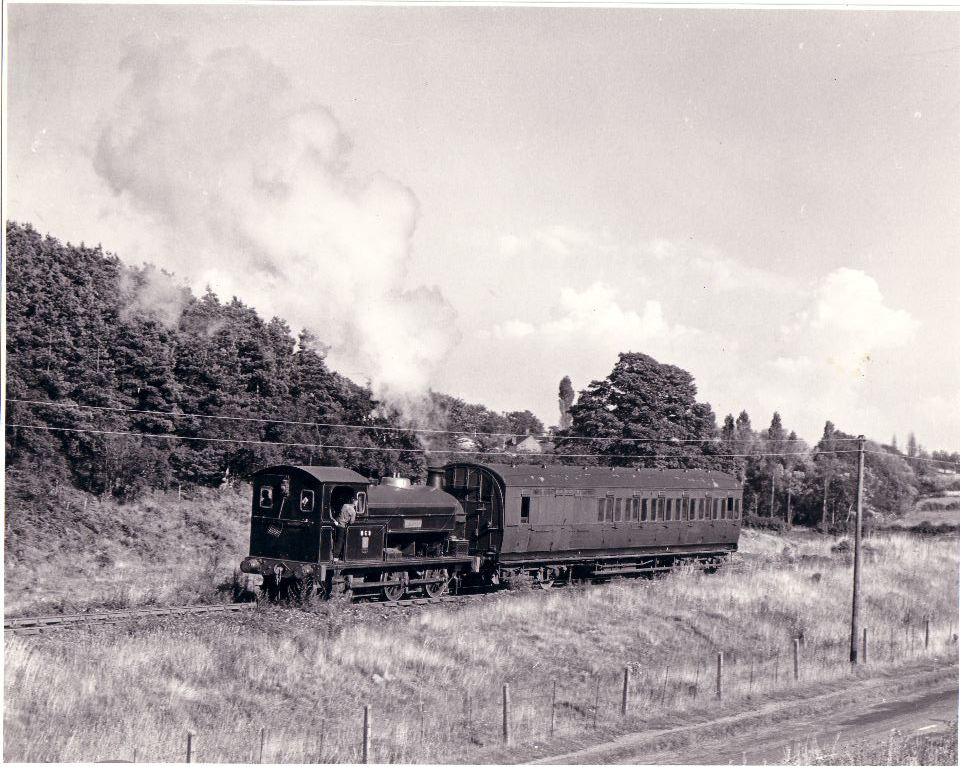
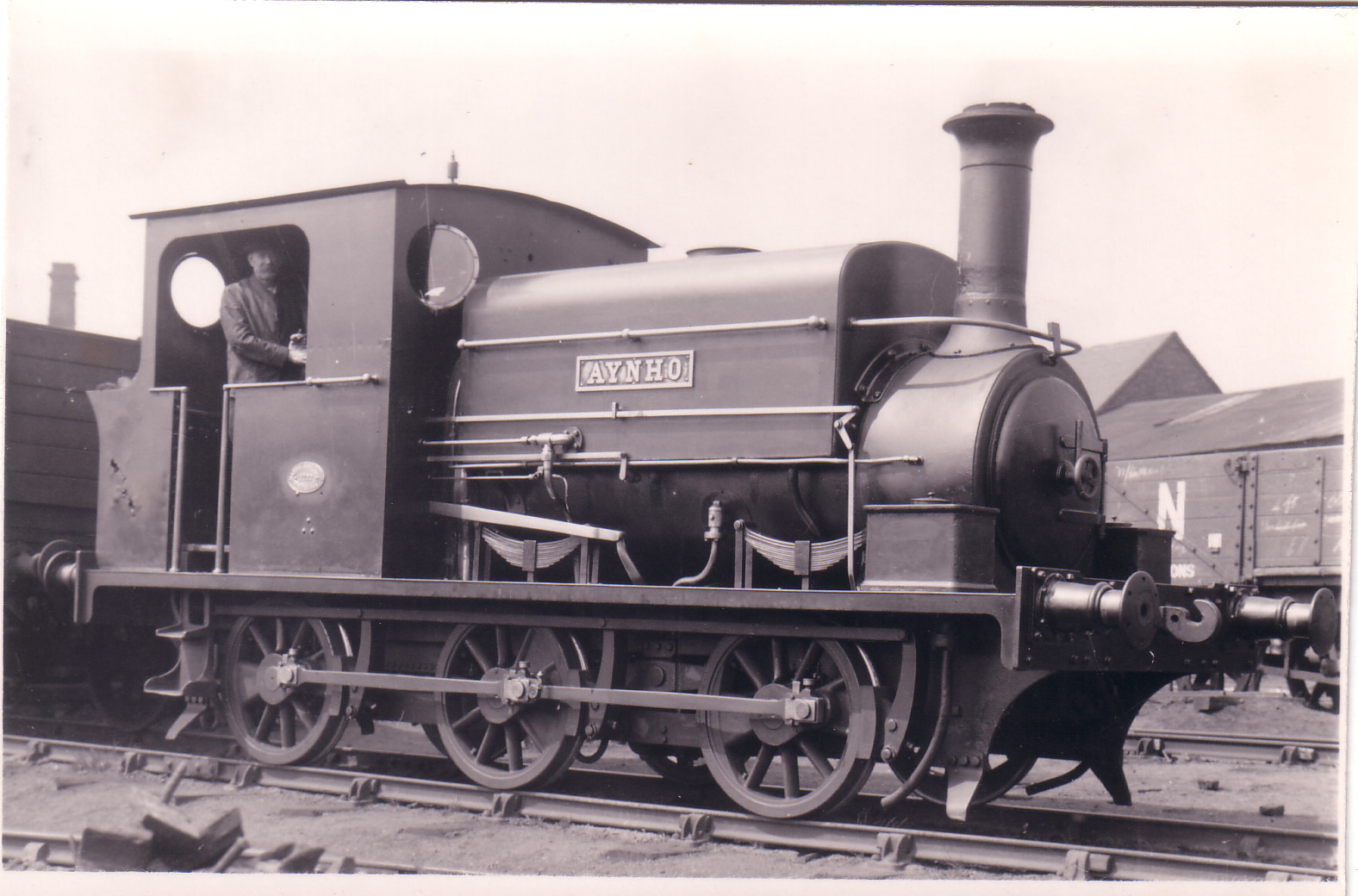
Rawnsley No.4 Lilleshall 1872 0-6-0ST on Paddy duties. Formerly 2-2-2 for Paris Exhibition.










 Chasewater Railway Museum