Tag Archives: Wolverhampton.

196 – Chasewater Railway Museum Bits and Pieces

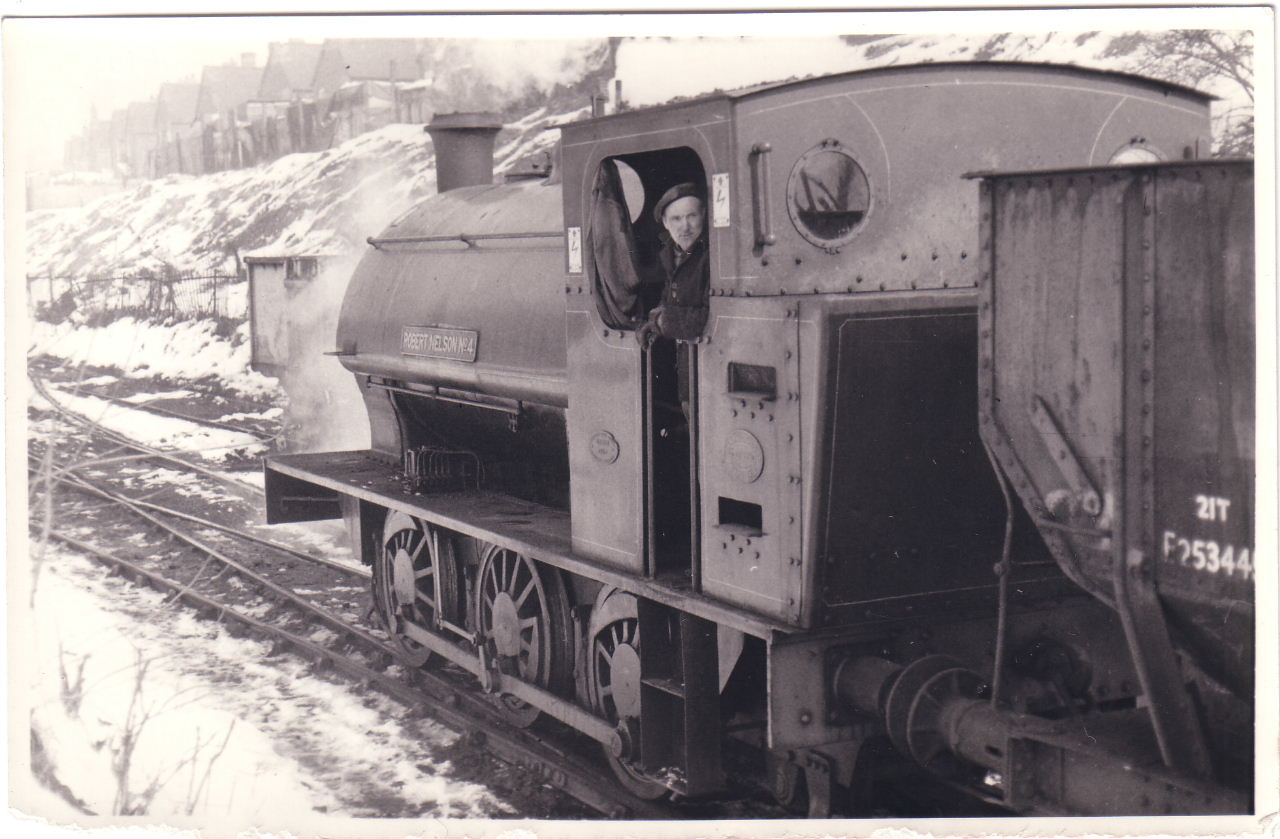
Robert Nelson No.4 Hunslet 0-6-0ST 1800-1936 Littleton Colliery.

196 – Chasewater Railway Museum Bits & Pieces

From Chasewater News – Winter 1996 – Part 1

From the Editorial

In putting the Winter edition of the Chasewater News together I am wondering where to start this Editorial.  As this is the anniversary of my first full year as Editor of our members’ mag I have seen the number of articles which have been submitted grow along with the distribution of the Chasewater News.  To the members who have contributed articles not yet published I would like to say a big thank you for your efforts, and that I still have them ready to put into the magazine.  To all the members who have old memories of the Railway in its formative years and who have thought about putting pen to paper, please do so.  Part of the Editor’s role is to take submitted articles in whatever form that they arrive in and see that they are in a presentable form for publication, and as you have probably seen in the odd edition that even with a spell-checker I have still dropped the odd clanger or two when it comes to spelling.

Not sure of the outside two but the fella in the centre looks vaguely familiar!!

On membership matters we now have a total of 305 members with a newsletter distribution of over 150 copies to individual households.  This must be the highest number that we have had for many a year.  I would like to welcome all new members who have joined since the last newsletter and hope that you will enjoy being a member of the Railway.  I am looking forward to our newsletter reaching the 250 distribution mark.  As the readership increases I can start to look at the possibility of things such as colour front covers and possibly some colour prints inside the magazine instead of the current black on white format.  This of course is only possible as the quantity published grows and the scales of quantity come into effect.

The past years have seen a major turn around in the fortunes of the Chasewater Railway, from languishing in the doldrums for a number of years in the late 70s and early 80s we now have a railway which gives pleasure to hundreds of visitors every years.  Many comments have been passed by the visiting public on ‘how friendly the people are at Chasewater’, and ‘how it reminds tem of railway preservation in the old days’.  This I feel is due to the positive efforts of all the working members and also the membership at large who have helped to push the message that the Railway is alive and well and growing!

In looking forward to 1997 we have put in place possibly our most ambitious programme of steaming days yet.  With more work being carried out on the restoration of the locomotives, both steam and diesel, the Railway can look forward to being able to run different locomotives throughout the running season, and let Asbestos have a well earned rest for maintenance and repairs.  Chris Chivers.

Loco Shed News

With the completion of the shed heating it is hoped that life will be much easier for the locomotive volunteers, and there are mutterings from Andy Mould that the forge will finally be put back into working order.  Personally I think he’s just looking for somewhere to cook his bacon and keep his tea hot!  Also  during the recent shunt round, the North Eastern brake is now residing in the shed road and has been dubiously named the ‘917 and Neilson support coach’ and during the recent bad weather it has seen rather more bodies using it for a mobile rest-room than usual!

Steam Locomotives

No.4 Asbestos – Still the mainstay of the Railway for steam haulage and at the moment only requires the usual maintenance necessary for any steam locomotive.  She is expected to be in traffic during the Santa Specials.

No.5 Sentinel – With the arrival of the replacement links the repairs to the chain are well under way, and it is hoped to have Sentinel steam tested before Christmas.

No.11 Alfred Paget – The restoration of this engine continues at a pace.  The ¾” steel plate for the repairs to the front steam chest and boiler saddle has been acquired and cut to the required profile.  The broken pieces of the steam chest have been removed and sections have been cut away ready for the welding in of the new sections.  The boiler has been fully painted in primer and all the protruding studs on the firebox have either been removed awaiting replacements, or have been given a thick coat of grease as a rust preventative measure.  The locomotive is due to be moved into the shed before Christmas so that work can continue under cover over the winter months.  Further fund raising is being actively pursued by Janet Whittaker as the members on site can testify; ‘I’ve even been ‘mugged’ myself by the lady in question!

S100 – The work continues at a steady pace with new pins for the brake hanger assemblies being manufactured on-site.  The wheels should be back under the frames in their correct order before Christmas so that space can be made for the Neilson.

Diesel Locomotives

L&Y No.1 – Nearly all the new bearings for the gear box have now been acquired and the magneto and carburettor are nearing completion ready to be mounted on the engine.  The main body has been partially stripped down to be needle gunned and primed n red oxide.  The brake assembly and sand boxes have been moved to the shed to receive attention during the winter.  Once the engine is completed it is the intention to mount it in No.21 for a period of test running.

No.21 – An attempt to start the engine running on No.21 was made during the autumn without success.  There are still some problems with the cylinder heads and it seems that two new head gaskets will have to be found, as well as having the heads trimmed.  It is a possibility that the 4J0 engine nearing completion at Dormans will be brought to Chasewater for testing in No.21; this has still to be confirmed.

DMU Set – The DMU set has been partially painted in BR green and this is expected to be completed as soon as the weather improves.  The Company’s power car received a donation of £380 from the will of the late Geoff Young, with many thanks to his widow Brenda.

Carriage & Wagon Notes

Tony Wheeler

It has been some time since I have done anything from the carriage and wagon front for the Chasewater News, so here is a brief report on the ongoing restoration projects in hand at the present time.

Manchester, Sheffield & Lincoln Coach – The restoration of this coach is still ongoing.  Work is now being done on the underside of the frames with cleaning and painting taking place.  A broken panel on the guard’s door and two broken drop windows and frames have been replaced.  These were caused by vandals at various times during the autumn.  Due to the relatively minor damage caused we have still been able to concentrate on the braking gear and continued applying several coats of paint to the body as and when the weather has permitted.

Midland Brake Van – Work has re-started on this vehicle with the replacement of the missing roof boards.  This was followed up by the roof being re-covered to keep out the worst of the weather.  The missing end panels were replaced, along with some of the side panels being cleaned and undercoated.  The membership had a whip-round and £66 was raised towards the cost of the roofing for this vehicle, with the balance of the expenditure, £39.75, being made up by the Company.  The cost was as follows:  Roof felt – £73.32,  Screws – £6.96,  Paint – £19.47.  With many thanks to all who donated.
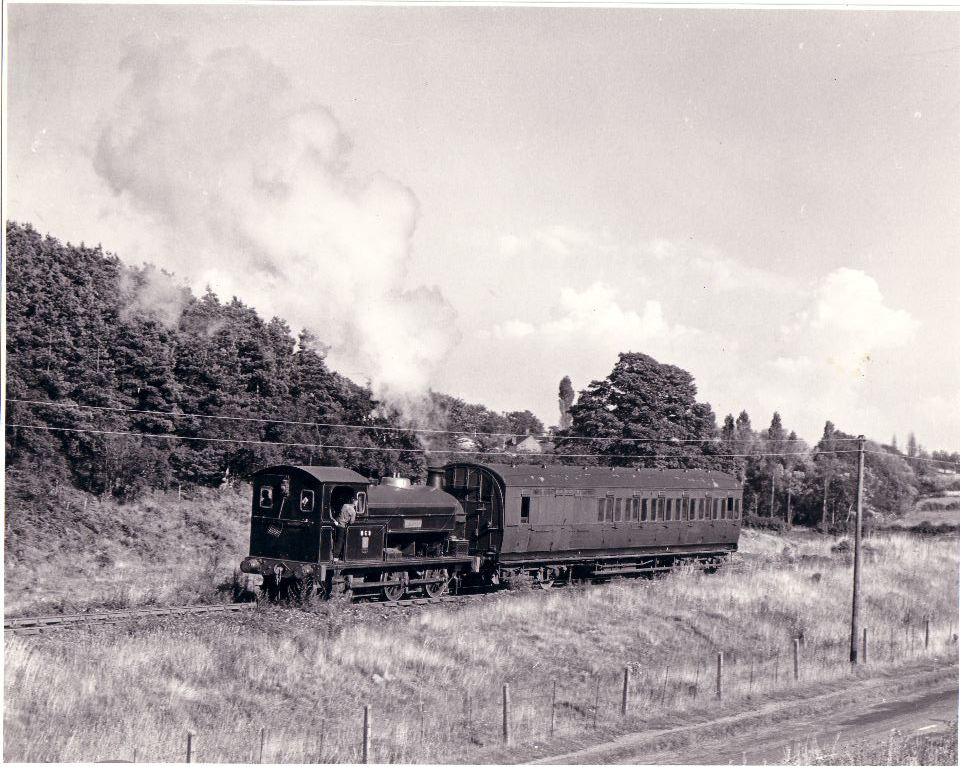
Rawnsley No.4 Lilleshall 1872 0-6-0ST on Paddy duties. Formerly 2-2-2 for Paris Exhibition.
195 – Chasewater Railway Museum Bits and Pieces

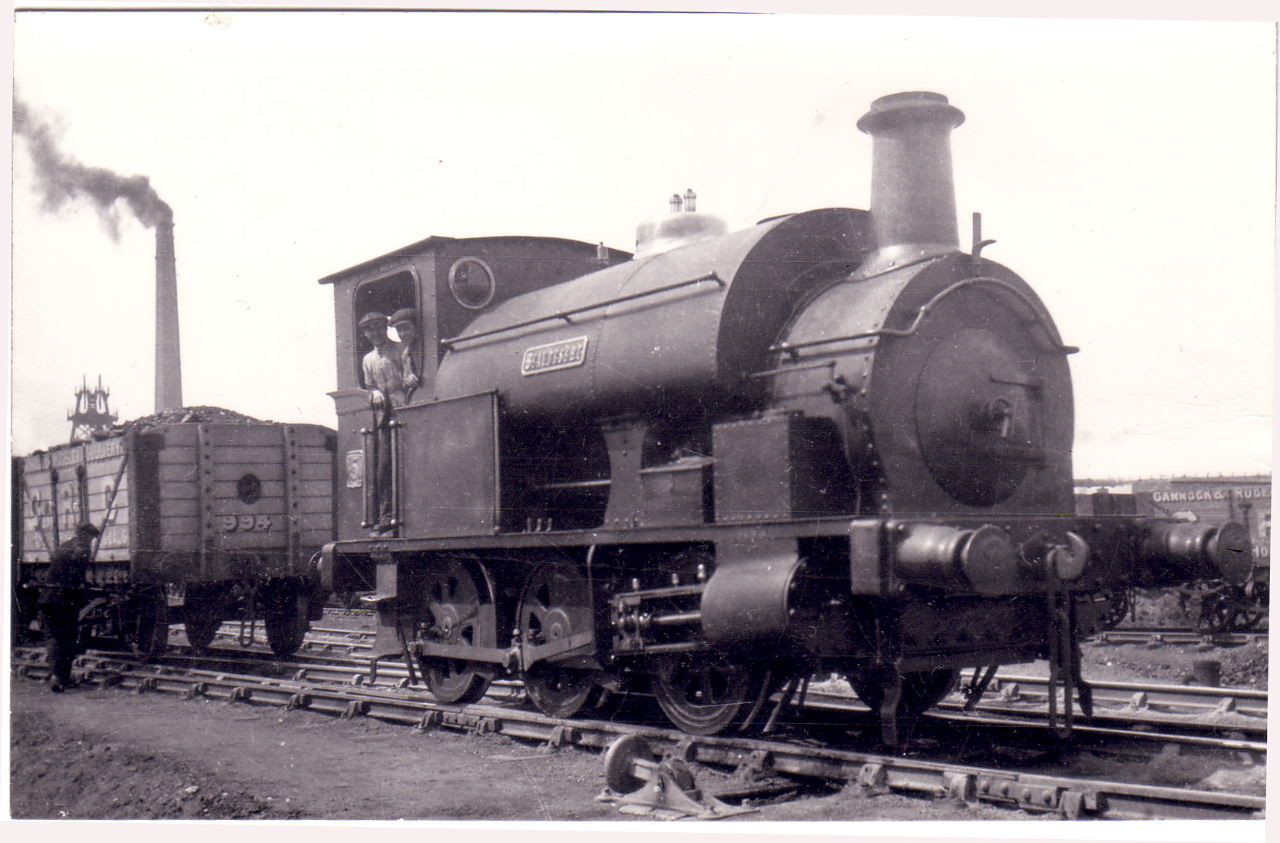
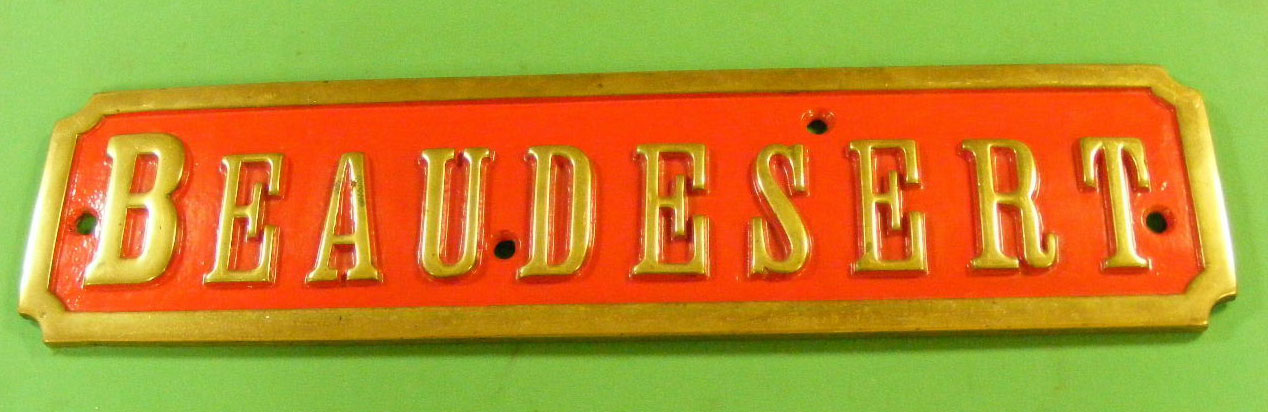
An opportunity presented itself recently to acquire by way of private purchase half a dozen items of local colliery railway interest. Not since the 1960s and early 1970s, when in that period a good relationship existed between the Railway Preservation Society and local National Coal Board management and which resulted in several donations of interest has the chance to obtain in bulk such star items for the museum collection. The third nameplate is that of Beaudesert from the little 0-6-0 saddle tank built by Fox Walker, works number 266 of 1875 supplied new to Cannock and Rugeley Collieries as their number 5. Beaudesert was the ancestral home of the Paget family who became Earls of Uxbridge before being given the title and Estate Marquis of Anglesey. Finally cut up in 1964 the other nameplate of the loco survives and is on display in Kidderminster Railway Museum.

Not much about steam locos in this article but an important part of Chasewater Railway’s history nontheless.. Written in the main by the General Manager at the time, Steve Organ with errors and omissions added by Barry Bull.

195 – Chasewater Railway Museum Bits & Pieces

From Chasewater News – Autumn 1996 – Part 3

***

Railcars on the Chase

27 Years of DMU Preservation

Steve Organ

The first ‘Modernisation Plan’ Diesel Multiple Unit vehicle to go into preservation was Gloucester Carriage & Wagon 1957 built Driving Trailer Composite (DTC) No.SC56301, which came to Chasewater from the Scottish region of British Railways at Easter 1969.  The vehicle was one of a fleet formed into two car sets which worked in Scotland and in East Anglia, as well as in the West Midlands.  The purchase was by the Railway Preservation Society (West Midlands District), as we then were, who had taken a lease on the line and trackbed at Chasewater which had formerly carried coal traffic.

The Park was being developed at the time by the local authorities keen to reclaim the spoil heaped, ruined landscape that had recently ceased production.  A preserved railway was welcomed, and so much traffic was being carried in very old and fragile stock we had inherited from the Colliery at Rawnsley, that a more modern vehicle was needed to take the load, relieving the historic stock.  The Gloucester, which seated 12 passengers in first class, and 54 in second was 57 feet 6 inches long and weighed only 25 tons.

Immediately on arrival at Chasewater, still in its recently acquired Rail Blue livery, with small yellow warning panel and 2-digit route indicator below the cab front window, the car was adapted with the buzzer circuit carried through the lighting circuit jumper and through to the locomotive which had a buzzer fitted to enable the vehicle to be used for push-pull working, with the Guard (or Coach Driver) signalling from the coach cab to the Loco Driver to stop, start, etc. by buzzer code.  Permission was received from the Railway Inspectorate to operate in this fashion despite there being no through vacuum brake, thanks to the simple communication system, the excellent look-out position for the Guard, his access to a handbrake and the line’s ‘U’ shaped gradient profile at both ends!

The DMU was a great success, and we no longer worried about the underframe of the train snapping!  The windows, large and almost continuous around the vehicle, together with the light green flecked Formica finish, and seating in vertically striped red and grey (second class) and blue and gold (first class), made for a very welcoming appearance, and the Chasewater system of working push-pull with DMU cars in conjunction with a steam or diesel locomotive was established.

The paytrain concept was adopted by BR in the sixties, and at Chasewater we often steamed on an unscheduled Sunday if the weather was fine (we only advertised trains every fortnight at this time), and used an ex Birmingham Corporation Transport Ultimatic ticket machine when the guard had to collect fares because no staff had been rostered for the station.  Often in the summer of 1974 with trains running over the then 300 yards of track and with only five minutes to collect up to 90 fares, I felt as though my thumb was dropping off by the end of the day operating that machine.

1974 saw the Gloucester painted into maroon, with a light grey roof.  A gold and white bodyside line was added below the windows in 1976.  1979 saw the front route indicator panel plated over, and a further coat of maroon paint applied.

In 1979, the Board identified two needs which could be satisfied with the purchase of a further two vehicles, firstly to use one as a ‘Railway environment’ buffet, and the other for use as a bar car, to be attached to the passenger train on busy or festival days.  A two-car Wickham-built set, recently used as a General Manager’s Inspection Saloon was identified and purchased for £1500 plus VAT and transported by rail from Leeds to Wolverhampton steel terminal, then by road to Chasewater.

The Wickham two-car set had been converted into an inspection saloon car for the General Manager, British Railways Eastern Division, in the mid-sixties.

The diving motor brake second (DMBS) was No.E50416, 57 feet long and weighed 27 tons 6 cwt.  Stripped of its original interior, a kitchen had been fitted in place of the original Guard’s compartment, and the Guard’s vestibule end windows had been plated over.  A corridor ran from the gangway around the kitchen.  The engines (two 150 HP BUT Leylands), transmission and general mechanical condition were fairly good.

The driving trailer composite, No.E56171, was 57 feet long and weighed 20 tons 10 cwt.  Again, this vehicle was internally stripped for its inspection role, and was altered thus:  one of the two toilets was removed and replaced with shelves: two huge seats, each 3’ 6” wide were installed next to the toilet, adjacent to a vacuum stand pipe, emergency brake handle and vacuum gauge.  A single compartment installed and folding steps complete with vacuum pipe release trips (to prevent the train from moving whilst the steps were down) installed below the passenger doors.  Both vehicles had had the passenger doorways nearest the front of the vehicles removed and plated over.

Both vehicles had aluminium bodies over angle-iron frames and were in good condition, however the gutters leaked and the gutter strip was eventually replaced – steel gutters fitted against aluminium bodysides need only water to start electrolytic transmission, resulting in bodyside holes against the gutter.  (This was a problem we would encounter again later with the 1994 acquisitions).  The doors were however a problem, with only a short production run, softwood frames with an aluminium skin were fitted, rather than the more normal single cast alloy that are on so many DMUs, so warping and rot were a constant problem.

At the time of the Wickhams’ arrival, the Company was suffering certain problems.  The Society, which was the group founder, had formed a company in the early seventies for the purpose of administering the public services provided by the group, a YOPS (Youth Opportunities Programme) scheme was in progress, and the two parts of the group failed to see eye to eye, the result being ultimately that the volunteer-led Society failed to co-operate with the ‘employees’ of the Company.  The track fell into rack and ruin and Society morale dissolved, members feeling squeezed out by the ‘Company’.  Of course, in reality the two needed to co-exist.

The planned use of E56171 as a second train vehicle was not proceeded with, although a rudimentary bar, built in the Officers’ compartment, did see several static days of service in 1981, and after a few excursions with E50516, as a DMU was laid up.  E56171 was however opened as a static buffet in 1981, parked against a sleeper-built platform.

1982 saw the Railway close down.  The condition of the track was awful and volunteers had disappeared, also a huge debt had been run up by the YOPS scheme.  The platform at Brownhills West was declared unsafe and demolished under the Company’s auspices, only to be found to be almost indestructible (but too late, the track had been removed and the ground excavated).  The group’s only income for the next three years was from the static buffet car E50416 and very little of significance occurred on site.

1985 saw a new start for the Railway.  A new Company was designed, and only a week after incorporation was registered as a Charity.  The aim was to incorporate the assets and accumulated debts of the old Company and Society, safeguarding the vintage stock and line, and to address the debt, so that things could start moving away from the moribund state.  With the track re-laid in concrete sleepers and a few of the old volunteers in harness, trains operated again for the first time in three years in October 1985.

The Gloucester car was repainted – yes – maroon again! And the now very worn maquette was replaced by yours truly in his first stab at upholstery.  A straw and green cloth was used in the Second class and a deep purple in the First.  Care was taken to retain and renovate all the other original fittings, wall covers, etc.

For the 1986 season both Wickham cars were repainted into – you guessed it – maroon to match the Gloucester.  The buffet car remained static, but the now derelict E56171 was re-worked, starting with the replacement of19 windows which had been smashed during its three years of abandonment.  A new large bar was built, and original pattern ‘curly back’ seats arranged around tables.  An open lounge area was created using seats from BR Mk ll carriages and the Officers’ compartment was fitted with First class seating from a Mk l carriage.  Whitsun Spring Bank Holiday) 1986 saw the car in service with the Gloucester on the now 400 yard shunt.

One special problem had arisen during the carriage repairs; a mechanical and structural survey had shown them all to be very contaminated with blue asbestos in the body side and roofs.  A solution to the inevitable eventual stripping cost, at that time estimated at around £15,000, meant that something would have to be done!

From ‘Letters to the Editor’ Winter 1996 Chasewater News

While browsing through the next magazine to see if there was a part two to Steve Organ’s article (there is!) I came across this letter from our Museum Curator, Barry Bull.  I decided to include it here to save any long-standing members commenting on any errors.

Dear Sir,

Having just received and read the Autumn 1996 Chasewater News I would like to add a little background detail and correct a few inaccuracies in Steve Organ’s article ‘Railcars on the Chase – 27 Years of DMU Preservation’.

I’m afraid that Steve has exaggerated by some 4 years here as the Gloucester trailer E56301 did not arrive at Chasewater until May 1973.  As the E prefix indicates it came from the Eastern Region and not, as Steve suggested, from Scotland.  The vehicle was on open tender from BR and lay at March, Cambridgeshire.  We had been looking for a suitable vehicle to relieve the use of the Maryport and Carlisle six wheeler and the 16 ton GWR Brake van on passenger services, and needed something suitable for push-pull use, the Gloucester, as Steve mentioned was just right.  Our bid of £330 with our proviso that this included removal at BR’s cost to our nominated place for transfer to road transport (Long Street, Walsall) was accepted.

However, before the Gloucester trailer arrived at Chasewater, we could have disposed of it!  The North Yorkshire Moors Railway had acquired off the same BR tender list two Gloucester power cars and just one trailer.  As you can imagine they were probably a trifle peeved at having lost a trailer and we were duly contacted with a request to forego our new acquisition.  Our response was to give the NYMR a short time to provide and transport to Chasewater at their cost a similar suitable vehicle with an amount of cash to be paid to us for our ‘inconvenience’.  We received no response and the Gloucester duly arrived at Chasewater with its road journey from Walsall featured on the local independent TV News, thanks to Paul Mason who apparently drank in the same pub as Bob Warman.  At least one RPS member who knocked a day off work to help in the operation was spotted on TV and got into a bit of bother at work the day after.

It wasn’t until 1977 that the Gloucester was repainted maroon, with the work being done by outside contractors, just in time for the Queen’s Silver Jubilee celebration when we ran in conjunction with a local Brownhills West street party and we squeezed in 108 passengers on one run.  It was around that time when Adrian Pearson took the photograph of the Neilson together with the Gloucester which John James had 5.000 postcards printed at a cost of just 2.8 pence each.  John stood the cost of these cards himself as the Society couldn’t afford the bill.  I wonder how many are still left to sell?  (Enough. Ed.)  (All gone now, given to young visitors as a memento and much appreciated.  CWS).

The Wickhams were inspected as lying at Stourton, Leeds and I must admit to being keen on them as soon as I saw them there.  The purchase price I seem to recall was £1,000 for the power car and £750 for the trailer – plus I suppose VAT.  The deal was concluded by Derek Cartwright then working on the YOPS programme at Chasewater.

Finally may I congratulate you on the quality of the Chasewater News these days including the photographic reproductions.

Barry Bull

                                                      In through the farm gate                                                                                (Transport photos from Laurence Hodgkinson’s Collection)

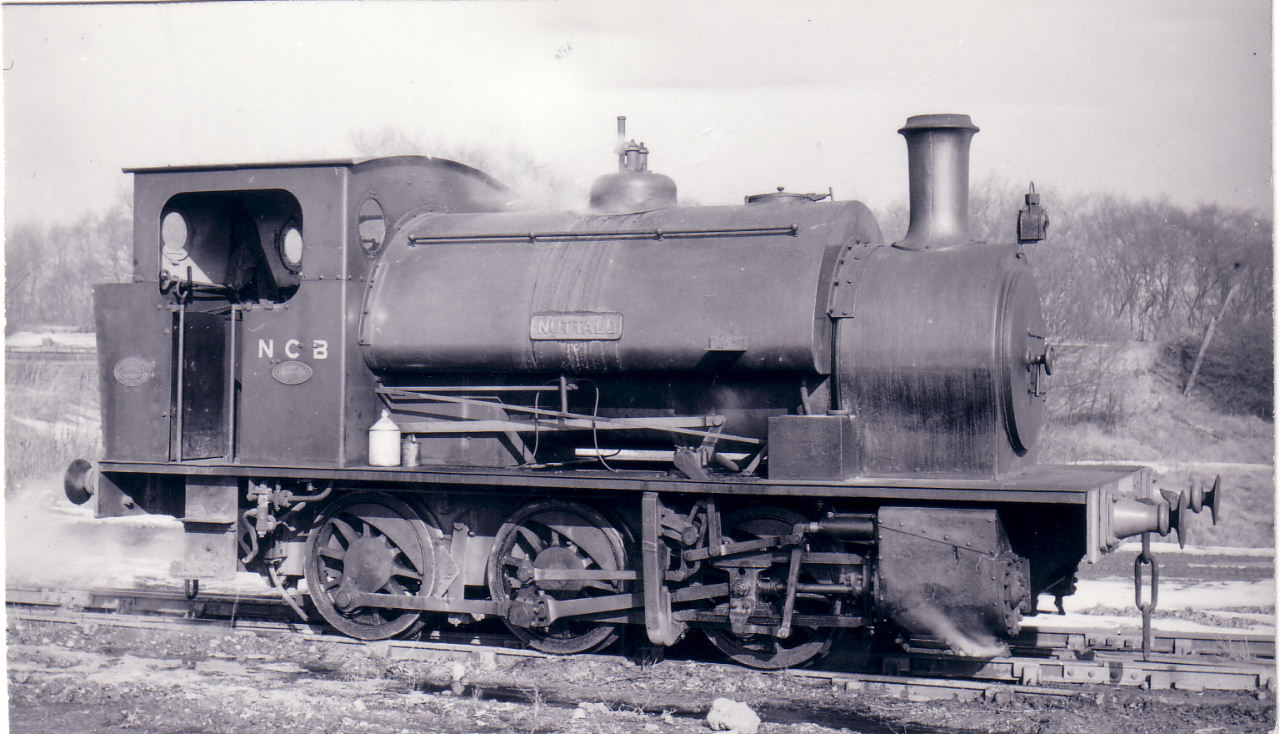
‘Nuttall’ 0-6-0 ST, HE, 1683-1931. Cannock Wood 2-3-1963

194 -Chasewater Railway Museum Bits and Pieces

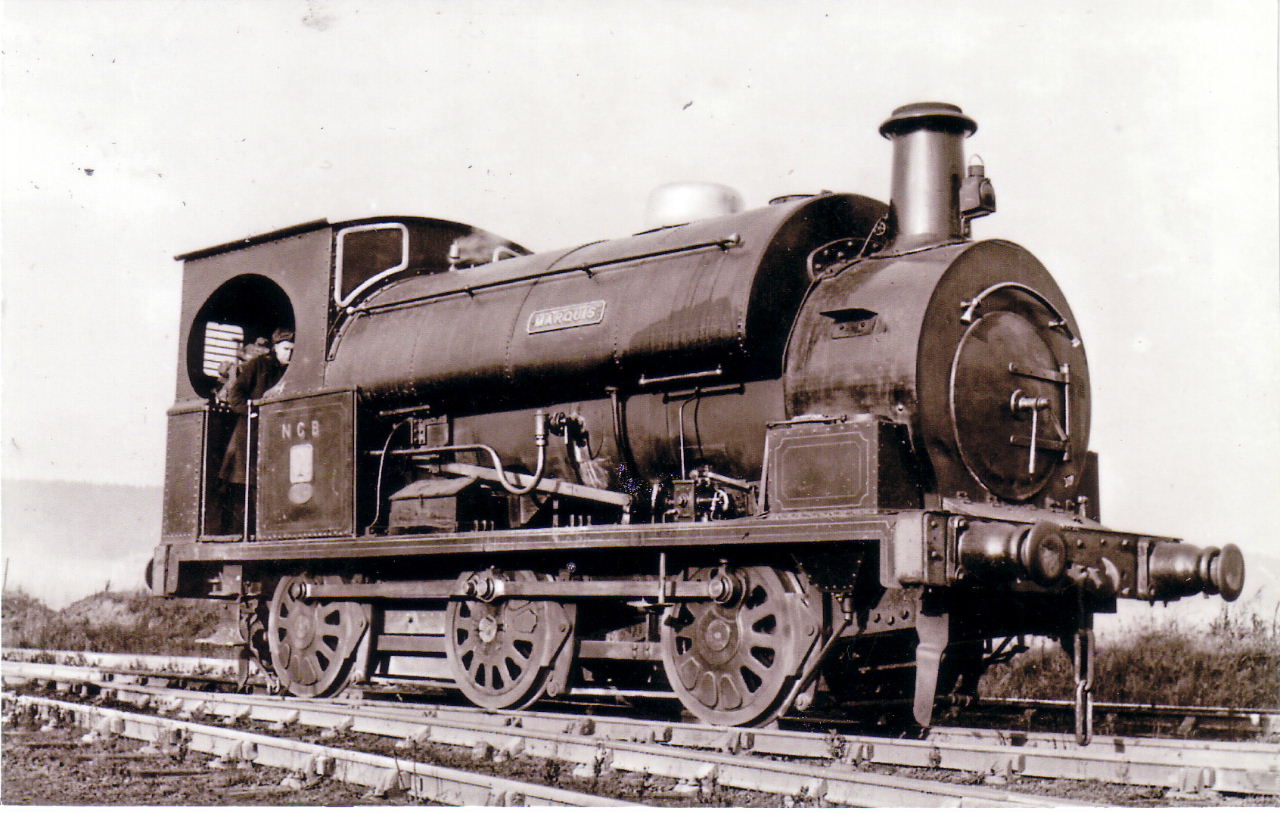
‘Marquis’ No.1 0-6-0 ST Built by the Lilleshall Company in 1867 Cannock and Rugeley Collieries.

194 – Chasewater Railway Museum Bits & Pieces

From Chasewater News – Autumn 1996 – Part 2

From the Board Room

David Bathurst – Chairman

More Health & Safety Matters

Issues concerning health and safety in its wider context continue to give rise for anxiety for the Board.  In my article in the previous edition of ‘Chasewater News’, I devoted much attention to the work undertaken on the Railway’s Risk Assessment.  The production of such an assessment is in itself a form of self-audit, but its importance lies equally in its acceptance by the working members and their commitment to follow the procedures prescribed for each aspect of the Railway’s activities.

It is important that our working members know, rather than assume they know, the approved procedures.  The majority are, of course, straightforward common sense.  The underlying theme is to ensure, as far as is possible, that the Company operates its trains (and all ancillary activities) safely for the public visiting the Railway, our passengers and – especially – our working members.  In pursuance of these objectives, relevant extracts from the approved Risk Assessment are shortly to be distributed to working members.  Our practices and procedures need to be kept under review; the Risk Assessment is not merely a document to be kept under wraps in the office.

The Risk Assessment also requires the Company to improve its record-keeping, particularly in relation to those areas governed by legislation or regulation.  Responsibility for maintenance of such records will rest with the Company Secretary, although he will have the power to delegate such responsibility where appropriate.  In the first instance, the opportunity has been taken to produce a fully updated and comprehensive list of working members.

1996 Rule Book

By the time this edition if ‘Chasewater News’ is published, all regular working members will have received their personal copy of the much-awaited 1996 Rule Book.  The Company’s Rules and Regulations complement and form part of the Risk Assessment (and vice versa) and considerable emphasis is being placed on the need for working members to know and understand them.

Crew Training

For far too long, the Railway has had to rely on the availability of just two steam locomotive drivers, whose dedication to duty has exceeded all reasonableness.  Under the umbrella of the approved training programme, action is being taken to increase the number of ‘qualified’ footplate personnel so as to spread the load somewhat.  Not only have a significant number of members been ‘authorised’ by the Company as footplate and train crew, but also arrangements are now in hand for examination of footplate personnel by external qualified assessors.

The Rail Regulator

It may come as a complete surprise to learn that the extension into Norton Lakeside Station and the station itself currently have to meet (in theory at least) the requirements of the Railways Act 1993.  The Act comprises no less than 154 sections and 14 schedules!!  This is a consequence of the station having opened subsequent to the 1st April 1994.  However, the Company has made a formal application to the Office of the Rail Regulator for exemption from the provisions of the 1883 Act and a response (hopefully favourable) is now awaited.

Policy Statement 1996

The Board has approved a document which effectively represents the Company’s non-financial business plan for 1996 and onwards.  Members may find it to be of interest and it is accordingly intended to publish the entire document in a forthcoming edition of ’Chasewater News’.

Running and Restoration Agreements.

Again by the time this edition of ‘Chasewater news’ is published, the first formal Running Agreement will have been entered into between the Company and a private owner of an item of rolling stock.  Much work has been undertaken ‘behind the scenes’ in finalising both Running and Restoration Agreements, which are based on the document kindly provided by PeakRail.  These will be mandatory in relation to all items new to the Railway, but it is also intended for them to be offered to existing private owners of stock at Chasewater so as to establish a clear understanding between the parties.

Lichfield District Council

It is some little time since I set out in ‘Chasewater News’ a note of the wide range of issues outstanding between the Railway and Lichfield District Council (LDC).  I explained then that certain issues could not be resolved until a decision is forthcoming on the BNRR (M6 Toll).

What I could not have anticipated was that the non-BNRR issues have moved no further forward since the date of the previous article.  Despite letters to and meetings with the LDC, some very important (to the Railway) matters appear to be languishing in the Council’s offices.  These include (as examples only) our application to extend beyond the current lease and the prospect of resurrecting the LRO application.

Such is the Board’s concern over this wall of silence, that Steve Organ, Les Emery and myself held a private meeting in June with the LDC’s Chairman of Development to describe the Railway’s ‘disappointment ‘ at the Council’s apparent disinterest in our future – or at least disinterest in responding to letters regarding our future.  The meeting was followed by an exchange of correspondence.  It remains to be seen how the Council will react but it has to be said that an increasing number of Chasewater Railway members are beginning to wonder whether the Council and the Railway are following the same agenda.

Traffic Levels

So far, these ‘From the Boardroom’ notes have dealt with some rather dry and dusty matters.  To redress the balance somewhat, it is pleasing to say the least to report a significant improvement in all aspects of our core business so far this year. The number of passengers has increased steadily.  In consequence, revenue from fares is up, the buffet is attracting far more customers, and shop sales have increased accordingly.  There are some (although they would not wish to be identified publicly) who have actually detected a slight smile on the face of the Financial Controller.

It is difficult to identify, let alone understand the reasons for fluctuations in traffic.  Comparisons between relevant dates year-on-year can lead to much head scratching.  We must be doing something right, however, if the figures to date are anything to go by.  Of course, our income compared with the first division preserved railways is insignificant, but improved revenue will at least enable us to discharge our ever-reducing external debts and modest bank overdraft.

P Way News – Arthur Edwards

Since the last news letter maintenance has continued at a steady pace on the current running line.  Fencing is a perennial problem especially around Norton Lakeside Station with a number of sections being continuously cut down by the general public so that they do not have to use the designated route across the trackbed.  They feel it is easier to use the railway bridge instead of the footbridge alongside, and further means will have to be implemented to discourage them from this practice.  It might be possible to utilise some of the metal fence panels which are behind the buffet to strengthen the platform fence.

The first batch of weedkilling went well, but it will require another go at it later this year to really get on top of the problem.  A different mix is to be tried out in an attempt to kill back the blackberry runners which keep on invading the cleared trackbed, also the problem of bracken on the embankments to Willow Vale bridge has to be addressed.  It could be possible to instigate a regular policy of firing off the banks in order to allow grass to grow through and so reduce the risk of fire hazard.

Some work has commenced on the extension to Three Ways Junction (the end of our current lease) to get it ready for the expected ‘track bash’ over the winter.  This work has included trimming back some of the overgrowing hedgerow and generally tidying up the site.  Some elements of the track fittings have arrived from the aborted site in Wolverhampton and we are now awaiting the sleepers and track from an alternative site in Wales.

Brownhills West Notes – Kim Wilkes

Station Buffet

Regular visitors to the Railway cannot fail to notice that the dining area of the buffet was transformed over last winter.  The new curtains, menus and flowers on the tables add to the effect.  This year’s success in the buffet has only been marred by some break-ins, but work done on the shutters, etc. should help.  A rota of catering assistants to cook and serve the excellent food would ease the load of the current ladies who staff the buffet at present.  Also required are more home-made cakes which have proved popular this year.

Can you help?

Gardens

Again, regular visitors to the Chasewater Railway cannot fail to notice that the flower beds and planted areas are looking much tidier, thanks to the hard work of one of our newer members, Joyce.

Museum and Shop

Due to a large amount of vandalism and theft over a period of time, the museum has remained closed to the public.  Repair work to the LNWR 50ft brake (museum coach) is under way courtesy of Gary Kay, and as work progresses it is hoped that the small relics collection can be displayed to the public in the not-too-distant future.  The shop is still housed in the booking office at the present time, but as the steel roller shutters have now been installed on the new block it is hoped that what was going to be the general office can now be converted into a new shop area over the winter period, so allowing more space for a wider selection of items to be sold.

Barclay Loco ‘Invicta’ at Lakeside. Picture donated by David Bathurst, 2012

193 – Chasewater Railway Museum Bits and Pieces

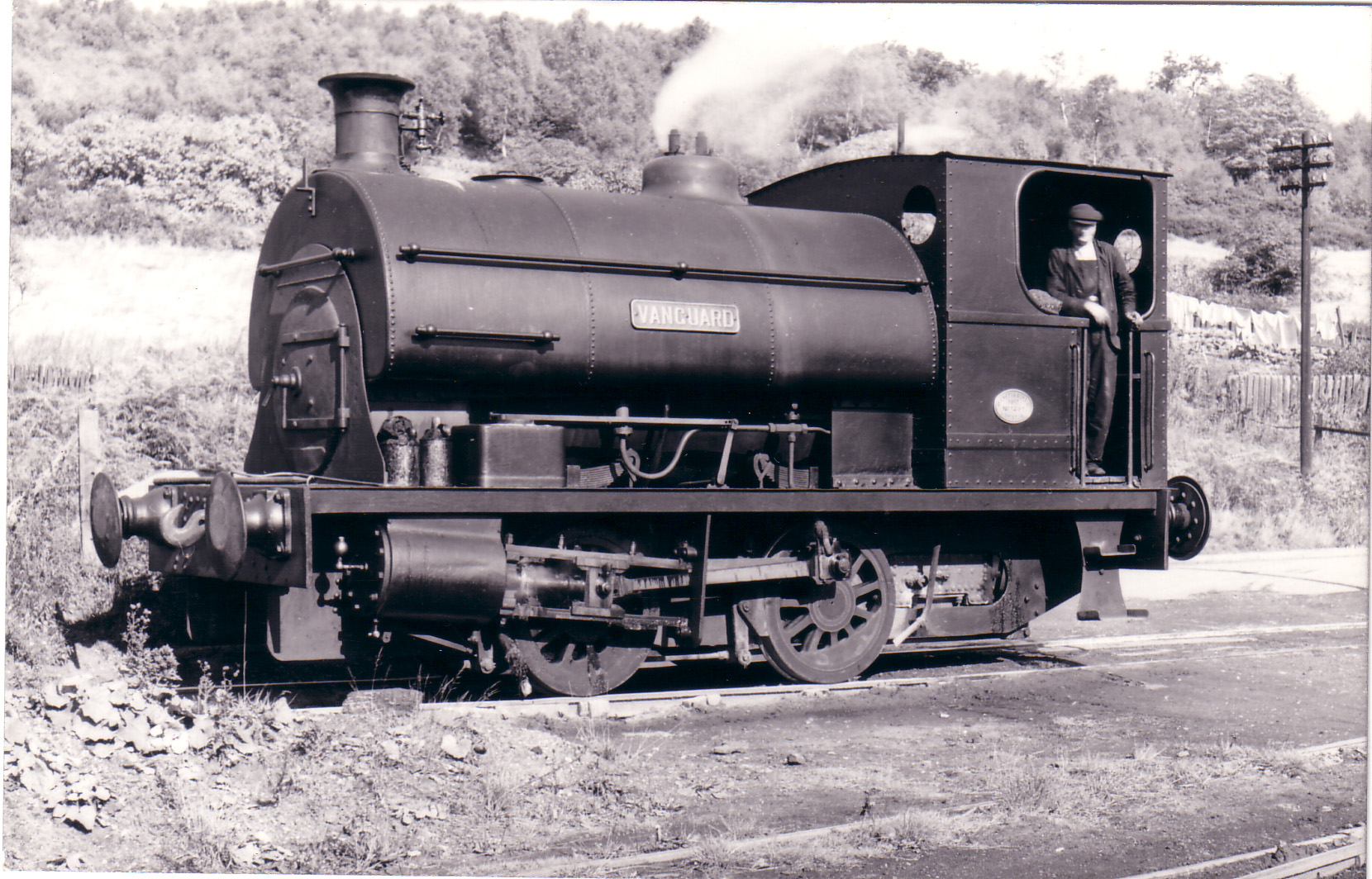
‘Vanguard’ 0-4-0ST Peckett 1491-1917 Brereton

193 – Chasewater Railway Museum Bits & Pieces

From Chasewater News – Autumn 1996 – Part 1

Editorial

As the running season gradually winds down, the working members can look forward to another winter of further extension work and getting on top of the ongoing maintenance.  As the number of working members has increased, the overall appearance of the railway has improved.

A large new sign on the A5 entrance to the park means that a large number of the general public have visited the railway for the first time, with the usual comment ;I only live up the road but I never knew you existed’.  This in conjunction with a board at the entrance to the park advertising our excellent buffet service as well as train rides seems to have brought more people up to the top end of the park instead of them staying by the swings and slides.  The overall reaction from the first time general public visiting us is very favourable, which can only reflect on the working members generally.

The vacant position of Publicity Officer has been filled by Kim Wilkins and she has made a start on getting the running dates published in the railway press.  This is probably one of the most unglamorous jobs on the railway with a lot of effort going in for what can seem like very little reward.  I would like to thank the previous holder of this post, Keith Day, for all the effort that he put into the job when he was doing it.

On the subject of members, as of the date of this magazine, we currently have the largest number of members in the Railway’s history with nearly 150 magazines going to different households, and this translates to approximately 250 current members.

Thursday 12th October saw the running of a special service train to Norton Lakeside Station for the planting of a Silver Birch tree in memory of Geoff Young, whose funeral took place the previous Friday at Sutton Coldfield Crematorium.  A good proportion of working members attended as well as members of Geoff’s family for an oration and prayers.  Geoff’s wife Brenda scattered Geoff’s ashes across the causeway.  I’m sure that I speak for all the members of the Chasewater Railway in giving Brenda our deepest condolences at her loss.

Chris Chivers.

Loco Shed News

With the running season nearly over, the mainstay of the steam services have been carried out by No.4 Asbestos.  The coal from Hatfield Colliery has proved to be a good British alternative to the Russian coal purchased in the past.  The small size of the coal which was brought in as it was primarily to be used in the boiler of the Sentinel, and any further purchases will be made in a size to accommodate both the larger grates of Asbestos and any further restored locomotives.

 The loco shed has also had installed an oil fired heater and ducting and this should provide a warmer environment during the winter months.

Steam Locomotives

No.4 Asbestos – With the coal problem sorted out, Asbestos has performed well during the season.  Several new firebars have been purchased to replace a number of banana-shaped ones and several of the tubes have been replaced over the season.  One of the springs has been mended and the pressure gauge has been re-calibrated and certified.
No.5 Sentinel – The repairs to the Sentinel have been progressing at a steady pace with the damaged area cleaned out and the front casting being inspected to find out the easiest way to mend the front casting of the locomotive.  The front drive sprockets have been straightened out and the broken links of the drive chain have been de-greased.  The rest of the drive chain has also been cleaned up in readiness to be re-assembled.

No.11 Alfred Paget – Work is continuing at a steady pace on the restoration of this locomotive and the fund raising efforts of the group are doing well.  The boiler has now received a coat of primer to prevent any further rusting.  The badly rusted base of the front boiler that sits on the steam chest has been cut away and a new piece of metal has been curved and welded into place.  Various fitting studs on the firebox have been removed and the facings have been cleaned up and given a liberal coating of grease.

S100 – Work is still progressing at the usual rate, slow but steady, and Tony Sale is gradually putting more and more bits back onto the frames.  It is still hoped to have S100 back on its wheels in the no too distant future.

Diesel Locomotives

Fowler diesel hydraulic No.422015 – The Fowler has had a number of outings this year on passenger workings.  It continues to receive minor attention during the season and has held up well.  Sooner or later the Fowler will need a major overhaul to cure the problem of ‘clag’ that is chucked out while running.

Fowler diesel mechanical No.410013 – A final coat of paint has been applied to the locomotive and the front cover panels have been replaced.  The engine still needs some attention as well as the drive shaft.  There is still no final date on when this loco can be returned to traffic.

L & Y No.1 – Work is still continuing on finishing the rebuild of the engine with further parts being obtained from our friends at Dormans.  As soon as the body can be removed from the bay platform road then it can be shot-blasted and painted.  The buffers have been removed to the shed where they have been stripped down and the springs cleaned and oiled.  As they have been rebuilt they have been painted, waiting to be re-united with the chassis.  Most of the brake gear has also been removed from the body to be cleaned and re-assembled.

No.21 – The first attempts to run the engine have met with mixed results.  The problem seems to be with the timing chain set in the wrong position.  This is being rectified but it could mean a new head gasket being required for part of the engine.

DMU Set – Cars 51412 and 51370 have now been reunited.  They are currently having the roof painted light grey and the body is being painted green, the handles white and small yellow warning panels fro the front and rear driver’s cabs.  The rotten portions of the bodies are being replaced as well as the route indicator being converted to four digit route indicator, before work starts on the interiors.  Car 51412 is also receiving attention to the motors and control circuits.

Ruston Hornsby DM48 – The latest addition to the Chasewater diesel fleet has now had the body stripped down to allow access to the engine.  A start has been made on locating a new cylinder head and various other parts.

191 – Chasewater Railway Museum Bits and Pieces

The Museum will not be open this coming Sunday, 23rd June 2024

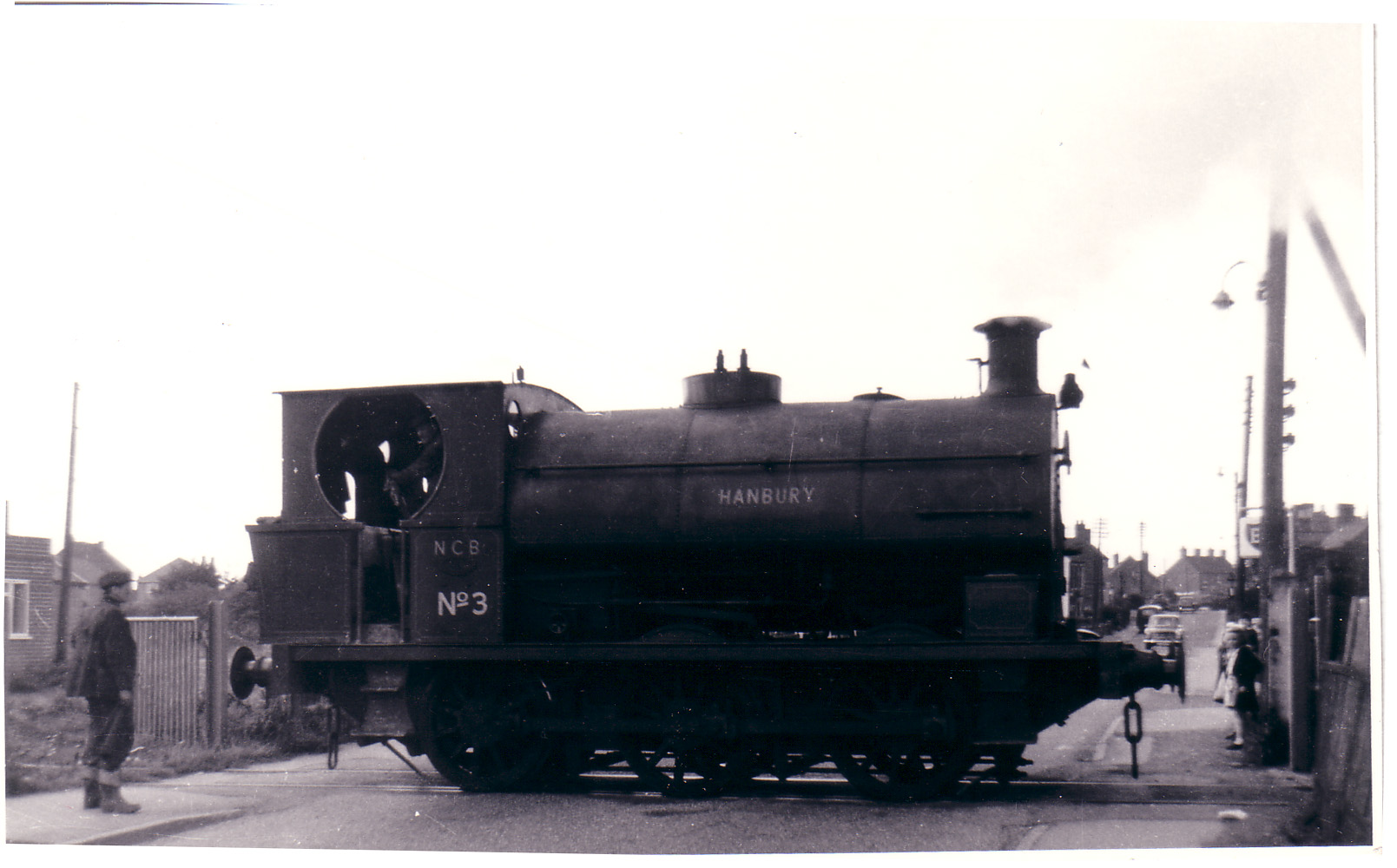
‘Hanbury’ No.3 Peckett 0-6-0 ST 567-1894 Crossing Brownhills Road, Norton Canes.

191 – Chasewater Railway Museum Bits & Pieces

 From Chasewater News – Summer 1996 – Part 2

From the Board Room

David Bathurst – Chairman

Health and Safety Matters

Those of our members who are associated with other preserved railways cannot fail to have noted from their magazines the increasing importance of health and safety.  This sudden interest in safety awareness is neither coincidental nor accidental, it is a direct consequence of legislation.

Along with our sister organisations, we have had to prepare and submit a Risk Assessment for approval by the Health and Safety Executive.  To operate as a passenger-carrying railway without having obtained the necessary acceptance of our Risk Assessment is unlawful and would expose the ‘management’ to prosecution.

Our Risk Assessment, underpinned by the proposed revised Rule Book, is now in the hands of HMRI for consideration and, hopefully, approval.  In the interim, the Company is in possession of a temporary exemption which permits us to operate lawfully pending a decision by the Health and Safety Executive.

This situation has arisen in consequence of the Railway (Safety Case) Regulations 1994 (SI 1994 No.237) which applies to all passenger-carrying operators, including operators of heritage railways.  Despite the ‘universal’ nature of the regulations, it has been generally recognised that the safety implications (and risks) associated with a preserved railway such as ours, operating with a 20 mph speed limit, are significantly different to a railway running trains at 125 mph.  Yet in many respects the considerations are the same – it is only a matter of differing magnitude and scale.  For example, the need for operator protection when using electrical equipment is as important to a Chasewater Railway volunteer as it is to a RailTrack employee, the risk to the individual at the time is the same if something were to go wrong.

Most of us have a degree of cynicism regarding the ever-increasing effects of legislation on our day-to-day operations.  The ARPS and other supportive bodies have fought hard (and are continuing to fight) on our behalf to ensure that preserved railways are protected against some of the more onerous obligations being placed – quite properly – on our bigger brothers.  For this we are most grateful.  But at the same time we need to recognise the simple fact that running trains – in its widest definition – is potentially dangerous.  We need to ensure to the utmost best of our ability that risks to both the public and our members are minimised and that our practices and policies are driven by safety considerations.

To some degree it’s a matter of good sense and adopting practices which will ensure our safety – whether during the lifting of sleepers, working on the footplate, or preparing sandwiches in the refreshment room.

The preparation of the Risk Assessment involved a number of ‘key players’ with Andy Mould taking the lead.  As the process developed, the point of the exercise came more clearly into focus.  The document includes a commitment to introduce changes in certain areas of activity, including accountability and the maintenance of proper records.  Sometimes it proves very valuable to examine carefully what we do, why, and how ‘dangerous’ it is and how we might make changes to reduce potential risks to volunteers and the travelling public.

During the forthcoming months, it will be necessary to introduce the changes required to honour the commitments contained in the Risk Assessment.  Most will be self-obvious improvements in our working practices and procedures.  Those members or groups of members affected by such changes will be informed directly and as widely as possible so that there can be no areas of doubt or uncertainty.

Stop Press

The following is the text of a letter dated 13th May 1996 from the Health and Safety Executive:

“RAILWAYS (SAFETY CASE) REGULATIONS, 1994

Further to your conversation…. On 24 April, I am pleased to inform you that the Health and Safety Executive has now completed its evaluation of your application for exemption from the above regulations, and has found it satisfactory.  Accordingly, I enclose a certificate exempting the Chasewater Railway from regulations 3, 4 & 5 of the Railways (Safety Case) Regulations, 1994.

The assessor also asked me to commend you on the responsible approach towards the running of (the) railway which is demonstrated in your application.”

How we look to others

In the past, our Railway has been criticised for its ‘appearance’.  We have been seen as just a little short of a scrapyard.  Not that we are on our own!  Such is the very nature of railway preservation, with locomotives and rolling stock at various stages of dereliction (with little or no prospect of restoration ‘within the foreseeable future’) and a whole array of items and equipment which might, perhaps one day, fins some form of use.

1996 has been declared a year of good old-fashioned consolidation, presenting the opportunity of finishing unfinished jobs without the distraction of some major enterprise.  Looking over the site, particularly at Brownhills West, the scale of improvements is immediately apparent compared with say, 12 months ago.  A concerted effort to tidy the whole place up is producing dividends at last.  The amount of rubbish and scrap disposed of has been impressive, to say the least.

We still have a long way to go, however.  Some (perhaps even ‘most’) of our working members still seem unable to adopt the culture of tidiness.  My message is worth repeating: please do not simply leave YOUR rubbish for someone else to clear up.  And if you see rubbish, litter and the like – particularly in the station areas – please take the trouble to pick it up and drop it in a bin.  Empty drinks cans littered around the site leave an appalling impression.  Take pride in your railway.

The 1996 Annual General Meeting

The 1996 AGM agenda was completed in just 6 minutes.  As a formal business meeting it began at the appointed time; those who arrived late missed it!  I am delighted to welcome Arthur Edwards to the Board as a Company Director.  His support has always been much appreciated and I am confident that Arthur will have much to offer to the future management of the Railway.

For those present at (or arrived later) the AGM, perhaps the more interesting part was the traditional open forum which followed and resulted in discussions on the usual wide range of subjects.  The thorny problem of vandalism generated quite a lot of feeling.

Social Evenings

My personal commitments cry out for the introduction of an 8-day week (but with a 3-day weekend of course).  Thus, I cannot attend every event, much as though I would wish to.  But how pleasing it was to join so many working members and friends at the April Social Evening, with some interesting slides and a pleasant drink or two on offer.  The Railway can only be strengthened by such events, especially as the older members in particular have a massive fund of knowledge, information and anecdotes to share with our colleagues.

“Chasewater News”

Building on the excellent work of his predecessor, our current Editor is producing a magazine which is going from strength to strength.  Of course, access to modern technology is the key to the appearance and layout of the magazine – despite the curious effects which from time-to-time result owing to the use of an American spell checker!

Appearance and layout are two aspects only.  The Editor can only produce an interesting magazine if he has the materials to include.  On his behalf, can I make a plea to members to provide articles – especially articles about the Railway itself – for inclusion in the magazine.  Don’t worry if you think that your grammar or spelling is poor, it doesn’t matter.  Chris will ensure that your material is corrected before publication (well, that’s the theory at least!).  Similarly, if you have any photographs (whether ancient or modern) which might be of interest, then please let Chris Chivers know.

On the Volunteer Front

The Annual Report presented to the 1996 AGM included a reference to the need for working members to respect one another’s work.  For a variety of reasons, some valid but many unsustainable, the closing months of 1995 produced a Chasewater version of ‘A Winter of Discontent’.  Perhaps it really did have something to do with the weather.  With the onset of spring, the spirit of co-operation and harmony between working members has improved beyond belief.  Doom and gloom have been replaced by confidence and optimism.  With so many positive things in hand or on the horizon, it is vital that this spirit is maintained and developed.  When all said and done, we’re supposed to be enjoying ourselves!  Additional working members are always welcome – and they need to feel welcome.  All Departments are always on the lookout for additional resources, whether manpower or material-wise.  If you feel able to assist in any way, please let someone on the Railway know next time you visit Chasewater.

The last three photographs are of ‘our’ railway trackbed on the other side of the M6 Toll road, the final one, with Ellie, was taken in the area of the old Brownhills Midland station.

186- Chasewater Railway Museum Bits and Pieces

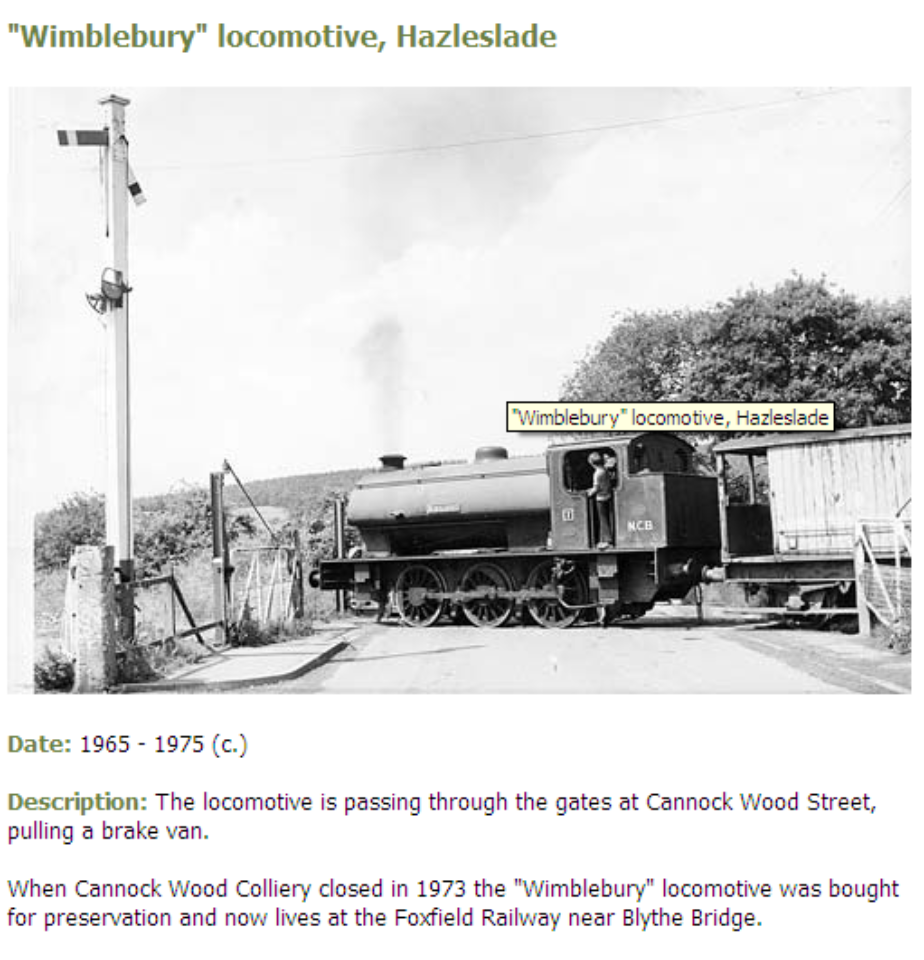
No.7 Wimblebury 0-6-0ST Hunslet 3839-1956 Cannock and Rugeley Collieries

186 – Chasewater Railway Museum Bits & Pieces

From Chasewater News Autumn & Winter 1995 – Part 3

 Loco Shed News

With the overhaul of the Sentinel nearing completion and the repairs to Asbestos well in hand, it is possible that the opening of Norton Lakeside Station on the 16th December could be another first with the special train being double-headed, which as far as I know has never been done at Chasewater before.  The work that has been done in the engine shed over the past few months has been incredible, and many thanks to Nigel Canning, Les Emery, Tony Sale and all the other willing hands that have helped.

Steam Locomotives

No.4 Asbestos – The casting for the main steam pipe was delivered during the second week in November.  After heat treating to reduce the stress on the casting it was machined courtesy of Tony Sale and the first trial fitting was on the 19th November.  A few minor adjustments were required but this has now been rectified and the casting fitted.  This should keep Asbestos running over the Christmas period and into the start of the new season.

No.5 Sentinel – The Sentinel has just about completed its long overhaul and is due for its test steaming at the end of November/beginning of December.  Hopefully this should be accomplished without any problems, and all credit to Nigel Canning for the first class job that he has done on his locomotive.  With the work completed on the Sentinel this should give us two steam locomotives in traffic.

S100 – Work continues on putting S100 back together again.  Two of the valve springs have had to be remade after a gap was found between the valve and the cylinder on one side.  One of the brake hangers has been dismantled, then cleaned and primed.  The work continues towards the completion of the chassis ready to receive its wheels.

Diesel Locomotives

Fowler diesel mechanical No.410013 – Further cosmetic work is being done to this locomotive to protect it from the winter weather and work will recommence on this locomotive after several other projects are finished.  The diesel still remains nominally serviceable.

Fowler diesel hydraulic No.422015 – The ‘Black Fowler’ remains temporarily out of service due to the breaking of three of its injector pipes whilst on works train duties.  The repairs to the pipes should be completed shortly and it should be back in service for Christmas and the start of the New Year.

L&Y No.1 – No.1 is well on the way to being put back together.  Work is proceeding on the engine with one of the two cylinder blocks now fully finished, and work is rapidly continuing on the second.  All being well the engine should be finished shortly after Christmas.  The next job on the agenda is to crane out the chassis and wheels, clean and paint them.  If all goes well No.1 could be running again by the end of 1996.  (See post No.183).

No.21 – The engine of No.21 is going back together at a slow but steady rate.  The second cylinder block has been replaced and the manifolds are being put back on.  Most of the basic repairs to the engine are now complete.  The next items on the agenda are the cooling system and the electrical systems.  This locomotive could also be finished by the end of 1996 with a bit of luck.

P.Way News

Blood, Sweat and Tears – Arthur Edwards

Most of the past several months have been taken up, in between the service trains running, with getting the track ready for the Inspector’s visit in September and again in October.  The ‘Blood, Sweat and Tears’ of the new extension has lived up to its name.

Blood – Because during the completion of the Causeway many a finger has been caught whilst either rolling in rail or keying up the track, so drawing blood.

Sweat – Of which a lot has flowed during the summer months, as it was one of the hottest few weeks on record, and for those who have done it, P.Way is hot and heavy work.  (Is it not, Tom?)

Tears – When things have gone wrong, and believe me they have, such as when Lakeside Station was nearing completion and we ran out of bricks to finish the platform, due to vandals knocking off the laid bricks and throwing them in the lake.  Then after the Inspector had been it was found that the rail was too close to the platform edge so that the clearances had to be altered by one or two inches, taking a dozen blokes to do it over a weekend.  (My back still remembers it.  Ed.)

In the end I received a phone call at about 5.20pm on the 25th October with the news that the extension had been passed for passenger traffic and we could now run into Norton Lakeside Station, which was very good news indeed.  I have only one request – could the P.Way lads get their breath back before we get any more track in to extend the running line, please!!

My thanks to Nigel Canning for the photos

183 – Chasewater Railway Museum Bits & Pieces

From Chasewater News Summer 1995 – Part 3

This image has an empty alt attribute; its file name is 05111-alfred-paget-0-4-2st-beyer-peacock-204-1861-ccccc.jpg

Alfred Paget 0-4-2ST Beyer Peacock 462-1864 Cannock Chase Colliery Co.

183 – Chasewater Railway Museum Bits & Pieces

From Chasewater News Summer 1995 – Part 3

P. Way News – Arthur Edwards

Here we are again, writing to let you know how the track is coming along.  Well Tom and I have been shovelling out the four-foot, which to Joe Public, is the distance between the inside of each rail in preparation for weedkilling which is now overdue.  This operation cannot take place until all the excess ballast in the four-foot has been removed to the track shoulders.

When this operation is completed we can start to look forward to planning the work on the new sidings.  The pointwork involved will mean the prefabrication of the new turnouts alongside the existing running line, so that when they are completed they can be put into place with the JCB over one weekend after the end of the season, so causing the minimum of disruption to the running line.  When this is completed the rest of the sidings can be put into place so relieving the overcrowding in the top compound.

But this is in the future.  The weekend of the 30th July will be given over to upgrading the track in the new station area; this will include levelling out the one or two odd rough spots due to ballast compaction, and shouldering the track ends to generally tidy up the area.

The next 8 weeks over August and the beginning of September should see the new station up and running, as there is only some brickwork to finish off and the last few fence posts to be put in place.  The overall deadline is to be finished before the October Rally, but this will depend on members coming along to help out, there are plenty of tasks from mixing the mortar for the bricklayers to helping backfill the platform.

The sooner we can get these tasks finished then the more important job of extending the line towards Church Street can go ahead.  I feel that this is well within our capability as long as we have the numbers of long term dedicated volunteers.  The overall extension to the running line can only continue as long as we have the manpower to help lay it, and then maintain it.  The overall standard of track has greatly improved over the past few years but it is a constant battle not to slip back, and as we use the line for more running days the overall wear and tear is getting heavier.  So if you can spend a few hours for one or two weekends a month I will be more than happy to see you.

L & Y No.1 – A Brief History – A.Mould

Lancs & Yorks No.1 – May 14th 1920 in full livery

Many of us are asked questions regarding the history of our stock stored on site.  Hopefully this article will start the ball rolling as a starter for a series of short articles on various items, and so improve our own knowledge about them.

Just after the First World War the Lancashire and Yorkshire Railway were finding that the capstan and horse shunting were laborious and time consuming so creating inefficiencies in labour and increasing expense, so attempts were made to find a more efficient replacement.  Two battery electric locomotives were constructed for shunting at the L & Y’s power stations which provided power to the Bury routes around Manchester.  In 1919 they had been provided with an 8 ton Simplex shunter for demonstration purposes, which they later bought and numbered No.1 in their internal combustion list.  The Simplex locomotive was a development of the first oil-engined locomotive built by Mr.Priestman in 1894.  Simplex used a transverse mounted engine and gearbox.  In 1920 a further two locomotives were ordered from the Motor Rail & Tramcar Co. Ltd. (Simplex) of Bedford England.  The locomotive itself was based on well proven and reliable technology, being based on Motor Rail’s war time design, which had given sterling service in the front line trenches in France and Belgium where a steam locomotive would have been an instant target.

The propulsion for No.1 was provided by a W.H.Dorman 4J.o. petrol engine of 6.4 litres with magneto ignition which was capable of developing 40 hp at 1000 rpm and was originally designed for use as a road vehicle engine for lorries and other large commercials.  The automotive arrangement of the engine where the main bearings were mounted on the upper half of the crankcase was scrapped and the locomotive engine was built up from a sturdy cast iron lower crankcase.  This followed marine engine practice.  The lower crankcase held a considerable amount of lubricating oil, much more than a sump.  The position of the cooling system water pump and the magneto were changed for ease of maintenance.

Railway Forum 1976

At the Dorman works in Stafford this form of 2 and 4J.O. engine produced for Motor Rail was always known as ‘Trench Engines’ due to their service in the First World War.  The Dixon-Abbot gearboxes used in the 8 ton shunters were built by David Brown.  The gearbox was driven through an inverted cone clutch from the engine, and with two forward and reverse positions it was then connected through heavy roller chains to both axles.  A tractive effort of around 3,500 lbs. in low gear, at up to 3 mph and 1,250 lbs. in high gear giving a top speed of around 10 mph.  The clutch, which was part of the flywheel assembly, was lined up with Ferodo friction material, and this could cause great difficulty biting violently when engaged and changing gear, should the engine and gearbox ever become out of line, so potential drivers – you have been warned! (as Financial Controller I have been informed that it does 1 mile to 5 gallons, therefore if he is prepared to buy the petrol, he can run it! – Chris Chivers, Editor.)

As delivered it was believed that the locomotive was a bright red, but after acceptance it was soon repainted in Lancashire & Yorkshire lined black.  The first shed it was allocated to was Sandhills, later renamed Bank Hall, and it quietly resided there with Nos. 2 & 3 going about its duties of shunting wagons in and out of warehouses, etc. until 1922.  It was repainted into the livery of the LMS sometime in the 1930s after the LMS had inherited the three Simplex from the London & North Western Railway’s division B, as the LNWR had merged with the L & Y earlier in 1922 during the grouping of the independent companies into the ‘Big Four’.  The LMS transferred it to Scotland on the old Glasgow & South Western Railway, but for what purpose we don’t know, but it returned to its home ground because in 1932 it was offered for sale from Horwich works as well as Nos. 2 & 3 and all three were bought by George Cohens, a Leeds scrap man and locomotive dealer who refurbished them at his Stanningley Depot and then sold them on.  No.1 went to Ryland Brothers at Warrington who were wire makers and continued in their service until its retirement, whereupon it went into preservation and came to Chasewater.

L & Y No.1  – In  Rylands Livery,  Railway  Forum 1976

Upon arriving at Chasewater, no.1 was repainted into Ryland Brothers colours and was exhibited at Dormans 100th Anniversary at their Stafford works.

It is now 21 years since No.1 last ran in anger at around 5 gallons to the mile!!! In petrol consumption.  Restoration is well under way and a pair of split spoked wheels have been obtained to replace the solid wheels that are presently on the locomotive.  Shortly. Maybe even by the time you read this magazine, it will be craned out from its position on the bay platform ready for further attention to its frames and bodywork.  How long you say – well let’s take the job slowly and deliberately with care.  I’m looking at 2 – 3 years, maybe sooner with assistance.

Sadly, most of  L & Y No.1 was stolen before it was fully restored – I believe that the original engine and one set of wheels are still at Chasewater.

171 – Chasewater Railway Museum Bits and Pieces

171 – Chasewater Railway Museum Bits & Pieces

Permanent Way News

Words on Synthetic Chemicals – Arthur Edwards

This story started back in October, 1993 when a Mr. James Bates of Synthetic Chemicals paid us a visit with the news that his company was doing away with its railway network, which connected with the BR Wolverhampton to Stafford line at four Ashes.  Jim told us that a number of items, some chairs and a point lever had been disconnected and were surplus.

The following weekend Paul Whittaker, Dave Borthwick, Tony Wheeler and Keith Day drove over to Synthetic Chemicals to collect the items which were brought back and stored at Chasewater.  Jim said that the company would have to consider all the pros and cons on how to deal with the demise of the rest of its railway network.

In the spring of this year we learned that Synthetic Chemicals had generously donated the rest of their track to the CLR, and on May 7th a gang of our P.Way staff went back to Four Ashes to make a start on the dismantling.  All of the fishplates were unbolted, some of the pointwork was split up and all of the keys were removed and brought back to Chasewater.

The second week was spent doing more or less the same again, at the end of which Chris Chivers informed me that the track was all ready for lifting in 60ft panels.

The next week, after mid-week phone calls, we managed to get a crew for the lift at SC.  Meanwhile back at Chasewater Ian Buswell was hard at work with the JCB levelling the site ready for the pointwork and 30ft track panels which will be used eventually for our new sidings and shed.Nothing to do with the post – just looks nice! Beattie Well Tank in Brownhils West

Over at Synthetic Chemicals three of Cotton’s artic lorries were waiting for their loads.  At around 10.30am the first lorry was ready, and Steve asked me to return to Chasewater with it to oversee the unloading.  Curly brought his lorry up, and Harold set up his crane to lift the top panel, Curly then moved his lorry further forward, and Harold dropped the panel in more or less the right place.  This process was repeated until the lorry was unloaded and the next one arrived.

At around 1.00pm on the Saturday the rain started, and did it come down?!  By about 4.30pm I was absolutely soaked.  Funnily I had brought my wet suit but it was in Steve’s car and I didn’t have time to put it on anyway.  I thought it was about time to be heading back to the station where my Better Half was waiting to get away.

Ian told me on the following day he finally got away at about 8.3pm.

The new track panels stretch from the end of our current running line right across the causeway and through the platform of the new station, and there are still another two or three loads to come.

Thanks must go to Cotton’s Transport and Safe Load Indicators who provided the lorries and cranes.

Since the arrival of the panels work has started on fishplating them all together and jacking and packing to achieve the correct level and alignment.  This method of tracklaying is obviously much quicker than our traditional way and it is likely that we will have a train in front of the new platform very shortly.

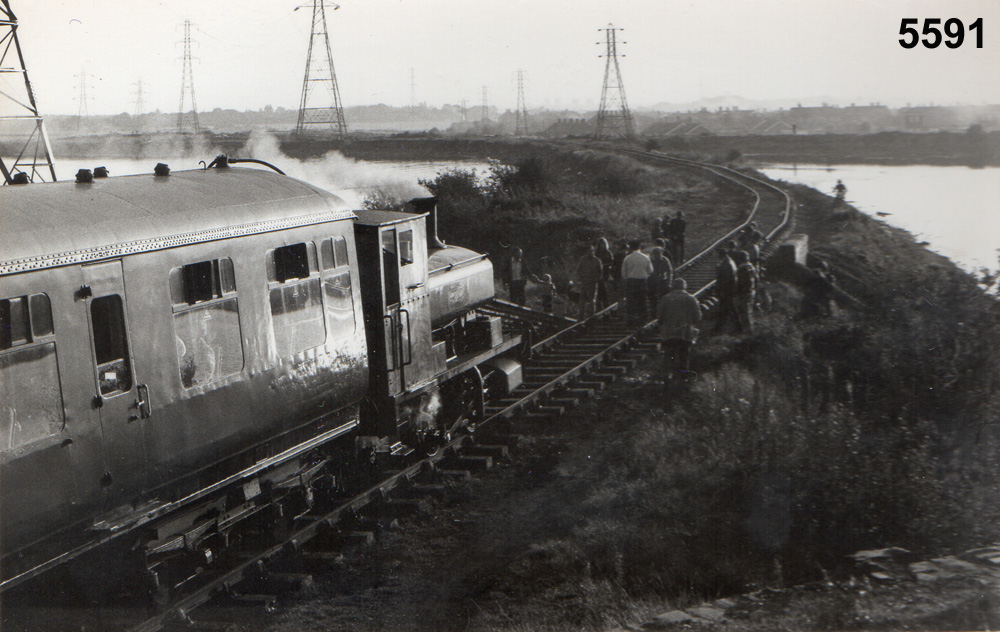
The Causeway Station NameWorks train into Norton Lakeside

At the meeting on 25th March, the Board gave due consideration to the names proposed by members for the causeway station, previously referred to by the unflattering (but geographically correct) name of ‘Norton Bog’.

Members will recall that the Board had agreed to a form of competition, so that those who submitted the name eventually adopted by the Board will receive family tickets for the day of the first official public service into the new station.

The following names were suggested by members and other interested parties:

Chasewater Lakeside, Chasewater North Shore, Lakeside, North Shore Halt, Norton Biddulphs, Norton Bog, Norton Causeway, Norton Cranebrook, Norton East, Norton Lakeside, Norton Marsh, Norton Marshes, Norton Parkside.

Nominations for ‘Norton Lakeside’ were submitted by Mr.J.P.Merriman, and Mr.Chris Hatton, both of whom will be official guests on the due date.  The three Board members who submitted the name are disqualified from the competition!!

By way of thanking the other members who took the trouble to submit suggestions, the Board has also agreed to offer a small token of appreciation.

David Bathurst – ChairmanPassenger train leaving Norton Lakeside

168 / 169 – Chasewater Railway Museum Bits and Pieces

168 – Chasewater Railway Museum Bits & Pieces

From Chasewater News Winter 93 – Spring 94 – Part 4

From The Board Room – David Bathurst, Acting Chairman.

With so many initiatives being worked-up on the railway at the present time, the Board is finding itself with an ever-increasing agenda.  Indeed, the Board Meeting held on 20th December failed to complete its business and had to be adjourned.

To enable members to be aware of the work being done on behalf of the Company, it is hoped to publish from time to time a brief resumé of matters currently under consideration by the Board.

This short note is not intended to cover all details of the Board’s business, but I trust it will be of interest to members.

1.    Following damage to the park which occurred during the movement of rolling stock, which resulted in considerable correspondence from the Council, it has been agreed that all such movements must in future be cleared with the general manager, and the crossing of grassed areas under the Council’s jurisdiction will not be permitted.

2.    A framework for crew training is to be considered in conjunction with the Roster Clerk, so as to maximise the potential of prospective crew members.  This will include both steam and diesel traction.

3.    The rostering of trainee firemen under the supervision of a passed fireman will be discontinued.  Trainee firemen will in the future act under the direct supervision of the driver.

4.    Only drivers and passed firemen acting under the supervision of the driver shall be permitted to drive steam locomotives while hauling passenger trains.

5.    In view of steam locomotive footplate constraints, only rostered crew and other authorised persons (including official guests) shall be permitted to ride on the footplate.

6.    The Board has agreed to the disposal of the crane, in view of its limited use by the CLR and the liabilities associated with it.  The availability of the crane, by way of sale, is to be advertised in the railway press.

7.    Paul Richards is to assume responsibility as Membership Officer as successor to Adrian Hall.  The date for transfer of membership details has yet to be agreed, being dependent on the setting up of suitable computer software.

8.    A shed fund has been opened, with a small sum banked to set the ball rolling.

9.    In view of the shortage of siding accommodation, any future proposals to introduce further items of rolling stock to the railway will have to be cleared by a sub-committee constituted by the Board.

10.                       It is considered essential for the CLR to enter into proper agreements with private owners of rolling stock, and perhaps other plant and equipment, which is residing at Chasewater.  The introduction of such agreements is intended to provide a clearer relationship between the parties, and to protect the interests of both the CLR and the private owners concerned.

11.                       Work on the causeway restoration scheme is proceeding rapidly, and should be completed during the spring/early summer.  However, it will be necessary to obtain the approval of HMRI before long.  Thanks to a donor who wishes to be anonymous, a footbridge has arrived on site on the causeway.The recently installed footbridge at the far end of the causeway.  This bridge was located, donated and installed all in the space of a few days.  It will provide pedestrian access alongside the existing railway bridge.

12.                       Consultations are proceeding with Lichfield District Council to secure the land which will be needed in the future to extend the line to Anglesey Wharf, but this may be delayed owing to the uncertainties associated with the line of the Burntwood Western By-pass.

13.                       Consultations are also proceeding with the Birmingham Northern Relief Road promoters regarding the relocation of Brownhills West Station.  Track layouts have been prepared by Regional Railways as a basis for discussion.

14.                       The disposal to Llangollen of the Wickhams, following asbestos removal, has been confirmed by the Board, subject to suitable arrangements having been made with regard to replacement passenger stock.

169 – Bits and Pieces

169 – Chasewater Railway Museum Bits and Pieces

From the Editorial – Nigel Canning

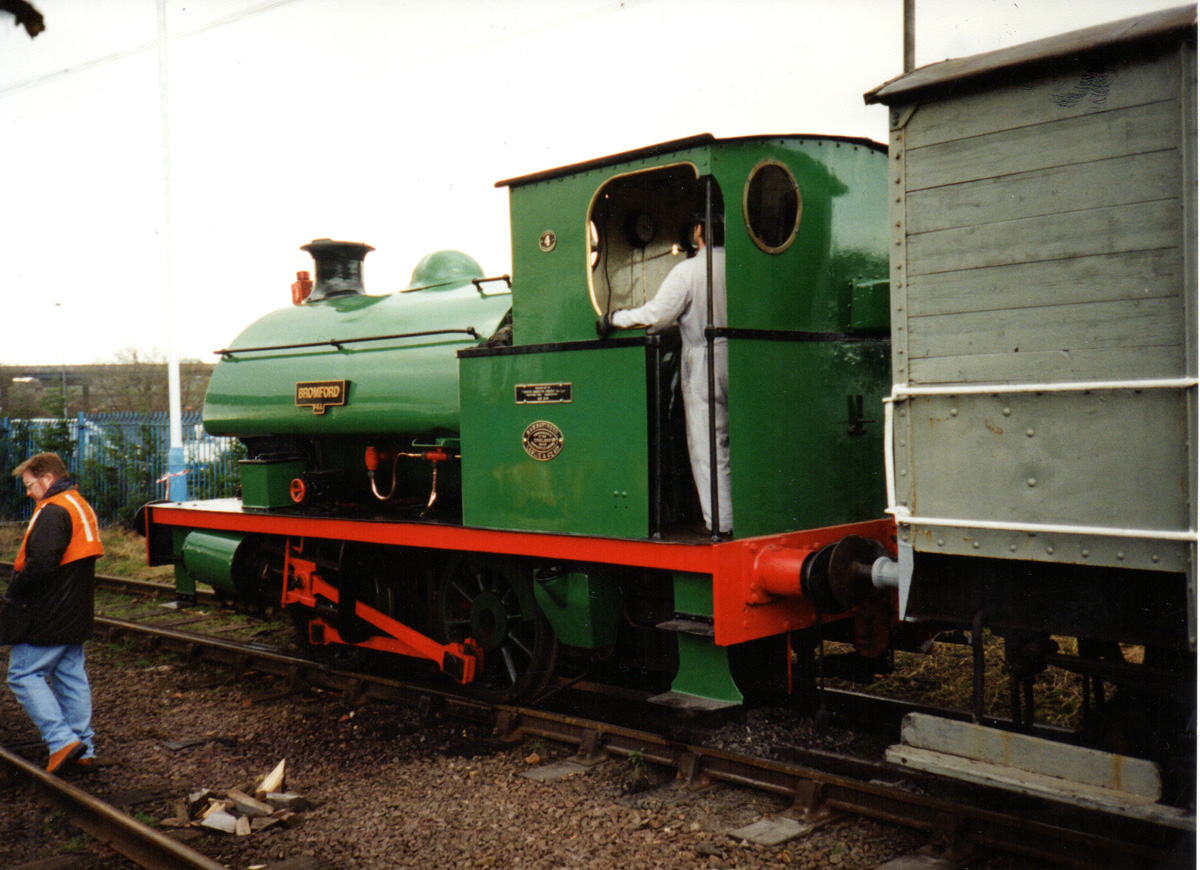
This issue of Chasewater News records our recent visit with ‘Asbestos’ and a brake van to Bromford Tube Works.  The majority of the magazine has been taken up by photos taken by members in an attempt to record the layout of the railway system in the works which has now sadly closed.

A great deal has been happening at Chasewater since the last issue.  Our coaching stock problem has been solved, although it may have created another one – lack of siding space; and track is being laid to the new station, which now has a name.

Locomotive News

No.4 Asbestos – This loco got through its visual examination and steam test without problem, although the Inspector did comment on the condition of some of the boiler tubes, and that if any of them failed the entire set would have to be replaced.  As if to emphasise the point, a number of tubes started to leak at Bromford following some energetic running, and have given trouble ever since.

Following renewal of the worst two tubes, the loco ran on Easter Sunday, but failed with further tubes leaking on the Monday.  After that, a further dozen tubes were renewed enabling the loco to run on Bank Holiday Sunday, only to fail again on the Monday.

Enough new tubes have been ordered to renew the entire set, some of which must be in excess of fifteen years old.  Whilst awaiting delivery of the full set, a further twelve have been renewed to enable trains to run at Spring Bank Holiday.

Apart from the tube problem the loco has continued to run well, and due to its being returned from Bromford facing the other way round, looks better hauling trains chimney first in its freshly painted green livery.

No.5 Sentinel – Very little  progress has been made on this loco due mainly to the amount of work needed to try and keep Asbestos running.  The boiler has, however, now been re-assembled, and the fittings are being refurbished off-site.

S100 – Work has continued on another of the four big leaf springs, the buckle of which was heated to expand it prior to assembly in Asbestos’s firebox. Various bits and pieces of brake rigging have also been fitted to the frames.

Fowler diesel – This loco has remained in service, used for shunting and works trains.

Ruston DL7 – In a surprise operation just prior to Easter this loco was fitted with an exhauster, valves and pipework to enable it to work vacuum braked passenger trains.  Since then it has completed several days of passenger train operation including ’extra’ non-advertised days as well as standing in for Asbestos.  Being unaccustomed to such intensive running, one of the axle boxes began to overheat, requiring stripping and cleaning.  The drive belt for the low voltage dynamo also caused a problem by disintegrating half way down the line.  This was, however, repaired fairly quickly without the train having to be rescued by another loco.  The general public appear unaware of the difference between the diesel and Asbestos, although to be fair, they are both painted the same shade of green and produce roughly similar quantities of smoke when running!

L&Y petrol loco – This loco seems to have been abandoned for the time being with various bits scattered around the station yard and loco shed.  Hopefully the re-assembly will commence shortly!

No.21 diesel – The engine for this loco is awaiting new cylinder head gaskets, and when fitted an attempt will be made to finally get it running again.

New Fowler – This four-coupled diesel mechanical loco appeared on site recently having been acquired from a preservation society in Redditch.  Following an attempt to tow-start the loco, it was found that the fuel injection pump needed repair, and this has since been removed.  Various other components have also been removed for attention so it could be some time before the loco is runnable.

Smith Rodley crane – this vehicle has remained out of use and has been pushed out of the way up No.3 road until a buyer can be found for it.

Carriage & Wagon News

New coaching stock – At long last replacements for the 2-car Wickham DMU and the recently departed Gloucester trailer have been found and began to arrive at Chasewater at the end of May.  A total of four additional vehicles have been purchased from BR, a centre car and three power cars.

The first of these vehicles, a Pressed Steel Co. motor brake second, W51372, arrived in time to run at Whitsun.  The recent history of this vehicle is quite interesting as it is one of several used by the contractors of the Channel Tunnel and has been through to France.  A maintenance record book found in the drivers’ cab refers to various faults as being at “the French end” of the train.

Ultimately it is intended to retain two of the four for use as a working DMU in BR green livery, whilst the other two will be used as loco-hauled stock.  Hopefully full details of the new stock will be included in the next magazine.

Wickhams E56171 & E50416 – The trailer car remained in service on passenger trains until just before Whitsun, when a vacuum leak in the brake system caused serious problems.  In view of the impending arrival of the replacements it was withdrawn from use.  The power car has also remained out of use.

Payment for the Wickhams has now been received from Llangollen, although a date has not yet been set for their removal from Chasewater.  This is likely to cause a space problem, as with the new arrivals there will be a total of seven DMU cars on site for a while.

Derby centre car W59444 – This coach has remained in service although it has been noticed that the surface of one of its tyres has started to flake away.  Advice is being sought as to whether it can be repaired.

20 ton Great Western Toad – This vehicle was ‘done up’ to run at Bromford Tube with Asbestos.  If nothing else it has benefited from having the rust worn off its brake blocks, as it covered most of the distance at Bromford with its brake screwed hard on!

CRC 4-plank wagon – Progress on the wagon has continued and it now appears to be back in one piece.  Tony Wheeler has started on the paintwork with the intention of finishing it in the livery of the ‘Conduit Colliery Company’.

Great Eastern six-wheel passenger brake – With the coming of better weather Dave Borthwick has started again on painting this vehicle.

Other vintage stock – No work appears to have been carried out on any other vehicles although this situation will hopefully improve during the course of the summer.

Shed Fund – This fund is now well underway so that by the time the route of the motorway is finally settled there may be enough money to make a start on this project.  Meanwhile donations will be gratefully received by the Treasurer, Chris Chivers.

I’m sorry but I can’t remember who took the photographs.


166 – Chasewater Railway Bits and Pieces

166 – ChasewaterRailwayMuseum Bits & Pieces

From Chasewater News Winter 93 – Spring 94 – Part 2

 From  A New Year’s Message from the Chairman

Without doubt, 1993 was a most interesting year for everyone associated with the CLR.

Obviously, the work on the ‘extension’ represents the most tangible of our successes in 1993, culminating in the decision of the Railway Inspector, Mr. Colin Law, to pass this further stretch of line in time for the Transport Rally in October.  Immediately, our running line increased by over 50% in length, enabling us to market the CLR as a real railway with a real product on offer.  With eminent guests from Lichfield District Council and Burntwood Town Council in attendance, after a very short, informal, ‘Opening Ceremony’, the Lichfield DC Vice Chairman Councillor Mrs. E.J.Bayliss waved off the 12 noon departure.  This, as with most trains that day, was virtually full, with passengers having some little difficulty in finding seats of their choice.Photo: DMB

Councillor Mrs. Bayliss subsequently wrote a most charming letter to me, and I think it is appropriate to reproduce her letter in full –

“13th October 1993

Dear Mr. Bathurst,

Thank you very much for a lovely day at the Chasewater Light Railway and Museum Company’s Annual Transport and Machinery Rally and for the privilege of officially opening the new stretch of railway line.  My husband and I found the Rally in Chasewater Park most enjoyable and interesting and we wish you well for the future.

The District Council looks forward to working with you further in the future when the whole of Chasewater comes within the boundaries of this Authority.

Yours Sincerely,

Cllr Mrs.E.J.Bayliss

Vice Chairman of Council.”

I hardly need to comment on how important it is for the CLR to enter into a good dialogue with both the elected members and officers of Lichfield DC, whose respect for the CLR will, for certain, be influenced by the professionalism with which we maintain our operations.