Tag Archives: Walsall

160 Chasewater Railway Museum Bits and Pieces

160 – Chasewater Railway Museum Bits & Pieces From Chasewater News Summer 1993 –Part 3 The value of a hole in the ground David Bathurst
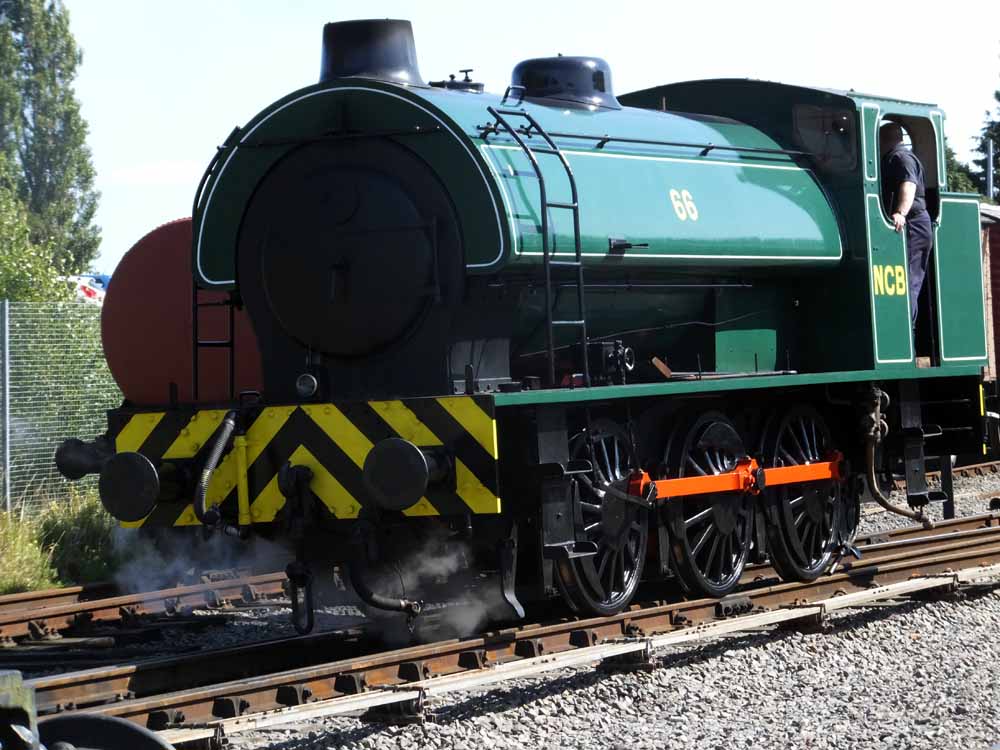
This pic is for the benefit of those who didn’t get to see the chimney in the previous post!

160 – Chasewater Railway Museum Bits & Pieces

From Chasewater News Summer 1993 –Part 3

The value of a hole in the ground 

David Bathurst

In an edition of ‘Chasewater News’ last year (Bits & Pieces No. 152) I outlined the possible use of derelict land grant (DLG) to enable the railway to achieve one of its most important projects – the restoration of the causeway.  The possibility had arisen for a number of reasons, including the fact that the Staffs County Council was preparing a derelict land scheme to reclaim the Norton Bog area of Chasewater, directly adjacent to the causeway.

The Staffs CC scheme was, however, delayed owing to the need to consult British Coal in respect of the coal stocks which might be recovered from Norton Bog.  If the Staffs CC scheme were to proceed, it was suggested that the causeway restoration could form a later stage of that scheme.  The mechanism to achieve this proposal was itself very complicated, with the causeway mainly falling within Walsall Council’s boundary.

Since the date of my earlier article, many events have taken place, including the decision of the Boundary Commission to transfer much of Chasewater into Lichfield District Council (and thereby under the planning jurisdiction of Staffs CC) from 1st April 1994.  This transfer also includes land ownerships, much to the dismay of Walsall Council.  The proposed transfer has direct implications for the railway, namely the short-term difficulties of having to take account of an additional local authority and the longer-term benefits of having to deal with fewer local authorities!!

Against this backdrop of DLG and the involvement of the various local authorities, members who visit the railway regularly will have some difficulty in reconciling the information which I have so far provided, with the events ‘on the ground’.  Indeed by the time this article appears in print, there is a prospect that most – if natal – of the causeway restoration will have been completed.  Not only has a very substantial access roadway been laid from Hednesford Road (rear of the station area ‘top’ compound), but similarly substantial works will have been completed to prepare the causeway to receive substantial inert fill materials.

‘But how is this possible?’ is the question likely to be asked by many members – especially those members who will have appreciated the massive scale of the restoration project.  It is a valid question, particularly in light of the knowledge gained by the CLR Board regarding just how much fill material (perhaps 10,000 tons) and manual resources are necessary to undertake the work.

One of the earliest lessons which I learned upon joining my current employers was the value of owning a hole in the ground.  As time passes and demands on space increase, coupled with the ever-present vigilance of the environmental lobbyists, local authorities and private organisations are finding it increasingly difficult to dispose of unwanted materials.  Although it is of no concern to the railway, everyone must be aware of the problem of dealing with household waste.  Exactly the same problem arises in respect of disposing of hard waste which is generated through the day-to-day operations of a large local authority.  Most of this material has to be sent to licensed tips – sometimes a great distance away – at a significant cost both in terms of transport and tipping fees.  If you own a hole in the ground, and you can secure the necessary planning and/or other permissions to fill it, then you have a most valuable asset.

I think that few of us involved with the railway fully appreciated that the causeway might be regarded as a ‘hole in the ground; in reverse!  But that is precisely what it is.Causeway December 1992

Even before the previous article appeared in print, representations were being made to the railway to the effect that Walsall Council’s Highways Direct Labour Organisation (DLO) would be prepared to undertake a restoration project, using the causeway as a suitable location for filling with appropriate inert (and environmentally acceptable) materials.  It would be, and continues to be, a finely balanced financial equation.  It was to be based entirely on commercial considerations.  It was not to be regarded as a favour to the railway.  It was to be based on the financial benefit to be obtained by the DLO, but with the railway enjoying a similar benefit, albeit not in directly financial terms.

The proposal can be summarised thus: a proportion of the savings made by the DLO by not incurring tipping charges in the private sector could be allocated to the works necessary to transport materials and employ heavy plant to spread, profile and consolidate the causeway to specifications laid down by the railway.  In addition to its routine programme of road maintenance, the DLO is for ever tendering for major highway projects, including bridge and similar schemes, all of which result in materials having to be disposed of.

I have no wish to expend too much time and space in describing all of the individual aspects of the project which have had to be addressed before work could start.  I can say, however, that many hours of discussions and consultations have been necessary, and dozens of phone calls made, to ensure (so far as is possible) the support and co-operation of the various agencies involved.  The detailed discussions have necessarily been limited to a mere handful of railway personnel, so as to concentrate lines of communication.

These discussions have included such details as how to deal with the rare (or rarish) plant life growing on the causeway.  It has been necessary to remember that the railway’s activities include certain designated areas, including a SSSI and a SINC (abbreviations well known to those of you with wild life interests), which have required close liaison with Walsall Council’s Planning and Leisure Services Departments.  I must place on record the tremendous help, support and co-operation of the Officers who have been involved in this particular aspect, including the Countryside Officer who gave the CLR Chairman (the author of this article at the time) a crash course in rare plant recognition!!Causeway South 1992

There have been a number of false starts to the project.  Initially, it was intended to import the materials from the bridge reconstruction scheme at the High Bridges on the Pelsall to Brownhills road.  I suppose that it was inevitable that something would go wrong, and so it did.  The weather immediately after Christmas reduced Chasewater Park to a bog, making it completely impossible to even consider moving any form of heavy vehicle into or through the park.  Each time the weather seemed to improve, it immediately deteriorated again, resulting in a further deferral of the start date.  I hardly need to remind certain members of the dangers associated with driving vehicles in close proximity of the Chasewater reservoir without taking the precaution of wearing a life-jacket and having flares (as opposed to railway detonators) immediately to hand.  (While working with the dumper truck it got a bit too close and slipped into the water!! Bits & Pieces No. 151)Causeway December 1992

However, an upturn in the weather enabled everyone concerned to agree to an early May start date, and work on laying the access road commenced in earnest on the first Tuesday in May.  Regrettably, the attentions of the local riff-raff were directed to the contractor’s JCB, which attempted to emulate the dumper truck in trying to carry out work within the Chasewater Reservoir itself.  Despite this set-back, the work has continued according to plan.

In terms of a time scale, the DLO have not sought to offer (and nor has the railway demanded) a precise indication of a completion date for the restoration project.  This reflects the fluctuating availability of suitable fill material – which has had to meet exacting criteria laid down by both the railway and the local authority.  Nevertheless, it is in the financial interests of the DLO to undertake the work speedily and effectively, so as to avoid the costs of employing contractors’ plant and equipment, whilst at the same time maximising the capacity possibilities provided by the scheme.

The end product will be a causeway capable of accommodating a railway line; but it will not necessarily be a finished product.  It will still be necessary for the railway to provide for the small bridge at the eastern end of the causeway to be widened to facilitate the provision of a trackside footpath.  Indeed, although there is no formal right of access across the causeway, the railway cannot ignore the real world situation in which the causeway is seen by the public as a convenient route between the two sides of Chasewater Park.  The restoration scheme includes a private footpath alongside the running line, but at a slightly lower level.

In addition, discussions are taking place with the group responsible for the Forest of Mercia, in relation to a scheme of planting suitable species along the causeway, so as to enhance the environmental attractiveness of what might otherwise be a somewhat stark construction.

I apologise for the length of this article, but only in one sense.  The causeway restoration project is of momentous significance to the future of the railway.  It is a focal point in the minds of many of the railway’s working members.  Not only is it important in itself, but it also opens up the real prospect of further expansion into Chasetown.  Already, preliminary discussions have taken place with Staffs CC – who are currently designing their Norton Bog Reclamation Scheme now that British Coal have withdrawn their coal recovery proposals – regarding the clearance of the track-bed adjacent to the Norton Bog site.  Further, Staffs CC Highways Department have been asked to provide details of their design work on the Burntwood by-pass, to enable the railway to assess the implications on the railway’s long-term expansion proposals.

This is a very exciting time for the railway, with so many different projects taking place or being prepared.  The causeway restoration will make it necessary to bring forward thought (and expenditure) on the procurement of sleepers and rail.  It will give an added impetus and an exciting incentive to the working members and the railway’s many supporters.

And it is a fact that the scheme has come about because of the one thing that most of us had not contemplated – our own special version of a “hole in the ground”.

Causeway South January 2005

Chasewater Railway Museum – The Causeway

Posted onNovember 9, 2015by John D | Leave a comment

Chasewater Railway Museum

The Causeway
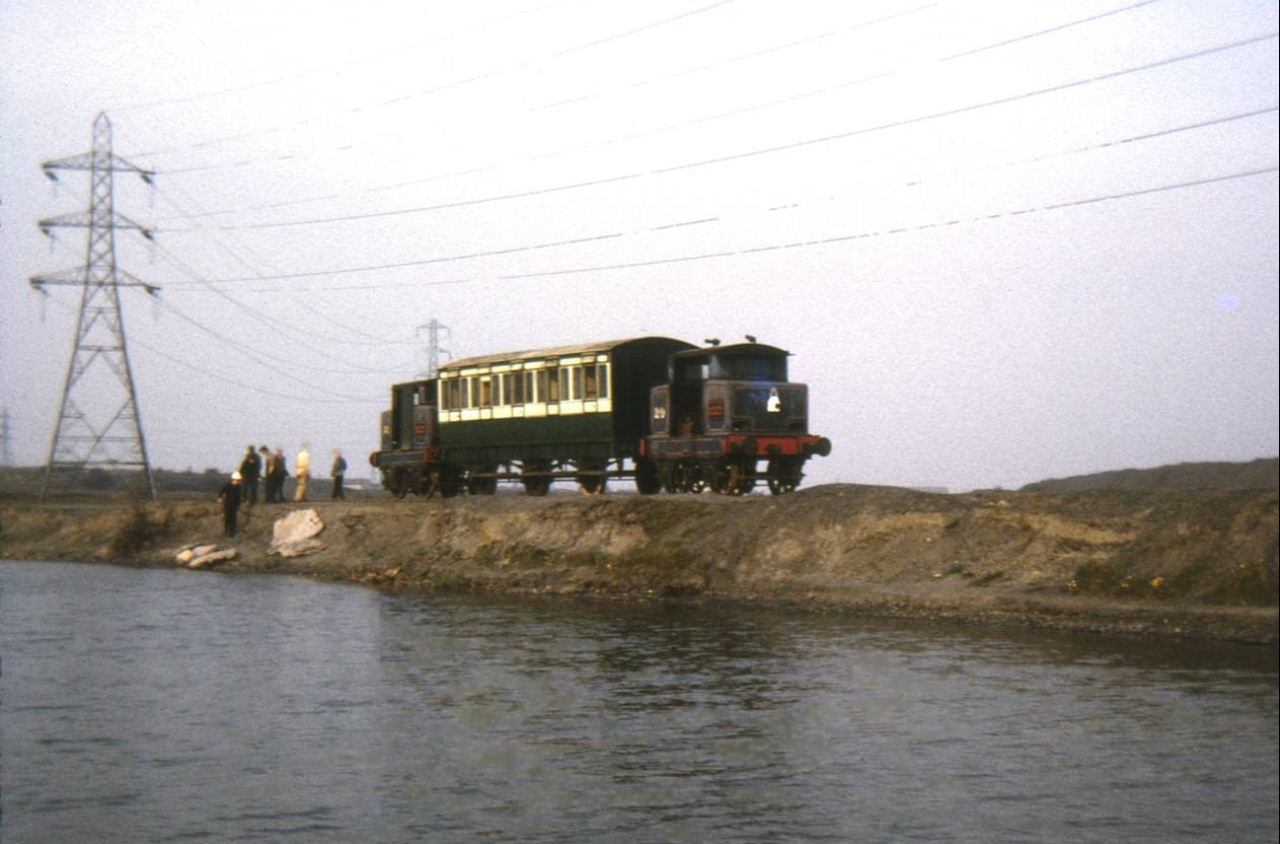
Causeway April 1971

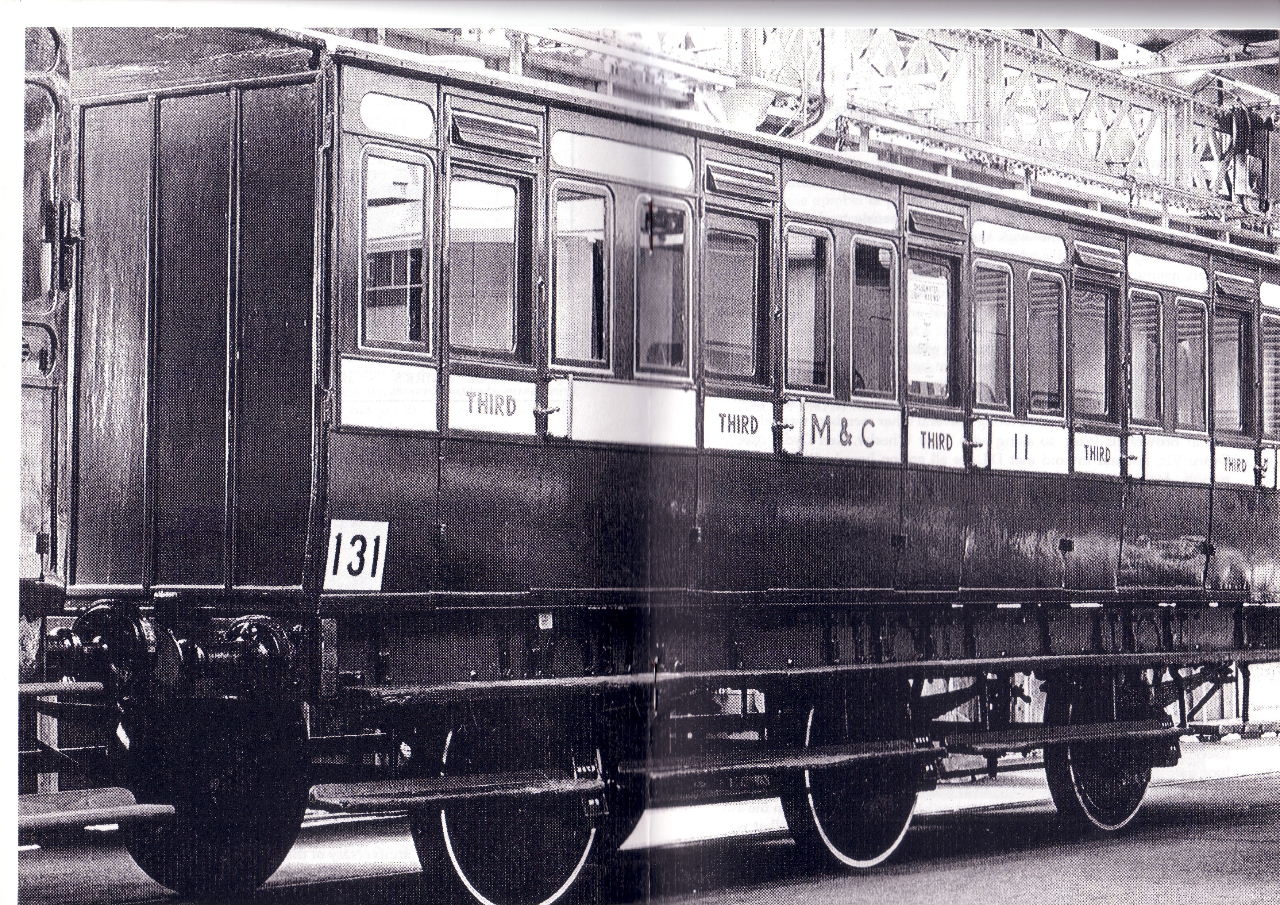
Worthington locos Nos.20 & 21 on the causeway with the Maryport & Carlisle coach in April, 1971
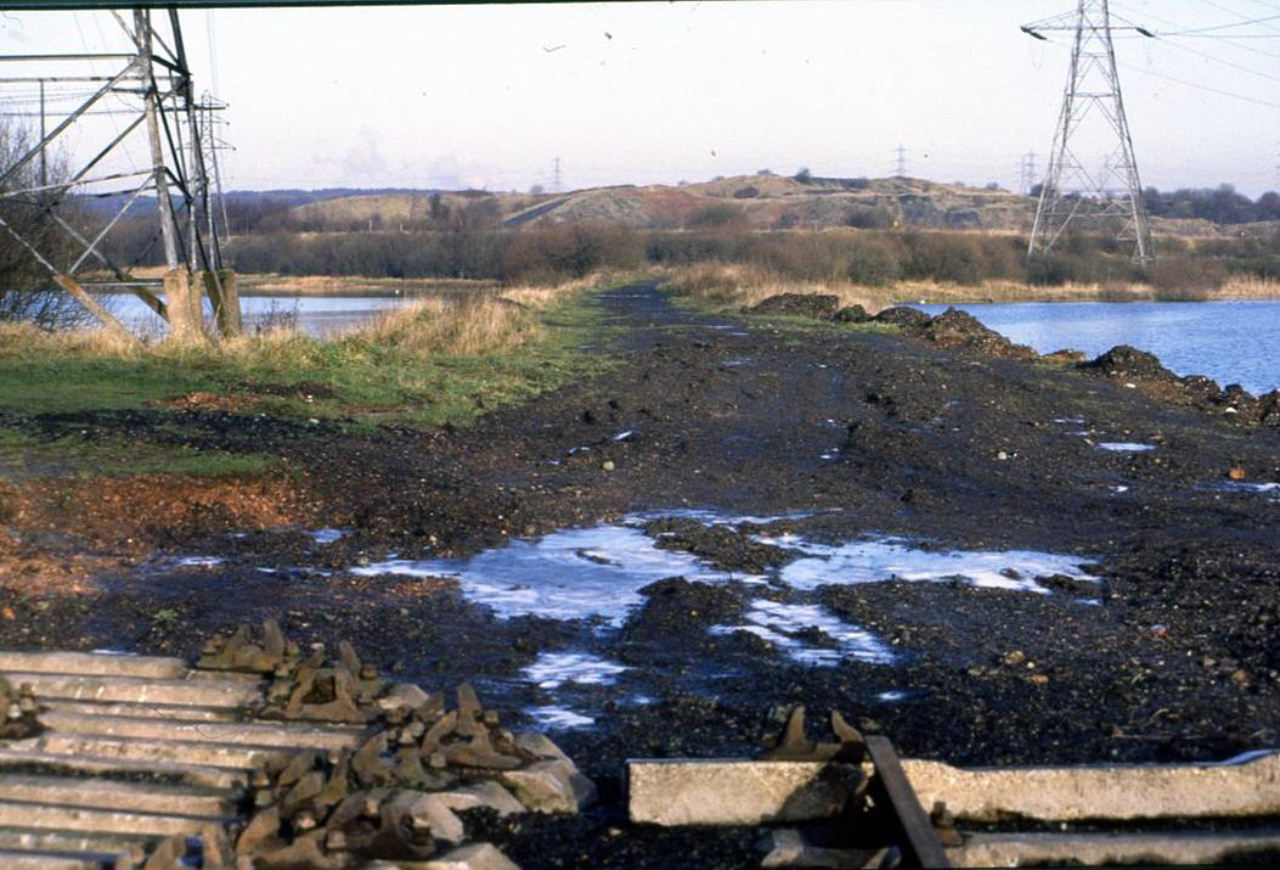
Causeway 1992

Taken in 1992

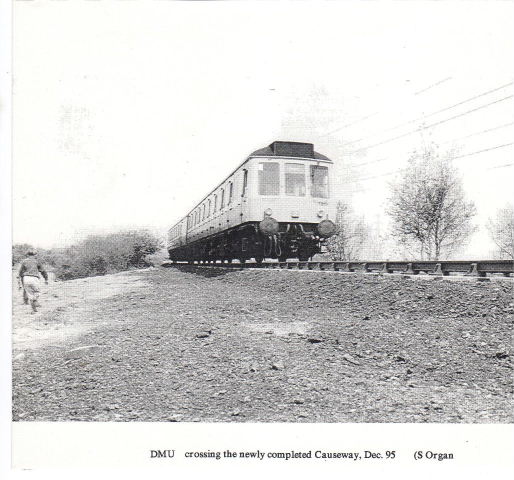
DMU on causeway001
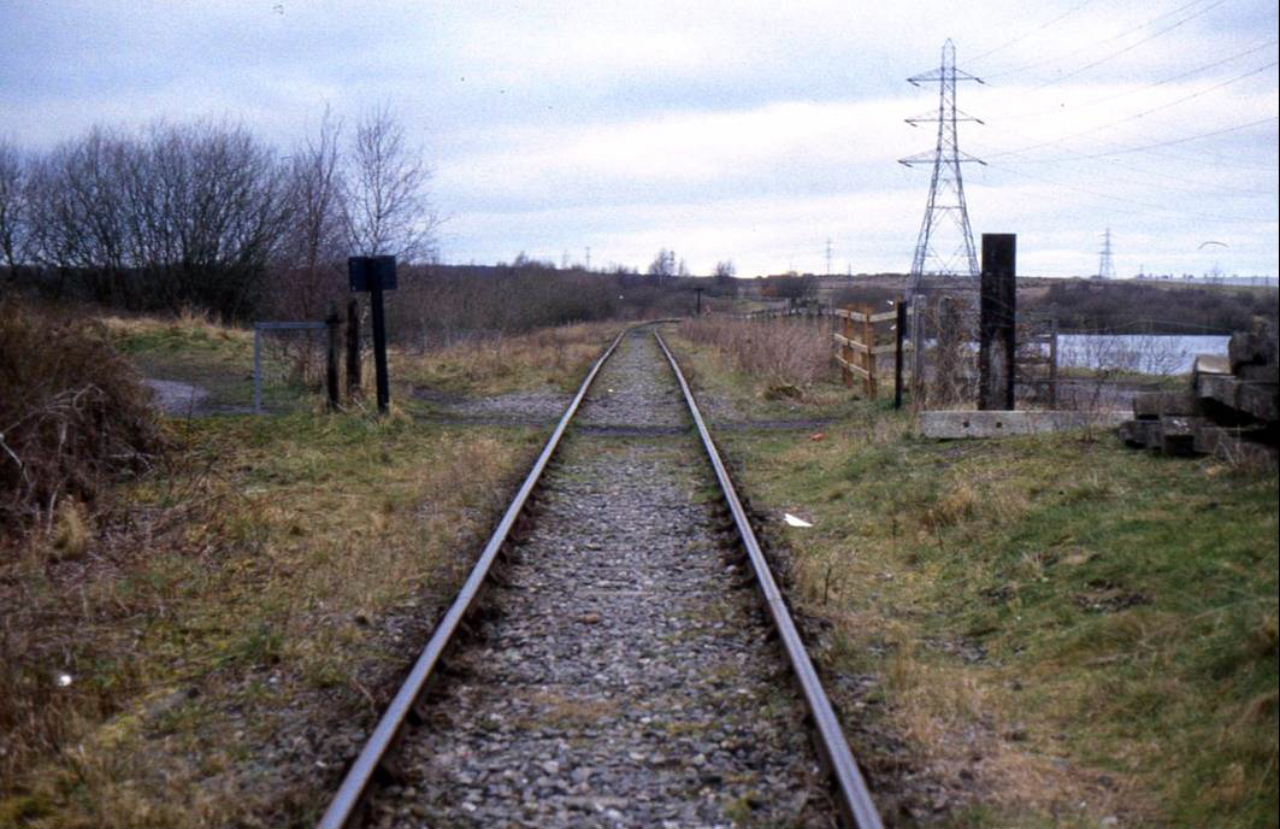
Causeway 2005

Taken in 2005

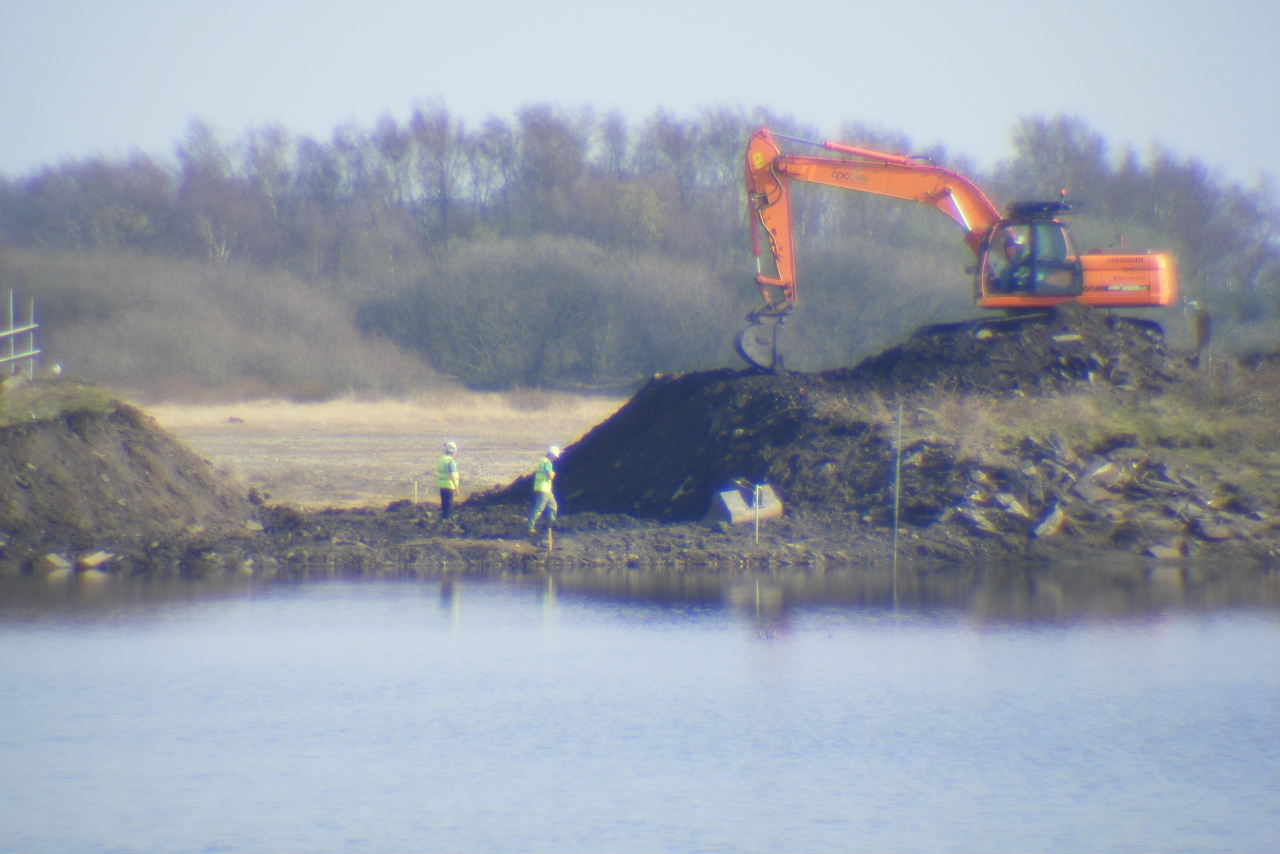
2011_03250028

2011 – A hole in the Causeway!

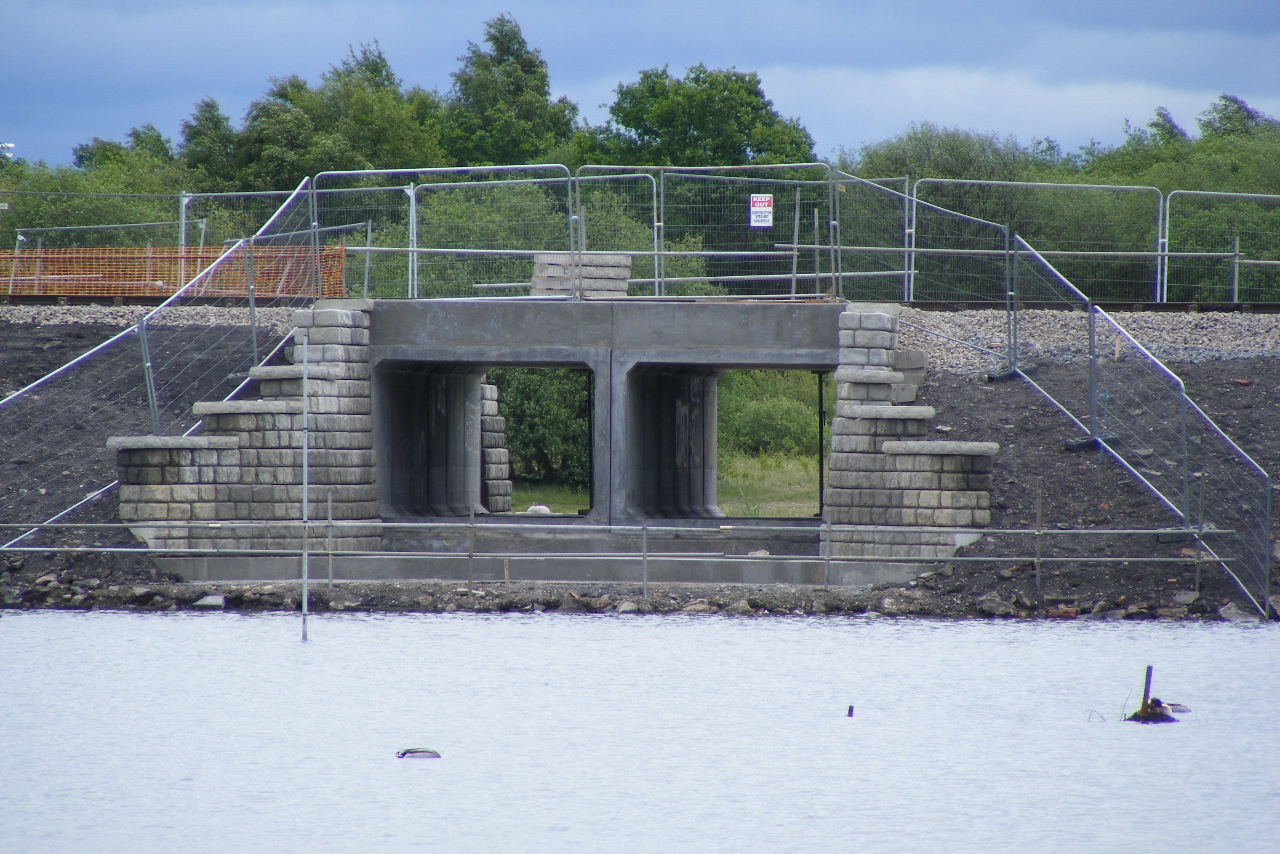
2011_05280007

Later in 2011

2011_05280016

May 2011 – First train over re-opened causeway.
2009_09120020

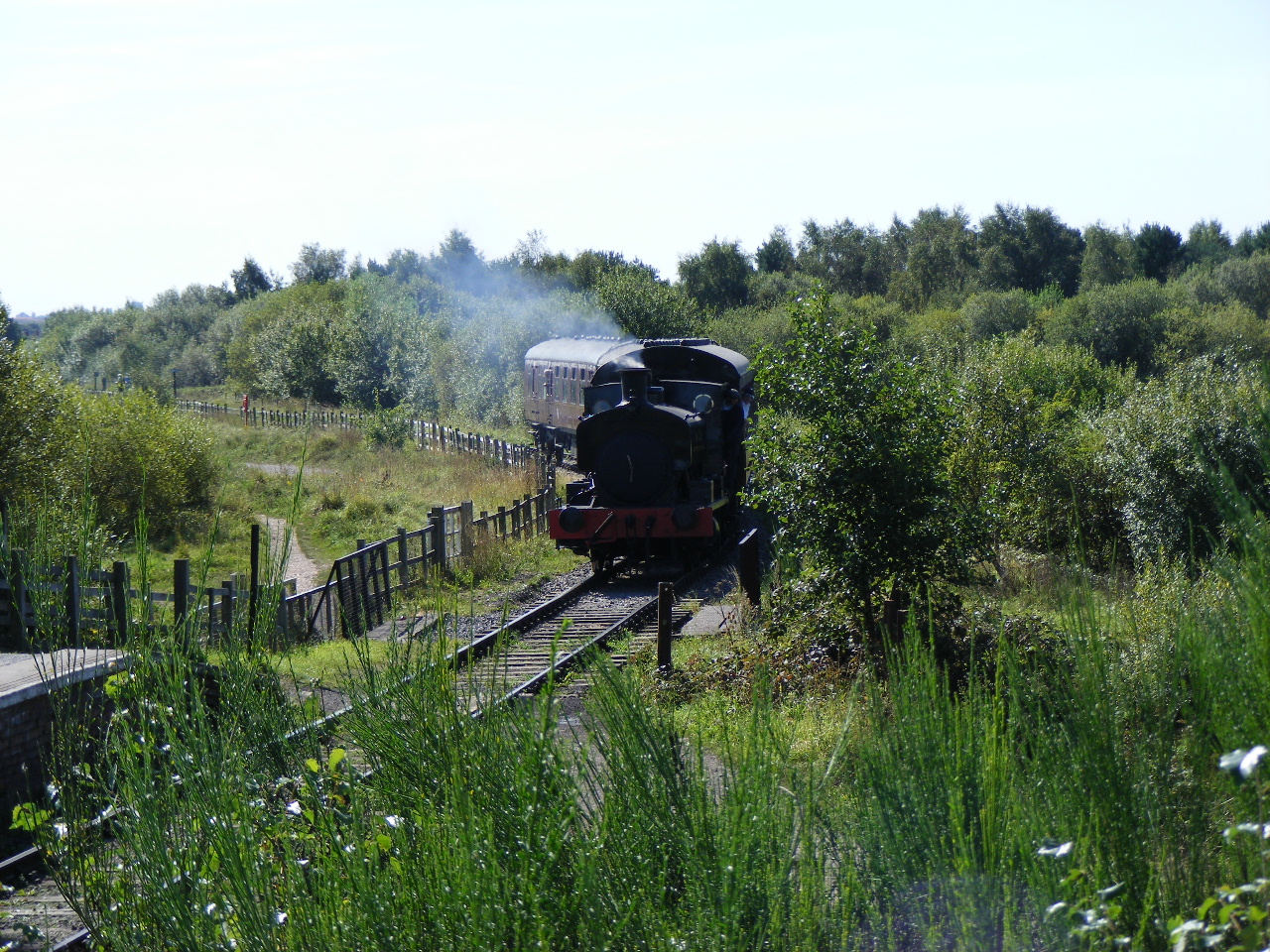
Just to show steam locos use it too !!

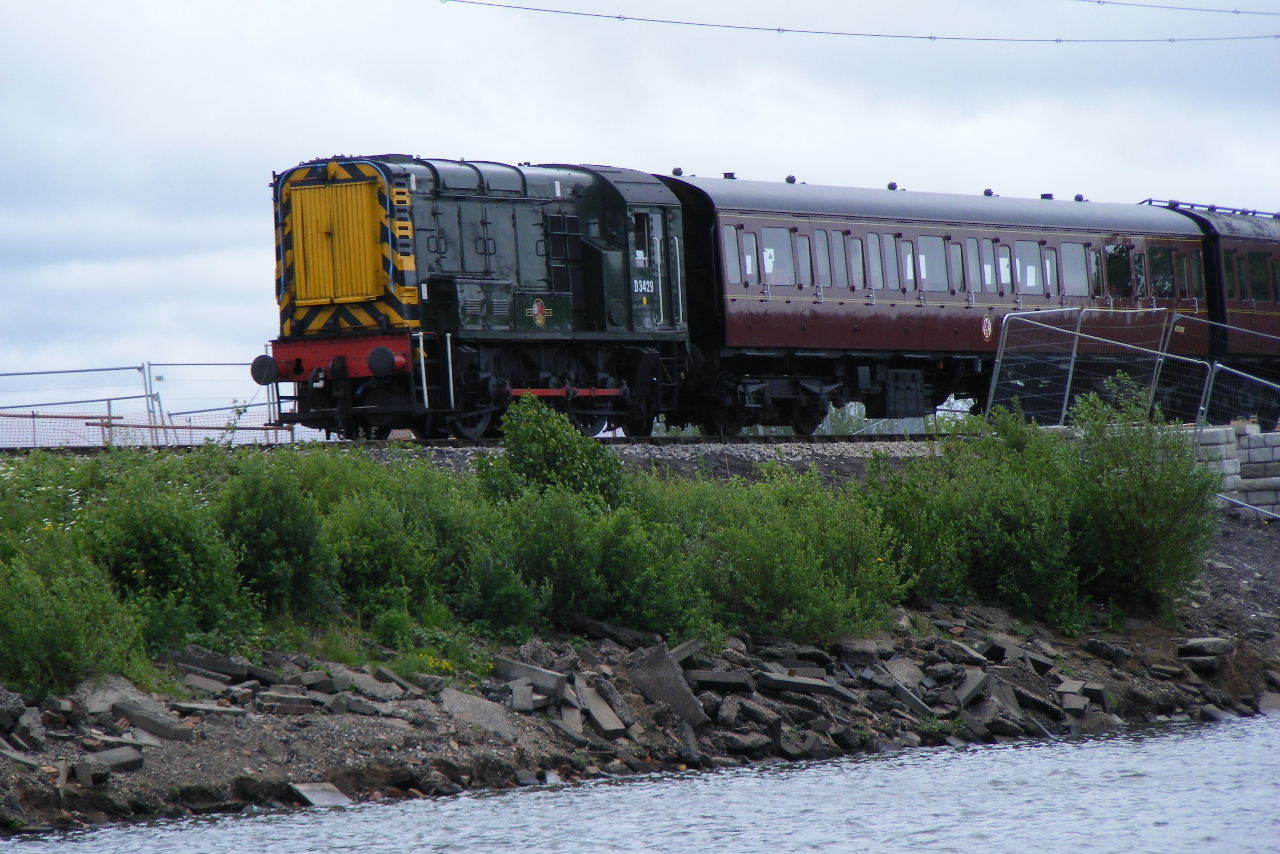
Visiting loco ‘Wimblebury’ over the causeway.
159 – Chasewater Railway Museum Bits & Pieces from Chasewater News Summer 1993 –Part 2

159 – Chasewater Railway Museum Bits & Pieces

from Chasewater News Summer 1993 –Part 2

The Re-opening of the Museum

Bob Duffill

I am sitting in a Midland Railway chair, aptly for the article, in the museum which is housed in our LNWR full brake.  The rain is tipping it down and Easter Sunday has Chris’s pipe in danger of being flooded!  As it is not very busy I’m writing this article as for some time we’ve called ourselves the Chasewater Railway and Museum Co. but have not had a museum for the last few years.

Firstly, I would freely acknowledge past members who have gathered together a very good collection of railway relics and artefacts.  The last curator  being Barry Bull, who put in many hours over the years. (This was first published in 1993, now, in 2023, 30 years later, Barry Bull is still Curator, still putting in many hours. See below).

My involvement began when, a couple of years ago, I went into the museum to tidy up and dust and polish the display cabinet.  It was soon obvious, however, that all was not well.  The roof leaked badly, the exhibits had become dirty and run down, and many items were being ruined due to lack of care and attention.

The next few weeks were spent in desperation salvaging items that had become wet and taking them home to dry out as best I could.  The house began to look like a waste paper collection point as rare items were carefully dried out.  The smaller exhibits were also taken away for safe keeping, and the larger ones moved to drier spots in the brake.

Eventually the L&NW Society found that it had enough money to re-roof the vehicle, and after much reminding and being a nuisance, Steve Organ and his helpers re-roofed the vehicle, and the top-lights were rebuilt.  Adrian Hall re-wired the vehicle and installed new light fittings.  All of the remaining exhibits were taken down and moved to one end to enable a start to be made on painting the interior.  It was decided to use the coach for Santa’s Grotto, and John Duffill did most of the scraping down and painting.  Once Christmas was over and Santa’s Grotto was taken away, I re-arranged the interior to look a bit like an office and rebuilt and varnished the display case.

Keith Poynter has made a start on painting our metal signs.  He is making an excellent job of it but it is a bit like painting the Forth Bridge, there’s a lot more to do yet!

A view of one end of the museum which has been re-roofed and re-decorated and is now open to the public once more.   Pic – Nigel Canning

Anyway, the museum re-opened on our first steaming of 1993, March 21st, it still needs work but at least we’ve made a reasonable start, and hopefully it will be an added attraction for the public, and reveal our collection to members who just did not know what we had in store.

The latest news is an attempted break-in during the week before Easter when two local youths broke open a door.  Fortunately they were heard by Chris Hatton, and he and Steve Organ apprehended one of them who will shortly be appearing in court.  The burglar alarm fitted to this vehicle is in perfect working order, so hopefully this will be our last break-in and I look forward to the museum being further re-opened in stages.

Part of the 2012 museum

Finally, if anyone has photos of the local engines or collieries we are always willing to copy them for the collection in order that we get a comprehensive display.

This final sentence still holds good in 2012.(And 2023!)

Lancashire & Yorkshire Railway Van

Bob Duffill

As Tony Wheeler has been busy working on the L&Y (ex Cadbury) van recently, I have found some information on this unusual vehicle.  The original design goes back to the 1860s when an 8 ton version was introduced with a single roof door.  With the improvement in springs and wheels, this was later uprated to 10 ton in the mid 1870s.  The vans continued in production until 1916 when the last few were made, these having double roof doors.

I am unable to date ours yet, but it is between 1875-1913.  The LMS started scrapping them in earnest from the mid-1930s and ours was probably acquired by private industry shortly after.

The van should be painted in grey (Tony’s favourite colour) with white lettering, but as a change there was a variation which I feel we should adopt.  If they were shopped in Lancashire they had white roofs, but if they were shopped in Yorkshire they were painted red oxide, carrying old favours into newer times.

Some of our wooden-bodied vehicles are in fact quite interesting and well worth having restoration work carried out.  More paint to the C&W dept’s elbow! It won’t be long before we can have a decent goods train.

Barry Bull – Curator extraordinaire

Volunteer of the Year awarded to

Barry Bull, Curator, Chasewater

Railway Museum in individual

category, West Midlands Museum

Development Awards 2019

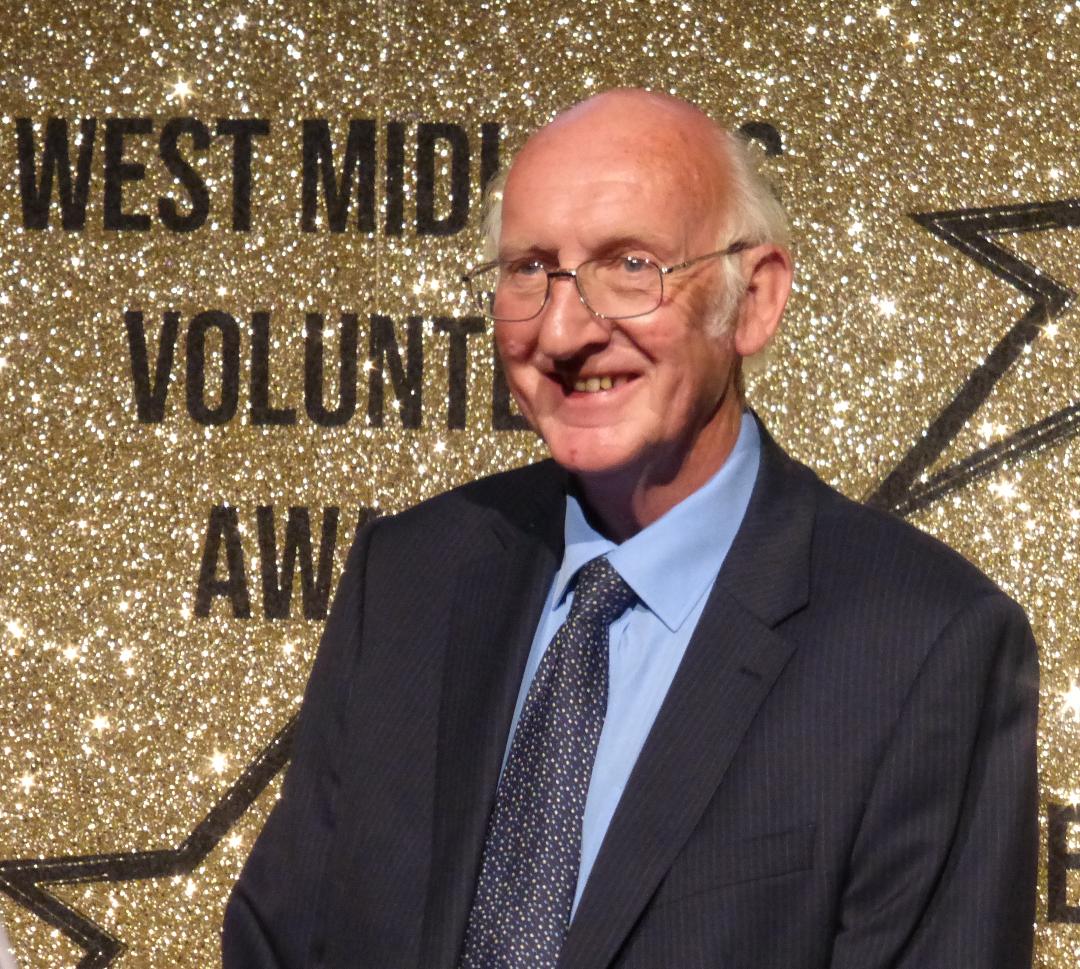
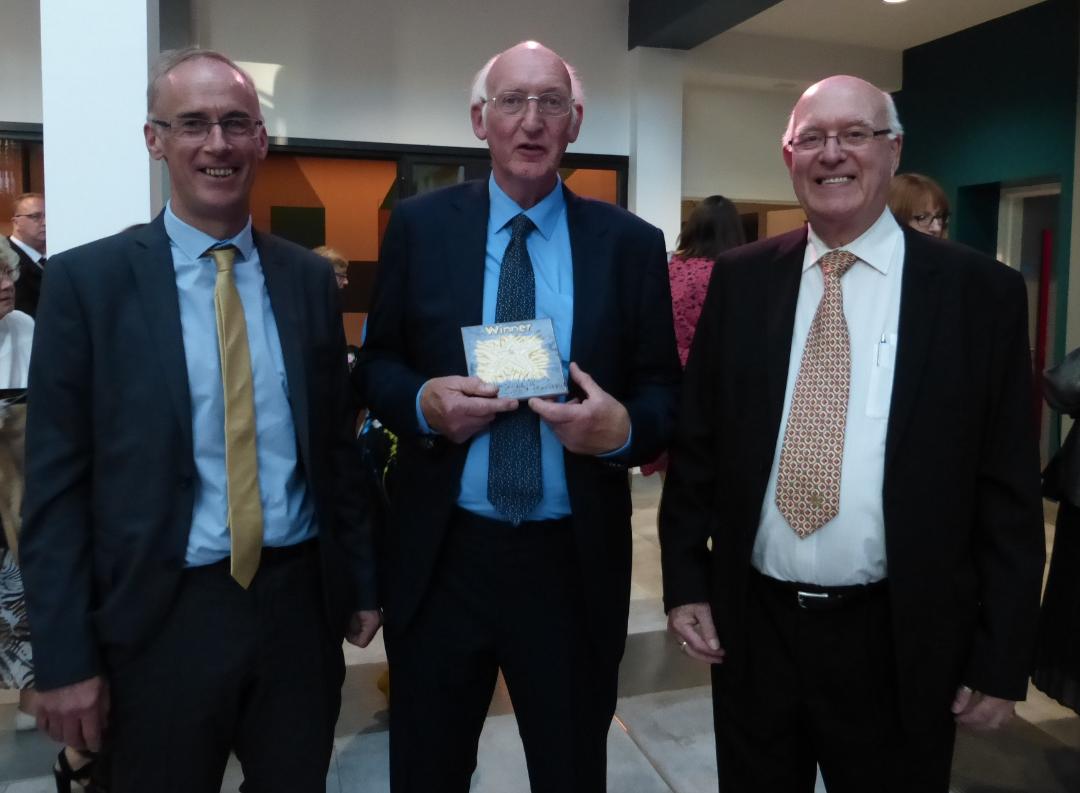
Museum Curator Barry Bull (centre)

holds his Volunteer of the Year Award,

with Chris Copp, Staffordshire

Museums Service (left) and David

Bathurst, Chair Chasewater Railway

Museum Committee (right).

If only he hadn’t dropped it!!

158 – Chasewater Railway Museum Bits and Pieces

158 – Chasewater Railway Museum Bits & Pieces

from Chasewater News Summer 1993 –Part 1

I had a ride on the train this morning, very smooth behind ‘Myfanwy’

The locals were out:

From the Editorial

The Editor observed that there was a lot of news to report about Chasewater Railway making it difficult to find space for non-news items.  This must be a good sign as it means a lot more progress is being made on our railway.

Locomotive News

No.4 Asbestos – This loco has remained in service and operated all of our passenger trains so far this season and even passed an intermediate boiler examination in May.  Efforts are still being made to cure a number of minor faults, the worst of which is a badly leaking left-hand boiler clack.  Various attempts at reseating it have failed so a replacement component is now being machined.

No.5 Sentinel – This loco passed its major five-yearly boiler examination in May with no serious repair work being necessary.  The boiler water spaces will now be shot-blasted and painted and some ninety odd ¼” whitworth studs and nuts renewed before the two halves can be re-assembled.  There is a lot of work to be done, but hopefully the loco should be completed in late autumn.

No.2 Lion – This loco also had a visit from the Boiler Inspector in May when it passed its steam test.   The only serious problem is a persistently leaking mud door on the right hand side of the firebox which will require rectification.  Completion of the vacuum brake system and a repaint is now all that is required for the loco to be ready to enter service.

S100 – Still plodding along!

Fowler diesel – This loco has remained in service, being used on works trains and for shunting.  A problem has arisen recently in that it will not start unless the batteries are re-charged immediately beforehand.  Visually it is improving week by week as it is gradually being repainted in black with red buffer beams.  Hopefully once the repaint is complete it will remain in that livery.

DL7 – Following recent work on the main engine and traction electrical system the loco is runable again.  It was used for the evening shunting on June 6th and performed well with the exception of the brake which requires adjustment.  Only minor superficial repairs and a repaint are now required to complete the job.  It is likely that we will soon have a genuine need for two diesels, as with the track being extended all the time, one will be required for the works train and the other for shunting the passenger stock.  This will be of benefit as it will ensure both locos are started and used regularly.

No.21 diesel – Work on this loco has continued with the filling, sanding and undercoating of its cast iron body members.  When painting is complete the recently repaired engine will be refitted.

Smith Rodley crane – untouched.

Carriage & Wagon News

Great Eastern six-wheel passenger brake – This coach has now, but for a few small areas of panelling and trim, been completed on the wooden superstructure.  The multi-coloured first coat of gloss has been repainted in BR blue to seal it, but unfortunately one or two of the original wooden panels have dried out and now have ¼” cracks appearing.  These will be filled again, and like the rest of the body will be monitored until stable when the top coat will be applied.  The interior of the coach remained warm and dry throughout the winter months to my disadvantage for now we have an unpaid member living-in – a mouse!  Work will soon begin on the frames so as to be ready for the coach’s 100th birthday celebration in June 1994.

CRC 4-plank coal wagon – Keith has progressed well with the re-planking of this vehicle, and during the best thunderstorm so far this year Tony Wheeler successfully freed off the seized brake rods using Calor gas heat.

Keith Poynter poses next to the CRC 4-plank wagon during a pause in restoration work.

Southern brake van – This van has become our colliery information centre, and judging by the comments overheard from visitors the prospect of brake van rides down the line would certainly be another interest which we could offer to the public.

16 ton Great Western Toad – This van has remained out of service but has now been moved to the C&W yard where restoration can begin.

Dave Borthwick

The Maryport & Carlisle coach, the Midland 4-wheel coach and the Manchester Sheffield & Lincoln coach have remained sheeted up to protect them from the weather.

Wickham DMU E56171&E50416 – a firm offer has now been received from a preservation group based at Llangollen who wish to purchase a two-car set for restoration as a working DMU.  In view of the fact that it would cost the CLR a great deal of money to strip the vehicles of their asbestos insulation, the offer has been accepted.  Exact details of the deal are yet to be finalised but the vehicles are likely to leave Chasewater later this year in return for cash or a replacement coach direct from BR.

44806 waits by Goods Junction signal box whilst the Wickham DMU set passes ...llangollen-railway.org.uk

Gloucester trailer E56301 – This vehicle has also remained out of use, and is also the subject of a purchase offer from another preservation society. The group interested in this vehicle are based at British Nuclear Fuels in Preston and need a coach to get them started in the passenger carrying business.  This coach also poses the problem of asbestos insulation.  Again, details are yet to be finalised but the coach is likely to leave Chasewater this year.

56301 at County School Station on the Mid-Norfolk Railway on 17th December en.wikipedia.org

Derby centre car W59444 – This coach has remained in service and is quite popular with the public.  It does, however, cause the occasional headache for the station staff as with so many doors (10) the passengers sometimes manage to open them faster than the staff can shut them!  With three out of four of our revenue earning passenger vehicles set to leave Chasewater, members may be wondering how we intend to continue running a train service.  In fact replacement  (asbestos-free) DMUs are being sought, and staff at Tyseley Depot have been very helpful in this.  What will arrive and when?  Watch this space!!

151/152 Chasewater Railway Museum Bits and Pieces

You will be pleased to hear that the Museum will be open this Sunday – 25th June 2023.
Could we ask members, while we are still using the rear entrance, to take care parking their cars to leave room for mobility scooters to access the path to the rear of the Heritage Centre.


151 – Chasewater Railway Museum Bits & Pieces from Chasewater News Dec 1992 – Part 1

Editorial – Nigel Canning

Many thanks to all the people who have helped with the magazine this year either by providing articles of historical or technical interest, or by helping to create the news on our railway.   Both of these forms of contribution make the magazine easier to produce and as a result it has increased in size slightly.

Towards the end of 1991 certain people predicted that we could be running trains to the causeway by the end of 1992.  As you will see in this magazine they then proceeded to prove their point by relaying all the necessary track which now awaits a visit by the Railway Inspector.  This is a magnificent achievement which shows just what can be done.

Will Santa Specials be running across the causeway to Norton Bog in 1993??  Wait and see, or even better, come and make sure!!

Locomotive News

No.4 Asbestos – Following rectification of a large number of minor faults this loco will now be used on the Santa Specials on December 13th and will hopefully remain in traffic throughout next year.

No.5 Sentinel – Having run all year, this loco has now been taken out of service for its major boiler examination.  All steam fittings have been removed and the firebox separated from the boiler shell.  Over the winter various outstanding repairs and modifications will be carried out, and the loco repainted before re-entering service early next year.

No.2 Lion – Progress on this loco has continued with the casting of a complete new set of firebars.  The saddle tank has been bolted into place, the cast iron chimney cap fitted and new injector steam pipes and fittings made.  It is hoped that the loco will be seam tested early next year.

S100 – Work has continued on machining of the hornguides of this loco!!!!!!

Fowler – This loco has recently had a much needed service carried out and has remained in regular use on the Sunday works train to Norton.

DL7 – The cylinder heads for the main engine and for the donkey engine have now been re-worked, but due to a burned out piston revealed during cleaning of the bores, new pistons, rings and cylinder liners may now be required.  This means that the loco is unlikely to re-enter service very quickly.

No.21 Diesel

The spare engine has been rebuilt ready for re-fitting into the loco as soon as the crane is available.  As the radiator has rotted through beyond repair a complete new core will have to be found and fitted.

Smith Rodley Crane

This vehicle has remained out of use pending its annual inspection by the insurance company.

Permanent Way News – Arthur Edwards

Track laying on the extension has now come to a stop as we have finally got to the top of the causeway bank and are awaiting news of how and when the causeway will be repaired.  That doesn’t stop us from jacking and packing all the rail joints and so forth back towards Brownhills West.

The causeway, Dec 1992. Pic – D.M.Bathurst

During the run up to us finishing the track laying you probably heard that I had a slight accident with the dumper truck.  Since then it has been re-commissioned as ‘Dunk-an’ or ‘General Belgrano’ equipped with rubber ring and outboard propeller.

Well it happened like this.  I had had the bucket filled by the JCB and taken the load to the edge of the causeway for dumping.  When I started the hydraulic lifting mechanism, the load transferred from all four wheels to the front two.  I heard a crack-k-k and it started to slide down the bank.  No way was I going to stop it, the thing had been in neutral but as it went down it went into first gear and the sound was CHUG CHUG CHUG GLUG GLUG.  ‘Oh dear’, or words to that effect were said, and there was I, hands over my head trying to keep my ears warm, screaming at Ian for help, but he couldn’t hear me.  When he came over he did what everyone else did – laugh!  At the time I couldn’t see the funny side of it, but I can now.

There was nothing else for it but to get a hawser to pull it out, and who had to get in the water to attach it?  Yes – yours truly!  I kept looking round for Jeremy Beadle, and I’m sure that if we had a video of it we’d have got £250 for it being shown.

Full gratitude to Ken Dyde for taking time out from doing other things which were probably more important to strip down the dumper and get rid of the water – cheers Ken!


152 – Chasewater Railway Museum Bits & Pieces from Chasewater News Dec 1992 – Part 2

Restoration of the Causeway and Derelict Land Grant 

David BathurstCauseway 1992 DMB

Norton Bog Reclamation 1992 – DMB Norton Lakeside 1992.  DMB

149 – Chasewater Railway Museum Bits and Pieces

Chasewater Railway, including the Sidings Tea Room, will be closed this coming weekend, the 10th and 11th of June 2023, due to the Staffordshire Iron Man Competition.

149 – Chasewater Railway Museum Bits & Pieces


From Chasewater News Autumn 1992 – Part 2

Permanent Way News

Track Update – Keith Day

Work on the track is progressing well.  On most Sundays there is a regular crew working at the end of the line.  Timbers recovered from Hams Hall have already been used in extending the track.  In mid-July we calculated that we were only nine 60ft panels away from the causeway, and since then several of these have been laid.  Work has been made easier by the professional way in which we use the JCB and in Ian Buswell’s skill in driving it.A view of newly laid track on the extension curving towards the causeway bank.  A comparison between this photo and the one in the previous post reveals the fantastic improvement made during the first half of this year.

If anyone reading this article would like to join the permanent way gang, if only for an occasional Sunday, we would be pleased for you to come and join us.  Just ask for Les Emery or Arthur Edwards at Chasewater, or phone the station or just come along on any Sunday.

Willow Vale Bridge

Work on the metalwork has been completed with the addition of ”Chasewater Steam Railway” painted in large letters on the road side of the bridge.  Tony Wheeler and Arthur Edwards have cut back the trees and undergrowth compassionately before the nesting season, and now the railway has come alive to the many people who pass that way daily – another case of free advertising!

Brownhills West Station News

All weather working with power tools can now be accomplished safely following the installation of RCCBs (Residual Current Circuit Breakers) on all the power circuits at Brownhills West.

Adrian has almost finished the lighting on the station platform following his success with the shunters’ cabin, public loos and bric-a-brac stall.

We can be seen from the other side of the park now!In preparation for the spring and summer season a tidy up was needed around the station site.  A number of things have consistently offended the eye, such as the abandoned signal post once sited on the platform, but recently cut down on instruction from the Railway Inspectorate.  It was too heavy to lift very far, and too big to hide, so the ideal thing to do was to raise the damn thing.  A hole was dug; bull-head rail was pestered out from around the site and drilled to form two bracing pieces which were fixed to the base of the post.  The next week with the help of Keith Day, Ken, Larry, Dave whittle, Andy, and Paul Whittaker, and with no help from the rain we arrived to find our hole full of water.  With a rope on each side of the signal top (maypole-like) we heaved and stood the signal erect.  Newton’s gravitational theory nearly took effect on two occasions, but with frantic assembly of the other two bracing pieces of bull-head rail, and Paul Whittaker arc welding them into position, all became steady and perpendicular.  The signal mechanism can now be operated from just above ground level.

Turf was planted around the base and is now growing profusely.  Total cost of the project was just the welding rods supplied free by Paul Whittaker, but the main thing that was achieved was the free advertisement of the signal arm being visible from the other side of the park.

Donation boxes are a feature at most railways and bring in a modest income to fund various projects.  The chimney from our Peckett 917 was rusting away on its saddle tank, but painted and planted on the station it offers a home to our passengers’ nuisance change.

Can members think of ideas to utilise any other railway components?  Perhaps our modellers could show off their engines in a glass case where a donation could power the driving wheels to show off the workings.  We must amuse the mums and dads and kids as well as the rivet counters!  Pennies into Pounds!!

Dave Borthwick 

Meeting with Walsall Council – David Bathurst

A number of CLR members will have been aware of correspondence from Walsall Council instructing the railway to stop work on track preparation and re-laying and certain remedial works to repair the breach in the causeway.  It was suggested by the Council that the railway required planning permission for its works, and that the railway might be acting against the various nature conservation designations (SSSI & SINC) within Chasewater Park.

The Council’s ‘instructions’ caused some concern to the working members.

However, a meeting was quickly arranged between the Council and representatives of the railway, at the Council House, Walsall, on 14th May 1992.  Steve Organ, Les Emery and John Selway represented the railway, with the meeting both convened and chaired by David Bathurst – who was faced with the dilemma of having a foot in both camps!!

The meeting proved to be immensely satisfactory from the railway’s point of view with the Council conceding early on that the railway is in fact in possession of all the necessary planning permissions to carry out its immediate future programme.  It seems that the Walsall Council did not have on its files a copy of a very important planning consent granted in the 1970s by its predecessor planning authority, Staffs County Council, which fortunately was able to be located within the railway’s records.

Perhaps more important was the clear impression gained from the Council’s Officers that they wish to assist, and not obstruct, the railway in its proposals, while at the same time offer advice as to how best proceed in the best interests of preserving the environment.  Indeed, a meeting took place on site a couple of weeks later, when Steve Organ and others enjoyed a high-speed programme of plant recognition.  It should not be construed that the railway can do what it likes because certain future projects may well require planning consent, but at least proper lines of communication now exist between the railway and the Council.

In conclusion, the need for a good working relationship between the railway and the Council cannot be over-emphasised.  What could have been a confrontation resulted in exactly the opposite, thanks to a professional presentation by the railway’s representatives and good will on the part of the Council’s Officers.  At least on this front, the future looks good indeed. – David Bathurst

Vacancy Filled

Of the three posts recently advertised, the best job has already gone!  The successful applicant for the position of Company Treasurer checks the takings following Transport Scene.  Such youthful enthusiasm!!  Whatever happened?!

Is that really Chris Chivers??

148 – Chasewater Railway Museum Bits and Pieces

The Museum will be open on Sunday 28th and Monday 29th May 2023

148 – Chasewater Railway Museum Bits & Pieces

From Chasewater News Autumn 1992 – Part 1

Editorial – Nigel Canning

Work on the railway is still progressing well and the number of volunteers has increased to the extent that even on our busiest day, Transport Scene, there were still people working on the new extension, and on carriage restoration.  As if to reflect the amount of work going on, even this issue of the magazine contains a few extra pages.  If all goes well, the Railway Inspector will be asked to pass off the line for passenger running to the causeway early next year.  If YOU would like to help on the track or in any other department on the railway, please come along – you will be most welcome.

Locomotive News

No.4 Asbestos – This loco is almost ready to return to traffic on a regular basis.  A couple of steam tests have been carried out, and a number of minor leaks corrected.  A small amount of finishing off is now required, such as fitting of the new saddle tank balance pipe and the extension of the buzzer wiring to the front buffer beam.

No.5 Sentinel – This has remained the only steam loco in service and has run well.  The problem of rust from the superheater blocking valves has been kept under control by regular inspections and cleaning.  The loco will need to be taken out of service before Christmas for its 5 yearly major boiler examination.

No.2 Lion 

This loco has passed its hydraulic test, and boiler fittings and pipework are now being fitted.  The boiler has been lagged, the cladding sheets fitted and the tank lowered into position.  Work is now being carried out to align the tank mounting brackets.

S100 – Work is continuing on the hornguides, and new fitted bolts have been made to secure them to the frames following machining.  The boiler has been unloaded from the flat wagon and is now in the loco shed yard where the shell has been cleaned and painted.The boiler from S100 is lowered into its new position in the loco shed yard.

Fowler – This loco is still running well and is in regular use.  Work has now begun on machining the various parts required to fit the loco for working the vacuum brakes on our passenger stock.

DL7 – Work is in progress on cleaning the cylinder heads and re-seating their valves ready for the engine rebuild.

No.21 Diesel – Work has concentrated on the two spare engines for this loco, the best of which may shortly be refitted to the frames

Smith Rodley Crane – This vehicle has remained out of use.

Bass Community Award – Keith Day

In the early part of this year, a poster appeared on the notice board at work saying ‘Bass Community Awards’ open to employees who are involved with a charitable organisation.  Now being a volunteer on the permanent way gang at Chasewater, and an employee of Bass, Mitchells & Butlers, both conditions were met, so I applied for an application form and sent it to the address stated on the poster.

A week later the application form appeared on my bench at work, and, after a lot of thought, I filled it in and with it wrote a potted history of the CLR.

In it I told briefly of the construction of the railway in 1860, and of how Chasewater Light Railway has been at Chasewater for 25 years, and of our plans to relay the track across the causeway and around the far side of the lake.  To do this we need money to buy materials to replace badly rotted sleepers, and rail which has staggered joints or had been criminally taken away for scrap.  I also wrote of what had already been achieved – the re-laying of the track to extend the running line, the repairs to Willow Vale bridge handrails to allow passenger trains to run over it, and finally, the passing of the extension by the Railway Inspectorate for passenger carrying trains.  The application was posted and almost forgotten about, until, on 24th April, a letter came through the door. I opened it up and read:

‘Bass Community Awards’

‘Further to your recent application for consideration under the above scheme, I am pleased to advise you that your organisation, Chasewater Light Railway & Museum Co. has been successful and has been awarded £300.  Could you please contact me on the above telephone number in order that we can discuss details of the cheque presentation.’

I telephoned the said number and arranged a date for the presentation at 7.00pm on Wednesday 27th May.  After a lot of thought and discussion, it was decided to use the £300 award to pay for the transport of redundant track materials from Hams Hall Power Station on 26th May.

Chris Chivers, Andy Clegg, Chris Hatton, Adrian Hall and myself, with ‘DJ’ Geoff running a shuttle service in his van were the crew who went to Hams Hall to load the trackwork, while Steve Organ, Arthur Edwards and others stayed at Chasewater to receive and unload the lorries.  Unfortunately, things did not run to plan, and what was supposed to be the first load at 9.00am departure from Hams Hall was in fact 6.30pm.  The second load arrived late afternoon on the 27th – the day of the presentation.

As it happened, this worked in our favour as Janice Clarke, PR Officer for Bass, and her photographer were able to take a picture  of the last load, unloaded with Yours Truly presenting the cheque to Chris Chivers, while Steve, Arthur and Chris Hatton posed in the background.  (Working for Bass is just like working at Chasewater – if you want anything done, you have to do it yourself!).  The picture and story were released to the press and appeared in the ‘Express and Star’ on 15th June.What we recovered from Hams Hall were: 4 sets of points, a rail drilling machine, 1 buffer stop complete, a number of point timbers, 2 point levers, some sleepers, rail, chairs and numerous other materials.

A small buffet was given at Brownhills West on the occasion, and I would like to thank Bass personally for their award of £300, and also everyone who took time to turn up on the 27th.

The Bass awards are an annual event, so if anyone has a suggestion for next year, please let me know.

147 – Chasewater Railway Museum Bits and Pieces

147 – Chasewater Railway Museum Bits & Pieces – From Chasewater News Spring 1992 – Part 3

Mission Impossible – Rob Duffill

This is my first report after being elected to the post of Commercial Manager in December, and I now have the honour of trying to maximise our income at Chasewater, both on and off site.  This is the job in a nutshell, and make no mistake, without an increase in income we cannot achieve our goals in other areas, however desirable, well planned or good value for money.  The task is difficult, but the successful outcome very rewarding and I am afraid it will mean asking members to help out on occasions and do jobs they do not fully enjoy.  Please remember if you spend a couple of hours for example, collecting entry fees at the gate, how much more you can enjoy the rest of the time because we can afford another project that really does interest you.I joined the group in 1968 and was elected to the Committee of the then Society in 1971.  Following a split up of ideas and members, I did not re-stand in 1974.  I have, over 23 years, seen the ups and downs and plodding alongs at Chasewater and like to think that all this gives me an insight into what is needed as we are definitely on the up, and have been for several years.

As we get bigger and better we will need to change practices to cope with demand and the present working members at Chasewater seem to me quite capable of really making great strides forward.  As I look around me I see the track extension (you now need good eyesight!) and the general improvement to stock and site.  The shop and buffet raise large and regular income and will need your occasional support as the regulars need a change from time to time.

What plans do we have?  In the short term we can only expand what we did last year.  We will be a success if we raise more income at each event and we all have a critical role:  It’s down to the members.  We will succeed if we pull together and remember that we need the public to pay for our enjoyment of our hobby.

I hope to highlight certain aspects of the commercial side in future magazines, for example, plans for a mobile sales stand.

If anyone has any suggestions for raising money or showing the flag (publicity) please contact me, as we must, as cheaply as possible, raise the awareness of the public that we exist, are different and that they ought to visit, and, having visited, come again because they liked it so much.  Mission Impossible perhaps – but we’ll see at the next AGM in 12 months time.

Stop Press

Pic – Nigel Canning

One of our members, Mike Wood, has bought an ex-Great Western Railway ‘Fruit D’ van from British Rail, and at the end of March it was delivered to Chasewater.  The Van, which is vacuum braked and steam heated, was run on April 11th as part of a demonstration goods train fro the Industrial Railway Society.

16 Ton Mineral Wagon – Arthur Edwards

Steve Forrest and I bought this item of rolling stock from the CLR Co. on the understanding that it will remain on CLR metals.Arthur and Steve pause briefly whilst shovelling coal dust and slack out of the wagon prior to chipping rust from the bodywork. – Nigel Canning

The underframes have already been doused with old engine oil to help with their preservation, and the bodywork is in exceptionally good condition considering its age, built in 1957 I think.  At present it is in British Coal green, but we aim to re-paint it into the classic colours of grey and black with white sloping stripe down one corner.

 The idea behind obtaining this and the 21 tonner was to help in the rebuilding of the causeway, but the 16 tonner has been put on our line backwards, that is, the end opening door  is at the wrong end.

Over the next few Saturdays we, that is, possibly Tony and I and maybe Dave and young Chris, aim to release the jammed side doors and the one end door followed possibly by the re-paint in the coming months.

Maybe one day there will be the Maunsell brake van, our 16 tonner, followed by the wooden bodied coal truck, possibly the Midland crane, and the Great Western Toad hauled by a loco not seen in steam for many a year, ‘Colin McAndrew’.  Our own freight train!

Moving Pictures

The slide and film show held at Chasewater during January was well attended and a great success.  The subject was ‘Chasewater in the Early 1970s’ and featured a variety of films and colour slides by Andrew Louch and Rob Duffill.

All of our departments were left drooling by some of the photos which stand as a great tribute to the pioneer members at Chasewater.  For a variety of reasons the early promise of success came to nothing, and much of the progress made was lost during the 1980s.  While certain aspects of Chasewater have still to reach the level attained in the early days, it is pleasing to see that real progress is once again being made, and on a far more professional level than ever before.

The opening shots of the first film saw diesels 20 and 21 shunting some delightful wooden wagons at what is now Brownhills West Station.  Although some of those wagons have now gone, it is great to know that No.21 is undergoing restoration in the shed and will one day burst into life once more.  No.20, which is nominally in working order, is on loan to the Bass Museum, Burton-on-Trent, although it may one day return to Chasewater.

Another item of nostalgia was a wonderful film of our trains at the far end of the line across the causeway and round near the old workshops.  This provoked much discussion, and we have now approached British Coal who own these now disused buildings with a view to acquiring them for our own use.  First signs are encouraging and we may have some good news to report soon.

The late lamented ‘Norton Branch’ also featured in the cine film show.  This ‘Norton Branch’ ran from our current line, before the causeway (from Brownhills West) in between the bungalows and the Swag pool round to Norton East Road, and ultimately into Conduit No.3 Pit (Jerome’s).  The loss of this section of the line was a sad blow, but it is interesting to note that we do still lease the track bed.  Who knows?  Perhaps we may one day rebuild that line.

The Carriage & Wagon department also had a lot to think about.  Film of a beautifully restored Maryport, and the MSL caused quite a stir.  The now derelict ‘slum’ and Midland crane also brought gasps from a few people.  There was also a message for those who cared to read it.  Two coaches, the LNWR TPO and the SECR ‘birdcage brake’ also appeared on the film.. Both of these fine carriages left Chasewater many years ago because it was felt that they would stand a better chance of restoration elsewhere.  They are, in fact, both still derelict.  So all those who want to dispose of our old coaches, take note!

Another fine vehicle was the E1, sold to Cranmore in the 1970s.  This loco has had something like £40,000 spent on it and has yet to enter service on the east Somerset line.  (It has steamed since that, but if it had stayed at Chasewater there was no £40,000 to spend on it!).

Other engines seen working included ‘Invicta’ and the venerable Neilson ‘Alfred Paget’.  Once again our loco department is making progress, and these engines may one day receive the attention they require. – P.Aldridge

 (Invicta has long since left, and poor Alfred is still waiting!) (Alfred Paget being worked on, May 2023)

Video – Wimblebury and Peckett 2000 Double Headed leaving Brownhills West.

146 – Chasewater Railway Museum Bits and Pieces

146 – Chasewater Railway Museum Bits & Pieces – From Chasewater News Spring 1992 – Part 2

Permanent Way News

The majority of the work carried out in this department is still the extending of the line towards the causeway.  Around half a dozen people are now regularly involved in the work and a dozen or so 60 foot lengths of track have been added to the existing extension.Work has been greatly speeded up by the use of the JCB which by clearing the track bed, moving rails and sleepers and depositing ballast exactly where it is needed has left the track gang free to lay track rather than spend hours, or even weeks, just shovelling.  Accordingly, the lads would like to thank Ian Buswell for his superb driving of this ’52 manpower’ machine.

The JCB has also filled the breach in the causeway, and was driven across to the other side in triumph on 8th March where work then began on widening the trackbed opposite the existing brick platform so that a run round loop can eventually be installed.

Walsall Council have now agreed to provide and dump ‘road scrapings’ to widen the causeway in the very near future.  It is hoped that enough of this material will be available to provide sufficient width for a footpath next to the railway.

Whilst progress on the track so far has been relatively rapid, our supply of track materials is likely to run out before the causeway is reached.  If anyone knows where we could obtain rail chairs, keys, fishplates and bolts, or even rail cheaply could they please contact the PW department at Chasewater?

Carriage & Wagon News

Maryport & Carlisle six-wheel coach – This vehicle remains sheeted up, protected against the weather,

Manchester, Sheffield & Lincoln six-wheel coach – This vehicle has also remained sheeted up.

Great Eastern six wheel passenger brake – This coach has with one almighty pull rotated its wheels shedding rust from its brake blocks accumulated since its last move in 1977.  The new position has made access easy, and working on cutting and fitting the missing panels, undercoating and top glossing has already been completed leaving only a small section around the door areas.  The temporary two-tone blue will remain, sealing the wooden body for some time.  The Great Eastern coach, once left forlornly down in the undergrowth to rot, now boasts to be the most used vehicle on our railway.  It provides a hearth and meeting place at Brownhills West for early arrivals on Saturday and Sunday, warm overnight accommodation, a place to make a hot drink, and about three times a day, a debating room.

CCCC Brake Van – Referred to in magazines as a ’CRC’ Brake Van but it was in fact from Cannock Chase Colliery Co., not Cannock & Rugeley Colliery.  Keith has now sealed the roof, replaced the wooden blanks with Perspex windows, re-timbered some of the verandah planking and fitted lids to the inside cabin lockers.

Midland four-wheel passenger brake – This vehicle has remained sheeted up over the winter, but inspection has revealed that even though the tarpaulin was in good condition and fitted snugly, it didn’t stop all the rain from entering the coach.  Thus began the Carriage & Wagon Shed (planning permission exempt).

Over the Christmas period an experiment was carried out to make a canopy support strong enough to carry the weight of a tarpaulin and snow, and rigid enough to remain intact against our famous Chase winds.  A free standing structure made of scaffolding and point rodding looked good on paper, but in reality the constant adjustment of the uprights to keep everything square was a problem.  The damn thing was just walking slowly into the woods!  The use of two bracing cables across the roof of the Great Eastern coach and secured down to the rail did the trick.  After another two weekends work the structure was complete and awaiting tarpaulins.

A shunt round now is needed to get maximum protection from the weather for perhaps the Midland, or, with John Elsley’s consent the MS & L or Hudswell 431.

Maunsell Southern Brake van No.62861 – This van has received attention to its roof, as the flaking top skin of bitumen had exposed the Hessian backing in places allowing leakage.  These have been re-sealed, and during the last rain storm the patches seemed to be weather tight.

Cadbury Van – This has now become a useful workshop with temporary mains power and lighting, and is used frequently by our brightest and best young member, Chris Hatton.  (If only we had another ten like Chris our future would be certain).

Great Western Brake Vans – These vehicles are in service nearly every week on the permanent way train, the tool van kept tidy by Arthur, and the mess van kept warm by Arthur and Steve stoking up the pot-bellied stove.

16 Ton Mineral Wagon – With the help of Arthur, Steve, Jonathan Clegg and others, the coal has now been removed from the wagon and spread in the four-foot for use in our pot-bellied stoves.  One of the side doors has been freed off and the wheels and under-frames painted with oil.Derby Centre Car W59444 – The bodywork of this coach is being prepared for painting prior to its entering service coupled to the Wickham trailer at the start of the season.

Wickham Trailer E56171 – It is hoped that, with the agreement of the Railway Inspector, we will be propelling our trains from the opposite end this year, in which case the Guard (or second driver) will travel in this coach.  In view of this, a certain amount of refurbishment will be necessary in the driving compartment but otherwise the vehicle is in reasonable condition.

Gloucester Trailer E56301 – It is intended that this coach should remain out of service for a while until repair have been carried out.

Wickham Power car E50416 – The greatest step forward by the C & W dept recently has been the work carried out by new members Ken, Andy and Larry on this vehicle.  They have assisted Dave Whittle with the bodywork, but more importantly on the technical side of replacing batteries, rewiring, test running the engines, vacuum and air equipment, as well as interior restoration.  Working mid-week and Saturdays and Sundays, they forecast ‘the set’ will be available for service trains in the near future.  With Chris, Ken, Larry and Andy’s help this has certainly boosted the C & W dept’s hands-on membership team. 

Dave Borthwick.Pictures by Dave Borthwick, Nigel Canning and Tony Wheeler.

Holly Bank No.3 leaving Chasewater Heaths for Church Street, first day of steaming in 2023 – May 7th

144 – Chasewater Railway Museum Bits & Pieces – From Chasewater News December 1991 – Part 3

The Museum will be open on Sunday and Monday for the next two weekends –

April 30th and May 1st, and May 7th and 8th 2023

144 – Chasewater Railway Museum Bits & Pieces – From Chasewater News December 1991 – Part 3

General News from the Line

Bric a Brac Stall – The stall is still running and making money for the railway.  Suitable items are always needed to maintain the stock, so if you can help please bring your donations to Brownhills West Station.

Station Buffet – The new buffet is still a great success, to the extent that Walsall Council would now like us to apply for planning permission for it.  The CLR Company will no doubt point out that this is a temporary building which we intend to dismantle as soon as we have made a fortune out of feeding the construction workers on the new M6 Toll motorway which will be built around it at some time in the future!Advertising – This year the railway has benefited from a bit of extra advertising.  The photos show the electronic scoreboard at Walsall FC’s Bescot Stadium.  One of our members, Dave Bathurst, has access to the control panel of this machine and regularly manages to advertise our events on the day before they happen.  Ours could well be the only preserved railway in the country to benefit in this way!!

Steve Organ has also been busy publicising the railway by being interviewed on local radio just before the October Transport Rally.  With this sort of coverage, our events can only become better attended, with the resultant upturn in CLR finances.

The New Platform – Arthur Edwards

The delivery of the new platform has been on the books at Chasewater since January, but through illness and the like had to be put off until September 28th, which was a Saturday.

So there I was going towards Frank Harvey’s house at 5.30 in the morning to be at the SVR at around 7.15am.  Frank picked me up at 5.40am and off we went towards Guymer’s to pick up a trailer and two drivers, Bullet and Ken.

After a cup of coffee we set off.  Bullet and Ken took the two trailers which had been loaded the previous day back to the CLR, whilst Frank and I waited for the SVR crane driver to appear.  We also had Frank’s son Francis and daughter Ruth with us, and while we waited, Flying Scotsman rolled in.  Frank and Francis got on the footplate to have a gander while Scotsman watered up and saw City of Truro which was also there.

The SVR crane driver was a policeman on night shift, so it was only fair that he had some sleep before he came.  It took some 2½ hours to load up, and in the meantime down came the rain.  By the time we were loaded we were both soaked to the skin.

We finally arrived back on CLR territory at 6.55pm to the welcome sight of the mobile crane waiting for us.

I though it wise to include a credit list of those who helped us, so here goes:  Paul Whittaker, his son Kane, and brother-in-law Barry, who was the instigator in us getting a Hy-Ab.  Credit must also go to our own lorry driver, Frank Harvey, who borrowed the original Hy-Ab from a workmate.

Thanks must go to Guymer’s Transport, especially their manager, Mr.S.Ashton, for whose help we are most indebted.

Finally to everyone who helped, even in the pouring rain and to Dave Borthwick for a lift home.

After following the ‘New Platform Saga’ for a number of magazines, and searching for pictures of it, sadly I found that it was never erected at Chasewater.  I am not sure what happened to it but one theory is that it ended up at Titley Junction.

Chasewater Railway Museum Bits and Pieces – No.97

Chasewater Light Railway Society

1982-1985

Newsletter January 1983

News from the line

Loco Shed

The loco shed is now completed and the engineering department has taken up occupation.  At present the shed houses the Sentinel 4wVBT, MSLR 6-wheeled coach and Asbestos.

The shed was built with the aid of a Manpower Services Commission Youth Opportunities Programme under the direction of Derek Cartwright. Unfortunately the scheme overspent by a sum well into four figures.  Whilst a small sum was inevitable on the end of the final scheme, the size of the present liability has to be met by the Company is of particular concern to the Directors.

West Midlands County Council Task Force

The Directors have chosen this as a means of achieving further developments at Chasewater, in the light of experience with the loco shed.  A special thanks goes to John Selway for getting the scheme off the ground.

The scheme is exclusively devoted to improving trackwork and associated facilities to a standard acceptable to the Railway Inspectorate.  This will entail the relaying of the track on the entire length of the line and the construction of a run round loop at Brownhills West Station. A material grant of £10,000 is available which has been earmarked for the purchase of rail and concrete sleepers.  Labour is provided by WMCC, who are also responsible for day to day administration.

Work on this scheme will shortly begin in earnest, with progress dependant on the weather conditions during the coming months.  This work will commence before the 1983 running season and it is likely that the running season will not start at Easter.

Asbestos

This loco will operate the first passenger train in 1983, after its prolonged overhaul is completed.  The loco will emerge in a new blue livery and will be fitted with vacuum brake equipment, which is a necessary feature of all future working locos.

Society members are currently working on the loco which is the first priority, ahead of the striping for boiler examination of the Sentinel.

That is the end of the Jan 1983 Newsletter, and considering the piece which follows, mainly taken from the history of Chasewater Railway, they really didn’t know what was coming!  There were no passenger trains from October 1982 until Spring 1985.  And, just as a matter of interest, ‘Asbestos’ in blue wasn’t a success either!

The Society had been proud to be represented at the Stockton & Darlington 150th celebrations in 1975 by the restored Maryport & Carlisle coach, but by 1982 things were not going too well at Chasewater. Vandalism and theft were rife, especially during the time when a Manpower Service Commission programme had been engaged on construction work for a new engine shed and some track work.

The Railway effectively closed in October 1982 when a miserable wet Saturday saw just two fare-paying passengers carried on the last train of the day. Although no trains were to be run for the foreseeable future, it was decided to soldier on behind the scenes as a Society. However, further problems occurred during a West Midlands County Council Task Force Scheme the following year when, after construction of a bay platform to accommodate the museum coach, the remainder of the platform was demolished by the Task Force – who then failed to return to rebuild and extend the platform as promised, for nearly 18 months.

It was not until 1985 that regular steamings began again, but in the intervening three steam-less years, membership had dropped by some 50 per cent. The Society deemed it necessary to prune its stock as it was realised that without an injection of cash, the whole affair might fold. The L&NWR Travelling Post Office went to Tyseley; a small “Planet” diesel went to Brian Roberts’ Tollerton Farm Railway, while individual members purchased two steam locos and one diesel loco in order that they could remain safely at Chasewater.

Working membership fell to single figures, but that small band succeeded in rescuing this early standard gauge preservation scheme from the brink of extinction. Subsequently, as described later, a new company was formed in 1985 – the Chasewater Light Railway and Museum Company – and achieved status as a Registered Charity.