Tag Archives: England

196 – Chasewater Railway Museum Bits and Pieces

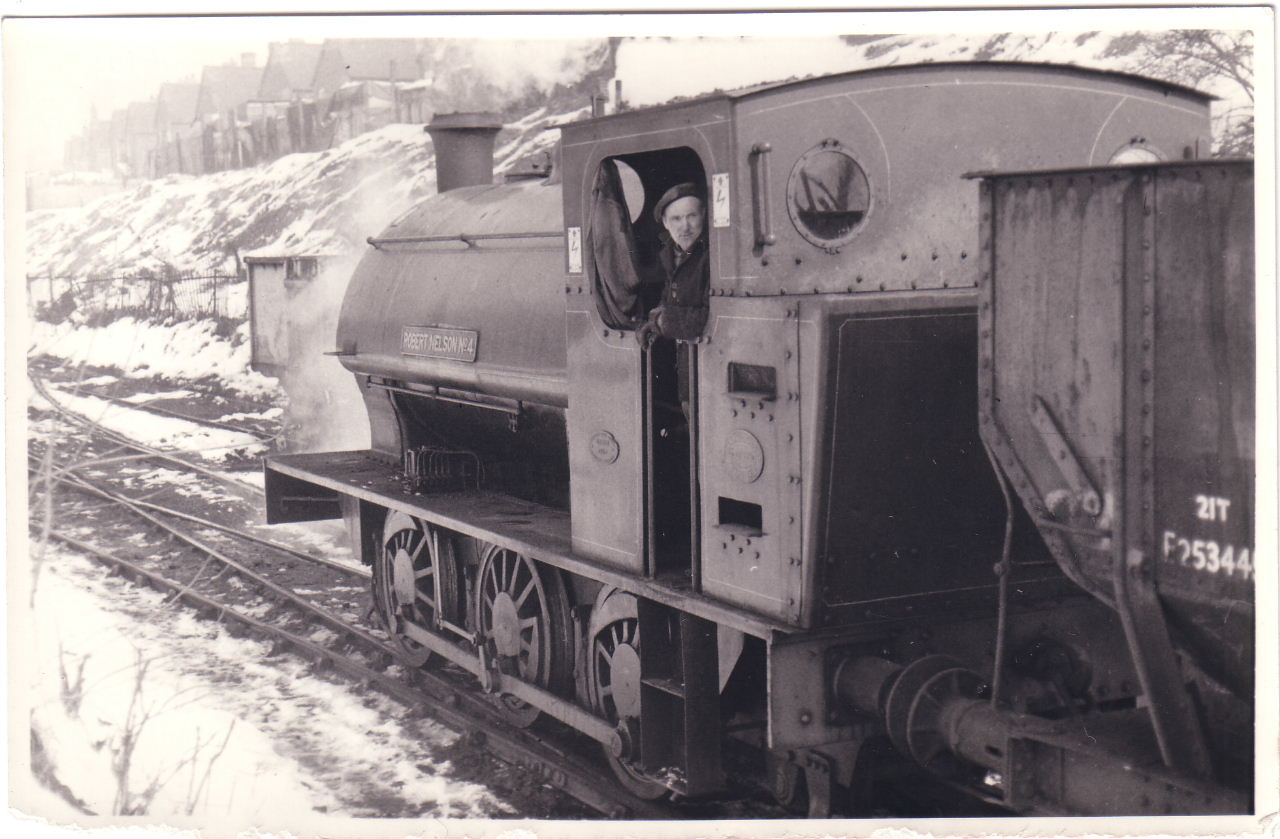
Robert Nelson No.4 Hunslet 0-6-0ST 1800-1936 Littleton Colliery.

196 – Chasewater Railway Museum Bits & Pieces

From Chasewater News – Winter 1996 – Part 1

From the Editorial

In putting the Winter edition of the Chasewater News together I am wondering where to start this Editorial.  As this is the anniversary of my first full year as Editor of our members’ mag I have seen the number of articles which have been submitted grow along with the distribution of the Chasewater News.  To the members who have contributed articles not yet published I would like to say a big thank you for your efforts, and that I still have them ready to put into the magazine.  To all the members who have old memories of the Railway in its formative years and who have thought about putting pen to paper, please do so.  Part of the Editor’s role is to take submitted articles in whatever form that they arrive in and see that they are in a presentable form for publication, and as you have probably seen in the odd edition that even with a spell-checker I have still dropped the odd clanger or two when it comes to spelling.

Not sure of the outside two but the fella in the centre looks vaguely familiar!!

On membership matters we now have a total of 305 members with a newsletter distribution of over 150 copies to individual households.  This must be the highest number that we have had for many a year.  I would like to welcome all new members who have joined since the last newsletter and hope that you will enjoy being a member of the Railway.  I am looking forward to our newsletter reaching the 250 distribution mark.  As the readership increases I can start to look at the possibility of things such as colour front covers and possibly some colour prints inside the magazine instead of the current black on white format.  This of course is only possible as the quantity published grows and the scales of quantity come into effect.

The past years have seen a major turn around in the fortunes of the Chasewater Railway, from languishing in the doldrums for a number of years in the late 70s and early 80s we now have a railway which gives pleasure to hundreds of visitors every years.  Many comments have been passed by the visiting public on ‘how friendly the people are at Chasewater’, and ‘how it reminds tem of railway preservation in the old days’.  This I feel is due to the positive efforts of all the working members and also the membership at large who have helped to push the message that the Railway is alive and well and growing!

In looking forward to 1997 we have put in place possibly our most ambitious programme of steaming days yet.  With more work being carried out on the restoration of the locomotives, both steam and diesel, the Railway can look forward to being able to run different locomotives throughout the running season, and let Asbestos have a well earned rest for maintenance and repairs.  Chris Chivers.

Loco Shed News

With the completion of the shed heating it is hoped that life will be much easier for the locomotive volunteers, and there are mutterings from Andy Mould that the forge will finally be put back into working order.  Personally I think he’s just looking for somewhere to cook his bacon and keep his tea hot!  Also  during the recent shunt round, the North Eastern brake is now residing in the shed road and has been dubiously named the ‘917 and Neilson support coach’ and during the recent bad weather it has seen rather more bodies using it for a mobile rest-room than usual!

Steam Locomotives

No.4 Asbestos – Still the mainstay of the Railway for steam haulage and at the moment only requires the usual maintenance necessary for any steam locomotive.  She is expected to be in traffic during the Santa Specials.

No.5 Sentinel – With the arrival of the replacement links the repairs to the chain are well under way, and it is hoped to have Sentinel steam tested before Christmas.

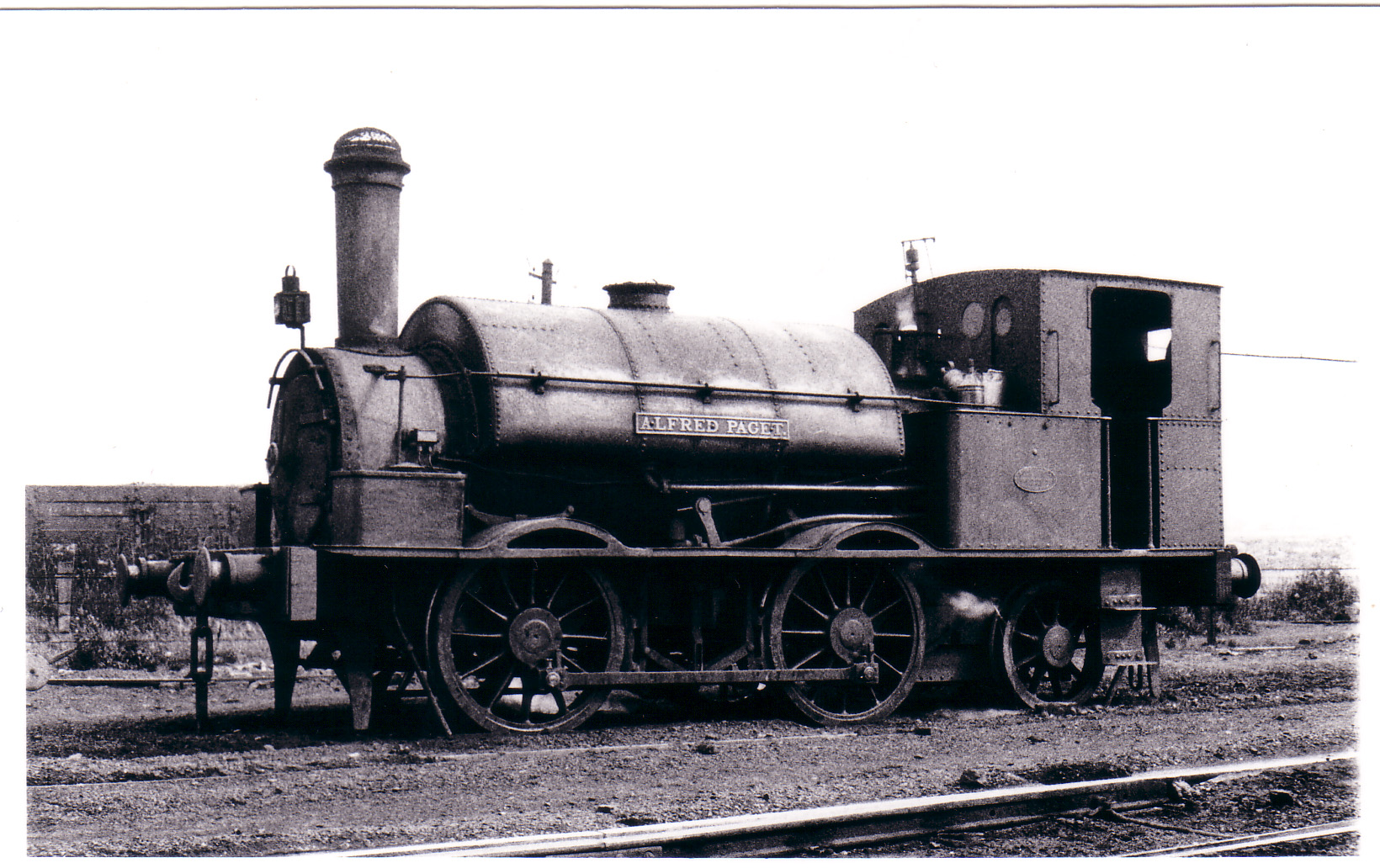
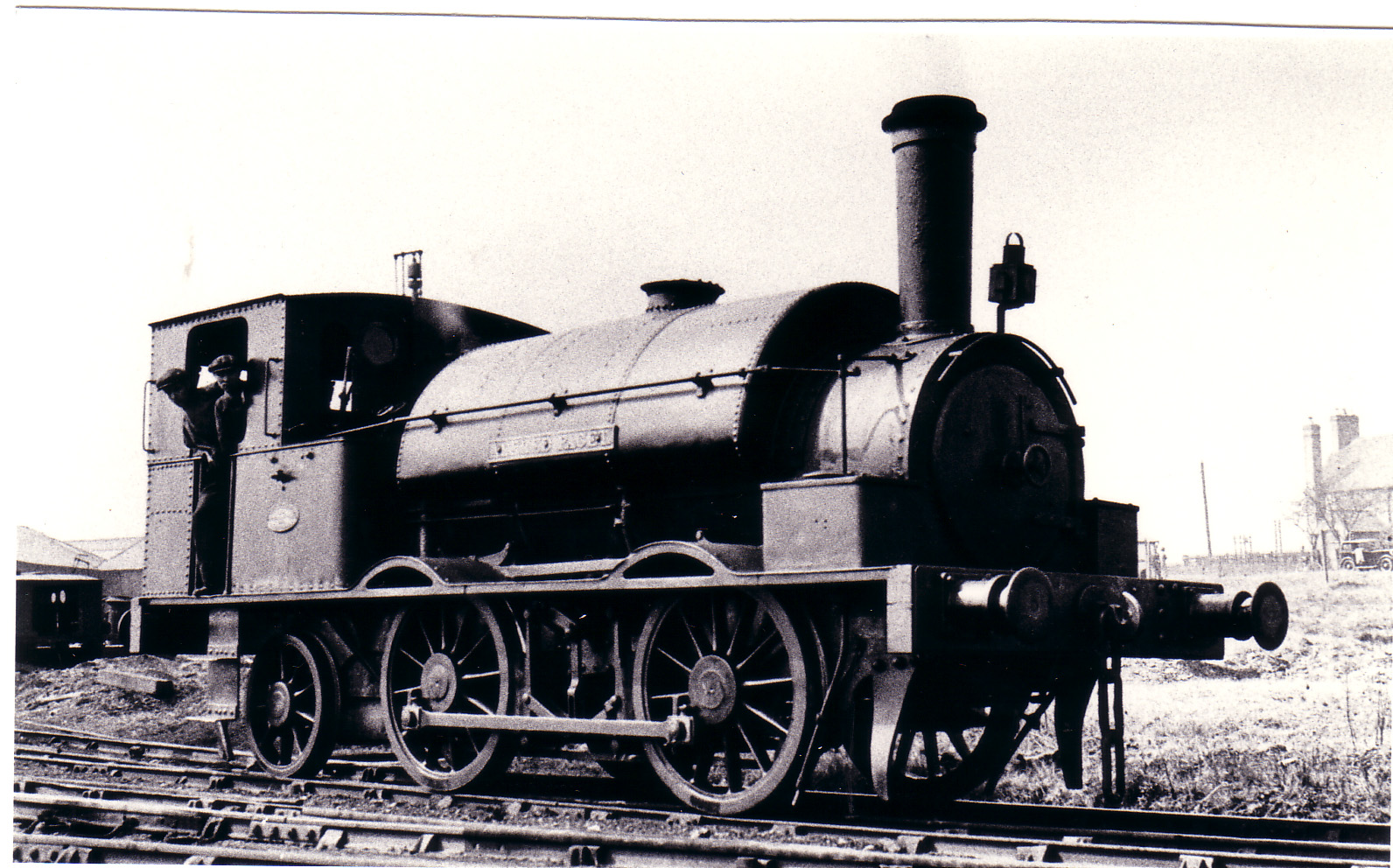
No.11 Alfred Paget – The restoration of this engine continues at a pace.  The ¾” steel plate for the repairs to the front steam chest and boiler saddle has been acquired and cut to the required profile.  The broken pieces of the steam chest have been removed and sections have been cut away ready for the welding in of the new sections.  The boiler has been fully painted in primer and all the protruding studs on the firebox have either been removed awaiting replacements, or have been given a thick coat of grease as a rust preventative measure.  The locomotive is due to be moved into the shed before Christmas so that work can continue under cover over the winter months.  Further fund raising is being actively pursued by Janet Whittaker as the members on site can testify; ‘I’ve even been ‘mugged’ myself by the lady in question!

S100 – The work continues at a steady pace with new pins for the brake hanger assemblies being manufactured on-site.  The wheels should be back under the frames in their correct order before Christmas so that space can be made for the Neilson.

Diesel Locomotives

L&Y No.1 – Nearly all the new bearings for the gear box have now been acquired and the magneto and carburettor are nearing completion ready to be mounted on the engine.  The main body has been partially stripped down to be needle gunned and primed n red oxide.  The brake assembly and sand boxes have been moved to the shed to receive attention during the winter.  Once the engine is completed it is the intention to mount it in No.21 for a period of test running.

No.21 – An attempt to start the engine running on No.21 was made during the autumn without success.  There are still some problems with the cylinder heads and it seems that two new head gaskets will have to be found, as well as having the heads trimmed.  It is a possibility that the 4J0 engine nearing completion at Dormans will be brought to Chasewater for testing in No.21; this has still to be confirmed.

DMU Set – The DMU set has been partially painted in BR green and this is expected to be completed as soon as the weather improves.  The Company’s power car received a donation of £380 from the will of the late Geoff Young, with many thanks to his widow Brenda.

Carriage & Wagon Notes

Tony Wheeler

It has been some time since I have done anything from the carriage and wagon front for the Chasewater News, so here is a brief report on the ongoing restoration projects in hand at the present time.

Manchester, Sheffield & Lincoln Coach – The restoration of this coach is still ongoing.  Work is now being done on the underside of the frames with cleaning and painting taking place.  A broken panel on the guard’s door and two broken drop windows and frames have been replaced.  These were caused by vandals at various times during the autumn.  Due to the relatively minor damage caused we have still been able to concentrate on the braking gear and continued applying several coats of paint to the body as and when the weather has permitted.

Midland Brake Van – Work has re-started on this vehicle with the replacement of the missing roof boards.  This was followed up by the roof being re-covered to keep out the worst of the weather.  The missing end panels were replaced, along with some of the side panels being cleaned and undercoated.  The membership had a whip-round and £66 was raised towards the cost of the roofing for this vehicle, with the balance of the expenditure, £39.75, being made up by the Company.  The cost was as follows:  Roof felt – £73.32,  Screws – £6.96,  Paint – £19.47.  With many thanks to all who donated.
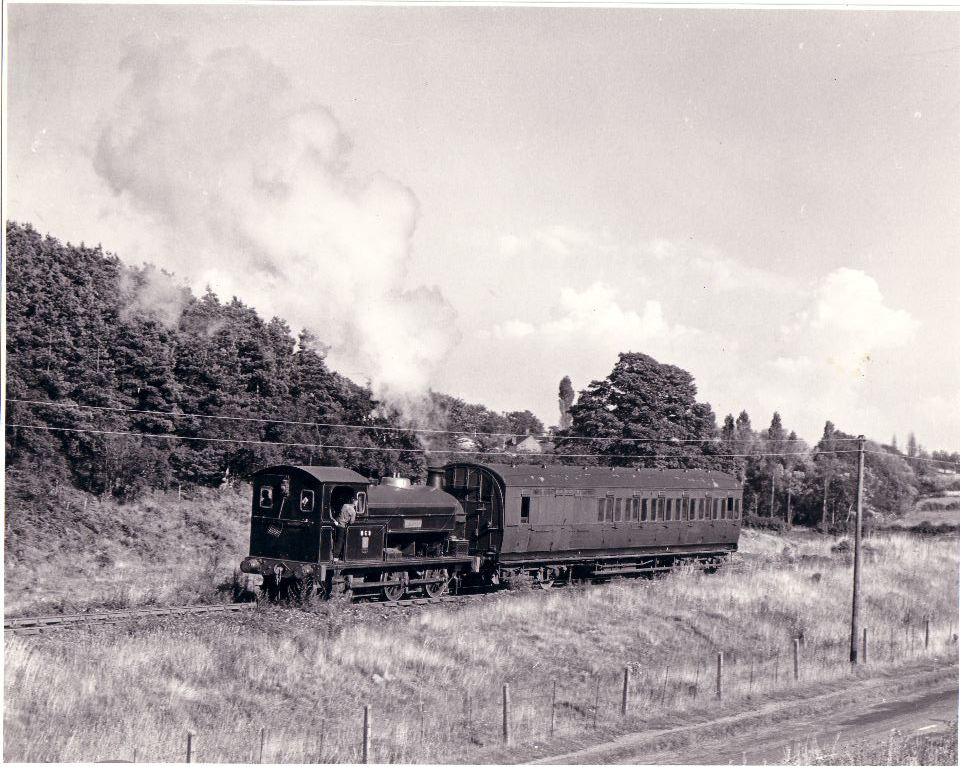
Rawnsley No.4 Lilleshall 1872 0-6-0ST on Paddy duties. Formerly 2-2-2 for Paris Exhibition.
187 – Chasewater Railway Museum Bits and Pieces

‘Alfred Paget’ 0-4-2ST Beyer Peacock 244-1861 Cannock Chase Colliery Company

187 – Chasewater Railway Museum Bits & Pieces

 From Chasewater News Autumn & Winter 1995 – Part 4

 Did you ever wonder where the track came from?

Here a couple of examples….

 British Oxygen Company, Wolverhampton – Rob Duffill

 Anyone who travels from Birmingham to Wolverhampton by train should look out to the left shortly before Wolverhampton station.  There is still in use for steel traffic, the old canal interchange sidings and included is the canal/rail interchange building which is still standing.  Until fairly recently also coming out of the site were several other sidings which have been lifted by BR.  I noticed, while I had a brief view from a slowly passing train, that the line continued past the fence into the undergrowth and the British Oxygen Works at Wolverhampton.  I mentioned it to David Bathurst who agreed to contact their Works manager to inquire if it was available.  Fortunately David was able to get me an appointment to view the site.  I duly turned up a few days later and was courteously received by the Works manager himself.

The track had been out of use for three to four years but had only been relayed in the 1970s to cope with heavy wagons and BR diesels.  The track still in situ was from their boundary with BR into the works, a total of approximately 160 yards and a set of points, all in excellent condition.  Unfortunately there was also approximately 300 yards of double siding set in concrete which it would be virtually impossible to remove.  After describing Chasewater and our long term aims and also our lack of cash, I very nearly fell through the floor when I was told ‘you can have it if you want it’.  It was as simple as that!
We’ve tried various approaches to acquire more track over the years and the simple direct approach seems to work best.  If you ask for what you want you can only be told ‘no’, or you get it!

Hopefully we can lift and transport it in the autumn, after the running season, sorry lads more work for you to dismantle it, transport it and rebuild it again at Chasewater.  I was also given a tour of their site, which was very interesting, for example, they used to supply many large Black Country factories using their own trunk pipe lines which went quite a distance from their production site.  With the closure of so many factories the system was slowly cut back and finally taken out of use, hence the lack of rail traffic.

The Railway has more friends out there than it often thinks, we ought to ask for help more often with practical problems.  Dorman’s springs to mind as an example of help.

Many thanks to British Oxygen and I hope that the reinstatement of the track will prove a boost to our running line.

Chasewater and Four Ashes – David Bathurst

It is probably unnecessary to describe in much detail the connection between the Railway and Four Ashes, Staffordshire.  Suffice it to say that through the good offices of our colleague, Jim Bates, the Railway inherited the redundant track from Synthetic Chemicals – who offered a wonderful measure of co-operation in relation to its removal.

What is less certain, however, is whether many Chasewater members even knew of the existence of this modest industrial railway network before the track donation was made.

I rather suspect that even fewer members actually visited the network, but I am able to record, with some satisfaction, that I participated in a visit organised by the Branch Line Society on 17th February, 1981.

At that time, the site was owned by Croda Chemicals, who provided every facility to the BLS to travel (as is customary) over every last available inch of line, utilizing the famous fireless 0-4-0.  I cannot recall in detail the precise arrangements of the visit, but I have managed to locate a series of slides which I took on the occasion.  Unfortunately, some of them will not reproduce satisfactorily for The Chasewater News, but I hope that the Hon Editor (What’s with the Honorary, David?????) (I wondered about that too!!! cws) will be able to make something of the remainder.

What is evident from the slides is that the track was certainly maintained in good condition, and really it was quite a neat little layout.  Others will be able to provide details of the Fireless locomotive whose small cab was hard pressed to accommodate the size (both in numbers and in girth) of the BLS party.

Once again the Editor has done his best with the print-from-slides; I shall be offering them to Jim Bates as a reminder of times gone by.

‘Alfred Paget’ 0-4-2ST Beyer Peacock 244-1861 Cannock Chase Colliery Company

179 – Chasewater Railway Museum Bits and Pieces

Featured loco – No.6 Adjutant. 0-6-0ST Manning Wardle 1913-1917 Cannock and Rugeley.

 From Chasewater News Spring 1995 – Part 2

Carriage & Wagon Department – Tony Wheeler

 GWR 20 ton Toad 35251

This vehicle has been stripped and repainted into GWR Grey and lettered Moat Lane.  This is not its true location but a suitable representation.  It is currently in use with the P-Way team.

Ballast Plough Van S62861

The Maunsel brake van has had its roof re-felted to waterproof the inside of this vehicle.  It requires further work in replacing some of the external woodwork which is gradually deteriorating. The vehicle is in regular service with the P-Way train.

21t Mineral Wagon B316711

A temporary floor has been placed inside this vehicle after a cleanout of the remaining coal and slack left inside.  The larger deposits left provided some fuel for the stove inside the p-way brake van over the past winter.

16T Mineral Wagon B274600

This wagon has proved useful over the winter months ferrying bricks to the site of the new platform at Norton Lakeside and alongside the 21 tonner has seen some very heavy use lately.

8T 4-plank open wagon (Conduit Colliery)

This wagon is currently awaiting a more permanent resting place, so that the springs can be removed and replacements can be obtained and fitted.  It currently has one set of spring ‘on loan’ from the Midland Crane!

GWR 16T Toad 35831

This brake van still resides in one road awaiting some repairs, which consist of a replacement spring buckle, running boards and hangers and also brake block replacements.  Some minor attention is needed to the bodywork.

MS&L 1470

Work has resumed on the restoration of this coach after the winter lay-off.  A temporary platform has been erected round it so that the exterior work can carry on safely.  Alwyn and myself have carried on with rebuilding the interior of the brake end which was damaged some time ago.  The coach has had covering sheets removed from the roof and work has started on cleaning and repainting the roof vents.  New guttering has been fabricated and fitted to the side of the coach facing the lake; this is to replace the old burnt out pieces over the guard’s compartment.

MR Brake 68

Some panelling timber has been obtained to replace missing panels on the Midland Brake van.  The location of this vehicle at the end of two road means that the open end is exposed to the weather and some roof timbers will need to be obtained in the near future.

Permanent Way – Arthur Edwards

It seems a long time ago since I last wrote an article about anything that is happening on the Permanent Way of the railway.

Firstly, as I’m sure you know, if not I’m sure you soon will, that the Railway Inspector was due to visit us on Friday May 12th 1995, and in between this and his last visit quite a lot has happened.  New ‘No Trespass’ and whistle boards have been fabricated and put up, as the original ones being made of cheaper material and with the amount of vandalism that is rife around Chasewater, they did not last as long in position as they took to make.  New gates have been made for each of the crossing points and they have been put into place.

Secondly, our illustrious General Manager, Mr. Steve Organ, acquired a hopper wagon (dogfish) with which to re-lay ash ballast all along the line for the next monumental task, which was the use of a tamping machine on hire from Tarmac.  The tamper and its two-man crew started work on the line from the new platform, across the causeway and back to Brownhills West.  In conjunction with this work fishplates have had to be greased and tightened (again!), along with some sleepers which had to be re-spaced.

Thirdly, and most importantly since the Inspector’s last visit we have laid up to nearly a third of a mile of track into Norton Lakeside platform, which has been refurbished and extended to cope with a three coach train, and should hopefully be open to the public after the Inspector’s visit.  During the last few weeks our General Manager has been going round like a headless chicken trying to get the scheme finished in time for the Inspector’s visit, and I must admit it’s coming along pretty well, even though Steve himself will admit it was touch and go with the unkindly weather which has put all of us who helped on this project, quite a few weeks behind schedule, and Steve began to think that maybe it was a bit overbearing on all of us.  So there have been harsh words spoken at heated moments of which we all apologised to each other afterwards.  Although we are not in the major league of steam centres, contrary to popular belief we are holding our own, even if our members have dwindles slightly.  You must realise that this is our hobby and not our profession, and therefore we have to earn a living at our ‘proper’ jobs, and three of our current working members’ jobs incorporate working on refrigeration, so, being summer, their jobs call for their expertise.  And that’s basically it, except to say thanks to everyone for their exhaustive efforts, Tom especially.

From Chasewater Heaths to Church Street, the original trackbed – still a bit of P-Way work to do!

175 – Chasewater Railway Museum Bits and Pieces

175 – Chasewater Railway Museum Bits & Pieces

From Chasewater News Christmas 1994 – Part 1

Editorial

I am afraid I must again start by apologising for the lateness of the last magazine.  This was due to problems with its distribution rather than printing, but meant that the advertisements for the vehicle rally and the Warley Show were wasted.  In view of this, the only advertisements printed in future, such as those in this issue, will be checked to ensure that they are so far out of date that they are of no use to anyone!  There is, however, a rumour that a company called Regional Railways is still capable of operating to a few of the stations advertised, although I believe the fares have risen somewhat!

We at Chasewater are now on the verge of being able to run trains between two stations at last, but as the Christmas shopping facilities at Norton Lakeside are in fact somewhat limited, this year the Santa Specials will terminate short of the new station.

I would like to thank all the people who have helped with the magazine this year by writing articles, lending photos or with its production or distribution, and finally wish everyone a very

HAPPY CHRISTMAS AND PROSPEROUS NEW YEAR.

Locomotive News

Asbestos propels a train back towards Brownhills West on the day of the October 1993 Rally.

No.4 Asbestos – This engine has again managed to keep us in the steam railway business by carrying on single-handed without too many problems.  On the day of the October rally the regulator caused a few headaches when it became even more stiff to operate than usual, inducing the occasional bout of slipping.  Since then the gland has been stripped, cleaned and re-packed, and the dome cover has been removed to allow adjustment of the valve itself.  Hopefully some improvement will be apparent at Christmas, if not we have a second chance before Easter.

No further problems have been experienced with leaking tubes, although it is still planned to renew the complete set after Christmas.  One or two minor leaks have been re-caulked in the firebox, and again these will be checked during the Christmas steaming.

One or two minor repairs and improvements have been carried out, including the fitting of steam brake exhaust pipe in the smokebox so hopefully the fire will no longer blow-back when the brake is applied or released.

No.5 Sentinel – It has been decided to fit this loco with a new set of washout plugs as by the time the boiler has been tapped out to clean up the taper threads, the original plugs will be too small to fit.  In the meantime work has continued with the repair of a pin hole in the main exhaust steam pipe which runs along the left of the loco from the engine to the blast nozzles in the chimney.  The leak was first noticed during the last few steamings when emulsified oil started blowing down the frames.

The semi-circular slide valve which controls the rather complicated operation of the Weir pump has been repaired by the building up of its ports with weld and re-grinding back to shape.  This should hopefully improve the operation of the pump by making it more controllable and less noisy.

Other work has included cleaning of the cab interior ready for painting, painting of the boiler barrel and re-fitting of some of the pipework.

S100 – Work is still progressing on the frames of this loco.  The brake hangars are in place, and a new underkeep is being machined to replace a missing original.

No.3 Colin McAndrew – In a surprise move recently the boiler of this loco was sent away to Bridgnorth for the SVR boiler department to quote for repairs.

Fowler diesel hydraulic No.422015 – This loco has again been the mainstay of the diesel fleet, being used on works trains and for shunting.  It has recently been suffering from low engine oil pressure thought to be caused by fuel dilution, and in addition the axle boxes have started running hot.

Ruston diesel electric DL7 – This loco is still serviceable, although the cab windows were smashed in a recent attack.  This has not helped the loco’s usual winter problem of damp getting into the main generator and traction motor, as the rain can now drive in through the broken glass to soak the floor boards.  Hopefully, after a bit of work it will be available as standby for the ‘Santa Specials’.

The Fowler diesel machanical No. 4100013 sandwiched between DMUs at Brownhills West

Fowler diesel mechanical No.4100013 – Following yet further work to its engine, this loco has been run to the causeway and back under its own power.  Its use is limited at the moment, as due to its starter motor needing re-winding, it has to be started by another loco.  Quite a bit of work still needs to be done, including refurbishment of the air system, however, it has been used on the works train, but the lack of starter motor meant that it had to be left idling all day.

L & Y No.1 (Motorail No.1947) – A replacement bearing brass for this loco has been purchased to enable it to be stood back on its wheels.

No.21 diesel – The engine of this loco is still dismantled although the pistons have had new rings fitted and have been re-fitted to the engine.  The injectors have been cleaned and re-set ready for when the cylinder heads are re-fitted.  The sump has also been cleaned ready for re-fitting.

172/173- Chasewater Railway Museum Bits and Pieces

172 – Chasewater Railway Museum Bits & Pieces

From Chasewater News Autumn 1994 – Part 1

Permanent Way News

The second and final batch of track has now arrived from Four Ashes and is being put to good use by the Permanent Way Gang.  The works train has had to spend every Sunday ‘out of section’ at the end of the causeway just to make enough room for passenger trains, as with the amount of rolling stock now on site there is insufficient siding space at Brownhills West.  The track gang have put this situation to good use, and at the present rate of progress track will be in front of the platform at Norton Lakeside well before the end of this year.

In order to quantify the progress already made, and to assist with the planning of the future extension of the line, David Bathurst has produced the chart below showing distances between various points on the railway.

All distances were measured by pushing a pedometer along the head of the rail, and sleeper ends were marked with yellow paint at 100 metre intervals.  The ‘Zero Point’ was chosen as the gate post at the end of the loco shed yard, as after the motorway is built it is likely to be the closest surviving landmark to Brownhills West station.  When the time comes, new measurements can be made into the replacement station from the same spot.

The chart shows that we are currently running passenger trains over a distance of about a mile to the present running line limit almost half-way across the causeway.  When we ultimately reach Anglesey Wharf the total distance (estimated over the final section) will be around 2¾ miles, assuming that nothing is lost or added by the repositioning of Brownhills West Station (nice dream, but that’s all!).

173 – Chasewater Railway Museum Bits & Pieces

From Chasewater News Autumn 1994 – Part 2

Locomotive News

No.4 Asbestos – This engine has run exceptionally well considering the dubious start to the season.  Since then a total of twenty-two boiler tubes have been renewed and seem to have cured the problem of leakage at the firebox end.  Another 124 new tubes have now been acquired and are stacked in the shed ready to complete the re-tubing at the end of the running season.  Slight weepage of a few stays and part of the foundation ring will also have to be corrected.

The latest batch of Russian coal, although somewhat smoky, is giving excellent results without the problem of clinkering inherent in the last lot.  This is just as well, as with trains running every Sunday in this summer’s hot weather the last thing anyone wants to do is rake the fire through after every other trip.

Asbestos with a three-coach test train stands on the causeway ready to return to Brownhills West

No.5 Sentinel – Progress on this loco remains slow, although the boiler is now ready for its hydraulic test.  All of the boiler fittings have been refurbished and will be hydrauliced along with the boiler.  The injector has been moved to the fireman’s side of the cab and that and the Weir pump are being re-piped in such a way  that they can be drained easily in winter to prevent frost damage.

S100 – Work has continued with the manufacture of new mountings for the brake hangers to replace the original items which were somewhat bodged and worn out.

Fowler diesel hydraulic No.422015 – Replacement injectors have been acquired and fitted to the engine of this loco with the result that its performance has been transformed.  A few other minor problems have occurred, but it has remained in regular use for shunting and works trains.

Ruston diesel electric DL7 – One of the starting air valves of this loco has had to be renewed due to a damaged seat in the original.  A fuel leak from one of the injector pipes has also been rectified.  The loco is serviceable but has remained out of use mainly due to passenger trains being steam hauled throughout July and August.

Fowler diesel mechanical No.410013 – Following arrival from Redditch this loco has had its engine de-seized, the injectors have received attention and the engine has been run.  Faults have been found with the injection pump and governor and these have now been removed for attention.  Following completion of the air system overhaul the loco should be able to enter traffic.The new Fowler stands in the platform shortly after its arrival from Redditch

L&Y No1 (Motorail No.1947) – All of the axleboxes and springs have now been stripped and rebuilt and a new bearing is being made to replace one which was stolen recently.  Once the sandboxes and inside of the body castings have been stripped and primed the loco will be ready for craning from its present position in front of the museum coach so that final erection can begin.

No.21 diesel – This loco is making steady progress, the engine is now complete but still awaiting cylinder head gaskets.  It is hoped that it may be running for the Diesel Gala which is a new event to be held for the first time in September.

Lion – Following its removal to Foxfield last Autumn this loco entered service at Easter, running initially double-headed with ‘Harwarden’ The vacuum brake hoses were apparently awkward to couple as ours at Chasewater are the opposite side to ‘normal’ to suit our DMU stock.

Smith Rodley crane – This again remained out of use awaiting a potential purchaser.  So far a couple of enquiries have been received but no offers have been forthcoming.

From the Board Room

The Board has been actively involved in a number of new initiatives, while various on-going matters have been subjected to scrutiny and, where necessary, review.  The following will be of general interest to the membership.

1.    Personal circumstances have brought about the resignation from the Board of Les Emery.  However, Les has indicated a willingness to continue with his other roles on the railway.

2.    The Board has agreed to the co-option of Company Secretary Andy Clegg to the Board.

3.    The trading name of the company has been changed to the “Chasewater Railway”.  Previous official and unofficial trading (‘Chasewater Steam Railway’, ‘Chasewater Light Railway’, etc.) are no longer considered suitable and are felt to give a misleading impression of the nature of our current and future operations.

4.    In an attempt to encourage family travel during this period of continual financial restraint, the price of the Family Rover has been reduced, until further notice, from £5.80 to £4.95.

5.    During the course of the nest few months, the Board is to produce a new business plan for the purpose of clearly defining objectives and priorities, and how they might be best achieved within the resources (including financial and manpower) expected to become available.  Associated with this proposal is the revival of the concept of departmental heads, holding pre-determined budgets, to give focus to the completion of the many and varied tasks necessary for the railway to both exist and develop.

6.    The Board has responded to a plea from Rallies Organiser Dave Whittle by delegating various aspects and responsibilities to specified individuals.  Thanks largely to the efforts of Dave, the Chasewater Rallies are rapidly gaining in reputation, with Paul Richards taking up much of the strain as Administrative Officer.

7.    On other fronts:

·        Negotiations are proceeding with HM Railway Inspectorate in relation to the extension into, and construction of, Norton Lakeside Station.

·        The railway was represented at a meeting of Chasewater user groups hosted by Lichfield DC, and arranged on a largely social basis for the various groups to meet the Members and relevant Officers of the District Council.

·        Lichfield District Council has generously offered grant aid to the railway in the sum of £1,000 by way of a contribution towards forthcoming expenditure.  This generous act by the District Council signals a solid measure of support for the railway by its new ‘landlord’.

·        Accommodation at Brownhills West has become a problem in consequence of stock acquisition, (4 DMU coaches plus one tanker wagon).  However, this should be relieved by the imminent removal of one (at least) of the Wickhams, and the Board is still anxious to dispose of the crane (preferably to a good home on another railway) as a matter of priority.

·        The transfer of records from Adrian Hall should enable Paul Richards to take up his responsibilities as Membership Officer with early effect.

·        The Board has agreed strategy towards bidding for the trackwork at Bromford Sidings, and has noted that the remaining trackwork at Four Ashes is due to transfer to Chasewater in August.

David Bathurst – Chairman.

171 – Chasewater Railway Museum Bits and Pieces

171 – Chasewater Railway Museum Bits & Pieces

Permanent Way News

Words on Synthetic Chemicals – Arthur Edwards

This story started back in October, 1993 when a Mr. James Bates of Synthetic Chemicals paid us a visit with the news that his company was doing away with its railway network, which connected with the BR Wolverhampton to Stafford line at four Ashes.  Jim told us that a number of items, some chairs and a point lever had been disconnected and were surplus.

The following weekend Paul Whittaker, Dave Borthwick, Tony Wheeler and Keith Day drove over to Synthetic Chemicals to collect the items which were brought back and stored at Chasewater.  Jim said that the company would have to consider all the pros and cons on how to deal with the demise of the rest of its railway network.

In the spring of this year we learned that Synthetic Chemicals had generously donated the rest of their track to the CLR, and on May 7th a gang of our P.Way staff went back to Four Ashes to make a start on the dismantling.  All of the fishplates were unbolted, some of the pointwork was split up and all of the keys were removed and brought back to Chasewater.

The second week was spent doing more or less the same again, at the end of which Chris Chivers informed me that the track was all ready for lifting in 60ft panels.

The next week, after mid-week phone calls, we managed to get a crew for the lift at SC.  Meanwhile back at Chasewater Ian Buswell was hard at work with the JCB levelling the site ready for the pointwork and 30ft track panels which will be used eventually for our new sidings and shed.Nothing to do with the post – just looks nice! Beattie Well Tank in Brownhils West

Over at Synthetic Chemicals three of Cotton’s artic lorries were waiting for their loads.  At around 10.30am the first lorry was ready, and Steve asked me to return to Chasewater with it to oversee the unloading.  Curly brought his lorry up, and Harold set up his crane to lift the top panel, Curly then moved his lorry further forward, and Harold dropped the panel in more or less the right place.  This process was repeated until the lorry was unloaded and the next one arrived.

At around 1.00pm on the Saturday the rain started, and did it come down?!  By about 4.30pm I was absolutely soaked.  Funnily I had brought my wet suit but it was in Steve’s car and I didn’t have time to put it on anyway.  I thought it was about time to be heading back to the station where my Better Half was waiting to get away.

Ian told me on the following day he finally got away at about 8.3pm.

The new track panels stretch from the end of our current running line right across the causeway and through the platform of the new station, and there are still another two or three loads to come.

Thanks must go to Cotton’s Transport and Safe Load Indicators who provided the lorries and cranes.

Since the arrival of the panels work has started on fishplating them all together and jacking and packing to achieve the correct level and alignment.  This method of tracklaying is obviously much quicker than our traditional way and it is likely that we will have a train in front of the new platform very shortly.

The Causeway Station NameWorks train into Norton Lakeside

At the meeting on 25th March, the Board gave due consideration to the names proposed by members for the causeway station, previously referred to by the unflattering (but geographically correct) name of ‘Norton Bog’.

Members will recall that the Board had agreed to a form of competition, so that those who submitted the name eventually adopted by the Board will receive family tickets for the day of the first official public service into the new station.

The following names were suggested by members and other interested parties:

Chasewater Lakeside, Chasewater North Shore, Lakeside, North Shore Halt, Norton Biddulphs, Norton Bog, Norton Causeway, Norton Cranebrook, Norton East, Norton Lakeside, Norton Marsh, Norton Marshes, Norton Parkside.

Nominations for ‘Norton Lakeside’ were submitted by Mr.J.P.Merriman, and Mr.Chris Hatton, both of whom will be official guests on the due date.  The three Board members who submitted the name are disqualified from the competition!!

By way of thanking the other members who took the trouble to submit suggestions, the Board has also agreed to offer a small token of appreciation.

David Bathurst – ChairmanPassenger train leaving Norton Lakeside

170 – Chasewater Railway Museum Bits and Pieces

170 – Chasewater Railway Museum Bits & Pieces

From Chasewater News Bromford Special 1994 – Part 2

A Weekend at Bromford Tube Works – Nigel Canning

When it was announced that the tube works was to be closed, the Freight Charter Group (who organised the Littleton Colliery steam weekend) made arrangements for steam to run once more at Bromford.  As a Hawthorn Leslie similar to Asbestos had once worked there, the CLR was approached to provide the loco.  This is a brief account of what happened.

Shortly after Christmas the Loco Dept. was asked if Asbestos could be made available fro traffic a couple of weeks before Easter as there was a possibility that it may be needed to run in Birmingham for a special event.  Although the loco had been stripped for its annual boiler inspection and various repairs, this was agreed in principle as it would need to be steam tested prior to Easter anyway.  As the weeks went by and the work progressed, the special event, which was to be at Bromford Tube Works, became a definite commitment but for various reasons would have to be earlier than planned.

The boiler inspector came and did a visual examination, and then in record time by Chasewater standards returned for the steam test.  This was an achievement in itself, as with frozen points and snow drifts across the line, the engine had to be lit up in the shed with only the smokebox and chimney eventually venturing outside.

In addition to the boiler work, the loco was cleaned and repainted (not the sort of work ideally carried out in February) with the result that it looked better than it had for a long time, and still does for that matter.  The 20 ton GW brake van which was also required at Bromford was cleaned out and repainted, and even had its roof re-felted for the occasion.

On Thursday March 3rd the brake van was first to be taken by low-loader to Bromford, followed later in the day by Asbestos.  Due to problems with the ill-equipped low-loader and a somewhat over-cautious steelworks management, Asbestos was eventually unloaded in the dark.  Following this, an attempt to fill the saddle tank with water from their ‘fire main’ had to be aborted when it was noticed, even in the dark, that the water appeared milky.  A reassurance from the steelworks engineer that this was ‘only a bit of soluble oil’ resulted in the tank having to be drained, and as the promised indoor accommodation for the loco never materialised, the drain plug was removed on the spot ready for another attempt in the morning.

Next day we arrived back at Bromford for a trundle round to familiarise ourselves with the line before the main event on Saturday and Sunday.  The steelworks people had been busily pumping water from a well overnight and had filled their large water tower ready for use in the loco.  After raising steam and filling the tank we were given just one loaded bogie bolster to take for a run with the brake van.  At first sight the trackwork appeared highly dubious with the sort of tight curves that would look more at home on a Tri-ang train set, but after a bit of running it became apparent that most of it was in excellent condition with the rail joints beautifully aligned allowing quite brisk running as long as the couplings were left well slack.

This view shows just how tight the curve between the two bridges was, requiring quite a bit of power just to crawl round!  Pic – Ian Buswell

The line itself ran from a works yard down a bit of a gradient, round a tight curve, passed under Bromford Lane Bridge, and into a fan of five exchange sidings next to the site of the former BR (Midland) Bromford Bridge Station.  The whole of the exchange sidings, and even some of the not unsubstantial works buildings were overshadowed by the elevated section of the M6 Motorway running overhead.  Perhaps only thirty years ago a surreptitious excursion through the trap point onto BR metals followed by a left turn at Castle Bromwich, and right at Aldridge, would have taken us back to Chasewater without the need for a low-loader, but on this occasion we were required to stop about halfway along the sidings where we could watch the main line trains running to and from Birmingham New Street.

On the Saturday and Sunday we performed for the photographers who had apparently paid around £18 each for the privilege.  Having raised steam for a 9am start on both days, it was well after ten by the time the security men had let people in and we were required to move.

Rather than spend time shunting wagons around as we would have preferred, we were restricted by the steelworks management to running backwards and forwards over a set route with initially just the one wagon, and it was only after very careful negotiations that this was increased to two on Sunday.  These arrangements seemed to suit the photographers quite well as they wanted to photograph a series of ‘stage managed set piece’ movements. 

Asbestos stands on the curve just short of the Bromford Lane bridge awaiting the signal to accelerate through for the photographers waiting on the other side – Ian Boswell

A typical example of this was to stop on the works side of the Bromford Lane Bridge, then when the photographers had positioned themselves on the other side, we would accelerate through and coast to a stand half way along the exchange sidings.  After a brief delay we would then reverse through the bridge ready  for a repeat performance.  The number of repeat performances, and delay in between, depended apparently on the amount of sunshine (or short term prospects of it) and whether there had been enough smoke and steam from the loco.

In order to make the loco work harder and produce the spectacular results required, we ended up running with the brakes pinned down on the wagons, and wound hard on in the brake van, whilst accelerating briskly past the cameras.  In the end this treatment took its toll on the loco resulting in a number of tubes leaking in the firebox by mid-afternoon on Sunday.  In view of this, that afternoon’s running was cut short by around an hour, and the hoped for night photography was abandoned.  No-one seemed too upset by this failure of the loco, and a number of national magazines have published photos showing that we achieved the desired effect.

On the Sunday another hard day was spent getting Asbestos and the brake van on and off the low-loader.  On this occasion we managed to get the job done a little bit quicker, finishing at Chasewater at around 6pm.

As a result of its Bromford trip, Asbestos is now facing the ‘other way round’ with its cab at the Brownhills West end as it had been decided to take advantage of the low-loader journeys to achieve a turn round.  This has put the driver on the platform side of the train, and the loco now faces up the causeway bank.

Financially the session at Bromford seems to have been well worth while, and in addition a lot of free publicity was obtained, but the condition of the boiler tubes still remains a problem and is likely to be until they are completely renewed.  Whether any similar outings are attempted in the near future remains to be seen, but any loco used will need to be in more reliable condition if similar feats of performance are to be attempted.

Thanks to Nigel Canning for his kind permission to use his photographs.

And David Jackson for the video clip.

166 – Chasewater Railway Bits and Pieces

166 – ChasewaterRailwayMuseum Bits & Pieces

From Chasewater News Winter 93 – Spring 94 – Part 2

 From  A New Year’s Message from the Chairman

Without doubt, 1993 was a most interesting year for everyone associated with the CLR.

Obviously, the work on the ‘extension’ represents the most tangible of our successes in 1993, culminating in the decision of the Railway Inspector, Mr. Colin Law, to pass this further stretch of line in time for the Transport Rally in October.  Immediately, our running line increased by over 50% in length, enabling us to market the CLR as a real railway with a real product on offer.  With eminent guests from Lichfield District Council and Burntwood Town Council in attendance, after a very short, informal, ‘Opening Ceremony’, the Lichfield DC Vice Chairman Councillor Mrs. E.J.Bayliss waved off the 12 noon departure.  This, as with most trains that day, was virtually full, with passengers having some little difficulty in finding seats of their choice.Photo: DMB

Councillor Mrs. Bayliss subsequently wrote a most charming letter to me, and I think it is appropriate to reproduce her letter in full –

“13th October 1993

Dear Mr. Bathurst,

Thank you very much for a lovely day at the Chasewater Light Railway and Museum Company’s Annual Transport and Machinery Rally and for the privilege of officially opening the new stretch of railway line.  My husband and I found the Rally in Chasewater Park most enjoyable and interesting and we wish you well for the future.

The District Council looks forward to working with you further in the future when the whole of Chasewater comes within the boundaries of this Authority.

Yours Sincerely,

Cllr Mrs.E.J.Bayliss

Vice Chairman of Council.”

I hardly need to comment on how important it is for the CLR to enter into a good dialogue with both the elected members and officers of Lichfield DC, whose respect for the CLR will, for certain, be influenced by the professionalism with which we maintain our operations.

165 – Chasewater Railway Museum Bits and Pieces

Please note: the Museum will not be open this coming Sunday, 8th October 2023

5 – ChasewaterRailwayMuseum Bits & Pieces

From Chasewater News Winter 93 – Spring 94 – Part 1


From the Editorial

The latest news is that ‘Asbestos’ is to spend the first weekend in March running on the internal railway system at Bromford Tube Works in Birmingham.  The ‘Open Day’ comes just before the closure of the works and will involve running demonstration trains with the 20 ton GW Toad.

If you would like to put forward your views on a name for the new causeway station please complete and return the form later in the magazine.

 Locomotive News

No.4 Asbestos – This loco ran passenger trains to the top of the causeway bank for the first time in October, and again in December for the Santa Specials.  On both occasions the saddle tank was replenished at around mid-afternoon by a preserved fire engine, courtesy of Trevor Sharples of the Fire Service Preservation Society.  This alleviated the need for us to fill the station water tower in potentially frosty weather, as the longer run to the causeway means that it is no longer feasible to rely on the station hose-pipe between runs.  Following recent problems with firebars warping, a pattern has been made and a couple of samples cast from it.  These were fitted for the Christmas running, and as they seem to have stood up to the last of our Columbian coal quite well, a further batch of replacements will be cast and fitted ready for Easter.   The loco has now been partially stripped ready for a wash-out, cleaning and an intermediate boiler inspection.  Work has also commenced on a number of minor repairs to cure amongst other things, a very tight regulator, a leaking steam manifold joint in the cab, and leaking injector water valves.  If all goes well the loco should be ready to run again at Easter.

No.5 Sentinel – Some progress is now being made with the repair of this loco. A complete set of 96 new ¾” whitworth studs have been specially made to order in a special heat-resistant steel and fitted to the boiler.  The two halves of the boiler shell are now being re-assembled ready for hydraulic testing, hopefully in February.  The superheater coil will also be tested at the same time.  Other work being carried out is the refurbishment of all steam fittings and the boiler water feed pump.  All the fireman’s controls are being moved to the left-hand side of the cab to make life easier, as the loco was originally designed for one-man operation with all controls on the driver’s side.

New Peckett – Following the departure of ‘Lion’, another Peckett has arrived to take its place.  The loco, purchased recently by Mike Wood, appears to have been supplied in kit form, complete with smokebox tubeplate, rods, fittings and various machined and un-machined castings as loose items.  The loco is believed to be No.1903 ‘Little Lady’.  No doubt we will be able to persuade Mike to write an article giving full details in due course.

Fowler diesel – This loco has remained in service without any mechanical problems, being used mainly for the regular Sunday works trains.

Ruston DL7 – Whilst nominally operational, this loco has remained out of use in favour of the Fowler.

L&Y No.1 petrol loco – Dorman Diesels of Stafford have very kindly had specially made for us a new set of camshaft drive gears to fit the petrol engine which is currently dismantled in the shed awaiting re-assembly.  Work on the loco itself has continued with the refurbishment of its springs and axle boxes.

Carriage & Wagon News

Great Eastern six-wheel passenger brake – Work has continued on this coach during the winter, mainly on the interior for obvious reasons.  There can now be little doubt that this will be the first of our vintage coaches to be fully restored, it is well on the way already.

CRC 4-plank wagon – Rebuilding of the new wooden planking of the body is now well advanced, and various items of steelwork are being prepared ready for fitting.

GW Fruit ‘D’ – Following a great deal of hard work to sand down and prepare the wooden body, this van has been painted in chocolate and even has the GWR emblems hand-painted on making it a very smart looking vehicle indeed.  The only obvious outstanding work needed now is the re-covering of the roof to make it water-tight.  Assuming that the vacuum works satisfactorily when new bags are fitted, it would be nice to see it added to the occasional passenger train just for show.

20 ton GW Toad – This vehicle has remained in regular use on Saturday and Sunday works trains throughout the winter.  It is rumoured that it may go to Bromford Tube Works with ‘Asbestos’ in early March as part of a CLR arranged ‘closing down spectacular’ on that Company’s railway system.

Wickham DMU E56171 & E50416 – These two vehicles are now definitely destined for Llangollen at a time yet to be agreed, and dependant on our obtaining suitable asbestos-free replacements.  Meanwhile, the trailer ran again on the Santa Specials in December but is looking exceedingly tatty, especially when coupled to the centre car.  The power car has remained out of use.

Derby centre car W59444 – This coach is the only one of our four original DMUs destined to stay at Chasewater, and is therefore likely to be in constant use for the foreseeable future.  It ran in December when, after quite a bit of preparation, even the heaters worked.

Replacement DMU stock – There is still nothing definite to report, although ‘The Management’ are still working on the acquisition of replacements, and are submitting tenders for suitable vehicles as and when opportunities arise.

157 – Chasewater Railway Museum Bits and Pieces

157 – Chasewater Railway Museum Bits & Pieces from Chasewater News Spring 1993

– Part 3 The Very Special Day

This part of the post is written in 2023, Chasewater Railway has a regular group working on the P Way, but they could always do with more!  This post, as the introduction says, is a solute to the P Way gang back in 1993, including, in the bottom picture, a photo of Tony Wheeler, who recently passed away. Tony is on the extreme right of the pic.

A salute to our PW gang – By Dave Borthwick

It began with Keith Day phoning round mid-week to prepare everyone for the last track bash of phase 1, planned for Sunday.It was good to see all the regulars arrive, those same members who put themselves out most weekends to carry out hard, heavy work in both scorching sun and freezing drizzle.  The train left for the railhead leaving behind me – Dave Borthwick (part-timer), Keith Day and Arthur Edwards to select a pair of 30 foot match conditioned bull-head rails from the shed area.  Ian Buswell, JCB driver, with the help of Arthur slung the rail and transported it the long distance to the railhead.  Part time PW dept members like myself have constantly moaned when arriving at the railhead what a bloody long walk it has become following the recent track relaying.  Car transport is a must these days!

The JCB dropped the rail in the position it was needed and work continued as normal, selecting sleepers, chairs and keys.  At around dinner time Ian suggested hunting, catching and roasting a wild boar (because the line is really at the northernmost part of our railway world, in the wilderness), but his net had a hole in it and his mo-ped wouldn’t start, so Jonathan Clegg popped down to Tescos for 2 lb. of middle-cut bacon.  As we were unable to get enough heat from the mess van’s pot-bellied stove, a small fire was made from old sleepers and sacrificial bacon sandwiches were produced and consumed.Towards mid-afternoon our goal was reached, with sleepers laid, chairs secured, rails in keys in, jacked and packed.  The final moment had come.  Some 18 months ago, Little Tony, as we called him then, had scrubbed up and painted gold a rail key.  This was to be the ceremony, the fitting of the golden last key of the PW gang, track extension, phase 1.Amongst those present at this ceremony were Elizabeth, or Beth as she is called, surrounded by – Arthur Edwards, the oldest member of the PW gang, Tony Wheeler, who came to us three years ago and began watching from the other side of the fence and now is the hardest working member on the railway, strimming, weeding and hedging most days mid-week, especially Wednesday and Friday nights with Arthur.  Next, Keith Day who, despite family commitments and a rigorous working shift system at Bass Brewery, comes down and works on the railway’s greatest asset – the track.  Tom Mitchell, who, like Keith, comes down to the CLR to simply use the Sunday working hours from 9.00am to 5.00pm to the full on track laying and repair.  Ian Buswell, whose work with the JCB has put the PW dept schedule months ahead.  Junior members Dave Gardener, Jonathan Clegg and Paul.  Chris Chivers, whose help has been great, but recently limited due to other commitments.  Left until last purposely, is Les Emery, a man who is obviously successful in every way, chooses to come down to work in an open field and spend his day weeding, shovelling, lifting sleepers and poking life into a group of lazy ignorant peasants – author included!  Because of Les’s dogged determination he has forged a PW department  which began with a trolley loaded with shovels and tools which had to be pushed manually, making frequent trips loaded with ash ballast.  Nowadays a works train leaves Brownhills West at 9.00am consisting of a heated mess van, tool van and flat wagon, with JCB and dumper truck assistance following behind to work a full day, returning at 5.00pm.The thing that has come across from this exercise is that if you can form a group to carry out a task, results can be achieved more quickly than by individuals mooching around the railway doing odd jobs.  No-one other than Les and his lads organise their work schedules that is why work on projects take so long.  No-one envies these lads ’down the line’ because of the sheer hard, heavy, dirty work, but it is my belief that track across the lake supporting a variety of locomotives pulling coaches full of tourists is the answer to our future.  Please support our PW lads!So we salute Les, Arthur, Chris, Tony, Keith, Tom and many more.  Phase 2 is just around the

corner

corner!