Tag Archives: Chasewater Steam Railway

180/181 – Chasewater Railway Museum Bits and Pieces

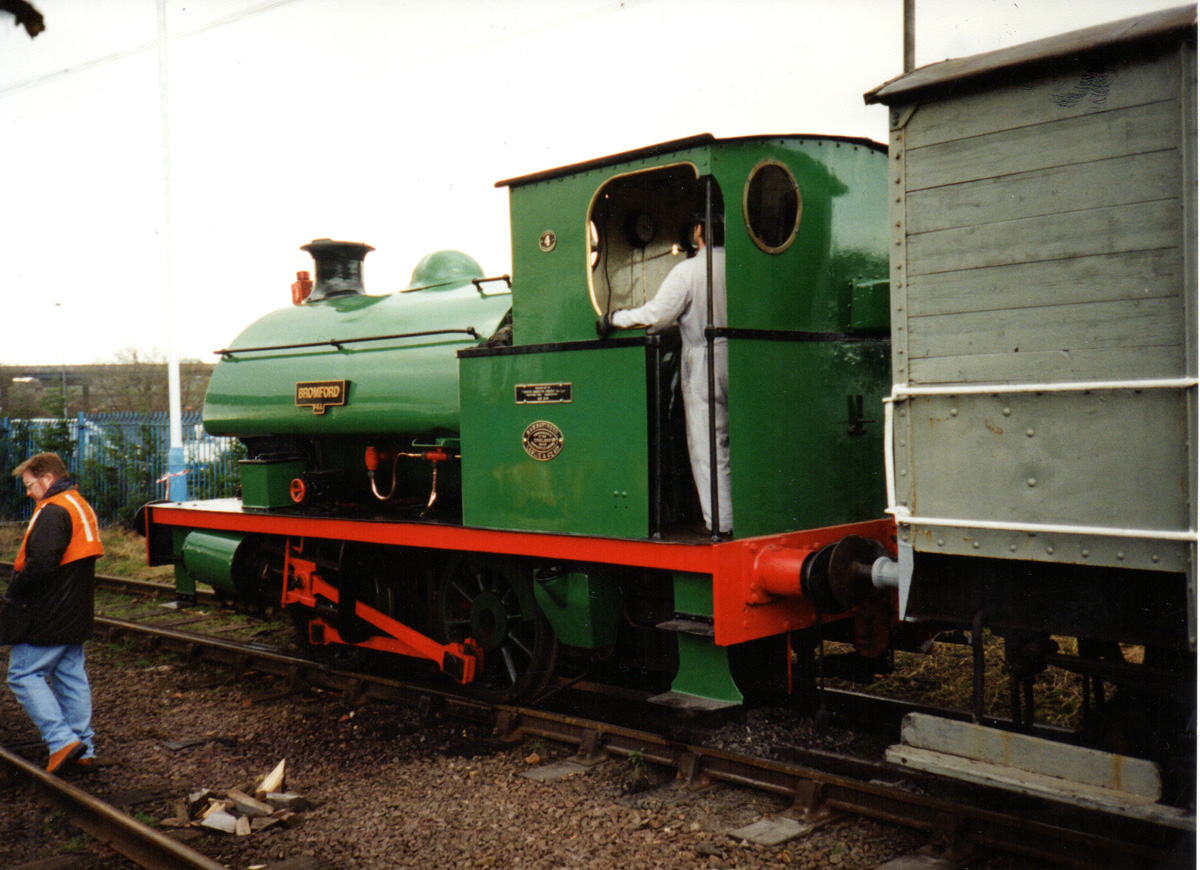
Featured Loco – No.8 Harrison 0-6-0T Yorkshire Engine Co. 185-1870 C & R Paddy 15-3-1934

180 – Chasewater Railway Museum Bits & Pieces

 From Chasewater News Spring 1995 – Part 3

From the Boardroom

Lichfield District Council and the Railway

By David Bathurst – Chairman

It is a little over 12 months since Lichfield District Council (LDC) assumed responsibility for Chasewater in succession to Walsall MBC.  Maybe now is the opportune time to reflect on the Railway’s relations with our new landlords during this period.

It is generally recognised that LDC has inherited an area of recreational land and some very modest amenities where ‘investment’ had become an unknown concept.    Whilst Walsall MBC must accept some responsibility for this state of affairs, it is however a fact that the plans for the Birmingham Northern Relief Road (BNRR) have prevented any serious attempt to maximise the commercial and leisure potential of the area.  The BNRR may or may not happen and whichever way it goes, it will have a major impact on both the Park and the Chasewater Railway.  Until a decision is made and the first contract has been let, Chasewater will inevitably remain in limbo.

It is in this context the Board has made a number of proposals to LDC and it is similarly in this context that LDC has been unable to offer anything other than a series of courteous and sympathetic acknowledgements.

This does not mean that LDC is sitting back on Chasewater issues.  The council recently approved a document on Chasewater’s future with a view to inviting public participation and consultation.  The Railway is awaiting a copy of the document with interest and will certainly be wishing to make representations.  It will also be interesting to see whether the results of the Municipal Elections on Thursday May 4th 1995 will have any effect on LDC’s policies towards the future of Chasewater.

For the information of members, the following is an indication of the matters currently with LDC, awaiting decision.

Presentation to the Council

The Railway has indicated a willingness to make formal presentation to LDC’s Leisure Services Committee to define more clearly the current and potential roles of Chasewater Railway within the context of Chasewater Park.

Lichfield District Local Plan

The Railway has submitted a formal objection to the Draft Local Plan.  The Railway wishes to see an additional policy added to the section related to Chasewater, namely “The District Council will continue to make provision for the development of the Chasewater Railway”.

The Railway will be represented at the Public Local Enquiry which commences on 5th September 1995 and which is expected to last 8 weeks.

Extension to AngleseyWharf

The Railway has asked LDC to give planning protection to the alignment of a possible extension to our operational line, to Anglesey Wharf.  Unfortunately the proposed line of the Burntwood By-pass means that the Railway extension would need to intrude into two SSSIs (Sites of Special Scientific Interest).  This could represent a major threat to the plans for extending our operational line.

At the same time the Railway has invited LDC to examine the land ownership issues and to agree, in principle, to the grant of any necessary leases.

BNRR (M6 Toll): Brownhills West Station

The Railway has asked LDC to honour a commitment made by Walsall MBC to provide an alternative site for the relocation of Brownhills West Station and associated facilities should this be necessary because of construction of the BNRR.

Causeway/Norton Lakeside Station

LDC has been invited to assist in undertaking finishing works on the Causeway where the Railway has neither the expertise nor finance to carry out a substantial scheme of environmental improvement.  In particular the concealment of materials at the water’s edge by proper treatment works could well bring about a significant improvement in appearance.

In a related proposal, LDC has been invited to ’adopt’ the footpath across the Causeway and in the vicinity of Norton Lakeside Station within a co-ordinated approach to access the north shore area of Chasewater.  This would not involve the footpaths becoming formal public footpaths but would nevertheless be of benefit in a wide range of senses.

LDC has been asked to participate in some tangible form of official opening of the extension across the Causeway and opening of Norton Lakeside Station.

Land Tenure

LDC has been made aware of the Railway’s concern regarding the current leases which may not be sufficient to enable the Railway to gain access to finance potentially available through various funding regimes (see also below).

Boundaries

LDC has been asked to undertake a survey, in conjunction with the Railway’s surveyors, for the purpose of identifying the physical boundaries of the land held on lease by the Railway.  Significant changes in the landscape at the easterly end of our line makes it extremely difficult, if not impossible, to pinpoint the extent of our lease without resort to modern surveying technology.

Carriage Shed

LDC has been asked to consider making a deemed application for outline planning permission for the provision of covered accommodation at Brownhills West adjacent to the shed compound.  The close proximity of houses might represent some difficulty although this would be removed if the BNRR were to proceed as the houses referred to would be demolished.

If the Railway were to seek National Heritage Lottery Funding for this project, it would need greater security of tenure (that is to say, a freehold interest or a long leasehold interest in the land concerned.  As an alternative, an application for Lottery funding could be made as a collaborative application between LDC and the Railway.  LDC have been asked to consider the implications.

In view of the fact that Lottery funding provides a contribution only towards cost and that a partnership approach is essential, LDC have agreed to enquire into what other grant regimes may be available to help the Railway to construct this essential covered accommodation.

Light Railway Order

Walsall MBC actually made a number of applications in the 1980s to the Department of Transport for a Light Railway Order.  The applications were so flawed that they were eventually withdrawn and put into abeyance.  The Railway has invited LDC to pick up the pieces and to seek the modern day equivalent of a LRO on the Railway’s behalf.

Conclusion

From this summary, members will surely form an appreciation of the importance of a good relationship between the Railway and our landlords.  Each of the items mentioned has generated considerable correspondence and has involved lengthy meetings with LDC Officers.  We must not allow ourselves to become impatient, particularly in view of the uncertainties surrounding the BNRR.  Operating a Railway involves a wide range of activities not generally known to the membership and where it is necessary for a highly trained professional and mature approach to be taken by all concerned.  There can be no certainty as to the response of LDC in relation to any or all of the matters which are currently on the table with them.  What is certain, however, is that the Council is committed to the development of Chasewater Park and, once the BNRR issue is determined, there must inevitably be significant changes on the horizon.

181 – Chasewater Railway Museum Bits & Pieces

From Chasewater News Summer 1995 – Part 1

 From the Editorial

The first of this year’s rallies has now come and gone, and the overall figures for the rally were disappointing, but I understand that, like so many other events on over that weekend, we all lost out to the England – New Zealand semi-final in the Rugby World Cup.  The overall passenger figures for the first two months of the running season on the Railway have remained fairly level with last year which means that we are carrying about the same number of passengers as we were for the same period last year if you factor in the decrease in ticket prices.  This is also in spite of some miserable weather for the first two months of the running season which has kept the park fairly empty over the weekends.  The Railway is still running from hand to mouth, but 1994/5 has been an exceptionally remarkable period in the history of the Chasewater Railway.

As nearly all the major expenditure has now been cleared there is at long last a light at the end of the tunnel, and as there are no more ‘major’ projects on the horizon, it should give the Railway time to gather its breath before the next phase of expansion.  The critical areas are now engineering and restoration.  The team in the locomotive shed have been doing a fantastic job, but the amount of repairs required to maintain the running locomotives that we have has been stretching them to the fullest, and this is without restoring further engines back to running condition.  Some cosmetic work is due to be carried out on one of the locos to stop any further deterioration of the bodywork, and this will have the effect of putting the loco back together so finding out whether any parts are missing and also clearing areas of the site where they are currently stored.

Work is nearing completion on the new amenities block and at last it is beginning to present a neat and tidy face to the general public, as parts of the awning/roof facia, which were finished by the Community Service people are put into place.  As the timber work is finished so the undercoat and top coat of paint have been applied in all but a few sections.  The guttering now needs to be put into place so that the exterior can be completed.  Tony Wheeler has also tidied up the ‘one road’ side of the portacabins by enclosing them in with corrugated iron sheets, after the placement of an amount of concrete to further secure the foundations of the area.  This has also been finished off with topsoil and planted flowers.

The station area is gradually being cleared of all rubbish, scrap metal and junk, and the departure to the bottom compound of S100’s tanks and cab roof have allowed the area between the end of one and two road to see the light of day for the first time in many years.  It also means that all the relevant pieces of S100 are gradually being brought together as the work on this locomotive gathers pace.  (This was written 17 years ago!)

Also a large number of plants have been planted throughout the section between the booking office and the new toilet blocks so considerably enhancing the area.  In conjunction with this work, the main fence is currently receiving a coat of paint to smarten up the front facing the road.  The chain link fence that is still standing should have been renewed some time ago but with the outcome of the third public inquiry into  the BNRR (M6Toll) still not resolved it seems pointless in replacing the rest of the main compound fence only to have it demolished if the motorway is constructed.

I would also like to ask members working on site not to throw any litter on the floor but place it in the bins provided, that’s if the wasps don’t make it a hazardous operation, as this reflects on the Railway in the eyes of the general public.  Also if you see litter lying around don’t just look at it, pick it up and ‘bin it’.  Following this plea of ‘Good Housekeeping’ please don’t leave any unnecessary lights, equipment or other electrical appliances turned on, not only does it cost but it could also lead to an accident – live cables lying around being accidentally cut giving somebody a nasty shock.  The site is a lot tidier than it used to be but there is still some way to go.

Brownhills West Station 1992

From the Boardroom

Working Members Meeting

David Bathurst – Chairman

At the 1995 AGM, members expressed a wish to hold occasional meetings with Board members to discuss a wide range of topics associated with the management and operation of the Railway.  The first such meeting was held on Wednesday 21st June, 1995, when an encouraging number of members attended at Brownhills West Station.

For the benefit of working members who were unable to attend, the following is a brief summary of the principle matters which were discussed:-

Platform adjacent to the locomotive shed – Concern was expressed regarding the safety of this platform and short/medium term remedies were discussed.

Restoration of No.917 – An enquiry was made with regard to which steam locomotive was next to be restored into working condition.  It was the opinion of a number of members that No.917 was the obvious choice.  The meeting was informed that the restoration of the locomotive was in fact on the agenda for the next meeting of the Board, as a written proposal having already been made to the Company regarding its cosmetic (at least) restoration.

Water supply for steam locomotives – A member expressed concern that the demand for water for steam locomotives would increase once the extension into Norton Lakeside Station was open to regular traffic.  However, it was generally agreed that the current arrangements are satisfactory as the locomotive crews had proved their ability to take water without major disruption to the timetable.

Rallies – The rallies organiser, Dave Whittle, spoke at some length on the shortcomings of the June Festival of Transport.  He questioned the members’ commitment to rallies and referred to the need for a stronger communications chain and team work in particular.  The Board had indicated an intention to invite Dave to attend the next Board meeting with a view to examining in detail has specific areas of concern.

Junior Members Section – It was suggested that the time had now arrived to harness the interest of younger members by establishing, on a more formal basis, a junior members’ section.  Health and Safety legislation prescribes certain minimum age limits for undertaking different categories of work but it was acknowledged that the junior members have much to offer in the operation of the Railway.  Andy Clegg and Keith Pointer were invited to submit written proposals to the Board in due course.

Miscellaneous Matters

·        The number and distribution of keys was to be reviewed.  Members were urged to’ lock up behind them’ when leaving the premises or individual buildings.

·        To avoid misunderstandings and to promote greater public confidence, it was agreed that when the bar is in operation, alcohol is not to be served to persons in high visibility vests or known to be operationally active on the day.

·        Concern was expressed with regards to the gates not having been replaced at the entrance to the bottom yard.  In a related matter, members were urged to be respectful of work undertaken by other members.  Instances had come to light of members doing things with good intention but without consulting with other colleagues who may have already been involved in previous work.

·        It was confirmed that a members’ notice board is to be erected in the members’ mess.

·        Tony Wheeler confirmed that he could generally be available, given reasonable notice, for members needing to gain access to the premises and where the alarms needed to be de-activated.

·        The Magazine Editor would be asked to include in all future editions a list of Board members together with the Heads of Department.

The meeting, which commenced at 7.30pm, closed at 10.30pm and the members present were appreciative of the opportunity to raise matters of personal interest to them.  By common consent, it was agreed that further meetings be held on a similar basis during the course of the year.

Brownhills West Station 1978

176/177 – Chasewater Railway Museum Bits and Pieces

The featured loco today is ‘Rawnsley’, at Hednesford Canal Basin, a Lilleshall loco of 1872. Number 4 at Cannock and Rugeley Colliery.
Thanks to David Bathurst, Nigel Canning, Bob Duffill, Arthur Edwards and Keith Day for their contributions to these, and other, Chasewater Railway Magazines.

176 – Chasewater Railway Museum Bits & Pieces

From Chasewater News Christmas 1994 – Part 2

A Christmas Message from the Chairman

It is difficult to believe that we are about to enter the Christmas period yet again. The year has passed so quickly that it seems to have passed us by.  Yet for the railway, such a short period has witnessed so many exciting developments.

Anyone visiting the railway for the first time would wonder what it’s all about and why we are all so enthusiastic.  But for regular visitors and, more importantly, the intrepid band of volunteers who devote so much time to the welfare of the railway, the year has been full to overflowing.

This is not the time to review, in detail, the year’s events; the annual report is more appropriate for that.  However, the extension to the line merits comment, because of its importance to the public’s perception of our operations and, perhaps more vitally, our credibility as a passenger-carrying railway.

We had hoped to have laid the track into Norton Lakeside Station and to have completed the construction of the station during 1994.  That we did not achieve this ambition is of little importance; my colleagues will be familiar with my entreaty that “it is not a race”.  We cannot afford to compromise on quality by cutting corners in the interests of speed.  It is essential that the extension across the causeway, the station itself and the remainder of our line all meet the standards necessary to satisfy the Railway Inspectorate.  We have much work to do to consolidate our current line before we invite HMRI to return to Chasewater.

Having said all that, Easter 1995 now seems a realistic target for the opening of Norton Lakeside Station.  Pencil the Easter Weekend into your new diaries, and “watch this space” for further information.

1995 will also see an increase in momentum for the carriage shed fund.  If the spirit of Christmas moves you to make a donation to this worthy cause, then please do not hesitate to see Chris Chivers or myself.

May I remind you of the ‘Santa Specials’ on 11th and 18th of December when we can all find an excuse (if we need one) to open up the seasonal festivities.  Whether or not you are able to join us on one of these dates, may I take the opportunity to wish you all a very happy Christmas and a very prosperous New Year.

David Bathurst – Chairman

A view looking across the causeway back towards Brownhills West, just over a mile away.  On the left can be seen the platform face for the new Norton Lakeside Station with the first length of track in place.  A lot still remains to be done, but this could be a very popular place for photographers next year!

Synthetic Chemicals – Final Phase – by Arthur Edwards

It doesn’t seem like it, but this is the final part of the saga of retrieving the track from Synthetic Chemicals.  After a call from our ‘Fat Controller’, Steve Organ, on Friday 15th October to establish whether I was available for the Saturday morning, about a dozen people gathered at Synthetic Chemicals to collect what track was left there.

Anyway, Mick had called for me at 8.30am and we had been there about an hour when Steve asked Mick and I to return to Chasewater to get the JCB ready for when the lorry arrived with said track.  At about lunchtime the lorry duly arrived and Mick and I did our stuff unloading it.  An hour or so later ‘Curly’ the driver went off to get another load.  While he was away, Mick and I straightened up the rails and sleepers.  I had to go at 5.30pm but I believe the rest of the crew stayed until about 8.00pm to complete the job.

After that Saturday all there was left at Synthetic Chemicals was a buffer-stop, some smallish lengths of rail and a few sleepers.  After some hectic phone calls, Steve managed to get about six people on Saturday 22nd to go back and retrieve the last few remnants of track.

On the Sunday, with the help of the CS people, we actually laid the track through Norton Lakeside Station.  Once agreement has been reached with the Railway Inspectorate, it is our intention to just keep laying track down until we run out of either sleepers or rail, or until we reach our next objective which is Chasetown.  It is thought that we now have enough track to get us to the end of our lease, but hopefully we will have topped up our stocks before we get that far.

Whilst we continue to work on the track, the CS people have begun re-pointing the platform at Norton Lakeside Station, and preparing the top for the edging slabs.

  The arrival of a loaned ‘dogfish’ hopper wagon will hopefully make the job of ballasting a lot easier, and there are even rumours of a rented track-tamping machine being used in the near future!

Kenneth Judkins – by Dave Ives

It is my sad duty to inform you that Ken Judkins (Ken the Steam to his close friends), passed away on September 27th 1994 at Anson House Rest Home.  Ken was 91 last January, being born in Little Haywood in 1903.  Ken lived a very colourful and busy life in various parts of the country.  He moved to Stafford for the final few years of his life from Wimbourne Minster, Dorset, stating that he wanted his bones to rest in his native county, which has indeed now happened.  His remains lie buried in Colwich Churchyard.  He was Christened in Colwich Church and served as a chorister for a number of years.

Members will be aware of Ken’s long association with steam traction having started with Ralph Gee & Son, Wolseley Bridge, then on to Staffs County Council, Foden’s, Thomas Hill (Rotherham) Ltd. and Sentinel.

Ken was the author of two books “My Life in Steam” and “More of My Life in Steam”.  The books are worth a read and give a fascinating story of the tough and skilful job of steam driving in the 1920s and 30s.  Ken also served six years in the army RAOC in the war and was wounded in the lung whilst being evacuated from Dunkirk.

I suppose one can sum up by saying that this is the end of an era and that Ken is sorely missed by numerous friends, especially on the rally fields where he gave a lot of advice to scores of steam traction owners.

Alas! We shall no longer see him propping up the bar, staying overnight in one of our coach compartments, puffing his pipe on Brownhills West Station seat or in his brown slop coat and Foden hat on the footplate of the Sentinel.

More about Ken – Nigel Canning

“Ken the Steam” as he was known to his friends, spent the majority of his working life and the whole of his retirement closely involved with steam traction on both the road and railways.  His experiences and expertise were sufficient to fill a book – or two, to be precise – both now sadly long since out of print.

Ken was never happier than when he was showing off just what steam power was capable of, and in his last two jobs, at Foden, and then at Thomas Hill (Sentinel) as Chief Demonstrator and Test Driver, that is exactly what he was paid for, selling those Companies’ products and fending off the advance of the motor lorry and diesel loco.

In his retirement Ken continued to take an interest in steam by helping the preservation movement where his enthusiasm backed up by a lifetime of experience was of invaluable assistance to many an amateur locoman or fitter.

At Chasewater his advice was of particular assistance in the operation of the Sentinel.  On one occasion when one of the poppet valves on the engine was playing up, Ken was all set to ride down the line and back to observe the valve events and pinpoint the problem.  It took a lot of doing to convince him that it was not the done thing to run a passenger train with an engineman in his late eighties hanging on the side of the loco, but we eventually succeeded, and as a result of his advice the valves were alter re-set to operate correctly.

Ken once admitted that he didn’t really like Sentinels as they were dirty things, but that just reflected his real love, the Foden, and his exploits with those machines are well-documented and will be remembered for a long time.

177 – Chasewater Railway Museum Bits & Pieces

From Chasewater News Christmas 1994 – Part 3

Carriage & Wagon News

New Acquisition: ‘Dogfish’ DB992841 – This useful hopper wagon has recently arrived at Chasewater on loan for 12 months from Andy Goodman of Allely’s Transport.  Following minor attention to the chute actuating gearboxes the wagon has entered service as part of the PW works train to transport ash up to the new station and beyond.

Pressed Steel Co. DMBS W51372 – This car has remained in service coupled to W59444 to form the loco hauled train.  It was recently given an ‘A’ exam, and following the recent acquisition of some more spares one or two minor repairs may shortly be carried out.

Derby Works centre Car W59444 – The electrical system of this coach has recently been overhauled, including servicing of the batteries, cleaning and resetting of contactors and renewal of some of the invertors for the strip lights.

Derby Works Centre Car M59603 – This coach has remained stored out of use.

2-Car DMU: DMBS W51370 & DMS W 51412 – This train has remained in service, being run on non-steam Sundays until recently when declining passenger numbers made it uneconomical to continue.Summer congestion at Tysewater!

Manchester, Sheffield & Lincoln six-wheel coach – A great deal of progress has been made recently on this vehicle.  All of the doors now close properly, and all of the glass has been fitted in the windows and doors so that the interior can be kept dry.  The partially burnt panelling around the guard’s doors has been removed, and new locking bolts for the double doors made and fitted.  Various rotten mouldings are being renewed, and the exterior of the bodywork has been given a preliminary coat of paint to help protect it.  A certain amount of work has also been done on painting the interior.

LNWR (Paddy) Coach – Work has started on this coach by a carpenter working on the Community Service Scheme.  So far some of the doors have been re-fitted, and repairs have been carried out on the roof to try and waterproof it.

Battery charging – The station battery charger has now been rebuilt and connected into a network of underground cabling enabling a number of vehicles to be connected to it simultaneously.

Stop Press

The Board has agreed to purchase around 600 concrete sleepers, enough to relay track to the rear of the Burntwood Industrial Estate.  Delivery will commence in the New Year.

The Annual October Transport Rally – Arthur Edwards

This year’s rally seemed to surpass all of the rallies that we’ve had over the last five or so years.  There were more vehicles than previously, but all cordoned off in such a way that it seemed that we could have had at least half as many again.

I finished work at 2.45pm on the Friday afternoon to be at Chasewater by 3.00pm to help Dave Whittle, Rally Organiser, to put up the fencing.  This involved finding the fencing stakes before I could start.  Eventually it was time to make my way home, and I told Dave I would be there at 9.30am on Saturday.

I duly arrived at Brownhills West Station at the said time, collected the stakes and started to knock them in to cordon off all the stationary engines and their owners’ living quarters, caravans, mobile homes, etc.

Steam trains didn’t run until Sunday as one of Asbestos’ springs had to be re-fitted following its repair, but our illustrious General Manager (Steve Organ) decided to use his DMU set.

Sunday dawned with high skies and not a threat of rain.  A few of us had to take the permanent way works train down to the far end of the running line to work on the extension.  This had to be done as even after the departure of the Wickhams we were still a bit cramped in the available siding space.  I digress slightly, anyway all went according to plan, and next year they are planning an even bigger event.

All credit on this occasion must go to Dave Whittle for the red-hot phone calls, and to his associate Paul Richards, with their mind-boggling train of events.  All the best for next year’s rally.  Thanks chaps, very much appreciated.

Commercial Manager’s Update – Rob Duffill

The season, apart from the two Santa dates which are in the future at the time of writing, is now over until Easter.  However, we do continue to tick over during the winter months and any income we can generate from whatever source during this period is essential to keep the wheels turning.

In addition to the core aspects of running the buffet and shop, we have been to several exhibitions.  These have been at the bonded warehouse in Stourbridge organised by Trev Cousins who was Secretary of our group in the 60s.  Also the Warley Model Show at the NEC and the Societies and Hobbies Fair at Walsall Town Hall.

The NEC exhibition is in its second year and is over two days and very interesting.  As usual John and I set up on the Friday and all went very smoothly as the Warley Show is very well organised.  The hall was better laid out this year and the public avoided the jams of last year.  We were opposite an ‘0’ gauge layout of the Taff Vale and a colliery with lots of industrials.  Also, Trev Cousins has produced in ‘0’ and ’00’ a model of Hanbury from our own area.  This 0-6-0ST Peckett was of very neat outline.  Trev and Pete Stamper, both members from the 60s, would be pleased to sell you one.  Our stand was fairly busy with its blend of both toys and relics and we exceeded last year’s takings.

The Hobbies and Societies Fair at Walsall was successful, not from the actual sales, but from the publicity point of view.  A lot of interest in the Santa Specials was generated.  Quite a few people looked at the old photos we had taken and said they were ex-miners who remembered them.  We also displayed a Pelsall Millenium plate at both exhibitions.  The Brownhills paper also took photos and promised free publicity, and several potentially useful contacts were made.  This event was definitely worth John and Margaret’s (with Chris) time, and our fairly low entrance fee.

Well done to all who helped during 1994, the trick being to extract money from the public in as pleasant way as possible, and to try and make the most of it all and enjoy yourself.  We look forward to next year’s opportunities to increase income with the line open over the causeway.

Bass Brewers Community Awards

Bass’s Grand to Chasewater

Chasewater Railway has received a Bass Brewers Community Award of £500 towards the £20,000 required to build the proposed carriage & wagon shed which we intend to build when funds are sufficient, and the North Orbital Road route has been finalised.  The fund now stands at about £2,000, the majority having been raised by members through donations and profits from events and rallies.

For those who are not aware, this is the third year in succession that the railway has been a recipient of a Bass Brewers Community Award.  In 1882 we received £300 towards the transport costs of removing redundant trackwork out of Hams Hall power station.  1993 saw a £250 award towards the purchase of rail, and £500 this year to the Carriage and Wagon fund.The presentation of the cheque at the end of the platform of Brownhills West Station platform, surrounded by what appears to be total darkness!

The presentation of the cheque took place on 27th September at 7.00pm at Brownhills West, and was presented to Alwyne Marsden and Tony Wheeler of the Carriage and Wagon Dept.   (Looking at the official Bass picture, and the expression on Tony’s face, it would be easy to believe that it was Tony’s money he’s giving away rather than receiving it from Bass!).

The Award is now becoming an annual event with an open invitation to all working members and volunteers, to which over forty came, with husbands, wives and children.  After the presentation of the cheque and pictures taken rather quicker than normal due to failing light, there was a trip down the line in the newly acquired DMUs by Railway members, Janice Clark, Regional Communications Manager for Bass and her photographer.  This not only showed how previous awards had been wisely spent,  but also showed how much progress had been made enabling us to go to the extreme end of the line where no DMU had gone before, over Spikey Bridge.  (Since then the line has been laid through the platform at Norton Lakeside and on 30-10-1994, the first works train travelled through it).

On arrival at Brownhills West Station a buffet and liquid refreshment had been arranged, and was consumed by those present.  With the evening turning into a social event, members could find time to talk and joke with each other in a more relaxed atmosphere, which is not often the case when running trains or events, or generally going about the various tasks on the railway.

Many thanks to those who came on the evening of the 27th, to Janice Clark, who I feel enjoyed the evening as much as we did, but also to Bass for their contribution to our railway.

Thanks Bass – and Cheers.  Keith Day.

174 – Chasewater Railway Museum Bits and Pieces

Some passenger stock and other rolling stock.

174 – Chasewater Railway Museum Bits & Pieces

From Chasewater News Autumn 1994 – Part 3

Carriage & Wagon News

New Acquisitions – All four of the new DMU cars mentioned in the last magazine have now arrived at Chasewater and are in various stages of repair or modification.  This now makes a total of five asbestos-free coaches available for service.  The spares for these cars are to a large extent interchangeable, and a large stock has actually been collected together over the last twelve months and stored at Chasewater.W51372

Pressed Steel Co. DMBS W51372 – Since its arrival just before Whitsun, this unit has remained coupled to W59444 to form the steam-hauled train.  A bar, removed from the Wickham, has been installed in the Guard’s compartment, and a ramp is now available to allow access for disabled passengers through the double doors.  Repainting in carmine and cream livery to match W59444 is almost complete, giving us a very smart two coach train.  The history of this car is quite interesting.  It was built in 1960 without asbestos in its construction for Paddington suburban services and was later transferred to Tyseley for use on the Cross-City line.  In 1993 it was again transferred to TML and was the first DMU used to convey contractors through the Channel Tunnel during construction and has been through to France.W59603

Derby Works centre car M59603 – This car has remained out of use since its arrival at Chasewater.  It is intended to repaint it in carmine and cream livery to match our other loco hauled stock.  This centre car was built in 1959 and used on the St. Pancras to Bedford service.  Later it was transferred to Tyseley to strengthen their 3-car 116 and 117 sets from 3-car up to 4-car.

Derby Works centre car W59444 – This car has remained in service, running since Whitsun coupled to W51372 on steam-hauled trains.  The repaint into carmine and cream livery has recently received the finishing touches of lining and numbers.W51370

Pressed Steel Co. DMBS W51370 & DMS W51412 – This class 117 DMU has been purchased by Steve Organ for use at Chasewater.  Built in 1960 without asbestos in their construction, these two cars worked out of Paddington until they were transferred to work over the Cornish branch lines.  They eventually ended their working lives at Tyseley.  Both cars were in excellent condition on their arrival at Chasewater due to work carried out on them by our members whilst still at Tyseley.  They have already been put to use this summer on a number of mid-week school specials, and it is also intended to run the on non-steam Sundays and Saturdays.  Eventually the cars will be repainted in early BR green livery.

Wickhams E56171 & E50416 – Since their sale, these two cars have remained at Chasewater awaiting their removal to Llangollen.  In August contractors, paid for by the new owners, stripped both of these cars of their asbestos.  The interior of these vehicles was completely gutted right through to the steel framework and aluminium skin, which appeared to be in excellent condition.  Finally, on Monday 12th September the first car was removed by low-loader to its new home, followed the next day by the other half of the two-car set.  This has now relieved our immediate problem of lack of siding space for our own rolling stock, but more importantly, means the end of the liability of having asbestos insulated stock on our site.

Tank Wagon – Steve Organ has also purchased a tank wagon from Redditch Railway Society.  This vehicle, which is relatively modern, was built in 1963 by Chas, Roberts.  It is 15ft. wheelbase, with roller bearings and is vacuum brake fitted.  It was originally donated by Shell Oil UK and renovated by Wagon Repairs Ltd in 1981.  Whilst still in service the wagon had received a general repair in 1979.

4-Plank coal wagon – Tony Wheeler has now finished the re-paint of this wagon into the livery of the ‘Conduit Colliery’.  The only outstanding work is the renewal of one of the springs which looks to be highly dubious.The 4-plank wagon in the livery of one of our local pits, ‘Conduit Colliery’

Manchester, Sheffield & Lincoln 6-wheel coach – Work has begun on sanding down and painting the body panels of this coach.

Other Vintage Stock – Very little work appears to have been carried out on any other vehicles this summer.

Works Train – The 20-ton Great Western Toad and the Southern brake van have run together for most of the summer to form the basis of the works train.  The 21-ton steel mineral wagon which had been full of scrap has been emptied and the door hinges un-seized.  Since then it has been used to carry ash ballast to the causeway for track laying.  The flat (ex hopper) wagon has also assisted in this.  Obviously as the railway gets longer we are becoming more reliant on a works train to carry materials and provide shelter.  The middle of nowhere beyond Norton Lakeside is no place to be in the middle of winter with only a platelayer’s trolley.

Shed Fund – This fund is increasing steadily.  Meanwhile a rough track-bed has been cleared to give access to the proposed site on the side of the existing loco shed yard so that track can be laid for temporary storage of stock.

The Redditch Railway Society – Keith Day

The Society, formed 1981, whose original aims were to operate trains over the Redditch to Barnt Green Branch have given up its base and equipment at Dixon’s Sidings site, Enfield Industrial Estate, Redditch, together with plans of running trains.

It was decided by the Society that since the refurbishment and electrification of the branch, the Society’s original aims could never be brought to fruition.  On the land leased since 1983 by the Society from Redditch Council are remains of the old Redditch loco shed, which comprises of the shed wall footings and part of the inspection pit.  Apart from the track and various railway relics, the Society owned an 0-4-0DM Fowler No.410013/1948, plant N0.1301 donated to them from Garringtons of Bromsgrove.  The Society is to carry on as a film and social society.

Some 300ft. of trackwork and the diesel loco have been donated to us at Chasewater by the Society.  Lifting and dismantling of the track took place over several weekends by members of both societies.  Removal was only possible by mobile crane from access gained with consent of the cement works next door to the sidings.  Track was loaded onto lorries on Saturday 23rd April, and moved to Chasewater the same day.  The track is to be used on the causeway extension.

The Fowler, under the custodianship of Andy Mould and Chris Hatton, is to be returned to working order in Garrington’s livery in the near future, with work on its engine taking priority as it has been out of use for the last two years.

Redditch Railway Society’s tanker wagon has been purchased by Steve Organ, and was recently removed to Chasewater.

It is hoped that some members of the Redditch Railway Society will follow the loco and track to Chasewater, where a warm welcome will be given.

170 – Chasewater Railway Museum Bits and Pieces

170 – Chasewater Railway Museum Bits & Pieces

From Chasewater News Bromford Special 1994 – Part 2

A Weekend at Bromford Tube Works – Nigel Canning

When it was announced that the tube works was to be closed, the Freight Charter Group (who organised the Littleton Colliery steam weekend) made arrangements for steam to run once more at Bromford.  As a Hawthorn Leslie similar to Asbestos had once worked there, the CLR was approached to provide the loco.  This is a brief account of what happened.

Shortly after Christmas the Loco Dept. was asked if Asbestos could be made available fro traffic a couple of weeks before Easter as there was a possibility that it may be needed to run in Birmingham for a special event.  Although the loco had been stripped for its annual boiler inspection and various repairs, this was agreed in principle as it would need to be steam tested prior to Easter anyway.  As the weeks went by and the work progressed, the special event, which was to be at Bromford Tube Works, became a definite commitment but for various reasons would have to be earlier than planned.

The boiler inspector came and did a visual examination, and then in record time by Chasewater standards returned for the steam test.  This was an achievement in itself, as with frozen points and snow drifts across the line, the engine had to be lit up in the shed with only the smokebox and chimney eventually venturing outside.

In addition to the boiler work, the loco was cleaned and repainted (not the sort of work ideally carried out in February) with the result that it looked better than it had for a long time, and still does for that matter.  The 20 ton GW brake van which was also required at Bromford was cleaned out and repainted, and even had its roof re-felted for the occasion.

On Thursday March 3rd the brake van was first to be taken by low-loader to Bromford, followed later in the day by Asbestos.  Due to problems with the ill-equipped low-loader and a somewhat over-cautious steelworks management, Asbestos was eventually unloaded in the dark.  Following this, an attempt to fill the saddle tank with water from their ‘fire main’ had to be aborted when it was noticed, even in the dark, that the water appeared milky.  A reassurance from the steelworks engineer that this was ‘only a bit of soluble oil’ resulted in the tank having to be drained, and as the promised indoor accommodation for the loco never materialised, the drain plug was removed on the spot ready for another attempt in the morning.

Next day we arrived back at Bromford for a trundle round to familiarise ourselves with the line before the main event on Saturday and Sunday.  The steelworks people had been busily pumping water from a well overnight and had filled their large water tower ready for use in the loco.  After raising steam and filling the tank we were given just one loaded bogie bolster to take for a run with the brake van.  At first sight the trackwork appeared highly dubious with the sort of tight curves that would look more at home on a Tri-ang train set, but after a bit of running it became apparent that most of it was in excellent condition with the rail joints beautifully aligned allowing quite brisk running as long as the couplings were left well slack.

This view shows just how tight the curve between the two bridges was, requiring quite a bit of power just to crawl round!  Pic – Ian Buswell

The line itself ran from a works yard down a bit of a gradient, round a tight curve, passed under Bromford Lane Bridge, and into a fan of five exchange sidings next to the site of the former BR (Midland) Bromford Bridge Station.  The whole of the exchange sidings, and even some of the not unsubstantial works buildings were overshadowed by the elevated section of the M6 Motorway running overhead.  Perhaps only thirty years ago a surreptitious excursion through the trap point onto BR metals followed by a left turn at Castle Bromwich, and right at Aldridge, would have taken us back to Chasewater without the need for a low-loader, but on this occasion we were required to stop about halfway along the sidings where we could watch the main line trains running to and from Birmingham New Street.

On the Saturday and Sunday we performed for the photographers who had apparently paid around £18 each for the privilege.  Having raised steam for a 9am start on both days, it was well after ten by the time the security men had let people in and we were required to move.

Rather than spend time shunting wagons around as we would have preferred, we were restricted by the steelworks management to running backwards and forwards over a set route with initially just the one wagon, and it was only after very careful negotiations that this was increased to two on Sunday.  These arrangements seemed to suit the photographers quite well as they wanted to photograph a series of ‘stage managed set piece’ movements. 

Asbestos stands on the curve just short of the Bromford Lane bridge awaiting the signal to accelerate through for the photographers waiting on the other side – Ian Boswell

A typical example of this was to stop on the works side of the Bromford Lane Bridge, then when the photographers had positioned themselves on the other side, we would accelerate through and coast to a stand half way along the exchange sidings.  After a brief delay we would then reverse through the bridge ready  for a repeat performance.  The number of repeat performances, and delay in between, depended apparently on the amount of sunshine (or short term prospects of it) and whether there had been enough smoke and steam from the loco.

In order to make the loco work harder and produce the spectacular results required, we ended up running with the brakes pinned down on the wagons, and wound hard on in the brake van, whilst accelerating briskly past the cameras.  In the end this treatment took its toll on the loco resulting in a number of tubes leaking in the firebox by mid-afternoon on Sunday.  In view of this, that afternoon’s running was cut short by around an hour, and the hoped for night photography was abandoned.  No-one seemed too upset by this failure of the loco, and a number of national magazines have published photos showing that we achieved the desired effect.

On the Sunday another hard day was spent getting Asbestos and the brake van on and off the low-loader.  On this occasion we managed to get the job done a little bit quicker, finishing at Chasewater at around 6pm.

As a result of its Bromford trip, Asbestos is now facing the ‘other way round’ with its cab at the Brownhills West end as it had been decided to take advantage of the low-loader journeys to achieve a turn round.  This has put the driver on the platform side of the train, and the loco now faces up the causeway bank.

Financially the session at Bromford seems to have been well worth while, and in addition a lot of free publicity was obtained, but the condition of the boiler tubes still remains a problem and is likely to be until they are completely renewed.  Whether any similar outings are attempted in the near future remains to be seen, but any loco used will need to be in more reliable condition if similar feats of performance are to be attempted.

Thanks to Nigel Canning for his kind permission to use his photographs.

And David Jackson for the video clip.

168 / 169 – Chasewater Railway Museum Bits and Pieces

168 – Chasewater Railway Museum Bits & Pieces

From Chasewater News Winter 93 – Spring 94 – Part 4

From The Board Room – David Bathurst, Acting Chairman.

With so many initiatives being worked-up on the railway at the present time, the Board is finding itself with an ever-increasing agenda.  Indeed, the Board Meeting held on 20th December failed to complete its business and had to be adjourned.

To enable members to be aware of the work being done on behalf of the Company, it is hoped to publish from time to time a brief resumé of matters currently under consideration by the Board.

This short note is not intended to cover all details of the Board’s business, but I trust it will be of interest to members.

1.    Following damage to the park which occurred during the movement of rolling stock, which resulted in considerable correspondence from the Council, it has been agreed that all such movements must in future be cleared with the general manager, and the crossing of grassed areas under the Council’s jurisdiction will not be permitted.

2.    A framework for crew training is to be considered in conjunction with the Roster Clerk, so as to maximise the potential of prospective crew members.  This will include both steam and diesel traction.

3.    The rostering of trainee firemen under the supervision of a passed fireman will be discontinued.  Trainee firemen will in the future act under the direct supervision of the driver.

4.    Only drivers and passed firemen acting under the supervision of the driver shall be permitted to drive steam locomotives while hauling passenger trains.

5.    In view of steam locomotive footplate constraints, only rostered crew and other authorised persons (including official guests) shall be permitted to ride on the footplate.

6.    The Board has agreed to the disposal of the crane, in view of its limited use by the CLR and the liabilities associated with it.  The availability of the crane, by way of sale, is to be advertised in the railway press.

7.    Paul Richards is to assume responsibility as Membership Officer as successor to Adrian Hall.  The date for transfer of membership details has yet to be agreed, being dependent on the setting up of suitable computer software.

8.    A shed fund has been opened, with a small sum banked to set the ball rolling.

9.    In view of the shortage of siding accommodation, any future proposals to introduce further items of rolling stock to the railway will have to be cleared by a sub-committee constituted by the Board.

10.                       It is considered essential for the CLR to enter into proper agreements with private owners of rolling stock, and perhaps other plant and equipment, which is residing at Chasewater.  The introduction of such agreements is intended to provide a clearer relationship between the parties, and to protect the interests of both the CLR and the private owners concerned.

11.                       Work on the causeway restoration scheme is proceeding rapidly, and should be completed during the spring/early summer.  However, it will be necessary to obtain the approval of HMRI before long.  Thanks to a donor who wishes to be anonymous, a footbridge has arrived on site on the causeway.The recently installed footbridge at the far end of the causeway.  This bridge was located, donated and installed all in the space of a few days.  It will provide pedestrian access alongside the existing railway bridge.

12.                       Consultations are proceeding with Lichfield District Council to secure the land which will be needed in the future to extend the line to Anglesey Wharf, but this may be delayed owing to the uncertainties associated with the line of the Burntwood Western By-pass.

13.                       Consultations are also proceeding with the Birmingham Northern Relief Road promoters regarding the relocation of Brownhills West Station.  Track layouts have been prepared by Regional Railways as a basis for discussion.

14.                       The disposal to Llangollen of the Wickhams, following asbestos removal, has been confirmed by the Board, subject to suitable arrangements having been made with regard to replacement passenger stock.

169 – Bits and Pieces

169 – Chasewater Railway Museum Bits and Pieces

From the Editorial – Nigel Canning

This issue of Chasewater News records our recent visit with ‘Asbestos’ and a brake van to Bromford Tube Works.  The majority of the magazine has been taken up by photos taken by members in an attempt to record the layout of the railway system in the works which has now sadly closed.

A great deal has been happening at Chasewater since the last issue.  Our coaching stock problem has been solved, although it may have created another one – lack of siding space; and track is being laid to the new station, which now has a name.

Locomotive News

No.4 Asbestos – This loco got through its visual examination and steam test without problem, although the Inspector did comment on the condition of some of the boiler tubes, and that if any of them failed the entire set would have to be replaced.  As if to emphasise the point, a number of tubes started to leak at Bromford following some energetic running, and have given trouble ever since.

Following renewal of the worst two tubes, the loco ran on Easter Sunday, but failed with further tubes leaking on the Monday.  After that, a further dozen tubes were renewed enabling the loco to run on Bank Holiday Sunday, only to fail again on the Monday.

Enough new tubes have been ordered to renew the entire set, some of which must be in excess of fifteen years old.  Whilst awaiting delivery of the full set, a further twelve have been renewed to enable trains to run at Spring Bank Holiday.

Apart from the tube problem the loco has continued to run well, and due to its being returned from Bromford facing the other way round, looks better hauling trains chimney first in its freshly painted green livery.

No.5 Sentinel – Very little  progress has been made on this loco due mainly to the amount of work needed to try and keep Asbestos running.  The boiler has, however, now been re-assembled, and the fittings are being refurbished off-site.

S100 – Work has continued on another of the four big leaf springs, the buckle of which was heated to expand it prior to assembly in Asbestos’s firebox. Various bits and pieces of brake rigging have also been fitted to the frames.

Fowler diesel – This loco has remained in service, used for shunting and works trains.

Ruston DL7 – In a surprise operation just prior to Easter this loco was fitted with an exhauster, valves and pipework to enable it to work vacuum braked passenger trains.  Since then it has completed several days of passenger train operation including ’extra’ non-advertised days as well as standing in for Asbestos.  Being unaccustomed to such intensive running, one of the axle boxes began to overheat, requiring stripping and cleaning.  The drive belt for the low voltage dynamo also caused a problem by disintegrating half way down the line.  This was, however, repaired fairly quickly without the train having to be rescued by another loco.  The general public appear unaware of the difference between the diesel and Asbestos, although to be fair, they are both painted the same shade of green and produce roughly similar quantities of smoke when running!

L&Y petrol loco – This loco seems to have been abandoned for the time being with various bits scattered around the station yard and loco shed.  Hopefully the re-assembly will commence shortly!

No.21 diesel – The engine for this loco is awaiting new cylinder head gaskets, and when fitted an attempt will be made to finally get it running again.

New Fowler – This four-coupled diesel mechanical loco appeared on site recently having been acquired from a preservation society in Redditch.  Following an attempt to tow-start the loco, it was found that the fuel injection pump needed repair, and this has since been removed.  Various other components have also been removed for attention so it could be some time before the loco is runnable.

Smith Rodley crane – this vehicle has remained out of use and has been pushed out of the way up No.3 road until a buyer can be found for it.

Carriage & Wagon News

New coaching stock – At long last replacements for the 2-car Wickham DMU and the recently departed Gloucester trailer have been found and began to arrive at Chasewater at the end of May.  A total of four additional vehicles have been purchased from BR, a centre car and three power cars.

The first of these vehicles, a Pressed Steel Co. motor brake second, W51372, arrived in time to run at Whitsun.  The recent history of this vehicle is quite interesting as it is one of several used by the contractors of the Channel Tunnel and has been through to France.  A maintenance record book found in the drivers’ cab refers to various faults as being at “the French end” of the train.

Ultimately it is intended to retain two of the four for use as a working DMU in BR green livery, whilst the other two will be used as loco-hauled stock.  Hopefully full details of the new stock will be included in the next magazine.

Wickhams E56171 & E50416 – The trailer car remained in service on passenger trains until just before Whitsun, when a vacuum leak in the brake system caused serious problems.  In view of the impending arrival of the replacements it was withdrawn from use.  The power car has also remained out of use.

Payment for the Wickhams has now been received from Llangollen, although a date has not yet been set for their removal from Chasewater.  This is likely to cause a space problem, as with the new arrivals there will be a total of seven DMU cars on site for a while.

Derby centre car W59444 – This coach has remained in service although it has been noticed that the surface of one of its tyres has started to flake away.  Advice is being sought as to whether it can be repaired.

20 ton Great Western Toad – This vehicle was ‘done up’ to run at Bromford Tube with Asbestos.  If nothing else it has benefited from having the rust worn off its brake blocks, as it covered most of the distance at Bromford with its brake screwed hard on!

CRC 4-plank wagon – Progress on the wagon has continued and it now appears to be back in one piece.  Tony Wheeler has started on the paintwork with the intention of finishing it in the livery of the ‘Conduit Colliery Company’.

Great Eastern six-wheel passenger brake – With the coming of better weather Dave Borthwick has started again on painting this vehicle.

Other vintage stock – No work appears to have been carried out on any other vehicles although this situation will hopefully improve during the course of the summer.

Shed Fund – This fund is now well underway so that by the time the route of the motorway is finally settled there may be enough money to make a start on this project.  Meanwhile donations will be gratefully received by the Treasurer, Chris Chivers.

I’m sorry but I can’t remember who took the photographs.


166 – Chasewater Railway Bits and Pieces

166 – ChasewaterRailwayMuseum Bits & Pieces

From Chasewater News Winter 93 – Spring 94 – Part 2

 From  A New Year’s Message from the Chairman

Without doubt, 1993 was a most interesting year for everyone associated with the CLR.

Obviously, the work on the ‘extension’ represents the most tangible of our successes in 1993, culminating in the decision of the Railway Inspector, Mr. Colin Law, to pass this further stretch of line in time for the Transport Rally in October.  Immediately, our running line increased by over 50% in length, enabling us to market the CLR as a real railway with a real product on offer.  With eminent guests from Lichfield District Council and Burntwood Town Council in attendance, after a very short, informal, ‘Opening Ceremony’, the Lichfield DC Vice Chairman Councillor Mrs. E.J.Bayliss waved off the 12 noon departure.  This, as with most trains that day, was virtually full, with passengers having some little difficulty in finding seats of their choice.Photo: DMB

Councillor Mrs. Bayliss subsequently wrote a most charming letter to me, and I think it is appropriate to reproduce her letter in full –

“13th October 1993

Dear Mr. Bathurst,

Thank you very much for a lovely day at the Chasewater Light Railway and Museum Company’s Annual Transport and Machinery Rally and for the privilege of officially opening the new stretch of railway line.  My husband and I found the Rally in Chasewater Park most enjoyable and interesting and we wish you well for the future.

The District Council looks forward to working with you further in the future when the whole of Chasewater comes within the boundaries of this Authority.

Yours Sincerely,

Cllr Mrs.E.J.Bayliss

Vice Chairman of Council.”

I hardly need to comment on how important it is for the CLR to enter into a good dialogue with both the elected members and officers of Lichfield DC, whose respect for the CLR will, for certain, be influenced by the professionalism with which we maintain our operations.

165 – Chasewater Railway Museum Bits and Pieces

Please note: the Museum will not be open this coming Sunday, 8th October 2023

5 – ChasewaterRailwayMuseum Bits & Pieces

From Chasewater News Winter 93 – Spring 94 – Part 1


From the Editorial

The latest news is that ‘Asbestos’ is to spend the first weekend in March running on the internal railway system at Bromford Tube Works in Birmingham.  The ‘Open Day’ comes just before the closure of the works and will involve running demonstration trains with the 20 ton GW Toad.

If you would like to put forward your views on a name for the new causeway station please complete and return the form later in the magazine.

 Locomotive News

No.4 Asbestos – This loco ran passenger trains to the top of the causeway bank for the first time in October, and again in December for the Santa Specials.  On both occasions the saddle tank was replenished at around mid-afternoon by a preserved fire engine, courtesy of Trevor Sharples of the Fire Service Preservation Society.  This alleviated the need for us to fill the station water tower in potentially frosty weather, as the longer run to the causeway means that it is no longer feasible to rely on the station hose-pipe between runs.  Following recent problems with firebars warping, a pattern has been made and a couple of samples cast from it.  These were fitted for the Christmas running, and as they seem to have stood up to the last of our Columbian coal quite well, a further batch of replacements will be cast and fitted ready for Easter.   The loco has now been partially stripped ready for a wash-out, cleaning and an intermediate boiler inspection.  Work has also commenced on a number of minor repairs to cure amongst other things, a very tight regulator, a leaking steam manifold joint in the cab, and leaking injector water valves.  If all goes well the loco should be ready to run again at Easter.

No.5 Sentinel – Some progress is now being made with the repair of this loco. A complete set of 96 new ¾” whitworth studs have been specially made to order in a special heat-resistant steel and fitted to the boiler.  The two halves of the boiler shell are now being re-assembled ready for hydraulic testing, hopefully in February.  The superheater coil will also be tested at the same time.  Other work being carried out is the refurbishment of all steam fittings and the boiler water feed pump.  All the fireman’s controls are being moved to the left-hand side of the cab to make life easier, as the loco was originally designed for one-man operation with all controls on the driver’s side.

New Peckett – Following the departure of ‘Lion’, another Peckett has arrived to take its place.  The loco, purchased recently by Mike Wood, appears to have been supplied in kit form, complete with smokebox tubeplate, rods, fittings and various machined and un-machined castings as loose items.  The loco is believed to be No.1903 ‘Little Lady’.  No doubt we will be able to persuade Mike to write an article giving full details in due course.

Fowler diesel – This loco has remained in service without any mechanical problems, being used mainly for the regular Sunday works trains.

Ruston DL7 – Whilst nominally operational, this loco has remained out of use in favour of the Fowler.

L&Y No.1 petrol loco – Dorman Diesels of Stafford have very kindly had specially made for us a new set of camshaft drive gears to fit the petrol engine which is currently dismantled in the shed awaiting re-assembly.  Work on the loco itself has continued with the refurbishment of its springs and axle boxes.

Carriage & Wagon News

Great Eastern six-wheel passenger brake – Work has continued on this coach during the winter, mainly on the interior for obvious reasons.  There can now be little doubt that this will be the first of our vintage coaches to be fully restored, it is well on the way already.

CRC 4-plank wagon – Rebuilding of the new wooden planking of the body is now well advanced, and various items of steelwork are being prepared ready for fitting.

GW Fruit ‘D’ – Following a great deal of hard work to sand down and prepare the wooden body, this van has been painted in chocolate and even has the GWR emblems hand-painted on making it a very smart looking vehicle indeed.  The only obvious outstanding work needed now is the re-covering of the roof to make it water-tight.  Assuming that the vacuum works satisfactorily when new bags are fitted, it would be nice to see it added to the occasional passenger train just for show.

20 ton GW Toad – This vehicle has remained in regular use on Saturday and Sunday works trains throughout the winter.  It is rumoured that it may go to Bromford Tube Works with ‘Asbestos’ in early March as part of a CLR arranged ‘closing down spectacular’ on that Company’s railway system.

Wickham DMU E56171 & E50416 – These two vehicles are now definitely destined for Llangollen at a time yet to be agreed, and dependant on our obtaining suitable asbestos-free replacements.  Meanwhile, the trailer ran again on the Santa Specials in December but is looking exceedingly tatty, especially when coupled to the centre car.  The power car has remained out of use.

Derby centre car W59444 – This coach is the only one of our four original DMUs destined to stay at Chasewater, and is therefore likely to be in constant use for the foreseeable future.  It ran in December when, after quite a bit of preparation, even the heaters worked.

Replacement DMU stock – There is still nothing definite to report, although ‘The Management’ are still working on the acquisition of replacements, and are submitting tenders for suitable vehicles as and when opportunities arise.

164 – Chasewater Railway Museum Bits and Pieces

164 – Chasewater Railway Museum Bits & Pieces

From Chasewater News Autumn 1993 – Part 3

General Manager’s Report and Boardroom Notes – Steve Organ

At the last meeting, the Board decided that certain changes should be made to reflect more accurately the roles required to be played by certain Board members.  As a result, I have relinquished the role of Chairman after seven years in office, and have been appointed General Manager.  David Bathurst has consented to act as Chairman.  The changes reflect the fact that I have perhaps more time than other Board members to supervise works being carried out during the week, and my new role gives me the opportunity to act as a liaising officer for the various projects being worked on at the railway.  I think that the Board also wants me to have the task of seeing to fruition the various projects that I have initiated during my tenancy as Chairman!

I first wish to thank Tony Sale for the work that he carried out as General Manager for more years than I care to remember, and to say how grateful I am that he has offered to administer the engineering records and locomotive examinations, as well as overseeing the Loco Department.

When Adrian Hall and I arranged the present company and administration in 1986, and engineered the amalgamation of the old Society and Company into the present Charitable Trust, the membership made it quite clear that the most desirable change to the old ‘set-up’ was to transform the Company into a real railway, running trains all the way along our leased trackbed to Burntwood, and perhaps towards Anglesey Basin and beyond.  In the first magazine produced by the new Company, I wrote a long piece entitled ‘The Lost Causeway’, about the perilous state of the old causeway that once carried the railway across the northern part of Chasewater, then severely eroded by wave action. It was quite clear that if we were ever to fulfil our ambitions, the causeway would need a huge scheme of works tore-establish the old link.  Mindful of that, it was decided that we would seek ways of carrying out those works, whilst in the meantime rebuilding the permanent way to the causeway from Brownhills West.  David Bathurst has described in previous magazines some of the ways we have attempted to bridge the causeway gap.  That scheme is at last well under way, with well over 30,000 tons of infill having already been delivered and landscaped, with completion envisaged around December 1993.  In the meantime, tracklaying gangs have achieved a great milestone marked by a visit  by HM inspector of Railways in September, during the course of which visit we were given authority, subject to completion of certain works, to operate passenger trains to the start of the causeway on and from our Autumn Vintage and General Rally on October 10th.A recent view of the causeway showing the scale of the earthworks, and the track in place.  The pylon on the left has been demolished since this photo was taken greatly improving the scene.

The most difficult of the outstanding works are to re-pack the whole of the relaid section as a certain amount of settlement has occurred, an inevitable result of the complete rebuilding of that section of line, so any Saturday or Sunday that you have time to spare, come on down.  We will find plenty for you to do.  This doubling of the railway’s operational line with passenger traffic to the start of the causeway for the first time ever can only happen if our efforts continue apace.

August Bank Holiday weekend saw an historic event, when the first four lengths of concrete-sleepered track were placed on the new causeway.  Using a sleeper refurbishment technique developed by Dave Borthwick and Keith Day, which received very favourable comment from the Railway Inspector, a very hard worked team really showed their pace.  No further tracklaying is likely to take place before early December, as the rest of the causeway is nowhere near complete.  It is also necessary to stockpile huge quantities of ash ballast and topsoil ready for the final shaping of the causeway once the arrival and compacting of fill materials is complete, and the only place available to stockpile is on the completed areas of the causeway itself.

The station on the northern side of the causeway is under construction, and by the time you read this, the platform should be complete except for coping stones and the northern ramp.

Our aim is to open to a Civic Reception on Good Friday, 1st April, 1994.  Come and help!!!Norton Lakeside 1992

Motorway Update

Revised plans for our new relocated station at Brownhills West, with associated works yard, are under preparation by Ove Arup and Partners after consultation between Midland Expressway and the Railway’s negotiators (i.e. David Bathurst and Steve Organ).  MEL’s Consultation Manager, John Burton, has told me today (21st September) that ‘a scheme’ will be ready by mid-October.  I hope that he is right, because new sidings are urgently needed, and we must plan them to tie up with the motorway’s scheme.

The railway is an exciting place just now.  Dreams have become plans and are now hardening into reality.  All members of our group have a part to play – come and help make it so!!

Halloween Specials

Chasewater Railway (Brownhills West), Walsall, WS8 7NL

Sat 28th October 2023 – Sun 29th October 2023

Board our Terrifying Train at Brownhills West Station for a spooky trip to the Haunted Heaths, beware the Ghostly Ghouls. 

If you make it back pay a visit to our Scare Centre if you dare!!!

There will be Spooky Stories in our Blood Curdling Brake Van and the Night time Narrow Gauge in operation.

159 – Chasewater Railway Museum Bits & Pieces from Chasewater News Summer 1993 –Part 2

159 – Chasewater Railway Museum Bits & Pieces

from Chasewater News Summer 1993 –Part 2

The Re-opening of the Museum

Bob Duffill

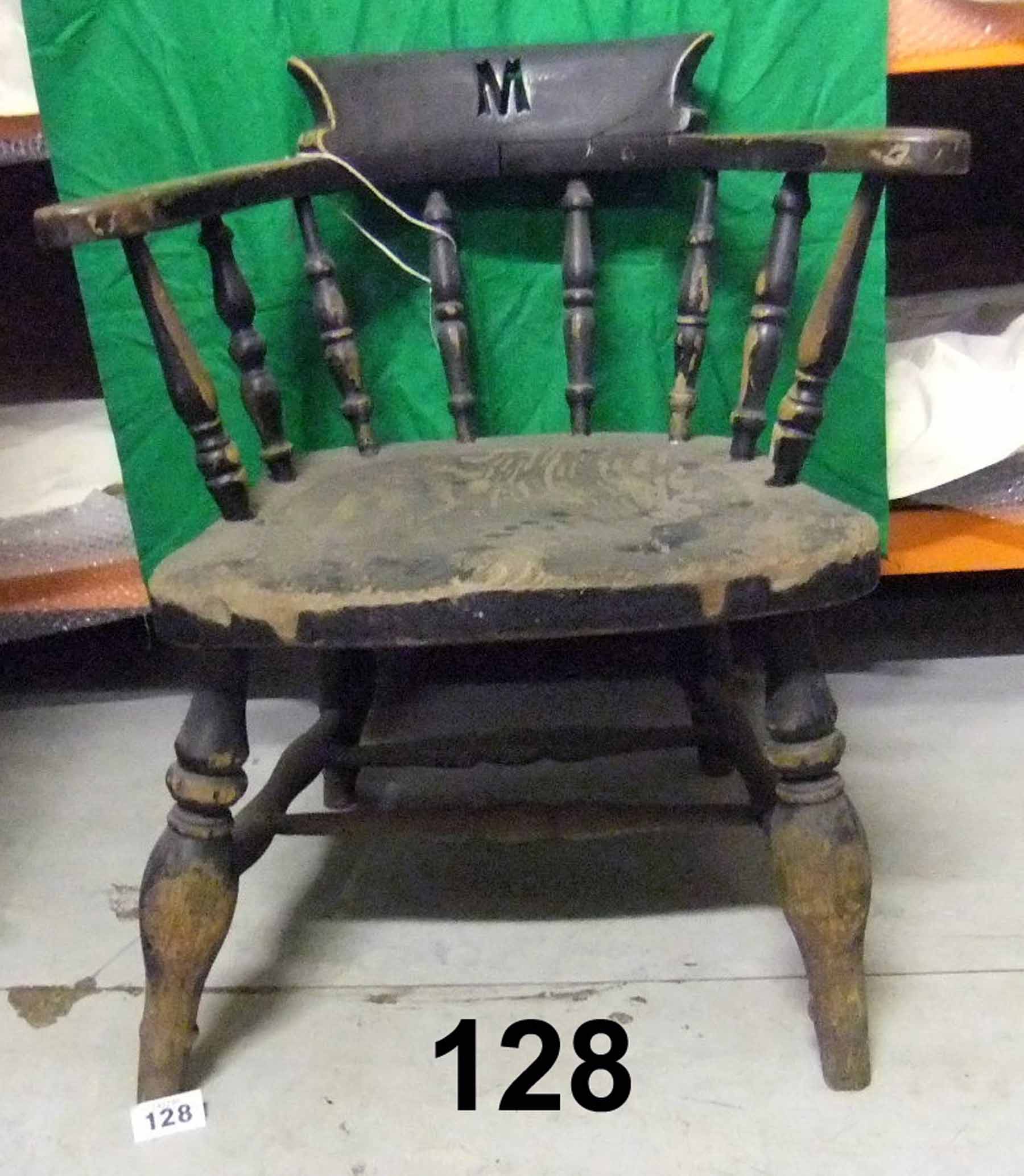
I am sitting in a Midland Railway chair, aptly for the article, in the museum which is housed in our LNWR full brake.  The rain is tipping it down and Easter Sunday has Chris’s pipe in danger of being flooded!  As it is not very busy I’m writing this article as for some time we’ve called ourselves the Chasewater Railway and Museum Co. but have not had a museum for the last few years.

Firstly, I would freely acknowledge past members who have gathered together a very good collection of railway relics and artefacts.  The last curator  being Barry Bull, who put in many hours over the years. (This was first published in 1993, now, in 2023, 30 years later, Barry Bull is still Curator, still putting in many hours. See below).

My involvement began when, a couple of years ago, I went into the museum to tidy up and dust and polish the display cabinet.  It was soon obvious, however, that all was not well.  The roof leaked badly, the exhibits had become dirty and run down, and many items were being ruined due to lack of care and attention.

The next few weeks were spent in desperation salvaging items that had become wet and taking them home to dry out as best I could.  The house began to look like a waste paper collection point as rare items were carefully dried out.  The smaller exhibits were also taken away for safe keeping, and the larger ones moved to drier spots in the brake.

Eventually the L&NW Society found that it had enough money to re-roof the vehicle, and after much reminding and being a nuisance, Steve Organ and his helpers re-roofed the vehicle, and the top-lights were rebuilt.  Adrian Hall re-wired the vehicle and installed new light fittings.  All of the remaining exhibits were taken down and moved to one end to enable a start to be made on painting the interior.  It was decided to use the coach for Santa’s Grotto, and John Duffill did most of the scraping down and painting.  Once Christmas was over and Santa’s Grotto was taken away, I re-arranged the interior to look a bit like an office and rebuilt and varnished the display case.

Keith Poynter has made a start on painting our metal signs.  He is making an excellent job of it but it is a bit like painting the Forth Bridge, there’s a lot more to do yet!

A view of one end of the museum which has been re-roofed and re-decorated and is now open to the public once more.   Pic – Nigel Canning

Anyway, the museum re-opened on our first steaming of 1993, March 21st, it still needs work but at least we’ve made a reasonable start, and hopefully it will be an added attraction for the public, and reveal our collection to members who just did not know what we had in store.

The latest news is an attempted break-in during the week before Easter when two local youths broke open a door.  Fortunately they were heard by Chris Hatton, and he and Steve Organ apprehended one of them who will shortly be appearing in court.  The burglar alarm fitted to this vehicle is in perfect working order, so hopefully this will be our last break-in and I look forward to the museum being further re-opened in stages.

Part of the 2012 museum

Finally, if anyone has photos of the local engines or collieries we are always willing to copy them for the collection in order that we get a comprehensive display.

This final sentence still holds good in 2012.(And 2023!)

Lancashire & Yorkshire Railway Van

Bob Duffill

As Tony Wheeler has been busy working on the L&Y (ex Cadbury) van recently, I have found some information on this unusual vehicle.  The original design goes back to the 1860s when an 8 ton version was introduced with a single roof door.  With the improvement in springs and wheels, this was later uprated to 10 ton in the mid 1870s.  The vans continued in production until 1916 when the last few were made, these having double roof doors.

I am unable to date ours yet, but it is between 1875-1913.  The LMS started scrapping them in earnest from the mid-1930s and ours was probably acquired by private industry shortly after.

The van should be painted in grey (Tony’s favourite colour) with white lettering, but as a change there was a variation which I feel we should adopt.  If they were shopped in Lancashire they had white roofs, but if they were shopped in Yorkshire they were painted red oxide, carrying old favours into newer times.

Some of our wooden-bodied vehicles are in fact quite interesting and well worth having restoration work carried out.  More paint to the C&W dept’s elbow! It won’t be long before we can have a decent goods train.

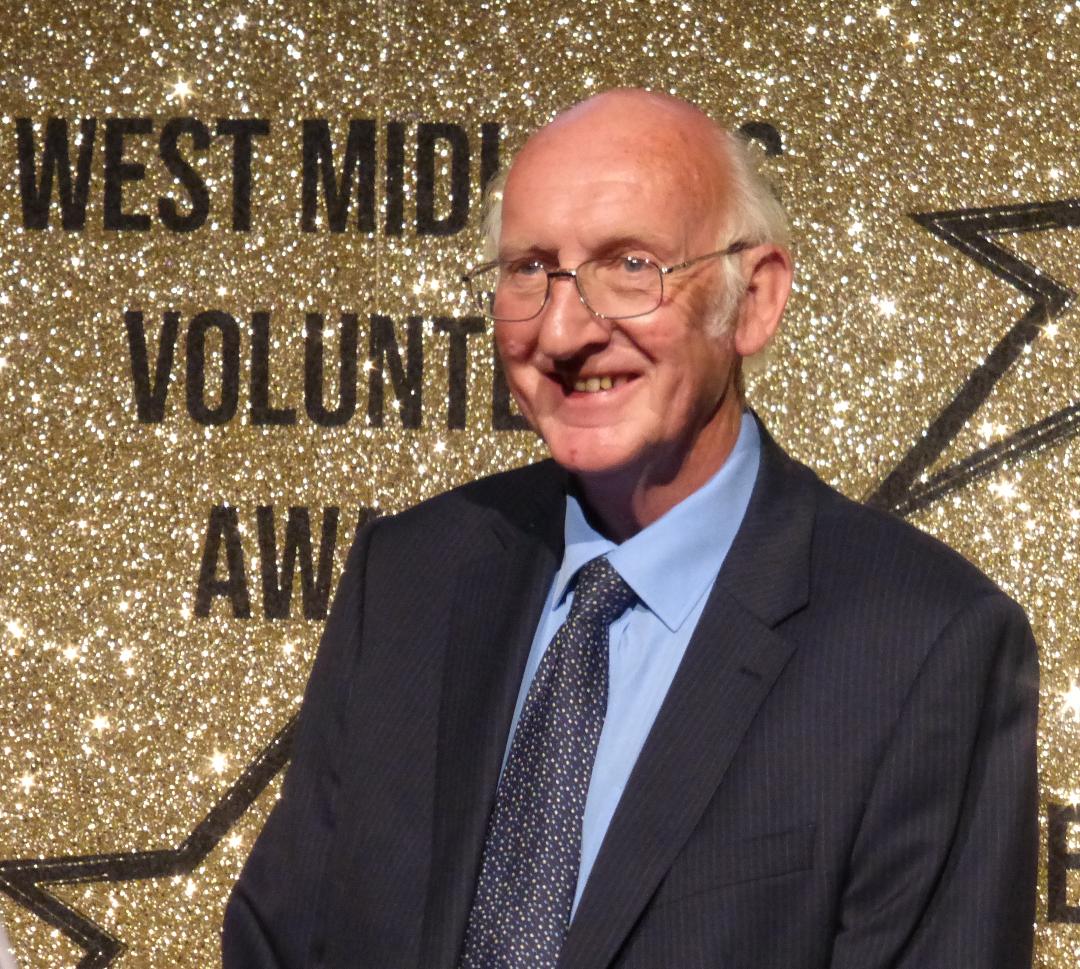
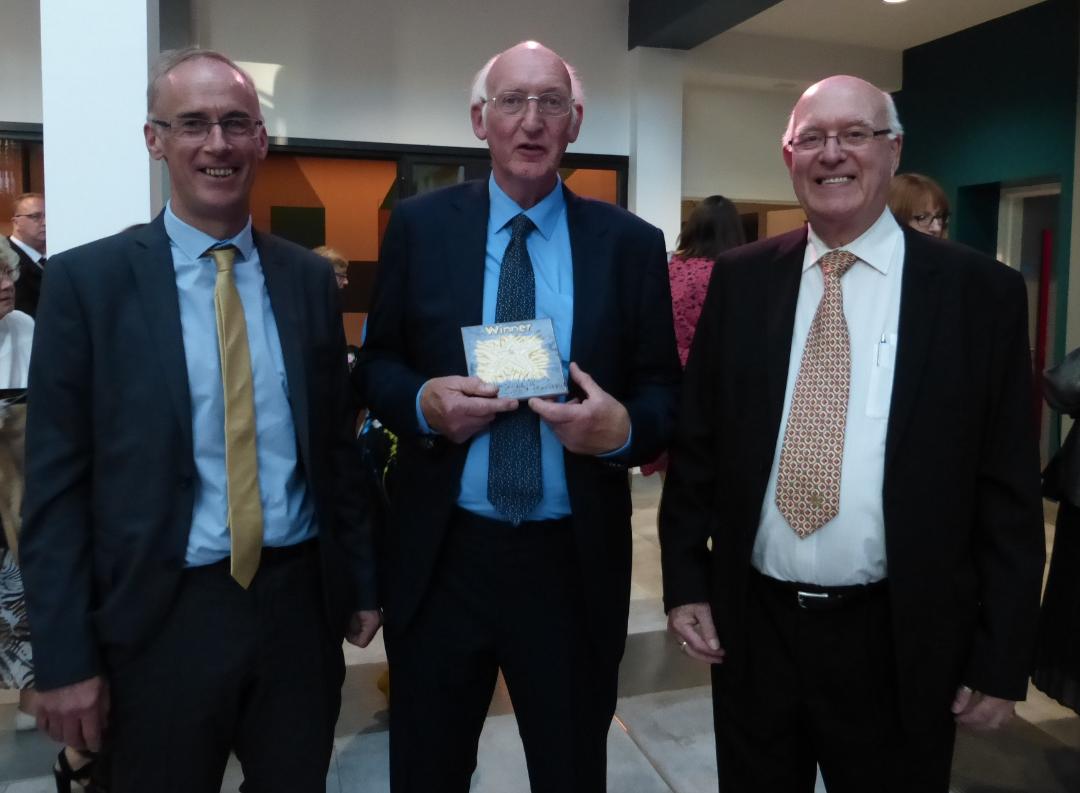
Barry Bull – Curator extraordinaire

Volunteer of the Year awarded to

Barry Bull, Curator, Chasewater

Railway Museum in individual

category, West Midlands Museum

Development Awards 2019

Museum Curator Barry Bull (centre)

holds his Volunteer of the Year Award,

with Chris Copp, Staffordshire

Museums Service (left) and David

Bathurst, Chair Chasewater Railway

Museum Committee (right).

If only he hadn’t dropped it!!

157 – Chasewater Railway Museum Bits and Pieces

157 – Chasewater Railway Museum Bits & Pieces from Chasewater News Spring 1993

– Part 3 The Very Special Day

This part of the post is written in 2023, Chasewater Railway has a regular group working on the P Way, but they could always do with more!  This post, as the introduction says, is a solute to the P Way gang back in 1993, including, in the bottom picture, a photo of Tony Wheeler, who recently passed away. Tony is on the extreme right of the pic.

A salute to our PW gang – By Dave Borthwick

It began with Keith Day phoning round mid-week to prepare everyone for the last track bash of phase 1, planned for Sunday.It was good to see all the regulars arrive, those same members who put themselves out most weekends to carry out hard, heavy work in both scorching sun and freezing drizzle.  The train left for the railhead leaving behind me – Dave Borthwick (part-timer), Keith Day and Arthur Edwards to select a pair of 30 foot match conditioned bull-head rails from the shed area.  Ian Buswell, JCB driver, with the help of Arthur slung the rail and transported it the long distance to the railhead.  Part time PW dept members like myself have constantly moaned when arriving at the railhead what a bloody long walk it has become following the recent track relaying.  Car transport is a must these days!

The JCB dropped the rail in the position it was needed and work continued as normal, selecting sleepers, chairs and keys.  At around dinner time Ian suggested hunting, catching and roasting a wild boar (because the line is really at the northernmost part of our railway world, in the wilderness), but his net had a hole in it and his mo-ped wouldn’t start, so Jonathan Clegg popped down to Tescos for 2 lb. of middle-cut bacon.  As we were unable to get enough heat from the mess van’s pot-bellied stove, a small fire was made from old sleepers and sacrificial bacon sandwiches were produced and consumed.Towards mid-afternoon our goal was reached, with sleepers laid, chairs secured, rails in keys in, jacked and packed.  The final moment had come.  Some 18 months ago, Little Tony, as we called him then, had scrubbed up and painted gold a rail key.  This was to be the ceremony, the fitting of the golden last key of the PW gang, track extension, phase 1.Amongst those present at this ceremony were Elizabeth, or Beth as she is called, surrounded by – Arthur Edwards, the oldest member of the PW gang, Tony Wheeler, who came to us three years ago and began watching from the other side of the fence and now is the hardest working member on the railway, strimming, weeding and hedging most days mid-week, especially Wednesday and Friday nights with Arthur.  Next, Keith Day who, despite family commitments and a rigorous working shift system at Bass Brewery, comes down and works on the railway’s greatest asset – the track.  Tom Mitchell, who, like Keith, comes down to the CLR to simply use the Sunday working hours from 9.00am to 5.00pm to the full on track laying and repair.  Ian Buswell, whose work with the JCB has put the PW dept schedule months ahead.  Junior members Dave Gardener, Jonathan Clegg and Paul.  Chris Chivers, whose help has been great, but recently limited due to other commitments.  Left until last purposely, is Les Emery, a man who is obviously successful in every way, chooses to come down to work in an open field and spend his day weeding, shovelling, lifting sleepers and poking life into a group of lazy ignorant peasants – author included!  Because of Les’s dogged determination he has forged a PW department  which began with a trolley loaded with shovels and tools which had to be pushed manually, making frequent trips loaded with ash ballast.  Nowadays a works train leaves Brownhills West at 9.00am consisting of a heated mess van, tool van and flat wagon, with JCB and dumper truck assistance following behind to work a full day, returning at 5.00pm.The thing that has come across from this exercise is that if you can form a group to carry out a task, results can be achieved more quickly than by individuals mooching around the railway doing odd jobs.  No-one other than Les and his lads organise their work schedules that is why work on projects take so long.  No-one envies these lads ’down the line’ because of the sheer hard, heavy, dirty work, but it is my belief that track across the lake supporting a variety of locomotives pulling coaches full of tourists is the answer to our future.  Please support our PW lads!So we salute Les, Arthur, Chris, Tony, Keith, Tom and many more.  Phase 2 is just around the

corner

corner!