Tag Archives: Asbestos

117 – Chasewater Railway Museum Bits and Pieces – Spring 1989

117ChasewaterRailwayMuseum Bits & Pieces

From Chasewater News Spring 1989

Topham & Austerity No.7 by Mike Wood.

 From the Editorial

No Chasewater News for the last twelve months and still no new Editor – but promises of better things to come!

At long last, the fruits of the reorganisation of two years ago are beginning to show.  The pace of progress at the Railway, both in administration and in physical terms, has reached a point where real new achievements are evident, as distinct from the earlier ‘marking time’.  This can be seen wherever you look; at Brownhills West, the station and yard are at their tidiest ever – the stock in the yard is all visibly presentable – the booking office, station office and shop are all established and contribute to both the appearance and good-working of our business – the trackbed is commendably tidy, and at last growing in length – the Gloucester coach and the Wickham coach are both being refurbished, and we are looking forward to the inclusion of a bar car in trains later this year.  Add to that the near completion of our run round loop’s refurbishment, the completion of the revised S & T arrangements, and a record turnover last year, and you can see that in the first complete commercial season of the new Company’s operation of the trains we’ve introduced, the Chasewater Light Railway has become a real hive of industry; projects are planned, materials are at hand, and to maintain the present impetus, we need your help!

Then followed the usual appeal for help on Saturdays, Sundays and train operating days.

 Carriage & Wagon Notes

Gloucester DMU driving trailer (BR Class 100)

This vehicle was acquired in 1968 by the Railway Preservation Society (West Midlands) for operation on their Chasewater running line, and was the first of four of this type of vehicle to go for preservation, the other three being, one which resides at the Gwili Railway, and two at the Swanage preservation site, where two driving motor cars of this type are also kept.The Gloucester this year celebrates its 21st anniversary in preservation, it’s been at Chasewater for twice as long as it was in BR service, and the interior still had the same seat coverings as when it rolled out of the Gloucester C & W workshops in 1957.  Sadly, these furnishings have inevitably become very worn, some torn and pierced by cigarette burns, and all suffering from old age.  Unfortunately, it’s not been possible to obtain the same pattern maquette to replace the old; however, the entire vehicle is being reupholstered, hopefully in time for Easter.  Also the floor is receiving attention, and new carpet fitted in the newly reinstated first-class section.

Externally, the vehicle quite recently received a repaint, including the roof, but some attention to the body is being undertaken as a preventative measure against the weather.  The lavatory compartment is being used as a store, since the pan is broken and there seems little point in replacing it when the Wickham trailer, complete with a perfect working order loo will shortly be joining it in service fro two-car running in the summer.

Wickham Driving Motor Kitchen Car

This vehicle has been the subject of a winter overhaul internally.  Starting in the dining saloon, the ceiling has been repainted, and a thorough cleaning given to al other surfaces.  The kitchen area has been completely emptied of all loose items so that the whole interior could be thoroughly scrubbed down, disinfected, etc., and the only items that have been returned there are those which are absolutely essential for daily catering service.  By doing this, a drastic reduction in the amount of items to be tidied and kept clean has been achieved, providing whoever works in there with a better environment. Less cluttered workspace, and a little more time to spend on the smaller number of items to be kept clean.  This is in line with general Railway policy of making tasks essential to our statutory duties as simple as possible – the smaller the task, the more likely it is to be done, and properly.

A start has been made on the overhaul of the doors, which, being made of a soft wood framing, have become severely warped over the years.

Wickham Driving Trailer

At last!  A policy decision backed with cash has been taken to restore this vehicle to operational use.  Last year’s traffic levels clearly demanded extra capacity, and the receipts from the 1988 operation have left us with enough money to start to replace windows and seats, as well as to repaint the exterior, all of which are scheduled to commence between the Easter and Whitsun steamings.

The Rest

Virtually no attention has been given to any other of the rolling stock, due to lack of manpower.  This year will see a repeat of the 1987 operation of trying to prevent further deterioration in the historic vehicles, since the provision of much more extensive accommodation is now being actively pursued by the Company, which would allow us to spend time and money much more effectively than we can at present on these vehicles.  However, the LNWR West Coast Joint Stock full brake (the ‘James’), which houses part of the small  relic collection will certainly have attention to its roof soon – a simple task awaits anyone prepared to play with bituminous coatings – come along to the site suitably attired and ask for ‘Clippie’ and the materials will be provided!  P.S. free tea is provided for workers on Saturdays!

 THE BIG LEAK – OR, WHO PULLED THE PLUG OUT?

Regular visitors to Chasewater will have observed the dramatic drop in the level of the reservoir in the last few months.  Railway members at first thought it was the water board’s response to our request for consideration of the condition of the causeway on which the railway crosses the lake, which had been adversely affected by the very high water level during 1987, in which year the causeway had actually been breached during a storm.  (This sounds familiar – low reservoir, breached causeway but this time it was natural causes!  For those who may not have been following the recent happenings at Chasewater, the lake has been virtually emptied and a culvert put through the causeway!)  However, the British Waterways Board have said that they can only attribute this to a leak and to the very low level of rainfall for the last nine months.  They have ‘no idea’ as to the reason for the scale of the water loss, but are ‘investigating’.  Meanwhile, they have ceased to abstract water for the Wyrley and Essington Canal from Chasewater, and we have the benefit of being able to see the whole of the causeway embankment down to its base – and a very sobering site it is too!  But at least we now have a much better idea of what we need as regards the type of materials to use in our planned repair of this essential link in our future enlarged railway.

Permanent Way Notes

Winter 1988 at last saw the completion of phase one of the Brownhills West station yard relaying.  For several years, with the threat of the Birmingham North Orbital Road hanging over the station, we have simply patched up as necessary in the station yard.  However, it’s been recognised for some time that if we were to stay at this location at all beyond 1988, we would need to completely relay the point leading to the sidings (No.2 point) and the centre road, since these had been laid in 1970 and largely untouched since.  The completion of this task has been greeted by all with a sigh of relief since it demanded a lot of what we are short of – manpower.  One really good thing to come out of it, apart of course from the comfort of the demonstration of concern for safety, is that the opportunity of revising the geometry of No.2 point was taken, and where we previously had a point taking up acres of land, with long leads (someone once said that it would make a good 70mph turnout if the sleepers weren’t so knackered and you could trust the brakes on loco No.21, we now have a much shorter point with sharper turnout and therefore a greater length of siding accommodation behind.At the other end of the line, work commenced in earnest in December on the extension towards the causeway.  This work consists of removing both the running line and loop (which is to be relocated at the new station site at Norton East) and relaying the running line in plain track with the concrete sleepers we already have in hand.  To this end, because of the great weight of the concrete sleepers, and because we have good hard standing access to the land immediately adjacent to the railway on this section, we are trying to find someone who will bring along and operate for a day, a HIAB truck, that is, a truck with a mechanical arm attached to it, to move the sleepers from the storage point near the level-crossing to the work-site – so if anyone out there can help, please get in touch.

Locomotive Notes

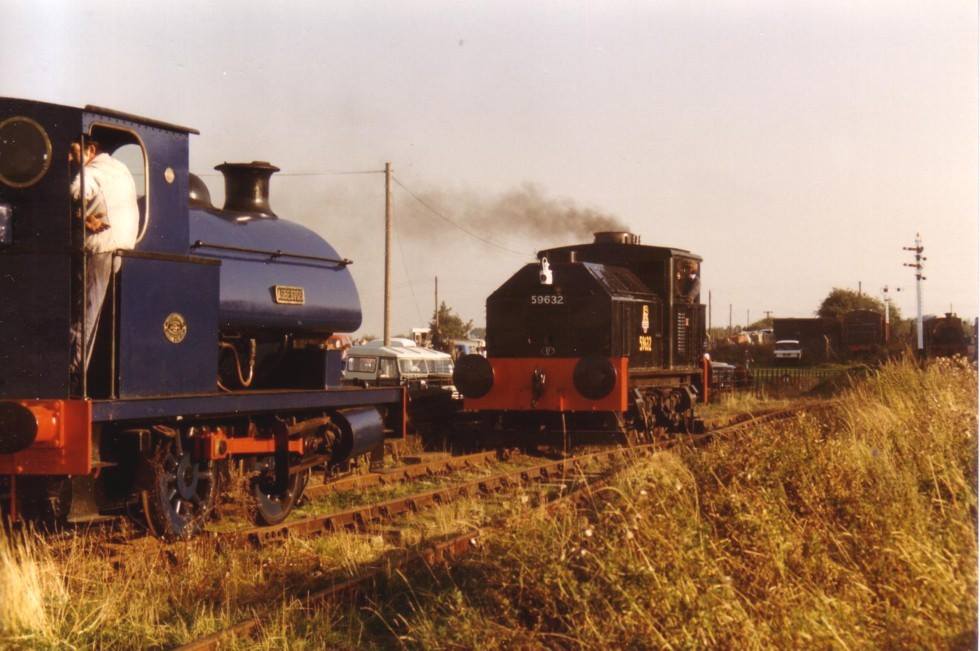
The 1988 season saw the greatest number of steaming days so far achieved by our group, and the forthcoming season will require even more loco availability than last.  The loco department certainly did the Railway proud as there were no loco failures all season.  Asbestos and the Sentinel were the stalwarts of the whole passenger service, tended in the greatest part by Colin Marklew and Nigel Canning respectively.  Over the 1988/89 winter, they have been stripped down for boiler examinations and general servicing.  Because of the need to completely dismantle the boiler of the Sentinel,   work on this commenced soon after the October ‘Gricer’s Day’. This meant that we were totally reliant on Asbestos for the ‘Mince Pie Specials’, and there she was, gleaming in the sunlight on Tuesday the 27th December, in service on one of the nicest and busiest days of the year.The use of Asbestos at Christmas, however, meant that the loco department then needed to strip it down, have the boiler inspected, rectify any defects and re-assemble it by Easter, as the Sentinel will not be ready for a return to service before Whitsun.  Will they do it? Come along at Easter and find out.

Work continues on S100, Lion and the little Barclay, and the race to be the first newly restored loco to run on the new extension in 1990.  Looks likely to be either Lion or the little Barclay.

On the diesel front, both the Fowler and DL7 are available for services, and the loco dept. are looking towards vacuum fitting one of these (probably the Fowler) during the summer.
The Wickham set has benefited from the attentions of the loco dept also, various refurbishments on the engine and transmission front are being undertaken to complement the C. & W. work on the bodies of these, and both engines have now recently been successfully ‘run-up’.

116 – ChasewaterRailwayMuseum Bits & Pieces – January 1988

116 – Chasewater Railway Museum Bits & Pieces

 From Chasewater News January 1988

 From the Editorial

It is eleven years since I last prepared an edition of our Railway’s magazine.  I do so now following our Publicity Director’s decision not to stand for re-election fro personal reasons.  As Company Chairman, however, I intend to act purely as a commissioning editor, so as to avoid any accusation of bias in editorial policy. Rob Curtis has also decided to stand down, as he is about to start a new job and sadly no longer has the time to be as active on the Railway as in the past.

 From the first AGM of the Chasewater Light Railway & Museum Company

The new Board for 1988/89 is composed thus:

Chairman – Steve Organ

Engineering Mgr – T.R.Sale

Operations Mgr – N.V.Canning

Commercial Mgr – B.J.Bull

Financial Mgr – L.J.Emery

Ex Officio – I.M.Newbold, A.C.R.Hall

In addition, the vacant posts of General Manager and Publicity Manager will be covered for the time being by Tony Sale and Steve Organ respectively.  Further, Adrian Hall has offered to continue as Company Secretary.

 The (lost) Causeway

Many of our members have in recent weeks expressed concern about the condition of the causeway which we hope to run passenger trains across to the far side of the lake eventually.  The problem is that some years of neglect, and very high levels of water in Chasewater, coupled with long periods of high winds causing severe wave action to erode the sides of the causeway have combined to completely breach the causeway.Our Company is powerless to do any remedial work, since we at present have no ‘Lawful Interest’ in the causeway, i.e. we don’t lease it at the moment.

Representations have been made to the local authority, Walsall Council, and at a recent meeting of the local authority’s recreation and amenities committee, the Engineer’s Department of Walsall Council were invited to make a detailed study of the problems and to investigate ways of restoring the whole of the causeway to an overall width which would allow both a Railway and a footpath to cross it.  Further, the Waterways Board have said that they will from now on abstract water from Chasewater before any of their BCN reservoirs, and also that this summer, the water level will be kept at a very low level.  This would allow for remedial works to be carried out.

One further point is that a Consulting Civil Engineer has, at our Company’s request, and without charges, examined the causeway, and suggested a relatively low-coast solution to the problem, and as soon as we receive his report, the local authority would like a copy – so perhaps all is not lost.  I hope to bring further news in the July edition of Chasewater News, but be assured that the Board are making as strong a representation as possible to Walsall Council about this vital link to Chasetown.Engineering Manager’s Report

Following a late start in 1987, we were able to run a train service for the first time since 1982, for which two locos, Asbestos and the Sentinel, and the Gloucester trailer coach were available.  No failures or serious faults occurred, although it has become apparent in this first season of continuous brake operation that improvements to the system can be made by relatively simple alterations to the system.  This work, along with annual maintenance, is now being carried out in readiness for the 1988 season, for which initially the same locos and coach will be used.

Work on four privately owned locos is currently being carried out on site, and their owners continue to put in a great deal of work on the Railway as well as their own locos.  The most likely of these to be steamed first is No.2 ‘Lion’ probably followed by No.7 ‘Invicta’ or No.3 ‘Colin McAndrew’.  Please feel free to come and see work in progress on these on any Sunday.

One priority job for the loco dept in 1988 must be the fitting of vacuum brake gear to one of the diesels to enable trains to be run on non-steaming days, and to provide cover in the event of a steam loco failure.  The cost of fitting this equipment, about £250, would be easily covered by the train fares taken on the event of ‘opportunist’ train operations i.e. where lots of people are in the park and we are not scheduled to run trains.

Another project for 1988 is the repair and restoration of the Wickham Trailer car.  This will allow us to run two-car trains for the first time, and doing so will allow us to generate extra income through the opening of a bar car, will give us extra braking power on trains, and will allow us the luxury of a spare coach in the event of a failure.

The coach is in basically sound condition, but requires seven new windows, and the doors require stripping and re-building.

Extension News

On 7th March, I formally applied to British Railways Board for License to operate passenger trains over the section of line from Willowvale Bridge to the Causeway.

The application to BR followed the purchase of the land from BR by Walsall Council, which was completed in November last.  Our Company’s predecessors bought the track on the land some years ago, but the Council slowed down the procedure of buying the land when our group ran out of steam in the early eighties, and only revived when our New Company breathed new life into the Chasewater Railway Project in October 1986.

Because we bought the track, BR gave us permission some years ago to maintain the formation of this section of line, so we very recently carried out work on the bridge, so that if BR give us the license we need, we can very rapidly move on to the section: I would feel we should be running trains along this stretch within 9 months of possession, to maintain the impetus of development of the line.  Steve Organ

 Civil Engineering

Work in this area has been concentrated in the last year on maintenance and simplification of the trackwork, incorporation of the Railway Inspectorates requirements, such as the installation of trap points, Annets locks, fencing, etc.  Whilst this work may seem tiresome, it is part and parcel of the business of running a railway and allows us to operate in confidence and in SAFETY.  We are fortunate in the field of trackwork to have over the last year, gained a member, Chris Chivers, with experience and enthusiasm for p-way work (when he’s not setting things on fire).

We have also to thank Mr.J.L.Townsend, M.I.C.E., who has recently undertaken an inspection of Willowvale Bridge, and provided a formal report and detailed specifications for remedial work to it, work which is likely to be largely complete by the time you read this.

In view of the progress made in the last year, we are now making detailed plans for the future.

114 – Chasewater Railway Museum Bits & Pieces, Winter 1987

114Chasewater Railway Museum Bits & Pieces

 From Chasewater News Winter 1987

Featured photo: Kerr, Stuart    Works No 3063    D249 Willy 0-4-0WT Pic – RMWebb

Chasewater Comment – This issue’s comment is not the usual message of doom and despondency and may help prove that all the recent effort has been worthwhile. (This page was ok but it soon went back to the old story – we’ve not got any money!)

From the Boardroom Notes – Most of the hassle is being caused by the motorway mentioned in the last notes, of which more later.  Many problems are being caused because the railway’s records are scattered among the directors, especially the accounting records which really do need to be housed centrally.  To this end the office at Brownhills West was planned, agreed and the basic structure provided, but despite the plea for funds in the last magazine, none have been forthcoming.  The situation is now becoming very grave, as it will soon be impossible to meet the statutory requirements for administration of the business.  The company has no money available for capital expenditure before Easter, nor to cover commercial stock and publicity for next season.  This is largely due to our inability to make more money from operations, hence the need for the above expenditure. (Seems like a vicious circle – after being in similar circumstances for some time before this point, the people running the railway must have been very enthusiastic to keep carrying on!).

The AGM in March will see all of the present Board standing down and in some cases seeking re-election.  Anyone interested in taking part in the management of the railway should contact the Secretary as soon as possible.  Essential requirements are enthusiasm and commitment. (As Mr. Punch once said: “That’s the way to do it!”).

The Chairman and Secretary have been engaged in a considerable amount of planning, lobbying and briefings connected with the development of the Railway now that the motorway route has been published.  The Company is objecting to the destruction of Anglesey Basin by the Burntwood by-pass and its link road.  Development of the rest of the line should be unaffected but long leases are unavailable at present.  Negotiations will however continue and preparatory research is now being undertaken for the Light Railway Order.  The Board has produced a report on the options available.  The basic proposals include continued development of works and storage facilities adjacent to the present shed and location of land for visitor facilities and a museum next to a re-sited Brownhills West Station.  It is this latter point which is causing problems as the Council seems to be unwilling to commit to anything at the present time.

By the time you read the next boardroom notes our surveyors and solicitors will be playing a much more active role in ensuring the future of the railway, with special reference to the reinstatement of lost facilities and opportunities at Brownhills West.

News from the Line

Permanent Way Department – Following a couple of derailments, the points next to the water column controlling 2 & 3 roads have been completely dismantled and rebuilt in a shorter configuration.  Work is expected to be completed well before Christmas and as a result, 3 road should be around 60 feet longer.  After completion of this work a start may be made on the much awaited run round loop at Brownhills West.

There are still a number of jobs outstanding to satisfy the Railway Inspector, notably provision of level crossing gates, facing point locks and Annets Key lever frames.  It is hoped that this work, along with the usual repairing of fences and packing track, will be completed this winter.  All volunteers will be most welcome!

Carriage & Wagon Department

Gloucester Trailer (E56301) – This vehicle has run its first year on passenger trains with the vacuum brakes in use.  The roof and bodywork have been repaired and a number of batteries have been replaced.

Wickham Power Car – This vehicle has again been in use as a stationary buffet car earning vital income.  Replacement guttering has been completed and the roof repainted.  A number of damaged batteries have been replaced.  Attention is now required to repair its warped doors, and to repair and repaint the body and re-decorate the interior.

Wickham Trailer – This vehicle is still relatively derelict with a large number of broken windows.  It has, however had its replacement guttering completed, roof repainted and a number of windows are now available to replace those stolen or damaged.

LNW Milk Van – ‘James’ has had a couple of body panels renewed following attempted break-ins and has also had mains lighting and a burglar alarm fitted.  It is hoped that the ‘motorway move’ will allow it to be re-connected to the rest of the railway.

MR Passenger Brake – This for wheeler has been repainted inside and out and has been in use on steam days as an extra exhibition coach.

GW Brake Van – This van has been beautifully restored internally and now only requires ‘finishing off’ and attention to the running gear.

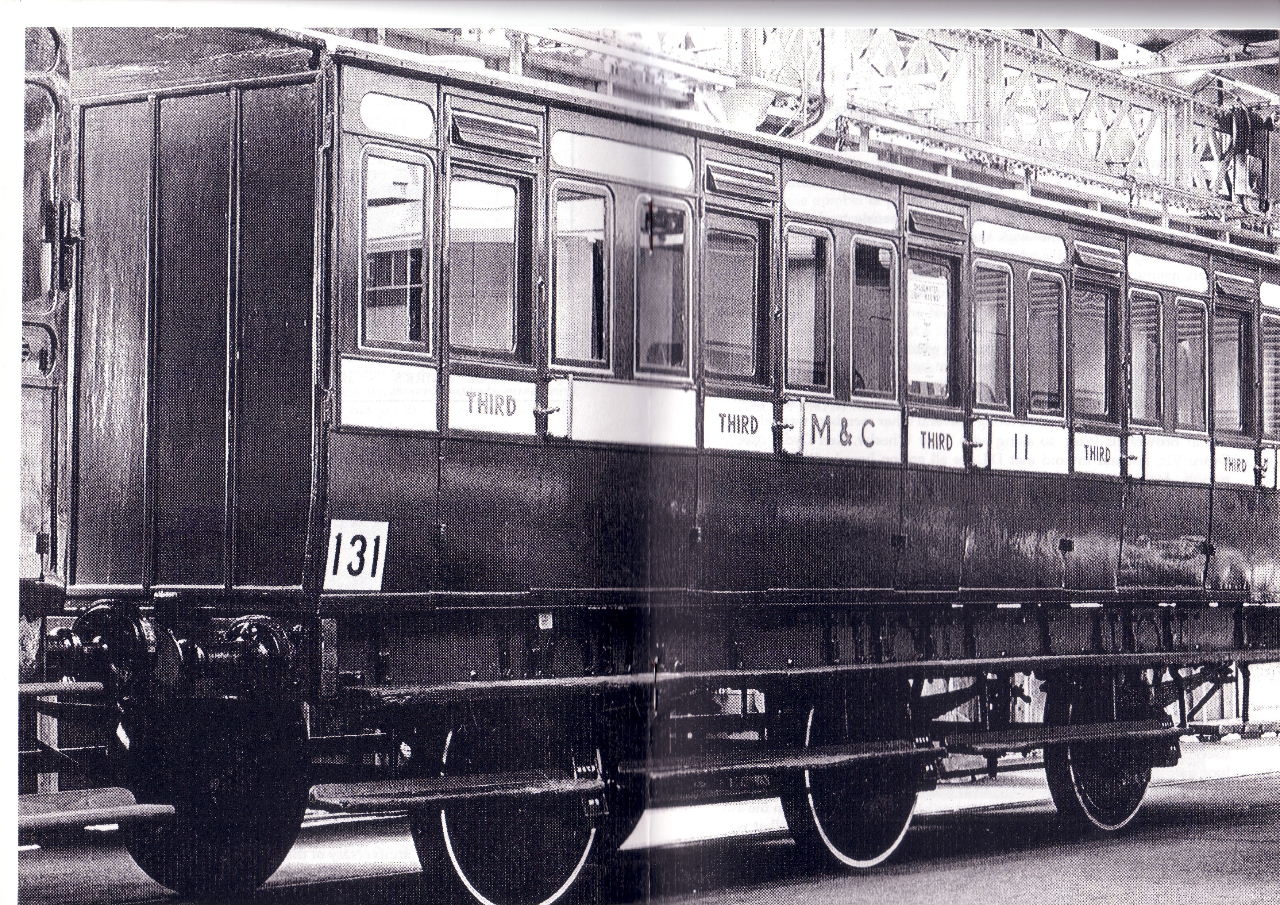
M&C, MSL, & LNW Brake End – All of these vehicles have received a certain amount of ‘preventive renovation’ and look quite presentable from a distance.

Hopper Wagon – This wagon has had the hopper completely removed and is to be fitted with sleeper decking for use as a flat wagon.

One of the ex Holly Bank Colliery 5-plank wagons has been repainted in a livery reminiscent of Stroudley’s improved engine green.

All other Vehicles – No work carried out.

Loco Department

No.1 – no work done, needs painting and superficially renovating.

No.2 – ‘Lion’ is still progressing under its new ownership, having had its chimney cap repaired, paint stripped and re-applied, and the boiler prepared for inspection.

No.3 – ‘Colin McAndrew’ work is still progressing on boiler repairs.

No.4 – ‘Asbestos’ has run well after a late start this season.  It will require minor work on valve gear, boiler and regulator ready for next season.

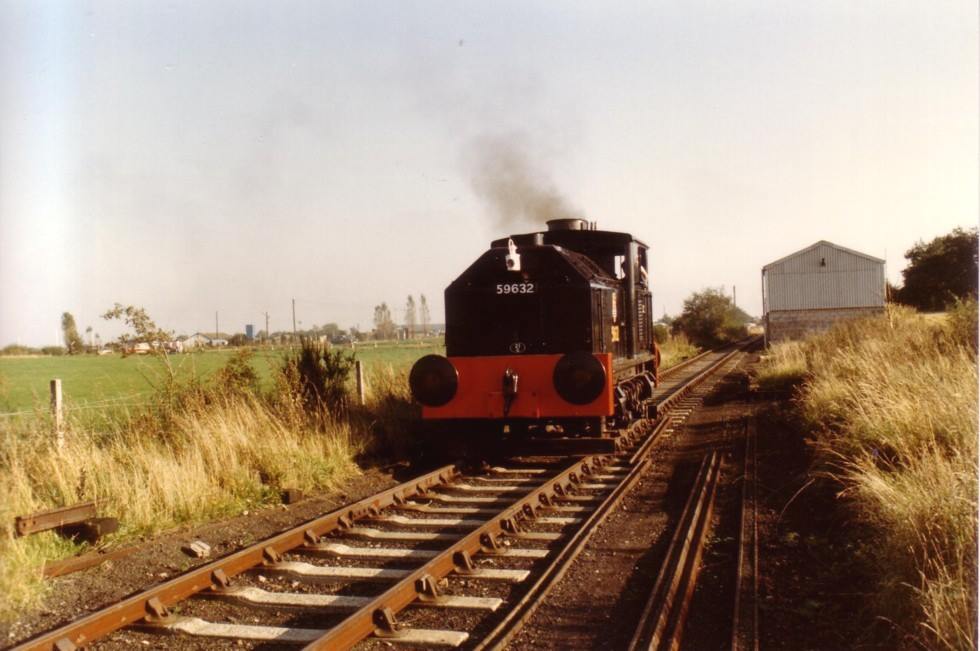
No.5 – ‘Sentinel’ 59632 has completed its first full season of passenger work and on 11th October was griced in the traditional manner by a man with a long mac and notebook from the field opposite the shed.

Sentinel – December 1989

No.6 – The Albright & Wilson Peckett has had the cab and boiler removed to allow work on re-plating the bottom of the smokebox to proceed.

Peckett 917 at Albright & Wilson 21-4-1951

No.7 – The Ruston is still operational with no problems.

No.8 – ‘Invicta’ has been prepared for boiler testing and has had part of the driver’s side cab cut away for re-plating.

Invicta – Station Master: Rob Curtis (AKA Elder Grimm)

No.10 – ‘S100’ Work has progressed on steam chest fastenings, frames and spring hangers.

No.11 – ‘Alfred Paget’ remains out of use although it was recently repainted.

No.12 – The Fowler, following its recent arrival, remains out of use pending replacement or repair of its batteries.

No.15 – The Hudswell remains out of use with no work having been carried out.

No.21 – The Bass pudding remains out of use with the engine removed.  Some work has been carried out on de-rusting and painting the bodywork.

Chasewater Events 1987

Our first full operating season since 1982 saw four special events organised by the Chasewater Light Railway and Museum Company.

The first event was held on 26th April when, in addition to a Norton Motor Cycle Rally, we held a Railwayana Fayre.  The event was a reasonable financial success with eighty plus Nortons in attendance plus around a dozen sales stands.  Nigel Canning’s Sentinel performed admirably on trains, as indeed it has all season.

Sunday 21st June, a somewhat overcast day saw both ‘Asbestos’ and the Sentinel in steam on the occasion of our first Model Engineers Day.  Attendance both of the public and, perhaps even more disappointing, of exhibits was low.  Thanks go to John Rickers for bringing along six of the thirteen visiting exhibits.  John has been a good supporter of or rallies for several years now and his models are of a very high standard.  However, the star of the show was Roy Prime’s Sentinel steam wagon, built to ¾ scale, attending only its second rally.

One new event of which we had high hopes was the military weekend held in conjunction with the West Midland World War 2 Re-enactment Group.  Approximately twenty military vehicles attended the show, which was held over the weekend on Saturday and Sunday 25th & 26th July.  Apart from the mock battle held at 3.30pm on the Sunday ( unfortunately just as rain began to fall), highlights were an attack on Asbestos-hauled train and a 1943 Bren Gun carrier giving rides.  The Sentinel also saw use during the weekend.  Thanks in particular to Peter Bick, Chairman of the re-enactment Group.  The show was a moderate success and hopefully we can make various improvements for a similar event in July 1988.

Our biggest and best event was the annual end of season Transport Rally held on 11th October.  Two hundred and fifty exhibits were on display, including a 1904 Marshall traction engine.  It was nice to see the former West Bromwich Corporation Dennis ‘E’, now 59 years old and coming to its first rally since a major engine re-build.  A good selection of vintage and classic cars was well backed by 20 odd military vehicles, and a handful of commercials, more than in recent years, and a good display of motor-cycles and stationary engines.  Thanks in particular on this day go to Angela and Jill fro their work assisting Rob Duffill in the buffet coach.  Also special thanks to Ralph and Vera Amos for manning the sales stand at our major events this year.

From the Archives

Again this section features something of local interest.The Ennals Toy Fair handbill dates back to approximately 1935 – not only are the prices a revelation but just look at the various departure points, out of 38, only 12 remained open in 1987.  (Probably still fewer in 2011).

112 – Chasewater Railway Museum Bits & Pieces No.1 Summer 1987

112 – Chasewater Railway Museum Bits & Pieces No.1

From ‘Chasewater News’ Summer 1987

 Chasewater Comment

This issue’s contributor is Adrian Hall, Chasewater Light Railway & Museum Co. Company Secretary and a member of some 11 years standing.

The railway has long avoided making an important decision.  For it to become a museum of light and industrial railways, or an industrial loco group?  If the former then it must plan now to develop a museum complex which will draw visitors and exhibits, and have the ability to fund operations.  If the latter then it should dispose of everything except the most basic track maintenance stock, one passenger coach and the steam engines.  A basic platform with a short running line is all that would be required for the occasional Open Day, and funding would come from the small group of members in the ‘club’.

A museum requires a large building, visitor facilities of good quality to provide funding, and a line of sufficient length to give a real purpose to the railway.  All of this needs to be planned now, and implemented in the next few years (two or three, not ten or twenty).  It also requires commitment and enthusiasm.

So which is it to be?  The decision must be made now, or it will be made for us and will be neither of the above, but an end to the Chasewater Light Railway altogether.

Boardroom Note  (By the Company Secretary)

There has been much activity in the boardroom of late, where in addition to the general management of the railway, work still continues to complete the corporate reorganisation.

The railway is run on a day-to-day basis by the six departmental managers, to whom general enquiries, etc., should be addressed, the board being responsible for co-ordination and strategic planning.

The assets and liabilities of the Society have now been taken over by the new Company, as have most of those of the old Company.  It is hoped that these transfers will soon be completed, enabling the two ‘old ladies’ to be finally wound up.

Administration should be eased greatly soon once work is completed on the new office at Brownhills West.  Inevitably shortage of funds is slowing the project, which will also provide a new booking office, the old one met its demise at the hands of the tractor last year!) and a small shop unit.  If anyone can help with this (about £100 for wood, etc. is all that is needed) then their contribution will be gratefully received.

Thirty pounds or more will secure your name on a brass plate within this new and much needed facility.

As most of you are aware by now, the railway is to be crossed y the ‘Birmingham Northern Relief Road’ (now known as the M6 Toll Road), the motorway will orbit the northern side of the conurbation, which will relieve the M6 (or will it?).  The motorway will completely alter the South shore of Chasewater, including demolishing the Brownhills West Station site.  Informal negotiations have taken place with the Local Authority and the Department of Transport, and we have now engaged Solicitors and Surveyors to act for us in the formal negotiations to come.

We are obviously going to have to re-locate our main site, and anyone with any thought on this matter is urged to write to me as soon as possible.  We cannot put much in print at the moment, but I hope to be able to furnish more details in the next magazine.  In the meantime if you want to know more come along to Chasewater and ask.

A new set of membership rules were passed by the Board recently, mainly to tidy up the existing arrangements and make them clearer.  It is intended to send them to all future members when they join, and to existing members with a subsequent mailing when finances permit.

Among the new members listed are: C. Chivers, K.R.Sargeant, D.M.Bathurst and M.Webb.

Carriage and Wagon Notes (By Steve Organ)

Work is in progress on a number of vehicles in order to preserve and tidy the collection until such time as they can be placed under cover.

Appeal:

Winter 1987 should see some of the vehicles protected from the worst of the weather by a ‘tent’ in the station yard, although this is dependant upon the continuous flow of the following materials, which we would ask all members to look out for and drop into Chasewater in any quantities, however small: Tarpaulins, scaffold tubes (any length from 1 foot upward), scaffold planks (any length from 1 foot upward) and scaffold fittings.

Work in Progress Completed

L&NWR Suburban Brake

The roof has been overhauled and re-coated.  The ’lake‘ side has been stripped back to bare wood and primed with a fungicidal primer to combat the mildew problem, as this side suffers from the worst weathering.  The doors are being re-fitted and LNWR livery is being applied.

Manchester, Sheffield & Lincoln Brake

The Manchester, Sheffield & Lincoln coach with Asbestos

Has been stripped to bare wood and Cuprinol 5-star anti-rot applied.  Repaint is proceeding in light chocolate and silver grey.  Mock doors are being fitted on the brake end, which was burnt out, to tidy up the coach’s appearance and keep out the weather until new doors can be made (any carpenters out there?).

Maryport & Carlisle

No further work is being undertaken at the moment but supplies of paint are on hand if anyone would like to come and paint both ends (which are in undercoat) or start work re-panelling the ‘lee’ side.

Midland Railway Passenger Brake

The roof has been completely overhauled and re-coated.  The body has been re-panelled as far as possible, but not yet re-beaded.  The basic maroon livery has been applied externally and the interior painted lime green and white to match the LNWR 50’ brake ‘museum’ livery.  One half is being used as a gallery of railway prints, the other half is full of milk churns and ’luggage’ to represent an authentic ‘in service’ appearance.

Great Eastern Passenger Brake

Still in a disgraceful condition, we now have some panelling to hand ready to clad the sides of this vehicle.  Some of the existing panelling is still good and only requires painting.  We have the paint – we need painters!   Scaffolding is now available to work safely on this and other vehicles so come and help us with this basic work!

Ex GWR 16 ton ‘Toad’ Brake Van, Asbestos with the Maryport & Carlisle coach and the GWR ‘Toad’ brake in 1972

Now in private ownership, the ex Littleton Colliery ‘Toad’ is undergoing extensive re-panelling and replating to make good fire damage caused by vandals some years ago.

DMU Vehicles

The Wickham units have now been fitted with new gutters, a difficult and time-consuming task.  The roofs of both the Wickhams and the Gloucester have been repainted, and then in the projected C & W tent they can be painted into a uniform livery after body repairs are completed.

The Ex BSC Newark Hopper Wagon

This has now had its body removed and awaits decking before entering service as a flat wagon which will be most useful for track work.

So there it is.  Whilst progress is being made, we still need more help to complete these vehicles’ (and others’) conservation programmes.  We have the materials – come and help us use them!

Locomotive Notes

Despite mutterings from various people about supplying your editor with copious notes about what has gone on ‘down the shed’ the end result has been the usual – not even a blank piece of paper!

A brief layman’s résumé could be written as follows:

No.2  Following a change of ownership (its third since arrival at Chasewater!) the large Peckett has been stripped for its ten-yearly boiler inspection and hydraulic test.

No.3  Boiler repairs continue.

No.4  In service following being fitted with a new set of boiler washout plugs.

No.5  In service.

No.6  The ex Albright & Wilson Peckett has had its boiler removed in preparation for smoke box and tube plate repairs.

No.7  Serviceable.

No.8  ‘Invicta’ has been stripped for its major boiler examination and hydraulic test.

No.10 Following the insertion of new fitted bolts in the front end, Mr. Sale is about to start work on trueing the hornguides which should stop S100 from ‘waddling’ (which those who are old enough to remember say it suffered from when last steamed at Embsay).

New Arrival

A group of CLR & M.Co. members have purchased a Fowler 200 hp diesel hydraulic locomotive from the MOD at Radway Green in Cheshire.  The loco (numbered 7 at Radway Green, but presumably to be numbered No.12 at Chasewater) is in working order and arrived at Chasewater on 14th July and was on display at the Military Weekend of July 25th /26th following a hasty repaint in an olive green livery.

110 Chasewater Railway Bits and Pieces, from ‘Chasewater News’, September 1986

110 – ChasewaterRailwayMuseum Bits & Pieces

 From ‘Chasewater News’ September 1986

 For once it is possible to report good news!  Following the visit of Mr. Abbott of the Railway Inspectorate on 17th August we have been given permission to recommence steam hauled passenger services, subject to certain tasks being carried out, hopefully in time for Gricers Day on 12th October.  A further satisfactory inspection next spring should enable a full season of trains to be operated, the first since 1982.

 News from the line

Loco Dept.

Asbestos – Robin Stewart-Smith

No.4 Asbestos has been steamed half-a-dozen times so far this year and following trouble with a leaky blow-down valve (now successfully cured) the major problem is still the regulator which continues to insist on blowing through when closed!  Further investigations will no doubt reveal the cause of the trouble during the winter months when it is hoped that the outside motion will also receive attention to cure various knocks and bangs.

N0.5 Sentinel No.59632 has also been steamed on several occasions and following each steaming various adjustments, modifications and improvements are made by its owner.

Both Nos. 4 and 5 are now fitted with vacuum brakes, a necessary modification for running passenger trains.

No.7 the Ruston diesel has received a repaint and now sports a green livery which the owner claims is similar to BR Brunswick Green.  It looks very smart anyway.

No.10 S100 – continued progress is being made with getting components ready for re-wheeling the loco and as the “head of steel” gets ever nearer (it has lain isolated from the rest of the railway since 1983) it should take to the rails again before the year is out.

Carriage & Wagon Dept.

The buffet section of the Wickham sees extensive use, providing us with our main source of income.  Various improvements to the plumbing have been made and both coaches have been fitted with new rainwater gutters which will enable the much needed repaint to take place in the not too distant future.

The Maryport & Carlisle Coach has seen ‘Clippie’ steadily working to get this coach into a reasonable state of repair before it gets beyond redemption.  The coach is now in a uniform green undercoat and looks much more presentable.

Civil Engineering

Brownhills West Station June 1978

By the time the Task Force had completed the platform there was little over a month left to get the railway ready for receiving visitors during the Transport Extravaganza.  The platform had to be surfaced with a 6” layer of black ash and coping stones had to be laid alongside the museum coach.  The major work however, was to fashion a new track bed and lay track along the platform and then raise it over 9”.  A vast quantity of black ash was purchased and packed under the track in order to get the track level in the platform.  This work was completed in the nick of time so as to get the Wickham buffet in the platform for the Transport Extravaganza.  After that weekend work concentrated on regarding the line from the platform down towards the point for Elsley’s siding (more black ash!), and No.1 point was rebuilt.  Once this was completed the line was treated with weedkiller and fences were repaired and installed where necessary.  Nigel Canning is in the process of constructing a set of level-crossing gates to be installed at the road access to the loco shed and also at the level-crossing to the north of the loco shed.  Recent weeks have seen work proceeding on relaying No.1 road in order to remove S199 and the GER brake coach so that the Wickham buffet can be moved clear of train movements on operating days.  A fair amount of cosmetic work has been carried out around the platform, most noticeably a large pond known as ‘Lake Clippie’ after its constructor which has played host to several frogs, toads, a solitary newt and a steam powered model boat!

Museum Notes

Little to report other than the acquisition of several official postcards including a particularly rare example of a folded GWR card depicting King George V published in 1928 and valued at recent auctions at up to £60 – yes £60 for one card and one which we obtained as part of a collection costing just £25.

Mike Wood has generously donated various photographs of Cannock Chase Colliery locos which will eventually be displayed, and a friend of the Society, Robert Cadman, has given us a couple of local colliery lamp checks.

Reorganisation News – Adrian Hall

The appeal in the last Newsletter for candidates for management positions in the new company generated a very poor response.  There are still a couple of key positions without any likely contenders and anyone interested should get in touch with me as soon as possible.

Negotiations are still proceeding very slowly with the Charity Commissioners and in view of the need to be on a firm footing for negotiations over the motorway we have decided to incorporate a new Company as quickly as possible.

The necessary documents will probably be with the Registrar of Companies by the time you read this and it is hoped that the Certificate of Incorporation will be issued by mid-October, allowing the inaugural General Meeting to take place in late November/early December, probably concurrent with the Society AGM.

The Future

Negotiations with the Department of Transport have begun with regard to any compensation that we will get when the Northern Relief Road (M6 Toll) is built through Chasewater.  It is clear that the current terminus facilities will have to be moved north to a position at least adjacent to the shed (it is likely that the shed will not have to be demolished).  A planning proposal asking for outline planning permission to construct new terminal facilities is at present being drawn up, but is likely to be rejected as no development will be permitted along the line of a new road until the road is built.  This could well make our position at Chasewater untenable and to this end several alternative sites are being investigated.  It is hoped that the executive committee will have reached a firm preference which can be put forward at the AGM in November, along with the feasible alternatives.

431 Hudswell Group

The fund is ticking over quietly, giving the Society a monthly injection of cash.  By the end of the year the fund should be approaching half-way in raising the purchase price of the locomotive.  A few shares are still available.

Locomotive Stock List

In response to several requests here is a summary of locomotives on the CLR as at 1st September, 1986.  A full guide/stockbook will be produced when sufficient funds are available.  The next issue of Chasewater News will include a list of coaches, wagons and other rolling stock.

100 Chasewater Railway Museum Bits & Pieces – 1984 – 1

100 Chasewater Railway Museum Bits & Pieces – 1984 – 1

Chasewater News – Editorial

 The Society is approaching its 25th Anniversary which will be celebrated at the Society AGM on 13th October and at a Bus Rally and Railwayana Fair at Chasewater on the following day (October 14th) 11.00 – 4.30, admission free.

Throughout its 25 years the Society’s membership has fluctuated around the 100 mark whilst its aims have switched from creating a static museum to an operating railway.  Despite the lack of passenger trains during the last two seasons the Society membership has held its own and so far this year over 15 new members have been enrolled.  To these people we say thank you for having faith in the Chasewater Project.  Inside this magazine you will find a membership form and we are appealing for every member to enrol a new member to give us enough people to operate trains next season (as we are led to believe that we will be in a position to do so).

Members may have read elsewhere about plans to spend up to 14 million pounds on Chasewater Park and the Society/Company have drawn up plans to expand the Railway, should this scheme come to fruition.  All this is dependent on us having enough manpower to run services on a regular basis so it is up to the present membership to either come forward and operate the services or to find new members to do the same.  Members may also have read of a scheme to build a new motorway which may or may not pass through the park.  If it does come through the park then we are wasting our time.

News from the line

Loco Department – It has for sometime been felt that there ought to be a numbering system for locos at Chasewater in order to give a proper Light Railway image.

A start was made some years ago when ‘Invicta’ emerged from a repaint sporting a painted No.8 (it was then the eighth steam engine on site) on the front buffer beam and brass plates (GWR style) on the cab sides.

The following system has been devised and will be put into practice as engines are repainted, although the GWR style plates on ‘Invicta’ will not be featured on other locos as brass plates with the loco number and the legend ‘Chasewater Light Railway’ have been designed.  Some locos will also bear fictitious 21G shed plates as the Operating Superintendent reckons 21G would have been the shed code for Brownhills West (Hednesford Road) had it existed in BR days.

Loco                                                          No.

Hibberd Diesel                                 1                 First loco to arrive

Peckett 1351                                    2                  No. 2 at Wallsend Slipway

Barclay 1223                                   3

Asbestos                                            4

Sentinel 9632                                   5                 May be painted black as BR 59632

Peckett 917                                       6

R & H Diesel                                       7                 No.7 at Whitwell Colliery

Invicta                                                    8

Hudswell Clarke 1822                     10

Alfred Paget                                         11               No.11 at Gartsherrie

Hudswell Clarke 431                       15

Ex bass Diesel                                     21

L & Y Petrol                                            1

It seems strange to have two No.1s when starting a new system, even if they didn’t stay much longer!

Chasewater Railway Museum Bits and Pieces – No.97

Chasewater Light Railway Society

1982-1985

Newsletter January 1983

News from the line

Loco Shed

The loco shed is now completed and the engineering department has taken up occupation.  At present the shed houses the Sentinel 4wVBT, MSLR 6-wheeled coach and Asbestos.

The shed was built with the aid of a Manpower Services Commission Youth Opportunities Programme under the direction of Derek Cartwright. Unfortunately the scheme overspent by a sum well into four figures.  Whilst a small sum was inevitable on the end of the final scheme, the size of the present liability has to be met by the Company is of particular concern to the Directors.

West Midlands County Council Task Force

The Directors have chosen this as a means of achieving further developments at Chasewater, in the light of experience with the loco shed.  A special thanks goes to John Selway for getting the scheme off the ground.

The scheme is exclusively devoted to improving trackwork and associated facilities to a standard acceptable to the Railway Inspectorate.  This will entail the relaying of the track on the entire length of the line and the construction of a run round loop at Brownhills West Station. A material grant of £10,000 is available which has been earmarked for the purchase of rail and concrete sleepers.  Labour is provided by WMCC, who are also responsible for day to day administration.

Work on this scheme will shortly begin in earnest, with progress dependant on the weather conditions during the coming months.  This work will commence before the 1983 running season and it is likely that the running season will not start at Easter.

Asbestos

This loco will operate the first passenger train in 1983, after its prolonged overhaul is completed.  The loco will emerge in a new blue livery and will be fitted with vacuum brake equipment, which is a necessary feature of all future working locos.

Society members are currently working on the loco which is the first priority, ahead of the striping for boiler examination of the Sentinel.

That is the end of the Jan 1983 Newsletter, and considering the piece which follows, mainly taken from the history of Chasewater Railway, they really didn’t know what was coming!  There were no passenger trains from October 1982 until Spring 1985.  And, just as a matter of interest, ‘Asbestos’ in blue wasn’t a success either!

The Society had been proud to be represented at the Stockton & Darlington 150th celebrations in 1975 by the restored Maryport & Carlisle coach, but by 1982 things were not going too well at Chasewater. Vandalism and theft were rife, especially during the time when a Manpower Service Commission programme had been engaged on construction work for a new engine shed and some track work.

The Railway effectively closed in October 1982 when a miserable wet Saturday saw just two fare-paying passengers carried on the last train of the day. Although no trains were to be run for the foreseeable future, it was decided to soldier on behind the scenes as a Society. However, further problems occurred during a West Midlands County Council Task Force Scheme the following year when, after construction of a bay platform to accommodate the museum coach, the remainder of the platform was demolished by the Task Force – who then failed to return to rebuild and extend the platform as promised, for nearly 18 months.

It was not until 1985 that regular steamings began again, but in the intervening three steam-less years, membership had dropped by some 50 per cent. The Society deemed it necessary to prune its stock as it was realised that without an injection of cash, the whole affair might fold. The L&NWR Travelling Post Office went to Tyseley; a small “Planet” diesel went to Brian Roberts’ Tollerton Farm Railway, while individual members purchased two steam locos and one diesel loco in order that they could remain safely at Chasewater.

Working membership fell to single figures, but that small band succeeded in rescuing this early standard gauge preservation scheme from the brink of extinction. Subsequently, as described later, a new company was formed in 1985 – the Chasewater Light Railway and Museum Company – and achieved status as a Registered Charity.

Chasewater Railway Museum Bits and Pieces No.94

94 Chasewater Railway Museum Bits & Pieces

21st Anniversary Edition – 1

News from the Line

Loco Department

As a follow-on from the previous post, there is another comprehensive report on the locos, so I thought that I would reproduce it to check on the progress on the engines.

No.2 ‘The Colonel’

This loco finally entered service on Gricers’ Day, 12th October, after several test steamings.  Many repairs were carried out to the tank before it was refitted.  The loco appears to be very powerful and is mechanically superb and will come into its own when services are eventually extended.  The external finish however leaves a lot to be desired and it is hoped that the owners will rectify this in the near future.

No.4 ‘Asbestos’

Since the last report a vast amount of work has been carried out on this loco.  The boiler returned from Park Holland Ltd. in February after having the necessary fire box repairs.  Following this little work was done on the loco due to work on other engines but after mechanical problems with the ex MD and HB crane the wheels were despatched to the SVR wheel lathe at Bridgnorth and were back at Chasewater in October.  Their return signalled renewed vigour upon the loco and the wheels were stripped to the bare metal and given five coats of paint before the axle boxes were refitted.  The first weekend of 1981 saw the frames back on the wheels making the loco mobile again after eighteen months of elevation.  Following this the inside motion has been refitted and retubing of the boiler has started.  Hopefully the boiler will be hydraulically tested during the spring and refitted to the frames.  Although no firm date can be given, ‘Asbestos’ should return to steam this year.

No.7 (DL7)

The big Ruston has run trouble free most of the time and has earned its corn by performing several ‘master shunts’ over the last twelve months.  A rather garish ‘Bull inspired’ livery has been applied and has been met with the usual mixed CLR reaction to such creations.

I believe we should be told what the’Bull inspired’ livery was??

No.8 ‘Invicta’From Railway Forum, 1975

After another trouble free year the loco is in store until the new season starts at Easter.  Unfortunately the six-yearly hydraulic test is due at the end of June, immediately after ‘Transport Scene’ 1981 which will be its last appearance for a while.  The hydraulic teat will be carried out during the winter of 1981/82 and hopefully no problems should ensue.

S100

The dawning of a new decade saw the re-emergence of one Mr. T.R.Sale Esq. which has resulted in dramatic changes – i.e. the loco is completely strewn to the four winds!  The boiler was jacked up out of the frames and then lifted onto a flat wagon and finally deposited on a pile of sleepers next to the Great Eastern mess van.  The boiler inspector has been and shaken his head at three corners of the firebox and given instructions as to what must be done and where, which basically involves building up of wasted plate work and a dozen or so new rivets.  Following removal of the boiler the chassis has been dismantled and the wheels removed which are to follow in the step (?) of ‘Asbestos’ and spend a day or so on the Bridgnorth lathe.  Most of 1981 will be spent cleaning frames, etc. which should keep one or two people out of harm’s way!

No.12 ‘Sentinel’1992 D.Bathurst Collection

This is the first time that any progress can be reported on this loco which is the ex Walsall Gas Works Sentinel loco No. 9632 of 1957.  The loco is still at Butterley on the Midland Railway Project Group’s line but following various excuses and delays the boiler has been re-tubed, successfully hydraulically tested and refitted to the frames and at the time of writing new pipework is being fabricated.  Current thoughts seem to indicate that the loco will finally arrive at Chasewater in June or July.  For newer members it should be explained that the loco (in working order) forms part of the exchange deal for the ex Midland Railway Royal Saloon Coach which was agreed upon back in 1978.

No.20

This loco has been loaned to the Bass Brewery museum at Burton-upon-Trent for an initial period of ten years.  The main reason for this is that the engine is in need of a drastic rebuild and as the sister engine No.21 is in full working order (and newly painted) neither the time nor the money will be available to repair it in the foreseeable future.

Photo from British Locomotive Preservation – 1969

No.21

This loco is, as already stated, in full working order and was repainted by the Brothers Grimm to celebrate the 21st Anniversary of the Society.

Chasewater Railway Museum Bits and Pieces No.90

Featured image – Bagnall ‘Linda’

Neison – Alfred Paget crossing the causeway

90 Chasewater Railway Museum Bits & Pieces Nov 1978 – 3

Future Plans

Company News from the Joint Meeting

This meeting was called to enable the Board and the Committee to agree on the immediate and medium term goals for the railway and the respective roles of the Company and Society in achieving them.  The meeting was well attended, long and friendly and resulted in total agreement on all points.

It was decided to aim to operate the train services to the beginning of the causeway by 1980 and to open the line throughout its present length by March 1983.  This would mean rebuilding the causeway, erecting fences, major clearing of undergrowth and the obtaining of a Light Railway Order.  New platforms at the north end of the causeway and the far end of the line were also planned.  To cope with the increased traffic that the longer line would generate, it was agreed that in the five years up to 1983 a minimum of three locomotives would have to be put into and kept in working order and three additional revenue earning coaches would have to be acquired.  It was hoped that when the line was open as far as the causeway, i.e. by the beginning of 1980, two trains would be in operation on busy days and when the line was opened throughout, not less than two trains, each with two coaches, would be working each operating day.

It was also agreed that work should begin as soon as possible on the erection of buildings to house the working locomotives and wooden bodied coaches.  By 1981 detailed planning for the main museum complex should start with a view to beginning fund raising in the summer of 1982 and work on the buildings themselves in the winter of 1983.

It was unanimously agreed that the Society was to have sole responsibility for the acquisition, restoration and preservation of items of Railwayana and that the Company would hold all fixed assets such as track, buildings etc. and concern itself with the running of the railway and the raising of capital and income for the project.

Thus the Company will play a vital supporting role to the Society whose original aims – the acquisition, restoration, preservation and display of items of historical railway interest – now becomes the aim of what has come to be called the Chasewater Railway Project.  The Company is to raise the money for the attainment of that aim.  The Railway will be the principal show place for the Society’s locomotives and coaches.

Asbestos with the Maryport and Carlisle Railway coach.

The STEPS Project

Everything seemed splendid after the meeting and I was duly told off and to write something for Ian Patterson to publish so that the world might know where we were going.  Publication was set for September.

In August one John Selway, a Zebedee-like creature who telephones me from time to time to see if I am still awake, said ‘had I heard of STEPS and if not, why not?’

The Special Temporary Employment Programme is a creation of the present Government under which they will pay the wages of men hired under approved schemes to do work of value to the community which would not otherwise be done.  A grant towards materials would also be payable.  The Severn Valley, Festiniog and Midland Railway Trust have all benefited from the programme.

Frantic discussions were held with the Manpower Services Commission who operate the programme.  They seemed very keen to have us.  After much discussion and some reservation the Board decided to apply for a STEPS scheme.  The principal reservation concerned the quality of the overall supervision.  This was overcome by the Manpower Services Commission agreeing to allow us to appoint our own nominee as the site engineer – to be paid by them – provided he became unemployed first.  The gentleman concerned will have handed his notice in by the time you read this.To cut a long story short, the scheme was applied for and approved for 52 weeks starting on the 2nd January 1979.  The Company will be employing up to 30 men to work on the railway.  The total wage bill, all paid by the Government, is £79,000, and in addition we shall receive a £5,250 grant towards the material cost of this work.  The scheme involves the reopening of the line throughout, including the rebuilding of the causeway and the erection of fences and platforms, by March 1980 – three whole years ahead of the rather optimistic date agreed at the joint meeting in July.

To cope with the administrative problems which the scheme will create, we have acquired a site office – a mobile portacabin kindly loaned free of charge for the duration of the project by Cox’s Plant Hire of Brownhills and a telephone has been installed.

Of course, although one major problem is now solved – the re-opening of the line – another is created.  To provide the additional capacity necessary to cope with the increased traffic that the longer line should produce – and thus make more money for the project – we have got to have three locomotives in steam and three more revenue earning vehicles.  The original date for this was 1983, at the earliest.  Obviously it would be wrong to say that we must have them when the line opens throughout in 1980.  However, it is equally obvious that we cannot realise the railway’s full potential without them and so the sooner we can get them the better.

When the line is paid for in 1979, some £1,200 – £1,500 will be left in the development fund.  Before we can operate the line at maximum efficiency and put up the two buildings mentioned above, at least another £10,000 will be needed.  It can and will be raised.  One way in which I hope to raise money is by running a development fund lottery for the next few years.  This will be quite unlike the old weekly tote.  It will be on a much bigger scale and will take place about three times a year.  Tickets will be sold principally to members of the public visiting the railway rather than by Society members to their friends.  Properly managed such lotteries should raise between £1,000 and £2,000 per annum.  I shall however need help with the sales of tickets and I shall be pleased to hear from anyone who would be willing to sell lottery tickets at Chasewater at the following times: the first operating Bank Holiday of the season, Sunday and Monday plus the next operating Sunday afternoon: Transport Scene Saturday and Sunday and the next operating Sunday afternoon: the Saturday and Sunday of the Model Railway Exhibition and Gricers’ Day.  How about you?

The Causeway, December 1992 – David Bathurst’s Collection

The Future What of the future?  Apart from the obvious delights of having two miles to operate over as opposed to 700 yards, much work must be done.  The Board will soon be considering the future of the Norton branch: the nature of the STEPS programme to follow the present one: the possible extension of the railway to the north and or south:  the museum and workshop buildings and, perennially, the raising of money.

All these are continuing evidence of the new sense of professionalism which has brought so much progress in less than two years.  We are all determined however, that this professionalism, which we must maintain, will not stop the railway being fun.  As Keith Sargeant said to me recently – we must never forget that CLR is our train set.  Quite true – but there is no doubt that the longer the line and the more bits and pieces on it, the more fun a train set is.

It is the Company’s job to provide the longer line and those extra bits and pieces.John Macmillan

Norton Lakeside, looking towards Chasewater Heaths – David Bathurst’s Collection

Some thoughts about the future from 1969.Chasewater Railway Museum Bits & Pieces 51 and 52

Chasewater Railway Museum Bits and Pieces No.89

89 Chasewater Railway Museum Bits & Pieces Nov 1978 – 2

From the 1978 AGM Report

The final item on the agenda was the consideration of an offer from the Midland Railway Trust based at Butterley for the purchase of our ex Midland Railway Royal Saloon Coach.  The history of the coach was briefly outlined.  The coach was on loan to Derby Corporation for a further 17 years and they had a 25 year option open to them after that.

The Trust have spent a considerable amount of money upon the coach so far and wish to finish the job properly but don’t feel able to unless the coach is their property.  They reckon they will have spent well in excess of £10,000 on the coach by the time it is complete.

As the Chasewater Light Railway Society was in a difficult position – in effect our hands were tied – it was decided to let the coach go.  It was unlikely to come to Chasewater in the majority of our members’ lifetimes and, as in the case of the ‘E1’, if it had not been for the Railway Preservation Society then it would have gone to the scrap heap years ago, so at least some satisfaction could be derived from that.  The coach is to be exchanged for the following:-

1.    £600 in cash

2.    Equipment surplus to the Midland Railway Trust’s needs, such as crossing gates, signals, ancillary equipment, etc., but in demand at Chasewater – to the value of £1,000 plus

3.    The ex Walsall Gas Works Sentinel Locomotive (S9632/1957) plus spares, which will be in working order when it arrives at Chasewater, hopefully before Easter.Sentinel at Pleck Gas Works, Walsall, when nearly new.

The Hon. Sec’s. Report is reproduced below, being an apt summation of the present situation in which we find ourselves.

Hon.Sec’s Report 1977/1978

The twelve months since the last AGM have been very mixed with good news and setbacks at regular intervals.  1978 started very badly with the wanton vandalism of our ex Easingwold Railway coach.  The culprits who started the fire have not yet been apprehended and it seems suspicious to recall that the adjacent Go Kart Club has also been subject to two separate acts of arson in the last 10 months.

During the winter months other break-ins accrued to Society rolling stock resulting in the loss of several interesting relics.  However the local police force were eventually able to bring the two culprits to justice and the majority of the missing items returned.  Some £60 in value of relics was not recovered but as the Court awarded compensation to the Society we should eventually receive this money.

New arrivals during the year were the privately owned Hudswell Clarke side tank S100 which, following a complete overhaul which is expected to take another three years, should prove an ideal loco for working the extended services; the local chemical manufacturers Albright & Wilson Ltd. have placed on loan their 12” cylindered Peckett 0-4-0ST and it seems from help received from the Company so far that we might expect further assistance in the future.  The loco requires a major hydraulic exam, tank repairs and fitting of a steam brake before it sees regular use.  The final arrival was the five ton capacity Smiths of Rodley diesel crane from the Mersey Docks and Harbour Board, Birkenhead – an outright purchase by the Society for £432.

The Committee has given serious thought to the provision of covered accommodation at Chasewater and it is especially pleasing to record the purchase for nominal sums of two agricultural type buildings.  The first, the smaller of the two, has already been dismantled and brought to Chasewater; the other has yet to be removed from site.  We must now await the go-ahead for erection of these structures from Walsall Metropolitan Council.

Restoration work to locos and coaches has been fairly limited this year due perhaps in the main to the fact that various engineering projects and fund-raising activities have taken precedence.  However firebox repairs were carried out on the Neilson before entry into service again and routine maintenance carried out on this loco and ‘Invicta’.  ‘Lion’ to be renamed ‘The Colonel’ has had a start made on preparing for a major hydraulic exam, and S100 has seen reasonable progress in dismantling and de-tubing.  ‘Asbestos’ too is to be de-tubed and when this task is completed the boiler is to go away to Park Holland, who will raise the foundation ring a few inches to get round the problem of badly wasted corners and rivets in the firebox.  By far the largest expenditure on locos this year was the £460 spent purchasing 104 new tubes for ‘Asbestos’.

Several of our goods vehicles received coats of paint and roof attention to the box vans was performed during the summer.

The platform wall was extended during Spring Bank Holiday and with the recent Committee decision to extend the compound fence to include the platform, the platform can be set up to resemble an operating station at all times.  Another engineering project completed was the interlocking and signalling of the two compound points enabling train movements to take place in complete safety.

The news from British Rail that we could gain access to the loop with works trains from April 18h and full purchase likely by the end of July meant that a decision on the sale of the ‘E1’ had to be made.  Consideration was only given to previous enquiries and the Lord Fisher Loco Group based at Cranmore agreed to meet our minimum purchase price of £5,000.  The loco left Chasewater last Monday and restoration will commence this winter under cover in extensive workshops at Cranmore – the name and number plates and also the Rawnsley chimney are being retained by us.

Purchase of the loop has proved slower than expected and a lapse of a few more months now seems likely; however we now have the money immediately available when asked for.

Train services continued to operate on timetabled dates and takings were high on fine days; however wet or cold days affected the average takings.

The first Steam Spares Sale ever held by a Preservation Group went reasonably well considering lack of helpers, and a second such event is being held on ‘Gricers’ Day’ October 8th.

Our second Transport Scene was well supported by exhibitors but not by the public, again inclement weather did not help.  Let us hope that next year’s event is blessed with sunshine!

This year’s Model Railway Exhibition was also poorly supported by the public – an increase in takings at this event over the years has probably made us too casual as the standard of the Exhibition has definitely fallen over the last three or four years – perhaps a change of venue is called for?Chasewater Model Railway

The Chasewater Light Railway Company is currently negotiating for a grant under the Government STEPS Scheme to enable the rest of the railway to be brought into service.

ATV cameras were in attendance on the 15th September filming sequences using ‘Alfred Paget’ and goods stock for a programme to be shown in the ‘This England’ series early next year.

In closing, thanks go to all our members for their continued support, with special thanks to those who have contributed physical  and/or behind the scenes work throughout the year, readers of the Newsletter will doubtless have seen the same names recur on various projects so there is obviously scope for many more members to assist in whatever way they feel able.

B.J.Bull