Chasewater Railway Museum
August Newsletter
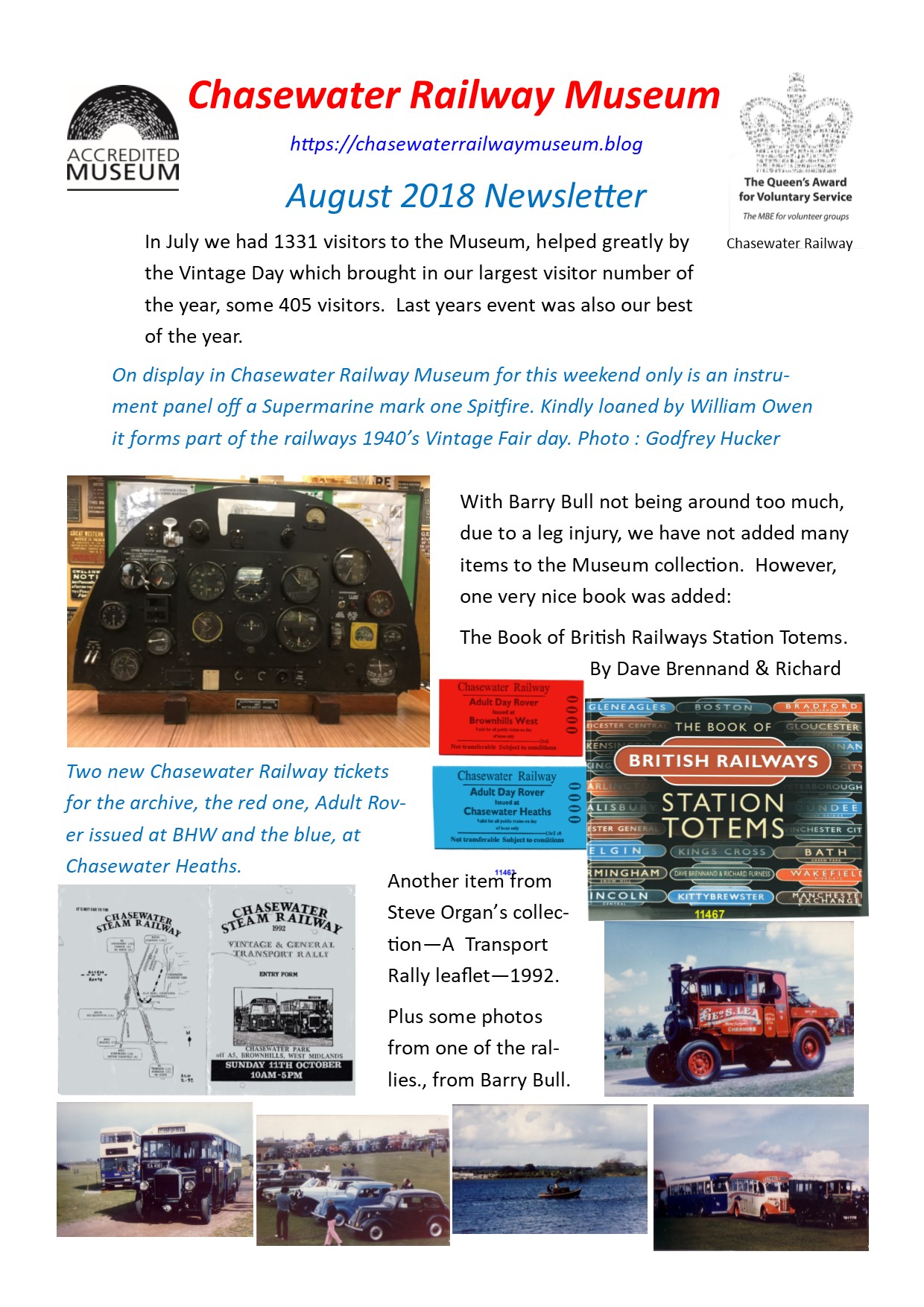

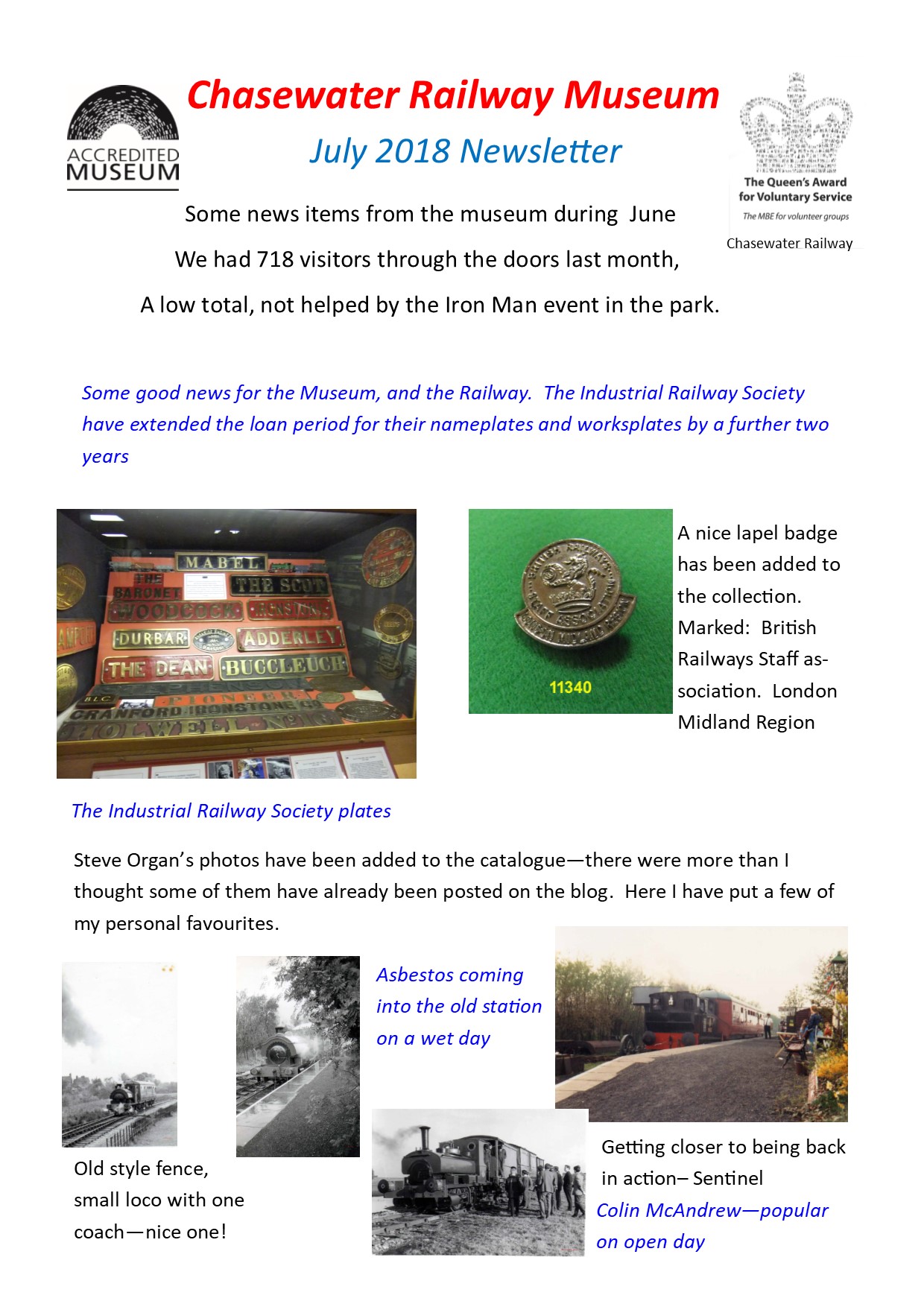
These posts are taken from old publications, newssheets and magazines produced by the Railway Preservation Society (West Midlands Division). Chasewater Light Railway Society and Chasewater Light Railway and Museum.
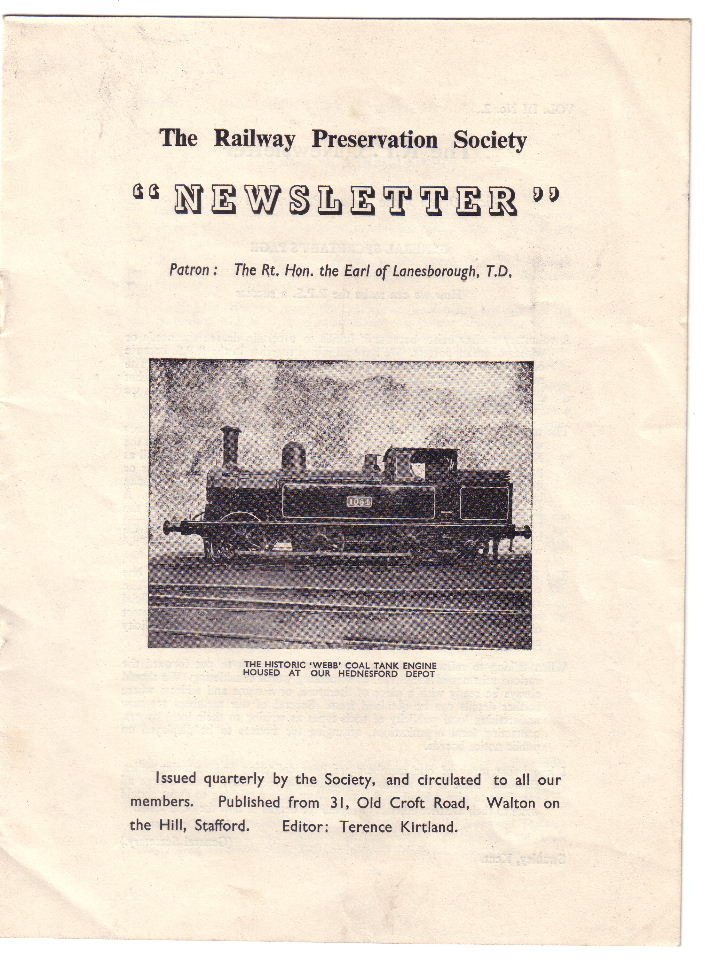
I know that it’s not the newsletter referred to but I needed a picture in a hurry!!
This post was taken from the ‘Railway Preservation Society’ leaflet of 1958 – the start of the railway preservation movement in this country. I found it interesting to know how the movement started – I hope that other people will too!
Railway Preservation Society
The national society for the preservation of relics from the standard gauge railways of Great Britain.
Keep the steam era alive – join the RPS
Introduction
At the present time the railways of Great Britain are going through a period of complete change in the principal method of traction. The steam engine is condemned, though many years will pass before it finally goes. So as to provide a worthy memorial to the steam engine, the Railway Preservation Society was founded in 1958 by a group of railway enthusiasts. We plan to co-ordinate the efforts of individuals and widen the field of railway preservation. Our main aim is the establishment of living museums on our own branch lines, where the steam engine would still be the main source of power and the railway could be seen in the full glory of its Edwardian Splendour.
It is still possible to find engines of many of the old pre-grouping companies in use, and to recreate trains representative of those found on our lines 50 years ago.
But time is running out fast!
Organisation of the RPS
Our members are being grouped in Districts, each consisting of an area of dense population and the surrounding lesser populated area. Each district will concentrate on collecting relics of the railways serving its area, re-capturing the individual character of the Edwardian railway companies.
The relics preserved will range from a button to a branch line. Amongst the items we seek to recreate are the rural stations of yesterday, the signal boxes, the trains, each with its own appearance, which varied from company to company.
Each District will establish a depot as a short term project, until arrangements have been made for leasing or purchasing a branch line. This will give it a working site for the restoration and display of engines, carriages, signals, etc., in a locality convenient to the greater part of the population of the District. It will also enable us to concentrate our first efforts on the urgent need to preserve suitable locomotives.
Appearance of a branch line
The type of branch line we are interested in is one which runs through scenery of natural beauty to a place of tourist attraction. The major proportion of our passengers would not be railway enthusiasts, and we must take them to a place that is attractive in itself and offers them ample facilities for recreation and refreshment. It is only by satisfying our customers so that they recommend the service we offer, that we can hope to succeed.
The length of the line would depend on whether it was a combined effort by more than one District or a solitary venture. It would have exchange facilities with BR at least at one end, so that traffic could be attracted from as wide an area as possible. The stations would be restored to their Edwardian appearance, and the trains run in a similar manner to those of that era. At the same time we should have to satisfy the stringent regulations of the Ministry of Transport, so that our passengers would be guaranteed a high degree of safety.
At the terminus will be found the engine shed, carriage sidings and museum. Here rolling stock not in use at the time could be seen by the public, and their design and the methods of construction and maintenance be on show. Displays of smaller relics, maps, prints, etc. will be arranged to show the growth of the railway network and its influence on the life and trade of the District. Though primarily catering for the railway enthusiast, a keen eye would be kept on our exhibits so as to make sure they were intelligible and interesting to the general public.
The operation of the line on an all-the-year round basis would be actively considered. But as the branch line would be one of the unremunerative lines closed by BR, the possibility of this is somewhat remote. The main effort would be concentrated on running an intensive service during summer weekends and the months of July, August and September, when the large number of voluntary helpers could be fully employed. We would provide hostel accommodation on the line, so that our members who wanted to spend a weekend or part of their holidays on the line, would be assured cheap, reasonable accommodation on site.
We would offer the general public the opportunity to travel in a similar manner to our grandparents in the early years of this (last) century.
There is still a chance
We can succeed. There are still thousands of steam engines on BR, but very few left from the early years of this (last) century The British Transport Commission have announced their intention of applying for permission to close another 2,000 miles of unremunerative lines. There will be plenty of branches for us to choose from.
We can preserve two typical trains of yesteryear for the price of a Rolls Royce car!
All this adds up to a great opportunity. We must seize it now, or see it go for ever.
Keep the steam era alive – Join the RPS
These posts are taken from old publications, newssheets and magazines produced by the Railway Preservation Society (West Midlands Division). Chasewater Light Railway Society and Chasewater Light Railway and Museum.
From the March/April 1962 ‘Mercian’
Bi-monthly news sheet of the Midlands Area of the R.P.S.
From the Hon. Secretary’s notes and reports.
These notes were from the early days when the depot was at Hednesford.
G.E. – Great Eastern, T.P.O. – Travelling Post office
News has been rather scarce this time. I have only had articles from the Hon. Treasurer and T. C. Jones, it is difficult to keep making up copy and I do hope that members will co-operate and send in articles. Otherwise the ‘Mercian’ will soon cease to function. Please send in articles, no matter how small, copy must be sent in by the 8th May.
(Some things don’t change!)
Progress Report
A new siding has now been completed, the G.E.Brake is now stabled on this siding, this has allowed room for the T.P.O. and the Coal Tank to be moved further under the covered space, giving greater protection from the weather. The whole scheme of the new siding was planned by the Assistant Depot Manager, John Elsley, the installation was very ably carried out by him and his small, but willing band of helpers. New glass has now been fitted in the windows of the G. E. Brake, the toilet of the T.P.O is now in the process of being repainted, whilst the interior of this vehicle has been thoroughly cleaned.

Restoration Plans
We hope that the T.P.O. will be finished this Summer (on one side at least) this could easily be achieved if we had a few more willing expert hands. Our woodwork expert Frank Harvey has had a considerable amount of new panelling to do, he is being ably assisted by Fred Lewis. A considerable amount of painting has yet to be done on the T.P.O. so any member who is handy with a paint brush will be very welcome indeed. The Maryport & Carlisle coach still has to be completely reglazed and we earnestly appeal to members for offers of glass
David A. Ives, Hon. Sec.
Working Parties at R.P.S. Depot, Hednesford
The Society holds working parties every Sunday, these commence at 2.30pm. There are however, a number of members who would like to attend working parties, but cannot attend those held on Sundays. During the Summer we are hoping to recommence working parties on Saturdays and Wednesday evenings. Would you please specify on the form below the days you wish to attend, and return form to the Secretary, alternatively contact by post card.
Posted in Bits and Pieces, New Post
Tagged Chasewater Railway Museum, Hednesford, Lichfield, Mercian, Railway, Railway Preservation Society, RPS, Steam
These posts are taken from old publications, newssheets and magazines produced by the Railway Preservation Society (West Midlands Division). Chasewater Light Railway Society and Chasewater Light Railway and Museum.
This post is taken from the earliest newsletter found so far amongst the ‘Duplicate Magazine ‘ file.
I reproduced the first part just to show that our aims haven’t really changed in the last 50 years.
Taken from the Railway Preservation Society Newsletter, Feb 1961
What is our eventual aim?
It is obvious that we want to run a railway. But what sort of railway is this to be? What picture do we want to give to the general public? We could push together a train, grab a piece of line and say this is a preserved railway. But will it mean anything to the general public?
Each district will, inevitably, form its own collection of smaller relics which eventually we hope to show to the public in exchange for money. As a railway enthusiast, a mass of cast iron plates, old faded photographs, tattered maps, dog-eared tickets and general bric-a-brac fascinates me and I can spend hours contemplating such a collection, but I would strongly suspect this would leave the general public with a feeling of mental indigestion and a fixed idea that railway enthusiasts are really mad.
Any preserved railway depends on the general public for the main part of its traffic. We must study their interests and make sure that we attract them back and their friends to which they have passed a recommendation. It must not be an overcrowded museum, but a ‘vintage railway’ — a living example of how the railways were run, laid out so the general public can see it tick. The steam engine is to us a balanced collection of boiler, firebox, cylinders, pistons, crossheads, etc. But to the ordinary man-in-the-street it is largely a mystery. Our exhibits must be self-explanatory. We must try to explain why the railways grew into such a complex system of competitive lines with so many odd connections.
I am not suggesting that we forget the railway enthusiast. I am asking that we consider the picture we are presenting to the general public. These points are not immediately applicable, but we should give consideration to them and encourage the artists and architects amongst us to sketch out their ideas on this basis.
Arrival at Hednesford of our T.P.O

January 11th (1960) was a red letter day for members of the West Midlands District when a 27 ton 1909 Royal Mail coach, purchased by us for £200, rolled into our Hednesford depot.
Sold by British Railways the 50 foot bogey coach, complete with letter pigeon holes and half-penny stamp post-box – as good as new – it has joined our other two museum passenger coaches, an 1895 Great Eastern Railway brake vehicle and an 1875 Maryport & Carlisle Railway coach.
The mail coach travelled up from Verney, near Wolverton in Buckinghamshire, and celebrated its historic run by charging up the batteries to give full lighting inside. It was shunted into the depot sidings by an NCB tank engine.
Unlike the other two vehicles, the T.P.O. is too high to be placed under cover in our vehicle shed, but members are planning to lower the track to enable it to enter.
Final Passenger Train on the Churnet Valley Line
Frank Harvey

Twenty R.P.S. members were among the passengers to travel on the last train from Macclesfield to Uttoxeter by the Churnet Valley line of the ex-North Staffordshire Railway on November 5th (1960).
Some of our members had departed from Macclesfield early in the afternoon in order to break the journey at Oakamoor and again make the acquaintance of the station master, Mr. Lister.
Macclesfield was reached early enough for members to have a look round the town before returning to catch the last train. Several relics were noted at Macclesfield (Hibel Road) station, including a NSR/LNWR boundary post.
Bellringers
The train left on time at 8.35pm behind Stanier 2-6-4T No. 42670. The coaches were quite full, two of the enthusiastic passengers ringing handbells loudly for most of the journey.
A few people had gathered at nearly every station to watch the train depart, and at 9.48pm the train arrived at its final destination, Uttoxeter. It marked the last moments of a regular passenger service on the Churnet Valley line for 110 years.
The present Churnet Valley Railway is a volunteer-run organisation. The operating company, the Churnet Valley Railway (1992) plc, is supported by the North Staffordshire Railway Co (1978) Ltd., a Charitable Trust.
Activities recorded on film
BBC television news cameras have filmed activities at our Hednesford depot on two occasions in recent weeks. Both items were shown on ‘Midland News’ and have done much to foster interest in the Society.
On the occasion of the first visit, members were shown at work on the restoration of the Great Eastern Railway coach. Several of our relics, housed in the coach, were also shown.
The cameras were again at the depot on January 11th 1960 to record the arrival of the T.P.O. Several newspaper representatives also visited us for this event, a very full report of the work, profusely illustrated with photographs, appearing in the ‘Cannock Courier’
The Coalport Branch Line
Notes by D. Noel Draycott
This was one of three lines under consideration when looking for a permanent home for the railway.

On Sunday, October 23rd 1960, a small party consisting of David Ives, James Slater, T. Jones, Frank Harvey and myself visited the Coalport to Hadley line in North Shropshire. Built by the London & North Western Railway, it runs from the very attractive Vale of Severn across high land and through an early centre of the iron and steel industry to a junction on the Wellington to Stafford line.
The branch had a terminus at Coalport Station which stands on a long shelf, part cut out and part built up on the steep bank of the Severn. The station buildings comprise a booking office, general and ladies waiting rooms, backing on to the station master’s house. The signal box was demolished and a ground frame installed shortly before services were withdrawn in 1952. The goods shed has also been demolished, but the three short sidings remain in the yard.
Further along the shelf past the station, there is a carriage shed sufficient for four bogie carriages, and an engine shed for two locomotives. These buildings are in fair condition, and the engine shed contains a large workshop space as well as a pit. All these buildings back on to the hillside, and on the opposite side there is a pleasant stretch of wooded land before it falls steeply away to the river which forms the boundary of the railway property.
The line rises steeply from Coalport Station with attractive views across and up the Severn Valley before it turns away to cross pleasant rolling countryside to the small town of Madeley. Here the station building is used as an office by an engineering firm, but the yard of some half dozen sidings is practically disused.
The line then continues to Dawley and Stirchley Station where a total of some 15 wagons of coal showed that an active coal merchant used the yard. As dusk was falling, the tour of inspection finished at this point. All the members of the party were impressed by the potentialities of the line for day trippers.
Before we left the area, we were fortunate to meet a resident interested in the line who presented the R.P.S. with smaller relics. These included an LMS inkwell, labels and official books. We were very pleased to receive these on behalf of the W.M.D.’s collection of local relics.

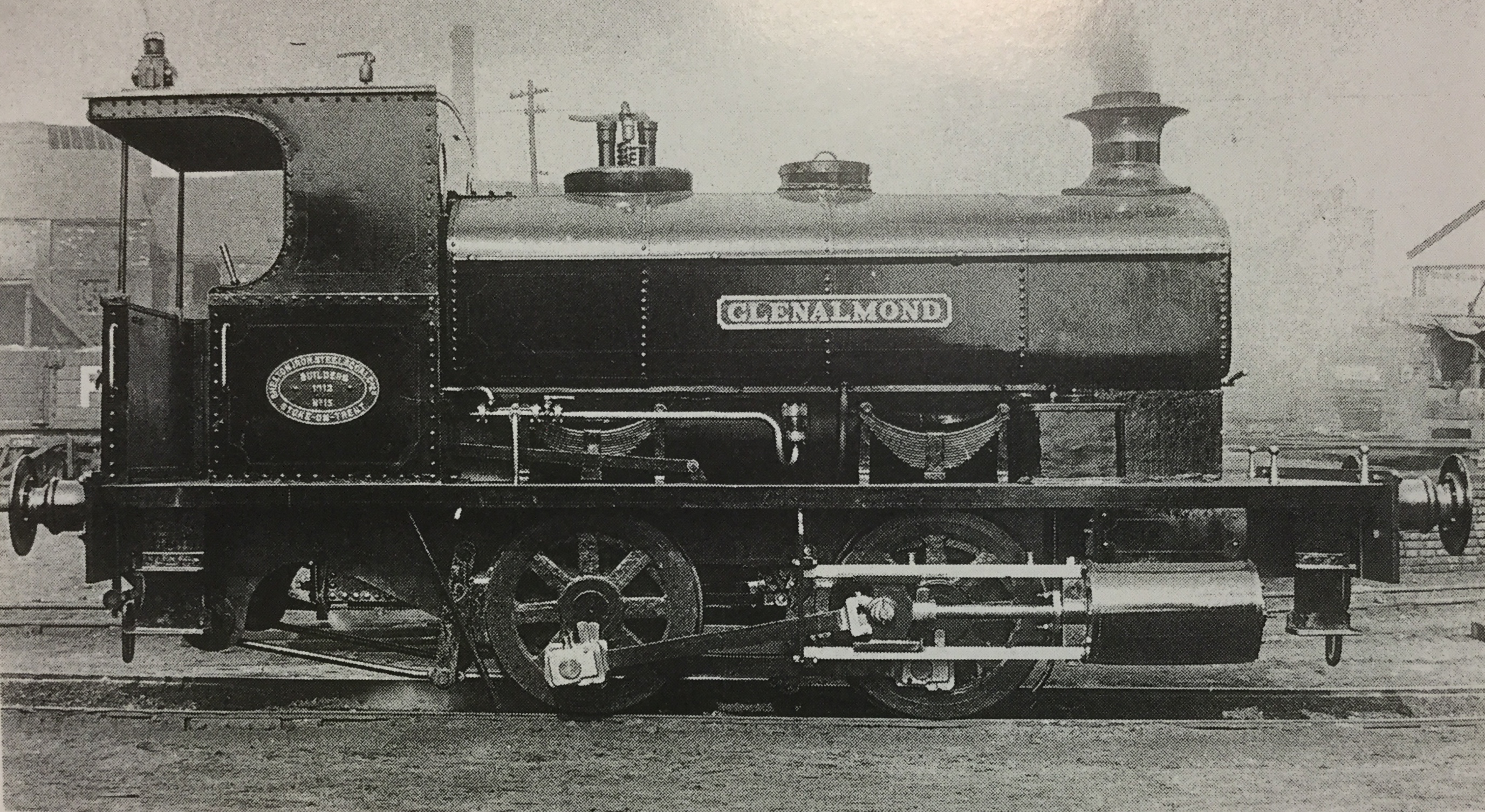
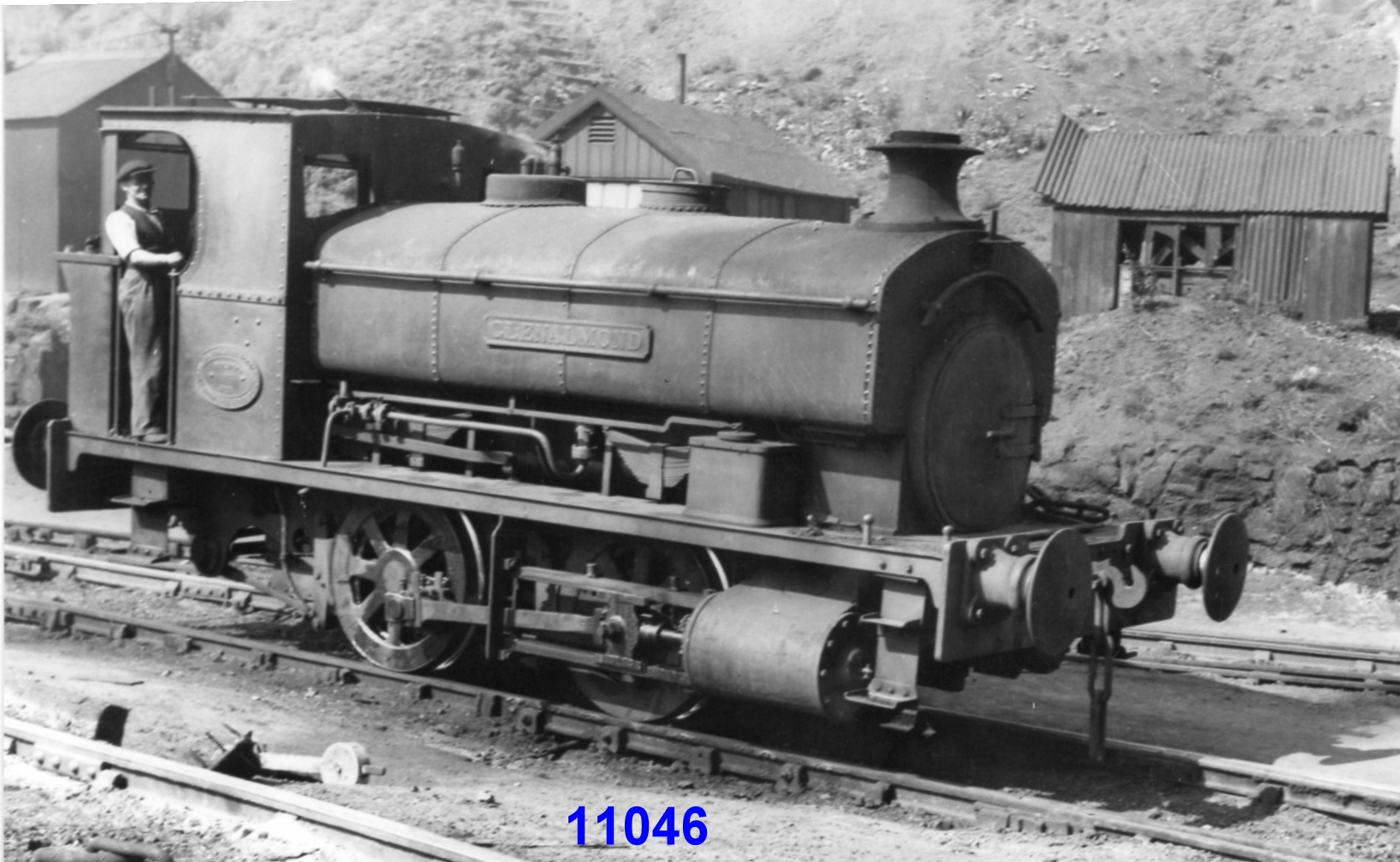
Shelton No.4 of 1912 0-4-0ST OC ‘Glenalmond’
Brand new and posed here for its ‘Official’ photograph at Shelton Steelworks, Stoke-on-Trent. From the Basil Jeuda Collection IRS. Supplied by Godfrey Hucker, Chasewater Raiway Museum.

A recent invitation to Shugborough Hall to view various Staffordshire Museum Services items in store has resulted in several items finding their way to Chasewater, either on loan or as outright gifts.
From a locomotive enthusiast point of view, the star would be the nameplate ‘Glenalmond’. The locomotive was an 0-4-0ST with 14”x 22” outside cylinders and 3’ 5” wheels.
One of just four locos steam built by and for service at Shelton Iron & Steel Co., Stoke-on-Trent and new in 1912. The name is taken from the Scottish seat of Lord Faringdon, a Managing Director of the Company.
Lord Faringdon was a one-time Chairman of the Great Central Railway who also named one of their 4-6-0s ’Glenalmond’.
The Shelton ‘Glenalmond’ affectionately known as ‘Gleny’ was built to an Andrew Barclay design with a boiler supplied by Bagnalls Castle Engine Works, Stafford.
The loco lasted in service almost 60 years, being unused from early 1970 and sadly cut up in 1972.
Our thanks go to Chris Copp, Chasewater Railway Museum’s Mentor, for arranging the loan of the nameplate. (Compiled by Barry Bull)
Photograph courtesy of Pete Stamper.
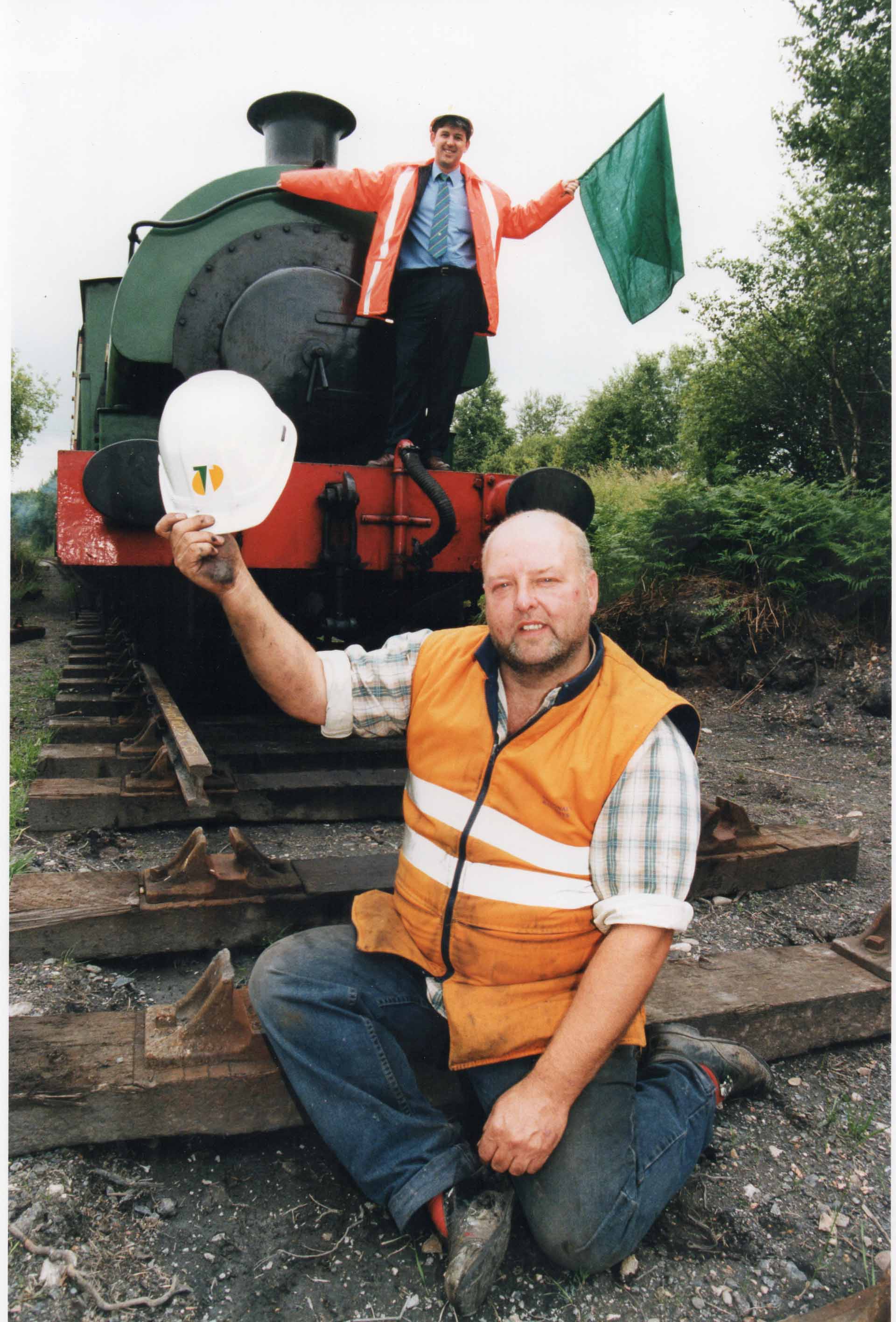
On the right track! Chasewater Railway General Manager Steve Organ cheers the news that the line extension can continue as Lorne Grey, who is in charge of Centrac’s recycling operations, gives the project the green flag. July 1998.
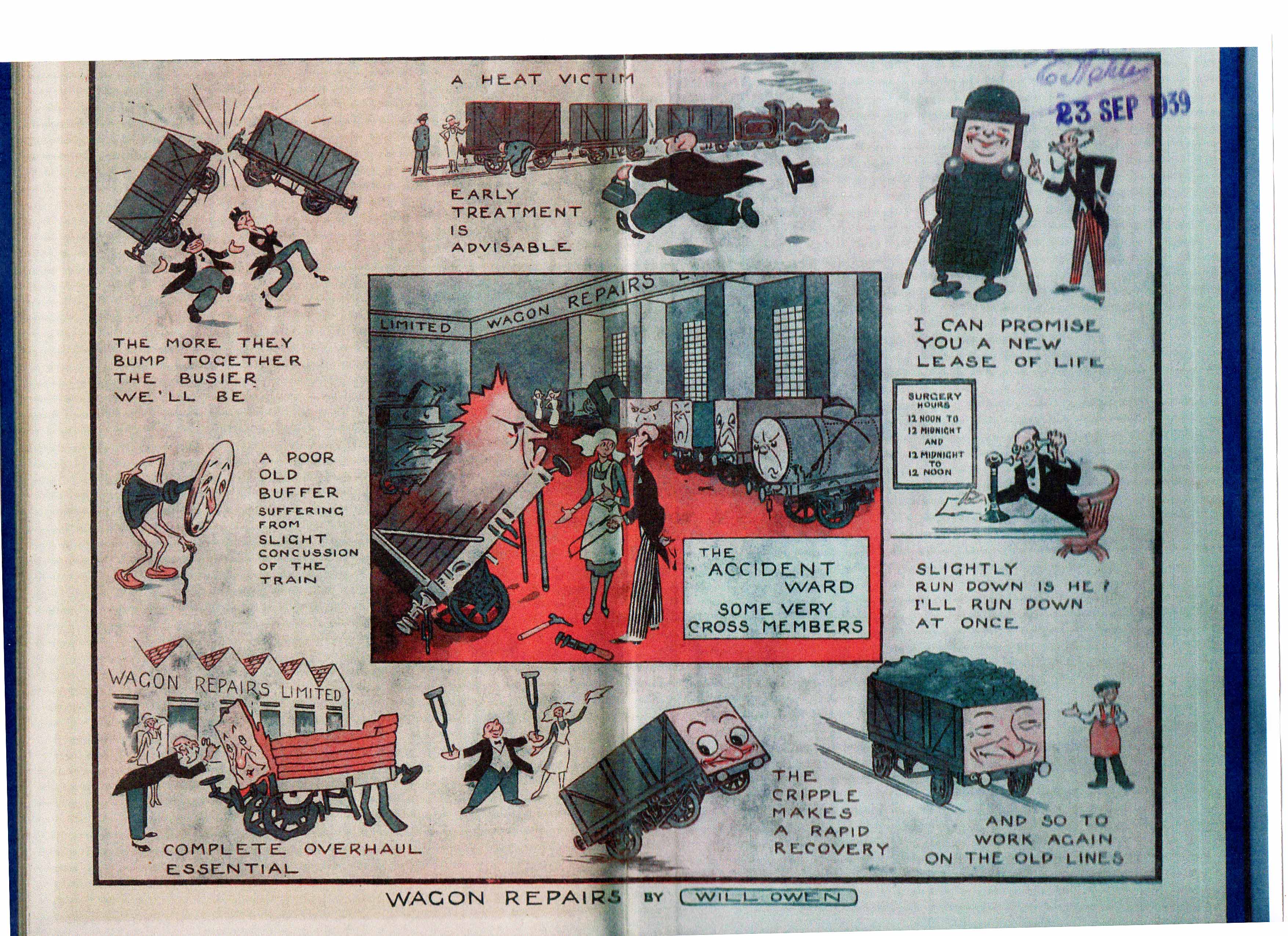
To carry out in the UK or elsewhere the trade or business of repairing, rebuilding, reconstruction, painting, altering, converting, equipping, adapting, making fit for traffic, supplying and dealing with railway and other wagons, trucks, corves, carriages, trolleys, vans and vehicles, and repairing wheels, axles and components
To carry out in the UK the building and constructing of new railway and other wagons.
Wagon Repairs Limited continued to be a vital national asset during the frantic days of World War II and continued during the period of austerity that followed for as long as wooden wagons needed repairing.
Posted in Museum Exhibits
Tagged Cartoons, Chasewater Railway Museum, Railway Wagons, Railways, Wagon Repairs Ltd, Wagons
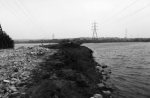
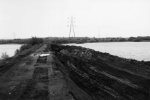
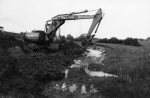
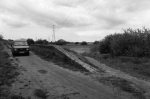
We have been given some more old photos, I think from Steve Organ’s collection. These are some photos of the causeway in the early days at Chasewater Railway .
In 1982 the Preservation Society was forced to lift the track on the Causeway and commence work on an ambitious rebuilding scheme. Sadly owing to the Society’s finances and lack of support, the scheme collapsed and the Preservation Society was forced to close to passenger traffic for a number of years, even though work continued on basic restoration at the Brownhills West site.
A scheme to restore the Causeway commenced in May 1993, with the basic engineering elements being completed some 11 months later. Approx. 120,000 tons of fill material were imported on to the site for grading and compaction. With the completion of one of the largest civil engineering schemes in railway preservation to be carried out to date, work was able to proceed with the opening of Norton Lakeside Station. The station was opened in December 1995.
Click on a photo for a larger version.

 Chasewater Railway Museum