Tag Archives: Wickham

198 – Chasewater Railway Museum bits and Pieces

195 – Chasewater Railway Museum Bits & Pieces

From Chasewater News – Autumn 1996 – Part 3
Railcars on the Chase

27 Years of DMU Preservation

Steve Organ

The first ‘Modernisation Plan’ Diesel Multiple Unit vehicle to go into preservation was Gloucester Carriage & Wagon 1957 built Driving Trailer Composite (DTC) No.SC56301, which came to Chasewater from the Scottish region of British Railways at Easter 1969.  The vehicle was one of a fleet formed into two car sets which worked in Scotland and in East Anglia, as well as in the West Midlands.  The purchase was by the Railway Preservation Society (West Midlands District), as we then were, who had taken a lease on the line and trackbed at Chasewater which had formerly carried coal traffic.

The Park was being developed at the time by the local authorities keen to reclaim the spoil heaped, ruined landscape that had recently ceased production.  A preserved railway was welcomed, and so much traffic was being carried in very old and fragile stock we had inherited from the Colliery at Rawnsley, that a more modern vehicle was needed to take the load, relieving the historic stock.  The Gloucester, which seated 12 passengers in first class, and 54 in second was 57 feet 6 inches long and weighed only 25 tons.

Immediately on arrival at Chasewater, still in its recently acquired Rail Blue livery, with small yellow warning panel and 2-digit route indicator below the cab front window, the car was adapted with the buzzer circuit carried through the lighting circuit jumper and through to the locomotive which had a buzzer fitted to enable the vehicle to be used for push-pull working, with the Guard (or Coach Driver) signalling from the coach cab to the Loco Driver to stop, start, etc. by buzzer code.  Permission was received from the Railway Inspectorate to operate in this fashion despite there being no through vacuum brake, thanks to the simple communication system, the excellent look-out position for the Guard, his access to a handbrake and the line’s ‘U’ shaped gradient profile at both ends!

The DMU was a great success, and we no longer worried about the underframe of the train snapping!  The windows, large and almost continuous around the vehicle, together with the light green flecked Formica finish, and seating in vertically striped red and grey (second class) and blue and gold (first class), made for a very welcoming appearance, and the Chasewater system of working push-pull with DMU cars in conjunction with a steam or diesel locomotive was established.

The paytrain concept was adopted by BR in the sixties, and at Chasewater we often steamed on an unscheduled Sunday if the weather was fine (we only advertised trains every fortnight at this time), and used an ex Birmingham Corporation Transport Ultimatic ticket machine when the guard had to collect fares because no staff had been rostered for the station.  Often in the summer of 1974 with trains running over the then 300 yards of track and with only five minutes to collect up to 90 fares, I felt as though my thumb was dropping off by the end of the day operating that machine.

1974 saw the Gloucester painted into maroon, with a light grey roof.  A gold and white bodyside line was added below the windows in 1976.  1979 saw the front route indicator panel plated over, and a further coat of maroon paint applied.

In 1979, the Board identified two needs which could be satisfied with the purchase of a further two vehicles, firstly to use one as a ‘Railway environment’ buffet, and the other for use as a bar car, to be attached to the passenger train on busy or festival days.  A two-car Wickham-built set, recently used as a General Manager’s Inspection Saloon was identified and purchased for £1500 plus VAT and transported by rail from Leeds to Wolverhampton steel terminal, then by road to Chasewater.

The Wickham two-car set had been converted into an inspection saloon car for the General Manager, British Railways Eastern Division, in the mid-sixties.

The diving motor brake second (DMBS) was No.E50416, 57 feet long and weighed 27 tons 6 cwt.  Stripped of its original interior, a kitchen had been fitted in place of the original Guard’s compartment, and the Guard’s vestibule end windows had been plated over.  A corridor ran from the gangway around the kitchen.  The engines (two 150 HP BUT Leylands), transmission and general mechanical condition were fairly good.

The driving trailer composite, No.E56171, was 57 feet long and weighed 20 tons 10 cwt.  Again, this vehicle was internally stripped for its inspection role, and was altered thus:  one of the two toilets was removed and replaced with shelves: two huge seats, each 3’ 6” wide were installed next to the toilet, adjacent to a vacuum stand pipe, emergency brake handle and vacuum gauge.  A single compartment installed and folding steps complete with vacuum pipe release trips (to prevent the train from moving whilst the steps were down) installed below the passenger doors.  Both vehicles had had the passenger doorways nearest the front of the vehicles removed and plated over.

Both vehicles had aluminium bodies over angle-iron frames and were in good condition, however the gutters leaked and the gutter strip was eventually replaced – steel gutters fitted against aluminium bodysides need only water to start electrolytic transmission, resulting in bodyside holes against the gutter.  (This was a problem we would encounter again later with the 1994 acquisitions).  The doors were however a problem, with only a short production run, softwood frames with an aluminium skin were fitted, rather than the more normal single cast alloy that are on so many DMUs, so warping and rot were a constant problem.

At the time of the Wickhams’ arrival, the Company was suffering certain problems.  The Society, which was the group founder, had formed a company in the early seventies for the purpose of administering the public services provided by the group, a YOPS (Youth Opportunities Programme) scheme was in progress, and the two parts of the group failed to see eye to eye, the result being ultimately that the volunteer-led Society failed to co-operate with the ‘employees’ of the Company.  The track fell into rack and ruin and Society morale dissolved, members feeling squeezed out by the ‘Company’.  Of course, in reality the two needed to co-exist.

The planned use of E56171 as a second train vehicle was not proceeded with, although a rudimentary bar, built in the Officers’ compartment, did see several static days of service in 1981, and after a few excursions with E50516, as a DMU was laid up.  E56171 was however opened as a static buffet in 1981, parked against a sleeper-built platform.

1982 saw the Railway close down.  The condition of the track was awful and volunteers had disappeared, also a huge debt had been run up by the YOPS scheme.  The platform at Brownhills West was declared unsafe and demolished under the Company’s auspices, only to be found to be almost indestructible (but too late, the track had been removed and the ground excavated).  The group’s only income for the next three years was from the static buffet car E50416 and very little of significance occurred on site.

1985 saw a new start for the Railway.  A new Company was designed, and only a week after incorporation was registered as a Charity.  The aim was to incorporate the assets and accumulated debts of the old Company and Society, safeguarding the vintage stock and line, and to address the debt, so that things could start moving away from the moribund state.  With the track re-laid in concrete sleepers and a few of the old volunteers in harness, trains operated again for the first time in three years in October 1985.

The Gloucester car was repainted – yes – maroon again! And the now very worn maquette was replaced by yours truly in his first stab at upholstery.  A straw and green cloth was used in the Second class and a deep purple in the First.  Care was taken to retain and renovate all the other original fittings, wall covers, etc.

For the 1986 season both Wickham cars were repainted into – you guessed it – maroon to match the Gloucester.  The buffet car remained static, but the now derelict E56171 was re-worked, starting with the replacement of19 windows which had been smashed during its three years of abandonment.  A new large bar was built, and original pattern ‘curly back’ seats arranged around tables.  An open lounge area was created using seats from BR Mk ll carriages and the Officers’ compartment was fitted with First class seating from a Mk l carriage.  Whitsun 1986 saw the car in service with the Gloucester on the now 400 yard shunt.

One special problem had arisen during the carriage repairs; a mechanical and structural survey had shown them all to be very contaminated with blue asbestos in the body side and roofs.  A solution to the inevitable eventual stripping cost, at that time estimated at around £15,000, meant that something would have to be done!

From ‘Letters to the Editor’ Winter 1996 Chasewater News

While browsing through the next magazine to see if there was a part two to Steve Organ’s article (there is!) I came across this letter from our Museum Curator, Barry Bull.  I decided to include it here to save any long-standing members commenting on any errors.

Dear Sir,

Having just received and read the Autumn 1996 Chasewater News I would like to add a little background detail and correct a few inaccuracies in Steve Organ’s article ‘Railcars on the Chase – 27 Years of DMU Preservation’.

I’m afraid that Steve has exaggerated by some 4 years here as the Gloucester trailer E56301 did not arrive at Chasewater until May 1973.  As the E prefix indicates it came from the Eastern Region and not, as Steve suggested, from Scotland.  The vehicle was on open tender from BR and lay at March, Cambridgeshire.  We had been looking for a suitable vehicle to relieve the use of the Maryport and Carlisle six wheeler and the 16 ton GWR Brake van on passenger services, and needed something suitable for push-pull use, the Gloucester, as Steve mentioned was just right.  Our bid of £330 with our proviso that this included removal at BR’s cost to our nominated place for transfer to road transport (Long Street, Walsall) was accepted.

However, before the Gloucester trailer arrived at Chasewater, we could have disposed of it!  The North Yorkshire Moors Railway had acquired off the same BR tender list two Gloucester power cars and just one trailer.  As you can imagine they were probably a trifle peeved at having lost a trailer and we were duly contacted with a request to forego our new acquisition.  Our response was to give the NYMR a short time to provide and transport to Chasewater at their cost a similar suitable vehicle with an amount of cash to be paid to us for our ‘inconvenience’.  We received no response and the Gloucester duly arrived at Chasewater with its road journey from Walsall featured on the local independent TV News, thanks to Paul Mason who apparently drank in the same pub as Bob Warman.  At least one RPS member who knocked a day off work to help in the operation was spotted on TV and got into a bit of bother at work the day after.

It wasn’t until 1977 that the Gloucester was repainted maroon, with the work being done by outside contractors, just in time for the Queen’s Silver Jubilee celebration when we ran in conjunction with a local Brownhills West street party and we squeezed in 108 passengers on one run.  It was around that time when Adrian Pearson took the photograph of the Neilson together with the Gloucester which John James had 5.000 postcards printed at a cost of just 2.8 pence each.  John stood the cost of these cards himself as the Society couldn’t afford the bill.  I wonder how many are still left to sell?  (Enough. Ed.)  (All gone now, given to young visitors as a memento and much appreciated.  CWS).

The Wickhams were inspected as lying at Stourton, Leeds and I must admit to being keen on them as soon as I saw them there.  The purchase price I seem to recall was £1,000 for the power car and £750 for the trailer – plus I suppose VAT.  The deal was concluded by Derek Cartwright then working on the YOPS programme at Chasewater.

Finally may I congratulate you on the quality of the Chasewater News these days including the photographic reproductions.

Barry Bull

                                                      In through the farm gate                                                                                (Transport photos from Laurence Hodgkinson’s Collection)
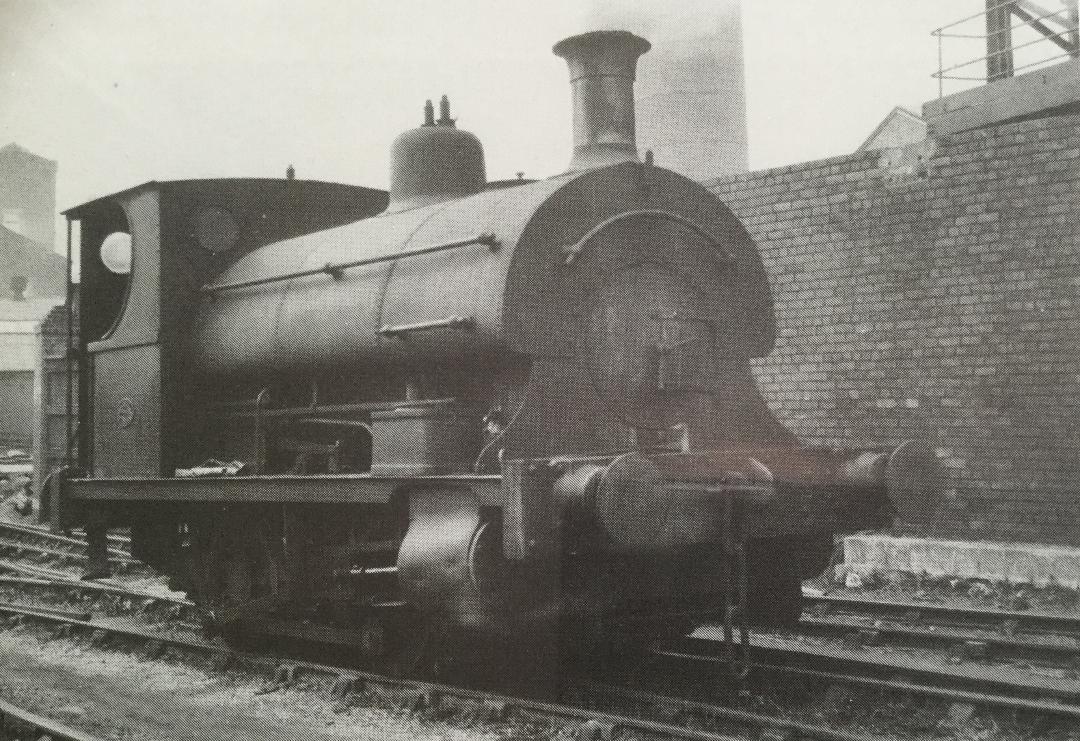
Still at Chasewater,

Peckett 917-1902 came from Albright and Wilson, photographer unknown.
195 – Chasewater Railway Museum Bits and Pieces

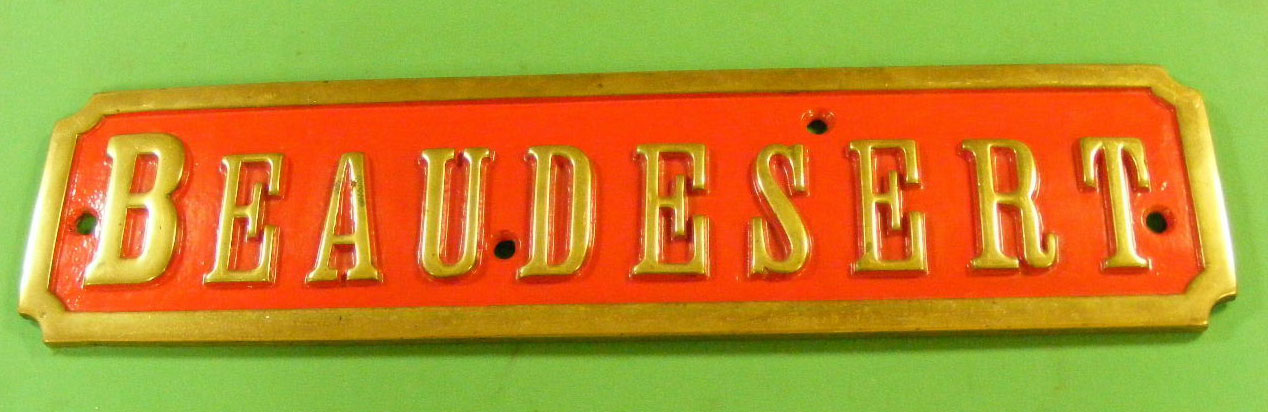
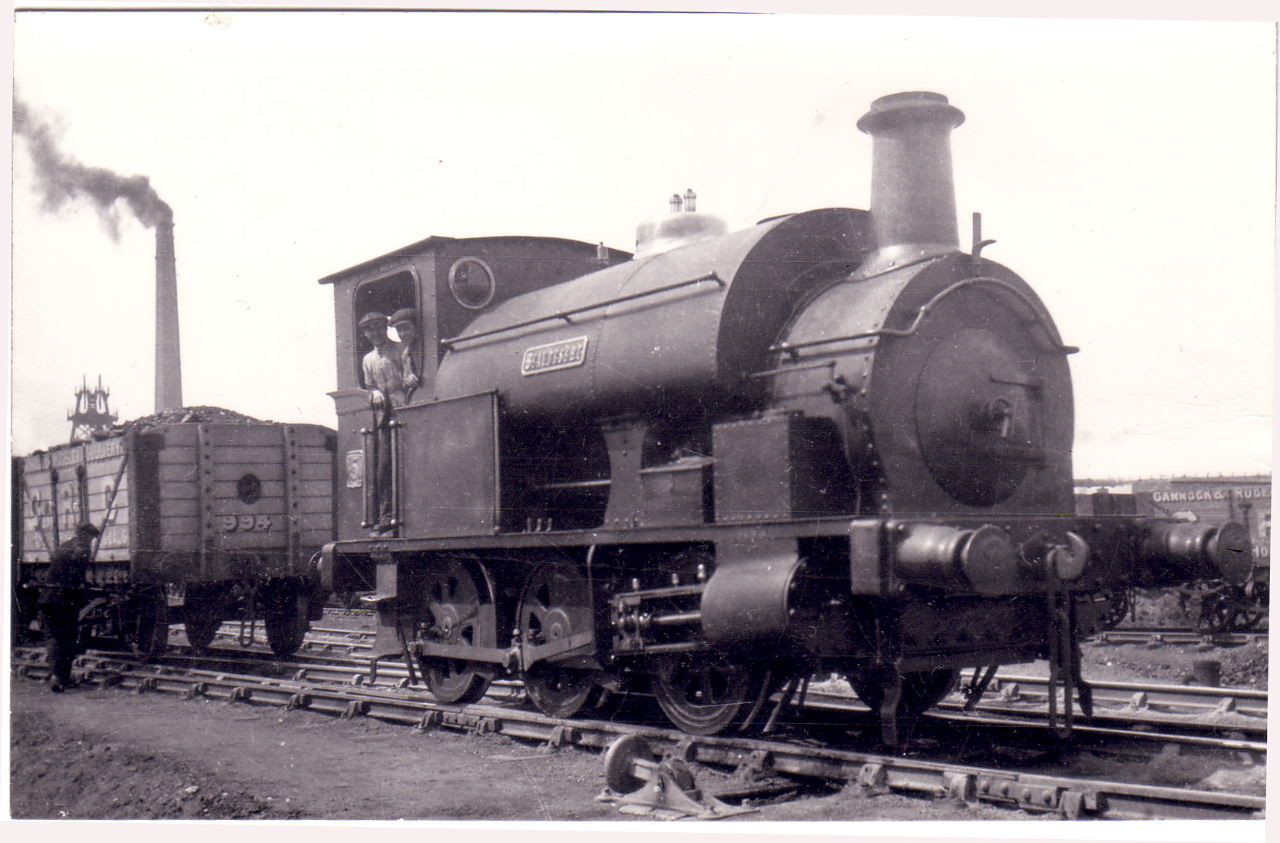
An opportunity presented itself recently to acquire by way of private purchase half a dozen items of local colliery railway interest. Not since the 1960s and early 1970s, when in that period a good relationship existed between the Railway Preservation Society and local National Coal Board management and which resulted in several donations of interest has the chance to obtain in bulk such star items for the museum collection. The third nameplate is that of Beaudesert from the little 0-6-0 saddle tank built by Fox Walker, works number 266 of 1875 supplied new to Cannock and Rugeley Collieries as their number 5. Beaudesert was the ancestral home of the Paget family who became Earls of Uxbridge before being given the title and Estate Marquis of Anglesey. Finally cut up in 1964 the other nameplate of the loco survives and is on display in Kidderminster Railway Museum.

Not much about steam locos in this article but an important part of Chasewater Railway’s history nontheless.. Written in the main by the General Manager at the time, Steve Organ with errors and omissions added by Barry Bull.

195 – Chasewater Railway Museum Bits & Pieces

From Chasewater News – Autumn 1996 – Part 3

***

Railcars on the Chase

27 Years of DMU Preservation

Steve Organ

The first ‘Modernisation Plan’ Diesel Multiple Unit vehicle to go into preservation was Gloucester Carriage & Wagon 1957 built Driving Trailer Composite (DTC) No.SC56301, which came to Chasewater from the Scottish region of British Railways at Easter 1969.  The vehicle was one of a fleet formed into two car sets which worked in Scotland and in East Anglia, as well as in the West Midlands.  The purchase was by the Railway Preservation Society (West Midlands District), as we then were, who had taken a lease on the line and trackbed at Chasewater which had formerly carried coal traffic.

The Park was being developed at the time by the local authorities keen to reclaim the spoil heaped, ruined landscape that had recently ceased production.  A preserved railway was welcomed, and so much traffic was being carried in very old and fragile stock we had inherited from the Colliery at Rawnsley, that a more modern vehicle was needed to take the load, relieving the historic stock.  The Gloucester, which seated 12 passengers in first class, and 54 in second was 57 feet 6 inches long and weighed only 25 tons.

Immediately on arrival at Chasewater, still in its recently acquired Rail Blue livery, with small yellow warning panel and 2-digit route indicator below the cab front window, the car was adapted with the buzzer circuit carried through the lighting circuit jumper and through to the locomotive which had a buzzer fitted to enable the vehicle to be used for push-pull working, with the Guard (or Coach Driver) signalling from the coach cab to the Loco Driver to stop, start, etc. by buzzer code.  Permission was received from the Railway Inspectorate to operate in this fashion despite there being no through vacuum brake, thanks to the simple communication system, the excellent look-out position for the Guard, his access to a handbrake and the line’s ‘U’ shaped gradient profile at both ends!

The DMU was a great success, and we no longer worried about the underframe of the train snapping!  The windows, large and almost continuous around the vehicle, together with the light green flecked Formica finish, and seating in vertically striped red and grey (second class) and blue and gold (first class), made for a very welcoming appearance, and the Chasewater system of working push-pull with DMU cars in conjunction with a steam or diesel locomotive was established.

The paytrain concept was adopted by BR in the sixties, and at Chasewater we often steamed on an unscheduled Sunday if the weather was fine (we only advertised trains every fortnight at this time), and used an ex Birmingham Corporation Transport Ultimatic ticket machine when the guard had to collect fares because no staff had been rostered for the station.  Often in the summer of 1974 with trains running over the then 300 yards of track and with only five minutes to collect up to 90 fares, I felt as though my thumb was dropping off by the end of the day operating that machine.

1974 saw the Gloucester painted into maroon, with a light grey roof.  A gold and white bodyside line was added below the windows in 1976.  1979 saw the front route indicator panel plated over, and a further coat of maroon paint applied.

In 1979, the Board identified two needs which could be satisfied with the purchase of a further two vehicles, firstly to use one as a ‘Railway environment’ buffet, and the other for use as a bar car, to be attached to the passenger train on busy or festival days.  A two-car Wickham-built set, recently used as a General Manager’s Inspection Saloon was identified and purchased for £1500 plus VAT and transported by rail from Leeds to Wolverhampton steel terminal, then by road to Chasewater.

The Wickham two-car set had been converted into an inspection saloon car for the General Manager, British Railways Eastern Division, in the mid-sixties.

The diving motor brake second (DMBS) was No.E50416, 57 feet long and weighed 27 tons 6 cwt.  Stripped of its original interior, a kitchen had been fitted in place of the original Guard’s compartment, and the Guard’s vestibule end windows had been plated over.  A corridor ran from the gangway around the kitchen.  The engines (two 150 HP BUT Leylands), transmission and general mechanical condition were fairly good.

The driving trailer composite, No.E56171, was 57 feet long and weighed 20 tons 10 cwt.  Again, this vehicle was internally stripped for its inspection role, and was altered thus:  one of the two toilets was removed and replaced with shelves: two huge seats, each 3’ 6” wide were installed next to the toilet, adjacent to a vacuum stand pipe, emergency brake handle and vacuum gauge.  A single compartment installed and folding steps complete with vacuum pipe release trips (to prevent the train from moving whilst the steps were down) installed below the passenger doors.  Both vehicles had had the passenger doorways nearest the front of the vehicles removed and plated over.

Both vehicles had aluminium bodies over angle-iron frames and were in good condition, however the gutters leaked and the gutter strip was eventually replaced – steel gutters fitted against aluminium bodysides need only water to start electrolytic transmission, resulting in bodyside holes against the gutter.  (This was a problem we would encounter again later with the 1994 acquisitions).  The doors were however a problem, with only a short production run, softwood frames with an aluminium skin were fitted, rather than the more normal single cast alloy that are on so many DMUs, so warping and rot were a constant problem.

At the time of the Wickhams’ arrival, the Company was suffering certain problems.  The Society, which was the group founder, had formed a company in the early seventies for the purpose of administering the public services provided by the group, a YOPS (Youth Opportunities Programme) scheme was in progress, and the two parts of the group failed to see eye to eye, the result being ultimately that the volunteer-led Society failed to co-operate with the ‘employees’ of the Company.  The track fell into rack and ruin and Society morale dissolved, members feeling squeezed out by the ‘Company’.  Of course, in reality the two needed to co-exist.

The planned use of E56171 as a second train vehicle was not proceeded with, although a rudimentary bar, built in the Officers’ compartment, did see several static days of service in 1981, and after a few excursions with E50516, as a DMU was laid up.  E56171 was however opened as a static buffet in 1981, parked against a sleeper-built platform.

1982 saw the Railway close down.  The condition of the track was awful and volunteers had disappeared, also a huge debt had been run up by the YOPS scheme.  The platform at Brownhills West was declared unsafe and demolished under the Company’s auspices, only to be found to be almost indestructible (but too late, the track had been removed and the ground excavated).  The group’s only income for the next three years was from the static buffet car E50416 and very little of significance occurred on site.

1985 saw a new start for the Railway.  A new Company was designed, and only a week after incorporation was registered as a Charity.  The aim was to incorporate the assets and accumulated debts of the old Company and Society, safeguarding the vintage stock and line, and to address the debt, so that things could start moving away from the moribund state.  With the track re-laid in concrete sleepers and a few of the old volunteers in harness, trains operated again for the first time in three years in October 1985.

The Gloucester car was repainted – yes – maroon again! And the now very worn maquette was replaced by yours truly in his first stab at upholstery.  A straw and green cloth was used in the Second class and a deep purple in the First.  Care was taken to retain and renovate all the other original fittings, wall covers, etc.

For the 1986 season both Wickham cars were repainted into – you guessed it – maroon to match the Gloucester.  The buffet car remained static, but the now derelict E56171 was re-worked, starting with the replacement of19 windows which had been smashed during its three years of abandonment.  A new large bar was built, and original pattern ‘curly back’ seats arranged around tables.  An open lounge area was created using seats from BR Mk ll carriages and the Officers’ compartment was fitted with First class seating from a Mk l carriage.  Whitsun Spring Bank Holiday) 1986 saw the car in service with the Gloucester on the now 400 yard shunt.

One special problem had arisen during the carriage repairs; a mechanical and structural survey had shown them all to be very contaminated with blue asbestos in the body side and roofs.  A solution to the inevitable eventual stripping cost, at that time estimated at around £15,000, meant that something would have to be done!

From ‘Letters to the Editor’ Winter 1996 Chasewater News

While browsing through the next magazine to see if there was a part two to Steve Organ’s article (there is!) I came across this letter from our Museum Curator, Barry Bull.  I decided to include it here to save any long-standing members commenting on any errors.

Dear Sir,

Having just received and read the Autumn 1996 Chasewater News I would like to add a little background detail and correct a few inaccuracies in Steve Organ’s article ‘Railcars on the Chase – 27 Years of DMU Preservation’.

I’m afraid that Steve has exaggerated by some 4 years here as the Gloucester trailer E56301 did not arrive at Chasewater until May 1973.  As the E prefix indicates it came from the Eastern Region and not, as Steve suggested, from Scotland.  The vehicle was on open tender from BR and lay at March, Cambridgeshire.  We had been looking for a suitable vehicle to relieve the use of the Maryport and Carlisle six wheeler and the 16 ton GWR Brake van on passenger services, and needed something suitable for push-pull use, the Gloucester, as Steve mentioned was just right.  Our bid of £330 with our proviso that this included removal at BR’s cost to our nominated place for transfer to road transport (Long Street, Walsall) was accepted.

However, before the Gloucester trailer arrived at Chasewater, we could have disposed of it!  The North Yorkshire Moors Railway had acquired off the same BR tender list two Gloucester power cars and just one trailer.  As you can imagine they were probably a trifle peeved at having lost a trailer and we were duly contacted with a request to forego our new acquisition.  Our response was to give the NYMR a short time to provide and transport to Chasewater at their cost a similar suitable vehicle with an amount of cash to be paid to us for our ‘inconvenience’.  We received no response and the Gloucester duly arrived at Chasewater with its road journey from Walsall featured on the local independent TV News, thanks to Paul Mason who apparently drank in the same pub as Bob Warman.  At least one RPS member who knocked a day off work to help in the operation was spotted on TV and got into a bit of bother at work the day after.

It wasn’t until 1977 that the Gloucester was repainted maroon, with the work being done by outside contractors, just in time for the Queen’s Silver Jubilee celebration when we ran in conjunction with a local Brownhills West street party and we squeezed in 108 passengers on one run.  It was around that time when Adrian Pearson took the photograph of the Neilson together with the Gloucester which John James had 5.000 postcards printed at a cost of just 2.8 pence each.  John stood the cost of these cards himself as the Society couldn’t afford the bill.  I wonder how many are still left to sell?  (Enough. Ed.)  (All gone now, given to young visitors as a memento and much appreciated.  CWS).

The Wickhams were inspected as lying at Stourton, Leeds and I must admit to being keen on them as soon as I saw them there.  The purchase price I seem to recall was £1,000 for the power car and £750 for the trailer – plus I suppose VAT.  The deal was concluded by Derek Cartwright then working on the YOPS programme at Chasewater.

Finally may I congratulate you on the quality of the Chasewater News these days including the photographic reproductions.

Barry Bull

                                                      In through the farm gate                                                                                (Transport photos from Laurence Hodgkinson’s Collection)

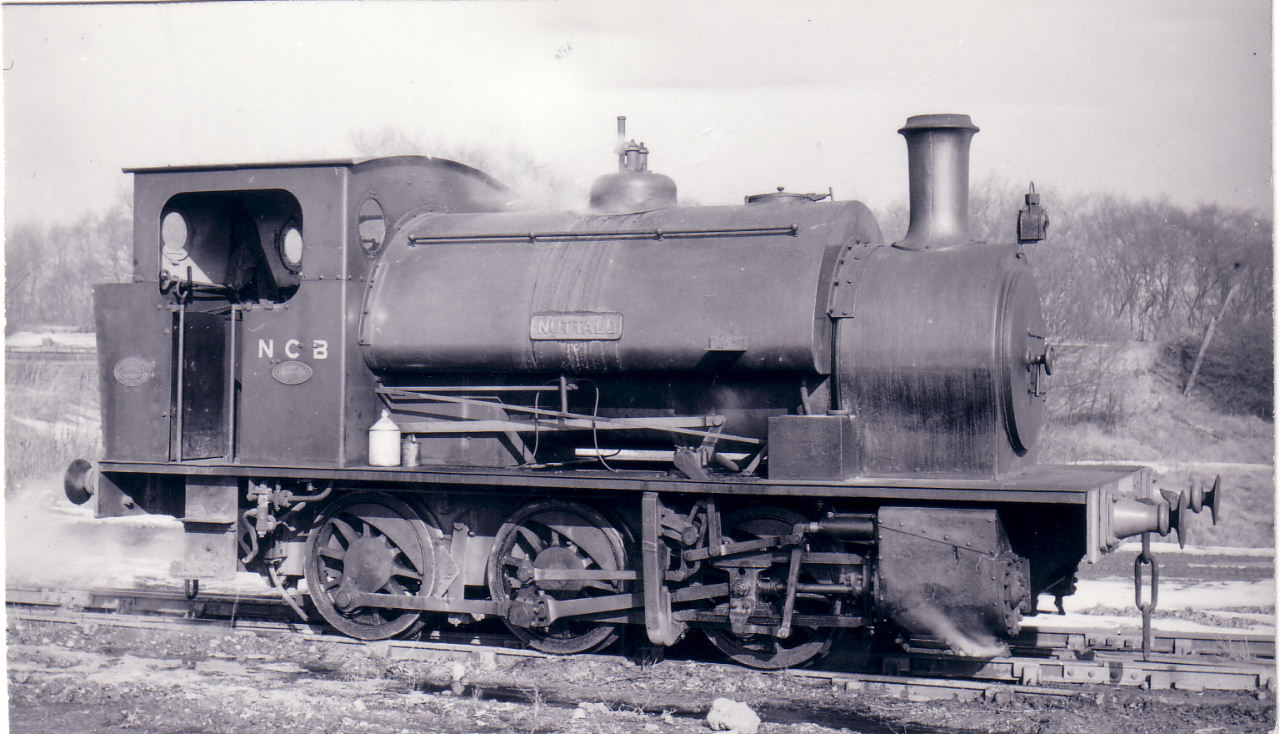
‘Nuttall’ 0-6-0 ST, HE, 1683-1931. Cannock Wood 2-3-1963

168 / 169 – Chasewater Railway Museum Bits and Pieces

168 – Chasewater Railway Museum Bits & Pieces

From Chasewater News Winter 93 – Spring 94 – Part 4

From The Board Room – David Bathurst, Acting Chairman.

With so many initiatives being worked-up on the railway at the present time, the Board is finding itself with an ever-increasing agenda.  Indeed, the Board Meeting held on 20th December failed to complete its business and had to be adjourned.

To enable members to be aware of the work being done on behalf of the Company, it is hoped to publish from time to time a brief resumé of matters currently under consideration by the Board.

This short note is not intended to cover all details of the Board’s business, but I trust it will be of interest to members.

1.    Following damage to the park which occurred during the movement of rolling stock, which resulted in considerable correspondence from the Council, it has been agreed that all such movements must in future be cleared with the general manager, and the crossing of grassed areas under the Council’s jurisdiction will not be permitted.

2.    A framework for crew training is to be considered in conjunction with the Roster Clerk, so as to maximise the potential of prospective crew members.  This will include both steam and diesel traction.

3.    The rostering of trainee firemen under the supervision of a passed fireman will be discontinued.  Trainee firemen will in the future act under the direct supervision of the driver.

4.    Only drivers and passed firemen acting under the supervision of the driver shall be permitted to drive steam locomotives while hauling passenger trains.

5.    In view of steam locomotive footplate constraints, only rostered crew and other authorised persons (including official guests) shall be permitted to ride on the footplate.

6.    The Board has agreed to the disposal of the crane, in view of its limited use by the CLR and the liabilities associated with it.  The availability of the crane, by way of sale, is to be advertised in the railway press.

7.    Paul Richards is to assume responsibility as Membership Officer as successor to Adrian Hall.  The date for transfer of membership details has yet to be agreed, being dependent on the setting up of suitable computer software.

8.    A shed fund has been opened, with a small sum banked to set the ball rolling.

9.    In view of the shortage of siding accommodation, any future proposals to introduce further items of rolling stock to the railway will have to be cleared by a sub-committee constituted by the Board.

10.                       It is considered essential for the CLR to enter into proper agreements with private owners of rolling stock, and perhaps other plant and equipment, which is residing at Chasewater.  The introduction of such agreements is intended to provide a clearer relationship between the parties, and to protect the interests of both the CLR and the private owners concerned.

11.                       Work on the causeway restoration scheme is proceeding rapidly, and should be completed during the spring/early summer.  However, it will be necessary to obtain the approval of HMRI before long.  Thanks to a donor who wishes to be anonymous, a footbridge has arrived on site on the causeway.The recently installed footbridge at the far end of the causeway.  This bridge was located, donated and installed all in the space of a few days.  It will provide pedestrian access alongside the existing railway bridge.

12.                       Consultations are proceeding with Lichfield District Council to secure the land which will be needed in the future to extend the line to Anglesey Wharf, but this may be delayed owing to the uncertainties associated with the line of the Burntwood Western By-pass.

13.                       Consultations are also proceeding with the Birmingham Northern Relief Road promoters regarding the relocation of Brownhills West Station.  Track layouts have been prepared by Regional Railways as a basis for discussion.

14.                       The disposal to Llangollen of the Wickhams, following asbestos removal, has been confirmed by the Board, subject to suitable arrangements having been made with regard to replacement passenger stock.

169 – Bits and Pieces

169 – Chasewater Railway Museum Bits and Pieces

From the Editorial – Nigel Canning

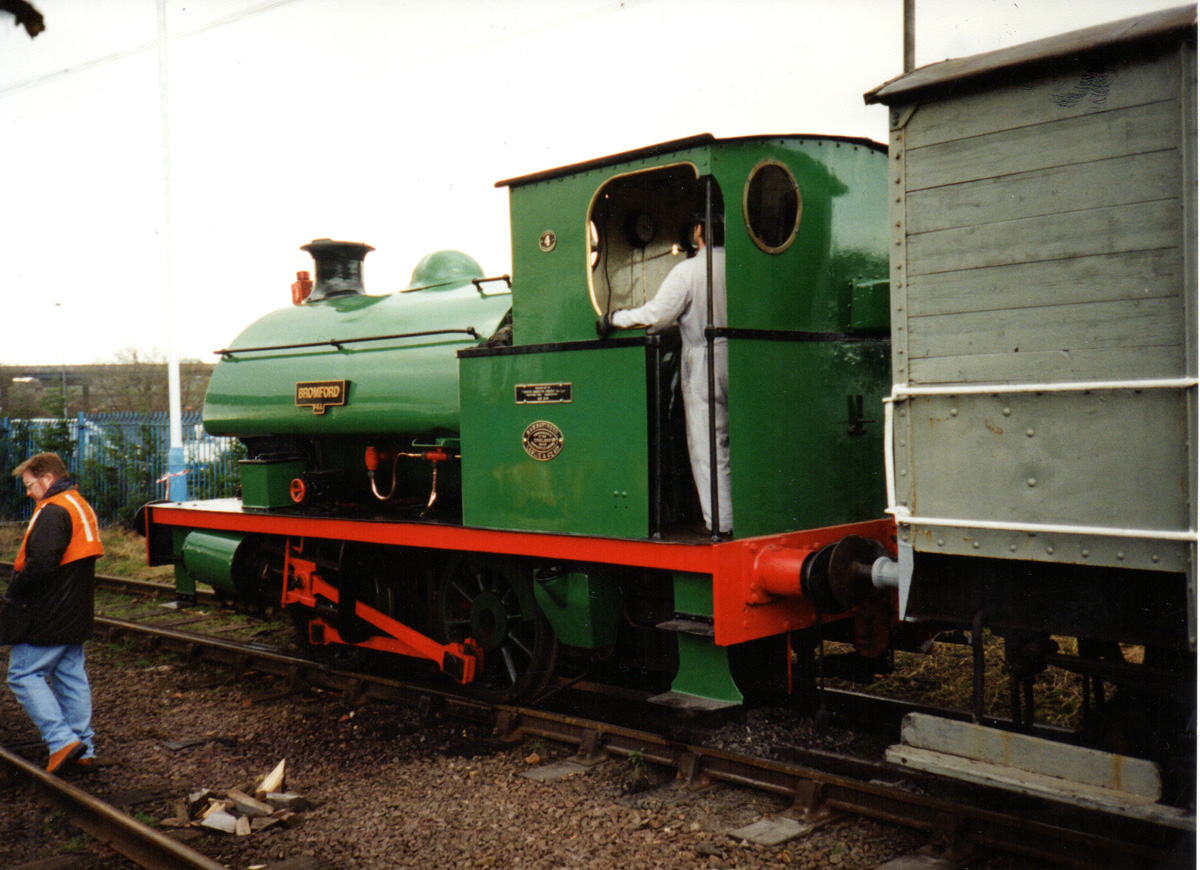
This issue of Chasewater News records our recent visit with ‘Asbestos’ and a brake van to Bromford Tube Works.  The majority of the magazine has been taken up by photos taken by members in an attempt to record the layout of the railway system in the works which has now sadly closed.

A great deal has been happening at Chasewater since the last issue.  Our coaching stock problem has been solved, although it may have created another one – lack of siding space; and track is being laid to the new station, which now has a name.

Locomotive News

No.4 Asbestos – This loco got through its visual examination and steam test without problem, although the Inspector did comment on the condition of some of the boiler tubes, and that if any of them failed the entire set would have to be replaced.  As if to emphasise the point, a number of tubes started to leak at Bromford following some energetic running, and have given trouble ever since.

Following renewal of the worst two tubes, the loco ran on Easter Sunday, but failed with further tubes leaking on the Monday.  After that, a further dozen tubes were renewed enabling the loco to run on Bank Holiday Sunday, only to fail again on the Monday.

Enough new tubes have been ordered to renew the entire set, some of which must be in excess of fifteen years old.  Whilst awaiting delivery of the full set, a further twelve have been renewed to enable trains to run at Spring Bank Holiday.

Apart from the tube problem the loco has continued to run well, and due to its being returned from Bromford facing the other way round, looks better hauling trains chimney first in its freshly painted green livery.

No.5 Sentinel – Very little  progress has been made on this loco due mainly to the amount of work needed to try and keep Asbestos running.  The boiler has, however, now been re-assembled, and the fittings are being refurbished off-site.

S100 – Work has continued on another of the four big leaf springs, the buckle of which was heated to expand it prior to assembly in Asbestos’s firebox. Various bits and pieces of brake rigging have also been fitted to the frames.

Fowler diesel – This loco has remained in service, used for shunting and works trains.

Ruston DL7 – In a surprise operation just prior to Easter this loco was fitted with an exhauster, valves and pipework to enable it to work vacuum braked passenger trains.  Since then it has completed several days of passenger train operation including ’extra’ non-advertised days as well as standing in for Asbestos.  Being unaccustomed to such intensive running, one of the axle boxes began to overheat, requiring stripping and cleaning.  The drive belt for the low voltage dynamo also caused a problem by disintegrating half way down the line.  This was, however, repaired fairly quickly without the train having to be rescued by another loco.  The general public appear unaware of the difference between the diesel and Asbestos, although to be fair, they are both painted the same shade of green and produce roughly similar quantities of smoke when running!

L&Y petrol loco – This loco seems to have been abandoned for the time being with various bits scattered around the station yard and loco shed.  Hopefully the re-assembly will commence shortly!

No.21 diesel – The engine for this loco is awaiting new cylinder head gaskets, and when fitted an attempt will be made to finally get it running again.

New Fowler – This four-coupled diesel mechanical loco appeared on site recently having been acquired from a preservation society in Redditch.  Following an attempt to tow-start the loco, it was found that the fuel injection pump needed repair, and this has since been removed.  Various other components have also been removed for attention so it could be some time before the loco is runnable.

Smith Rodley crane – this vehicle has remained out of use and has been pushed out of the way up No.3 road until a buyer can be found for it.

Carriage & Wagon News

New coaching stock – At long last replacements for the 2-car Wickham DMU and the recently departed Gloucester trailer have been found and began to arrive at Chasewater at the end of May.  A total of four additional vehicles have been purchased from BR, a centre car and three power cars.

The first of these vehicles, a Pressed Steel Co. motor brake second, W51372, arrived in time to run at Whitsun.  The recent history of this vehicle is quite interesting as it is one of several used by the contractors of the Channel Tunnel and has been through to France.  A maintenance record book found in the drivers’ cab refers to various faults as being at “the French end” of the train.

Ultimately it is intended to retain two of the four for use as a working DMU in BR green livery, whilst the other two will be used as loco-hauled stock.  Hopefully full details of the new stock will be included in the next magazine.

Wickhams E56171 & E50416 – The trailer car remained in service on passenger trains until just before Whitsun, when a vacuum leak in the brake system caused serious problems.  In view of the impending arrival of the replacements it was withdrawn from use.  The power car has also remained out of use.

Payment for the Wickhams has now been received from Llangollen, although a date has not yet been set for their removal from Chasewater.  This is likely to cause a space problem, as with the new arrivals there will be a total of seven DMU cars on site for a while.

Derby centre car W59444 – This coach has remained in service although it has been noticed that the surface of one of its tyres has started to flake away.  Advice is being sought as to whether it can be repaired.

20 ton Great Western Toad – This vehicle was ‘done up’ to run at Bromford Tube with Asbestos.  If nothing else it has benefited from having the rust worn off its brake blocks, as it covered most of the distance at Bromford with its brake screwed hard on!

CRC 4-plank wagon – Progress on the wagon has continued and it now appears to be back in one piece.  Tony Wheeler has started on the paintwork with the intention of finishing it in the livery of the ‘Conduit Colliery Company’.

Great Eastern six-wheel passenger brake – With the coming of better weather Dave Borthwick has started again on painting this vehicle.

Other vintage stock – No work appears to have been carried out on any other vehicles although this situation will hopefully improve during the course of the summer.

Shed Fund – This fund is now well underway so that by the time the route of the motorway is finally settled there may be enough money to make a start on this project.  Meanwhile donations will be gratefully received by the Treasurer, Chris Chivers.

I’m sorry but I can’t remember who took the photographs.


119 – Chasewater Railway Museum Bits & Pieces From Chasewater News Autumn 1989

119 – Chasewater Railway Museum Bits & Pieces

From Chasewater News Autumn 1989

From the Editorial

This magazine sees another change of Editor as I (Nigel Canning) volunteered to take some of the load off Steve Organ.  We both spend a lot of time at Chasewater so we have up to date material for the magazine, but perhaps the problem is recognising it.  A number of members and visitors who had not been to Chasewater for a while have expressed amazement at the recent improvements and are obviously delighted, whilst those of us who work there every week tend to have on our minds want we haven’t done yet rather than what we have.  As you read the various sections of this magazine you will see the usual excuse for jobs not being completed, ‘lack of manpower’, however, if you look back through previous magazines the problem has subtly changed, hopefully for the better.

It used to be:  ‘Insufficient manpower to rebuild the railway to allow train operation’.

Then:  ‘Insufficient manpower to run trains more often’.

Now:  ‘Insufficient manpower to open the bar every week’.

Next perhaps:  ‘Insufficient manpower to sell tickets at Willowvale Halt’.

All of this shows that we must be making progress and makes me wonder what we will have insufficient manpower for in, say, ten years time???

Locomotive News

Asbestos – This engine has worked all of this year’s trains so far with only various minor leaks having needed attention.  The recent introduction of two coach trains has proved to be no problem at all for it, with only apparent minimal increase in coal consumption.

Sentinel – Getting this loco through the various stages of a major (five yearly) boiler examination has proved to be a long drawn out business, however it is now ready for its steam test and should be back in traffic by the time you read this magazine.   In addition to the statutory inspection work, an extra water level gauge has been fitted to the boiler, also a new, larger ashpan ready for working the new Norton Expresses.

Lion – Much enthusiastic work has continued on this engine, mainly getting the boiler ready for its initial major examination.  In addition to this, various new boiler fittings have been procured and machined, further vacuum brake pipework added and more paint applied to the frames.  Hopefully the loco will enter service during 1990.

S100 – Work has concentrated on splitting, cleaning and re-assembling the springs of this loco, a job involving a lot of heat and brute force.

DL7 – This loco has again run well, performing all the shunting and works train movements.  The only minor failure was that of a bearing in the small battery charging dynamo which was repaired fairly easily.  Following a bout of vandalism by local tow-rags the loco has been repainted in ‘Rail Blue’ complete with yellow and black striped ends to cover the graffiti.

Fowler – This has remained ‘standby diesel’ due to a blowing cylinder head gasket.  Attempts at finding the necessary details required for the repair, type of head gasket, torques and torquing sequence, etc. gave been somewhat protracted due to the engine manufacturer’s inability to provide the information even when the block number was quoted.  This loco is also in the process of being repainted, but in Longmoor Military style of blue with the motion and other details picked out in red.

Other Locos – Little or no work has been carried out on any other loco since the last magazine.Carriage & Wagon News

The big news is that the Wickham trailer entered service on Saturday 17th June coupled to the Gloucester to form the first regular two-coach train.  The following day there was another first when the bar was opened and refreshments were served on the moving train.  Although a certain amount of finishing off work is still required to the interior, the coach has run every week since its inaugural day and has been a great success.  A finishing touch currently underway is a pub sign ‘The Wickham Bar’ being painted on the large unglazed body panel at the gangway end of the vehicle.  A precedent for this was the Southern Region ‘Tavern Cars’ which ran for a while in the fifties in ‘ blood & Custard’ livery with brickwork and a pub sign painted at one end.  Other than the three DMUs, no work has been carried out on rolling stock due to lack of manpower.Permanent Way News

One problem with running trains every Sunday is that it doesn’t leave enough people to do much in the was of trackwork.  However, the track we are currently running on is in reasonable condition and, by our standards, is remarkably free of weeds.  In view of the above situation, all efforts will be concentrated later in the year, starting around September, on a number of projects.  These will be; packing rough bits of the existing line, repairing the fencing again, completing the run round loop at Brownhills West, building a platform at Willowvale and then extending the line towards the causeway.  Any volunteers for this work will receive a warm welcome and a choice of shovels!

Operating

So far this year operating the railway has been even more hectic than usual for a number of reasons.  A lot more trains have been scheduled, running every Sunday in July and August, which is another ‘first’ for the railway.  In addition to this, steam trains were run on Monday July 3rd, two school specials, and the first ever Birthday Party Special, all of which were very successful and will hopefully be repeated regularly.  The recent addition of two-coach trains in itself has been no problem, but when the bar is in use at least one extra person is needed to staff it.  For the obvious security reasons the day’s work involves loading every item of stock onto the train and unloading every remaining item at the end of the day.  As a result, so far this year the bar has been open only on special days when staff have been available.  A similar problem has of course existed for a long time with the Wickham buffet car with all stock having to be transported to and from safe storage.  As usual any volunteers will receive a warm welcome and a choice of whatever the apparatus for this work might be!

Chasewater Railway Museum Bits and Pieces, No. 96

96 Chasewater Railway Museum Bits & Pieces

Gricers’ Day 11th October, 1981

Welcome to our annual end of season ‘Gricers Day’.  This year we have organised a small gathering of preserved buses to create added interest.

1981 has been a good year for CLR and the progress achieved can be seen around the compound area and down the line where the new locomotive shed is gradually taking shape.

A Y.O.P. scheme has helped in the restoration of wooden bodied coaching stock, particularly the ex LNWR non-corridor brake coach on which progress is spectacular as regular visitors will appreciate.

Society members have been kept busy on the overhaul of ‘Asbestos’ which is slowly being reassembled and also the dismantling of the Hudswell Clarke side tank S100, as well as keeping the regular working locos in trim, whilst also running the twice monthly steam trains which have shown a good increase on last year’s figures.

As the average number of volunteers is round about ten, restoration is obviously slow, and more numbers are urgently required – especially with a view to running a longer length of line in the not too distant future – enquire at the booking office for further details.

Wickham – S.Organ video (Video won’t run, sorry)

Two further passenger carrying coaches arrived this week and the diesel gricers will recognise them as DB975005/6, formerly E50416 and E56171 the sole surviving DMU set built by D.Wickhams of Ware in 1957, which have latterly served as the Eastern Region General Manager’s Saloon.

Locomotives in service on the railway today are:

1.         ‘Alfred Paget’ built by Neilson’s of Glasgow in 1882 and formerly at Gartsherrie Ironworks, Coatbridge; the oldest working locomotive in the Midlands.

2.         ‘The Colonel’ built by Pecketts of Bristol in 1914 and latterly at Swan Hunter shipyard, Wallsend.

3.    DL7 built by Ruston & Hornsby’s of Lincoln in 1961 and purchased from the NCB Whitwell Colliery, Derbyshire.

Passenger trains ran at frequent intervals of between 15 and 40 minutes, with freight train run pasts between passenger services.

The freight train will be available for photographic purposes on the as yet unopened section of the line which crosses the lake on a causeway, beyond the limit of the passenger train service.

Don’t forget to visit the museum coach and sales stand at Brownhills West.

List of buses in attendance

At the time of writing only five entries had been confirmed but it is hoped that more vehicles will be present on the day.

transport-illustrated.blogspot.com

1.    EA4181  Dennis ‘E’ single decker, 32 seats.  Formerly no.32 in the West Bromwich fleet.  Built 1929, body by A.Dixon Ltd.  Ambulance service 1939 – 1945.  Illuminated ‘Christmas Lights’ bus 1948 – 1962.  A regular visitor to Chasewater.  Courtesy R.Coxon and the 32 Group.

oxford-chiltern-bus-page.co.uk

2.    BTA59  Dennis Mace, built 1934, single deck, 26 seats.  Restored to original colours as Southern National 668.  First visit to Chasewater since 1977.  Owner A.Gameson, Four Oaks.

JOJ 245 The Transport Museum, Wythall

3.    JOJ245  Leyland P52/1, Metro Cammel Weyman 34 seat single deck.  Built 1950 for Birmingham City Transport.  Owned by Acocks Green Bus Preservation Group and another regular visitor to Chasewater.

4.     FJJ86  Bedford MLC with Lee Motors 16 seat bus body, built 1952.  Originally Dorset CC Education Committee.  Owned by P.Mason, Hereford since 1977 and extensively rallied.

FRC 956 Leyland The Transport Museum, Wythall

5.     FRC956  Leyland PD2/12, built 1954 and delivered to Trent.  Sold by Trent 1967 and since 1972 owned by the 1926 Preservation Group.  Restored to original colours 1976, the interior is also completely refurbished.

Please support the sales stands connected with some of the above listed buses as these small sales help in the restoration and continued running of these vehicles.

The owners will doubtless be pleased to answer your questions, but please do not enter the buses without their permission.

Finally we hope you have an enjoyable time and will come again next year when regular services will start again at Easter.