Tag Archives: Locomotives

186- Chasewater Railway Museum Bits and Pieces

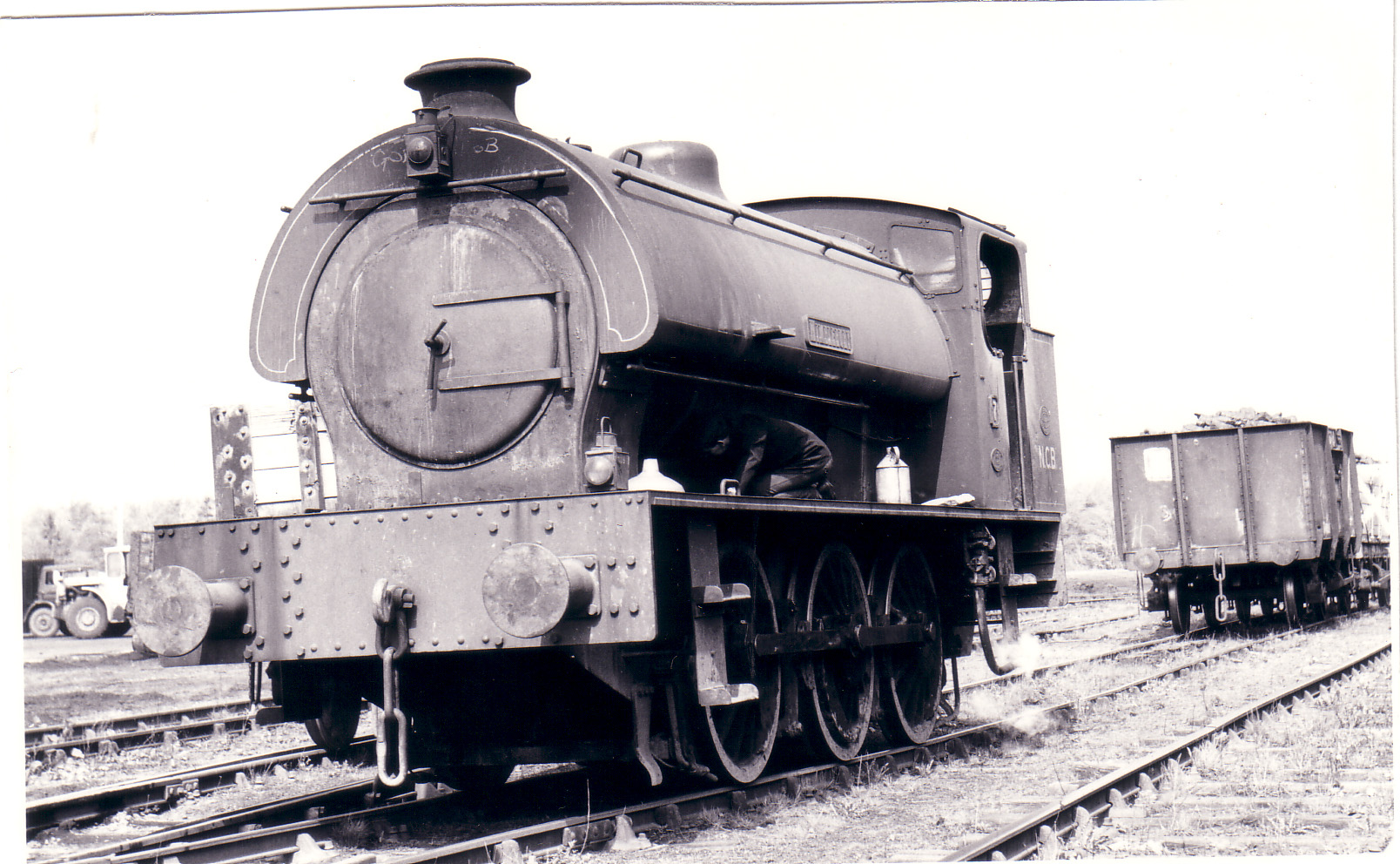
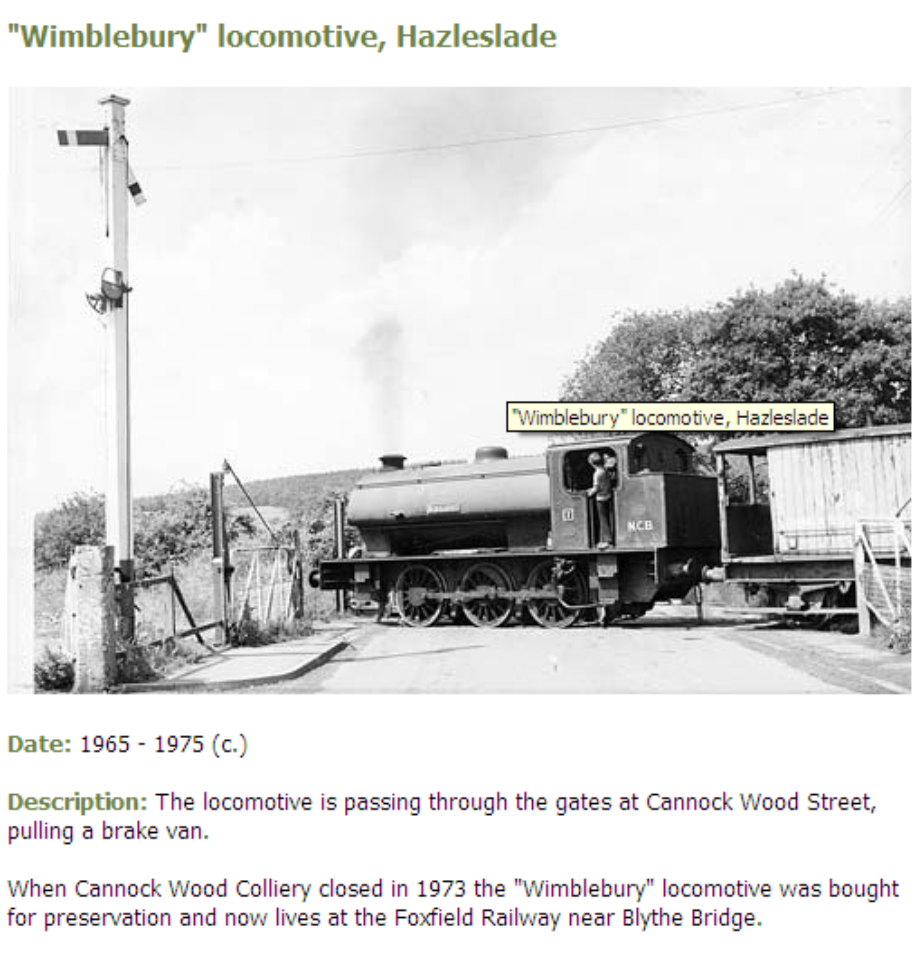
No.7 Wimblebury 0-6-0ST Hunslet 3839-1956 Cannock and Rugeley Collieries

186 – Chasewater Railway Museum Bits & Pieces

From Chasewater News Autumn & Winter 1995 – Part 3

 Loco Shed News

With the overhaul of the Sentinel nearing completion and the repairs to Asbestos well in hand, it is possible that the opening of Norton Lakeside Station on the 16th December could be another first with the special train being double-headed, which as far as I know has never been done at Chasewater before.  The work that has been done in the engine shed over the past few months has been incredible, and many thanks to Nigel Canning, Les Emery, Tony Sale and all the other willing hands that have helped.

Steam Locomotives

No.4 Asbestos – The casting for the main steam pipe was delivered during the second week in November.  After heat treating to reduce the stress on the casting it was machined courtesy of Tony Sale and the first trial fitting was on the 19th November.  A few minor adjustments were required but this has now been rectified and the casting fitted.  This should keep Asbestos running over the Christmas period and into the start of the new season.

No.5 Sentinel – The Sentinel has just about completed its long overhaul and is due for its test steaming at the end of November/beginning of December.  Hopefully this should be accomplished without any problems, and all credit to Nigel Canning for the first class job that he has done on his locomotive.  With the work completed on the Sentinel this should give us two steam locomotives in traffic.

S100 – Work continues on putting S100 back together again.  Two of the valve springs have had to be remade after a gap was found between the valve and the cylinder on one side.  One of the brake hangers has been dismantled, then cleaned and primed.  The work continues towards the completion of the chassis ready to receive its wheels.

Diesel Locomotives

Fowler diesel mechanical No.410013 – Further cosmetic work is being done to this locomotive to protect it from the winter weather and work will recommence on this locomotive after several other projects are finished.  The diesel still remains nominally serviceable.

Fowler diesel hydraulic No.422015 – The ‘Black Fowler’ remains temporarily out of service due to the breaking of three of its injector pipes whilst on works train duties.  The repairs to the pipes should be completed shortly and it should be back in service for Christmas and the start of the New Year.

L&Y No.1 – No.1 is well on the way to being put back together.  Work is proceeding on the engine with one of the two cylinder blocks now fully finished, and work is rapidly continuing on the second.  All being well the engine should be finished shortly after Christmas.  The next job on the agenda is to crane out the chassis and wheels, clean and paint them.  If all goes well No.1 could be running again by the end of 1996.  (See post No.183).

No.21 – The engine of No.21 is going back together at a slow but steady rate.  The second cylinder block has been replaced and the manifolds are being put back on.  Most of the basic repairs to the engine are now complete.  The next items on the agenda are the cooling system and the electrical systems.  This locomotive could also be finished by the end of 1996 with a bit of luck.

P.Way News

Blood, Sweat and Tears – Arthur Edwards

Most of the past several months have been taken up, in between the service trains running, with getting the track ready for the Inspector’s visit in September and again in October.  The ‘Blood, Sweat and Tears’ of the new extension has lived up to its name.

Blood – Because during the completion of the Causeway many a finger has been caught whilst either rolling in rail or keying up the track, so drawing blood.

Sweat – Of which a lot has flowed during the summer months, as it was one of the hottest few weeks on record, and for those who have done it, P.Way is hot and heavy work.  (Is it not, Tom?)

Tears – When things have gone wrong, and believe me they have, such as when Lakeside Station was nearing completion and we ran out of bricks to finish the platform, due to vandals knocking off the laid bricks and throwing them in the lake.  Then after the Inspector had been it was found that the rail was too close to the platform edge so that the clearances had to be altered by one or two inches, taking a dozen blokes to do it over a weekend.  (My back still remembers it.  Ed.)

In the end I received a phone call at about 5.20pm on the 25th October with the news that the extension had been passed for passenger traffic and we could now run into Norton Lakeside Station, which was very good news indeed.  I have only one request – could the P.Way lads get their breath back before we get any more track in to extend the running line, please!!

My thanks to Nigel Canning for the photos
Chasewater Railway Museum Bits and Pieces No.93

93 Chasewater Railway Museum Bits & Pieces Autumn 1979 – 2

Loco Department

As it’s the end of a decade, a complete rundown of locos is given.

Invicta’  AB 2220/1946The loco was kept in reserve at the start of the season and was not steamed until June 10th and then chose to run hot!  As there was only two weeks to go before Transport Scene there was much gloom and despondency around as well as a fair amount of bickering.

The offending bearing was the rear driver’s side axle box and this was duly removed following sterling work by those stout fellows Messrs. Hames and Luker.  Inspection of said bearing revealed the cause of the trouble.  It was a well known fact that during her latter years at Chatham, ‘Invicta’ had been fitted with a brand new rear axle and someone had obviously forgotten to cut oil grooves in the bearing brass, leaving only two small holes to lubricate the axle – not very good – especially as one had got blocked leading to overheating so bad as to actually melt the bearing surface.

Swift alterations to the bearing saw the loco back in service within four hours and the loco has performed without trouble ever since.

‘Invicta’ is undoubtedly the loco to be used at the start of the 1980 season, following the annual boiler test.

‘Alfred Paget’ N 2937/1882The ancient Neilson has performed without trouble all season and is now awaiting its hydraulic test, after Christmas, which will entail the removal of the saddle tank and boiler lagging and cladding.  As its firebox has overcome its leakage problems it would seem probable that the boiler test will be passed without too much trouble.  The opportunity will be taken for a thorough repaint and perhaps even new boiler cladding sheets will be provided to replace the current motley collection.  There is every confidence of the loco working next season – the loco’s 98th year in fact.

‘Asbestos’ HL 2780/1909This loco has been the centre of great activity this year with up to seven people working on it at one time – unheard of before!.

The loco is completely dismantled and a thorough mechanical and cosmetic job is being done to ensure trouble-free running when it resumes earning its keep.

The boiler was lifted out of the frames in June and was finally despatched to Park Holland Ltd. of Hanley on August 12th.  It now seems as though the firebox repairs will be of the welding and riveting kind rather than uplifting of the foundation ring, following a further examination by our tame boiler inspector.  The boiler is said to be ready around Christmas time which will ensure plenty of work in the New Year.

Following the removal of the boiler the motion was completely taken down, followed by jacking the frames clear of the wheels to enable the wheels to be rolled out.  Removal of the wheels has enabled a thorough paint job to be done on the frames, at present five coats have been applied with at least one more to follow.  To enable all members to feel part of the restoration team a couple of carriage and wagon tappers were roped in for a paint session (only undercoats of course!) though with the onset of stormy weather they have been despatched back to their rightful place fending off the bitter easterly winds off the workshop area.

Removal of the wheels will enable tyre turning to take place, probably at Bridgnorth.  The valves and motion have had attention with reassembly following, as far as the lack of wheels will allow anyway!  Whilst Brian has been busy machining the regulator valve to allow greater use of the steam produced.  All concerned with the restoration of the loco are confident of seeing it in steam next year.

‘The Colonel’ P 1341/1914The hydraulic test was passed in July, followed by refitting of the boiler cladding and lagging since when not much has been done save for the two Bobs (and others) finishing off the new coal bunker which looks rather fine.  Providing the tank can be repaired the loco should see service next year.

‘Peckett’ 917/1902No work has been done on this loco apart from routine preservative maintenance, but the situation should change once ‘Asbestos’ is back in traffic, as it is the next loco due for ‘works’ treatment.

Hudswell Clarke 431/1895Following a relatively ‘light job’ on Peckett 917 the ‘old Hudswell’ should get the full treatment though this is probably a good 18 months away at the moment. (32 years and counting!)

Andrew Barclay 1223/1911

This loco is in a presentable state at the moment but needs heavy boiler and firebox repairs before it can steam again – pity as the mechanics are in first-class condition.

’S100’ HC 1822/1949

The loco migrated into the compound and the boiler received a coat of paint, since when nothing, – where are you, Tony?

DL7 (RH 458641/1961)Once the loco was cajoled into action after removal to Chasewater it has proved to be a fine acquisition and it is to be hoped that the CLR Co. will have sufficient funds to buy it off the STEPS scheme.

Apart from working 5 days a week it has proved its worth on shunting duties on steam days, as well as hauling a couple of passenger trains on Gricers’ Day.  Once its future is secure the NCB green will disappear under a coat of CLR livery of some colour or another.

Others

Of the two Bass-Worthington diesels, No.21 sees occasional use whilst No.20 is rumoured to be going off on loan to the Bass Museum, Burton-on-Trent, which will be a useful advert for the Railway and give us a bit of room.(It went and is still there, 2011)

The two No.1s are performing sterling work as a stop block on ‘Three Road’ whilst various people mutter darkly about getting them going again.

Whilst on the subject of infernal combustion it must be mentioned that Bob Curtis has offered to paint No.21 as the Society is 21 years old next year.  Well done that man.

Carriage & Wagon Department

He DMU trailer coach has performed well as usual but the paintwork is now in need of some touching up, especially around the windows – so hopefully this will be done before it gets worse as, having seen similar coaches on a North Yorkshire Moorland Railway, it wouldn’t be advisable to wait too long.

Messrs. Pearson and Curtis have been busy painting the ex LNWR TPO and nailing panels back onto the Maryport and Carlisle coach.  We are hoping they will move onto the LNWR full brake after finishing the TPO as the paint is fast peeling off.

John Elsley is busy rebuilding the fire-damaged brake end of the ex MSL six-wheeler and it is looking better with every panel.  The only other item to receive attention has been the Great Western brake van which should get repainted during the New Year, following some welding to the platework which is rather thin in places.

johntisdale50@gmail.com

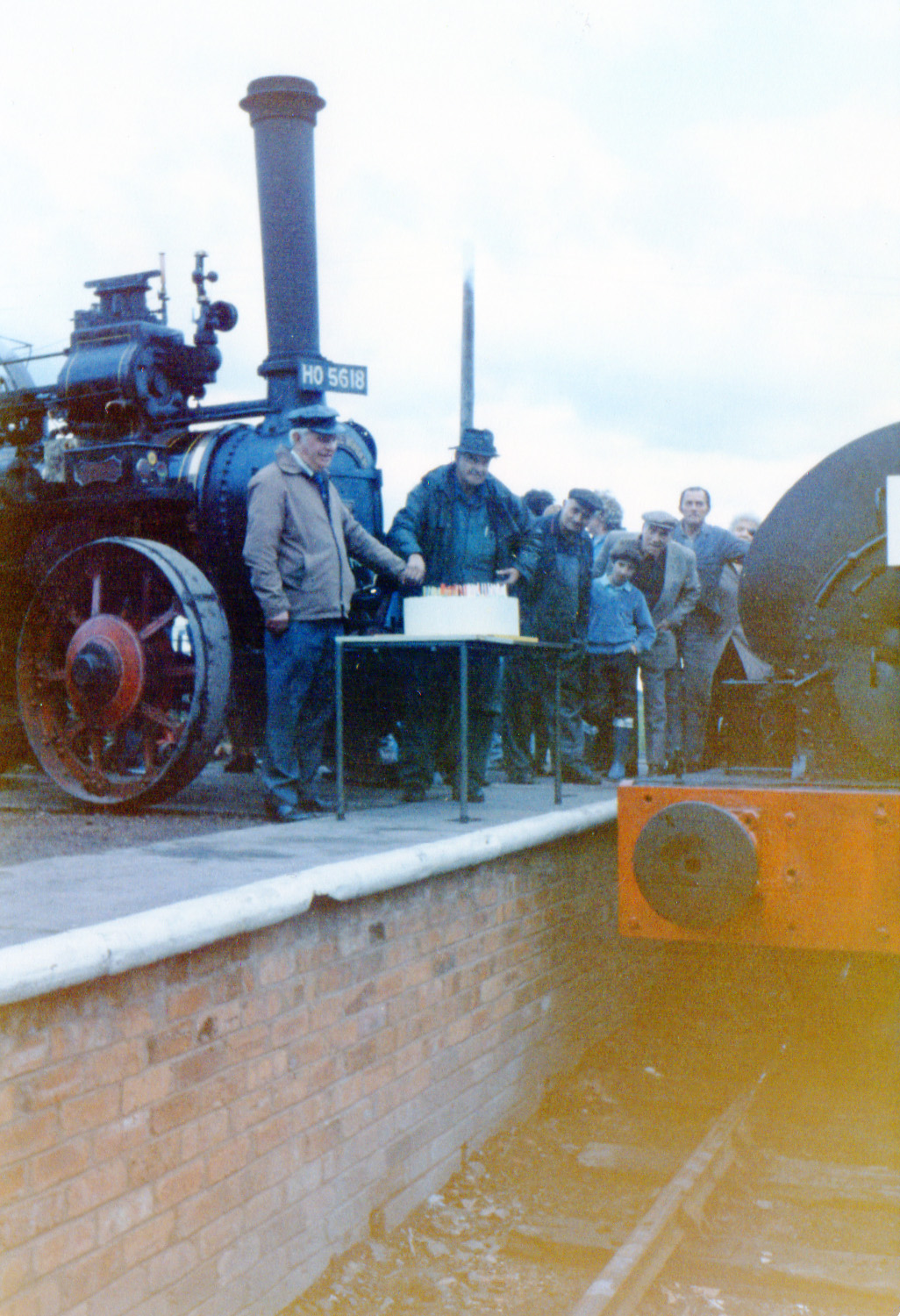
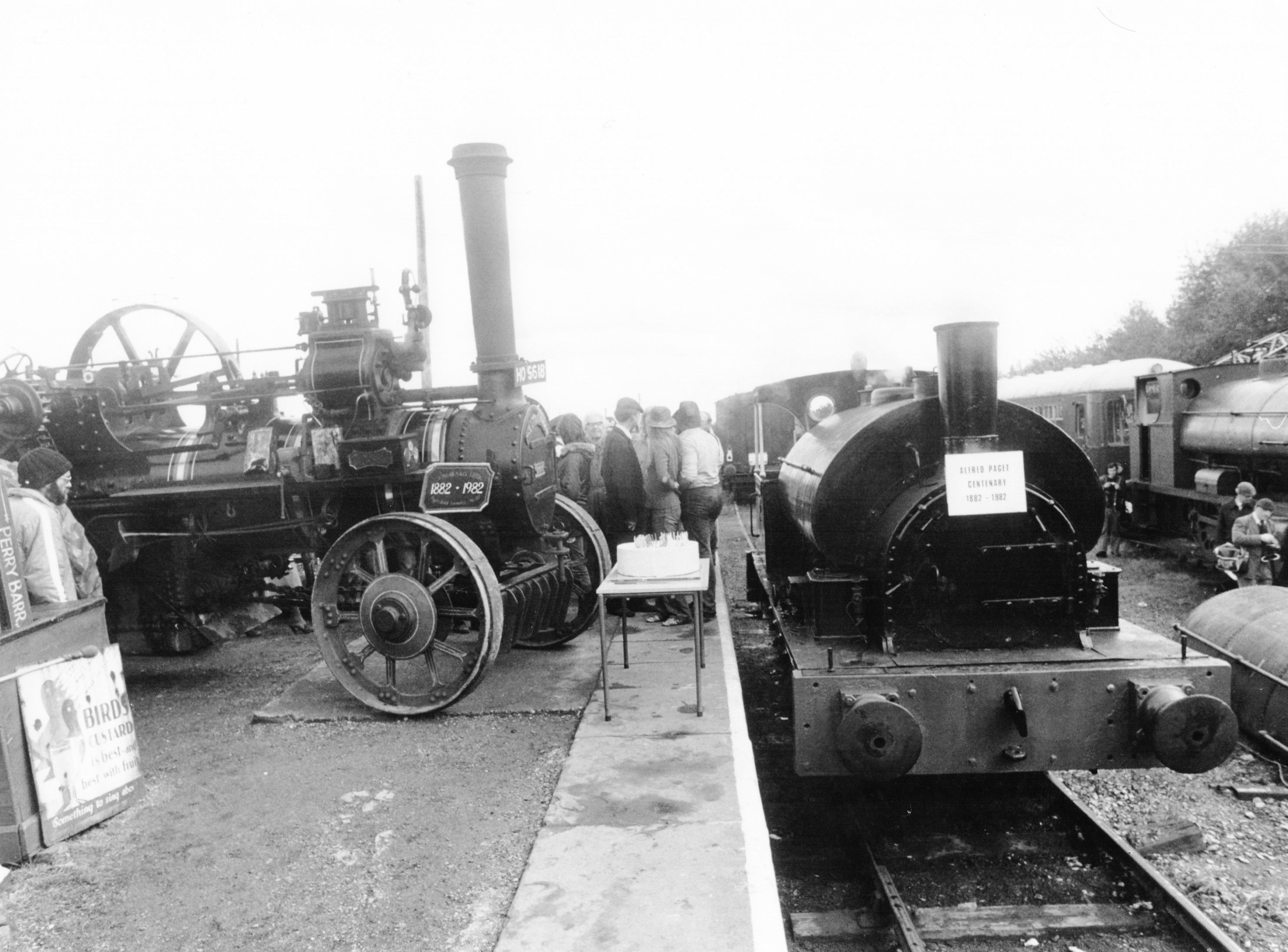
2 Centenarians at Chasewater Railway

On platform colour

2 Centenarians at Chasewater Railway

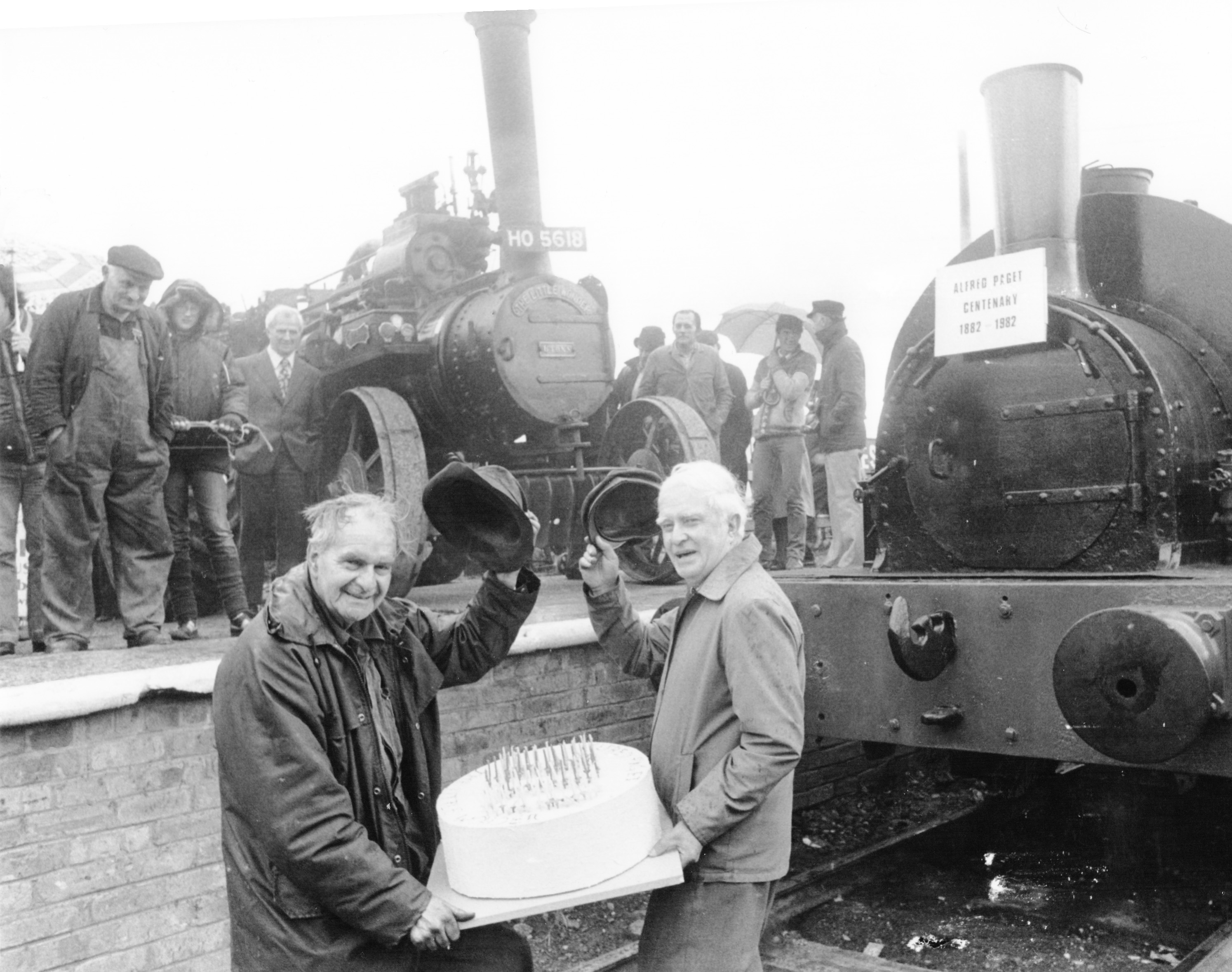
The Chasewater Railway Museum has  a significant amount of paperwork formerly belonging to David Ives, a founder member of the Railway Preservation Society and a long-time Board Member of the Chasewater Railway.  Our curator is working his way through this paperwork to put it in some sort of order, and is finding some interesting photographs in some of the boxes, including the ones shown here.B&W no people

The centenarians involved are the traction engine ‘Little Wonder’ and the Neilson steam locomotive known as ‘Alfred Paget’  (2937/1882).

The gentlemen in the photo holding the cake are the late Johnny Mayes, at the time the owner of ‘Little Wonder’,  and the late David Ives of Chasewater Railway, on the right.

Hats off