Author Archives: John D

187 – Chasewater Railway Museum Bits and Pieces

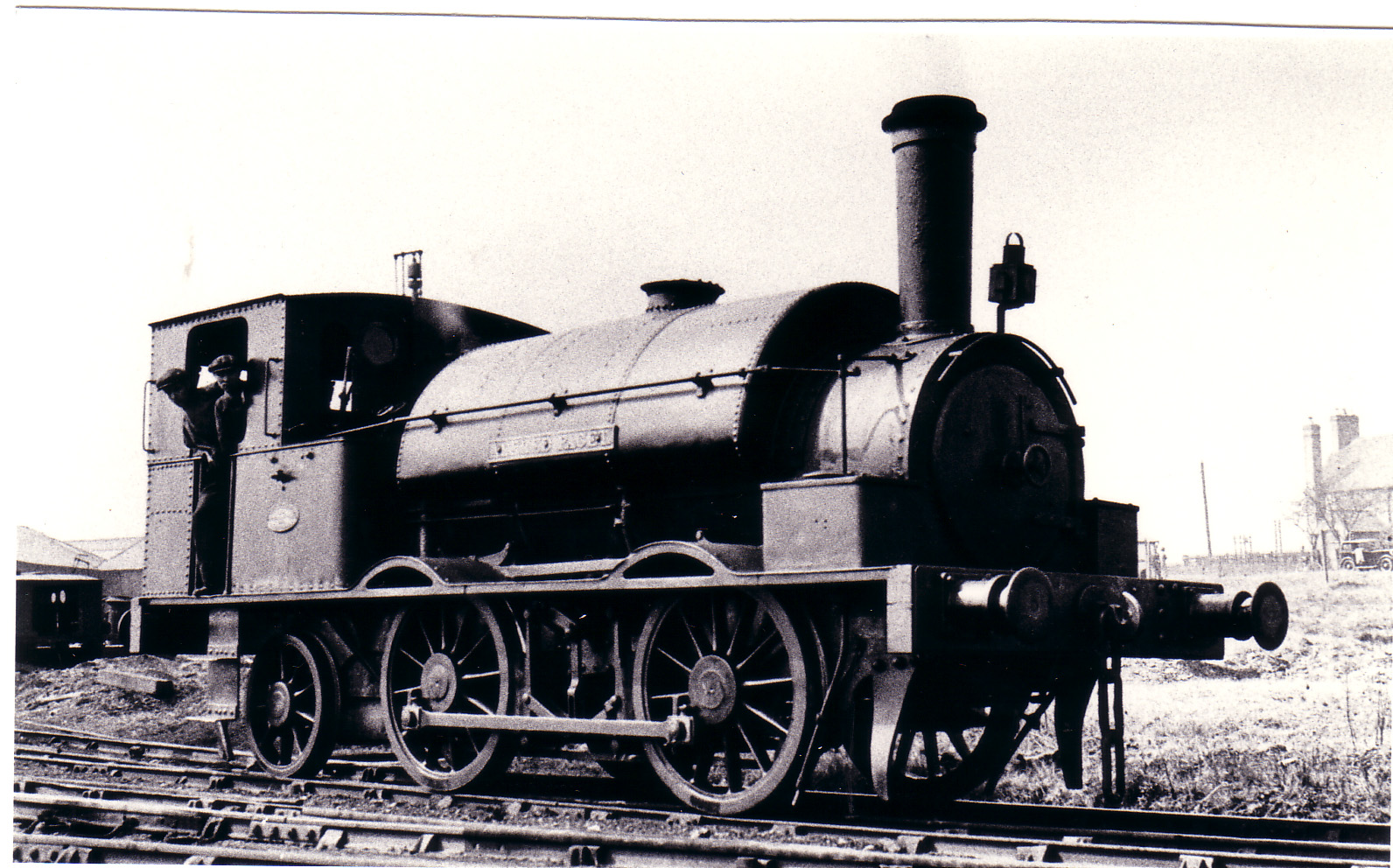
‘Alfred Paget’ 0-4-2ST Beyer Peacock 244-1861 Cannock Chase Colliery Company

187 – Chasewater Railway Museum Bits & Pieces

 From Chasewater News Autumn & Winter 1995 – Part 4

 Did you ever wonder where the track came from?

Here a couple of examples….

 British Oxygen Company, Wolverhampton – Rob Duffill

 Anyone who travels from Birmingham to Wolverhampton by train should look out to the left shortly before Wolverhampton station.  There is still in use for steel traffic, the old canal interchange sidings and included is the canal/rail interchange building which is still standing.  Until fairly recently also coming out of the site were several other sidings which have been lifted by BR.  I noticed, while I had a brief view from a slowly passing train, that the line continued past the fence into the undergrowth and the British Oxygen Works at Wolverhampton.  I mentioned it to David Bathurst who agreed to contact their Works manager to inquire if it was available.  Fortunately David was able to get me an appointment to view the site.  I duly turned up a few days later and was courteously received by the Works manager himself.

The track had been out of use for three to four years but had only been relayed in the 1970s to cope with heavy wagons and BR diesels.  The track still in situ was from their boundary with BR into the works, a total of approximately 160 yards and a set of points, all in excellent condition.  Unfortunately there was also approximately 300 yards of double siding set in concrete which it would be virtually impossible to remove.  After describing Chasewater and our long term aims and also our lack of cash, I very nearly fell through the floor when I was told ‘you can have it if you want it’.  It was as simple as that!

We’ve tried various approaches to acquire more track over the years and the simple direct approach seems to work best.  If you ask for what you want you can only be told ‘no’, or you get it!

Hopefully we can lift and transport it in the autumn, after the running season, sorry lads more work for you to dismantle it, transport it and rebuild it again at Chasewater.  I was also given a tour of their site, which was very interesting, for example, they used to supply many large Black Country factories using their own trunk pipe lines which went quite a distance from their production site.  With the closure of so many factories the system was slowly cut back and finally taken out of use, hence the lack of rail traffic.

The Railway has more friends out there than it often thinks, we ought to ask for help more often with practical problems.  Dorman’s springs to mind as an example of help.

Many thanks to British Oxygen and I hope that the reinstatement of the track will prove a boost to our running line.

Chasewater and Four Ashes – David Bathurst

It is probably unnecessary to describe in much detail the connection between the Railway and Four Ashes, Staffordshire.  Suffice it to say that through the good offices of our colleague, Jim Bates, the Railway inherited the redundant track from Synthetic Chemicals – who offered a wonderful measure of co-operation in relation to its removal.

What is less certain, however, is whether many Chasewater members even knew of the existence of this modest industrial railway network before the track donation was made.

I rather suspect that even fewer members actually visited the network, but I am able to record, with some satisfaction, that I participated in a visit organised by the Branch Line Society on 17th February, 1981.

At that time, the site was owned by Croda Chemicals, who provided every facility to the BLS to travel (as is customary) over every last available inch of line, utilizing the famous fireless 0-4-0.  I cannot recall in detail the precise arrangements of the visit, but I have managed to locate a series of slides which I took on the occasion.  Unfortunately, some of them will not reproduce satisfactorily for The Chasewater News, but I hope that the Hon Editor (What’s with the Honorary, David?????) (I wondered about that too!!! cws) will be able to make something of the remainder.

What is evident from the slides is that the track was certainly maintained in good condition, and really it was quite a neat little layout.  Others will be able to provide details of the Fireless locomotive whose small cab was hard pressed to accommodate the size (both in numbers and in girth) of the BLS party.

Once again the Editor has done his best with the print-from-slides; I shall be offering them to Jim Bates as a reminder of times gone by.

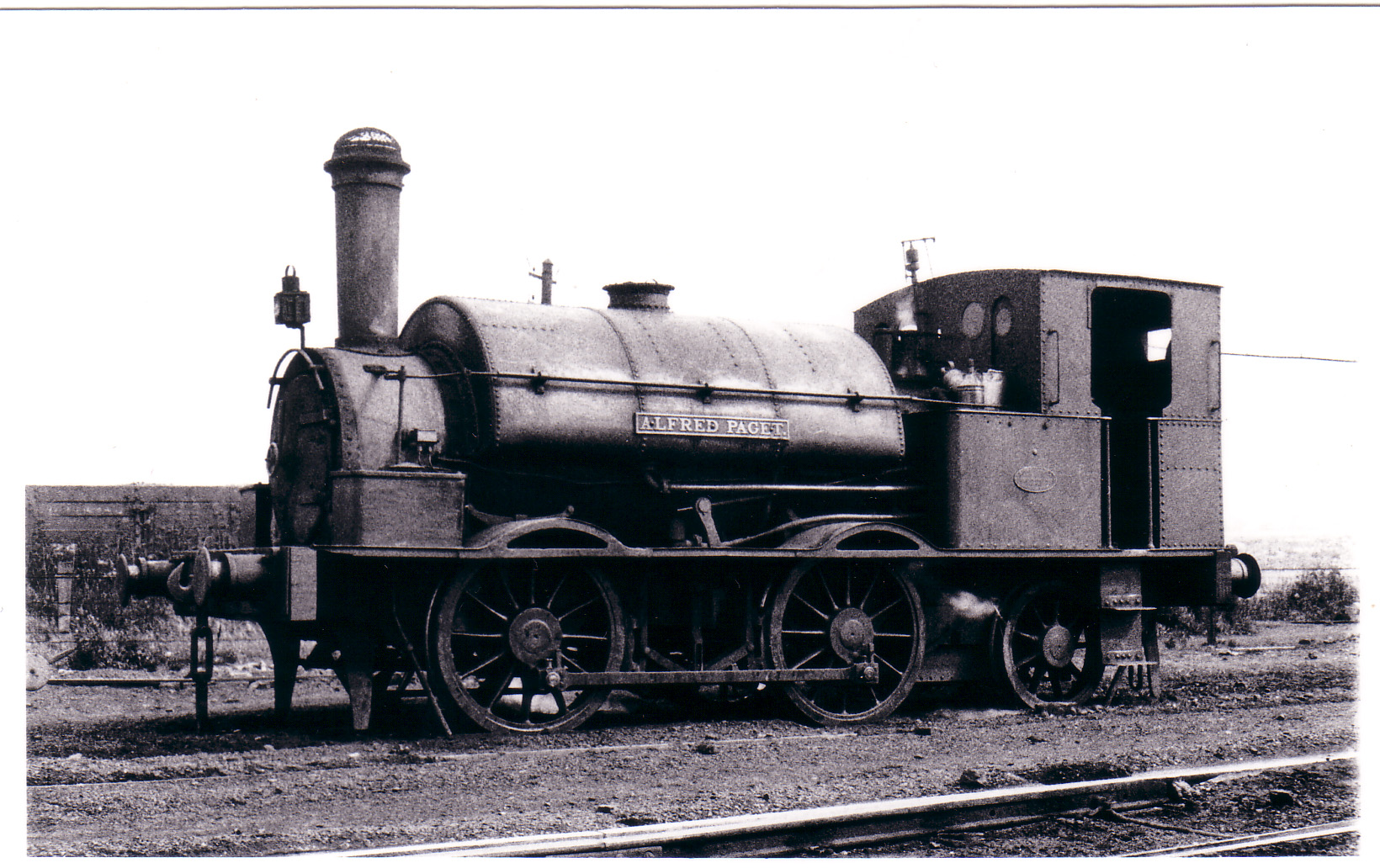
‘Alfred Paget’ 0-4-2ST Beyer Peacock 244-1861 Cannock Chase Colliery Company
186- Chasewater Railway Museum Bits and Pieces

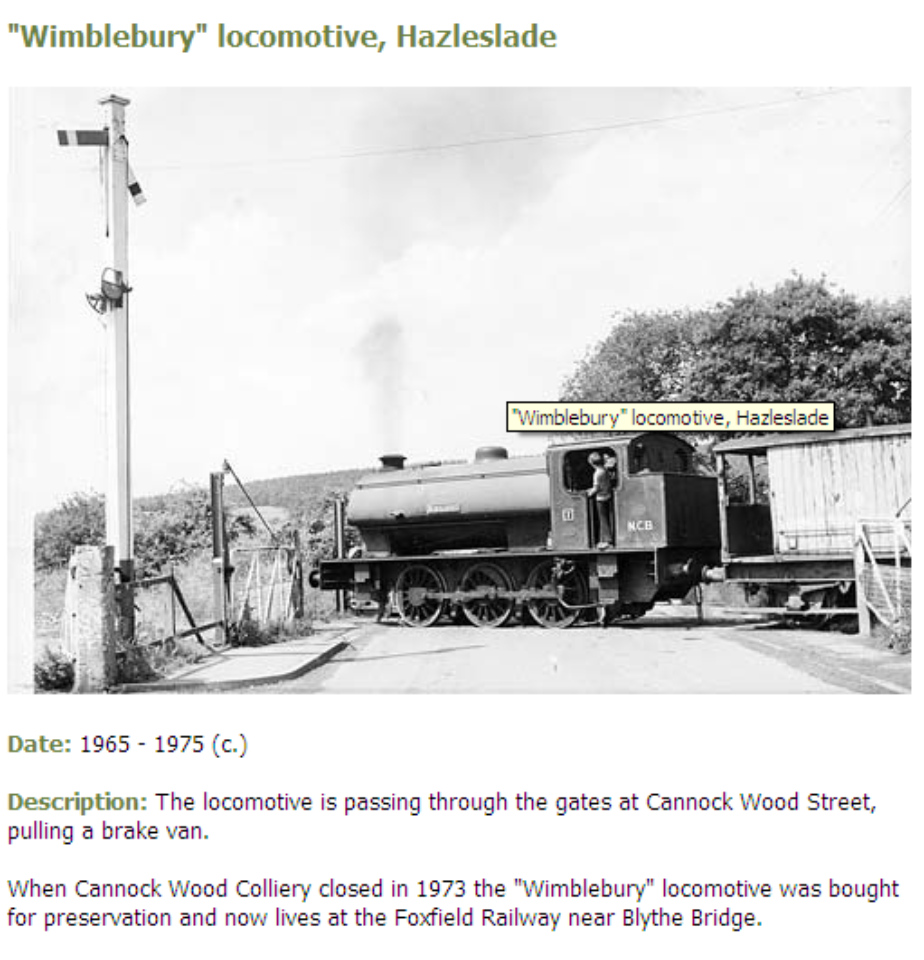
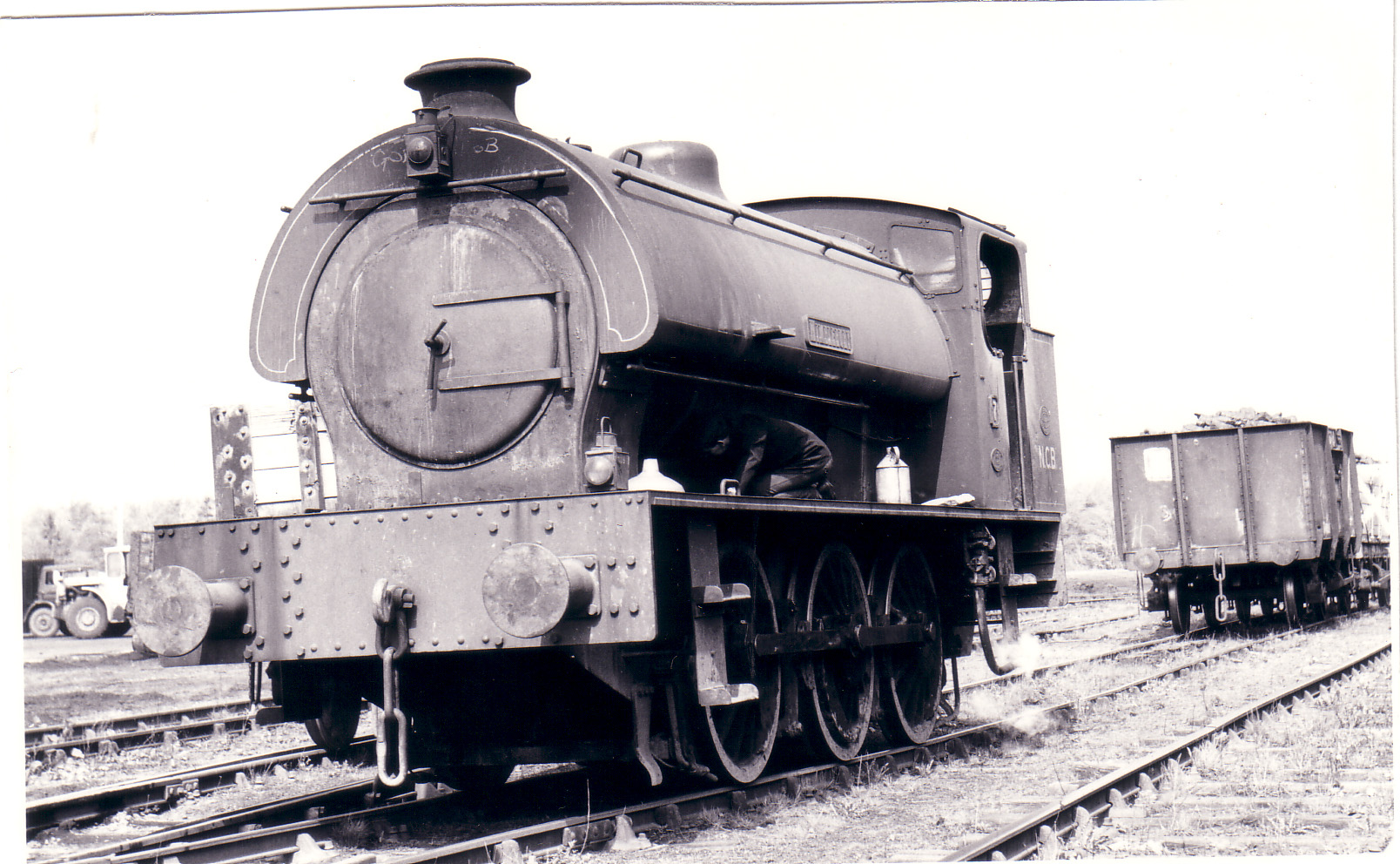
No.7 Wimblebury 0-6-0ST Hunslet 3839-1956 Cannock and Rugeley Collieries

186 – Chasewater Railway Museum Bits & Pieces

From Chasewater News Autumn & Winter 1995 – Part 3

 Loco Shed News

With the overhaul of the Sentinel nearing completion and the repairs to Asbestos well in hand, it is possible that the opening of Norton Lakeside Station on the 16th December could be another first with the special train being double-headed, which as far as I know has never been done at Chasewater before.  The work that has been done in the engine shed over the past few months has been incredible, and many thanks to Nigel Canning, Les Emery, Tony Sale and all the other willing hands that have helped.

Steam Locomotives

No.4 Asbestos – The casting for the main steam pipe was delivered during the second week in November.  After heat treating to reduce the stress on the casting it was machined courtesy of Tony Sale and the first trial fitting was on the 19th November.  A few minor adjustments were required but this has now been rectified and the casting fitted.  This should keep Asbestos running over the Christmas period and into the start of the new season.

No.5 Sentinel – The Sentinel has just about completed its long overhaul and is due for its test steaming at the end of November/beginning of December.  Hopefully this should be accomplished without any problems, and all credit to Nigel Canning for the first class job that he has done on his locomotive.  With the work completed on the Sentinel this should give us two steam locomotives in traffic.

S100 – Work continues on putting S100 back together again.  Two of the valve springs have had to be remade after a gap was found between the valve and the cylinder on one side.  One of the brake hangers has been dismantled, then cleaned and primed.  The work continues towards the completion of the chassis ready to receive its wheels.

Diesel Locomotives

Fowler diesel mechanical No.410013 – Further cosmetic work is being done to this locomotive to protect it from the winter weather and work will recommence on this locomotive after several other projects are finished.  The diesel still remains nominally serviceable.

Fowler diesel hydraulic No.422015 – The ‘Black Fowler’ remains temporarily out of service due to the breaking of three of its injector pipes whilst on works train duties.  The repairs to the pipes should be completed shortly and it should be back in service for Christmas and the start of the New Year.

L&Y No.1 – No.1 is well on the way to being put back together.  Work is proceeding on the engine with one of the two cylinder blocks now fully finished, and work is rapidly continuing on the second.  All being well the engine should be finished shortly after Christmas.  The next job on the agenda is to crane out the chassis and wheels, clean and paint them.  If all goes well No.1 could be running again by the end of 1996.  (See post No.183).

No.21 – The engine of No.21 is going back together at a slow but steady rate.  The second cylinder block has been replaced and the manifolds are being put back on.  Most of the basic repairs to the engine are now complete.  The next items on the agenda are the cooling system and the electrical systems.  This locomotive could also be finished by the end of 1996 with a bit of luck.

P.Way News

Blood, Sweat and Tears – Arthur Edwards

Most of the past several months have been taken up, in between the service trains running, with getting the track ready for the Inspector’s visit in September and again in October.  The ‘Blood, Sweat and Tears’ of the new extension has lived up to its name.

Blood – Because during the completion of the Causeway many a finger has been caught whilst either rolling in rail or keying up the track, so drawing blood.

Sweat – Of which a lot has flowed during the summer months, as it was one of the hottest few weeks on record, and for those who have done it, P.Way is hot and heavy work.  (Is it not, Tom?)

Tears – When things have gone wrong, and believe me they have, such as when Lakeside Station was nearing completion and we ran out of bricks to finish the platform, due to vandals knocking off the laid bricks and throwing them in the lake.  Then after the Inspector had been it was found that the rail was too close to the platform edge so that the clearances had to be altered by one or two inches, taking a dozen blokes to do it over a weekend.  (My back still remembers it.  Ed.)

In the end I received a phone call at about 5.20pm on the 25th October with the news that the extension had been passed for passenger traffic and we could now run into Norton Lakeside Station, which was very good news indeed.  I have only one request – could the P.Way lads get their breath back before we get any more track in to extend the running line, please!!

My thanks to Nigel Canning for the photos

185 – Chasewater Railway Museum Bits and Pieces

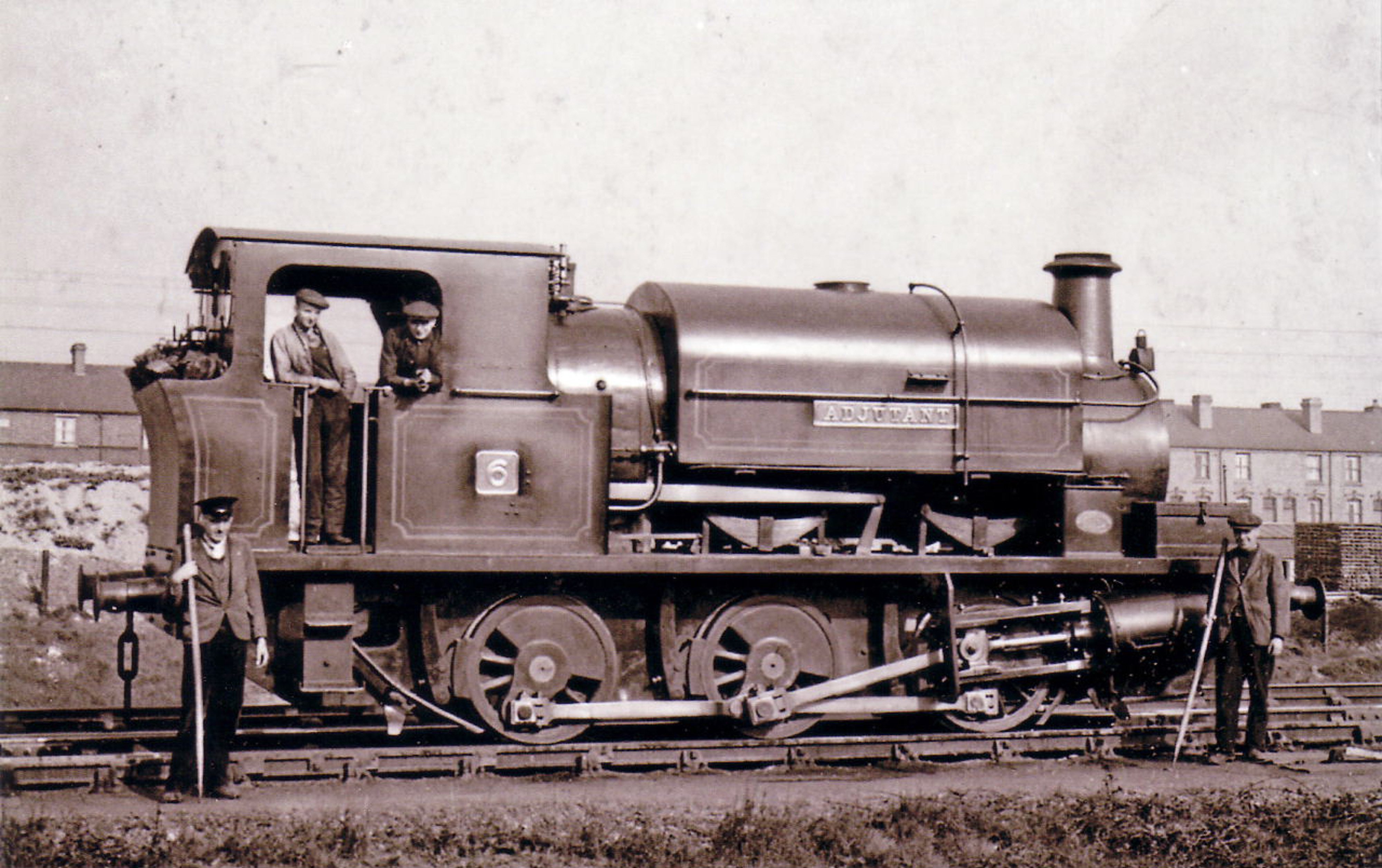
‘Adjutant’ 0-6-0ST Manning Wardle 1913-1917, Cannock & Rugeley Colliery

185 – Chasewater Railway Museum Bits & Pieces

 From Chasewater News Autumn & Winter 1995 – Part 2

Working Members’ Meeting – David Bathurst

27th September 1995

 At the 1995 AGM, members expressed a wish to hold occasional meetings with board members to discuss a wide range of topics associated with the running and management of the Railway.  The second such meeting was held on 27th September 1995 when an encouraging number of members attended at Brownhills West Station.

For the benefit of working members who were unable to attend, the following is a brief summary of the principle matters which were discussed.

HMRI Visit

The HMRI had visited the Railway on Friday 22nd September 1995 and the outcome of the inspection was announced.  (See post No.184) The Railway Inspector’s request for the platform surface at Norton Lakeside to be improved has already been attended to.

Timetable for 1996

Once Norton Lakeside Station is open to public traffic, anew timetable will be introduced.  Services will depart at 45 minute intervals with a short lay-over at Norton Lakeside.

Condition of Steam Locomotives

It was noted that the 10 year boiler certificates for #Asbestos’ will expire in July 1996.  The Board will be discussing, at an early meeting, the implications in the light of the current requirements of the Boiler Inspector.

Maintenance of Operational Rolling Stock.

Reference was made to the lack of resources to carry out the full and proper maintenance of the operational rolling stock although it was accepted that there is a need to strike a balance, taking account of the standards which are achievable having regard to resources available.

Platform adjacent to the Locomotive Shed

Some, albeit minimal, works have been carried out on the platform. Subject to appropriate supervision, there was no objection to more substantial works being carried out by a CS team.

Contents of Locomotive Shed

It was felt that a number of privately owned locomotive parts could be removed from the locomotive shed into storage elsewhere.

Heads of Departments, Etc.

The Board was in the process of inviting individual working members to accept responsibilities in particular fields, but wished to ensure that the working members were involved in the process. During lengthy discussions, a number of suggestions were made as to the filling of various posts and which will now be considered at the first available meeting of the Board.

In relation to the appointment of a press and publicity officer, it was suggested that contact be made with a local college with regard to the involvement of a student undertaking a media-related project.

What are we trying to achieve?

At a recent meeting of the Board, the question was raised as to the Railway’s sense of direction and raison d’être.  Although we promote ourselves as ‘The Colliery Line’ we do little to substantiate the claim in this respect.  Do we wish to become a miniature Severn valley Railway?  How much use should be made of diesel locomotives and DMUs?  Is there merit in expanding the use of brake vans for passenger traffic?  What image do we wish to project?

It was agreed to include this matter for the agenda for the next working members’ meeting for a full and open discussion.

First Aid

It was agreed that more members should be encouraged to undergo training in basic first aid.  One of the appendices to the proposed rule book is to include the names of persons with first aid qualifications.  It was also accepted that there should be a St. John’s Ambulance Brigade presence at rallies.

Fire Extinguishers

Concern was expressed regarding the condition of the fire extinguishers at Brownhills West and it was confirmed that new charges were awaiting delivery.  The matter was of sufficient gravity that it was accepted without dissent that any member found misusing fire extinguishers would have their membership of the Railway withdrawn and might be subject to prosecution.

Further Working Members’ Meetings

The members expressed the wish for a further meeting to be held on a similar basis later in the year or early in the New Year.  This meeting will be held at the Pear Tree Public House on Wednesday January 10th 1996 at 7.30pm.

Engine Shed 1992

HMRI Inspection – David Bathurst

Results

Results of the first inspection (22-9-1995) in post No.184.

The following subsequent inspection by HM Inspecting Officer of Railways, Mr. Colin Law, was carried out on 25th October 1995.

The outstanding matters which needed to be attended to following the earlier inspection were all completed in good time except that some vandalism on the evening prior to the inspection meant that an amount of last-minute fence re-wiring had to be done.  Our grateful thanks go to the members who helped out in repairing the damage.

The outcome of the inspection was that Norton Lakeside Station meets the necessary standards and is accordingly approved for passenger use with immediate effect.  The only matter which concerns Mr.Law was in relation to the structural integrity of Great Crane Brook Bridge, where the track had to be slewed off-centre to gain the necessary track clearance into the station.  There is no problem in the use of the DMUs, but the short wheel-base and axle loading of our locomotives, both steam and diesel means that they cannot be used on public passenger services until the integrity if the bridge structure has been established.

So, we are now in a position to operate a ‘proper’ passenger service between two ‘proper’ stations, thereby fulfilling the ambitions of members who have been associated with the Railway much longer than me.  The importance of this achievement cannot be understated and will form the subject of an article in a later ‘Chasewater News’.

The official opening will take place on Saturday 16th December 1995 and all members will receive (or perhaps have already received) a separate notification of the event.  For the public, the first passenger trains will operate in the form of Santa Specials, on Sundays 17th and 24th December 1995.

Below – Colin McAndrew leaving Brownhills West.

Below – Holly Bank leaving Brownhills West, Easter 2015.

Chasewater Railway Museum Observations – “Jammo” – Ruston 165 DS First Day running at Chasewater.

Jammo ready for the off, 4-5-2024.

Jammo leaving Brownhills West on the first train, 4-5-2024, after weeks of hard work in the workshop. Well done everyone!

Jammo arriving at Chasewater Heaths from Chasetown Church Street.

Jammo leaving Chasewater Heaths for Brownhills West

Arriving home at Brownhills West.

Chasewater Railway Museum May 2024 Newsletter

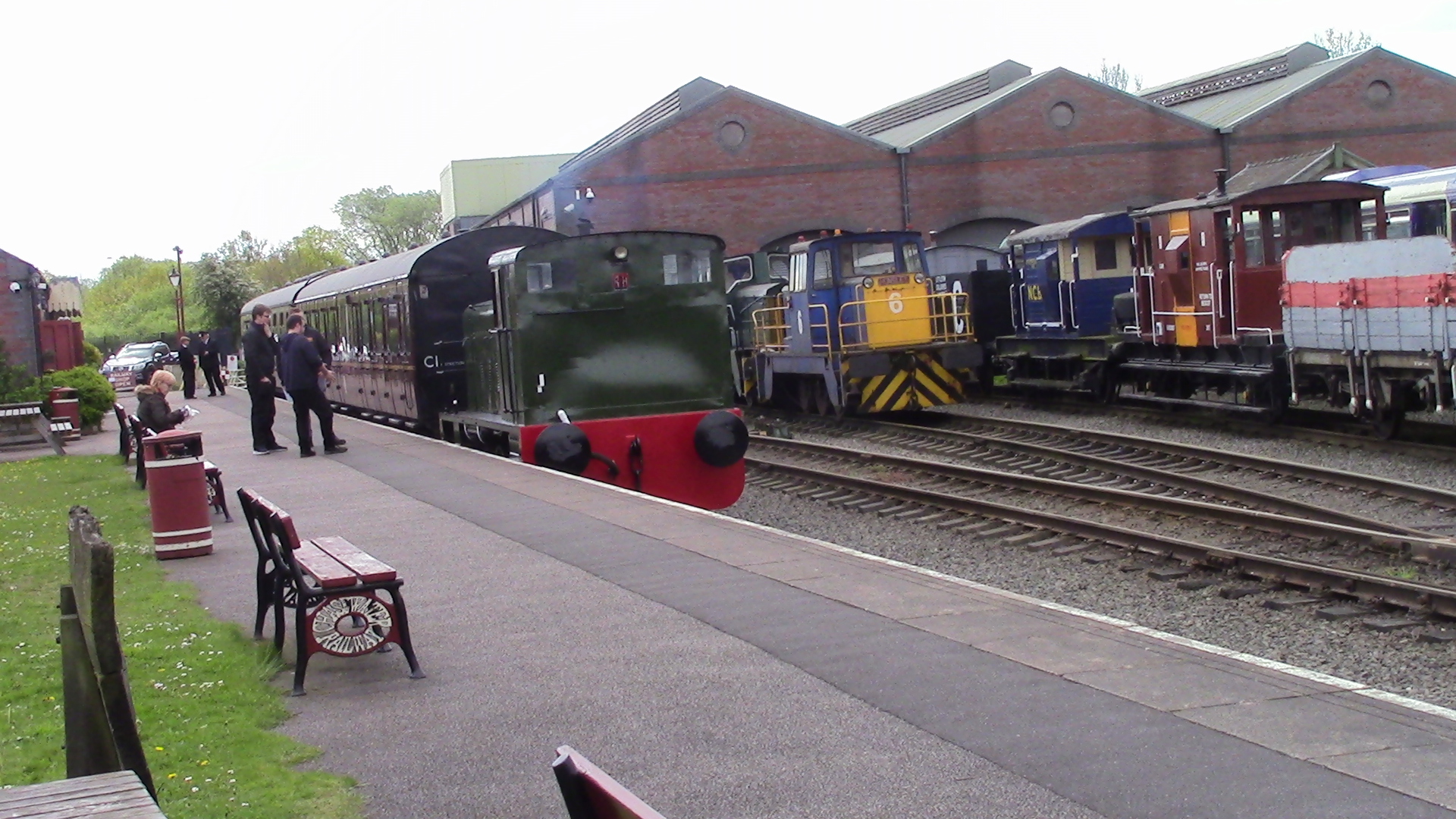
Bagnall loco Dunlop No.6 running round the train 28-04-2024 at Brownhills West.
0-4-0 ST 2648-1941 Been at Chasewater Railway since 2008.

184 – Chasewater Railway Museum Bits and Pieces

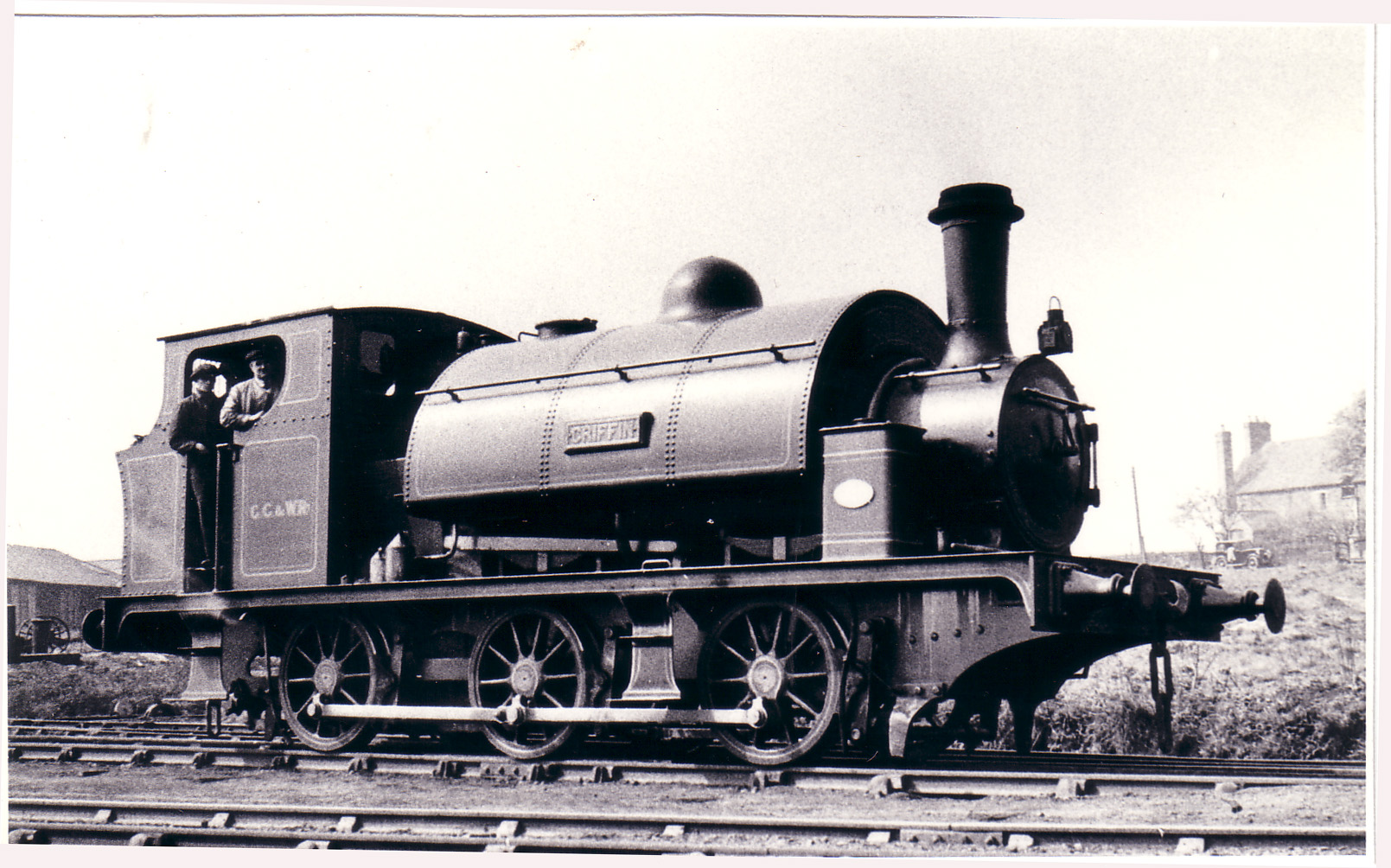
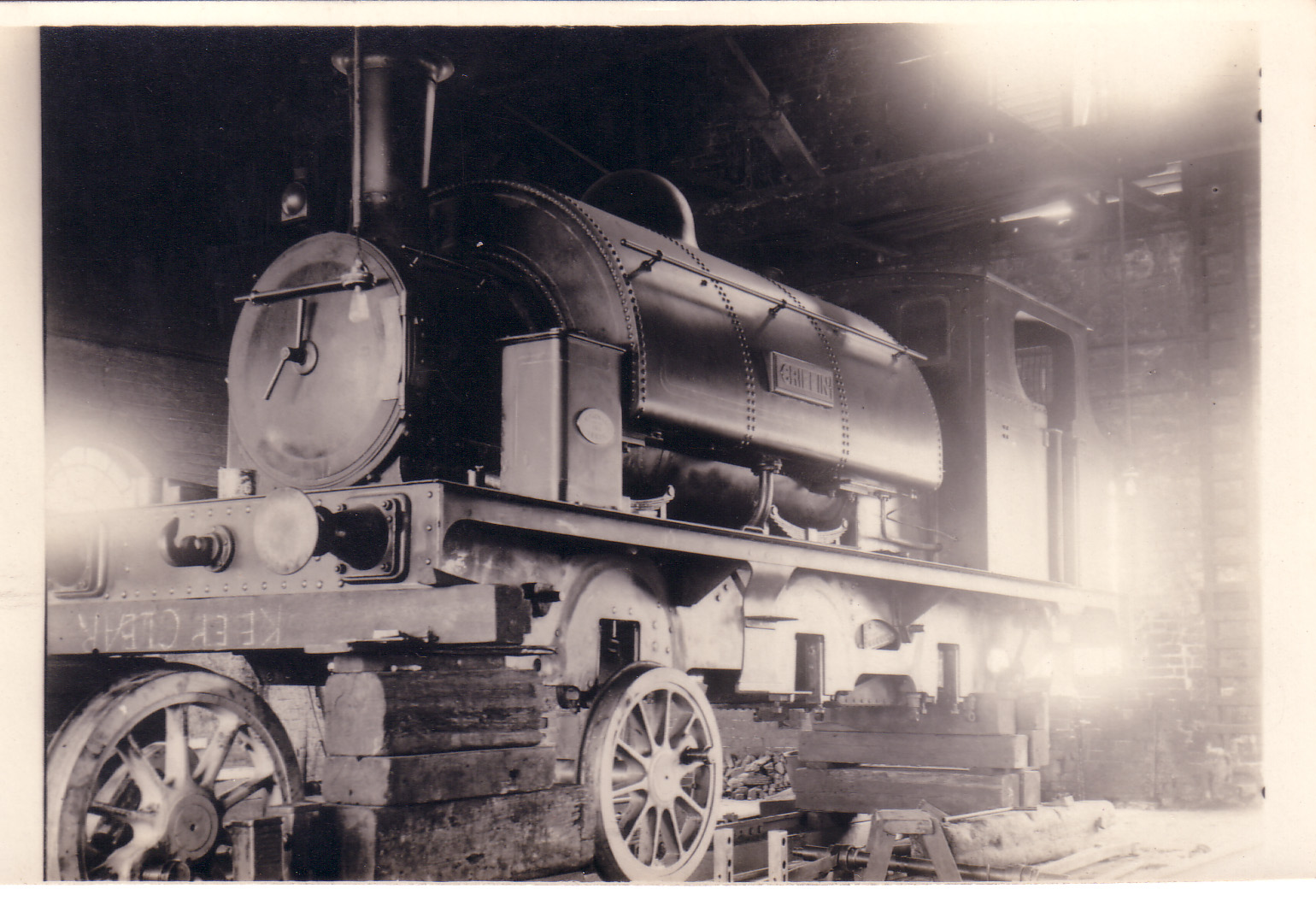
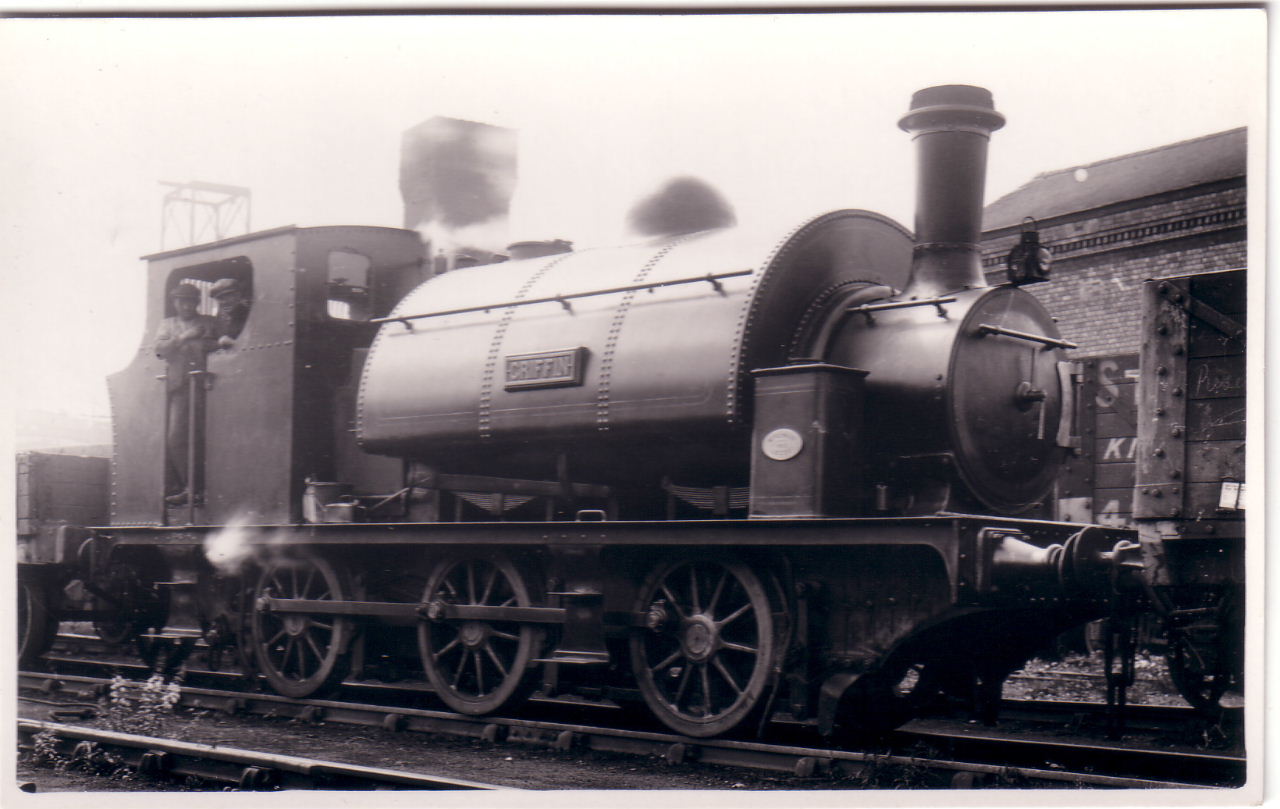
Loco ‘Griffin’ Kitson 0-6-0ST 5036-1913, acquired new, transferred to Walsall Wood Colliery by NCB 1953 – still there in 1957 – since scrapped.

184 – Chasewater Railway Museum Bits & Pieces

 From Chasewater News Autumn & Winter 1995 – Part 1

 From the Editorial

With the 1995 running season now over, the Railway can now turn its attention to the more down-to-earth maintenance tasks that have been deferred until now.  It has been without doubt one of the most difficult periods for the Society as a whole but as most of the major projects are now well on the way to being completed we can look forward to a year of being able to catch our breath before we continue with the further expansion of the railway.

Already the top compound has had its fence realigned by the buffet block so giving more room to get at the LNWR 50 ft brake coach and the other side of No.1.  ‘Portacabin City’ is finally being finished off and hopefully should be ready for the new season next year.  One of the final jobs to be done to the Portacabin units will be the transfer of the shop from the booking office to the end section of the main Portacabin.  This will only be done when the whole block has been finished and security measures are in place.  The current booking office/shop can then be turned back into an office/booking office again.

Already provisional dates for the 1996 running season have been looked at and now that we have done our first year of running every Sunday from Easter to October I personally feel that it should be kept up, with the deletion of the odd days that were planned for this year, so that the public can get used to our new schedule without having to think whether the Sunday is a running day or not.  I realise that this means a lot of dedication by the working members, but with some of the new training taking effect it should hopefully give more breaks, especially to the steam locomotive train crews.

The new Rule Book should be out in the not too distant future as it is going through the stages of proof reading and amending.  Provisionally there is likely to be a charge for the Rule Book rather than giving them away free to working members.  This hopefully will make members aware of the importance of this document and that if they have bought it, they will look after it.  This particular document has taken o lot of time to produce and has required many hours of thought to provide a set of rules for all staff to obey.  The rules and regulations laid out in the Rule Book are there for the safety of staff and the visiting public.

Staff safety is up to each and every one of us and I would like to point out that if you have the relevant safety equipment, i.e. safety glasses, steel toe capped boots, orange jackets, etc., they should be worn.  Even a small thing can lead to a personal injury.  If anyone is hurt on the Railway the incident must be logged in the accident book as soon as possible.

I have also been requested to let the membership know that there will be a further Working Members Meeting at the Pear Tree public house, Hednesford Road, Brownhills West on Wednesday 10th January 1996 at 7.30pm.  This is to give the members a chance to air their views and to raise any points that they wish about the Railway in general,

I would also like to mark another milestone in Chasewater’s history, the first visit to the Railway by an engine from the Telford Steam Trust based at Horsehay took place over the weekend of October 7/8 for the Transport Rally.  It was 0-4-0 Peckett No.1990 of 1940 vintage, maybe bigger things to come.  And to those whose ambitions stretch to the ‘Flying Scotsman’ or a ‘King’ for a visit to Chasewater, forget it!!!

The price of the Chasewater News has been increased to 75p due to the rising costs of production and printing and hopefully there will be no further increase in cover price for the foreseeable future.

Chasewater News is edited by Chris Chivers.

From the Board Room

By David Bathurst – Chairman.

 HMRI Inspection, 22nd September 1995

 Friday 22nd September saw the long-awaited visit of HMRI Mr. Colin Law, who had been invited to inspect the recent works on the remainder of the Causeway and the construction of Norton Lakeside Station.

The Board had been looking towards an official opening of the new station during the October Transport Rally weekend, but as the day of the inspection drew ever nearer, and despite the valiant endeavours of our working members, it became increasingly obvious that some elements of the scheme would remain incomplete.  Nevertheless, it was felt that the Railway could benefit from Mr. Law’s comments and advice in relation both to the works already completed and those awaiting completion.

Mr. Law carried out an extremely detailed inspection of the new station, which has to conform to some very stringent regulations laid down to comply with the relevant legislation.  The inspection included the DMU set making a number of journeys into and out of the platform.

The outcome of the inspection was as follows:

  1. The remaining section of the Causeway is passed for public passenger trains as far as (but not into) Norton Lakeside Station.  For operational purposes, the line limit is now Great Crane Brook Bridge.
  2. The track at the southern end of the platform needs to be slewed over to increase clearance to the specified dimensions.  The curvature of the track from Great Crane Brook Bridge into the station is having the effect of compromising the specified clearance.
  3. A more suitable platform surface, behind the coping stones, needs to be provided in the interests of public safety.
  4. The platform ramps will need to be completed and attention must be given to existing and proposed fencing, together with footpath gates.
  5. Norton Lakeside Station may, with immediate effect, be used for members’ specials.  N.B. the Board does not propose to authorise the running of such trains until the improved platform surface has been provided, in view of the likely damage to the floors of our passenger vehicles.
  6. Mr. Law affirmed that under no circumstances shall passenger trains exceed two vehicles.

The works which need to be carried out are well within the capability of our working members and plans are already in hand to deal with them.  Mr. Law has kindly indicated a willingness to revisit the Railway at short notice as soon as the works are complete, hopefully with a view to approving the station for public passenger trains.

It is perhaps opportune to comment on the relationship between HMRI and the Company.  Although it will not be immediately evident to members, I am able to say that the Railway Inspectorate (and Mr. Law in particular) have always indicated a wish to assist the Railway to operate and develop, in compliance with all the relevant legislation and associated regulations.  They are only too happy to provide constructive advice, in addition to comment on the Company’s new Rule Book prior to its publication and distribution to working members.

Our immediate aims are to complete the works required by Mr. Law, to undertake a major ‘clearing-up’ of the whole line and the new station area in particular, and to invite Mr. Law to return as soon as possible.  On this basis, the Board is now able – with confidence – to start planning an official opening ceremony in conjunction with the 1995 Santa Specials.  A formal invitation to join the first official passenger train will be forwarded to all members, Company Sponsors, Official guests, etc., with details of the arrangements.
‘Griffin’ 0-6-0 Kitson 5036-1913 in shed

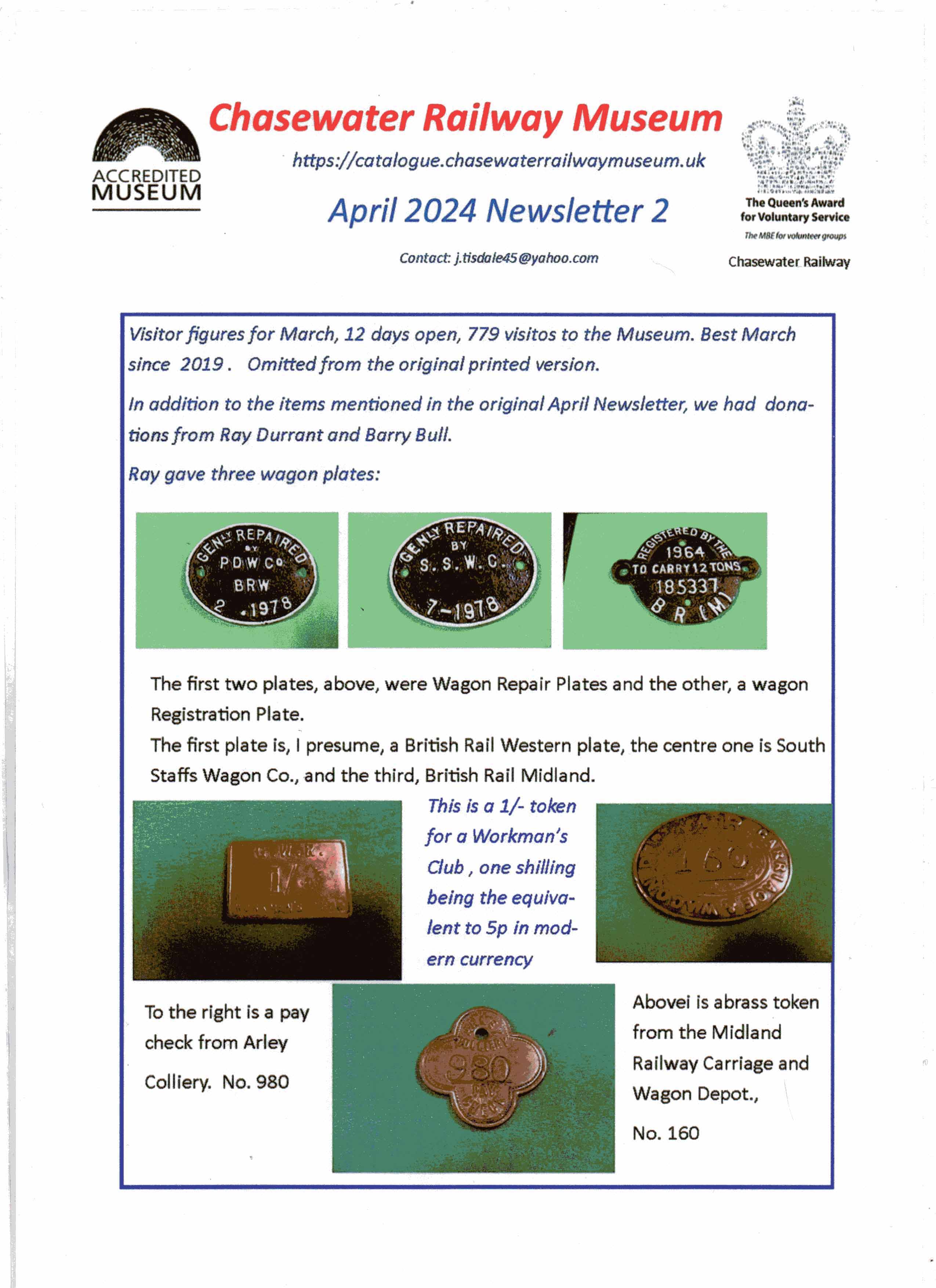
Chasewater Railway Museum – April 2024 Newsletter 2

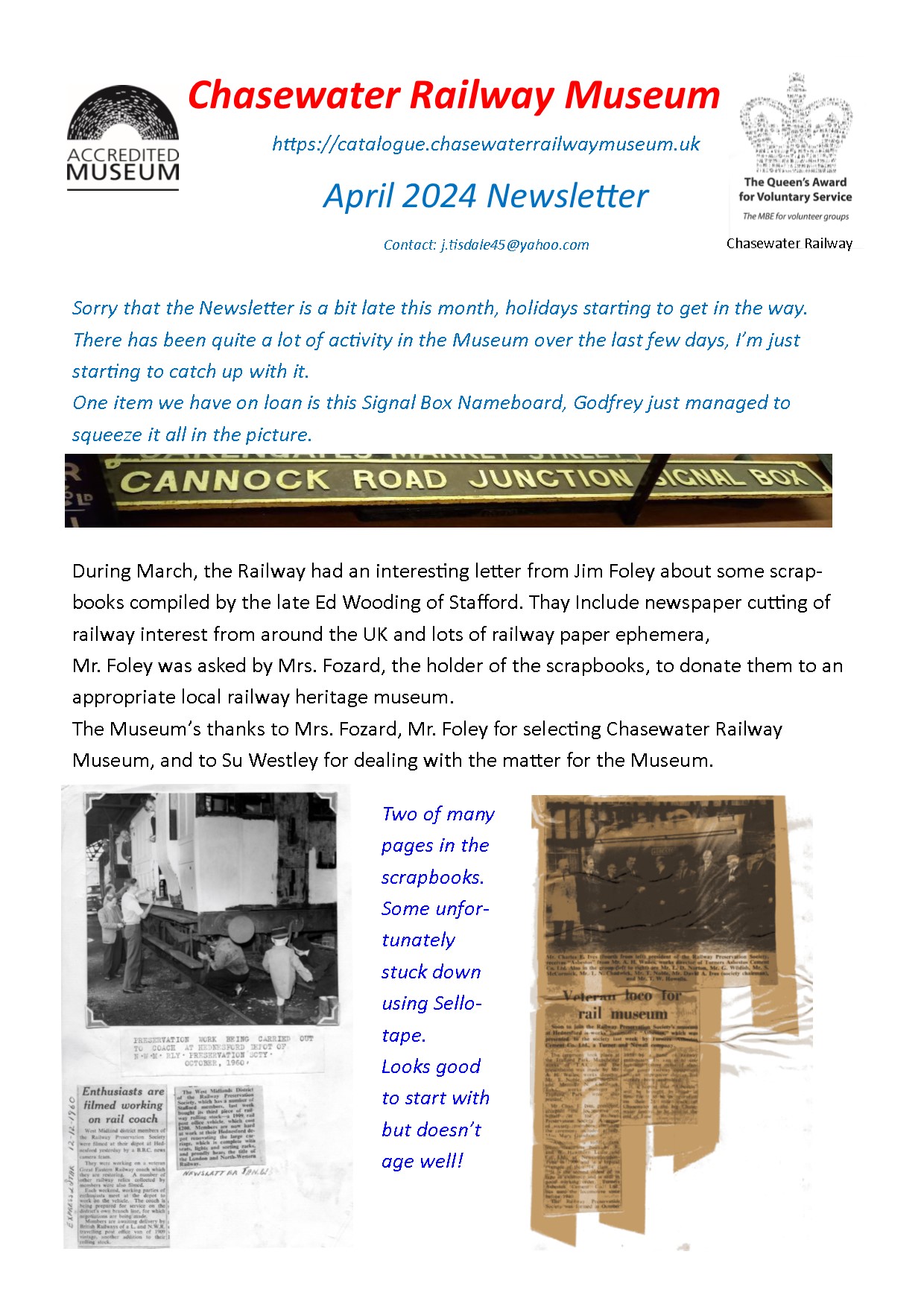
Chasewater Railway Museum April 2024 Newsletter

The first steam train of the 2024 season arriving at Chasewater Heaths Station, I had a round trip too.

The Museum was open for 12 days during March, welcoming 779 visitors, the best March figure since 2019, helped, of course, by the Easter break.

Finally, for this post, a collection of photos from Ken Bull

Kitson loco at the bottom of the garden

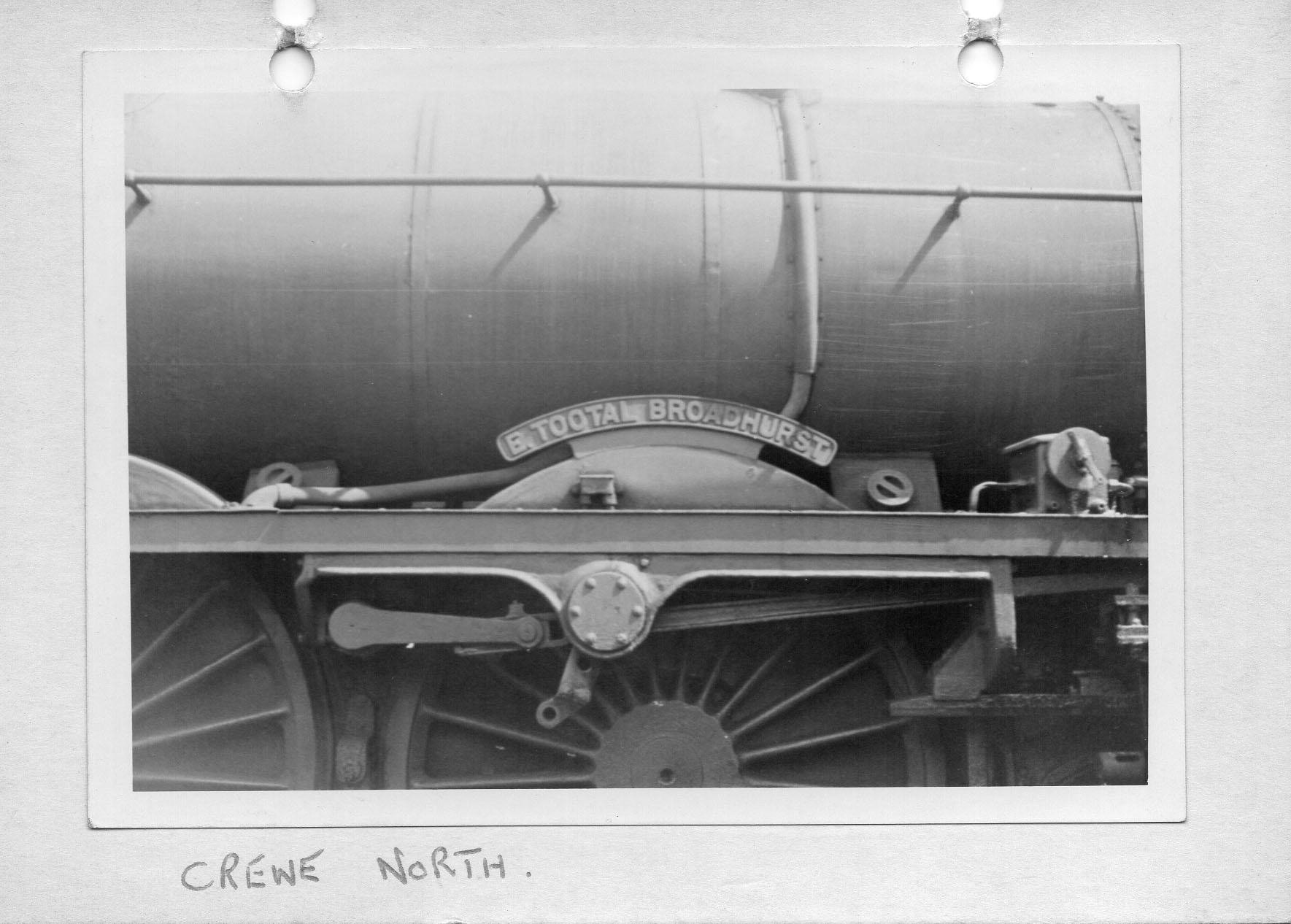
No. 44512 – crew taking a break!

Ex South Devon Railway B/G 2-4-0T Prince as converted to a standard gauge engine No.1316 in 1893 and put to stationery use in 1896. Leslie Good Collection.

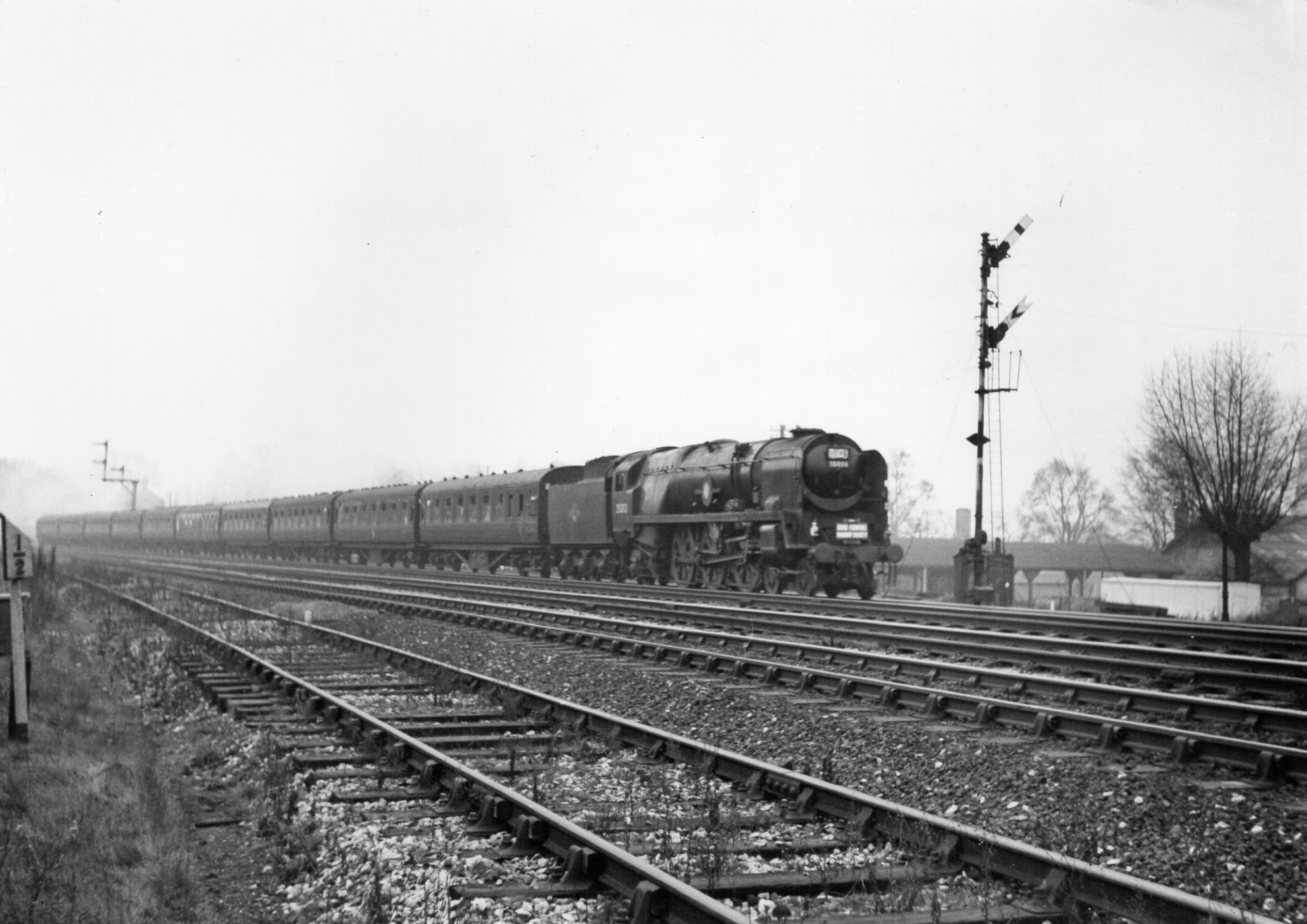
Home Counties Railway Society Special, St. Pancras to Derby. 35003 ‘Royal Mail’ Sunday 1st March 1964. Cattle Market Sidings, Leicester. Horace A Gamble

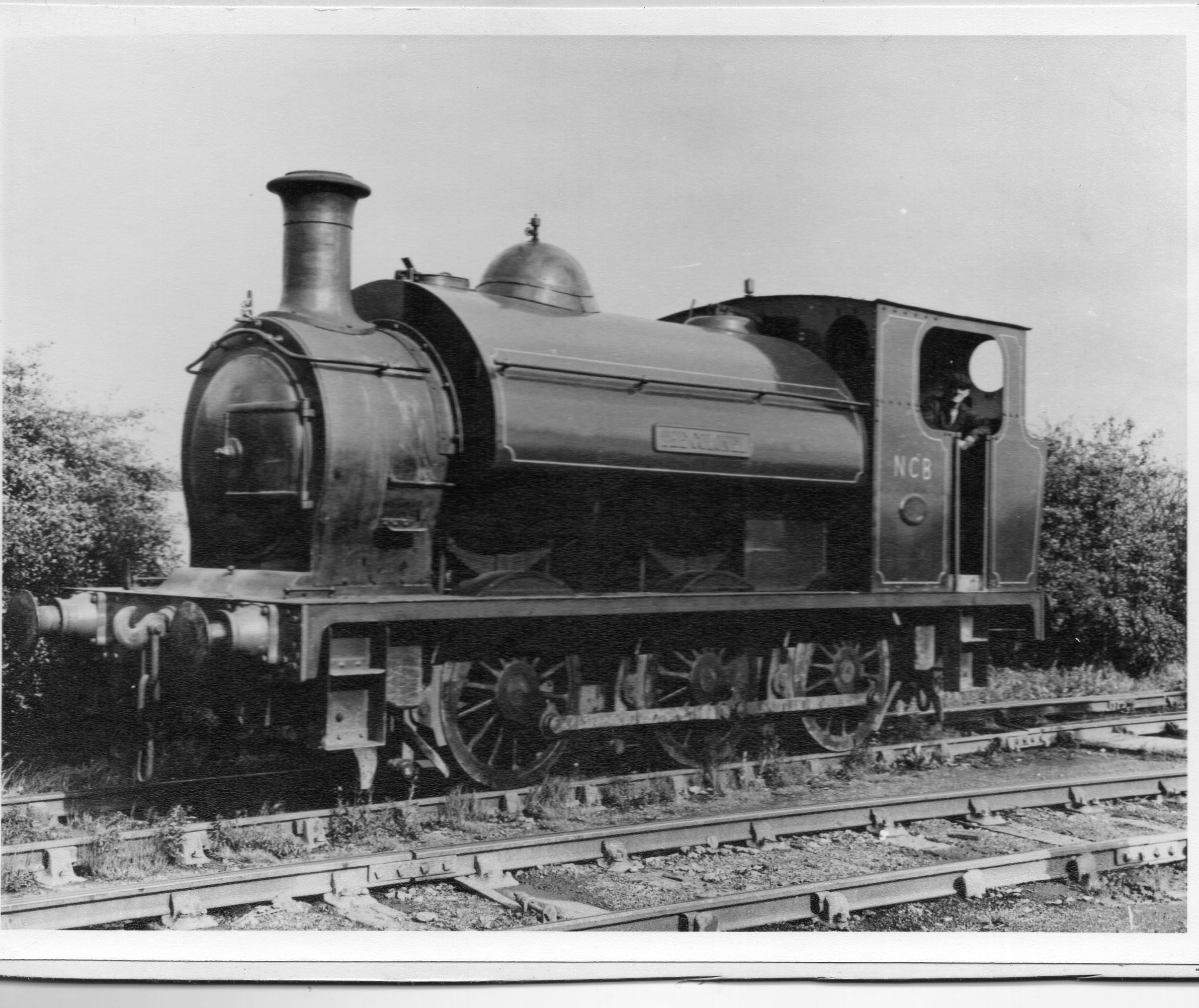
‘The Colonel’ at Fair Lady Sidings, Heath Hayes. Circa 1962

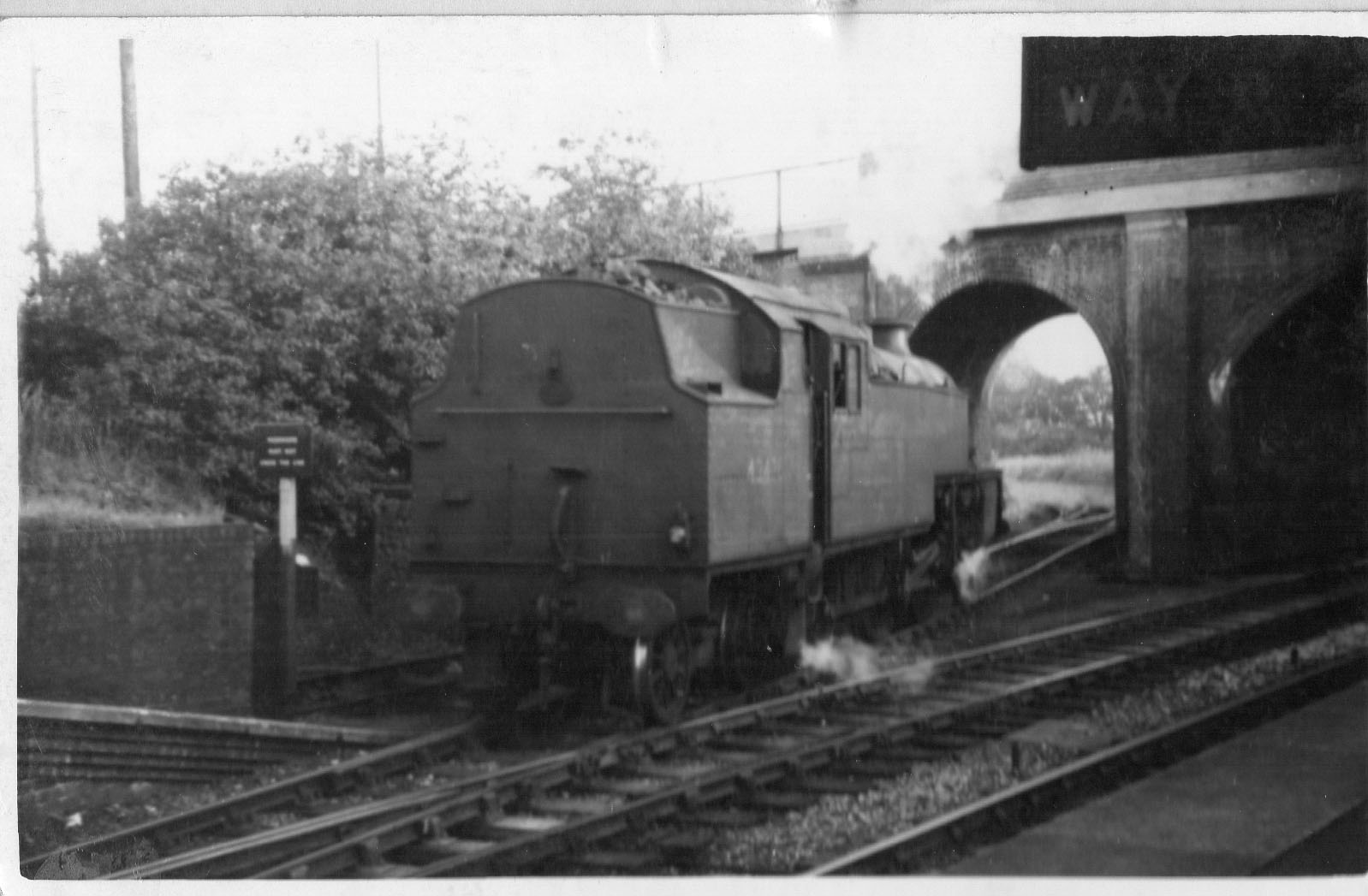
42470 2-6-4 T at Brownhills Station. (The line swinging left through the bridge went down to the canal basins, to the right, to the carriage sidings.)

49308 G-2 0-8-0 3A Bescot at Brownhills Station on freight

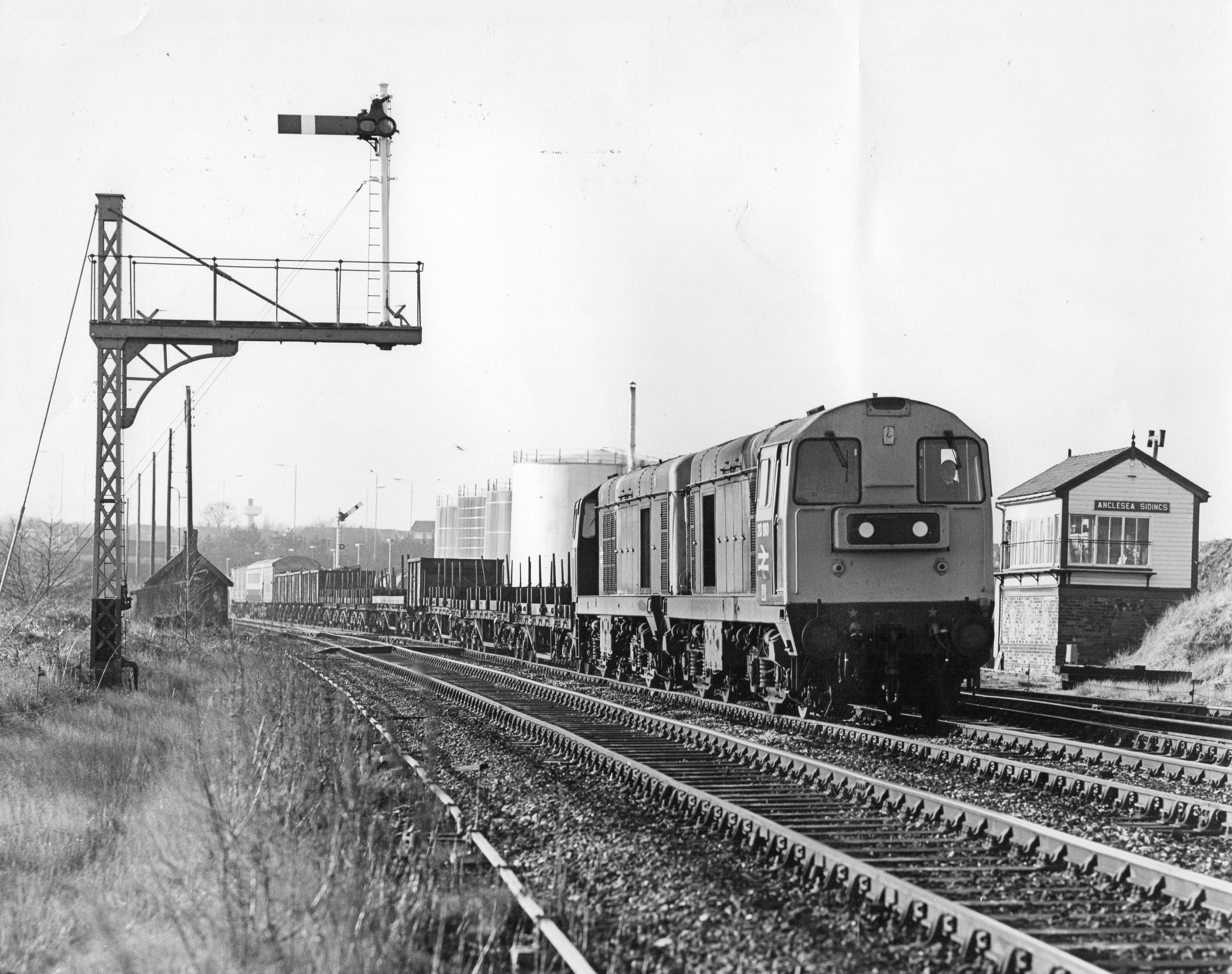
Two Class 20s – 20190 and 20188 pass Anglesea Sidings signal box on the Walsall to Wychnor Junc. Freight only line with a Bescot/Toton freight 4-12-88.

More to follow when I get my breath back!

183 – Chasewater Railway Museum Bits & Pieces

From Chasewater News Summer 1995 – Part 3

This image has an empty alt attribute; its file name is 05111-alfred-paget-0-4-2st-beyer-peacock-204-1861-ccccc.jpg

Alfred Paget 0-4-2ST Beyer Peacock 462-1864 Cannock Chase Colliery Co.

183 – Chasewater Railway Museum Bits & Pieces

From Chasewater News Summer 1995 – Part 3

P. Way News – Arthur Edwards

Here we are again, writing to let you know how the track is coming along.  Well Tom and I have been shovelling out the four-foot, which to Joe Public, is the distance between the inside of each rail in preparation for weedkilling which is now overdue.  This operation cannot take place until all the excess ballast in the four-foot has been removed to the track shoulders.

When this operation is completed we can start to look forward to planning the work on the new sidings.  The pointwork involved will mean the prefabrication of the new turnouts alongside the existing running line, so that when they are completed they can be put into place with the JCB over one weekend after the end of the season, so causing the minimum of disruption to the running line.  When this is completed the rest of the sidings can be put into place so relieving the overcrowding in the top compound.

But this is in the future.  The weekend of the 30th July will be given over to upgrading the track in the new station area; this will include levelling out the one or two odd rough spots due to ballast compaction, and shouldering the track ends to generally tidy up the area.

The next 8 weeks over August and the beginning of September should see the new station up and running, as there is only some brickwork to finish off and the last few fence posts to be put in place.  The overall deadline is to be finished before the October Rally, but this will depend on members coming along to help out, there are plenty of tasks from mixing the mortar for the bricklayers to helping backfill the platform.

The sooner we can get these tasks finished then the more important job of extending the line towards Church Street can go ahead.  I feel that this is well within our capability as long as we have the numbers of long term dedicated volunteers.  The overall extension to the running line can only continue as long as we have the manpower to help lay it, and then maintain it.  The overall standard of track has greatly improved over the past few years but it is a constant battle not to slip back, and as we use the line for more running days the overall wear and tear is getting heavier.  So if you can spend a few hours for one or two weekends a month I will be more than happy to see you.

L & Y No.1 – A Brief History – A.Mould

Lancs & Yorks No.1 – May 14th 1920 in full livery

Many of us are asked questions regarding the history of our stock stored on site.  Hopefully this article will start the ball rolling as a starter for a series of short articles on various items, and so improve our own knowledge about them.
Just after the First World War the Lancashire and Yorkshire Railway were finding that the capstan and horse shunting were laborious and time consuming so creating inefficiencies in labour and increasing expense, so attempts were made to find a more efficient replacement.  Two battery electric locomotives were constructed for shunting at the L & Y’s power stations which provided power to the Bury routes around Manchester.  In 1919 they had been provided with an 8 ton Simplex shunter for demonstration purposes, which they later bought and numbered No.1 in their internal combustion list.  The Simplex locomotive was a development of the first oil-engined locomotive built by Mr.Priestman in 1894.  Simplex used a transverse mounted engine and gearbox.  In 1920 a further two locomotives were ordered from the Motor Rail & Tramcar Co. Ltd. (Simplex) of Bedford England.  The locomotive itself was based on well proven and reliable technology, being based on Motor Rail’s war time design, which had given sterling service in the front line trenches in France and Belgium where a steam locomotive would have been an instant target.

The propulsion for No.1 was provided by a W.H.Dorman 4J.o. petrol engine of 6.4 litres with magneto ignition which was capable of developing 40 hp at 1000 rpm and was originally designed for use as a road vehicle engine for lorries and other large commercials.  The automotive arrangement of the engine where the main bearings were mounted on the upper half of the crankcase was scrapped and the locomotive engine was built up from a sturdy cast iron lower crankcase.  This followed marine engine practice.  The lower crankcase held a considerable amount of lubricating oil, much more than a sump.  The position of the cooling system water pump and the magneto were changed for ease of maintenance.

Railway Forum 1976

At the Dorman works in Stafford this form of 2 and 4J.O. engine produced for Motor Rail was always known as ‘Trench Engines’ due to their service in the First World War.  The Dixon-Abbot gearboxes used in the 8 ton shunters were built by David Brown.  The gearbox was driven through an inverted cone clutch from the engine, and with two forward and reverse positions it was then connected through heavy roller chains to both axles.  A tractive effort of around 3,500 lbs. in low gear, at up to 3 mph and 1,250 lbs. in high gear giving a top speed of around 10 mph.  The clutch, which was part of the flywheel assembly, was lined up with Ferodo friction material, and this could cause great difficulty biting violently when engaged and changing gear, should the engine and gearbox ever become out of line, so potential drivers – you have been warned! (as Financial Controller I have been informed that it does 1 mile to 5 gallons, therefore if he is prepared to buy the petrol, he can run it! – Chris Chivers, Editor.)

As delivered it was believed that the locomotive was a bright red, but after acceptance it was soon repainted in Lancashire & Yorkshire lined black.  The first shed it was allocated to was Sandhills, later renamed Bank Hall, and it quietly resided there with Nos. 2 & 3 going about its duties of shunting wagons in and out of warehouses, etc. until 1922.  It was repainted into the livery of the LMS sometime in the 1930s after the LMS had inherited the three Simplex from the London & North Western Railway’s division B, as the LNWR had merged with the L & Y earlier in 1922 during the grouping of the independent companies into the ‘Big Four’.  The LMS transferred it to Scotland on the old Glasgow & South Western Railway, but for what purpose we don’t know, but it returned to its home ground because in 1932 it was offered for sale from Horwich works as well as Nos. 2 & 3 and all three were bought by George Cohens, a Leeds scrap man and locomotive dealer who refurbished them at his Stanningley Depot and then sold them on.  No.1 went to Ryland Brothers at Warrington who were wire makers and continued in their service until its retirement, whereupon it went into preservation and came to Chasewater.

L & Y No.1  – In  Rylands Livery,  Railway  Forum 1976

Upon arriving at Chasewater, no.1 was repainted into Ryland Brothers colours and was exhibited at Dormans 100th Anniversary at their Stafford works.

It is now 21 years since No.1 last ran in anger at around 5 gallons to the mile!!! In petrol consumption.  Restoration is well under way and a pair of split spoked wheels have been obtained to replace the solid wheels that are presently on the locomotive.  Shortly. Maybe even by the time you read this magazine, it will be craned out from its position on the bay platform ready for further attention to its frames and bodywork.  How long you say – well let’s take the job slowly and deliberately with care.  I’m looking at 2 – 3 years, maybe sooner with assistance.

Sadly, most of  L & Y No.1 was stolen before it was fully restored – I believe that the original engine and one set of wheels are still at Chasewater.

182 Chasewater Railway Museum Bits and Pieces

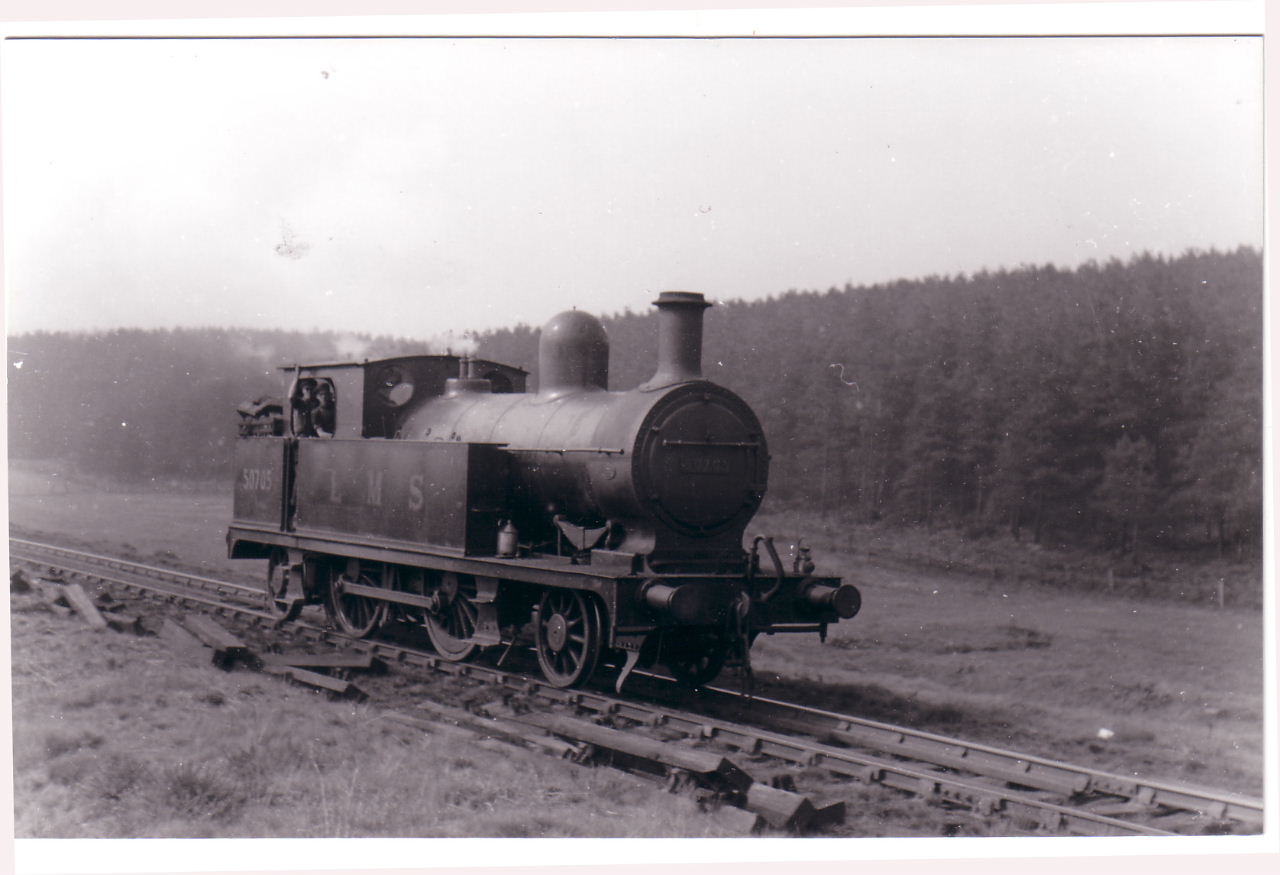
50705 2P on loan from NCB 15-5-1952

182 – Chasewater Railway Museum Bits & Pieces

From Chasewater News Summer 1995 – Part 2

Loco Shed News

The loco shed has had its first visit by one of the DMU cars for maintenance at the end of July.  It was proved that, against all odds, the shed doors were large enough to accommodate the loading gauge of the vehicle.  When S100’s chassis is back on its wheels and the shed cleared, a DMU car can be comfortably accommodated for routine maintenance on the underside of the vehicle.  With the basic compressor installed, courtesy of Oscott Air, the addition of a main air line is now proceeding.

A few air tools have been acquired but more are needed, if you have any spare or know someone who has could you please let us know, or possibly drop them into the locomotive shed any Sunday after 10.00am.  One area also due to receive some attention in the shed compound is the platform.  Over the years a small amount of movement in the fill behind the platform facing has begun to shift slightly causing a minor bulge in the platform facia, as a remedial solution to this problem the top slabs and the first course of bricks are due to be removed along with the top levels of fill.  This will finally give us a chance to clear the last of the bits and pieces from the platform and recover any useful items and clear out for scrap any metal that has no relevance to any other department on the railway.

Steam Locomotives

No.4 Asbestos – This locomotive which has given so much service over the years is now starting to feel its age, and shortly major boiler works will be required to keep it in traffic.  The latest failure was due to the lower half of the regulator casting rotting through after 86 years.  Two attempts to cast a replacement at the Ironbridge Gorge Museum’s foundry at its Blists Hill site, for a miniscule cost, have failed due to collapsing cores.  The railway would like to thank the staff for their best effort to help in this matter.  We must now consider that this casting will now have to be sent to a commercial foundry for its manufacture.

No.5 Sentinel – Work on this loco is rapidly progressing towards completion.  With its boiler passing its hydraulic pressure test and many of the fittings being put back into position, another few week’s work should see the Sentinel out of the loco shed for its first steam test.  The few pieces that need to be finished off include a new section of steam pipe from the regulator to the engine and some new packing glands.

Sentinel December 1989

S100 – The long steady progress of S100 is still continuing.  The cab roof and side tanks have now bee moved into the bottom compound and a further search of the area between one and two roads has been carried out for any miscellaneous pieces from this locomotive.  The only major pieces to still be taken down to the shed compound are the two sand boxes still lying in between one and two roads.  The valve gear is still receiving some attention as well as work continuing on the remaining locomotives springing.

Diesel Locomotives

DL7 – This locomotive remains serviceable although a number of problems have occurred with the air starting valves sticking.  They have now been dealt with, but with the general state of wear and tear on the engine it is only used for emergency stand-by.  The axle boxes and brake gear has also seen attention over the past several weeks.

Fowler diesel mechanical No.410013 – The small Fowler continues to be nominally serviceable as another emergency stand-by.  The amount of work on this locomotive has been limited due to the loco department’s staff being engaged on other loco department work.

Fowler diesel hydraulic No.422015 – This locomotive continues to be the backbone of the railway’s shunting and works trains.  Apart from some routine maintenance work the locomotive has proved to be reliable since the repair of the torque-converter transfer pump.

No.21 – This historic locomotive is steadily progressing toward completion with the sump being replaced on the crank case with a new sump gasket.  The clutch components have been located elsewhere on site and are now being refurbished.  The second cylinder head has been finished off and is now ready for re-fitting to the rest of the engine.

L&Y No.1 – Work continues on this locomotive with the Dorman’s 4JO engine rapidly being rebuilt.  One of the cylinder blocks has been replaced and the timing case assembly being completed.  Further work on the engine includes replacement of a valve guide and attention to the valve gear.  A new water pump is due shortly from Perkins Engines (Dormans) and the refurbishment of the radiator by Serck Marston is virtually complete.  Other work has included the removal of brake gear and sand boxes for repair and refurbishment.  It is hoped by the time of going to press with the magazine that the body and wheel sets currently on the spur siding at Brownhills West Station will have been craned out and a correct set of split spoke wheels obtained for use on the locomotive will be brought together in the shed compound.

DMUs – The DMUs have continued to provide a reliable running service, although they have been dogged by a continuous stream of small system failures, which leads to one or more engines having to be isolated.  We have yet to suffer a total failure in service, and so far none of the minor failures have been beyond out capacity to fix.