For once it is possible to report good news! Following the visit of Mr. Abbott of the Railway Inspectorate on 17th August we have been given permission to recommence steam hauled passenger services, subject to certain tasks being carried out, hopefully in time for Gricers Day on 12th October. A further satisfactory inspection next spring should enable a full season of trains to be operated, the first since 1982.
News from the line
Loco Dept.
Asbestos – Robin Stewart-Smith
No.4 Asbestos has been steamed half-a-dozen times so far this year and following trouble with a leaky blow-down valve (now successfully cured) the major problem is still the regulator which continues to insist on blowing through when closed! Further investigations will no doubt reveal the cause of the trouble during the winter months when it is hoped that the outside motion will also receive attention to cure various knocks and bangs.
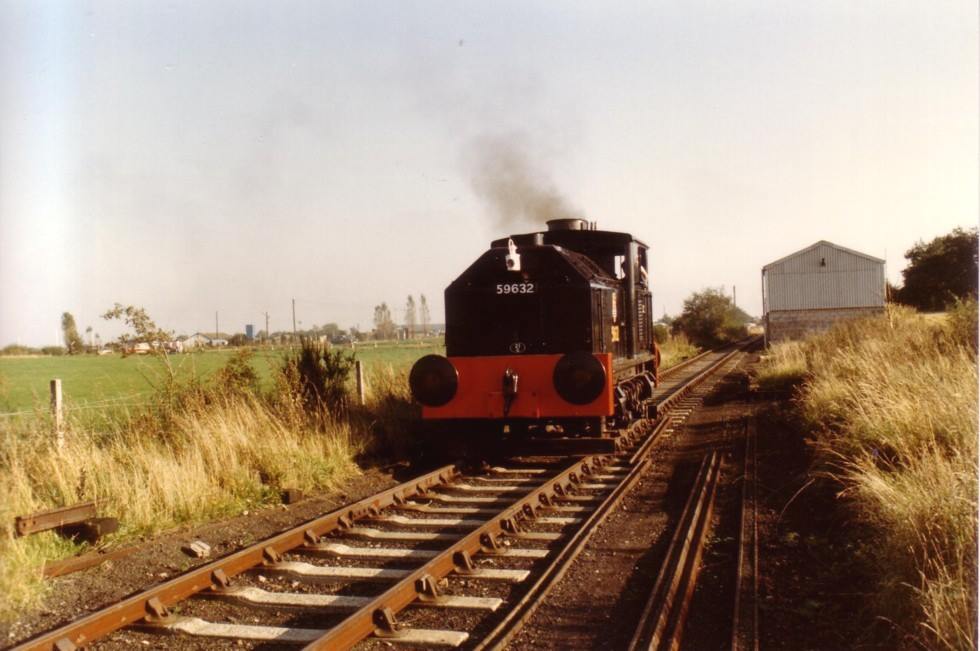
N0.5 Sentinel No.59632 has also been steamed on several occasions and following each steaming various adjustments, modifications and improvements are made by its owner.
Both Nos. 4 and 5 are now fitted with vacuum brakes, a necessary modification for running passenger trains.
No.7 the Ruston diesel has received a repaint and now sports a green livery which the owner claims is similar to BR Brunswick Green. It looks very smart anyway.
No.10 S100 – continued progress is being made with getting components ready for re-wheeling the loco and as the “head of steel” gets ever nearer (it has lain isolated from the rest of the railway since 1983) it should take to the rails again before the year is out.
Carriage & Wagon Dept.
The buffet section of the Wickham sees extensive use, providing us with our main source of income. Various improvements to the plumbing have been made and both coaches have been fitted with new rainwater gutters which will enable the much needed repaint to take place in the not too distant future.
The Maryport & Carlisle Coach has seen ‘Clippie’ steadily working to get this coach into a reasonable state of repair before it gets beyond redemption. The coach is now in a uniform green undercoat and looks much more presentable.
Civil Engineering
Brownhills West Station June 1978
By the time the Task Force had completed the platform there was little over a month left to get the railway ready for receiving visitors during the Transport Extravaganza. The platform had to be surfaced with a 6” layer of black ash and coping stones had to be laid alongside the museum coach. The major work however, was to fashion a new track bed and lay track along the platform and then raise it over 9”. A vast quantity of black ash was purchased and packed under the track in order to get the track level in the platform. This work was completed in the nick of time so as to get the Wickham buffet in the platform for the Transport Extravaganza. After that weekend work concentrated on regarding the line from the platform down towards the point for Elsley’s siding (more black ash!), and No.1 point was rebuilt. Once this was completed the line was treated with weedkiller and fences were repaired and installed where necessary. Nigel Canning is in the process of constructing a set of level-crossing gates to be installed at the road access to the loco shed and also at the level-crossing to the north of the loco shed. Recent weeks have seen work proceeding on relaying No.1 road in order to remove S199 and the GER brake coach so that the Wickham buffet can be moved clear of train movements on operating days. A fair amount of cosmetic work has been carried out around the platform, most noticeably a large pond known as ‘Lake Clippie’ after its constructor which has played host to several frogs, toads, a solitary newt and a steam powered model boat!
Museum Notes
Little to report other than the acquisition of several official postcards including a particularly rare example of a folded GWR card depicting King George V published in 1928 and valued at recent auctions at up to £60 – yes £60 for one card and one which we obtained as part of a collection costing just £25.
Mike Wood has generously donated various photographs of Cannock Chase Colliery locos which will eventually be displayed, and a friend of the Society, Robert Cadman, has given us a couple of local colliery lamp checks.
Reorganisation News – Adrian Hall
The appeal in the last Newsletter for candidates for management positions in the new company generated a very poor response. There are still a couple of key positions without any likely contenders and anyone interested should get in touch with me as soon as possible.
Negotiations are still proceeding very slowly with the Charity Commissioners and in view of the need to be on a firm footing for negotiations over the motorway we have decided to incorporate a new Company as quickly as possible.
The necessary documents will probably be with the Registrar of Companies by the time you read this and it is hoped that the Certificate of Incorporation will be issued by mid-October, allowing the inaugural General Meeting to take place in late November/early December, probably concurrent with the Society AGM.
The Future
Negotiations with the Department of Transport have begun with regard to any compensation that we will get when the Northern Relief Road (M6 Toll) is built through Chasewater. It is clear that the current terminus facilities will have to be moved north to a position at least adjacent to the shed (it is likely that the shed will not have to be demolished). A planning proposal asking for outline planning permission to construct new terminal facilities is at present being drawn up, but is likely to be rejected as no development will be permitted along the line of a new road until the road is built. This could well make our position at Chasewater untenable and to this end several alternative sites are being investigated. It is hoped that the executive committee will have reached a firm preference which can be put forward at the AGM in November, along with the feasible alternatives.
431 Hudswell Group
The fund is ticking over quietly, giving the Society a monthly injection of cash. By the end of the year the fund should be approaching half-way in raising the purchase price of the locomotive. A few shares are still available.
Locomotive Stock List
In response to several requests here is a summary of locomotives on the CLR as at 1st September, 1986. A full guide/stockbook will be produced when sufficient funds are available. The next issue of Chasewater News will include a list of coaches, wagons and other rolling stock.
Another true anecdote in the series of an excerpt from the Chasewater Fat Controller’s diary. Date line Sunday, 24th March, 1985.
It was about 2 o’clock on a relatively mild afternoon when four men and a dog set off from 21G Hednesford Road to replace stolen chairs from the loop. The freshly greased bearings on the trolley ran easily on the falling gradients towards Norton, with Hairy Youths dog bounding along the four foot a couple of yards in front.
Once over the facing point, the going became much harder as the ever helpful Task Force (remember them?) had dug the ballast out between each sleeper so the dog was having to negotiate ten inch high hurdles, two foot six inches apart. Finally with the leading axle of the trolley rapidly closing on his right ear he decided he had had enough and leapt over the rail to his right – a split second too late. ‘Klunk, klunk, klunk – yelp, yelp, yelp’. The fully laden trolley had run over his back leg leaving a six inch tear in his flesh.
Having bitten his owner and growled at everyone else in range the dog was loaded onto the trolley and sent back to Brownhills West Station where the ubiquitous Spitfire was waiting to take him home. That evening, Nurse Gillian is reputed to have taken the dog to work and rebuilt him bionically – this dog now has a starting tractive effort of 17,000lbs in full gear at 85% boiler pressure and may be used to work passenger trains when we get a Light Railway Order.
The cover photo shows CLR No.11, the Neilson now known as Alfred Paget, shunting near Brownhills West on a special steaming on Saturday, 17th April 1982 for the Industrial Railway Society. Photo by Mike Wood. Good timing as the Society was at Chasewater again only a few weeks ago (2011).
109 – Chasewater Railway Museum Bits & Pieces
From ‘Chasewater News’ April 1986
Our late friend, Mick Doman, preparing totake ‘Asbestos’ out from Brownhills West, Easter 2007.
News from the line
Loco Dept.
Asbestos and the Sentinel both performed satisfactorily at Gricers’ Day and both have undergone further work during the winter months. Asbestos has had the vacuum brake finished and the regulator has been the subject of much attention due to its tendency to remain open when shut! The Sentinel (alias No. 59632) is being fitted with vacuum brakes and its water feed pump has been completely stripped and rebuilt. Both engines will be test steamed prior to the Transport Extravaganza in May.
On other fronts, No.6 the Albright & Wilson Peckett needs the extension to its smokebox takeplate replacing due to the severe wastage, as well as replacement of some of the rivets which fix the takeplate to the boiler barrel. It could be that the boiler will have to be removed from the frames. Tony Sale is progressing with overhauling the axle boxes of S100 and it is hoped that re-wheeling will take place soon. The small Andrew Barclay has had a patch let into the side of its firebox so progress should speed up once several stays have been renewed.Sentinel Feb 2004 – Nigel Canning
On the diesel front, No.21 has had its engine removed to enable Colin Marklew to piece together a decent working engine from this and the two spare engines that we possess.
Task Force
Like the Phoenix, from the rubble of Brownhills West has arisen a splendid new platform which was 90% finished before the West Midlands County Council was abolished at the end of March, and the Task Force left Chasewater, supposedly for good. However, at the beginning of April they reappeared under the guise of Wolverhampton Task Force to finish the job and to complete the drainage of the station site. The Society is left with the job of removing the remaining rubble and fashioning a track bed adjacent to the platform before the Wickham buffet car can be installed.
Motorway Madness
Just as the railway is recovering from the enforced siesta that it has enjoyed since 1982, comes the news that the infamous North Orbital Route (as an alternative to the crumbling M6) is to plough straight through Chasewater, in fact, it is likely to plough straight through the new platform at Brownhills West!! This of course is a major blow to the intended development of the park, not least the railway.
Despite the likelihood of a public enquiry it is almost certain that this ‘preferred route’ (out of nine possible options) will be built, construction not due to start until 1991. As it will be some 12 to 18 months before detailed plans are published then the Railway will have to have its own plans ready to make maximum use of any compensation it is eligible for. The main options open to the Railway are:
To forget it all and disperse the collection
To move lock, stock and barrel to somewhere else
To move Brownhills West some 200-300yards down the line
To move operations to the other side of the lake.
The executive committee have appointed Messrs. Hall and Patterson to investigate the feasibility of these and any other options and to find out what the chances of gaining compensation are.
“431 Hudswell Group”
At the Chasewater Light railway Society AGM on 13th November a resolution was passed empowering the Executive Committee to sell the Hudswell Clarke Locomotive No. 431 of 1895 to a consortium of Chasewater members and others. A price of £2,500 was agreed upon provided that the locomotive would remain at Chasewater.
All this led to the formation of the “431 Hudswell Group” which is offering 25 shares in the locomotive at £300 each. This covers £2,500 for purchase, leaving £5,000 for restoration. An easy payment scheme has been set up whereby prospective shareholders pay a minimum of £5 per month per share. (There is a maximum shareholding of two shares per person) and to date 18 shares have been taken up. Each shareholder will be issued with two certificates:
a) When £100 has been donated representing 1/25th of the purchase price – i.e. 1 share – and
b) On completion of restoration work to certify ownership of 1/25th of the locomotive.
No heavy restoration work will take place until the CLRS has been paid in full for the locomotive and there is enough money available to allow restoration to proceed unhindered.
Late News – A deposit of £500 has been paid by the 431 Hudswell Group to the CLRS.
Catering News
No doubt you will have read elsewhere about Gricers Day. However, from a catering point of view it was both good news and bad. The good news was that we literally sold out of everything and had to send out scouts to locate further supplies. This resulted in the maximum profit being made. The service went well except for the bottleneck around the hatch and doorway, and everyone drank the tea and coffee so it couldn’t have been too bad!
However, running the kitchen is hard work and we would not have coped except for volunteers who turned up who are not Society members via the Hon.Sec. Thanks go to all concerned. For future occasions if they are not available, ordinary members will have to be rostered for these duties, as the money raised by this service will be essential. Other Societies have learnt that they can increase their income considerably by offering an efficient service and although none of us joined to make tea and wash up, this is part of the price you pay to see the engines running again and to keep them running.
Barry Bull is again providing sterling service on Saturdays and Sundays to members and the few brave souls who appear during the winter months.
On November 17th we ran the first ever “Chase Diner Train”, which taught us a few lessons – we must be mad!! However, despite a few obvious points such as the gap between courses and lack of heat in the vehicle, it went reasonably well considering it had never been done before. Apart from a longer cooking time than anticipated, due to overloading of the electricity supply, it proved what can be done when we are fully organised and better equipped.
Remember – help support our project “Eat, drink and be merry”.
Re-organisation Committee Report
We are still dealing with the Charity Commissioners who require more information than previously thought and so this is taking longer than expected, though there should be no problem in having the new Company set up by the Autumn. Meanwhile, the Re-organisation Committee (gang of four!) are working hard to ensure a smooth changeover when the time comes.
The management structure was agreed at the last committee meeting and consists of seven Director Offices covering the main area of the business – the sub-board structure being a matter for the Directors to determine later. The intention is for seven (of the possible maximum of ten) Directors to be elected to office concurrent with their election as Directors at the AGM. The offices are:
Chairman (usual duties and to ensure Directors pull in one direction – the one the members want).
General Manager (control, planning, budgeting of on-site work).
Engineering Manager (ensuring that the Railway meets the Inspector’s requirements).
Operations Manager (rue book, staff training, rostering and timetabling).
Commercial Manager (sales, catering, etc., planning of rallies).
Marketing Manager (marketing the Railway, including publicity and advertising, magazine and public relations).
Financial Manager (treasury, liquidity and cash-flow management, budgetary control system, VAT/Revenue).
Association of Railway Preservation Societies (ARPS) AGM25-1-1986
For the first time in over four years the Society sent a delegation to an ARPS meeting, this year’s AGM being held in London.
The only really useful part of the meeting was a talk by Major Olver of the Railway Inspectorate on various current problems facing the preservation movement, certain aspects of which were discussed in a private conversation between Major Olver and the CLR delegation (Steve Organ and Adrian Hall) after the meeting.
The need for agreement between railways and private owner stock was raised which is something the CLR will have to look at before we recommence train operations. The Annual ARPS Award was intended for BR for organising the Marylebone – Stratford dinner trains but as they are ineligible – not being members of ARPS you understand – the Award was given instead to the owners of the engines used on said trains. As the Award is supposedly for an outstanding contribution to the Railway Preservation movement, there were surely better qualified contenders such as the KWVR for the splendid restoration of the unique Haydock Foundry built ‘Bellerophon’;Bellerophon at Caverswall Road, Foxfield Railway
City of Truro at Hampton Loade
the SVR’s restoration of ‘City of Truro’; the North Norfolk’s Gresley buffet car; the Llangollen Railway’s extension to Berwyn, etc., (or even the CLR’s nine year restoration of ‘Asbestos’!).Berwyn Station on the Llangollen Railway – and the former Chasewater Wickham. Hondawanderer.com
The Best Preserved Station Award went to the SRPS for Boness Station. This is interesting in that it is not strictly a preserved station, being an amalgam of various Scottish station buildings brought in from other sites. Enquiries were made to see if Brownhills West would be eligible – apparently it would so we shall have to see what can be done in the future!! – Any (sensible) ideas are welcome!
Chasewater Transport Rally Report
Sunday October 13th not only brought a return to steam to the railway but also the largest event held since the last Transport Scene in June 1982. It was also one of the warmest days of the year! A total of 129 exhibits were in attendance, ranging from buses to stationary engines. As organiser of the event it was a great pleasure to realise that although we may have gone through bad times over the past three years we have certainly not lost our friends in the world of preserved vintage transport. Thinking back to the original Transport Scene organised by Andrew Louch in 1977 when we had about 70 exhibits over a summer weekend, who would have thought that an October day eight years later would see almost double the number of exhibits and sales stands with free admission and still enough money raised on sales stands, our own refreshment and miscellaneous sales to make a healthy profit.
Aside from the obvious thanks to all the exhibitors who attended and members who assisted on the day, I would like a special vote of thanks to be accorded to Angela, the two Sues and Tim – all non-members who were coerced into helping out in the Wickham buffet. It is fair to say that without their help profits would have been minimal as most of the profit came from refreshment sales. The day’s refreshment sales realised £165, by far the highest achieved in the Wickham in one day.
One spin-off from the event was our first major publicity in the railway press for years, with photos of the Sentinel and/or Asbestos appearing in ‘Steam Railway’, ‘Railway Magazine’ and ‘Railway World’. We were also featured in the Lichfield Mercury and shortly afterwards a photo of the ex-Walsall Gasworks Sentinel appeared in the Walsall Observer.
Chasewater Transport Extravaganza
Yes, another transport event is in the formative stages. A group of enthusiasts headed by our friend Peter Magee of Lichfield are hoping to organise a weekend event in the Park on May 17th – 18th. Admission will be free and they hope to cover costs by selling trade space and by means of donation. An enjoyable informal event is promised and will include guest appearances by up to half-a-dozen steam traction engines. Any profit made is being donated to the Chasewater Light Railway Society.
The unique 1957 built Wickham & Co Class 109 DMU (50416 & 56171) pulls away from Berwyn station on 26 June 2010 with the 16:50 Llangollen to Carrog service, during the Llangollen Railway’s Railcar Gala. The station occupies a very restricted site, next to the main Llangollen to Corwen road, and perched high above the River Dee.
Restoration of the Sentinel – One man’s battle against adversity
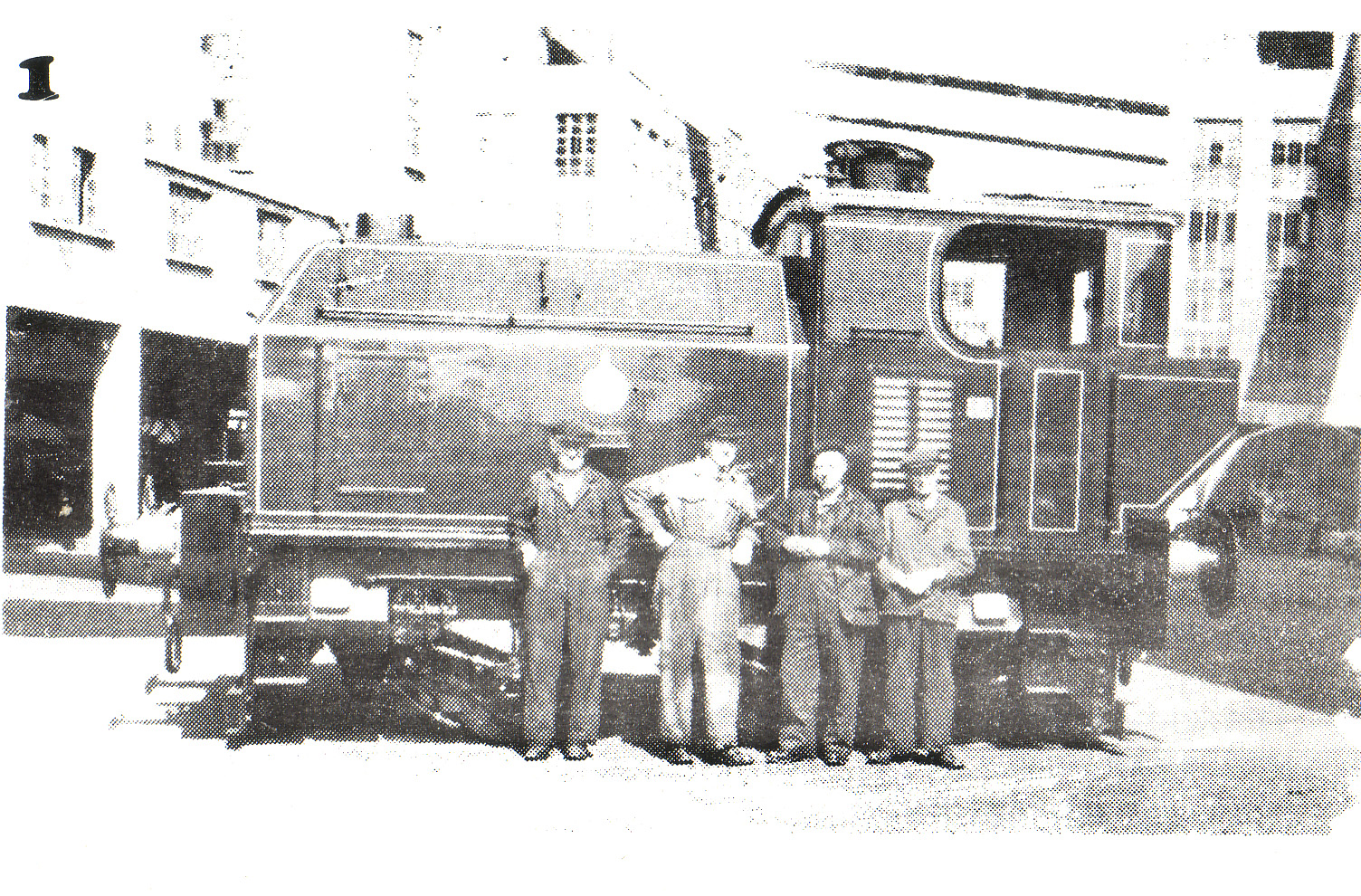
The Sentinel at Walsall Gas Works the day it was delivered brand new in 1958 – photo Mike Wood.
In 1981, as part of the exchange deal for the Royal Saloon, the railway acquired ‘in working order’ a 100h.p. Sentinel shunting loco. This was duly steamed and trundled up and down with three or four wagons whilst waiting for the promised boiler certificates. These eventually arrived but consisted of a boiler maintenance card, a Hydraulic certificate for somebody’s crane and a steam test certificate for 9632 which was later rejected by our Boiler Inspector as ‘not worth the paper it was written on’ because no hydraulic or visual examination had been carried out.
The only solution to the problem was to drop the firebox and start again from scratch. It was this action which revealed a long list of both major and minor faults which all required rectification. Luckily the boiler shell and firebox were in good condition but the superheater had holes in it and the spark arrestor box and chimneys were rotten enough to require replacement. Eventually, following inspection, the boiler was re-assembled and passed its 413psi hydraulic test. Since then the rest of the loco has been gradually rebuilt, and as during last winter we had serious problems with thefts and vandalism, the opportunity was taken to fit lockable sliding yobo-proof screens to the cab along with wire reinforced glass and bars over the windows.
The Sentinel shuffling past the loco shed at Chasewater during a test steaming shortly after arrival from Butterley, after which it was dismantled for overhaul – photo Sid Mills.
During 1984 the loco was test steamed twice revealing more minor problems. The steam brake would not release properly because the valve body had been machined badly out of true; the engine blow through drain valve would not work because its pipe was blocked with twelve inches of solidified sludge; even the injector water valve could not be operated properly from the cab. However, following each steaming of the loco, more faults are corrected or improvements made.
Two faults which need to be checked at the next steaming are the boiler feed pump which so far has refused to work, and the engine oil pump which has to be primed with oil before it will pump pressure. Hopefully the recently installed stainless steel balls in the non-return valve matrix may have cured the oil pump problem.
At the present time the loco is being re-assembled after its second visual boiler inspection and painted BR black for the Open Day in October. Hopefully, three years after it arrived it can at last be seen running in public.
The Chasewater Fat Controller – Nigel Canning.At the time of writing – May 2011 the Sentinel is coming to the end of its latest overhaul.
Mention should be made here that Brian Hames has been forced to resign as General Manager due to McGregor’s decision to redeploy him at Point of Ayr, following the closure of West Cannock No.5. (Mr. McGregor was the Chairman of the National Coal Board at the time!). Grateful thanks are due to young Brian for services rendered and his successor is Tony Sale (formerly Assistant GM) and the new Assistant GM is Nigel Canning.
Loco News
I’ve tried to remember the numbering system of the locos but failed – miserably. I have to keep going back through the mags to find them – enough is enough I say!!
The Hibberd diesel is still for sale at a very reasonable price.
Barclay 1223 – all the superstructure of the loco in undercoat, attention has reverted to the boiler and firebox. The front tube plate is being built up with weld whilst the eighteen stays that were unsuccessfully inserted in the firebox, as mentioned in the last issue, are in the process of being removed in an attempt to straighten the buckled walls of the inner firebox. The man says ‘this is in fact, proving quite easy’
The boiler inspector has been and wants a 9” square piece of the outer firebox to be cut out to investigate the extent of a small crack which has been welded over during a previous overhaul.
Brighter news about Asbestos, rapidly coming to the end of her prolonged overhaul with a return to steam being a matter of weeks rather than months away.
The new GM has been hard at work reassembling the boiler backhead fittings, all attached with new studs, whilst the Fat Controller has been making various bits and pieces which have needed replacement. The outside motion is being reassembled to find someone a job to keep him off the streets. During one of the Hairy Youths infrequent visits various pieces of the machine believed to be lost were rediscovered whilst several pieces believed to be ‘in the shed’ were not, so replacements will have to be made.
The Boiler inspector has been and performed an ultra-sonic test to his satisfaction and is returning for a steam test prior to Gricers’ day.
On Sentinel, the Fat Controller has busied himself making good various faults found during the January steam test, and has also painted the beast in an attractive black undercoat after much rust treatment and filling. A coat of gloss black is to be applied before Gricers’ day. The Boiler Inspector has been and carried out an ultra-sonic test and having been satisfied he will return for a steam test shortly. He has also decreed that the boiler needs to be split every five years, not every 14 months as previously feared.
The Controller has carried out his threat of giving the beast a pseudo British Railways identity and has constructed a jolly fine smokebox number plate No.59632.
As yet nobody has had the heart to tell him that vertical boilered Sentinels don’t have smoke boxes!Work on Peckett 917 proceeds as other commitments allow. The new cabside and the rest of the cab have received several coats of paint whilst the component parts of the new bunker await fitting. Several men have been seen struggling to excavate layers of fire brick out of the smokebox in order to expose the front tube plate to the eyes of the Boiler Inspector. Not a wise move as the tube plate appears to be somewhat bulged. Following further descaling work the Boiler Inspector will return to pass sentence.
The GM has made his first major decision which is that S100 is to be moved into the shed as soon as possible – a sign perhaps of old age creeping up on him? To speed this process up the loco will be re-wheeled as an 0-4-0 i.e. only two axles will be re-fitted out of doors, the third one will be done under cover. The owner is at present wrestling with the task of fitting and securing the new main bearings into the axle boxes.
The Other Gentleman made a start on removing the tubes from the Neilson as a mid-summer madness wager that if they were all gone by the end of July then a certain bearded person would purchase a new set! It is now the end of August and many tubes remain to be removed as those concerned are busy on ‘Asbestos’………Will the offer still hold……. Will the ancient Neilson steam again? ………………Who knows? …………Watch this space!Late note; yes the offer does still hold!
Coaching Stock News
In between making cups of tea, Mr. Bull and his crew have been busy repainting and varnishing the interiors of both the Wickham cars in preparation for Gricers’ Day. As ever, more help is needed as several panes of glass need replacing and seats and tables need to be secured to the floor, however, the work done so far is a definite improvement.
Task Force
Still not happy bunnies! Nuff said!
Company News
Working on the precept that no news is good news it would seem that the Company is doing just fine.
Well informed sources indicate that the overdraft has virtually disappeared (along with several of the Directors!) but shouldn’t there be an AGM (or three) due?
An unusual piece to end with…
Steam Hauled Sunday Dinner
As an experiment a steam hauled ‘Sunday Dinner’ train will be run on Sunday, 17th November.
In conjunction with the Rob Duffill Catering Corps a steam hauled train will depart from Brownhills West and at the current end of the line a roast chicken dinner will be served in the Wickham Buffet aka ‘The Norton Nasher’. This is open to members only and is a trial run to see if such a service will be feasible when public services resume.
Would-be guinea pigs should contact Barry Bull as places are strictly limited to twenty. Remember only working members can travel on CLR trains until the Light Railway Order is granted
N.B. It is expected that all participants will be prepared to spend the rest of the afternoon working so come prepared!
Three post in one – not a lot about locos but interesting ramblings about the Chasewater Railway at that time.
103 Chasewater Railway Museum Bits & Pieces – Spring 1985 – 2
Carriage & Wagon Notes
Following the AGM the ex GWR Toad brake van has been sold to Les Emery (owner of Barclay No.3). As this is GWR 150th year it is perhaps worth pointing out that this vehicle was numbered fourth in the first batch of twelve GWR freight vehicles to be built with iron underframes and is thought to be the oldest surviving GWR vehicle. Incidentally, its sale realises a 13,000% profit to the Society.
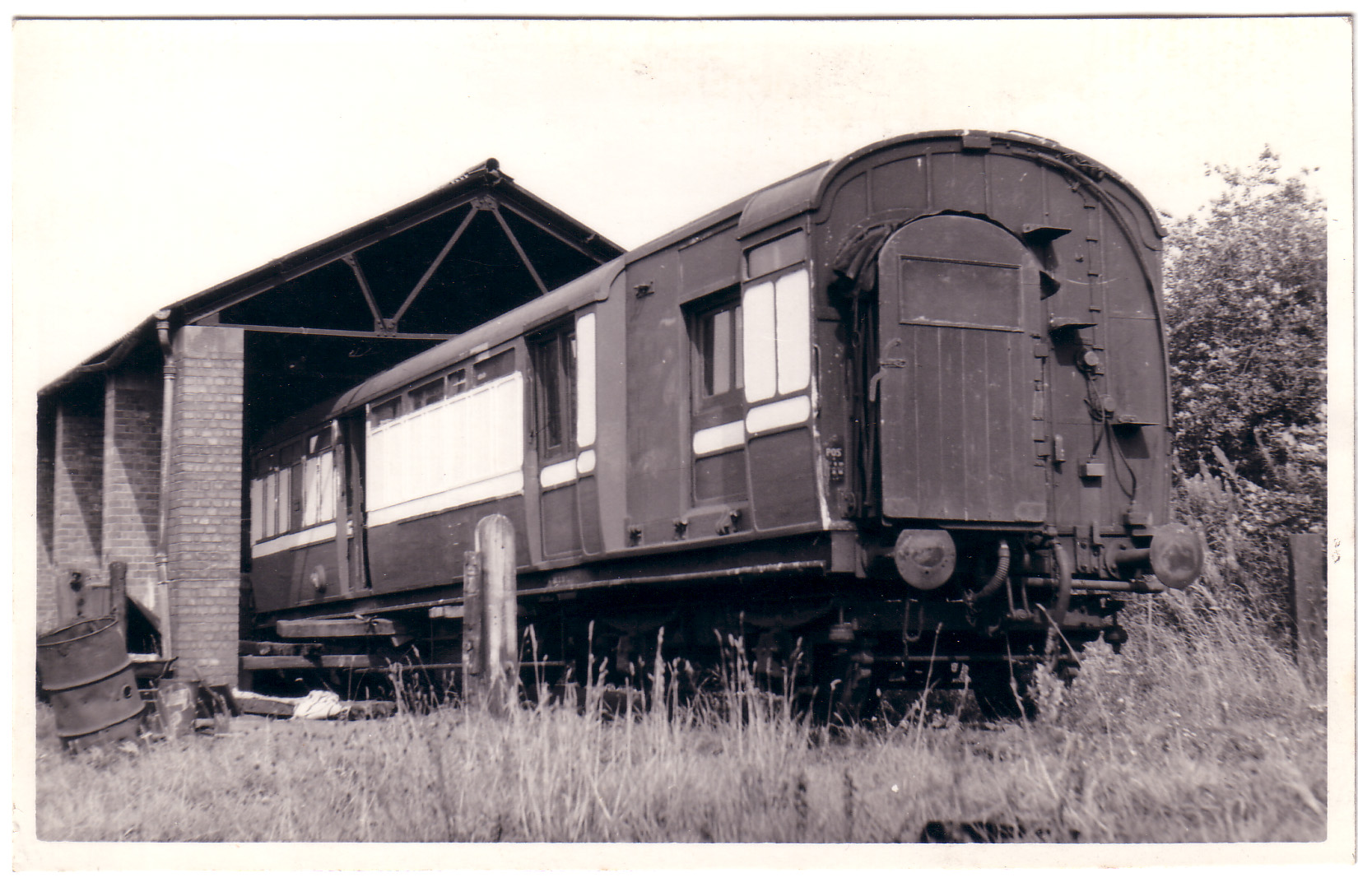
The AGM also agreed to the sale of the ex LNWR brake compartment (non-corridor coach known in the vernacular as ‘the paddy’. This has been advertised for sale and hopefully a buyer can be found as it is neither use nor ornament in its present condition and funds/manpower are not available to rectify the situation. The ex BSC hopper wagon is having its body removed and will be fitted with timber decking for use as a flat wagon. This will enable the worst of the present flat wagons to be scrapped (as it had a smashed headstock amongst other diseases) along with the British Reinforced Concrete Ltd. drop sided wagon, which is beyond all hope of redemption.Great Eastern brake
All other wooden bodied stock is in appalling condition due to the ravages of open storage and vandalism. One seriously wonders if they will be restorable if and when we have the money and manpower to do so.
The Wickham buffet car is in weekly use providing the Society’s main source of income over the winter months, whilst the Wickham trailer and Gloucester trailer await for signs of resumption of train services at which they will be repainted and brought into a fir state for passenger carrying duties.
Vandalism and Theft
Once again, the railway has fallen prey to the attention of juvenile vandals and scrap metal thieves. As has already been mentioned, all locos kept outside the shed have had all none ferrous fittings removed after some pipework went missing, and locos to be stored outside after restoration will be fitted with vandal-proof shutters.
The ex MSL coach was removed of all its brass grab handles and door handles by a person or persons unknown, though these were later found in the Task Force workers mess van, from which one can draw one’s own conclusions. Having suffered the above trouble and that mentioned in Mr. Bull’s ‘comment’, we have been of late suffering from thieves steeling cast iron chairs, track spikes, lengths of rail and even sleepers from the causeway and loop areas of the line.
As a result of vandalism and theft we have sold all surplus rail, wooden sleepers and chairs from the causeway as the majority of it was only fit for scrap whilst any decent materials have been secured in the vicinity of Brownhills West.
The theft of wooden sleepers has been halted following the issue of a circular to houses in Norton Canes asking for information. No fewer than twelve households reported having bought ‘logs’ from a local resident. These ‘logs’ were in fact sawn-up sleepers and the man in question was arrested whilst burning the evidence in his back garden, having received one of these circulars himself!
Help
A list has been drawn up of the work needed to be done before trains can run again.
The majority if the work calls for hard work and graft rather than fancy engineering skills. Why don’t YOU give it a try one Sunday? We don’t bite (well Ted might if provoked) and tea in the buffet car has improved of late. Seriously though, the more people that help then the quicker we can re-open and form a sound financial platform from which we can begin to think of extending the line across the causeway and beyond.
Task Force
The last issue mentioned that the Task Force had returned with the intention of finishing all outstanding work by Christmas. Well Christmas has been and gone and the situation is worse than even the Fat Controller can have imagined. Following demolition of the platform the Task Force moved onto the causeway and dismantled the track there, and then – nothing! That’s right, they just dismantled the track in situ rendering its recovery impossible except by Shank’s Pony. Round the Festive Season word got out that Task Force had withdrawn from Chasewater an d were not coming back, not ever, never!
A variety of reasons were rumoured, the one holding most credence being that the head of the Task Force thought Chasewater was too far away (from his office one supposes). We were not amused and a deputation of Chairman/Solicitor and General Manager were sent to County Hall to register a complaint in no uncertain terms.
Apart from the obvious air of destruction and the resultant lack of train services it is perhaps pertinent to mention that membership of the CLRS has dropped by 50% since the arrival of Task Force.
Catering
A recent plus in this department is the repair of the Baby Belling cooker thanks to Mick Webb, this will enable a wider range of foods to be made available than previously.
104 Chasewater Railway Museum Bits & Pieces – Spring 1985 – 3
104 Chasewater Railway Museum Bits & Pieces – Spring 1985 – 3
An excerpt from the Chasewater Fat Controller’s Diary – dateline Sunday 10th February, 1985
It must have been the coldest day of the winter when the GM brought his car to a stand behind mine in Pool Road. Having tried to get through the drifts and failed, I had backed out onto the A5 slip road just as a silly wassock in a Sherpa van who, having watched me back out, took a run at the same drift and got stuck. He was eventually towed out an hour later by the farmer’s tractor.
Following meaningful discussions in the General Manager’s car including how many tools have gone missing during the Task Force Scheme? And who did we know with a Range Rover? We departed for Lichfield Road.
The bearded one was just about to leave, so with two pairs of socks and a spade each, the three of us returned to Chasewater in his large ‘four-coupled’ vehicle. This time we tried the dirt track off White Horse Road which turned out to be relatively clear and it wasn’t until we were opposite the main gate that we met a snow drift.
“Come on Les, up onto the grass, round the left of that tree, and we’re in” the driver was advised. Seconds later we had slid into a deep ditch which had been completely hidden by the snow. The situation was desperate as with only one wheel of each axle in contact with the ground, the chassis resting on the ground and the diff. lock frozen, escape seemed impossible.
Les was left in charge of the wreckage while Brian and myself set out for the loco shed through driving wind and drifts up to four feet deep. As luck would have it the compound gate and the shed door were clear so we could get inside and gather the necessary rescue equipment. One large block and tackle, crow bar, key hammer, peckett cylinder wrapper and rope. By this time the gorilla had landed his spitfire in Hednesford Road and assisted with pulling the ‘peckett sledge’ back towards the gate. Upon passing Brownhills West Station we were intercepted by the Bull who, having arrived by cattle wagon saw the effort being expended and concluded we must be up to no good and so joined in.
After much struggling the crow bar was hammered into the ground and the block and tackle run between it and the vehicle’s towing ball. Finally, with a large crowd of onlookers assisting, the vehicle was half winched, half lifted, onto solid ground.
Needless to say we all left the way we had come to search for Les’s 3½”/5” gauge garden railway and a cup of tea. But at least we had ‘maintained the presence’ at Chasewater for another Sunday. Nigel Canning
Chasewater Comment – Ian Patterson (aka the Hairy Youth)
Scanning through the draft for this magazine I came to the conclusion that things must be improving as there seems to be a lot happening and even more to look forward to as indeed there is. However, this illusion is rapidly shattered by a visit to Chasewater where a visitor asked me “is this railway derelict? – I came here expecting to ride behind a steam engine” a tour of the engine shed and a chat with the Sunday regulars changed this person’s view but there must be many more who don’t enquire and merely see what they see – not a pretty sight. For all intents and purposes the railway is derelict and a hell of a lot of hard work will be needed to run trains again. With the present day work force there is two to three years work to be done before a passenger train can run again and apart from this, a large amount of money will be needed to pay the legal fees, etc. necessary to gain the all important Light Railway Order. This brings me to another point and that is the apparent lack of progress on the administrative side of the re-opening process. Moves are afoot to get things moving and it is to be hoped that the membership will vote on certain resolutions at the forthcoming AGM with the aim of getting the Railway re-opened as quickly as possible, rather than letting personal prejudices cloud their vision.
Provided that West Midlands County Council do rebuild the platform and provided that Walsall District Council do provide us with the necessary leases and Light Railway Order then perhaps next year we can attract more visitors who will be able to believe that real progress is being made, and help dispel the working members’ fears that trains may never run again. Whilst this uncertainty hangs over the railway’s head the wooden bodied rolling stock is disintegrating before our eyes, doesn’t anyone care?
I hope members will visit the railway on Gricers’ Day (13th October) and see for themselves what needs to be done – perhaps it will inspire you to come and give a hand or perhaps it will finally convince you that your membership is a waste of time and that the Society will finally collapse after all. The choice is yours – if thirty working members turned up every weekend from now until next Easter then one could confidently say that services could re-open next May – think about it, your apathy could be the final nail in the Railway’s Coffin.
Now from a rather pessimistic outlook with a touch of optimism towards the end to some really sad news:
Obituary
It is with great regret that we have to report the death of Charles Ives, Society Vice President and former President and benefactor for many years. Ill-health has for some time forced Charles to take a back seat in Society matters but his influence in the formative years of the Railway Preservation Society (West Midlands District) can never be undervalued.Charles provided the Society with its original home on siding space at his Hednesford engineering establishment. For ten years the Society had free use of the siding including an overall roof to assist early members in their restoration work.
His presence at Committee Meetings was always welcome with his sense of wit and countless anecdotes and sayings. In his own way Charles was one of the pioneers of the preservation movement although perhaps a name that might not readily spring to mind. A true character he will be sadly missed by all who knew him. Our condolences go to his widow. B. Bull
Anyone who has followed this blog cannot fail to recognise the contribution of Charles Ives to the RPS West Midlands District and ultimately the Chasewater Light Railway Society. CWS
102 Chasewater Railway Museum Bits & Pieces – Spring 1985 – 1
After the last post’s slightly more optimistic outlook it seems to have slipped backward – oh dear!
Editor’s Notes – Ian Patterson
Much of what follows is of a depressing nature but there is little point in glossing over the severe handicaps that we face at the current time, and perhaps it will spur one or two to take an active part in what should, when all is said and done, be a pleasurable hobby.
Chasewater Comment
This issue’s writer is Barry Bull, Hon.Sec. of the CLRS and a member for 16 years.
When I was asked by H.Y. the ‘Managing Director’ of ‘Chasewater News’ to write this piece I was hoping to write in a more light-hearted vein than of late.
However, those of us committed to the cause of operating a railway and associated museum seem to have been dealt one body blow after another by a series of events over which we have little or no control. The worst aspect, since the closing of the railway for passenger services in October, 1982 has been the way we have been left open to the vagaries of West Midlands County Council and their Task Force Programme. Despite the valiant efforts of John Selway the expected successes of the Task Force Programme have not materialised,
Whatever feelings we may have as regards the work actually completed on site the main problem has been behind the scenes at County Hall. You will have read in the last issue of Chasewater News of the intention of WMCC to reconstruct the platform drainage at Brownhills West and Stadium Halt (which was a possible halt opposite Willow Vale Nursery), fencing of the line and associated crossing gates – all to be finished by Christmas (we presumed 1984!). Well, as those of us who attend Chasewater on a regular basis will know, none of this happened.
I’m afraid that this report went on for another three or four paragraphs all very similar, with tales of vandals, metal thieves and arsonists at all the organisations using Chasewater.
Loco News
No.1 Hibberd Diesel The AGM in October agreed to sell this loco as it is surplus to requirements and it has duly been advertised. Further developments are awaited.
No.2 Peckett 1351 This engine stands next to the shed door with a hopeful look on its face/smokebox. Does its owner still realise that he owns it?
No.3 Barclay 1223 The restoration of this loco has suffered a setback as, when the new stays were riveted up, the inner firebox walls buckled around the stayheads. The Boiler Inspector’s verdict is awaited with trepidation as he is unlikely to pass the repair, insertion of copper patches or even a new inner firebox may be the answer.
Despite this the new cab, bunkers and footplating are being installed, and jolly fine they look too!
No.4 Asbestos Since the last set of notes great strides have been made with the restoration of ‘Asbestos’. After much bickering the worst of the cladding sheets were replaced with new material, generously donated by a member.
Once these had been cut to size they were fitted following lagging of the boiler with new hygienic fibreglass cladding. The following week the tank was refitted and for the first time in some eight years ‘Asbestos’ looks like a complete steam engine.
Much work remains to be done, however, but refitting of the regulator and cleaning up of backhead fitting faces is underway.
No.5 Sentinel The Sentinel was first steam tested on November 25th (having had the dubious honour of being the first loco to steam at Chasewater since ‘Invicta’ on 16th October, 1982). Following this, minor adjustments were made and a second steam test followed on 6th January though a shortage of coal hampered its steaming capabilities on this occasion. Further minor adjustments are being made whilst a new grate is on its way. Vandal-proof shutters have been fitted to enable the loco to be left outside without fear of fittings being stolen.
During the spring the Fat Controller (for it is he that owns the beast) plans to repaint the loco in a pseudo BR black livery with large yellow numbers as No.59632 (there’s no accounting for taste, is there?)
It is planned to steam the Sentinel at regular intervals on works train duties to enable much needed maintenance to be done on the Ruston diesel No.7.No.6 Peckett 917 Slow progress is at present being made on this loco with the installation of a new cab side and front with a new bunker to follow. However, with the end in sight on ‘Asbestos’ progress should speed up during the year and thoughts are turning towards repairing the water tank rather than a wholesale replacement.
No.7 Ruston diesel DL7 As mentioned above, the big Ruston requires a fair amount of maintenance to make it a more reliable machine. This will be done as soon as there is space in the shed for it. Meanwhile, a search is on for equipment to fit the loco with vacuum brakes.
No.8 Invicta Invicta stands outside the shed minus cab fittings – removed for safety’s sake, and whilst being nominally serviceable it is unlikely to steam this year.S100 Frame & Wheels
No.10 Hudswell Clarke S100 The new main bearing have been machined and the axle box horn faces have been trued. Re-wheeling will soon become a priority as it needs to be moved to enable track work alterations to be done at Brownhills West.
No.11 Alfred Paget The ancient Neilson awaits attention – new tubes and water tank repairs, but sadly it is impossible to say when this will begin.No.15 Hudswell Clarke 431 The big news is that the chimney has fallen off. Thankfully, the AGM refused to give the committee authority to dispose of this fine machine and, hopefully, plans for its restoration can be formulated soon. (nobody has defined ‘soon’!)
It is perhaps relevant to ask what will be the loco department’s next project as within the next 12 – 18 months locos Nos. 3, 4, 5, 6, 7, 8 and possibly 10 are likely to be ready for use. Are we really going to need 7 locomotives to pull two coaches over a three quarter mile of track? ( No.3 took about 20 years to steam and Nos. 6 and10 still haven’t! No.8 ‘Invicta’ left for pastures new in between times).
Now that we have a new numbering system, it goes into operation. I shall use the numbers but not ask you to refer to the previous post – I’ve got the numbers and locos on the page in front of me – you haven’t!
No. 3 Barclay 1223 Since a change of ownership last October the engine has been completely dismantled above the frames, and the boiler and firebox have been examined by the Boiler Inspector. Members of long standing may recall that this loco’s boiler was virtually condemned some 15 years ago and has stood idle ever since. We must now be in a more enlightened age as, apart from replacement of some 18 firebox stays and welding a small patch on the firebox side and renewal of several smokebox tubeplate rivets, the Boiler Inspector is quite happy for the boiler to be returned to steam. Much of the platework of the loco has been replaced with new – I.E cab, bunkers, footplating and a new smokebox has been fabricated.
A new set of boiler tubes has arrived and those responsible for the loco hope to see it in steam in early 1985 – they must be confident as they’re looking for another loco!
No. 4 Asbestos Following a successful hydraulic test the boiler has at last been reunited with the frames, for the first time in six years. Despite the misguided belief that interest (work) would speed up following refitting of the boiler – this has not yet happened, putting a 1984 steaming in considerable doubt at the time of writing (mid-July)
Despite this, slow progress is being made by one man (without dog!) in assembling a useable set of cladding sheets from the mangy set of originals. Also the cab fittings have been overhauled off-site.
No. 5 Sentinel Since the last report the boiler has passed its visual test and following reassembly was hydraulically tested. On testing the superheater several holes were found, the only remedy being replacement. Without too much difficulty a firm was found who could manufacture a new one and this was duly ordered and delivered – at considerable expense to the owner!
The boiler duly passed its hydraulic test as did the new superheater. Reassembly is well under way with many components being replaced at the same time.
The owner expects to steam the loco later this year and run trials with it to ascertain its suitability for passenger work before considering fitting vacuum brakes.
No. 6 Peckett 917 Slow progress has been made on this loco, recent work being confined to stripping and painting the cab and removal of fire bricks out of the smokebox to reveal a somewhat wasted tube plate. Work should speed up when ‘Asbestos’ (wot – no number?!) is finished.
No.10 Hudswell Clarke 1822 (S 100) First the bad news – during the winter we suffered a spate of break-ins which resulted in the loss of the main bearing brasses as well as a complete set of new ones. Now the good news – the wheelsets have been sent to Bridgnorth for tyre and journal turning and have returned ready for refitting, the axle boxes which will shortly be sporting new main bearings which are being supplied at a good competitive rate.
Whilst this was going on, the owner overhauled the lathe and miller in the loco shed and is now using them to true the horn faces on the axle boxes.
All being well, the frames should be reunited with the wheels before the end of the year, enabling further reassembly to take place under cover.
Following a request from the Honourable Secretary to reintroduce a system of credits for work done, here goes…….
Barclay 1223 – Les, Gorilla and friends. New cab and bunkers – Comex Workshop, Walsall. New Smokebox – Angle Ring Co. Ltd. New boiler tubes – Charlie from Embsay via Newmans Tubes Ltd., Wednesbury.
Asbestos Boiler – Tony and Brian. Cladding – HY. Cab fittings – PCK
Sentinel – Mr. K9
Peckett 917 Les and kids, young Pete and the Wossacks.
Hudswell Clarke S100 Axle brasses – Wednesbury Foundry Training School. Lathe and Miller – Mr. Sale. Wheel Turning – Severn Valley Railway.
Loco Numbers HY.
Black Paint (Someone has been working on the principle that if it’s stationary and rusty – paint it black!) Assorted young kids and men with beards!
Task Force
The new siding mentioned in the last magazine was subsequently found to be unnecessary and consequently was not built.
The Task Force then turned their attention to putting the southern point in for the Brownhills West run round, however, following a survey of the line by West Midlands County Council Surveyor’s Department, further work was suspended until the proposed track plans and gradient profiles were approved by the Railway Inspectorate. As a result, Brownhills West still looks as though a bomb has hit it, though in recent weeks some Task Force workers have returned and started slowly demolishing what remains of the platform in preparation for its long awaited rebuild. Despite this apparent lack of progress we have been assured that all the work – reconstruction of platform, drainage of Brownhills West, run round loops at Brownhills West and Stadium Halt (?), fencing of the line and associated crossing gates will be finished by Christmas (one presumes 1984!)
If this is so then services can be resumed following inspection by HM Railway Inspectorate.
Track Work
During the lull in Task Force activities a hastily formed track gang relaid the point leading to the loco shed some 45 feet nearer to Brownhills West to give a longer siding and also ease the alignment which was somewhat tight. This was achieved within a matter of two months, much credit going to Mr. K9, a man with a beard and a (semi) tame Gorilla who performed Herculean feats of strength (some may call it stupidity) in moving large pieces of point and many concrete sleepers in preparation for Sunday working parties.
Chasewater Light Railway Company Notes
Since the end of the YOP Scheme the Company has slowly sorted out its finances to such a degree that it knows to whom it owes what amounts of money. The two creditors are:
1. The Overdraft Facility taken out at Barclays Bank.
2. Money overspent on the YPO Scheme and owed to the Manpower Services Commission.
To ease matters the Society took stock of its assets and was able to identify several items which were not imperative to keep the CLR project a viable proposition. To this end it was agreed in a series of General Meetings to dispose of:
1. Andrew Barclay Saddle Tank 1223
2. Sentinel Loco 9632
3. LNWR TPO coach
4. LNWR brake coach (Paddy Coach).
Of these items, the first three have been sold with only the TPO going off-site, whilst a deal to sell the ‘Paddy’ has fallen through, though hopefully a new purchaser can be found. Despite the resulting influx of money, the Company still has a sizeable overdraft to pay off, which will hinder any future plans for expansion until it is eradicated. At present the Company has only three forms of income:
1. Donations from the Society
2. Sale of Shares
3. Sale of Shares in DL7
Museum Notes
The only notable acquisition of late has been a wooden shield presented by the LMS to Trent Valley Station following three successive victories in the station gardens competition, 1924 – 1926
The Society is approaching its 25th Anniversary which will be celebrated at the Society AGM on 13th October and at a Bus Rally and Railwayana Fair at Chasewater on the following day (October 14th) 11.00 – 4.30, admission free.
Throughout its 25 years the Society’s membership has fluctuated around the 100 mark whilst its aims have switched from creating a static museum to an operating railway. Despite the lack of passenger trains during the last two seasons the Society membership has held its own and so far this year over 15 new members have been enrolled. To these people we say thank you for having faith in the Chasewater Project. Inside this magazine you will find a membership form and we are appealing for every member to enrol a new member to give us enough people to operate trains next season (as we are led to believe that we will be in a position to do so).
Members may have read elsewhere about plans to spend up to 14 million pounds on Chasewater Park and the Society/Company have drawn up plans to expand the Railway, should this scheme come to fruition. All this is dependent on us having enough manpower to run services on a regular basis so it is up to the present membership to either come forward and operate the services or to find new members to do the same. Members may also have read of a scheme to build a new motorway which may or may not pass through the park. If it does come through the park then we are wasting our time.
News from the line
Loco Department – It has for sometime been felt that there ought to be a numbering system for locos at Chasewater in order to give a proper Light Railway image.
A start was made some years ago when ‘Invicta’ emerged from a repaint sporting a painted No.8 (it was then the eighth steam engine on site) on the front buffer beam and brass plates (GWR style) on the cab sides.
The following system has been devised and will be put into practice as engines are repainted, although the GWR style plates on ‘Invicta’ will not be featured on other locos as brass plates with the loco number and the legend ‘Chasewater Light Railway’ have been designed. Some locos will also bear fictitious 21G shed plates as the Operating Superintendent reckons 21G would have been the shed code for Brownhills West (Hednesford Road) had it existed in BR days.
LocoNo.
Hibberd Diesel 1 First loco to arrive
Peckett 1351 2 No. 2 at Wallsend Slipway
Barclay 1223 3
Asbestos 4
Sentinel 9632 5 May be painted black as BR 59632
Peckett 917 6
R & H Diesel 7 No.7 at Whitwell Colliery
Invicta 8
Hudswell Clarke 1822 10
Alfred Paget 11 No.11 at Gartsherrie
Hudswell Clarke 431 15
Ex bass Diesel 21
L & Y Petrol 1
It seems strange to have two No.1s when starting a new system, even if they didn’t stay much longer!
99 Chasewater Railway Museum Bits & Pieces – Late 1983
Editorial: Several things have happened, but little has changed.
Several significant things have happened at Chasewater since the last magazine was printed and these will be detailed in the next few pages.
Little has changed because we are still short of manpower and cash, of these two shortages surely the lack of manpower must be the more inexcusable. On one Sunday this summer there were only two members at Chasewater and I make no apology for the fact that we spent the day working in the shed whilst the public looked through the locked gates of Brownhills West Station. Fifty per cent of those people must have thought that it was a railway scrapyard and the other fifty per cent, who knew better, probably thought that we had closed down for good!
If we are very lucky, sometime next year, we may have a railway which is once again fit to run passenger trains on and probably a couple of locos and coaches in useable condition, but will we have the people to run them?
Nigel Canning – Operating Superintendent
Locomotives
Asbestos – The six missing firebox stays have been riveted into place and the boiler will shortly be hydraulically tested. If this is successful the loco can be reassembled, steam tested and the newly installed vacuum brake equipment tested.
Sentinel heading past the old rear of the loco shed in 1992
Sentinel – The Boiler Inspector will carry out a visual examination on the boiler and superheater of this loco when Asbestos is hydraulically tested. Work will then continue until completed. A trial will have to be carried out to see if this loco is capable of successfully operating passenger trains before any though is given to fitting vacuum brake equipment.
S-100 – Tony has been making use of the summer weather to paint various parts of this loco whilst trying in vain to find somewhere to have its wheels turned.
DL7 – This loco continues in fairly regular use and is to be repainted with a bogus BR ‘D’ number. However, one or two points should be remembered:
If it is to be used on passenger trains again it will have to be vacuum brake fitted.
The brake and starting air tanks will, under new regulations, shortly to be introduced, require to be insured and regularly tested.
Small Peckett – Albright & Wilson, the Company from whom this loco is on loan, have recently offered to help pay for a replacement saddle tank. The tank has been measured and drawn so that quotes can be sought for both a complete assembled tank and for a rolled plates do-it-ourselves kit.
No.21 – This loco is still operational if tow-started and has been used on occasion to move items of stock into sidings to pass DL7 in the absence of a run round loop. A complete engine rebuild is probably necessary to enable it to be started from the battery.
Carriages & WagonsWickham Class 109 at Llangollen Station. Photographed during the Llangollen Railcar Gala weekend, 16-17 July 2005.
This image was taken from the Geograph project collection. on the Geograph. The copyright on this image is owned by Mark Riley and is licensed for reuse under the Creative Commons Attribution-ShareAlike 2.0 license.
Wickham Motor car 50416 – Throughout the summer this vehicle has been in use as a station buffet. A considerable amount of work has been carried out including enlargement of the kitchen hatch, removal of one of the internal bulkheads and screwing down of tables. A start has now been made on completely replacing the guttering so that the coach can be repainted before next year.
Wickham Trailer 56171 – Progress has also been made with this vehicle with the fitting of seats from a Cravens DMU and the removal of rain guttering.
Gloucester Trailer 56301 – No work has been carried out on this vehicle although it will require a repaint and clean up before re-entering service.
TPO 30244 – Following the offer from Tyseley Museum this vehicle was sold for £1,000 and left Chasewater on September 8th. It is reputed to have twisted one of its bogie frames when one corner broke through the floorboards due to being stood on uneven ground during loading.
Six-Wheeled Coaches – One new end has been fitted to the M & C Coach and replacement luggage rack netting is being fitted to the MS & L.
Loco Shed
The only work carried out in this building during the summer has been the painting of ‘Asbestos’. A three phase cable has been obtained so that during the winter the workshop can be wired up and used.
Taskforce & Trackwork
During the summer all of the plain track from Brownhills West to Norton East has been relayed with concrete sleepers and work has started on installing a new siding between the station and the shed. Run round loops at both ends still remain to be installed plus level crossing gates and fencing.
Brownhills West station platform has remained half demolished throughout the summer awaiting funds for rebuilding. A grant of £15,000 due in September never materialised and we await a possible grant of £5,000 to be applied for in November.
Some form of sleeper built platform may also be constructed at Norton East if funds and manpower permit.
At the present state of progress it will be touch and go whether the railway will be running next year.
Vandalism
Since the last magazine was published the following instances of vandalism have occurred:
1. Half drum of steam oil drained onto floor.
2. Two large coach windows smashed.
3. Three small coach windows smashed.
4. Paint poured into Gloucester trailer heater fuel tank.
5. Fence cut at least once a week.
Museum Notes
The arrival of the LNWR 50 foot passenger brake in its own platform in time for Easter has given a much easier access to the vehicle for old and young alike.
Various item have been acquired this year, some have come by way of donation – others have actually cost money although usually as part of a deal where other items have been acquired to offset the cost.
Relics, mainly paperwork previously kept in the TPO had to be removed in some haste following the decision to sell the vehicle to the Birmingham Railway Museum. Much of what had been kept in the TPO had suffered from the damp conditions that had prevailed in that vehicle for many years following problems with the roof. Most of the old GWR drawings obtained by Mike Lewis many years ago were still in a reasonable condition but some of the larger ledgers and books were virtually no more than mould and were consigned to the bonfire.
Despite what has been happening to the station area (demolition and not much else!) things have ticked over quite nicely in the museum. Obviously fewer visitors without steaming but with more time to listen to comments from visitors it makes one realise how much importance our collection of small relics is to the Railway. Whatever 1984 brings you can be assured that the museum will be open whatever happens outside.
A photo for the older members, and maybe a history lesson for the younger ones.
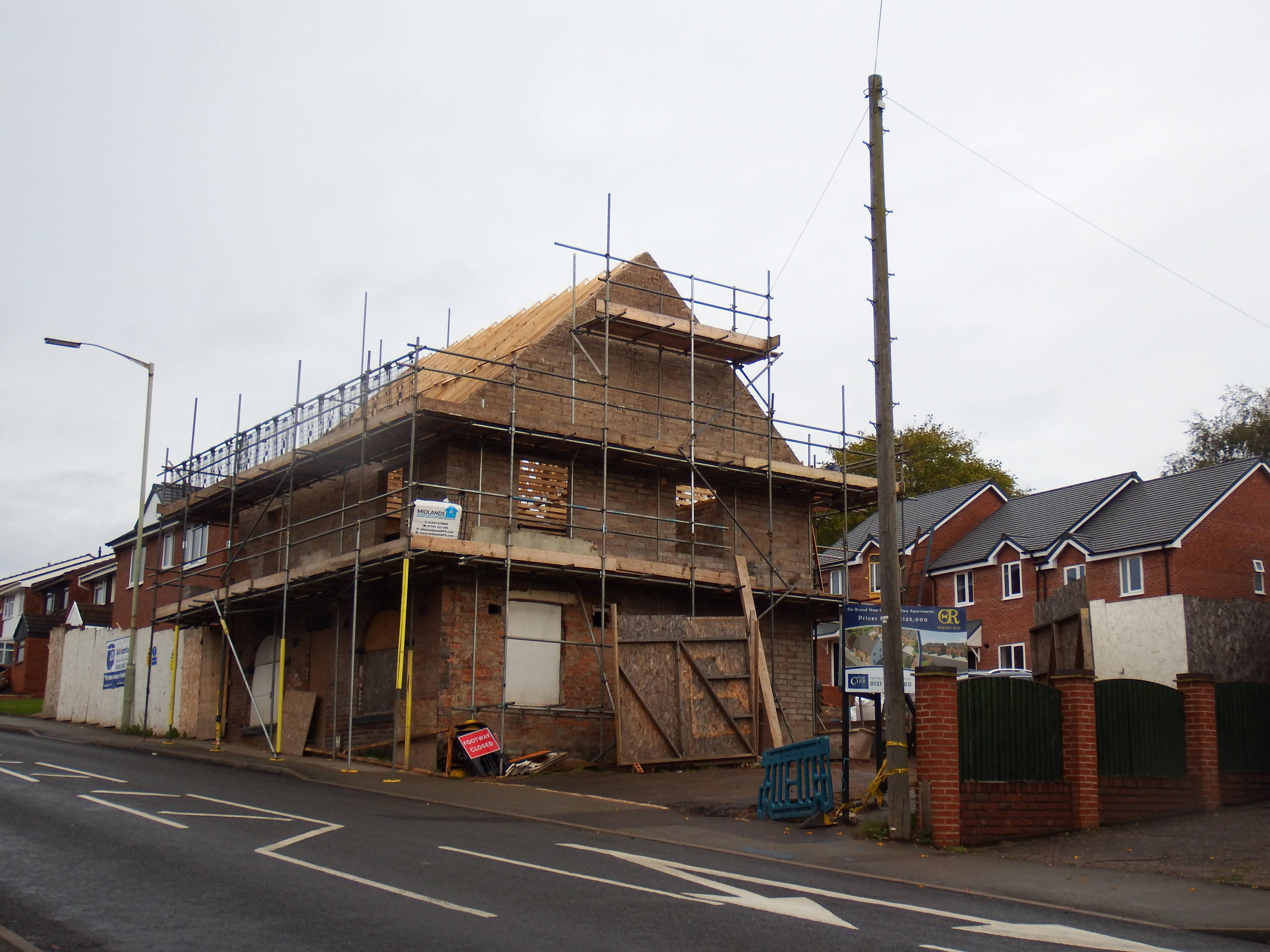
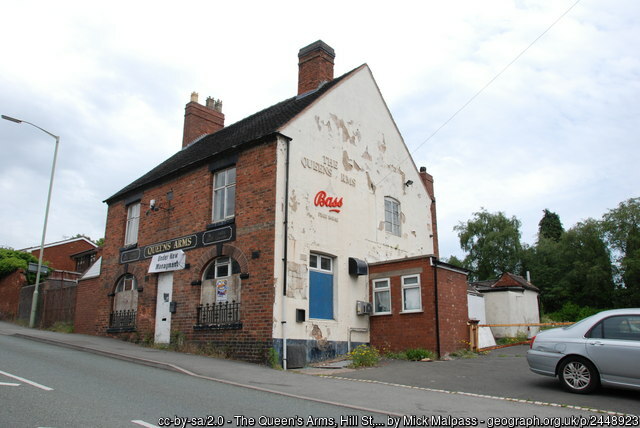
Do you recognise the building in the photograph?
It is, or was, the Queens Arms in Hednesford, now, in 2021, undergoing considerable changes.
Notice the houses where the car park used to be.
After a hard day’s work at the Railway Preservation Society’s Hednesford Headquarters, members would retire to the Queens Arms for a swift ‘alf and to get the result of the Weekly Tote – a major source of income at the time.
It was the first of a number of pubs used by members, there was the Pear Tree, now demolished, off the Brownhills Road, and when I first started in 2002, the Prince of Wales on the A5 was frequented.






 Chasewater Railway Museum