Tag Archives: Railway Relics

159 – Chasewater Railway Museum Bits & Pieces from Chasewater News Summer 1993 –Part 2

159 – Chasewater Railway Museum Bits & Pieces

from Chasewater News Summer 1993 –Part 2

The Re-opening of the Museum
Bob Duffill

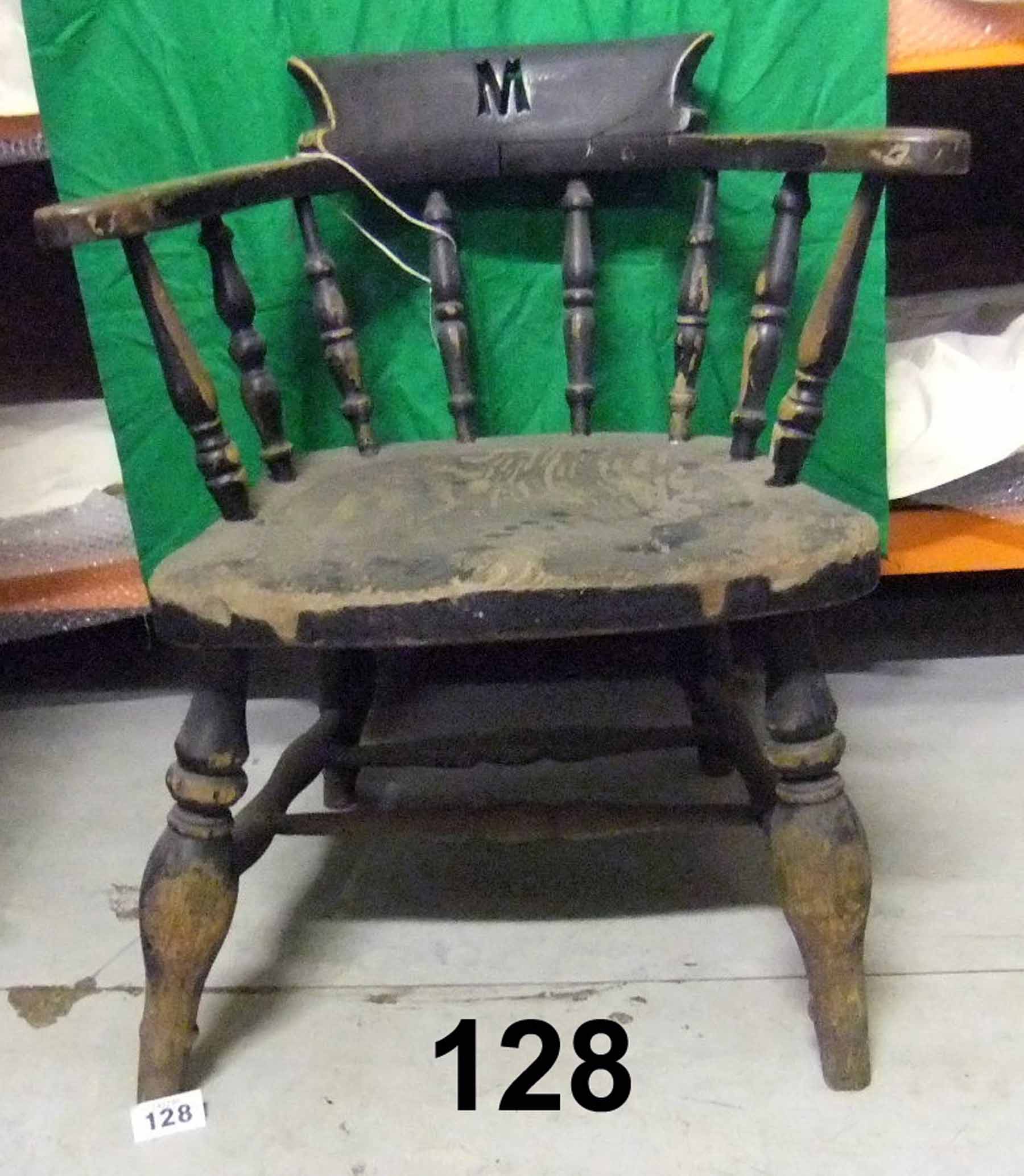
I am sitting in a Midland Railway chair, aptly for the article, in the museum which is housed in our LNWR full brake.  The rain is tipping it down and Easter Sunday has Chris’s pipe in danger of being flooded!  As it is not very busy I’m writing this article as for some time we’ve called ourselves the Chasewater Railway and Museum Co. but have not had a museum for the last few years.

Firstly, I would freely acknowledge past members who have gathered together a very good collection of railway relics and artefacts.  The last curator  being Barry Bull, who put in many hours over the years. (This was first published in 1993, now, in 2023, 30 years later, Barry Bull is still Curator, still putting in many hours. See below).

My involvement began when, a couple of years ago, I went into the museum to tidy up and dust and polish the display cabinet.  It was soon obvious, however, that all was not well.  The roof leaked badly, the exhibits had become dirty and run down, and many items were being ruined due to lack of care and attention.

The next few weeks were spent in desperation salvaging items that had become wet and taking them home to dry out as best I could.  The house began to look like a waste paper collection point as rare items were carefully dried out.  The smaller exhibits were also taken away for safe keeping, and the larger ones moved to drier spots in the brake.

Eventually the L&NW Society found that it had enough money to re-roof the vehicle, and after much reminding and being a nuisance, Steve Organ and his helpers re-roofed the vehicle, and the top-lights were rebuilt.  Adrian Hall re-wired the vehicle and installed new light fittings.  All of the remaining exhibits were taken down and moved to one end to enable a start to be made on painting the interior.  It was decided to use the coach for Santa’s Grotto, and John Duffill did most of the scraping down and painting.  Once Christmas was over and Santa’s Grotto was taken away, I re-arranged the interior to look a bit like an office and rebuilt and varnished the display case.

Keith Poynter has made a start on painting our metal signs.  He is making an excellent job of it but it is a bit like painting the Forth Bridge, there’s a lot more to do yet!

A view of one end of the museum which has been re-roofed and re-decorated and is now open to the public once more.   Pic – Nigel Canning

Anyway, the museum re-opened on our first steaming of 1993, March 21st, it still needs work but at least we’ve made a reasonable start, and hopefully it will be an added attraction for the public, and reveal our collection to members who just did not know what we had in store.

The latest news is an attempted break-in during the week before Easter when two local youths broke open a door.  Fortunately they were heard by Chris Hatton, and he and Steve Organ apprehended one of them who will shortly be appearing in court.  The burglar alarm fitted to this vehicle is in perfect working order, so hopefully this will be our last break-in and I look forward to the museum being further re-opened in stages.

Part of the 2012 museum

Finally, if anyone has photos of the local engines or collieries we are always willing to copy them for the collection in order that we get a comprehensive display.

This final sentence still holds good in 2012.(And 2023!)

Lancashire & Yorkshire Railway Van

Bob Duffill

As Tony Wheeler has been busy working on the L&Y (ex Cadbury) van recently, I have found some information on this unusual vehicle.  The original design goes back to the 1860s when an 8 ton version was introduced with a single roof door.  With the improvement in springs and wheels, this was later uprated to 10 ton in the mid 1870s.  The vans continued in production until 1916 when the last few were made, these having double roof doors.

I am unable to date ours yet, but it is between 1875-1913.  The LMS started scrapping them in earnest from the mid-1930s and ours was probably acquired by private industry shortly after.

The van should be painted in grey (Tony’s favourite colour) with white lettering, but as a change there was a variation which I feel we should adopt.  If they were shopped in Lancashire they had white roofs, but if they were shopped in Yorkshire they were painted red oxide, carrying old favours into newer times.

Some of our wooden-bodied vehicles are in fact quite interesting and well worth having restoration work carried out.  More paint to the C&W dept’s elbow! It won’t be long before we can have a decent goods train.

Barry Bull – Curator extraordinaire
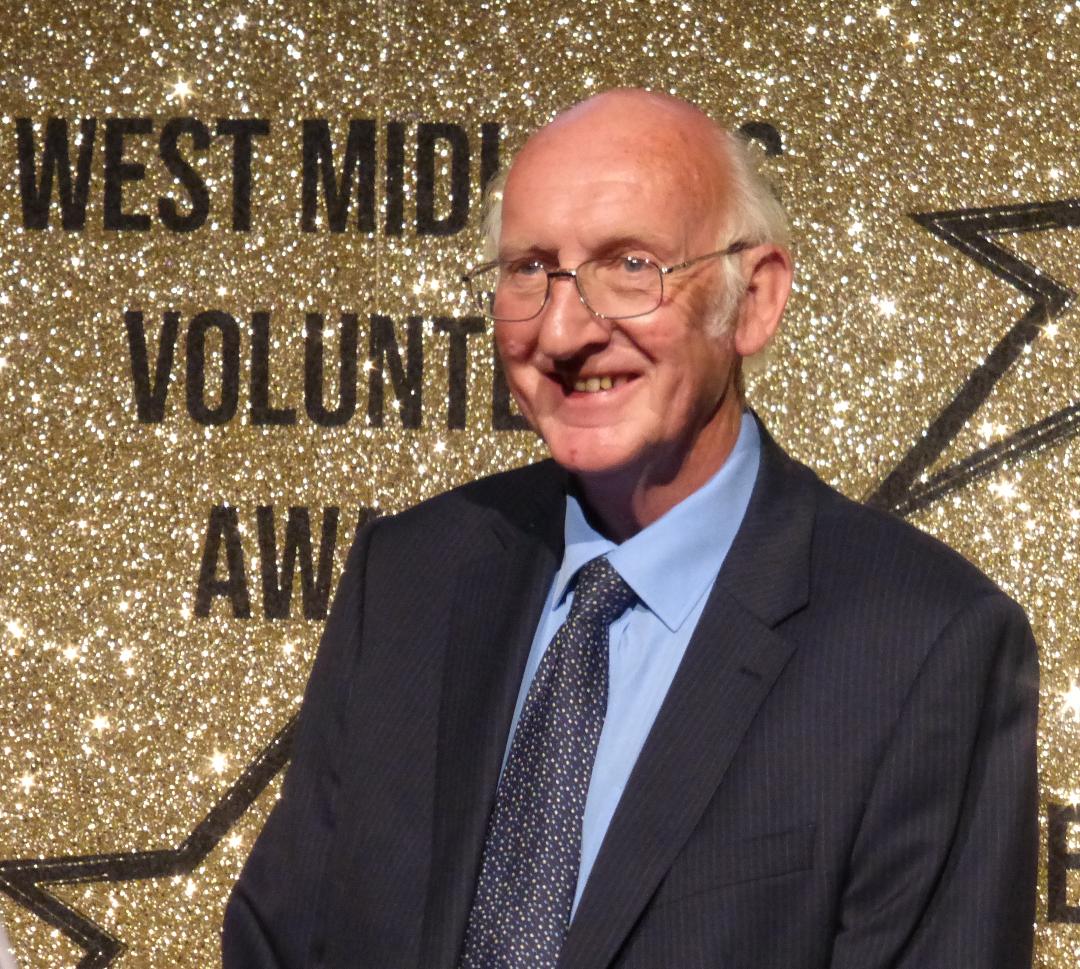
Volunteer of the Year awarded to

Barry Bull, Curator, Chasewater

Railway Museum in individual

category, West Midlands Museum

Development Awards 2019
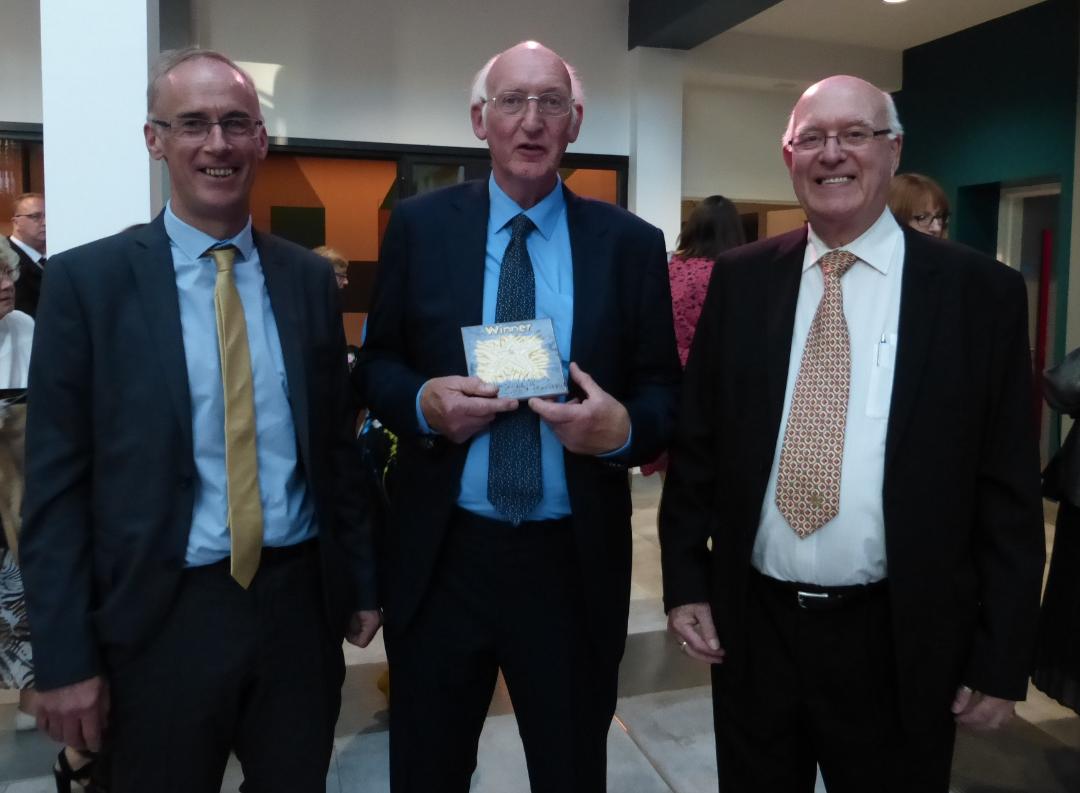
Museum Curator Barry Bull (centre)

holds his Volunteer of the Year Award,

with Chris Copp, Staffordshire

Museums Service (left) and David

Bathurst, Chair Chasewater Railway

Museum Committee (right).

If only he hadn’t dropped it!!
Railway Relics – Locomotive Headboards

Railway Relics

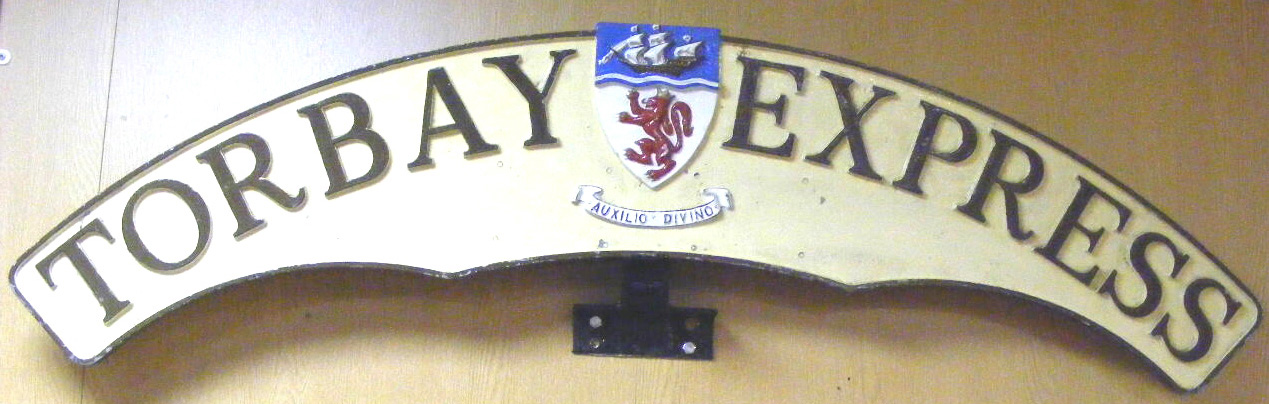
Locomotive Headboards2023 torbay Express Repro

This is a reproduction headboard on loan to the museum.

Headboards were provided for locomotives hauling some of the crack express passenger trains which, for publicity purposes, were given official names.  Some of the more famous named trains were the Cornish Riviera Limited of the Great Western Railway (GWR), the Brighton Belle of the Southern Railway, the Flying Scotsman of the London & North Eastern Railway (LNER) and the Royal Scot of the London Midland & Scottish Railway (LMS).1591 Master Cutler

This is one of the Museum’s prize possessions.
One of the LNER stainless steel ‘Master Cutler’ headboards.  It was donated to the Railway Preservation Society after the organisation undertook probably the first hire of the Flying Scotsman by a preservation group.
This comprised a return Sheffield Victoria – Marylebone excursion on 15th June 1963.  This venture resulted in a loss of £100 – a large sum in those days!

Care must be taken not to confuse the name of the express train with that of a locomotive.  Both the LMS and the LNER named locomotives after their most prestigious expresses, including the Royal Scot and the Flying Scotsman.  The GWR named its 4-4-0s after towns on the routs, but the nameplates had to be removed because some passengers thought they referred to the train’s destination.

The headboards, which survived until almost the end of steam haulage, measured around 3ft (915mm) wide by 1½ft (457mm) high.  In pre-Nationalisation days, they were generally made of wood and very few have survived.  Under British Railways, they were made of cast-metal, usually aluminium, and often for use on trains whose origins lay many years in the past.

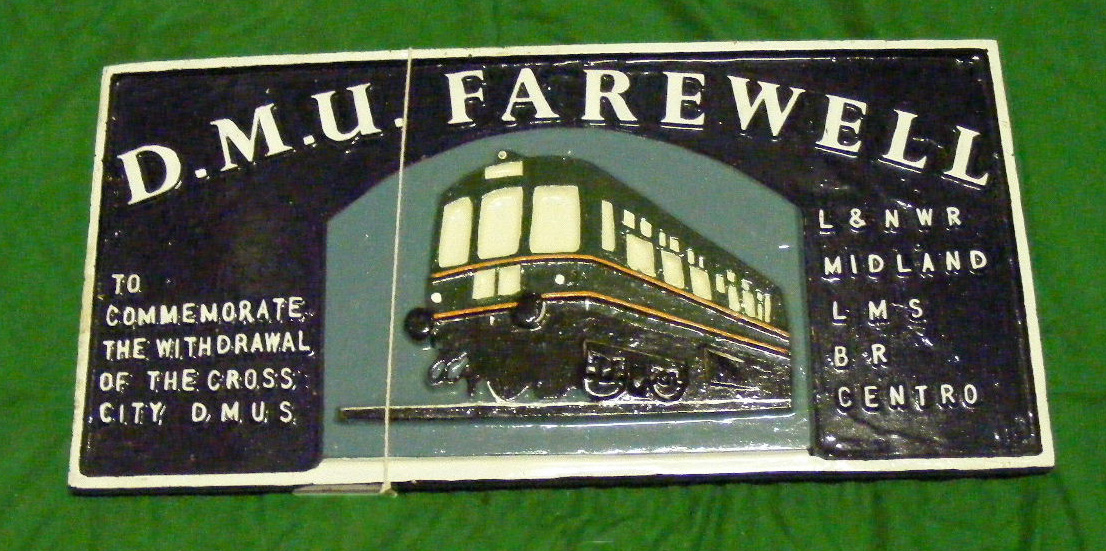
On the back of the board was a fitting which allowed it to be slotted on to the front lamp bracket of a locomotive.  This was normally at the top of the smokebox or the base of the chimney.  The boards from the steam era were often shaped to compliment the curve of the boiler front.  Boards introduced after the advent of diesel haulage tended to be rectangular, with straight edges.503 DMU Farewell

On the Eastern and North Eastern regions of BR, a standard sized back board pattern was used for casting the plates.  The back of the pattern was letter stamped with the names of all the trains using a board, with the result that the list appeared on the back of every headboard made from that pattern.

Several boards were produced for each train, with sufficient supplies being held at the locomotive depots on the route.  Many boards simply gave the name of the train, while others were embellished with the crests of appropriate towns, cities or counties.  Among these were the Aberdonian, incorporating the crests of London and Aberdeen, the Cornish Riviera Limited, with the Cornish crest and motto ‘One and All’, and the Hook Continental, featuring the flags of Britain and Holland.  On a more elaborate scale was the later type headboard of the Royal Scot, which had lettering in white on a tartan background and a shield projecting from the top bearing a red lion.Asbestos 100

A specially made headboard, celebrating the centenary of the Hawthorn Leslie  loco – Asbestos.

Railway Relics – Cast locomotive nameplates

Railway Relics

Cast locomotive nameplatesCannock Wood

This nameplate belongs to Chasewater Railway and was carried by the LBSCR loco No. 110/1877, which worked at The Cannock and Rugeley Colliery, Cannock Wood from1927, when it was purchased from the Southern Railway until the mid 1960s.  It was preserved by the Railway Preservation Society (West Midland District) firstly at Hednesford and for a short while at Chasewater.  It was later sold members of the East Somerset Railway.

Locomotives have often been adorned with names from the earliest days.  Sometimes these have been painted on the engine’s sides, but the more common method was to fix cast-metal nameplates.  The raised lettering, frequently surrounded by a raised border, was usually finished in burnished brass, with a black or red painted background.

The plates were usually curved to fit on or over the locomotive’s driving wheel splasher, but for tank engines and some larger main line locomotives, straight plates were fitted elsewhere on the superstructure.  The Great Central Railway (GCR) provided most of its large passenger locomotives with combined straight-topped splashers covering all the driving wheels. The GCR’s straight nameplates had shaped ends to fit into the splashers’ decorative beading.

Both the London & South Western Railway (LSWR) and the London, Brighton & South Coast Railway adopted a similar pattern of plate, with curved or straight sides.  Either way, the plates had projecting lugs at the ends to accommodate fixing holes.Nuttall

Another Chasewater Railway-owned nameplate, from a Hunslet 0-6-0ST loco 1685/1931.  Bought from Mowlem in 1948 and worked at Walsall Wood, Coppice Colliery and Chasetown.

New type of nameplate

The Southern Railway (SR) adopted the LSWR style of nameplate for most of its named engines, but often with a smaller panel beneath giving the class of the engine.   For its series of steamlined light Pacifics built during and after World War II – the Battle of Britain, West Country and Merchant Navy classes, the SR adopted a completely new type of nameplate which included a crest or badge.

The London, Midland & Scottish Railway used fairly modest curved plates for its non-streamlined classes, whilst its prestigious streamliners had straight plated fitted to the centre line of the boiler.  When streamlining went out of fashion in the late 1940s, the streamlined casings were removed and the plates were refitted in the same location.The Dean

This plate is one of the Eric Tonks Collection, on loan from the Industrial Railway Society, and is from an 0-6-0ST Hunslet, 1496/1926.  New at the Oxfordshire Ironstone Co.Ltd., Banbury.

The streamliners of the London & North Eastern Railway’s Class A4 carried their nameplates high up at the front end of the boiler sides.  Ordinary locomotives were fitted with curved splasher top plates, though these were larger and heavier than those of the other companies.

The standard express classes built by British Railways mainly in the 1950s bore straight plates fitted near the top of the smoke deflectors.  Some of the mixed-traffic locomotives designed for use on the Southern Region were given names previously carried by members of the SR’s King Arthur class, itself a legacy of the SR’s predecessor, the LSWR.

Although most Great Western nameplates were made from steel and brass, a small number were cast in brass.  These were oval and gave the engine’s name and number, as well as its date of manufacture.

Ironstone

Another plate from the Eric Tonks Collection, ‘Ironstone’ was an 0-4-0ST Peckett with outside cylinders, No. 1050/1907.  Supplied new to Market Overton Ironstone Quarries, Rutland.

Many of the smaller independent railway companies fixed nameplates to their locomotives.  Since most of them were tank engines, the plates had straight sides.  Many industrial locomotives also had nameplates.  These sometimes included the name and address of the works or the names of the firm’s directors and members of their families.Carol Ann No.1

Carol Ann No.5  0-6-0ST Hunslet  1821/1936.  Bought new.  Still at Holly Bank 1957 – since scrapped.

Robert Nelson No.4 and Carol Ann No.5 (Hunslet 0-6-0ST  1800 and 1821 respectively, built 1936) were named after the Colliery Manager’s two children.

On transfer to Littleton Colliery in NCB days – November 1959  – Carol Ann was renumbered ‘1’ by grinding the ‘5’ off the nameplate and screwing in a ‘1’.  This was because Littleton already had a loco ‘Littleton No.5